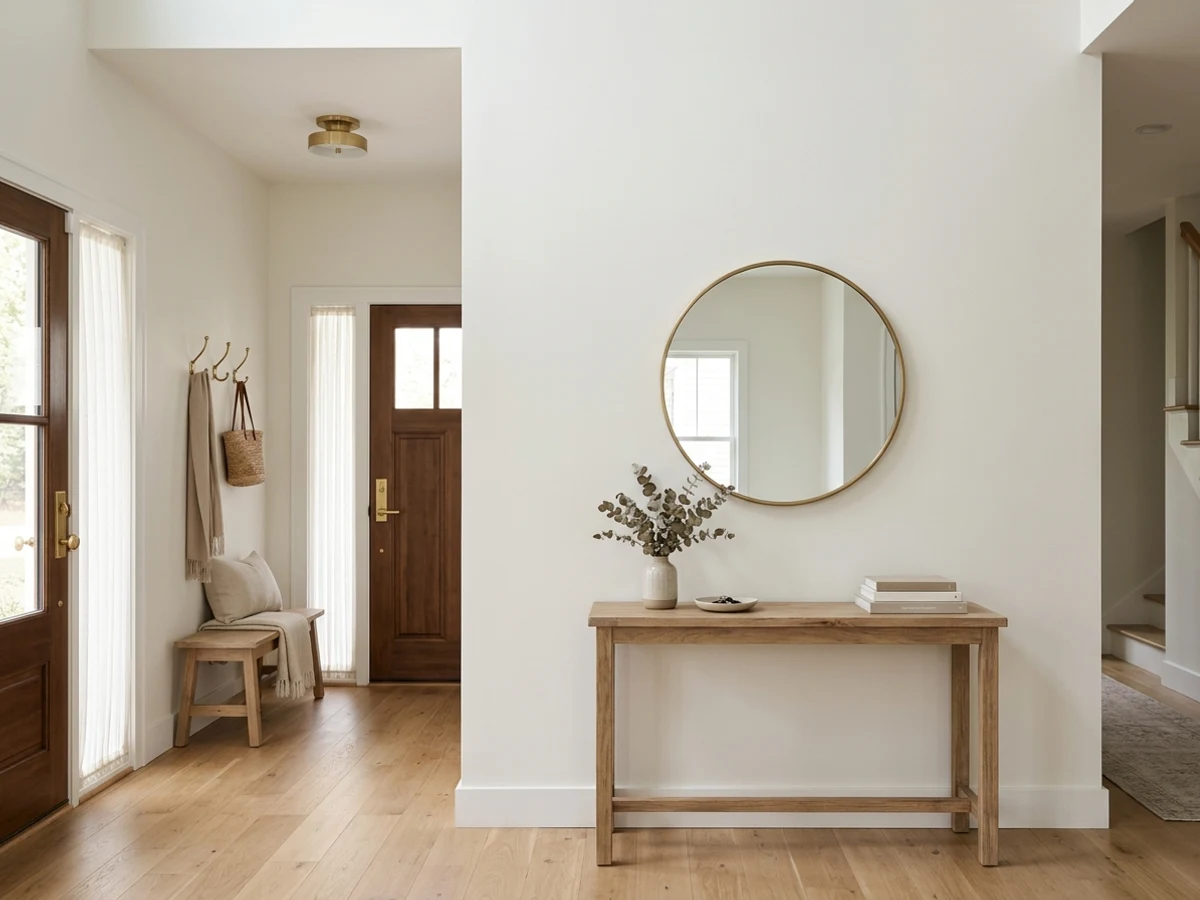
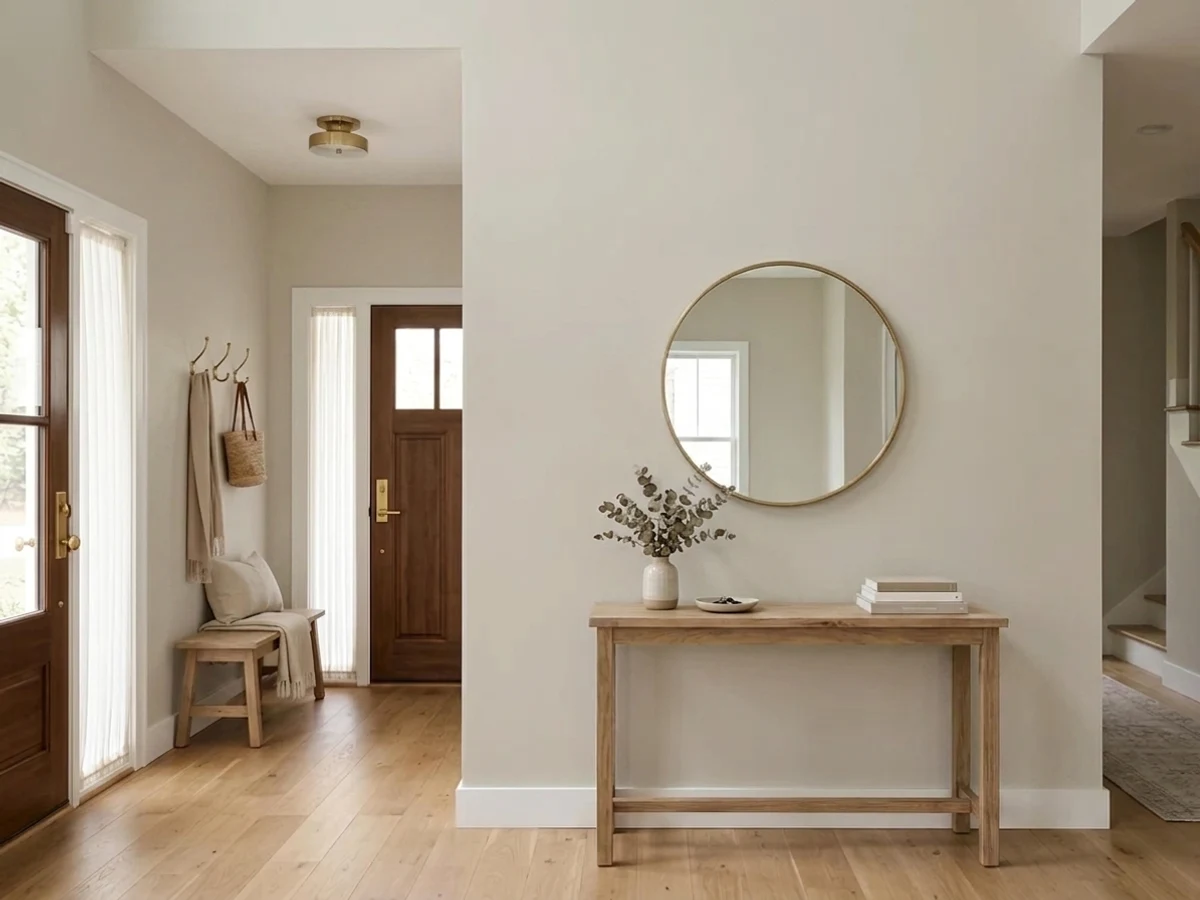
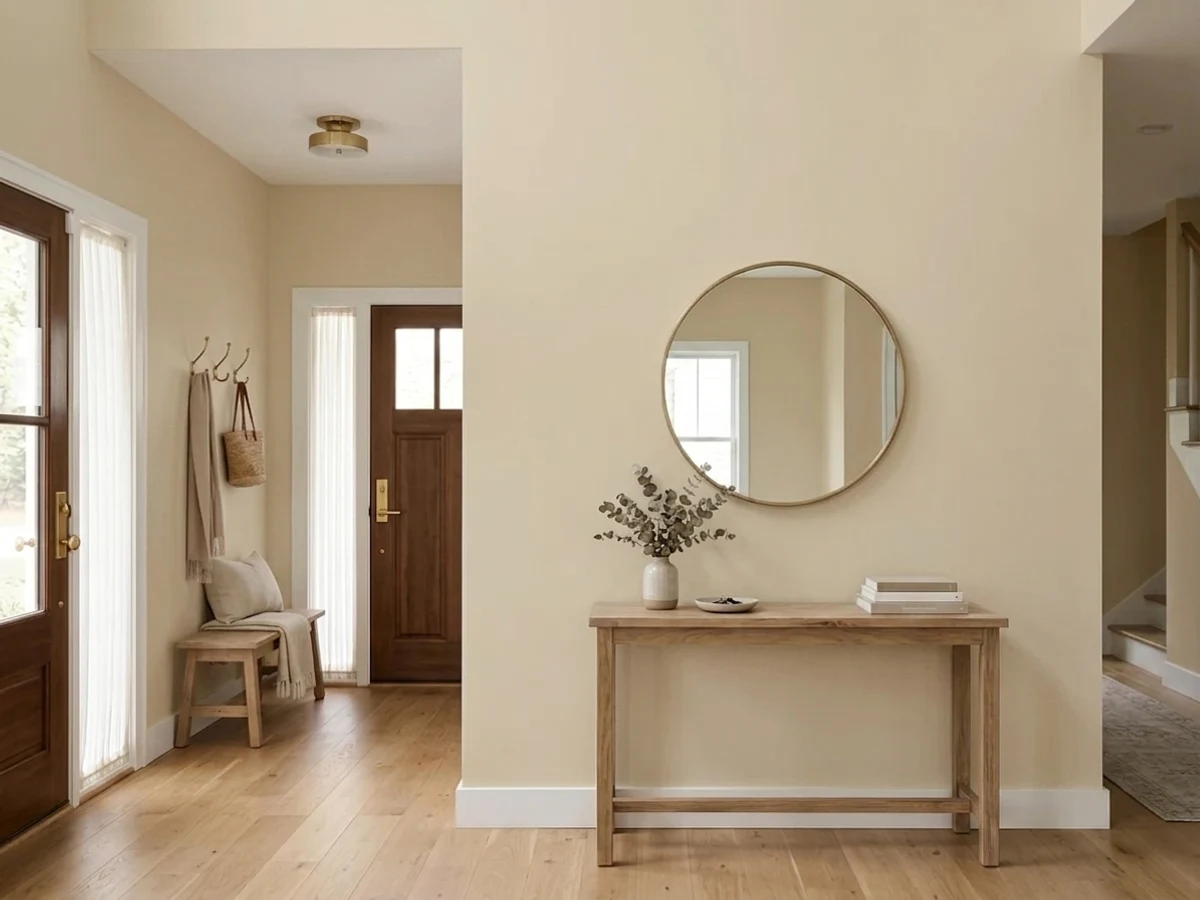
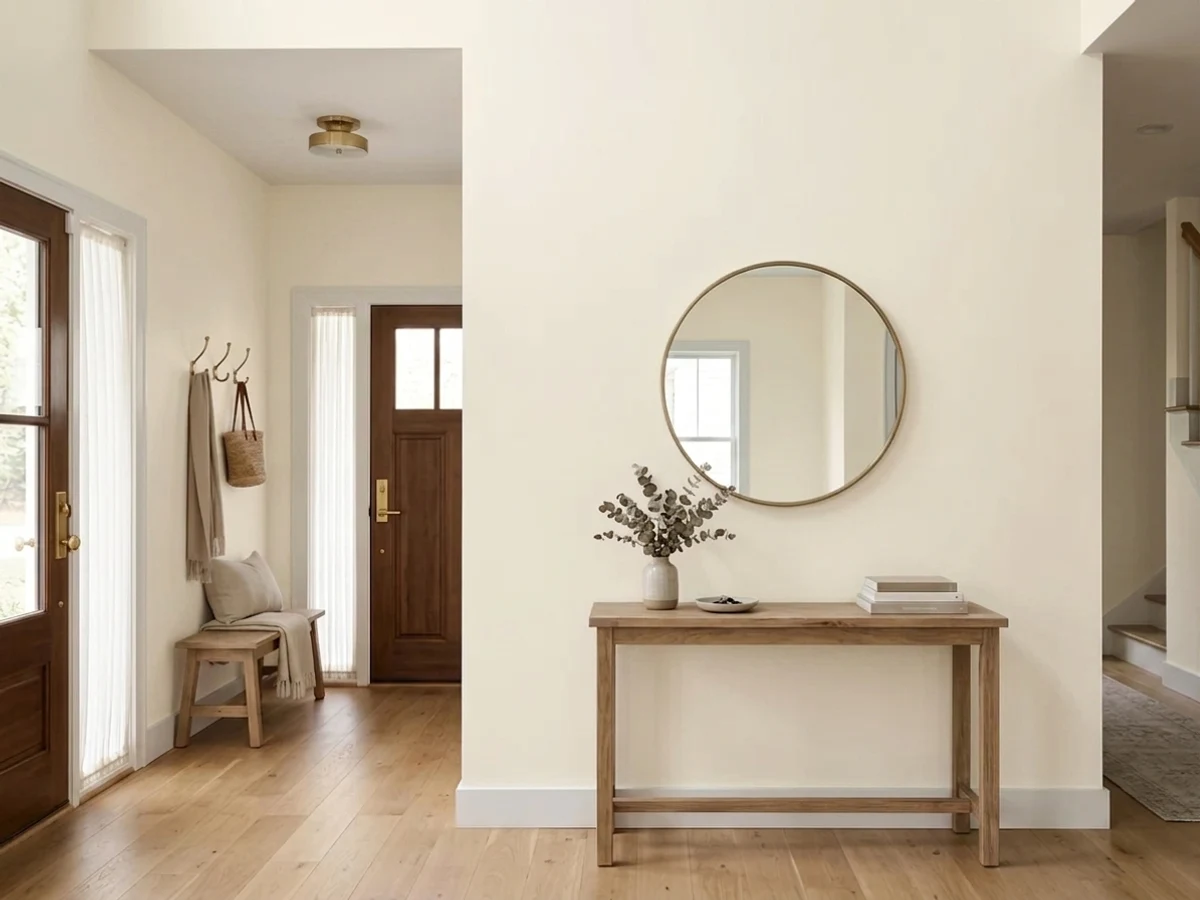
Neutral Entryway Paint Colors
4,152 neutral colors that work in entryways, drawn from the full ~30,000-color US paint deck. Below: editor's picks specific to entryways, then 30 picks spread across the LRV range — narrow further on the brand page when you've shortlisted.
Neutrals are the colors that aren't quite gray and aren't quite tan — the warm, low-saturation in-between bucket where greige, taupe, mushroom, bone, and accessible beige all live. They've replaced cool grays as the default safe wall color of the late 2020s, particularly in open-plan homes where one color flows through multiple rooms.
Editor's Picks: Neutral for Entryways
4 picks30 Neutral Picks Across the LRV Range
30 of 4,152 · sorted dark → lightLooking for more? All neutral → covers every brand; brand × family pages show full decks.
Neutral Entryway Colors at Every US Brand
21 brands · up to 10 picks eachUp to 10 picks per brand spread across the neutral LRV range, drawn from each brand's full deck. Tap any swatch with a curated guide for full spec; tap the brand title for the brand's complete neutral deck.
Behr
Benjamin Moore
Glidden
Sherwin-Williams
Valspar
PPG / Glidden
HGTV Home by Sherwin-Williams
Dunn-Edwards
Diamond Vogel
Hirshfield's
Kompozit
Dutch Boy
C2 Paint
Rodda
Farrow & Ball
Magnolia Home
Portola Paints
Clare
Annie Sloan
Backdrop
Rust-Oleum
Other Entryway Color Families
Neutral Colors in Other Rooms
Neutral Paint Colors for a Entryway
An entryway is the first room your house shows you, and the last one it shows you on the way out. Neutral paint earns its place here because it does not fight with everything else going on: coats, bags, shoes, mirrors, mail, art, and whatever the front door light happens to be doing that hour. A good neutral lets the entry feel calm and put-together even when the floor is covered in boots.
The catch is that entryways are usually small, often windowless, and they take more physical abuse than any other room. So the right neutral here is not just a color you like on a chip. It is a color picked for the light you actually have, in a finish that can survive fingerprints and a wet umbrella. Every shade shown on this page is mixed to order at the store, so once you find the depth that works you can match it across brands without hunting for one specific can.
Why Neutral Works in an Entryway
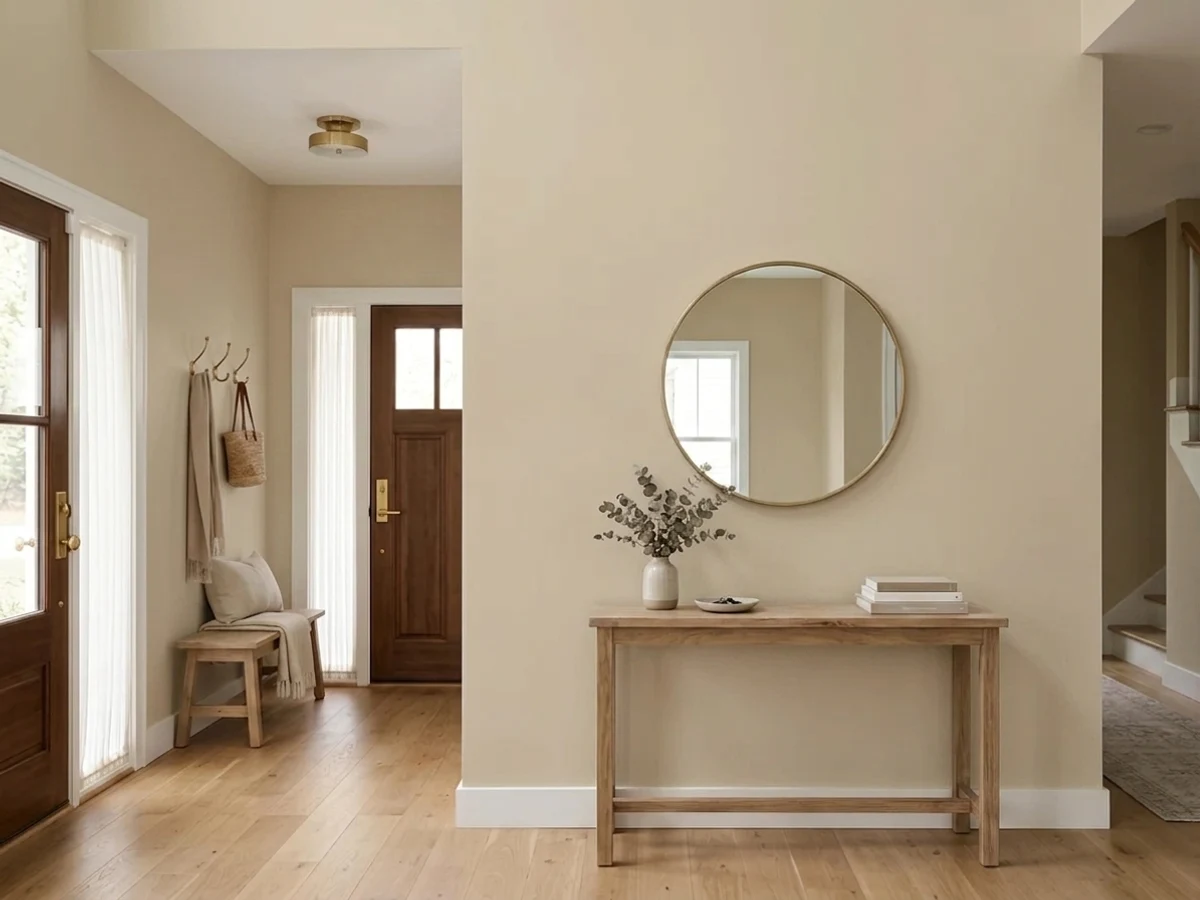
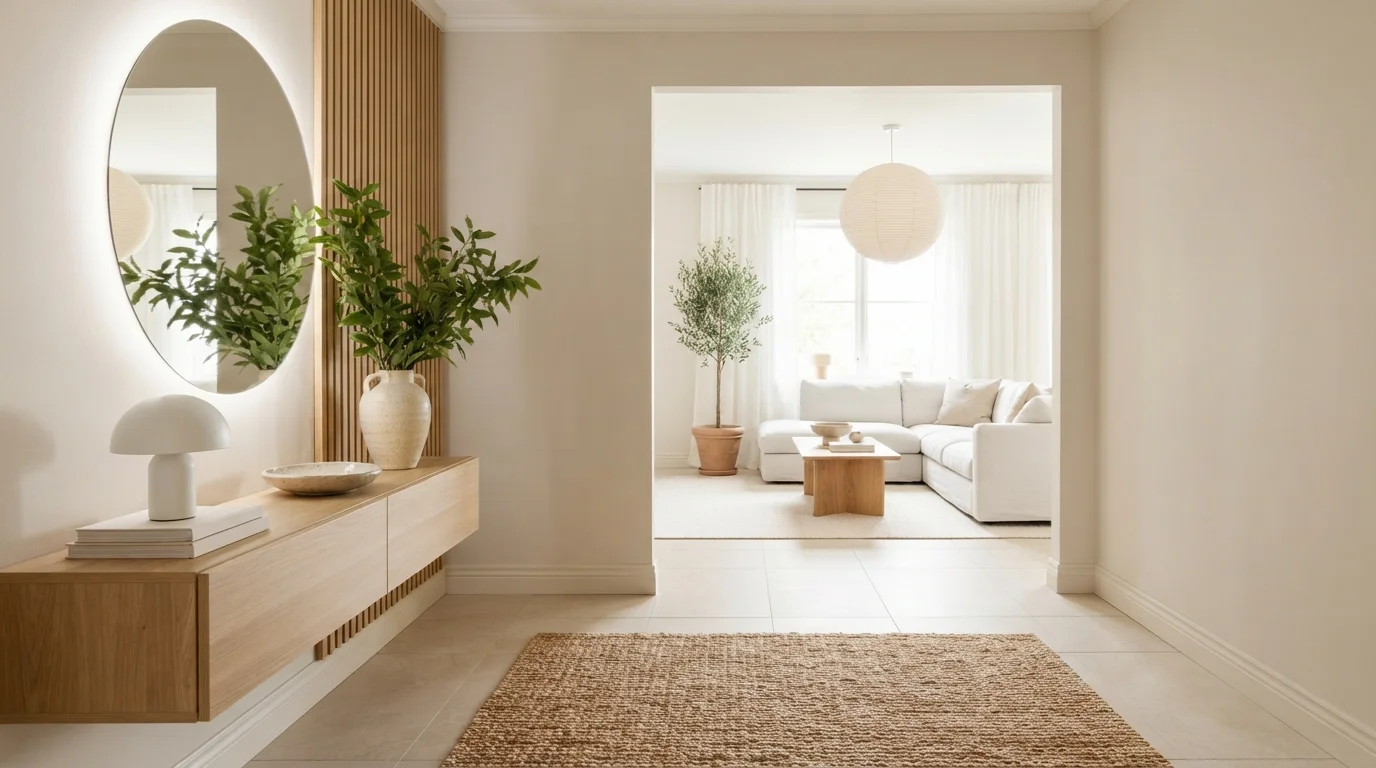
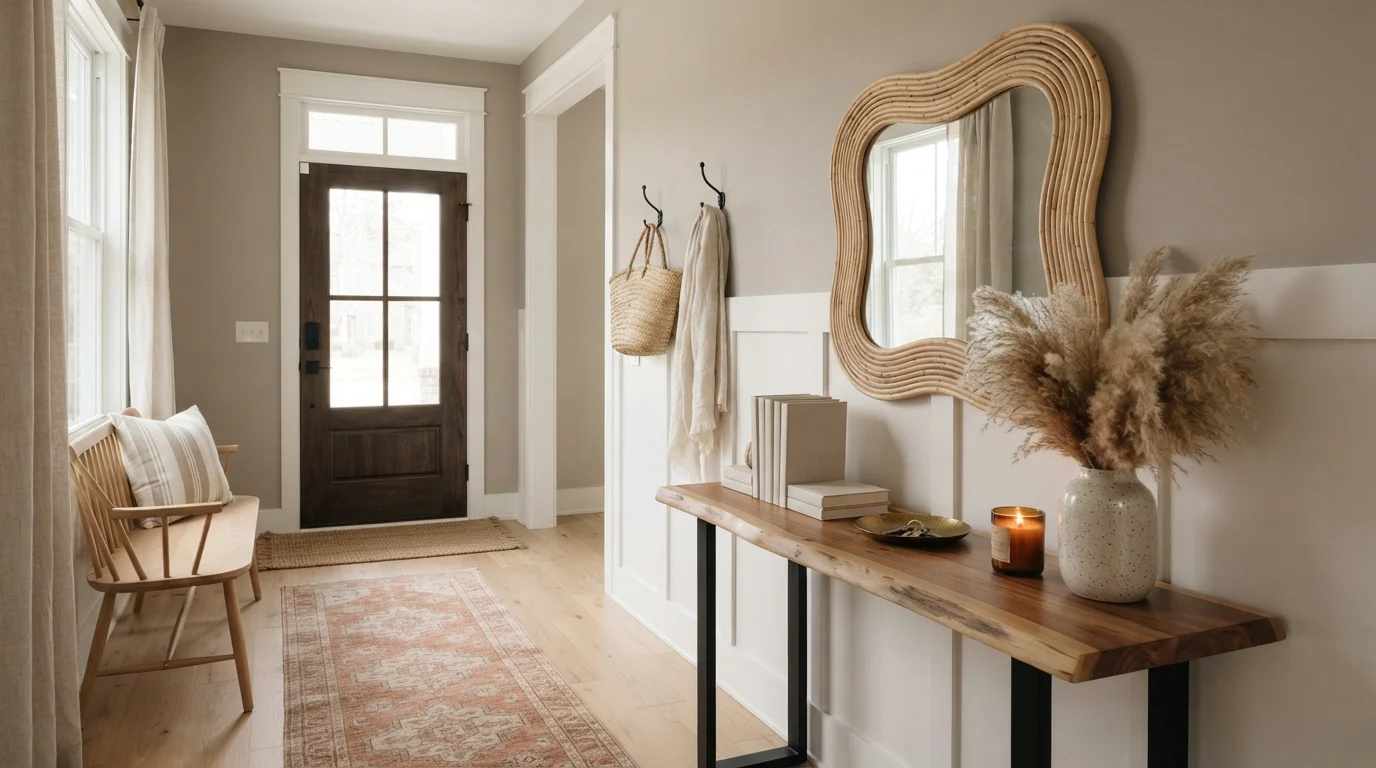
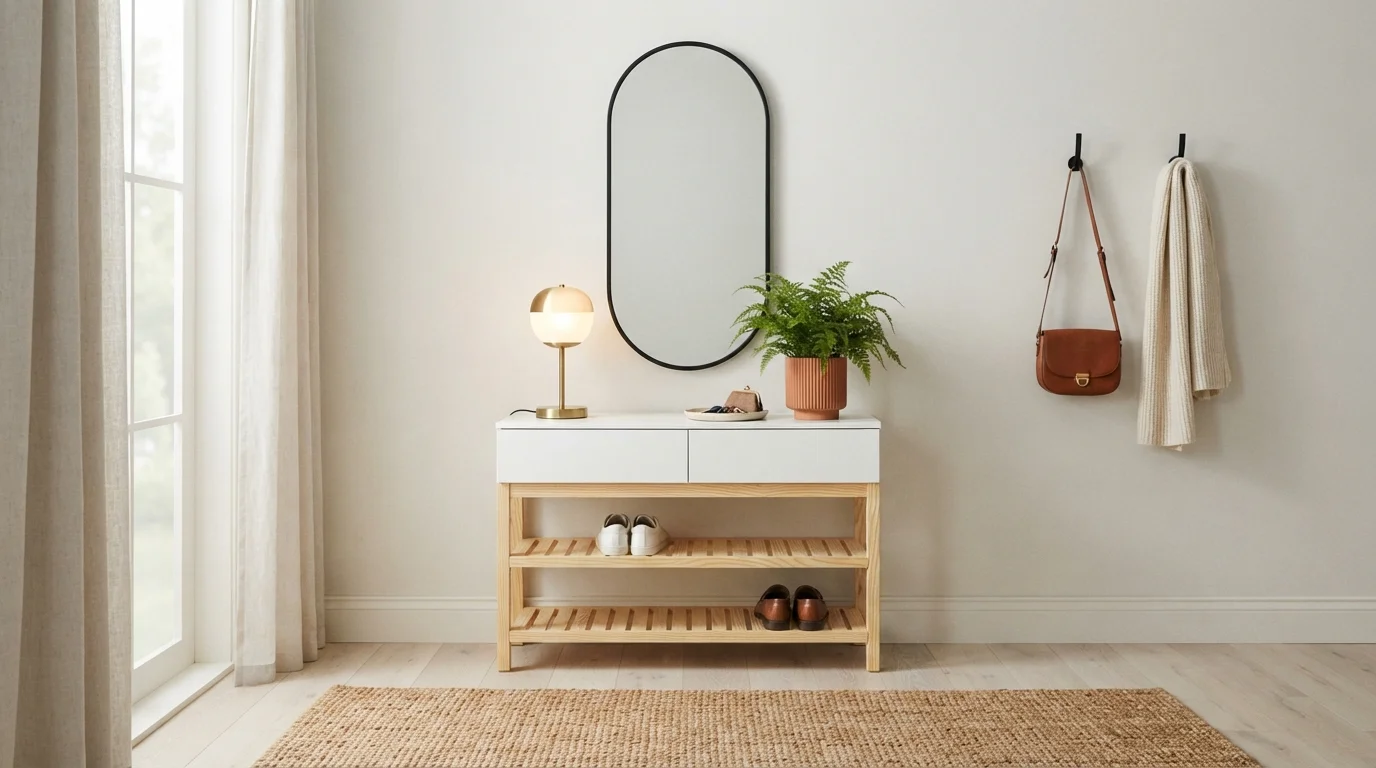
An entryway is a pass-through, not a place you sit and stare at a wall. That makes it the wrong room for a bold statement color and the right room for a neutral that quietly sets the tone for the whole house. A calm greige, soft taupe, or warm off-white reads as welcoming the second the door opens, and it gives you a clean backdrop for a console table, a rug, or a piece of art to do the talking.
Neutral also solves a real entry problem: this space connects to everything. The hallway, the stairs, the living room, and the kitchen are often all visible from the front door. A neutral wall sits comfortably next to all of those rooms instead of clashing with them, which is exactly what you want from the one space every other room touches.
Light and the Right Depth for This Room
Entryways are the trickiest room for light because so many have little or no window of their own. Before you pick a depth, look at what the space actually gets: a glass front door, a sidelight, a transom window, or nothing but a ceiling fixture. A dim, windowless entry will swallow a deep neutral and feel like a cave, so lean toward something brighter that bounces what light you have.
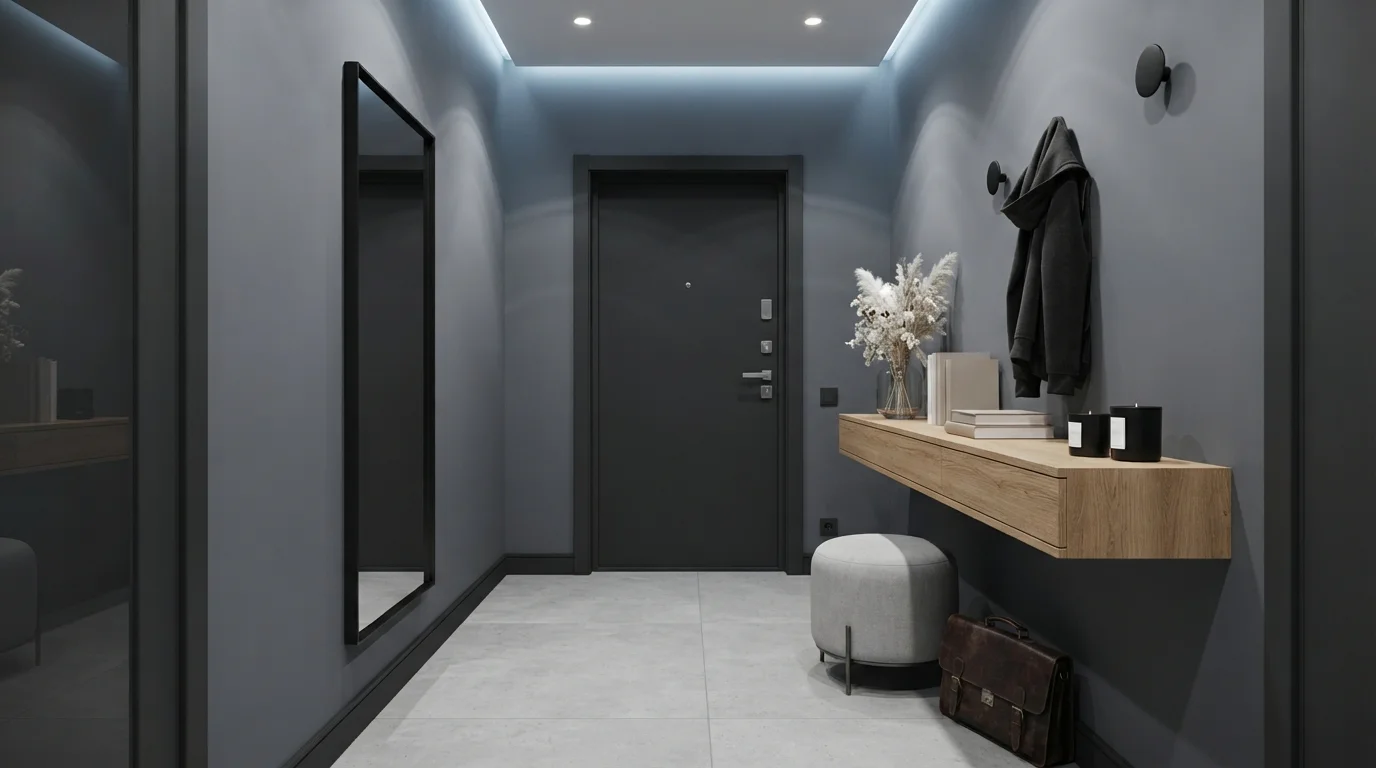
LRV, or light reflectance value, is the number that tells you how light or dark a color reads from 0 (black) to 100 (white). For a dim or windowless entry, an LRV in the 60s to 70s keeps the space open and friendly. If you have a glass door or good daylight, you can drop into the 40s or 50s for a cozier, more grounded feel without the room going gloomy. Warm neutrals usually flatter entryways better than cool gray ones, since cool grays can turn flat and shadowy in low artificial light.
The Best Finish for an Entryway
This is the room where finish matters more than color. Entry walls collect hand smudges by light switches, scuff marks from shoes and bags, and the occasional wet sleeve or umbrella drip. A flat or matte sheen looks great for about a month and then shows every mark, so skip it on the main walls here.
Eggshell or satin is the sweet spot for an entryway. It wipes clean, takes the daily contact without rubbing shiny, and still hides drywall imperfections better than a high-gloss would. Save semi-gloss for the trim, the door, and any wainscoting or paneling, since those are the surfaces that get touched and bumped the most and need the toughest, most scrubbable finish.
Pairing Neutral with Trim, Doors, and Fixtures
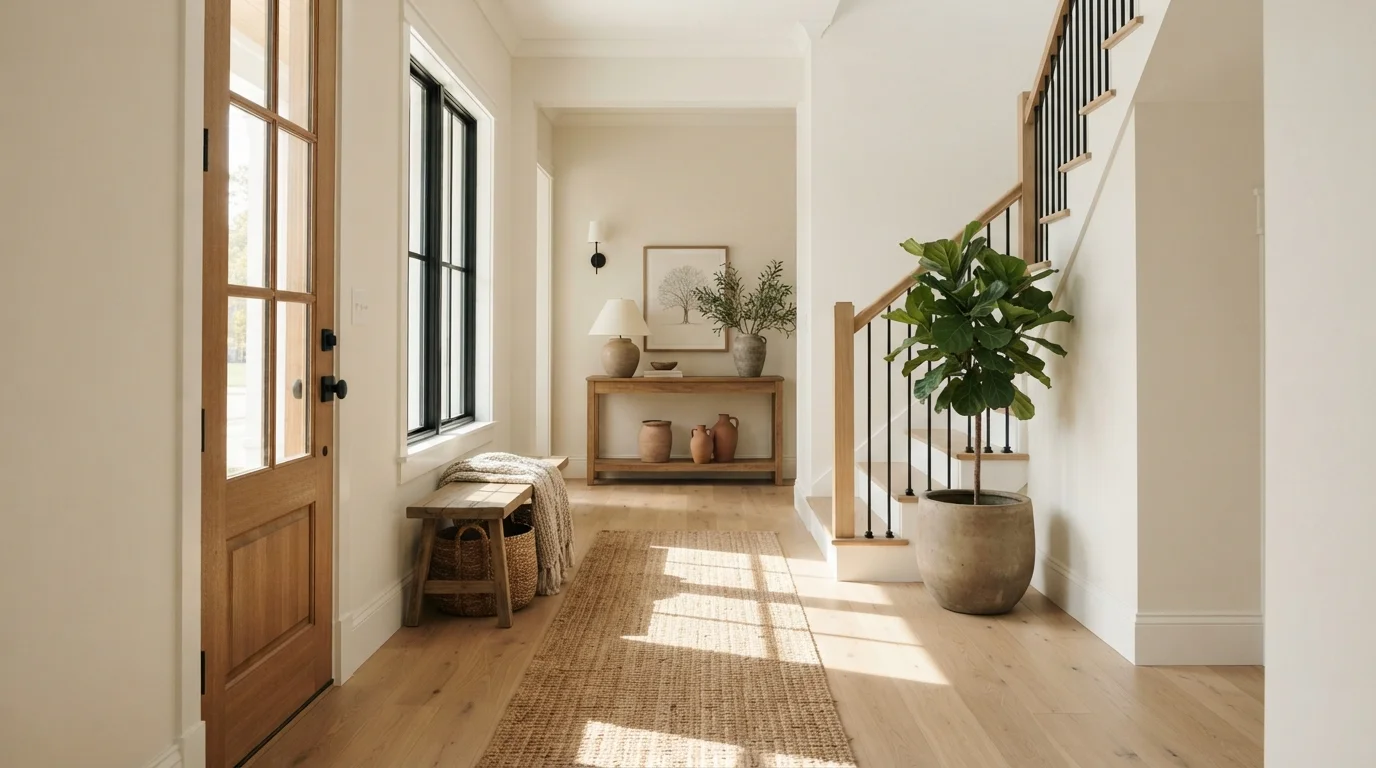
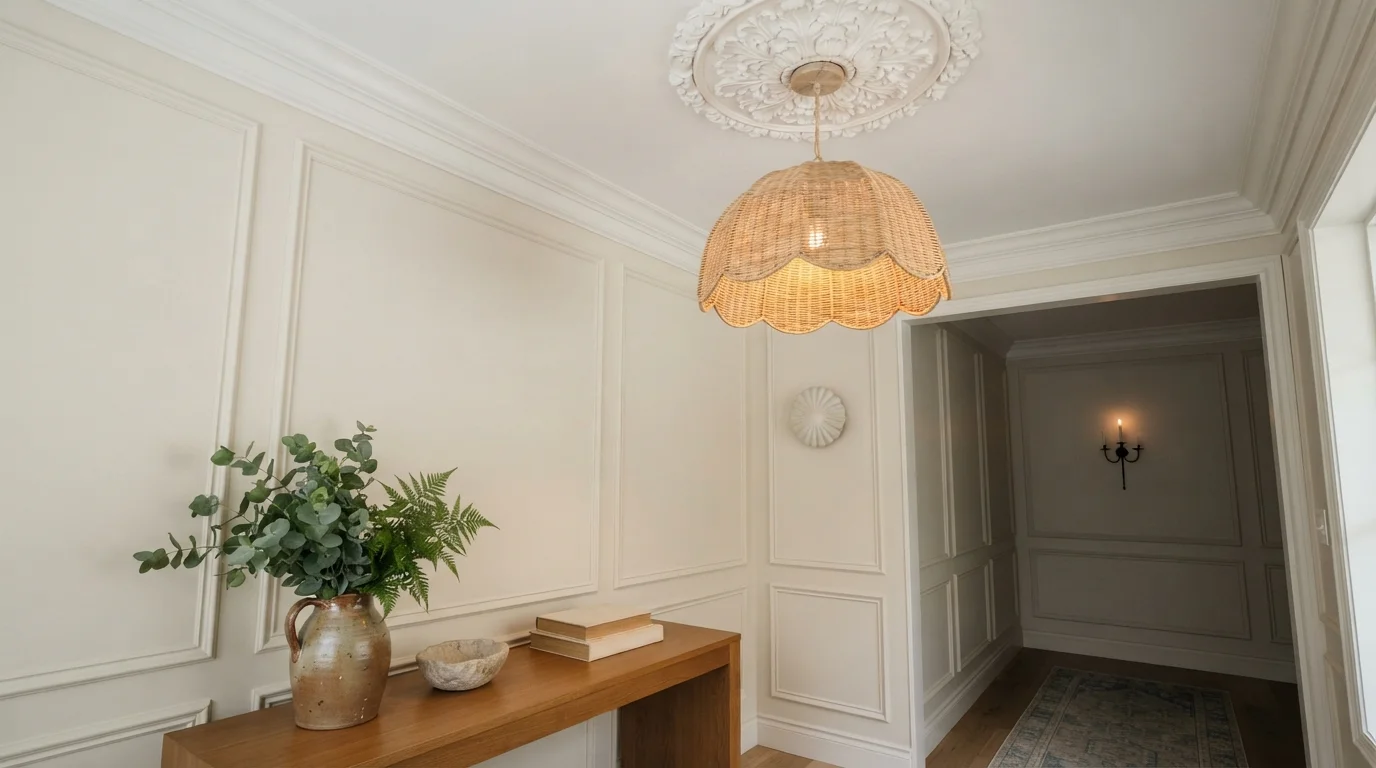
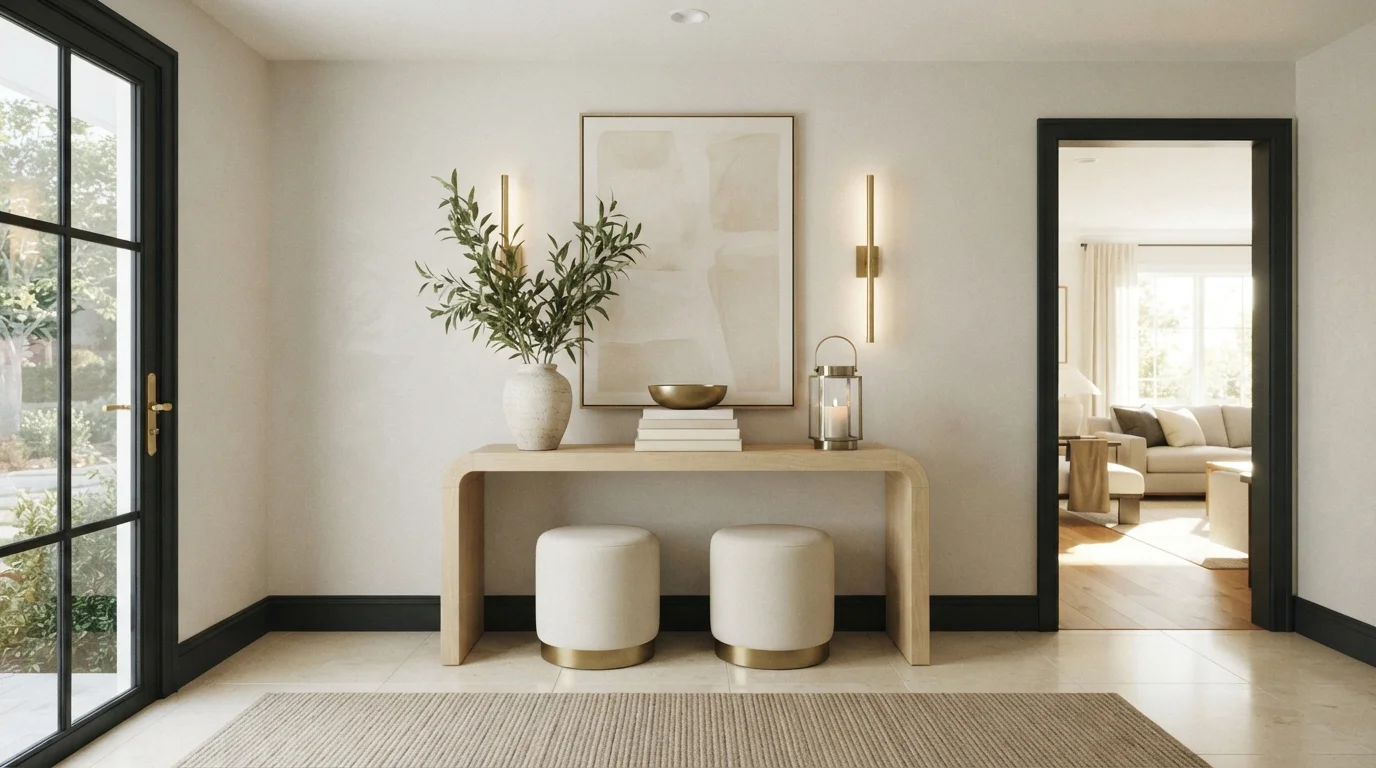
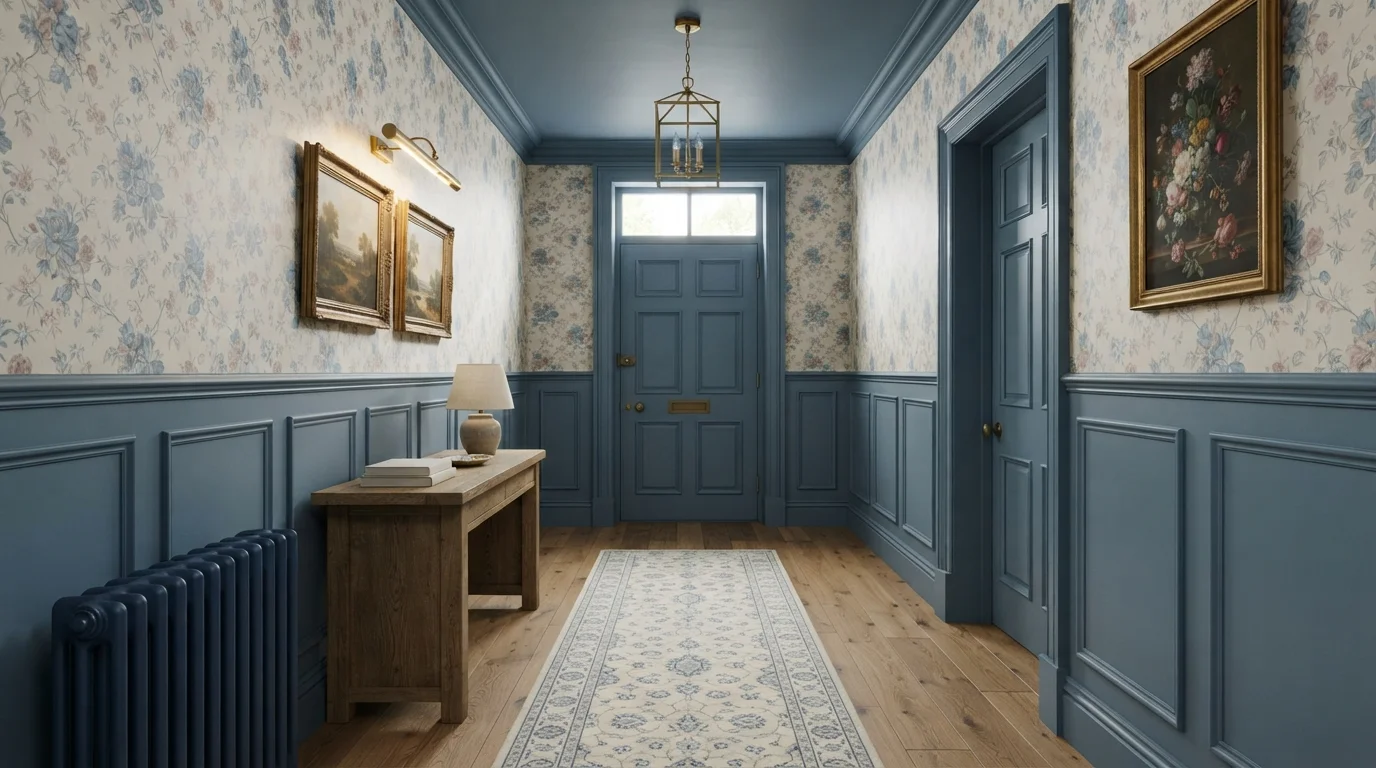
A neutral entry gives you an easy, classic move: keep the walls in your warm neutral and run a crisp off-white on the trim, baseboards, and any wainscoting. That small step-up in brightness frames the space and makes the whole entry feel finished, not flat. If you want more contrast, a deeper neutral or soft black on the front door or a stair runner reads as intentional and high-end against a light wall.
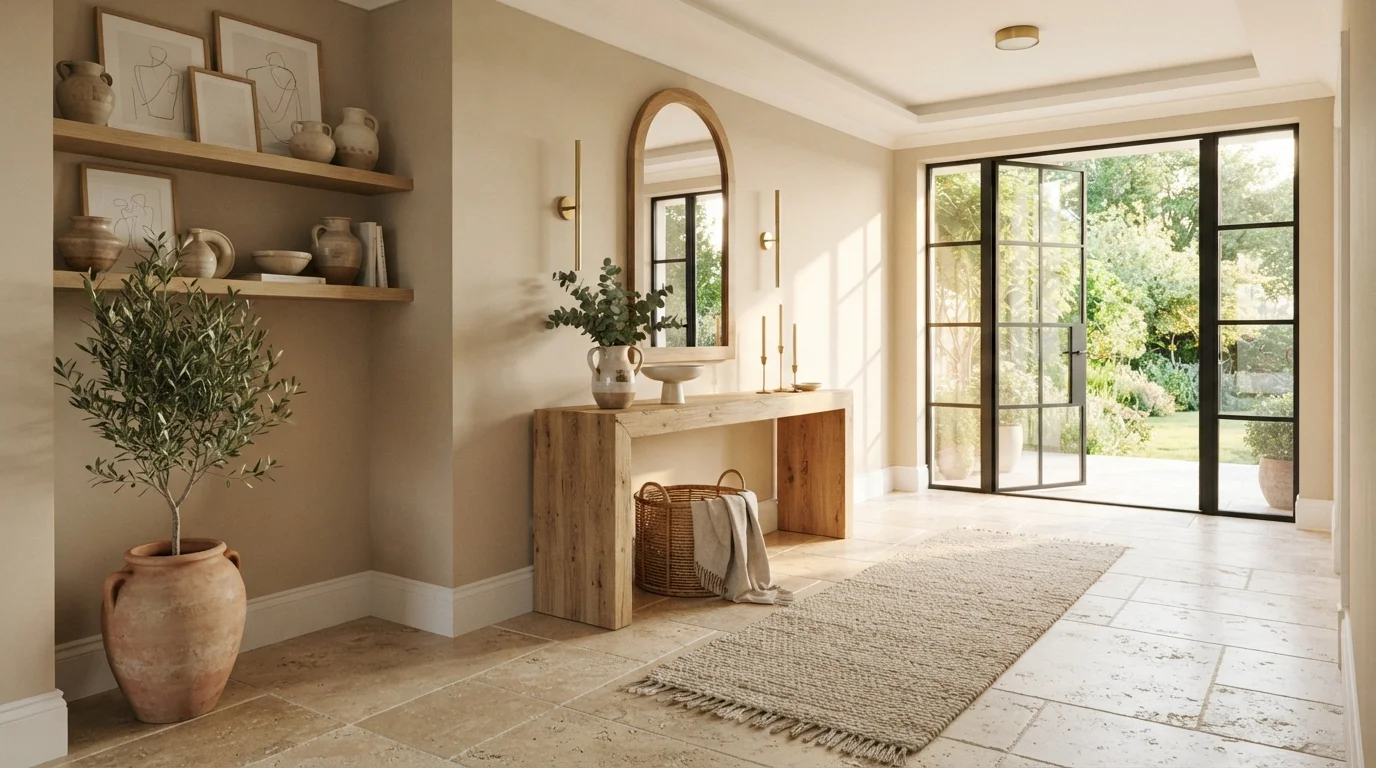
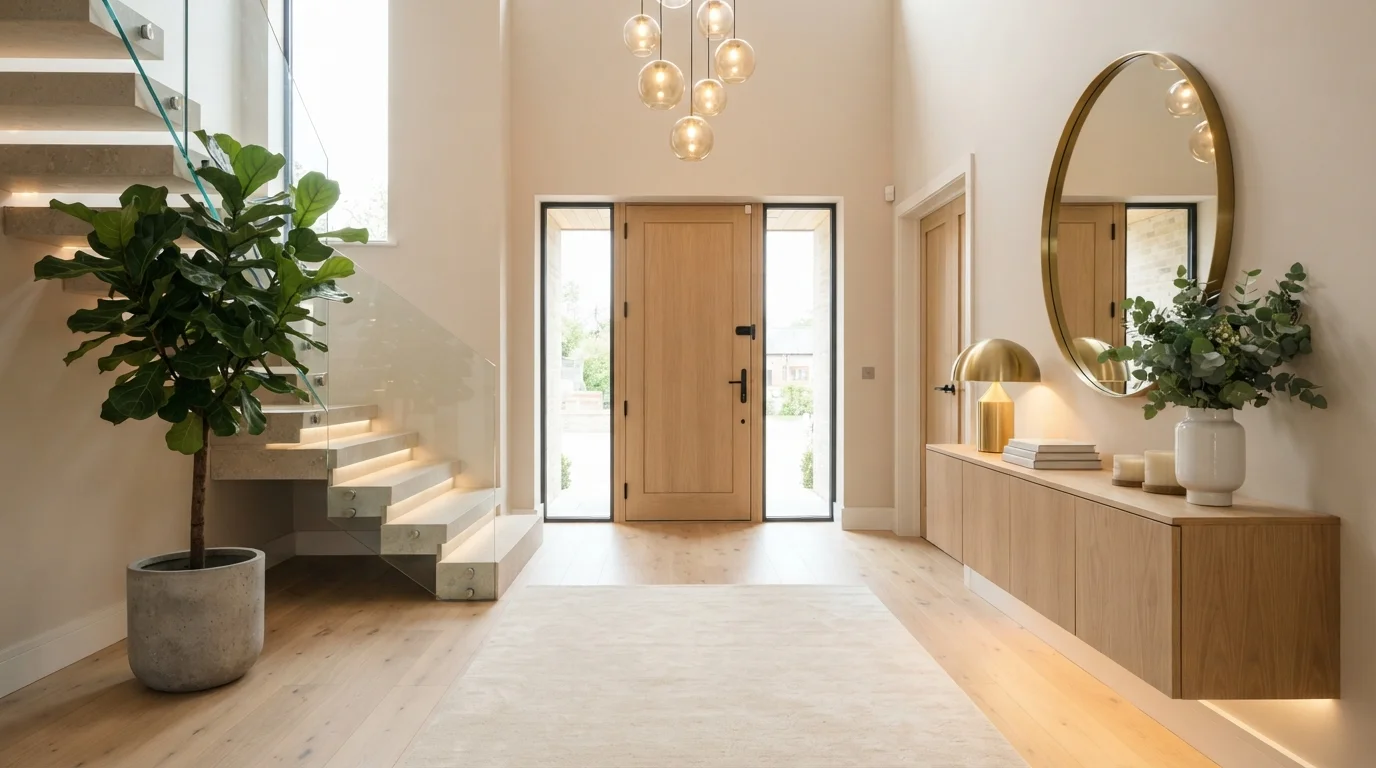
Match your neutral's warmth to the metals and wood you already have. Warm taupes and greiges sit beautifully next to brass, aged bronze, and natural wood floors or a wood console. Cooler neutrals lean better toward chrome, nickel, and gray-toned stone. The ceiling can simply go a clean white, or take a soft tint of your wall color for a cozier, more enveloping feel in a small entry.
Common Mistakes to Avoid
The biggest entryway mistake is testing the color in a different room. Entry light is its own thing, often all artificial, so paint a large sample directly on the entry wall and look at it morning, midday, and night before you commit. A neutral that looked perfect in the sunny living room can go dingy or purple-gray in a windowless entry.
The second mistake is choosing color before finish. People fall for a matte chip and then spend the next year cleaning fingerprints they cannot fully wipe off. The third is going too cool: gray neutrals that feel sophisticated in a bright open space often read cold and unwelcoming in the one room that is supposed to say come in. When in doubt here, warmer and slightly lighter wins.
Neutral Entryway Paint — Frequently Asked Questions
What LRV should I look for in a neutral for my entryway?+
For a dim or windowless entry, aim for an LRV in the 60s to 70s so the color keeps the space open and bright. If you have a glass front door, a sidelight, or good daylight, you can go into the 40s or 50s for a cozier feel. LRV runs from 0 (black) to 100 (white) and tells you how much light a color bounces back, which matters most in a room that often has little of its own.
What sheen is best for entryway walls?+
Eggshell or satin is the best choice for entry walls. It wipes clean of fingerprints and scuffs, holds up to daily contact, and still hides wall imperfections. Use semi-gloss on the trim, the door, and any paneling, and avoid flat or matte on the main walls since they mark up fast and are hard to clean in a high-traffic spot.
Should I pick a warm or cool neutral for an entry?+
Warm neutrals usually win in an entryway. Cool grays can turn flat, shadowy, or cold under the artificial light most entries rely on, while warm taupes, greiges, and off-whites feel welcoming the moment the door opens. If your entry has strong daylight, you have more room to use a cooler tone, but lean warm whenever the lighting is dim.
How do I keep a neutral from looking dingy in a windowless entry?+
Stay lighter than you think you need, lean warm rather than cool, and always test a real sample on the actual entry wall under your own lights. A neutral that looks clean in a sunny room can read gray or muddy with no daylight. Good warm bulbs and a higher-LRV color together keep the space feeling fresh instead of flat.
Can I match the same entryway neutral across different paint brands?+
Yes. Every color shown here is mixed to order at the store, so the shade is what matters, not one specific brand can. Once you find the depth and warmth that works in your entry, you can have it cross-matched between brands and pick whichever line fits your budget or the finish you want for walls versus trim.
What color should the entryway trim and ceiling be?+
A crisp off-white on the trim and baseboards is the easy classic choice, since the small jump in brightness frames the neutral walls and makes the space look finished. For the ceiling, a clean white works, or a soft tint of the wall color for a cozier feel in a small entry. Match the trim white's warmth to your wall neutral so the whole space reads consistent.