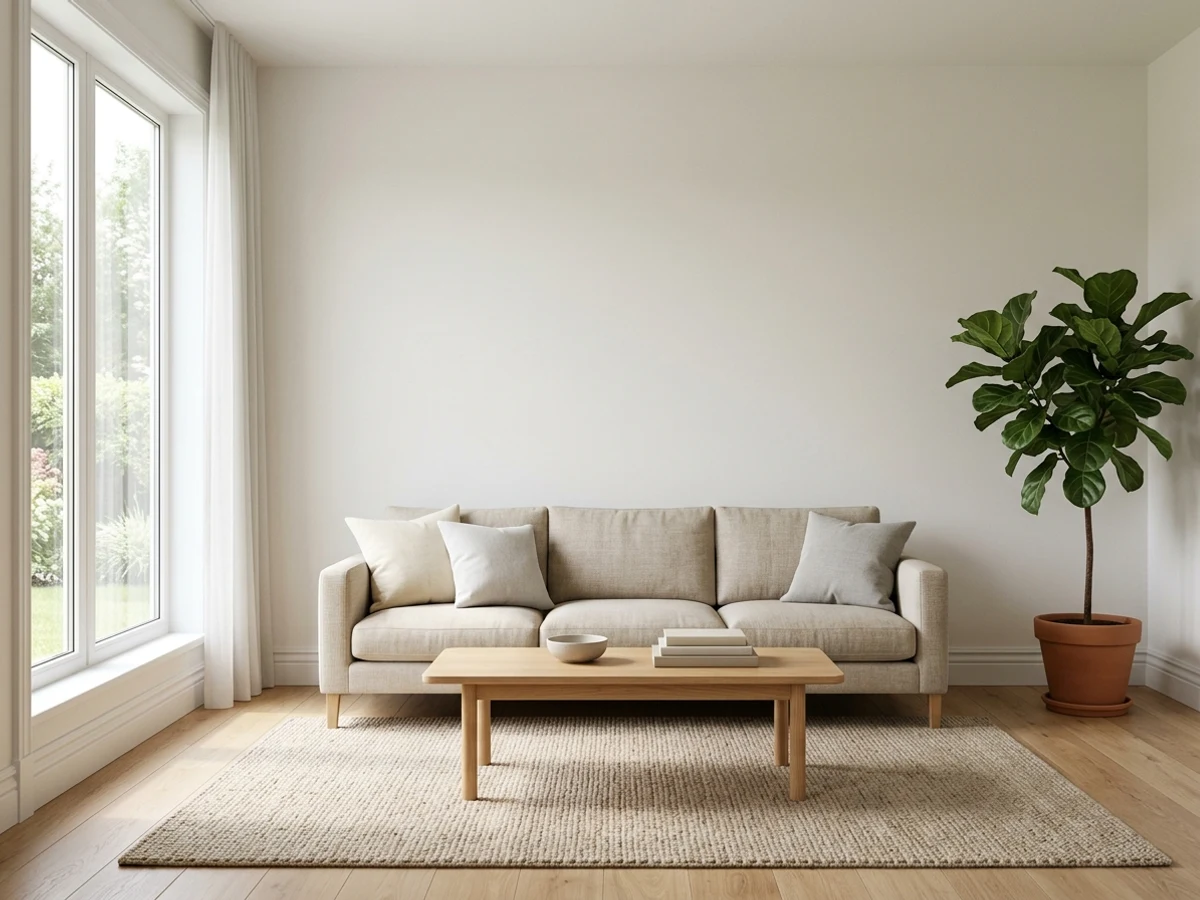
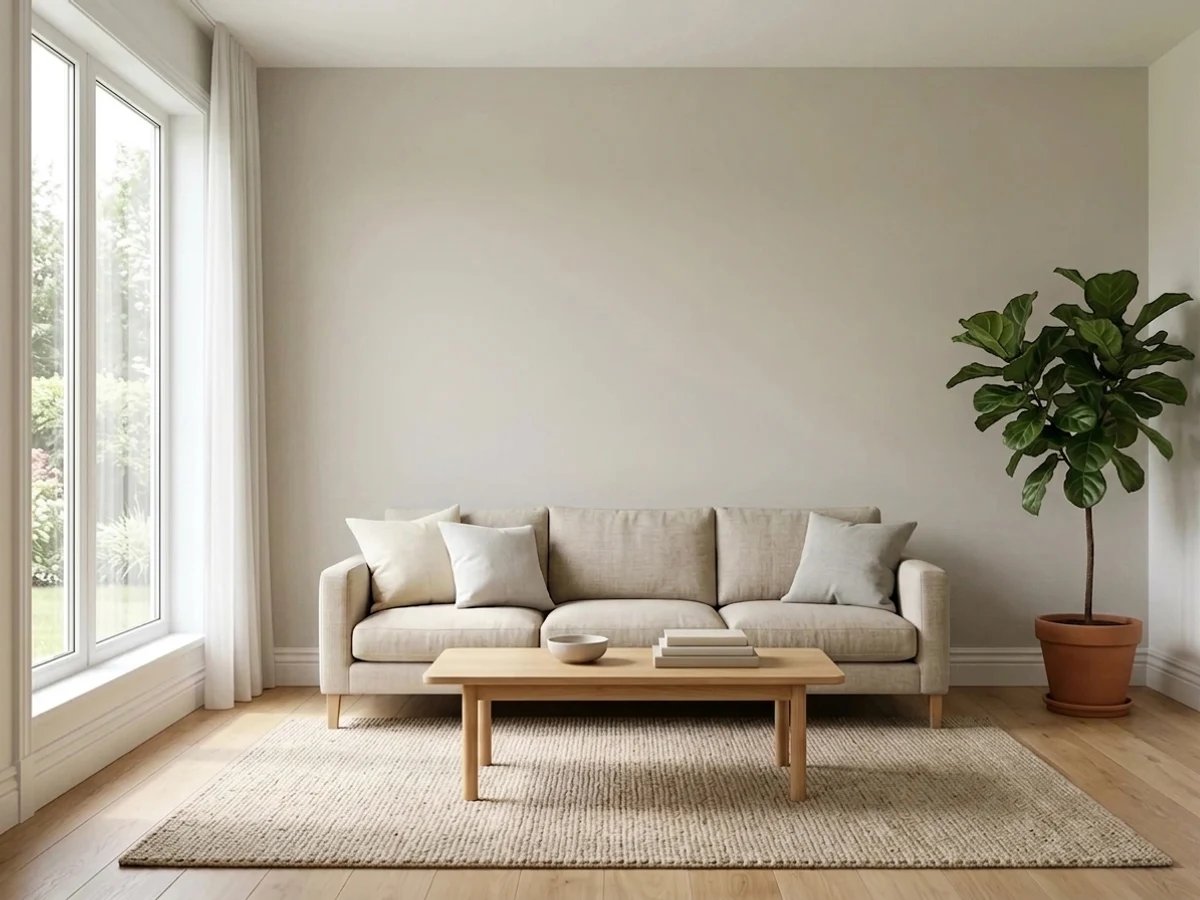
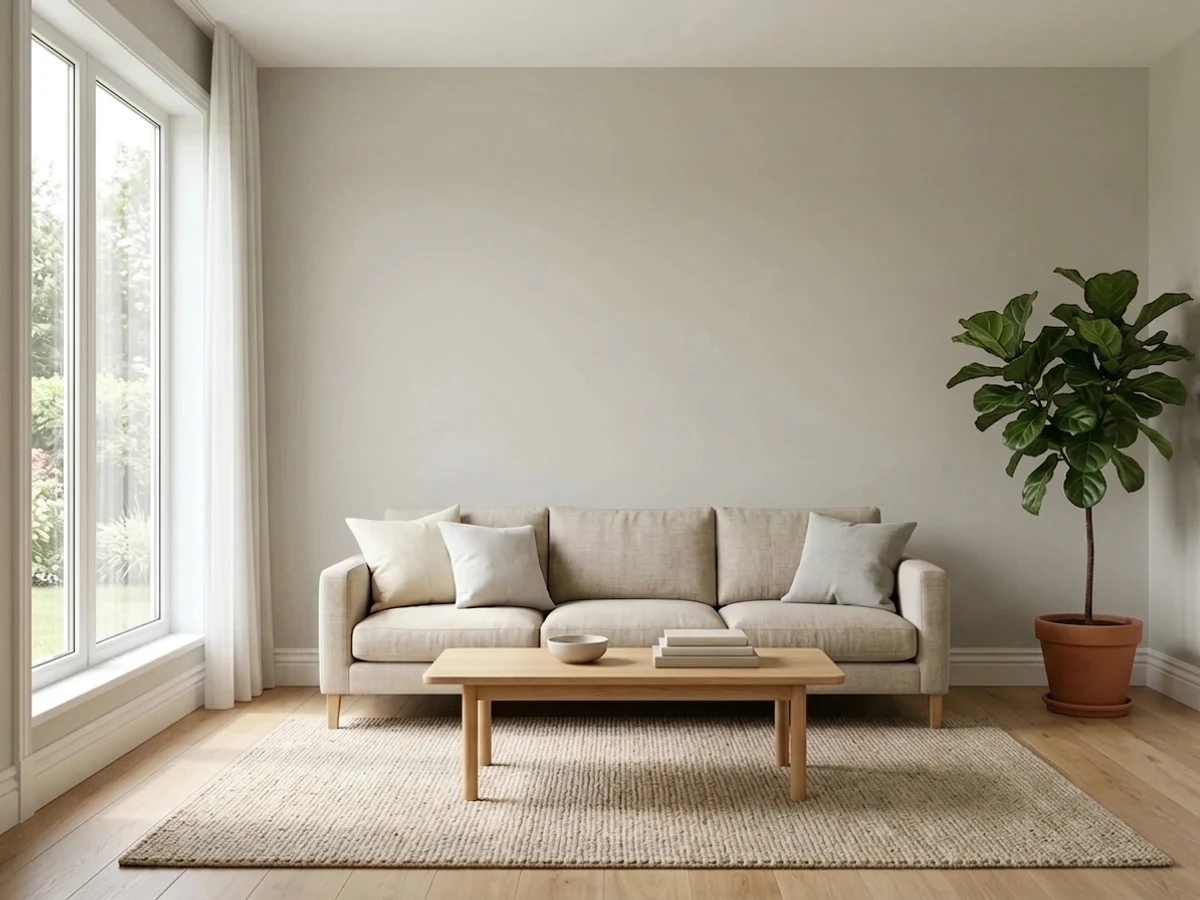
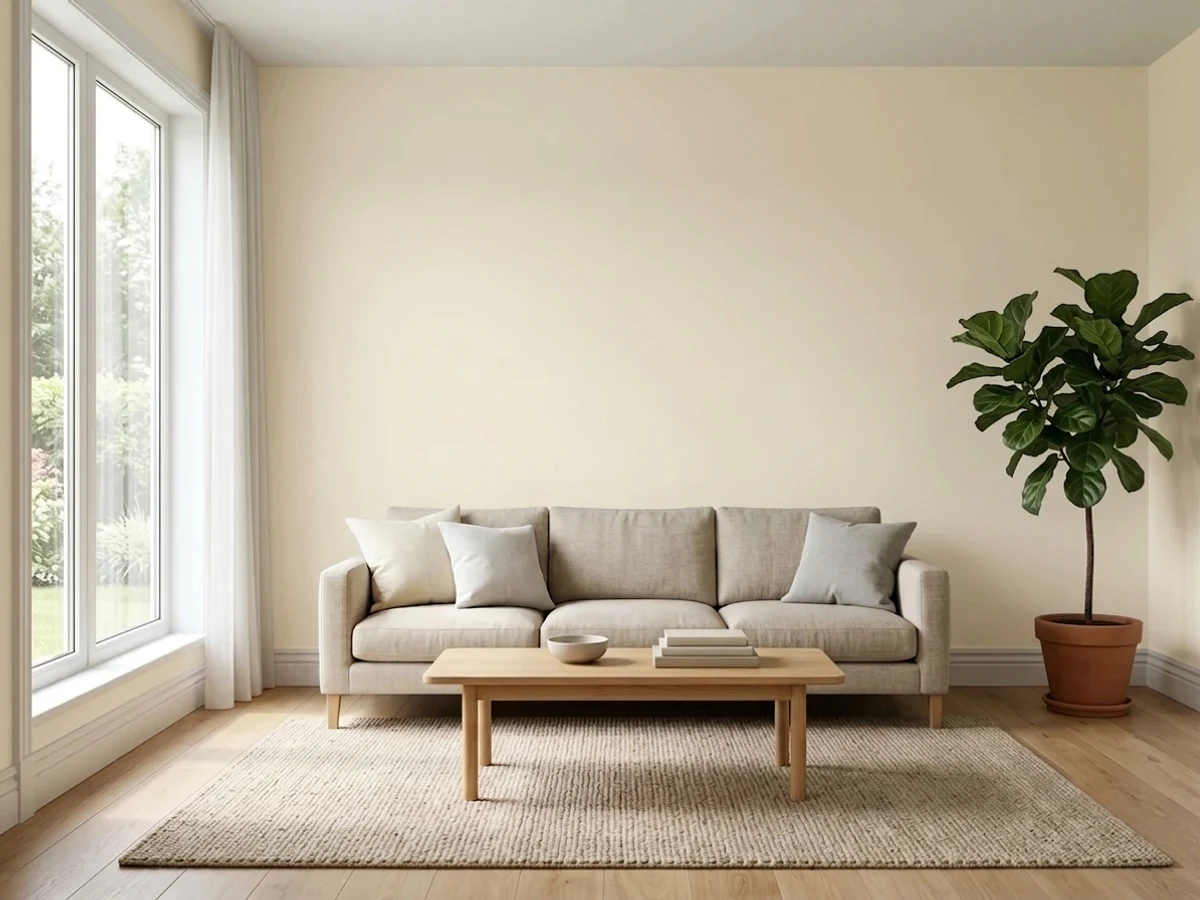
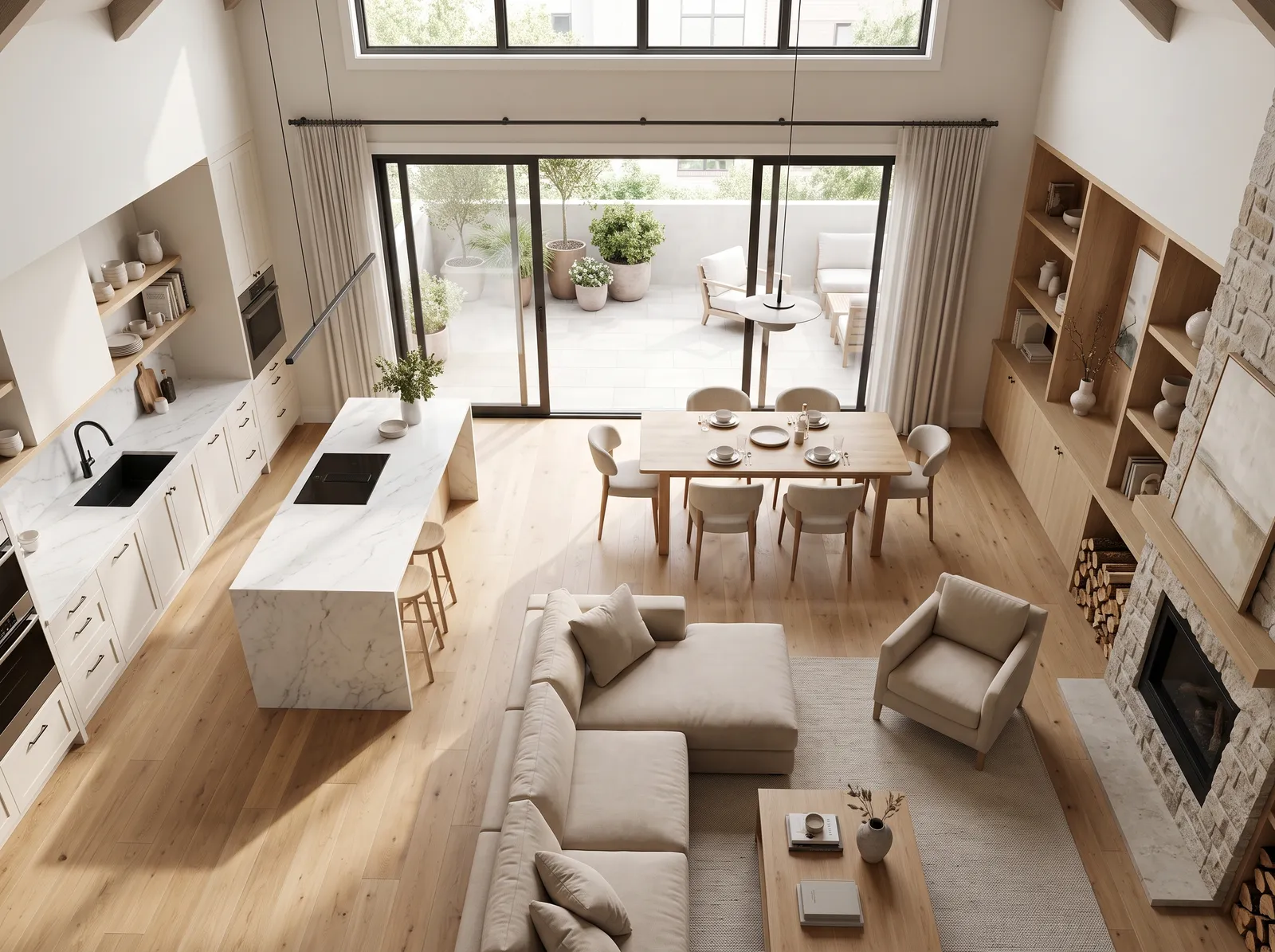
Neutral Living Room Paint Colors
4,152 neutral colors that work in living rooms, drawn from the full ~30,000-color US paint deck. Below: editor's picks specific to living rooms, then 30 picks spread across the LRV range — narrow further on the brand page when you've shortlisted.
Neutrals are the colors that aren't quite gray and aren't quite tan — the warm, low-saturation in-between bucket where greige, taupe, mushroom, bone, and accessible beige all live. They've replaced cool grays as the default safe wall color of the late 2020s, particularly in open-plan homes where one color flows through multiple rooms.
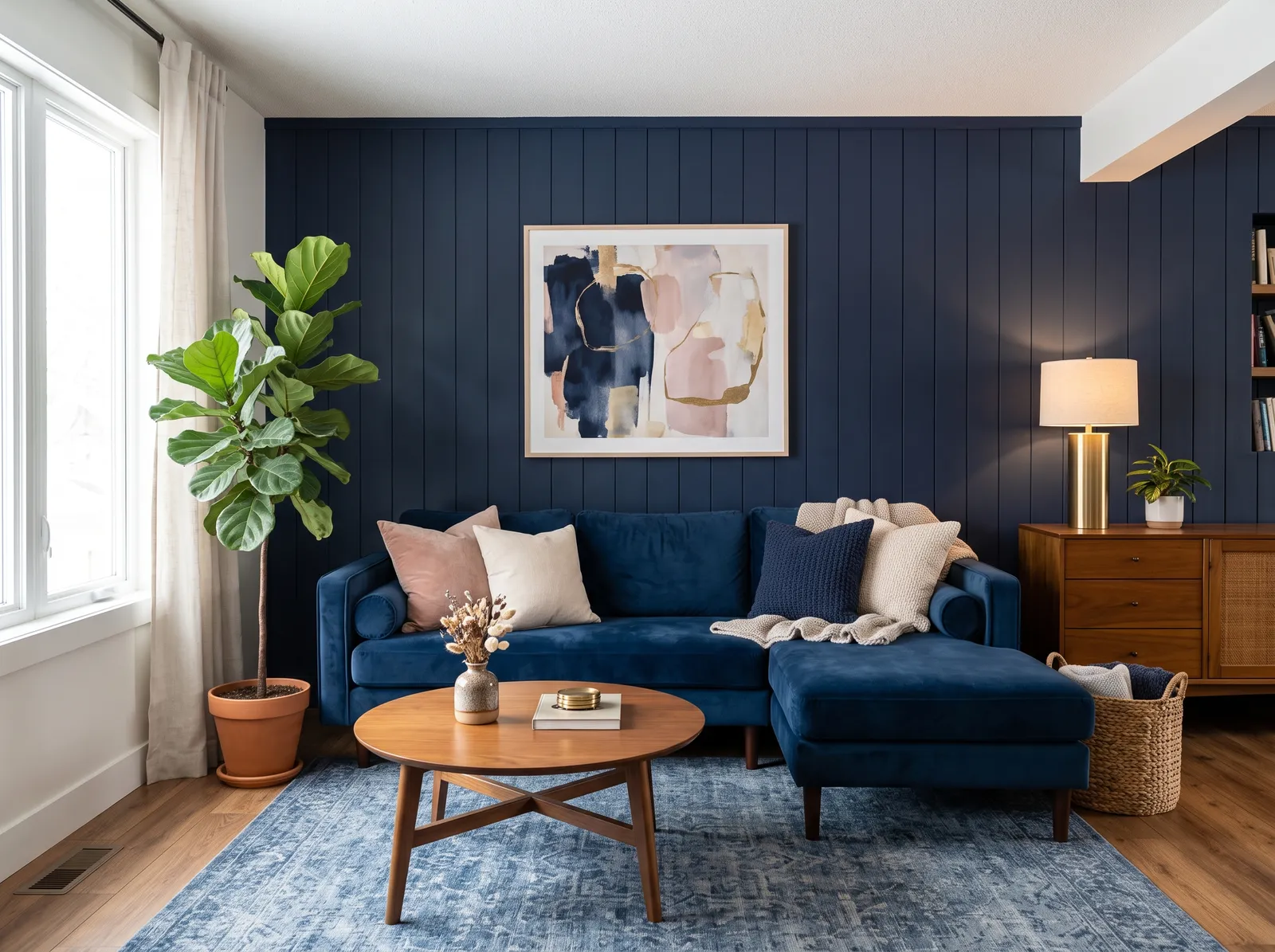
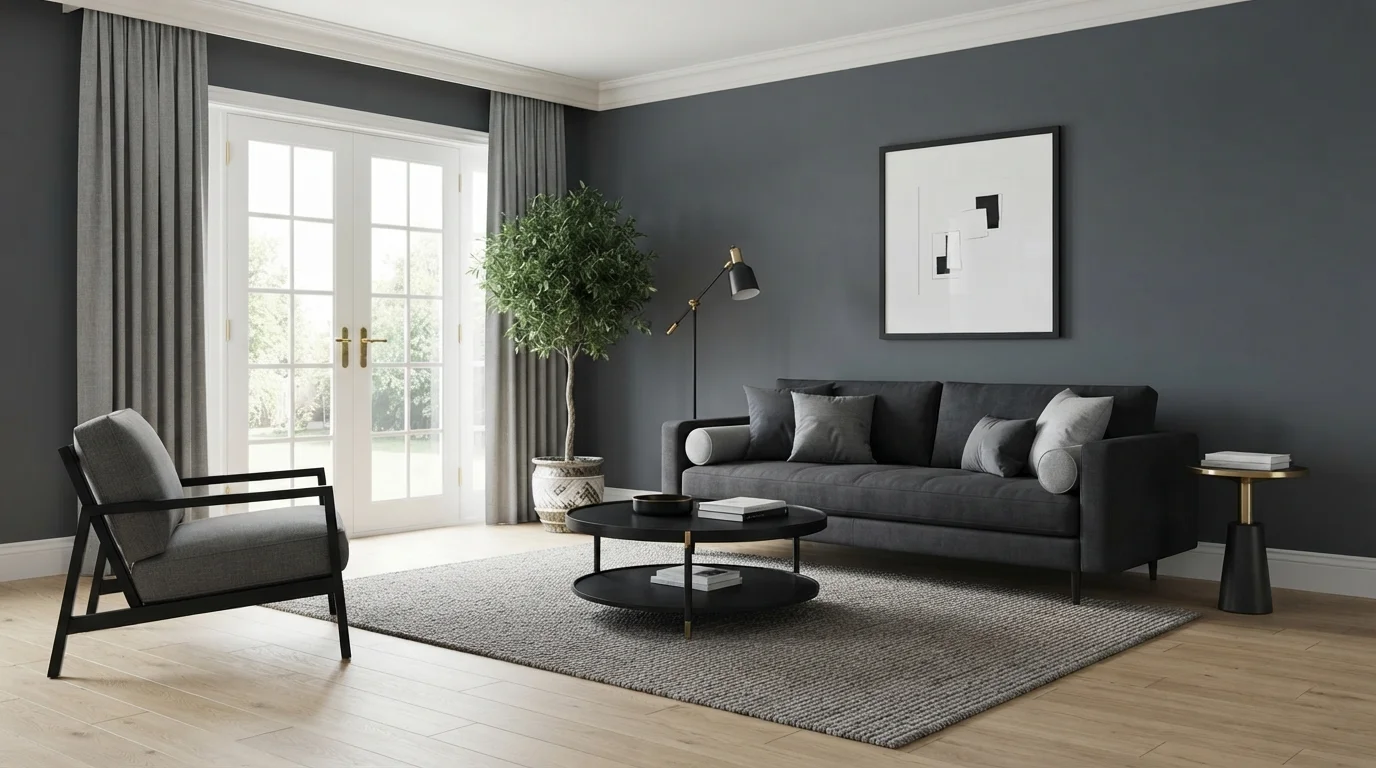
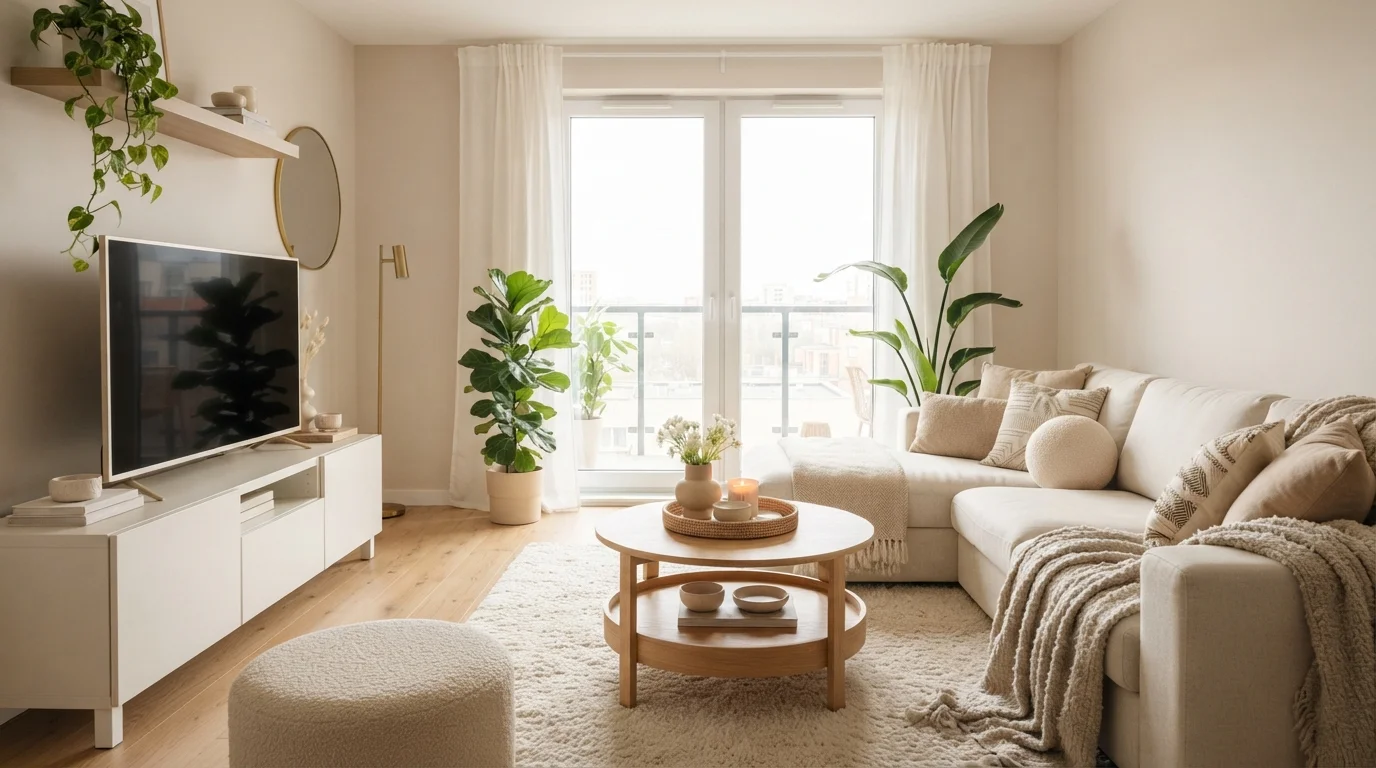
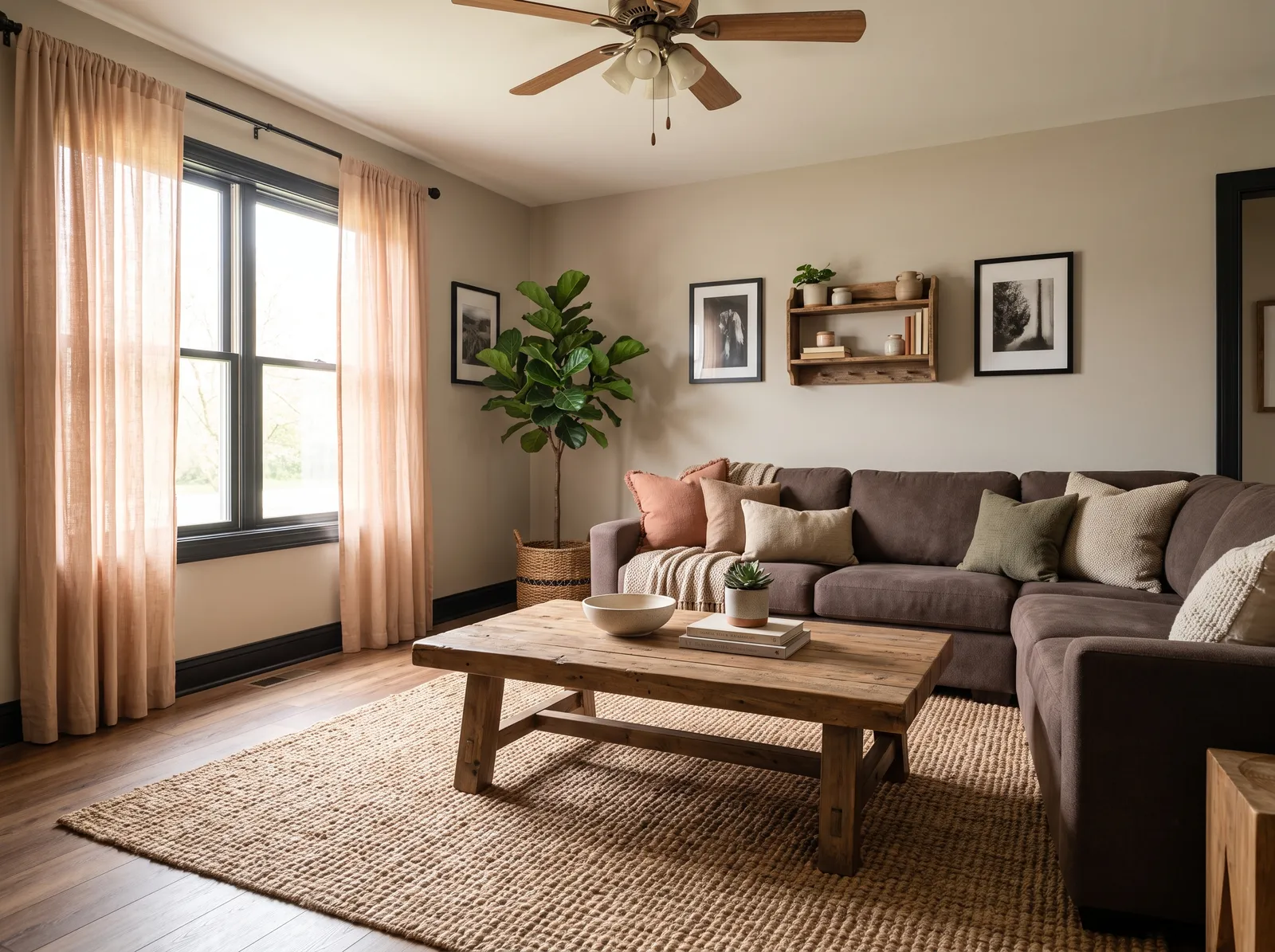
Editor's Picks: Neutral for Living Rooms
4 picks30 Neutral Picks Across the LRV Range
30 of 4,152 · sorted dark → lightLooking for more? All neutral → covers every brand; brand × family pages show full decks.
Neutral Living Room Colors at Every US Brand
21 brands · up to 10 picks eachUp to 10 picks per brand spread across the neutral LRV range, drawn from each brand's full deck. Tap any swatch with a curated guide for full spec; tap the brand title for the brand's complete neutral deck.
Behr
Benjamin Moore
Glidden
Sherwin-Williams
Valspar
PPG / Glidden
HGTV Home by Sherwin-Williams
Dunn-Edwards
Diamond Vogel
Hirshfield's
Kompozit
Dutch Boy
C2 Paint
Rodda
Farrow & Ball
Magnolia Home
Portola Paints
Clare
Annie Sloan
Backdrop
Rust-Oleum
Other Living Room Color Families
Neutral Colors in Other Rooms
Neutral Paint Colors for a Living Room
A living room is the one space where neutral paint earns its keep. It is where you watch TV, host friends, fold laundry, and let kids and pets run loose, all under light that changes from morning to night. A good neutral holds up to all of that without fighting the furniture, the rug, or the art you already own. That is why neutral is the safest, most flexible choice most people make for this room.
But "neutral" is not one color. It runs from soft warm whites to deep greige and warm gray, and the right one depends on how much light your living room gets and which way the windows face. This page walks through how to pick the right depth, the right sheen, and the right trim and ceiling pairing so your living room reads calm and finished instead of flat or dingy. Every shade you see here is mixed to order at the store, so you can match the same look across brands.
Why Neutral Just Works in a Living Room
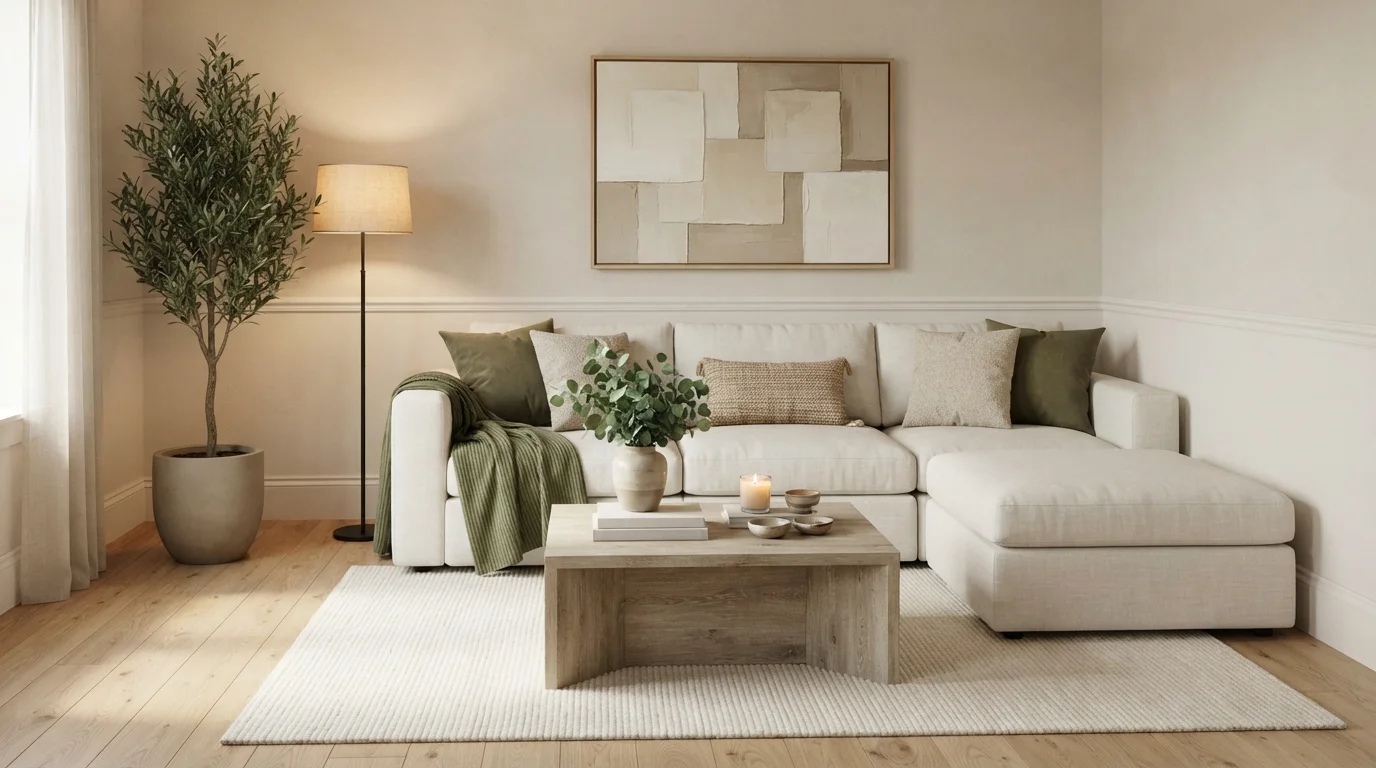
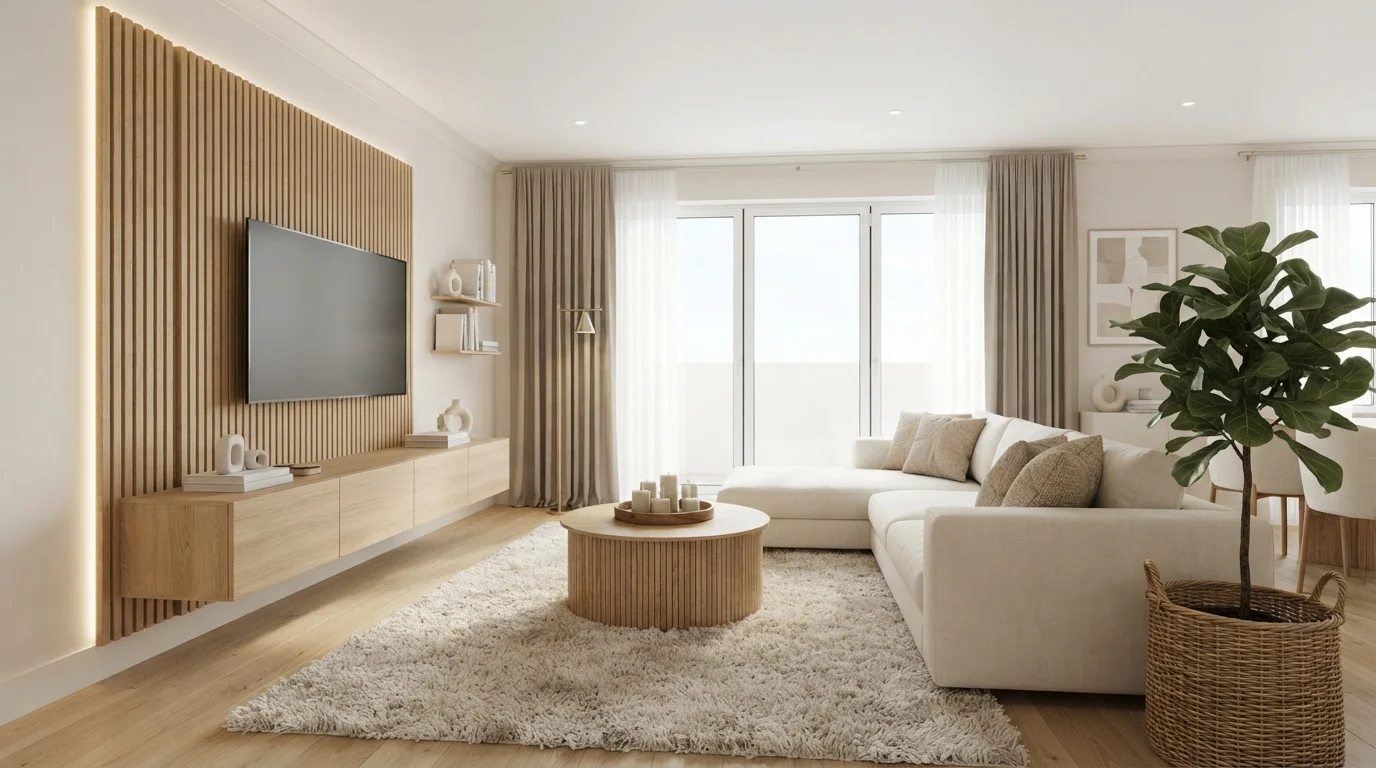
A living room collects more stuff than any other room: a sofa, a rug, a TV, lamps, throw pillows, and whatever your family carries in. A neutral wall lets all of that coexist without clashing. It also makes the room easy to change later, since you can swap pillows or a rug without repainting.
The risk with neutral here is not boldness, it is blandness. A living room is large and you look at it for hours, so a neutral with no warmth or undertone can feel cold and unfinished. The fix is to pick a neutral with a clear, gentle undertone rather than a dead flat gray, then let texture in your furnishings carry the personality.
Picking the Right Depth for Your Light
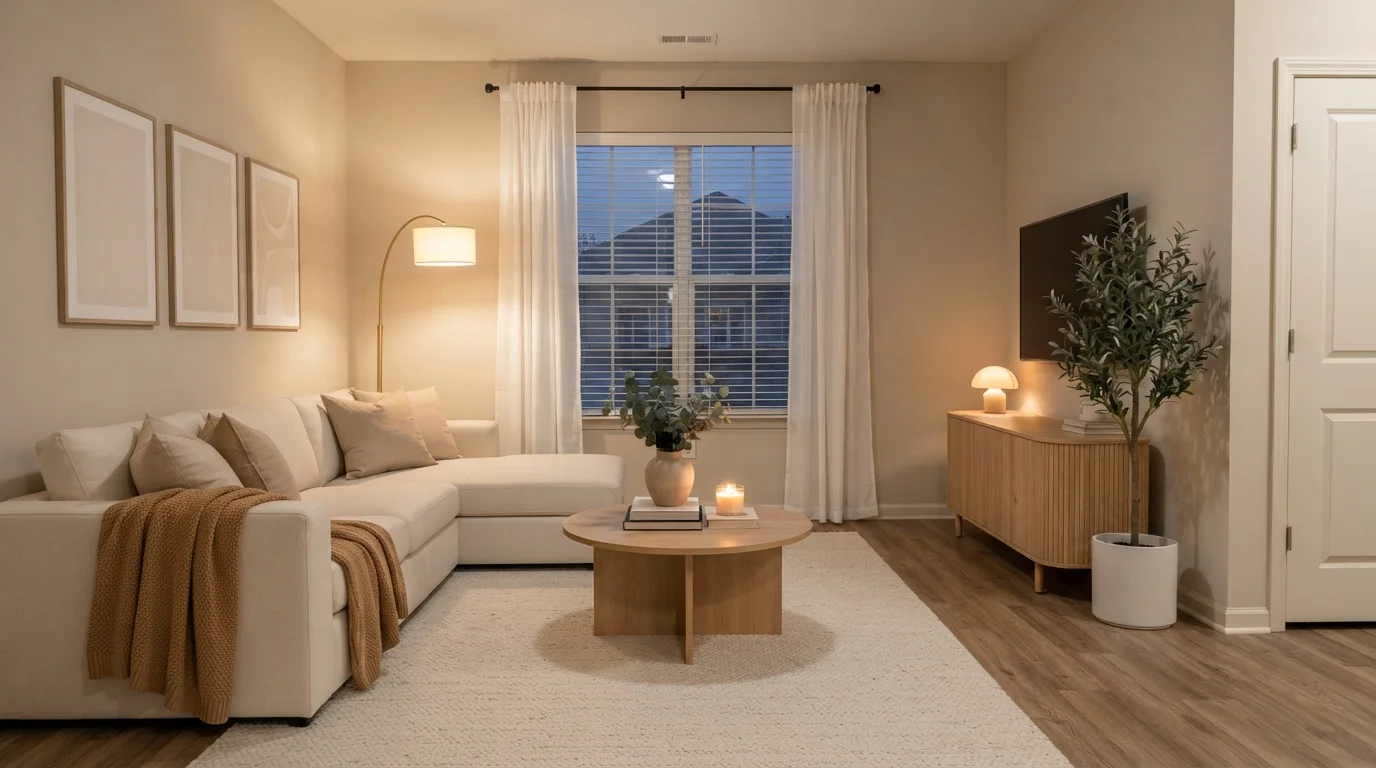
Living rooms vary wildly in light, so start there. A north-facing or shaded room reads cooler and dimmer, and a very pale neutral can go gray and flat in it; lean warmer and a touch deeper so the walls feel cozy instead of washed out. A south- or west-facing room gets strong, warm light, which can push a warm neutral toward yellow or peach, so a slightly cooler or more balanced neutral keeps it from looking sunburnt.
LRV, or light reflectance value, is the simplest way to compare depth. Most living rooms do well in the LRV 55 to 70 range: light enough to keep the room open and bright, deep enough to feel grounded rather than sterile. Go lower, toward the 40s, only if the room has big windows and you want a moody, enveloping feel.
The Right Sheen for the Room
Living room walls usually look best in a matte or eggshell finish. Flat and matte hide drywall flaws and roller marks on big open walls and soak up glare from lamps and TVs, which matters in a room where you sit and stare at a screen at night. Eggshell adds a little more wipeability if you have kids or pets without throwing off much shine.
Save satin and semi-gloss for the trim, doors, and any built-in shelving. The slight contrast in sheen between flat-to-eggshell walls and a satin trim is part of what makes a living room look intentional and clean rather than uniform and cheap.
Pairing Trim, Ceiling, and Built-Ins
The easiest pairing is a soft white trim and ceiling against your neutral walls. Match the white's undertone to the wall: a warm greige wants a warm or creamy white, while a cooler gray-neutral wants a crisper white, so the two never feel mismatched. A ceiling a shade lighter than the walls, or a clean white, keeps the room feeling tall and open.
If your living room has a fireplace surround, built-in shelves, or wood cabinetry, let those be the anchor. Painted built-ins can match the trim or go a step deeper than the walls for quiet contrast, and warm wood reads best against a neutral with a matching warm undertone. Black or brass fixtures and lamps pop nicely against a mid-depth neutral without needing a bold wall.
The Common Mistakes to Avoid
The biggest mistake is judging a neutral from a tiny chip or a phone screen. Living room neutrals shift hard with the room's light and with the color of your floor and furniture, so paint a large sample on two different walls and look at it morning, afternoon, and night before you commit. The undertone you missed on the chip is the one that will bug you for years.
The second mistake is going too pale on a big room and ending up with walls that look like unpainted primer. Other traps: a cool gray that turns blue against warm wood floors, a sheen too glossy for big lamp-lit walls, and a trim white that clashes with the wall's undertone. Because every shade here is mixed to order, you can sample the exact same color across brands and pick the one that behaves best in your room.
Neutral Living Room Paint — Frequently Asked Questions
What is the best neutral shade for a living room?+
There is no single best one, because it depends on your light. As a rule, a mid-depth neutral in the LRV 55 to 70 range works for most living rooms: warm greige or soft warm white for cooler, north-facing rooms, and a more balanced or slightly cooler neutral for bright south- and west-facing rooms. Always sample on your own walls before deciding.
What sheen should I use on living room walls?+
Matte or eggshell is the standard choice. Both hide wall flaws on big open surfaces and cut glare from lamps and the TV. Use eggshell if you want a little more wipeability for kids and pets, and save satin or semi-gloss for trim, doors, and built-ins.
How does my living room's light change a neutral?+
A lot. North-facing and shaded rooms read cooler and can make a pale neutral look gray and flat, so lean warmer and slightly deeper. South- and west-facing rooms get strong warm light that can push warm neutrals toward yellow, so a more balanced neutral keeps it clean. Light also shifts from morning to night, which is why you check a sample at different times of day.
What trim and ceiling color go with a neutral living room?+
A soft white trim and ceiling is the easy, reliable pairing. Match the white's undertone to the wall, a warm white for warm greige and a crisper white for cooler neutrals, so they do not clash. A ceiling a shade lighter than the walls or a clean white keeps the room feeling open.
Why does my gray living room look blue or cold?+
That usually means the neutral has a cool undertone that your light and warm wood floors are amplifying. Cool grays often turn blue or sterile in a living room, especially in lower light. Switch to a greige or warm-leaning neutral, and confirm it with a large sample against your actual floor before repainting.
Can I match the same neutral across different paint brands?+
Yes. Every color shown here is mixed to order at the store, and the same target shade can be cross-matched between brands. That lets you sample the exact look from more than one brand and choose whichever holds up best under your living room's light.