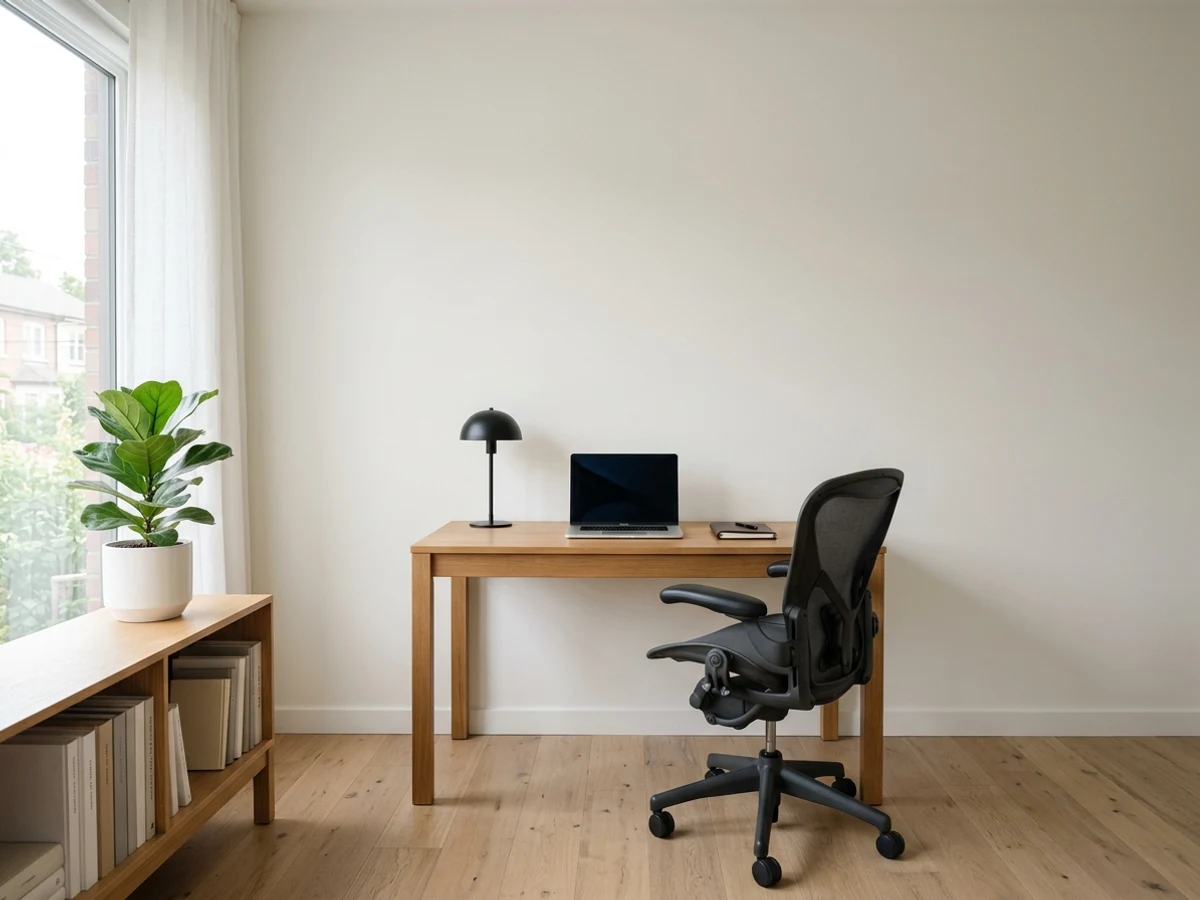
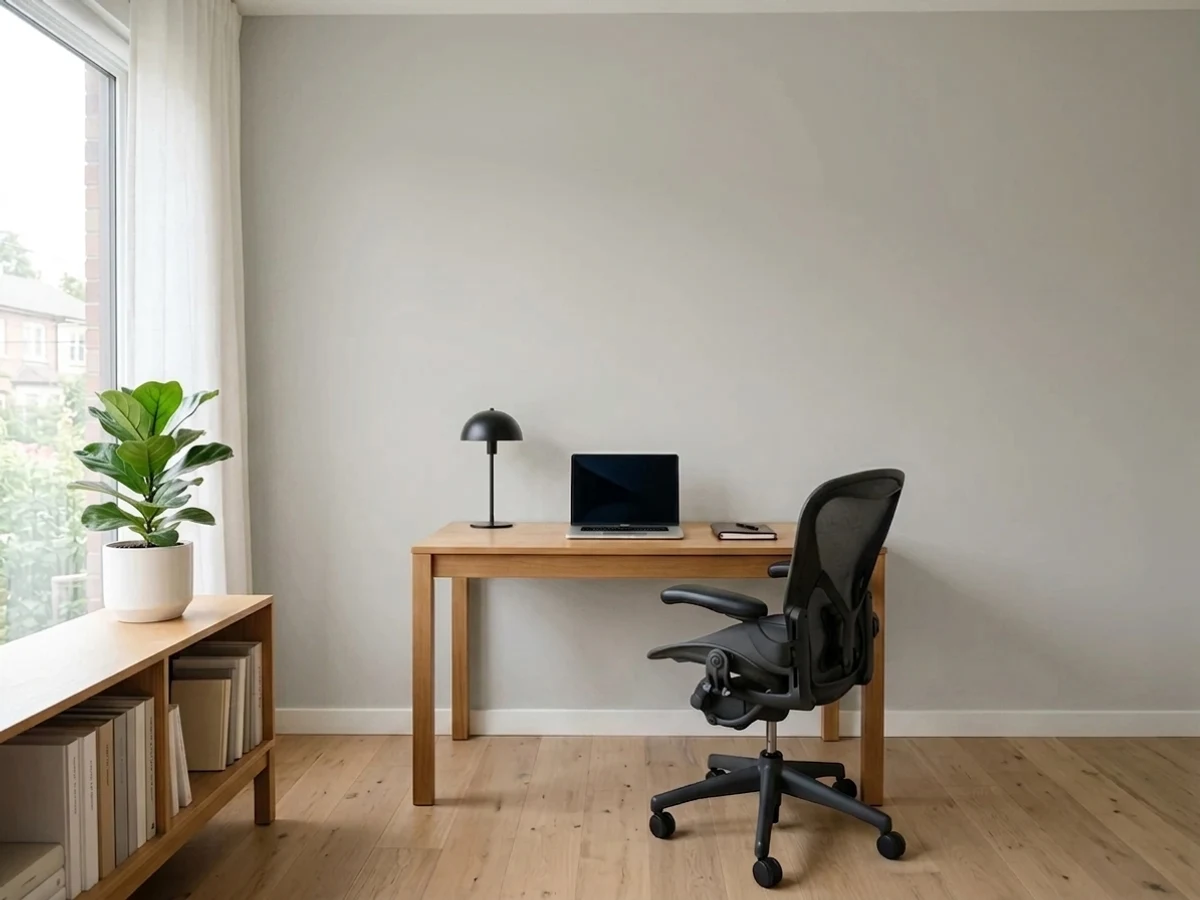
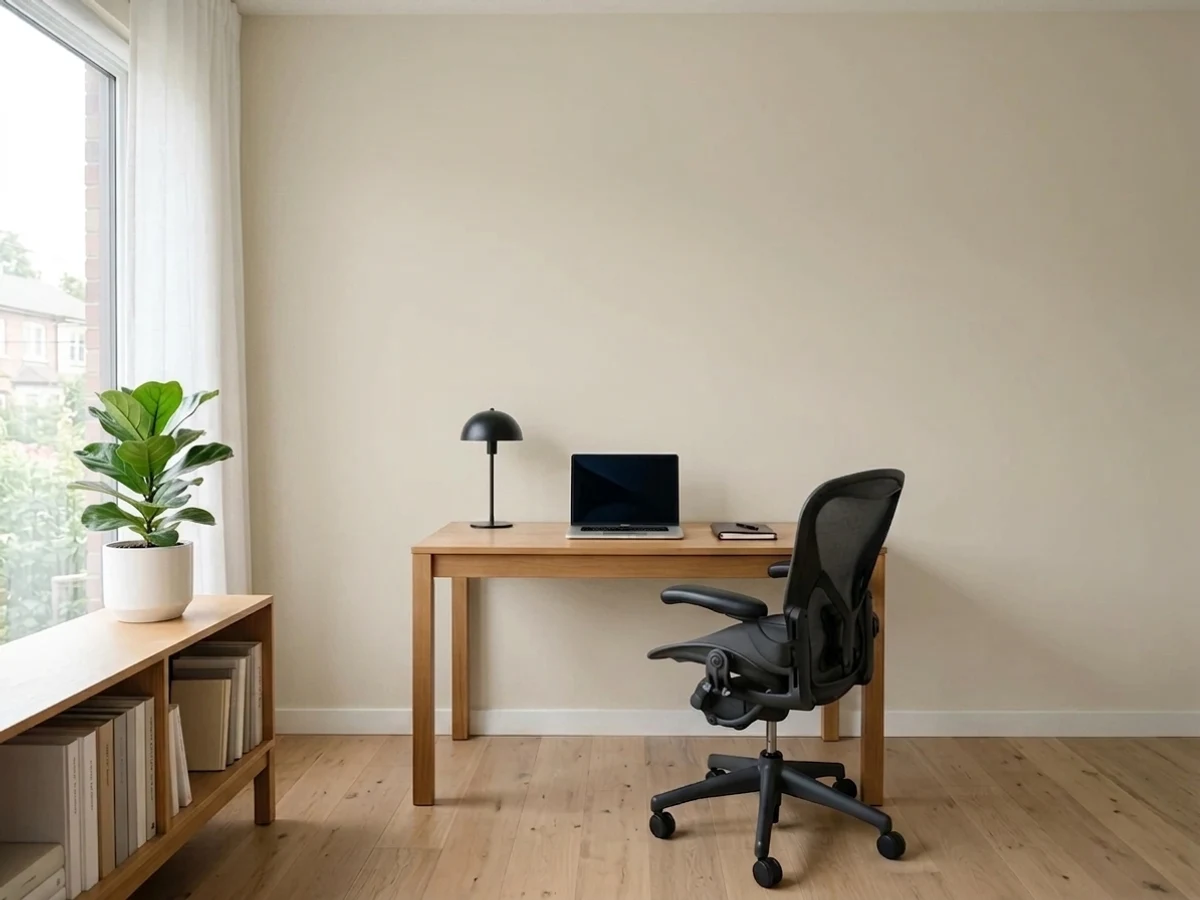
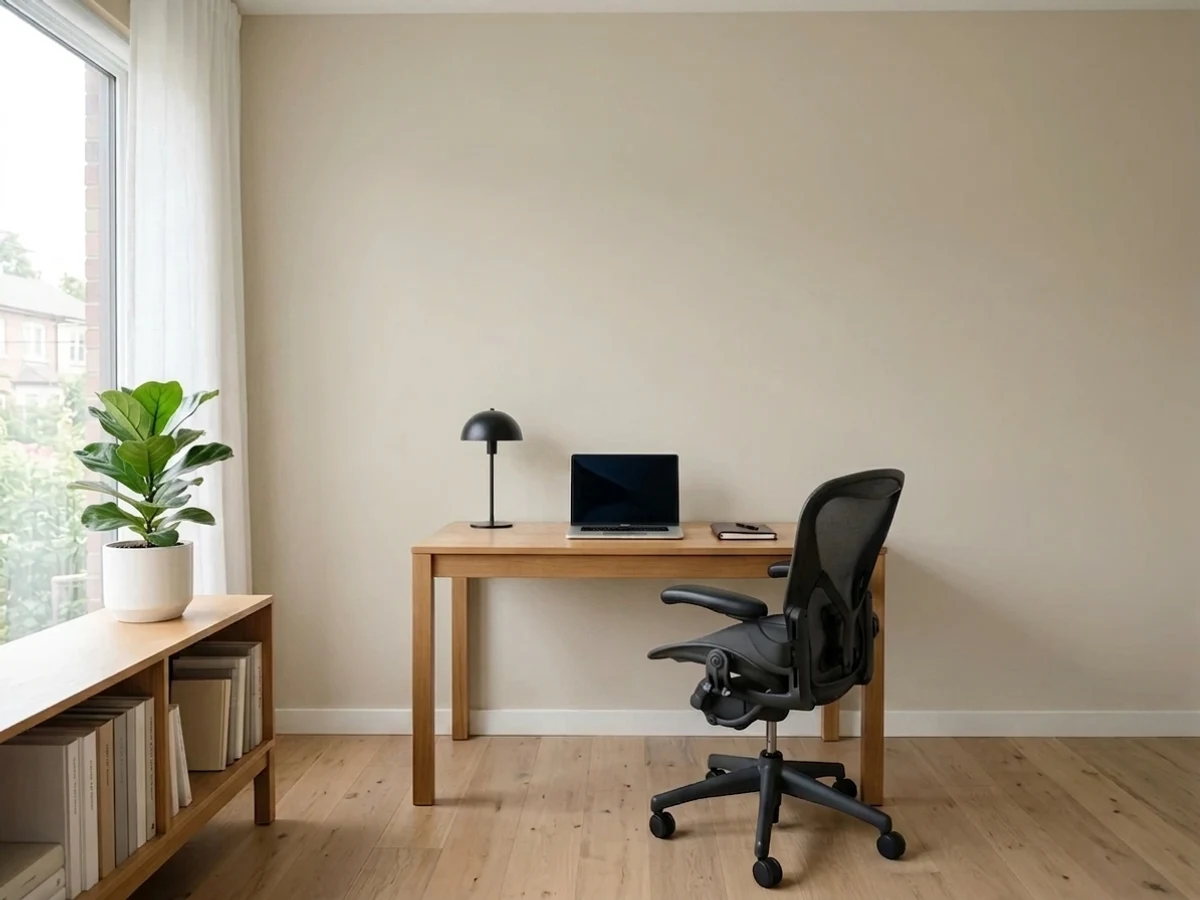
Neutral Home Office Paint Colors
4,152 neutral colors that work in home offices, drawn from the full ~30,000-color US paint deck. Below: editor's picks specific to home offices, then 30 picks spread across the LRV range — narrow further on the brand page when you've shortlisted.
Neutrals are the colors that aren't quite gray and aren't quite tan — the warm, low-saturation in-between bucket where greige, taupe, mushroom, bone, and accessible beige all live. They've replaced cool grays as the default safe wall color of the late 2020s, particularly in open-plan homes where one color flows through multiple rooms.
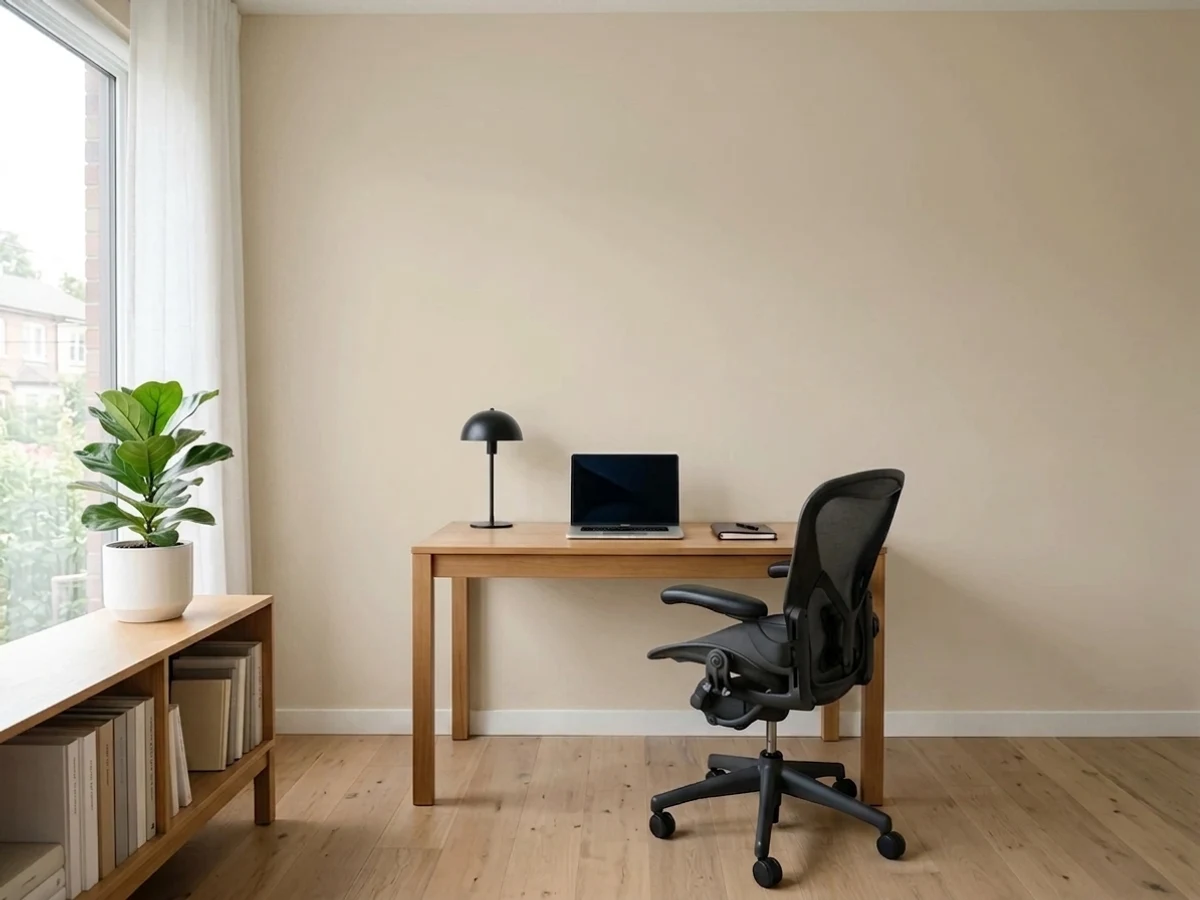
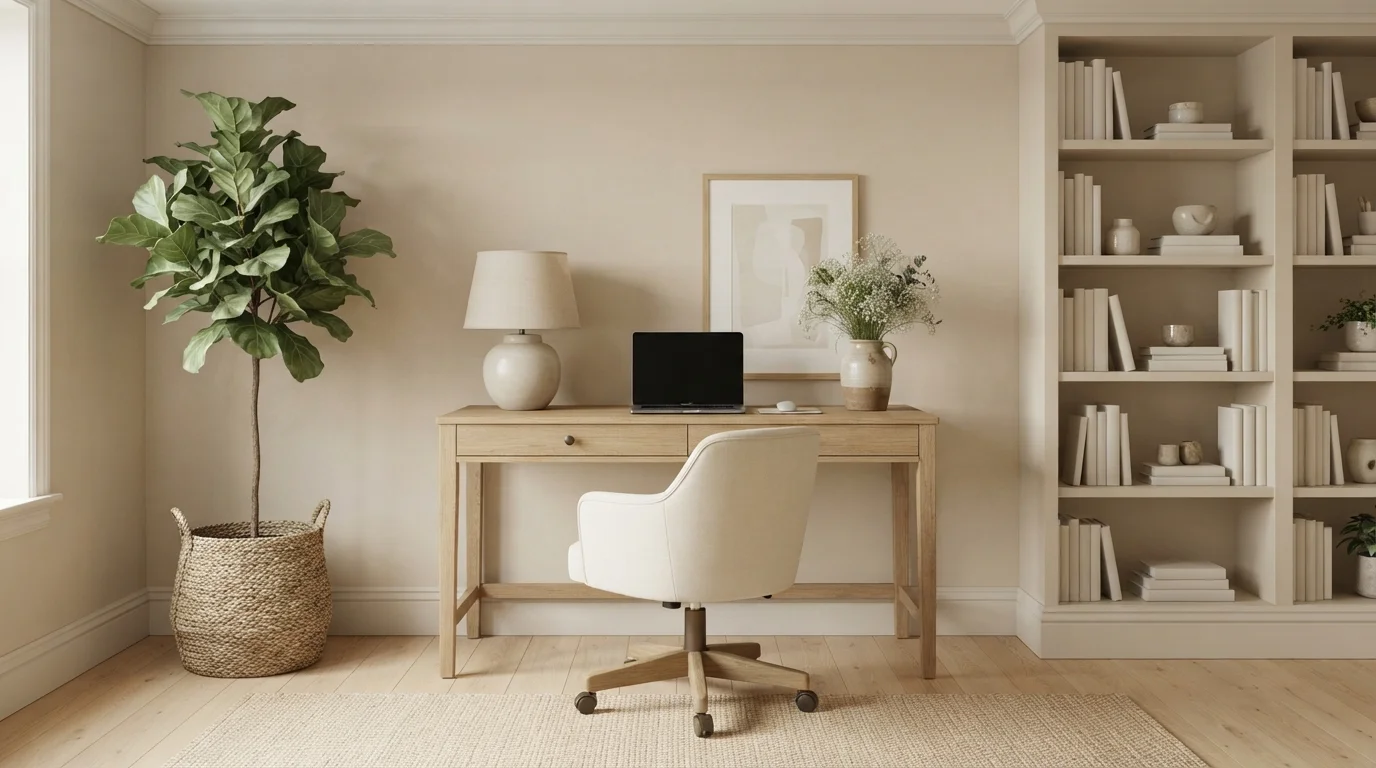
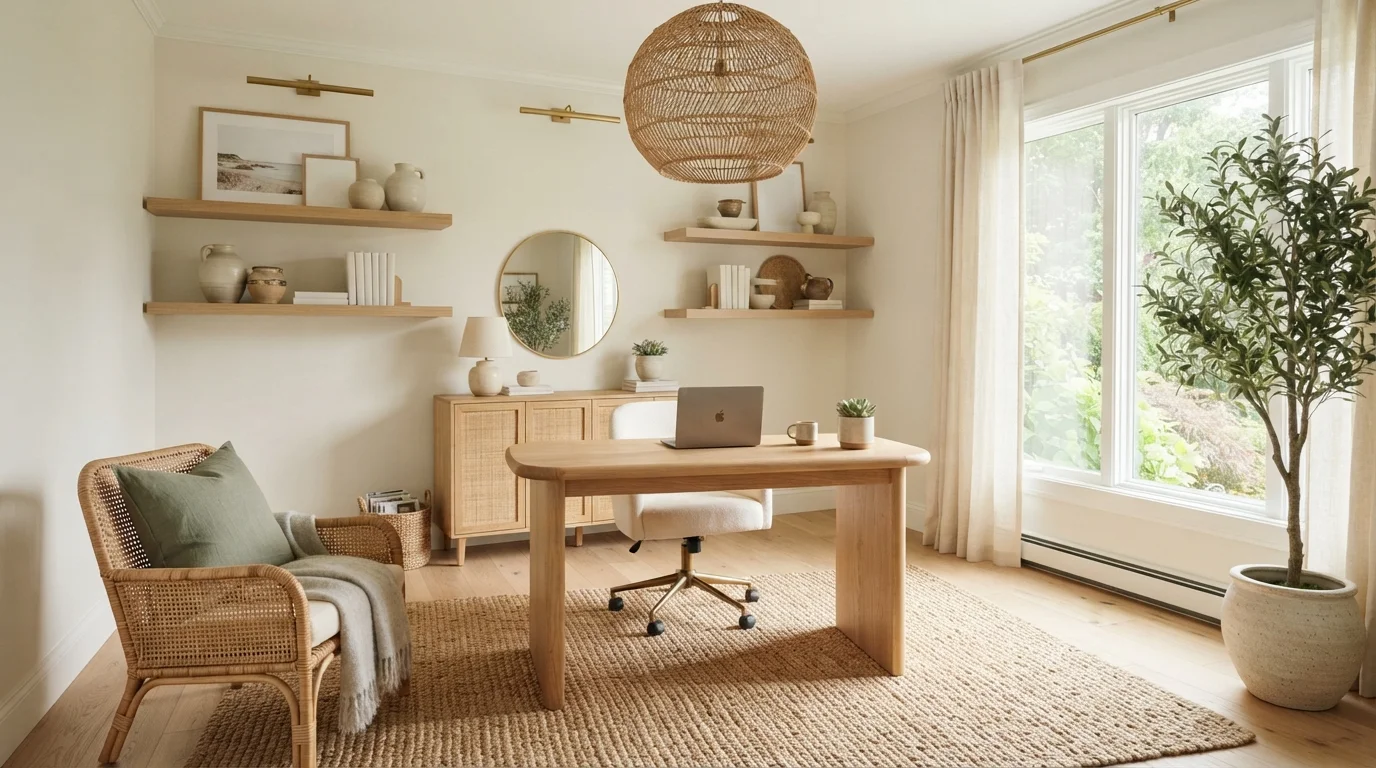
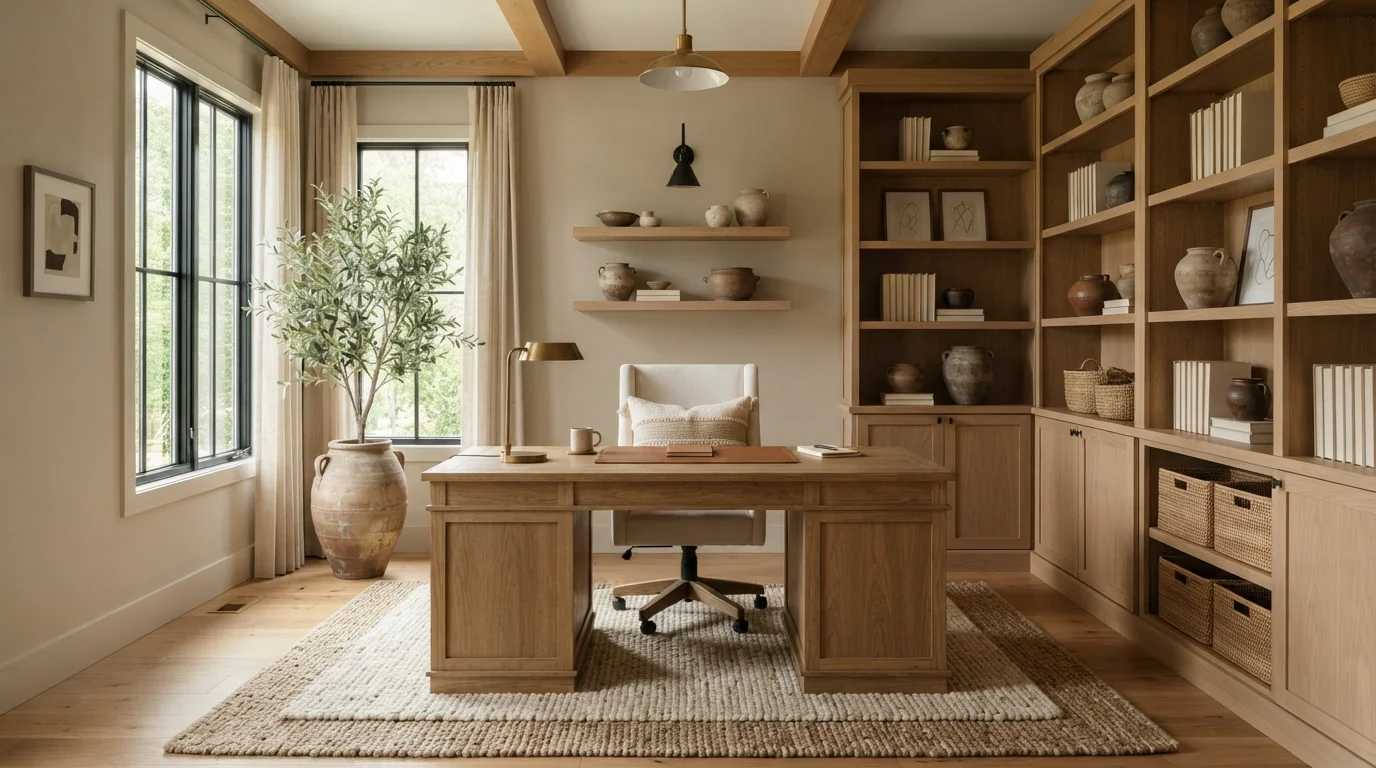
Editor's Picks: Neutral for Home Offices
4 picks30 Neutral Picks Across the LRV Range
30 of 4,152 · sorted dark → lightLooking for more? All neutral → covers every brand; brand × family pages show full decks.
Neutral Home Office Colors at Every US Brand
21 brands · up to 10 picks eachUp to 10 picks per brand spread across the neutral LRV range, drawn from each brand's full deck. Tap any swatch with a curated guide for full spec; tap the brand title for the brand's complete neutral deck.
Behr
Benjamin Moore
Glidden
Sherwin-Williams
Valspar
PPG / Glidden
HGTV Home by Sherwin-Williams
Dunn-Edwards
Diamond Vogel
Hirshfield's
Kompozit
Dutch Boy
C2 Paint
Rodda
Farrow & Ball
Magnolia Home
Portola Paints
Clare
Annie Sloan
Backdrop
Rust-Oleum
Other Home Office Color Families
Neutral Colors in Other Rooms
Neutral Paint Colors for a Home Office
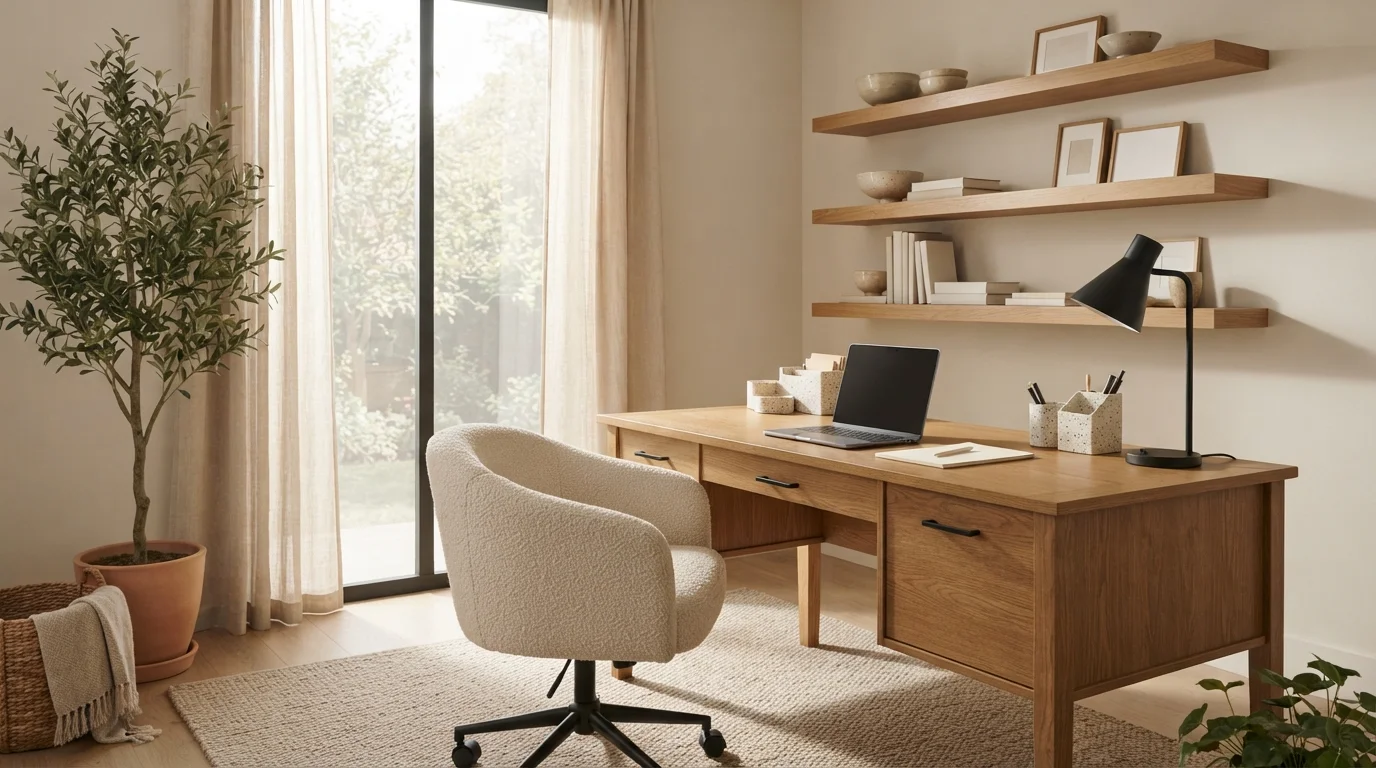
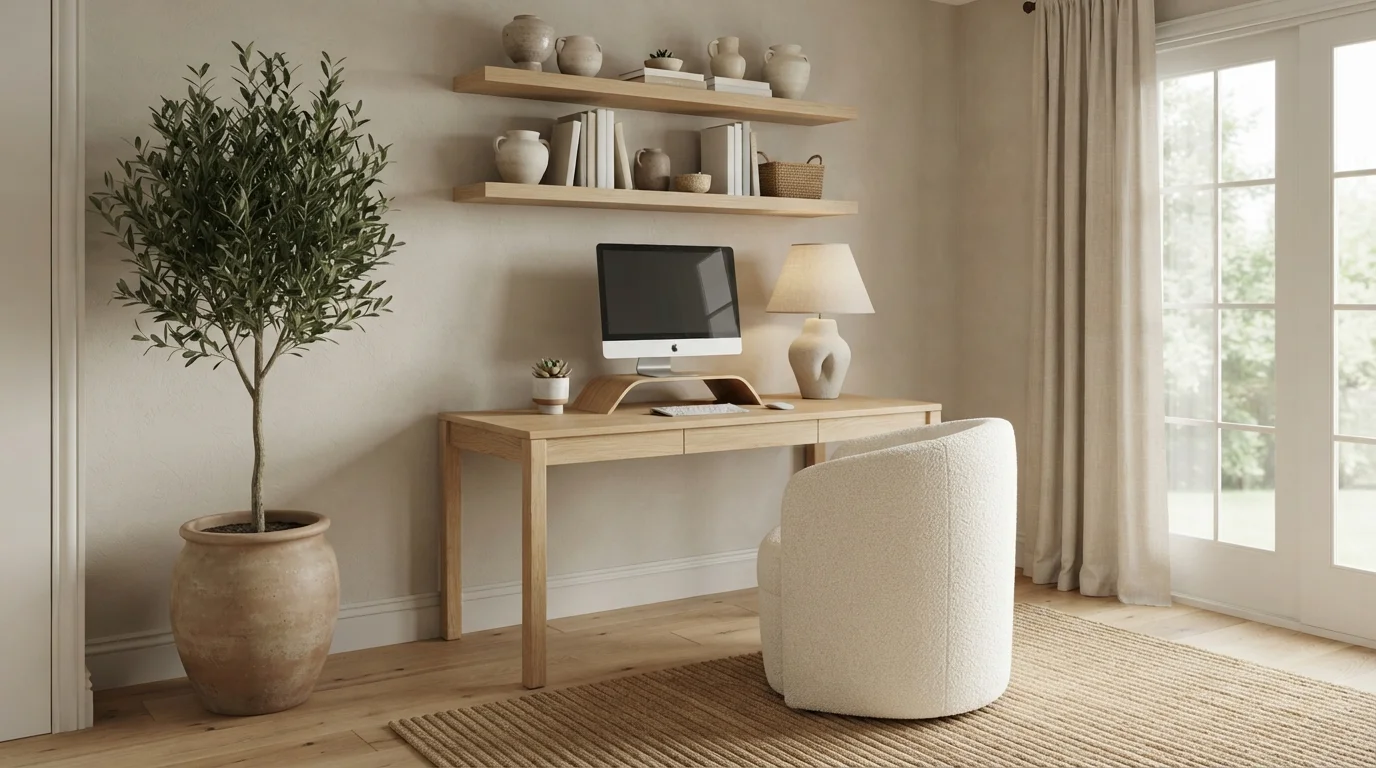
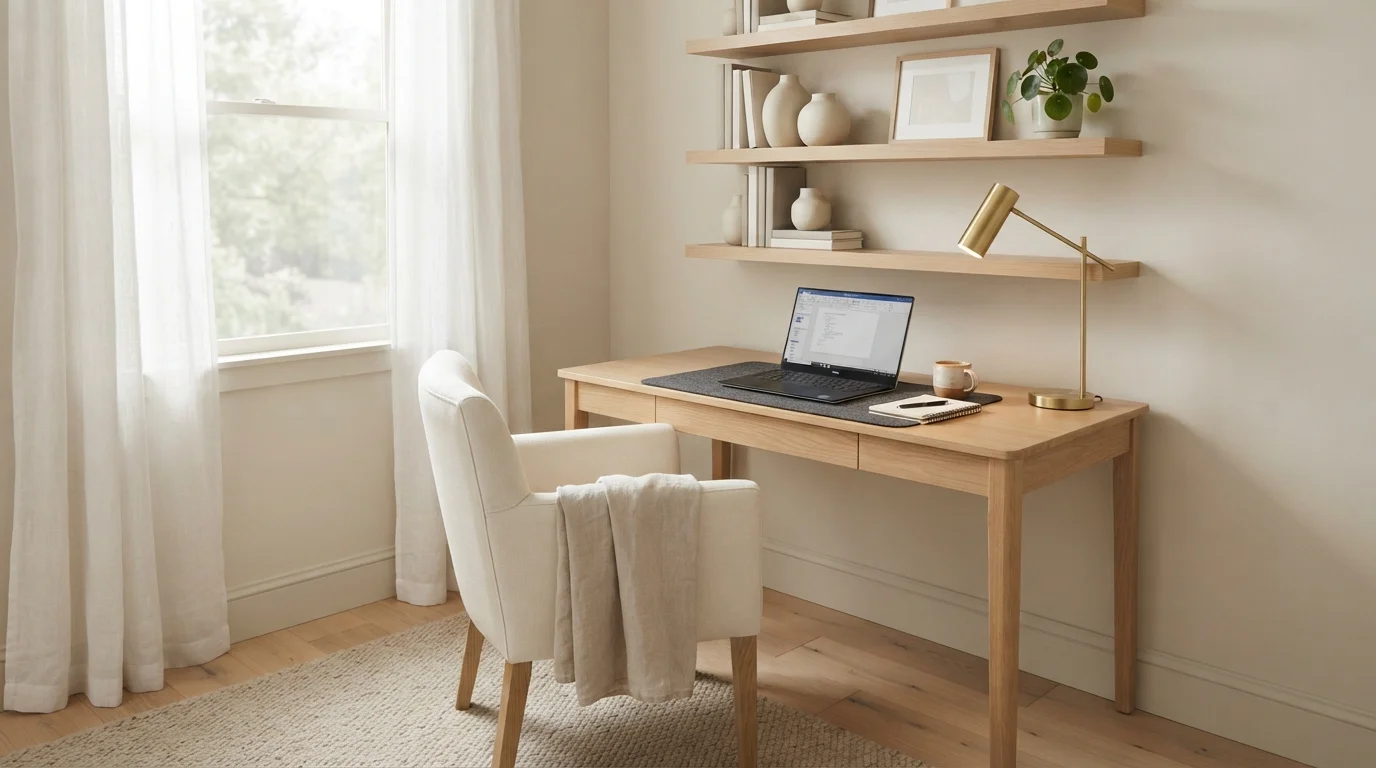
A home office is one of the easiest rooms to get right with a neutral. You spend hours staring at a screen, your wall sits in your peripheral vision all day, and a calm backdrop keeps your eyes from getting tired. Neutrals also photograph clean on video calls and never fight whatever furniture, shelving, or art you bring in.
The trick is that "neutral" covers a huge range, from a barely-there off-white to a deep greige that reads almost like a color. Which one works depends on how much light your office gets, what you do in there, and whether you want the room to feel bright and energizing or quiet and focused. Below is how to choose the right depth, the right finish, and the right partners for the rest of the room.
Why Neutral Is the Smart Choice for a Home Office
A home office is a working room, not a showpiece. You need a backdrop that doesn't compete with your monitor, your notes, or your face on a call, and a neutral does exactly that. It stays quiet so the work stays front and center.
Neutrals also keep the room flexible as your setup changes. Swap the desk, add a bookshelf, or repaint a piece of furniture and the walls still work. That low-drama quality is the whole reason this room and this color family pair so well.
Picking the Right Depth by Your Office Light
Light is what decides the shade. A bright room with big windows can carry a deeper, warmer neutral without feeling closed in, and that depth actually cuts screen glare and softens the space. A darker office or one with a single small window does better with a lighter neutral that bounces what little light it gets.
LRV (light reflectance value) is the number to lean on here. A neutral in the high 60s to 70s keeps a dim office from feeling like a cave, while something in the 40s to 50s gives a sunny room cozy focus without going gloomy. Watch the undertone too: a north-facing office leans cool, so a warmer greige keeps it from feeling clinical, and a south- or west-facing room can take a cooler neutral that would feel flat anywhere else.
The Right Finish for Walls You Work Near
For most home office walls, eggshell or matte is the sweet spot. It hides small surface flaws, looks calm under both daylight and lamplight, and doesn't throw glare back at you while you work. A high-gloss wall in an office is a mistake because every overhead light and window turns into a hotspot you'll see all day.
If you have an office with kids around, a mudroom-adjacent setup, or walls you'll bump with a chair, step up to a scrubbable matte or eggshell so you can wipe marks without burnishing. Save satin and semi-gloss for the trim, doors, and any built-in shelving, where the extra durability and slight sheen actually help.
Pairing Neutral With Trim, Built-Ins, and Fixtures
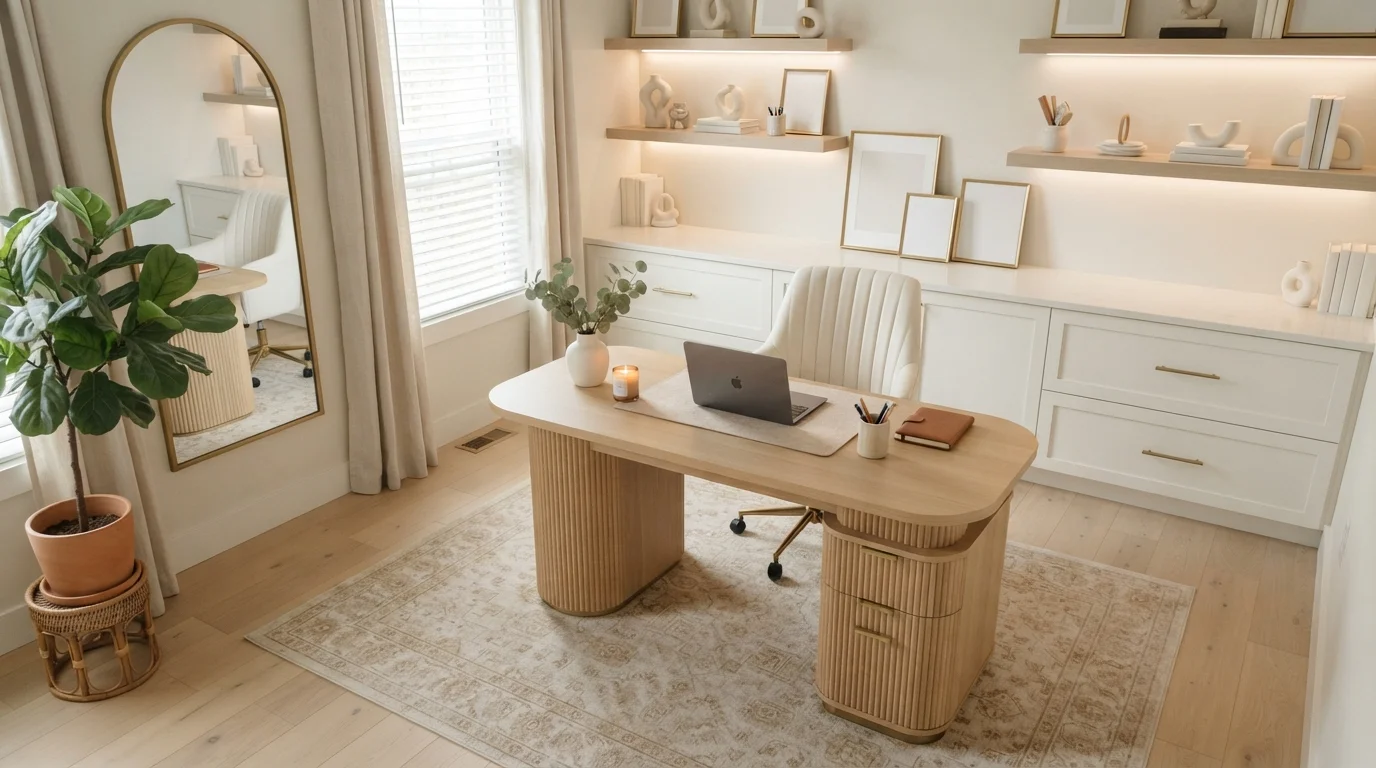
The cleanest look is a neutral wall with trim in a soft white that shares the same warm or cool lean. Match the undertones and the room feels intentional; mix a cool white trim against a warm greige wall and it can read dingy. Keep the ceiling a simple white so the eye has somewhere to rest above all the shelving and gear.
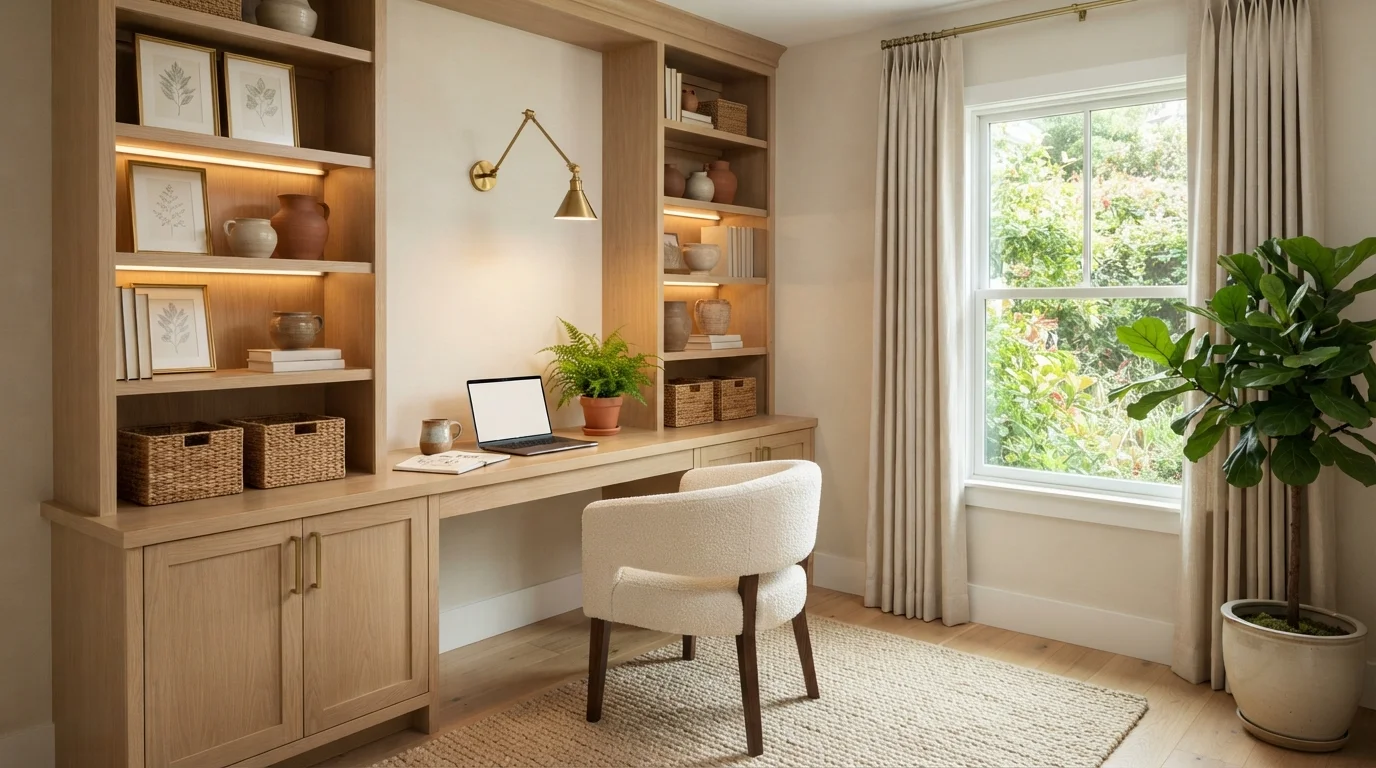
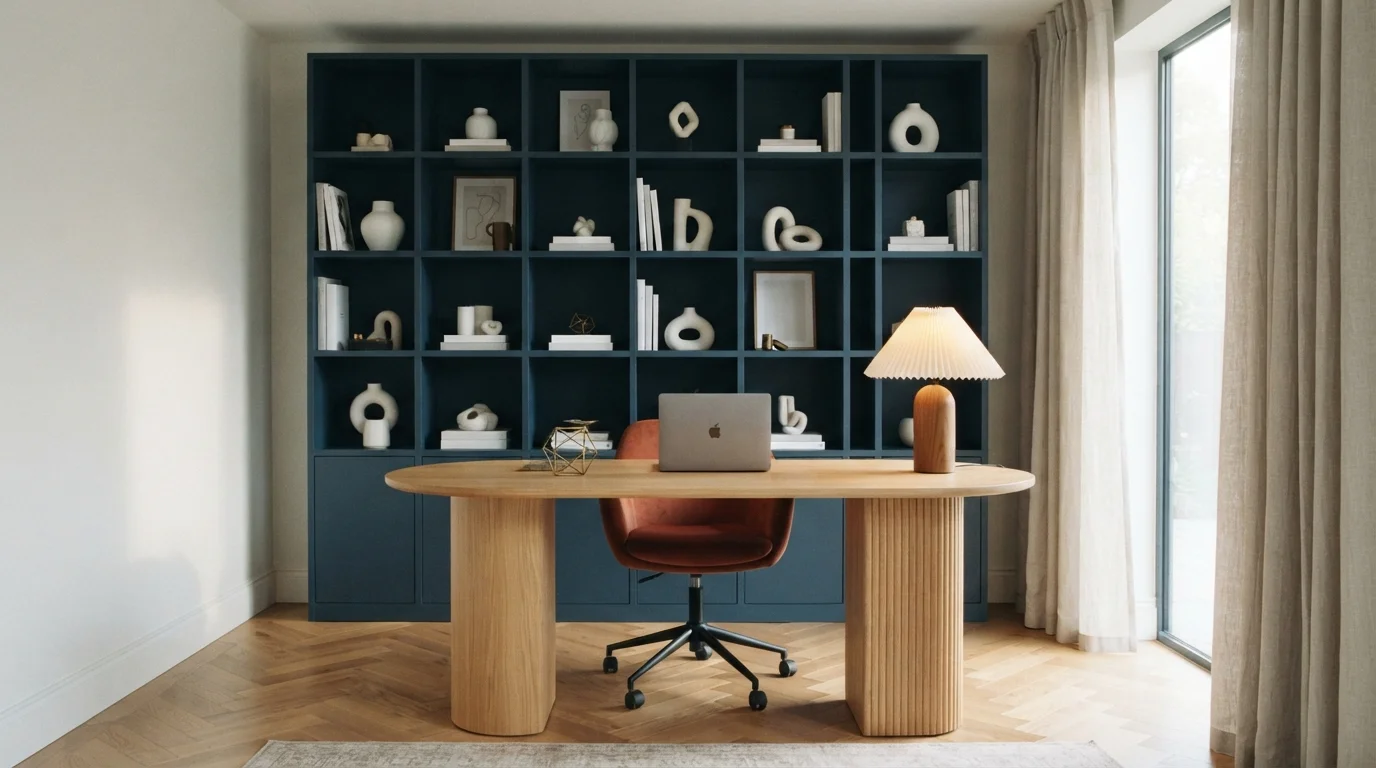
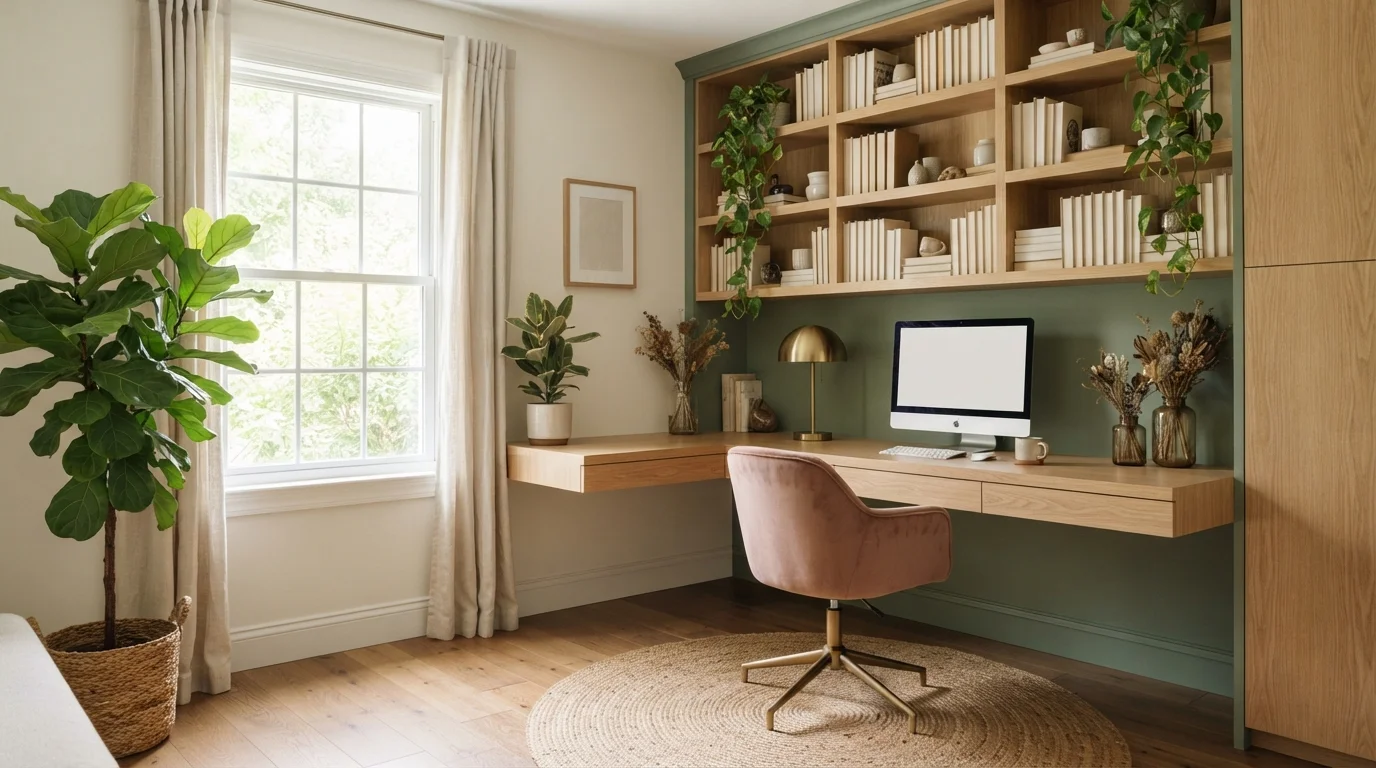
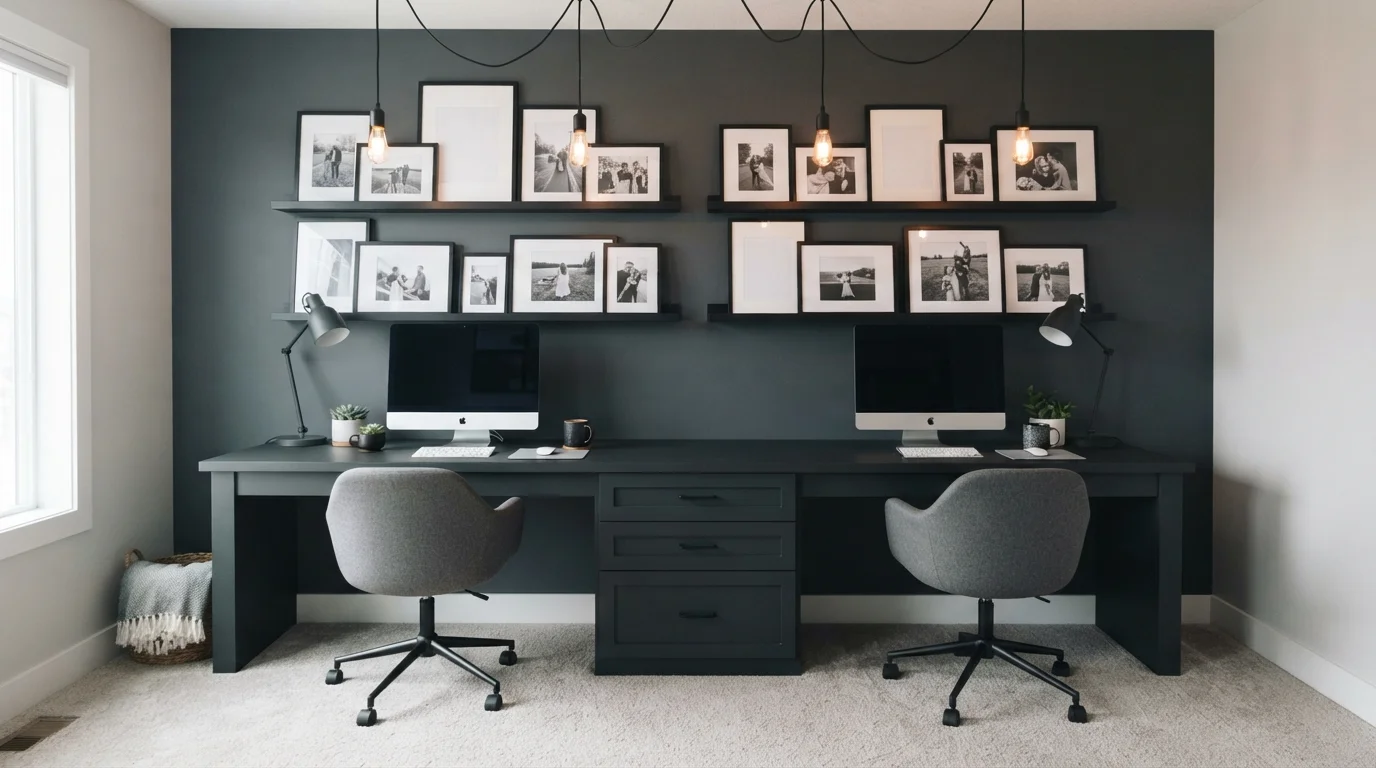
Built-in bookcases and cabinets are where you can add quiet contrast. Painting them a shade or two deeper than the walls, or in a near-neutral like a soft charcoal or muted green, grounds the room without making it busy. Pull it together with your hardware and lighting finish, brass and warm wood for a warm neutral, black or nickel for a cooler one.
The Most Common Mistakes to Avoid
The biggest miss is choosing a neutral that's too light and ending up with a flat, washed-out room that feels more like a hallway than a place to work. The fix is committing to a little depth or a clear undertone instead of defaulting to the palest swatch. The second common mistake is ignoring artificial light, since you'll work under lamps as much as daylight, so always test the color at night with your actual bulbs.
It helps to remember every color shown here is mixed to order at the store, so the exact neutral you like in one brand can be cross-matched to another. That means you're choosing a shade and an undertone, not locking yourself into a single label. Paint a large sample, live with it for a couple of days, and check it against your monitor before you commit.
Neutral Home Office Paint — Frequently Asked Questions
What is the best neutral paint color for a home office?+
There's no single best one, because it depends on your light. A bright room can take a deeper, warmer greige for focus and low glare, while a dim office does better with a lighter neutral that reflects more light. Match the undertone to your window direction and you'll be happy with most neutrals in that range.
What LRV should I look for in a home office neutral?+
For a dim or north-facing office, aim for an LRV in the high 60s to 70s so the room doesn't feel dark. For a bright, sunny office you can drop to the 40s or 50s for a cozier, more focused feel without losing usable light. LRV is printed on most color details, so use it to compare shades fairly across brands.
What sheen is best for home office walls?+
Eggshell or matte is best for the walls. It stays calm under daylight and lamps and won't throw glare at you while you work. Use satin or semi-gloss only on trim, doors, and built-in shelving, where you want more durability and a little shine.
Will a neutral wall look good on video calls?+
Yes, that's one of the main reasons neutrals work so well in an office. A soft, slightly warm neutral keeps your skin tone looking natural and doesn't cast odd color onto your face the way a strong wall color can. Avoid very bright white, which can blow out and look harsh on camera.
How do I keep a neutral office from feeling boring?+
Add quiet contrast instead of more color. Paint built-ins or a single wall a few shades deeper, lean into a clear undertone rather than a dead beige, and let warm wood, brass, or black fixtures carry the personality. Depth and undertone are what make a neutral room feel collected instead of flat.
Can I match the same neutral across different paint brands?+
Yes. Every color shown is mixed to order at the paint counter, so a neutral you like in one brand can be cross-matched to a near-identical formula in another. You're really choosing a shade and an undertone, which frees you to buy wherever is most convenient.