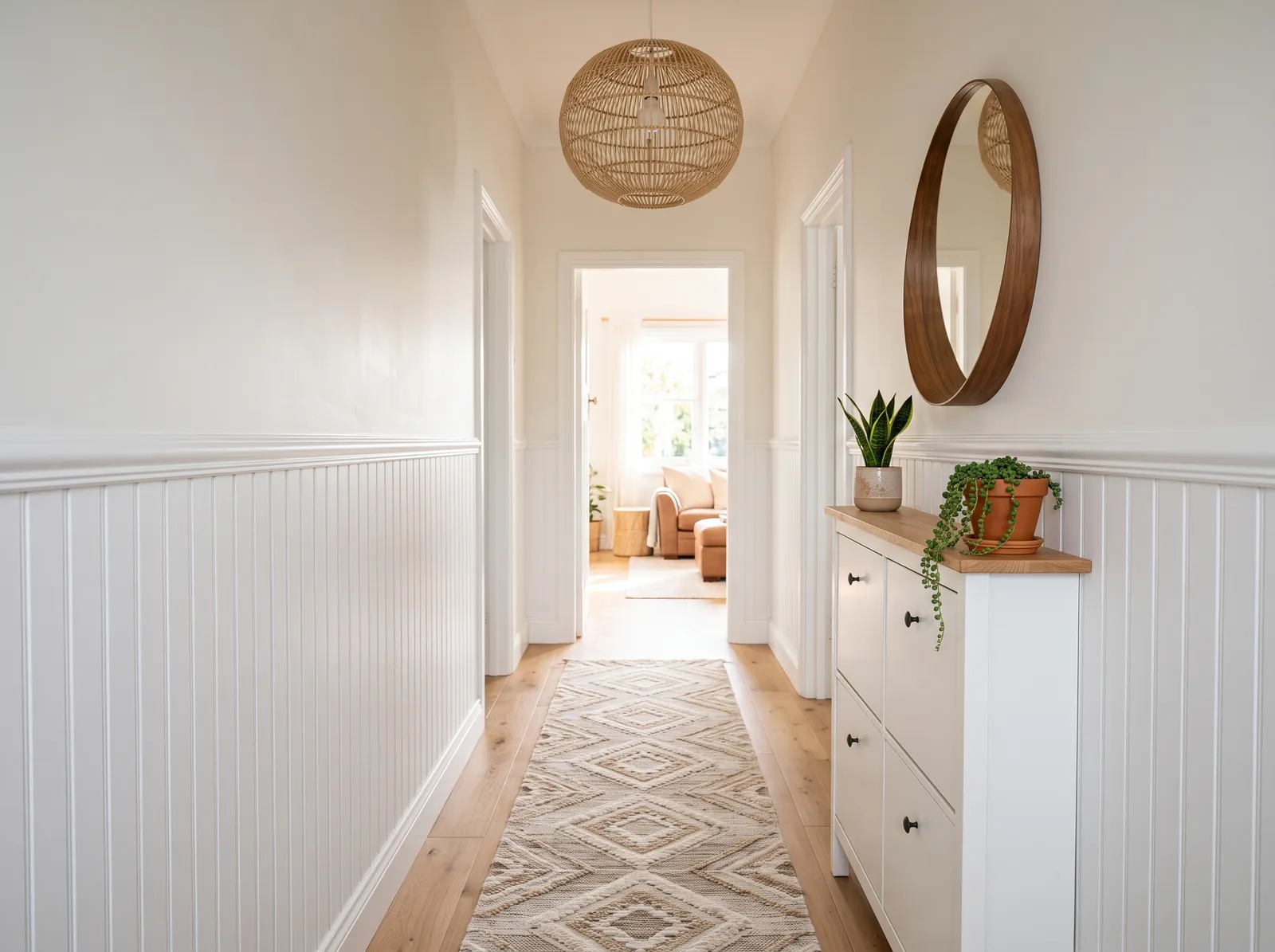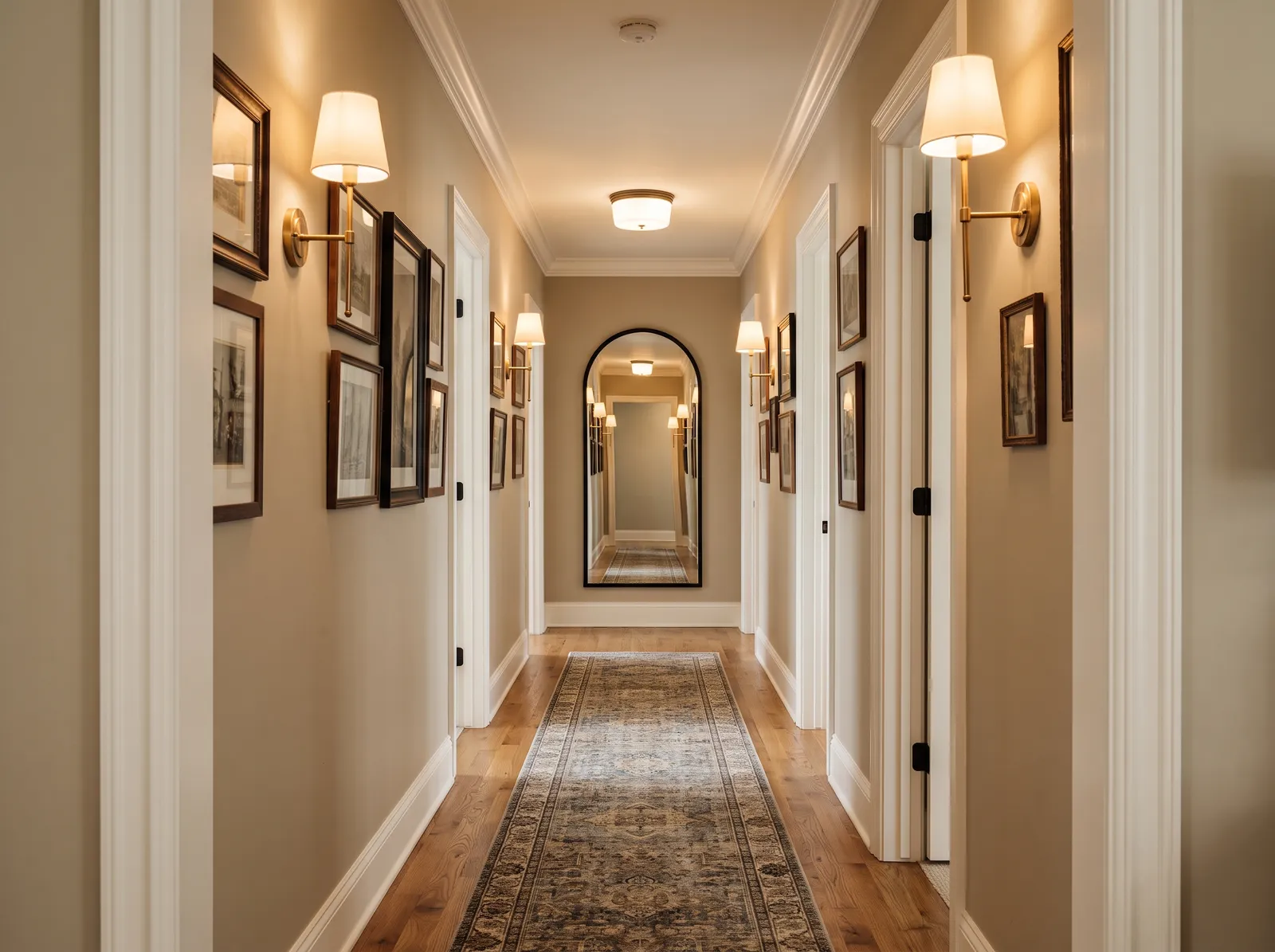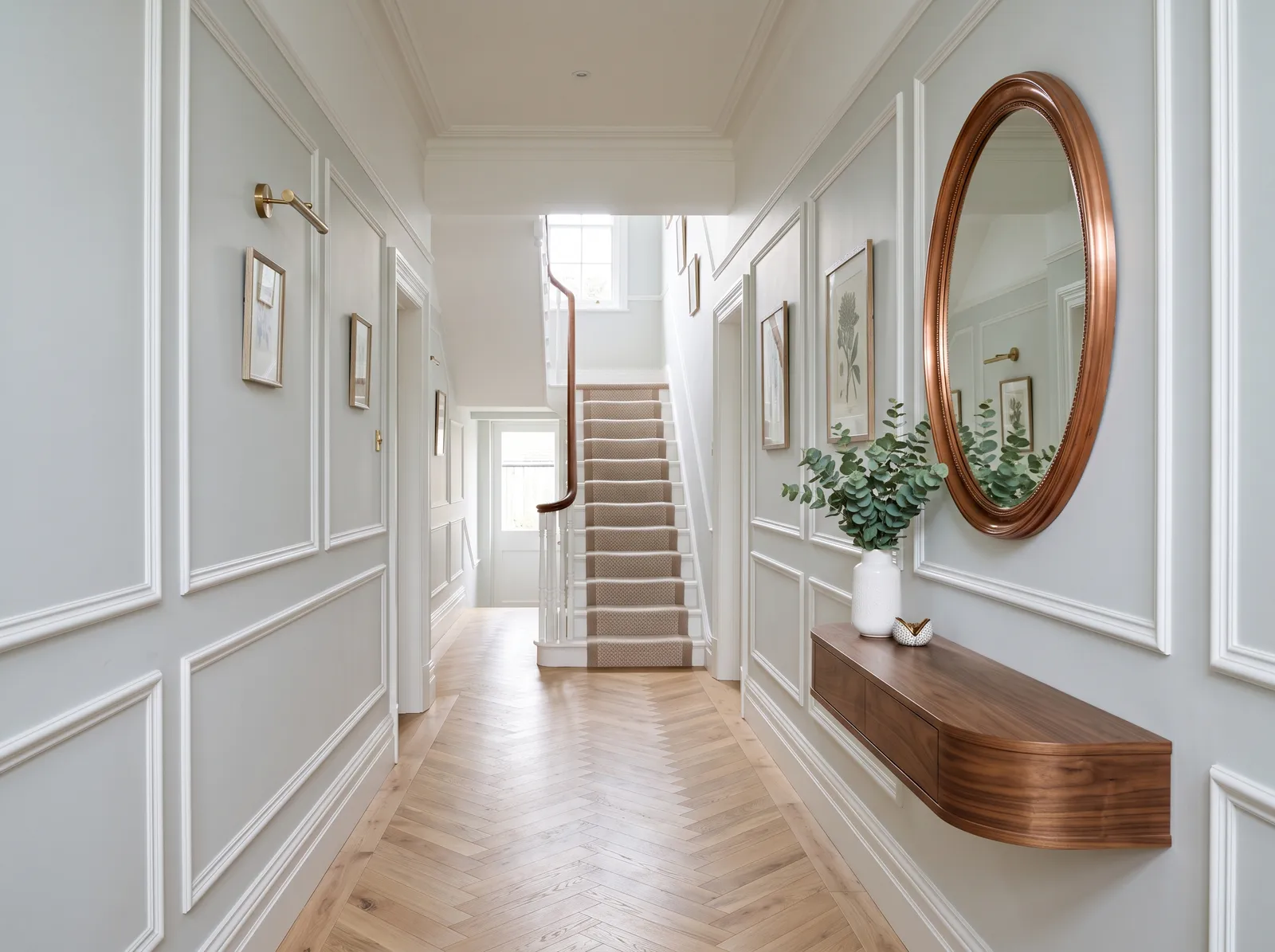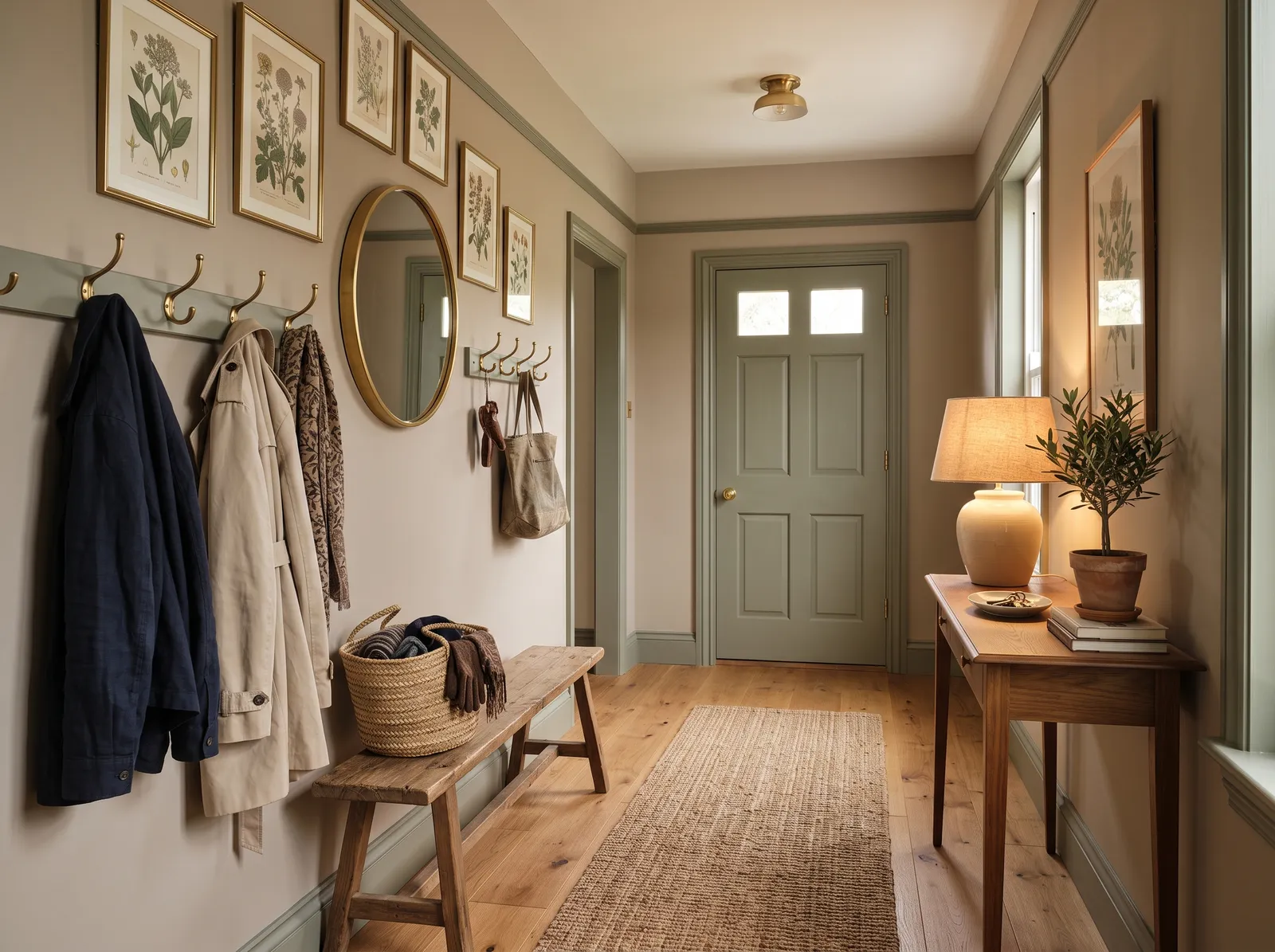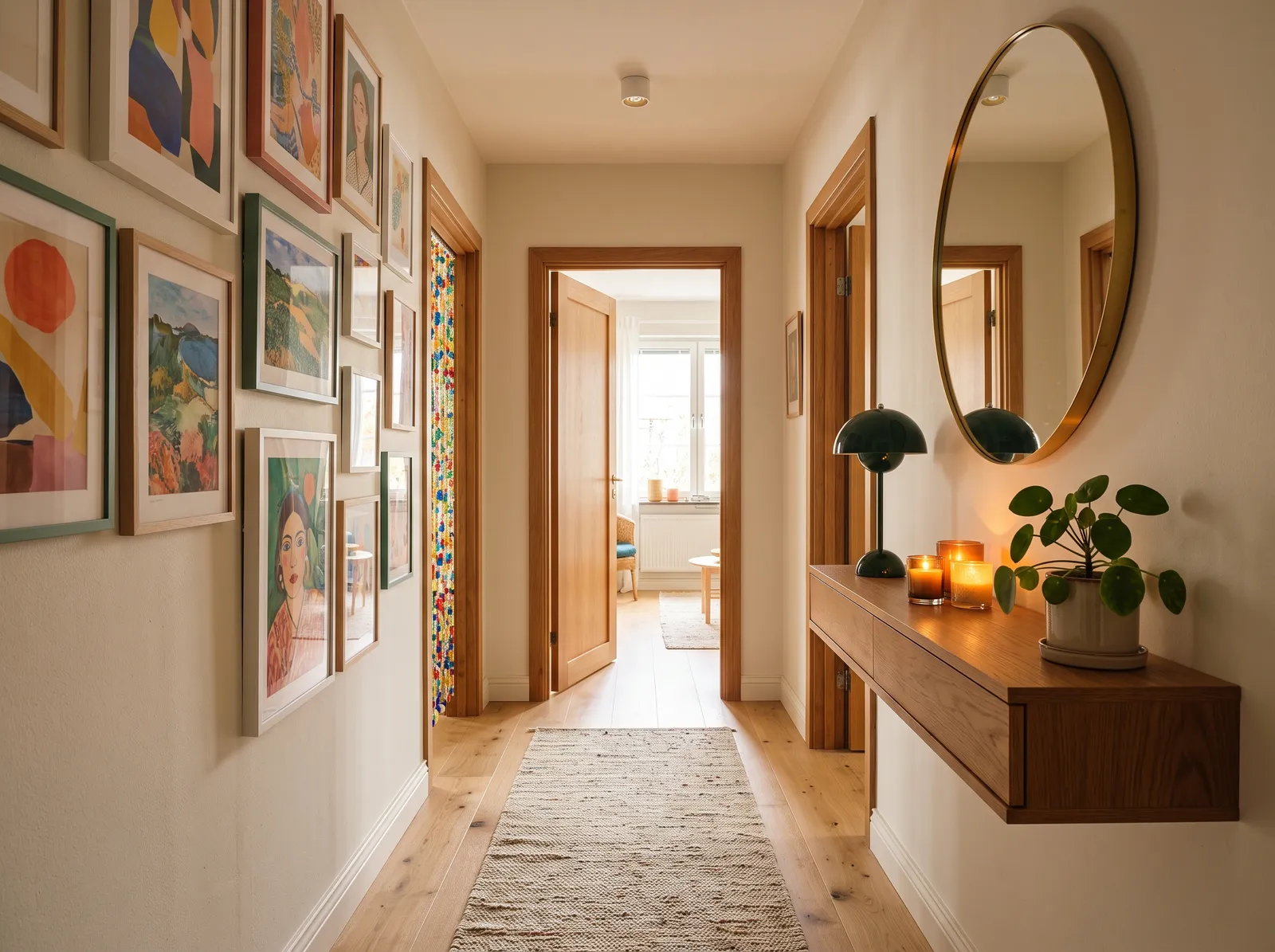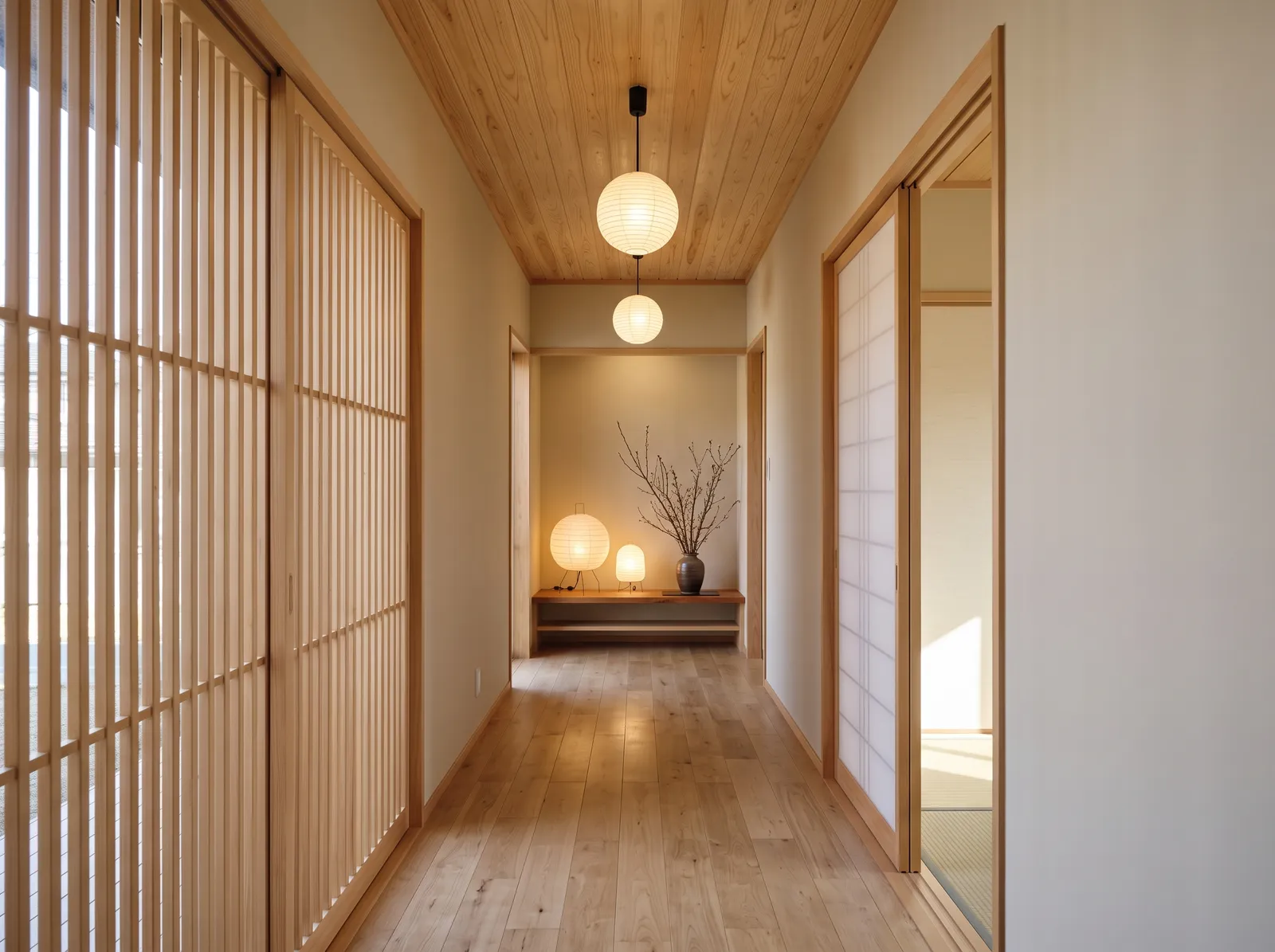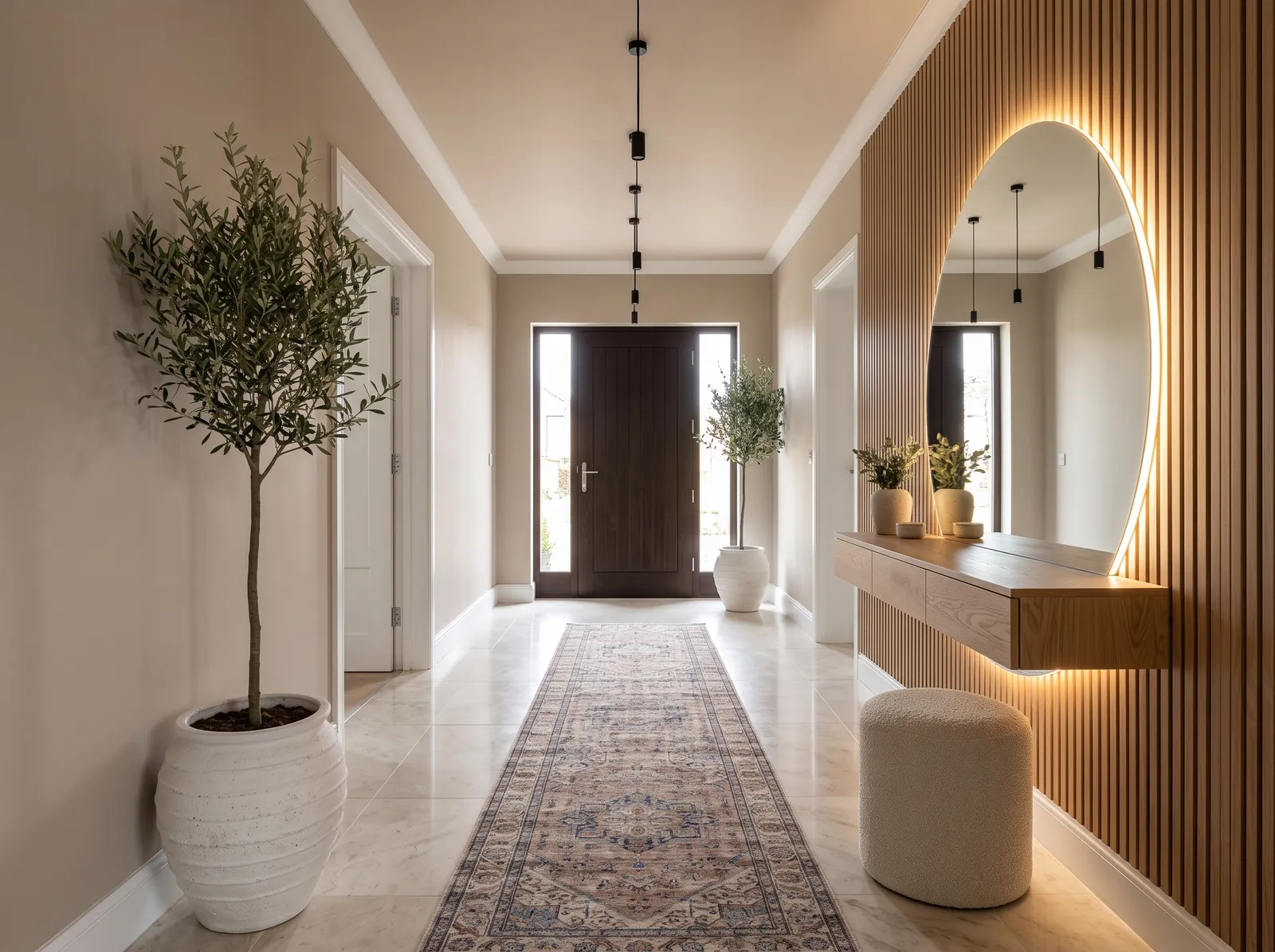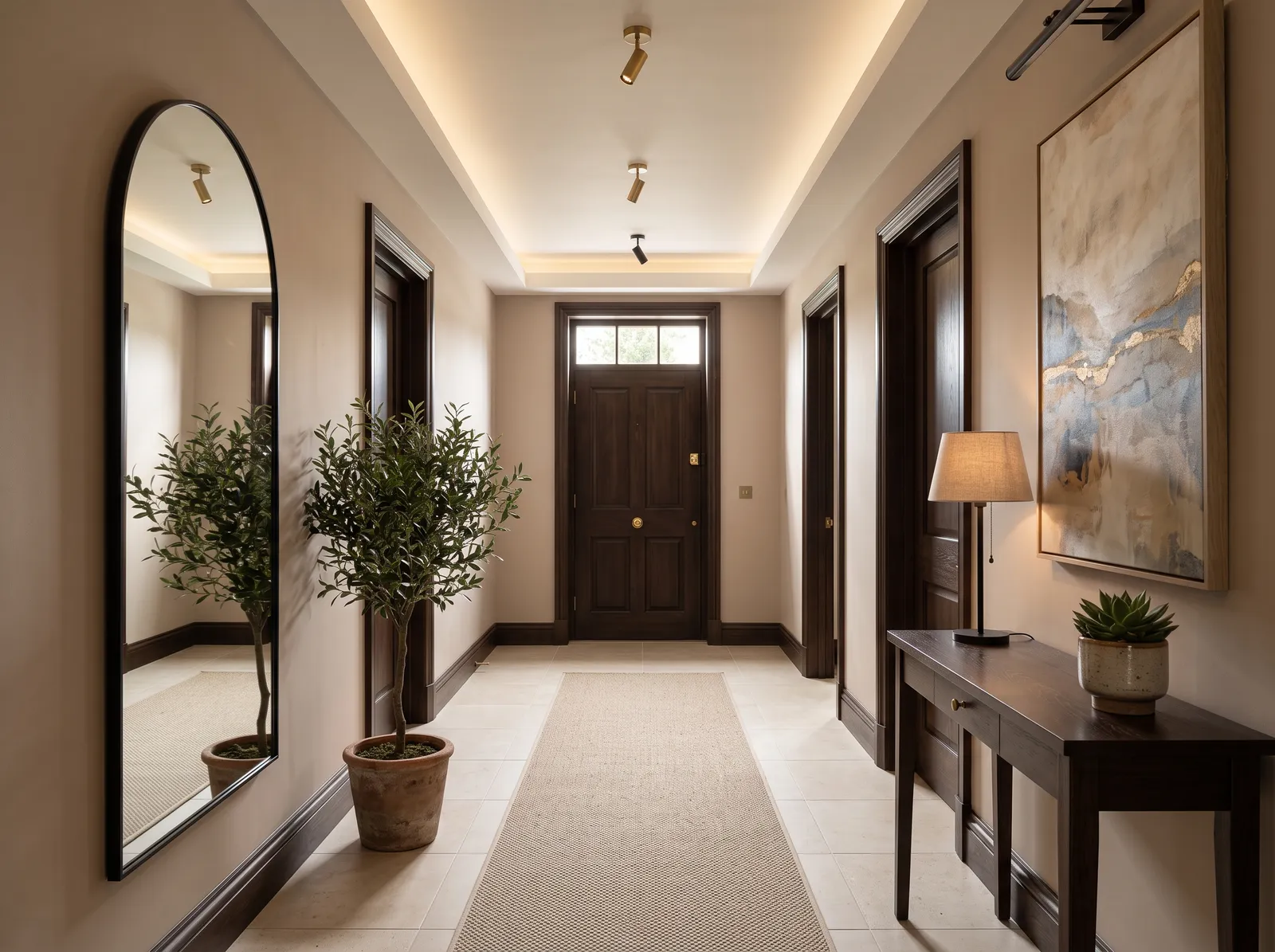
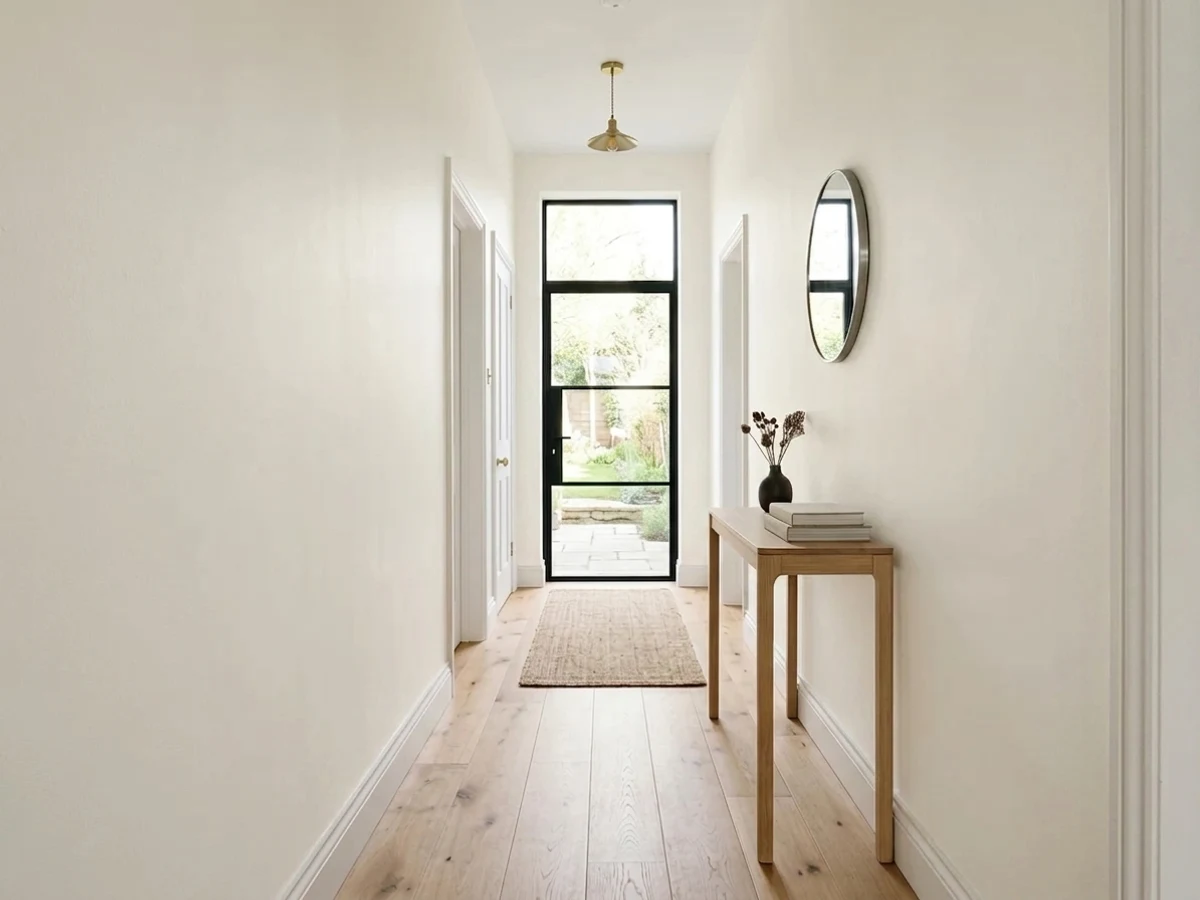
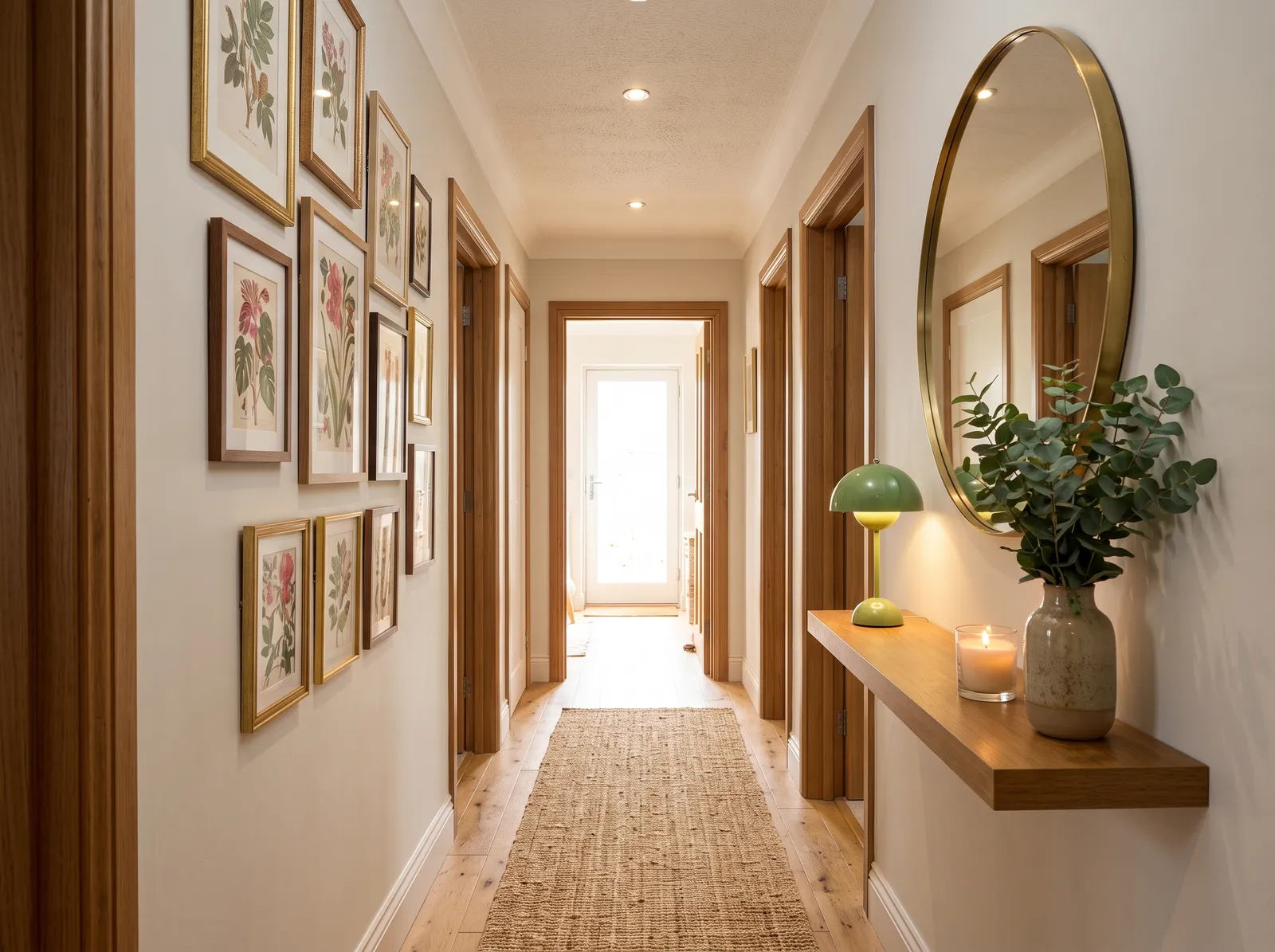
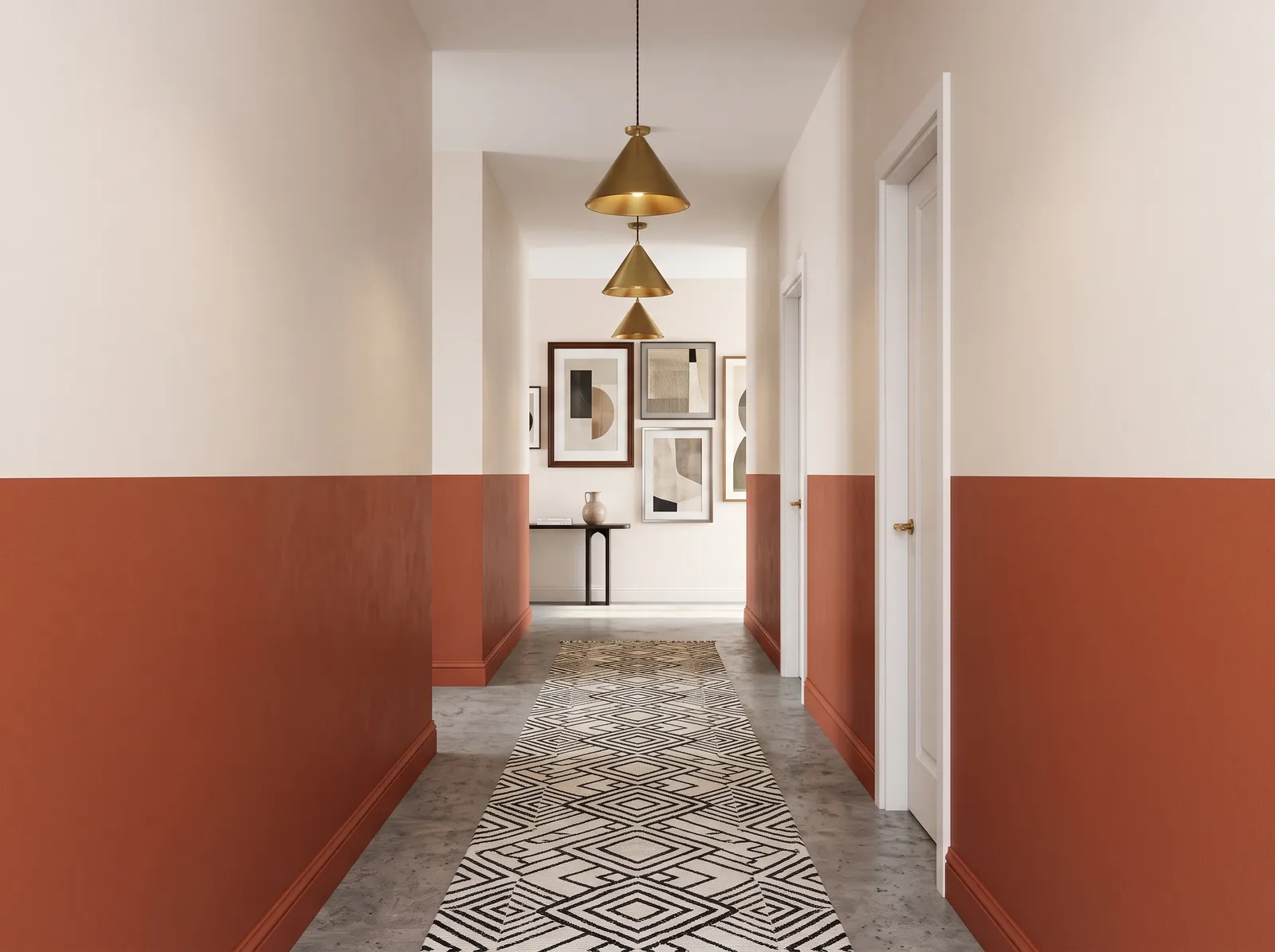
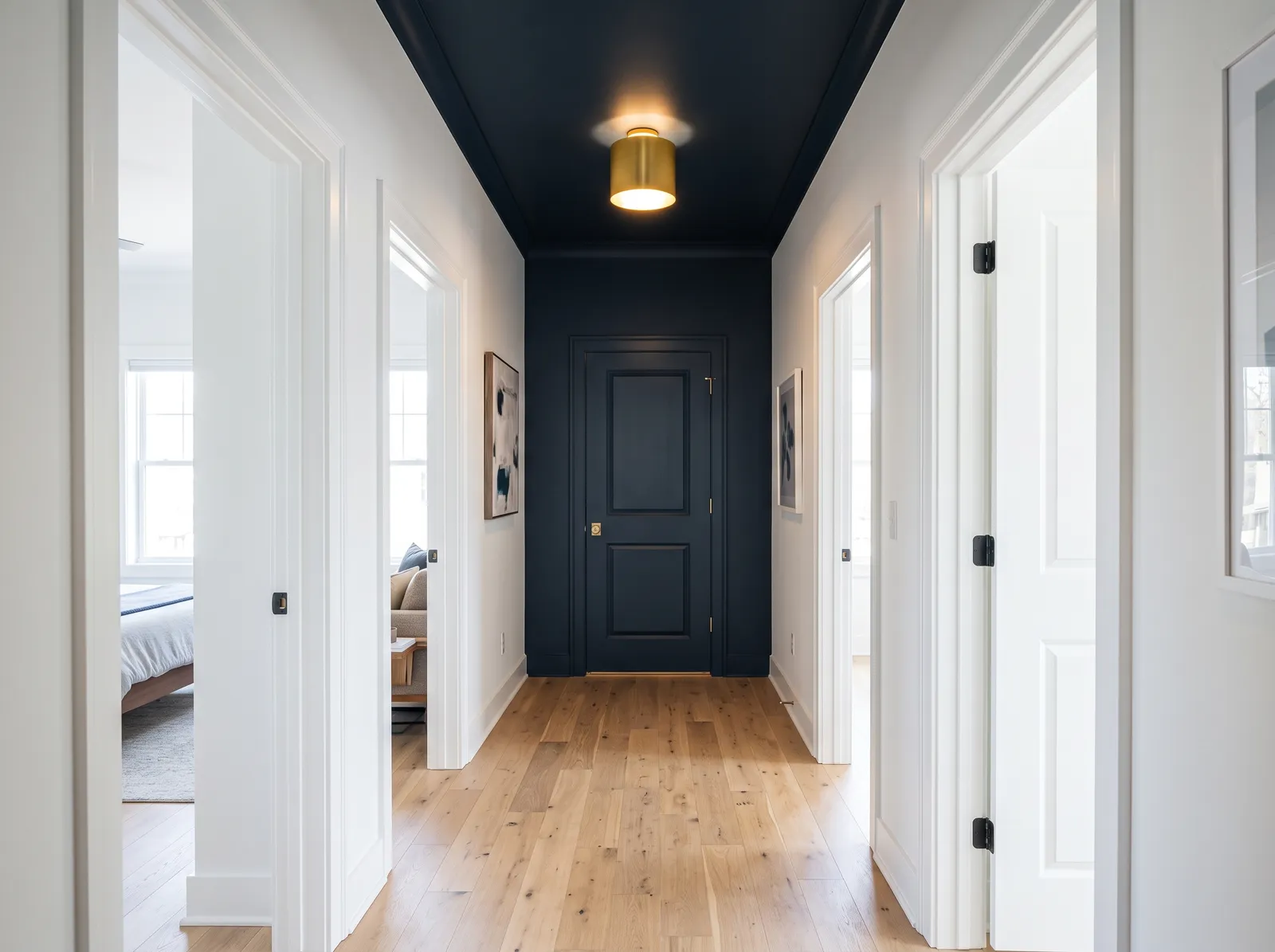
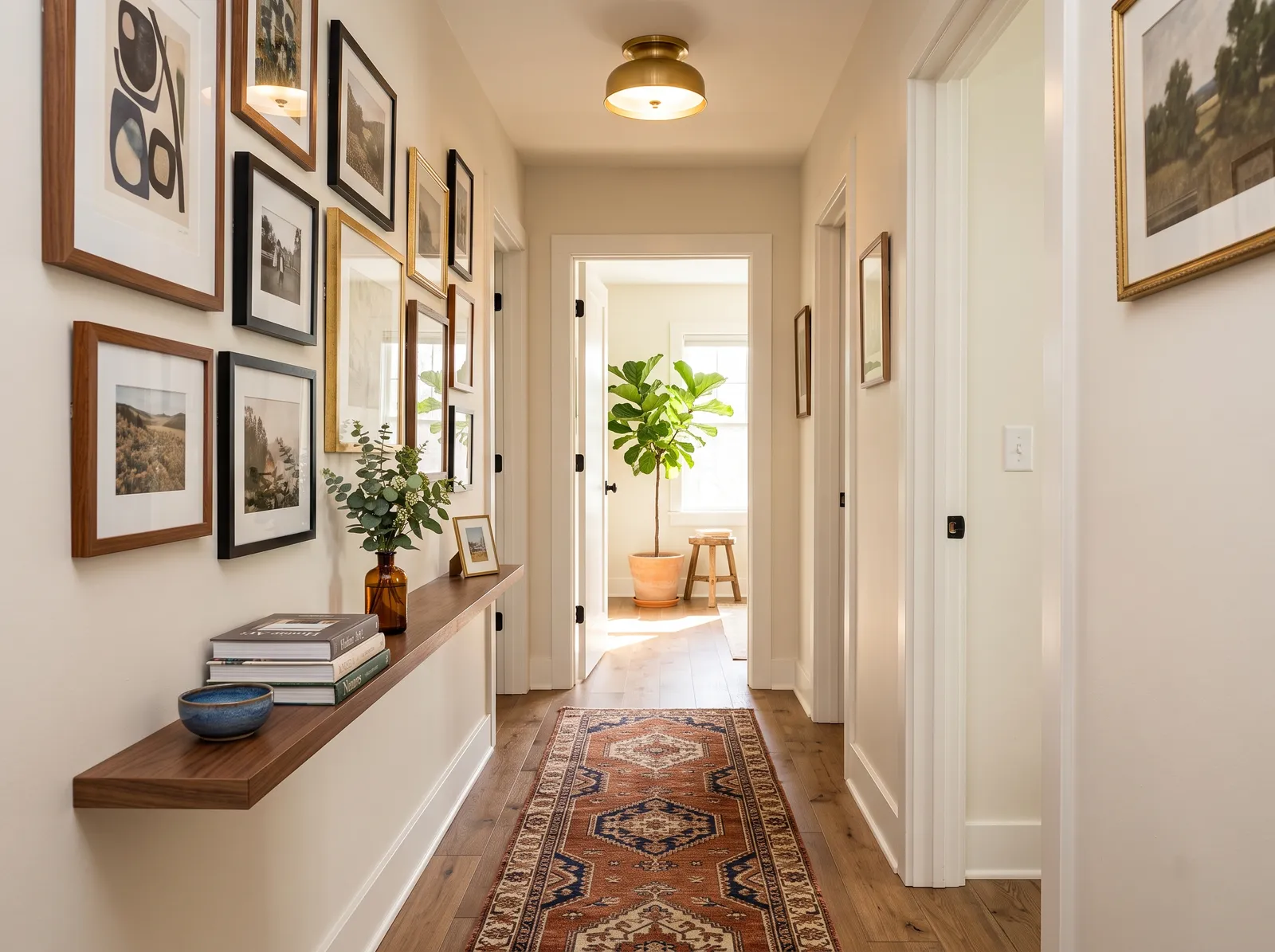
Neutral Hallway Paint Colors
4,152 neutral colors that work in hallways, drawn from the full ~30,000-color US paint deck. Below: editor's picks specific to hallways, then 30 picks spread across the LRV range — narrow further on the brand page when you've shortlisted.
Neutrals are the colors that aren't quite gray and aren't quite tan — the warm, low-saturation in-between bucket where greige, taupe, mushroom, bone, and accessible beige all live. They've replaced cool grays as the default safe wall color of the late 2020s, particularly in open-plan homes where one color flows through multiple rooms.
Editor's Picks: Neutral for Hallways
4 picks30 Neutral Picks Across the LRV Range
30 of 4,152 · sorted dark → lightLooking for more? All neutral → covers every brand; brand × family pages show full decks.
Neutral Hallway Colors at Every US Brand
21 brands · up to 10 picks eachUp to 10 picks per brand spread across the neutral LRV range, drawn from each brand's full deck. Tap any swatch with a curated guide for full spec; tap the brand title for the brand's complete neutral deck.
Behr
Benjamin Moore
Glidden
Sherwin-Williams
Valspar
PPG / Glidden
HGTV Home by Sherwin-Williams
Dunn-Edwards
Diamond Vogel
Hirshfield's
Kompozit
Dutch Boy
C2 Paint
Rodda
Farrow & Ball
Magnolia Home
Portola Paints
Clare
Annie Sloan
Backdrop
Rust-Oleum
Other Hallway Color Families
Neutral Colors in Other Rooms
Neutral Paint Colors for a Hallway
A hallway is the room you pass through more than any other, and it usually has the least light to work with. That makes neutral the safe, smart choice here: it carries the eye from one room to the next without picking a fight with any of the colors on either side. A well-chosen neutral lets a windowless hall feel calm and intentional instead of like an afterthought between the spaces that "matter."
The catch is that the same dim, narrow conditions that make a hallway tricky will also expose a bad neutral fast. A beige that looks soft in the showroom can turn muddy or pink once it is surrounded by closed doors and one weak overhead light. The goal on this page is to help you pick a neutral that handles a hallway's light, traffic, and scuffs, then carry that exact shade across brands since every color shown here is mixed to order.
Why Neutral Is the Right Call for a Hallway
A hallway connects rooms, so its color has to get along with everything those rooms wear. A neutral does that quietly. It reads as a clean transition rather than a statement, which is exactly what you want in a space people walk through, not sit in.
Neutral also buys you flexibility. If you repaint the living room or swap a rug down the line, a neutral hall still works without a redo. That low-commitment quality is the whole point of using it in a connector space.
How Hallway Light Steers the Right Depth
Most hallways are short on natural light, often with no windows at all and a single fixture doing the work. In that setting a very pale, near-white neutral can fall flat and gray out, while a deep neutral can close the space in and read almost like a tunnel. A light-to-mid neutral, roughly in the 55 to 70 LRV range, usually holds its warmth and keeps the hall feeling open.
If your hall does catch borrowed light from an adjoining room, watch the undertone in that light. Warm bulbs and nearby wood floors push a beige warmer and a gray softer, so test the actual swatch on the hall wall, not in a bright kitchen, before you commit.
The Finish That Survives a Hallway
Hallways take a beating that the walls in most other rooms never see. Shoulders brush them, kids drag hands along them, and luggage, vacuums, and pets all leave marks. That argues for a finish you can wipe down, so eggshell or satin is the sweet spot for hall walls.
Matte and flat will look beautiful for a week and then show every scuff, and they are hard to clean without burnishing a shiny spot. Save the higher gloss for trim and doors, where a semi-gloss takes knocks and wipes clean. The one place to stay lower-sheen is the ceiling, since flat there hides the unevenness a hallway's harsh side-light tends to reveal.
Pairing Neutral With Trim, Doors, and Fixtures
Hallways are usually lined with doors, so trim and door color do a lot of the work. A crisp white trim against a warm neutral wall gives the hall structure and makes a narrow space feel taller and tidier. Keep the trim white consistent with the rooms the hall opens into so the doorways do not clash.
For a calmer, more custom look, paint the doors a shade or two deeper than the walls in the same neutral family rather than stark white. Match your metal finishes too: warm brass or bronze fixtures lean toward a beige or greige wall, while chrome and nickel sit more comfortably with a cooler gray-leaning neutral.
The Mistakes That Trip People Up
The most common error is testing the neutral somewhere bright and bringing it into a dim hall, where it shifts cooler and darker than expected. The second is ignoring undertone: a gray that goes blue or a beige that goes pink will fight the floors and the open doors all day long. Always test a large swatch on the actual hall wall under the actual fixture, morning and night.
The other slip is treating the hallway as separate from the rooms around it. Pick a neutral that sits in the same temperature family as its neighbors so the transitions feel smooth. Every color shown here is mixed to order at the store, so once you find the shade that works you can cross-match it to whatever brand you already have on the adjoining walls.
Neutral Hallway Paint — Frequently Asked Questions
what neutral color is best for a dark hallway with no windows?+
Reach for a warm, light-to-mid neutral rather than a cool gray or a stark white. A warm beige or soft greige around 60 to 70 LRV reflects what little light you have and resists the muddy, washed-out look that cool neutrals get in a windowless hall. Always test it on the actual wall under your hall fixture before deciding.
what sheen should I use on hallway walls?+
Eggshell or satin is the best choice for hall walls. Hallways collect scuffs and handprints, and these sheens can be wiped clean without leaving shiny spots. Use a tougher semi-gloss on the trim and doors, and keep flat only on the ceiling where it hides imperfections.
should hallway trim be lighter or darker than the walls?+
Either works, but pick on purpose. White trim that is lighter than a warm neutral wall makes a narrow hall feel taller and crisper, which is the usual go-to. Painting doors a shade or two deeper than the walls gives a softer, more custom feel without any harsh contrast.
how do I keep a long hallway from feeling like a tunnel?+
Avoid deep, dark neutrals that pull the walls inward, and stay in that light-to-mid range instead. Keep the trim and ceiling light to lift the space, and let the hall share a temperature with the rooms it connects so the eye flows through rather than stopping at a dark box.
can I match my hallway neutral to the paint already in the next room?+
Yes. Every color shown here is mixed to order at the paint counter, so a shade is not locked to one brand. You can take the exact neutral you like and have it cross-matched to the brand you already used in the adjoining room, which keeps the transition seamless.
why does my hallway beige look pink or gray once it's on the wall?+
That is the undertone showing under low, single-source light. A hallway's dim conditions exaggerate whatever warm or cool cast a neutral carries, so a beige can flash pink and a gray can go blue. Testing a large sample on the hall wall, both in daylight and under the fixture, catches this before you paint the whole space.