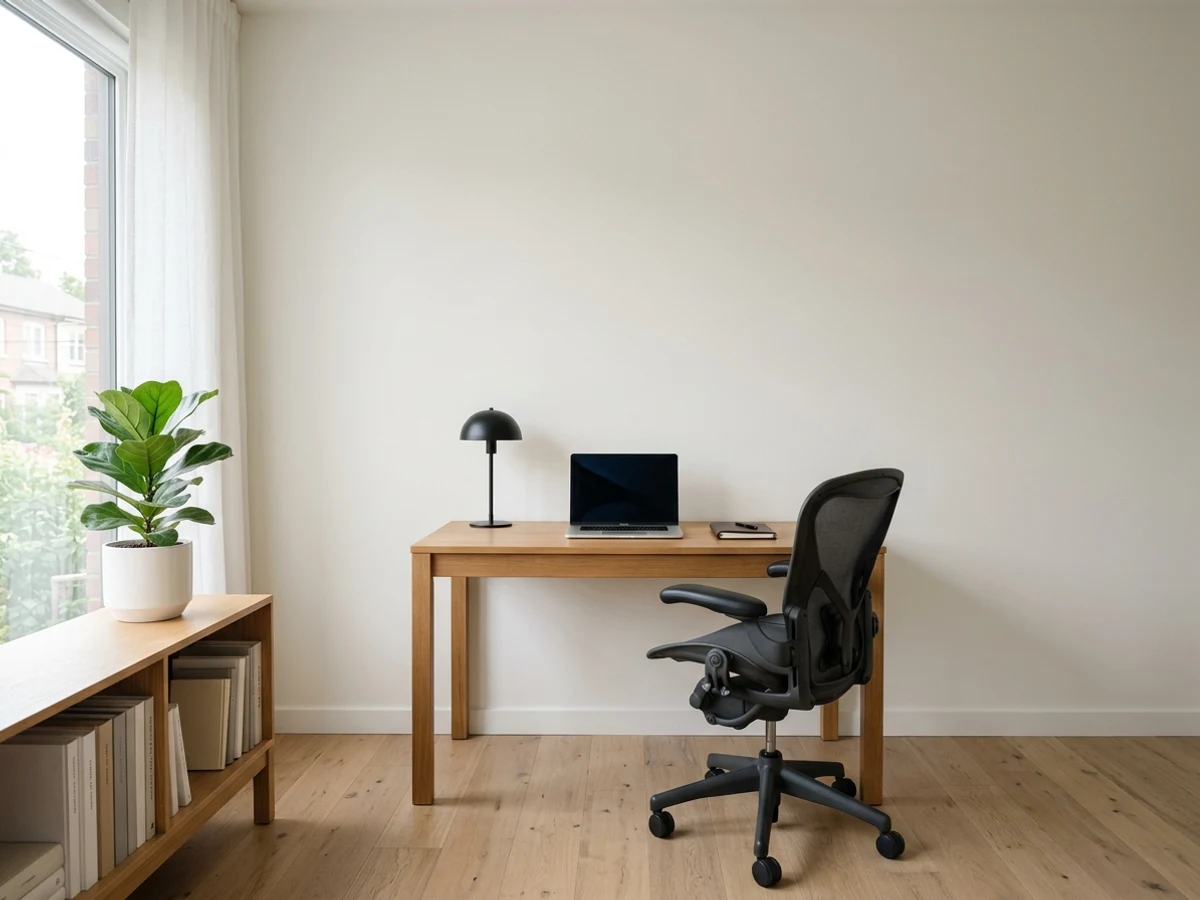
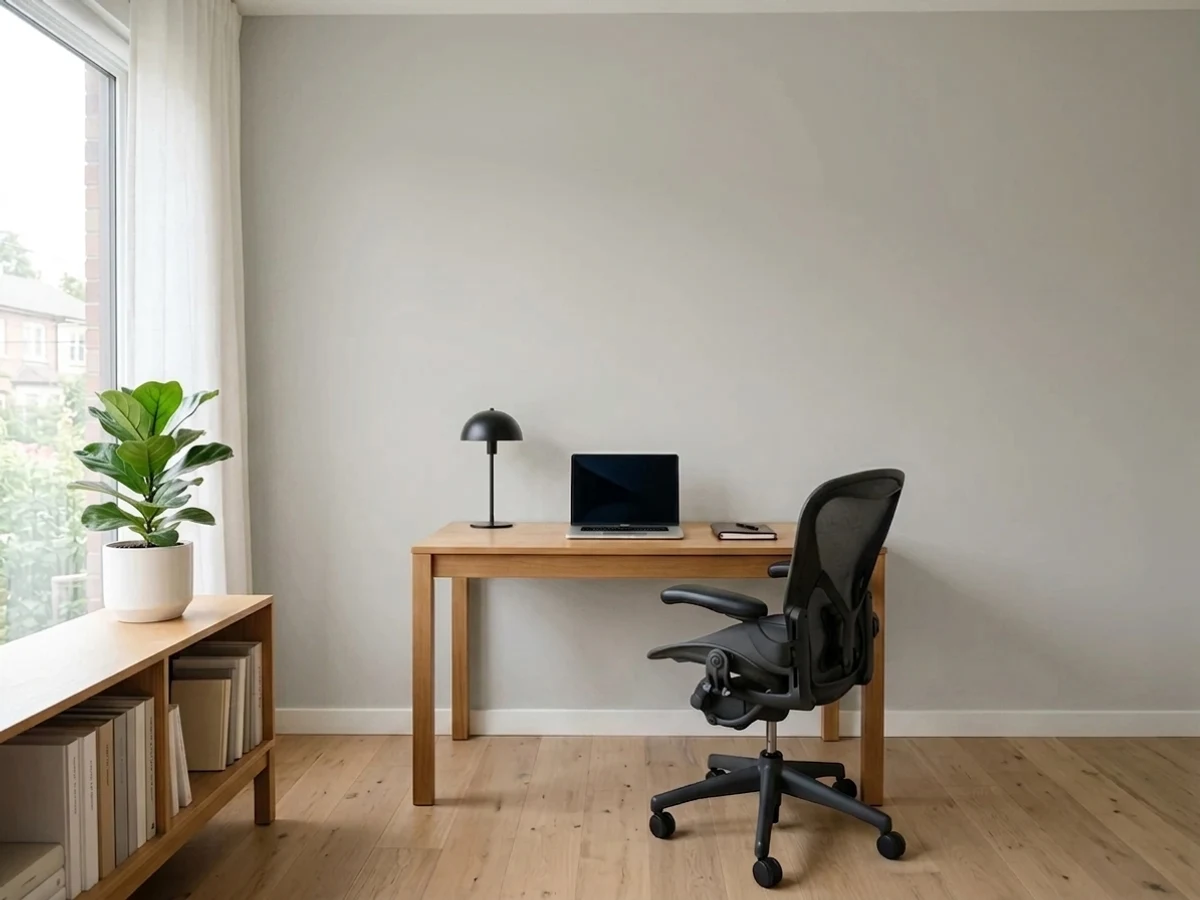
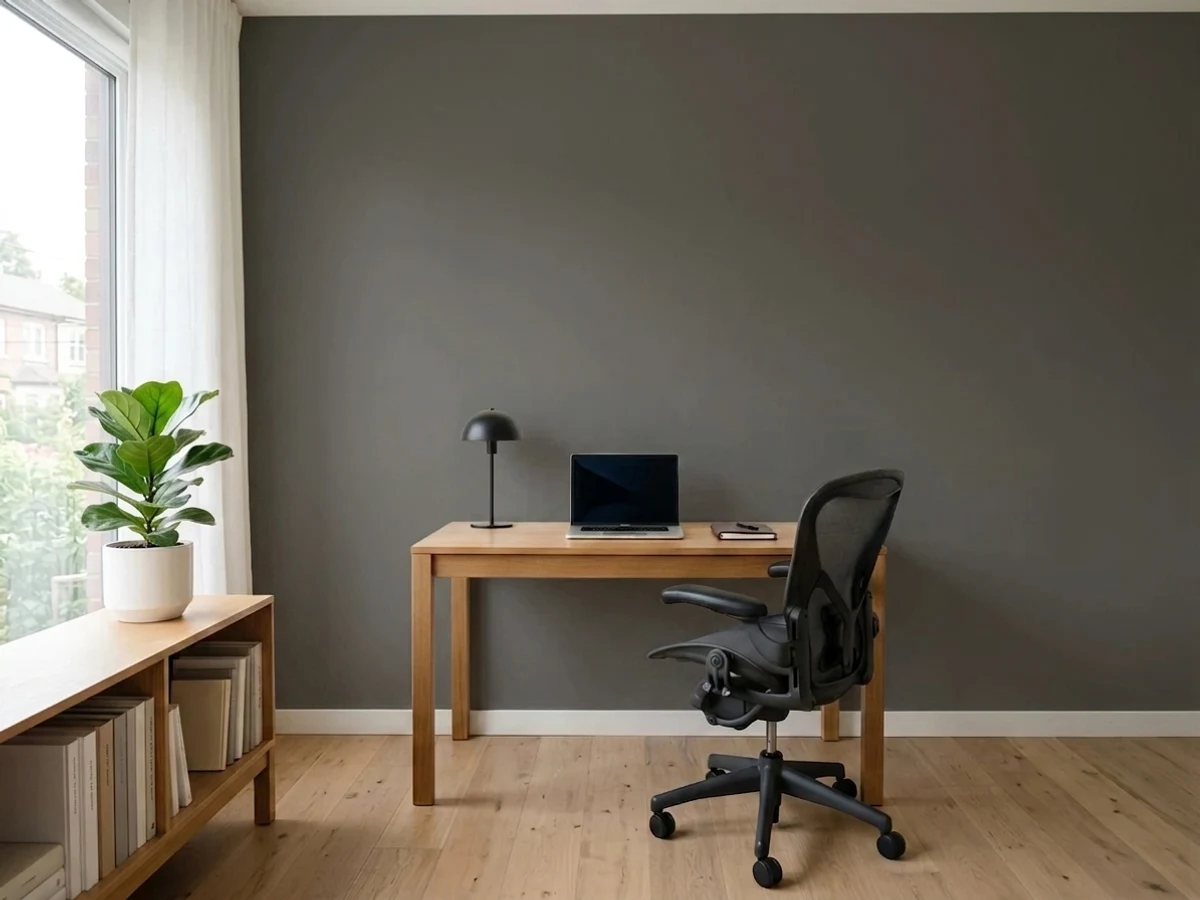
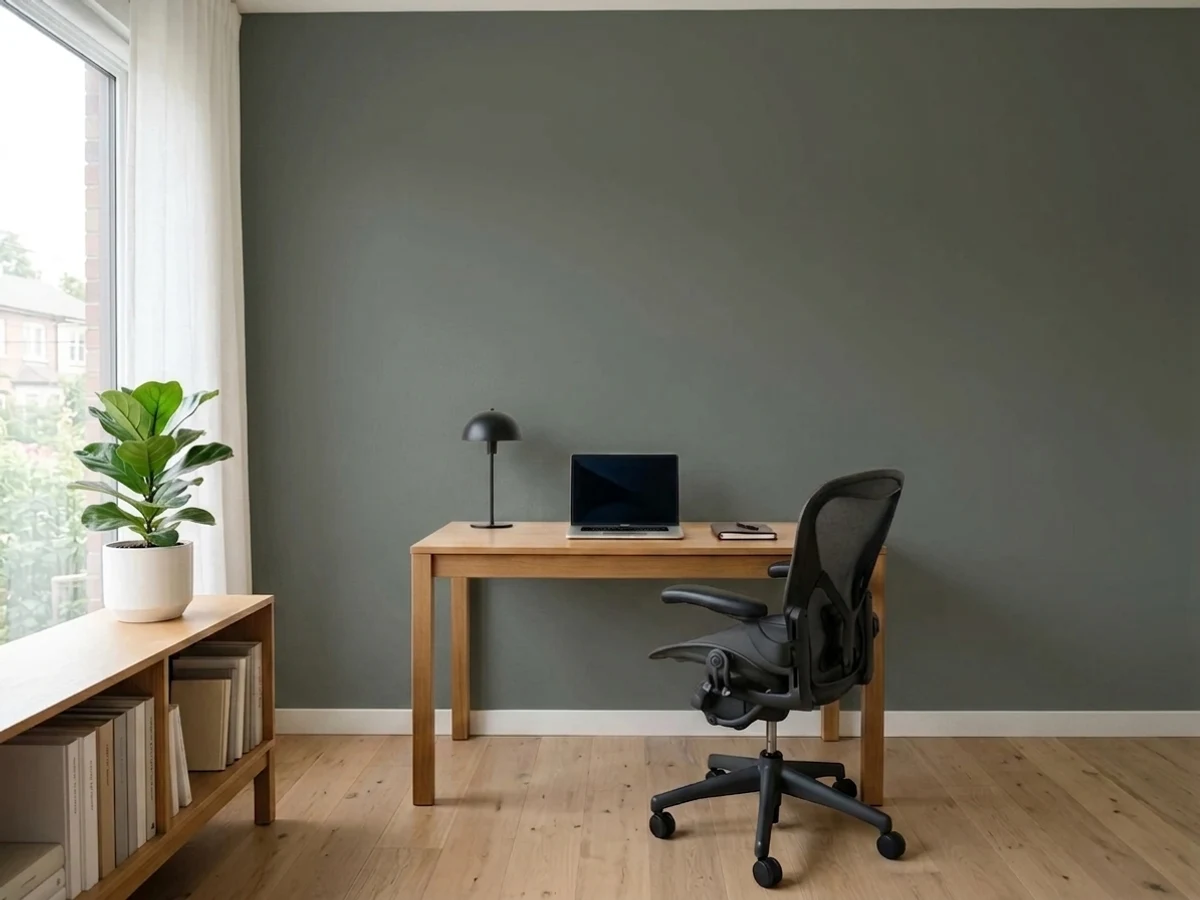
Gray Home Office Paint Colors
3,425 gray colors that work in home offices, drawn from the full ~30,000-color US paint deck. Below: editor's picks specific to home offices, then 30 picks spread across the LRV range — narrow further on the brand page when you've shortlisted.
Gray is the most-recommended neutral in American interiors — the safe choice that anchors a room without committing to a strong color. The "true" grays here lean cool (blue or violet undertone) or stay almost dead-neutral. The warm-leaning grays (taupe, mushroom, greige) live in the Neutral family next door because they read closer to beige than to true gray on the wall.
Editor's Picks: Gray for Home Offices
4 picks30 Gray Picks Across the LRV Range
30 of 3,425 · sorted dark → lightLooking for more? All gray → covers every brand; brand × family pages show full decks.
Gray Home Office Colors at Every US Brand
21 brands · up to 10 picks eachUp to 10 picks per brand spread across the gray LRV range, drawn from each brand's full deck. Tap any swatch with a curated guide for full spec; tap the brand title for the brand's complete gray deck.
Behr
Glidden
Valspar
Benjamin Moore
PPG / Glidden
Sherwin-Williams
Dunn-Edwards
Dutch Boy
Diamond Vogel
Hirshfield's
Kompozit
C2 Paint
Rodda
Magnolia Home
Farrow & Ball
Clare
Portola Paints
Annie Sloan
Backdrop
Rust-Oleum
Other Home Office Color Families
Gray Colors in Other Rooms
Gray Paint Colors for a Home Office
Gray is the safest smart choice for a home office, and that is exactly why it works. It stays quiet behind your monitor, it does not fight with video calls, and it photographs as calm and professional instead of distracting. The trick is that gray is never just gray. The right one depends on how much light your office gets, which way the windows face, and how many hours a day you actually sit in the room.
This page is about using gray in a workspace specifically, not gray in general. Below we cover the depth of gray that suits an office, how your room's light pushes a gray warm or cool, the finish that holds up to a desk chair and dirty hands, and how to pair gray with trim, built-in shelving, and your desk setup. Every color shown here is mixed to order at the paint counter, so you can match the same shade across brands and pick whichever is easiest for you to buy.
Why Gray Works In A Home Office
A home office is a room you stare at for hours, often on screen and often on camera. Gray gives your eyes a neutral place to rest, so it is easier to focus and less tiring than a bold color would be over a full workday. It also reads as serious and put-together on video calls without looking cold or corporate.
The one thing to watch is that gray can drift. In poor light a pretty gray can turn flat and gloomy, or pick up a blue or purple cast you did not want. Picking the right depth and undertone for your specific room is what keeps an office gray feeling crisp instead of dreary.
Picking The Right Depth Of Gray For Your Light
LRV, or light reflectance value, tells you how much light a color bounces back, from 0 (black) to 100 (white). For a home office that needs to feel bright and alert, a light to mid gray in the roughly 55 to 70 LRV range keeps the room open and reduces the gloom that makes work feel heavy. If your office is small or has only one window, lean toward the higher end so the walls do not close in.
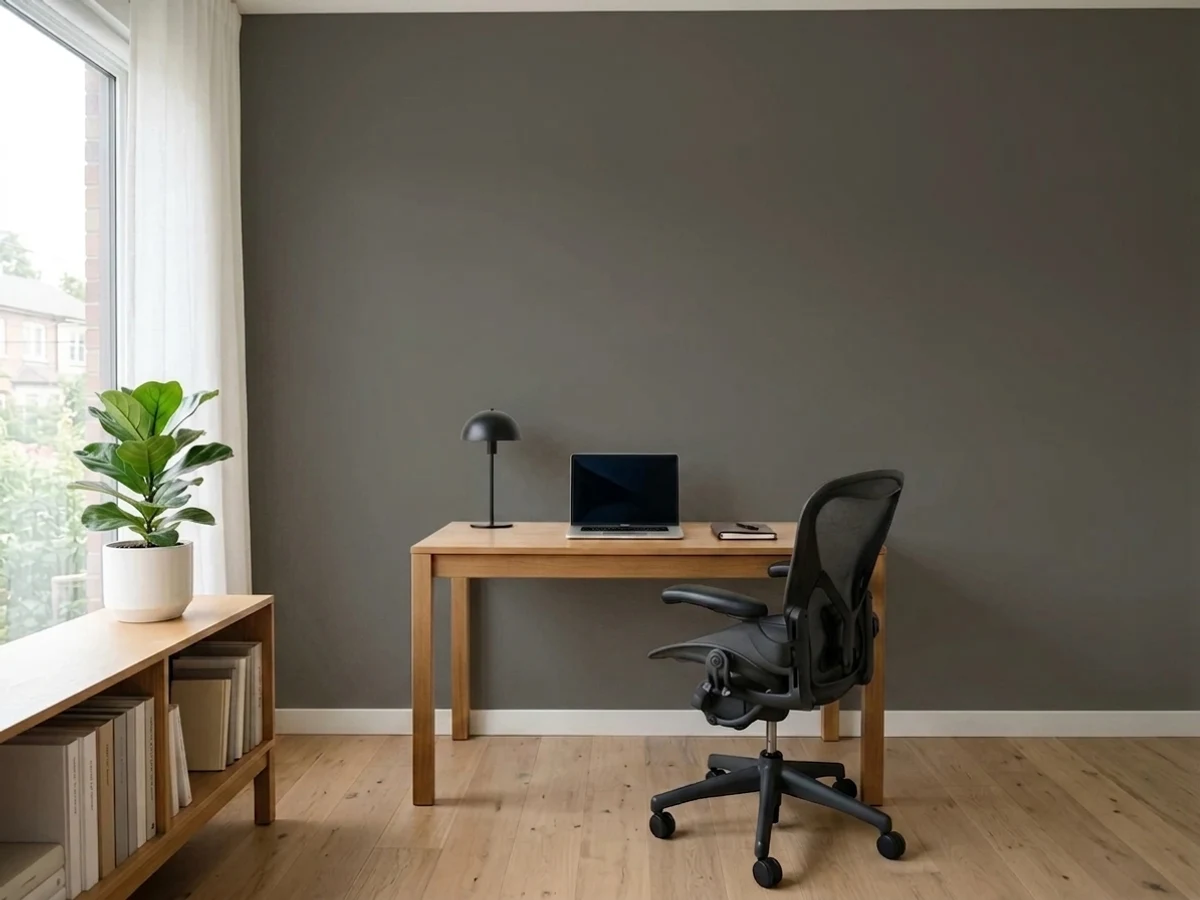
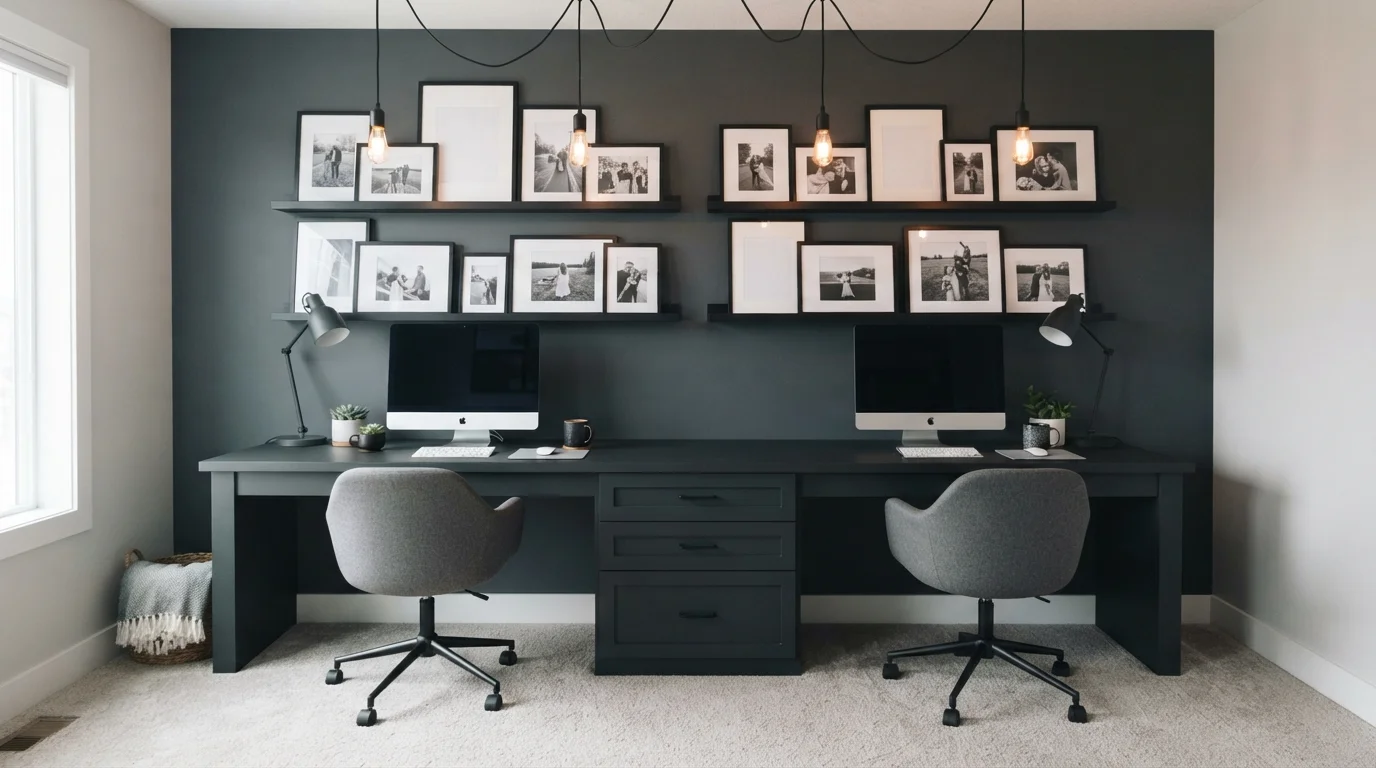
The direction of your light matters just as much. North-facing offices get cool, flat light that makes gray look colder, so a gray with a soft warm or greige undertone keeps it from going icy. South and west rooms get strong warm light, so a cooler or more balanced gray stays clean instead of turning muddy by afternoon. A darker, moody gray below about 30 LRV can look great as a focus wall behind the desk, but use it on every wall only if the room has generous daylight.
The Right Finish For Office Walls
For most home office walls, an eggshell or satin finish is the sweet spot. It has just enough sheen to wipe clean when a chair scuffs the wall or a hand smudges near the light switch, but not so much that it throws glare. Glare is the real enemy in an office, because a shiny wall behind or beside your monitor bounces window light and overhead light right into your eyes and your camera.
Save flat or matte for ceilings or for a dark accent wall where you want the color to look rich and absorb glare. Keep the higher-gloss finishes for trim, doors, and any built-in shelving, where you actually want the durability and the slight contrast against the softer wall.
Pairing Gray With Trim, Shelves, And Your Desk
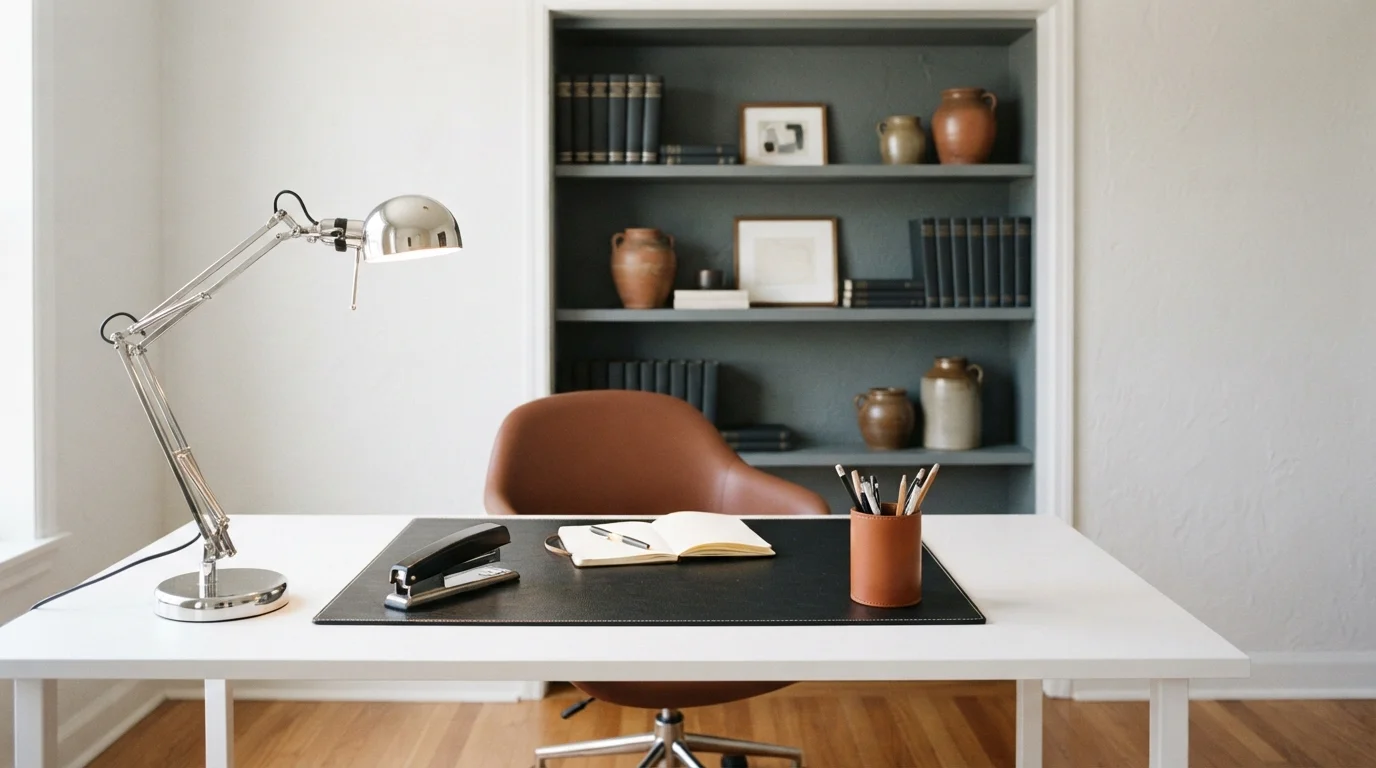
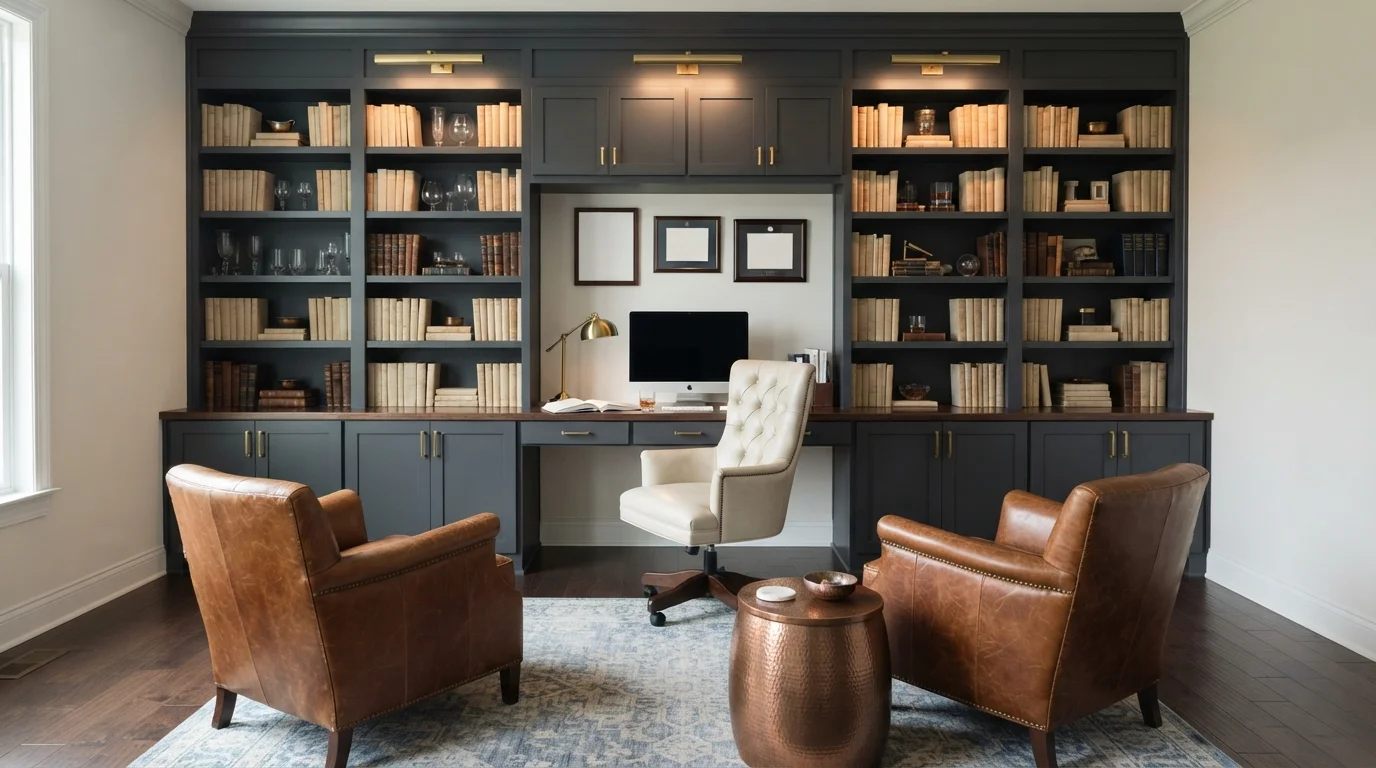
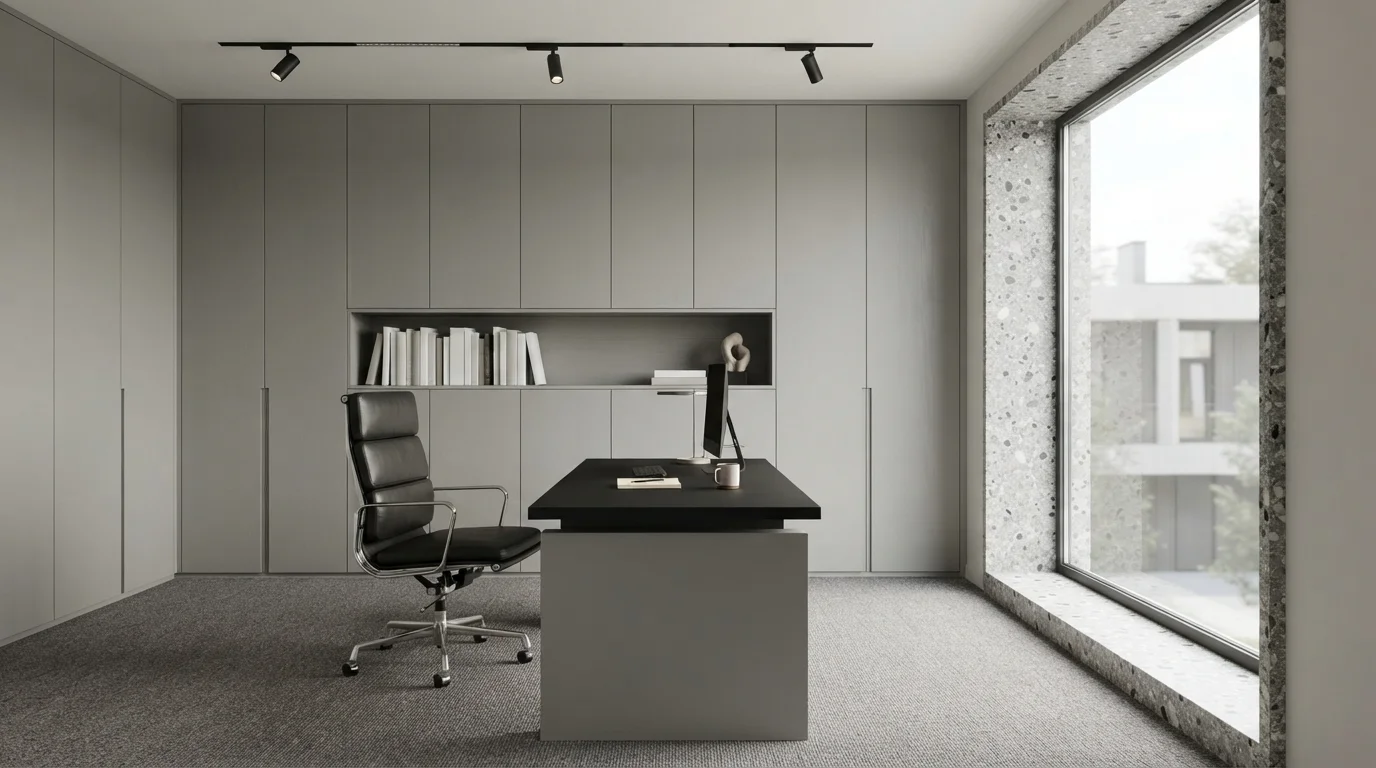
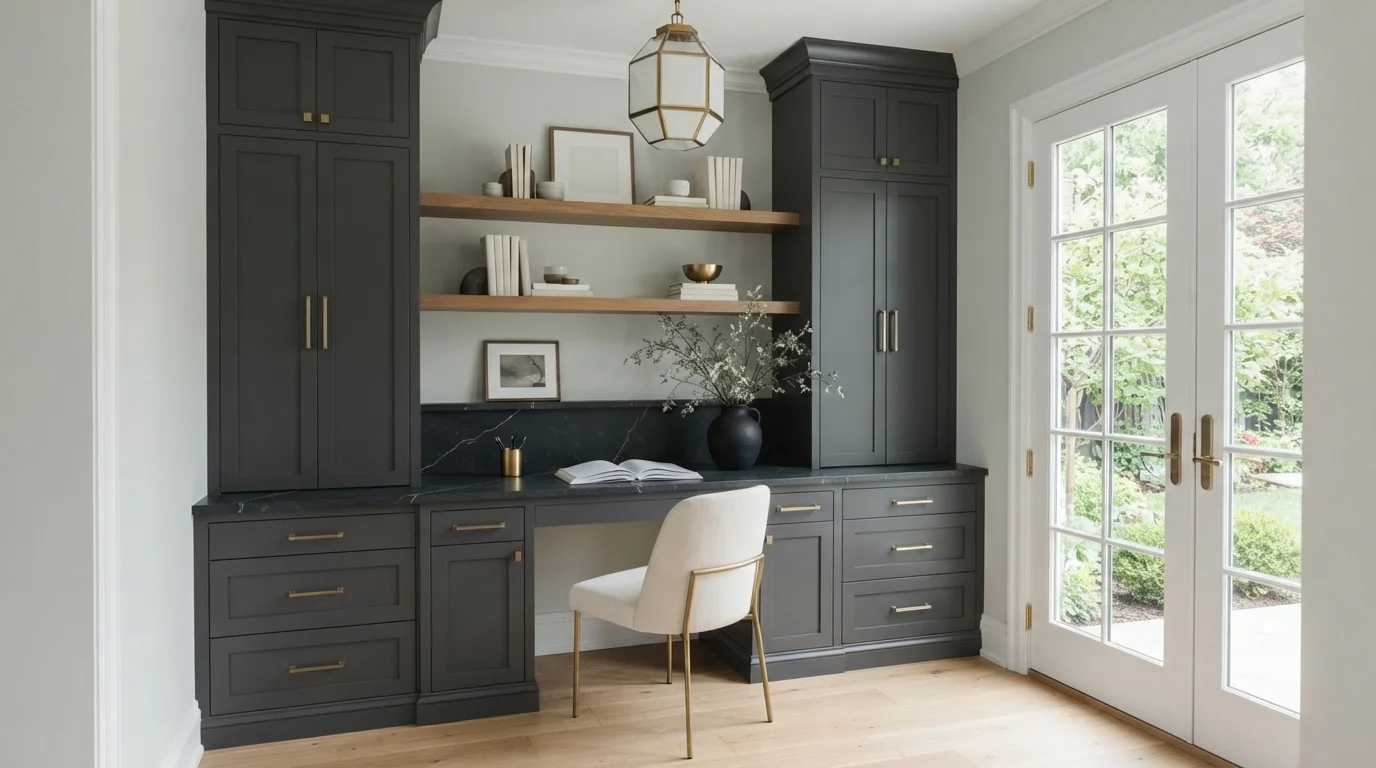
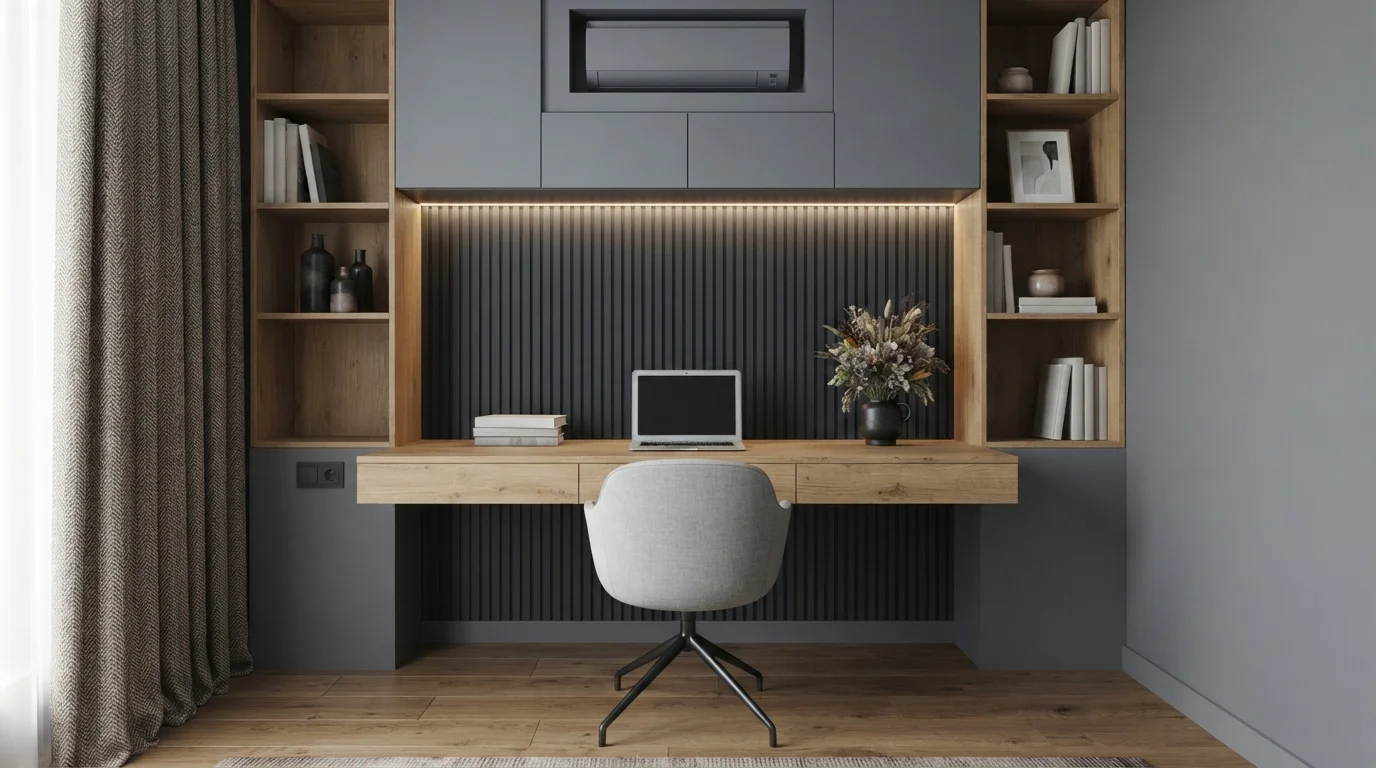
Gray is one of the most forgiving colors to build a room around. Crisp white trim and a white ceiling keep a gray office feeling clean and bright, while a soft off-white trim feels warmer and calmer if your gray leans greige. For built-in shelves or a desk, both natural wood and white cabinetry pair easily with gray, and warm wood tones are a reliable way to keep a cool gray from feeling sterile.
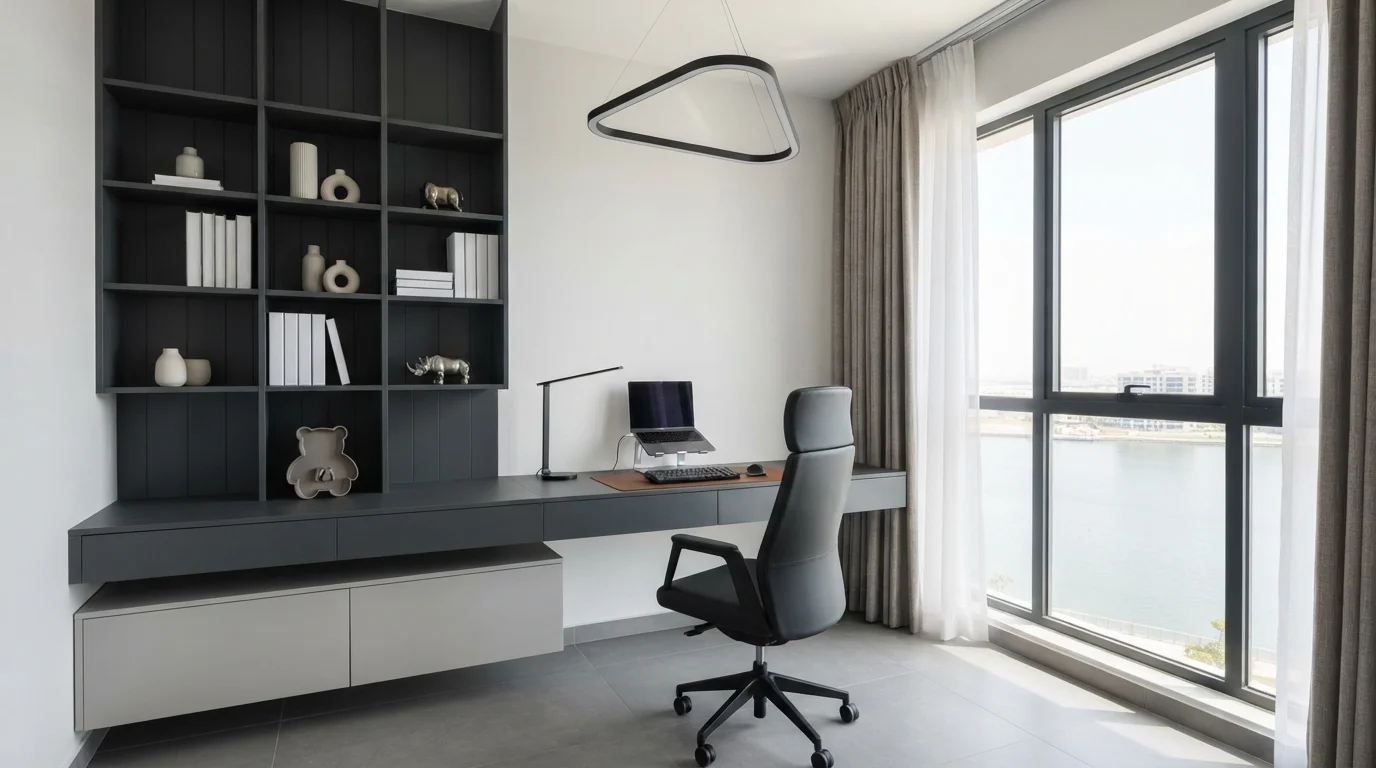
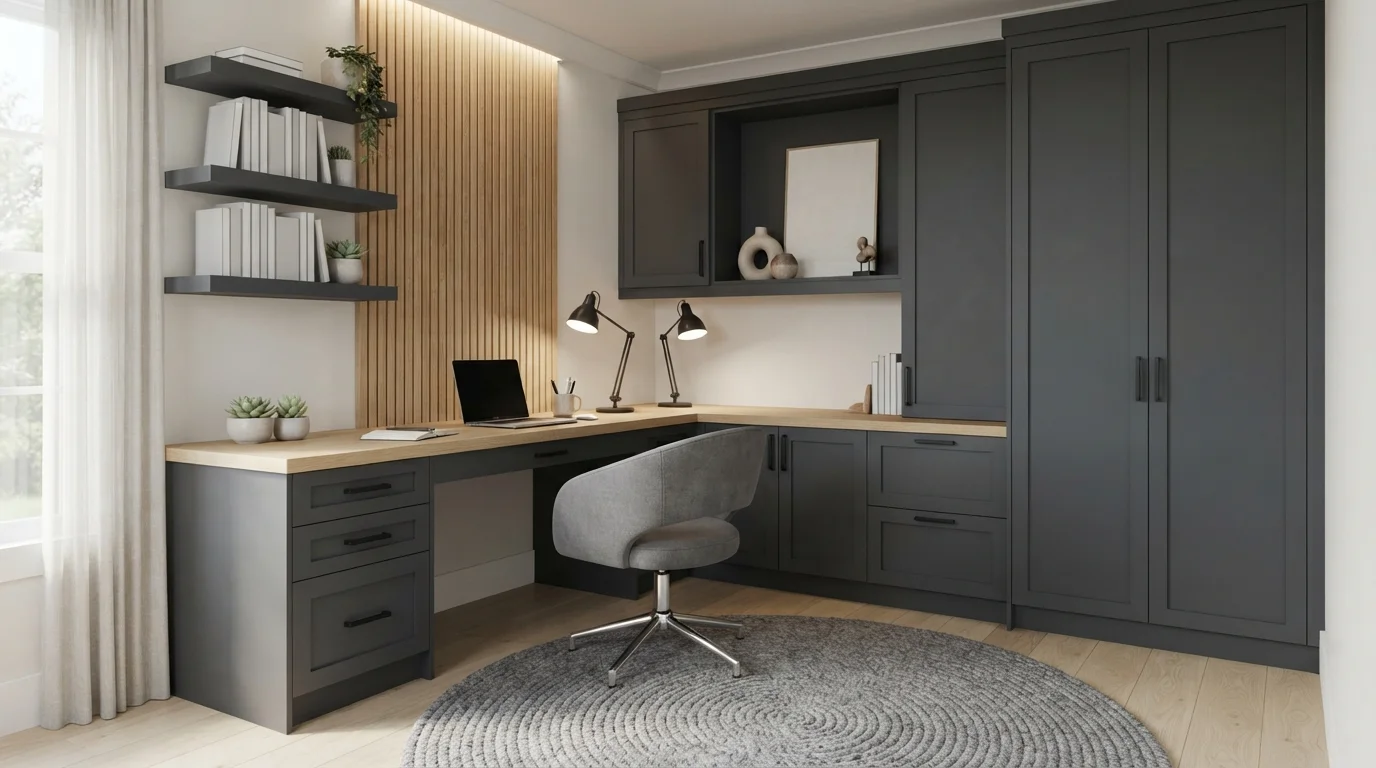
Think about your gear too, since an office is full of black monitors, metal arms, and cables. A mid gray hides this clutter far better than a stark white wall does. Black metal fixtures, a black desk frame, or matte black hardware give a gray office a sharp, modern anchor without adding another color to manage.
Common Gray Mistakes To Avoid
The biggest mistake is choosing a gray off a tiny chip or a screen. Buy a sample, paint a large patch near your desk, and look at it during your real working hours, including under your lamp and overhead lights at night. A gray that looked perfect in the store can turn blue, purple, or green once it is up against your specific light and your floor.
The other common miss is going too dark in a room that does not have the daylight to carry it, which leaves the office feeling like a cave by mid-afternoon. Also avoid matching your wall too closely to a gray floor or gray furniture, because everything blends into a dull haze. A little contrast in trim, wood, or fixtures is what keeps a gray office looking intentional. Remember that any gray you like here can be mixed to order at the counter and color-matched across brands, so pick the exact shade you want and buy it wherever is convenient.
Gray Home Office Paint — Frequently Asked Questions
What is the best shade of gray for a home office?+
For most offices, a light to mid gray in the 55 to 70 LRV range is the best starting point because it keeps the room bright and easy to work in for hours. If your office has lots of daylight, you can go darker for a moody, focused look. Match the undertone to your light: a touch of warmth for cool north-facing rooms, and a cooler or balanced gray for sunny south and west rooms.
What paint finish should I use in a home office?+
Eggshell or satin is the best all-around choice for office walls. It wipes clean when a chair or hand marks the wall, and it has low enough sheen to avoid glare on your screen and camera. Use a higher-gloss finish on trim, doors, and shelves, and save flat or matte for the ceiling or a dark accent wall.
Will gray walls look bad on video calls?+
A well-chosen gray usually looks great on camera, reading as calm and professional without distracting. The key is picking a gray that does not go too dark or pick up a strong blue or purple cast in your lighting. Test it on camera during your real working hours before committing, since webcams can exaggerate undertones.
How do I keep a gray office from feeling cold or depressing?+
Add warmth through your materials and pick a gray with a soft warm or greige undertone if your room gets cool light. Natural wood on a desk or shelves, warm-toned trim, and good lamp lighting all keep gray from feeling sterile. Avoid going darker than your daylight can support, since that is what usually makes a gray office feel gloomy.
Can I match a gray color across different paint brands?+
Yes. Every gray shown here is mixed to order at the paint counter, so you are not locked into one brand. You can take the shade you like and have it color-matched in another brand's paint, which lets you choose based on price, finish, or whichever store is easiest for you to reach.
Should I paint just one accent wall gray or the whole office?+
Both work, and it depends on your light. A darker gray on a single wall behind the desk creates a strong focus point and looks rich on camera, while keeping the other walls lighter. If you want the whole room gray, lean toward a lighter shade so a small or single-window office does not start to feel like a cave.