Gray Whole House Paint Colors
3,425 gray colors that work in whole houses, drawn from the full ~30,000-color US paint deck. Below: editor's picks specific to whole houses, then 30 picks spread across the LRV range — narrow further on the brand page when you've shortlisted.
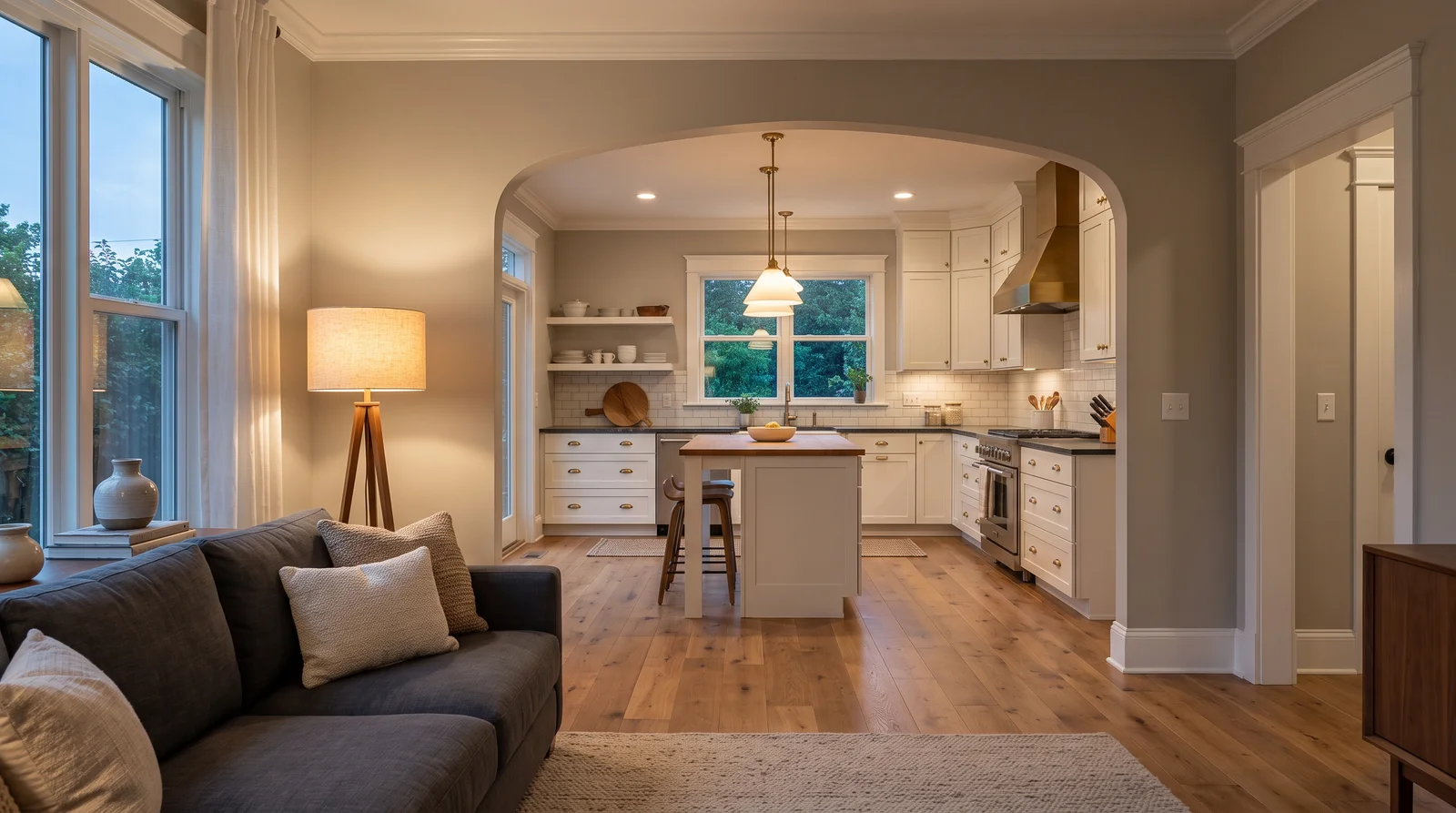
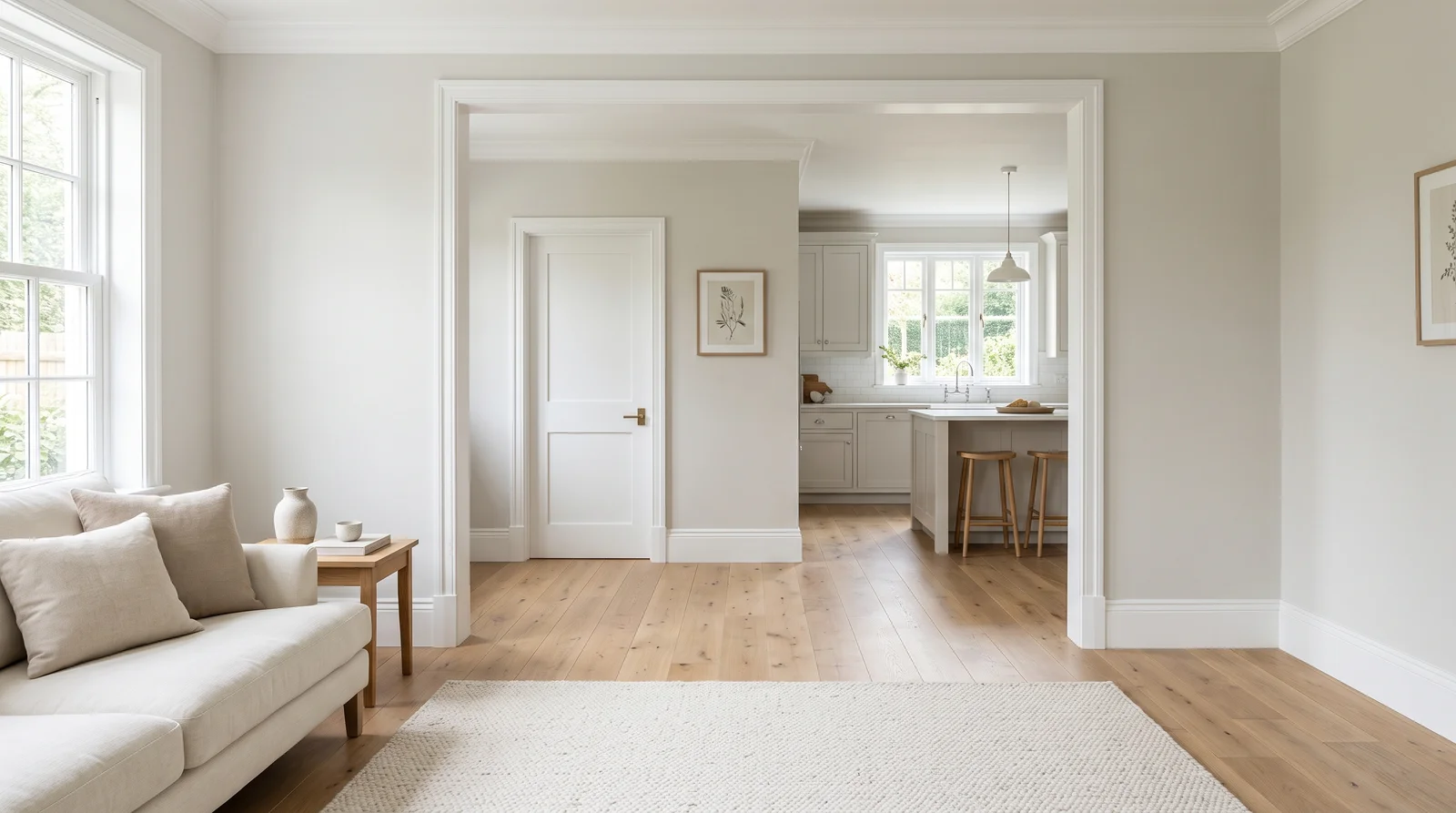
Gray is the most-recommended neutral in American interiors — the safe choice that anchors a room without committing to a strong color. The "true" grays here lean cool (blue or violet undertone) or stay almost dead-neutral. The warm-leaning grays (taupe, mushroom, greige) live in the Neutral family next door because they read closer to beige than to true gray on the wall.
Editor's Picks: Gray for Whole Houses
4 picks30 Gray Picks Across the LRV Range
30 of 3,425 · sorted dark → lightLooking for more? All gray → covers every brand; brand × family pages show full decks.
Gray Whole House Colors at Every US Brand
21 brands · up to 10 picks eachUp to 10 picks per brand spread across the gray LRV range, drawn from each brand's full deck. Tap any swatch with a curated guide for full spec; tap the brand title for the brand's complete gray deck.
Behr
Glidden
Valspar
Benjamin Moore
PPG / Glidden
Sherwin-Williams
Dunn-Edwards
Dutch Boy
Diamond Vogel
Hirshfield's
Kompozit
C2 Paint
Rodda
Magnolia Home
Farrow & Ball
Clare
Portola Paints
Annie Sloan
Backdrop
Rust-Oleum
Other Whole House Color Families
Gray Colors in Other Rooms
Gray Paint Colors for a Whole House
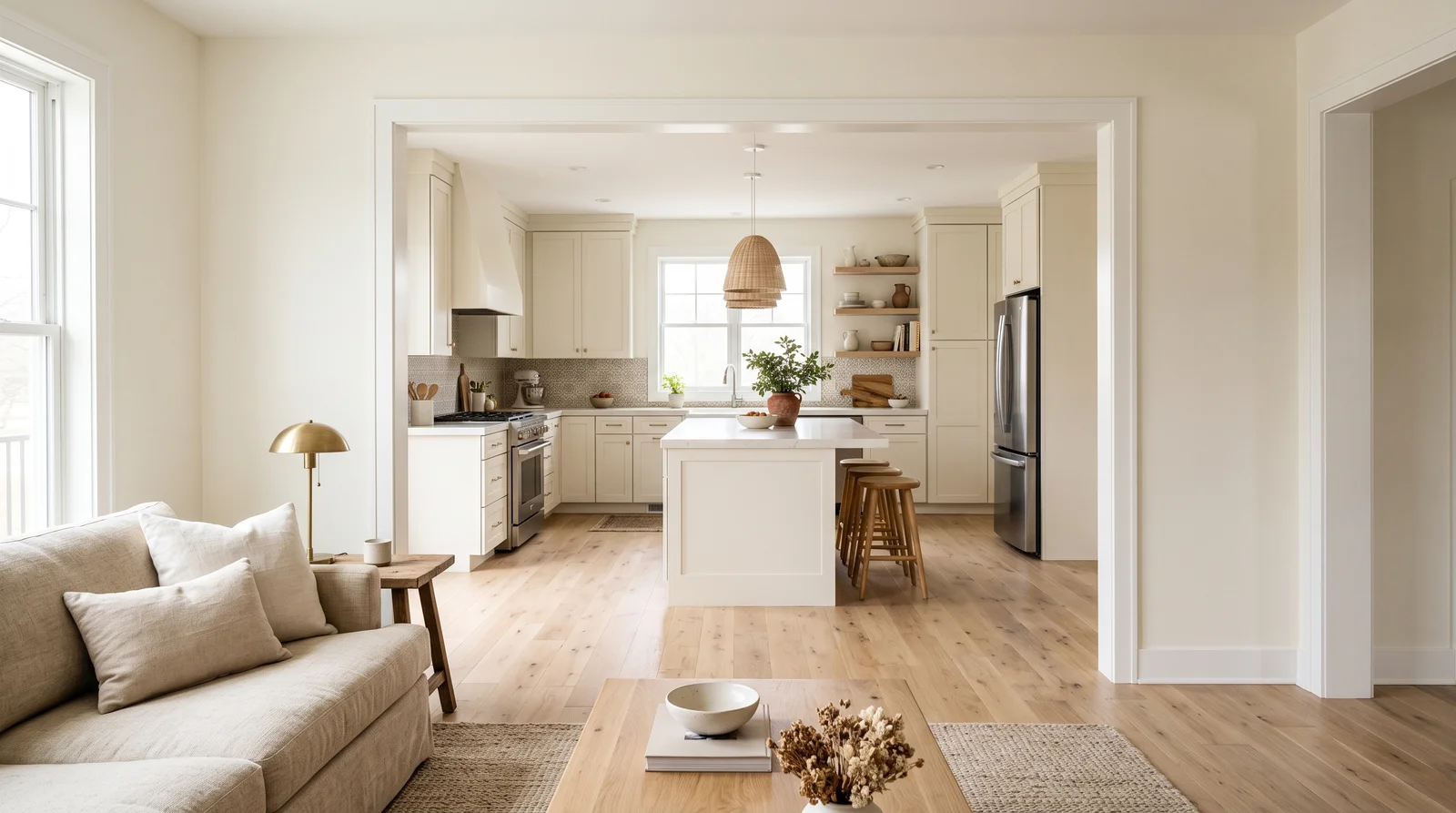
Gray is the closest thing paint has to a default whole-house color, and for good reason. It flows from room to room without fighting your furniture, your floors, or the light each space gets. The trick with a whole house is that one gray has to hold up everywhere — the bright south-facing living room, the dim north hallway, the kitchen with its warm bulbs. That is a harder job than picking a gray for a single wall.
The good news is that gray gives you a wide safe zone if you understand a little about depth and undertone. The same family of gray can show up as a calm greige in one room and a cooler stone in another, and that shift is normal, not a mistake. This page walks through how to pick a whole-house gray that reads the way you want in every room, how to handle light and sheen, and the small choices around trim and ceilings that make the whole thing feel finished. Any gray you see here is mixed to order at a paint counter, so you can match the same color across brands if you fall for one but buy another.
Why Gray Works Through a Whole House
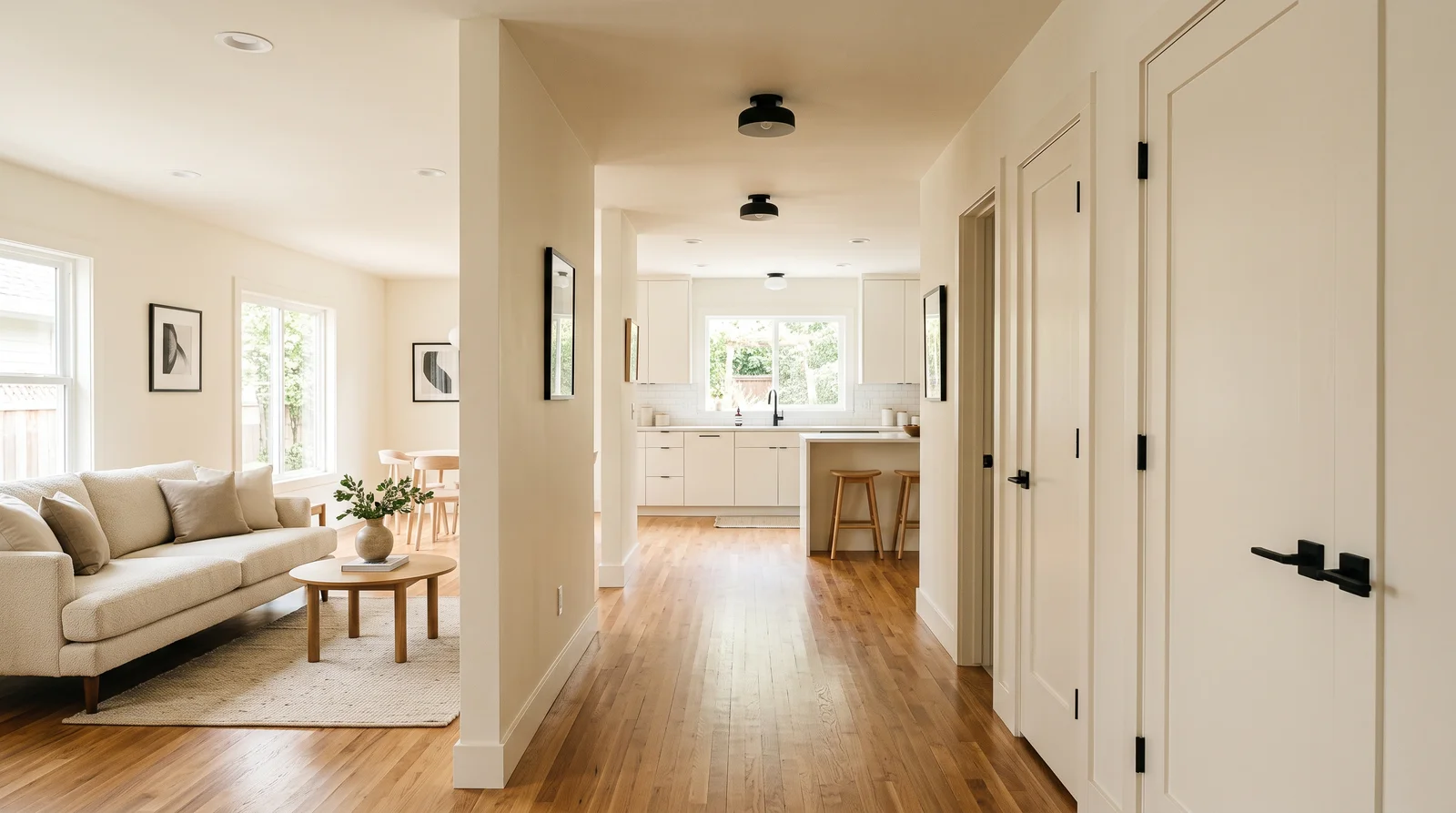
A whole-house color has to be a team player, and gray is built for that. It sits behind wood tones, white trim, black fixtures, and almost any furniture without clashing, so you are not repainting every time you redecorate one room. That flexibility is the main reason gray became the go-to neutral for open floor plans where you can see three rooms at once.
The one thing to watch is undertone, because it travels. A gray with a blue or green lean can look crisp in your sunniest room and turn cold or slightly dingy in a darker one. For a whole house, lean toward a gray with a soft warm undertone — often called greige — since it stays friendly in low light instead of going gloomy.
Picking the Right Depth and Reading the Light
For a whole house, mid-to-light gray is the workhorse. A good target is an LRV (light reflectance value) somewhere in the high 50s to low 70s — light enough to keep dim rooms from feeling like caves, but with enough color to read as gray and not as off-white. Going much darker than the mid-40s on every wall can make hallways and north rooms feel heavy, so save the deep grays for one accent space.
Light changes the same gray from room to room, and that is the part people forget. South and west rooms get warm light that softens gray and pulls out any warmth in it. North and east rooms get cool light that makes the same gray look a shade darker and bluer, so always test your sample on a north wall too — if it still looks good there, it will look good everywhere.
The Right Finish for Whole-House Walls
For most whole-house walls, a matte or eggshell finish is the sweet spot. It hides the small dents and roller marks that show up across large connected surfaces, and it reads as soft and calm rather than shiny. Flat looks beautiful but scuffs easily, so it is better suited to ceilings and low-traffic rooms than to a hallway full of hands and bags.
Step up the sheen where life gets messy. Use a scrubbable matte or eggshell in kitchens and bathrooms where moisture and grease hit the walls, and put satin or semi-gloss on trim and doors so they take wiping and bumps. Keeping the same gray but shifting sheen by location gives you durability without breaking the visual flow.
Pairing Gray With Trim, Ceilings, and Fixtures
The simplest, safest move is a clean white trim and ceiling against your gray walls. A soft white — not a stark blue-white — keeps the contrast gentle and lets the gray feel warm rather than industrial. Carrying the same trim white through the whole house ties every room together even if you change wall colors later.
Gray is also forgiving with metals and wood, which matters when fixtures and cabinets differ from room to room. Black hardware and matte fixtures read modern against gray, while brushed nickel or warm brass keep it softer and more traditional. Greige walls especially flatter wood floors and oak cabinetry, so let the gray you pick respond to the warm or cool tone of the flooring you already have.
Common Whole-House Gray Mistakes
The biggest mistake is picking one gray from a tiny chip under store lighting and rolling it everywhere. Grays swing hard with light and surroundings, so a sample that looks neutral in the showroom can turn purple, blue, or green once it is on your walls next to your floors. Always paint a large sample, look at it in every room, and check it morning and night.
The other common trap is going too cold or too dark across the board. A steely, blue-leaning gray on every wall can make a whole home feel like an office, and heavy mid-tones shrink small or dark rooms. When in doubt, go a touch warmer and a shade lighter than you think — it is easier to live with and reads as cozy instead of clinical.
Gray Whole House Paint — Frequently Asked Questions
What is the best shade of gray for a whole house?+
A light-to-mid greige — gray with a subtle warm undertone — is the most reliable whole-house pick. It stays friendly in both bright and dim rooms and pairs with almost any flooring or furniture. Aim for an LRV in the high 50s to low 70s so it lights up dark spaces without washing out to white.
Will the same gray look different in each room?+
Yes, and that is normal. South and west rooms get warm light that softens gray, while north and east rooms make it look cooler, darker, and bluer. That is why you test one gray on several walls before committing, rather than judging it from a single chip.
What sheen should I use for whole-house walls?+
Matte or eggshell works best on most walls because it hides imperfections and looks calm across large connected surfaces. Use a scrubbable version in kitchens and baths for moisture and grease, and put satin or semi-gloss on trim and doors so they wipe clean and take bumps.
What trim color goes with gray walls?+
A soft, slightly warm white is the safest choice. It keeps the contrast gentle so the gray feels warm rather than cold and industrial. Carrying that same trim white through every room ties the whole house together even if your wall colors change.
How do I avoid my gray looking blue or purple?+
Choose a gray with a warm undertone instead of a blue or violet lean, and always test a large sample in your actual rooms. Cool light and nearby colors can push a gray toward blue or purple, so check it on a north wall and at night before you buy gallons.
Can I match a gray I like from one brand at a different store?+
Yes. Every gray shown here is mixed to order at the paint counter, so the color is recreated by formula rather than tied to one brand. You can take a gray you love and have it cross-matched and tinted at whichever brand or store you prefer.