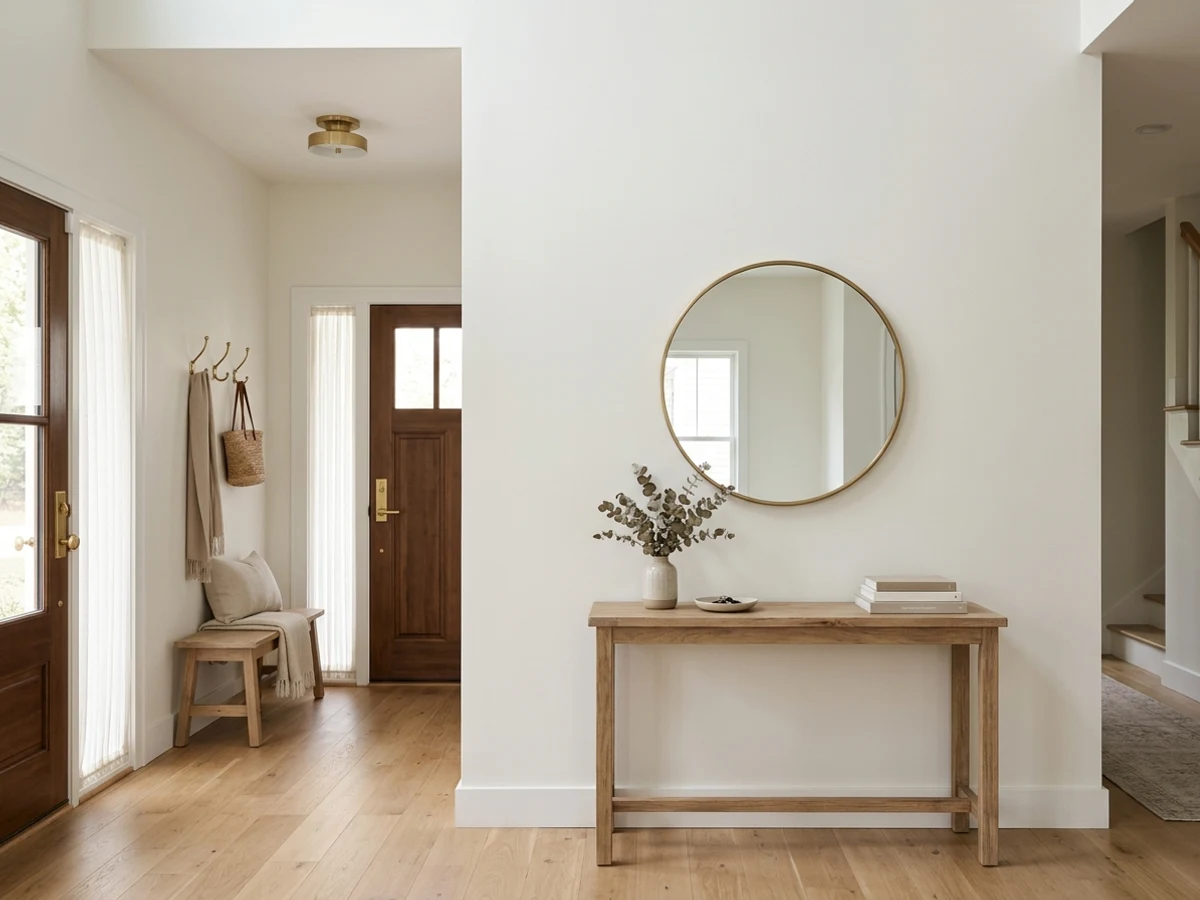
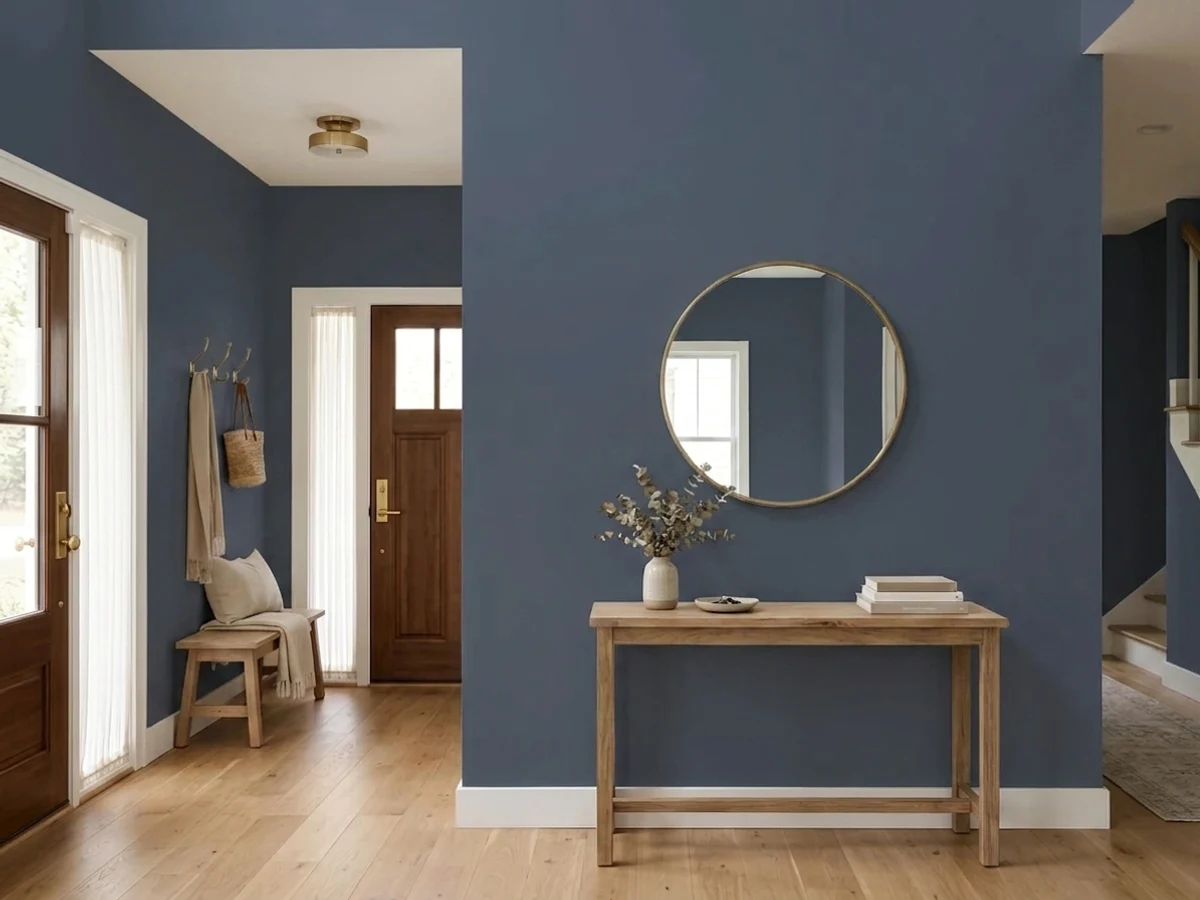
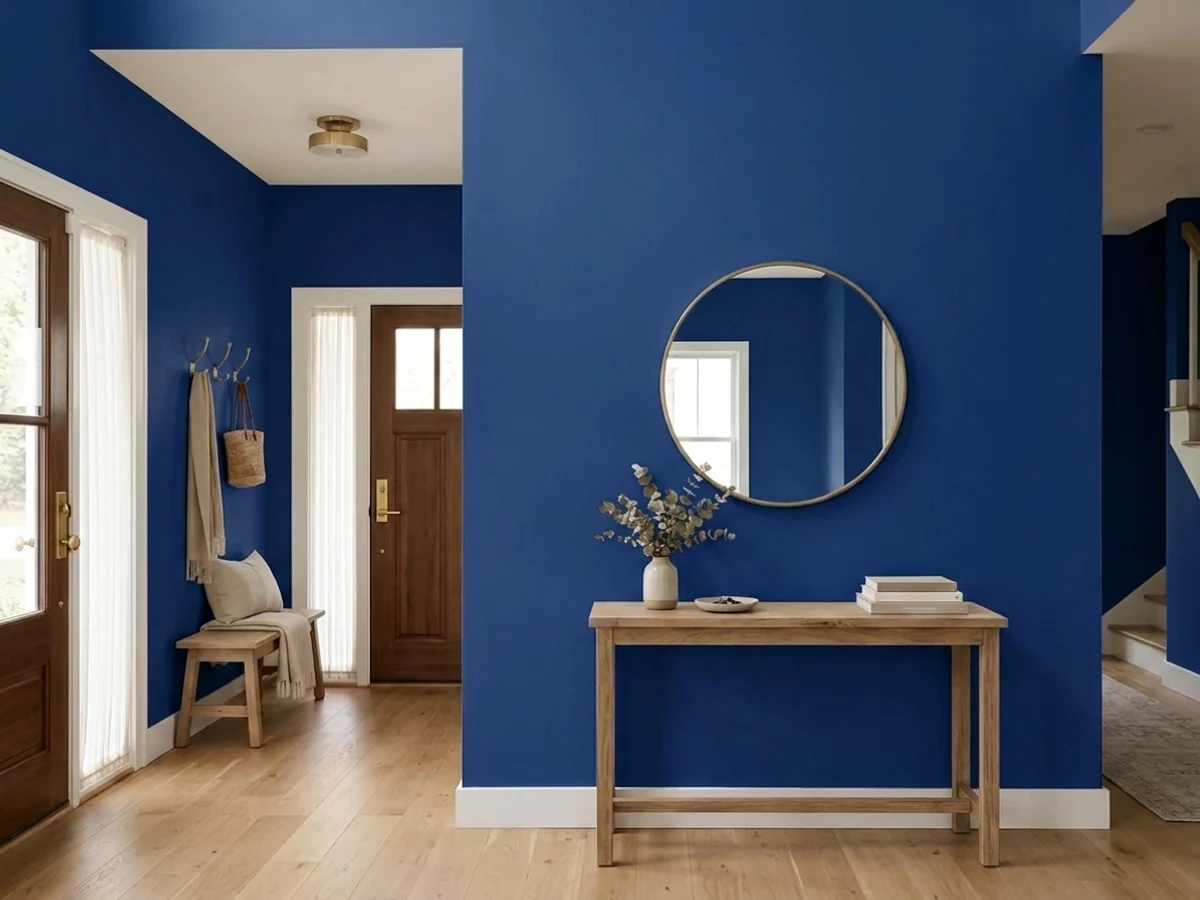
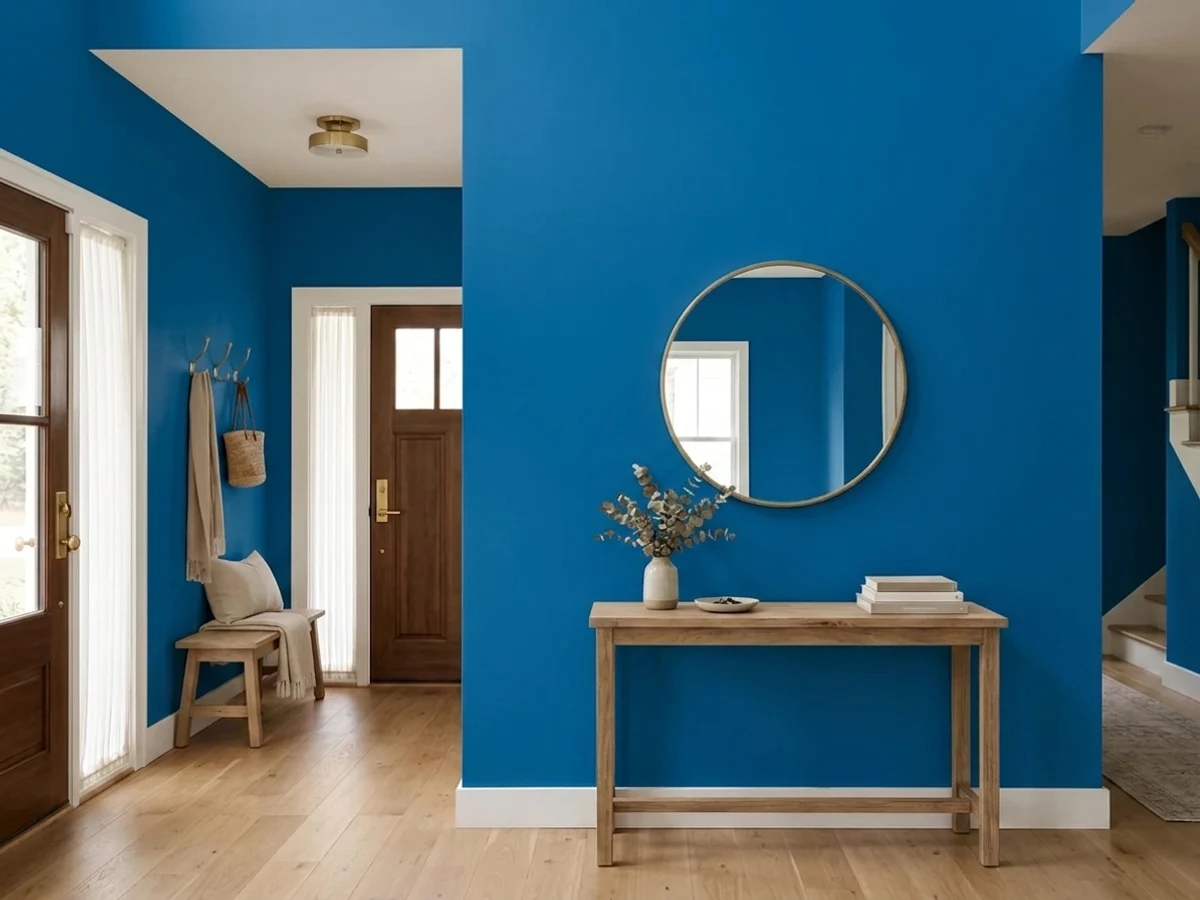
Blue Entryway Paint Colors
1,741 blue colors that work in entryways, drawn from the full ~30,000-color US paint deck. Below: editor's picks specific to entryways, then 30 picks spread across the LRV range — narrow further on the brand page when you've shortlisted.
Blue is the most popular color for accent walls, kitchen islands, and front doors — and also the family with the widest spread, from pale dove-blues that read almost grey, to inky near-black navies, to saturated cobalts that read almost royal. Teal-leaning blues (the green-blue overlap) live next door in the Teal family.
Editor's Picks: Blue for Entryways
4 picks30 Blue Picks Across the LRV Range
30 of 1,741 · sorted dark → lightLooking for more? All blue → covers every brand; brand × family pages show full decks.
Blue Entryway Colors at Every US Brand
21 brands · up to 10 picks eachUp to 10 picks per brand spread across the blue LRV range, drawn from each brand's full deck. Tap any swatch with a curated guide for full spec; tap the brand title for the brand's complete blue deck.
Behr
Valspar
Glidden
Benjamin Moore
PPG / Glidden
Dunn-Edwards
Sherwin-Williams
Dutch Boy
Hirshfield's
Diamond Vogel
Kompozit
C2 Paint
Portola Paints
Magnolia Home
Rodda
Farrow & Ball
Backdrop
Annie Sloan
Clare
Rust-Oleum
Other Entryway Color Families
Blue Colors in Other Rooms
Blue Paint Colors for a Entryway
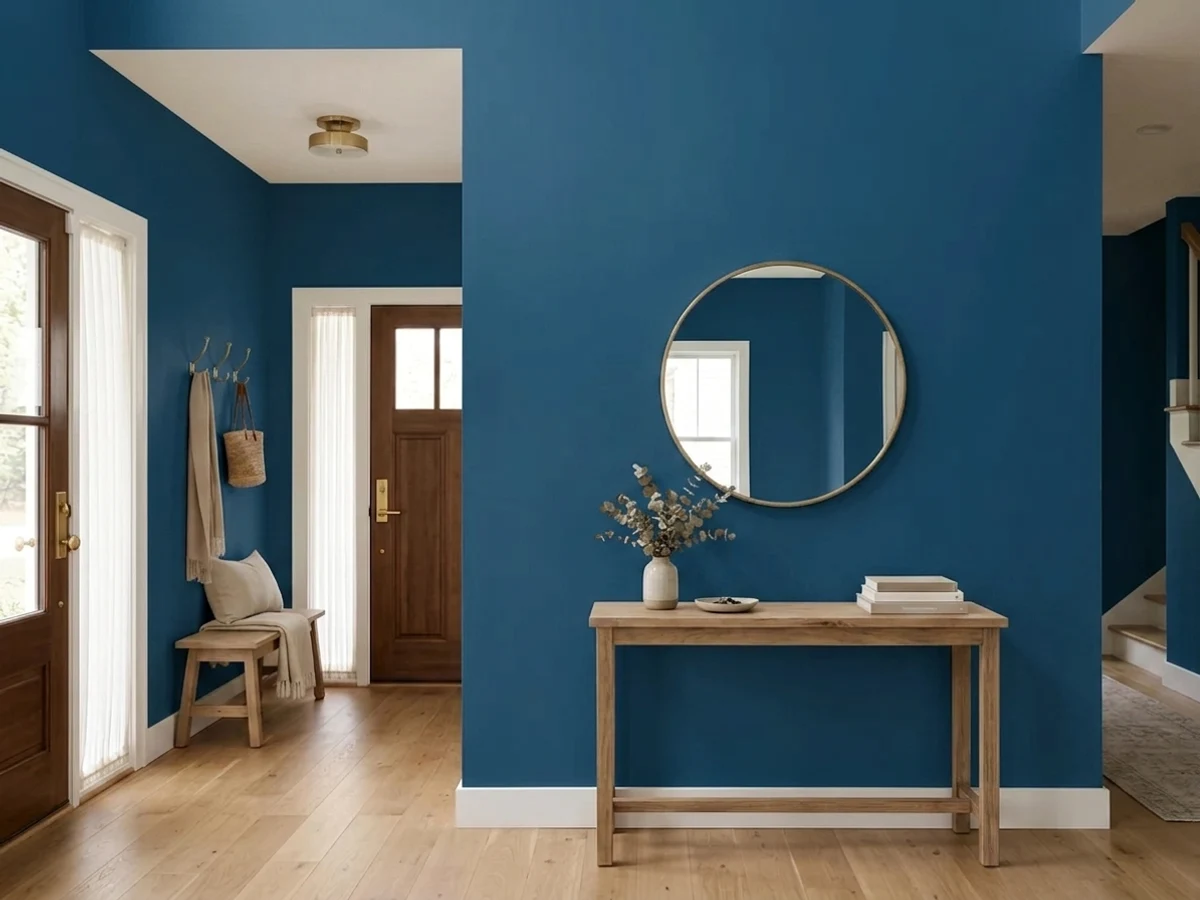
Your entryway sets the tone for the whole house, and it's one of the few spaces where you can be bolder than you'd dare in a living room. It's a room people pass through, not one they sit in for hours, so a strong, saturated blue won't wear out its welcome the way it might over a sofa. Blue here reads as calm and grounded the moment someone walks in, which is exactly the first impression most people want.
The trick is that entryways are also the hardest-working surfaces in the house. Hands, bags, shoes, wet umbrellas, and direct outdoor light all hit these walls more than anywhere else. So the right blue for an entryway is as much about depth, sheen, and durability as it is about the shade you fall in love with. Every color shown here is mixed to order at the paint counter, so you can take any blue you like and have it cross-matched into the brand and finish that suits this room best.
Why Blue Works in an Entryway
An entryway is a transition space, and blue does transition well. It signals calm and order after the noise of the outside world, and it pulls in the sky and water tones people already associate with feeling settled. Because nobody lingers in a foyer the way they do in a bedroom, you can use a deeper or more dramatic blue here without it ever feeling heavy.
Blue also plays nicely with the things that live in an entryway. Wood floors, woven runners, metal hooks, and a mirror all look intentional against a blue wall instead of fighting it. The one thing to watch is that a small, windowless entry can feel cold if the blue leans too icy, so warmth in the undertone matters more here than in a sunny room.
Choosing the Right Depth for the Light
Light Reflectance Value, or LRV, tells you how much light a color bounces back on a 0-to-100 scale. A small or dim entryway with little natural light usually does best with a blue in the mid-to-upper range, roughly an LRV of 55 to 70, so the space stays open and welcoming. A blue that's too dark in a windowless entry can close the room in fast.
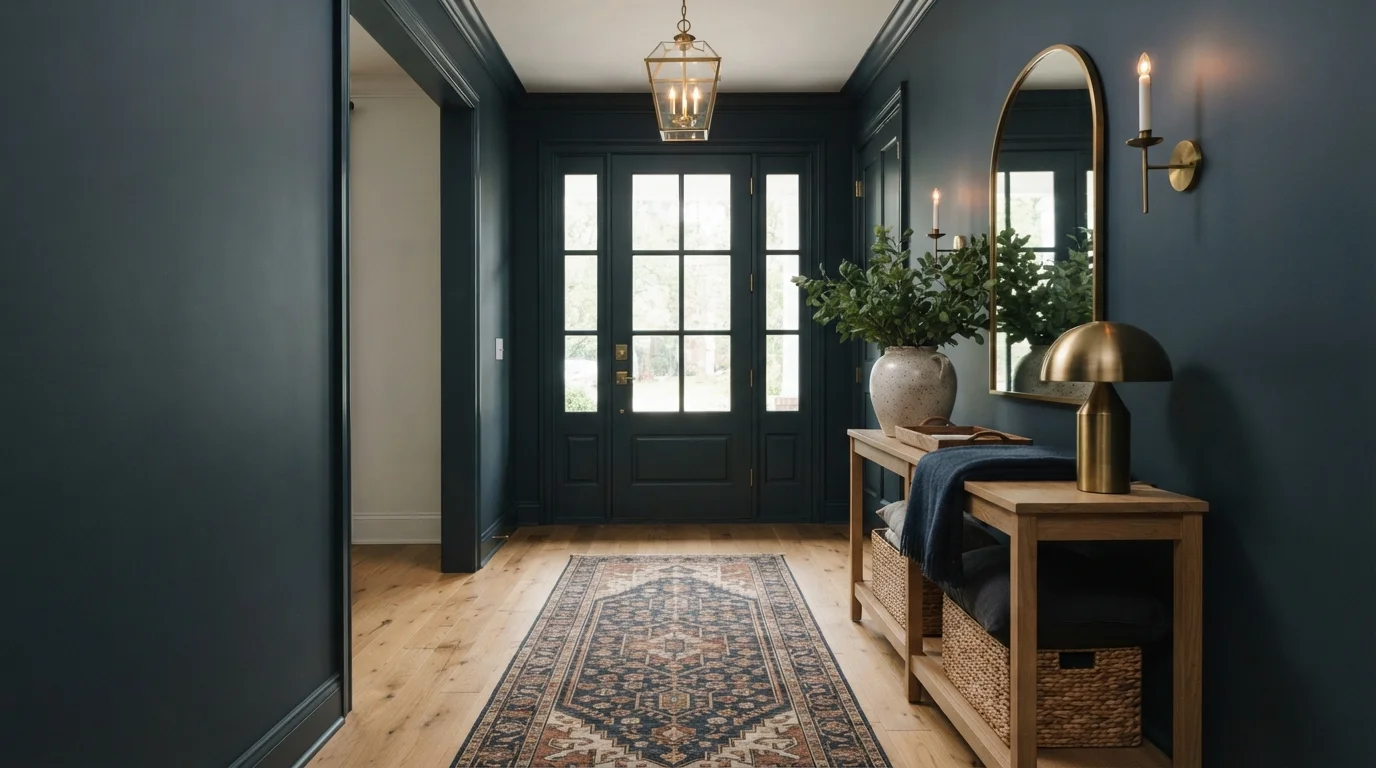
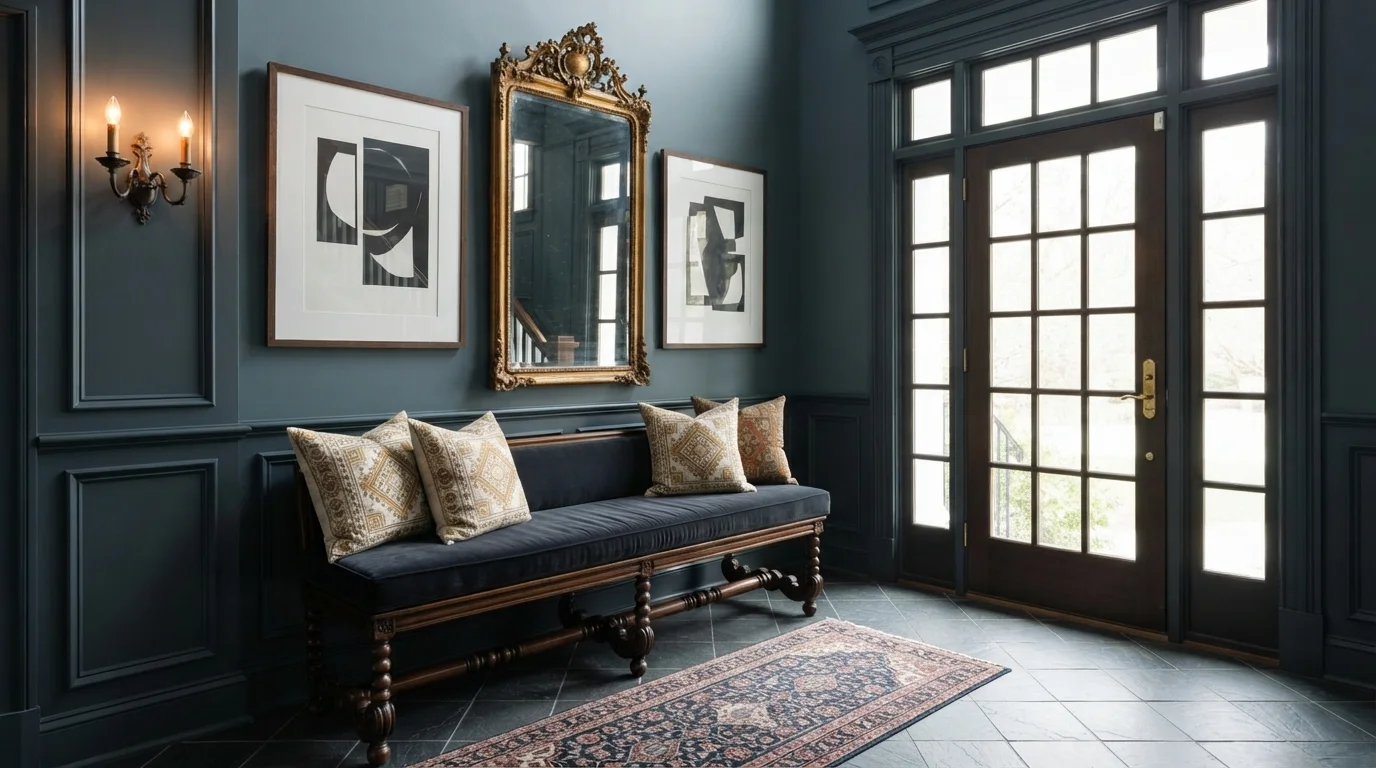
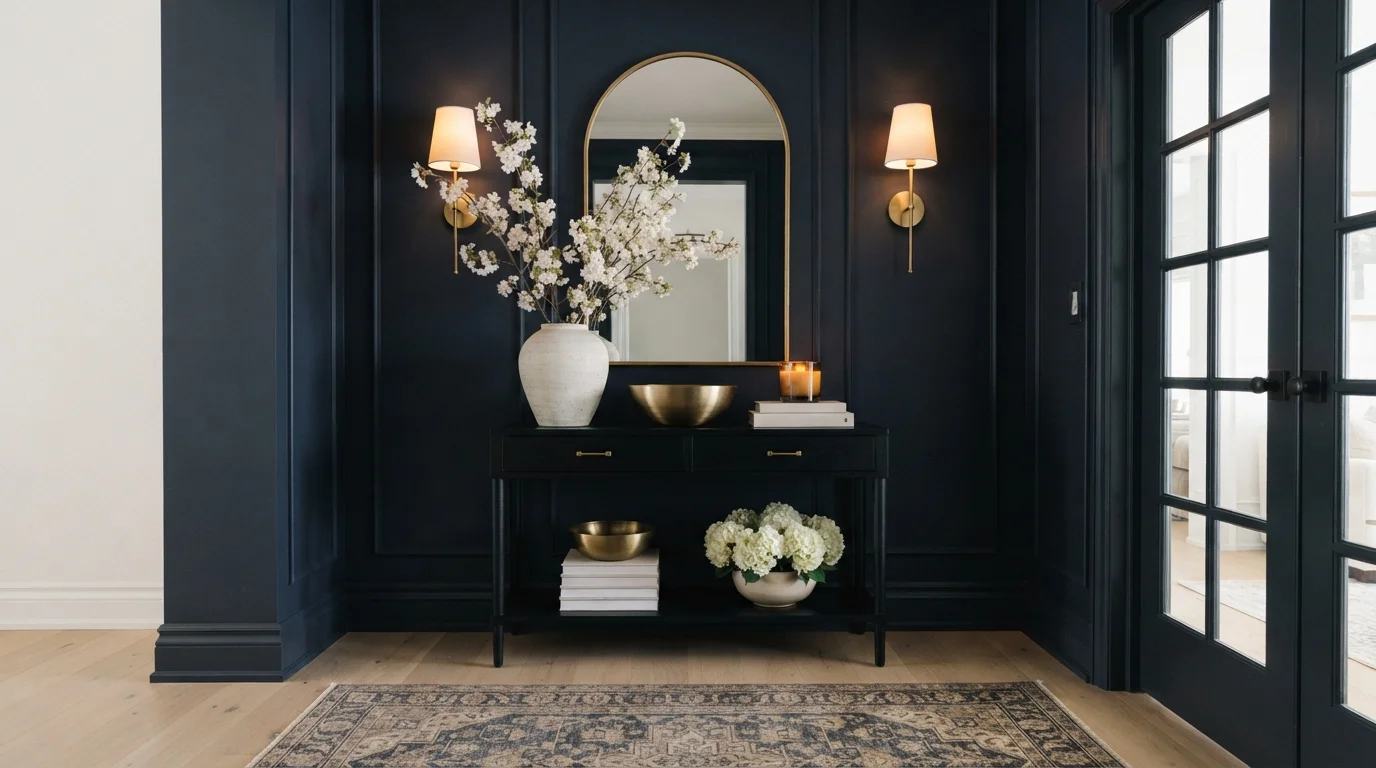
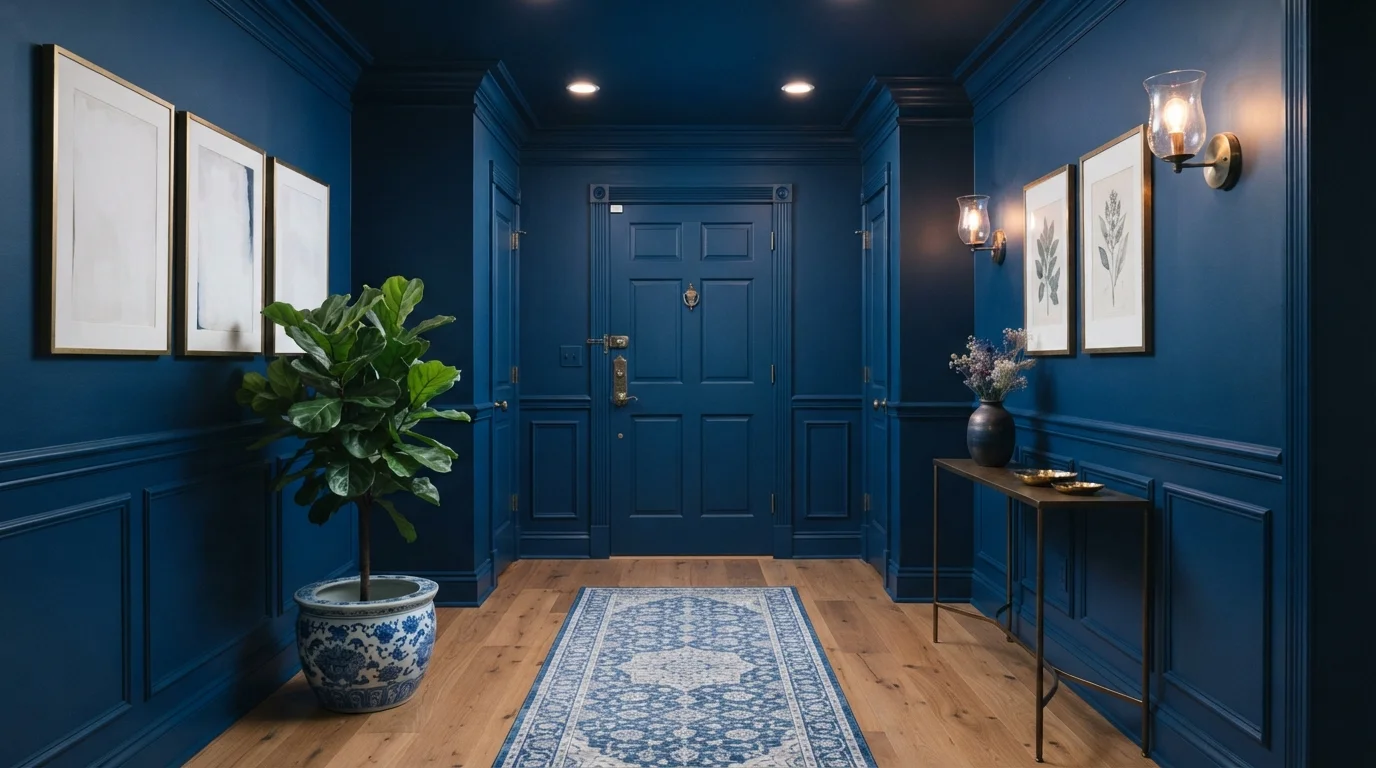
If your entry has a glass door, a sidelight, or a window over the stairs, you have room to go deeper. A rich navy or ink blue with an LRV in the teens or twenties turns a bright, generous entry into a real moment. North-facing entries cool every color down, so lean toward blues with a soft green or gray undertone there, while a warm, sunny doorway can carry a cleaner, truer blue without going cold.
The Right Finish for a High-Traffic Room
Entryways take more physical abuse than almost any room, so skip flat paint on the walls. An eggshell or satin finish gives you enough sheen to wipe off fingerprints, scuffs from bags, and the gray smudges that build up around light switches and door handles. Satin holds up especially well in a tight entry where walls get brushed constantly.
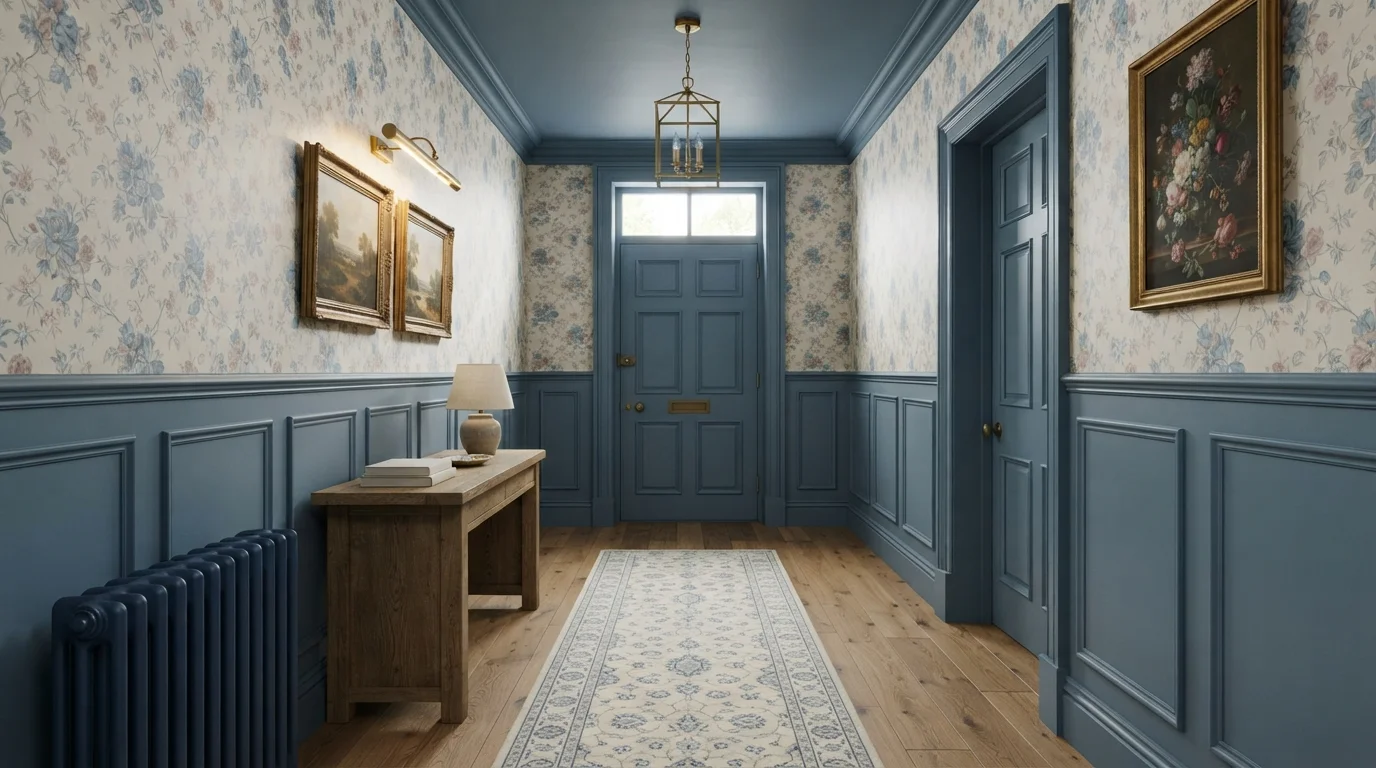
For trim, doors, and any wainscoting or paneling, step up to semi-gloss. It's the most scrubbable and it stands up to wet coats, shoes, and the occasional kicked baseboard. A little extra sheen on the trim also catches the light from the front door and keeps a dark blue entry from feeling flat. Just keep the walls one step softer than the trim so glare from the doorway doesn't show every roller mark.
Pairing Blue With Trim, Floors, and Fixtures
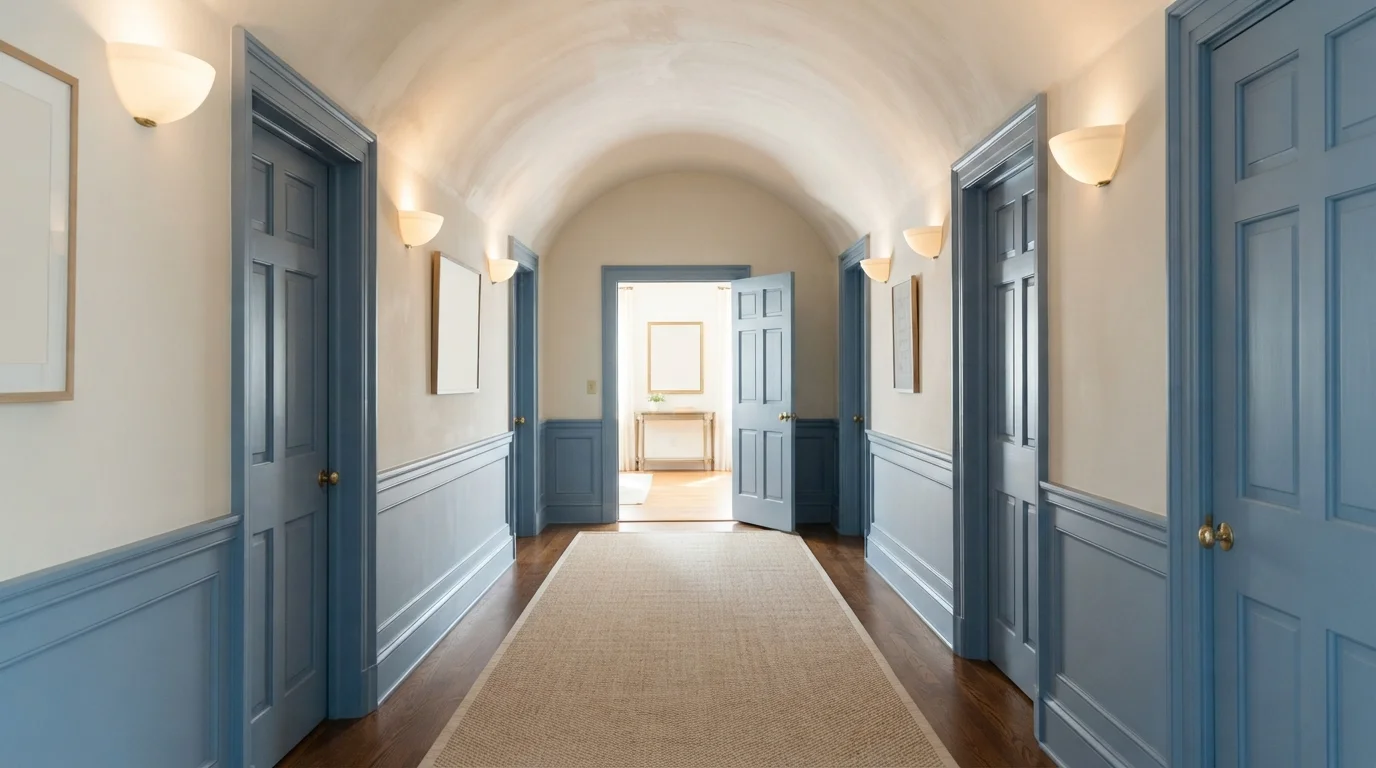
Crisp white trim is the safest and most timeless partner for a blue entry, and it frames a front door beautifully. If you want something softer, a warm off-white or greige trim takes the chill off a cooler blue and feels less stark in a dim foyer. For a tailored, built-in look, painting the trim the same blue as the walls in different sheens makes a small entry feel deliberate.
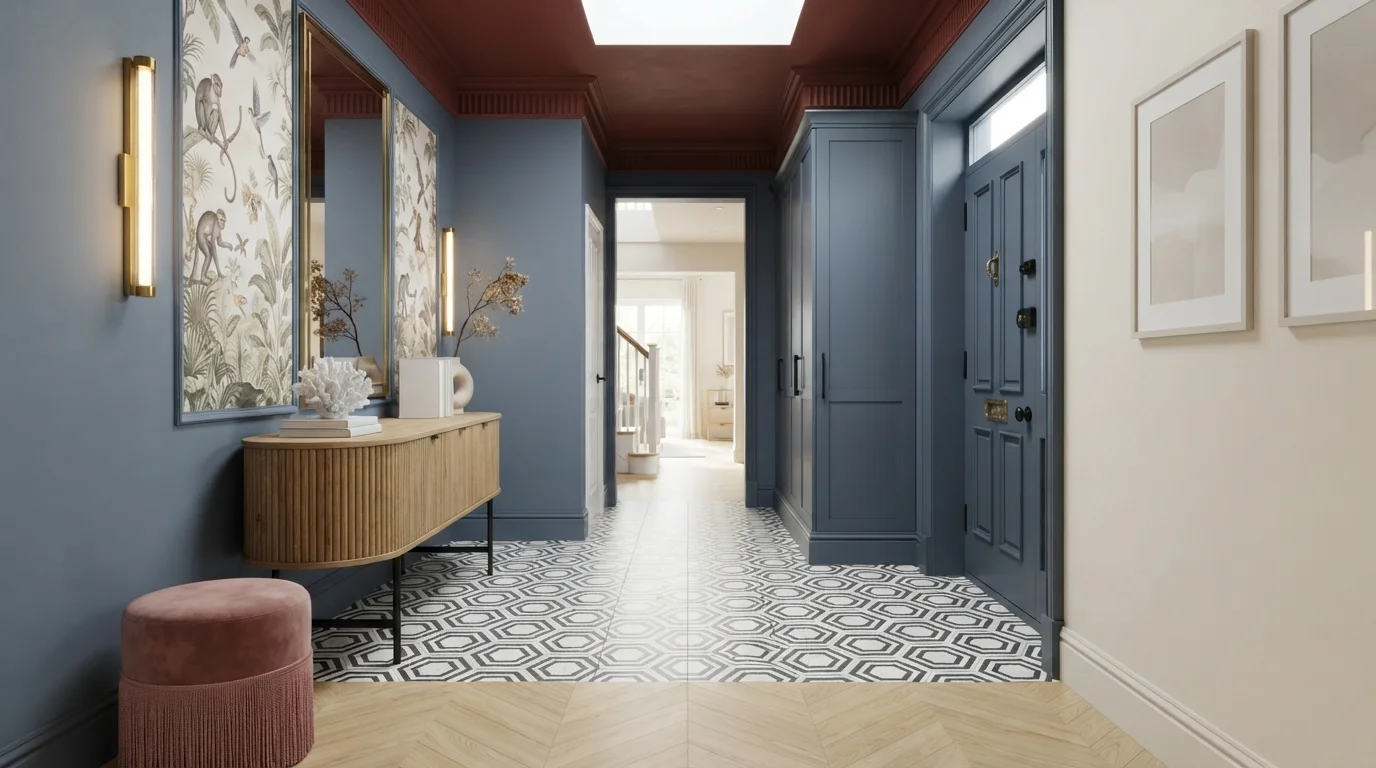
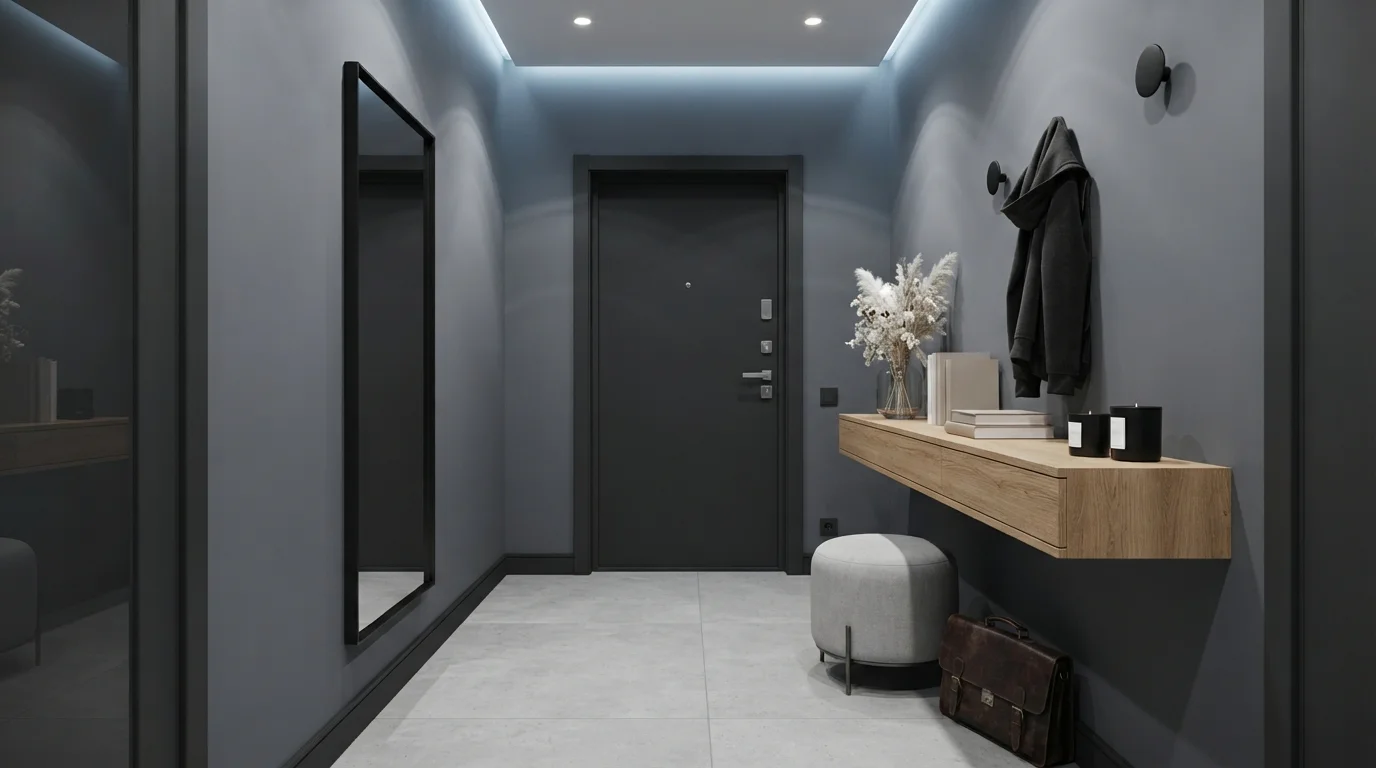
Blue is forgiving with the materials an entryway already has. Warm wood floors and woven baskets balance a cool navy, while brass or aged-bronze hooks, sconces, and door hardware add the warmth that keeps blue from reading icy. Black accents look sharp and modern against a mid-tone blue, and a mirror in a warm metal frame both bounces light and ties the metals together.
Common Mistakes to Avoid
The biggest mistake is picking a blue from a tiny chip without testing it on the actual entry wall. Entryways get a strange mix of outdoor light through the door and artificial light deeper in, and that combination can pull a blue toward purple, gray, or green depending on the hour. Paint a large sample, look at it morning and night, and live with it for a few days.
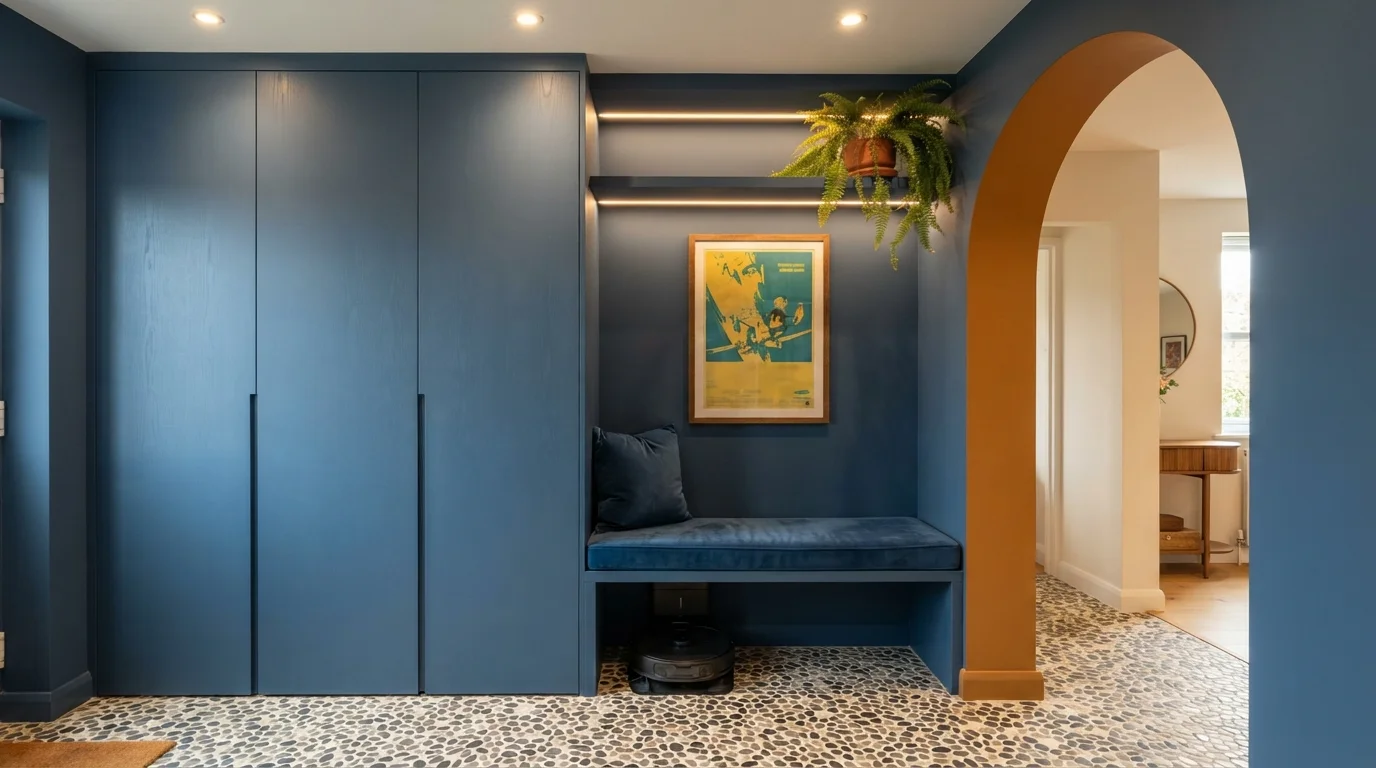
The other common slip is going too dark in a space with no natural light, which makes an already-tight entry feel like a tunnel. If you love a deep blue but your foyer is dim, save the saturation for an accent wall or the lower half under a chair rail and keep the rest light. And don't forget the ceiling: a bright white or a barely-tinted version of your blue keeps the room from feeling top-heavy.
Blue Entryway Paint — Frequently Asked Questions
Is blue too cold for an entryway?+
Not if you choose the undertone with care. A blue with a hint of warm gray or green stays welcoming, and pairing it with wood, warm metals, and a soft white trim removes any chill. Cold-feeling blue usually comes from an icy undertone in a north-facing or windowless entry, which is easy to avoid by sampling first.
What shade of blue is best for a small or dark entryway?+
Lean toward a mid-to-light blue with an LRV in the 55 to 70 range so the space stays open and bright. Save deep navy and ink blues for entries that get real natural light, or use them only on an accent wall or the lower half of a wall in a dim foyer. Always test a large sample on the wall before committing.
What sheen should I use on entryway walls?+
Use eggshell or satin on the walls so you can wipe off fingerprints, scuffs, and smudges around switches and door handles. Go up to semi-gloss on trim, doors, and any paneling, since those surfaces take the most abuse and need the most scrubbing. Skip flat paint here; it stains and can't be cleaned well in a high-traffic spot.
What trim color goes with a blue entryway?+
Crisp white is the classic, timeless choice and frames the front door cleanly. A warm off-white or greige softens a cooler blue and feels less stark in a dim entry. For a built-in, tailored look, paint the trim the same blue as the walls but in a higher sheen.
Can I get the same blue in a different paint brand?+
Yes. Every color shown is mixed to order at the paint counter, so any blue you like can be cross-matched into the brand and finish you prefer. That lets you choose the shade for its look and still pick the line that has the durability and sheen you want for a busy entryway.
Should the entryway ceiling be blue too?+
Usually a bright white or a barely-tinted version of your wall blue works best, since it keeps a small entry from feeling top-heavy and helps bounce light around. A soft pale blue on the ceiling can look lovely in an entry with good natural light. Keep it much lighter than the walls so the room stays open.