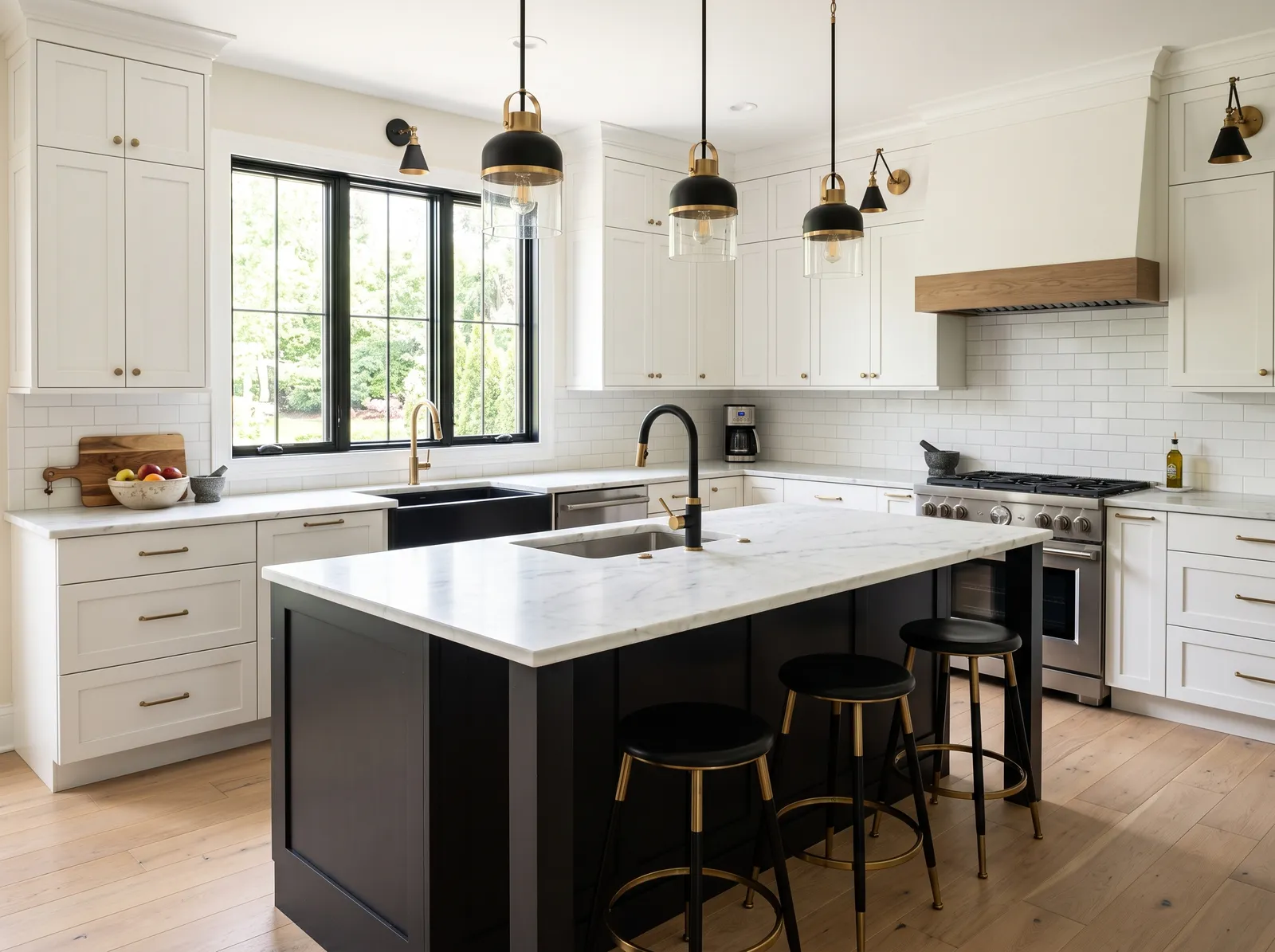
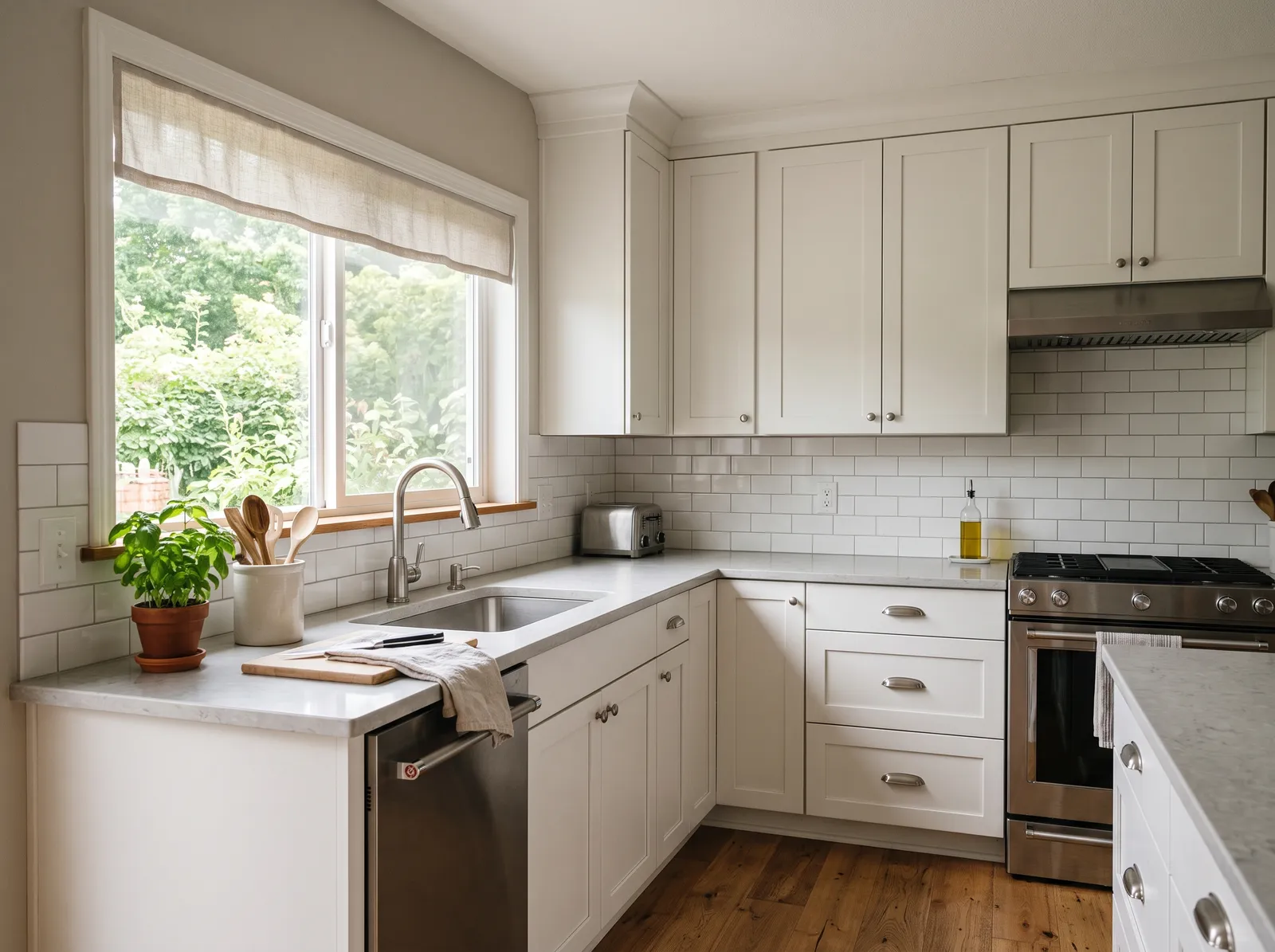
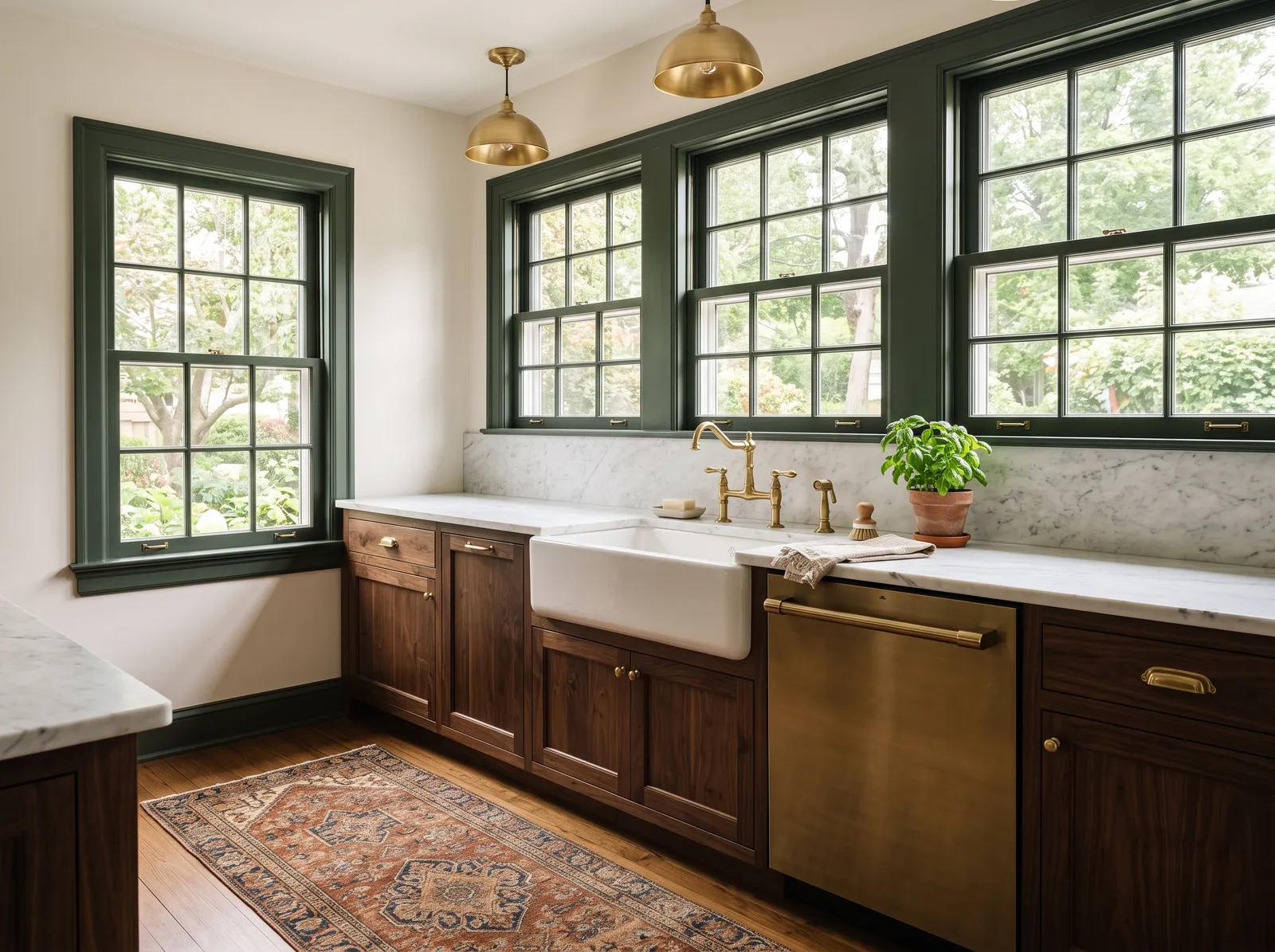
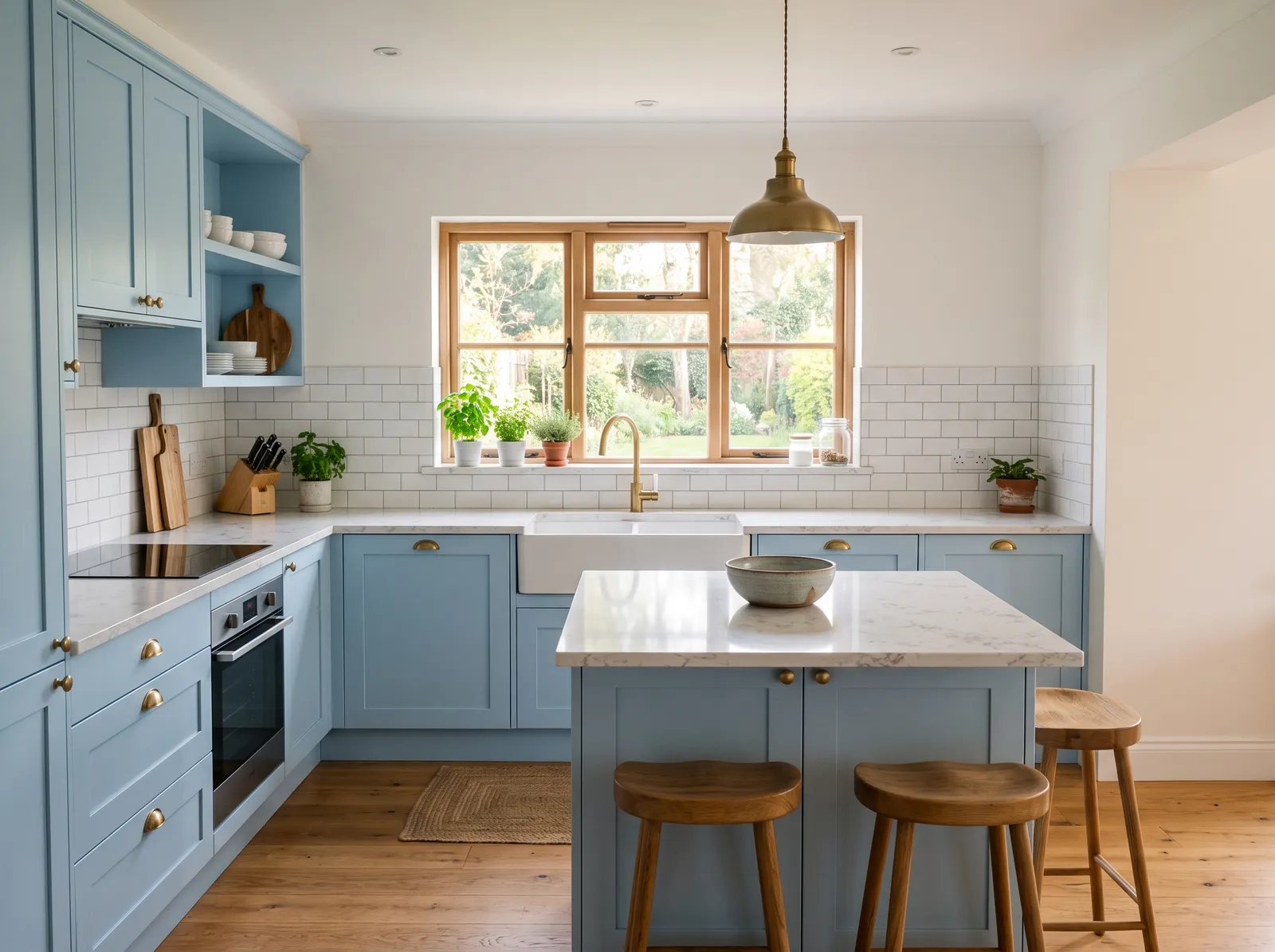
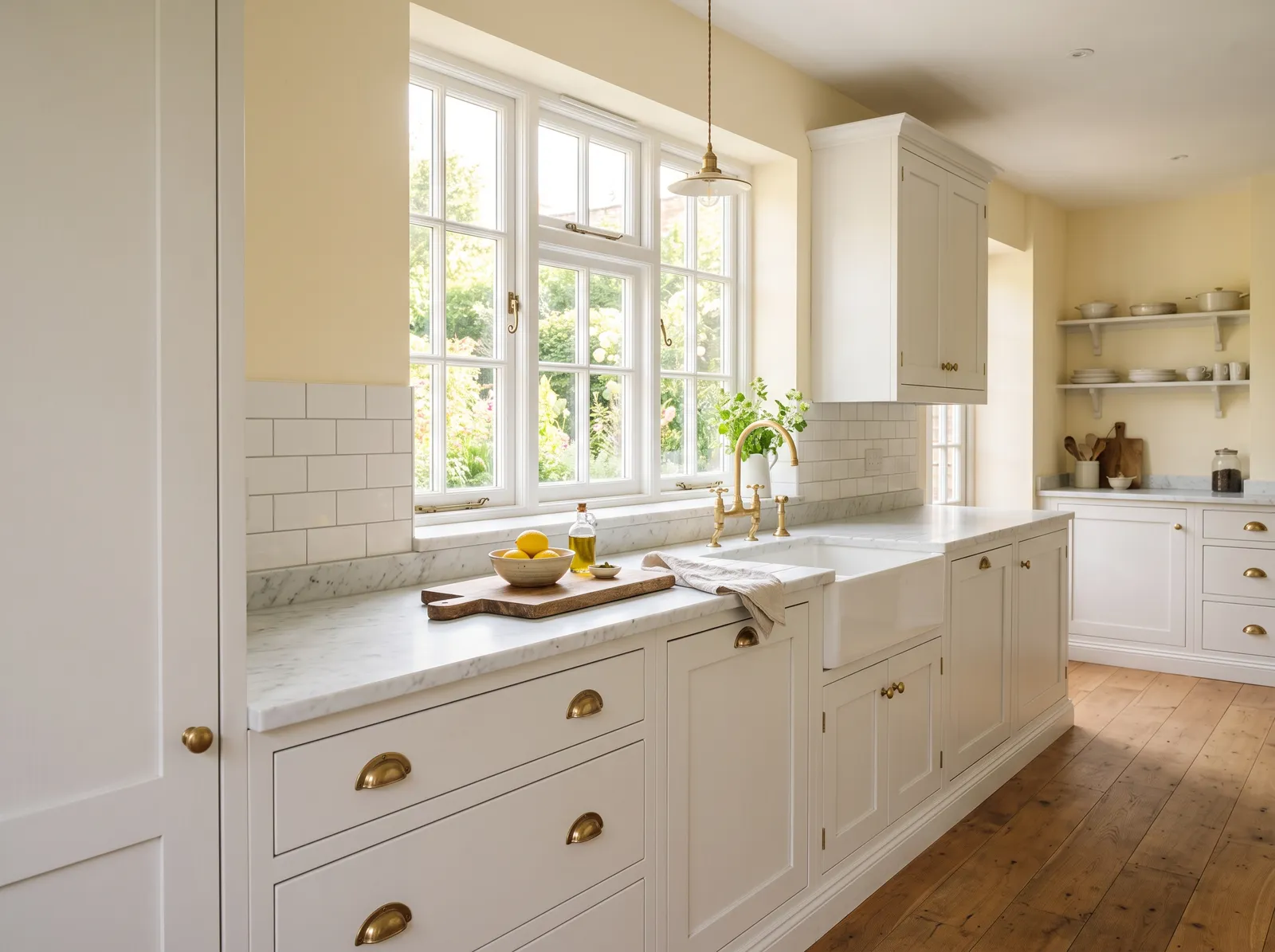
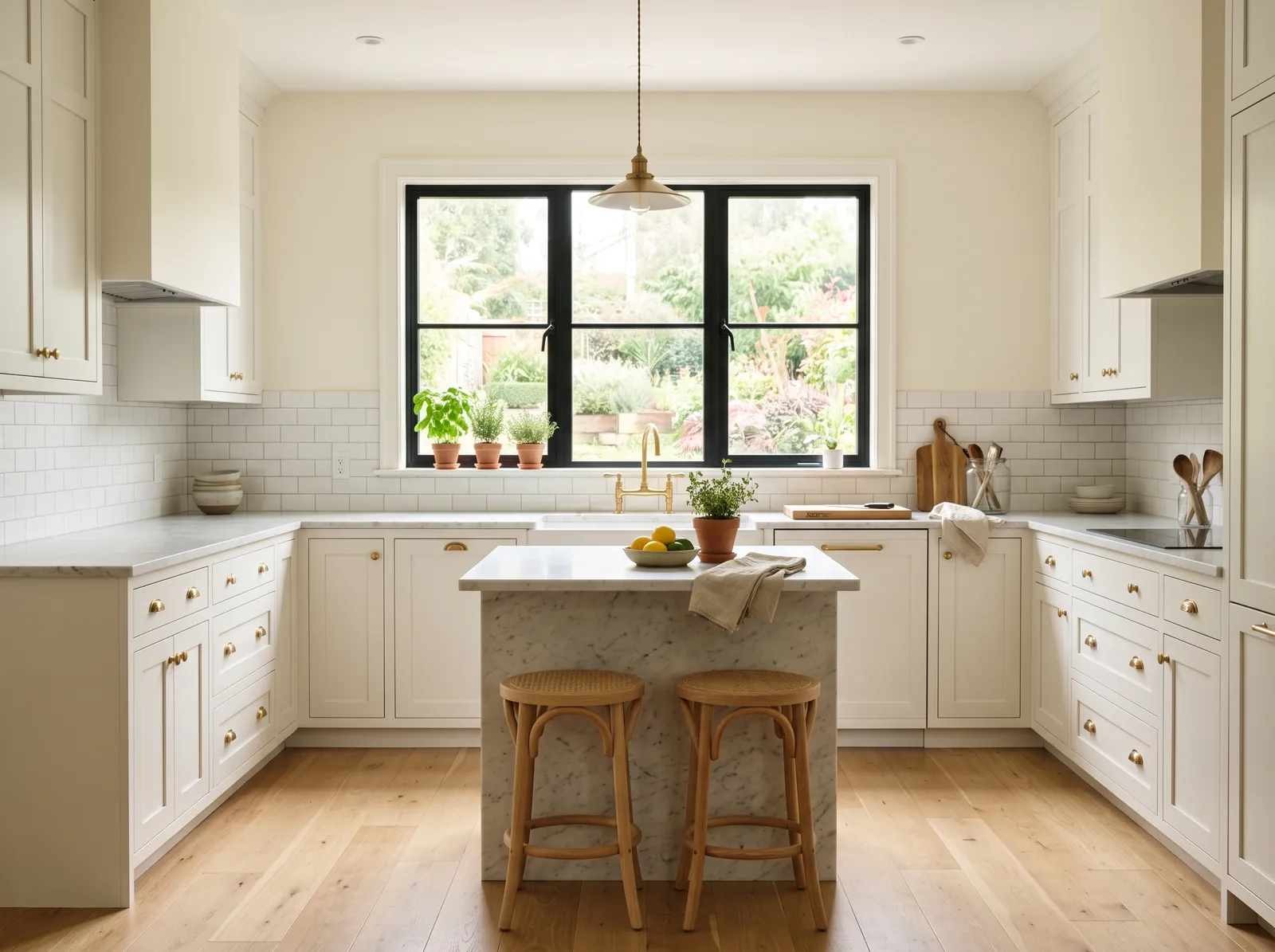
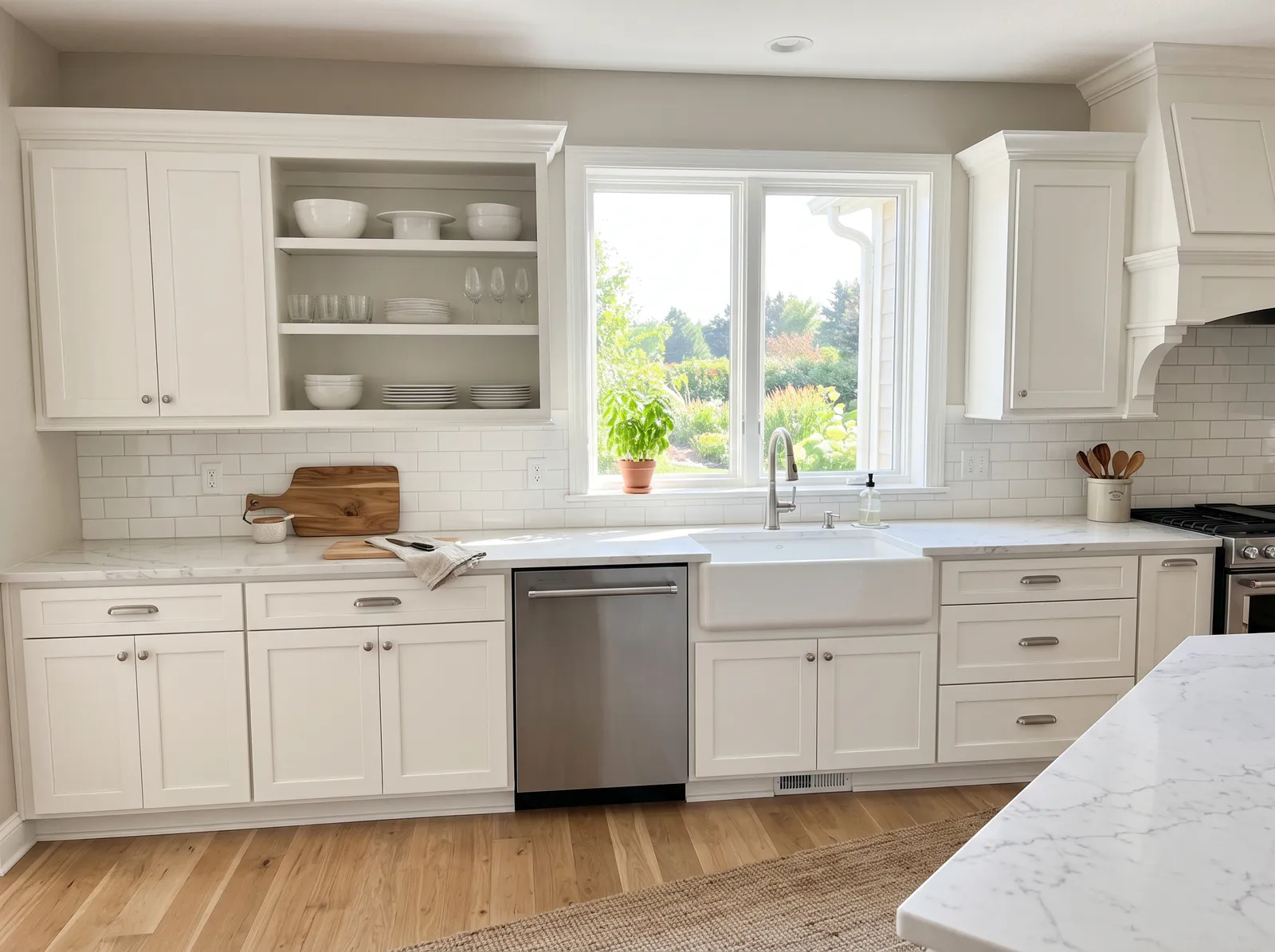
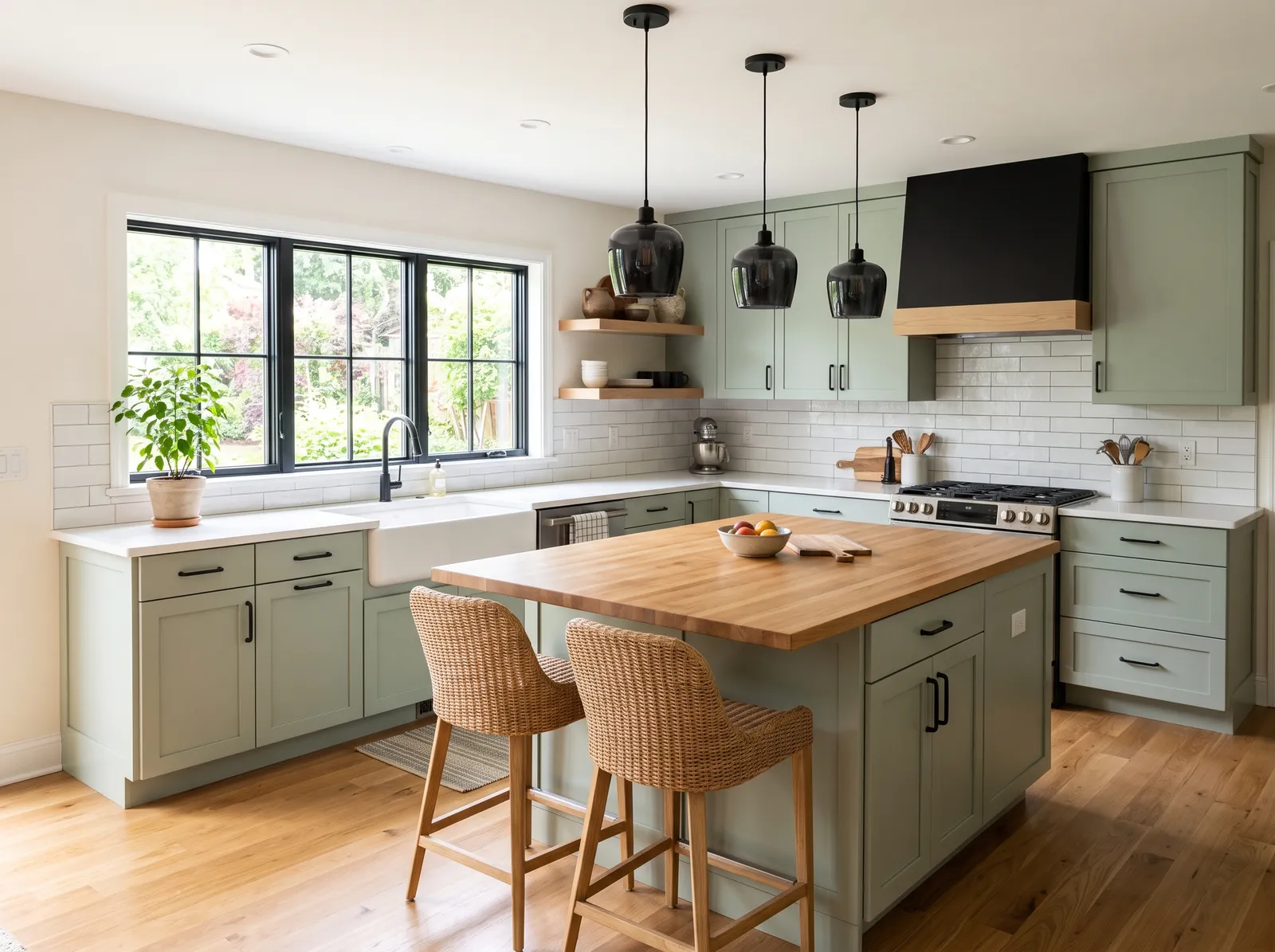
White Kitchen Cabinet Paint Colors
2,064 white colors that work in kitchen cabinets, drawn from the full ~30,000-color US paint deck. Below: editor's picks specific to kitchen cabinets, then 30 picks spread across the LRV range — narrow further on the brand page when you've shortlisted.
White is the hardest color to specify well. The right white shifts under daylight, north-facing rooms, and warm-LED bulbs — and most "whites" actually have a strong undertone (yellow, pink, green, or blue) that only shows up once it's on the wall. Below: the warm whites and cool whites we recommend most often, organized so you can compare them at a glance.
Editor's Picks: White for Kitchen Cabinets
4 picks30 White Picks Across the LRV Range
30 of 2,064 · sorted dark → lightLooking for more? All white → covers every brand; brand × family pages show full decks.
White Kitchen Cabinet Colors at Every US Brand
20 brands · up to 10 picks eachUp to 10 picks per brand spread across the white LRV range, drawn from each brand's full deck. Tap any swatch with a curated guide for full spec; tap the brand title for the brand's complete white deck.
Behr
Benjamin Moore
Dunn-Edwards
Glidden
PPG / Glidden
Valspar
Diamond Vogel
Kompozit
Hirshfield's
Sherwin-Williams
Dutch Boy
C2 Paint
Rodda
Farrow & Ball
Magnolia Home
Clare
Portola Paints
Backdrop
Rust-Oleum
Other Kitchen Cabinet Color Families
White Colors in Other Rooms
White Paint Colors for a Kitchen Cabinet
White on a cabinet is a classic for a reason. It opens up a kitchen, bathroom, or built-in, reflects light into the room, and makes the rest of your finishes do the talking. But "white" covers a huge range, and the wrong one on a cabinet can read cold, grimy, or oddly blue once it's up against your counters and floors. The good news: every white you see here is mixed to order at a paint counter, so you can chase the exact undertone you want and cross-match it across brands later.
Cabinets are also one of the hardest-working surfaces in the house. They get touched, splashed, wiped down, and stared at in close-up daily. That changes the conversation from "which white looks nice on a wall" to "which white and which finish will still look clean in two years." Below we walk through how to pick the depth, undertone, and sheen of white that actually holds up on a cabinet.
Why White Works on a Cabinet
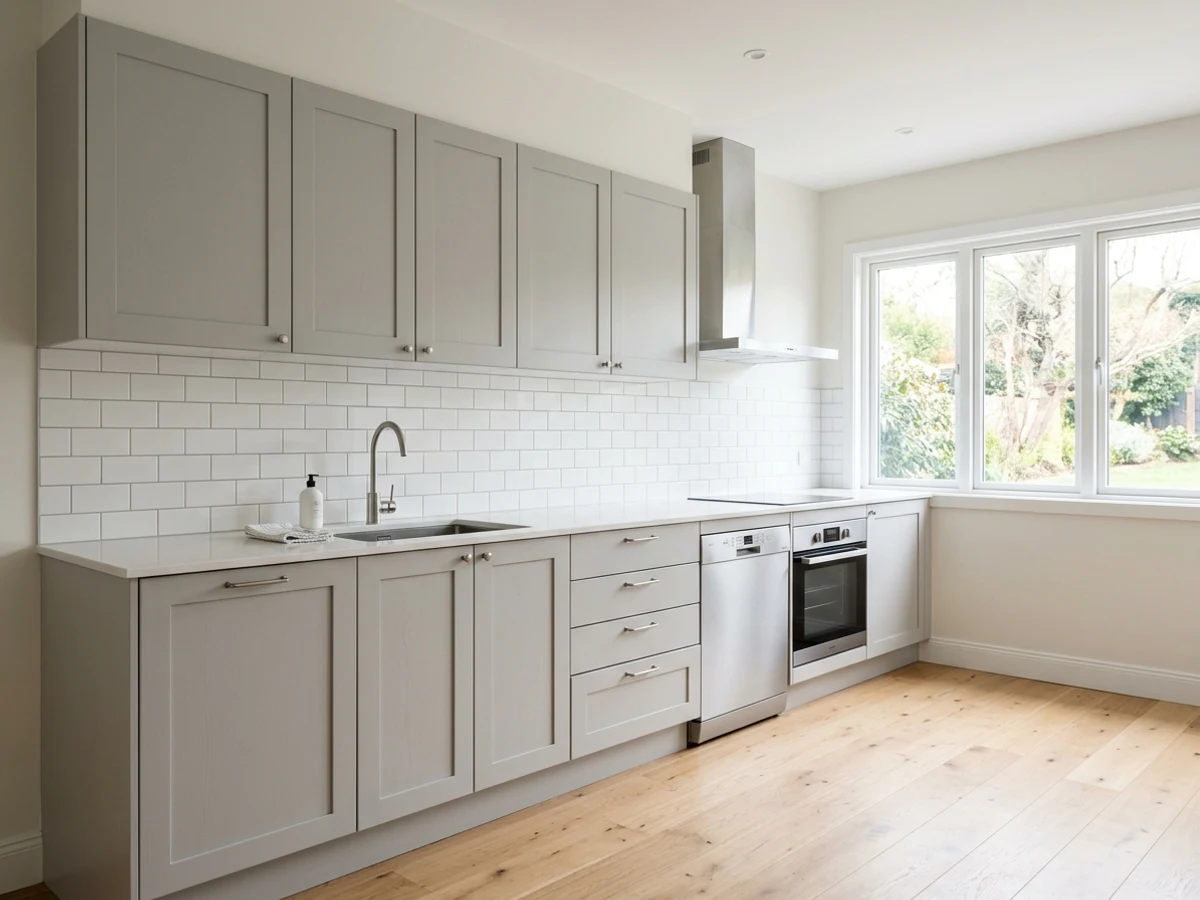
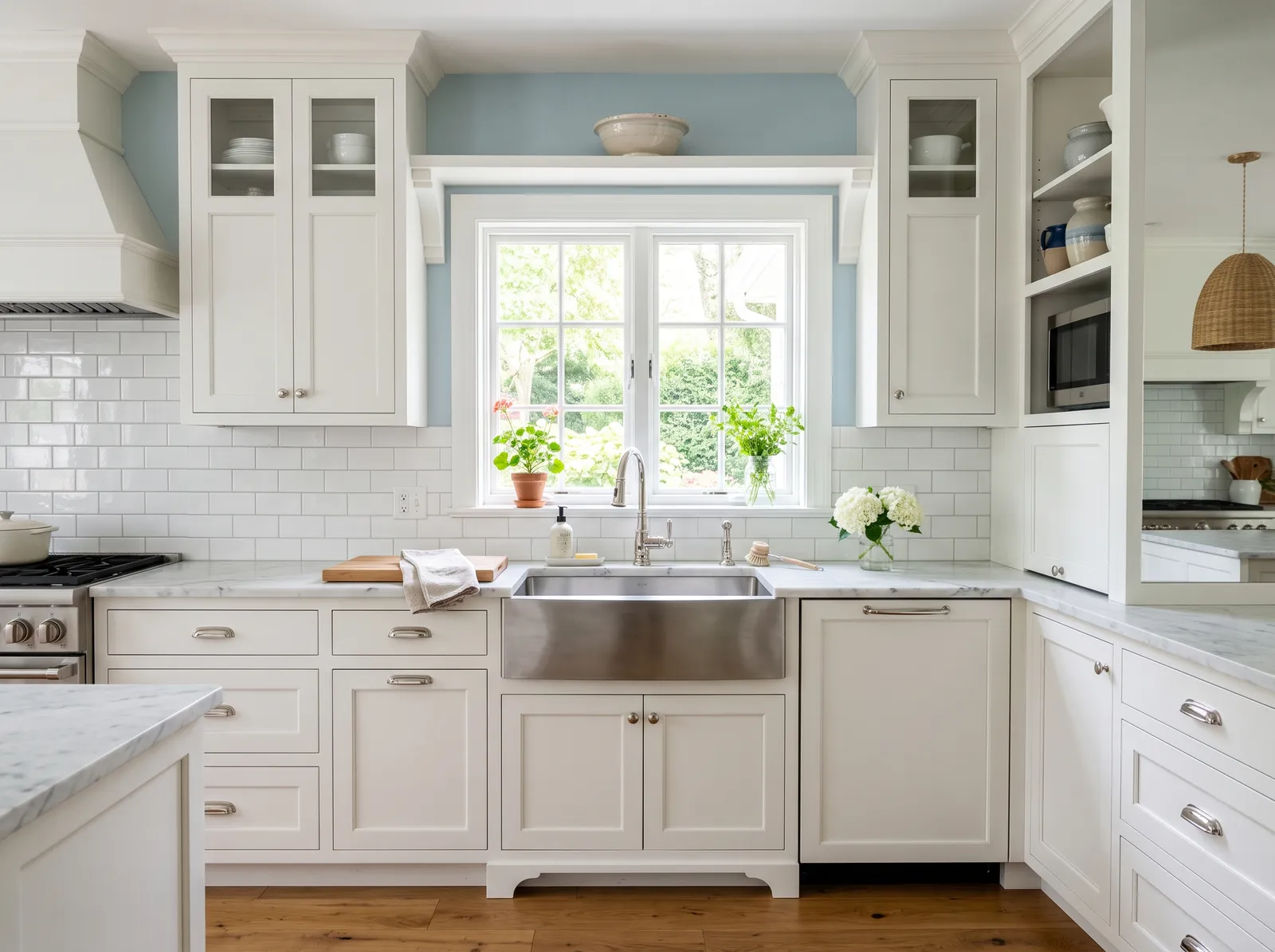
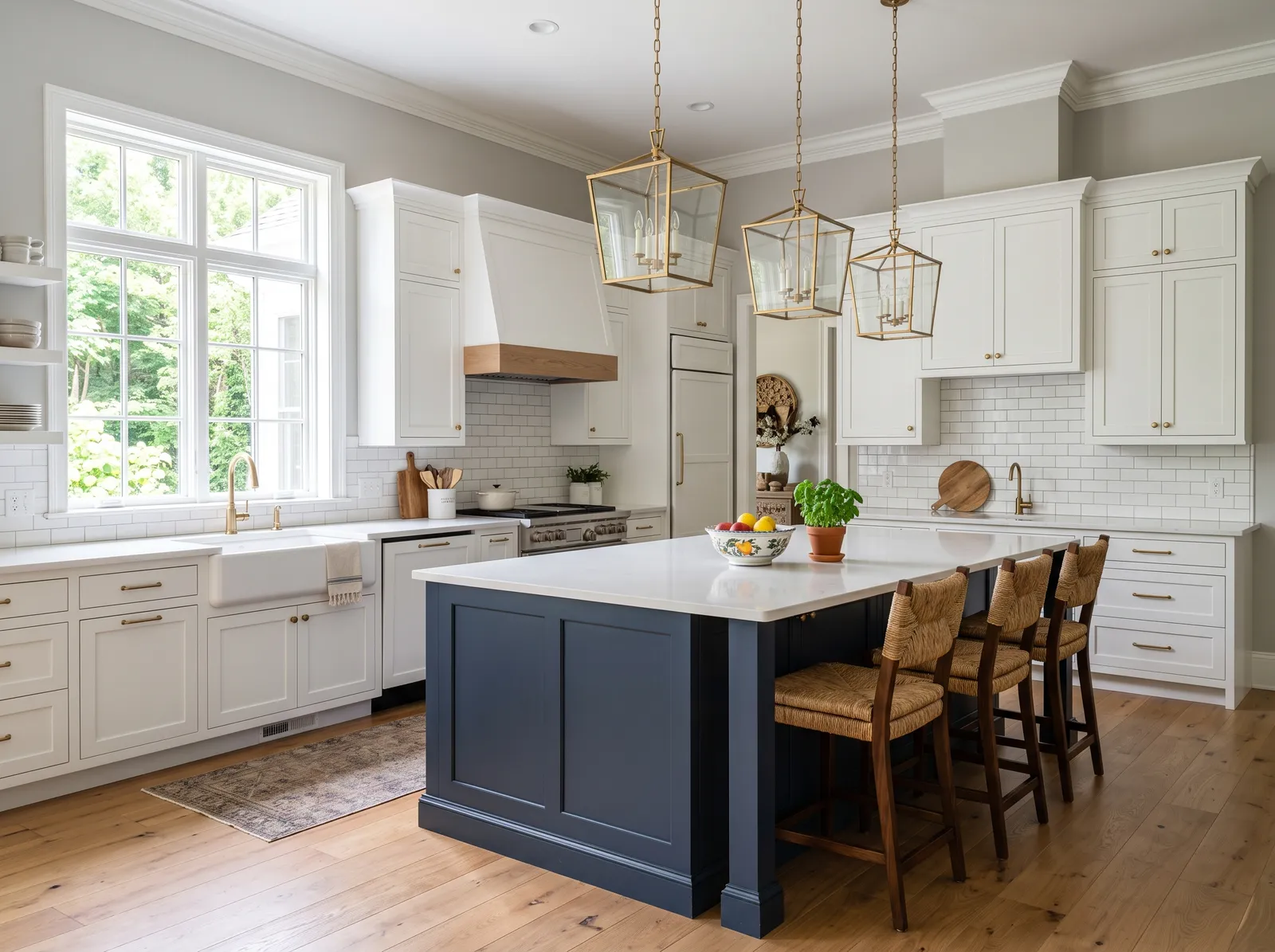
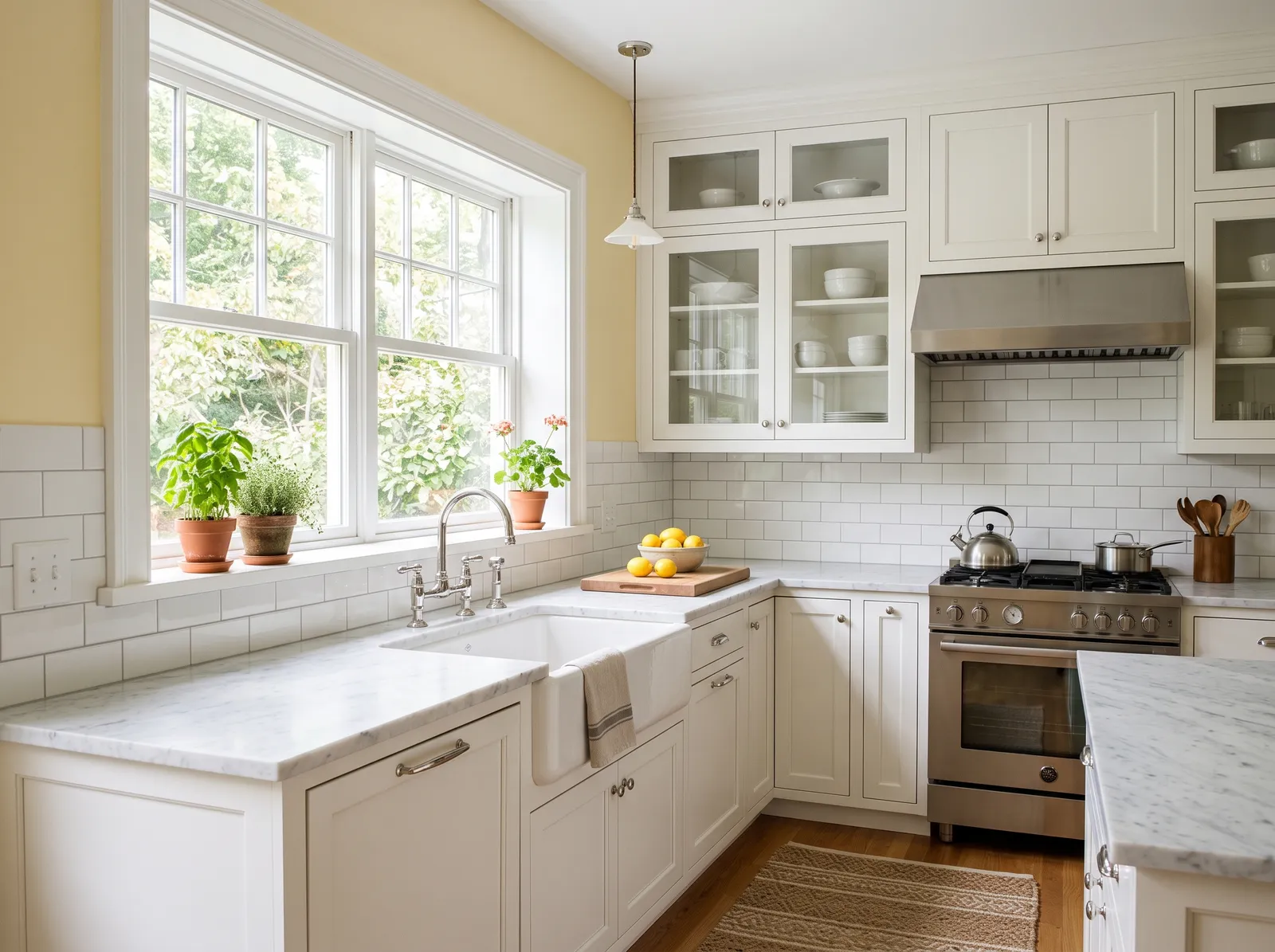
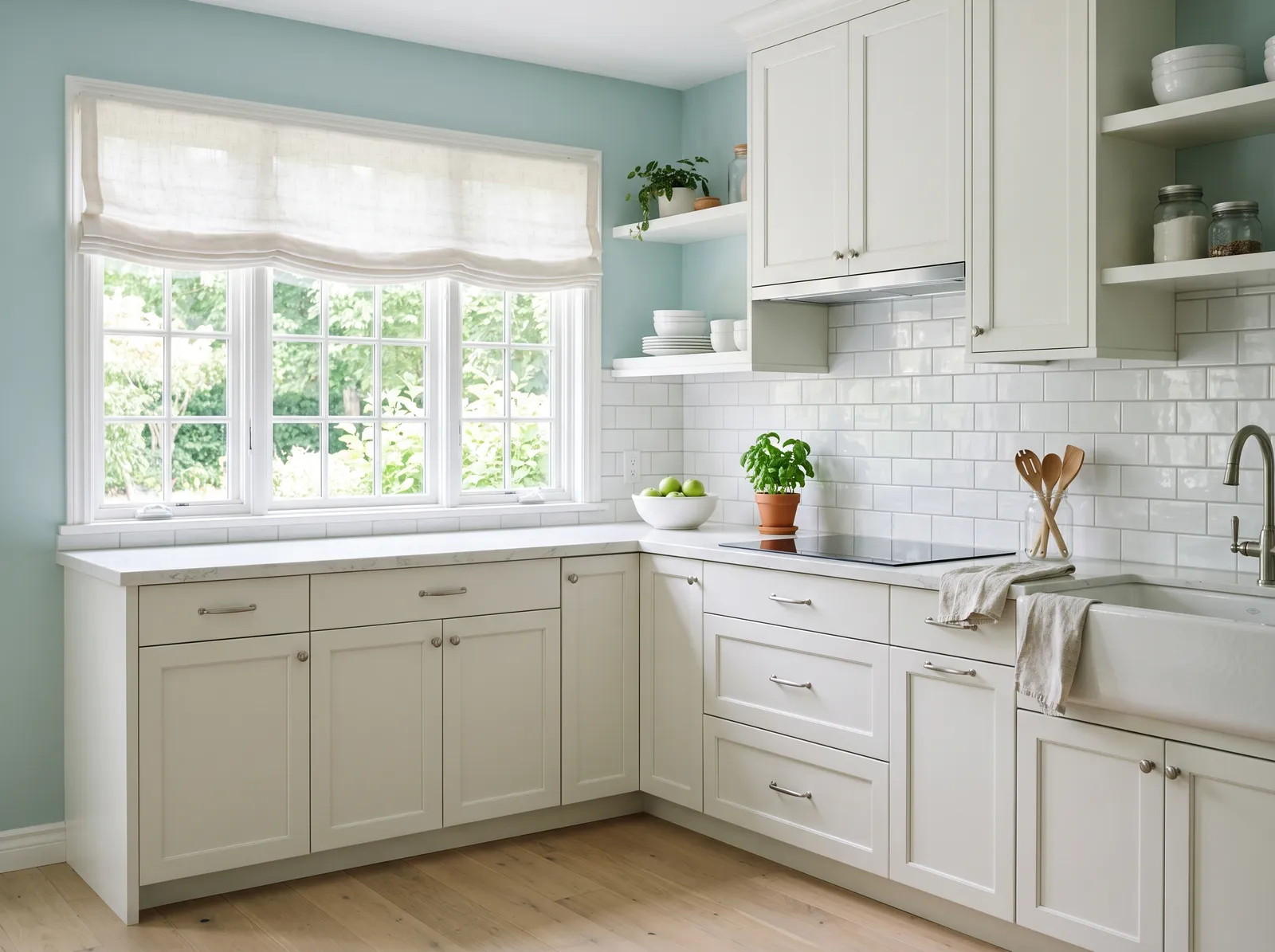
White makes a cabinet recede, which is usually the point. A wall of upper cabinets in white feels lighter and lower than the same boxes in a dark color, so a small kitchen or bath breathes. It also turns the cabinet into a clean backdrop, letting hardware, countertops, and a backsplash carry the personality.
The trade-off is honesty. White shows every drip, scuff, and greasy fingerprint near the stove or sink, so it asks for a washable finish and the occasional wipe-down. If you cook a lot or have young kids, that's not a dealbreaker, but it should steer you toward a slightly warmer white and a tougher sheen rather than a stark, flat one.
Picking the Right Depth and Undertone
Most cabinet whites land in a high LRV range, roughly the mid-80s and up, because you want light to bounce off the doors. A very bright, near-pure white in the 90s reads crisp and modern but can feel clinical, while a soft white in the low-to-mid 80s with a touch of warmth feels more livable and hides daily mess a little better. There's no single right number — it depends on how much light the room gets.
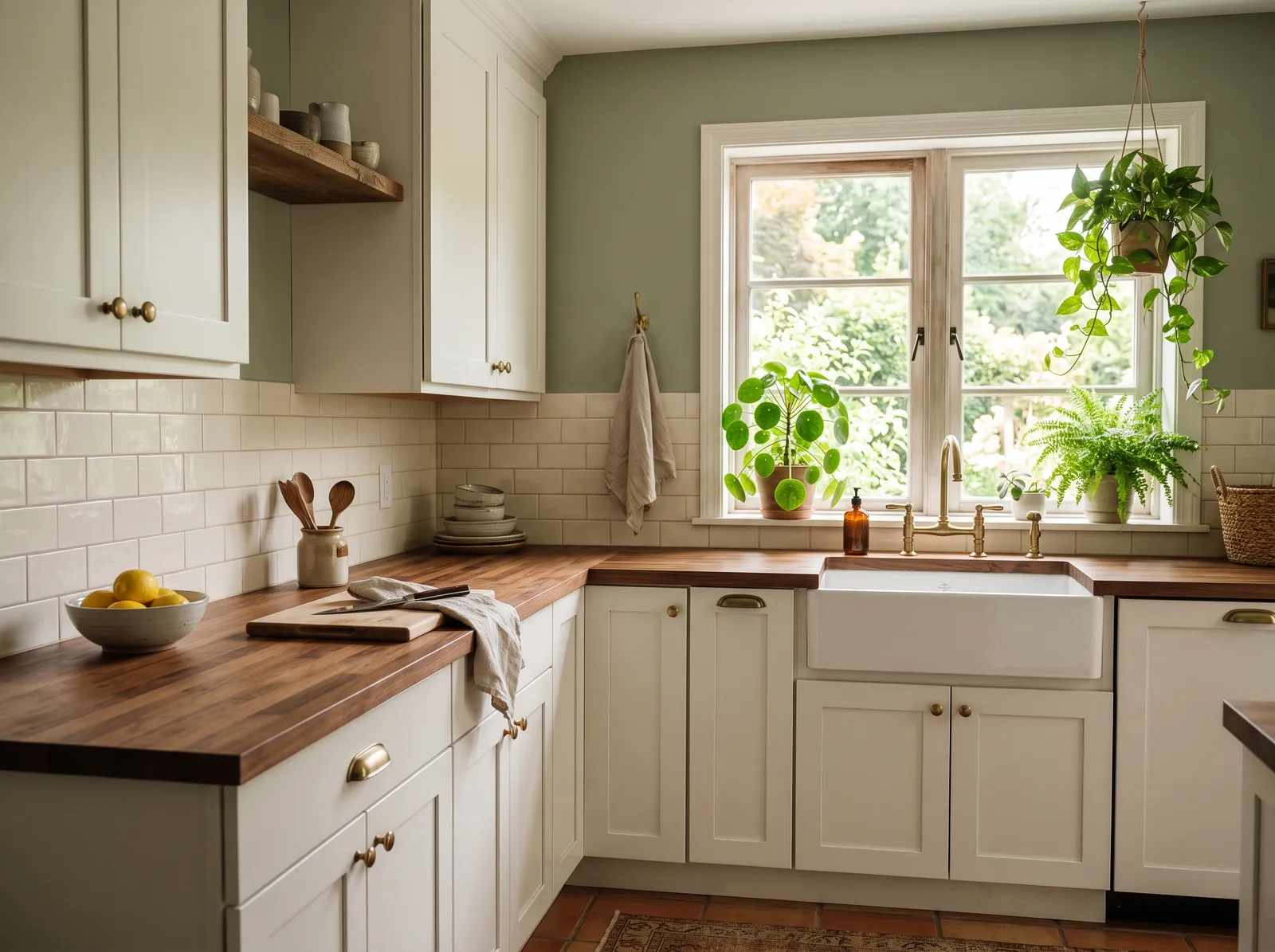
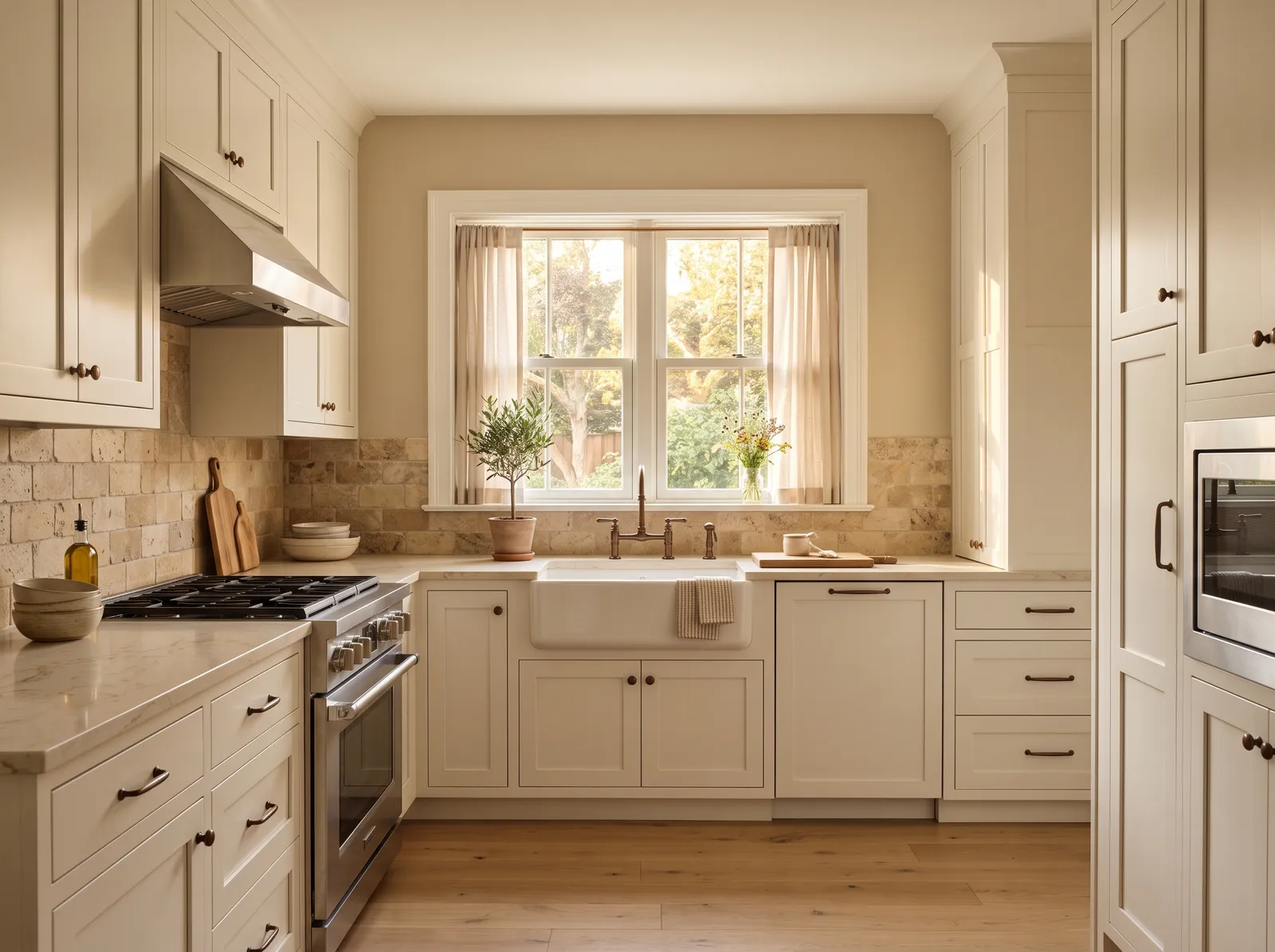
Undertone is where cabinets get tricky, because the doors sit right next to your counters and floors. A white with a warm cream or greige base flatters wood floors, brass, and natural stone, while a cleaner white with a faint gray or blue base pairs with marble, stainless, and cool grays. Always tape a large sample to a door and look at it against your actual counter before you commit, since white borrows the color of whatever it touches.
How the Room's Light Steers the White
Light decides everything with white. North-facing kitchens and bathrooms get cool, flat daylight that can pull a white toward gray or blue, so a warmer white with a hint of cream usually keeps the cabinets from looking dingy. South- and west-facing rooms get strong warm light that can make an already-warm white look yellow or buttery by afternoon, so a cleaner, more neutral white tends to stay truer.
Don't forget your bulbs. Cabinets are often lit by under-cabinet strips and overhead cans, and a very warm bulb will push any white toward yellow at night. Test your top one or two whites under your real lighting, at the times you actually use the room, before you buy a gallon.
The Right Finish for Cabinet Doors
Cabinets need a harder, slicker finish than walls because they're touched and cleaned constantly. Satin and semi-gloss are the workhorses here: they wipe clean, resist moisture near a sink or stove, and stand up to scrubbing without burnishing. Semi-gloss is the most durable and easiest to clean, while satin gives a softer look that still holds up well.
Skip flat and most eggshell on cabinet doors. They mark easily and can't take repeated scrubbing, so fingerprints and splatters either stay or rub the sheen off. The trade-off with glossier finishes is that they show every brush mark and surface flaw, so good prep — sanding, a quality primer, and thin even coats — matters more on a cabinet than almost anywhere else.
Pairing White With Your Counters, Hardware, and Walls
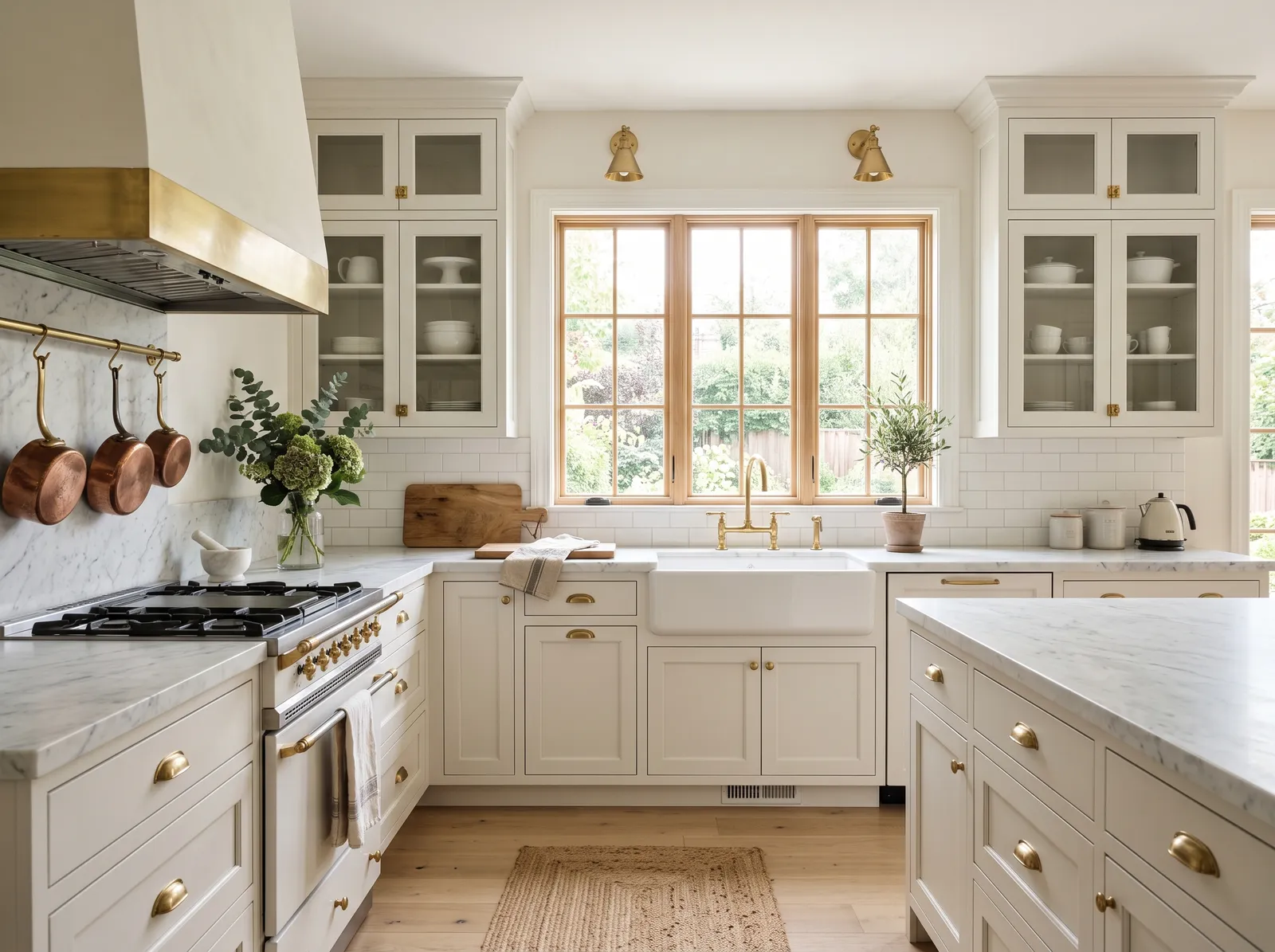
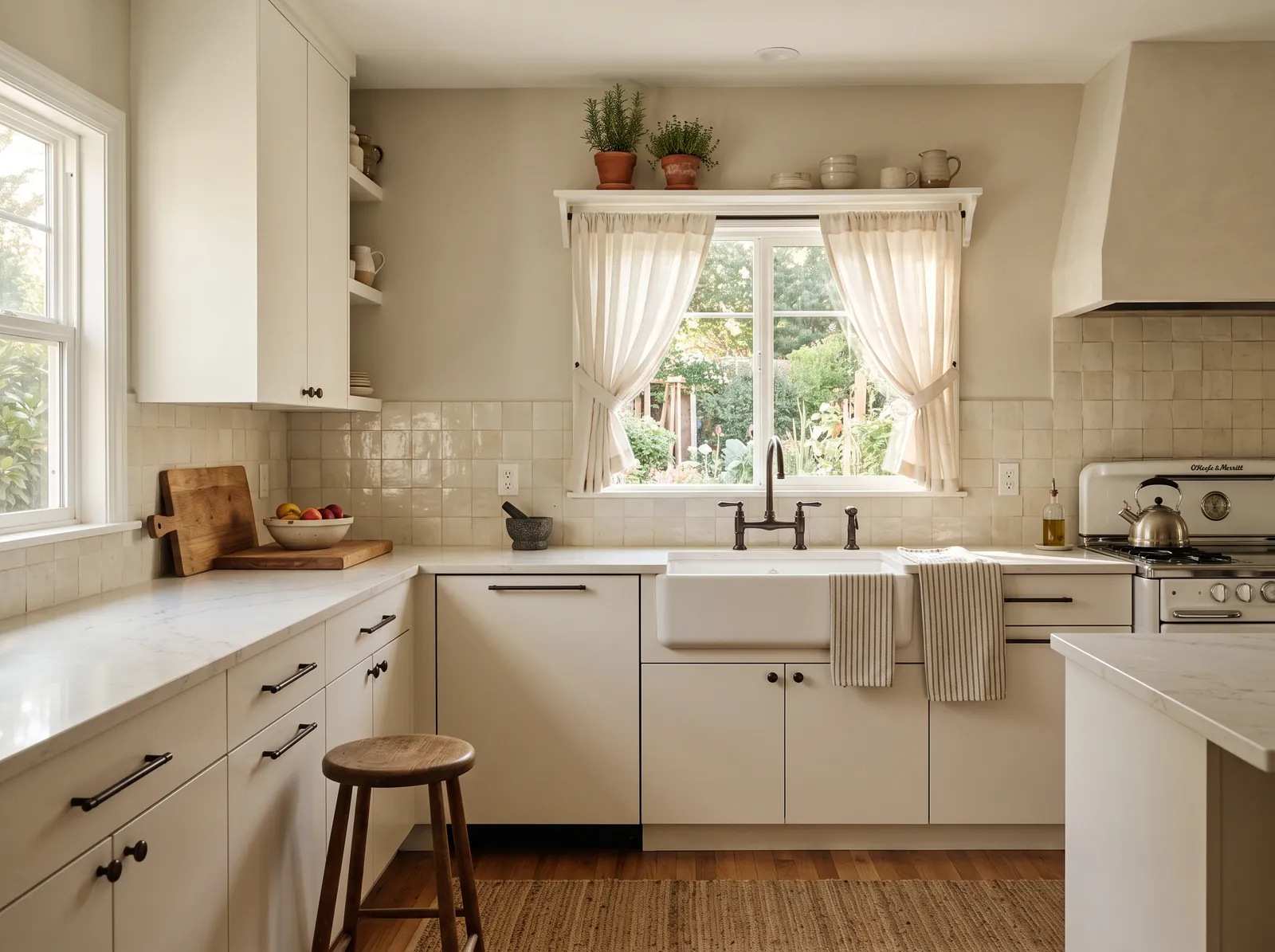
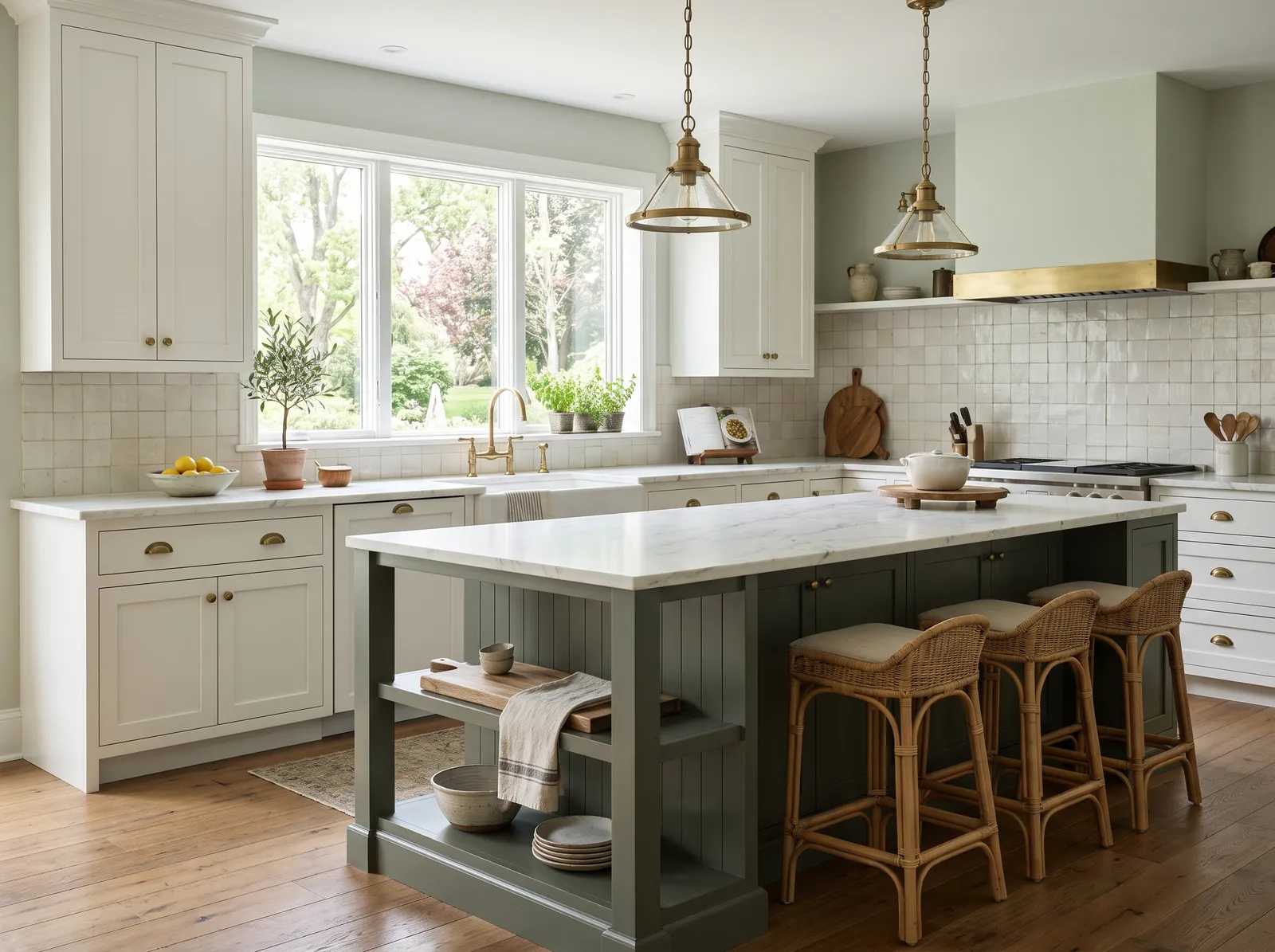
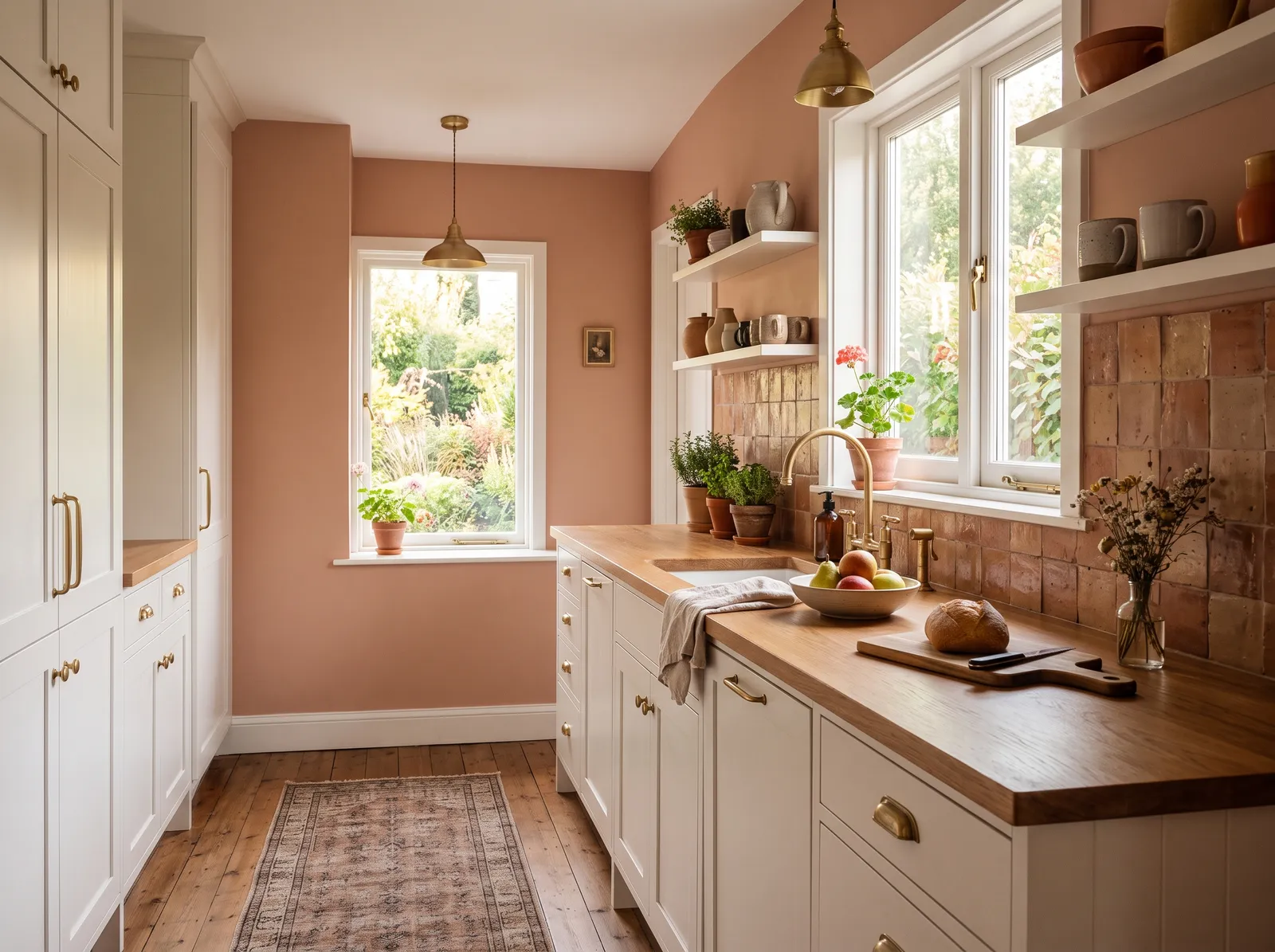
White cabinets give you freedom, but they also expose mismatched undertones. Pull your white toward the same temperature as your fixed elements: warm white with wood floors, butcher block, brass, or cream stone; cooler white with marble, quartz, stainless, and matte black hardware. When the cabinet and counter undertones agree, the whole room reads intentional instead of accidental.
For walls and trim, you don't have to match the cabinet white exactly. A soft greige or muted color on the walls lets white cabinets pop, and using a slightly different white on the trim and ceiling is completely normal. Just decide whether you want contrast or a seamless all-white look before you spec everything, because two close-but-different whites side by side can look like a mistake rather than a choice.
White Kitchen Cabinet Paint — Frequently Asked Questions
What is the best shade of white for cabinets?+
There isn't one universal answer, but a soft white with a slight warm base is the safest starting point for most kitchens and baths. It hides daily smudges a little better than a stark white and looks clean under both daylight and warm bulbs. If your room gets lots of cool north light, lean warmer; if it gets strong afternoon sun, lean more neutral.
What sheen should I use on white cabinets?+
Satin or semi-gloss. Both wipe clean and stand up to the moisture and scrubbing that cabinets near a sink or stove get, which flat and eggshell can't handle. Semi-gloss is the most durable and easiest to clean, while satin looks a bit softer and hides minor surface flaws better.
Will white cabinets look dirty fast?+
They show marks more than darker colors, especially near the stove and the trash pull. The fix is a washable finish like satin or semi-gloss plus a slightly warmer white, which disguises fingerprints better than a pure bright white. With a quick wipe-down now and then, they stay looking clean.
Should my cabinets, walls, and trim all be the same white?+
Not necessarily. Many kitchens use one white on the cabinets and a different white or a soft color on the walls, with trim and ceiling in their own white. The key is to decide on purpose, because two slightly different whites placed right next to each other can look like an error instead of a design choice.
Why do my white cabinets look blue or yellow?+
White borrows the color around it and the light hitting it. Cool north light and cool bulbs can pull a white toward blue or gray, while strong afternoon sun and warm bulbs push it toward yellow. Test your white on an actual door under your real lighting at the times you use the room before committing.
Can I match a white from one brand to another?+
Yes. Every color shown here is mixed to order at the paint counter, and a given white can be cross-matched between brands so you can buy whatever's convenient. Bring the name or code, and the counter can tint an equivalent in the line and finish you want for cabinets.