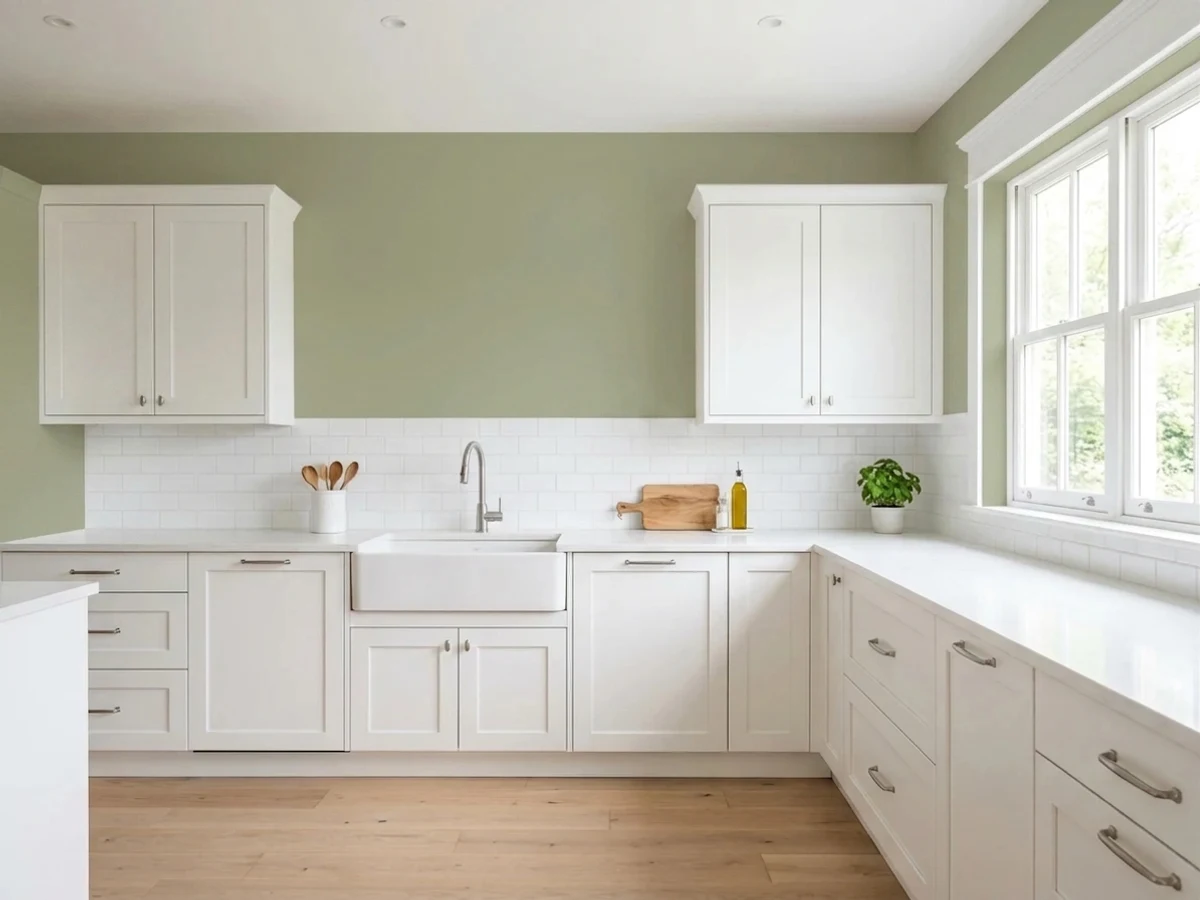
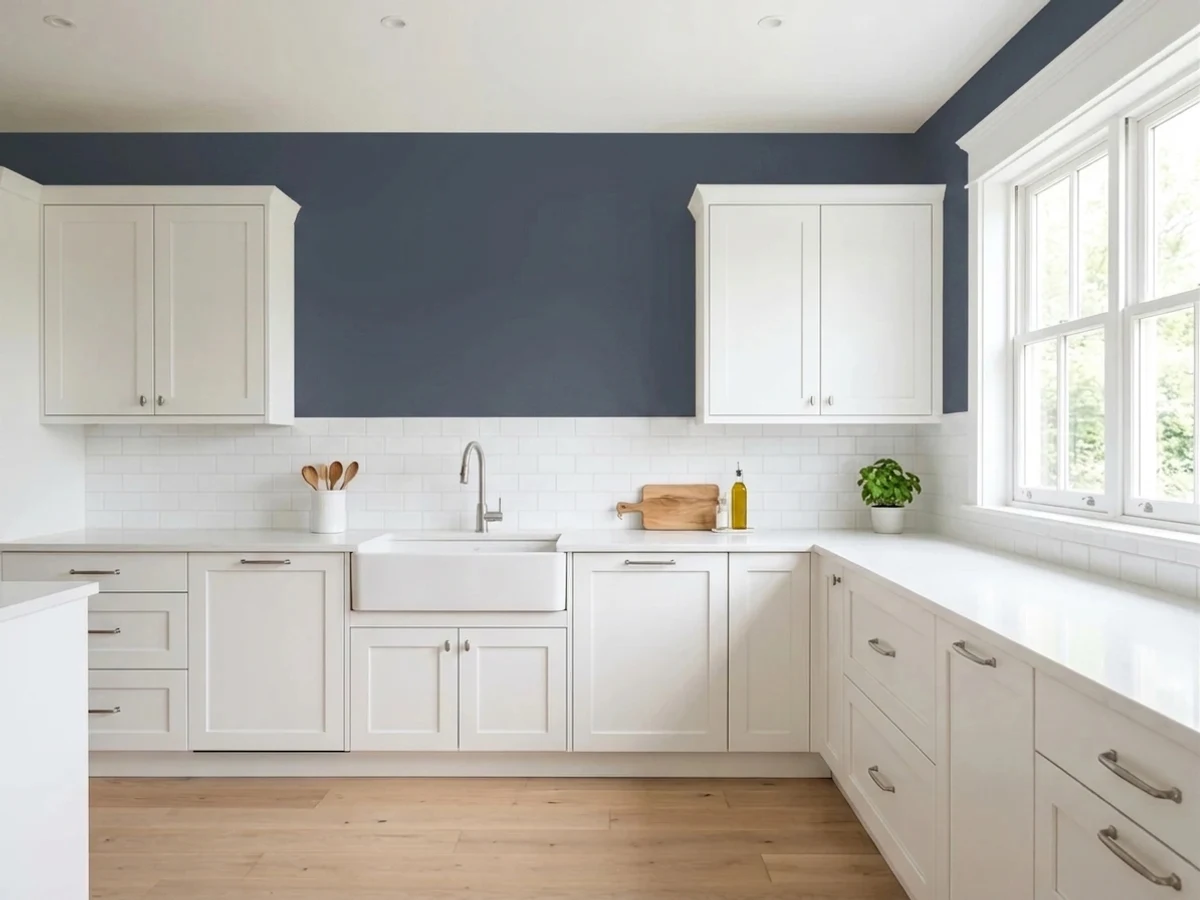
White Kitchen Paint Colors
2,064 white colors that work in kitchens, drawn from the full ~30,000-color US paint deck. Below: editor's picks specific to kitchens, then 30 picks spread across the LRV range — narrow further on the brand page when you've shortlisted.
White is the hardest color to specify well. The right white shifts under daylight, north-facing rooms, and warm-LED bulbs — and most "whites" actually have a strong undertone (yellow, pink, green, or blue) that only shows up once it's on the wall. Below: the warm whites and cool whites we recommend most often, organized so you can compare them at a glance.
Editor's Picks: White for Kitchens
4 picks30 White Picks Across the LRV Range
30 of 2,064 · sorted dark → lightLooking for more? All white → covers every brand; brand × family pages show full decks.
White Kitchen Colors at Every US Brand
20 brands · up to 10 picks eachUp to 10 picks per brand spread across the white LRV range, drawn from each brand's full deck. Tap any swatch with a curated guide for full spec; tap the brand title for the brand's complete white deck.
Behr
Benjamin Moore
Dunn-Edwards
Glidden
PPG / Glidden
Valspar
Diamond Vogel
Kompozit
Hirshfield's
Sherwin-Williams
Dutch Boy
C2 Paint
Rodda
Farrow & Ball
Magnolia Home
Clare
Portola Paints
Backdrop
Rust-Oleum
Other Kitchen Color Families
White Colors in Other Rooms
White Paint Colors for a Kitchen
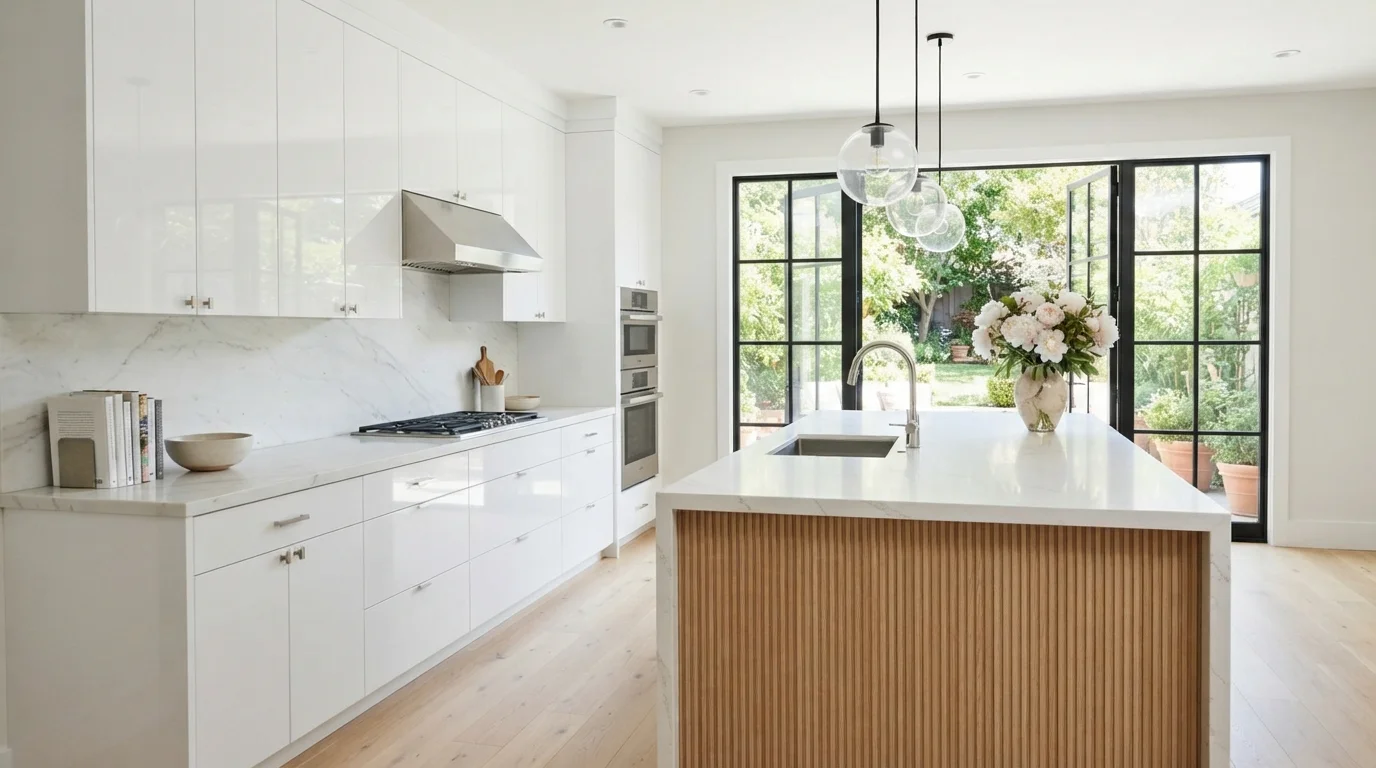
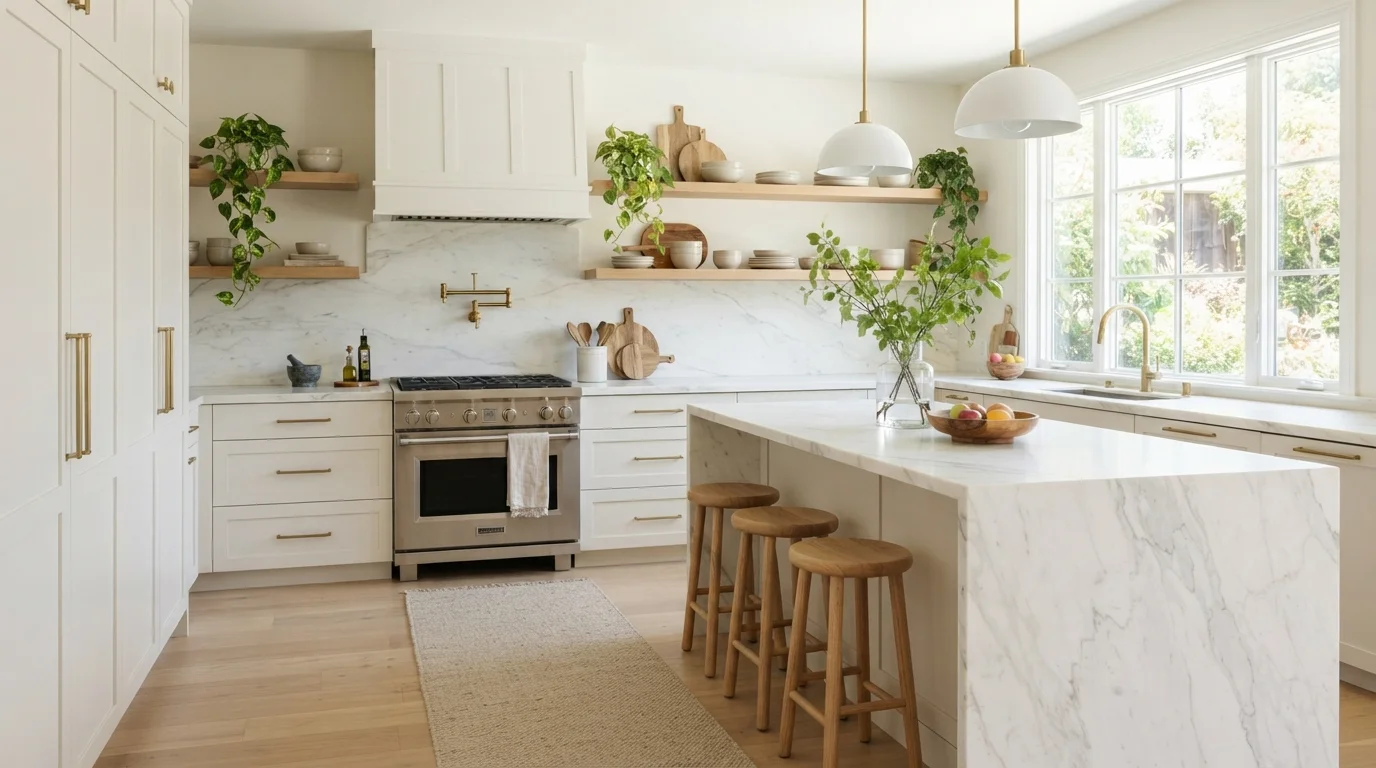
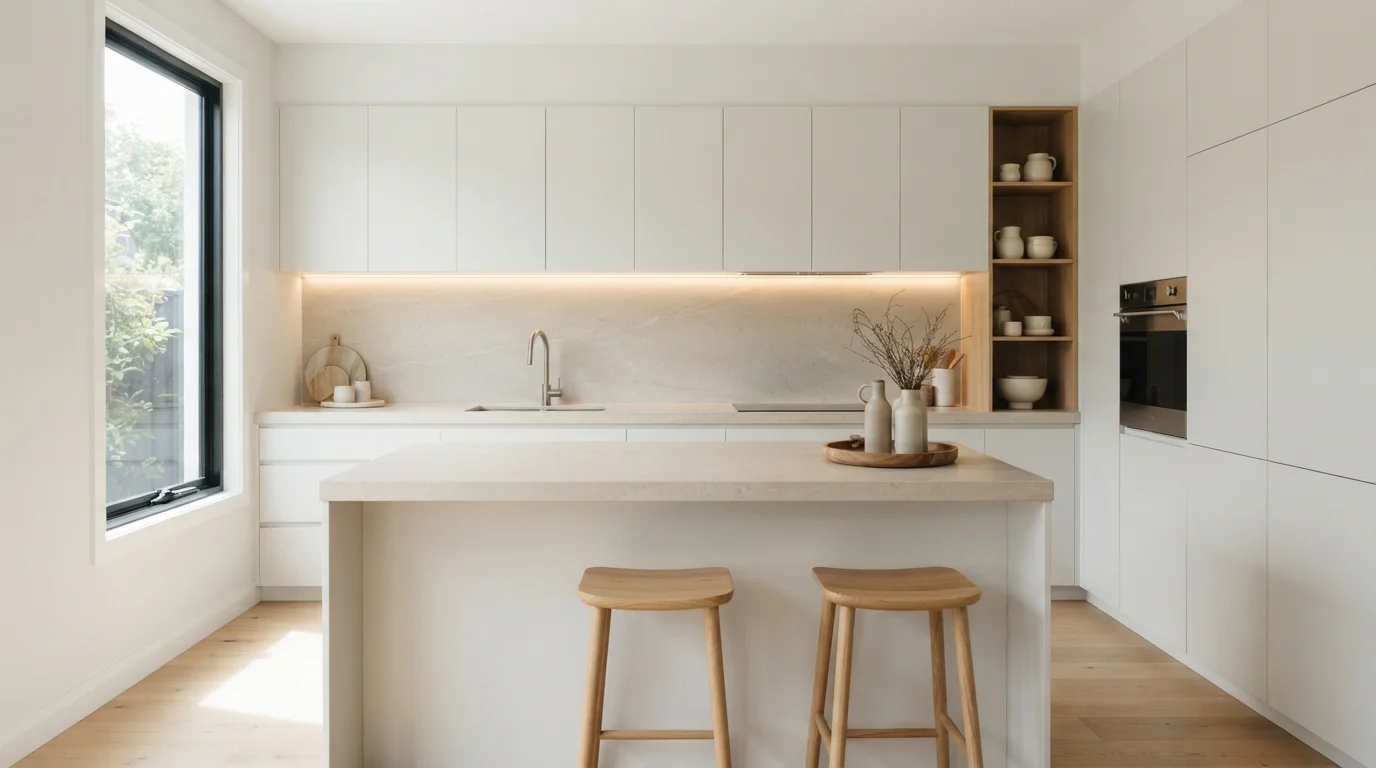
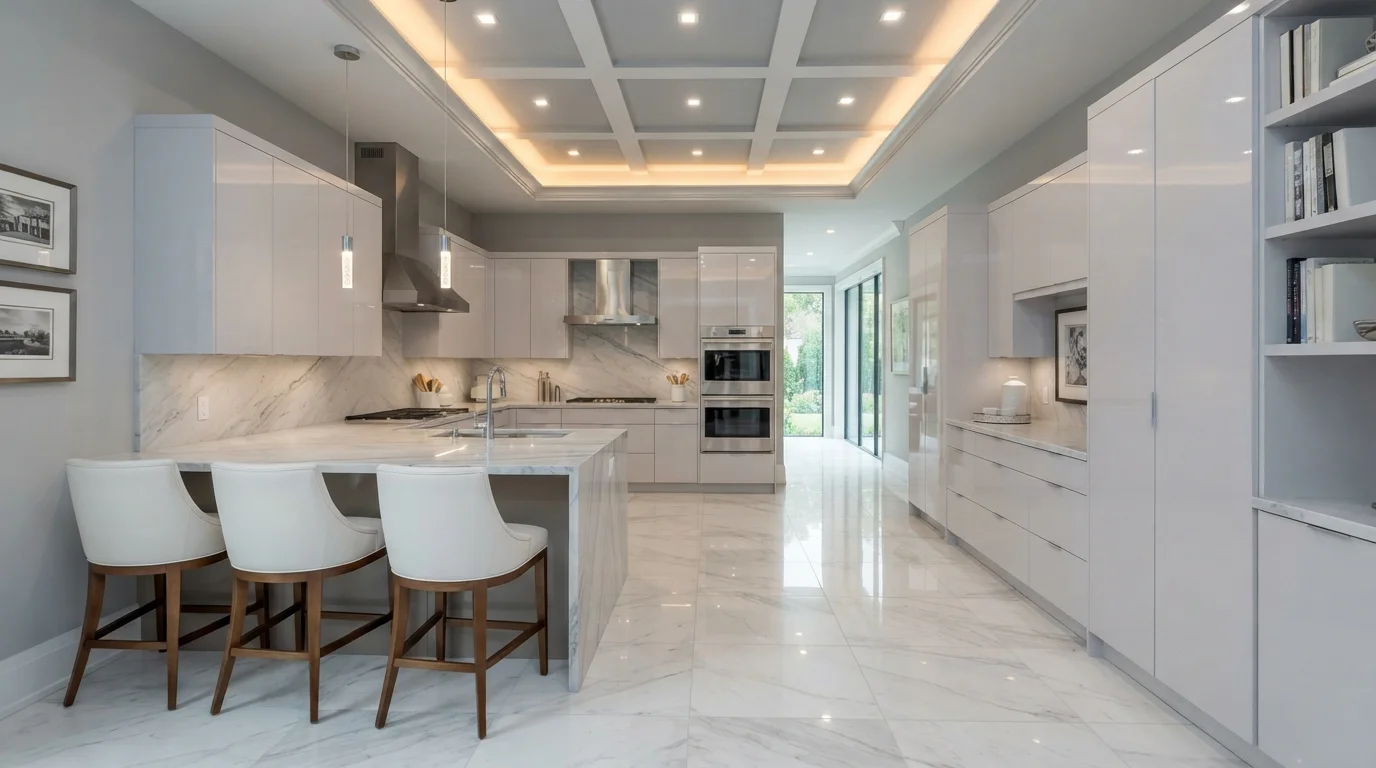
White is the default kitchen color for a reason. It bounces light around a room that often has limited windows, it makes a small galley feel bigger, and it gives you a clean backdrop that works with wood, stone, brass, and stainless all at once. In a space where you cook, spill, and touch the walls constantly, white also reads as fresh and easy to keep looking that way.
But "white" hides a lot of choices. The white that looks crisp in a sunny breakfast nook can turn dull or faintly blue in a north-facing kitchen, and the one that feels warm and inviting can read yellow next to cool gray cabinets. This page is about picking the right white for a kitchen specifically — the depth, the undertone, the finish — and pairing it with the cabinets, trim, and counters you already have. Every white shown here is mixed to order at the store, so you can match a shade across brands and carry it from the walls to the trim without hunting for an exact label.
Why White Works in a Kitchen
Kitchens ask a lot of a wall color, and white answers most of it. It reflects both daylight and the warm light from under-cabinet strips and pendants, so the room stays bright while you work at the counter. It also keeps busy surfaces calm — tile, hardware, small appliances, and open shelving all read as less cluttered against white.
The one thing to watch is that white shows everything, including grease splatter near the range and fingerprints by the fridge. That is not a reason to skip it; it is a reason to choose a white that wipes clean and to put your most washable finish where the mess lands.
Picking the Right Shade for Your Light
Whites are sorted by LRV, which measures how much light a color reflects on a 0–100 scale. Kitchen whites usually land in the mid-80s to high-90s; the higher the number, the brighter and cooler-clean the wall, and the lower it goes, the softer and creamier it feels. A bright, light-filled kitchen can handle a very high-LRV white without looking flat, while a darker room often needs that brightness to avoid feeling gray.
Light decides the undertone you see. North-facing kitchens get cool, bluish daylight that can make a stark white look chilly, so a white with a faint warm undertone keeps it inviting. South- and west-facing kitchens get warm light that already pushes white toward cream, so a cleaner, more neutral white stays balanced. Always test a sample on more than one wall and look at it under your actual evening lighting too, since under-cabinet LEDs change everything.
The Right Finish for Kitchen Walls
Sheen matters more in a kitchen than almost anywhere else in the house. Flat hides wall flaws but is hard to scrub, so it rarely belongs near a cooktop or sink. Eggshell or satin is the usual choice for kitchen walls — it takes a wipe-down without rubbing off, and it shrugs off the steam and humidity that build up while you cook.
Go a step glossier on the surfaces that take abuse. Semi-gloss on trim, doors, and especially cabinets cleans easily and stands up to repeated handling. Just keep an eye on glare: a very shiny white on a big sunlit wall can throw harsh reflections, so save the highest sheen for trim and millwork rather than broad walls.
Pairing White With Cabinets, Counters, and Trim
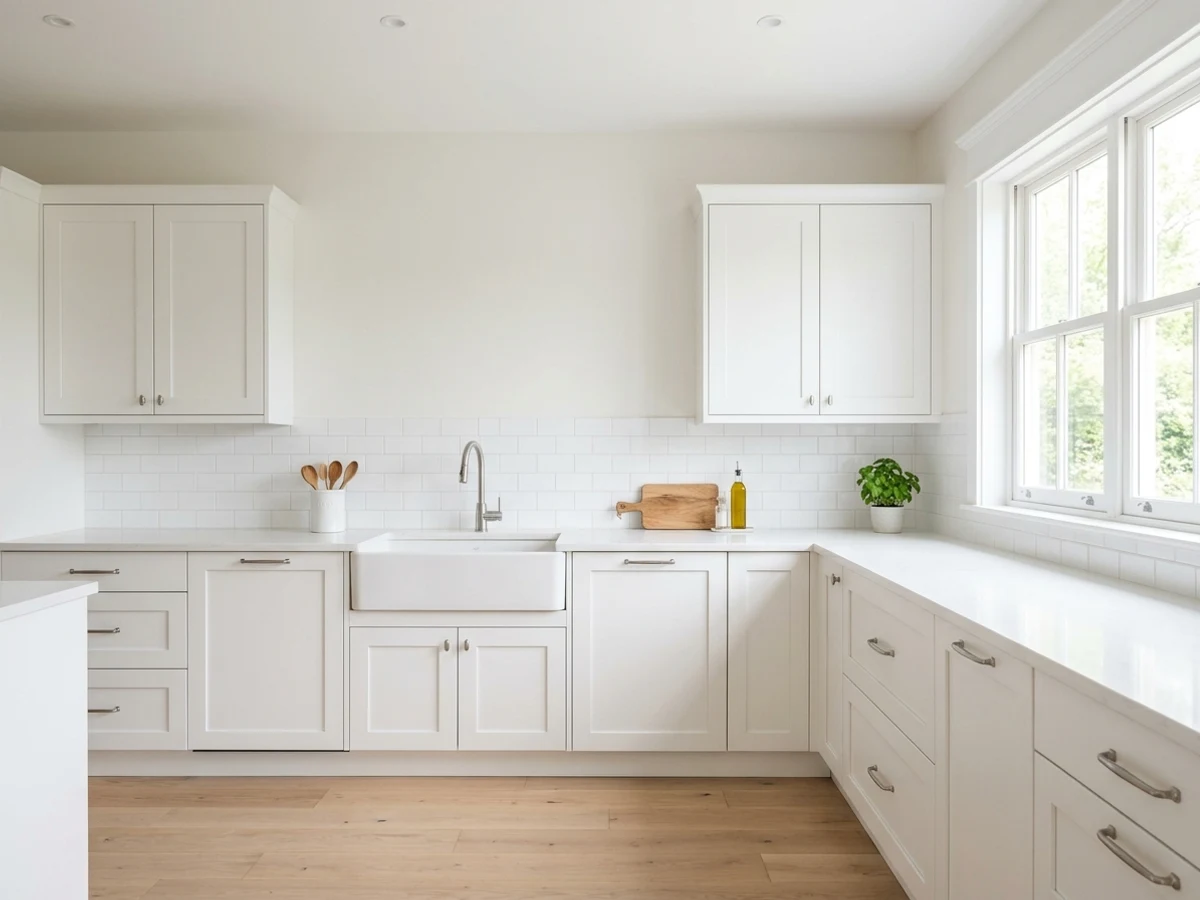
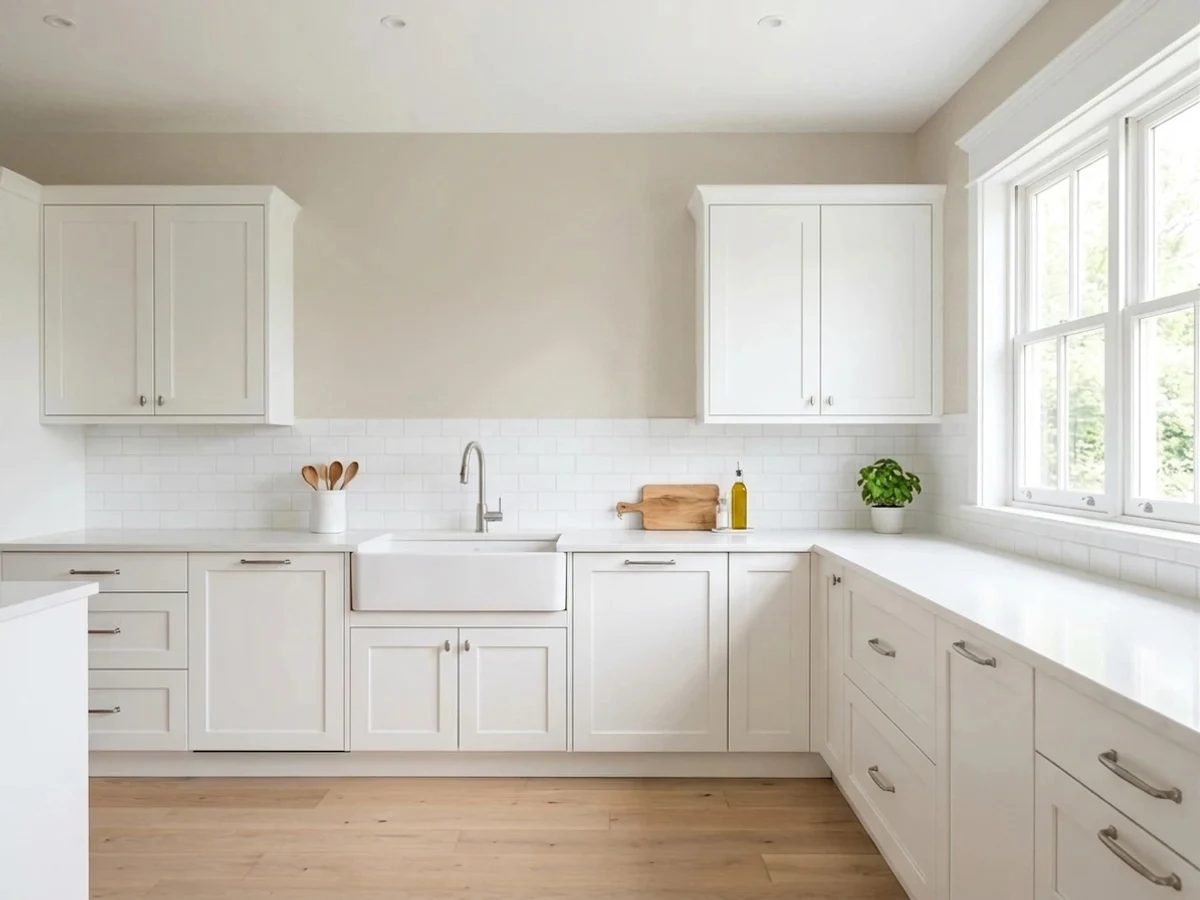
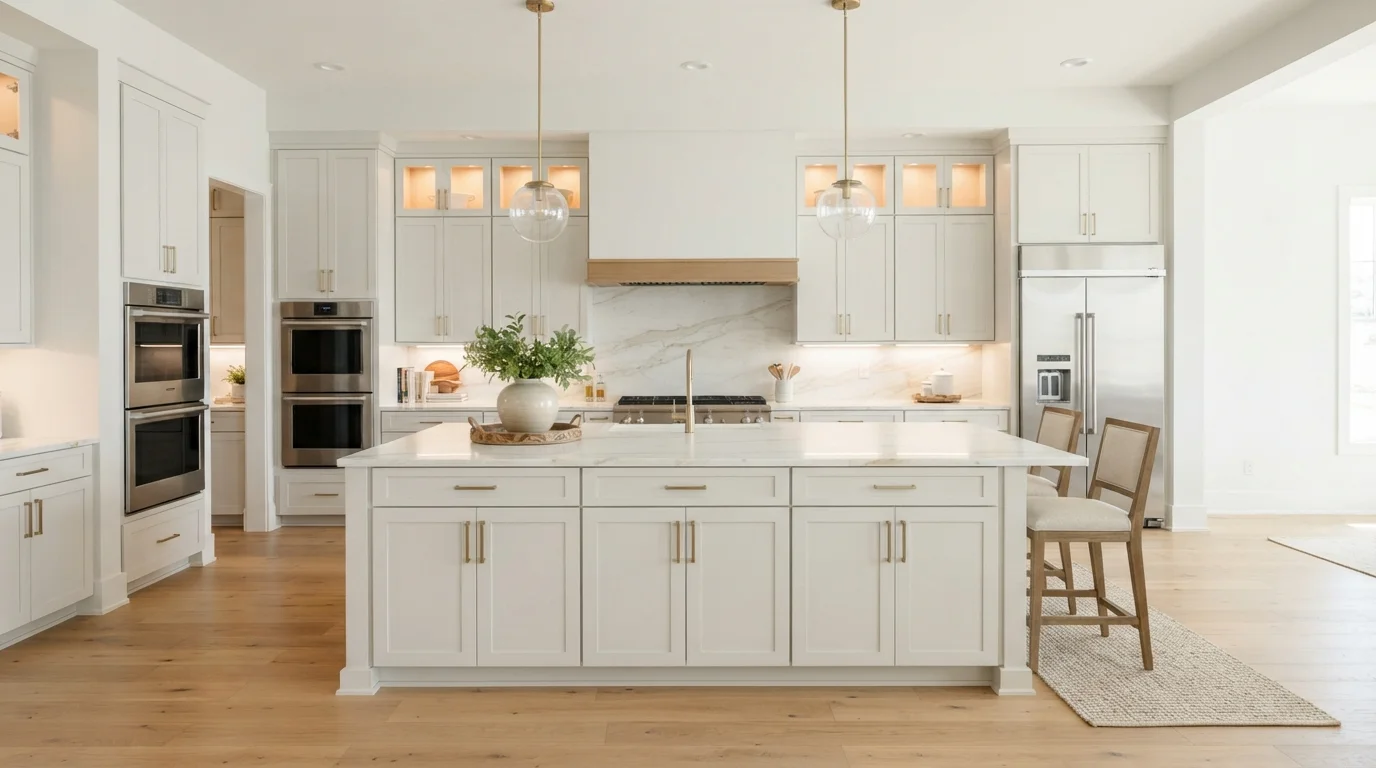
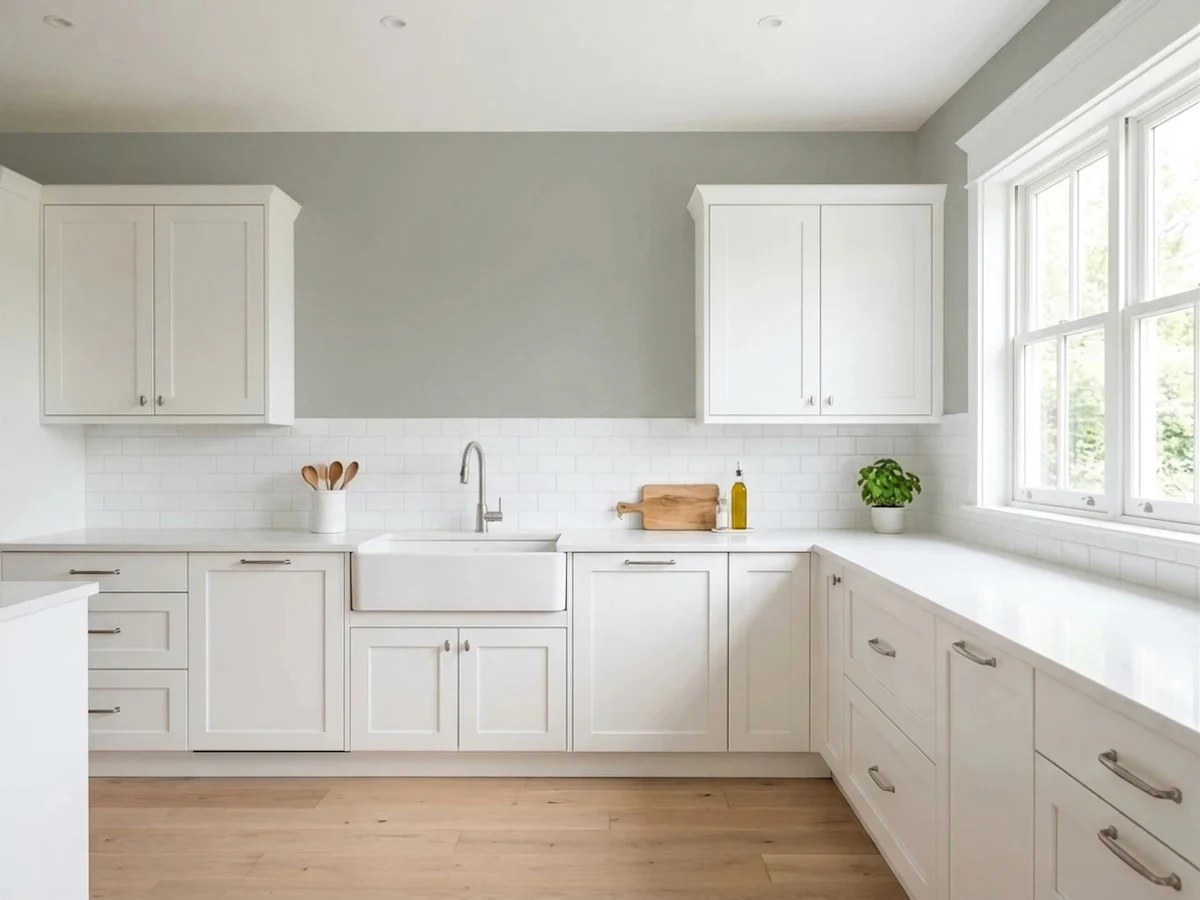
White cabinets and white walls can look great, but they should not match exactly. A wall a touch warmer or cooler than the cabinets gives the room depth instead of a flat blur; a slightly off-white wall behind crisp white cabinets is a classic, easy combination. If your cabinets are wood, gray, or a deep color, white walls let those finishes be the star.
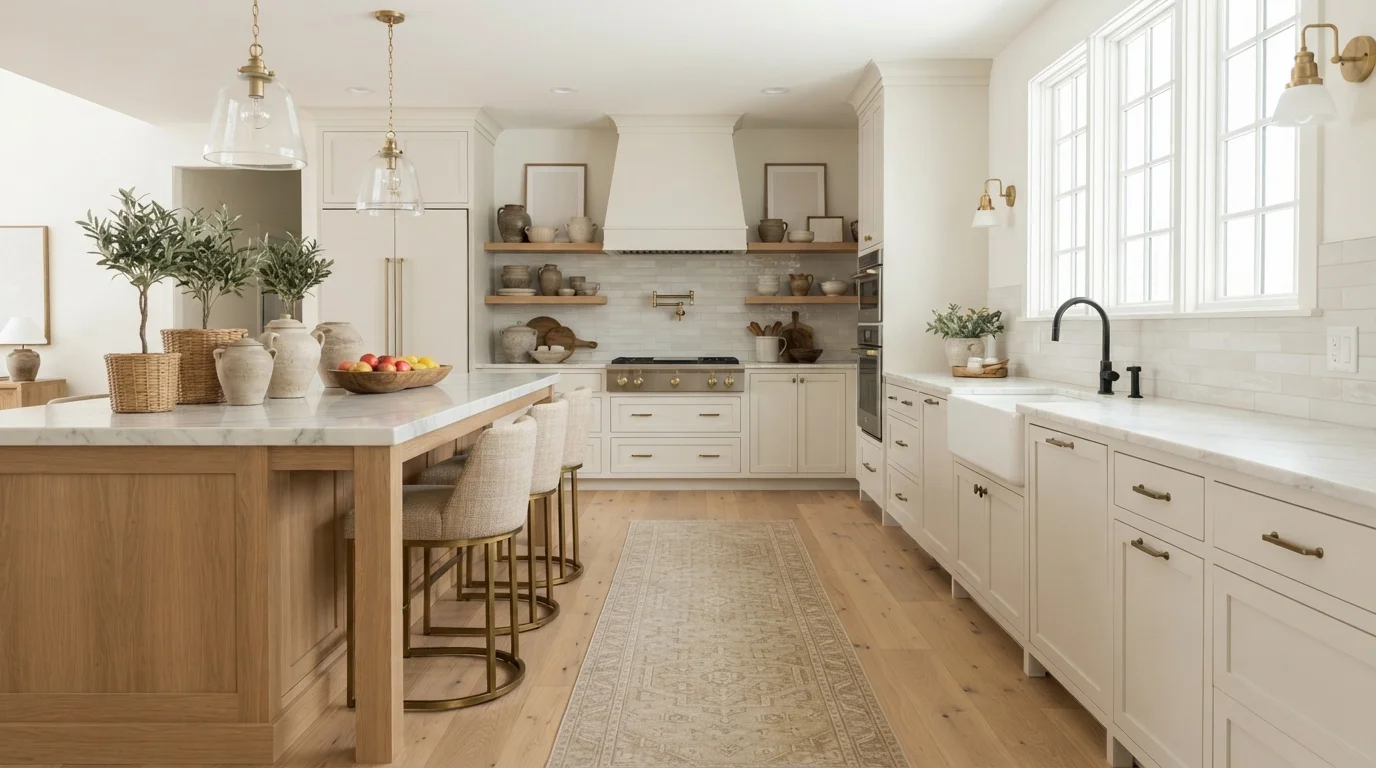
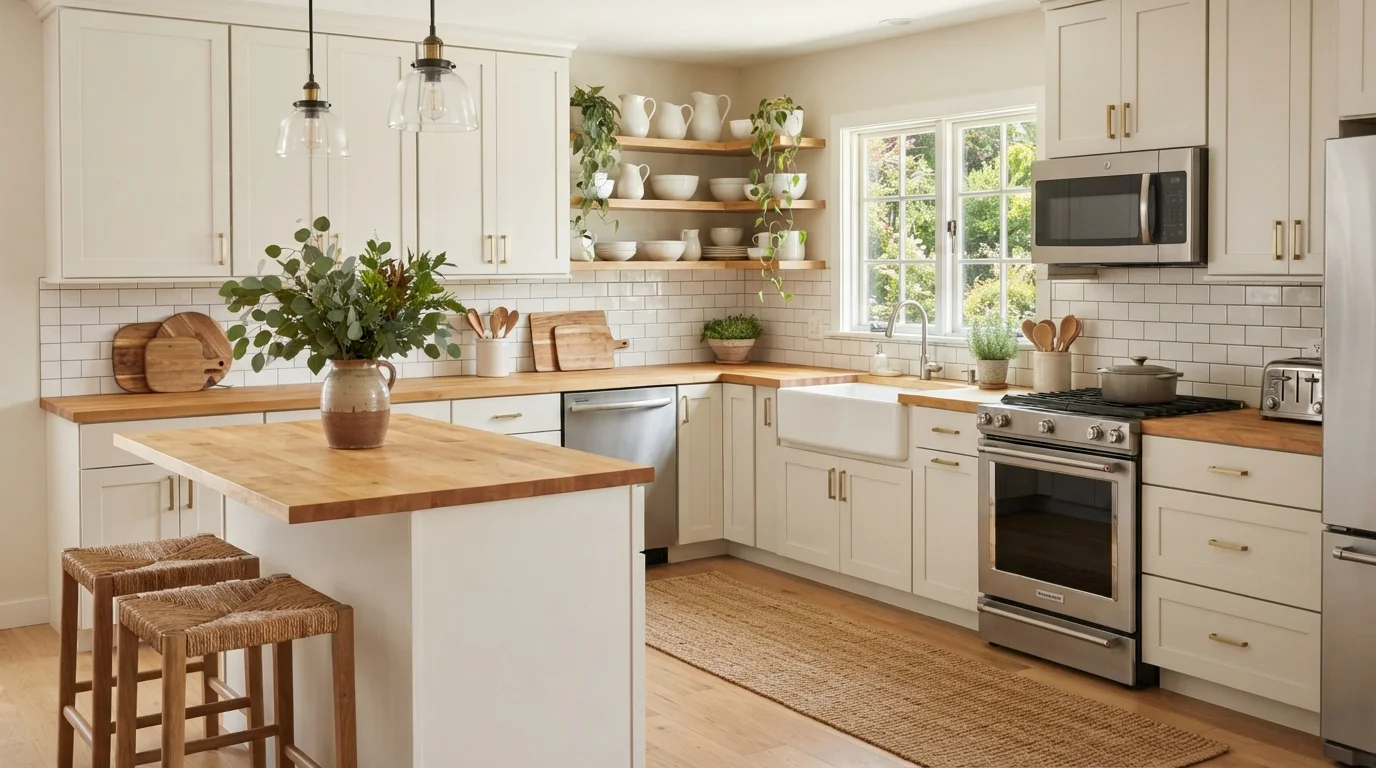
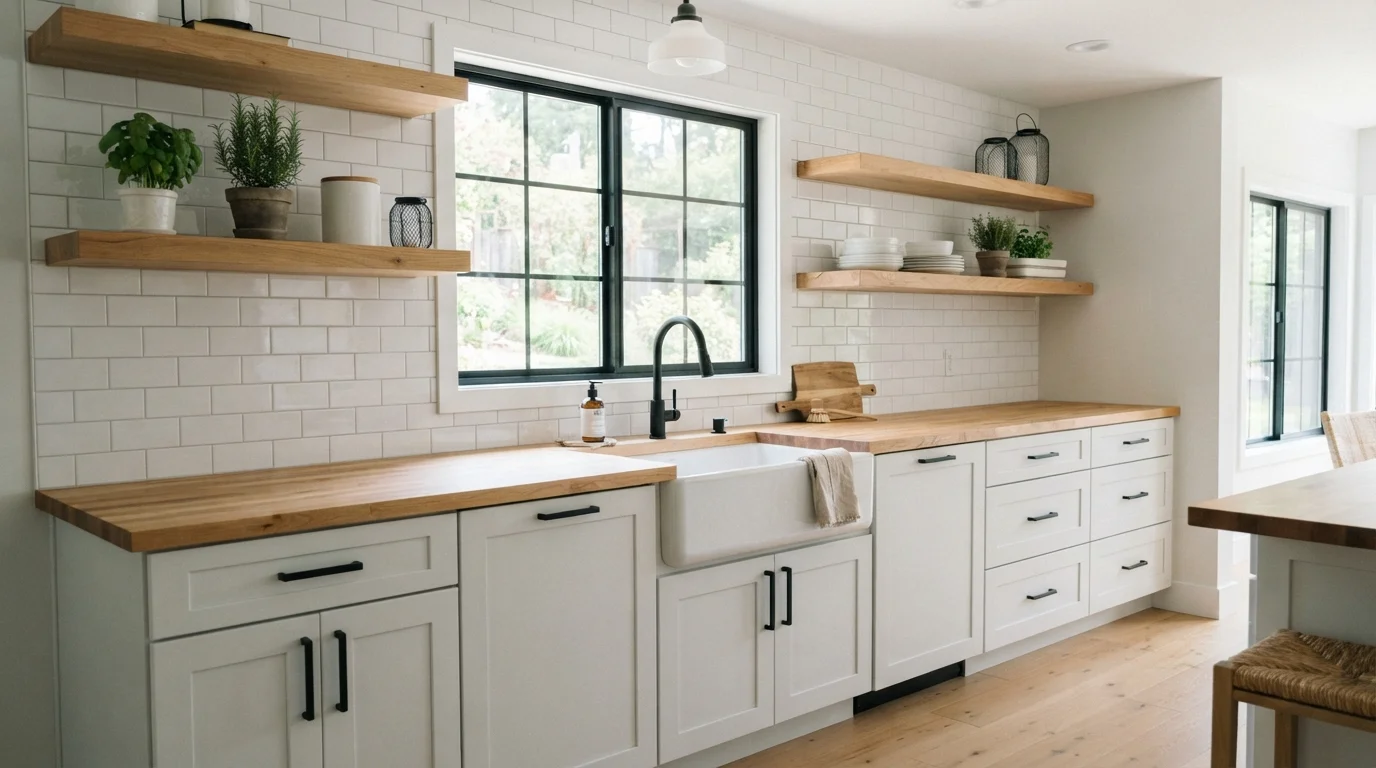
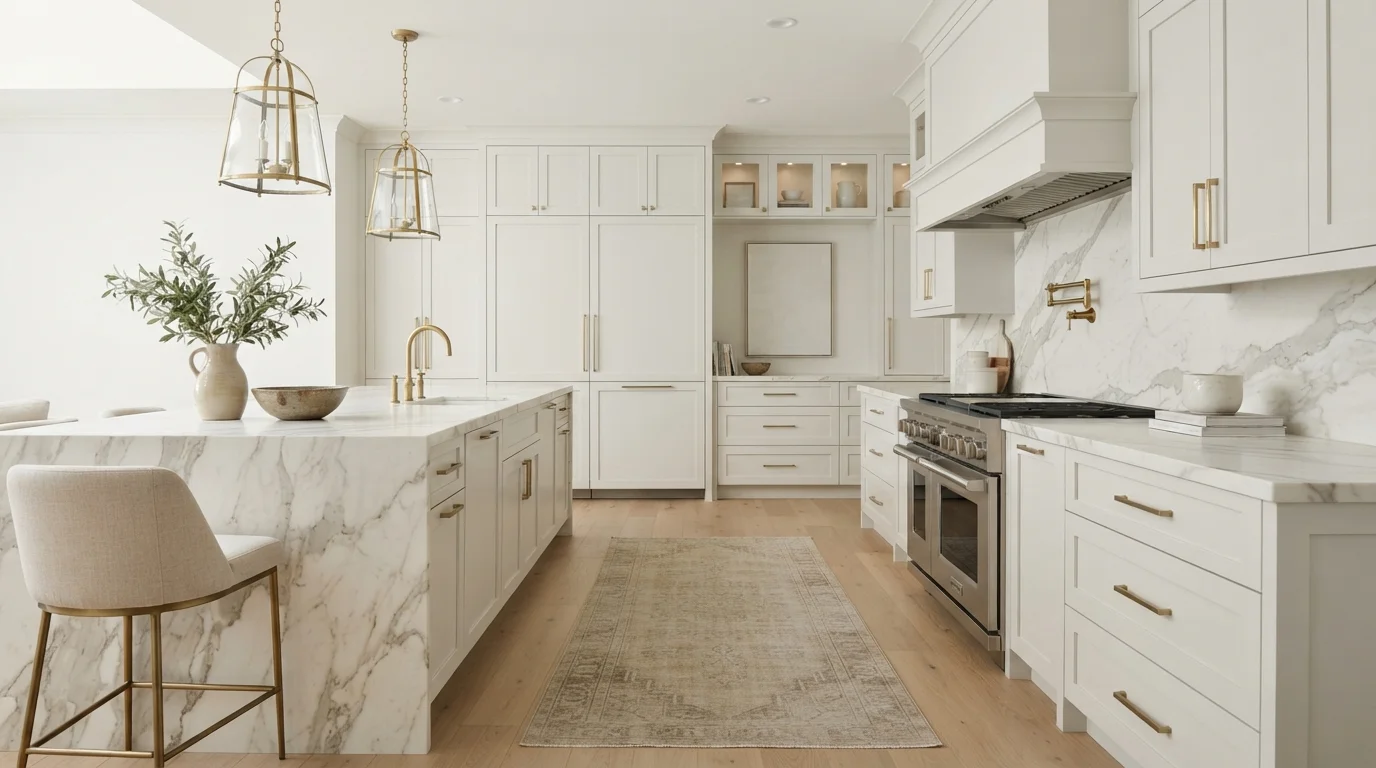
Match your white to the undertone of your counters and hardware. Warm whites sit well with butcher block, brass, and cream marble; cooler whites suit stainless, chrome, and gray quartz. For trim and ceiling, you can use the same white as the walls in a higher sheen for a seamless look, or a brighter white on trim to frame the room — both work, just pick one undertone and stay in that lane. Since these colors are mixed to order, you can carry one white across walls, trim, and cabinets even if each came from a different brand's fan deck.
Common Mistakes to Avoid
The biggest one is choosing a white from the little paint chip under store lighting and skipping a real sample in the kitchen. Whites shift hard with light and with whatever they sit next to, so a chip that looks neutral can turn pink, yellow, or blue once it is on your wall next to the counters. Brush out a large sample and live with it for a couple of days.
Two more to dodge: using flat paint near the range or sink where you cannot clean it, and ignoring undertones when you mix elements. A cool white next to warm wood cabinets can look mismatched, and a creamy white next to cool gray quartz can look dingy. Pick your undertone first, then choose everything else to agree with it.
White Kitchen Paint — Frequently Asked Questions
What is the best white for kitchen walls?+
There is no single best white — it depends on your light and what the white sits next to. For most kitchens, a soft white in the mid-80s to low-90s LRV with a slight undertone that matches your cabinets and counters works well. Cooler whites suit stainless and gray stone; warmer whites suit wood, brass, and cream surfaces.
What sheen should I use for a white kitchen?+
Eggshell or satin for walls, since both wipe clean and handle kitchen humidity. Use semi-gloss on trim, doors, and cabinets where you touch and scrub the most. Avoid flat paint near the cooktop and sink because it is hard to clean.
Should my kitchen walls and cabinets be the same white?+
It usually looks better if they are close but not identical. A wall slightly warmer or cooler than the cabinets adds depth, while an exact match can look flat. Keep both whites in the same undertone family so they agree.
Why does my white kitchen look yellow or blue?+
That is the room's light showing the white's undertone. Warm south- and west-facing light pushes white toward yellow or cream, while cool north light can make it look blue or gray. Switching to a white with the opposite undertone, and testing it on your own walls, fixes it.
Does a darker kitchen need a different white?+
Yes — in a low-light kitchen, lean toward a higher-LRV, brighter white so the room does not feel dull or gray. Very soft or creamy whites can read muddy without enough light. Always check the sample under your evening and under-cabinet lighting, not just daylight.
Can I match the same white across different paint brands?+
Yes. Every white shown here is mixed to order at the store, so a shade you like from one brand can be cross-matched and tinted under another. That lets you keep one consistent white across walls, trim, and cabinets even when the products come from different brands.