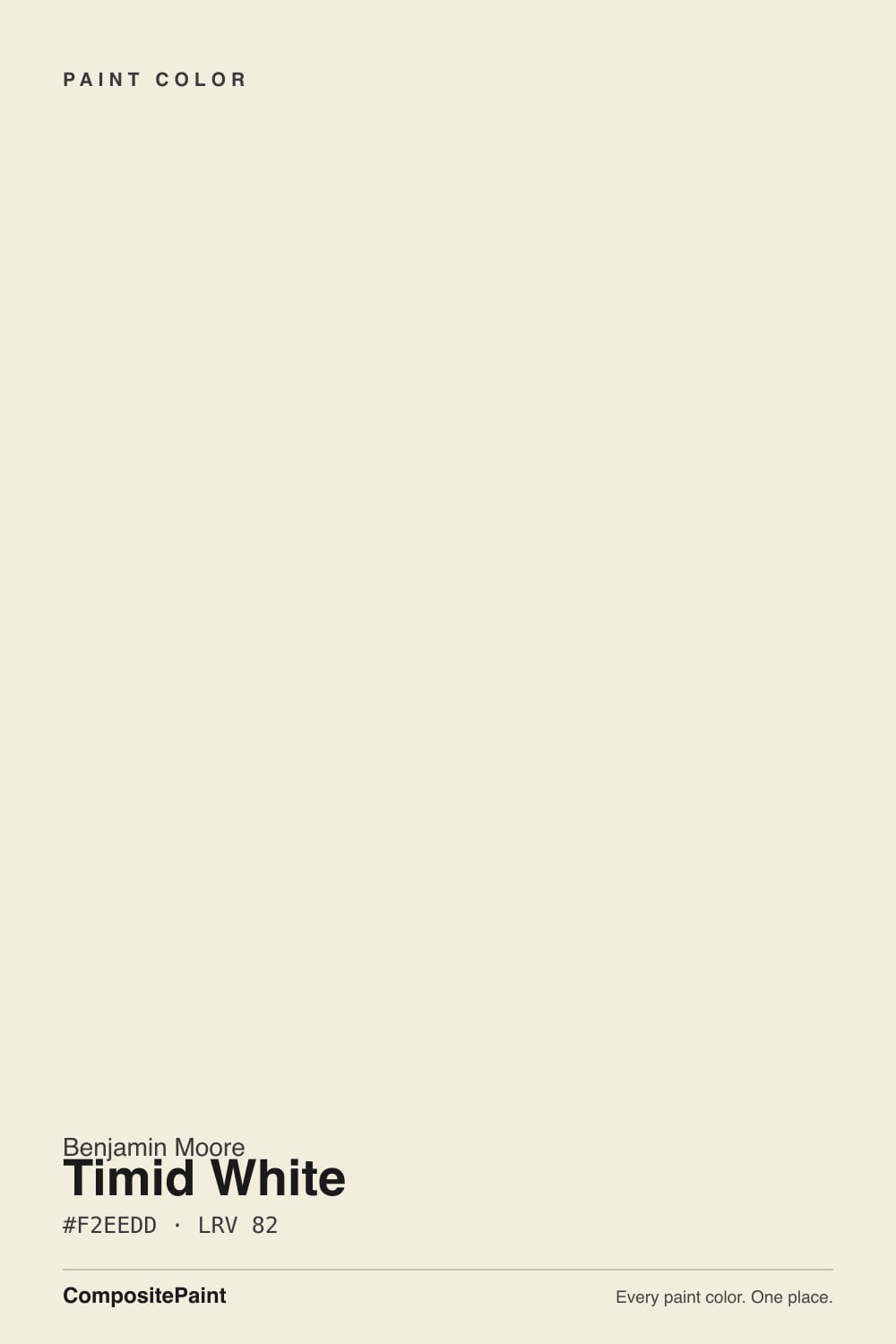
Timid White
Benjamin Moore's warm off-white that never got a marketing push, reviewed honestly: how it actually compares to White Dove and Cloud White, and the one room where quiet turns to dull.

Jessica has spec'd whites and neutrals for more than 300 rooms and keeps a sample wall of painted drawdowns in her studio. Every color review is checked against real reader rooms in the comments and re-tested when a formula changes. About the testing process →
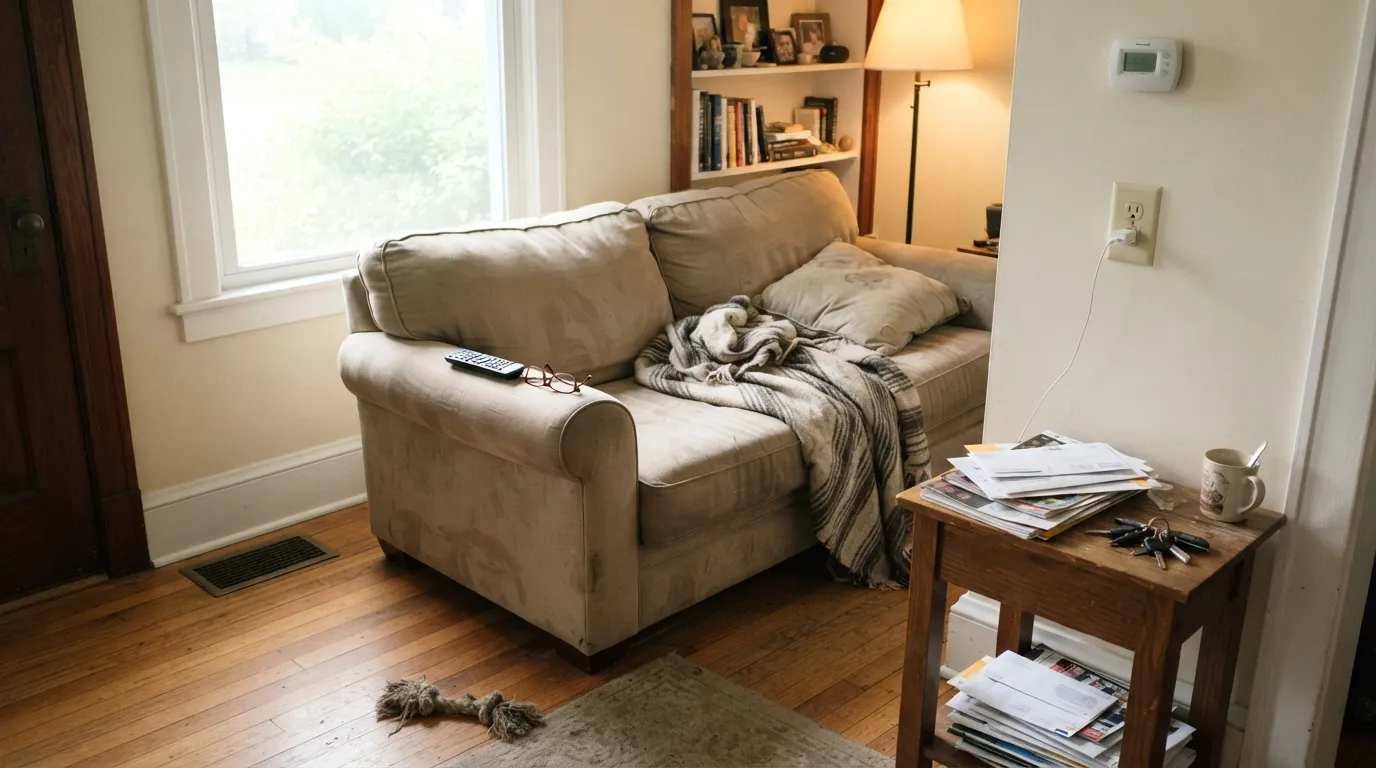
- 1First Star69
- 2Classic Gray74
- 3Timid White82
- 4Chantilly Lace91
- 5Ultra Pure White97
The Fast Verdict
Timid White is what happens when a genuinely good warm cream never gets a marketing budget. By the numbers it sits close to Cloud White and noticeably warmer than White Dove — but it never made Benjamin Moore's flagship Off-White Collection, so almost nobody asks for it by name and almost nobody has photographed it. On the wall it behaves like a dependable, LRV 82 warm off-white with none of the pattern-recognition baggage of its famous cousins. If you want White Dove's warmth without the "didn't my whole street already paint this" feeling, this is your color — you are just buying it without a crowd of reviews to lean on.
Buyers who love White Dove's warmth but want a less common pick · trim and cabinets in warm-toned rooms · whole-house one-color schemes with oak or walnut · repainting a house already surrounded by White Dove neighbors
You want a color with a long public track record before you commit · your room runs cool and north-facing and stays dim · you need a crisp, bright white — LRV 82 reads soft, not sharp · you're pairing with cool grey stone or marble
- Genuinely warm, creamy character — close to Cloud White's warmth, at a slightly deeper LRV
- A less common warm white than White Dove or Swiss Coffee, if déjà vu is what you're avoiding
- Flatters oak, walnut and brass with the same warm-wood chemistry as BM's famous creams
- High enough LRV (82) to still function as an everyday, sample-safe neutral
- A real, currently mixable Benjamin Moore color — not a discontinued or regional oddity
- Almost no public track record — you are testing mostly on your own, not on internet photos
- Goes quieter and slightly grey in dim, north-facing rooms
- Reads dingy next to a brighter white or cool grey stone
- Not bright enough for a crisp, high-contrast, gallery-white look
What Color Is Timid White, Really?
A warm off-white built on the same yellow-cream base as Benjamin Moore's famous whites, and by the raw numbers it actually leans warmer than the two most-recommended ones. Set the hex values side by side and Timid White's warmth sits almost exactly where Cloud White sits — the color BM itself markets as "the best trim white in the deck, if your room is warm" — and clearly warmer than both White Dove and Simply White. It is not a subtle, secretive undertone; it is a straightforward warm cream that simply never got the ad budget its siblings did.
That obscurity is structural, not accidental. White Dove, Swiss Coffee, Simply White, Cloud White, Linen White, Ballet White and Dove Wing all carry OC-prefixed codes — Benjamin Moore's marketed "Off-White Collection," the line that gets the showroom fan decks, the paint-blog roundups, the years of real-room photos. Timid White carries a plain four-digit strip code, 2148-60, the numbering BM uses for its general Classic Colors catalog. It is exactly as real and exactly as mixable as its famous cousins — it just never got invited to the same marketing table. At LRV 82 it sits a shade deeper than White Dove (85) and Cloud White (85), so it holds a little more visible color and hides scuffs a little better than either.
Undertone in one line: warm yellow-cream, no green flash, no pink flash reported. If your sample reads flat or grey, that is a cool light source doing what cool light does to every warm cream at this LRV — not a hidden undertone showing its true colors.
Where It Shines
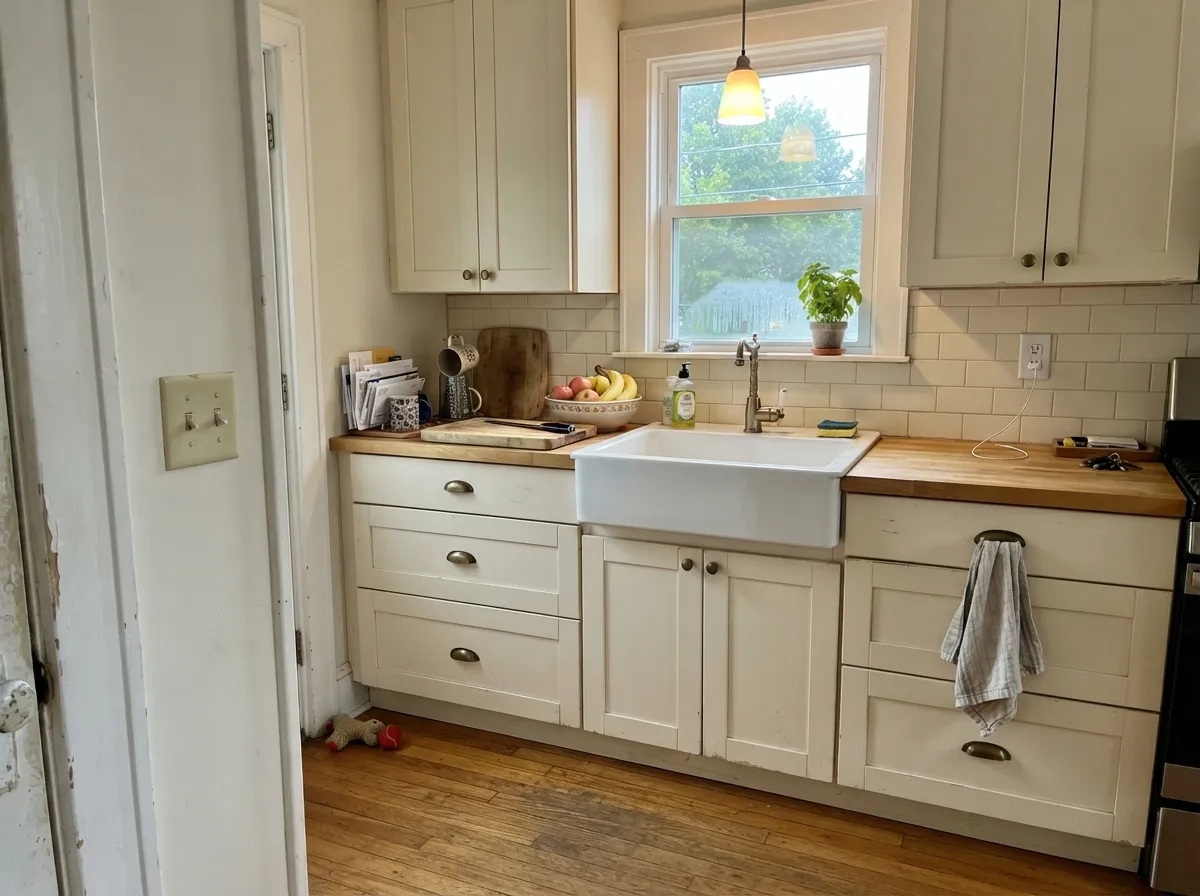
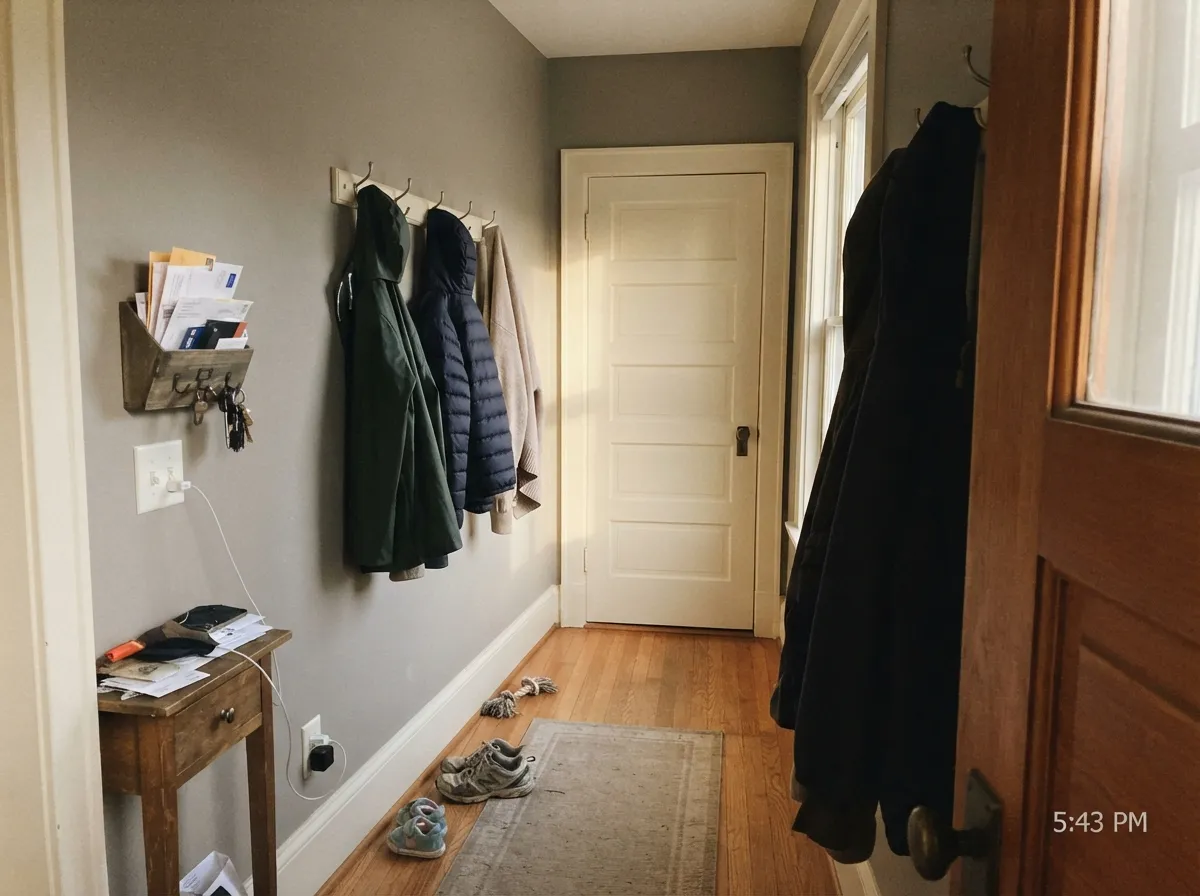
It shines in exactly the situations that flatter every warm BM cream: real daylight, warm wood, brass. Because it runs a hair warmer than White Dove, it is especially good with honey and red oak that a cooler white would fight. Its second home is the small, deliberate use — cabinets, trim, an interior door — where you want White Dove's calm without the "I've seen this exact kitchen on Pinterest" feeling, because almost nobody has seen this exact kitchen.
Where It Fails
Timid White's failure modes split into two kinds: the ordinary physics every warm cream shares, and one failure that is specific to being an obscure color. Neither is the paint's fault, but both are predictable before the first coat.
Because Timid White never got Benjamin Moore's marketing push, there are far fewer real-room photos, painter notes and forum threads to check against before you commit — compare that to the decades of White Dove photos online. That is not a flaw in the paint; it is a flaw in your ability to research it from a couch. Buy the largest sample board sold, paint two coats on two different walls, and look at it morning and night before you trust a screen.
Same physics as every warm cream at this LRV: cool north daylight strips the yellow out and leaves a flatter, quieter, slightly grey read. It is not dramatic — LRV 82 keeps it soft rather than drab — but it will look noticeably calmer than your sample looked under store lighting. Add warm lamps or size up to a deeper cream.
Put Timid White beside builder-grade bright white trim or a cool grey-veined counter, and it will look muted and slightly dingy by contrast — the same one-color-room lesson every warm cream teaches. Keep trim in Timid White too, or step up to Simply White if you need a genuinely brighter partner.
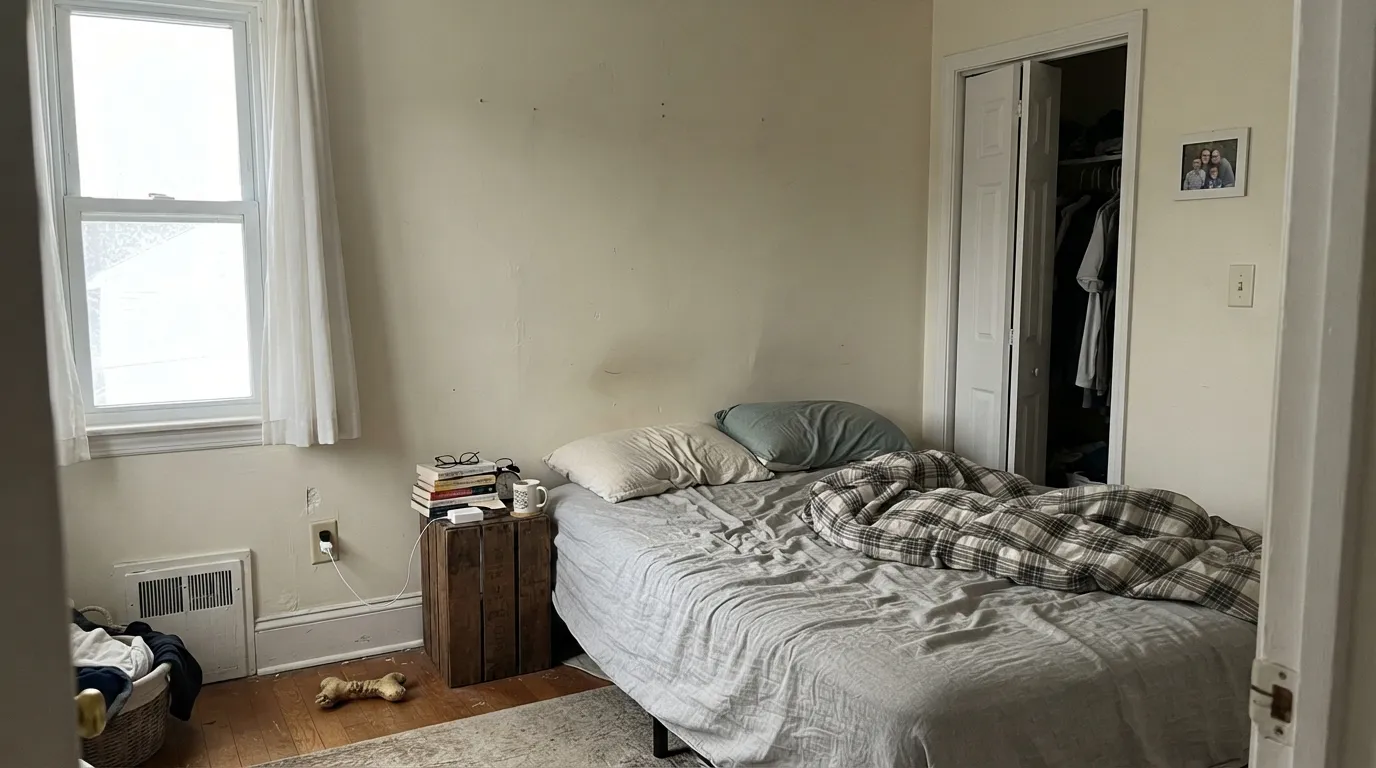
Room by Room
A calm, warm backdrop for wood furniture and art, functionally interchangeable with White Dove but a step creamier. Eggshell on the walls; same color on trim in semi-gloss for the one-color look.
Warm wood, brass hardware, butcher block — all of it reads well against Timid White's cream, and the LRV 82 depth hides handle smudges better than a brighter white would. Satin cabinet enamel wipes clean.
Under 2700K lamps the cream deepens and turns cozy at night. If the room is north-facing and stays dim through the day, a color with a deeper LRV will hold its warmth better.
Warm stone, wood vanities and brass: it works exactly like Cloud White or White Dove would. Cool grey marble or blue-grey tile: it argues, same as its famous cousins do.
Semi-gloss Timid White trim under a mid-tone greige or sage wall softens the contrast the way White Dove trim does, minus the recognizability. A solid, safe choice for anyone tired of the same trim white in every listing photo.
There is no strong public track record for this color outdoors the way there is for White Dove or Swiss Coffee. Expect the same general behavior as any warm BM cream — brighter and crisper in full sun — but paint a large board and view it outside before committing a whole facade.
Your Light Is the Risk
The cream carries all day without slipping toward yellow — the light this color was built for, even though nobody built a campaign around it.
Cool daylight flattens the warmth and exposes a quieter, greyer read. Test a large sample before committing a whole room.
Warm at the sun hours, calmer and more neutral the rest of the day — a normal, gentle shift for a cream at this LRV.
2700K bulbs deepen the cream and make it feel cozy; cool LEDs flatten it toward plain white. Swap the bulb before you swap the paint.
Most complaints about Timid White are a light mismatch. Upload a photo of your actual room and see it on your walls — then ask for the same wall in north light or evening lamps before you buy a single sample.
Need It From Another Brand?
Any paint counter can custom-tint Benjamin Moore 2148-60 directly. If you would rather stay in one brand's own deck, these are the closest stock matches, measured as ΔE2000. Under 2 is a difference you will not see on the wall.
| Brand | Closest color | ΔE | LRV | |
|---|---|---|---|---|
| Sherwin-Williams | Pearl OnionSW 7126 · Sherwin-Williams | 2.4 | 86 | Color page → |
| Behr | White WoolGR-W01 · Behr | 0.5 | 86 | Color page → |
| Valspar | Dairy BelleV164 · Valspar | 2.4 | 85.1 | Color page → |
| PPG / Glidden | Spice IvoryPPG1204-1 · PPG / Glidden | 0.9 | 85 | Color page → |
| Glidden | Spice IvoryPPG1204-1 · Glidden | 0.9 | 86 | Color page → |
| Dutch Boy | Split Banana118-1DB · Dutch Boy | 1.0 | 86 | Color page → |
Similar Benjamin Moore Colors
The nearest shades to Timid White within Benjamin Moore's own range, ranked by perceptual color distance — useful when you want the same look a touch lighter, darker, or warmer.
WCAG 2.1: AA is 4.5 : 1 for normal text, 3 : 1 for large text, AAA is 7 : 1.
Timid White vs the Colors You're Also Considering
Every Timid White sample board has the same rivals on it. The numbers show the real lightness gap — then it comes down to which risk you would rather live with.
Pick this for White Dove's warmth in a color nobody on your street has already used.
Benjamin Moore OC-17 · LRV 85White DovePick this for the famous, extensively-photographed version of this same warm-cream idea — every painter already knows how it behaves.
Pick this for a hair more depth (LRV 82 vs 85) with the same warmth and none of the name recognition.
Benjamin Moore OC-130 · LRV 85Cloud WhitePick this for an almost identical warm-cream trim white that BM actually markets — same family, a much wider fan base.
Pick this for a slightly cooler, more restrained version of the same creamy idea.
Benjamin Moore OC-45 · LRV 84Swiss CoffeePick this if you want more cream and don't mind it tipping yellow in warm light — Swiss Coffee runs warmer than Timid White.
Pick this for a quieter, deeper, less assertive warm white — Simply White is brilliant and a little loud by comparison.
Benjamin Moore OC-117 · LRV 91Simply WhitePick this for a brighter, higher-LRV white that still leans warm — good where Timid White's LRV 82 reads too soft.
Ivory White 925 at LRV 86 and Ivory White CC-130 at LRV 83 both use #F2EFDF, which is a shade lighter and slightly greener than Timid White at #F2EEDD. They are the option when you want the same cream character with a little more brightness. Acadia White OC-38 at LRV 83 is the same hex again under a different name. Arbor White ES-01 at LRV 85 is the brightest of the group and reads cleaner on trim.
Across brands, Behr Polished Marble GR-W13 at #F2EEDE is the nearest match on record with a difference of 0.4, which is below what the eye separates. C2 Vellum C2-868, Glidden Spice Ivory PPG1204-1, and Dutch Boy Split Banana 118-1DB all fall under 1 as well.
Farrow and Ball Pointing No. 2003 at #F3EFE3 and Sherwin-Williams Pearl Onion SW 7126 at #EEEFE1 are very close but not the same, so sample first. Backdrop Jane BD-JA is close but visibly different side by side.
Timid White Coordinating Colors
The pairing rule is the same one that governs every warm BM cream: stay on the warm side. Timid White flatters warm greiges, warm woods, deep navies and muted sage greens, and it argues with icy blues and cool greys the way White Dove does. These are the partners that carry the warmth through a whole house:
Why "Timid White" Never Became a Household Name
Benjamin Moore's genuinely famous whites — White Dove, Swiss Coffee, Simply White, Cloud White, Chantilly Lace, Linen White, Ballet White, Dove Wing, Super White — all share one structural trait: an OC-prefixed code, the mark of BM's marketed "Off-White Collection." That collection is what gets the dedicated fan decks in stores, the years of paint-blog roundups, the Pinterest boards, the painter who already knows the exact primer to use under it. Timid White carries a plain 2148-60 catalog code, the standard four-digit strip numbering BM uses across its general Classic Colors line — the same numbering family as hundreds of colors that never got a marketing push.
That is the whole story, and it is a genuinely useful one for a buyer: the color itself is not lacking anything. It mixes the same way, it costs the same, and by the numbers it is warmer than two of the collection's headliners. What it lacks is a decade of other people's rooms to check your instincts against. If you like being the first on your block to use a color instead of the fifth, that gap is the appeal, not a warning sign — just budget extra time for your own sample testing, because the internet's homework is thinner here.
Timid White With Wood Tones and Floors
Warm wood is this color's best company, for the same reason it is White Dove's best company: red oak, honey oak, walnut and butcher block all sit at a similar temperature, so the wall and the wood meet halfway instead of fighting. Because Timid White runs a step warmer than White Dove, it is an especially safe choice over orange-leaning builder oak that a cooler white would make look colder and greener by contrast.
Cool grey LVP or grey-washed wood floors are the one pairing to sample before committing. Grey floors pull any warm cream's undertone into relief, and without years of reader photos to check against, this is exactly the situation where a big sample board over the actual floor matters more than usual. Warm rugs and brass hardware close the gap in most rooms if the floor is staying.
Three Ready Palettes Built on Timid White
A color is never alone on the wall. These are complete combinations in the 60-30-10 pattern, with the reason each one holds together. Every one opens in the visualizer.
One warm color at two sheens keeps small rooms and hallways flowing without a single wall getting singled out as an accent. The navy door supplies the one deliberate dark note the scheme needs, and it doesn't fight Timid White's cream the way a cooler navy would.
Try this palette in your roomAgreeable Gray's warm-grey base doesn't fight Timid White's cream the way a cooler greige would, and the navy island supplies the room's one deliberate dark note. Brass hardware ties the warmth of both neutrals together.
Try this palette in your roomEdgecomb Gray is the warm greige Timid White was practically built to trim — same warm base, different depth. Evergreen Fog adds one muted color note without breaking the room's calm, and all three read warm together under lamplight.
Try this palette in your roomTimid White FAQ
Is Timid White warm or cool?
Warm — a straightforward yellow-cream, not a cool color hiding a warm name. Set against Benjamin Moore's other whites, Timid White actually runs warmer than White Dove and Simply White, and lands close to Cloud White. In cool light it reads quieter and greyer, the way any warm cream does; it never reads icy.
How does Timid White compare to White Dove?
Warmer and a touch deeper. White Dove sits at LRV 85 with a grayed-down warmth that made it famous; Timid White sits at LRV 82 with a more straightforward cream lean. The look is close enough that you could swap one for the other in most rooms — the real difference is that White Dove has decades of photographed rooms behind it and Timid White has almost none.
Is it good for kitchen cabinets?
Yes, in the same situations White Dove or Cloud White would work: warm wood, brass hardware, butcher block. Use a satin urethane-fortified cabinet enamel, and expect it to hide handle smudges a bit better than a brighter white would given its LRV 82.
What trim color goes with Timid White walls?
Timid White itself, in semi-gloss, is the safest match — a brighter trim white will make the walls look dingy by contrast, the same lesson every warm BM cream teaches. If you want visible contrast, go brighter with Simply White rather than a generic builder white.
Why haven't I heard of Timid White before?
Because Benjamin Moore never put it in the marketed "Off-White Collection" alongside White Dove, Swiss Coffee, Simply White and Cloud White — those carry OC-prefixed codes and get the showroom fan decks and blog coverage. Timid White carries a standard four-digit catalog code instead. It is just as real and just as mixable; it simply never got the advertising.
Does it work on exteriors?
Probably, following the same general pattern every warm BM cream shows outdoors — brighter and crisper in full sun than indoors — but there isn't a public track record of exterior use to point to the way there is for White Dove. Paint a large sample board and view it outside in your own light before committing a whole house.
Have you painted with Timid White?
Rate it — one tap helps the next reader decide.
Ask a Question