Ivory White
The classic creamy ivory, reviewed honestly: where it belongs on millwork, the rooms where the yellow takes over, and what to pick instead.

Jessica has spec'd whites and neutrals for more than 300 rooms and keeps a sample wall of painted drawdowns in her studio. Every color review is checked against real reader rooms in the comments and re-tested when a formula changes. About the testing process →
- 1First Star69
- 2Classic Gray74
- 3Ivory White86
- 4Chantilly Lace91
- 5Ultra Pure White97
The Fast Verdict
Ivory White is a cream with the yellow left switched on — Benjamin Moore's own chip calls the undertone yellow, and the wall agrees. On trim, doors and millwork in an older house it looks like painted woodwork has always looked: soft, warm, slightly antique. Spread it across four walls in a dim room or next to a crisp white and the same paint stops reading as white and starts reading as yellow. That is not a surprise. That is the color.
Trim and millwork in older homes · traditional kitchens with wood and brass · north-facing rooms that want real cream · anyone who means ivory when they say white
You want a white that stays white · your trim is staying a brighter builder white · cool gray floors or Carrara · a dim basement or a west wall that bakes all afternoon
- The traditional millwork ivory — looks like painted woodwork, not plastic
- Clear yellow warmth that actually reads as cream, not a vague off-white
- Flatters stained oak, brass, plaster and every warm wood tone
- Hides scuffs on cabinets and trim better than brighter whites
- Same formula as Acadia White and Ivory White 925 — easy to match later
- Looks yellow on four walls the moment the light goes dim or strong
- Reads dirty and dated next to any new bright white
- Too creamy for crisp, modern, high-contrast rooms
- Clashes with cool gray floors, gray LVP and Carrara-type stone
What Color Is Ivory White, Really?
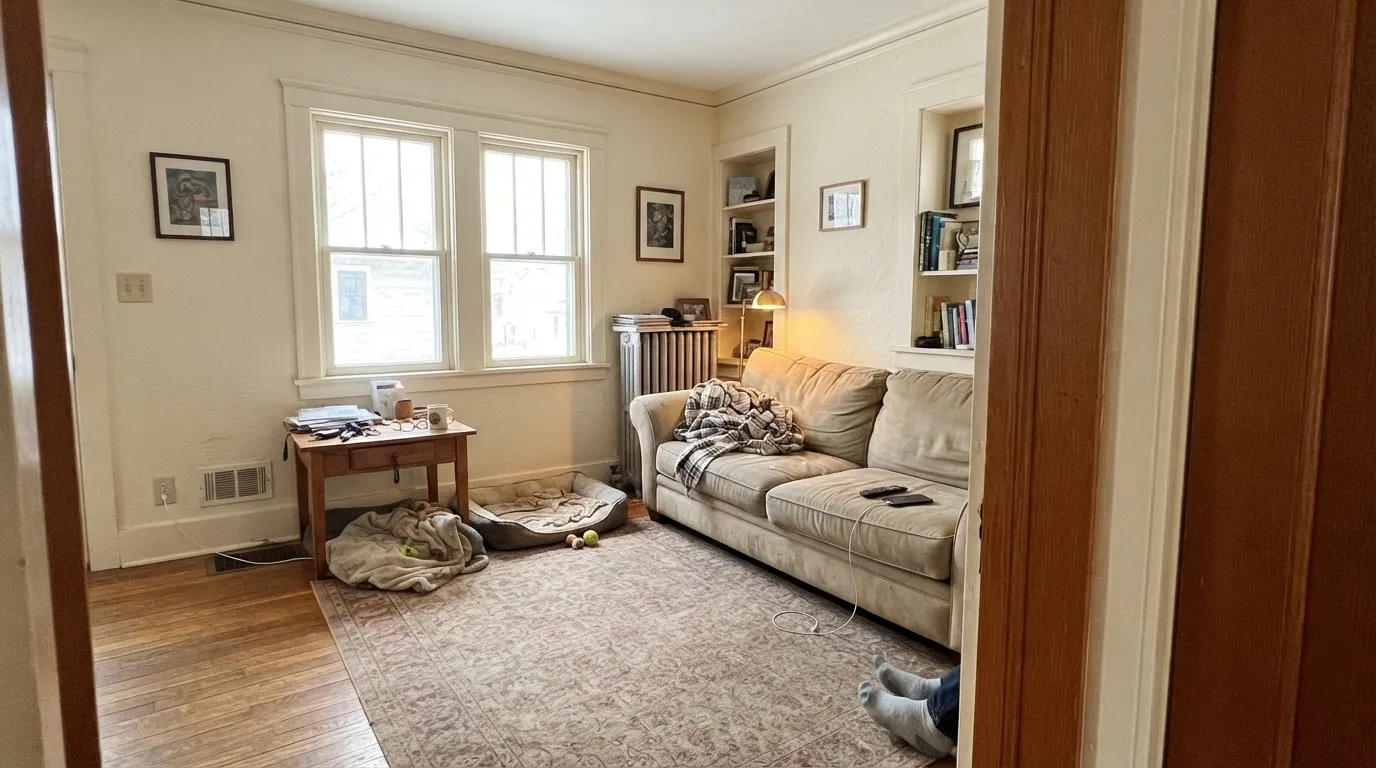
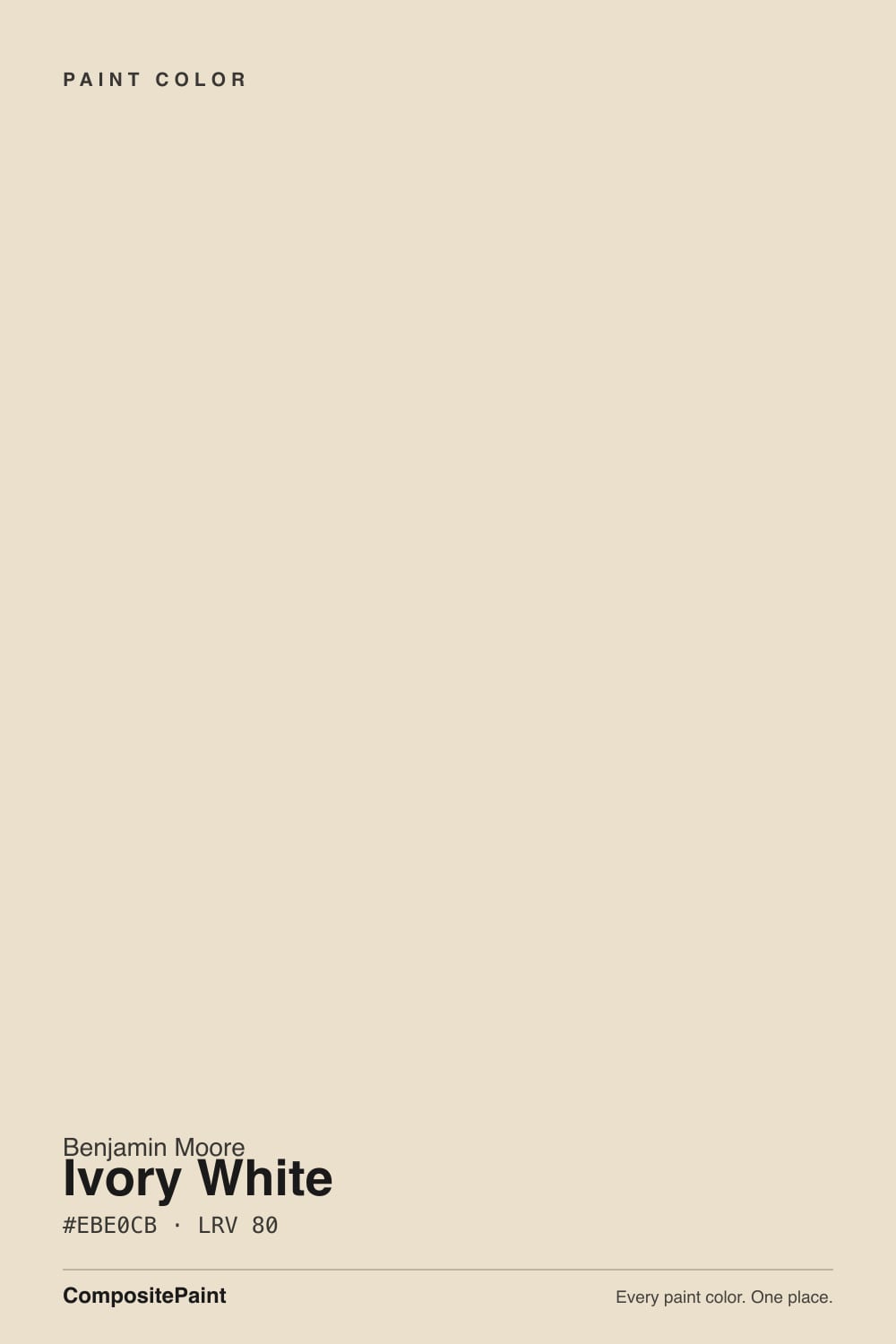
A clean creamy white with a clear yellow warmth — not the grayed kind, not the peachy kind. Most of the whites people actually buy (White Dove, Swiss Coffee) put a drop of grey in the mix so the cream stays quiet. Ivory White does not. Benjamin Moore files it in the Designer Classics collection and describes the undertone as yellow, which is the whole review in one word: this is ivory, the color of old piano keys and painted millwork, not a modern off-white pretending to be neutral. It is also sold as Ivory White 925 and as Acadia White OC-38 — three names, one formula — so if a contractor or a fan-deck pulls a different SKU, you may already own this color.
At LRV 83 it reflects most of the light that hits it, but it is not a bright white. White Dove sits two points higher at LRV 85 and reads noticeably cleaner next to it; Chantilly Lace at LRV 90 makes Ivory White look like a color. That gap is the useful part on millwork — cream trim against a mid-tone wall looks finished instead of plastic-bright — and the dangerous part on four walls, because once the field is large the yellow has nowhere to hide. On a chip it looks like a soft white. On a wall in a dim room it looks like cream.
Undertone in one line: crisp yellow — never pink, never grayed enough to pass as a quiet white. If your sample flashes green, that is a yellow base in cool north light doing what yellow bases do; if it looks peach, look at the floor. The paint itself is yellow.
Where It Shines
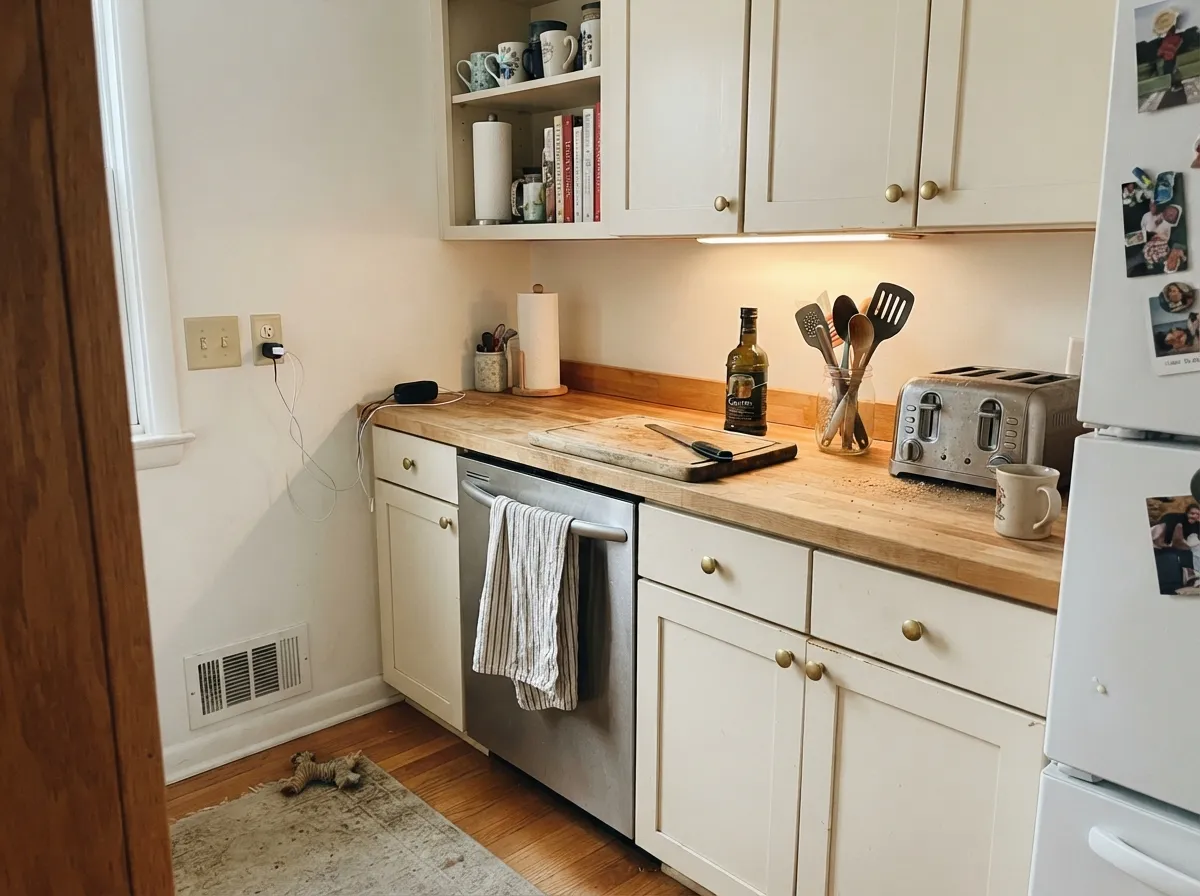
Its home turf is millwork. Semi-gloss Ivory White on doors, casing and crown in a house with stained oak, plaster and brass is the traditional East Coast trim color, and it still earns that job: the cream makes painted woodwork look intentional instead of factory-white. Give it north or filtered east light on walls and the yellow stays in check, reading as a warm cream rather than a butter wall. Traditional kitchens with butcher block and unlacquered brass are the second-best use — satin on cabinets hides knuckle marks a brighter white would broadcast.
Where It Fails
Almost every regret story about Ivory White is the same story told three ways: someone wanted a white, or they put a real white next to it, or the light had nothing kind to say. The paint is consistent. What changes is the room.
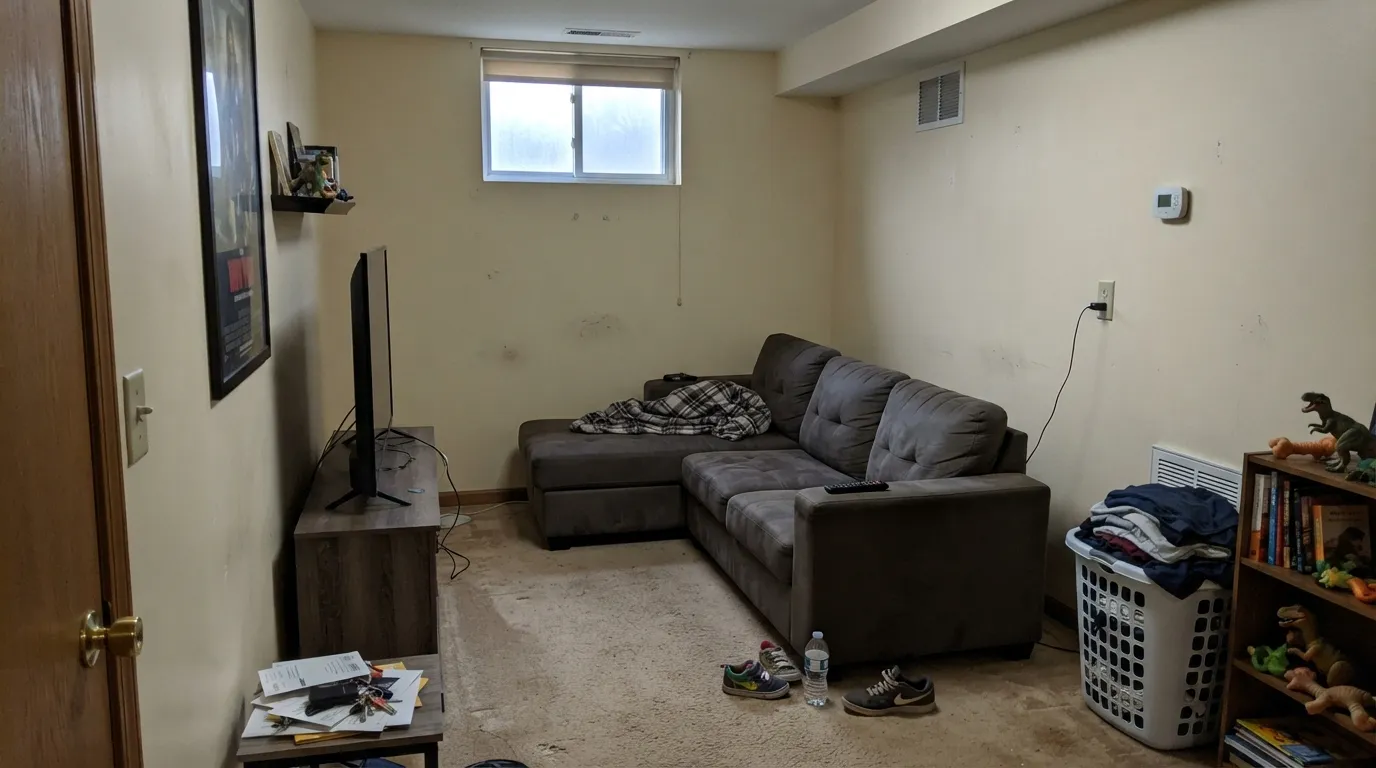
On the chip it passes as a soft white. On four walls, especially in a dim interior room or a basement with no real daylight, the yellow sits there in the open — readers describe it as dingy, buttery, not the fresh white they thought they bought. If white is what you actually want, this is the wrong can. White Dove keeps the warmth and drops the yellow.
Ivory White walls under Chantilly Lace trim, a stark ceiling, or leftover builder-white casing is the classic pairing mistake. The brighter white wins and the walls look yellowed and slightly dirty. Keep every white in the cream family — same color on walls and trim, sheen change only — or skip Ivory White and use White Dove, which can sit next to a slightly cleaner white without looking unwashed.
Gray LVP, gray-washed oak and blue-gray marble sit at the opposite temperature and shove the yellow forward until the wall reads sour. Warm rugs will not rescue a whole-room clash. With cool floors, pick a true white like Chantilly Lace and let the floor be the soft one, or move to a greige such as Edgecomb Gray.
Room by Room
Semi-gloss on doors, casing, crown and stair parts is why this color has stayed in the deck. Against mid-tone greige, sage or tan walls it reads as classic painted woodwork, not a bright cut line. Do not use it as trim under a cool gray or a crisp white wall — that is where the yellow looks like discoloration.
Satin Ivory White on cabinets flatters butcher block, honey oak floors and brass, and it hides scuffs better than a gallery white. The catch is commitment: cream cabinets lock in every later choice. Cool white quartz or gray tile argues with it. If the counters are staying cool, use Cloud White or White Dove instead.
With north or filtered daylight, stained trim and plaster, this is the cream those rooms were built around. Eggshell on the walls; same color in semi-gloss on the millwork if the woodwork is already painted. In a new build with gray floors and bright windows, sample at 4pm before you buy gallons.
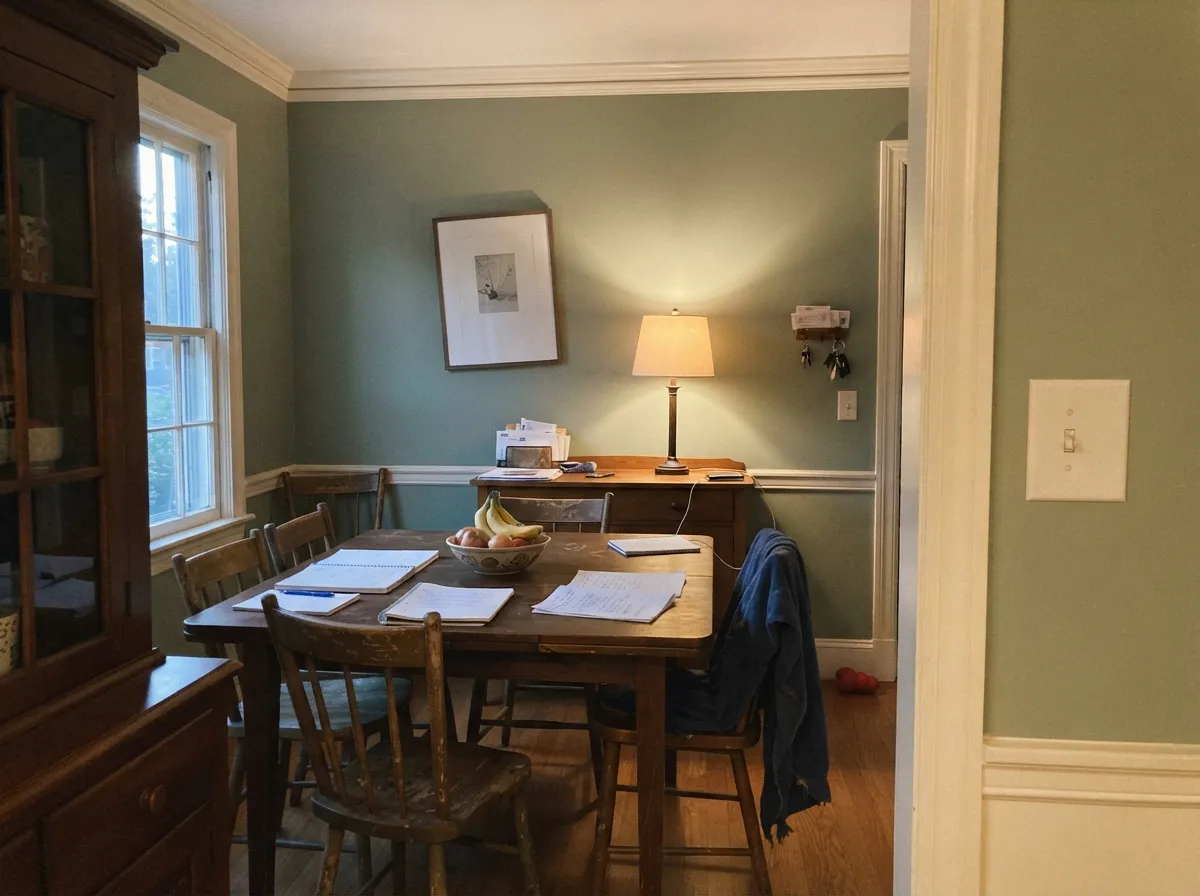
Dining rooms run on lamplight, and 2700K bulbs make Ivory White look intentional rather than yellow. Pair it with Saybrook Sage or a deep navy and it reads country-house correct. Eggshell, or matte if the plaster is old.
Under 2700K bulbs it turns properly creamy at night, which most people want in a bedroom. Keep the bedding on the warm side; crisp white linens will make the walls look more yellow than they are. If the bedroom faces west and bakes in the afternoon, White Dove is the safer cream.
Flat Ivory White overhead warms a room without the glare of standard ceiling white, and it forgives old plaster a bright white would spotlight. Use it above warm walls, never over a cool gray. Windowed halls carry it well; a windowless basement hall is where the yellow goes heavy — skip it there.
Your Light Is the Risk
Cool daylight holds the yellow to a calm cream. This is the light where Ivory White still reads as a white.
Basements and interior rooms with no real window: the yellow sits there with nothing to bounce against. Looks dingy, not fresh.
Afternoon sun pushes it from cream to butter on large walls. Sample the sunny wall at 4pm before committing.
2700K lamps: creamier, cozier, more ivory. Cool 4000K LEDs: sour yellow-green. Swap bulbs, not paint.
Most complaints about Ivory White are a light mismatch. Upload a photo of your actual room and see it on your walls — then ask for the same wall in north light or evening lamps before you buy a single sample.
Need It From Another Brand?
Any paint counter can custom-tint Benjamin Moore 925 directly. If you would rather stay in one brand's own deck, these are the closest stock matches, measured as ΔE2000. Under 2 is a difference you will not see on the wall.
| Brand | Closest color | ΔE | LRV | |
|---|---|---|---|---|
| Sherwin-Williams | Pearl OnionSW 7126 · Sherwin-Williams | 1.9 | 86 | Color page → |
| Behr | White WoolGR-W01 · Behr | 0.4 | 86 | Color page → |
| Valspar | ConstellationT649 · Valspar | 1.8 | 85 | Color page → |
| PPG / Glidden | Sail ClothPPG1213-1 · PPG / Glidden | 1.4 | 86 | Color page → |
| Glidden | Mother Of PearlPPG1100-1 · Glidden | 0.8 | 86 | Color page → |
| Dutch Boy | Split Banana118-1DB · Dutch Boy | 1.4 | 86 | Color page → |
Similar Benjamin Moore Colors
The nearest shades to Ivory White within Benjamin Moore's own range, ranked by perceptual color distance — useful when you want the same look a touch lighter, darker, or warmer.
WCAG 2.1: AA is 4.5 : 1 for normal text, 3 : 1 for large text, AAA is 7 : 1.
Ivory White vs the Colors You're Also Considering
Every Ivory White sample board has the same rivals on it. The numbers show the real lightness gap — then it comes down to which risk you would rather live with.
Pick this when you actually want cream on millwork, and a quiet white would look too new.
Benjamin Moore PM-19 · LRV 85White DovePick this if you want the warmth without the yellow — it is the safer whole-house white by a wide margin.
Pick this when you want a clearer ivory, not a soft taupe-cream.
Benjamin Moore OC-130 · LRV 85Cloud WhitePick this for the safer millwork white — same job, less open yellow, easier next to warm kitchens.
Its Benjamin Moore neighbors are all slightly deeper. French White 1093 at LRV 74 and Palace White 956 at LRV 73 share nearly the same hex family but return less light, so a room in Ivory White will feel brighter. Prentis Cream CW-100 at LRV 74 and Cake Batter CSP-215 at LRV 75 are marginally softer, and French Macaroon CSP-335 at LRV 76 is the closest in brightness of the group.
Across brands, Sherwin-Williams Classical White SW 2829 at deltaE 0.43, Valspar Ivory Essence 3006-8C at 0.43, HGTV Home by Sherwin-Williams Muslin HGSW 4048 at 0.45, and Glidden Eloquent Ivory 45YY 75/110 at 0.52 are all matches in practice. Behr Ivory Stone QE-17 at 1.18 and Dunn-Edwards Navajo White DEC772 at 1.38 are visually identical in normal room light. Farrow and Ball Dimity No. 2008 at deltaE 2.66 is very close but worth sampling first, and Clare No Filter PNT100-LT-19 at 3.68 is close but visibly different, reading grayer and less creamy.
Ivory White Coordinating Colors
The rule for coordinating with Ivory White is simple: stay on the warm side and never put a brighter white next to it. It flatters warm greiges, dusty sages, deep navies and hunter greens, and it argues with icy blues, cool greys and blue-gray stone. These are the partners that keep showing up in rooms that work:
Three Names, One Color — and the OC-130 Trap
Ivory White is one of those Benjamin Moore colors that has been in the deck long enough to collect extra names. The same formula is sold as Ivory White CC-130 (Designer Classics), Ivory White 925 (Classics), and Acadia White OC-38. Designers who grew up on Acadia White and homeowners who bought CC-130 are looking at the same paint. If an old can, a painter's invoice or a fan deck shows any of those three, you do not need a new sample — you already have this color.
The trap is Cloud White OC-130. One letter in the SKU, a completely different white: Cloud White is the millwork cream with a softer taupe-yellow, and it is the one most people actually want when they say they want a warm trim white without committing to ivory. Order carefully. CC-130 is this review; OC-130 is Cloud White.
Ivory White With Wood Tones and Floors
Warm wood loves it, which is the whole point of a yellow-cream. Red oak, honey oak, walnut, cherry, butcher block and cedar all sit comfortably against Ivory White because the warmth meets theirs halfway. On original stained trim it does something a crisp white cannot: it makes the wood look chosen instead of leftover. If your floors are orange-leaning builder oak, this is one of the few whites that softens the orange rather than amplifying it.
The flooring that needs a sample first is anything cool: gray LVP, gray-washed oak, blue-gray tile, Carrara-type marble. Cool floors pull the yellow into relief and the wall can read sour. It is not always a dealbreaker on a thin band of trim — a cream casing line next to gray floors is a different problem than four cream walls — but on a whole room, test a big sample above the actual floor in afternoon light before you paint.
Three Ready Palettes Built on Ivory White
A color is never alone on the wall. These are complete combinations in the 60-30-10 pattern, with the reason each one holds together. Every one opens in the visualizer.
Edgecomb Gray is the easy warm greige Ivory White was built to trim; the cream millwork looks original instead of added. Hale Navy on the door is the single dark note that keeps an 83-LRV house from floating.
Try this palette in your roomPale Oak shares the warmth without competing for cream, so the cabinets stay the ivory and the walls stay quiet. Hunter Green on the island is the classic country-kitchen dark — glossy, brass-friendly, and deep enough that Ivory White reads bright beside it.
Try this palette in your roomSaybrook Sage needs warm company, and Ivory White is exactly that — cream millwork against dusty sage is the traditional dining-room pairing. Kendall Charcoal supplies one near-black note so the scheme does not go pastel.
Try this palette in your roomIvory White FAQ
Is Ivory White warm or cool?
Warm — and more openly yellow than almost any white people confuse it with. White Dove and Cloud White keep the warmth quieter; Ivory White lets the yellow sit on the surface. In cool north light it can pass as a soft cream. In dim rooms and under 2700K lamps it is plainly ivory.
Is Ivory White the same as Acadia White?
Yes. Benjamin Moore sells the same formula as Ivory White CC-130, Ivory White 925, and Acadia White OC-38. If a painter, a fan deck or an old can shows one of those other names, you are looking at this color. Do not confuse it with Cloud White OC-130 — that is a different paint, one SKU digit apart.
What trim color goes with Ivory White walls?
Ivory White itself, in semi-gloss. A brighter trim white — Chantilly Lace, leftover builder white — makes the walls look yellowed and slightly dirty, which is the most common mistake with this color. If you want contrast, go darker (a greige or sage), never brighter.
Is it good for kitchen cabinets?
In a traditional kitchen with wood counters, brass and warm floors, yes — satin hides scuffs and the cream looks like painted furniture rather than plastic. Next to cool white quartz, gray tile or stainless as the main event, it reads yellow. Sample it against the actual counters. Use a urethane-fortified cabinet enamel.
Will Ivory White look yellow?
Yes, in any room where the light does not cancel it: dim interiors, basements, west walls at 4pm, and anywhere a brighter white sits next to it. In north or filtered east light on millwork it stays a calm cream. If yellow is a dealbreaker, this is not your white — pick White Dove.
Should I use it on the ceiling too?
If the walls are Ivory White, yes — flat sheen, same color, so the plane stays warm instead of snapping to a clinical bright white. Over a different wall color, use it only when that wall is warm (greige, sage, tan). Over a cool gray it makes the ceiling look faintly yellow.
Have you painted with Ivory White?
Rate it — one tap helps the next reader decide.
Ask a Question