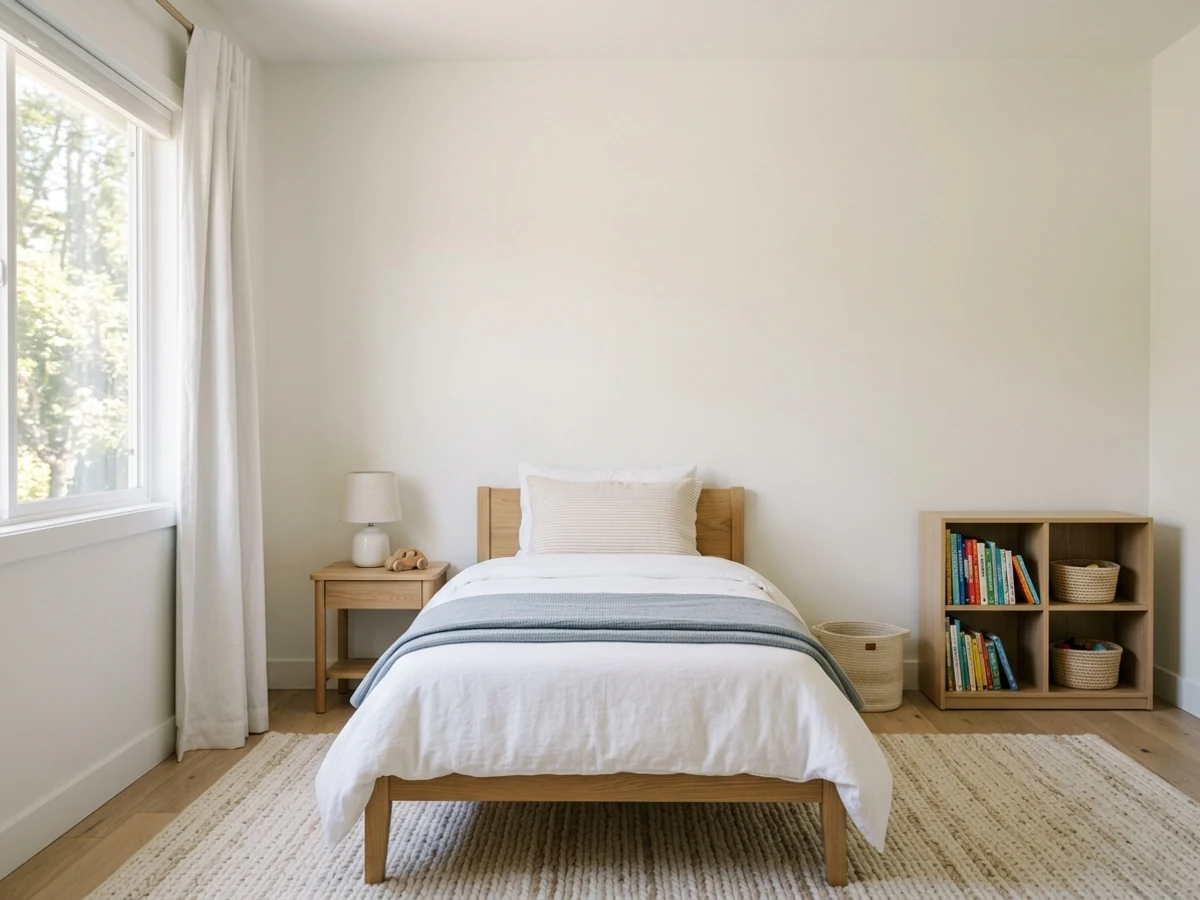
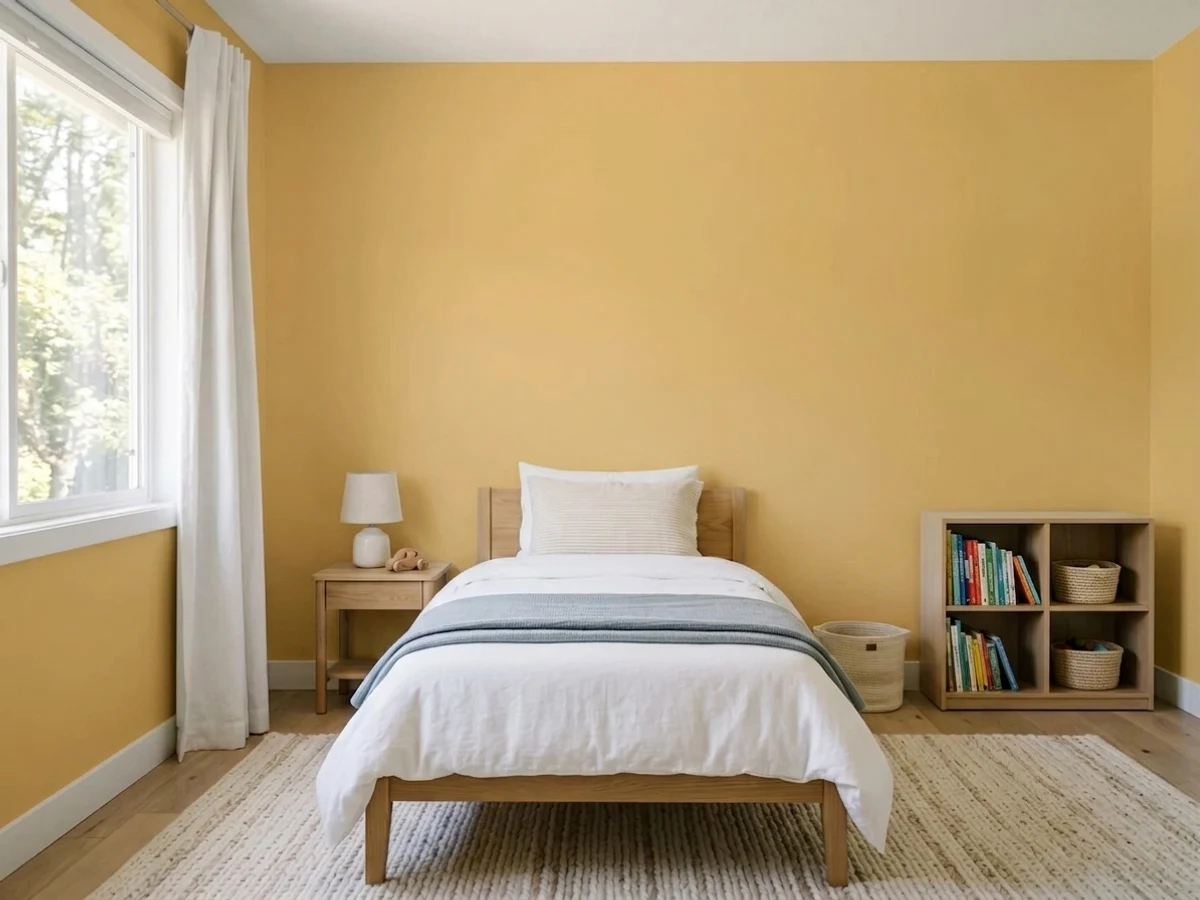
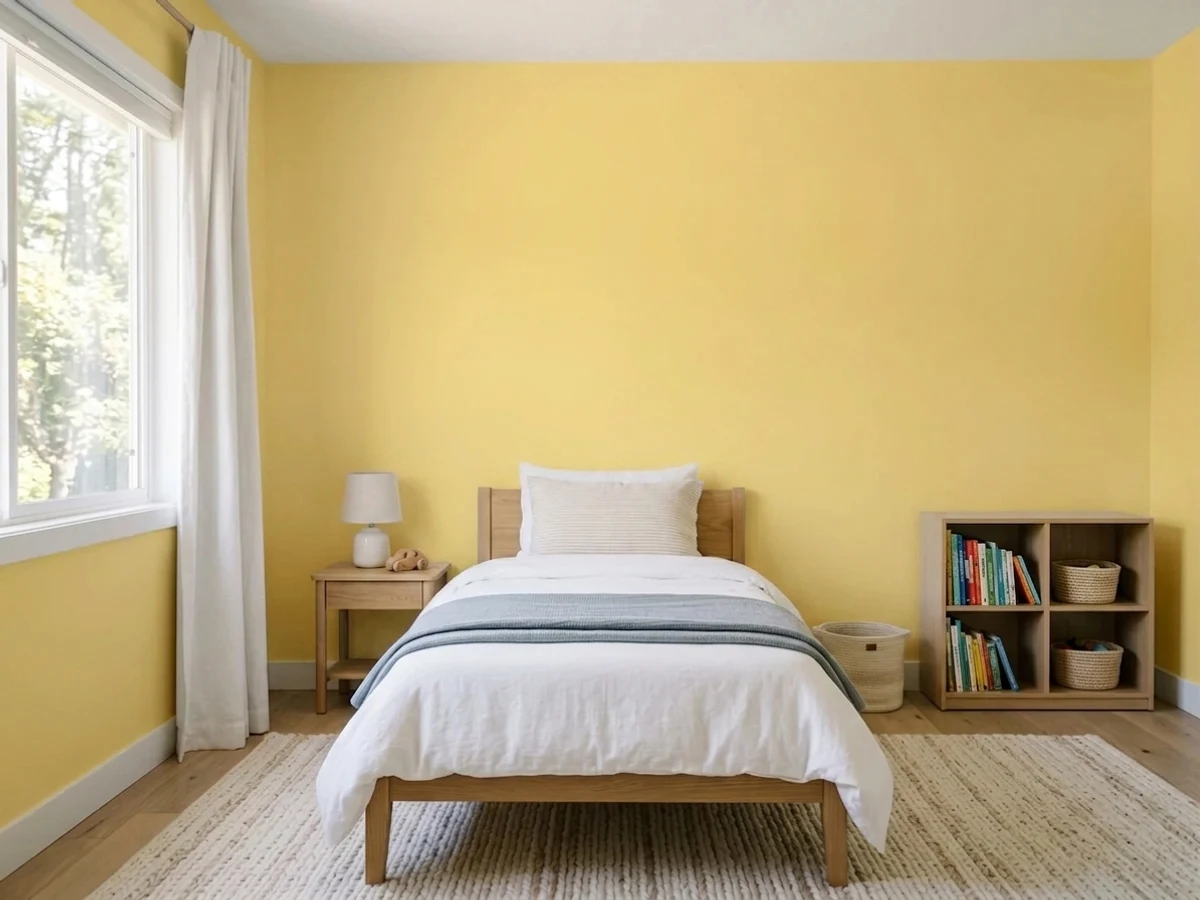
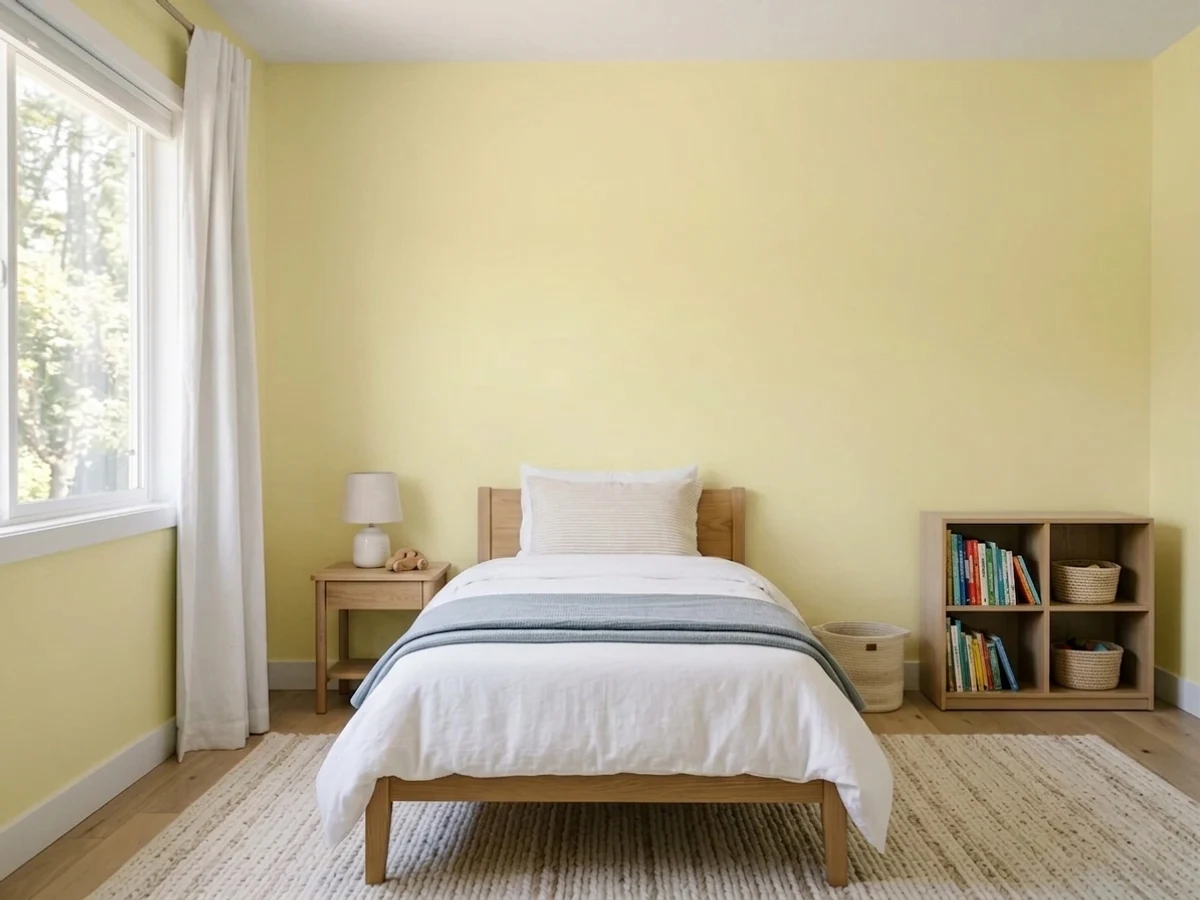
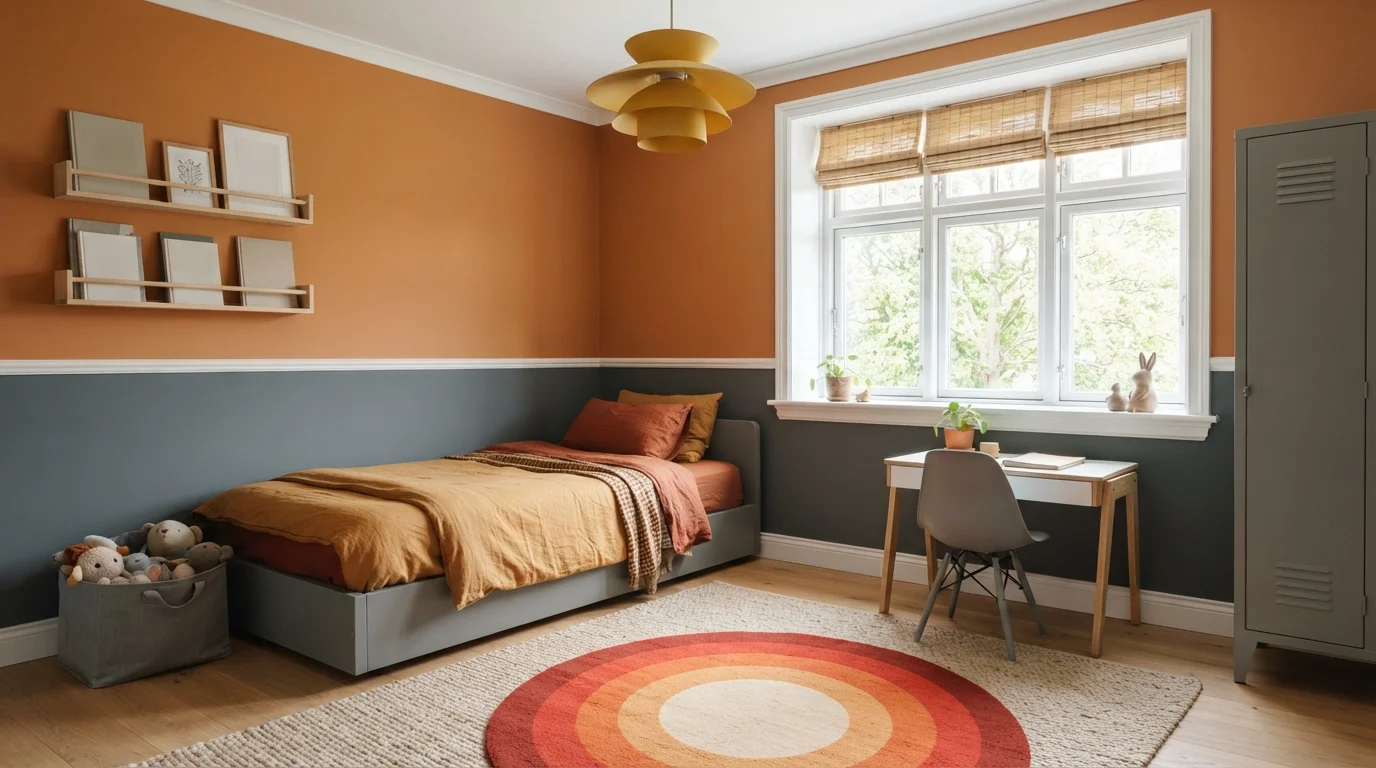
Yellow Kids Room Paint Colors
2,051 yellow colors that work in kids rooms, drawn from the full ~30,000-color US paint deck. Below: editor's picks specific to kids rooms, then 30 picks spread across the LRV range — narrow further on the brand page when you've shortlisted.
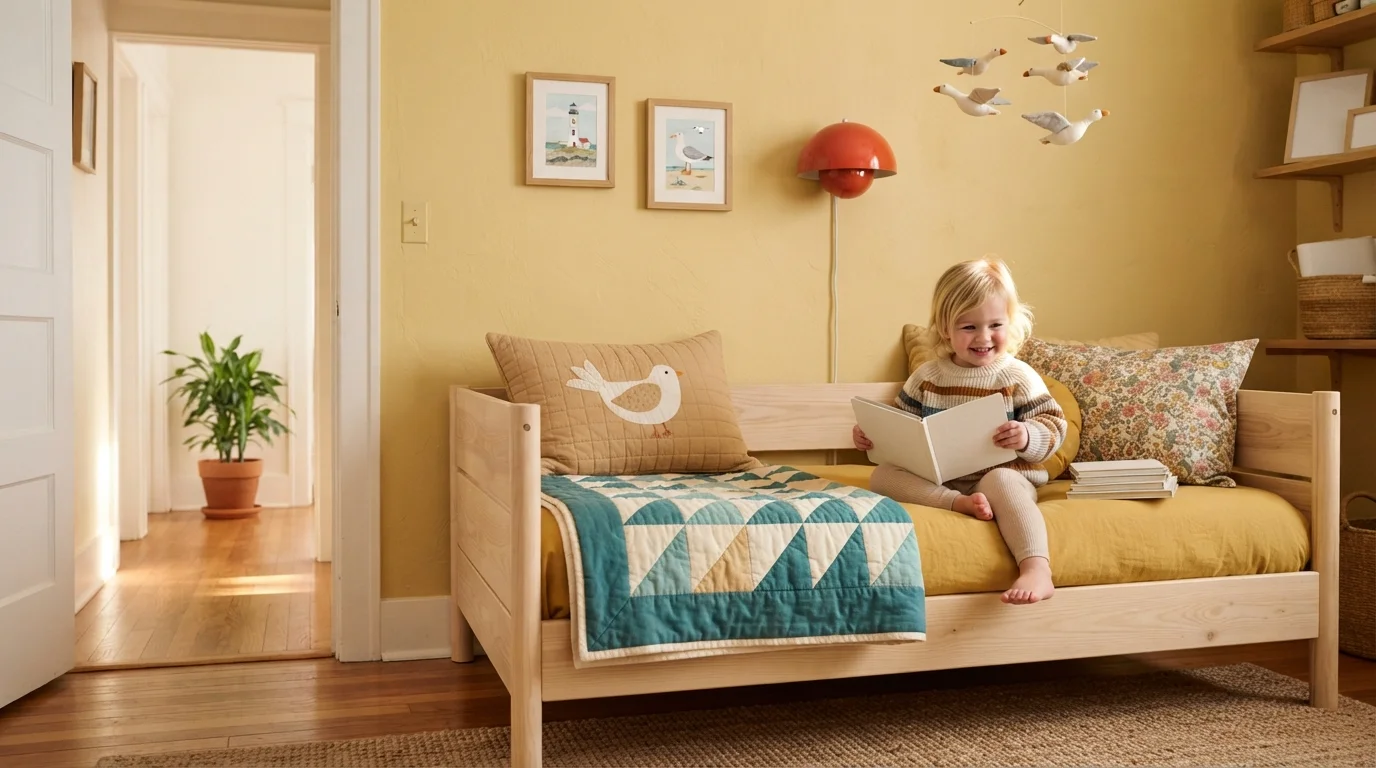
Yellow is the highest-risk wall color in residential interiors — it can read cheerful and sun-warmed in the right room, or oppressive and dated under the wrong light. The trick is matching the warmth: pale butter yellows work in north-facing rooms that need warming up; saturated golds work as accent walls or in rooms with strong natural light; mustard and ochre work as front-door or cabinet colors more than as full-room walls.
Editor's Picks: Yellow for Kids Rooms
4 picks30 Yellow Picks Across the LRV Range
30 of 2,051 · sorted dark → lightLooking for more? All yellow → covers every brand; brand × family pages show full decks.
Yellow Kids Room Colors at Every US Brand
21 brands · up to 10 picks eachUp to 10 picks per brand spread across the yellow LRV range, drawn from each brand's full deck. Tap any swatch with a curated guide for full spec; tap the brand title for the brand's complete yellow deck.
Behr
Benjamin Moore
Glidden
Dunn-Edwards
Valspar
PPG / Glidden
Hirshfield's
Kompozit
Diamond Vogel
Dutch Boy
HGTV Home by Sherwin-Williams
Sherwin-Williams
C2 Paint
Farrow & Ball
Magnolia Home
Clare
Rodda
Backdrop
Portola Paints
Annie Sloan
Rust-Oleum
Other Kids Room Color Families
Yellow Colors in Other Rooms
Yellow Paint Colors for a Kids Room
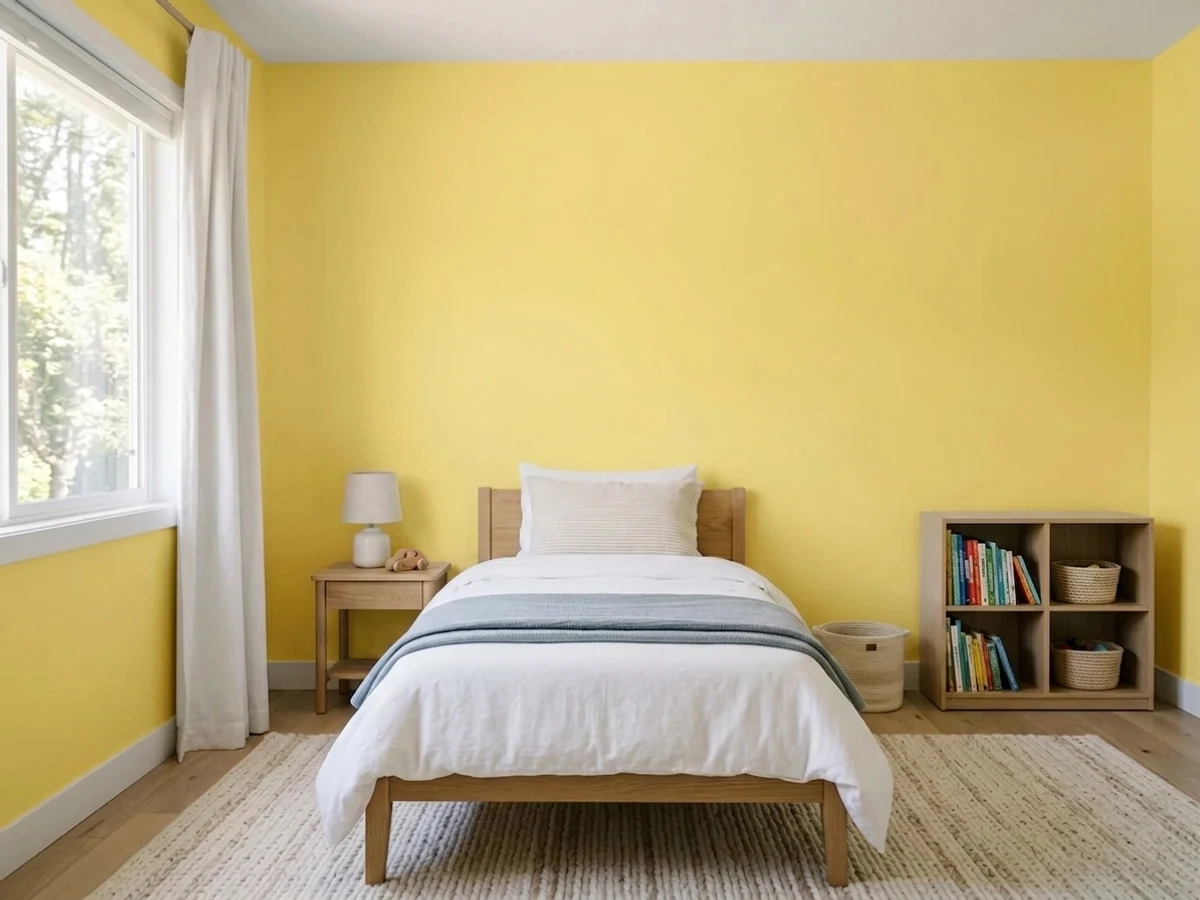
Yellow is one of the few colors that can wake up a kids room without feeling cold or grown-up. It catches morning light, reads as cheerful at any age, and works just as well for a nursery as it does for a school-age bedroom. The trick is choosing a yellow that supports sleep and play instead of one that buzzes — and most rooms land on a softer version than parents first imagine.
This page is about putting yellow specifically into a kids room: how the room's light steers the shade, which finish survives sticky hands and crayon, and what to put on the trim and ceiling so the whole space feels calm instead of loud. Every color shown here is mixed to order at a paint counter, so you can pick the exact yellow you like and cross-match it across brands without being locked into one company's deck.
Why Yellow Works in a Kids Room
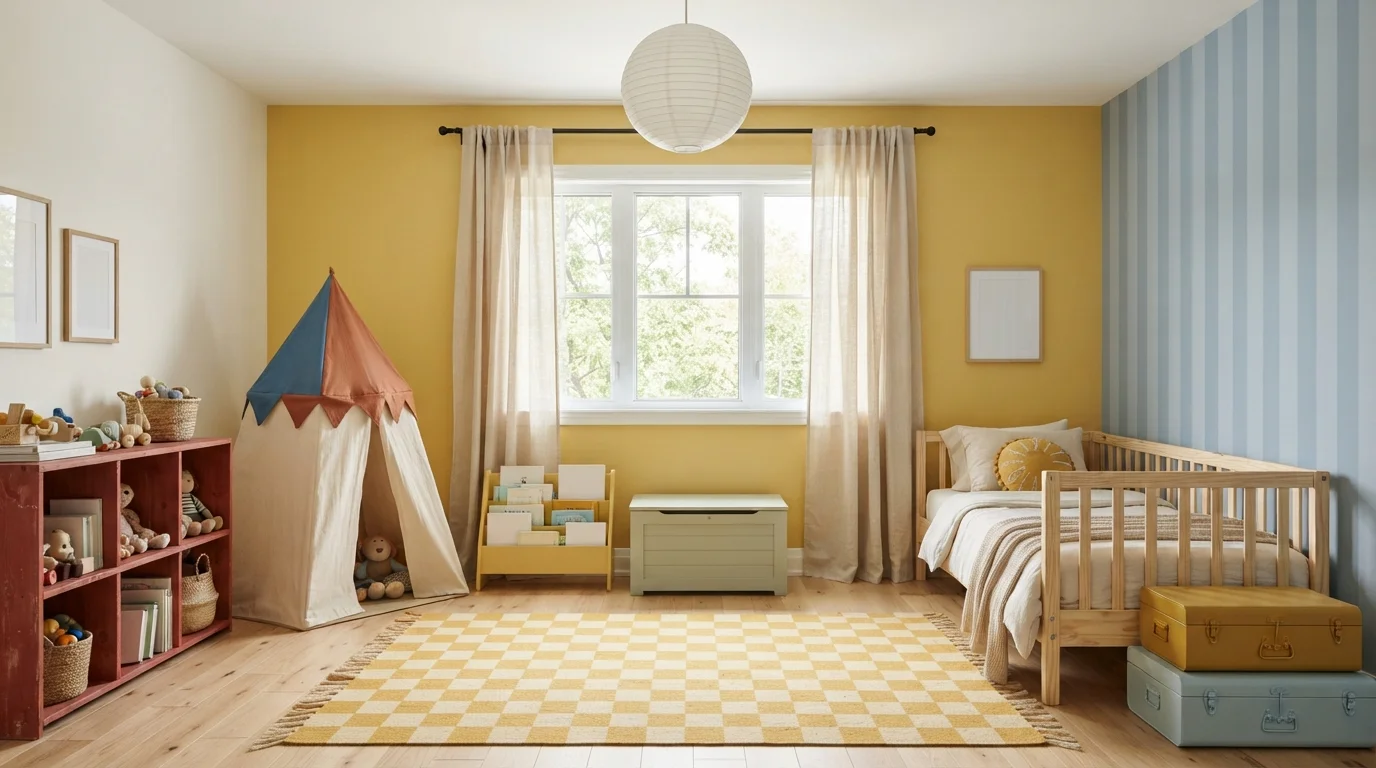
Yellow is the easiest warm color to live with day to day. It feels happy in the morning, friendly during play, and it grows with a child far better than a themed pink or blue that gets outgrown by age six. A buttery or soft golden yellow flatters skin tones, photographs well, and makes a smaller room feel sunnier than it really is.
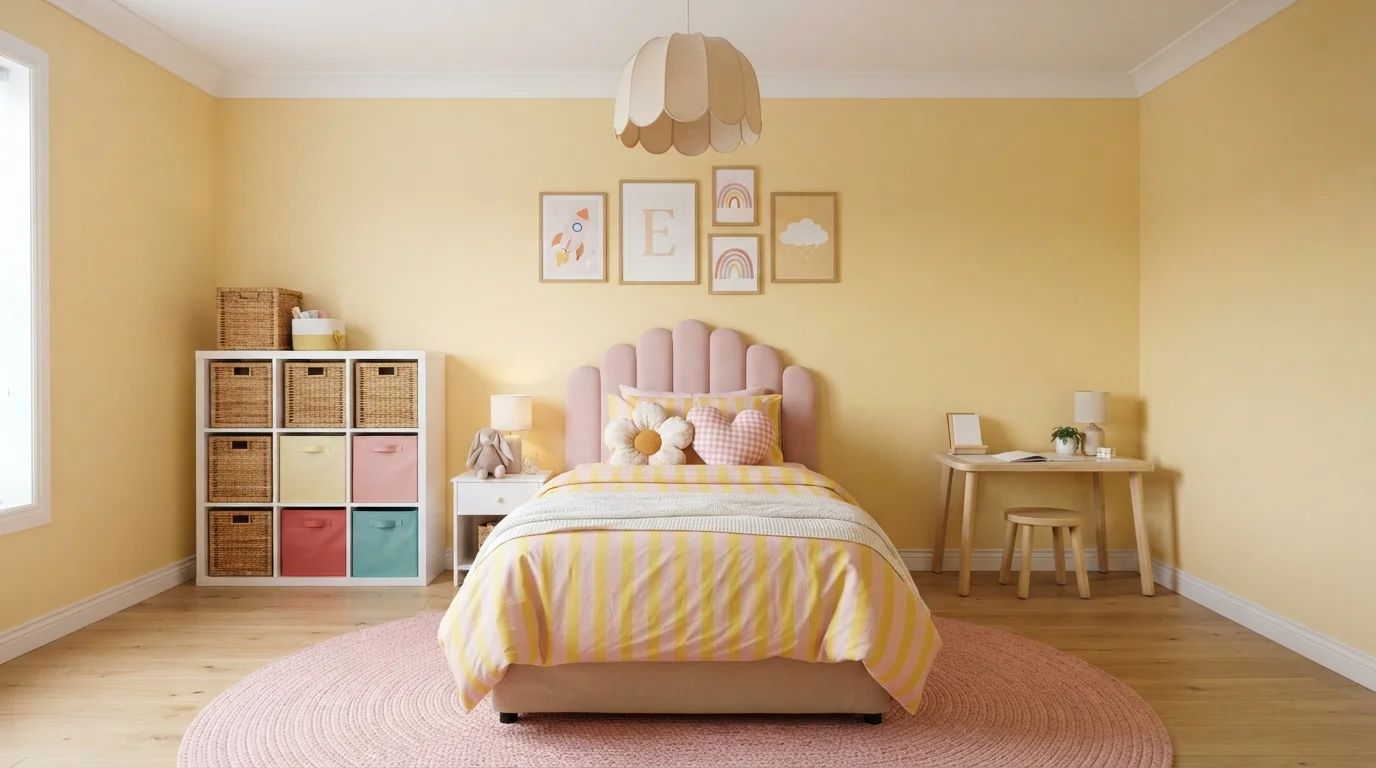
The thing to watch is intensity. A bright, saturated yellow on all four walls can feel restless and make winding down at bedtime harder. The safest move for a kids room is a gentle, low-to-mid yellow that gives you the cheer without the glare, then adding the brighter punch through art, bedding, and toys.
Picking the Right Shade for Your Room's Light
LRV (light reflectance value) tells you how light or dark a color reads, from 0 (black) to 100 (white). For a kids room, a yellow in the LRV 60–78 range usually hits the sweet spot — bright enough to feel sunny, soft enough to stay calm. Below the mid-50s a yellow can start to look mustard or olive on the wall, which rarely reads as playful.
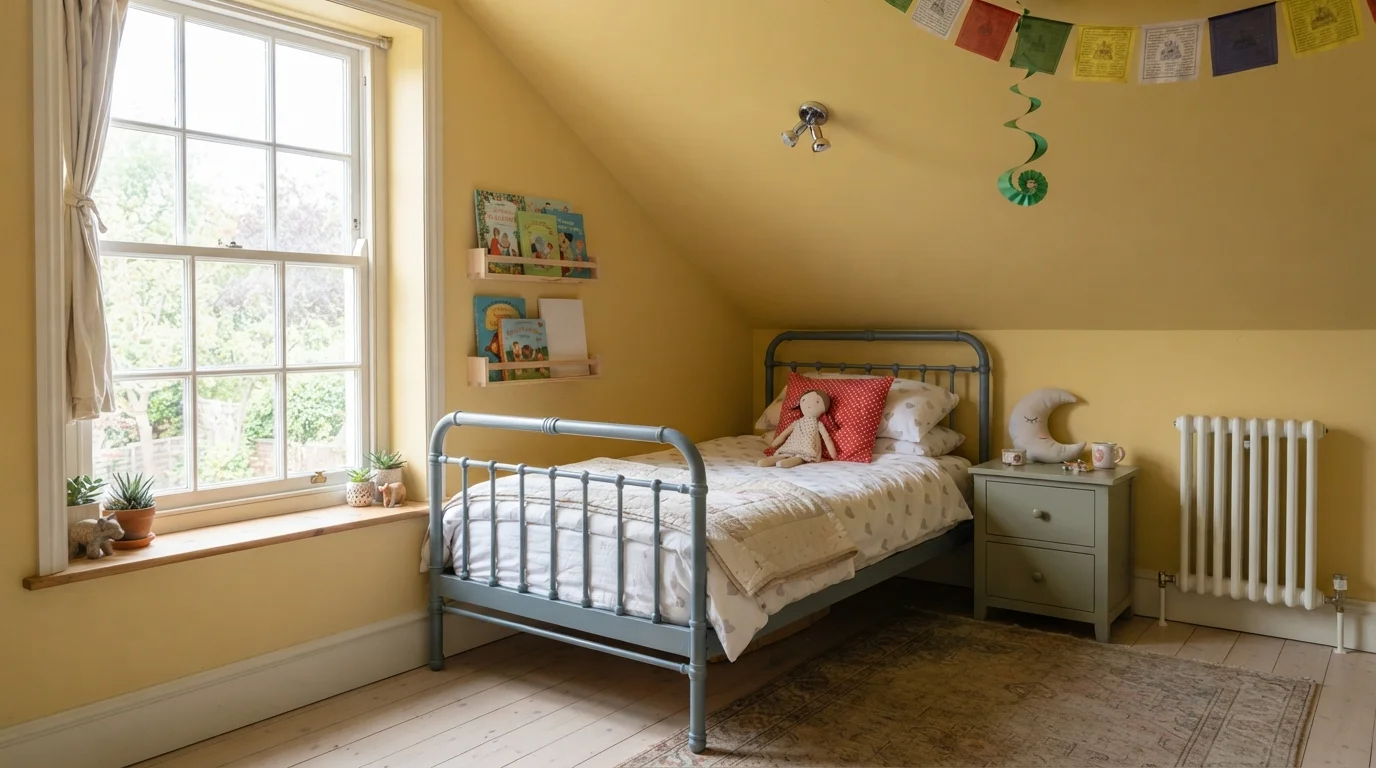
Light steers the choice more than the chip does. A room with strong south or west sun will push any yellow warmer and more intense, so lean toward a paler, slightly muted yellow there. A north-facing or low-light room drains warmth, so a richer, higher-chroma yellow holds its cheer instead of turning grayish-green. Always tape a sample to the wall and look at it in the morning and at night before you commit.
The Best Finish for Walls a Kid Will Touch
Kids rooms take abuse — fingerprints, marker, scuffs, the occasional wet hand. For the walls, an eggshell or satin finish is the right call because it wipes clean far better than flat and hides minor wall texture. Satin is the more washable of the two and a smart pick if your child is young or especially hands-on.
Save high-gloss for the trim, doors, and any built-ins, where its durability and scrubbability matter most and a few of them are touched constantly. Skip dead-flat on a child's walls; it marks easily and won't survive a real cleaning. With a saturated yellow, a lower sheen also helps tame glare, so the wall feels soft rather than reflective in bright light.
Pairing Yellow With Trim, Ceiling, and Furniture
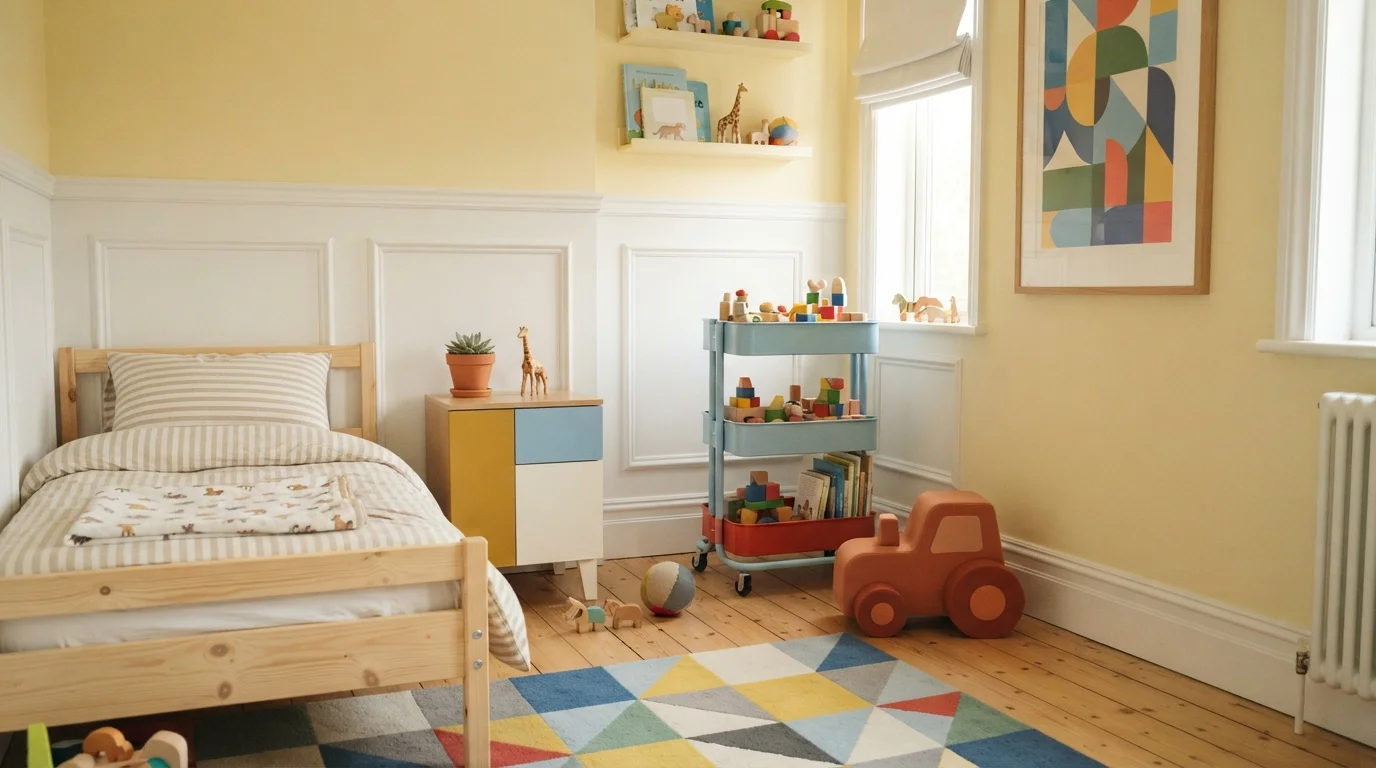
Crisp white trim and a white ceiling are the simplest, most forgiving frame for a yellow kids room — they keep the yellow looking clean and let it stay the star. A soft warm white reads cozier; a cooler white makes the yellow look crisper and a touch more modern. Either works as long as you keep the whole room in one temperature family.
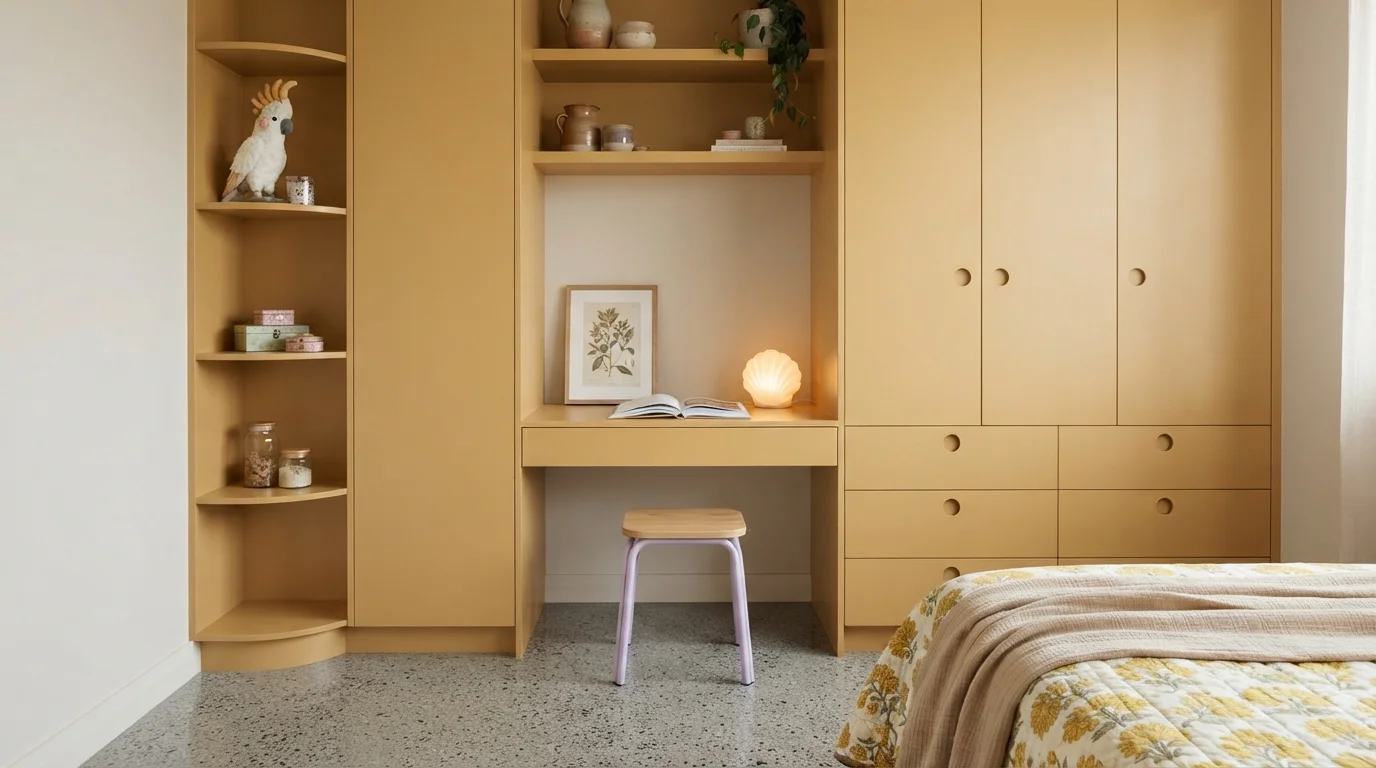
For furniture and built-ins, natural wood, white, or a soft gray-green all sit beautifully next to yellow without competing. If you want a second color, a muted blue or a warm gray makes a balanced, restful pairing that won't feel babyish in a few years. Bring in the bolder accents through textiles and toys you can swap out cheaply as your child's taste changes.
Common Mistakes to Avoid
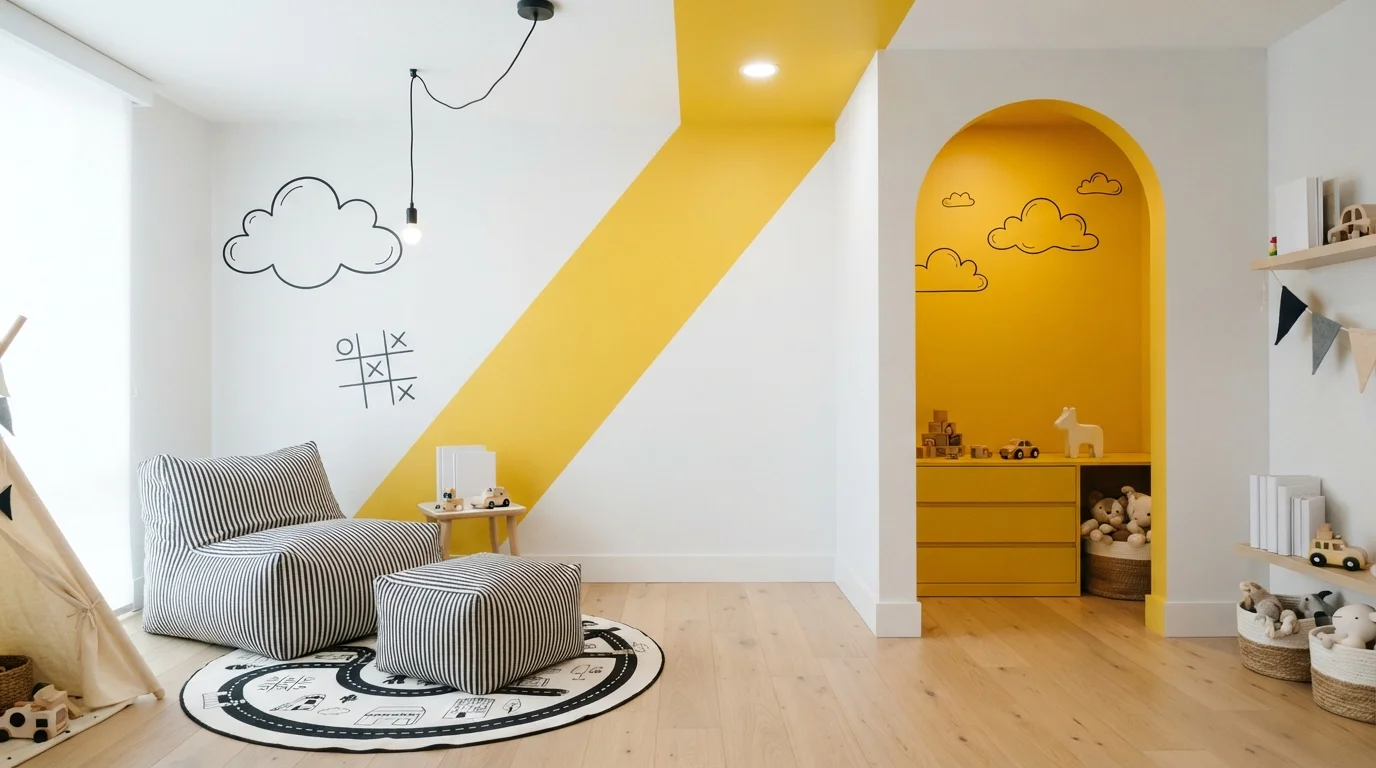
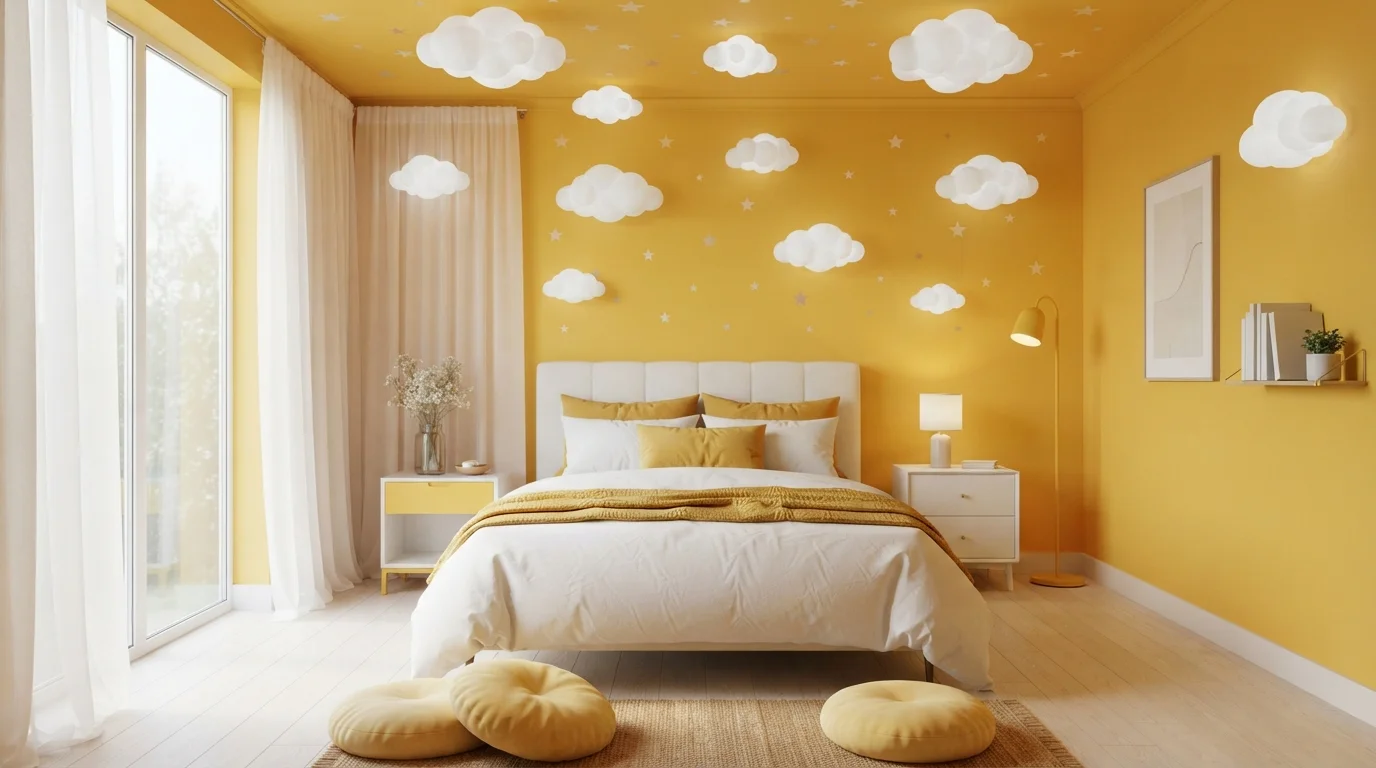
The biggest mistake is going too bright on every wall. A high-chroma yellow that looked fun on a tiny chip can feel overwhelming wall-to-wall and work against sleep. If you love a vivid yellow, put it on one accent wall and keep the rest soft.
The other common misses are skipping samples and ignoring the undertone. Yellow shifts hard with light — a chip that looks sunny in the store can go green or acid on your wall. Test a real sample in your actual room, and remember that any yellow you fall in love with can be mixed to order and cross-matched to a near-identical shade in another brand if you need a different price or store.
Yellow Kids Room Paint — Frequently Asked Questions
Is yellow a good color for a child's bedroom?+
Yes, as long as you pick a softer shade for the walls. A gentle buttery or golden yellow feels cheerful and grows with a child for years. Save the bright, saturated yellows for accents like bedding and art so the room still supports sleep.
Will a bright yellow keep my kid awake at night?+
A very bright, high-chroma yellow on all the walls can feel stimulating and make winding down harder. A soft, mid-range yellow doesn't have that problem. If you want a punchy yellow, limit it to one wall or to accents rather than the whole room.
What sheen should I use in a kids room?+
Use eggshell or satin on the walls so you can wipe off fingerprints and marker. Satin is the more washable of the two and a good pick for younger kids. Put a more durable gloss on the trim and doors, and skip flat, which marks too easily.
What LRV of yellow is best for a kids room?+
An LRV in roughly the 60 to 78 range usually works best — bright enough to feel sunny, soft enough to stay calm. Below the mid-50s, yellow can start to read as mustard or olive. Lean lighter in a sunny room and a bit richer in a low-light room.
What colors go with yellow in a kids room?+
Crisp or soft white trim and ceilings are the easiest match and keep the yellow clean. Natural wood, white, and soft gray-green furniture all pair well. For a second color, a muted blue or warm gray makes a restful combination that won't feel too babyish as your child gets older.
Can I match a yellow I like across different paint brands?+
Yes. Every color shown here is mixed to order at the paint counter, and almost any yellow can be cross-matched to a near-identical shade in another brand. That lets you choose by price, store, or product line without giving up the exact look you want.