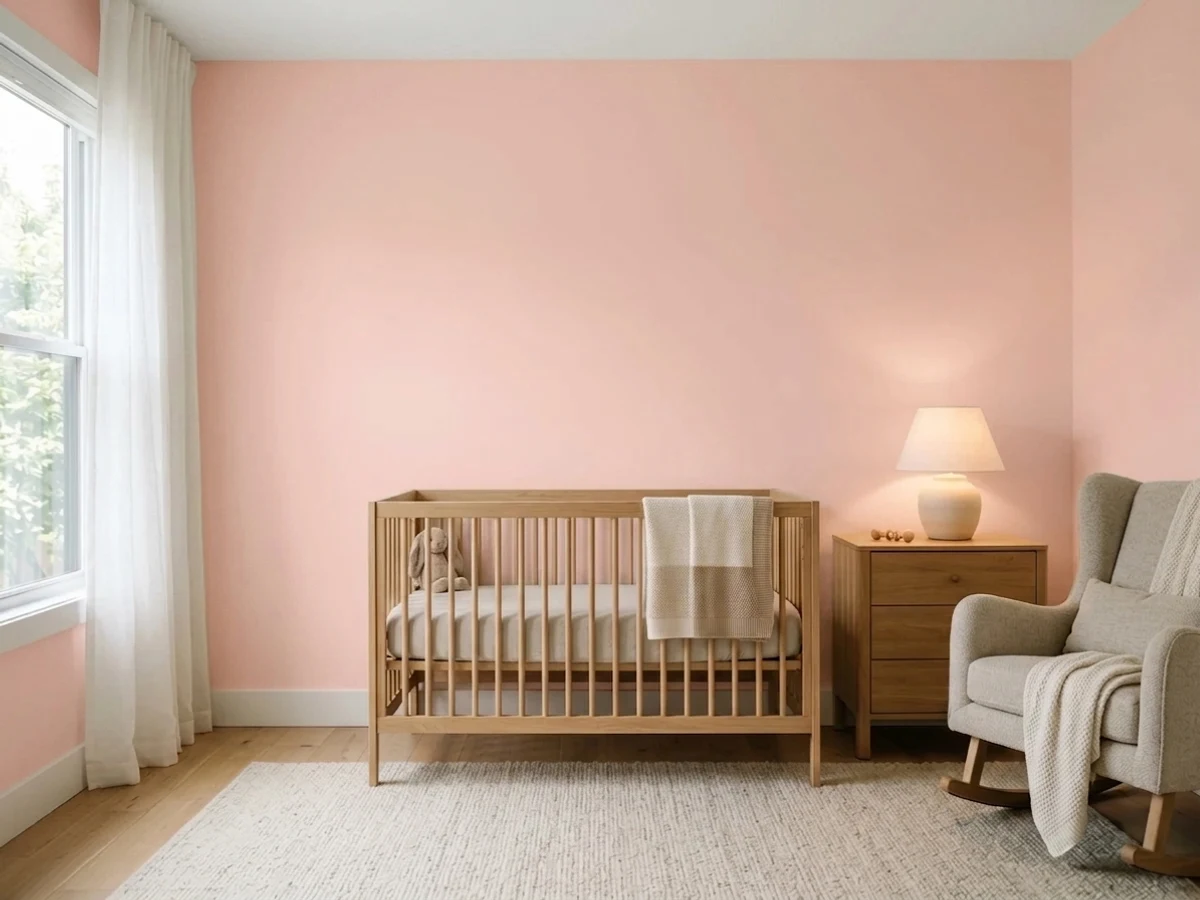
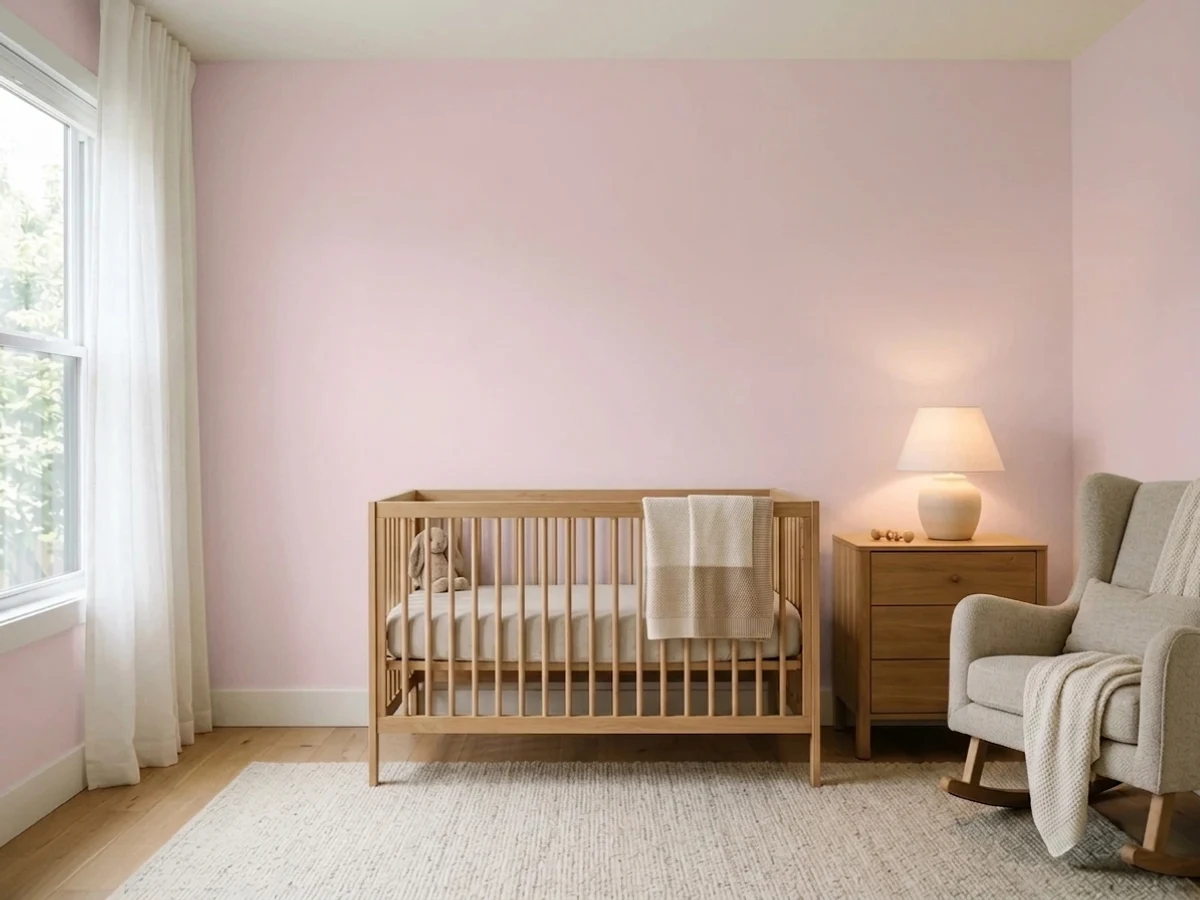
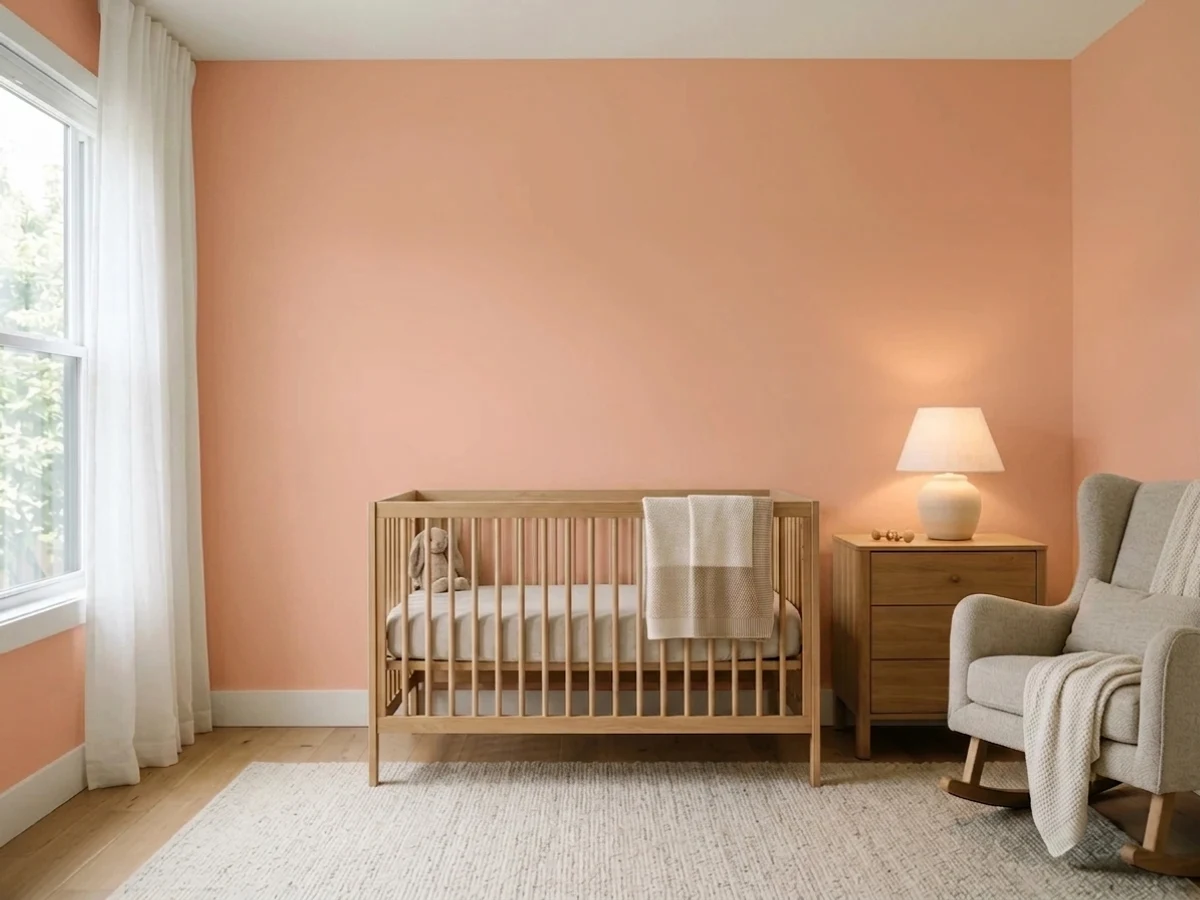
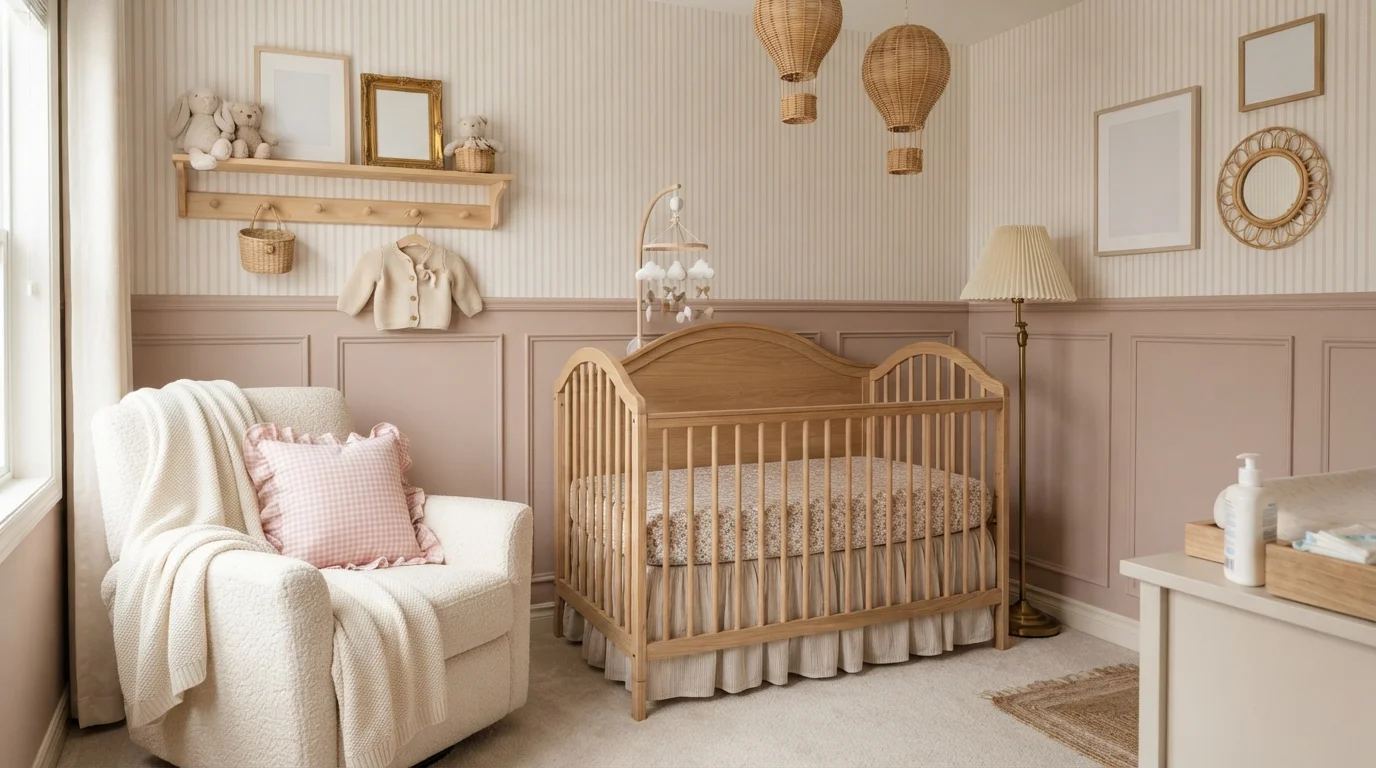
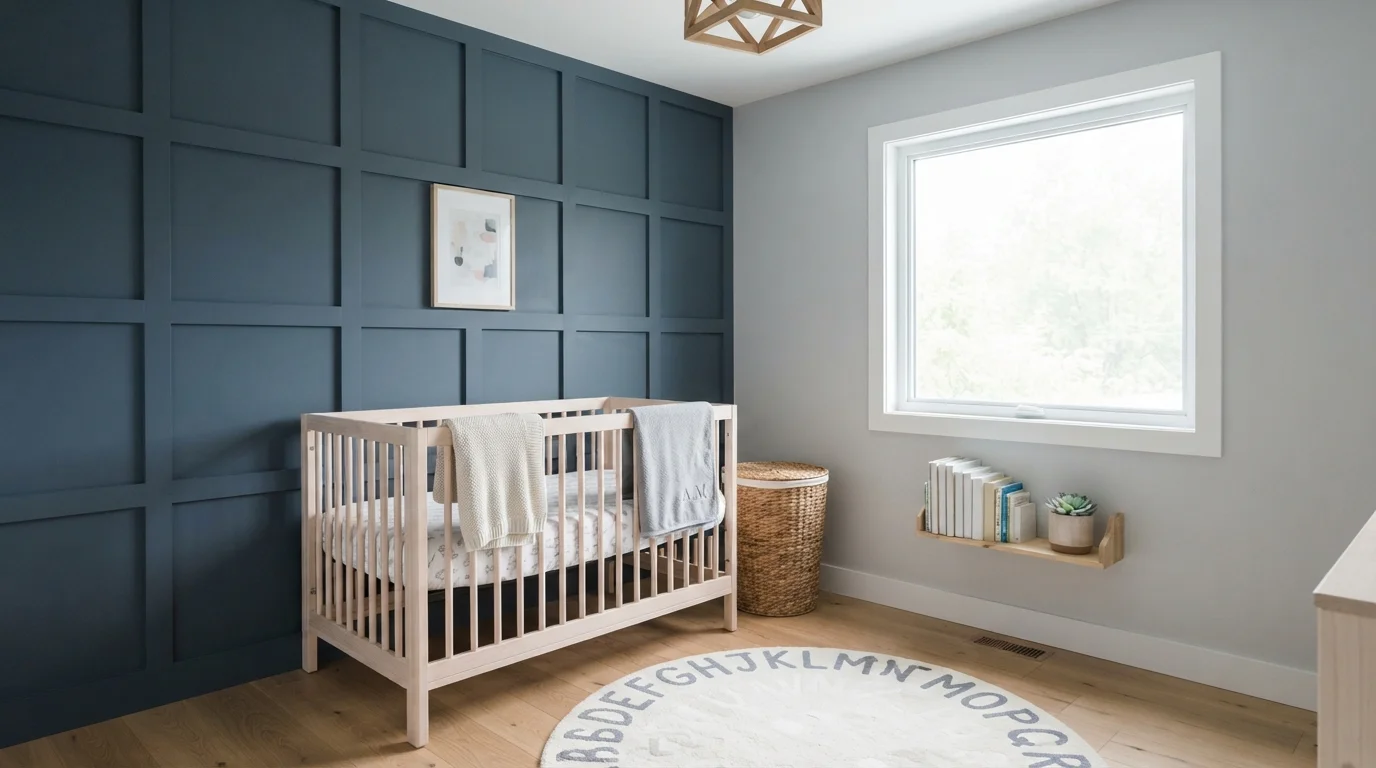
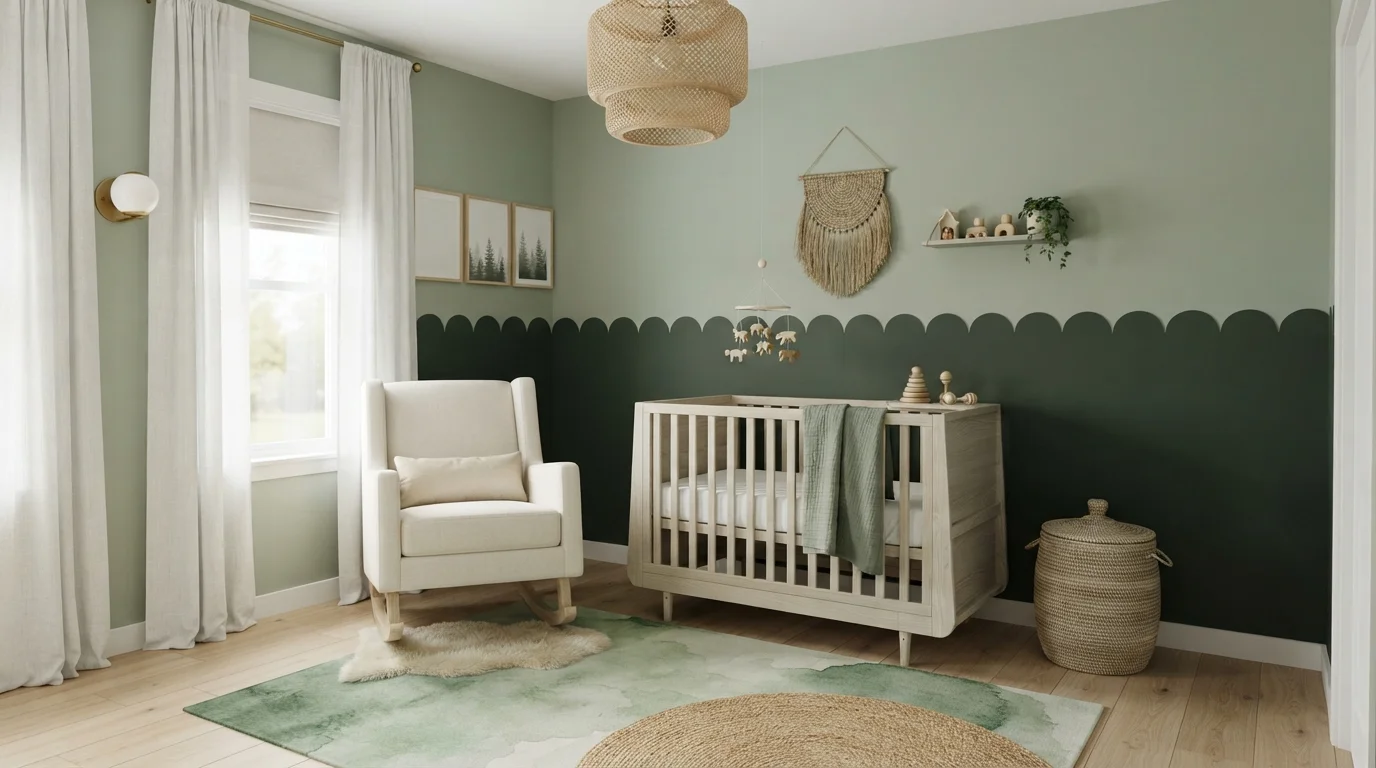
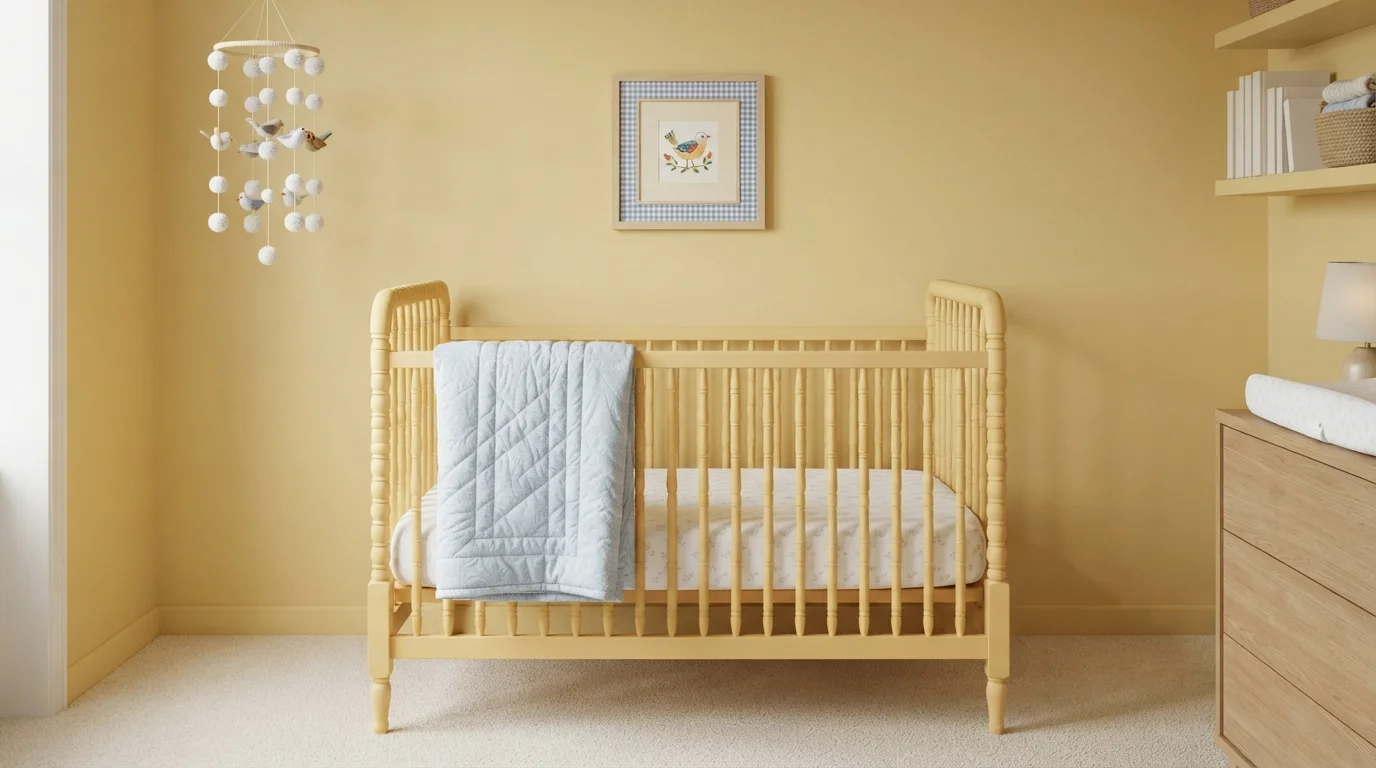
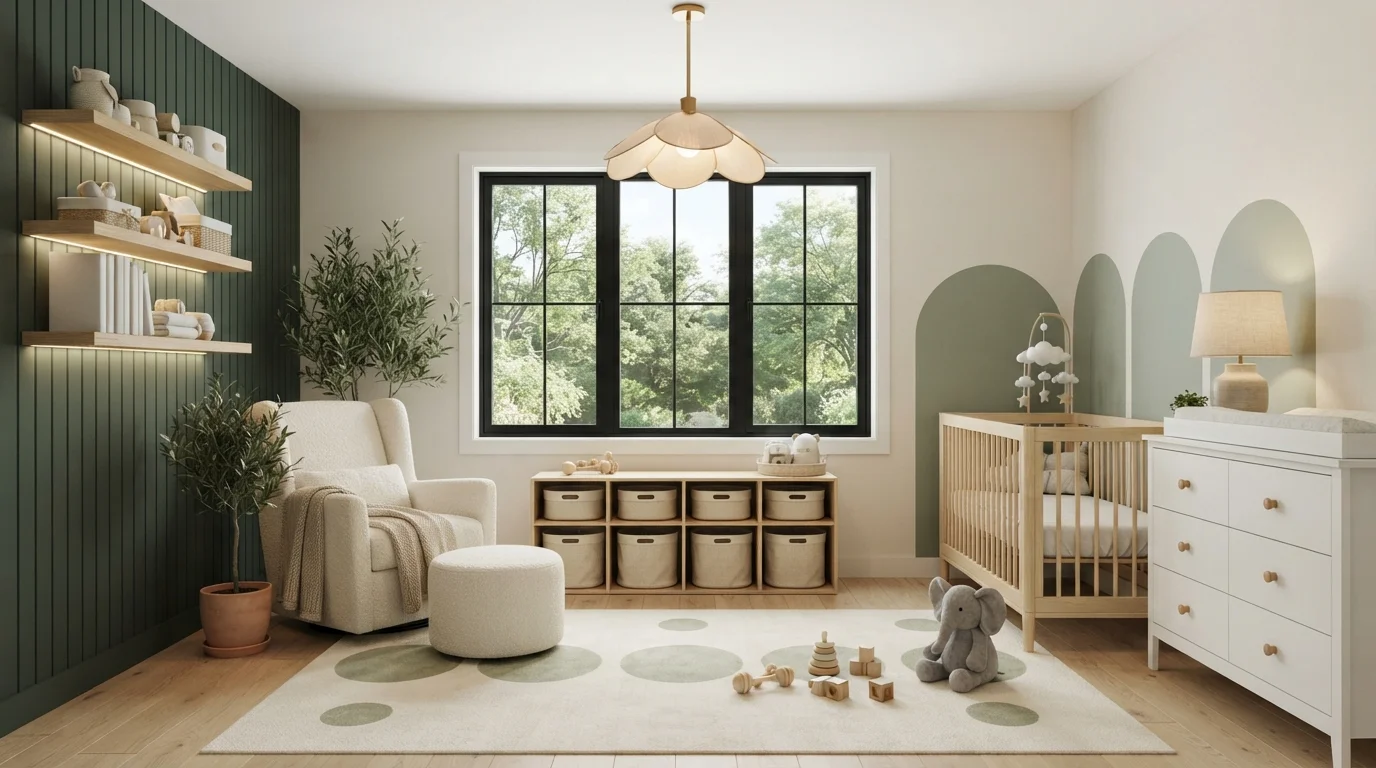
Pink Nursery Paint Colors
2,660 pink colors that work in nurserys, drawn from the full ~30,000-color US paint deck. Below: editor's picks specific to nurserys, then 30 picks spread across the LRV range — narrow further on the brand page when you've shortlisted.
Pink stopped being a kids-room-only color around 2018, when "millennial pink" started showing up on dining-room walls and powder-room cabinetry. The family runs from soft, almost-white blush (think peach-tinted off-whites) through dusty rose (a true muted pink) to coral (warmer, more orange-leaning), and peaks in the saturated true pinks reserved for accent walls.
Editor's Picks: Pink for Nurserys
4 picks30 Pink Picks Across the LRV Range
30 of 2,660 · sorted dark → lightLooking for more? All pink → covers every brand; brand × family pages show full decks.
Pink Nursery Colors at Every US Brand
21 brands · up to 10 picks eachUp to 10 picks per brand spread across the pink LRV range, drawn from each brand's full deck. Tap any swatch with a curated guide for full spec; tap the brand title for the brand's complete pink deck.
Behr
Benjamin Moore
Glidden
Valspar
PPG / Glidden
Dunn-Edwards
Diamond Vogel
Hirshfield's
Sherwin-Williams
Kompozit
Dutch Boy
C2 Paint
Rodda
Farrow & Ball
Portola Paints
Clare
Magnolia Home
Backdrop
Annie Sloan
Rust-Oleum
Other Nursery Color Families
Pink Colors in Other Rooms
Pink Paint Colors for a Nursery
Pink is one of the most loved nursery colors for a reason. It reads as soft, warm, and calming, and a baby spends a huge share of early life staring at the walls and ceiling around them. The trick is that pink swings fast: the same color can look sweet and barely-there in one nursery and loud or candy-bright in another, depending on the room's light and how deep you go.
This page is about getting pink right in a nursery specifically, not pink in general. We'll cover which depth of pink holds up in a small, north-facing room versus a sunny one, the finish that survives wiped-up spills and tiny handprints, and how to pair pink with white trim, the ceiling, and the crib so the room feels grown-up enough to last past the toddler years. Every color you see here is mixed to order at the store, so you can match a shade across brands and pick whichever can is easiest to buy.
Why Pink Works in a Nursery (and What to Watch)
A nursery is a room you sit in quietly at 3 a.m. and a room a baby looks at all day, so a soft, low-saturation pink earns its place here better than almost anywhere else in the house. The right pink feels warm without being stimulating, which is exactly what you want for naps and feedings.
The thing to watch is intensity. A pink that looks gentle on a small chip can turn bubblegum or hot across four walls, and a strong pink in a sleep room can feel busy instead of soothing. Lean softer than your first instinct, and remember the color grows louder as it spreads.
The Best Depth of Pink for This Room and How Light Steers It
For a nursery, a light, slightly muted pink usually wins. Aim for an LRV (light reflectance value, how much light a color bounces back) somewhere in the high 60s to low 80s so the room stays bright, airy, and easy to nap in. Anything much darker starts to feel closed-in for a small sleep space.
Light changes everything here. A north-facing or shaded nursery cools a pink and can pull it gray or muddy, so choose a pink with a touch of warmth to keep it from going flat. A bright south- or west-facing room amplifies pink and can push it toward peachy or candy, so drop the saturation and go a step softer than you think you need. Always tape a sample to the wall and watch it at nap time, bedtime, and in the morning.
The Right Finish for a Nursery
Babies and toddlers are messy on walls in ways no other room sees: spit-up, smeared snacks, crayon, and sticky hands at exactly the height you'll be wiping for years. For the walls, an eggshell or satin finish is the sweet spot because it cleans up with a damp cloth but doesn't throw harsh glare back into the room. Flat hides wall flaws but smears when you scrub it, so save it for the ceiling.
Use a more durable satin or semi-gloss on trim, the door, and any window casing that little hands will grab. If you can, choose a low- or zero-VOC paint and let the room air out and cure before the baby moves in, since a nursery is a closed sleep space.
Pairing Pink With Trim, Ceiling, and the Crib
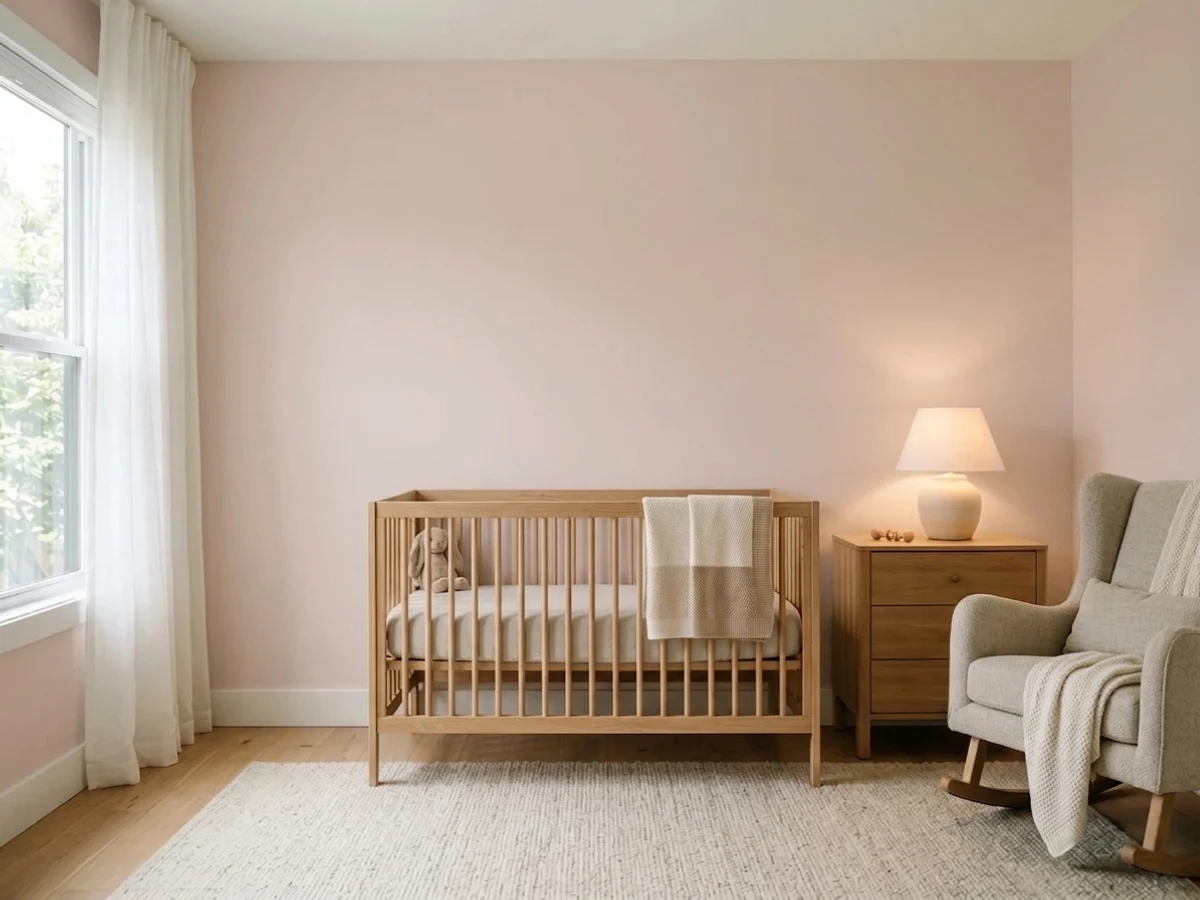
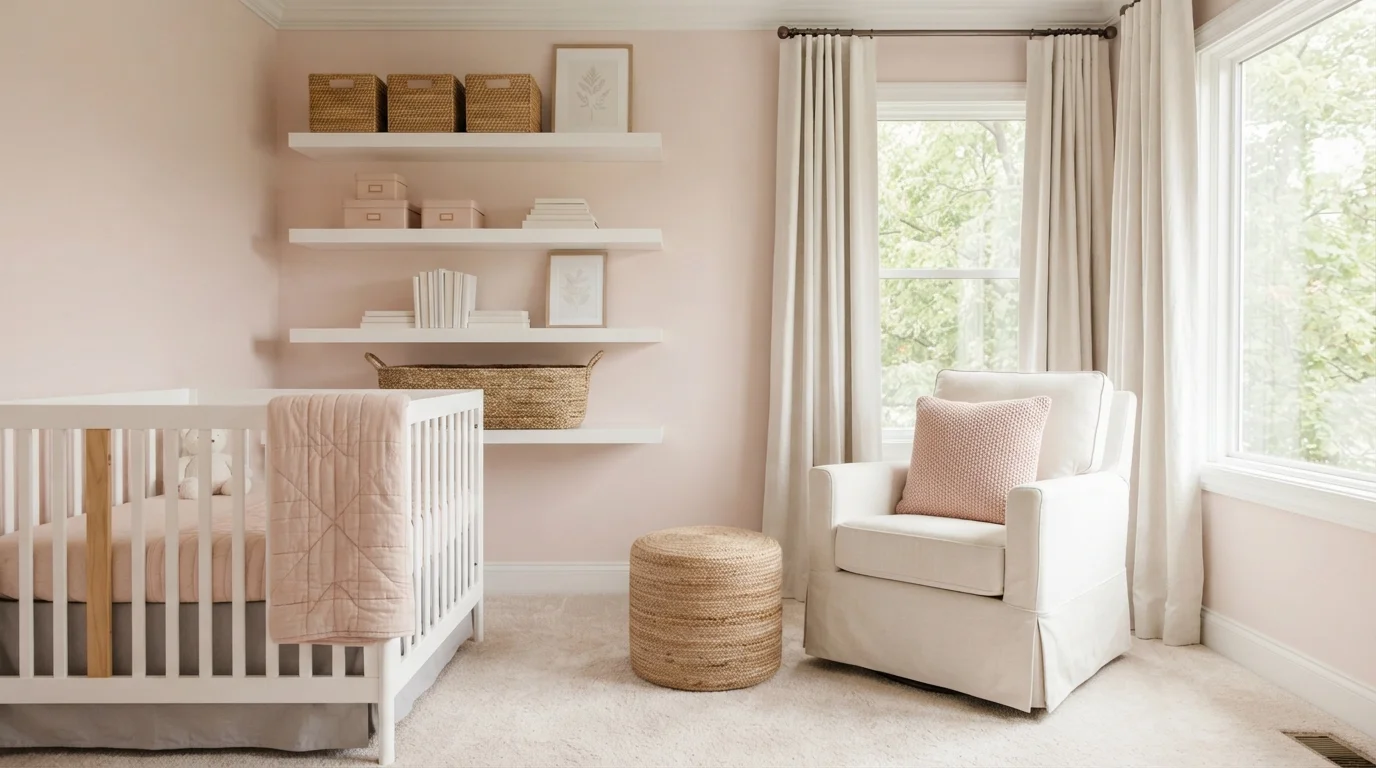
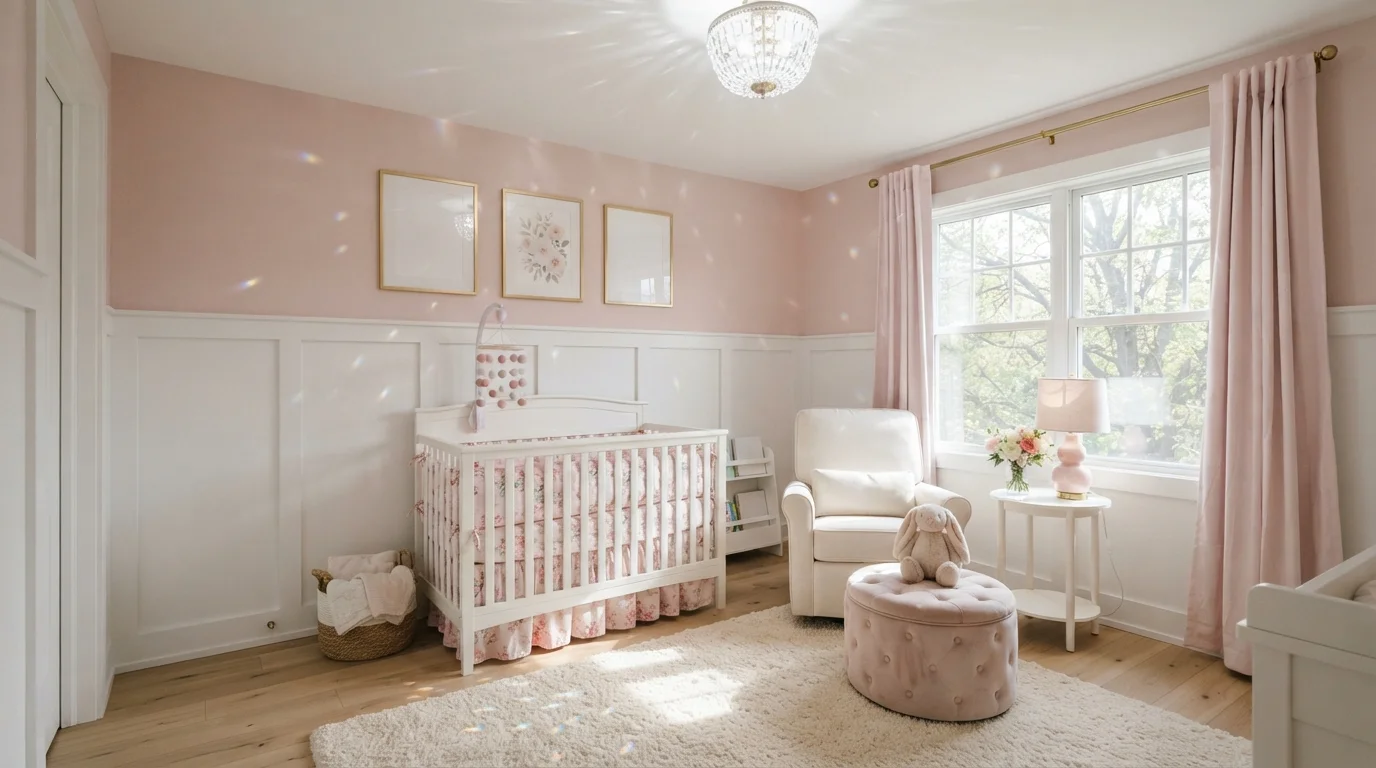
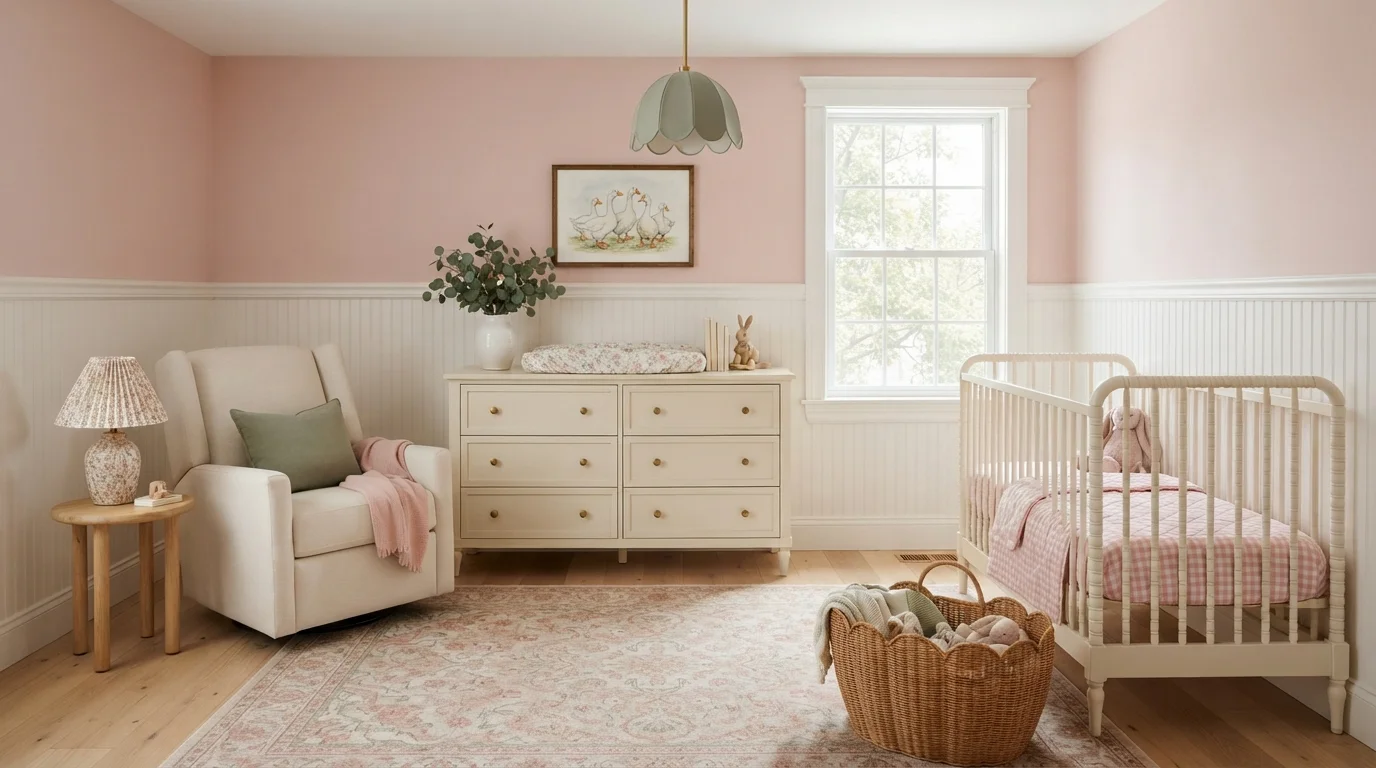
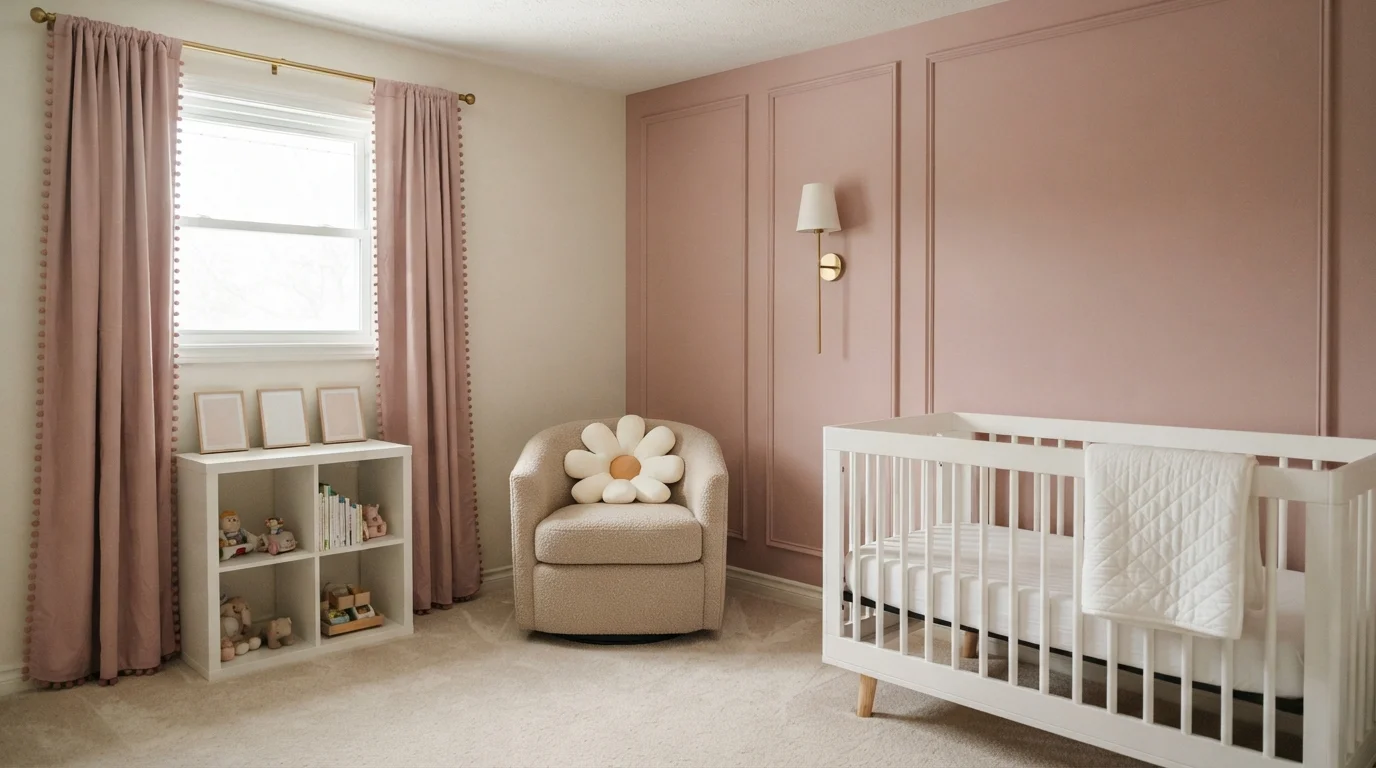
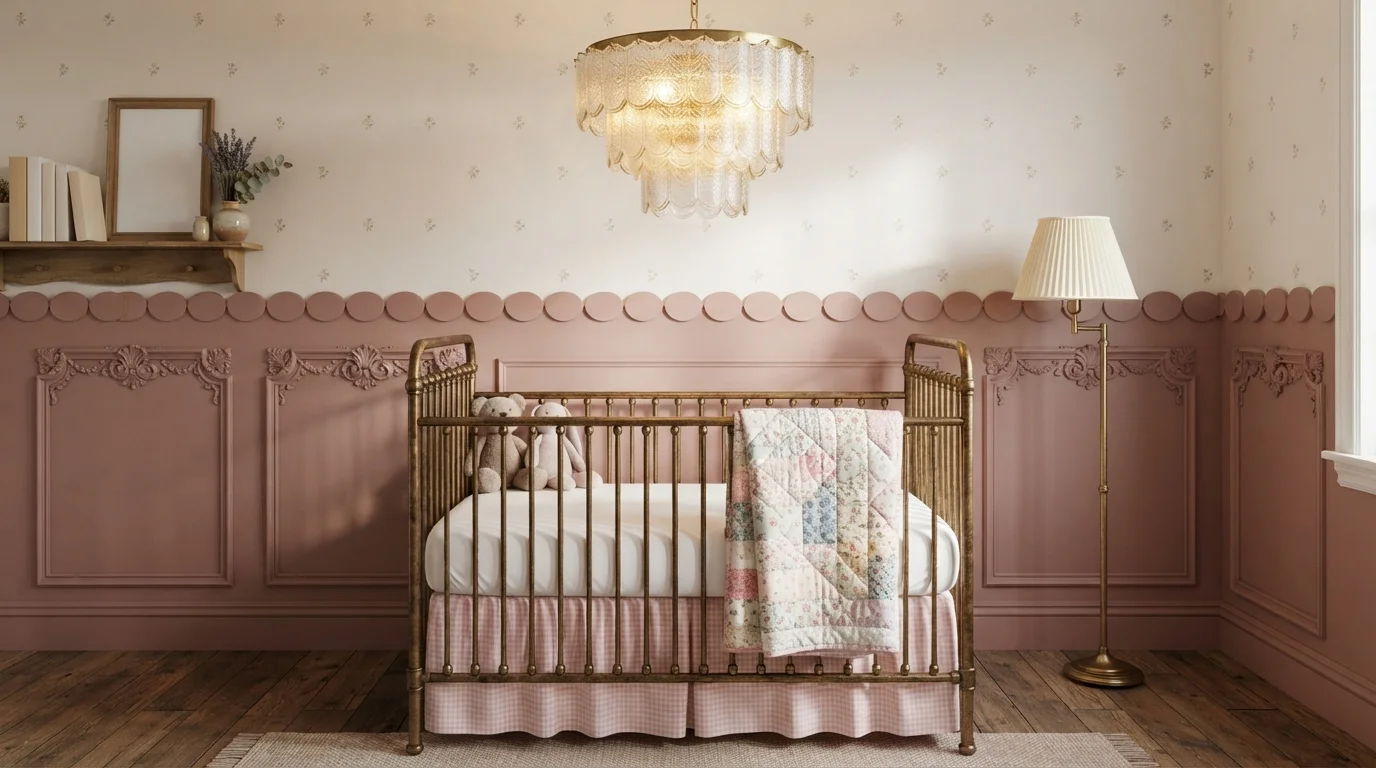
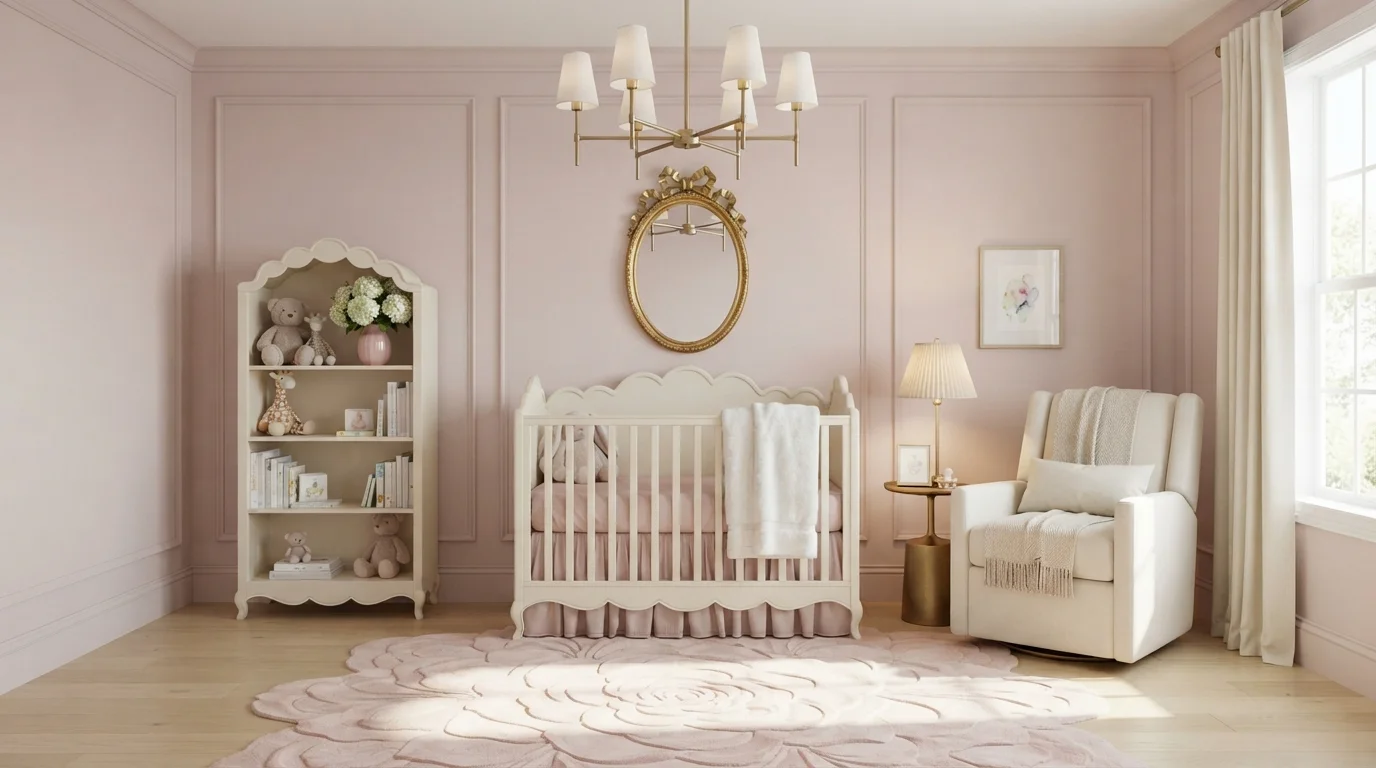
Crisp white trim is the safest, most timeless partner for a nursery pink, and it keeps the room from reading too sweet. A soft white or barely-warm white ceiling keeps things light overhead; only paint the ceiling pink too if the wall color is very pale, or the room can feel like it's closing in. Wood-tone or natural cribs and shelving warm a cool pink and ground a sugary one nicely.
For the fourth element, pick one accent and stop. A muted sage, a warm taupe, a soft gray-blue, or natural rattan and wood all calm pink down and read more grown-up than another bright color. That restraint is what lets the room grow with the child instead of needing a repaint at age four.
The Most Common Pink Nursery Mistakes
The biggest one is going too bright. People pick the pink that looks cute on a tiny chip, then it turns into a candy box across the whole room. The second is judging color under the store's lights or one time of day instead of in the actual nursery, where the light shifts from gray morning to warm lamp-lit night.
Other easy misses: a flat finish on walls you'll be scrubbing constantly, and over-decorating so the pink fights with bright bedding, rugs, and art all at once. Let the wall be the calm backdrop and keep the loud stuff to a couple of small pieces you can swap out as the child grows.
Pink Nursery Paint — Frequently Asked Questions
Is pink too stimulating for a baby's nursery?+
A soft, low-saturation pink is calming, not stimulating, which is why it works so well in a sleep room. The colors to avoid are the bright, candy, or hot pinks, since strong saturation can feel busy and energetic instead of soothing. Stay pale and slightly muted and pink reads as warm and restful.
What LRV should I look for in a nursery pink?+
For most nurseries, aim for an LRV (light reflectance value) in the high 60s to low 80s. That keeps the room bright and airy for naps and easy to see in. Go toward the higher end in a dim or north-facing room and a touch lower if strong sun makes the color glare.
What paint finish is best for nursery walls?+
Eggshell or satin is the best choice for the walls. It wipes clean when you deal with spit-up, snacks, and sticky handprints, but it doesn't bounce harsh glare around the room. Use a tougher satin or semi-gloss on the trim and door, and save flat for the ceiling.
Does pink only work for a girl's nursery?+
No. A warm, muted pink reads more like a soft neutral than a gendered color, especially when you pair it with wood tones, white trim, and one calm accent like sage or taupe. Many parents choose it simply because it's a warm, soothing backdrop for a sleep room, regardless of the baby.
How do I keep a pink nursery from looking babyish so I don't repaint in a few years?+
Choose a softer, more grown-up pink rather than a sugary one, and pair it with crisp white trim and natural wood. Keep the bright, themed pieces in things you can swap, like bedding, art, and a rug, instead of on the walls. A restrained wall color grows with the child for years.
Can I match the exact pink I like across different paint brands?+
Yes. Every color shown here is mixed to order at the paint counter, and a tinting machine can match a shade closely across brands. So you can pick the pink you love, then buy it in whichever brand or store is easiest for you and use the cross-matches to find the equivalent.