Black Trim Paint Colors
268 black colors that work in trims, drawn from the full ~30,000-color US paint deck. Below: editor's picks specific to trims, then 30 picks spread across the LRV range — narrow further on the brand page when you've shortlisted.
True black on a wall almost always looks heavier than you expected. The picks below — the "designer blacks" — sit just shy of pure black, with subtle blue, brown, or green undertones that keep them from reading like a void.
Editor's Picks: Black for Trims
4 picks30 Black Picks Across the LRV Range
30 of 268 · sorted dark → lightLooking for more? All black → covers every brand; brand × family pages show full decks.
Black Trim Colors at Every US Brand
21 brands · up to 10 picks eachUp to 10 picks per brand spread across the black LRV range, drawn from each brand's full deck. Tap any swatch with a curated guide for full spec; tap the brand title for the brand's complete black deck.
Behr
Benjamin Moore
Sherwin-Williams
Valspar
Dunn-Edwards
Hirshfield's
Kompozit
Dutch Boy
Glidden
C2 Paint
Rodda
PPG / Glidden
Magnolia Home
Diamond Vogel
Portola Paints
Farrow & Ball
Backdrop
Annie Sloan
Rust-Oleum
Clare
Other Trim Color Families
Black Colors in Other Rooms
Black Paint Colors for a Trim
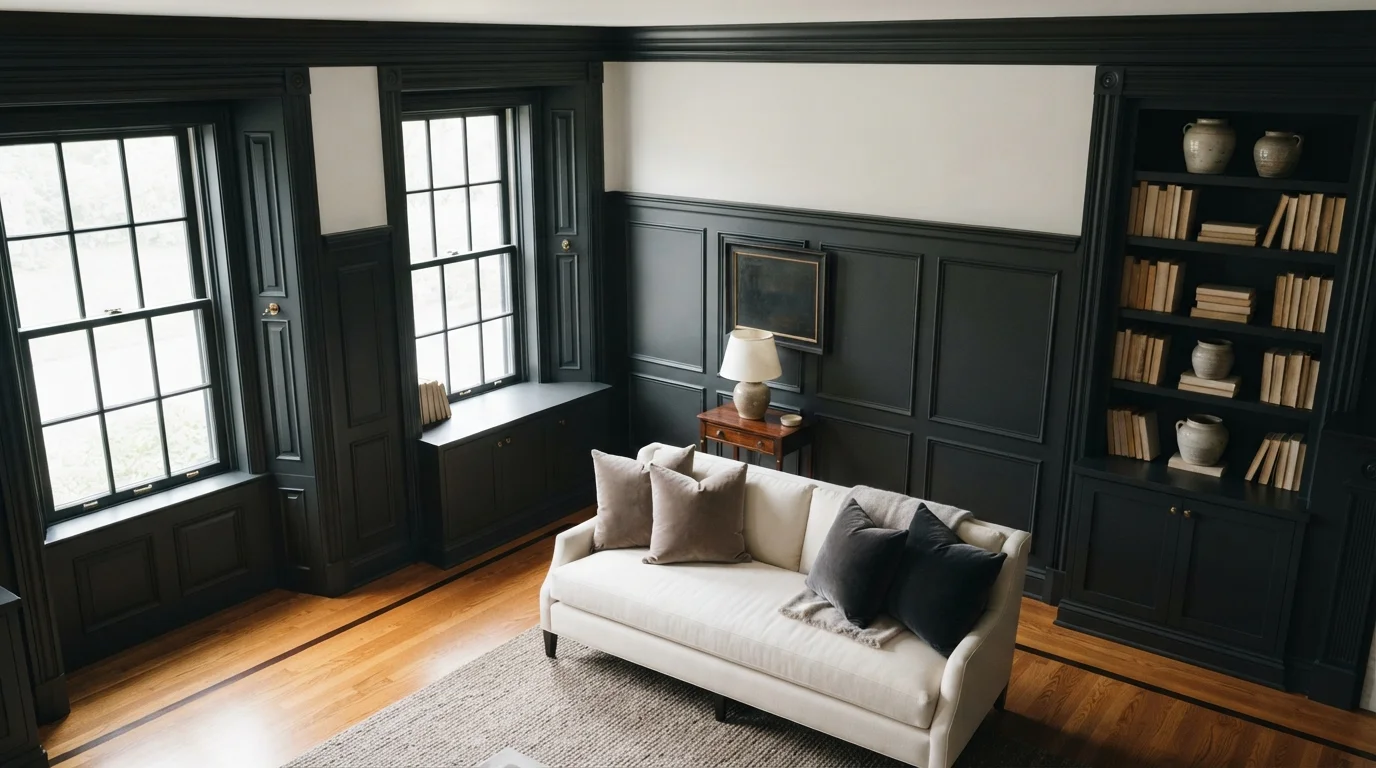
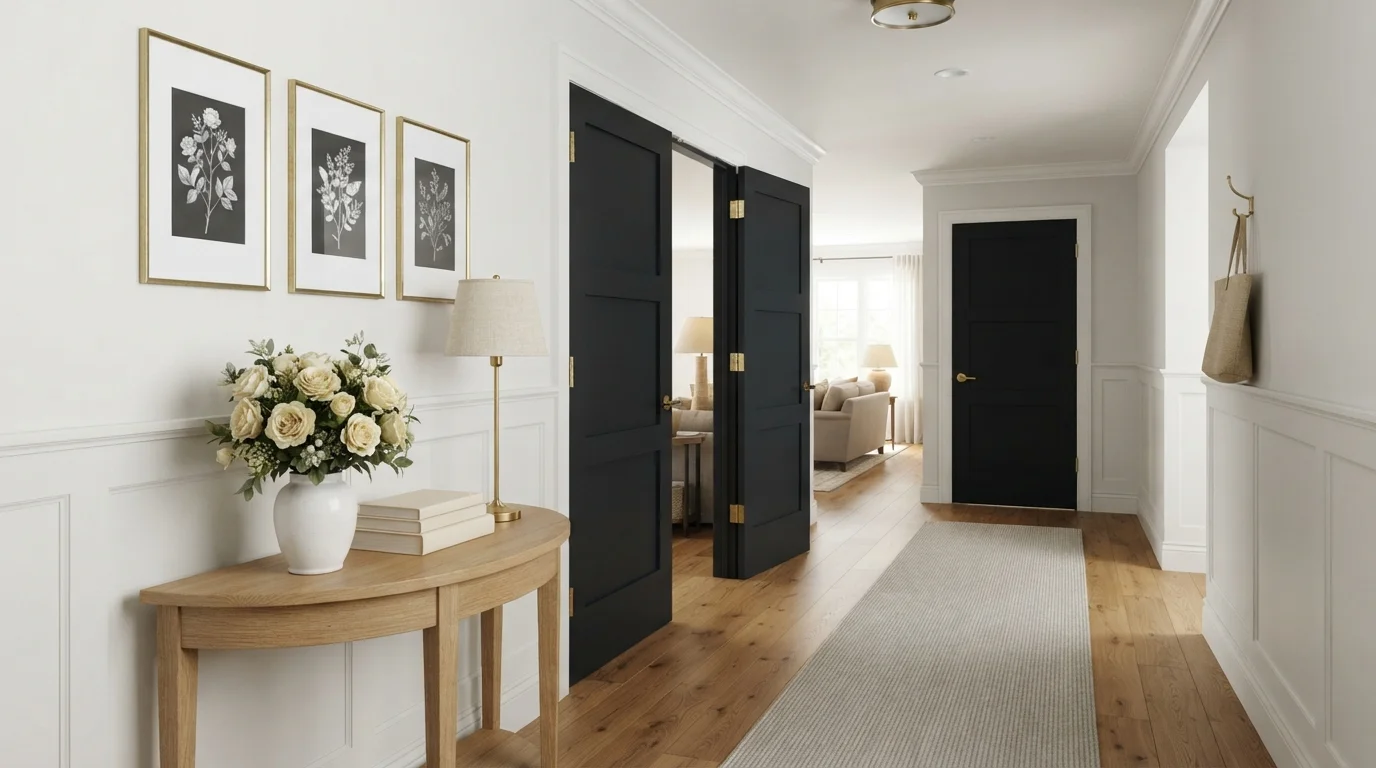
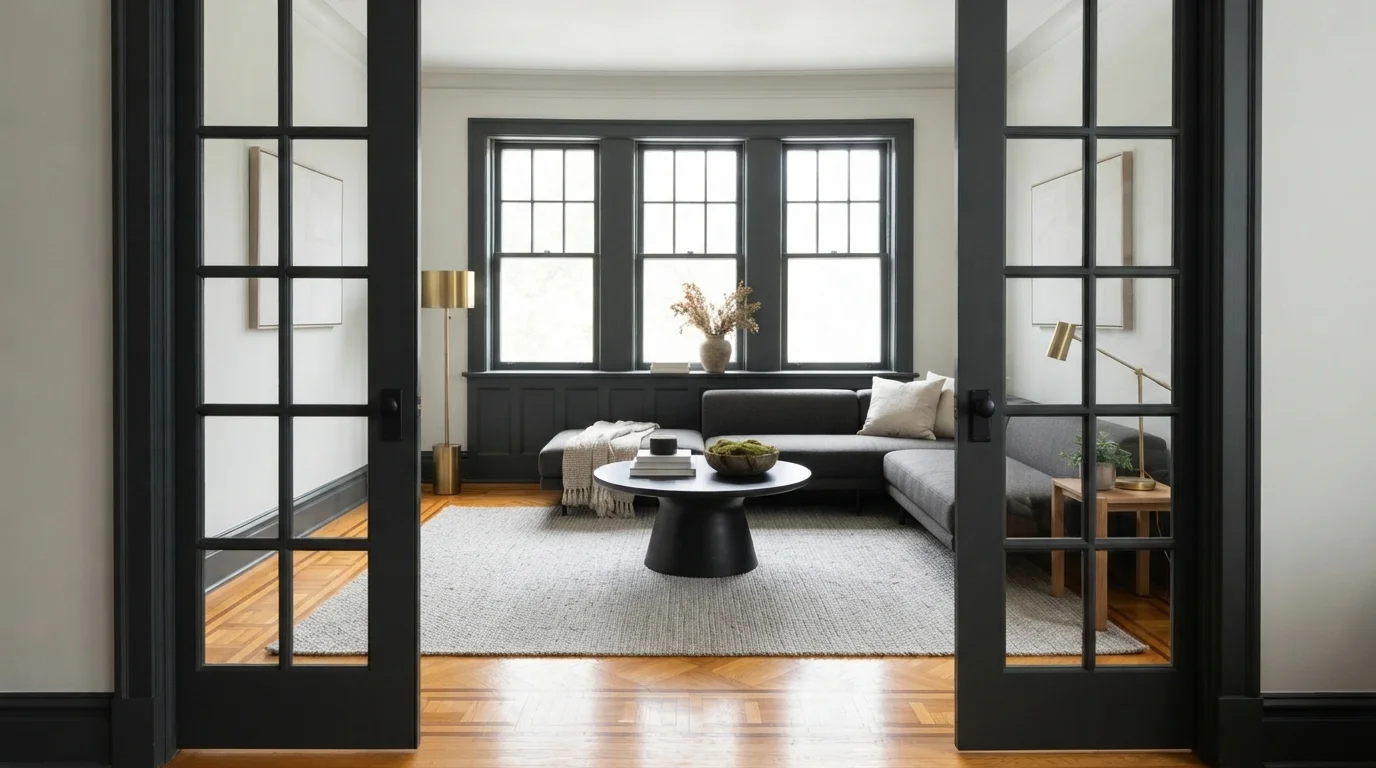
Black trim is one of the boldest moves you can make, and it almost always looks intentional. A black window casing, door frame, or baseboard draws a clean line around a room and makes everything inside it look sharper. Unlike a black wall, black trim is a thin band of color, so it adds drama without making a space feel heavy or dark. That is why it works in rooms that would never survive an all-black treatment.
The catch is that trim takes more abuse than almost any other painted surface. Hands touch door frames, shoes scuff baseboards, and window casings collect moisture and grime. Black shows fingerprints, dust, and water spots more than any other color, so the shade and the finish you pick matter as much as the color itself. Get those two things right and black trim reads as crisp and permanent rather than smudged and tired.
Why Black Works on Trim Specifically
Trim is the frame of a room, and black is the most decisive way to draw that frame. It outlines doors, windows, and the base of every wall, which makes the architecture read clearly even when the walls are a quiet color. On a narrow surface like casing or a baseboard, black brings the punch of a dark accent without the weight you would feel if a whole wall went dark.
Black trim also forgives a lot. Scuffs and shadows that would stand out on white trim mostly disappear against a dark finish, so high-traffic doorways and stair rails hold up visually between cleanings. The thing to watch is contrast: black trim against a pale wall is striking, but against a deep wall color it can vanish, so confirm the rest of the room can carry it before you commit.
Choosing the Right Depth of Black
Most paint that reads as black is not a true neutral black. Many have an undertone of blue, green, brown, or charcoal, and on a thin strip of trim those undertones are easy to miss until the paint is dry on the wall. A softer near-black with a hint of warmth feels grounded next to wood floors and warm walls, while a cooler, harder black looks modern against gray and white.
LRV, or light reflectance value, tells you how dark a color truly is on a scale from 0 to 100. A true deep black sits in the low single digits and looks almost like a void on trim, while a soft black or charcoal might land closer to 10 and keep a little life in the corners. For trim, a soft black around an LRV of 5 to 12 often reads cleaner than a dead-flat true black, because it lets the profile of the molding show instead of swallowing it.
How the Room's Light Steers the Shade
Trim runs around the whole room, so it catches light from every window at once. In a bright, sun-filled room, a true black can flatten and look like a featureless silhouette, so a soft black with visible depth often holds up better. In a darker room or a north-facing space, that same soft black can turn muddy or read brown, so a cleaner, cooler black keeps the edges crisp.
Always test the actual color on a sample board and stand it against the trim in question through a full day. Morning light, midday sun, and lamplight at night each pull a black in a different direction, and the undertone you liked at noon may look off by evening. Looking at the sample on the real molding, not a flat swatch, also shows you how the sheen and the shape of the profile change the read.
The Right Finish for Black Trim
Trim needs a finish that wipes clean and stands up to touching, which is why satin and semi-gloss are the usual picks. On black, sheen does double duty: it adds durability and it gives the color a slight glow that keeps deep black from looking like a flat hole. Semi-gloss is the most washable and the most traditional for trim, while satin is a touch more forgiving of imperfect woodwork.
The trade-off is glare and flaws. A high sheen on black bounces light hard and will telegraph every dent, brush mark, and patch in the molding, so the surface prep has to be clean. In a bright room or on long straight runs of casing, dropping from semi-gloss to satin softens the shine and hides minor flaws while still wiping down easily. Avoid flat or matte on trim entirely, since black flat marks up fast and is hard to clean without burnishing.
Pairing Black Trim With Everything Else
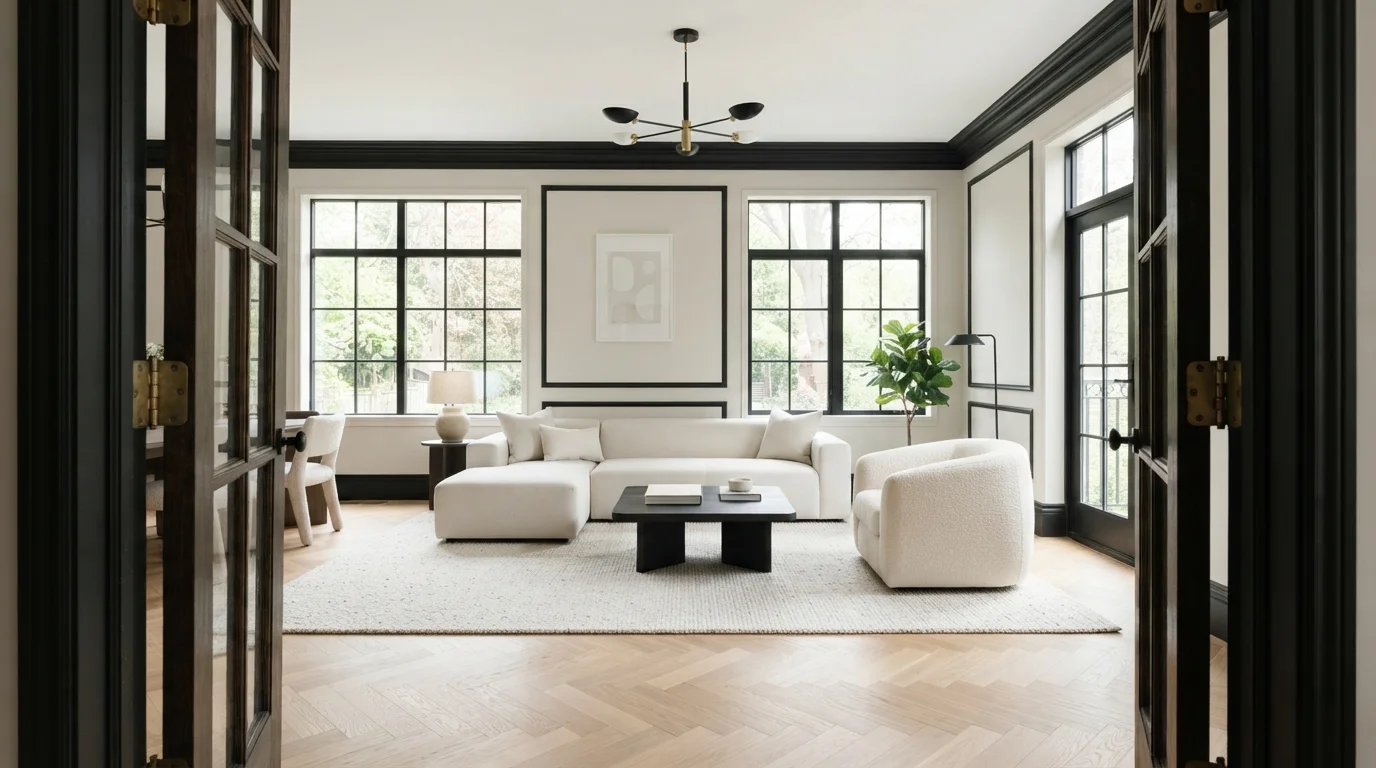
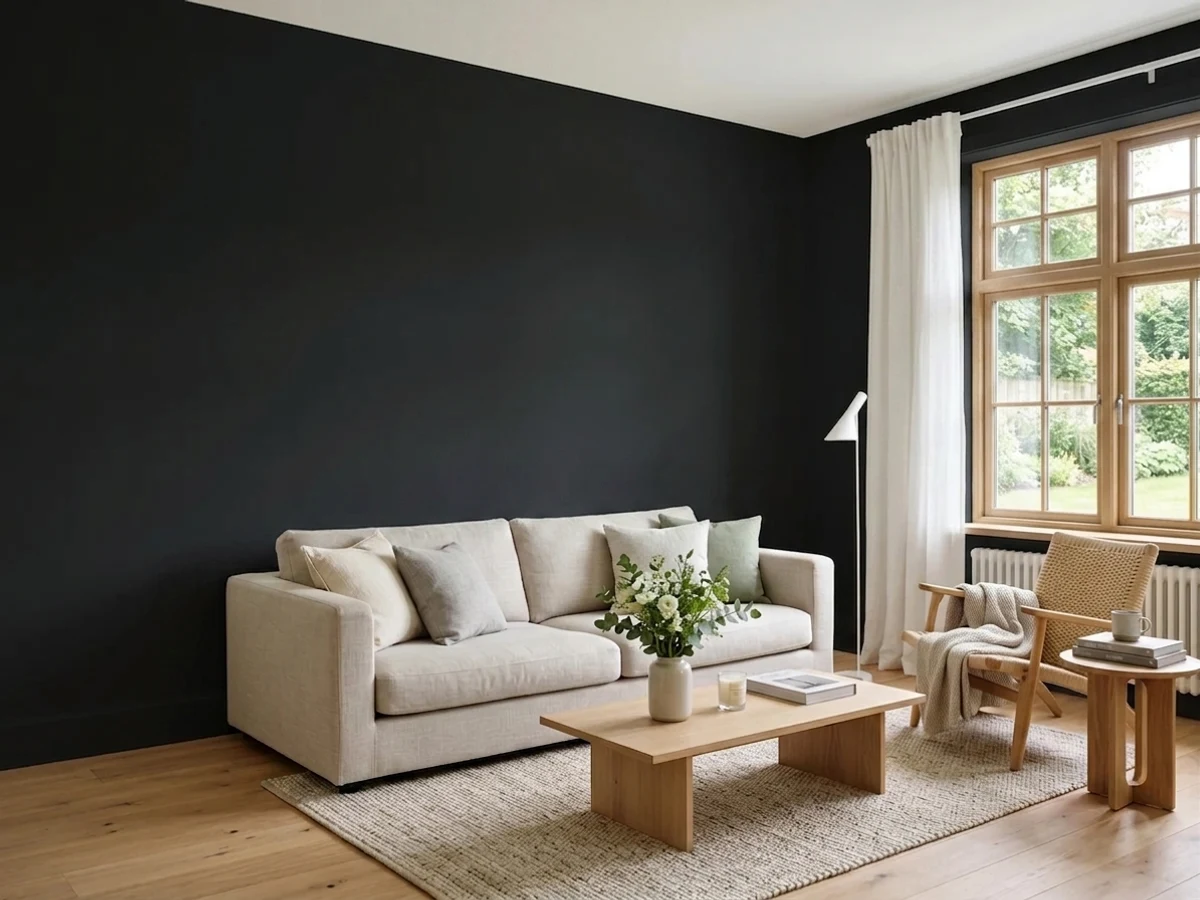
Black trim is happiest with a clear contrast on the walls. Crisp white, warm off-white, soft greige, and pale earthy tones all let the black frame pop, and the line between wall and trim stays sharp and graphic. Against a deep or saturated wall, black trim can disappear, so if you want dark walls, lighten the trim or add another point of contrast instead.
Carry the black into the room with hardware and fixtures so the trim does not feel like an orphan. Matte black door handles, hinges, faucets, and light fixtures echo the trim and make the whole scheme look planned. For cabinetry and ceilings, a white or near-white ceiling keeps the room from closing in, while black-framed windows or interior doors can tie back to the trim. Any of these colors can be mixed to order at a paint counter, so you can match a black trim color across brands or pull the exact same black onto a door or a piece of cabinetry.
Black Trim Paint — Frequently Asked Questions
Does black trim make a room look smaller?+
Not the way black walls do. Because trim is a thin band, black outlines the room rather than filling it, which can actually make the architecture feel more defined. Keep the walls and ceiling light and the room will still feel open with the black acting as a frame.
What sheen should I use on black trim?+
Satin or semi-gloss. Both wipe clean and resist the scuffs that trim collects, and the slight sheen keeps deep black from looking flat. Semi-gloss is the most washable; satin hides minor flaws better and cuts glare on long runs of casing. Skip flat or matte, since black flat marks easily and is hard to clean.
How dark should the black be?+
Many people are happier with a soft black or charcoal than a true dead black. A soft black around an LRV of 5 to 12 lets the shape of the molding show and keeps corners from looking like a void, while a true black in the low single digits reads as the most dramatic and modern. Test both on the real trim before deciding.
Will black trim show dust and fingerprints?+
More than a light color, yes. Black makes dust, water spots, and fingerprints visible, especially in a satin or gloss finish near a high-touch door. The upside is that scuffs and shadows hide well on black, and a washable satin or semi-gloss finish wipes clean quickly, so upkeep is manageable.
What wall colors go with black trim?+
Black trim wants contrast. White, warm off-white, soft greige, and pale earthy tones all let the trim read as a crisp frame. Avoid deep or saturated walls unless you want the trim to blend in, and echo the black in hardware and fixtures so it looks intentional.
Can I match a black trim color across different paint brands?+
Yes. Every black shown here is mixed to order at a paint counter from a tint formula, not pulled from a fixed stock. That means a black you like from one brand can usually be cross-matched to a close equivalent in another, so you can pick the color you want and have it mixed wherever you shop.