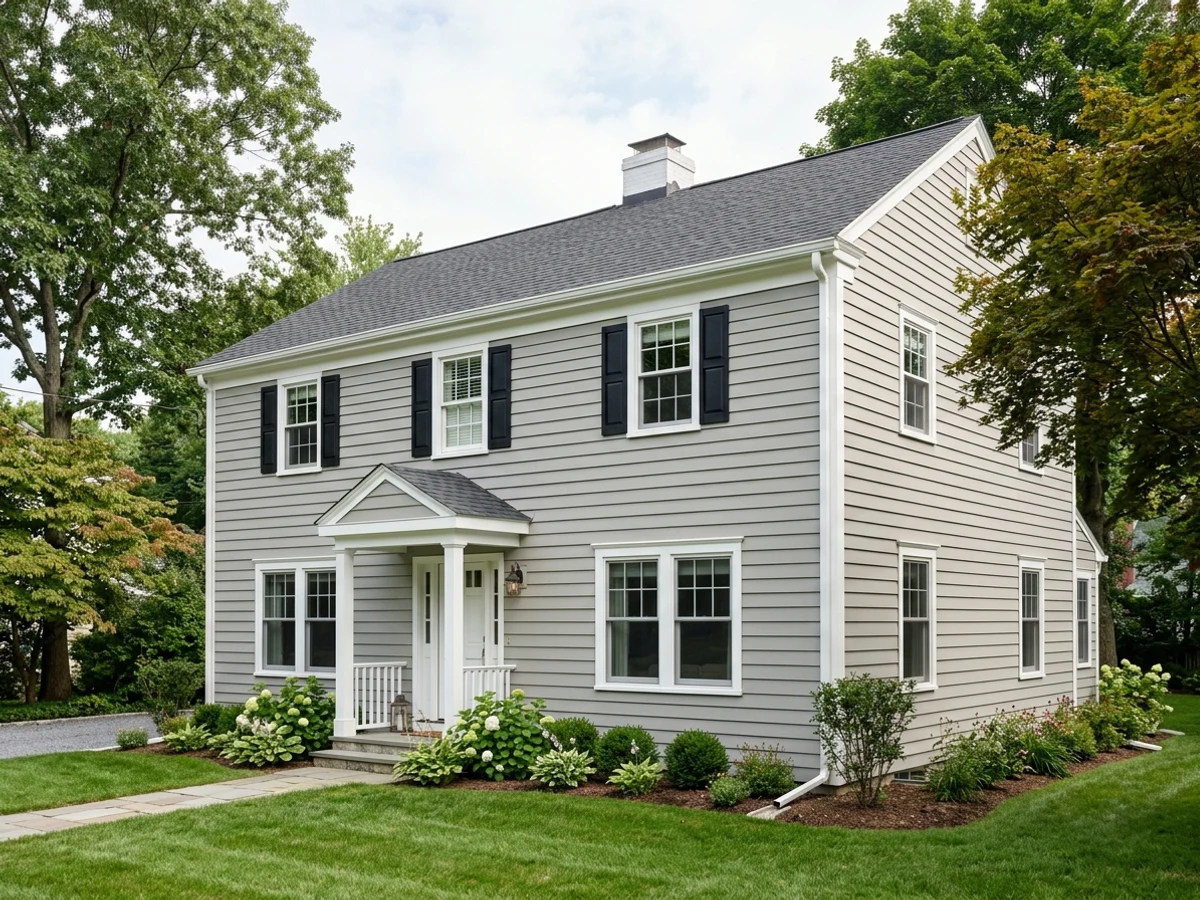
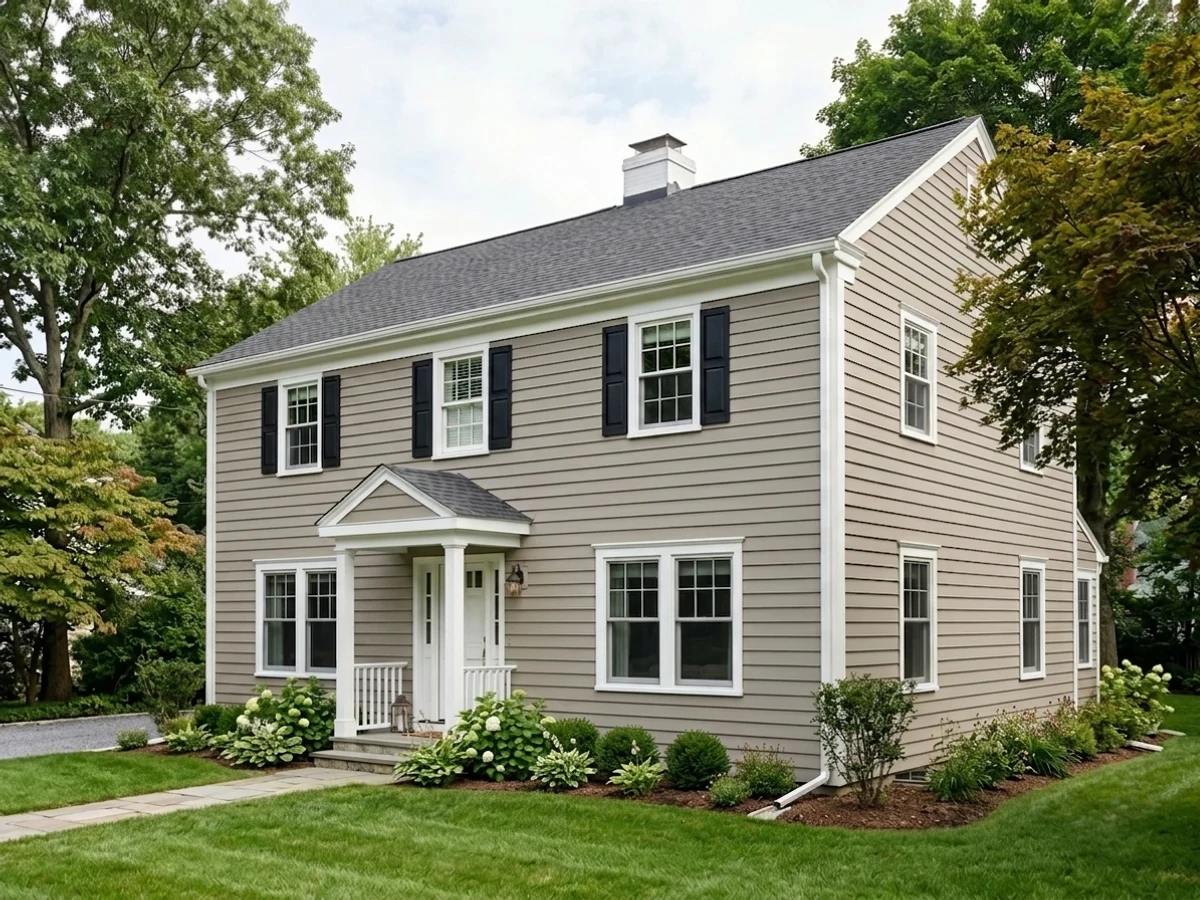
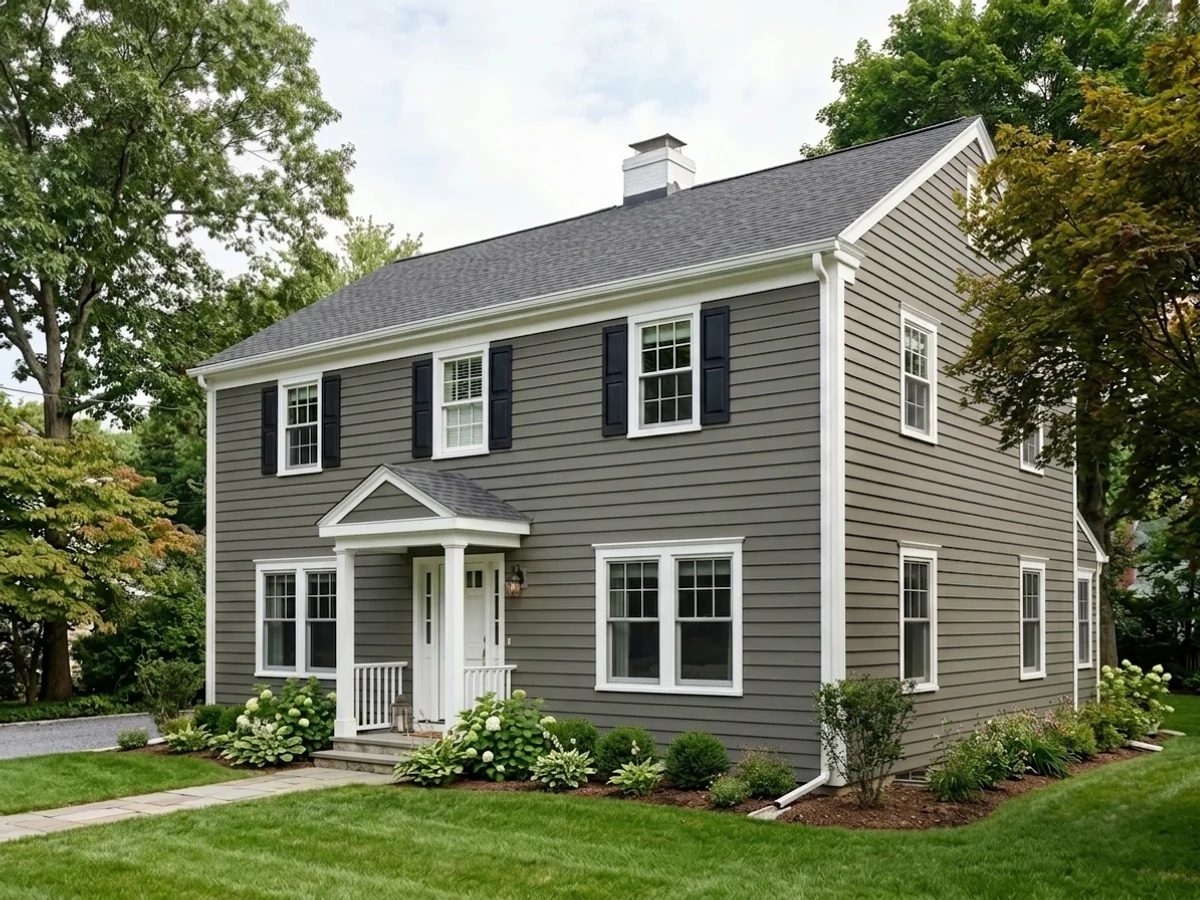
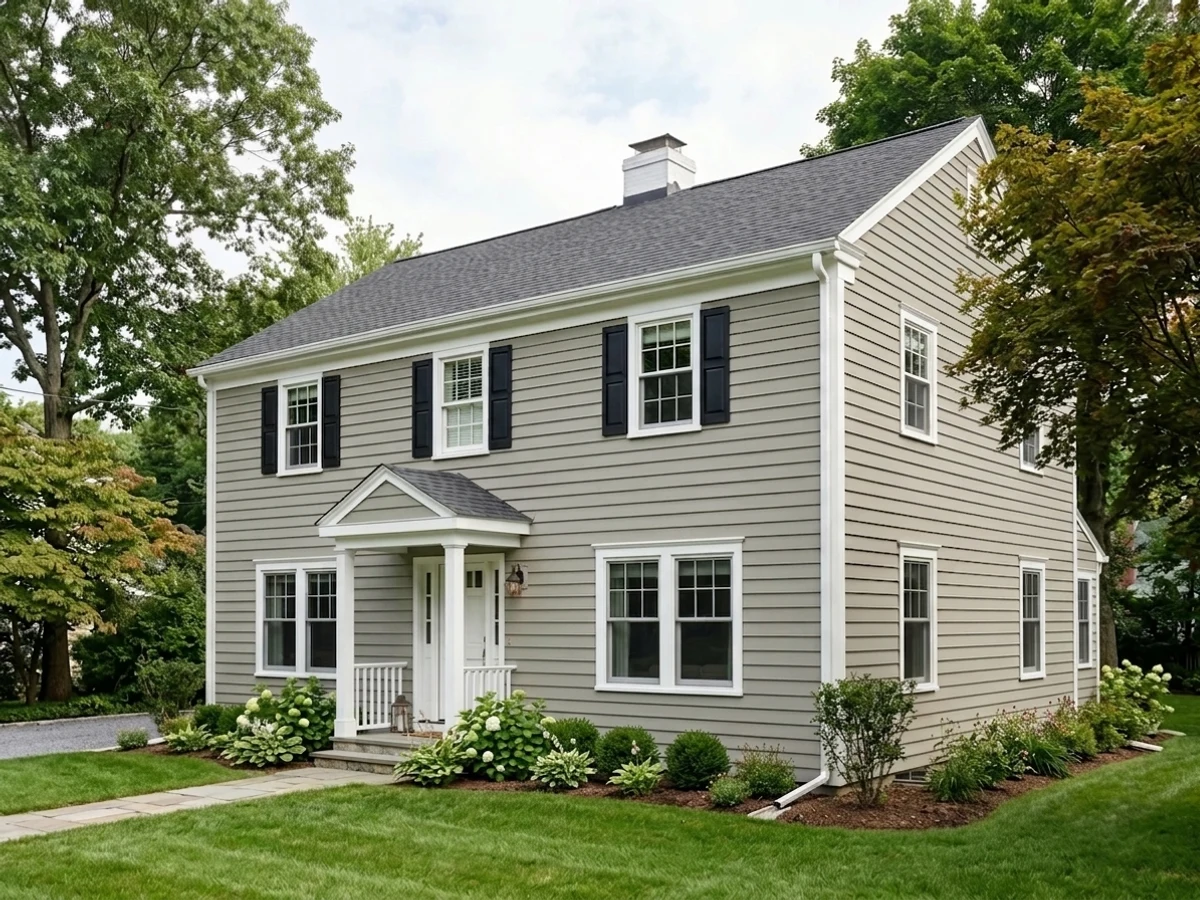
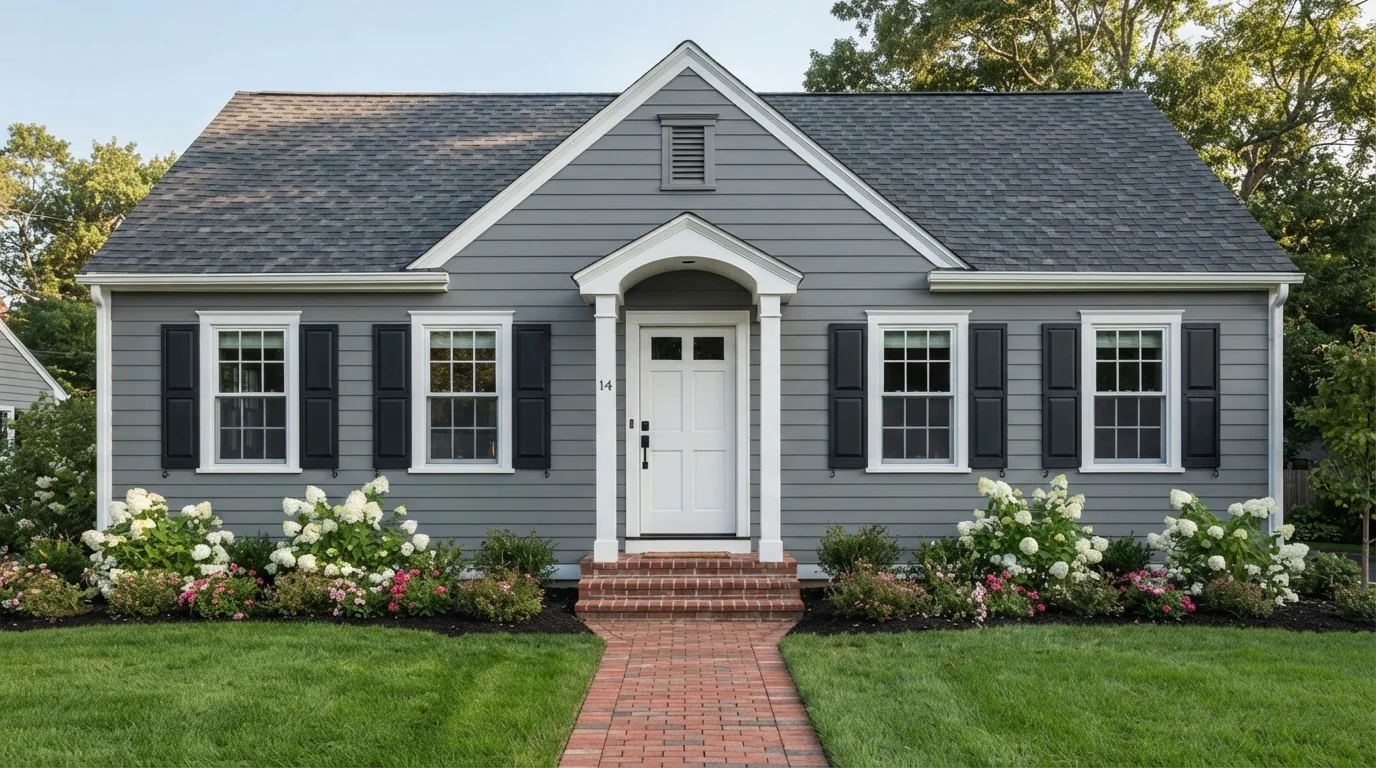
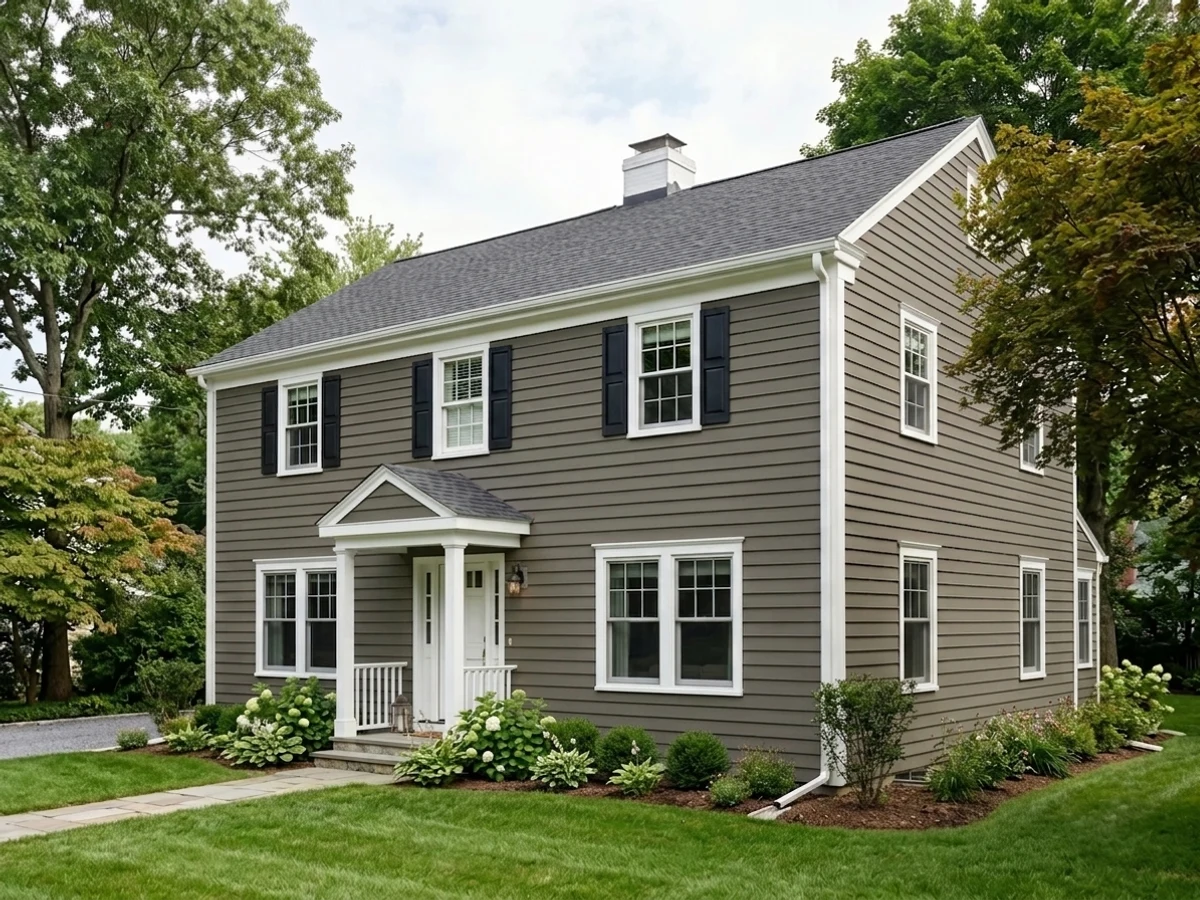
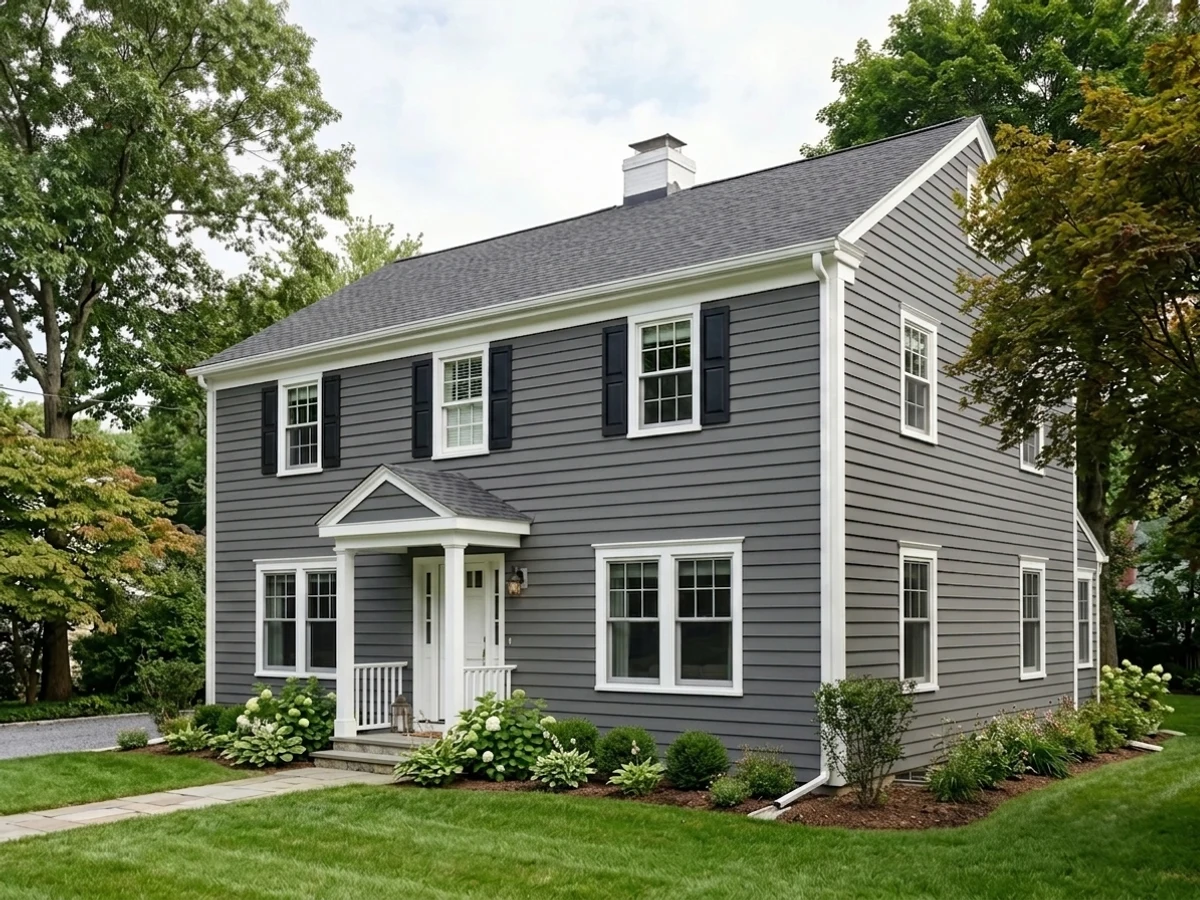
Gray keeps winning on exteriors because it does the one thing a house color has to do first: it makes the architecture look intentional instead of just painted. Chelsea Gray (Benjamin Moore HC-168, LRV 22) is the workhorse of this list — a true mid-depth gray with a whisper of green that reads as neutral against brick, stone, or vinyl, and it photographs well for listings, which matters if resale is even a small part of the decision. Coventry Gray (HC-169, LRV 41) and Wedgewood Gray (HC-146, LRV 41) sit a step lighter and do the same job for homes with stone walkways or bluestone patios, where a too-dark body color can fight the hardscape instead of matching it.
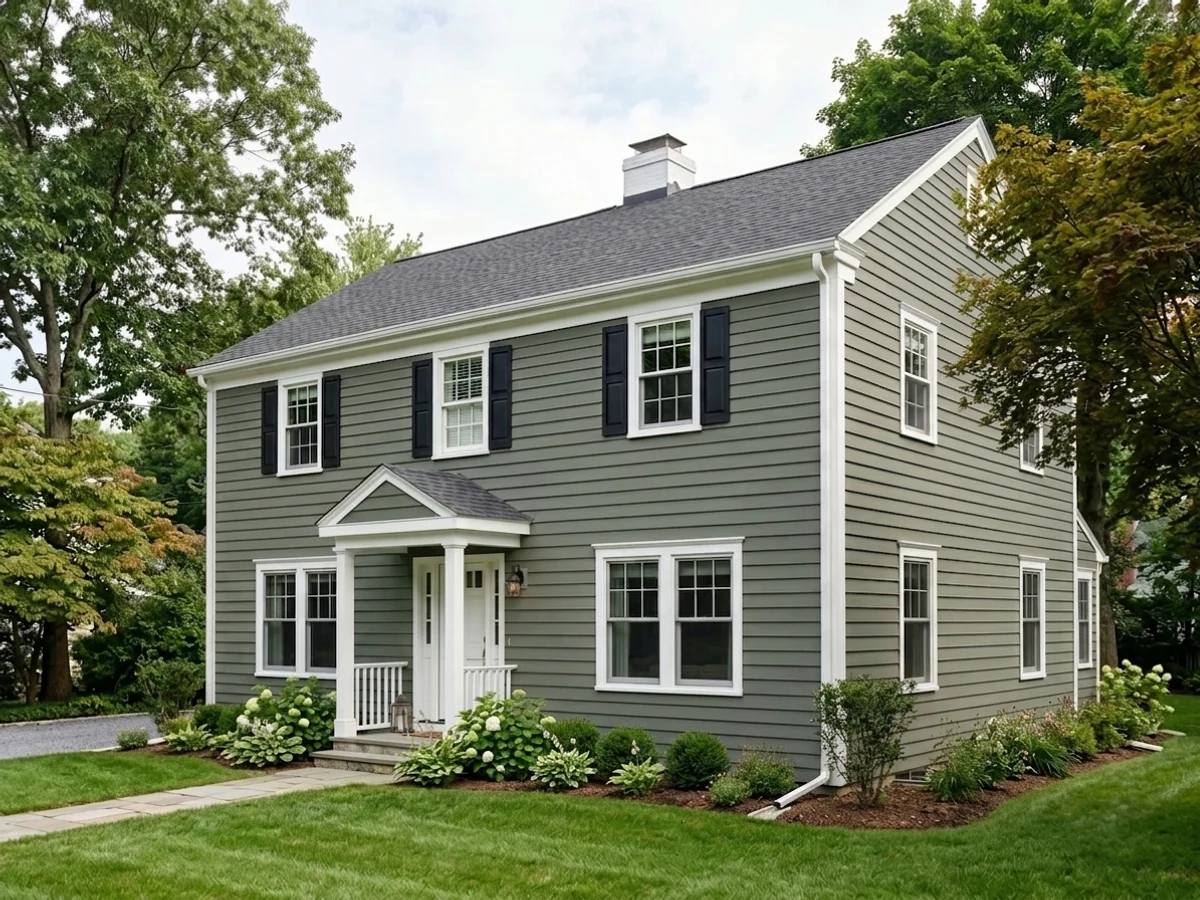
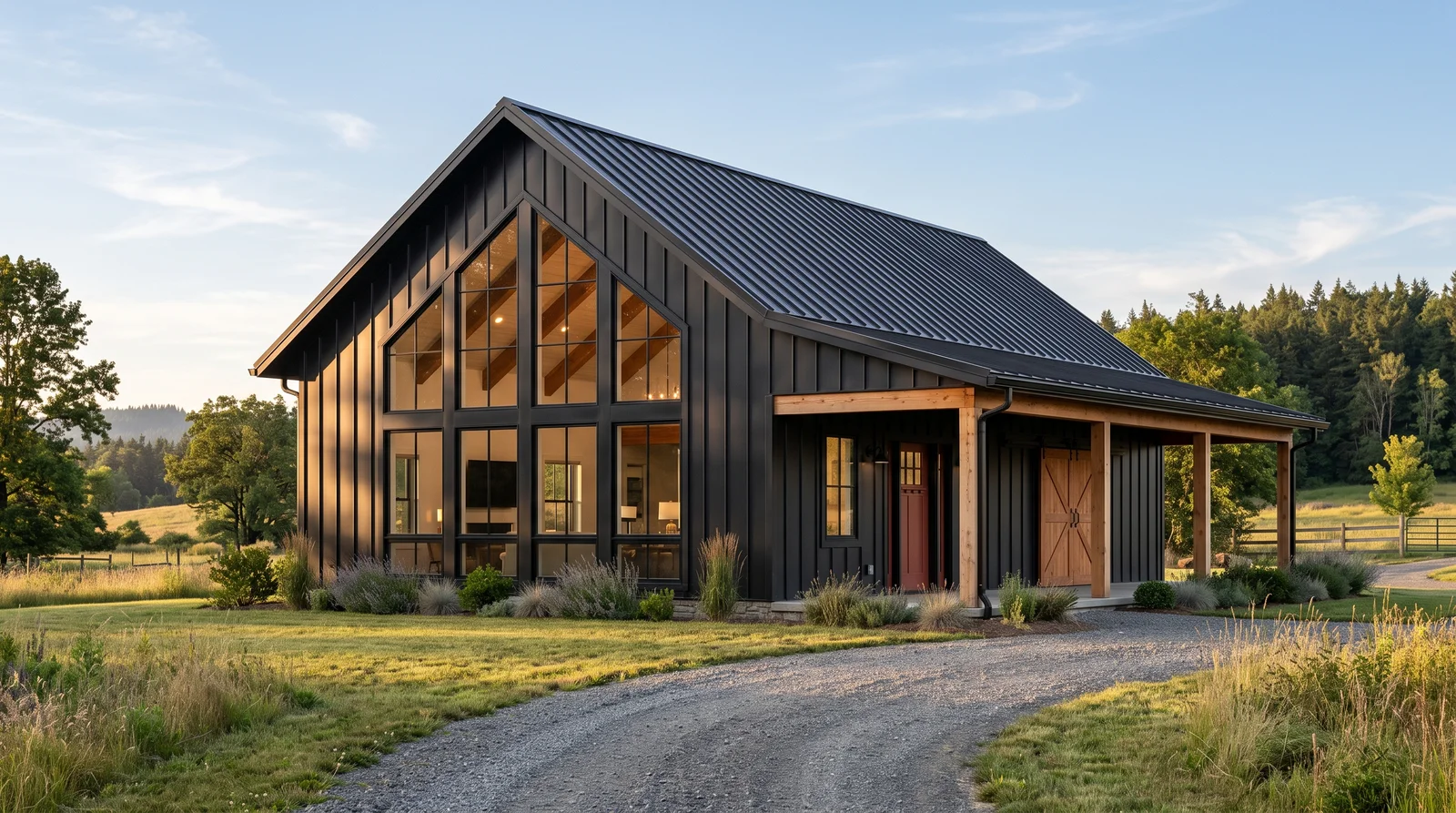
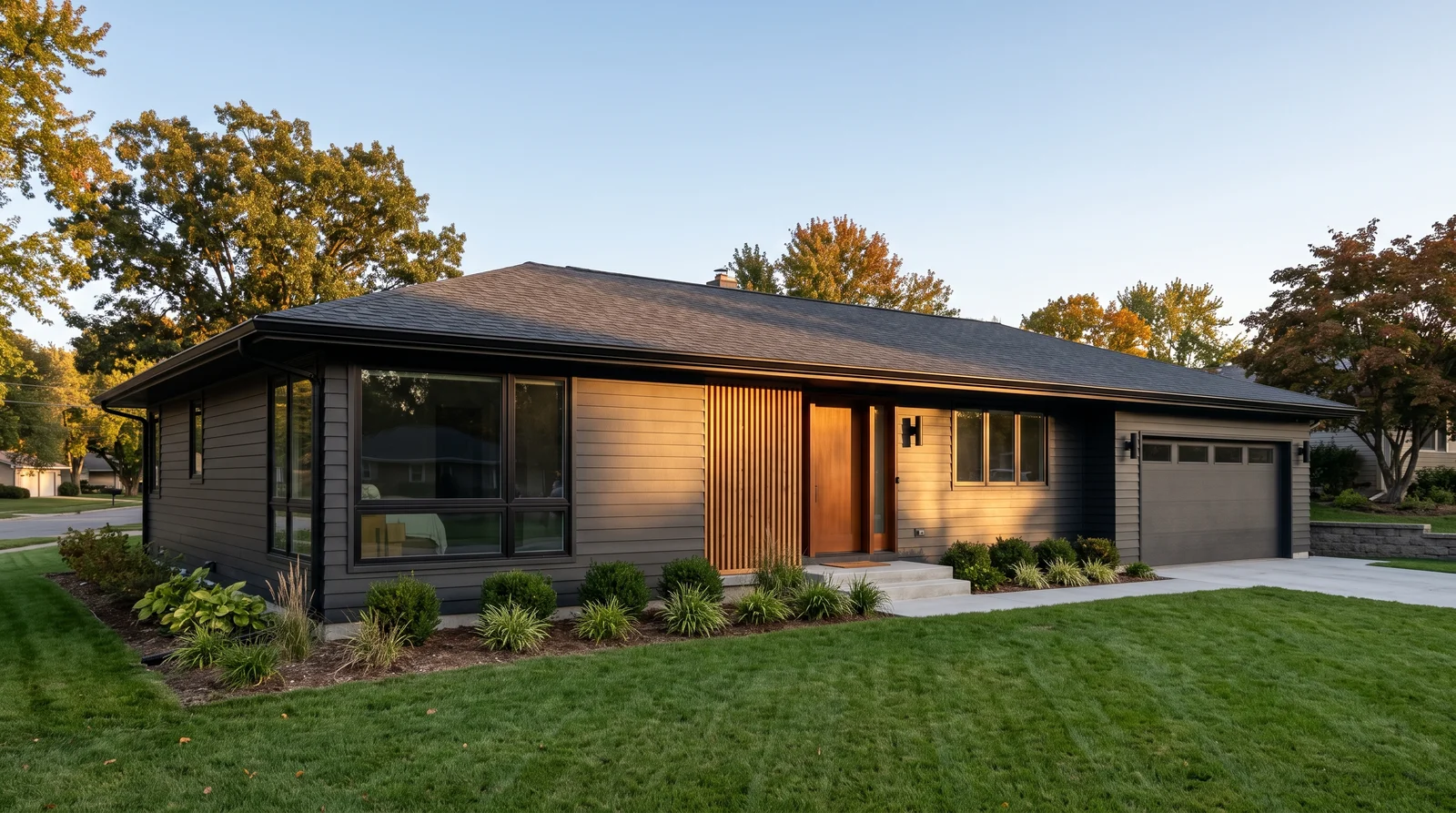
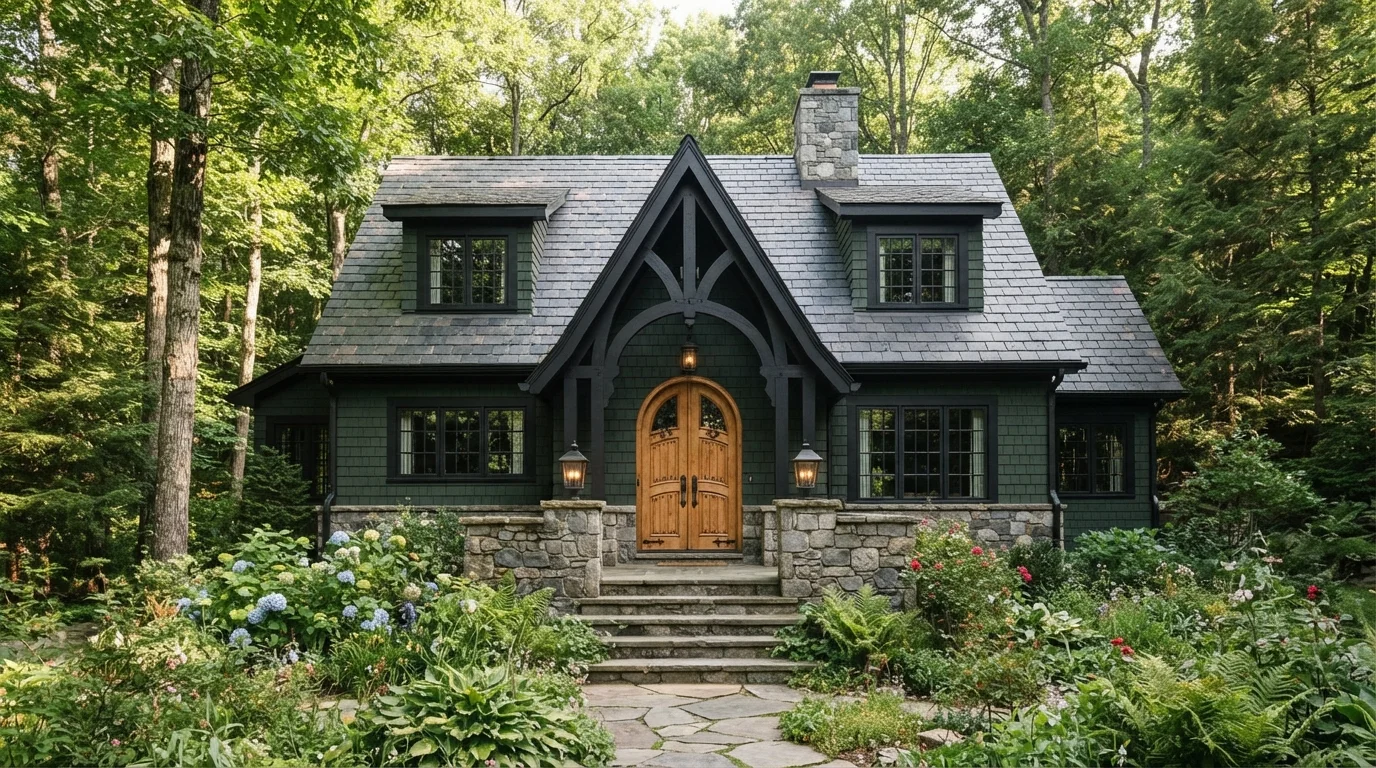
For houses that want more presence, Kendall Charcoal (HC-166, LRV 13) and Peppercorn (Sherwin-Williams SW 7674, LRV 11) push into near-black territory. Both read as charcoal rather than flat black in daylight, which keeps the house from looking heavy — Kendall Charcoal leans warm and Peppercorn leans cooler and bluer, so the choice usually comes down to what the roof and any brick or stone already lean toward. Pewter Green (SW 6208, LRV 12) is the outlier on this list: it's technically a gray-green, and it earns its spot on wooded or heavily landscaped lots where a straight gray can look stark against all that greenery — it reads as gray from the street but picks up warmth next to cedar, stone, and planting beds.
At the light end, Quiet Moments (BM 1563, LRV 50) and Comfort Gray (SW 6205, LRV 47) are close to the highest LRV a house color can go before it stops reading as gray at all. Both work on covered porches and shaded elevations where a mid-tone gray can look muddy without direct sun, and both stay calm rather than cold, which is the usual complaint about light gray done wrong.

 1
1
Ask a Question