Room Colors · White Exterior House
8 Best White Exterior House Paint Colors for 2026
ideas, combinations, and real rooms
8 curated picks from real white exterior houses — with the exact colors, honest reasons why, and the combinations that hold the room together.

Former interior stylist who can spot a green undertone from across a room. Jessica writes the color and mood pieces — what to choose, what pairs, and why your "white" looks pink.
The Fast Answer
Don't want to read 8 picks? These four are the safe answers.

Top Picks for the White Exterior House
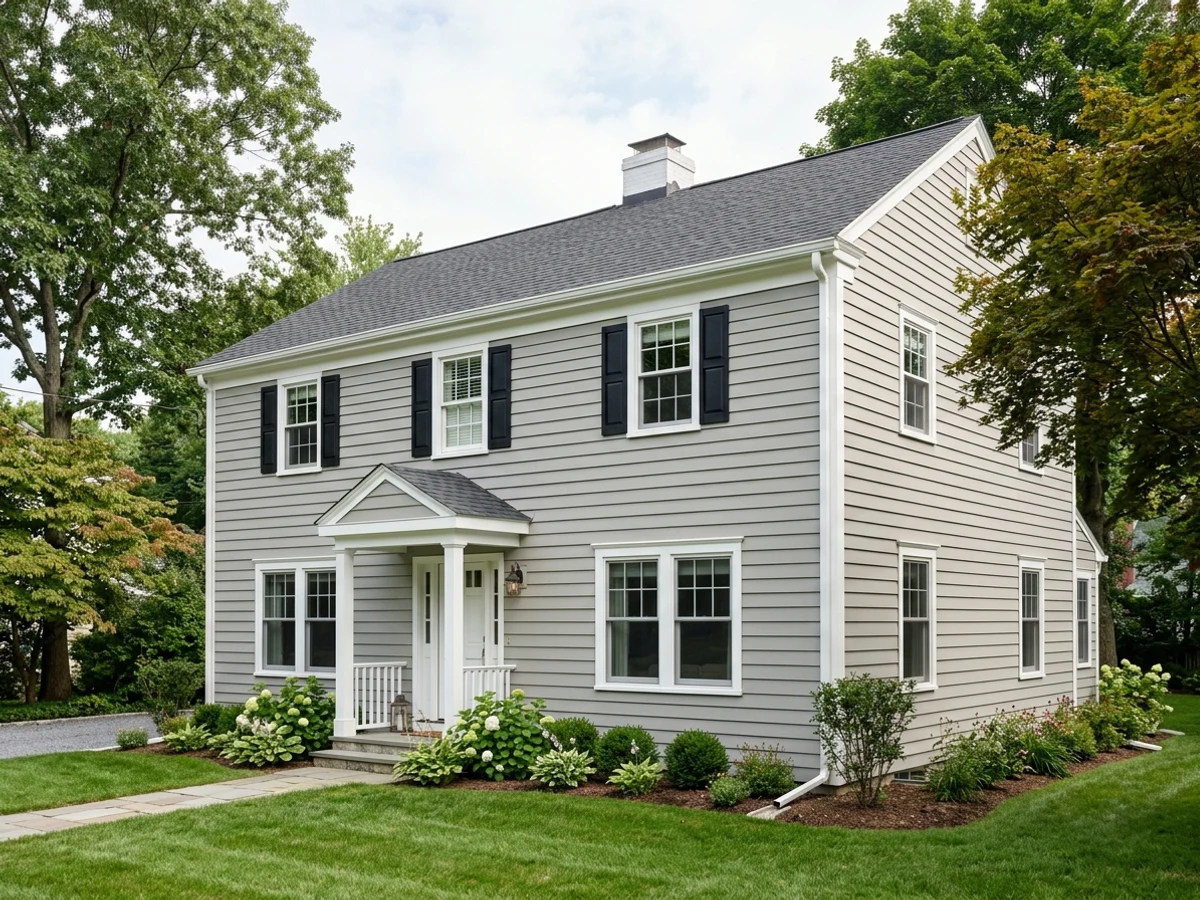
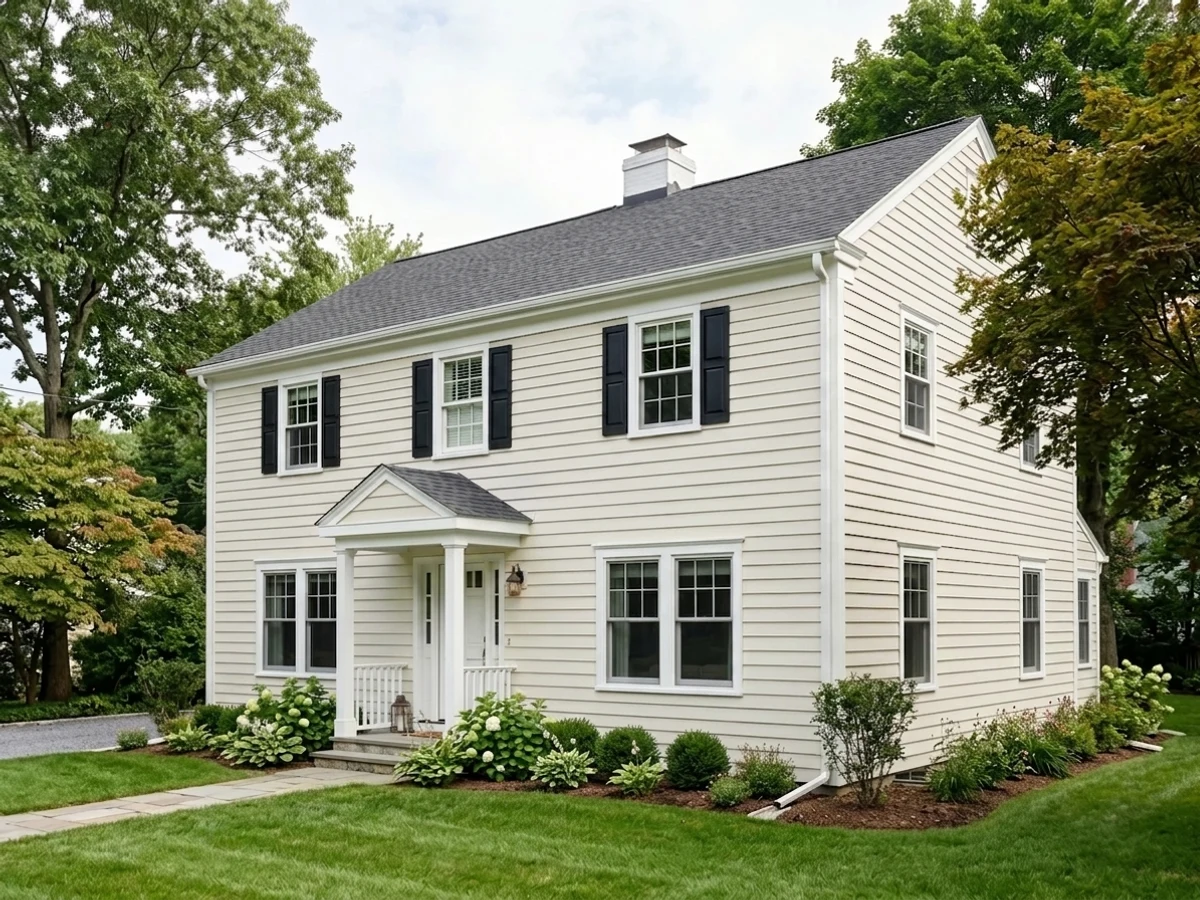
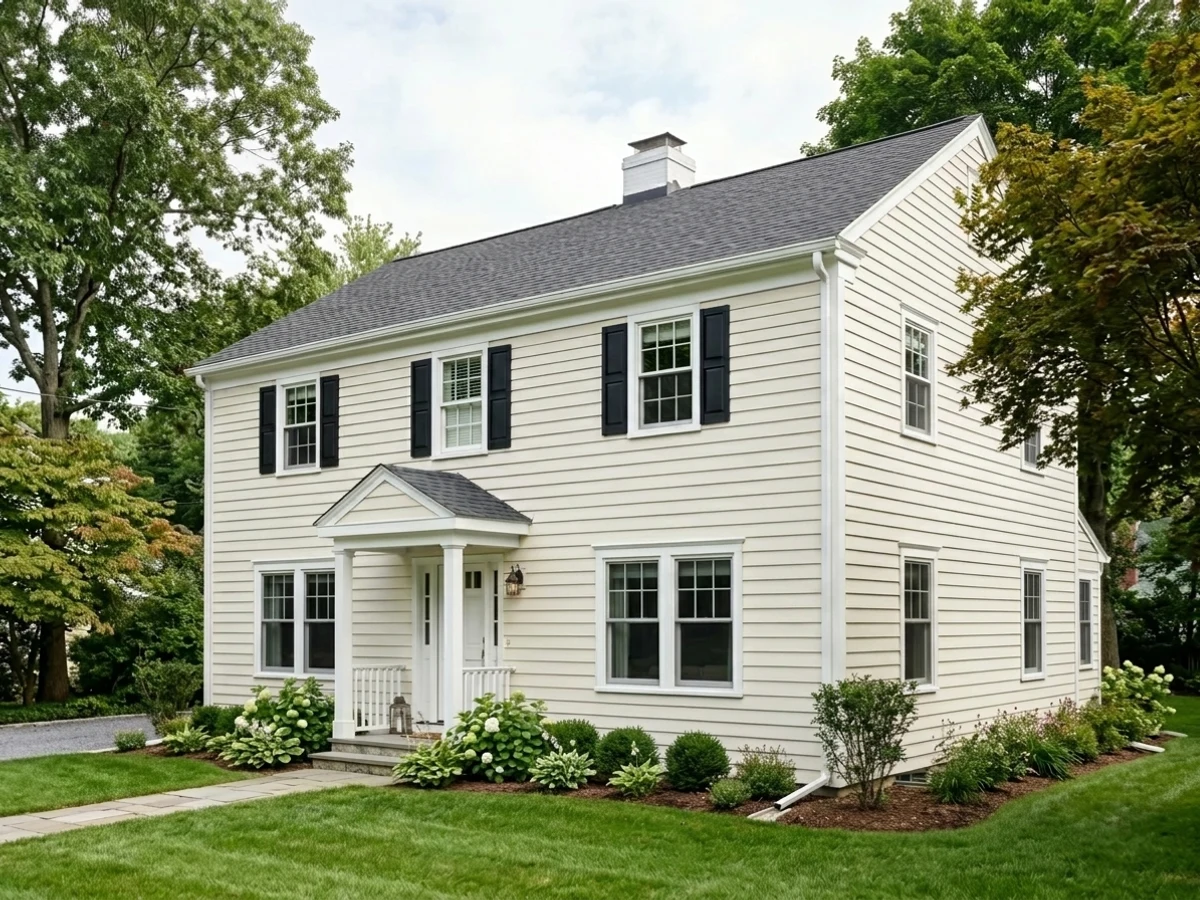
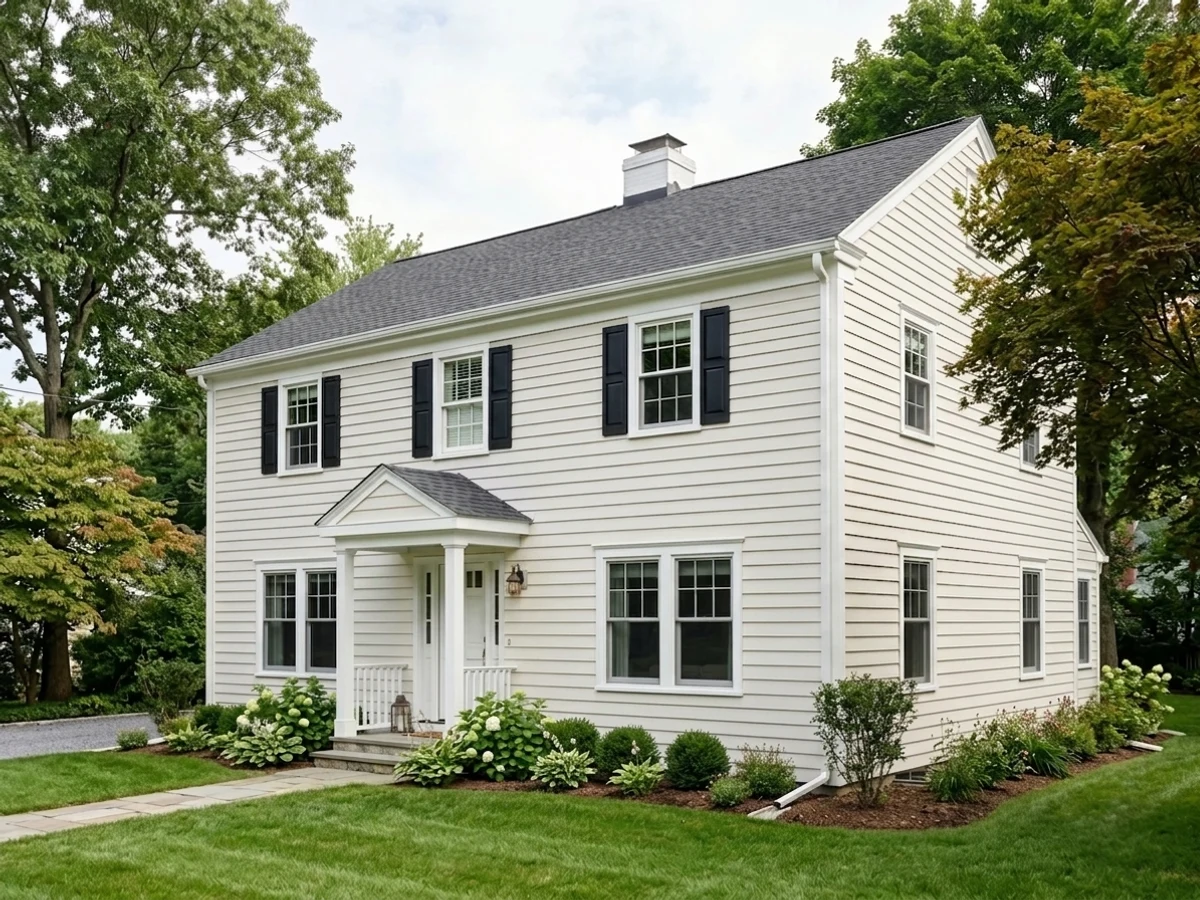
Tap a shade to see the white exterior house in it, then try it on your own room.
White Exterior House Color Trends 2026 — What's In, What's Out


- Cool Blue-White Siding — Bright, blue-leaning whites that felt crisp a decade ago now read cold and clinical against 2026's warm-white, black-trim exteriors.
- All-White With No Contrast — A monochrome white house with white trim and white doors is losing ground to warm white paired with black or wood accents.
- Bright Titanium White — Ultra-high-LRV pure whites are giving way to slightly warmer, softer whites that photograph better and hide dirt longer.
The 8 Best White Exterior House Paint Colors
Every pick below is a real rendered white exterior house, not a chip. The lead color first; the swatches are the full scheme in the photo — walls, furniture, textiles, accent.

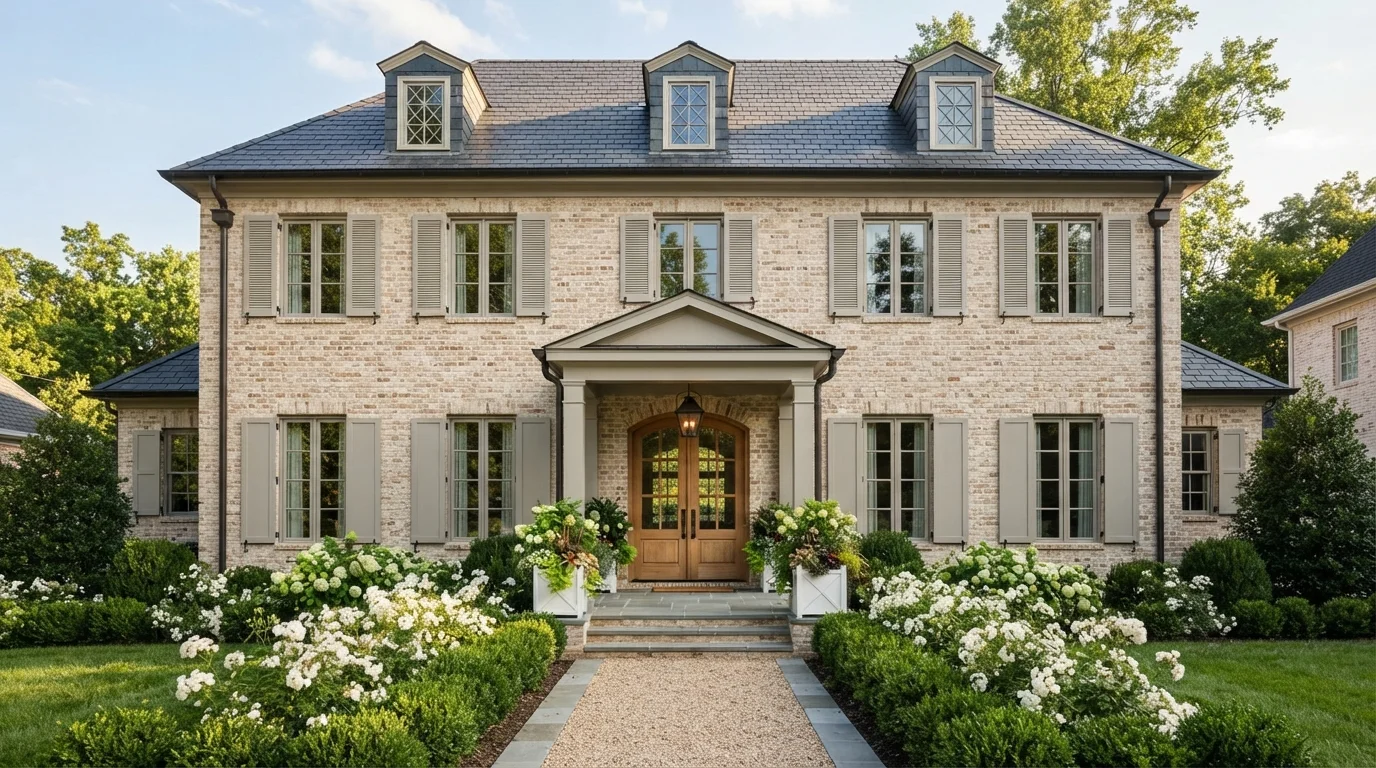
Crisp painted brick and soft greige shutters create a stately yet sunlit, inviting entrance to this home.
Creamy white is a soft, warm off-white that feels classic and bright. In this exterior, the creamy white coats the painted brick facade and entry columns, while a gentle taupe-gray accents the louvered shutters. The space feels refined, serene, and wonderfully upscale. The pairing works because the subtle contrast between the off-white brick and pale gray shutters lets the warm oak front door become the natural focal point. It is a fantastic choice for anyone who loves timeless European architecture with enduring curb appeal.
SEE FINE LINEN ON YOUR WALLS →
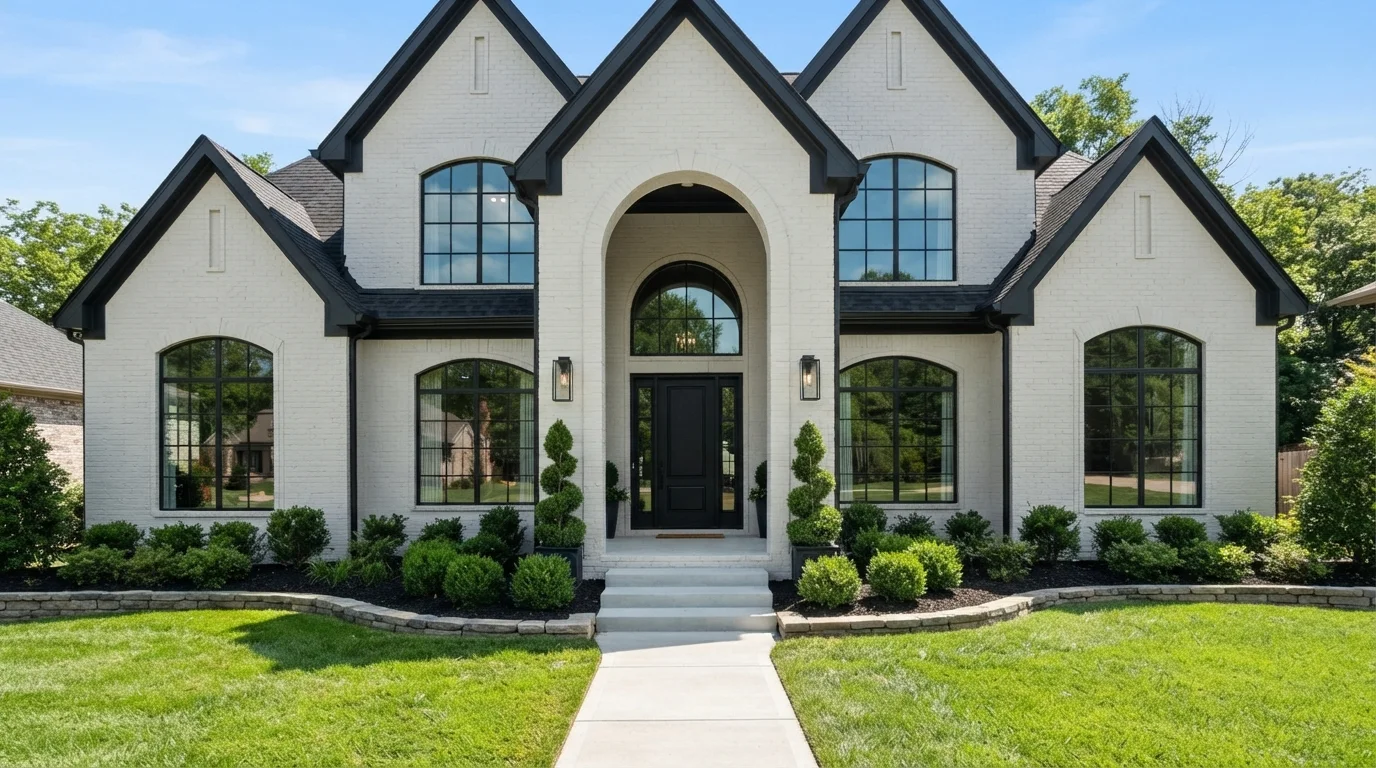
Crisp white painted brick pairs with bold black accents for a clean, stately look with instant curb appeal.
Crisp white is a clean, bright neutral that gives any home a fresh face. Here, bright white coats the textured brick exterior, tall entry arch, and roof trim, while deep black highlights the arched window frames and front door. The entire facade feels grand, neat, and beautifully balanced. High contrast works wonderfully because the sharp black accents outline the architectural shapes against the light background. It is a fantastic choice for anyone who loves classic architecture with a chic modern edge.
SEE SNOW STORM ON YOUR WALLS →
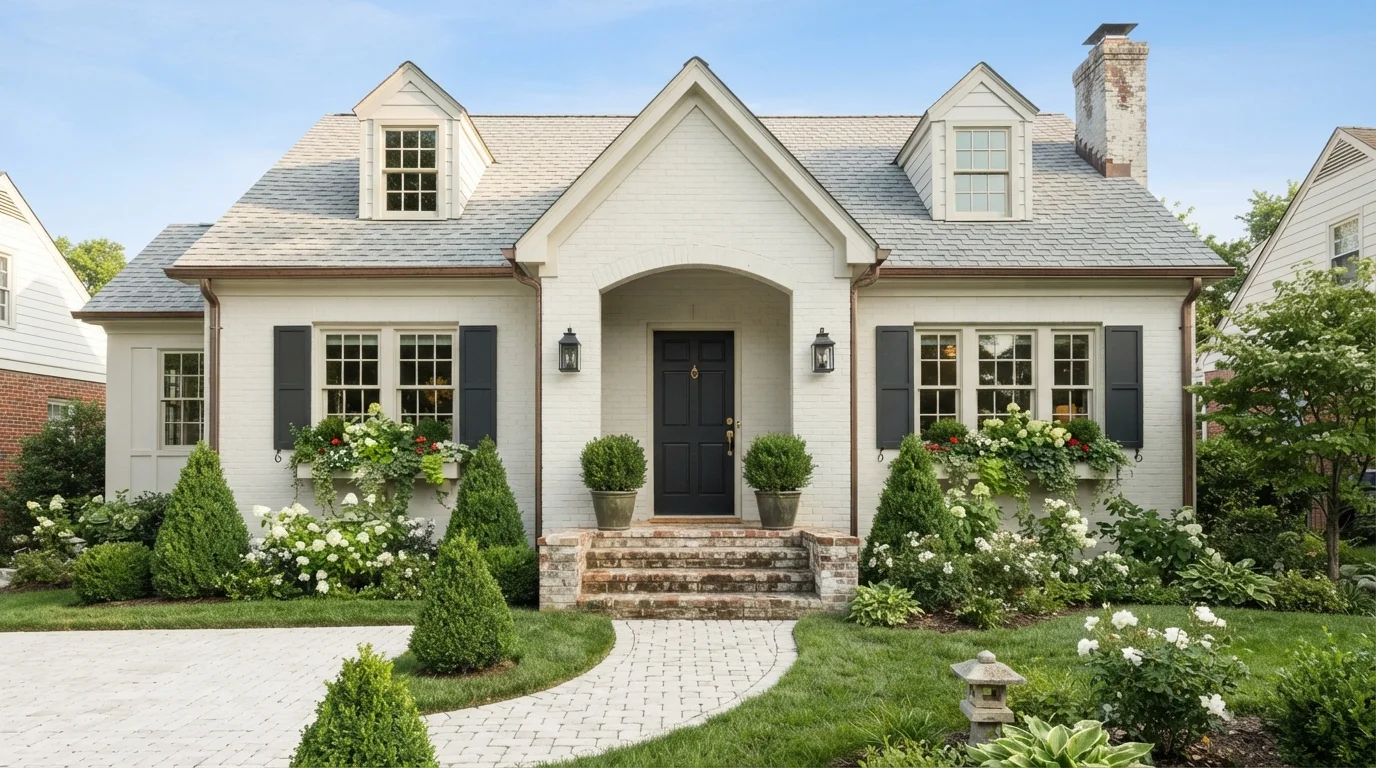
Bright white brick meets deep charcoal accents and lush greens for a welcoming storybook entrance.
Soft white is a clean, bright neutral that gives any exterior instant curb appeal. In this photo, crisp white wraps the brick siding and entry arch, while deep charcoal coats the shutters and front door. The home feels polished, welcoming, and wonderfully classic. The high contrast between the pale brick and the dark trim works because it defines every architectural line and window frame naturally. It is the perfect look for anyone who loves timeless storybook charm with modern polish.
SEE SLIGHTLY HUED ON YOUR WALLS →
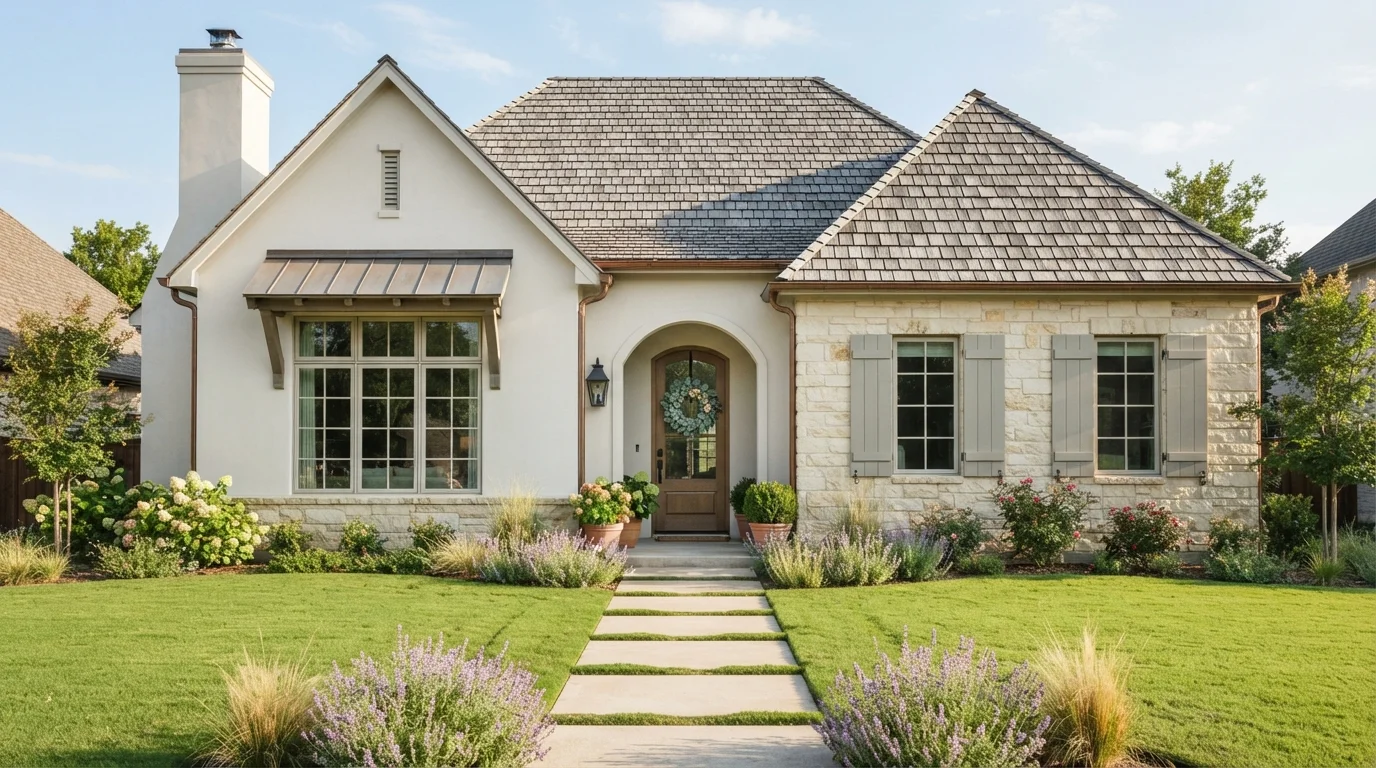
Sunlight washes over crisp white stucco and rustic limestone, creating a peaceful, timeless European countryside feel.
Soft white is a clean, gentle neutral that feels bright without looking stark. In this exterior, smooth creamy white covers the stucco siding and chimney, while subtle taupe accents the window shutters beside natural stone. The whole front yard feels welcoming, peaceful, and airy. Combining bright painted surfaces with earthy textured stone and a natural wood door keeps the look balanced and inviting. It is perfect for anyone dreaming of a classic storybook home that feels elegant year after year.
SEE WEDDING WHITE ON YOUR WALLS →
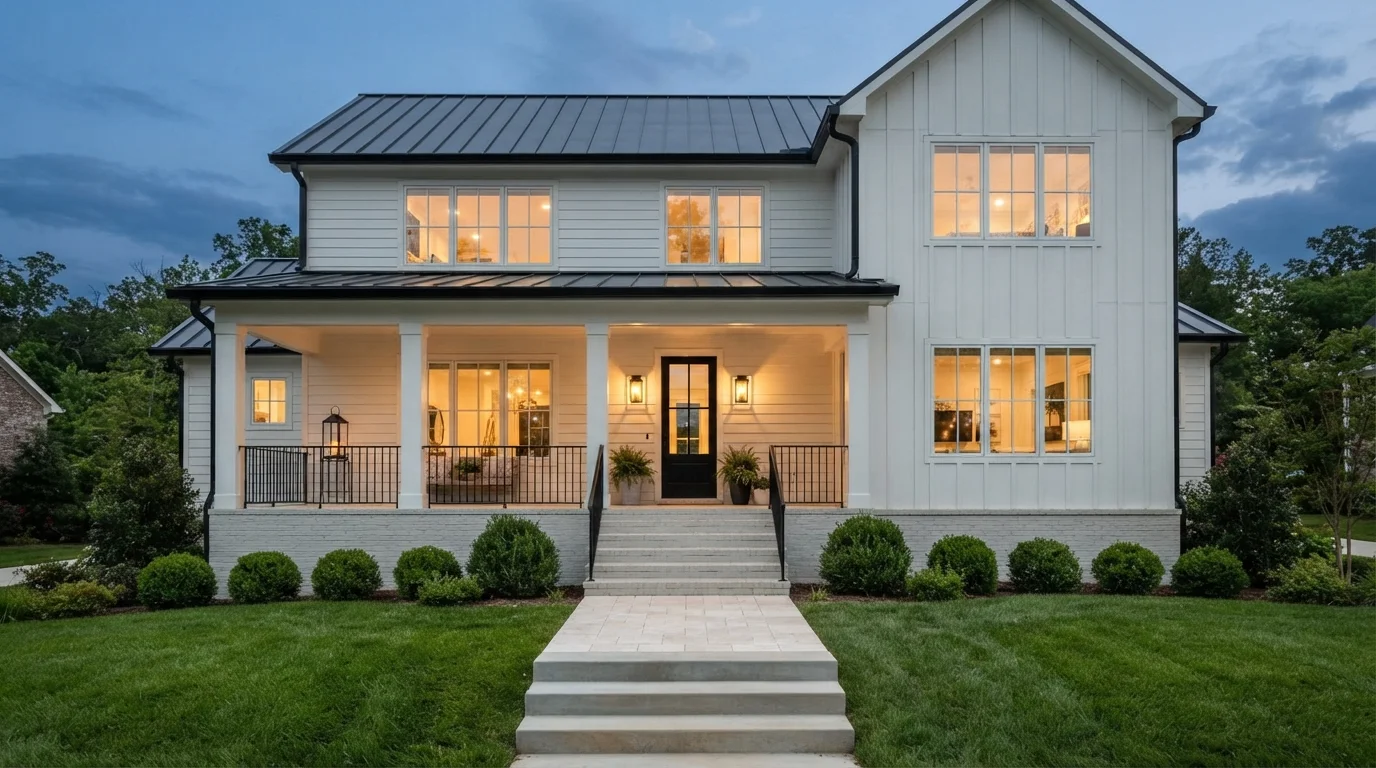
Clean white siding and striking black trim create a fresh, welcoming exterior that glows warmly at twilight.
Clean white is a bright, timeless neutral that always feels fresh. In this photo, crisp white coats the horizontal siding and porch columns, while deep black frames the front door and window shutters. The entire home feels welcoming, balanced, and sharp. This combo works because the bold contrast between deep black accents and pure white walls keeps the architecture defined and lively. It is perfect for anyone who loves timeless curb appeal with clean, modern lines.
SEE EXTRA WHITE ON YOUR WALLS →
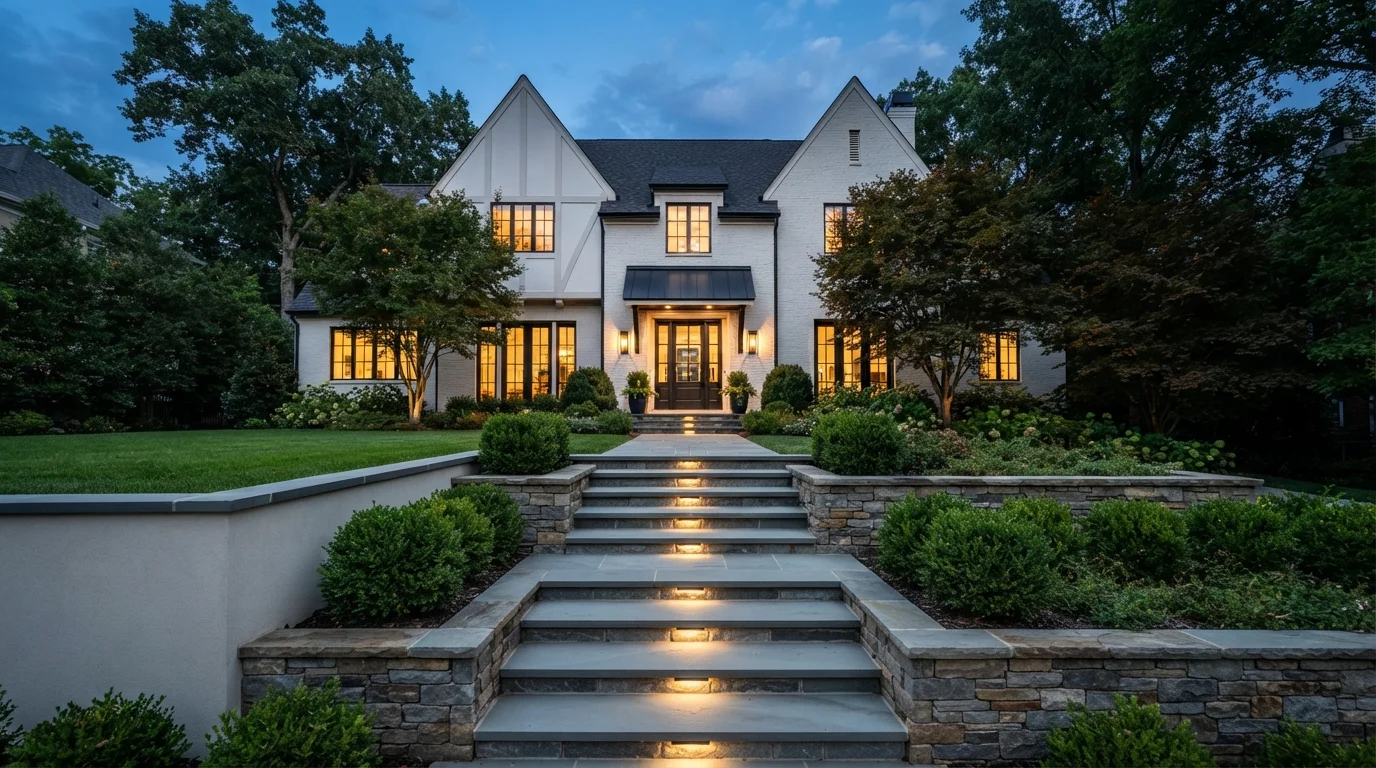
Warm lights glow against crisp white brick and rich black accents as twilight settles over tiered stone landscaping.
Crisp white is a bright, clean neutral that gives classic architecture an instant modern lift. In this photo, the white coats the brick facade, while rich black defines the trim, window frames, and front doors. The whole exterior feels stately, fresh, and wonderfully inviting at dusk. This combination works because the sharp black outlines emphasize the home's sharp rooflines and details against the soft greenery. It is perfect for homeowners who love clean lines, high contrast, and timeless curb appeal.
SEE GALLERY WHITE ON YOUR WALLS →
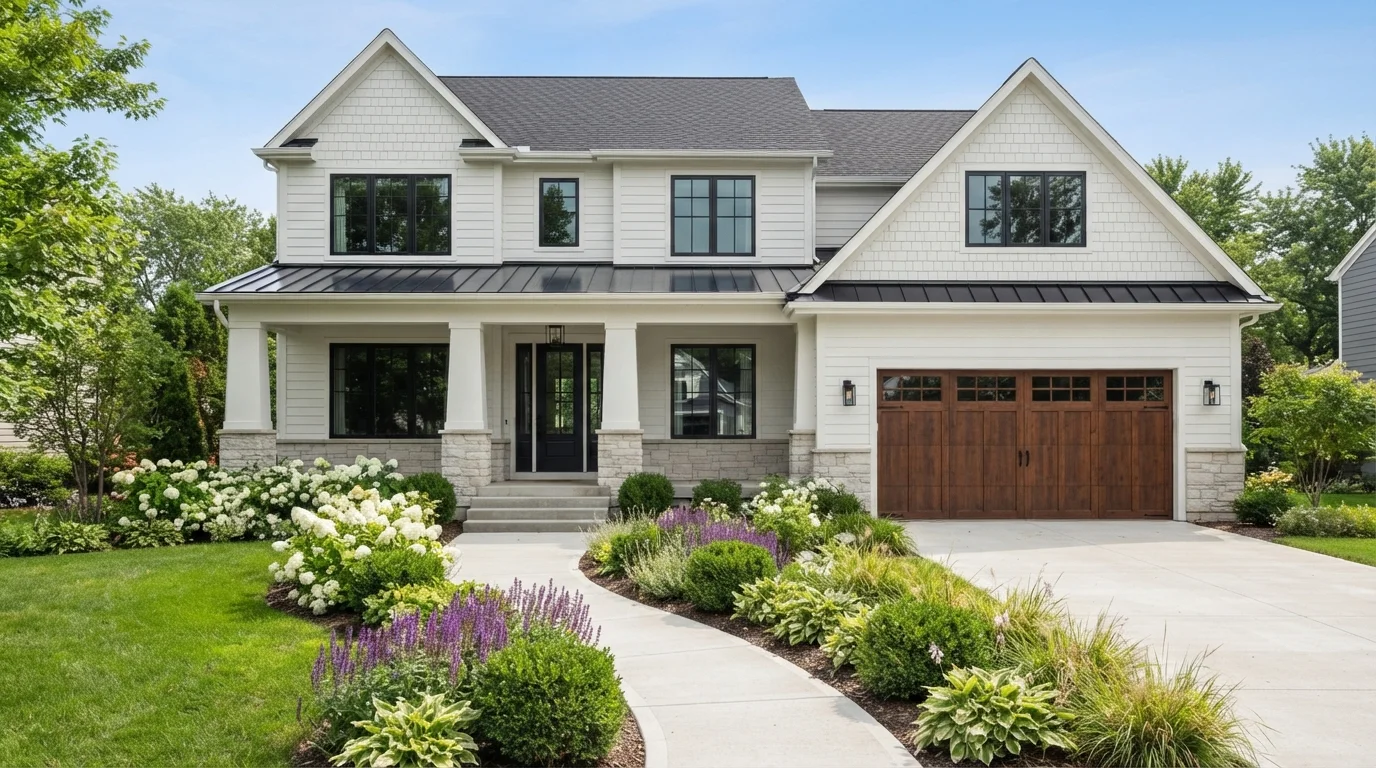
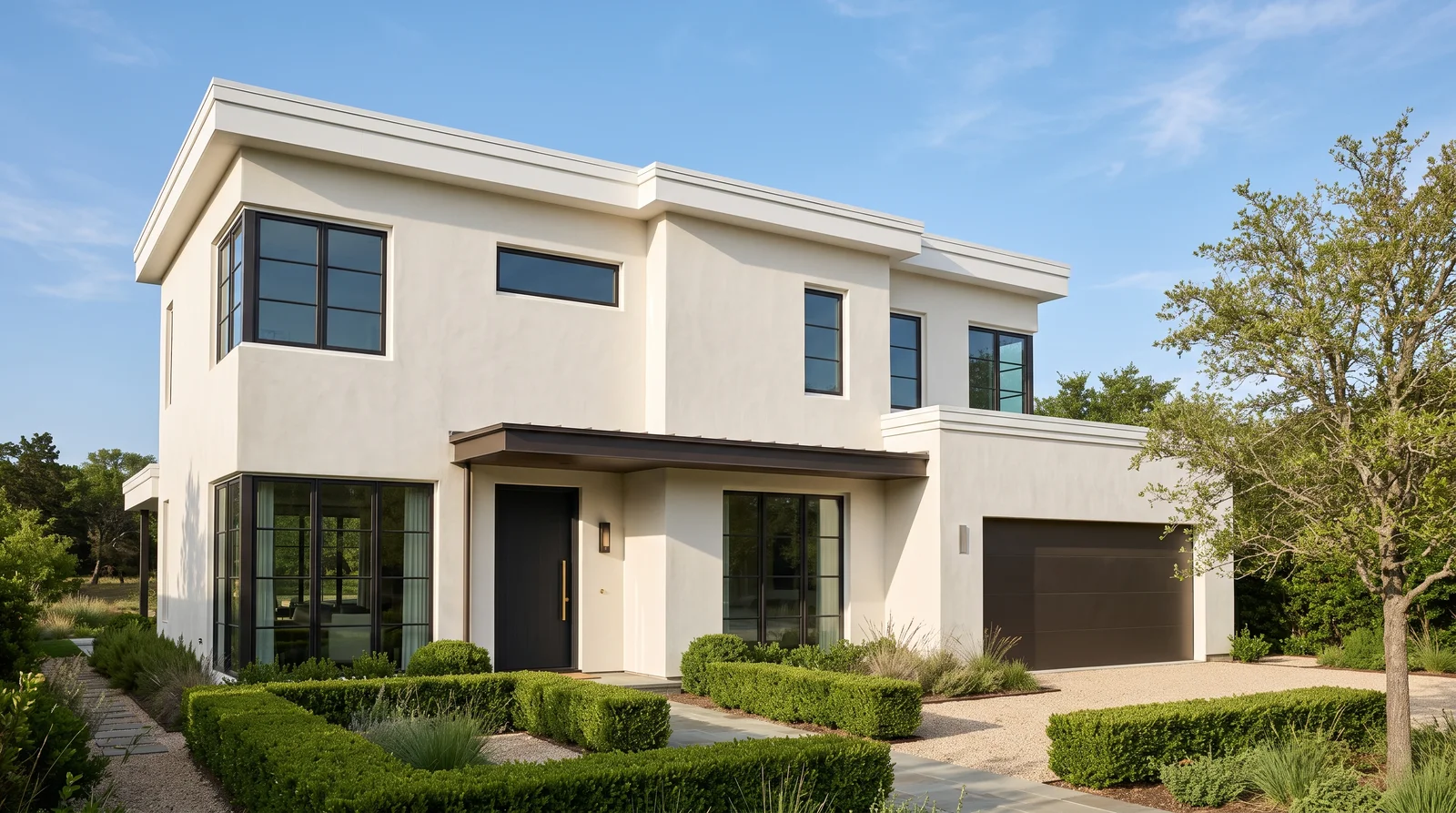
Bright white siding contrasts with rich wood and black accents, creating an effortlessly polished and welcoming curb appeal.
Crisp white is a clean, timeless neutral with an open, fresh look. In this exterior, bright white siding covers the entire facade, highlighted by bold black window frames and a matching black front door. The entrance feels remarkably sunny, neat, and inviting from the street. The combo works because the sharp contrast between black and white is softened by warm wood garage doors and lush green gardens. It is for homeowners who want a clean, traditional look that still feels modern.
SEE IT ON YOUR WALLS →
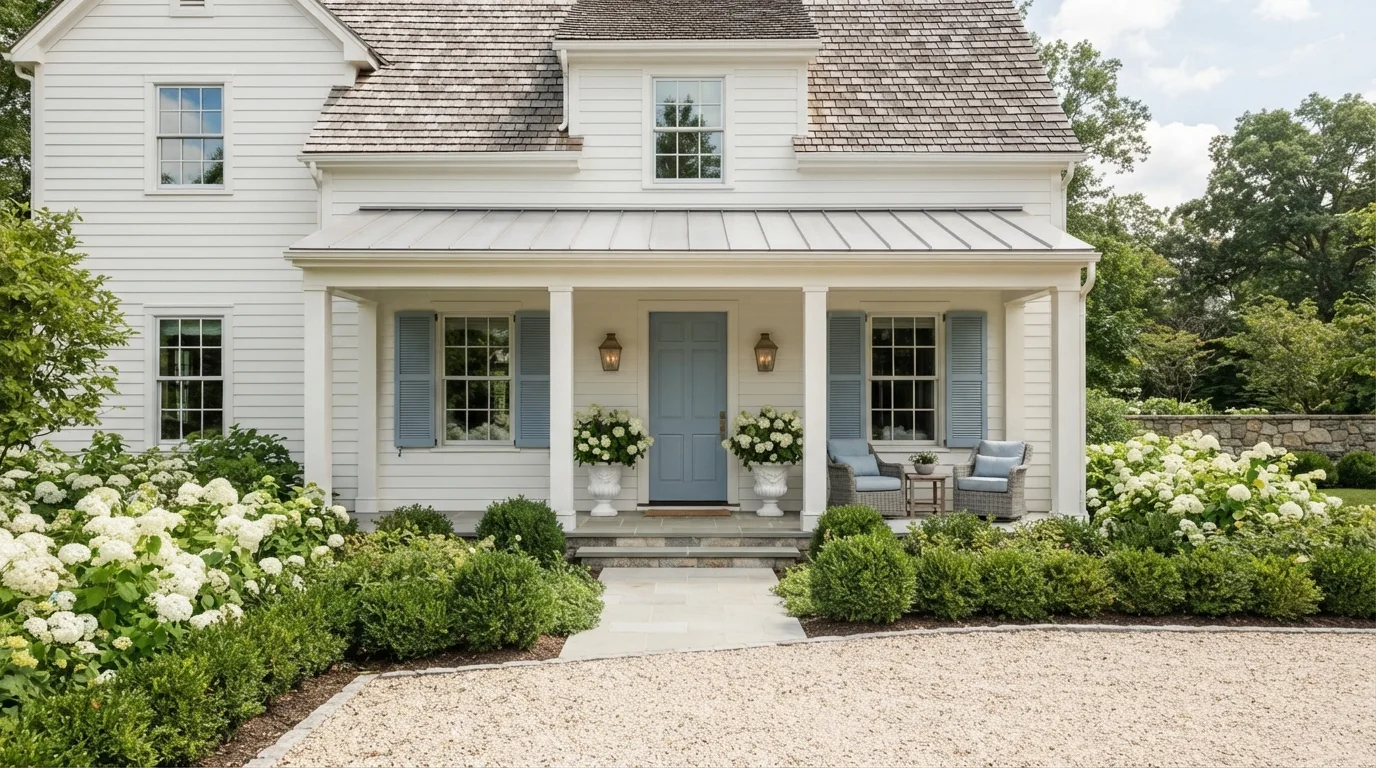
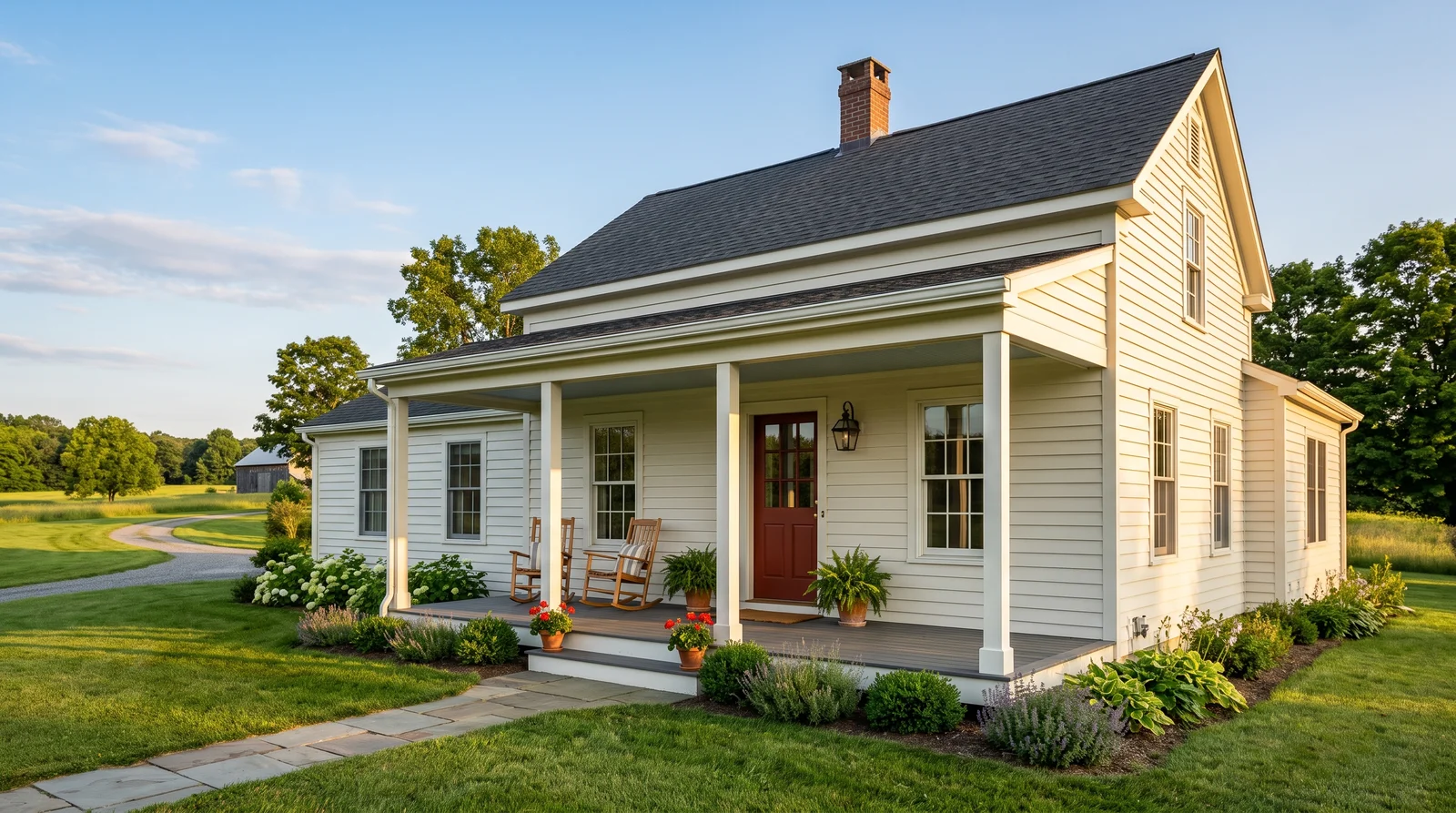
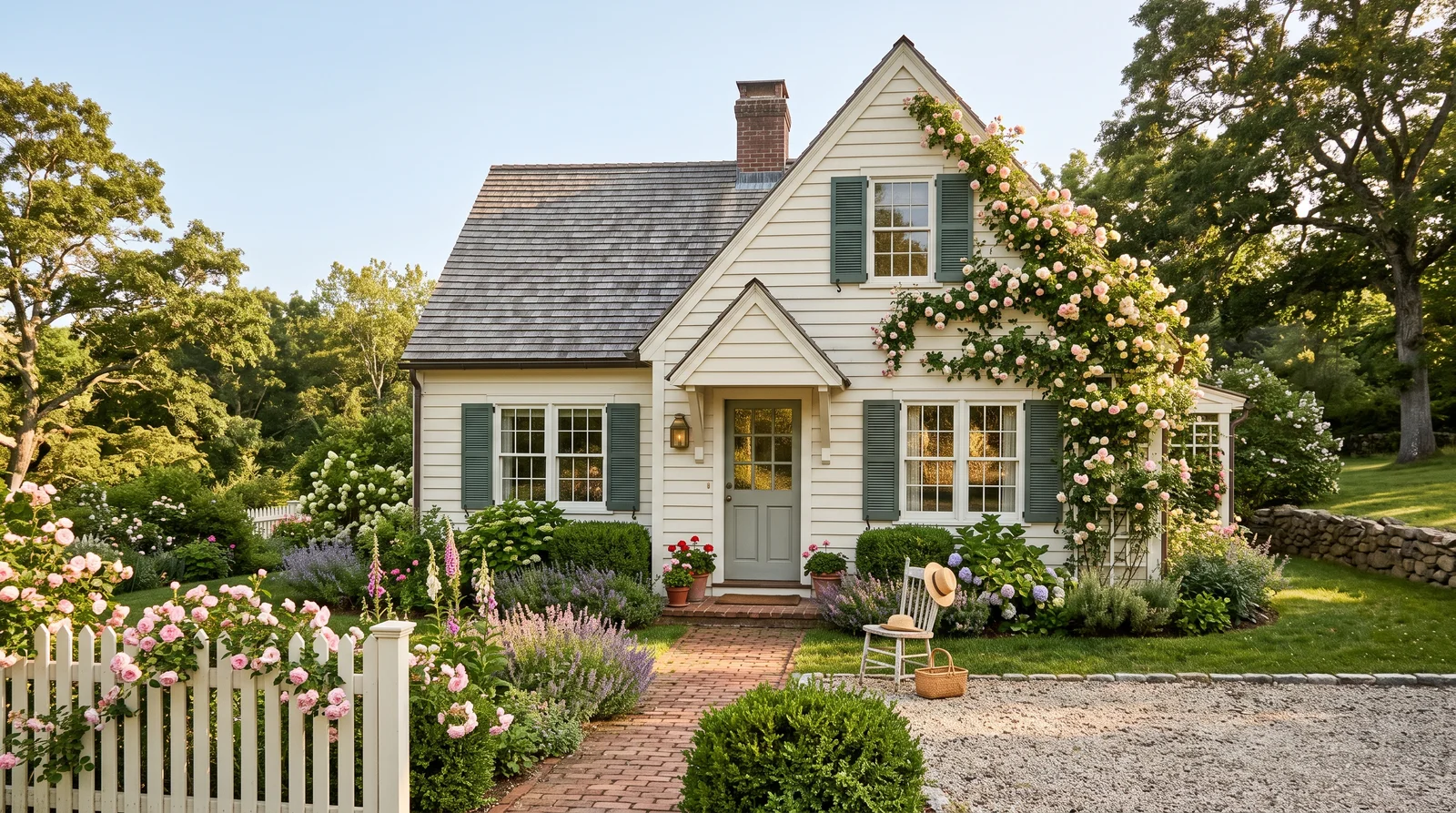
Soft sky blue accents meet creamy white siding and lush blooming hydrangeas for an effortlessly welcoming entrance.
Soft white is a bright, clean neutral that reflects natural sunlight beautifully. In this exterior, the main siding and porch columns are finished in a fresh creamy white, while the front door and window shutters show off a gentle pastel blue. The whole front yard feels breezy, relaxed, and cheerful. The combination works because the cool sky blue delivers a charming seaside accent without overpowering the bright white backdrop. It is perfect for anyone wanting classic cottage curb appeal.
SEE WHITE DAISY ON YOUR WALLS →White Exterior House Wall Color Combinations
A wall color never works alone. These are the full schemes from the rooms above — the lead color first, then the supporting colors that make the photo work.
Crisp painted brick and soft greige shutters create a stately yet sunlit, inviting entrance to this home.
TRY THIS PALETTE →Crisp white painted brick pairs with bold black accents for a clean, stately look with instant curb appeal.
TRY THIS PALETTE →Bright white brick meets deep charcoal accents and lush greens for a welcoming storybook entrance.
TRY THIS PALETTE →Sunlight washes over crisp white stucco and rustic limestone, creating a peaceful, timeless European countryside feel.
TRY THIS PALETTE →The classic pairing is a soft body white with a stark white or black trim, so pick which side of the contrast you want your siding to sit on. White Dove (Benjamin Moore OC-17) on the siding with Decorator's White (Benjamin Moore OC-149) on the trim keeps the whole house in the same warm family and reads timeless rather than stark — this is the pairing that shows up most on Colonial and farmhouse remodels. For the black-and-white look that dominates modern and modern-farmhouse builds, Pure White (Sherwin-Williams SW 7005) or Extra White (Sherwin-Williams SW 7006) on the body against black shutters, a black front door, and black window frames gives the sharpest contrast without the walls themselves looking cold.
If the house has natural wood — a stained front door, cedar garage doors, or wood porch beams — lean toward the warmer whites so the wood doesn't fight the siding. Alabaster (Sherwin-Williams SW 7008) or White Dove both sit close enough to the wood's warmth that the two read as intentional instead of mismatched. Save Ultra White (Valspar 7006-24) or Simply White (Benjamin Moore OC-117) for houses with cool-toned roofing — gray shingles, gray stone, black metal — where the brighter, cleaner white matches the roof's temperature instead of clashing with it.
More Exterior Color Ideas
Set on a color family already? Each page has its own real rooms and picks.


Light or Dark White Exterior House Colors?
Go Light (LRV 60+) If…
The room is small, faces north, or has to work at every hour. Light warm colors make it feel bigger and stay calm in evening light — the light you actually live in.
Go Dark (LRV Under 20) If…
You want the cocoon effect and the room has real daylight. Dark works best on one feature wall — or fully color-drenched in a large room with good windows.
Among whites the real variable isn't light versus dark, it's warm versus cool and how much of the sun's glare each one bounces back. On a wall that gets full southern or western exposure, a true bright white like Ultra White (Valspar 7006-24, LRV 92) or Simply White (Benjamin Moore OC-117, LRV 91) can look almost blinding at midday and slightly blue-white in photos, even though it stays crisp and clean the rest of the day. Pull that same house into afternoon shade or a tree-lined lot and those same whites read soft and bright instead of harsh.
For houses that sit in direct sun most of the day, the lower-LRV, warmer whites hold up better to the eye: Alabaster (Sherwin-Williams SW 7008, LRV 82) and White Dove (Benjamin Moore OC-17, LRV 85) have enough cream in them that they don't glare, and they photograph closer to how they look standing on the sidewalk. Save the brighter, cooler options like Extra White (Sherwin-Williams SW 7006, LRV 86) or Polar Bear (Behr 75, LRV 86) for trim, porch ceilings, and shaded elevations where the extra brightness reads as clean contrast instead of a wash of glare.
See It. Love It.
Paint It.
Upload one photo of your white exterior house and try every color on this page on your own walls — in your own light, before you buy a drop of paint.

AlabasterBeforeSheen And Finish For Siding, Trim, And Shutters
Body siding should stay in a satin or low-sheen exterior finish. A flat or satin sheen hides the small surface imperfections that show up on lap siding, stucco, and brick, and it doesn't throw back the kind of glare that a bright white like Ultra White (Valspar 7006-24) or Simply White (Benjamin Moore OC-117) can produce in a high-gloss finish.
Trim, shutters, columns, and the front door earn a higher sheen — semi-gloss or gloss — because those surfaces get touched, get rained on directly, and need to wipe clean. A crisp trim white like Extra White (Sherwin-Williams SW 7006) or Decorator's White (Benjamin Moore OC-149) in semi-gloss also catches light differently than the flatter body color next to it, which is what makes the trim visually separate from the siding even when both colors are close in shade.
Keeping White Siding From Chalking Or Yellowing
White exterior paint is the color most likely to show chalking — the powdery residue that forms as UV rays break down cheaper binders over years of direct sun. It shows up first and worst on south- and west-facing walls, and it's the reason a white house that looked sharp at year one can look dull and gray by year five if the paint job used a budget product or skipped priming on bare or repainted surfaces.
The fix is prevention, not touch-up: a 100% acrylic exterior formula with UV-resistant binders holds its finish far longer than a cheaper mix, and any of the eight colors here are available in quality exterior lines from their brand. If chalking has already started, a power wash with a mild cleaner removes the residue before repainting — painting straight over chalk without washing it off first is the single most common reason a fresh coat fails early.
Why The Same White Looks Different On Every Wall
A paint chip and a wall of siding are not the same test. Direct outdoor sunlight pulls out undertones that never show up indoors or on a small sample — Alabaster (Sherwin-Williams SW 7008) can look almost beige in strong afternoon light, while a cooler pick like Pure White (Sherwin-Williams SW 7005) can pick up a faint blue cast on an overcast morning. Roofing, brick, and even a neighbor's house reflecting light back onto the wall all shift what the eye sees.
Before committing to gallons, paint a two-foot-square sample board of the top one or two choices and move it around the house — north wall, south wall, next to the actual trim and roof color — and look at it at both midday and early evening. It's the only reliable way to catch an undertone problem before it's covering the whole house.
About White Exterior House Paint Colors
A white exterior stays the safest resale color in the country because it reflects heat instead of absorbing it, it reads clean against any roof shade, and it never fights with the landscaping. That safety comes with a real decision, though: not every white behaves the same on siding. Ultra White from Valspar (7006-24, LRV 92) and Simply White from Benjamin Moore (OC-117, LRV 91) sit at the bright, near-true end of the range, which is why they show up so often on trim and on modern or coastal builds that want maximum contrast against black windows and doors.
Drop down a few points of LRV and the whites get warmer and easier to live with in strong sun. Alabaster from Sherwin-Williams (SW 7008, LRV 82) is the one homeowners search for most because it has a soft, greige-leaning warmth that keeps a big wall of siding from looking sterile or glary at noon. White Dove (Benjamin Moore OC-17, LRV 85), Decorator's White (Benjamin Moore OC-149, LRV 84), and Pure White (Sherwin-Williams SW 7005, LRV 84) all land in that same forgiving middle zone, which is why they're the picks people rarely regret five years later.
Siding is not trim, and the two jobs pull in different directions. Extra White (Sherwin-Williams SW 7006, LRV 86) and Polar Bear (Behr 75, LRV 86) read crisp and slightly cool, which is exactly what you want on fascia, columns, and window casings so they pop against a body color a shade or two warmer. Any of these eight are real, mixable paint-store colors, not a single house-wide default — the right one depends on how much direct sun the walls actually get and what's sitting next to them: brick, stone, a shingle roof, or black hardware.

The Questions Everyone Asks
What color should I paint my white exterior house?
If you want one answer, start with the safe picks above — Extra White, Fine Linen, Snow Storm, Slightly Hued. They read well in any light and survive furniture changes. Then check the light: strong afternoon sun wants a step cooler, a north-facing room wants a step warmer.
what is the best white paint color for a house exterior?
There isn't one universal best, but Alabaster (Sherwin-Williams SW 7008) is the most consistently recommended because its warm, LRV 82 base avoids the glare and stark look that brighter whites can get in direct sun. If you want a crisper, cooler look instead, Pure White (Sherwin-Williams SW 7005) or White Dove (Benjamin Moore OC-17) are the next most reached-for options, especially paired with black trim.
why does white exterior paint turn yellow or chalky over time?
Yellowing usually comes from an older oil-based paint curing and aging in shaded areas, while chalking is UV breaking down the paint's binder on sun-exposed walls, leaving a powdery residue. Both get worse with cheaper paint and skipped prep work. A quality 100% acrylic exterior paint with UV-resistant binders, applied over a properly cleaned and primed surface, resists both problems for far longer.
what trim color goes best with a white house?
Black is the most common pairing because it gives the sharpest, most modern contrast — black shutters, a black front door, and black window frames all read clean against a body color like Pure White (Sherwin-Williams SW 7005) or Extra White (Sherwin-Williams SW 7006). For a softer, more traditional look, a matching or slightly brighter white trim, like Decorator's White (Benjamin Moore OC-149) over White Dove siding, keeps things quiet and classic.
does white siding show dirt more than other colors?
Yes, dirt, pollen, and mildew streaks are more visible on white than on a mid-tone or dark color, especially on lower siding near landscaping and gutters. It's not a reason to avoid white, but it does mean an annual rinse or light power wash matters more than it would on a gray or beige house, and a quality exterior paint that resists mildew will show fewer streaks between washes.
what paint sheen should I use for white exterior siding?
Use satin or flat on the body siding — it hides small surface flaws and won't glare the way a glossier finish can on a bright white like Ultra White (Valspar 7006-24) or Simply White (Benjamin Moore OC-117). Save semi-gloss or gloss for trim, shutters, and the front door, since those surfaces need to wipe clean and benefit from the extra separation a shinier finish gives against the flatter siding color.
What two-color combination works best in a white exterior house?
The reliable pattern is a quiet main color plus one deep accent on a single wall. Keep trim and ceiling in one warm white so the two colors are the only event in the room — the combination cards above show complete schemes from real rooms.
What colors make a white exterior house look bigger?
High-LRV, slightly warm colors — LRV 60–75 is the sweet spot. Paint the walls and trim close to the same light color so the corners blur, and keep the ceiling white. Stark cool white actually works against you; it creates hard shadows that show the room's edges.
Ask a Question