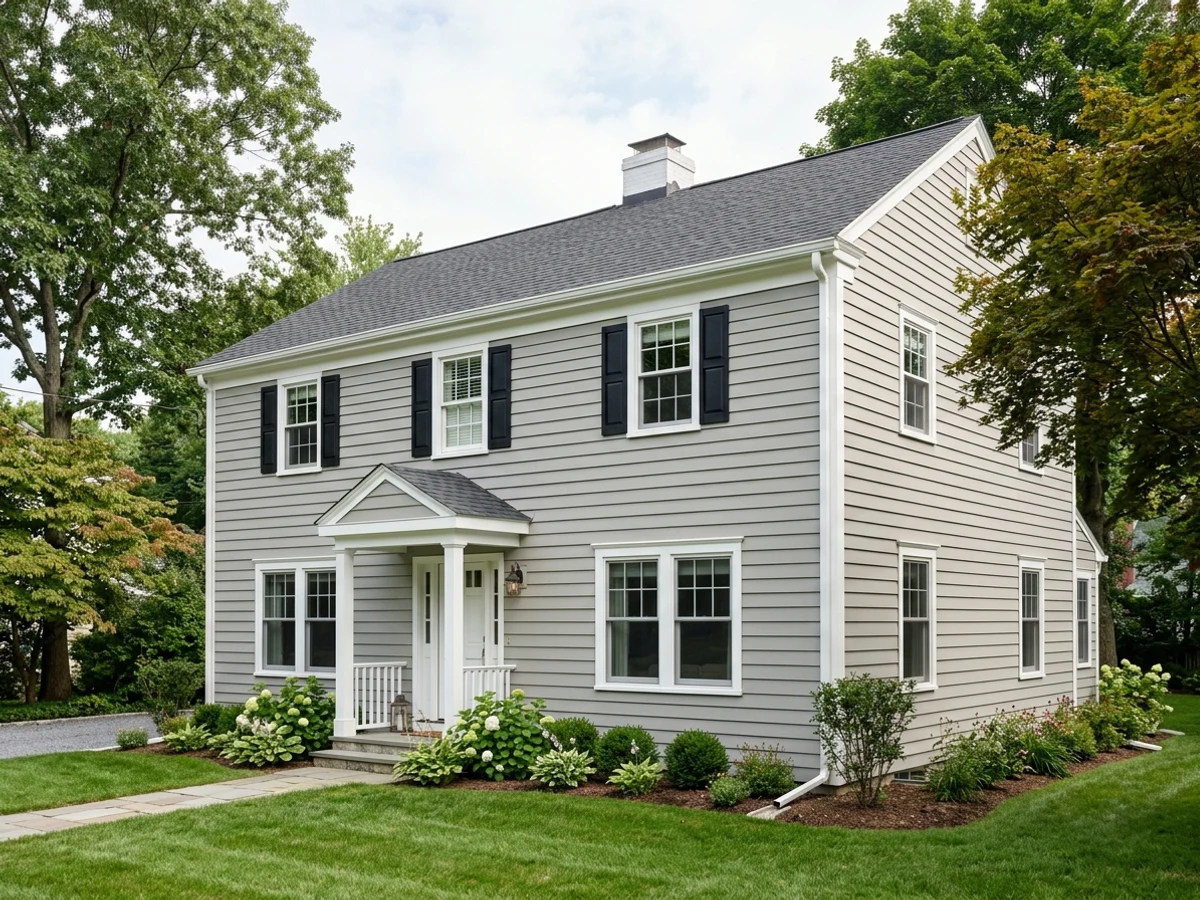
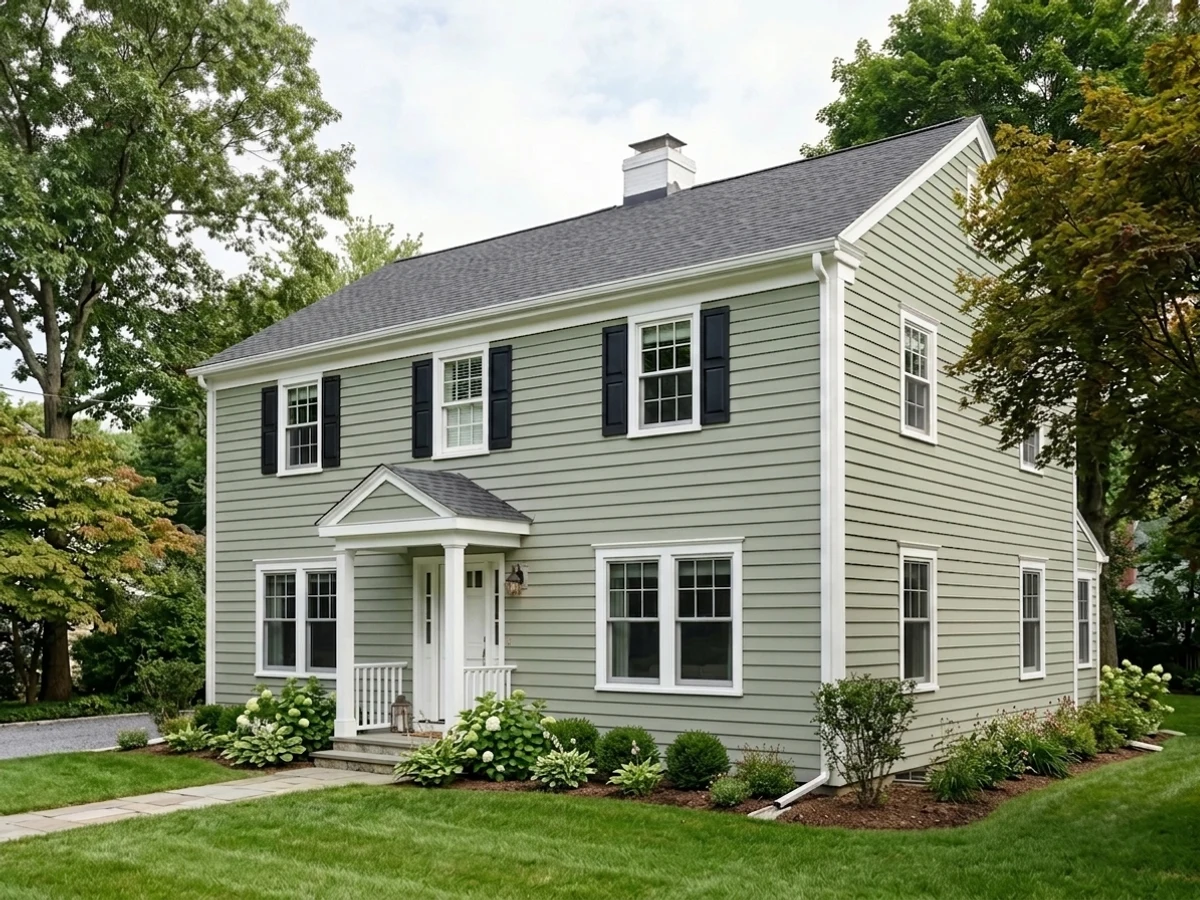
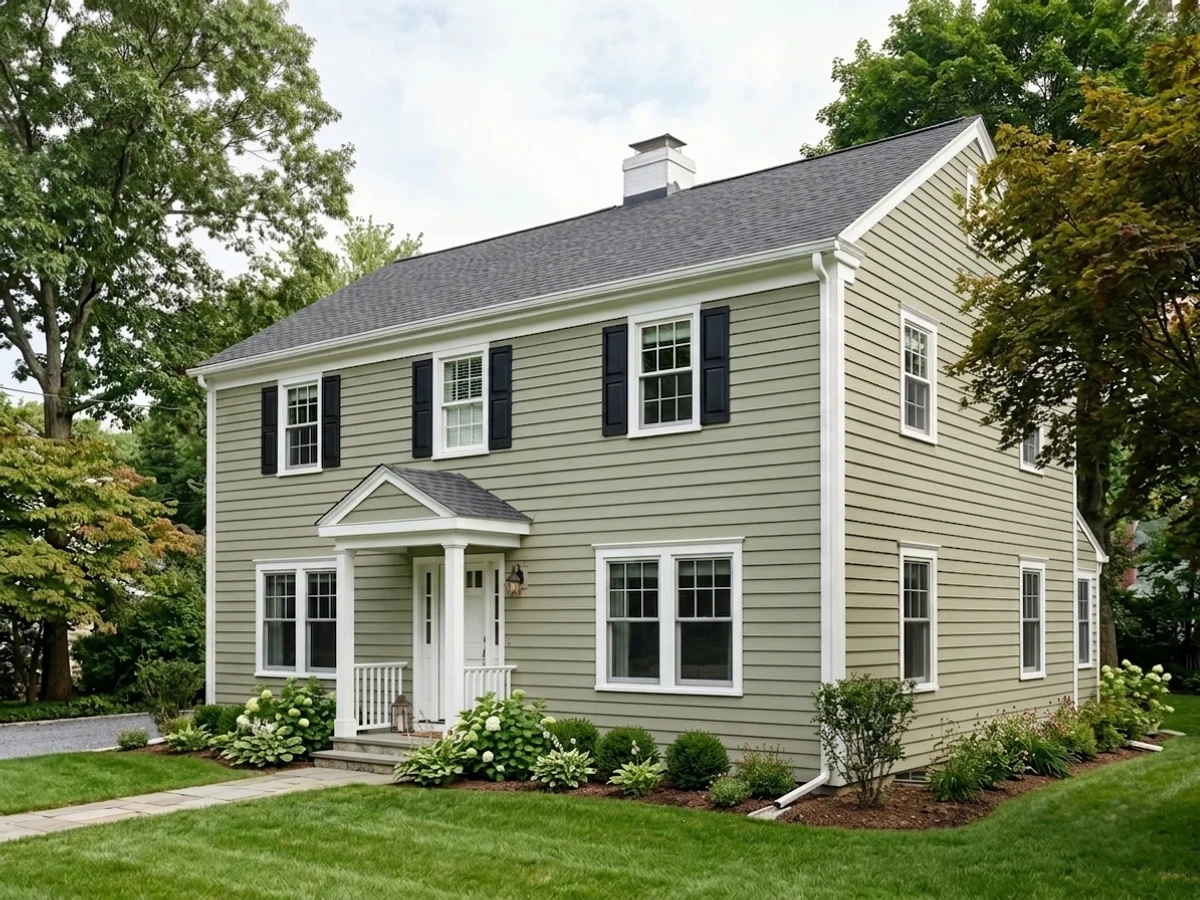
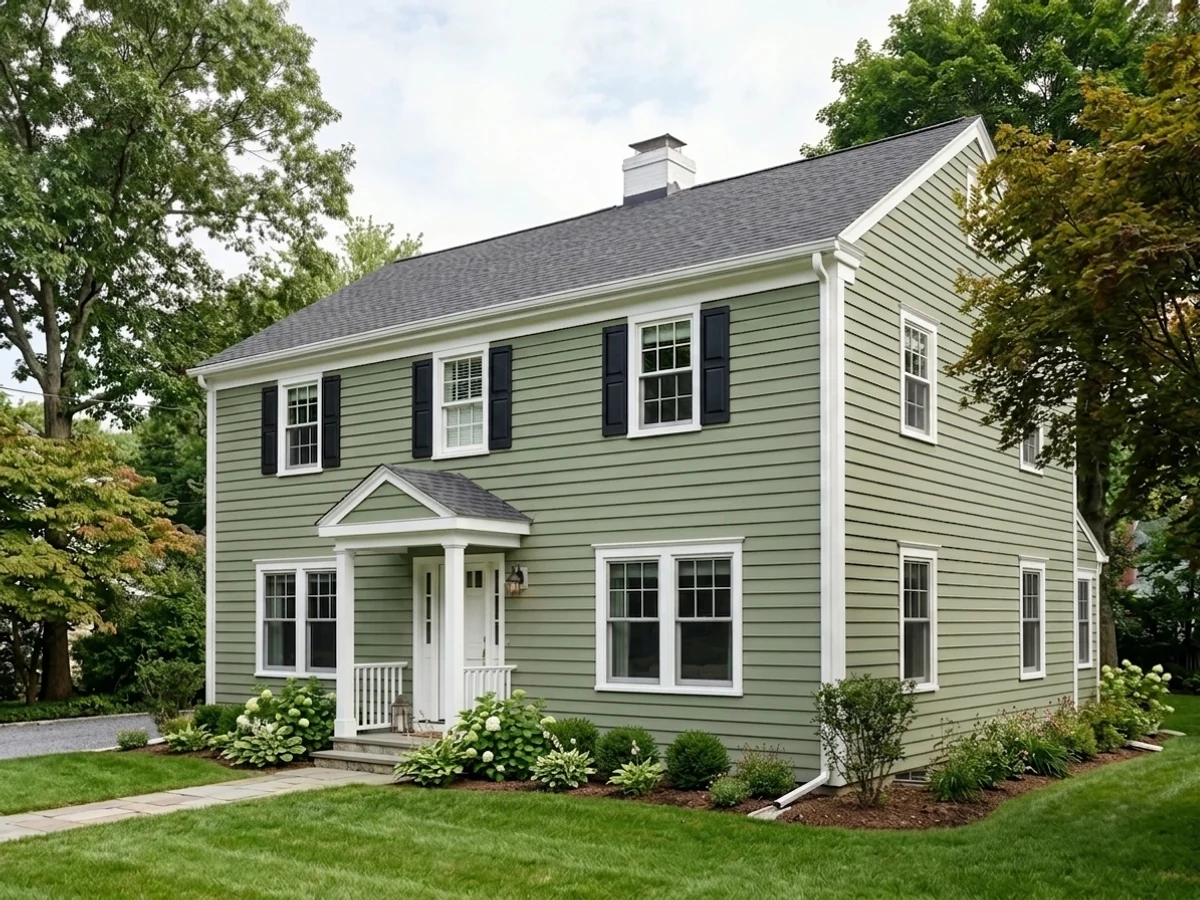
Room Colors · Green Exterior House
8 Best Green Exterior House Paint Colors for 2026
ideas, combinations, and real rooms
8 curated picks from real green exterior houses — with the exact colors, honest reasons why, and the combinations that hold the room together.

Former interior stylist who can spot a green undertone from across a room. Jessica writes the color and mood pieces — what to choose, what pairs, and why your "white" looks pink.
The Fast Answer
Don't want to read 8 picks? These four are the safe answers.

Top Picks for the Green Exterior House
Tap a shade to see the green exterior house in it, then try it on your own room.
Green Exterior House Color Trends 2026 — What's In, What's Out


- Bright Grass Green — Saturated, true-green siding that felt bold years ago now reads artificial next to 2026's muted, earthy exterior greens.
- Cool Blue-Green Everything — Cool, blue-leaning greens are losing ground to warmer, olive- and sage-toned greens that pair better with natural materials.
- Green Only As A Trim Accent — Using green only for shutters or a front door is giving way to full body-color commitment on 2026 exteriors.
The 8 Best Green Exterior House Paint Colors
Every pick below is a real rendered green exterior house, not a chip. The lead color first; the swatches are the full scheme in the photo — walls, furniture, textiles, accent.

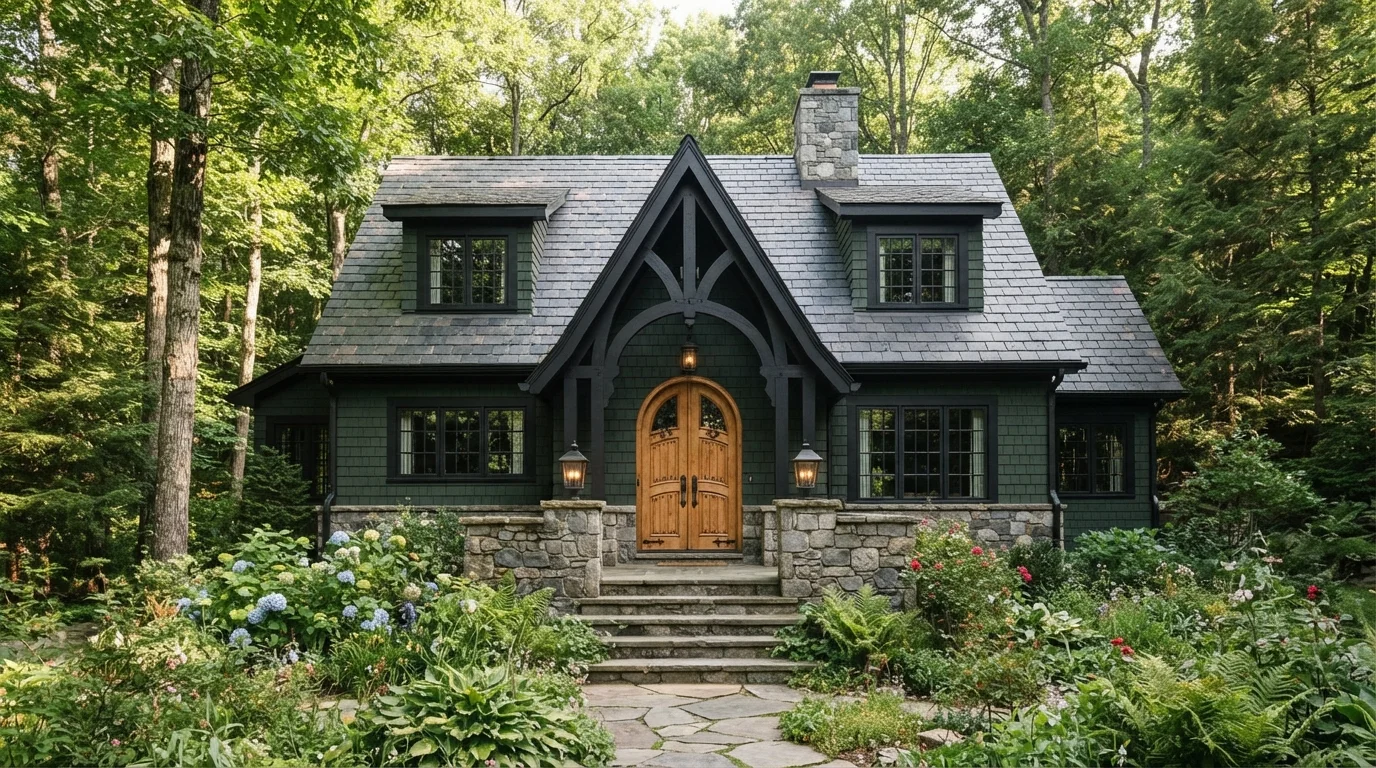
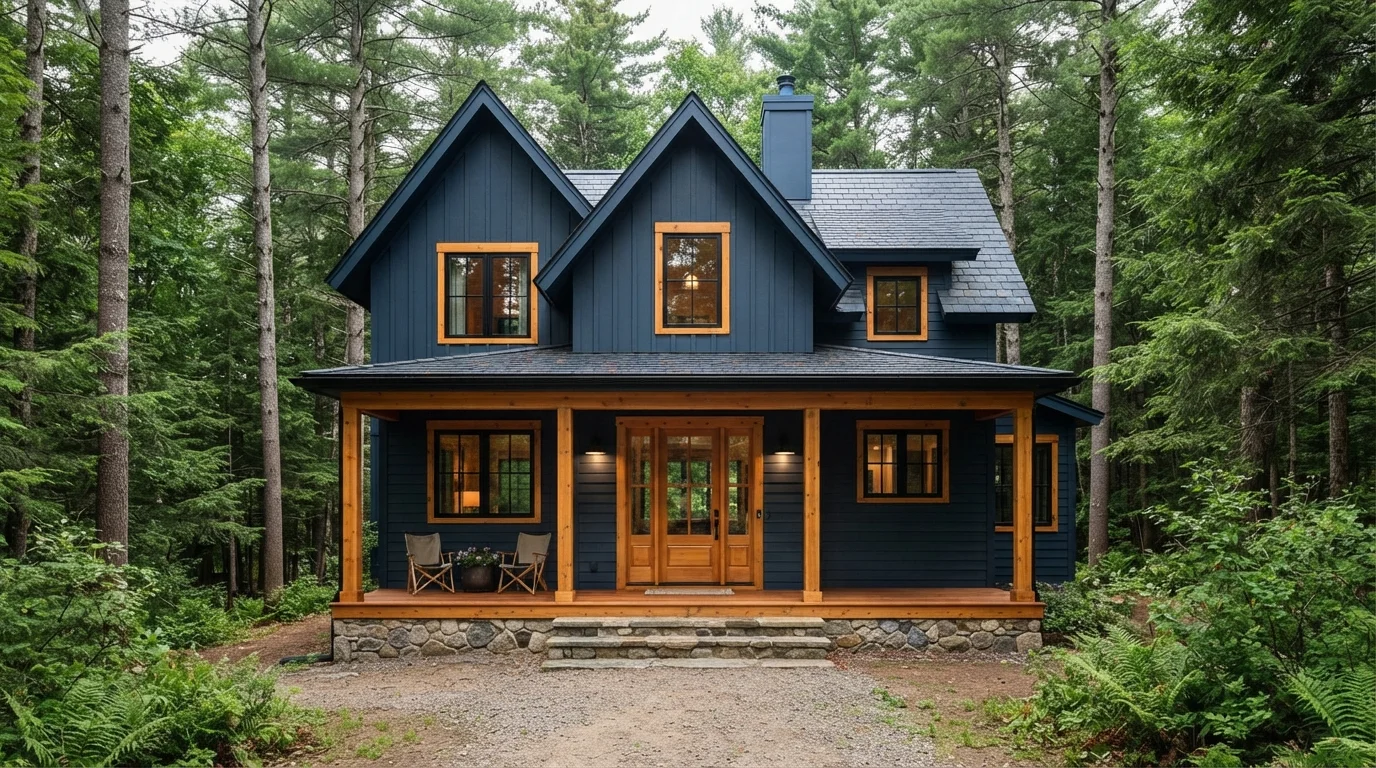
Dappled sunlight filters through tall pines onto deep evergreen shingles and a warm, glowing wood door.
Deep forest green is a rich, earthy pine shade full of quiet depth. In this exterior, the dark green shake siding covers the walls, crisply framed by dramatic charcoal-black trim on the steep gables and window casings, with a warm honey wood front door right at the center. The house feels snug, grounded, and wonderfully magical. Combining deep nature-inspired tones with organic stone and wood lets the home blend effortlessly into the surrounding forest. It is an ideal look for anyone dreaming of a moody, storybook cottage exterior.
SEE IT ON YOUR WALLS →
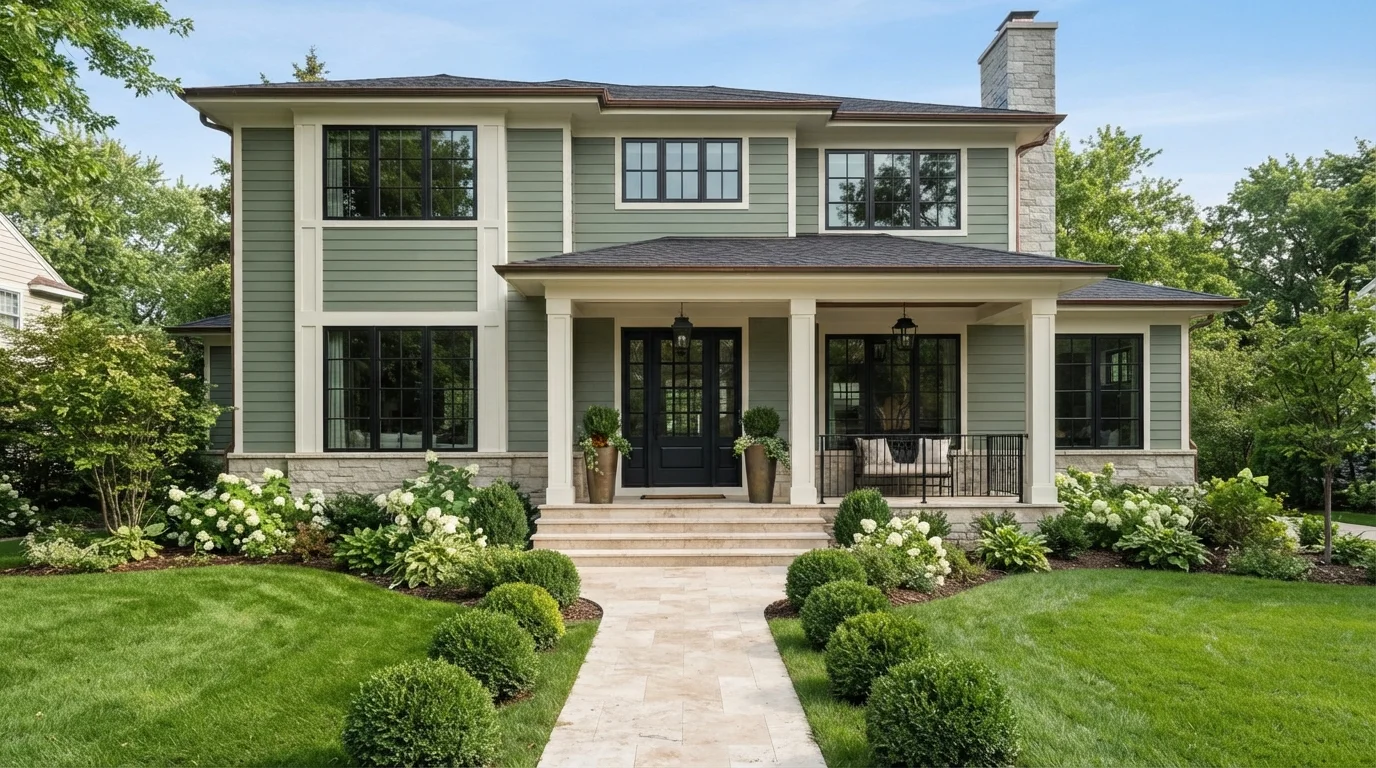
Fresh sage siding pairs with clean cream trim and crisp black accents for a stately, nature-inspired curb appeal.
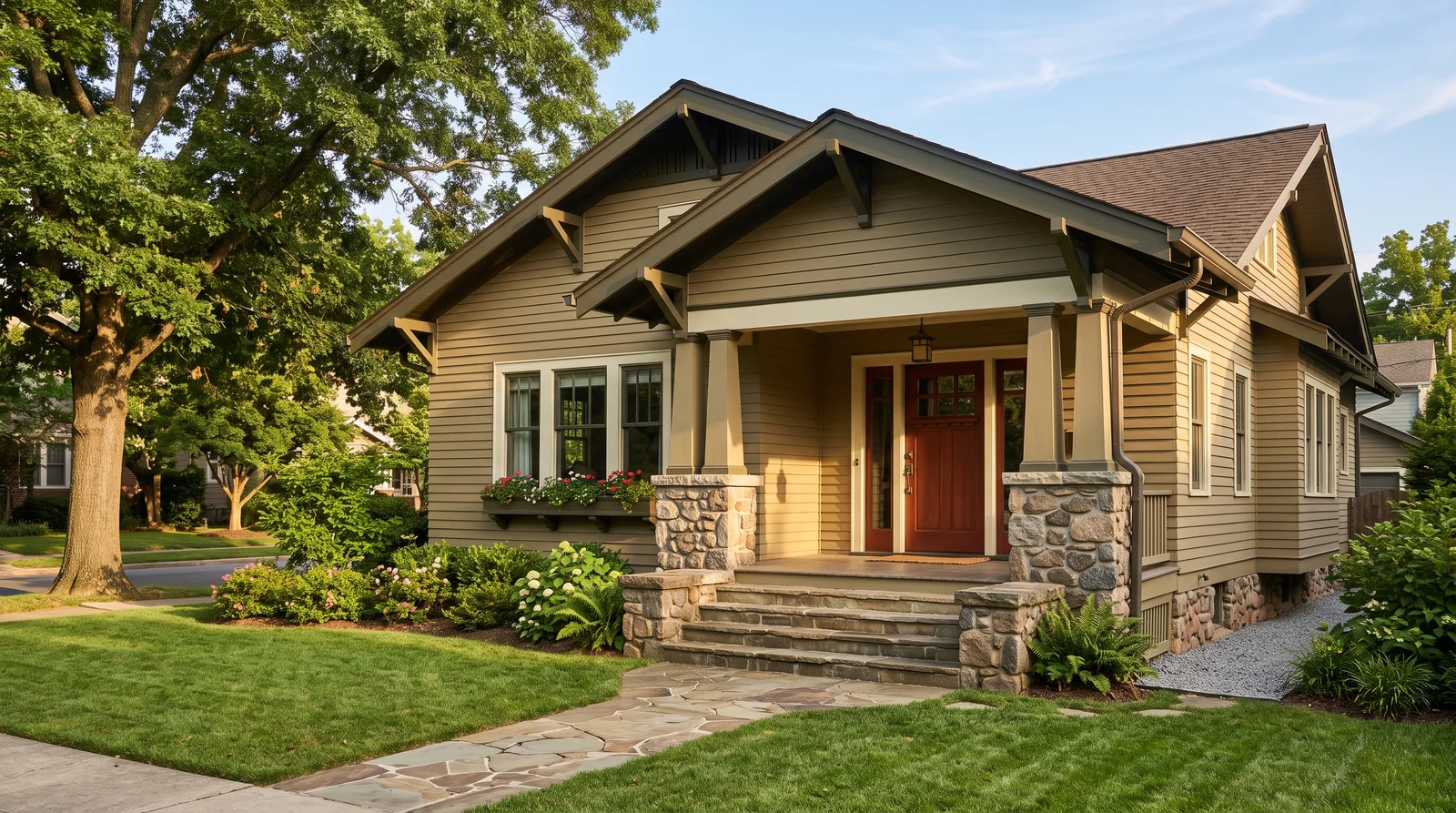
Sage green is a soft, earthy botanical tone. In this home, the siding wears a muted herbal green, complemented by creamy off-white columns, trim, and bold black window sashes and doors. The entryway feels crisp, inviting, and naturally elegant. The combination works because the high-contrast black accents give the soft organic green a tailored, modern definition. It is a great choice for homeowners who want traditional curb appeal with a fresh, contemporary touch.
SEE CEDAR PATH ON YOUR WALLS →
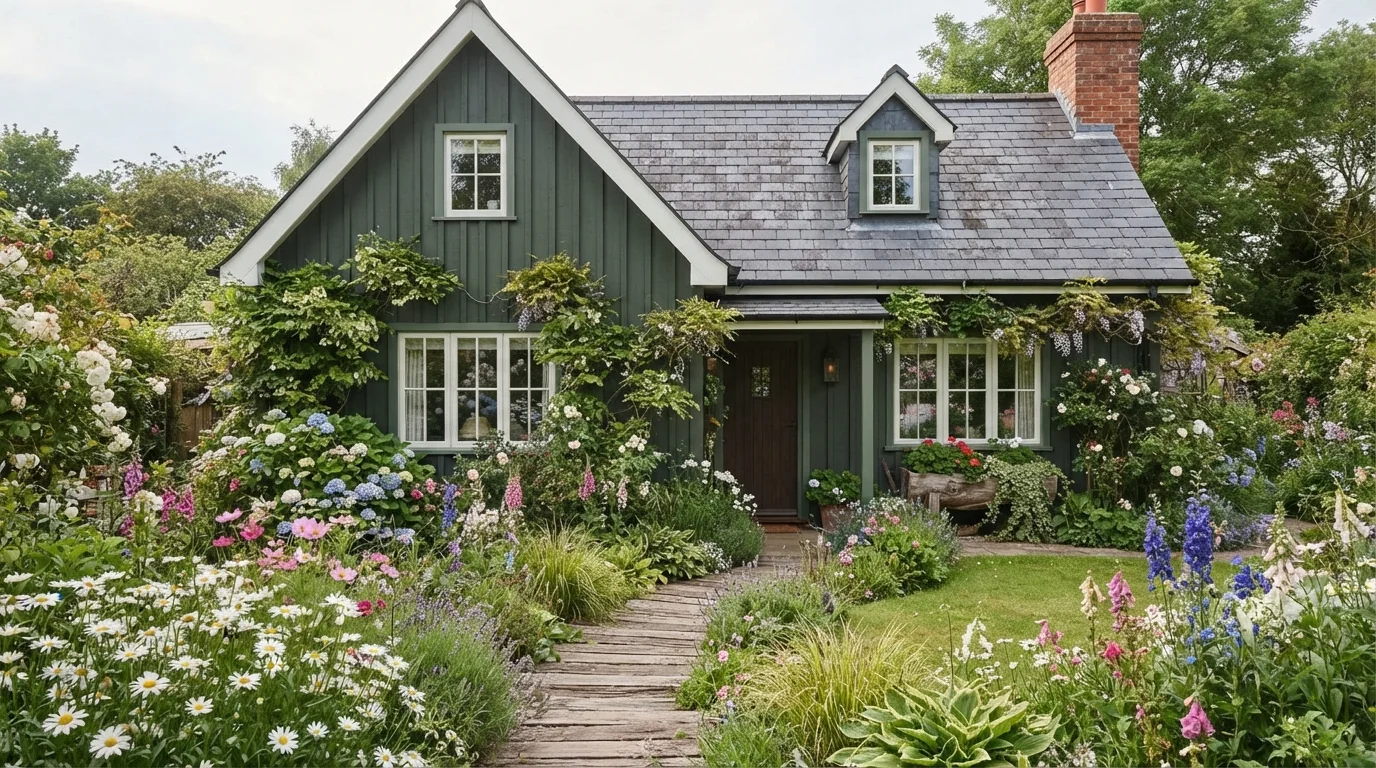
Deep forest green siding settles quietly into a romantic sea of blooming cottage flowers and rambling greenery.
Forest green is a deep, earthy botanical shade. In this exterior, the vertical wood siding is drenched in dark green, framed by bright white sash windows and muted sage trim. The whole setting feels calm, romantic, and deeply tucked away in nature. The combination works so well because the deep wall color mimics the surrounding foliage, letting the bright white petals and window frames truly pop. It is the perfect choice for anyone dreaming of a cozy storybook look.
SEE DEEP FOREST ON YOUR WALLS →
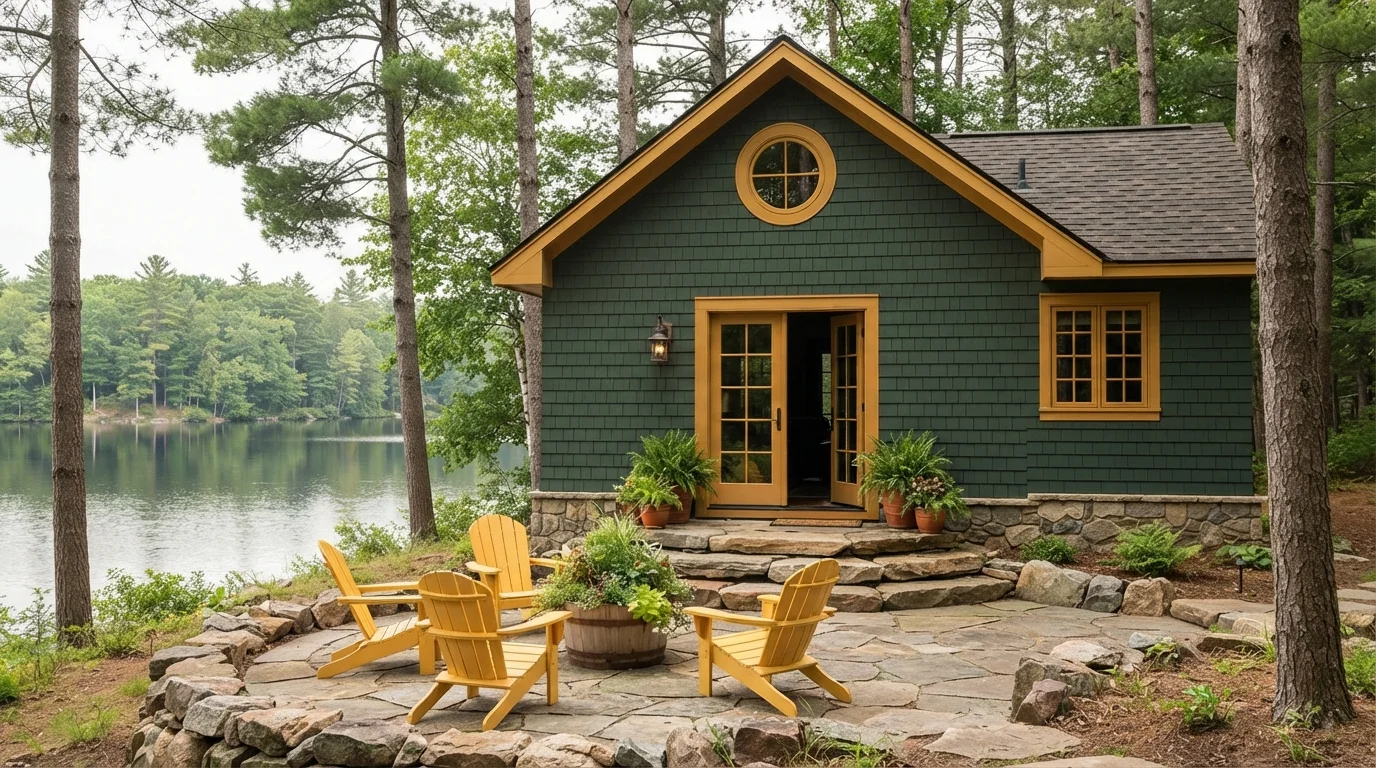
Deep pine green siding meets sunny golden yellow accents, blending harmoniously into the towering pines and tranquil lake.
Forest green is a rich, grounding woodland shade. In this photo, deep green cedar siding pairs with warm mustard yellow on the window trim, French doors, and Adirondack patio chairs. It feels snug, inviting, and completely connected to nature. The combination works because the earthy yellow pops brightly against the dark green backdrop without clashing with the surrounding trees. It is perfect for anyone wanting a classic, cheerful storybook cottage aesthetic by the water.
SEE SYCAMORE TREE ON YOUR WALLS →
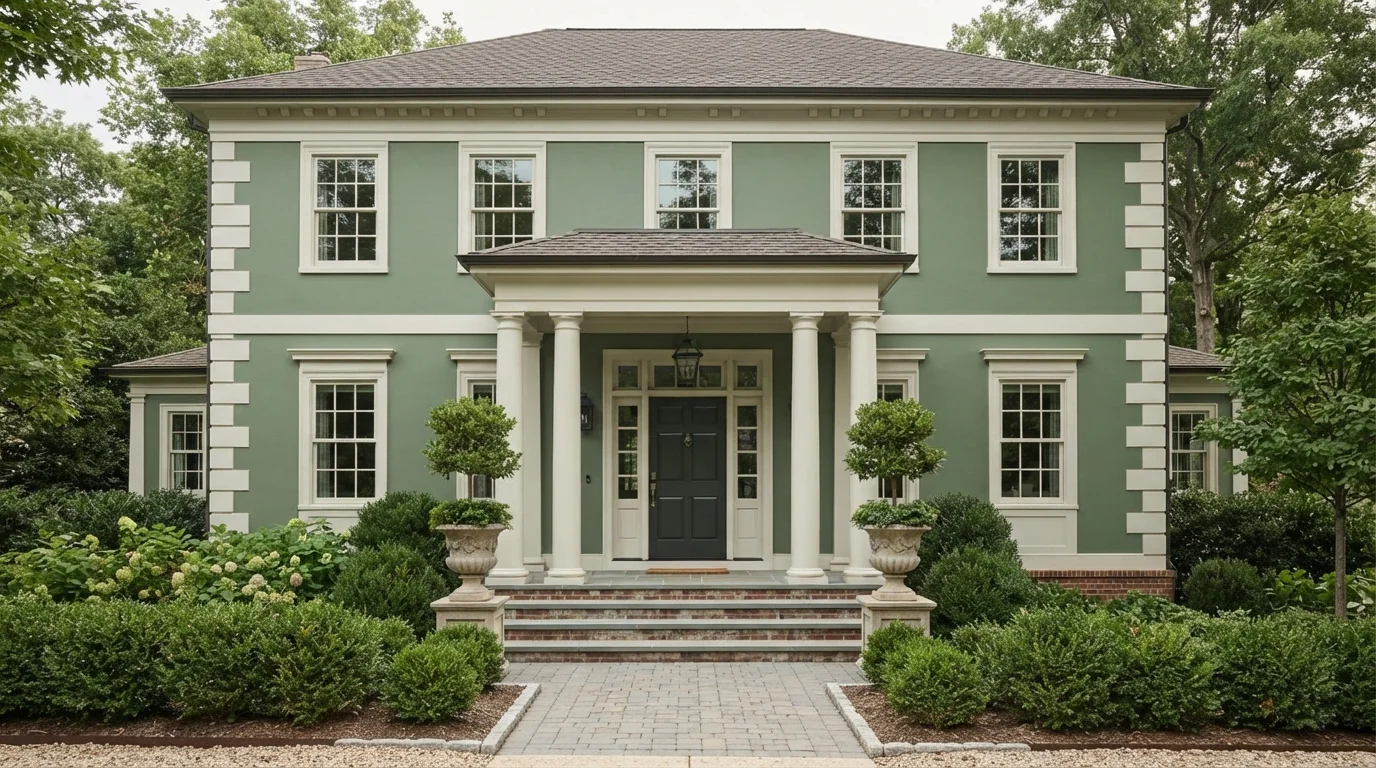
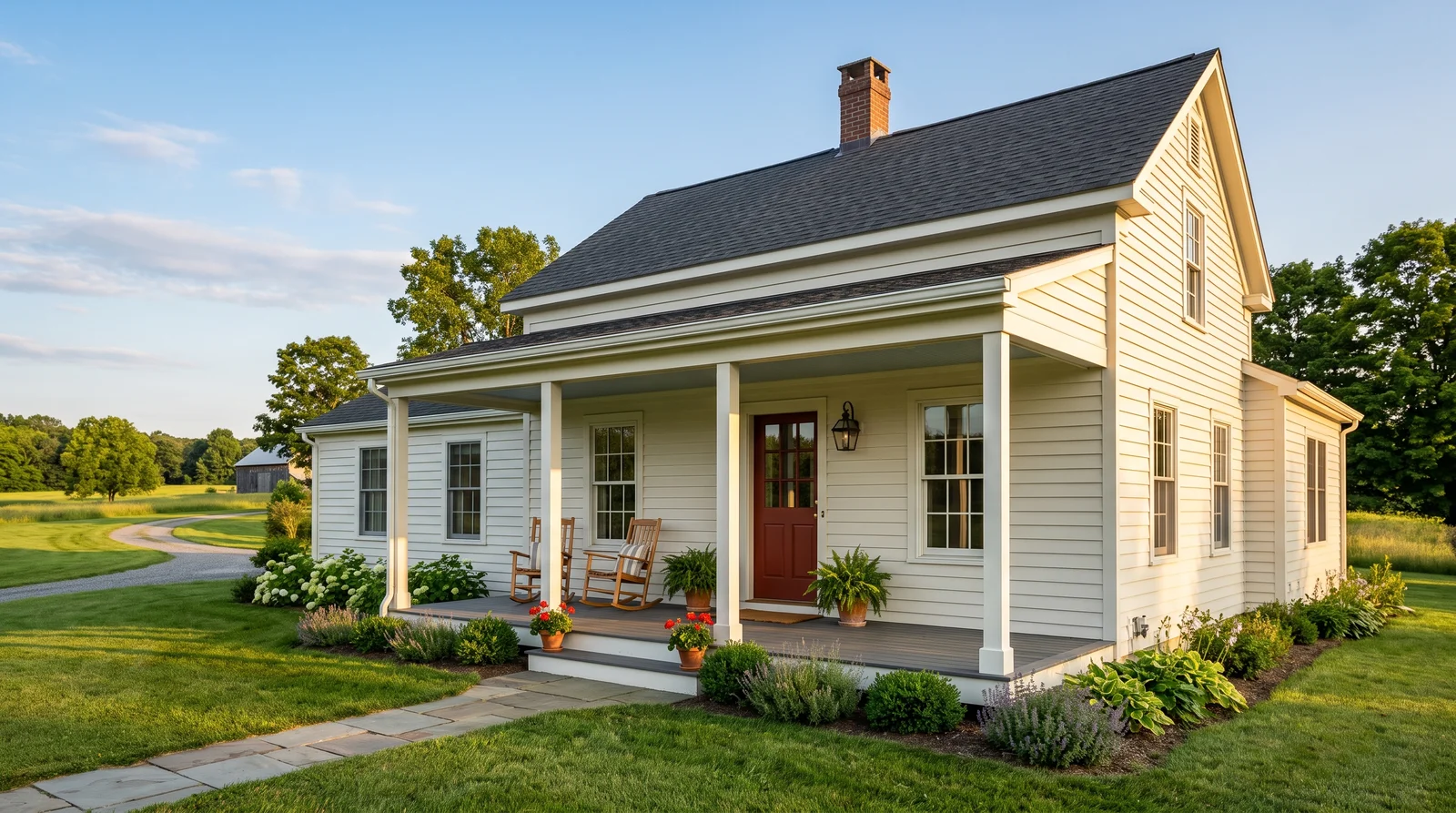
Leafy garden green meets crisp off-white trim for a stately, nature-immersed curb appeal that feels instantly welcoming.
Sage green is an earthy, refreshing herbal green full of life. In this facade, it covers the exterior siding while bright off-white frames the windows, portico, and eaves, complemented by a deep charcoal front door. The whole entrance feels grand, tranquil, and connected to the landscape. It works because the crisp white details give clean structure to the organic green, preventing it from feeling overgrown. It is an ideal look for classic homeowners who want timeless curb appeal with plenty of personality.
SEE SPRING LEAVES ON YOUR WALLS →
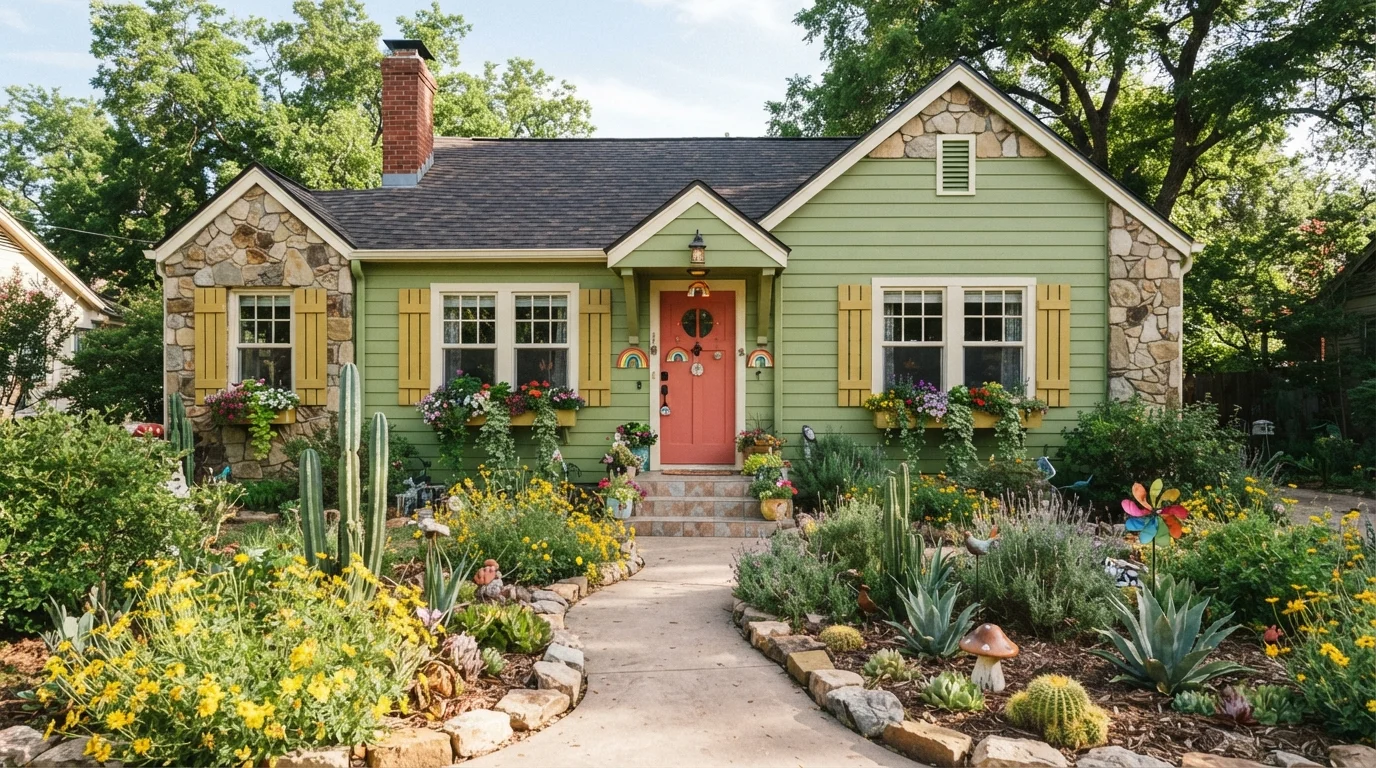
Step along a sunlit stone path toward an enchanting cottage exterior overflowing with bright energy and playful colors.
Apple green is a fresh, sun-kissed leafy shade with a hint of warm yellow. Here, that lively green covers the cottage siding, paired with warm sunflower-yellow shutters and a vibrant coral-red front door. The whole facade feels joyful, artistic, and full of fairy-tale charm. The combo works because warm greens and yellows mirror the surrounding botanical garden while the coral door offers an inviting pop of contrast. It is perfect for anyone who loves an imaginative, eclectic home full of personality.
SEE MOTHER NATURE ON YOUR WALLS →
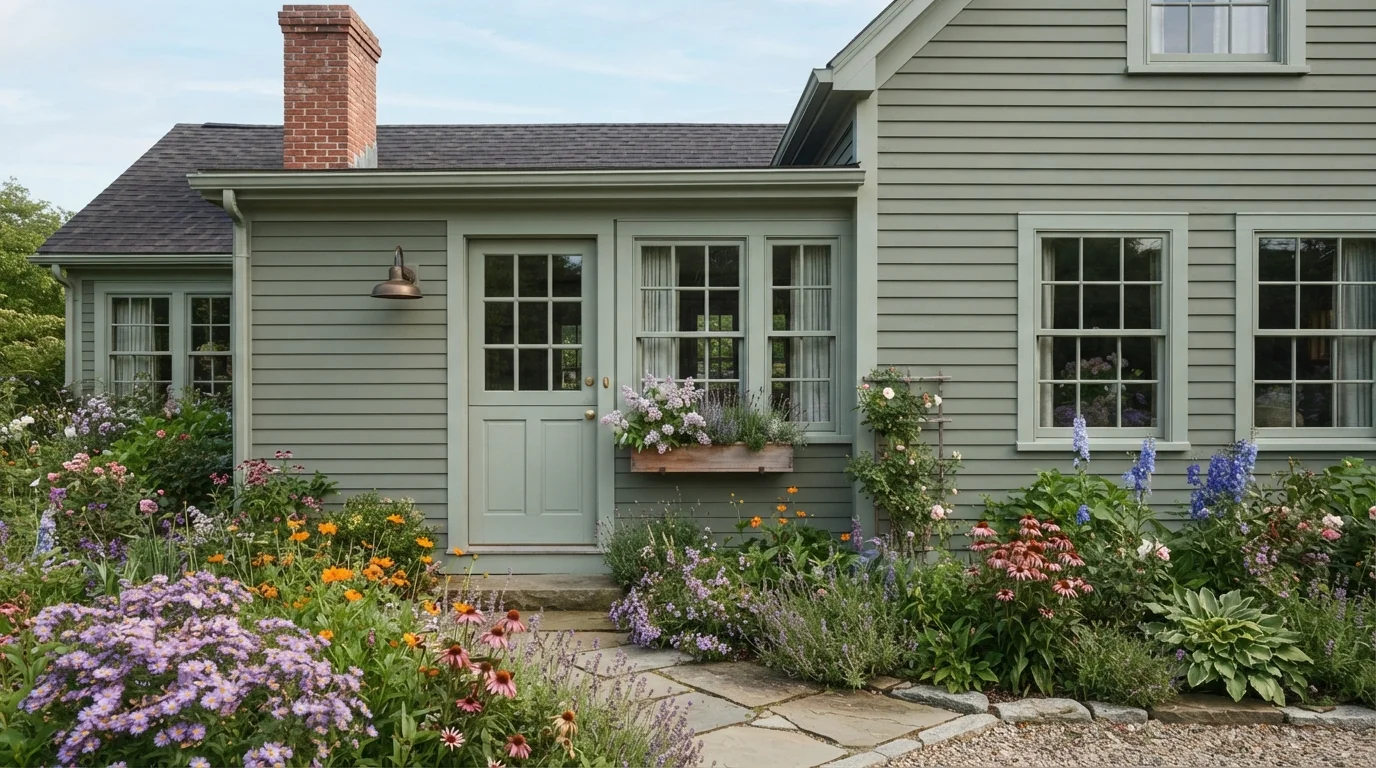
Step into a storybook garden with soothing sage siding framed by sunlit wildflowers and crisp cottage windows.
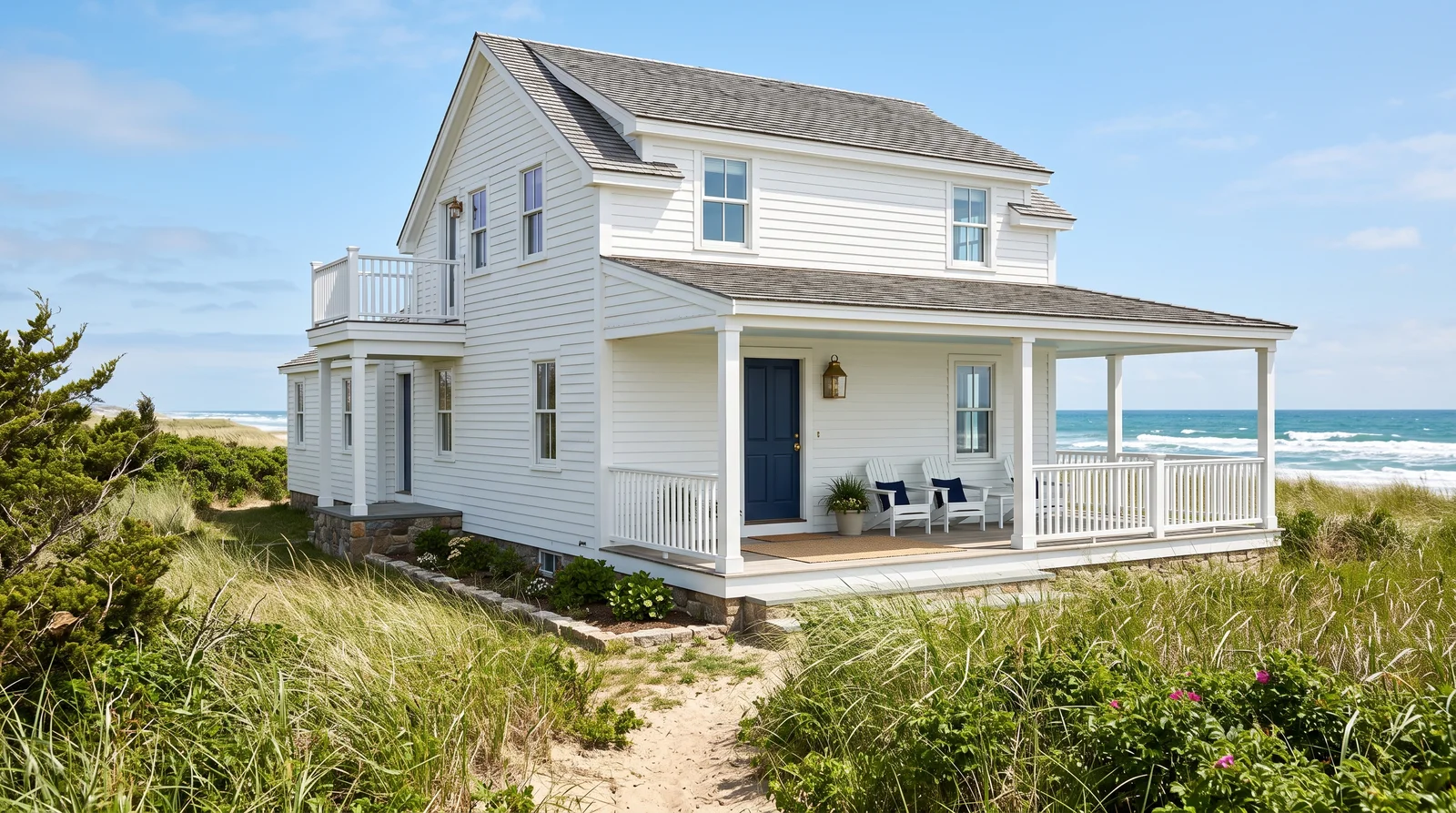
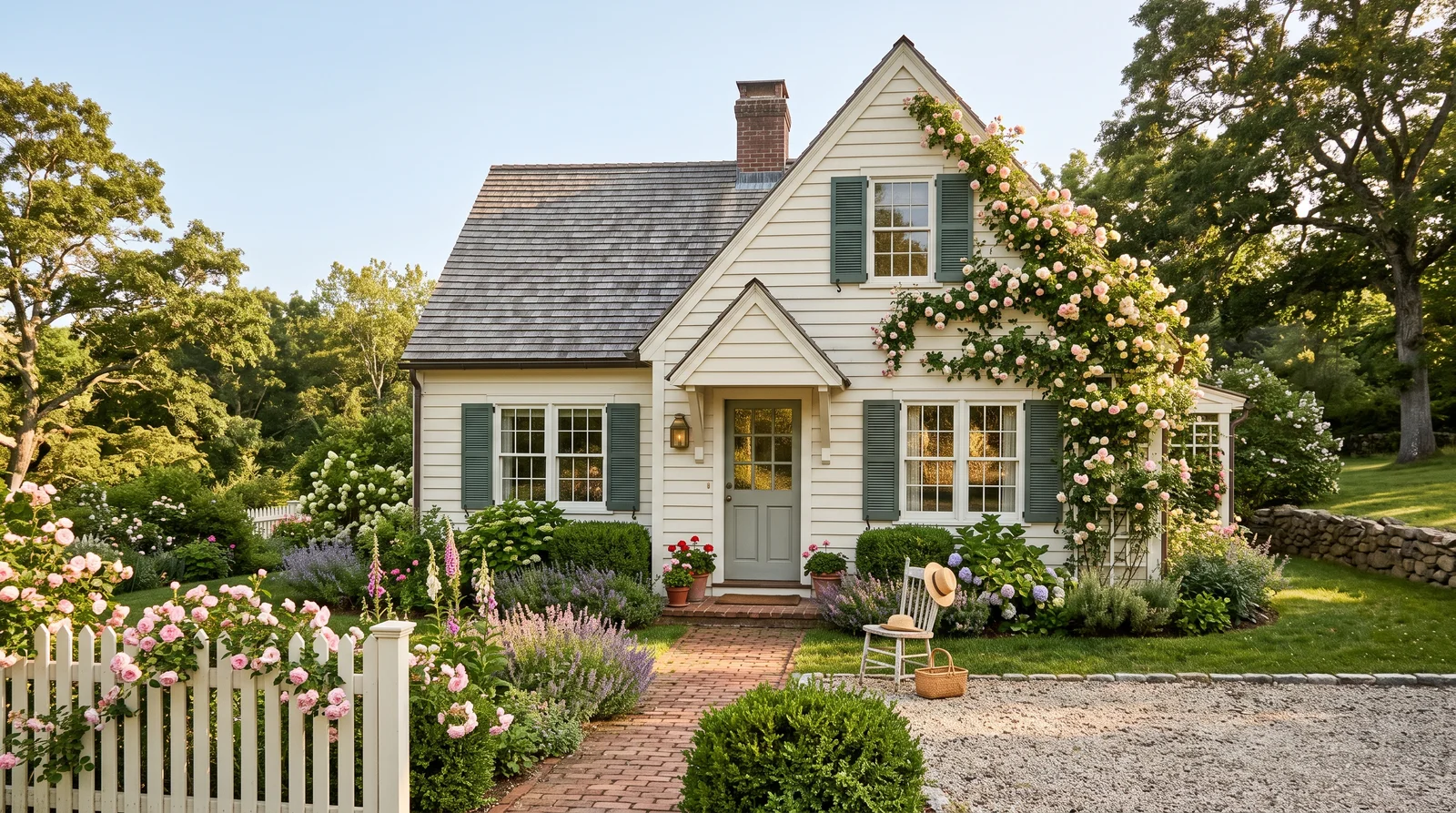
Sage green is an earthy, calming grayish-green. Here, the horizontal clapboard siding wears this gentle botanical shade, accented by softer pale sage trim around the divided-light windows and Dutch door. The entire facade feels tranquil, storybook-sweet, and effortlessly welcoming. The muted green exterior works because it flows naturally into the lush lawn and bright wildflower garden without competing for attention. It is a lovely choice for anyone dreaming of a timeless, nature-inspired cottage retreat.
SEE IT ON YOUR WALLS →
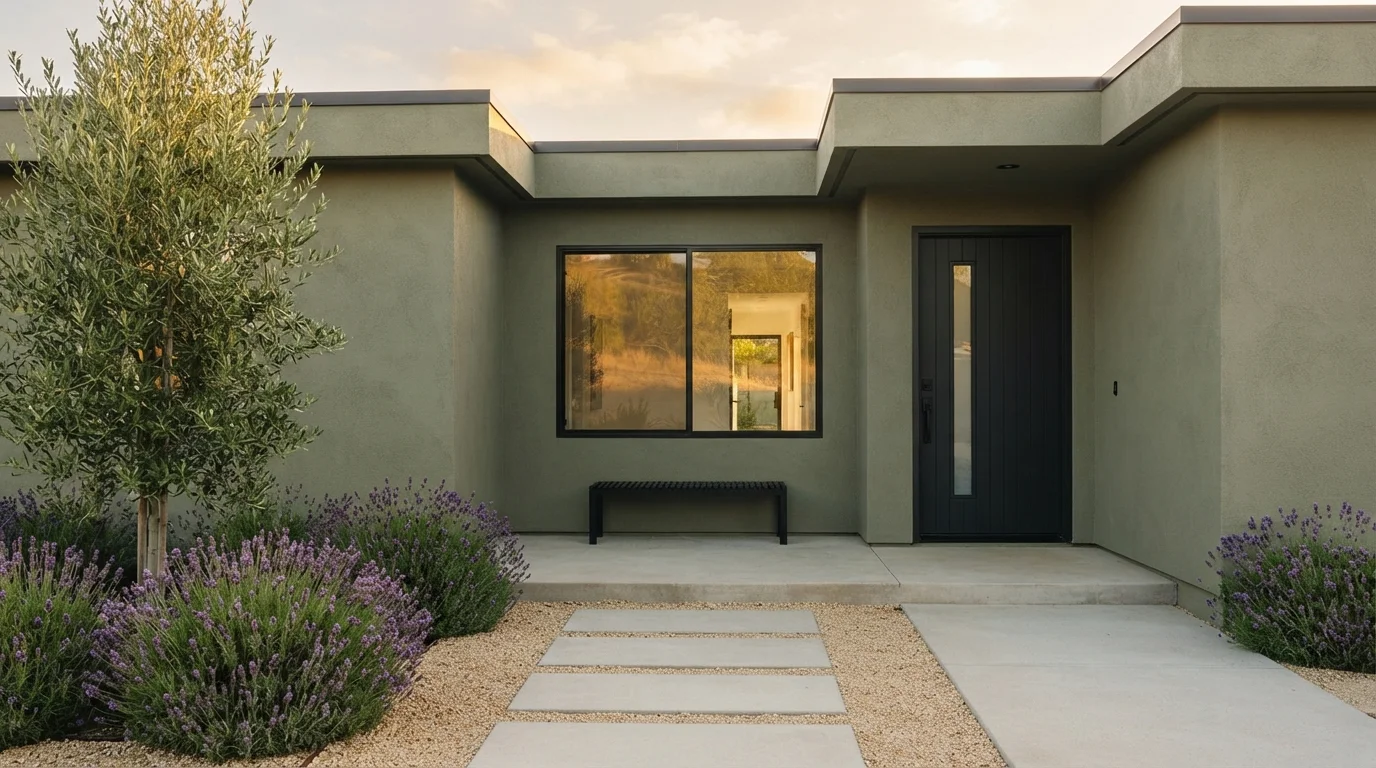
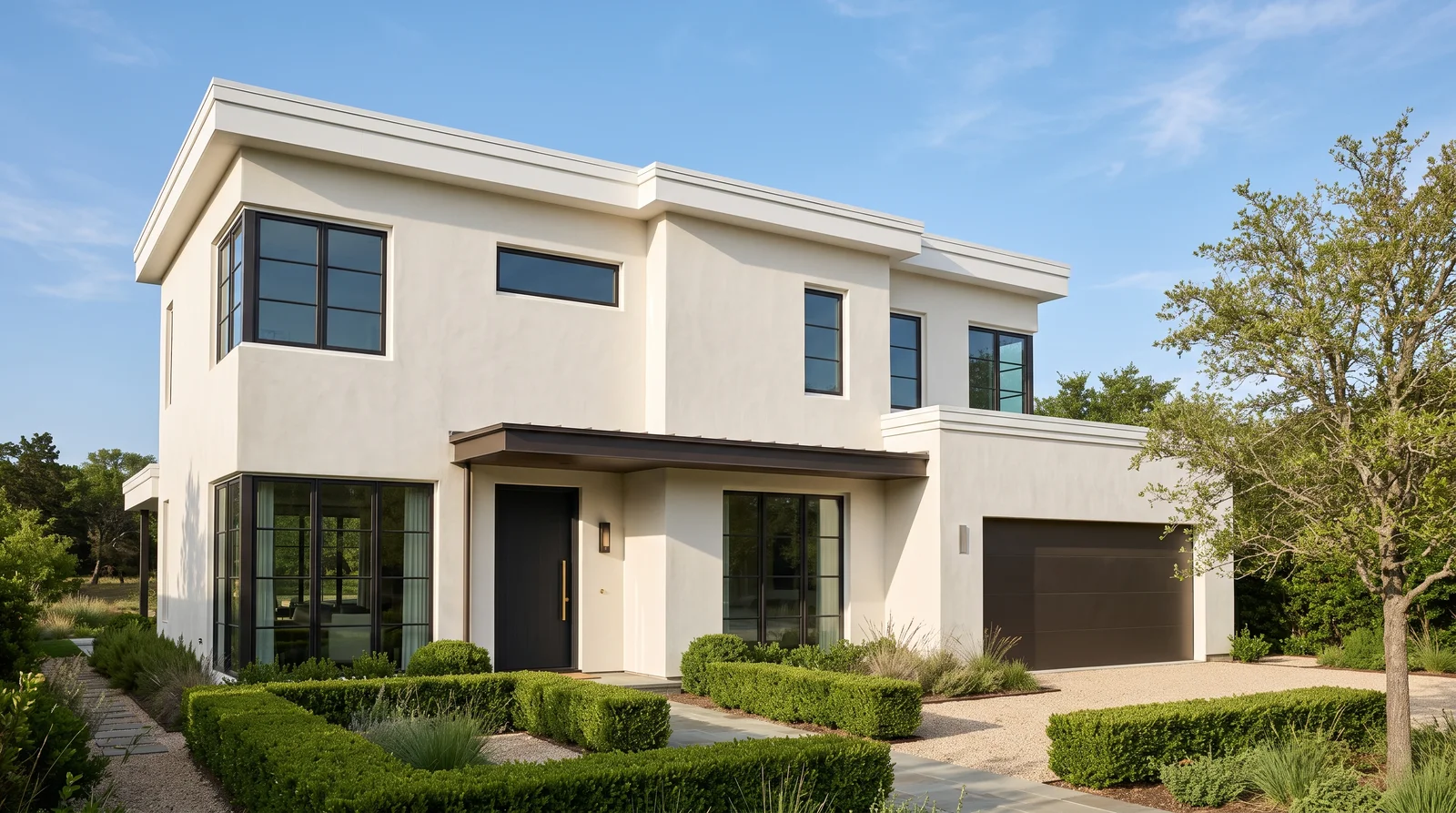
Warm afternoon sun casts a gentle glow over earthy green stucco, sleek black accents, and fragrant lavender walkways.
Olive green is a soft, earthy natural green with a subtle warmth. In this outdoor space, smooth stucco walls are bathed in muted olive, grounded by a bold black front door, dark window frames, and a low black entry bench. The exterior feels calm, grounded, and modern. The pairing works because the organic green blends naturally with the desert plants and gravel while the rich black adds sharp contrast. It is perfect for anyone wanting a relaxed, contemporary look with memorable curb appeal.
SEE BOWLING GREEN ON YOUR WALLS →Green Exterior House Wall Color Combinations
A wall color never works alone. These are the full schemes from the rooms above — the lead color first, then the supporting colors that make the photo work.
Dappled sunlight filters through tall pines onto deep evergreen shingles and a warm, glowing wood door.
TRY THIS PALETTE →Fresh sage siding pairs with clean cream trim and crisp black accents for a stately, nature-inspired curb appeal.
TRY THIS PALETTE →Deep forest green siding settles quietly into a romantic sea of blooming cottage flowers and rambling greenery.
TRY THIS PALETTE →Rich forest green siding nestles among colorful wildflowers, creating a magical storybook hideaway deep in the woods.
TRY THIS PALETTE →Evergreen Fog pairs naturally with real wood — a stained cedar door or natural wood porch posts — plus a crisp trim; Behr Alabaster (BXC-62, LRV 82) is warm enough not to look stark against it and keeps the trim from reading cold. Back to Nature wants the same kind of clean, bright trim to hold its energy — Alabaster again does the job — with Salamander reserved for the front door as a near-black anchor that reads intentional rather than random.
October Mist and Sage both lean traditional, so white or off-white trim (Alabaster) plus a stained or painted wood door keeps them from tipping into a flat, single-note look — October Mist especially benefits from a wood-tone door since its gray-green undertone needs some warmth nearby. Halcyon Green, being the coolest and grayest of the group, pairs best with white trim and stone or gray roofing rather than wood, since wood tends to fight its blue undertone. Brook Green works as a lighter alternative body color under any of these trim choices, or as a shutter color against a white or light-gray house for a house that wants a hint of green without a full green facade.
More Exterior Color Ideas
Set on a color family already? Each page has its own real rooms and picks.


Light or Dark Green Exterior House Colors?
Go Light (LRV 60+) If…
The room is small, faces north, or has to work at every hour. Light warm colors make it feel bigger and stay calm in evening light — the light you actually live in.
Go Dark (LRV Under 20) If…
You want the cocoon effect and the room has real daylight. Dark works best on one feature wall — or fully color-drenched in a large room with good windows.
Everything in the LRV 30–39 range here — Evergreen Fog, Sage, Halcyon Green, Back to Nature, October Mist — is a mid-tone that will shift noticeably between shade and direct sun, so look at swatches on the actual wall at 9am, midday, and evening before deciding. Evergreen Fog at LRV 30 is the darkest of the group and will read almost gray-black in shadow on a north-facing wall, which some owners want (it makes a large facade feel grounded) and others find heavy on a smaller house. October Mist at LRV 39 is the lightest full-body option and stays legibly green even in flat light, which is why it's the safer pick if the house doesn't get much direct sun.
For genuinely dark or genuinely light, this page's picks aren't meant to be used the same way. Salamander (LRV 5) is dark enough that it should stay off large wall areas — heat absorption and visible fading are real risks on full siding at that depth, so keep it to a door, shutters, or a small accent run. Brook Green (LRV 78) is light enough to function as a body color for someone who wants green without the visual weight of a mid-tone, especially on a smaller house where a deeper green would feel heavy against the lot size.
See It. Love It.
Paint It.
Upload one photo of your green exterior house and try every color on this page on your own walls — in your own light, before you buy a drop of paint.

Forest LightBeforeSheen and Finish for Green Siding
Flat or low-sheen finishes are the standard choice for exterior siding in any of the mid-tone greens here — Evergreen Fog, Sage, Halcyon Green, Back to Nature, October Mist — because a flat finish hides the small surface imperfections that a satin or gloss would highlight, and it keeps a saturated color from looking plasticky in direct sun.
Satin or semi-gloss makes more sense on the smaller elements: a satin front door in Salamander gets enough sheen to look deliberate without being shiny, and semi-gloss on trim in Alabaster gives the white a crisp edge against the green body. Keep gloss levels off large wall areas in a dark color like Salamander — on full siding, gloss would exaggerate every dent and wave in the substrate.
Where a Dark Accent Like Salamander Belongs
Salamander's LRV of 5 makes it a strong pick for a front door or shutters, not a wall color. At that depth, a color absorbs significant heat, which accelerates fading and, on wood or fiber-cement siding, can stress the material over time — door and shutter areas are small enough that this isn't a practical concern, but full siding is.
Used as an accent, Salamander does what a near-black door is supposed to do: it gives the eye a place to land against a softer body color like October Mist or Sage, and it reads as a deliberate design choice rather than an odd dark patch. Pair it with a lighter trim color like Alabaster so the door has contrast on both sides.
Mistakes Specific to a Green Exterior
The most common mistake is picking a green that's too close to the tone of nearby mature trees and shrubs, so the house visually disappears into the landscaping instead of standing apart from it — this is a real risk with Sage and Back to Nature on a heavily wooded lot, and it's worth stepping back from the street to check the color against the actual foliage, not just a swatch.
The second mistake is testing a green swatch in isolation from trim and roof color. Halcyon Green's cool undertone can clash with a warm brown or terracotta roof in a way that isn't obvious on a paint chip alone, and October Mist's gray-green can look muddy next to certain brick tones. Paint a large sample patch and view it alongside the roof, any brick or stone, and the trim color together before committing to gallons.
About Green Exterior House Paint Colors
A green exterior works because it borrows a color that's already sitting in your yard. Behr Back to Nature (LRV 38) leans into that directly — a lively, sunlit green with enough brightness to read as a real color choice rather than a safe neutral, good on a facade that gets decent daylight. Sherwin-Williams Evergreen Fog (SW 9130, LRV 30) sits a shade darker and grayer, which is why it reads modern instead of cottage-y, and it's the pick that plays best against real wood — a cedar door, stained shutters, or a covered porch ceiling.
The softer end of the family — Benjamin Moore October Mist (1495, LRV 39) and Sherwin-Williams Sage (SW 7732, LRV 32) — gives up some drama for warmth. October Mist has enough gray in it to read as calm and herbal rather than minty, which is why it works on an entry door or a full facade where you want the house to feel settled next to mature landscaping. Sage does the same job with a touch more yellow, so it leans into a garden setting instead of fighting it. Sherwin-Williams Halcyon Green (SW 6213, LRV 33) is the outlier of the mid-tone group: it's cooler and grayer than the others, closer to a coastal blue-green, which is why it suits a house near water or one with a lot of stone or gray roofing already in the mix.
The two extremes on this page aren't meant to cover a whole facade. Benjamin Moore Salamander (2050-10, LRV 5) is nearly black-green — it belongs on a front door, shutters, or a small trim run, not full siding, because at that LRV it will absorb heat and show every water spot on a large surface. Behr Brook Green (N410-2, LRV 78) is the opposite move: a pale, minty green light enough to function almost like a tinted white, useful for a house that wants a hint of color without committing to a saturated wall.

The Questions Everyone Asks
What color should I paint my green exterior house?
If you want one answer, start with the safe picks above — Roycroft Bottle Green, Cedar Path, Deep Forest, Sycamore Tree. They read well in any light and survive furniture changes. Then check the light: strong afternoon sun wants a step cooler, a north-facing room wants a step warmer.
will a dark green house look black in strong sun?
Not usually a full-black look, but a color like Benjamin Moore Salamander (LRV 5) will read nearly black in shade and only pick up green undertones in direct, angled light. That's exactly why it works better as a door or shutter accent than a full-body color — on a whole facade, most owners want something with more LRV, like Evergreen Fog (LRV 30) or Sage (LRV 32), which still reads as green in shadow.
what trim color goes with a green house?
White or warm off-white is the classic, safest pairing — Behr Alabaster (LRV 82) works with any of the mid-tone greens on this page because its warmth keeps the trim from looking stark. For a darker accent instead of trim, a near-black door like Salamander gives the same house more contrast without changing the trim at all.
does green exterior paint fade faster than other colors?
Darker, more saturated greens fade faster under UV exposure than lighter ones, the same as any dark exterior color — it's about depth of color, not the hue itself. A near-black pick like Salamander on a south-facing wall would show fading sooner than a mid-tone like October Mist (LRV 39), which is one more reason to keep very dark greens to doors and small trim runs rather than full siding.
is green a good exterior color if I'm planning to sell?
A muted, classic green like Sage or October Mist is generally considered resale-safe because it reads as traditional rather than trendy, especially with white trim. A cooler, more distinctive pick like Halcyon Green or a very dark accent like Salamander is more of a personal-taste choice — fine to keep if you're staying, worth reconsidering if you're listing within a year or two.
what's the difference between sage green and a true forest green for a house?
Sage (SW 7732, LRV 32) has gray and a touch of yellow in it, so it reads soft and muted against greenery rather than competing with it. A true forest green sits darker and more saturated than anything on this page except Salamander, and would need to go on trim or a door rather than full siding for the same heat-and-fade reasons that apply to any dark exterior color.
What two-color combination works best in a green exterior house?
The reliable pattern is a quiet main color plus one deep accent on a single wall. Keep trim and ceiling in one warm white so the two colors are the only event in the room — the combination cards above show complete schemes from real rooms.
What colors make a green exterior house look bigger?
High-LRV, slightly warm colors — LRV 60–75 is the sweet spot. Paint the walls and trim close to the same light color so the corners blur, and keep the ceiling white. Stark cool white actually works against you; it creates hard shadows that show the room's edges.
Ask a Question