Antique White
The Behr paint-store classic reviewed honestly: the deepest, warmest white in Behr's lineup, where it earns its trim-and-door reputation, and the exact light that makes it look dingy.

Jessica has spec'd whites and neutrals for more than 300 rooms and keeps a sample wall of painted drawdowns in her studio. Every color review is checked against real reader rooms in the comments and re-tested when a formula changes. About the testing process →
- 1Agreeable Gray60
- 2Balboa Mist66
- 3Antique White73
- 4Shoelace78
- 5Dover White83
The Fast Verdict
Antique White is Behr's oldest kind of white: a creamy, unapologetically warm off-white that has trimmed traditional American homes since long before "greige" was a word. At LRV 73 it sits noticeably deeper than Behr's other whites — Swiss Coffee, Off White, Polar Bear — so it reads more like a soft cream than a near-white. That depth is the whole story: it is cozy and forgiving in the right light, and it is the color people mean when they complain a white "looks yellow."
Trim, doors and millwork in a traditional or colonial home · whole-house walls with oak, maple or butcher-block wood · farmhouse and cottage exteriors · anyone repainting a house that was already trimmed in a classic warm white
You want a crisp, bright white · your room is north-facing and dim without lamps · you're pairing it next to a brighter white trim or ceiling · your counters or floors are cool gray stone
- Genuinely warm, creamy trim and door white — the classic "antique white" look
- Deep enough (LRV 73) to hold color and hide scuffs better than a near-white
- Flatters oak, maple and butcher-block wood tones
- Available across nearly every Behr product line, so it's easy to match old trim
- Reads traditional and finished on colonial and farmhouse exteriors
- Looks dingy or yellow next to a brighter white trim or ceiling
- Goes flat and gray in a dim, north-facing room with no lamps
- Can need extra coats or a tinted primer over dark or patchy surfaces
- Too warm and dated-feeling for a crisp modern or cool-toned room
What Color Is Antique White, Really?
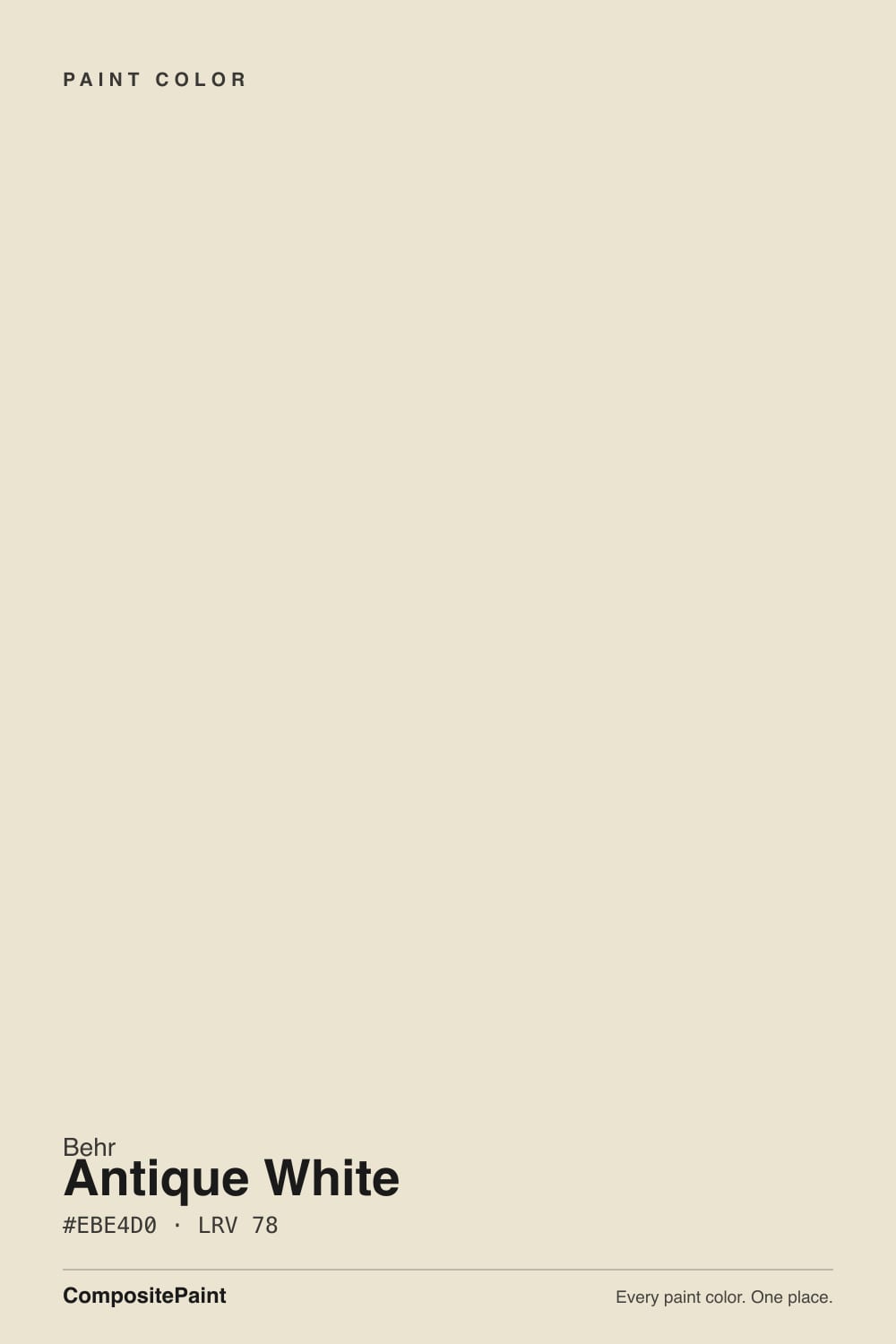
Antique White is a warm, creamy off-white built on a yellow-beige base — Behr's own color data and independent color sites both describe the undertone the same way: soft cream and beige with the yellow doing the work, sometimes read as a mild orange lean rather than a clean neutral. It is not a modern designer white; it is a paint-store staple that has been sold under the same name, in the same #23 slot, across nearly every Behr product line — Premium Plus, Ultra, Marquee, even the chalk decorative line — for decades. That longevity is why it shows up so often as "the white that's already on the trim" in older homes.
At LRV 73 it is the deepest of Behr's common whites: paler than Behr Off White (LRV 76) and considerably paler than Behr Polar Bear (LRV 86), but still clearly a white rather than a beige. That extra depth is what gives it presence on trim and doors instead of disappearing the way a near-white does, and it is also why several buyers report it needing more coats than a lighter white to fully cover a dark or patched surface — one long-time painter's complaint about run and orange-peel texture on it lines up with a paint that is being asked to lay down real pigment, not just a tint.
Undertone in one line: warm yellow-beige, occasionally read as a soft orange lean — never gray, never pink. If a sample looks flat or slightly gray on your wall, that is a cool north window or cool LED bulbs fighting the warmth, not a different paint.
Where It Shines
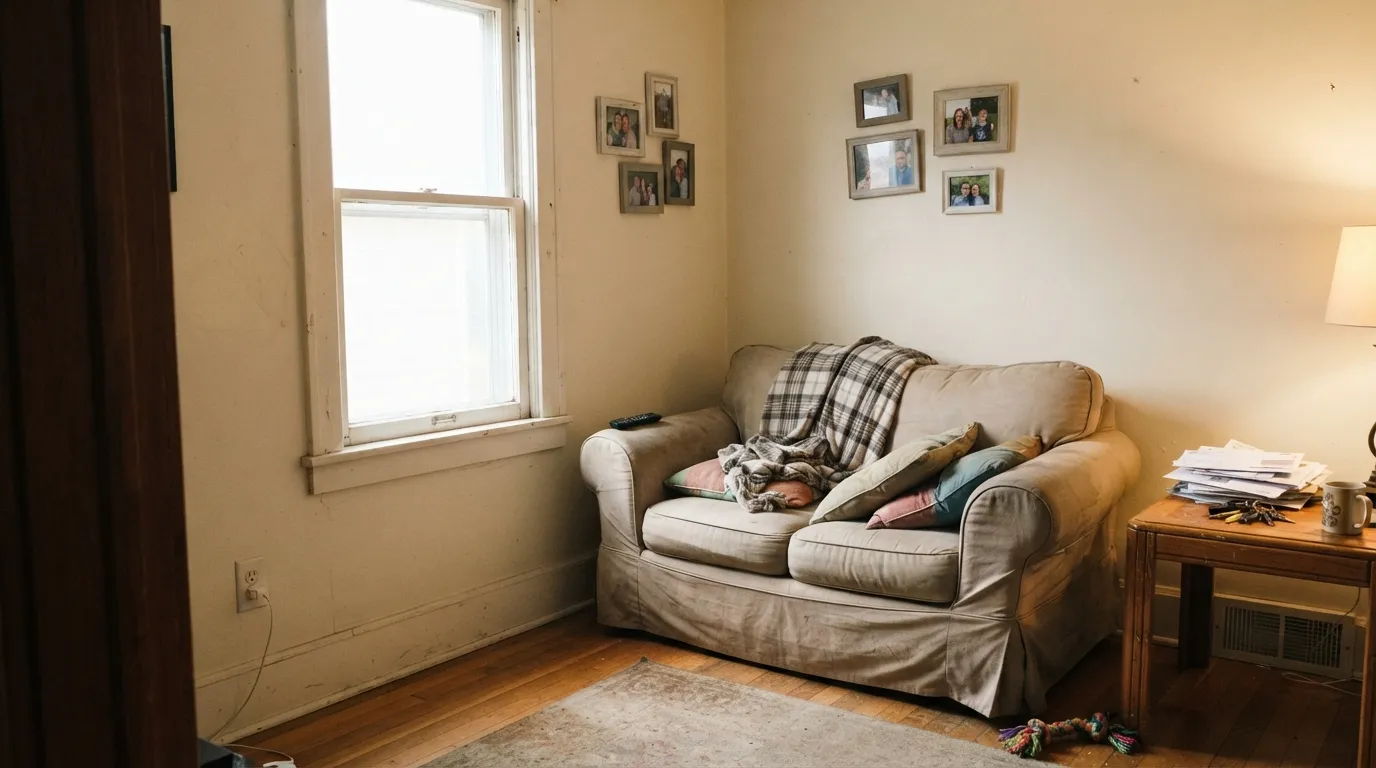
It is at its best doing exactly the job its name implies: trim, doors, and millwork in a house with real daylight and warm wood. South and west light let the cream come forward without tipping orange, and against oak floors, maple cabinets or a butcher-block island it reads finished and lived-in rather than dated. It is also genuinely useful as a whole-house wall color in older colonial and farmhouse floor plans, where a colder white would fight the existing trim, moldings and wood tones instead of joining them.
Where It Fails
The complaints about Antique White follow the same three patterns every time, and none of them mean the paint is defective — they mean the room or the pairing was wrong for a deep, warm cream.
This is not Polar Bear or Off White — it is a full step deeper and warmer. Painted next to a brighter white trim, ceiling, or appliance, Antique White reads dingy or yellowed by comparison, which is the single most common one-star review. Keep the whole room in one consistent white family, or size up to a paler Behr white if bright is the goal.
Cool north daylight strips the warmth out of any cream, and Antique White is deep enough that the result reads flat and slightly gray rather than glowing. It needs warm light — south or west sun, or 2700K bulbs after dark — to do its job.
Reviewers who used it over a stained or dark-painted surface — a garage header, old trim — reported it still reading uneven or off-color after several coats. Prime dark or patchy surfaces with a tinted primer first; this is a deep, opaque cream, not a thin wash.
Room by Room
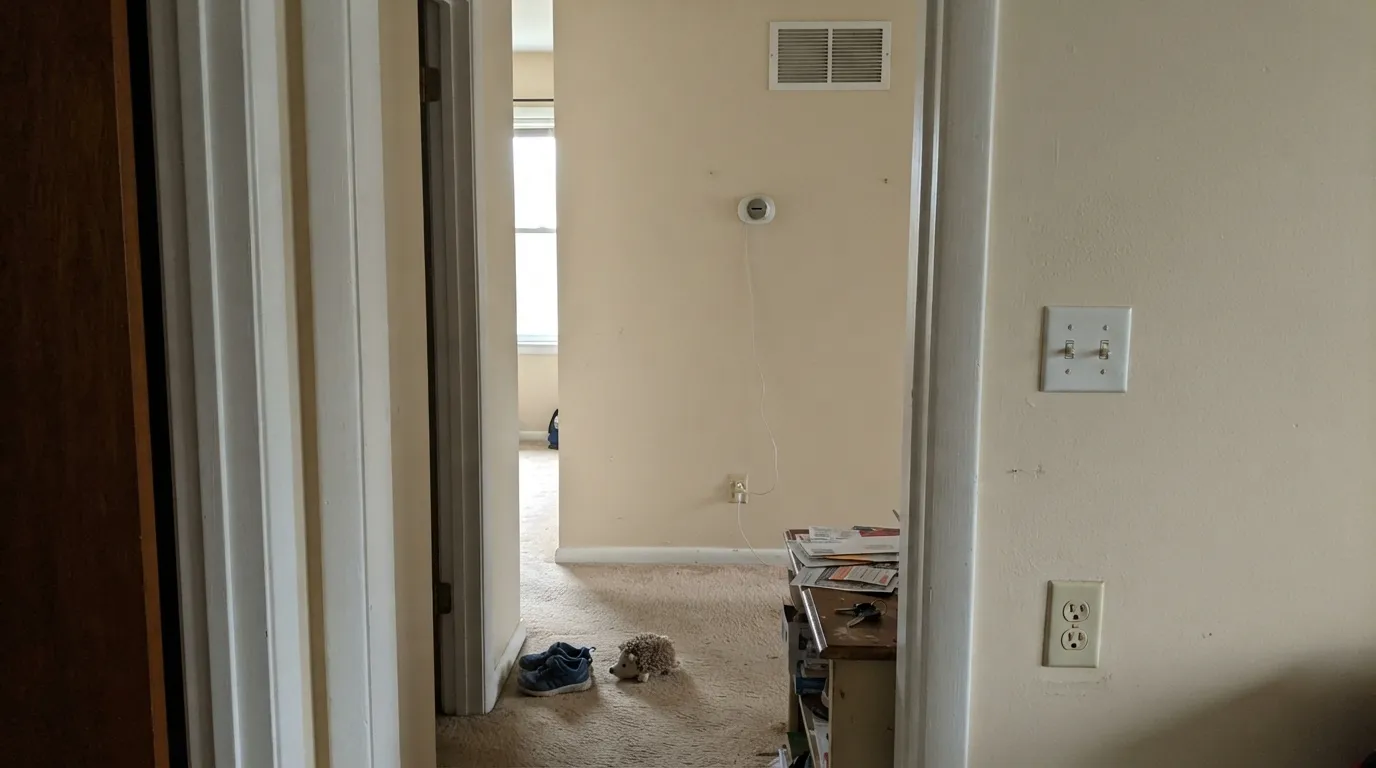
In a room with real sun and warm floors it reads calm and traditional, not dated. Flat or eggshell on the walls; keep trim the same white family rather than a brighter one.
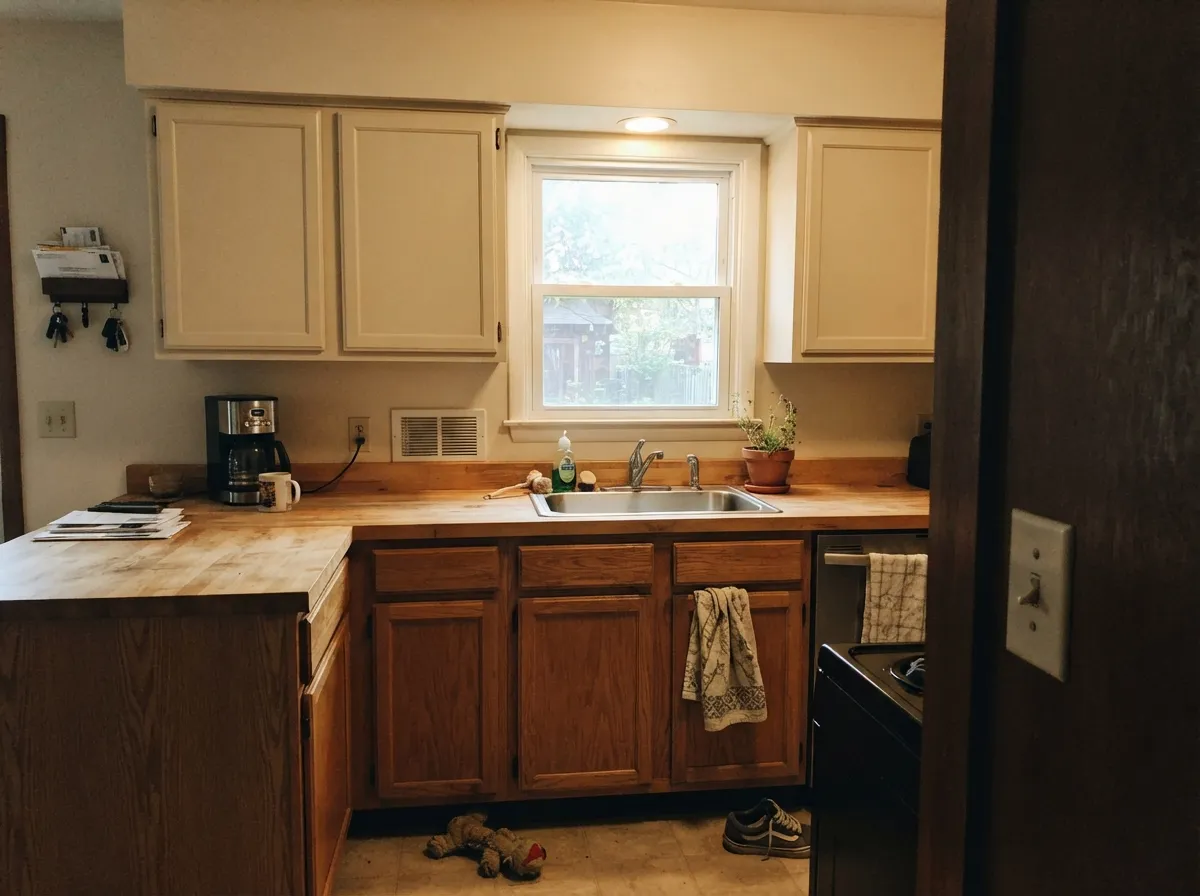
On cabinets over butcher block, oak or maple it looks like it belongs there — this is the white a lot of older kitchens were already painted. Satin cabinet enamel; expect to need a tinted primer if you're covering stained wood.
Cozy under 2700K lamps at night. If the room is north-facing and stays dim during the day, it will look flatter than the chip promises — add warm bulbs or pick a paler white.
Warm-toned tile, brass, and wood vanities: good match. Cool gray marble or chrome-and-white modern fixtures: it starts to look yellow next to them — use a cleaner white instead.
This is the color's original purpose and it still does it well: semi-gloss Antique White trim against mid-tone or deeper walls softens the contrast the way a stark white cuts it. One of the most common trim whites you'll find already on older homes.
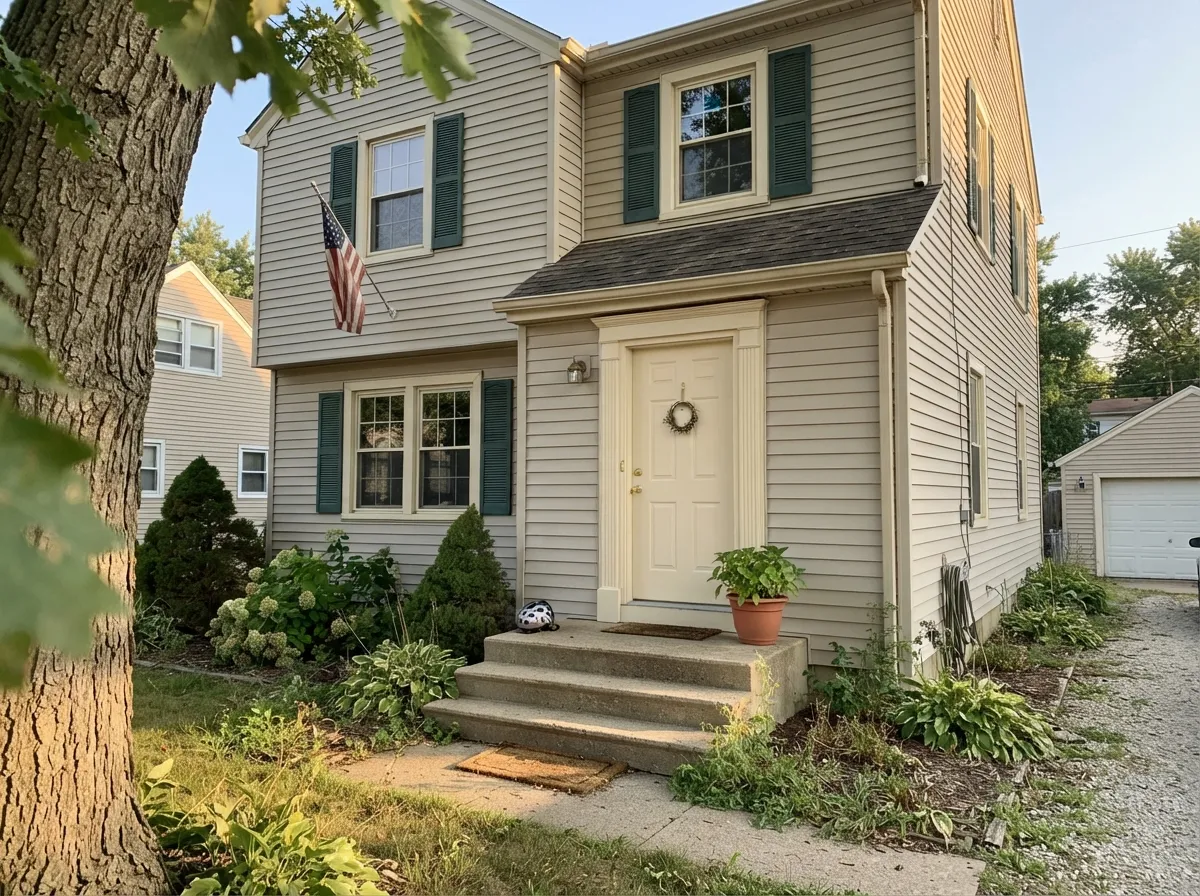
Reads warmer and creamier outdoors than a modern white siding color, which is exactly right on a traditional house. Pair with dark shutters and a black or navy front door for the classic look; a stark white trim next to it will look chalky by comparison.
Your Light Is the Risk
The cream glows warm without turning orange — the light this color was made for.
Cool daylight drains the warmth and leaves it looking flat and slightly gray-yellow. Test a large sample first.
Warmer and more golden at sunrise and sunset hours, quieter and more neutral through midday.
2700K bulbs deepen the cream and make it cozy. Cool white LEDs fight the undertone and can make it look muddy — change the bulb before repainting.
Most complaints about Antique White are a light mismatch. Upload a photo of your actual room and see it on your walls — then ask for the same wall in north light or evening lamps before you buy a single sample.
Need It From Another Brand?
Any paint counter can custom-tint Behr 23 directly. If you would rather stay in one brand's own deck, these are the closest stock matches, measured as ΔE2000. Under 2 is a difference you will not see on the wall.
| Brand | Closest color | ΔE | LRV | |
|---|---|---|---|---|
| Sherwin-Williams | Aged WhiteSW 9180 · Sherwin-Williams | 0.8 | 74 | Color page → |
| Benjamin Moore | Natural Wicker950 · Benjamin Moore | 1.2 | 72 | Color page → |
| Valspar | Cream in My Coffee3003-10C · Valspar | 1.1 | 72.3 | Color page → |
| PPG / Glidden | Navajo White1101-2 · PPG / Glidden | 1.9 | 73 | Color page → |
| Glidden | Sugar CookiePPG1101-2 · Glidden | 1.9 | 73 | Color page → |
| Dutch Boy | Antique White011W · Dutch Boy | 1.1 | 72 | Color page → |
Similar Behr Colors
The nearest shades to Antique White within Behr's own range, ranked by perceptual color distance — useful when you want the same look a touch lighter, darker, or warmer.
WCAG 2.1: AA is 4.5 : 1 for normal text, 3 : 1 for large text, AAA is 7 : 1.
Antique White vs the Colors You're Also Considering
Every Antique White sample board has the same rivals on it. The numbers show the real lightness gap — then it comes down to which risk you would rather live with.
Pick this when you want more depth and presence on trim, or you're matching an older home already painted in this deeper cream.
Behr W-B-700 · LRV 87Swiss CoffeePick this if you want the same warm Behr off-white family but a full step lighter and less assertive.
Pick this for a more traditional, less peachy cream that's built to sit under trim and doors, not just walls.
Behr DC-003 · LRV 85Blank CanvasPick this for Behr's most complimented warm white, if you can live with its occasional peach flash.
Within Behr the differences are small but usable. Canyon Cliffs ECC-45-2 (#ECE3D1, LRV 77) and Coco Malt OR-W8 (#E8E4D0, LRV 77) are near twins. Miami Weiss T14-3 (#EDE4D3, LRV 78) carries a hint more pink, White Mocha OR-W11 (#E9E3D3, LRV 77) reads slightly grayer, and Lime Juice ICC-38 (#E7E4D3, LRV 77) is the coolest of the group.
Across brands, Valspar Snow on the Pines 8004-22A (deltaE 0.42), Benjamin Moore Winter Wheat 232 (deltaE 0.51), PPG Always Almond PPG1099-1 (deltaE 0.51), Magnolia Home Soft Landing JG-17 (deltaE 0.66), and Glidden Abbey White (deltaE 0.71) all match. Note that Winter Wheat is listed at LRV 74 and Soft Landing at 75, so both will read a shade deeper on a large wall.
Diamond Vogel Tawny Daylilly 0327 (deltaE 1.05), Dutch Boy Classical Ivory 013W (deltaE 1.06), and Dunn-Edwards Muscat Blanc DET676 (deltaE 1.21) are visually identical in normal room light. Farrow and Ball Farrow's White No. 9812 (deltaE 2.27) and Sherwin-Williams Casa Blanca SW 7571 (deltaE 2.62) are very close, so sample first.
Antique White Coordinating Colors
The rule for coordinating with Antique White is the same as with any warm cream: lean into warm wood, near-blacks, and traditional deep colors, and stay away from cool grays and bright icy whites. These are the partners that keep showing up on the homes that use it well:
Antique White's Story: A Paint-Store Staple, Not a Trend
Antique White has never had a Color of the Year moment, and it doesn't need one. It's #23 in Behr's own numbering, and it has been sold under the exact same name across nearly every Behr product line — Premium Plus, Ultra, Marquee, even the chalk decorative paint used for furniture — for as long as most homeowners can remember. That is the color's whole reputation: it's the white a huge number of older American homes already had on the trim before the current owner ever picked a paint chip.
That staying power cuts both ways. It means matching existing trim in an older house is usually easy, and it means the color reads traditional rather than trendy — a feature for a colonial or farmhouse, a drawback for anyone chasing a crisp modern look.
Antique White With Wood Tones and Floors
Warm wood is this color's best friend: oak, maple, butcher block, and honey-toned trim all sit comfortably next to it because they share the same warm base. It's one of the few whites that doesn't fight builder-grade oak floors the way a cooler white does.
Cool gray-washed or gray LVP flooring is the one pairing that needs a sample first. Against a cool gray floor, Antique White's warmth stands out more starkly and can start to read yellow by contrast. It isn't always a dealbreaker — warm rugs and brass hardware soften it — but test a large sample over the actual floor before committing a whole room.
Three Ready Palettes Built on Antique White
A color is never alone on the wall. These are complete combinations in the 60-30-10 pattern, with the reason each one holds together. Every one opens in the visualizer.
Keeping walls and trim the same warm white avoids the brighter-white-makes-it-look-dingy trap, and the navy door supplies the one dark, confident note a traditional house needs.
Try this palette in your roomTwo Behr creams a step apart handle the wall-to-cabinet handoff without a hard line, and the near-black island gives the warm kitchen one anchor of contrast.
Try this palette in your roomWarm cream siding with near-black shutters is the classic farmhouse contrast, and a haint-blue porch ceiling is the traditional finishing touch on exactly this kind of house.
Try this palette in your roomAntique White FAQ
Is Behr Antique White warm or cool?
Warm — clearly and consistently. It's built on a yellow-beige base that some color sites describe as leaning slightly orange. It never reads cool or gray unless the light in the room is cold and dim.
Is it a good white for kitchen cabinets?
Yes, especially in a traditional kitchen with wood counters or butcher block. It's less suited to a bright, modern white kitchen — pair it with warm materials, not stainless and cool marble, and prime dark cabinets first with a tinted primer.
How is it different from Behr Swiss Coffee?
Both are warm Behr off-whites from the same family, but Antique White is deeper — LRV 73 versus Swiss Coffee's LRV 80 — so it reads more like a cream and less like a near-white. Swiss Coffee is the lighter, quieter version of the same idea.
What trim white goes with Antique White walls?
Antique White itself, in semi-gloss. Pairing it with a brighter white trim is the most common mistake — the walls end up looking dingy by comparison. If you want contrast, go darker rather than brighter.
Does it work on exteriors?
Yes, and it's a classic choice on colonial and farmhouse siding. It reads warmer than a modern white would, which is the point on this style of house. Pair with dark or black trim and shutters for definition.
How many coats does it need over a dark wall or old trim?
Plan on more than two, or prime first with a tinted primer. Reviewers who skipped priming over dark or stained surfaces reported it still reading uneven after several coats — it's a deep, opaque cream, not a thin tint.
Have you painted with Antique White?
Rate it — one tap helps the next reader decide.
Ask a Question