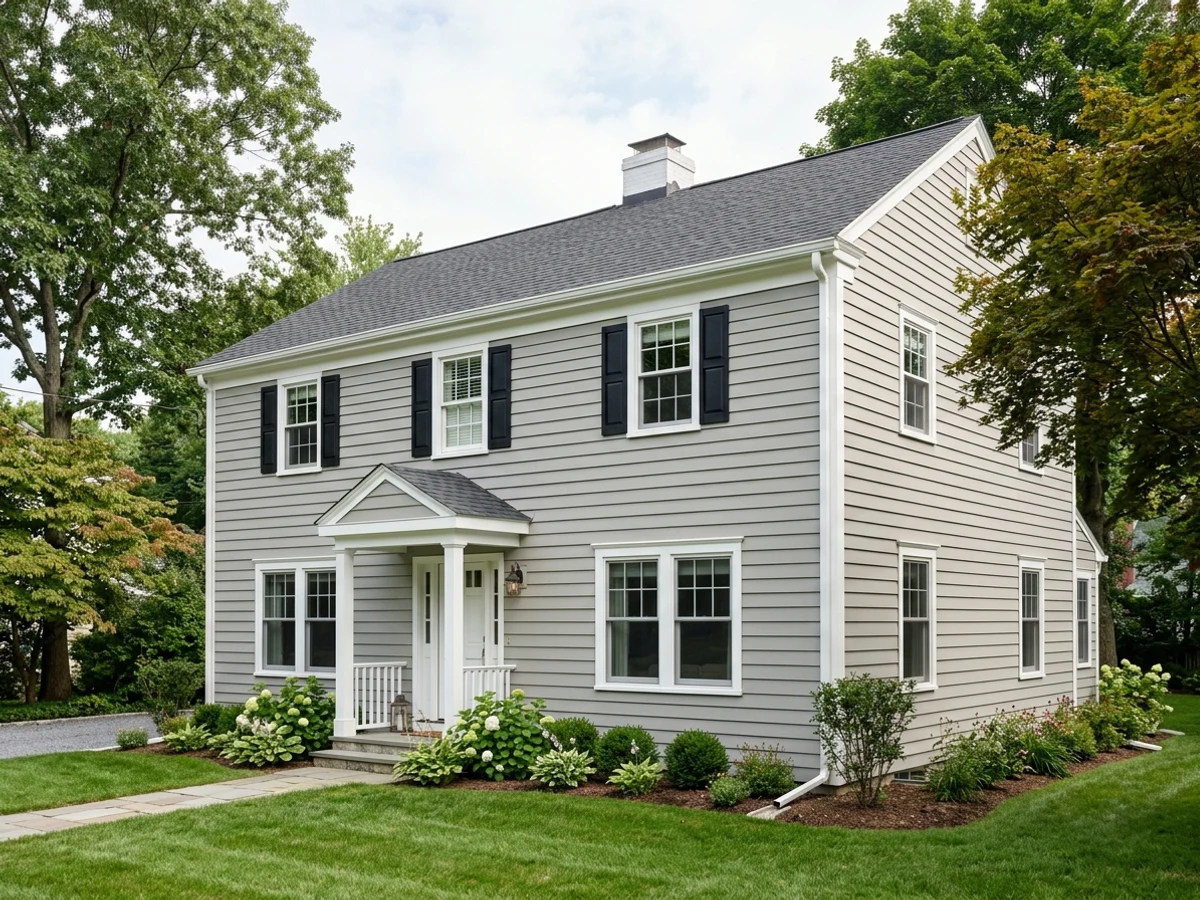
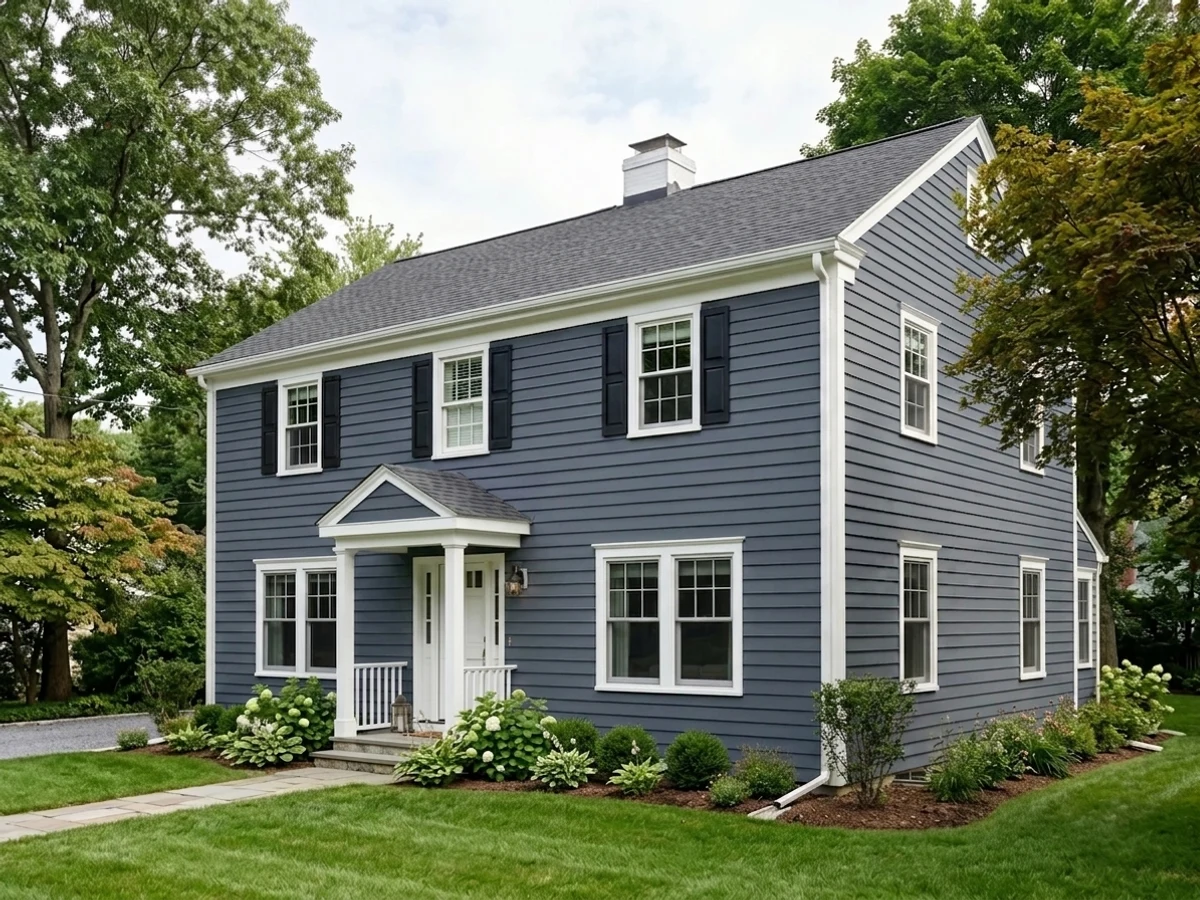
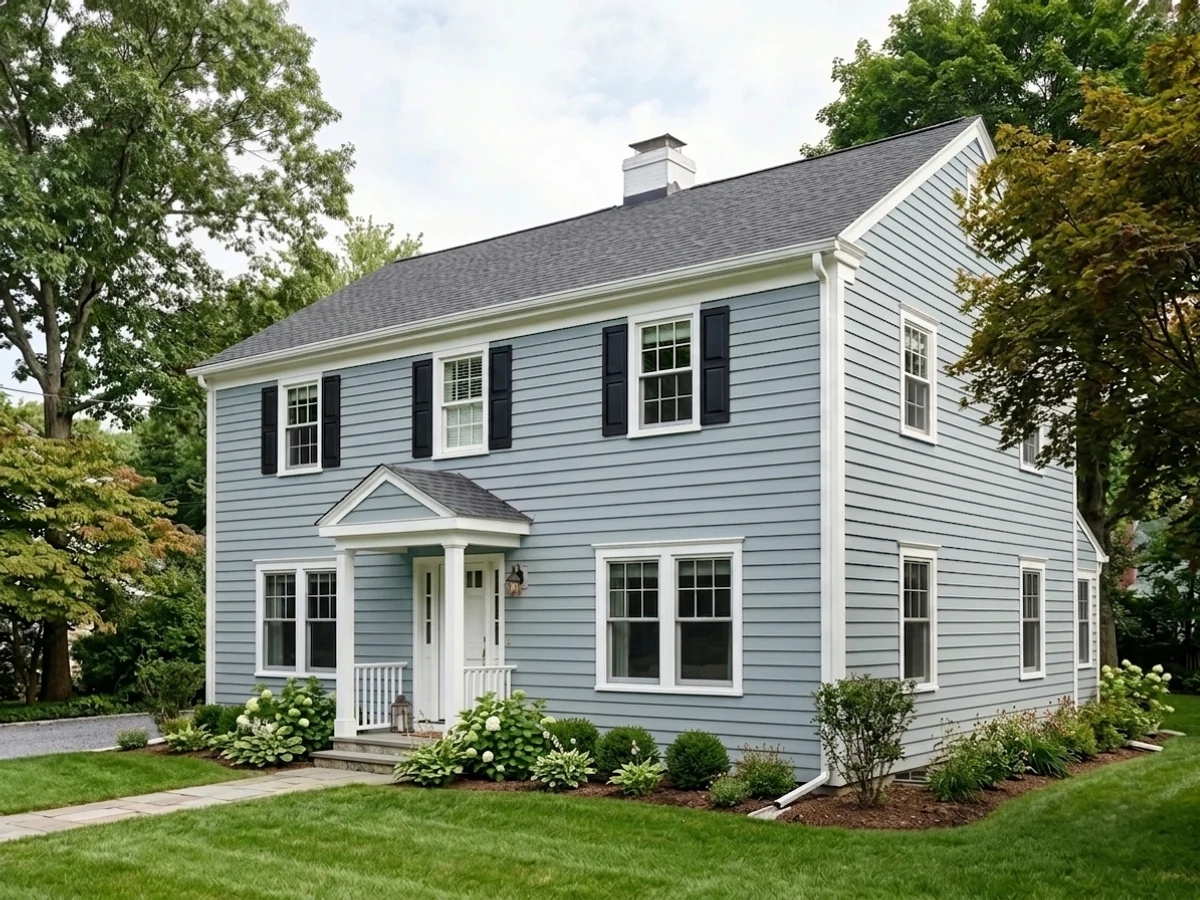
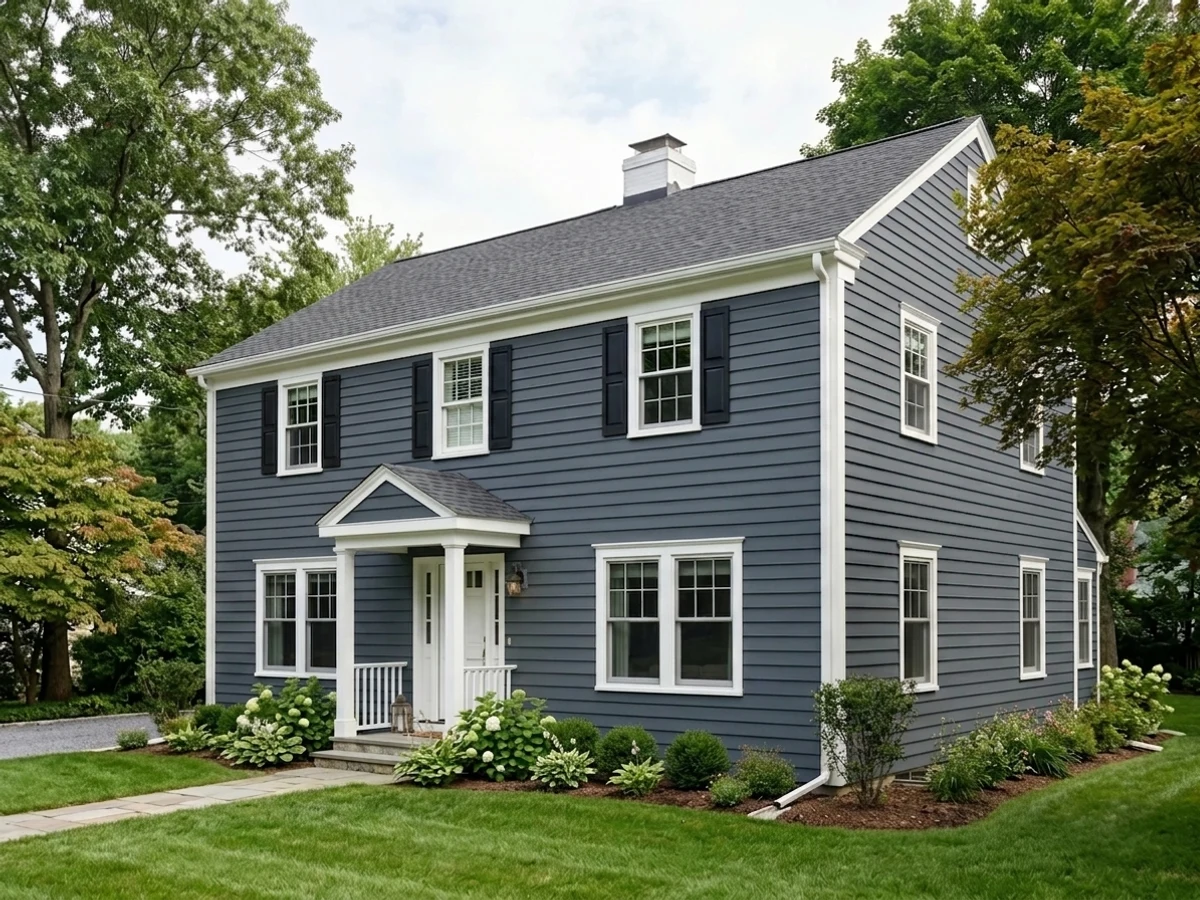
Room Colors · Blue Exterior House
8 Best Blue Exterior House Paint Colors for 2026
ideas, combinations, and real rooms
8 curated picks from real blue exterior houses — with the exact colors, honest reasons why, and the combinations that hold the room together.

Former interior stylist who can spot a green undertone from across a room. Jessica writes the color and mood pieces — what to choose, what pairs, and why your "white" looks pink.
The Fast Answer
Don't want to read 8 picks? These four are the safe answers.

Top Picks for the Blue Exterior House
Tap a shade to see the blue exterior house in it, then try it on your own room.
Blue Exterior House Color Trends 2026 — What's In, What's Out


- Bright Coastal Blue — Saturated, cheerful coastal blues that dominated exteriors for years now read dated next to 2026's deeper, muted blue-grays.
- Cool Icy Blue-Gray — Flat, cool blue-grays with no depth are losing ground to blues with warmth or near-black depth on 2026 exteriors.
- Blue Only On Shutters — Reserving blue for shutters alone while keeping the body neutral is giving way to full-body blue commitment in 2026.
The 8 Best Blue Exterior House Paint Colors
Every pick below is a real rendered blue exterior house, not a chip. The lead color first; the swatches are the full scheme in the photo — walls, furniture, textiles, accent.

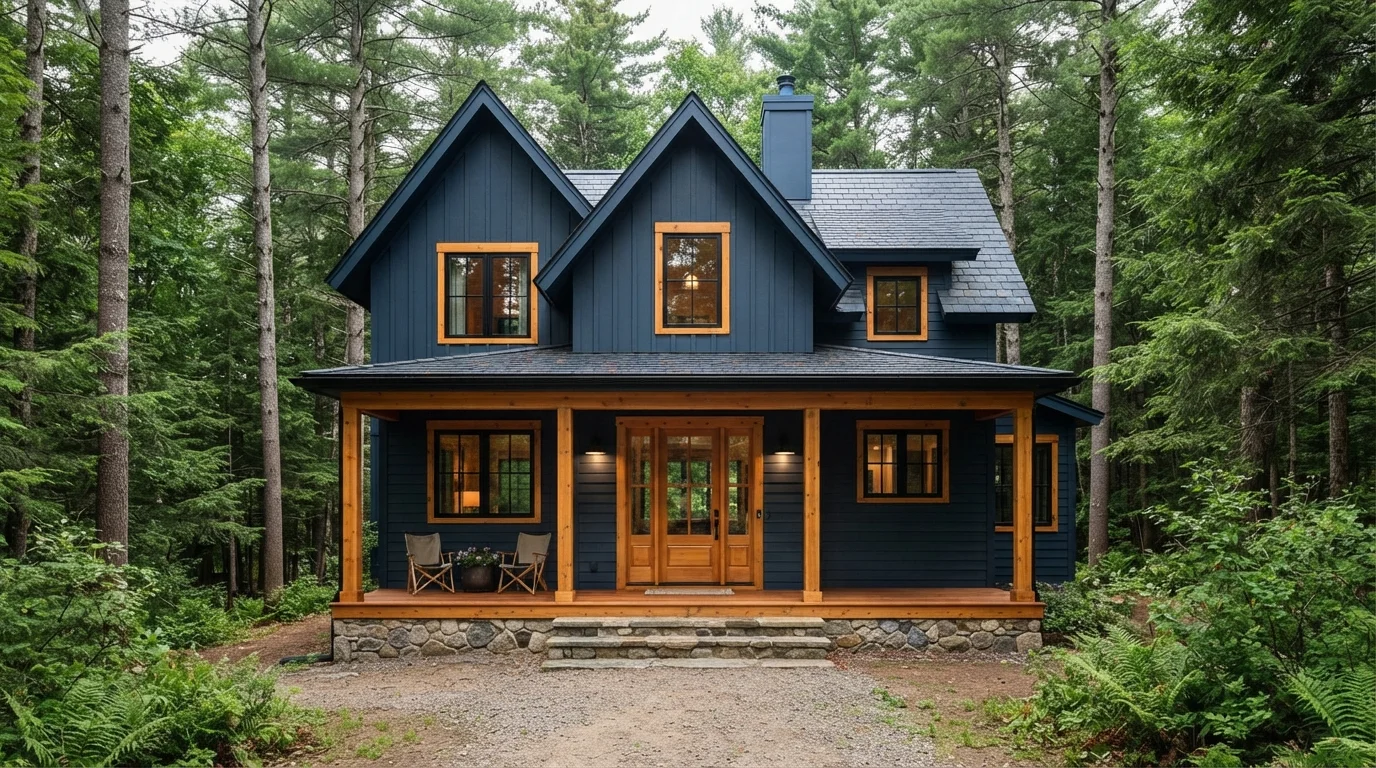
Rich midnight blue siding pairs with glowing cedar accents to create a snug, storybook cabin nestled among the trees.
Deep navy is a bold, moody blue that feels both grounded and modern. In this exterior, the rich midnight blue covers the siding, dormers, and gables from top to bottom. It creates a stunning contrast against the warm honey cedar window frames, front door, and wooden porch deck. The house feels snug and dramatic against the lush green forest backdrop. Warm wood tones keep the dark blue from feeling cold or heavy. It is perfect for anyone wanting a standout cottage that feels completely at home in nature.
SEE MIDNIGHT DREAM ON YOUR WALLS →
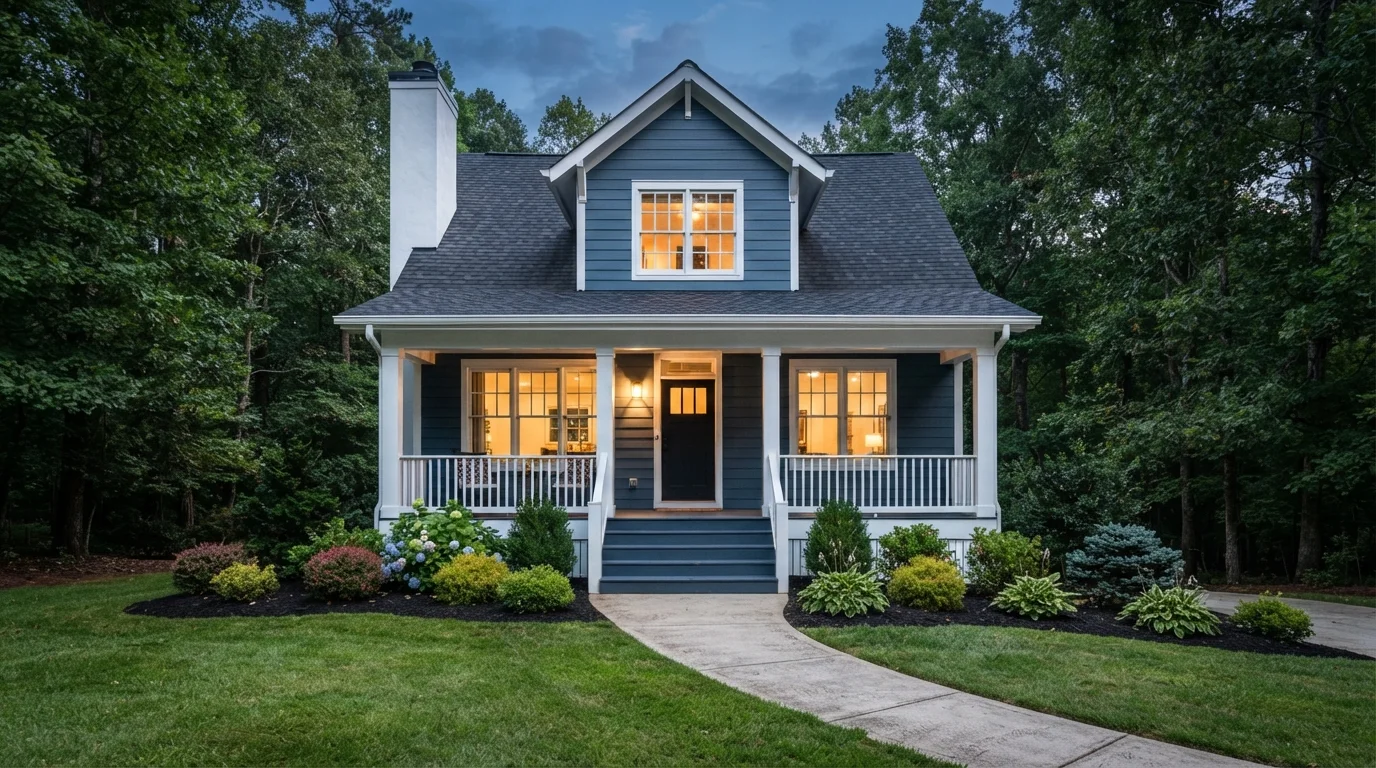
Rich slate blue siding framed by clean white trim creates an inviting, storybook welcome against lush green landscaping.
Slate blue is a classic, serene medium blue with quiet depth. In this exterior, rich blue siding covers the facade while crisp white brightens the window frames, gables, and wide front porch. The whole setting feels warm, peaceful, and delightfully snug as dusk settles in. It works because the high-contrast white trim neatly defines the rooflines and makes the blue facade pop. This look is perfect for anyone who wants a timeless, cheerful curb appeal that feels right at home among trees.
SEE MOOD INDIGO ON YOUR WALLS →
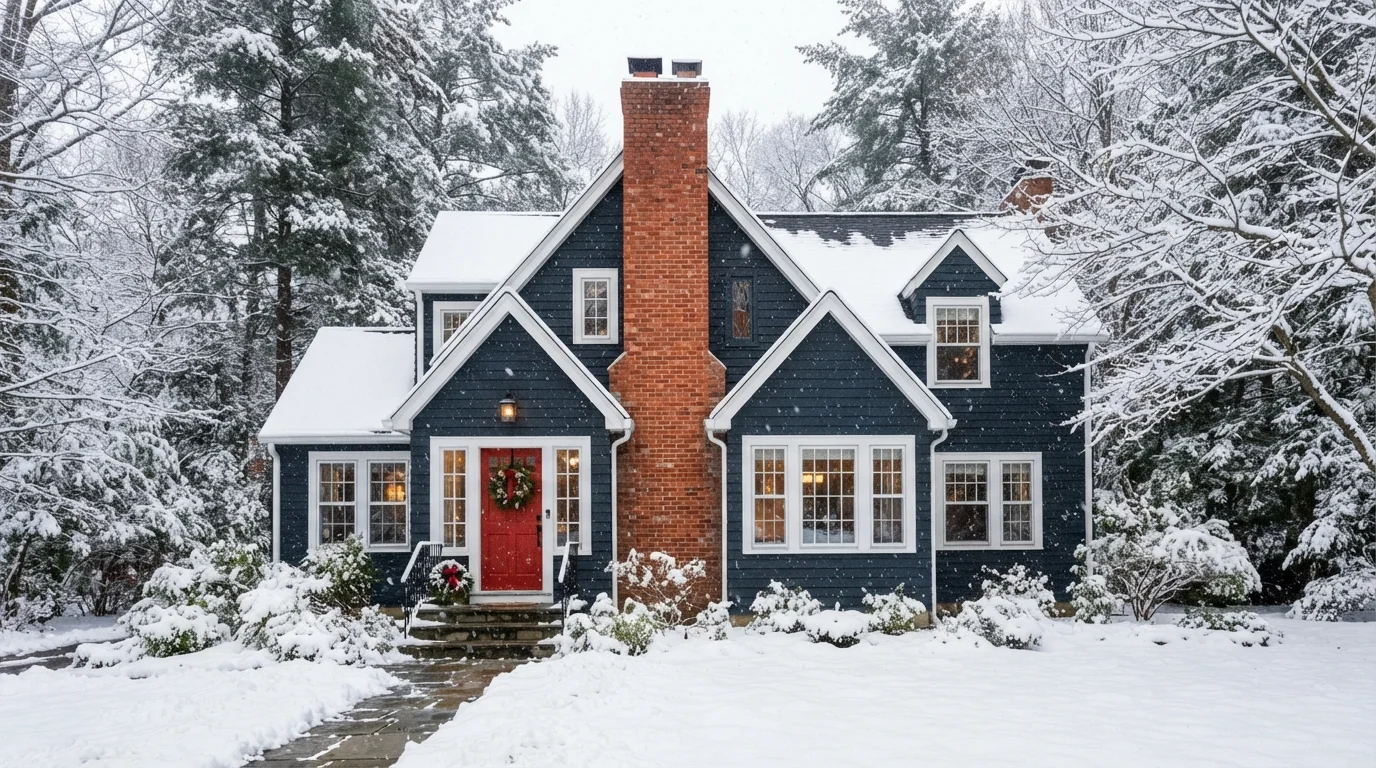
Rich midnight blue siding and a bold cherry-red front door pop beautifully against quiet falling snow.
Deep navy is a moody, grounded dark blue with timeless appeal. Here, the exterior siding wears deep navy, framed by crisp bright white along the gables and window frames, accented by a striking cherry red front door. The whole house feels snug, cheerful, and straight out of a winter postcard. The contrast works because the high-contrast white trim sharply defines the dark structure, while the bright red door draws your eye straight to the entryway. It is a fantastic choice for anyone wanting charming curb appeal year-round.
SEE IT ON YOUR WALLS →
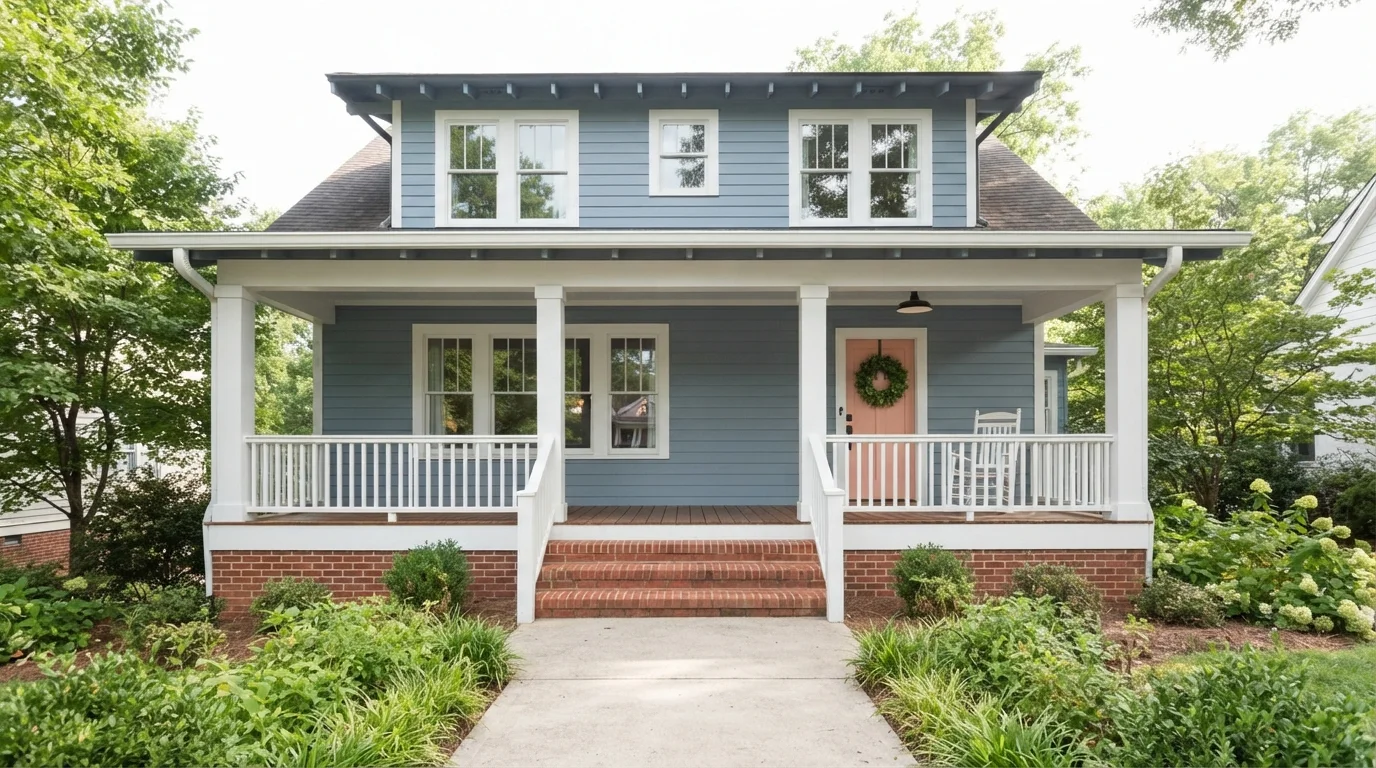
Crisp white trim and a sweet peach front door bring sunny warmth to classic slate blue siding.
Slate blue is a calm, breezy blue with subtle gray notes. In this photo, that cool blue covers the horizontal lap siding, framed by bright white window trim, porch columns, and a cheerful peach front door. The home feels lighthearted, welcoming, and relaxed. The combo works because the soft peach provides a warm, complementary pop against the cool blue siding without feeling overwhelming. It is a wonderful choice for anyone wanting classic cottage curb appeal with a hint of playful color.
SEE AMERICANA ON YOUR WALLS →
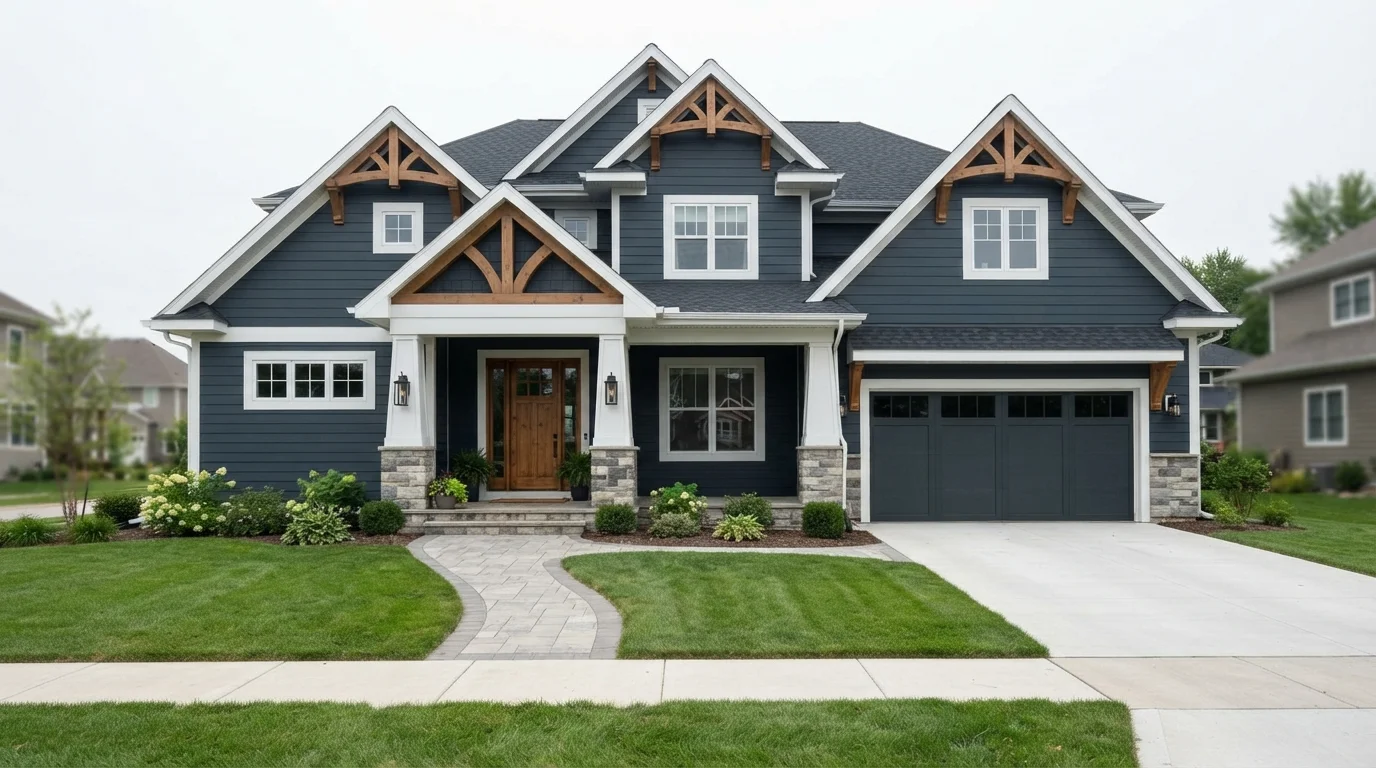
A rich navy facade paired with bright white trim and warm stone creates an instantly welcoming and polished street presence.
Navy blue is a deep, stately blue with lots of character. Here, saturated navy horizontal siding wraps the entire facade, sharply outlined by clean white trim and dark window frames. The whole exterior feels polished, sturdy, and remarkably fresh. Crisp white accents make the deep siding color stand out, while textured gray stonework anchors the porch to the ground. It is the perfect choice for homeowners looking to give traditional architecture a bold, timeless boost.
SEE NEW NAVY BLUE ON YOUR WALLS →
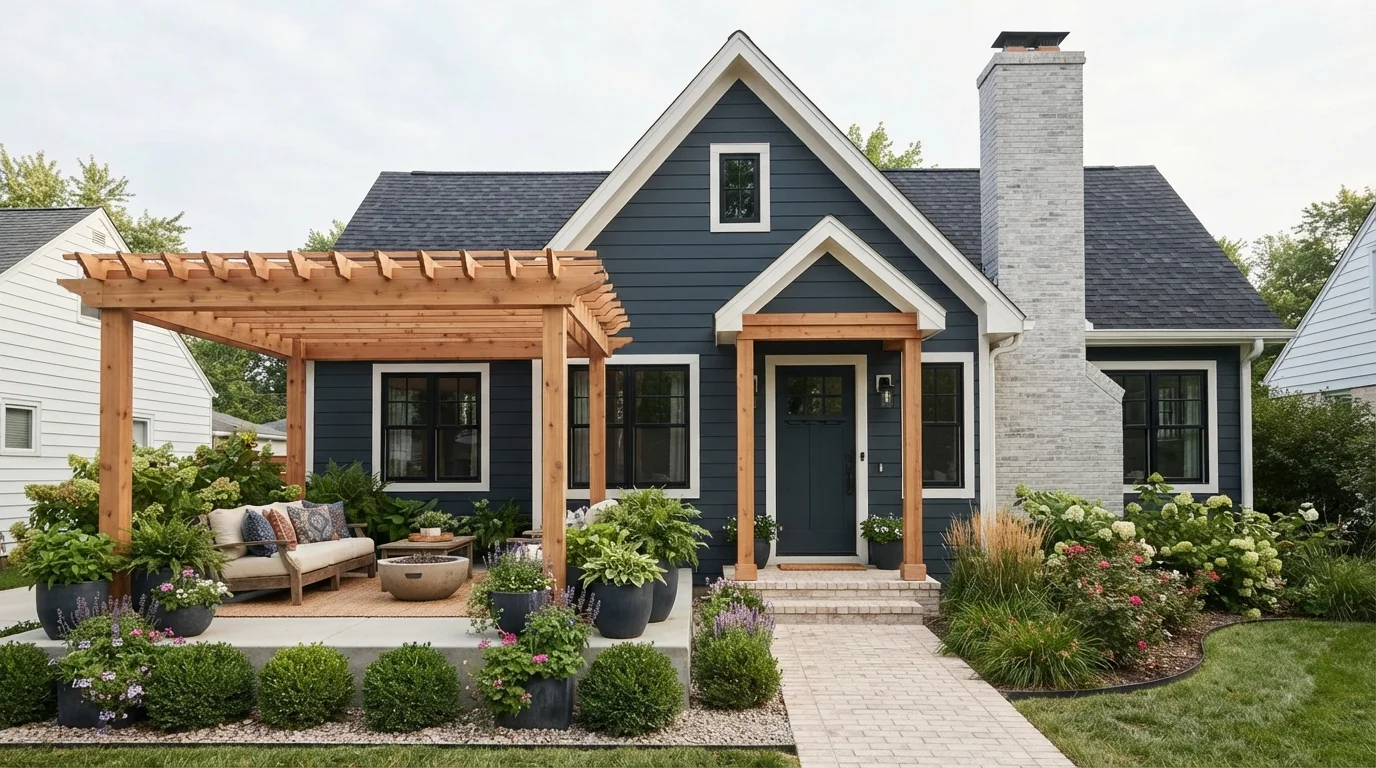
Crisp white trim and rich natural cedar bring inviting warmth to a deeply pigmented navy-gray cottage facade.
Deep navy-gray is a bold, grounding shade of dark blue. In this exterior, the deep blue siding covers the gabled walls while crisp off-white outlines the roof trim and window surrounds. The house feels calm, stylish, and wonderfully snug from the street. The look works because the warm wood pergola and lively green plantings soften the dark exterior paint. If you love a striking, classic home with plenty of personality, this bold facade is for you.
SEE PITCH COBALT ON YOUR WALLS →
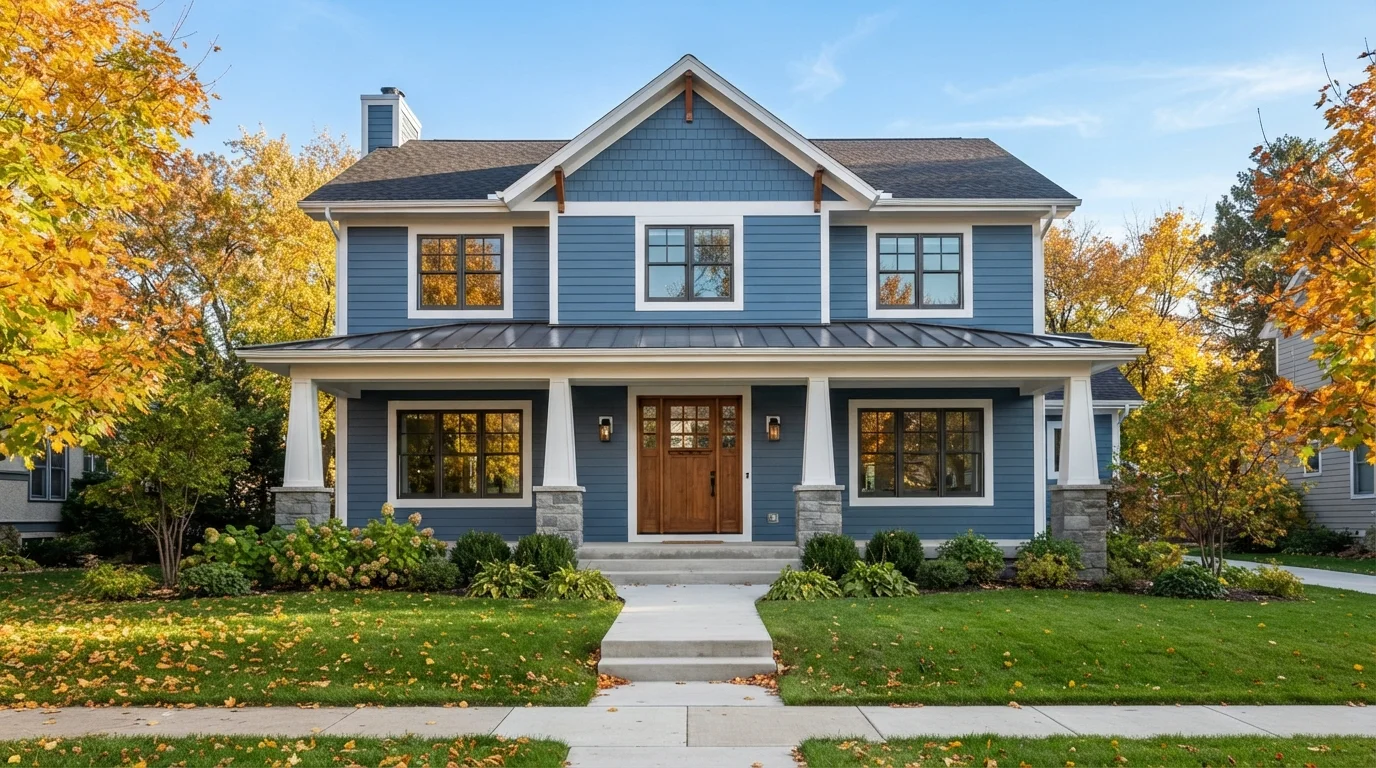
Rich slate blue siding paired with clean white trim and warm wood details creates an inviting, picture-perfect facade.
Slate blue is a rich, balanced blue-gray with classic character. In this exterior, slate blue covers the lap siding and upper gables, highlighted by crisp white trim around the windows, rooflines, and porch posts. The home feels cheerful, stately, and grounded in its natural setting. The combo works because bright white framing defines the architecture while the rich wood front door adds an organic touch. It is a fantastic choice for homeowners who want standout curb appeal that never goes out of style.
SEE POSTWAR BOOM ON YOUR WALLS →
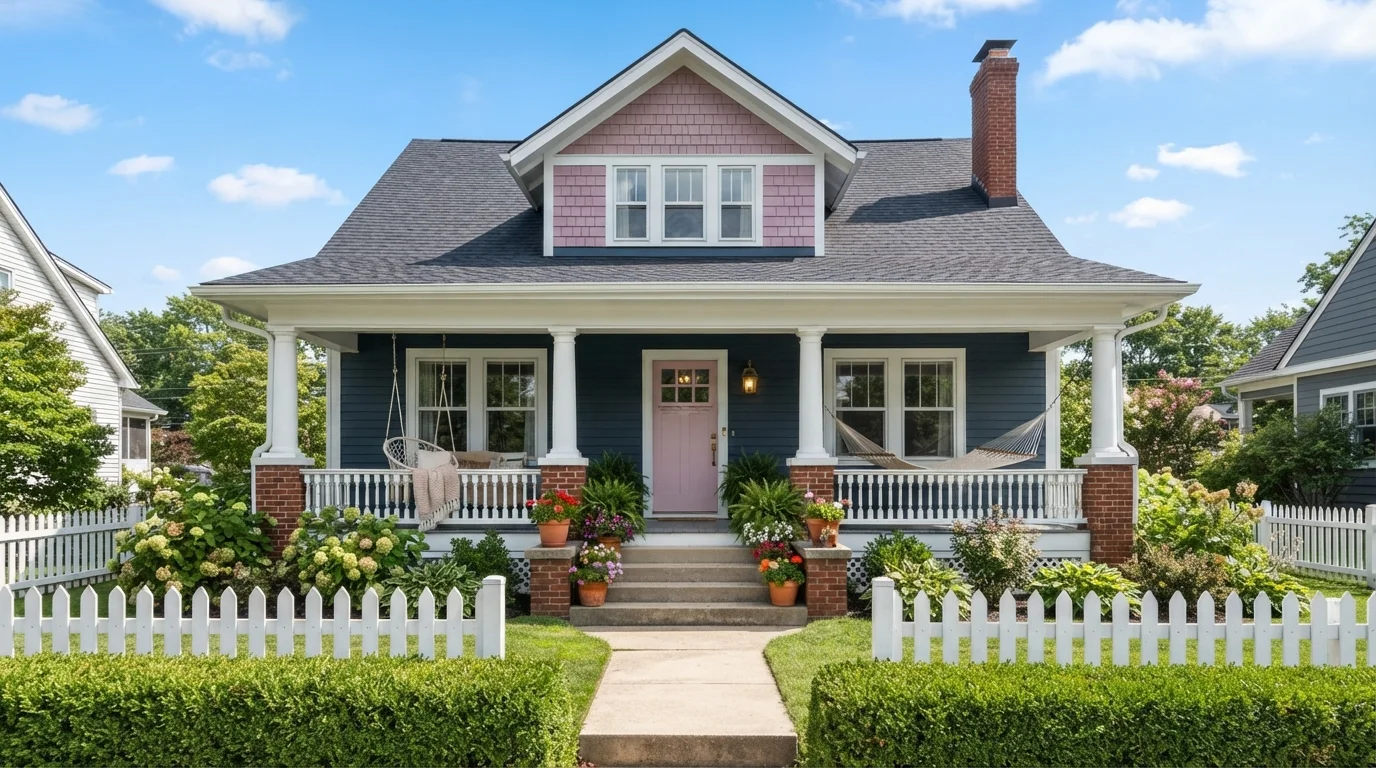
Crisp navy siding and bright white trim frame a sunny Craftsman porch accented with a playful pastel pink door.
Slate blue is a deep, nautical blue with a grounded, classic feel. In this exterior, dark blue siding covers the walls while crisp white highlights the window frames, porch columns, and railings. The whole home feels cheerful, cozy, and full of timeless charm. The combination works beautifully because the stark white trim cuts cleanly against the deep blue siding and warm brick piers to give the architecture instant definition. It is a fantastic choice for anyone who loves traditional curb appeal with a friendly touch.
SEE BLUE FEDORA ON YOUR WALLS →Blue Exterior House Wall Color Combinations
A wall color never works alone. These are the full schemes from the rooms above — the lead color first, then the supporting colors that make the photo work.
Rich midnight blue siding pairs with glowing cedar accents to create a snug, storybook cabin nestled among the trees.
TRY THIS PALETTE →Rich slate blue siding framed by clean white trim creates an inviting, storybook welcome against lush green landscaping.
TRY THIS PALETTE →Rich midnight blue siding and a bold cherry-red front door pop beautifully against quiet falling snow.
TRY THIS PALETTE →Crisp white trim and a sweet peach front door bring sunny warmth to classic slate blue siding.
TRY THIS PALETTE →The highest-contrast pairing on this list is Hale Navy or Newburyport Blue with a warm white trim — Benjamin Moore Classic Gray or Pale Oak, or Sherwin-Williams Shoji White — rather than a stark bright white, which tends to look chalky and harsh against a navy this deep. Charcoal Blue is built for the same move: the pick note calls out how white trim pops against it, and that holds true because its slightly neutral undertone doesn't compete with a warm white the way a truer blue would.
For the lighter end, Yarmouth Blue looks best against a darker trim rather than more white — a charcoal or navy shutter and door adds the depth the pale siding is missing on its own. Wolf Gray and Rain Cloud are the two to reach for when the house already has stone, brick, or natural wood elements, since both blue-grays sit close enough to neutral to let the material do the talking, finished with a cream or soft white trim. Cyberspace and Blue Note work well as accents — porch ceiling, shutters, or front door — against a lighter overall siding color, which is a cheaper way to get the moody-navy look without repainting the whole exterior.
More Exterior Color Ideas
Set on a color family already? Each page has its own real rooms and picks.


Light or Dark Blue Exterior House Colors?
Go Light (LRV 60+) If…
The room is small, faces north, or has to work at every hour. Light warm colors make it feel bigger and stay calm in evening light — the light you actually live in.
Go Dark (LRV Under 20) If…
You want the cocoon effect and the room has real daylight. Dark works best on one feature wall — or fully color-drenched in a large room with good windows.
LRV is the number that actually decides this for an exterior, because unlike an interior wall, the whole face of the house sits in direct sun for part of the day. Hale Navy, Newburyport Blue, Cyberspace, and Charcoal Blue all sit at LRV 6-7 — colors this dark absorb more heat, and on south- or west-facing walls in hot climates they can run noticeably warmer than a mid-tone color. That's one reason painters push a full stain-blocking primer coat and a quality 100-percent acrylic exterior paint on any color this dark: it's the prep and paint quality that keeps a dark blue from fading early, not the color itself.
On a small house, a cottage, or a home shaded by mature trees, a dark navy can also make the structure look heavier and smaller than it is. That's where Yarmouth Blue (LRV 39) earns its place — it stays visibly blue rather than washing out gray at a distance, but keeps enough reflectance to open the house up instead of closing it in. Wolf Gray and Rain Cloud sit in between at LRV 21 and 11, which is the range to reach for on a mid-size house where full navy feels like too much commitment but a pale blue would look thin next to the roofline.
See It. Love It.
Paint It.
Upload one photo of your blue exterior house and try every color on this page on your own walls — in your own light, before you buy a drop of paint.

Hale NavyBeforeSheen And Prep Matter More Than The Color Choice
Exterior body color almost always goes on in satin or a low-sheen finish — a higher gloss on a large wall surface shows every ripple in old siding and every brush lap, which is more visible on a dark color like Hale Navy or Cyberspace than on a light one. Trim and doors take semi-gloss for the wipeable, weather-resistant finish, which is why the navy-plus-white-trim combinations above are also a sheen split, not just a color split.
On any of the darker picks (LRV 6-9), full prep matters more than usual: a stain-blocking primer and two coats of a quality 100-percent acrylic exterior paint are what keep a deep navy or charcoal-blue from chalking and fading within a few years. Skipping primer or using a cheaper paint on a dark color is the most common reason a blue exterior looks tired after two summers instead of holding for the eight to ten years a good paint job should last.
Test The Swatch In Real Sun Before Committing
Blue shifts more than almost any other exterior color family depending on the light hitting it — a blue-gray like Wolf Gray or Rain Cloud can read distinctly green in overcast light and distinctly blue in direct afternoon sun. Paint a 2-by-2-foot sample board with two coats and move it around the house to check it against the north, south, and east walls at different times of day before ordering full gallons.
Also check the roof and any brick, stone, or concrete foundation before locking in a color. A cool navy like Blue Note or Cyberspace can clash with a warm terra-cotta roof or orange-toned brick, while the earthier Wolf Gray or Rain Cloud tends to bridge those warm materials better. If the house is in an HOA, confirm the exact color is on the approved list before buying paint — many HOAs restrict how dark an exterior body color can go.
Where A Blue Exterior Goes Wrong
The most common mistake is reaching for a pale, dusty pastel blue expecting a soft coastal look and getting a color that reads dated and thin instead — light blue only holds up on styles built for it, like a beach cottage or a colonial with strong white trim and shutters to give it structure. Yarmouth Blue avoids this because its LRV of 39 still carries real saturation rather than washing out chalky.
The second mistake is picking a dark navy for resale without checking the market — value data has shown darker exterior colors like the navies here can add a few thousand dollars to a sale price, but only when the rest of the block and the home's architecture support a bold color. A navy that looks striking on a Craftsman or colonial can look out of place on a ranch surrounded by beige and white neighbors, so it pays to drive the street first.
About Blue Exterior House Paint Colors
Blue is one of the few exterior colors that reads as safe and bold at the same time, which is why it shows up so often on streets full of white and beige houses. The range here runs from Hale Navy (Benjamin Moore HC-154, LRV 6), a near-black navy that most people mistake for a neutral until they see it next to real black trim, down to Yarmouth Blue (Benjamin Moore HC-150, LRV 39), a soft sky shade with enough reflectance to still look blue and not gray in flat daylight.
The middle of the list does the quiet work: Wolf Gray (Benjamin Moore 2127-40, LRV 21) and Rain Cloud (Sherwin-Williams SW 9639, LRV 11) are both blue-grays that lean earthy enough to sit next to stone, brick, or a wood porch without fighting them. Newburyport Blue (Benjamin Moore HC-155, LRV 7) is the classic New England navy that shows up on Cape Cod and colonial-style homes for a reason — it photographs well in every light and doesn't read as trendy the way a pastel blue can.
At the darkest end, Blue Note (Benjamin Moore 2129-30, LRV 9), Cyberspace (Sherwin-Williams SW 7964, LRV 7), and Charcoal Blue (Sherwin-Williams SW 2739, LRV 6) all sit close enough in value that the real difference between them is undertone — Cyberspace and Blue Note stay coolly blue in shade, while Charcoal Blue pulls slightly more neutral, which is what lets white trim pop against it. All eight are mix-on-demand at any Benjamin Moore or Sherwin-Williams store, so the real decision here is about light exposure and the trim already on the house, not availability.

The Questions Everyone Asks
What color should I paint my blue exterior house?
If you want one answer, start with the safe picks above — Midnight Dream, Mood Indigo, Wishing On A Star, Americana. They read well in any light and survive furniture changes. Then check the light: strong afternoon sun wants a step cooler, a north-facing room wants a step warmer.
what color trim goes best with a blue house?
A warm white almost always beats a stark bright white against blue siding — Benjamin Moore Classic Gray or Pale Oak, or Sherwin-Williams Shoji White, all read cleaner next to a deep navy like Hale Navy or Newburyport Blue than a cool, bright white does. On lighter blues like Yarmouth Blue, flip it: a darker charcoal or navy trim adds depth the pale siding needs on its own.
does dark blue exterior paint fade faster?
Dark colors don't inherently fade faster than light ones, but they absorb more UV and heat, so any fading or chalking becomes more visible sooner. Colors at LRV 6-7 like Hale Navy, Cyberspace, and Charcoal Blue hold up well for years when applied with a stain-blocking primer and a quality 100-percent acrylic exterior paint — most fading problems trace back to thin prep, not the color itself.
is a blue house a good color for resale?
Yes, within reason. Market data has shown darker navy exteriors selling for a premium over lighter or more generic colors, and navy in general is one of the most consistently well-received exterior colors with buyers. Classic choices like Newburyport Blue or Hale Navy paired with white trim read as timeless rather than trendy, which matters more for resale than the exact shade.
what is the most popular blue for a house exterior?
Navy is the most common answer, and Hale Navy specifically is one of the best-known exterior navies on the market — it reads almost black in low light and true navy in full sun, which is why it works on everything from colonials to modern builds. Newburyport Blue is the other classic pick, especially on Cape Cod and New England-style homes.
will a dark blue make my house look too small?
It can, especially on a smaller footprint or a house shaded by trees, since dark colors read visually heavier. If the house is on the smaller side, a mid-tone like Wolf Gray (LRV 21) or Rain Cloud (LRV 11) keeps the blue-gray look without the weight, or go all the way to Yarmouth Blue (LRV 39) for a softer, more open feel.
What two-color combination works best in a blue exterior house?
The reliable pattern is a quiet main color plus one deep accent on a single wall. Keep trim and ceiling in one warm white so the two colors are the only event in the room — the combination cards above show complete schemes from real rooms.
What colors make a blue exterior house look bigger?
High-LRV, slightly warm colors — LRV 60–75 is the sweet spot. Paint the walls and trim close to the same light color so the corners blur, and keep the ceiling white. Stark cool white actually works against you; it creates hard shadows that show the room's edges.
Ask a Question