Eggplant
The deep aubergine everyone pins for a powder room, reviewed honestly: the light it needs, the rooms where it turns into a brown cave, and what to pick instead.

Jessica has spec'd whites and neutrals for more than 300 rooms and keeps a sample wall of painted drawdowns in her studio. Every color review is checked against real reader rooms in the comments and re-tested when a formula changes. About the testing process →
- 1Nocturne Shade5
- 2Eggplant11
- 3Blue Nova17
- 4Gothic Purple24
The Fast Verdict
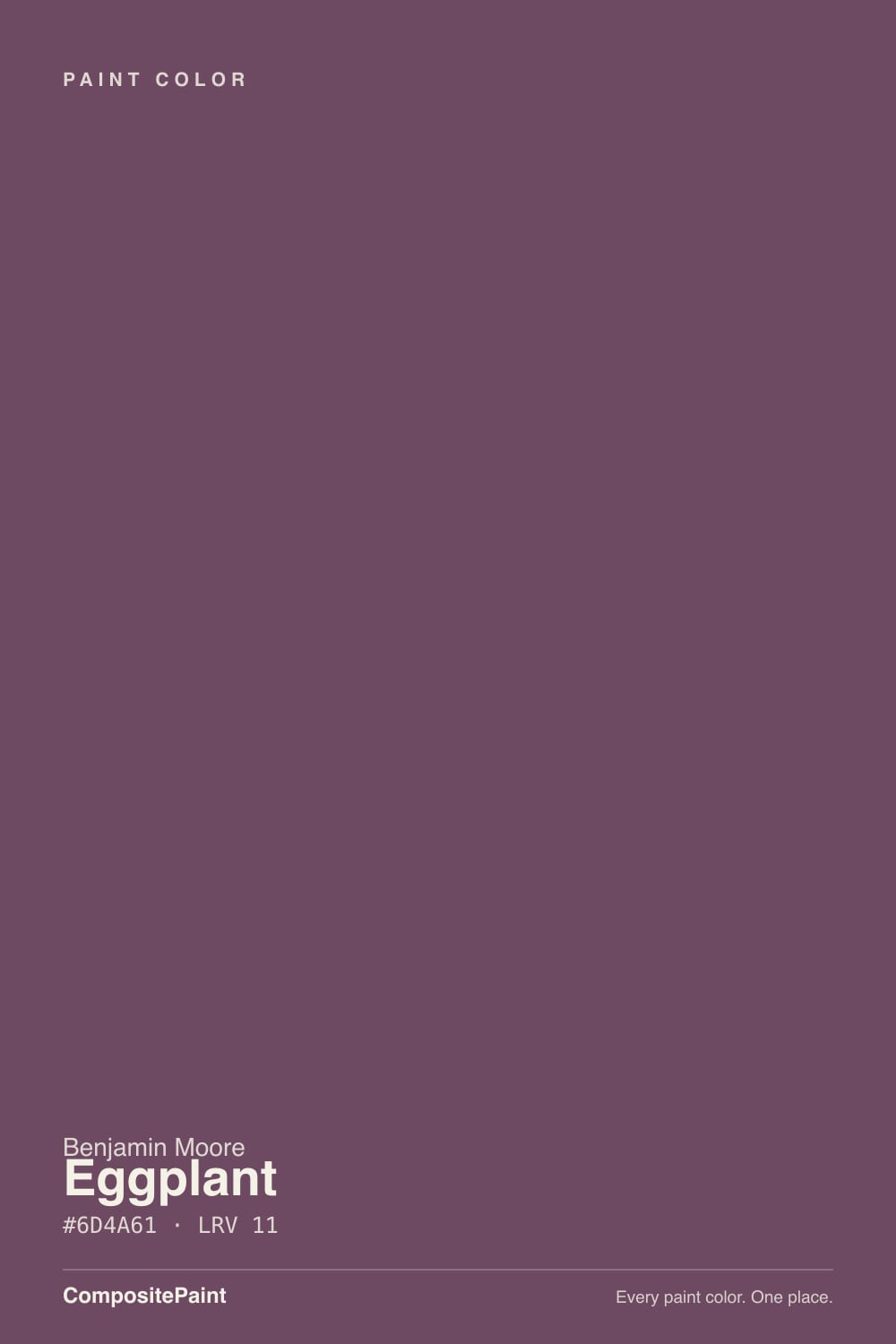
Eggplant is the deep red-purple people mean when they say aubergine — plum with brown in it, not grape, not lavender. At LRV 11 it gives back almost no light, so it lives or dies on the light you hand it: sconces beside a mirror, candles on a table, one good window. Get that right and a powder room looks like it cost money. Get it wrong and you have painted a small dark room brown.
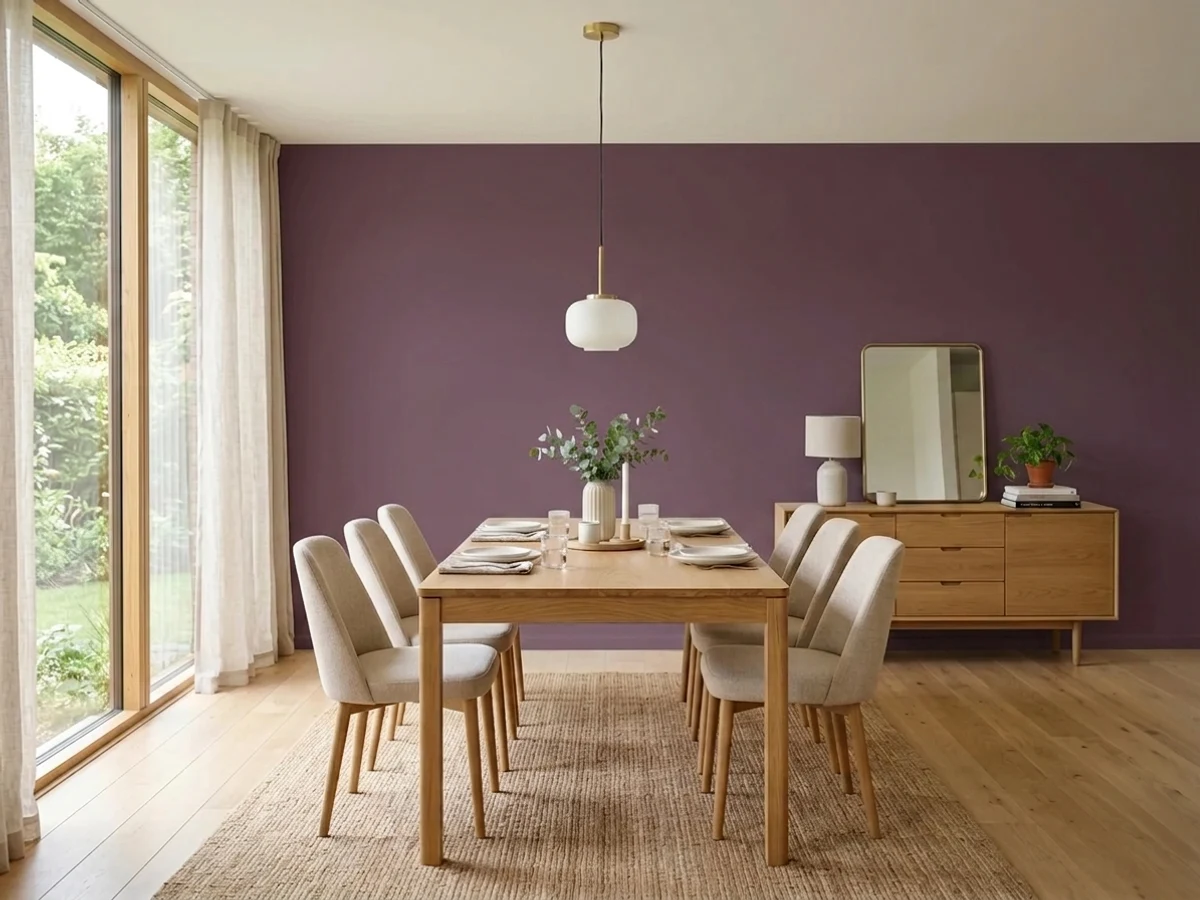
Powder rooms and small baths that should feel like a jewel box · dining rooms used at night · a headboard wall or a lamplit study · vanities, islands and built-ins · anyone who wants purple with no lavender in it
The room is dim, north-facing and has no lamps · you need purple to read purple in every light · your floors and trim are honey oak or golden beige · you are covering a big open plan · you repaint often and hate three-coat colors
- Makes a small powder room look designed for the price of a quart
- Red-based purple — no lavender, no candy, no nursery flashbacks
- Deep enough to shrug off fingerprints and shoe scuffs in a busy little room
- A Benjamin Moore Classic, so it predates the plum trend and will outlive it
- Mixed in cabinet and exterior lines, so the vanity, the door and the walls can match
- LRV 11 gives back almost no light — a dim room goes brown and cave-like
- Reads maroon or near-black about as often as it reads purple
- Deep base: expect a tinted primer, three coats, and touch-ups that flash
- Fights honey oak, golden beige and every yellow-warm wood tone
What Color Is Eggplant, Really?
A true aubergine: dark red-purple with enough brown-gray in it to stop the color from reading as grape. The red is the part that matters — there is more red than blue in this mix, which puts Eggplant closer to a bruised plum or a glass of Merlot than to the blue-violets most people picture when they hear purple. Benjamin Moore keeps it in the Classics collection, the same quiet corner of the deck as Sleepy Hollow, so this is not a color someone invented for the current plum moment. It has been sitting in the fan deck for decades being ordered one small room at a time.
At LRV 11 it is close to the bottom of the scale, and that number decides almost everything about how the paint behaves. Where light actually lands — a window wall at midday, a sconce next to a mirror, candles on a table — you see plum, and the red comes up through it. Where light does not land, you see near-black with a brown cast, and no second coat changes that. This is exactly why a small lamplit powder room is its best room and a dim north-facing den is its worst: the color is not dramatic on its own, it is dramatic where it catches light and disappears where it doesn't.
Undertone in one line: red-purple with a brown-gray drag — not blue-violet. If your sample reads brown or maroon, that is warm sun or a 2700K bulb pulling the red forward; if it reads flat gray-plum, that is cold daylight draining it. Both are the same paint telling the truth about your room.
Where It Shines
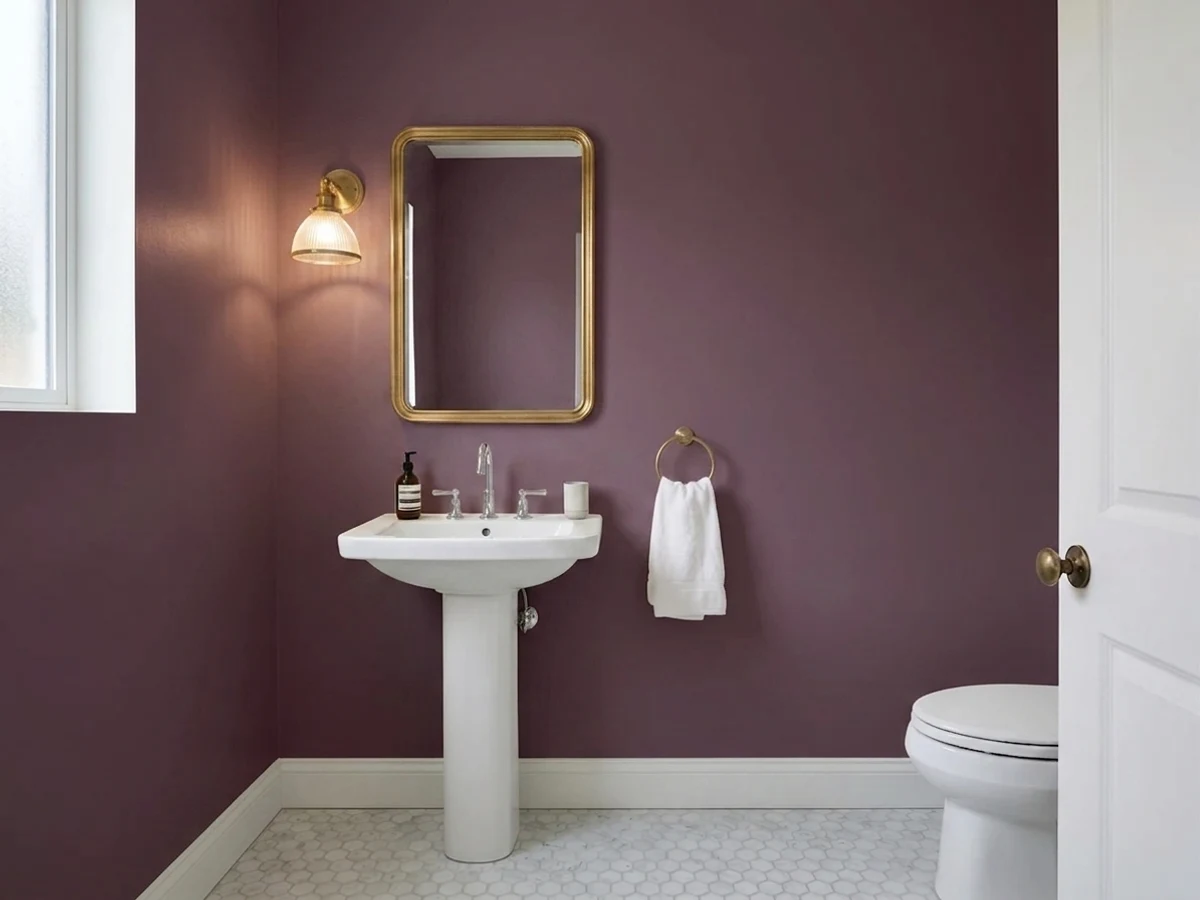
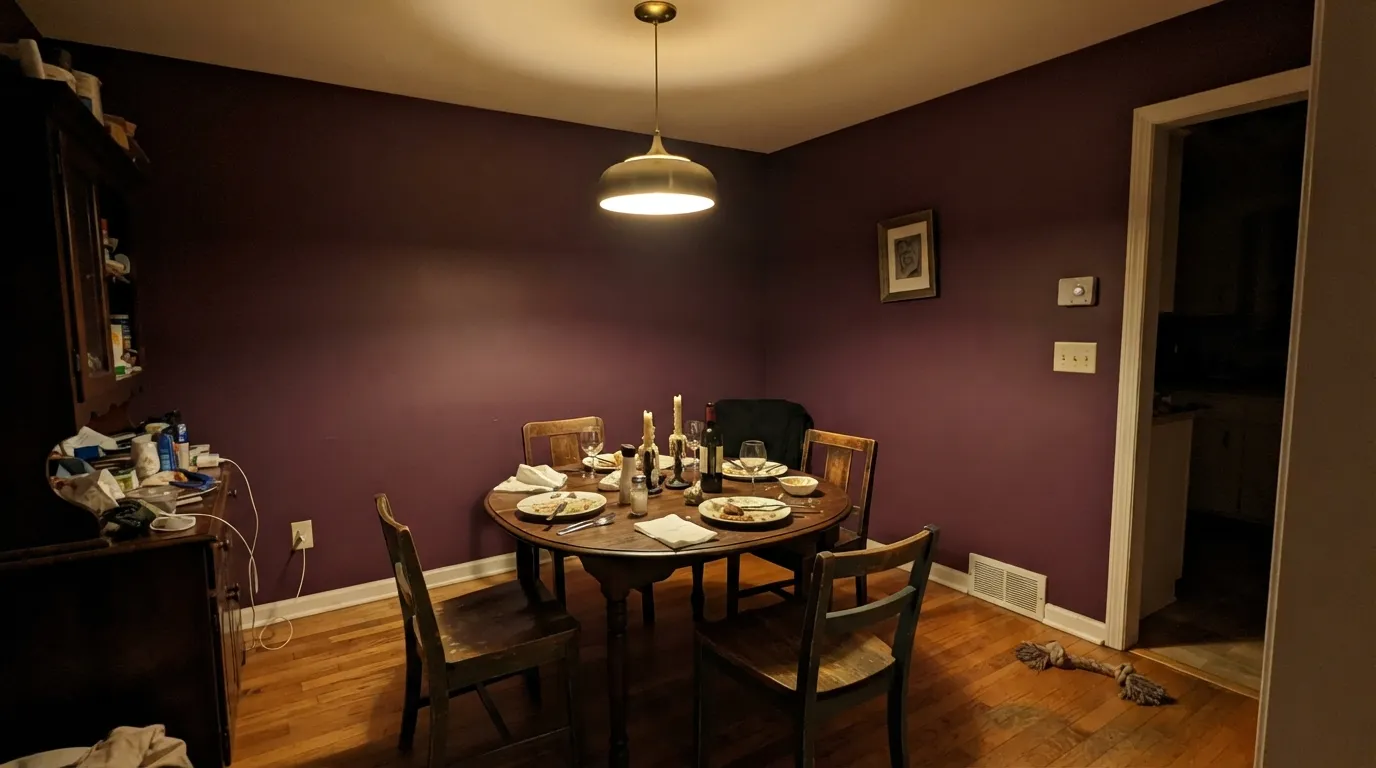
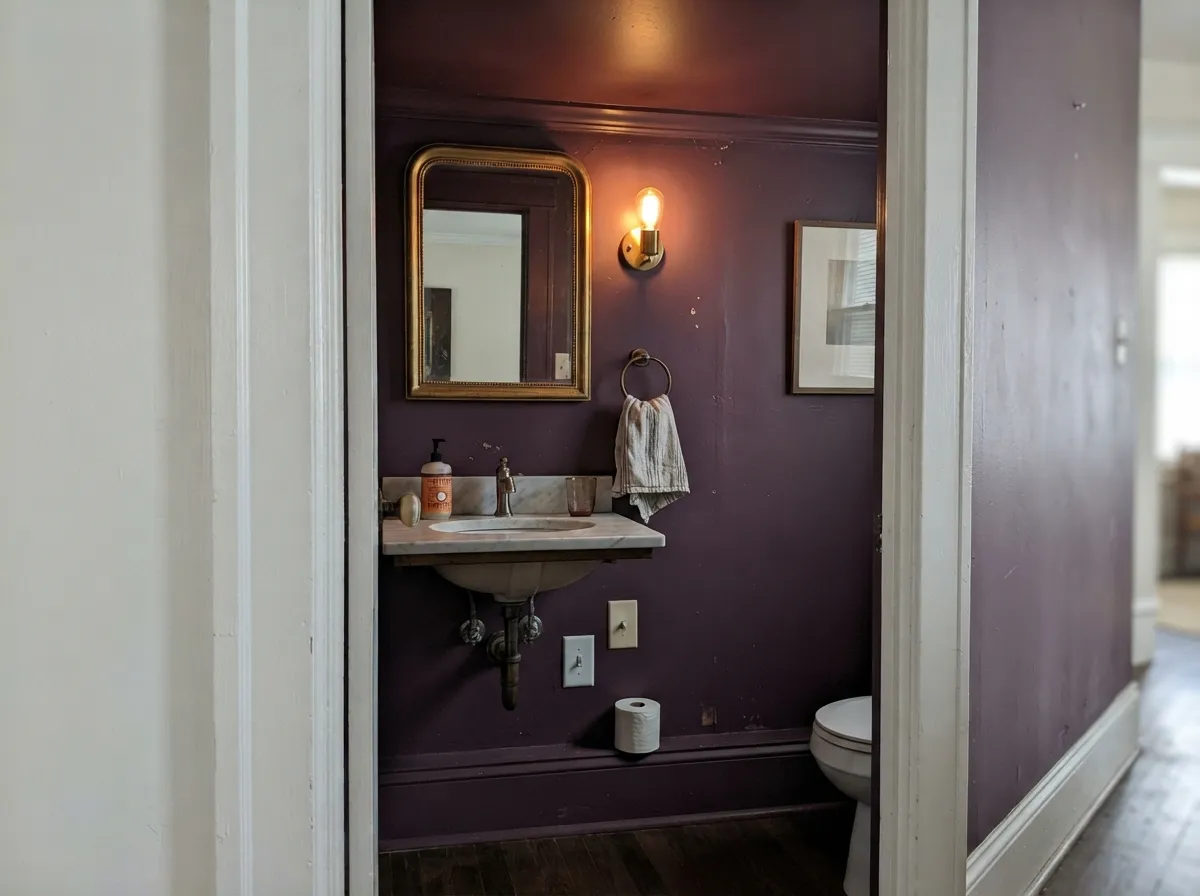
This is a small-room color and a night-room color, and it is very good at both. In a powder room you can paint the walls, the ceiling and the trim all in it, hang a gold-framed mirror and a marble-topped vanity, and the whole thing reads deliberate for the price of a quart. In a dining room used after dark it does the same job with candles and brass instead of sconces. Give it warm metal, real stone, cream linen and one lamp too many, and the brown in it turns into depth rather than mud.
Where It Fails
The bad reviews of this color are remarkably consistent, and all three scripts are predictable before you open the can. None of them are the paint's fault — but if your room matches one, sampling harder will only confirm it.
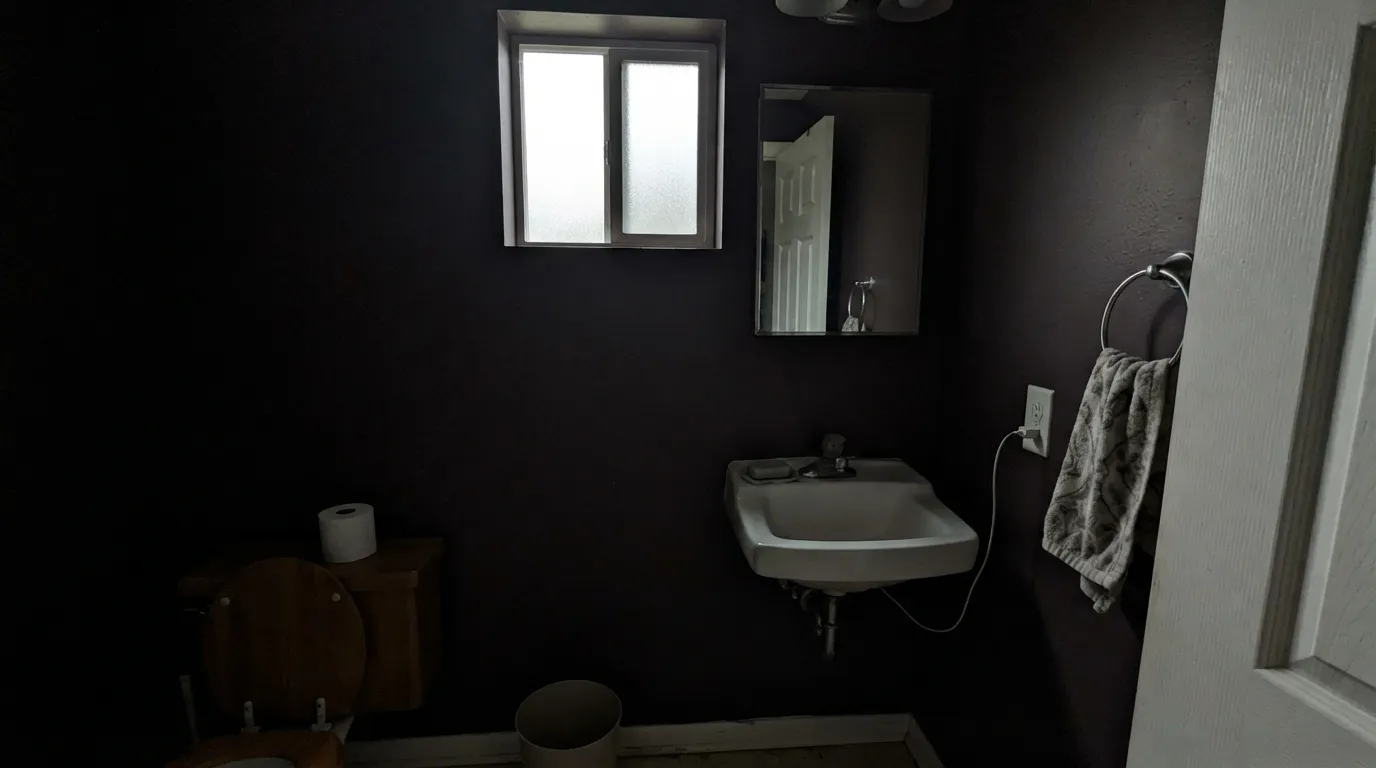
LRV 11 reflects almost nothing, so a north-facing room on a gray day with no lamps on gives you muddy near-black with a brown cast and no visible purple at all. Readers describe it as dirty or as looking like the wall needs another coat. The fix is light, not paint: sconces, table lamps, a mirror opposite the window. If you will not add light, pick something in the twenties for LRV instead.
Because the base is red, warm bulbs and low sun push it toward burgundy and dark brown for hours at a time. People who chose it for a clear purple room feel cheated by that, and they are not imagining it. If you want purple that stays obviously purple, Mystical Grape is the honest answer; Eggplant is a plum that spends part of every day looking like wine.
Yellow-orange sits opposite violet on the wheel, so orange-stained oak floors, golden oak trim and yellow-beige carpet all push this color toward purple while the walls push the wood toward orange. Both sides look worse. Walnut, black-stained wood, pale white oak or a large rug in between are the ways out.
Room by Room
Small, used briefly, always lit by the fixture you chose: every condition this color needs. Drench it — walls, ceiling and trim — so there is no light edge for the eye to measure the darkness against, and put the light beside the mirror rather than overhead. Satin holds up to hand marks; high gloss in Advance turns it into a lacquer box if your walls are smooth enough to take it.
Eggplant is a candlelight color, and dining rooms are the one room that is allowed to be dark. Zillow's analysis of listing photos found lavender-to-eggplant dining rooms sold for roughly eleven hundred dollars above expectation — a rare case where a bold color polls well. Eggshell walls, a warm white ceiling, brass or antique bronze light fixture.
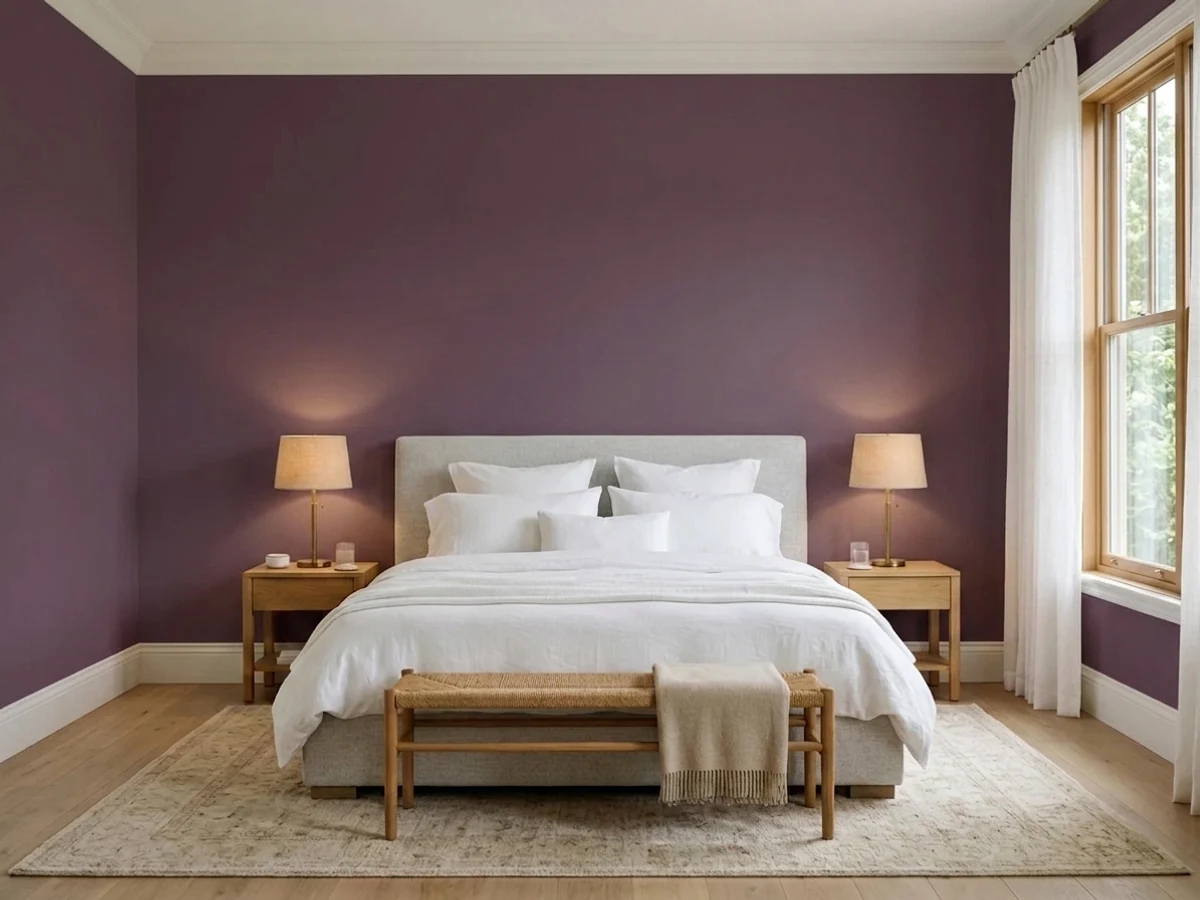
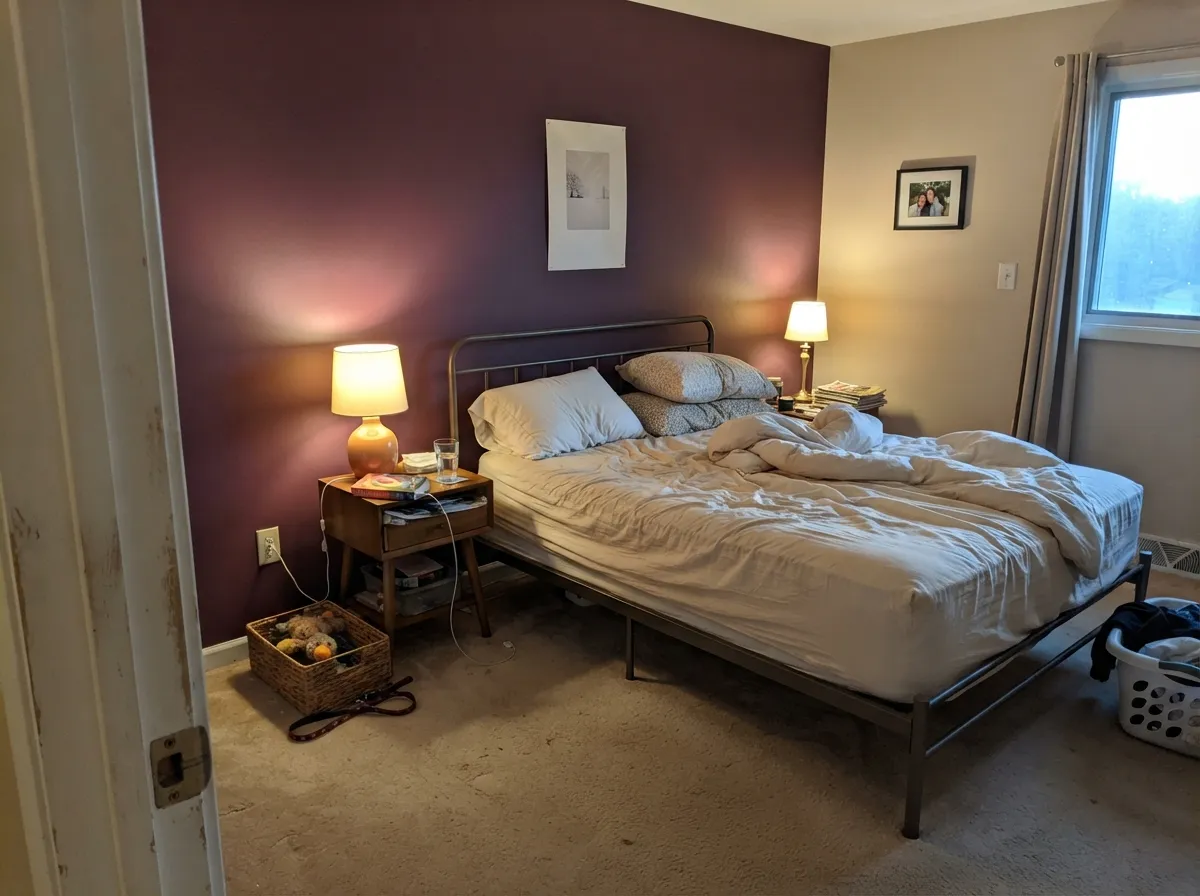
A headboard wall in matte Eggplant with lighter walls around it is the low-risk version and looks expensive with cream bedding. All four walls works too, but only in a bedroom with two lamps and 2700K bulbs; at LRV 11 an overhead fixture alone leaves the corners black. Keep bedding and curtains cream or white rather than beige.
Rooms that never see noon are rooms this color cannot disappoint. Bookshelves painted the same plum as the walls, a walnut desk, one warm lamp and leather: the brown in the color does the heavy lifting here. Eggshell on walls, satin on shelves and doors.
The cheapest way to test whether you like living with it. A bathroom vanity under a warm white wall, a kitchen island, a hutch or a set of built-ins gives you the color at a scale you can undo in a weekend. Use a urethane-fortified cabinet enamel in satin; the deep base needs the hardness.
Benjamin Moore mixes it in exterior lines, and on a front door against a cream or warm-white facade a deep plum reads quietly unusual in a good way — the color most neighbors cannot name. A whole house of it is a different bet: full sun flattens deep purples toward brown and dark saturated colors weather faster than earth tones, so keep it to the door, the shutters or a porch ceiling you can repaint easily.
Your Light Is the Risk
2700K bulbs and candle flame bring the red up and the wall turns velvet plum. This is the light the color was bought for — and the reason it belongs in rooms used after dark.
Cool gray daylight with no lamps on drains the red and leaves flat brown-black. The purple simply is not visible, and adding coats will not bring it back.
Midday sun on the wall is the only time it looks clearly violet. Morning east light keeps it cool and plummy; late west sun swings it toward maroon for an hour. Sample at both ends of the day before you commit.
Warm 2700K is the right choice: it flatters the red and keeps the room from going gray. Cool 4000K LEDs push it blue-violet and make it look dusty. Whatever the temperature, a dark room needs more lumens than you think — budget for a second lamp, not a brighter ceiling fixture.
Most complaints about Eggplant are a light mismatch. Upload a photo of your actual room and see it on your walls — then ask for the same wall in north light or evening lamps before you buy a single sample.
Need It From Another Brand?
Any paint counter can custom-tint Benjamin Moore 1379 directly. If you would rather stay in one brand's own deck, these are the closest stock matches, measured as ΔE2000. Under 2 is a difference you will not see on the wall.
| Brand | Closest color | ΔE | LRV | |
|---|---|---|---|---|
| Behr | Prussian PlumMQ1-39 · Behr | 1.2 | 9 | Color page → |
| Valspar | PassionateT502 · Valspar | 2.7 | 8.6 | Color page → |
| PPG / Glidden | Positively PurplePPG13-08 · PPG / Glidden | 2.7 | 9 | Color page → |
| Glidden | Positively PurplePPG13-08 · Glidden | 2.2 | 9 | Color page → |
| Dutch Boy | Pleasantly Plum347-7DB · Dutch Boy | 4.2 | 8 | Color page → |
| Dunn-Edwards | Old-Fashioned PurpleDE6007 · Dunn-Edwards | 3.9 | 9 | Color page → |
Similar Benjamin Moore Colors
The nearest shades to Eggplant within Benjamin Moore's own range, ranked by perceptual color distance — useful when you want the same look a touch lighter, darker, or warmer.
WCAG 2.1: AA is 4.5 : 1 for normal text, 3 : 1 for large text, AAA is 7 : 1.
Eggplant vs the Colors You're Also Considering
Every Eggplant sample board has the same rivals on it. The numbers show the real lightness gap — then it comes down to which risk you would rather live with.
Pick this when you want the room to change, not just the wall. Sleepy Hollow is a mood; Eggplant is a decision.
Benjamin Moore 1454 · LRV 28Sleepy HollowPick this if the room cannot afford to lose light — at LRV 28 it gives you the same violet family with daylight to spare.
Pick this for the version that still shows red and plum wherever light lands.
Sherwin-Williams SW 6286 · LRV 7Mature GrapePick this if you want it darker and grayer still — at LRV 7 it crosses into near-black plum and stops arguing about whether it is purple.
Eggplant Coordinating Colors
The rule with Eggplant: warm whites and creams for softness, one crisp white if you want an edge, and neutrals that already carry a little violet so the dark wall reads like family. Keep golden yellows and orange-toned woods at a distance, and let brass, bronze and marble do the decorating. These are the partners that keep showing up in rooms that work:
The Plum Comeback: Why Aubergine Is Back
Purple spent two decades as the color nobody would admit to liking, and then the pendulum swung. Benjamin Moore's Color of the Year 2025, Cinnamon Slate, is a browned mauve at LRV 19; the mauve and plum family has been climbing ever since. For 2026 the British houses went further into the dark end — Little Greene named a plum aubergine its color of the year, and Graham & Brown picked a deep damson plum — and designers started aiming the whole trend squarely at dining rooms, where a smoky near-black eggplant that reads red in one light and purple in another is exactly the point.
The useful thing about Eggplant in that context is that it is not a trend color. It sits in Benjamin Moore's Classics collection and has been mixed the same way for decades, which means you get the current mood without a timestamp on it. A saturated fashion plum will look like 2026 in ten years; a grayed, red-based aubergine in a powder room will just look like a powder room somebody thought about.
Eggplant With Wood, Metal, and Floors
The wood decides this one. Walnut and dark-stained oak are the best company — both carry the same red-brown note the paint does, so the room reads layered instead of contrasted. Black-stained wood, pale unstained white oak and gray-washed floors are all safe. Cream or oatmeal carpet is fine; so is a real rug with red or rust in it.
The genuine no is golden: honey oak floors, orange-toned oak trim, yellow-beige carpet. Yellow-orange sits opposite violet on the color wheel, so each side exaggerates the other and the room ends up looking like an argument. A large rug between them helps in a bedroom; in a small bathroom with an oak vanity there is nowhere to hide, and a warmer, browner color is the smarter buy.
Metals are the easy part and the reason this color photographs well: unlacquered brass, antique bronze and gold-framed mirrors all sit beautifully against it, and matte black works for hardware. Polished chrome and cool nickel are the two that read slightly clinical next to a red-based plum. Marble with warm veining, terracotta and aged leather all belong in the same room.
Three Ready Palettes Built on Eggplant
A color is never alone on the wall. These are complete combinations in the 60-30-10 pattern, with the reason each one holds together. Every one opens in the visualizer.
Drenching the little room removes the light edge that makes dark walls feel like they are closing in, and the crisp, cool white of Chantilly Lace at LRV 92 gives the plum one clean line to push against. Manchester Tan outside the door is the part people forget: a warm mid neutral in the hallway makes opening the door feel like a reveal instead of a mistake. Brass fixtures and a marble top finish it.
Try this palette in your roomSwiss Coffee overhead at LRV 84 keeps the ceiling from pressing down, and its cream is warm enough that the plum reads rich instead of cold. Dark Olive is the interesting move: raw golden wood fights this color, but an olive that dark and grayed sits on the same side of the wheel without the fight, so it reads as a deliberate contrast. Candles and antique bronze rather than chrome.
Try this palette in your roomBalboa Mist is a light neutral that leans violet in cool light, so the dark wall reads like the same family rather than a stunt wall someone talked you into. Keeping three walls at LRV 70 means the room still has light to spend on the one wall that eats it. White Dove trim keeps every edge soft.
Try this palette in your roomEggplant FAQ
Is Eggplant purple or brown?
Both, depending on the hour. The base is red-purple, so in daylight and on a well-lit wall it reads as a clear plum, and under warm bulbs or low western sun it swings toward brown-maroon. In a dim room with no lamps it can read almost black. If you need a color that says purple at every moment of the day, this is not it.
Will it make a small powder room feel smaller?
Less than you expect, if you drench it. Painting walls, ceiling and trim the same color removes the contrast lines that tell your eye where the box ends, which is why designers use dark colors in the smallest rooms in the house. What actually makes a small dark room feel bad is one bright ceiling and a single overhead bulb — put the light beside the mirror instead.
What trim and ceiling color goes with Eggplant?
Three good answers. Drench it — same color everywhere, sheen doing the separating — for the jewel-box look. Crisp white trim like Chantilly Lace for a sharp, formal edge. Or a warm white such as Swiss Coffee or White Dove when the room has wood and brass and you want the whole thing softer. Avoid a builder off-white you did not choose; against this depth, every white shows its true color.
How many coats does Benjamin Moore Eggplant take?
Plan on a gray-tinted primer plus two coats, and be ready for a third. Deep colors are mixed in a deep base with very little white pigment, so the first coat goes on translucent and streaky over anything light — that is normal, not a bad batch. Roll thin coats rather than one heavy one, cut and roll each coat wet to wet, and expect touch-ups months later to flash slightly unless you feather them out.
Is it too dark for a bedroom?
Not if the bedroom has lamps. The color is calmest in warm low light, which is what a bedroom runs on at the hours you are in it. The version most people are happiest with is one wall behind the bed in matte, with a lighter neutral on the other three. All four walls is genuinely lovely in a room with two lamps and 2700K bulbs, and genuinely gloomy in a north-facing room lit by one ceiling fixture.
Does a purple room hurt resale?
Not in the room where this color belongs. Zillow's analysis of listing photos found homes with lavender-to-eggplant dining rooms sold for around eleven hundred dollars more than expected, which makes plum one of the few bold colors with a positive number attached to it. The risk with any deep color is elsewhere: a buyer who does not want it is looking at a primer-plus-three-coats repaint, so keep it to rooms where the drama is the point.
Have you painted with Eggplant?
Rate it — one tap helps the next reader decide.
Ask a Question