Sun Dried Tomato
Sherwin-Williams' brick-dark red reviewed honestly: where it glows on a front door, the rooms where it swallows the light, and what to pick instead.

Jessica has spec'd whites and neutrals for more than 300 rooms and keeps a sample wall of painted drawdowns in her studio. Every color review is checked against real reader rooms in the comments and re-tested when a formula changes. About the testing process →
- 1Redwood0
- 2Sun Dried Tomato5
- 3Million Dollar Red13
- 4Cinnamon Slate19
The Fast Verdict
Sun Dried Tomato is Sherwin-Williams' answer to "I want red, not pink and not orange" — a deep brick-wine red so grayed and browned down it sits at LRV 5, the same depth bracket as a near-black. Outside, on a front door, it reads as a true, deep red that never looks dated. Inside, on four daytime walls, that same depth swallows a room fast — this is a color for a door, a den, an island or one accent wall, not a whole-house gamble.
Front doors on Colonial, Victorian or farmhouse exteriors · a library or den you mostly use after dark · a dining room that wants drama · kitchen islands and cabinets · one accent wall against a lot of white
You want a room to feel bigger or brighter · your only light source is a small north window · you're picturing a bright cherry red, not a wine-brick red · you're painting all four walls in a room you sit in during the day
- A real, believable red — not pink, not orange, not neon
- One of the deck's best front-door colors against white or cream siding
- Turns velvety and rich under evening lamps
- Small rooms — powder rooms, entries — take the deep color beautifully
- Pairs effortlessly with brass and matte black hardware
- LRV 5 makes any daytime room measurably darker and smaller
- Cool north light turns it flat, muddy brown with the red drained out
- Not the bright cherry red some buyers picture from the name
- Four walls is a big commitment — one small test swatch won't tell the whole story
What Color Is Sun Dried Tomato, Really?
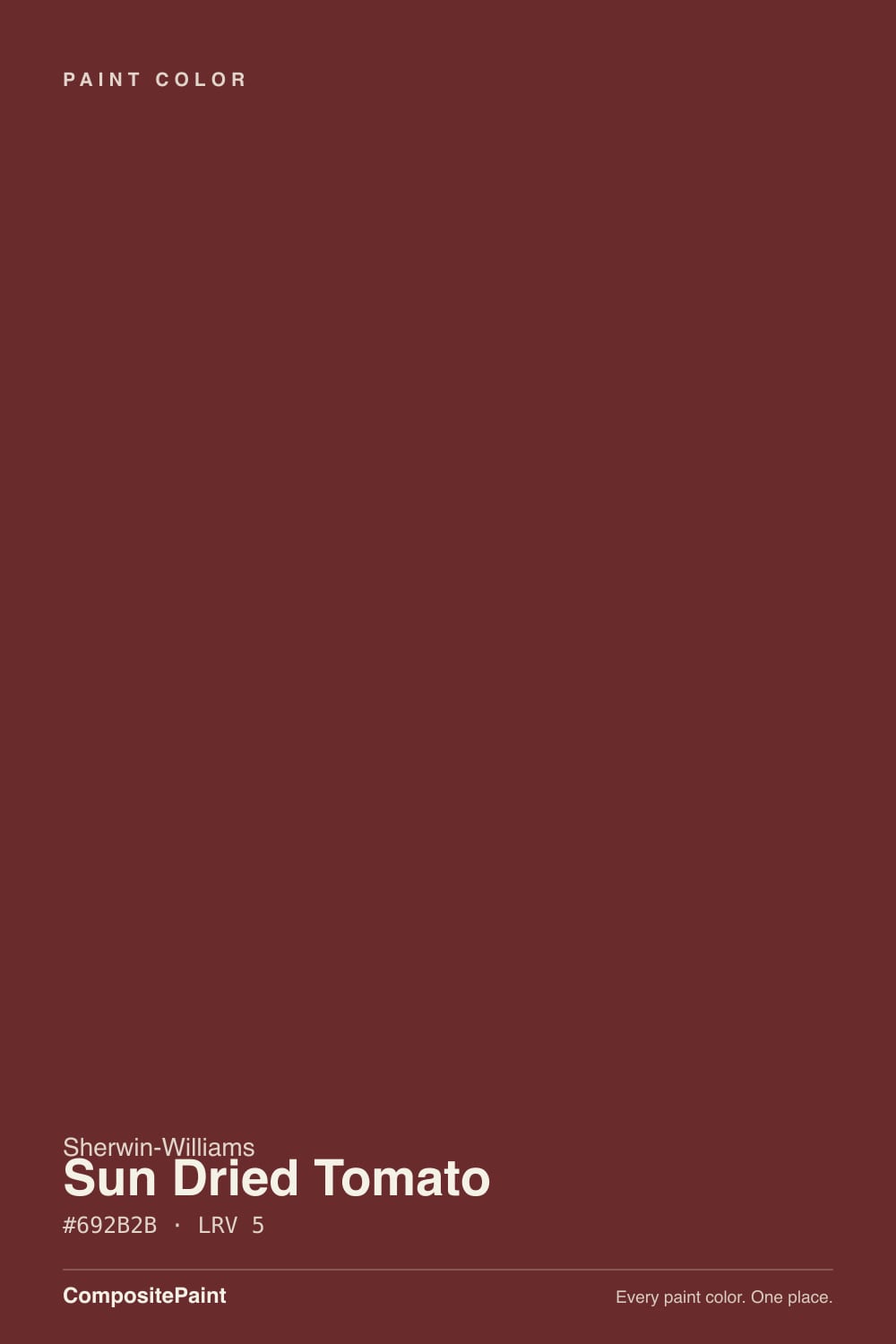
Sun Dried Tomato is built on a red base with a heavy dose of brown mixed in — the hex #692B2B breaks down to RGB 105/43/43, and that near-equal green and blue is what keeps it from reading like a fire-engine or cherry red. It sits closer to a good glass of red wine or old brick than to anything you'd call bright. Sherwin-Williams keeps it in its curated Timeless Color collection, the shortlist its own colorists hand to painters who ask for a classic red that won't look trendy in five years.
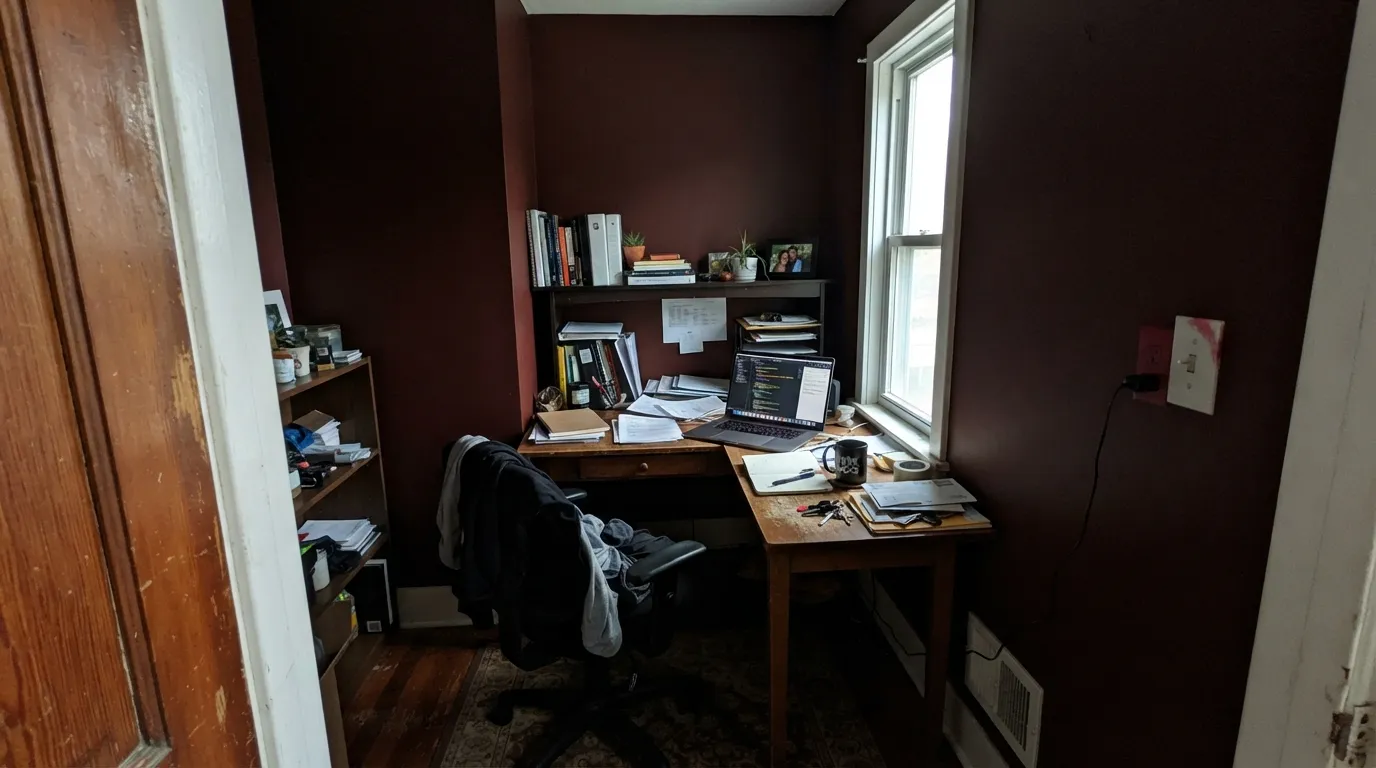
At LRV 5 it sits in the same reflectance bracket as Tricorn Black and Iron Ore — meaning it behaves like a near-black more than it behaves like "a red." In direct, bright light it shows its full red-brown color; step back a few feet or dim the room and it reads as a deep, warm charcoal-maroon that can pass for black from across a room. That is the single most useful fact about this color: buy it for depth and drama, not for a light, cheerful "pop of red."
It shows up most often in three places: front doors, where the low reflectance and warm red base make it a reliable focal point against white, cream or gray siding; kitchen islands and cabinetry, usually paired with brass or matte black hardware; and libraries, dens or dining rooms where the low light level is treated as a feature, not a bug. It isn't chasing a Pinterest moment — it's a dependable, long-running red SW keeps in stock because painters keep asking for it by name.
Where It Shines
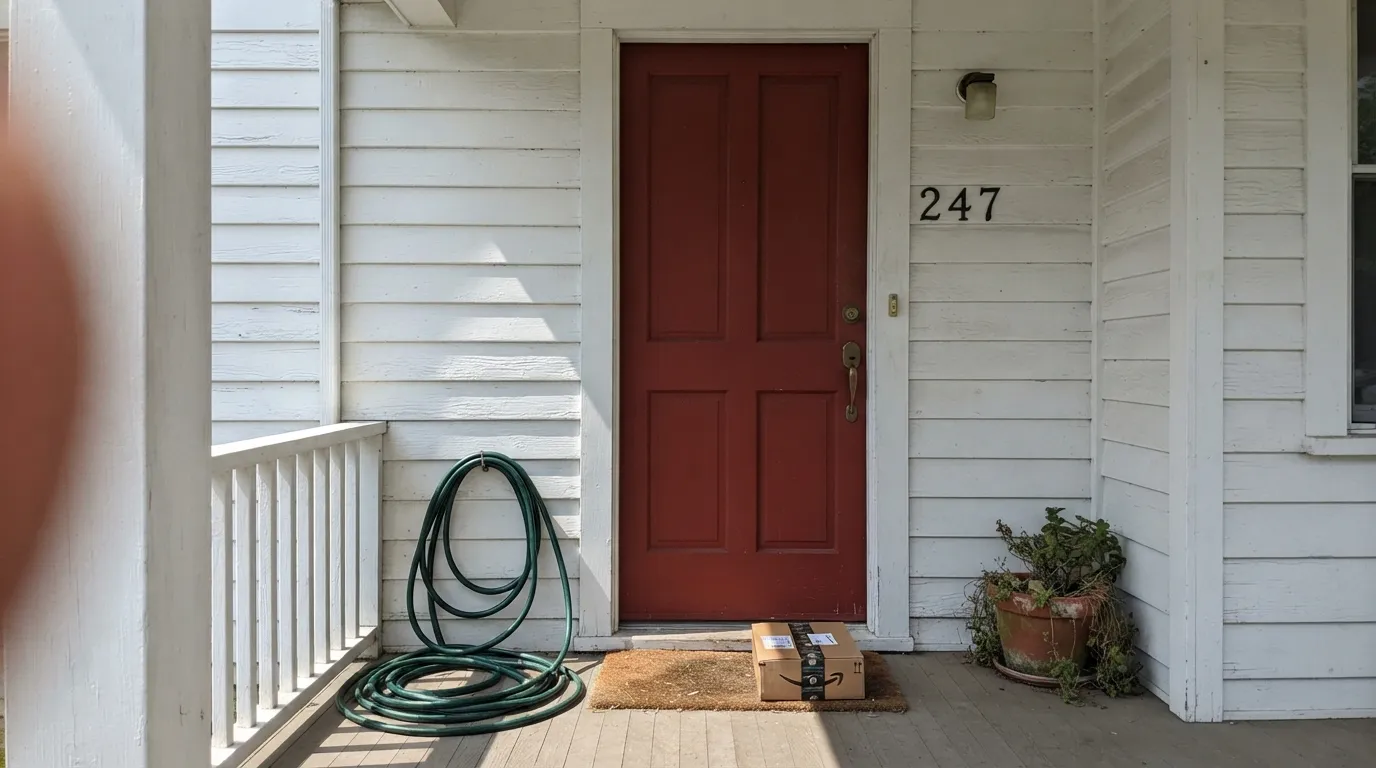
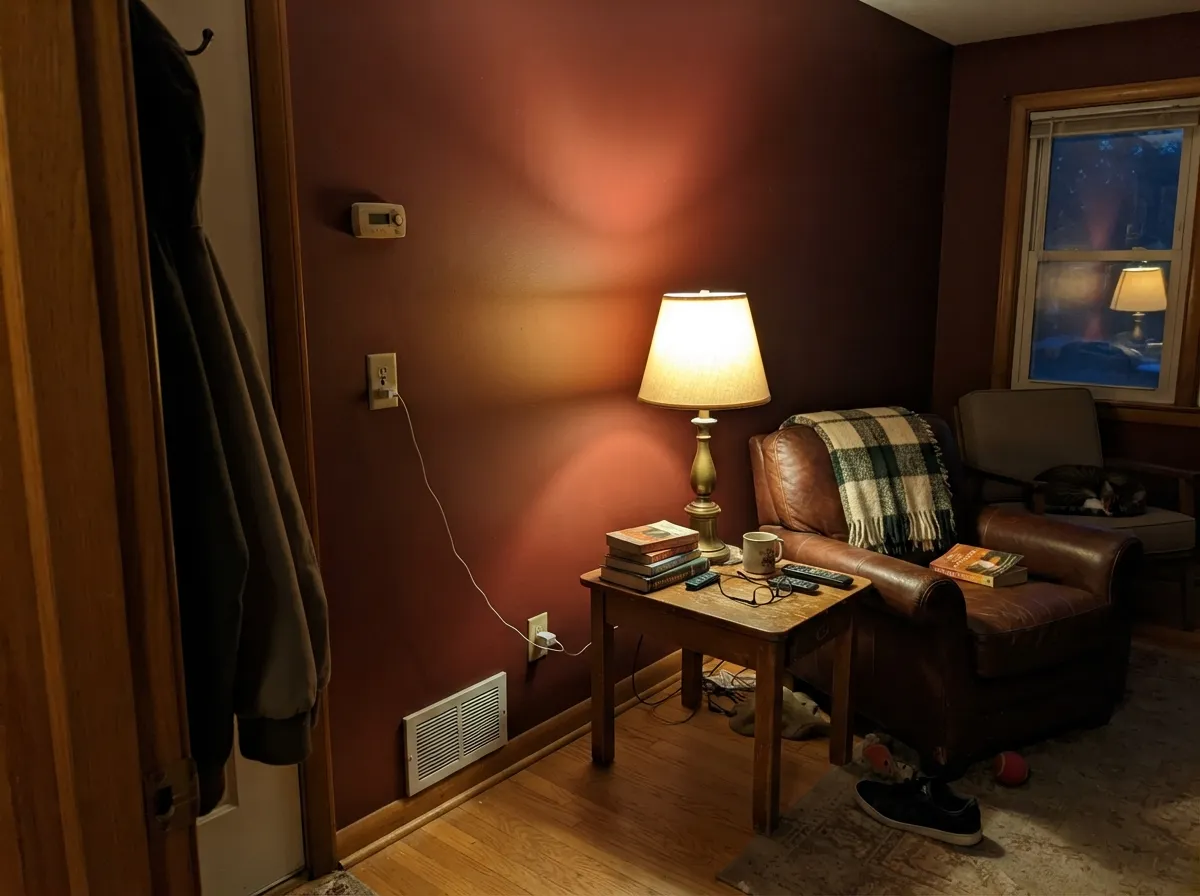
Give it a door, a cabinet, or a room that runs on lamp light and it is genuinely one of the best reds in the deck. On an entry door under full daylight it holds real, unmistakable red — not brown, not so dark it reads black — and against white or cream siding it is one of the highest-impact, lowest-effort curb-appeal moves in the SW catalog. Indoors, in a den or dining room with warm bulbs on at night, it goes velvety and rich the way good leather does; the darkness stops feeling like a limitation and starts feeling like the point.
Where It Fails
The regret stories about Sun Dried Tomato are almost never about the color being "wrong" — they're about buyers picking an LRV 5 color for a job that needed something closer to LRV 40. All three of the following are avoidable before the first coat goes on.
Paint a home office or living room you mostly use at 2pm in Sun Dried Tomato and the room reads smaller and darker than the chip promised — LRV 5 absorbs almost all the light that hits it. Save it for rooms you mostly use at night, or for one wall plus a lot of white.
Cool, weak north light on an already-dark red pulls it toward flat, muddy brown-black with none of the wine-red warmth showing. The color needs direct or reflected daylight, or warm lamps, to read as red at all — in a dim north room it just reads as gloom.
Buyers picturing a bright cherry or fire-engine front door are often surprised by how brown and how dark this actually looks in person. If you want vivid, saturated red, this is the wrong swatch — it's a brick-wine red built for depth, not brightness.
Room by Room
Full daylight keeps it a true, deep red instead of a brown blur, and against white, cream or gray siding it's one of the highest-impact, lowest-effort curb-appeal moves in the SW deck. Semi-gloss for durability and a sheen that catches the sun.
A dining room used mostly at dinner time is exactly this color's sweet spot: warm bulbs bring the red forward and the depth reads as intentional drama, not a mistake. Eggshell walls, cream or white trim keeps the room from closing in completely.
In a room with a good reading lamp and mostly evening use, it goes velvety and rich against leather and walnut. If the office also doubles as a daytime workspace lit only from overhead, expect the room to feel smaller and darker than the chip suggested.
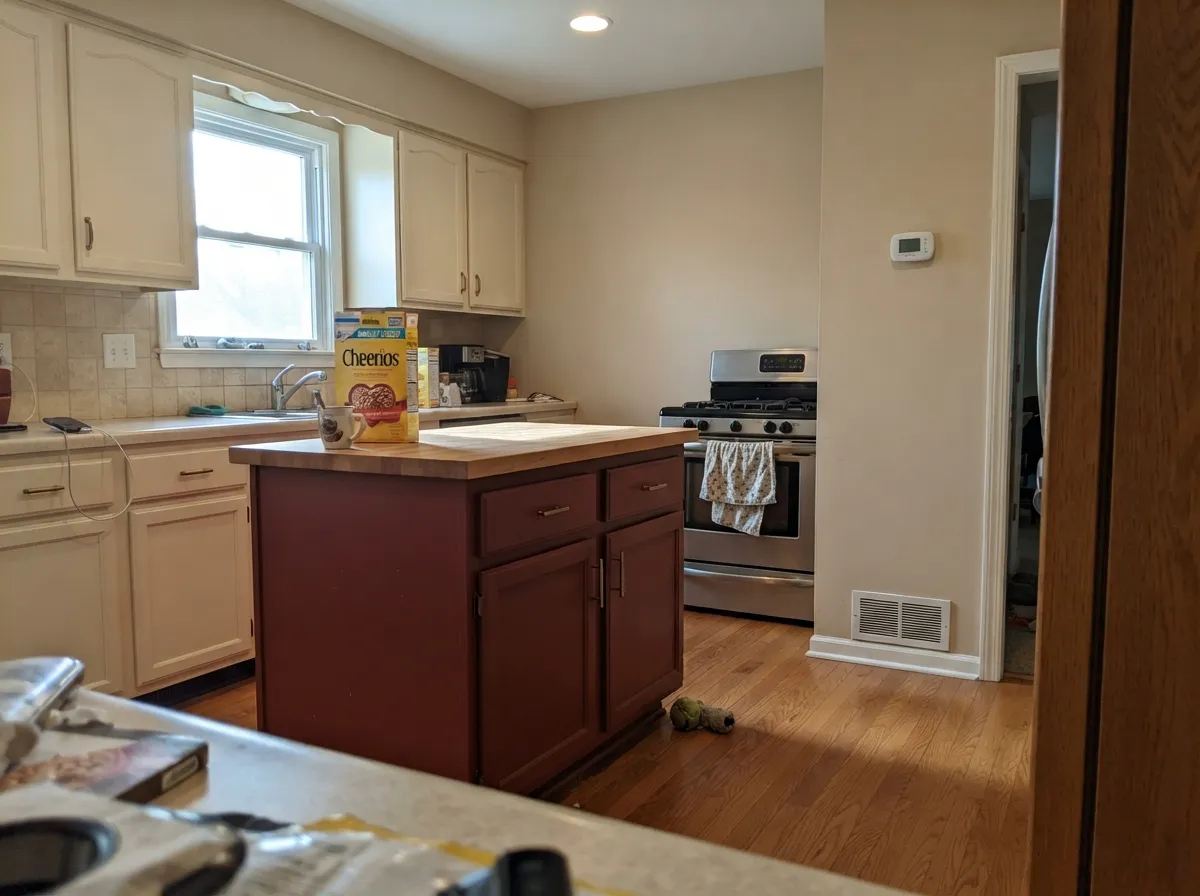
On an island or a run of lower cabinets, paired with a lighter perimeter color, it's genuinely striking with brass or matte black hardware. A full kitchen in this color, walls included, is a much bigger and riskier commitment.
Small half-baths take LRV 5 color well — there's less daylight to fight in the first place, and the depth reads as a deliberate jewel-box choice rather than gloom. Pair with a bright mirror and a warm sconce.
Rooms you use in daylight hours lose real usable brightness to a color this dark. If you love the red, use it as one accent wall behind a headboard or media unit and keep the other three walls a warm white.
Your Light Is the Risk
Full sun on a front door or south-facing wall keeps the red honest and rich — the exact light this color was chosen for.
Weak, cool daylight drains the red and leaves a flat, muddy brown-black. Test the actual wall, not just a door swatch in your hand.
Morning or evening sun briefly saturates it toward true red; the rest of the day it settles back into a deep, quiet brown-red.
2700K lamps make it glow like aged leather. Cool white LEDs flatten it toward black — swap the bulbs before you swap the paint.
Most complaints about Sun Dried Tomato are a light mismatch. Upload a photo of your actual room and see it on your walls — then ask for the same wall in north light or evening lamps before you buy a single sample.
Need It From Another Brand?
Any paint counter can custom-tint Sherwin-Williams SW 7585 directly. If you would rather stay in one brand's own deck, these are the closest stock matches, measured as ΔE2000. Under 2 is a difference you will not see on the wall.
| Brand | Closest color | ΔE | LRV | |
|---|---|---|---|---|
| Behr | Florence RedBXC-76 · Behr | 4.7 | 4 | Color page → |
| Benjamin Moore | Cottage RedHC-184 · Benjamin Moore | 2.2 | 7 | Color page → |
| Valspar | LovestruckP079 · Valspar | 3.1 | 5.3 | Color page → |
| Dutch Boy | Tyrian Red301-7DB · Dutch Boy | 3.7 | 5 | Color page → |
| Magnolia Home | By The FireplaceJG-29 · Magnolia Home | 2.7 | 6 | Color page → |
| Annie Sloan | BurgundyBURGUNDY · Annie Sloan | 3.1 | 5 | Color page → |
Similar Sherwin-Williams Colors
The nearest shades to Sun Dried Tomato within Sherwin-Williams's own range, ranked by perceptual color distance — useful when you want the same look a touch lighter, darker, or warmer.
WCAG 2.1: AA is 4.5 : 1 for normal text, 3 : 1 for large text, AAA is 7 : 1.
Sun Dried Tomato vs the Colors You're Also Considering
Every Sun Dried Tomato sample board has the same rivals on it. The numbers show the real lightness gap — then it comes down to which risk you would rather live with.
Pick this when you want that same depth to unmistakably read as red, not just dark.
Sherwin-Williams SW 9580 · LRV 5Cracked PepperPick this if you want the same near-black depth with the red dialed down to a whisper — it reads brown, not wine.
Pick this for the same LRV 5 depth with an actual color underneath it, not just "dark."
Benjamin Moore AF-180 · LRV 5WengePick this for cabinets and built-ins that need a near-black with no red story attached.
Sun Dried Tomato Coordinating Colors
The rule for coordinating with Sun Dried Tomato is simple: keep everything else warm and light, and let this color carry all the depth. Warm whites and creams give it room to be the loudest thing in the space; brass and matte black hardware both read well against it; near-black neutrals give it a second dark note to lean on instead of standing alone. Cool grays and blue-based whites are the one family that fights it.
Sun Dried Tomato on Front Doors
This is the job the color is best known for, and it earns the reputation. Against white or cream siding it reads as a true, unmistakable red — not the brown a lower-light room can push it toward — and it works across a wide range of exterior styles, from a Colonial with black shutters to a farmhouse porch with brass house numbers. It stays legible even in overcast weather, unlike a lighter, more saturated red that can look washed out on a gray day.
The one detail to get right outdoors is exposure: a door under a deep, shaded porch roof reads noticeably darker and browner than one that catches direct sun for part of the day. If your entry is heavily shaded, expect it to lean toward the near-black end of its range rather than the bright, true-red end — sample the actual door, at the actual time of day you'll see it most, before committing.
Sun Dried Tomato With Wood Tones and Metals
Walnut, aged leather and dark stained wood are the color's natural company — they share its depth and warmth, so a den or library in Sun Dried Tomato with walnut shelving looks deliberate and rich rather than heavy. Pale white oak and cream linen also work, giving the room somewhere light to rest the eye between the deep walls and the ceiling.
On hardware and fixtures, brass and matte black are both safe choices and read almost like two different design directions on the same paint: brass leans traditional and warm, matte black leans modern and graphic. Polished chrome and cool brushed nickel are the two finishes that fight it — they pull the eye toward a coolness the color doesn't have.
Three Ready Palettes Built on Sun Dried Tomato
A color is never alone on the wall. These are complete combinations in the 60-30-10 pattern, with the reason each one holds together. Every one opens in the visualizer.
White siding gives the red door room to be the loudest thing on the house; black shutters add one more dark note so the red door doesn't stand alone as the only deep color on the facade.
Try this palette in your roomAlabaster keeps the trim and ceiling from disappearing into the dark walls, while Sable on the built-ins reads like stained wood rather than another coat of the same red — the room gets depth without going flat and monochrome.
Try this palette in your roomAccessible Beige keeps the perimeter light and everyday-livable, so the island can carry all the color risk. Iron Ore on the hood gives the room a second dark note that ties back to the island instead of leaving it isolated.
Try this palette in your roomSun Dried Tomato FAQ
Is Sun Dried Tomato more red or more brown?
Both, deliberately. The hex #692B2B breaks down to RGB 105/43/43 — red leads, but green and blue are almost equal to each other, which is what pulls it toward brick and wine instead of a clean, saturated red. Think old brick or a glass of red wine, not a stop sign.
Will it look black in a dim room?
Close to it. At LRV 5 it's in the same reflectance range as Tricorn Black and Iron Ore. In weak or indirect light it reads as a deep charcoal-maroon that can pass for black from across the room; it needs real light, direct or lamp, to show its red.
Is it a good front door color?
Yes — it's one of the stronger choices in the SW deck for this exact job. Against white, cream or gray siding it reads as a true, deep red rather than brown, and it works on Colonial, Victorian and farmhouse-style entries alike.
Can I use it on kitchen cabinets?
Yes, most successfully on an island or a run of lower cabinets rather than the whole kitchen. Brass or matte black hardware both work well against it; keep the perimeter cabinets or walls in a lighter color so the room doesn't lose all its daylight brightness.
What's the best sheen for Sun Dried Tomato?
Eggshell on walls, semi-gloss on doors and trim for durability and a bit of light-catching shine, satin on cabinets and islands so fingerprints and cleaning don't dull the finish.
Does it work as a whole-room color, or just an accent?
Mostly an accent, a door, or a room you use after dark. A room you occupy during the day on all four walls will feel noticeably smaller and darker at LRV 5 than the paint chip suggests — one accent wall, a den, or a powder room is the safer bet.
Have you painted with Sun Dried Tomato?
Rate it — one tap helps the next reader decide.
Ask a Question