Still Water
The deep blue-green everyone puts on one island or one door, reviewed honestly: where it glows, where it turns to black, and what to pick instead.

Jessica has spec'd whites and neutrals for more than 300 rooms and keeps a sample wall of painted drawdowns in her studio. Every color review is checked against real reader rooms in the comments and re-tested when a formula changes. About the testing process →
- 1Dark Night4
- 2Still Water10
- 3Adirondack Blue22
- 4Van Courtland Blue31
The Fast Verdict
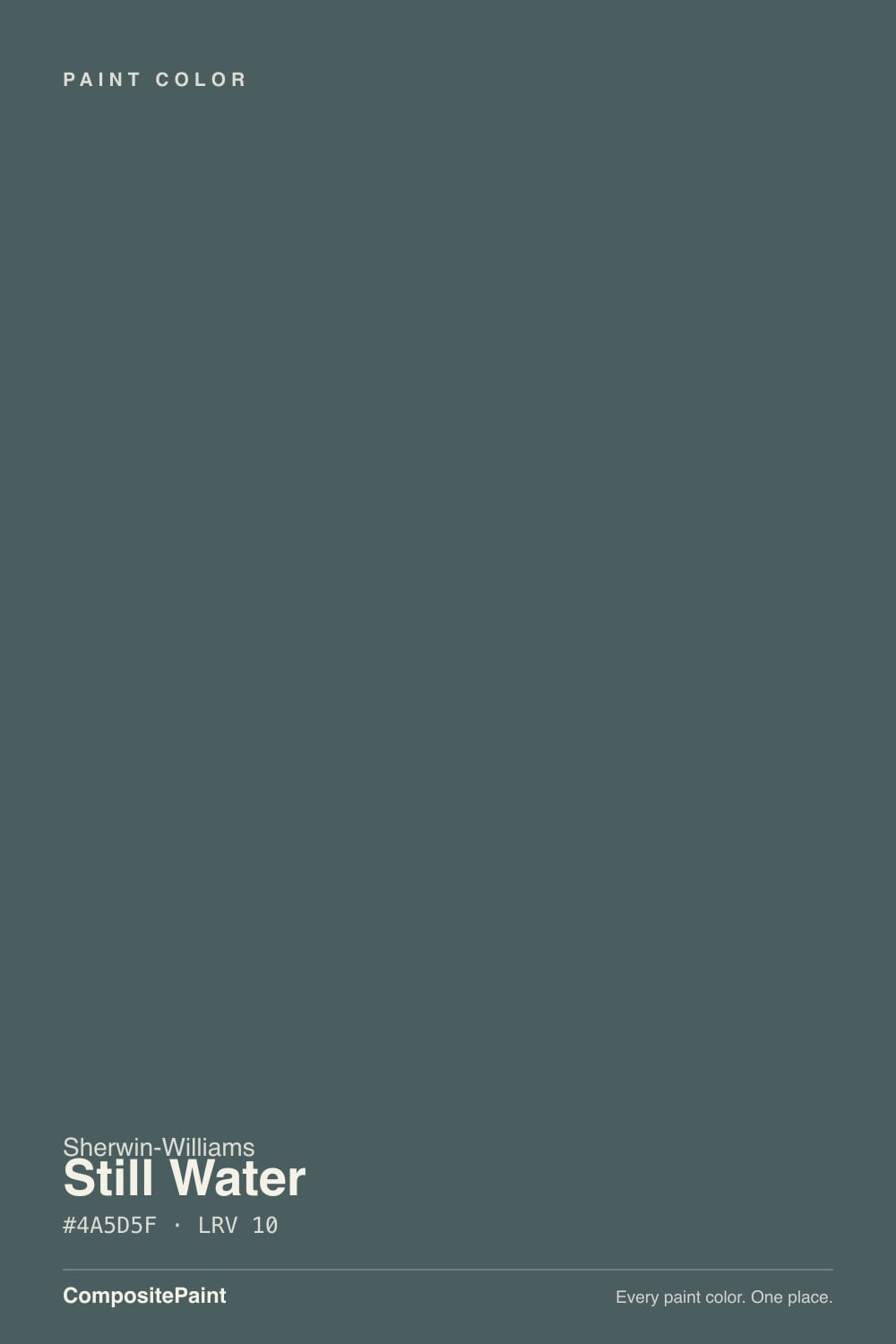
Still Water is a deep, grayed-down blue-green — teal pulled back to slate depth, not a jewel tone. At LRV 10 it sits close to black on paper, but real daylight pulls real color out of it: a quiet, cool green-blue that reads expensive on an island, a front door, or a bathroom vanity. Skip the marketing hype — there isn't much of it, and it doesn't need any. This is a dependable deep color that pros reach for in small, well-lit doses.
Kitchen islands and vanities · front doors and shutters · built-ins and accent walls with real light · anyone who wants blue-green depth without a jewel-tone commitment
Your room has no window or overhead light nearby · you want a punchy, saturated teal (this one is grayed down) · you're set on true navy with zero green · you're painting four walls in a windowless space
- Genuine blue-green depth, not a flat near-black
- Excellent in small, high-light doses — islands, doors, vanities
- Pairs beautifully with brass, bronze, and warm wood
- Deep enough to hide daily wear on cabinets and doors
- No trend expiration risk — a quiet, classic slate-teal, not a fad color
- Needs a real light source or it reads as near-black
- Full rooms with weak light go cave-like fast
- Photographs inconsistently — screens push it warmer, cooler, or brighter than real life
- Too muted for anyone who actually wants a saturated, jewel-tone teal
What Color Is Still Water, Really?
A grayed-down blue-green — teal pulled back toward slate until it reads as a deep, quiet color rather than a bright one. The green and blue in the mix sit almost equal, with just enough gray added to keep it from tipping into anything saturated or beachy. That is the whole personality: it never reads as a cheerful spa teal, and it never reads as pure navy either. It sits in the narrow lane between the two, closer to a dark, cool slate with color underneath.
At LRV 10 it is a genuinely deep color — darker than any of Sherwin-Williams' well-known "spa blue" family and closer in weight to a near-black. That depth is exactly why it works so well in small doses: an island, a door, a vanity gets real, visible blue-green without darkening an entire room. Used across four walls with no real light source, the same depth reads as a shadow more than a color, which is the honest tradeoff buyers need to know going in.
Undertone in one line: blue-green (teal), grayed to slate depth — never true navy, never bright turquoise. If your sample looks flat black, that is dim light doing it, not the paint; if it looks bright and saturated on your screen, that is your monitor's white balance, not the can.
Where It Shines
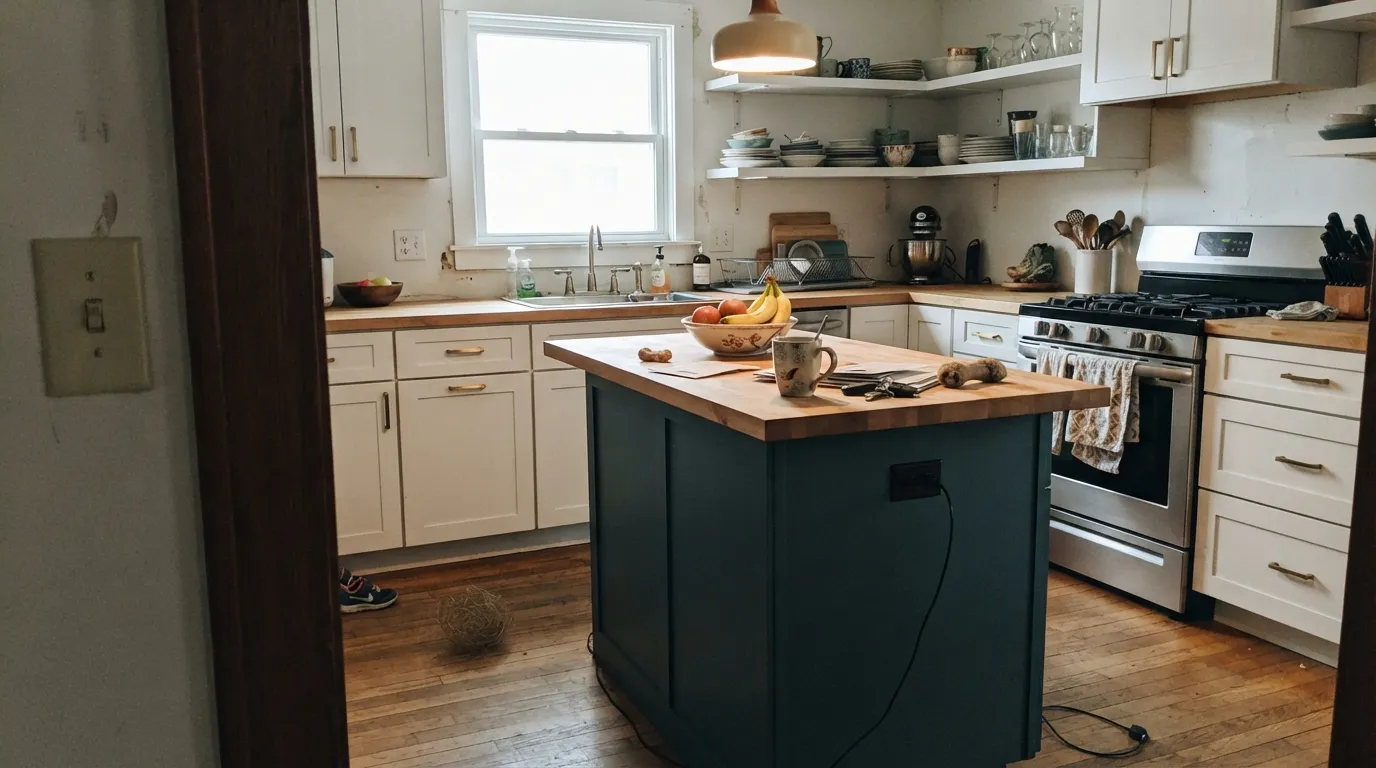
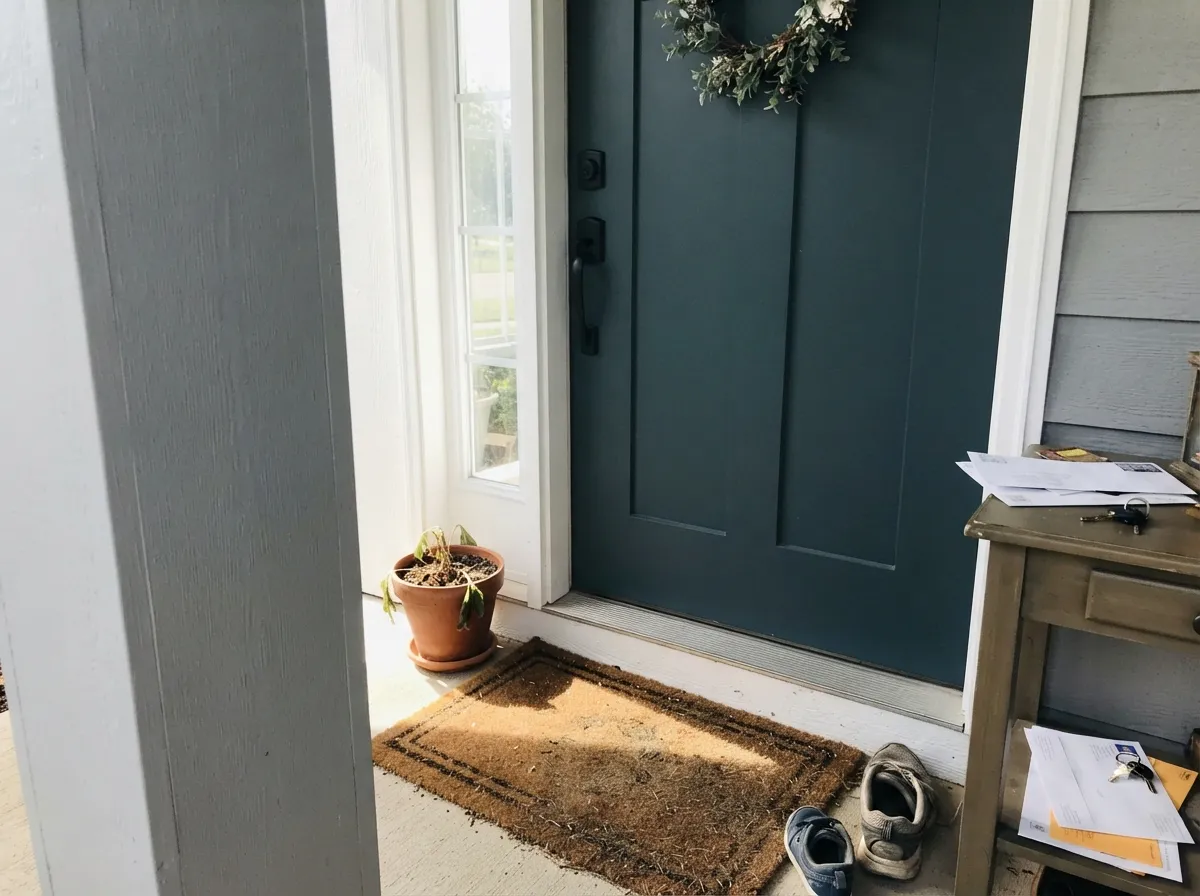
Give it a real light source and a small surface and it is one of the most dependable deep colors in the deck. Kitchen islands are its best-known job: under morning light or task lighting the blue-green comes forward against white cabinetry and brass hardware, and the depth hides fingerprints and daily wear better than a lighter color would. Front doors are its second home — full daylight reads it as a rich, confident color instead of a flat dark block, and it has none of the fade risk that lighter, more saturated blues carry outdoors.
Where It Fails
Almost every disappointed review of Still Water comes from one of three predictable setups, and none of them are the paint's fault. All three show up before the first coat if you know to look for them.
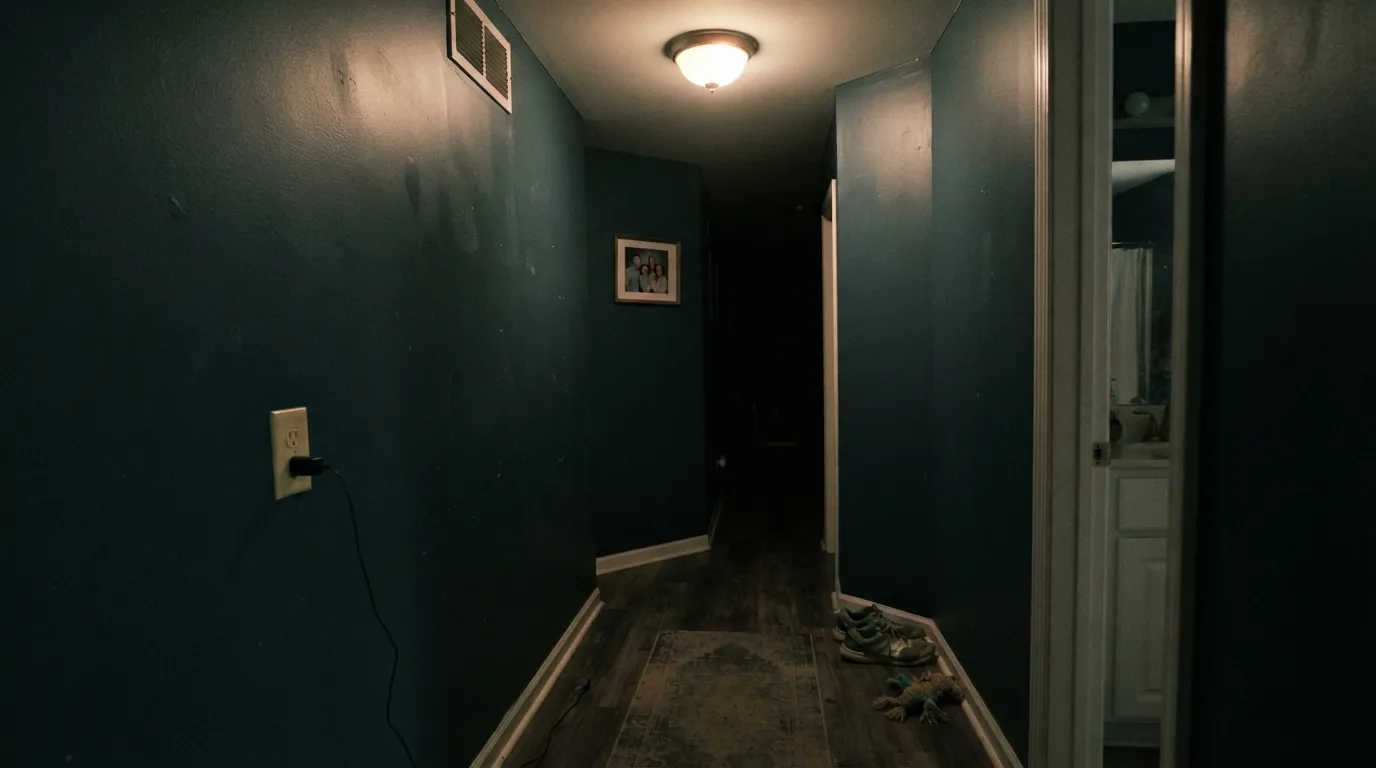
At LRV 10, Still Water needs a window, a skylight, or real overhead light nearby to show its blue-green. In a dim interior room — a windowless powder room, a hallway with one bulb — it reads as flat near-black, and buyers who expected visible color feel misled. The paint didn't change; the light was never enough to reveal it.
Pair Still Water with a stark, blue-leaning white and cool gray flooring and the whole combination flattens toward gray-on-gray — the color reads muddier and colder than it does against a warm white. A warm white trim (SW Alabaster, SW Pure White) grounds it and lets the green in it show.
Still Water is grayed down on purpose — it was never built to compete with a bright peacock or turquoise. Painted on a full wall expecting vivid color, it reads as a moody charcoal-teal instead, which reads as disappointing only if a punchy teal was the goal. For that, look at a brighter, higher-LRV blue-green instead.
Room by Room
The single most common use of this color, and for good reason: white or warm-wood perimeter cabinets, an island in Still Water, brass or unlacquered-brass hardware. Satin or semi-gloss cabinet enamel wipes clean and the depth hides handle smudges that a lighter color would show.
Full daylight reads it as rich blue-green rather than flat dark, and it has real staying power against a white, gray, or pale-greige house. Pair with black or bronze hardware; avoid painting a shaded, north-facing door this color without a porch light nearby.
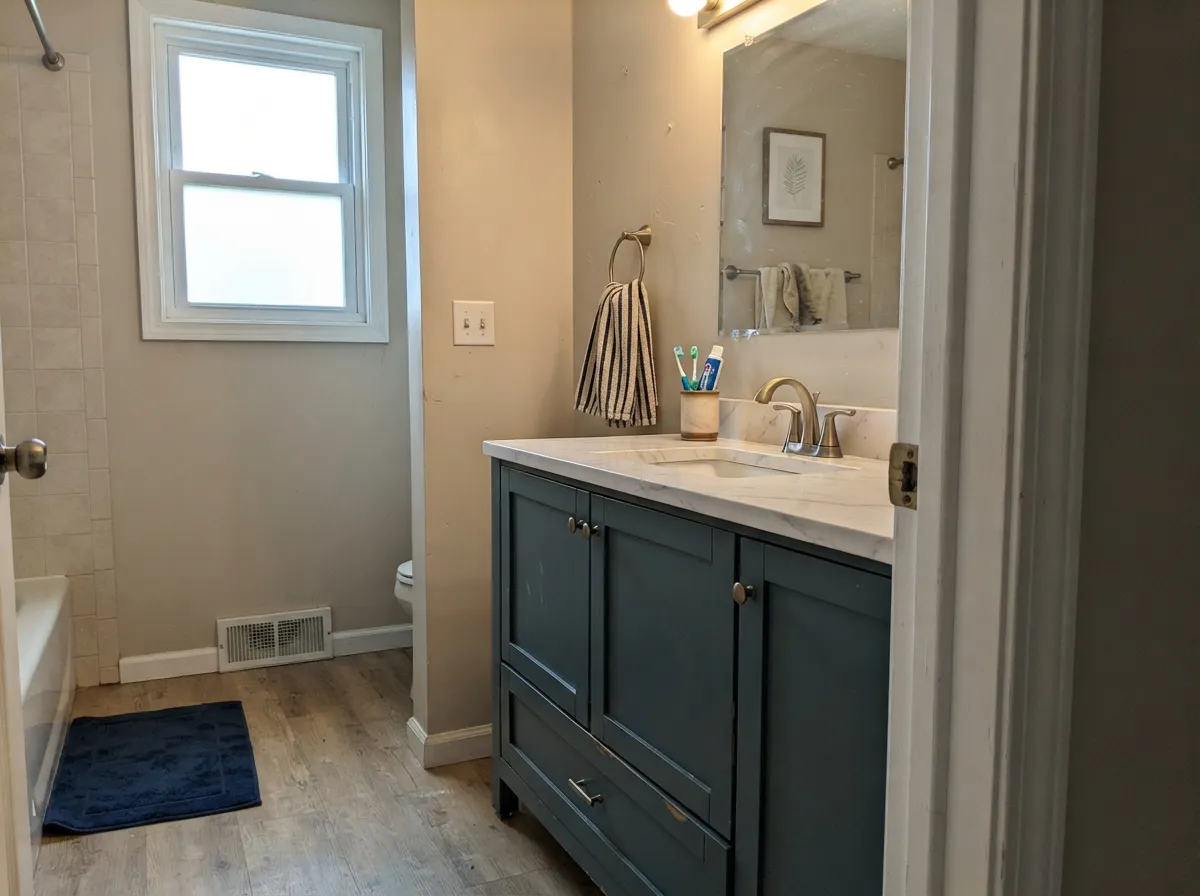
A single vanity in Still Water under a white or marble-look counter, with brass or matte-black fixtures, is a weekend project that reads custom. Works especially well in a small bathroom with a window — the confined space and real daylight are exactly what this color wants.
Behind a headboard, with a window in the room and warm 2700K lamps at night, it reads as calm, deep color rather than a hole in the wall. Skip it as the only source of color in a windowless bedroom — it will disappear at night and read flat in the morning.
On a single accent wall or built-in shelving unit with genuine daylight, it grounds the room without going cave-like. As the wall color for an entire dim room, it is the single most common regret — reserve full-room use for spaces with real light.
A steady, low-drama choice for shutters against a white, cream, or light-gray house. It reads as intentional deep color rather than "trying to be black," and unlike black it doesn't absorb quite as much heat in direct sun.
Your Light Is the Risk
South-facing windows or full exterior sun pull the real blue-green out of it — deep and rich, never flat. This is the light the color needs to make its case.
Without a window or real overhead light, LRV 10 reads as near-black. Test on the actual wall, at the actual time of day, before committing a whole room.
Cooler and more slate-gray in morning east light, noticeably greener and warmer in the low afternoon sun from the west. Sample at both ends of the day.
2700K warm bulbs pull the green forward and keep it feeling alive after dark. Cool white LEDs flatten it toward a dull blue-black — swap the bulb before swapping the paint.
Most complaints about Still Water are a light mismatch. Upload a photo of your actual room and see it on your walls — then ask for the same wall in north light or evening lamps before you buy a single sample.
Need It From Another Brand?
Any paint counter can custom-tint Sherwin-Williams SW 6223 directly. If you would rather stay in one brand's own deck, these are the closest stock matches, measured as ΔE2000. Under 2 is a difference you will not see on the wall.
| Brand | Closest color | ΔE | LRV | |
|---|---|---|---|---|
| Behr | Paramount720F-6 · Behr | 1.7 | 10 | Color page → |
| Benjamin Moore | Vanderberg Blue721 · Benjamin Moore | 1.2 | 11 | Color page → |
| Valspar | Midnight TealM334 · Valspar | 1.9 | 9.2 | Color page → |
| PPG / Glidden | Antique SlatePPG13-29 · PPG / Glidden | 3.5 | 10 | Color page → |
| Glidden | Tundra Pond30BG 10/055 · Glidden | 3.1 | 10 | Color page → |
| Dutch Boy | Sprucey429-6DB · Dutch Boy | 0.0 | 10 | Color page → |
Similar Sherwin-Williams Colors
The nearest shades to Still Water within Sherwin-Williams's own range, ranked by perceptual color distance — useful when you want the same look a touch lighter, darker, or warmer.
WCAG 2.1: AA is 4.5 : 1 for normal text, 3 : 1 for large text, AAA is 7 : 1.
Still Water vs the Colors You're Also Considering
Every Still Water sample board has the same rivals on it. The numbers show the real lightness gap — then it comes down to which risk you would rather live with.
Pick this if you want the green to show — Still Water is the teal-leaning version of the same deep, quiet mood.
Sherwin-Williams SW 6244 · LRV 4NavalPick this if you want unmistakable navy with no green in it — Naval reads pure blue-black in every light.
Pick this for color you can actually see day to day — at LRV 10 Still Water is clearly blue-green, not a near-black.
Sherwin-Williams SW 7623 · LRV 4CascadesPick this for something darker and more neutral — Cascades reads as a very dark, cool black that only hints at teal.
Tempe Star SW 6229 at LRV 11 and hex #47626A is the blue version of the same idea, cooler and less green. Deep Sea Dive SW 7618 at LRV 10, hex #376167, is the saturated one: the same darkness with far more visible teal. Peppercorn SW 7674 at LRV 10 strips the color out entirely and leaves a neutral charcoal, which is a good test of how much teal you actually want.
Across brands, Dutch Boy Sprucey 429-6DB shares the exact hex #4A5D5F. Benjamin Moore Vanderberg Blue 721 at LRV 11, deltaE 1.24, is visually identical in normal room light, and Valspar Midnight Teal M334 at LRV 9.2, deltaE 1.88, is close enough to swap. Farrow and Ball Grove Green No. G17 at LRV 9, deltaE 3.26, is very close but greener, so sample it first, and PPG Antique Slate PPG13-29 at deltaE 3.55 is close but visibly different side by side.
Still Water Coordinating Colors
The rule for coordinating with Still Water: warm whites, warm metals, and one light neutral to keep the room from going dark. It leans toward gray-on-gray if you pair it with a cold, blue-leaning white or cool gray floors, and it comes alive against anything warm. These are the partners that keep showing up in rooms that work:
Still Water On Exteriors
Outdoors this color earns its keep on doors and shutters, not siding. Full sun reads it as a rich, confident blue-green rather than the flat dark block it can become indoors without light — one real advantage exterior use has over most interior rooms. Against a white or light-gray house it is the classic move: a single deep, deliberate note that reads as intentional the moment you pull up.
The one exterior situation to sample first is a heavily shaded, north-facing entry with a deep porch roof. Without direct sun reaching the door, it can drift toward the same near-black read that a dim interior room gets — a porch light fixture on an evening timer solves most of that concern, but see it in person before committing to the full door.
Still Water With Wood Tones and Metals
Unlacquered brass and warm bronze are this color's best company — the warm metal keeps the whole pairing from reading cold, and it is why it shows up so often on kitchen islands and bathroom vanities specifically. Matte black and aged pewter work too, for a more restrained, modern-farmhouse read; polished chrome is the one finish that pushes the pairing cold.
For floors and wood, mid-tone and dark woods — walnut, white oak with a warm finish, weathered gray-brown boards — sit comfortably alongside it. Very orange, high-gloss honey oak is the one combination to sample first: the warm-orange floor and the cool blue-green wall can read as fighting each other rather than complementing, especially in a room that already runs short on light.
Three Ready Palettes Built on Still Water
A color is never alone on the wall. These are complete combinations in the 60-30-10 pattern, with the reason each one holds together. Every one opens in the visualizer.
Warm whites on the perimeter keep the kitchen bright while the island carries all the color; Alabaster and Pure White both lean warm enough to ground Still Water instead of flattening it toward gray.
Try this palette in your roomA light greige body and crisp white trim leave the front door as the one deep, deliberate note on the facade — the classic way this color gets used, and the lowest-commitment way to try it.
Try this palette in your roomAgreeable Gray keeps the rest of the room light enough that the deep built-ins read as a deliberate feature, not a dim corner; White Dove trim softens the edge where the two meet.
Try this palette in your roomStill Water FAQ
Is Still Water blue or green?
Both, in close to equal parts, grayed down to a deep slate depth. Sherwin-Williams itself files Still Water under its Blue family rather than Green or Teal, which tells you where the official lean sits — but the green shows up plainly the moment real daylight hits the wall. It never fully commits to either — that in-between quality is the whole appeal.
Is it too dark for a kitchen island?
No — this is its single most common and most successful use. At LRV 10 it reads as rich, deep color against white or light perimeter cabinets rather than as a black hole in the room. It only becomes "too dark" when used across an entire dim kitchen with no other light source.
What white goes with Still Water trim?
A warm white — Sherwin-Williams Alabaster or Pure White both work well. A stark, blue-leaning white pushes the whole pairing toward flat gray-on-gray; a warm white lets the green in Still Water come forward.
Will it look black in my room?
If the room has no real window or overhead light nearby, yes — that is the honest answer, and the single most common regret with this color. Test a large sample on the actual wall at the actual time of day you use the room before committing to four walls.
Is Still Water the same as Naval?
No, though they are often confused because both are deep and cool. Naval (LRV 4) is a true navy with essentially no green in it. Still Water (LRV 10) is lighter and carries real green — a blue-green rather than a straight blue. Side by side the difference is obvious.
Does it work outdoors?
Yes, especially on a front door or shutters against a white, cream, or light-gray house. It holds its color in direct sun better than lighter, more saturated blues, and it reads as intentional deep color rather than a stand-in for black.
Have you painted with Still Water?
Rate it — one tap helps the next reader decide.
Ask a Question