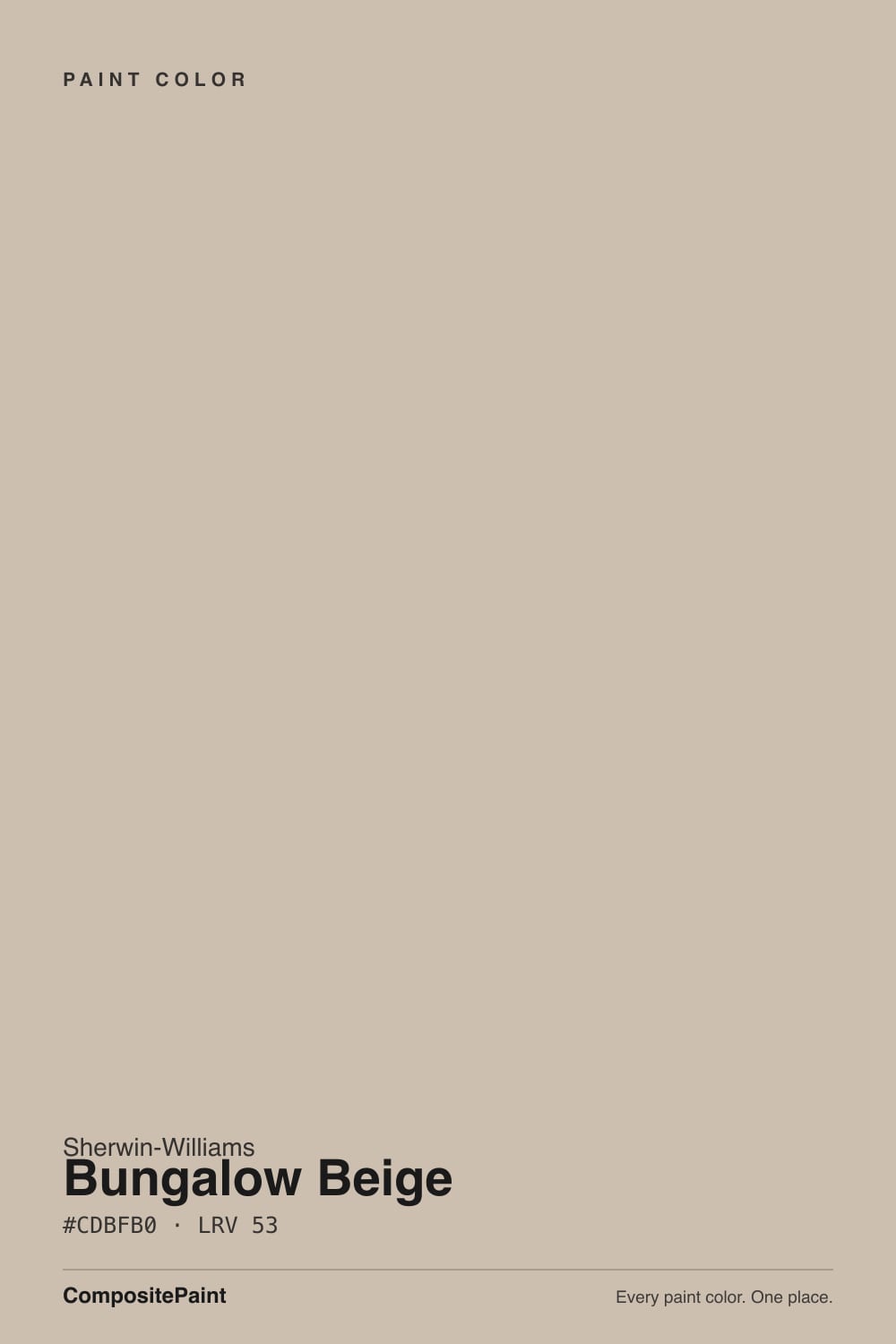
Bungalow Beige
The warm beige people pick when gray feels cold, reviewed honestly: where it settles, the exact light that turns it pink, and what to use instead.

Jessica has spec'd whites and neutrals for more than 300 rooms and keeps a sample wall of painted drawdowns in her studio. Every color review is checked against real reader rooms in the comments and re-tested when a formula changes. About the testing process →
- 1Dorian Gray39
- 2Mindful Gray48
- 3Bungalow Beige53
- 4Agreeable Gray60
- 5Pale Oak69
The Fast Verdict
Bungalow Beige is the beige for houses that already have warmth in them — oak floors, honey trim, brick, travertine. At LRV 53 it holds real color on the wall instead of fading into off-white, and the warmth reads settled rather than sweet.
The catch is the red side of its undertone: in hard afternoon sun, or next to a cool blue-white trim, it can flash rosy. Sample the sunniest wall in the house, not the hallway.
Houses with oak floors, honey trim or brick · a whole main floor in rooms with real daylight · islands and built-ins · exterior siding with white trim and a dark door
Your room takes hard west afternoon sun · your trim is a cool blue-white like Extra White · your floors and counters are cool gray · you want a crisp modern high-contrast look
- Warm enough to make oak floors, honey trim and brick look intentional
- LRV 53 carries a whole floor without going pale or closing rooms in
- Reads as an actual color on the wall, not as tinted builder white
- Hides scuffs and hand marks better than a light greige does
- Works as well outside on siding as it does inside on walls
- Flashes rosy in hard west sun and under 2700K bulbs
- Looks dingy next to a cool blue-white trim like Extra White
- Turns muddy against gray floors, gray tile and chrome
- Deeper than most people expect from the chip in a one-window room
What Color Is Bungalow Beige, Really?
A warm beige with a red lean, not a greige. The undertone sits at hue 31 with roughly 22 percent saturation, which is a lot more pigment than the popular greiges carry — that is why it looks like a color on the wall and not like dirty white. The gray behind it keeps it from going tan or golden, so what you get is closer to a soft taupe with warmth in it. That red side is the whole personality of this color, for better and for worse.
At LRV 53 it reflects a bit more light than it absorbs, so rooms stay open, but it is clearly deeper than the beige most people default to. Put it next to Accessible Beige SW 7036 at LRV 58 and Bungalow Beige is a visible step down — walls read painted and enclosing in a good way, and the corners hold shadow instead of washing out. In a one-window room that depth is an asset; in a room you want bright and airy, it is the reason people say it came out darker than the chip.
Undertone in one line: warm beige with a red lean — never yellow, never green. If your sample looks pink, that is west sun, a 2700K bulb, or a cool white trim sitting next to it, not a bad batch.
Where It Shines
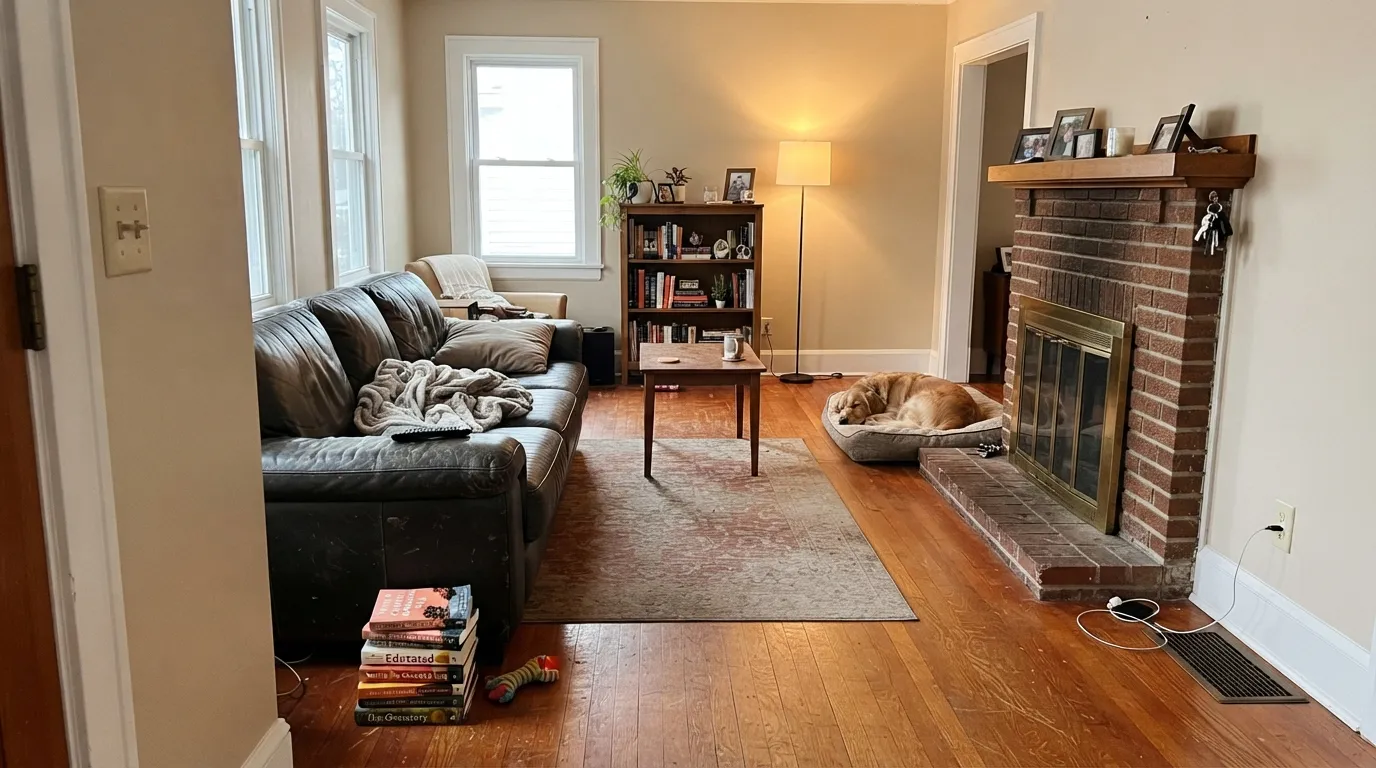
Give it warm materials and daylight from the side rather than head-on, and it does exactly what people hire a beige to do. Oak floors stop looking orange, brick stops looking loud, and honey-stained trim you were not planning to paint suddenly looks like a decision instead of a leftover.
Where It Fails
The bad stories about this color are all the same story told three ways, and all three are about the red in the undertone getting amplified by something else in the room. If your room matches one of these, another beige will make you happier.
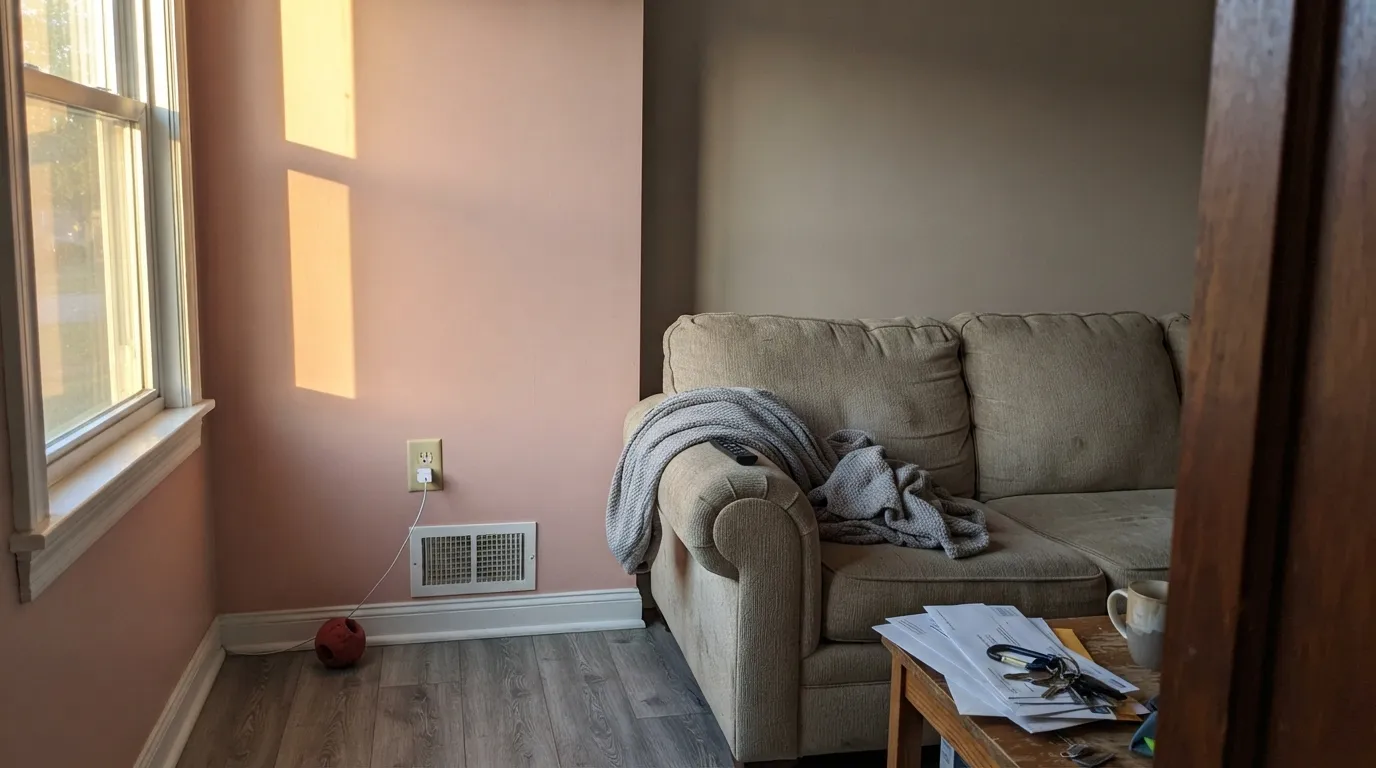
Late afternoon light drives the red forward, and the lit wall can go visibly rosy while the shaded wall next to it stays a calm taupe. That split is what people mean when they say it changed on them. If your main living wall faces west, pick High Sierra SW 9588 — same LRV 53, but green-leaning instead of red, so the sun has nothing pink to grab.
Builder trim in a blue-based white like Extra White SW 7006 pulls the warm wall toward pink and makes it look grubby at the same time. The fix is the trim, not the walls: a creamy white such as Alabaster SW 7008 keeps the warmth reading deliberate. If the bright trim has to stay, switch the walls to Accessible Beige SW 7036 instead.
Gray LVP, gray-veined quartz and polished chrome sit at the opposite temperature, and against them the red lean turns muddy pink instead of warm. It is the pairing that makes people call this color dated. With a cool gray hard-finish package, use Agreeable Gray SW 7029 and let the warmth come from wood and textiles.
Room by Room
This is where it earns its keep: oak, walnut, leather and brick all meet it halfway. Eggshell on the walls, Alabaster SW 7008 trim in semi-gloss. Check the west wall at 5pm before you commit the whole room.
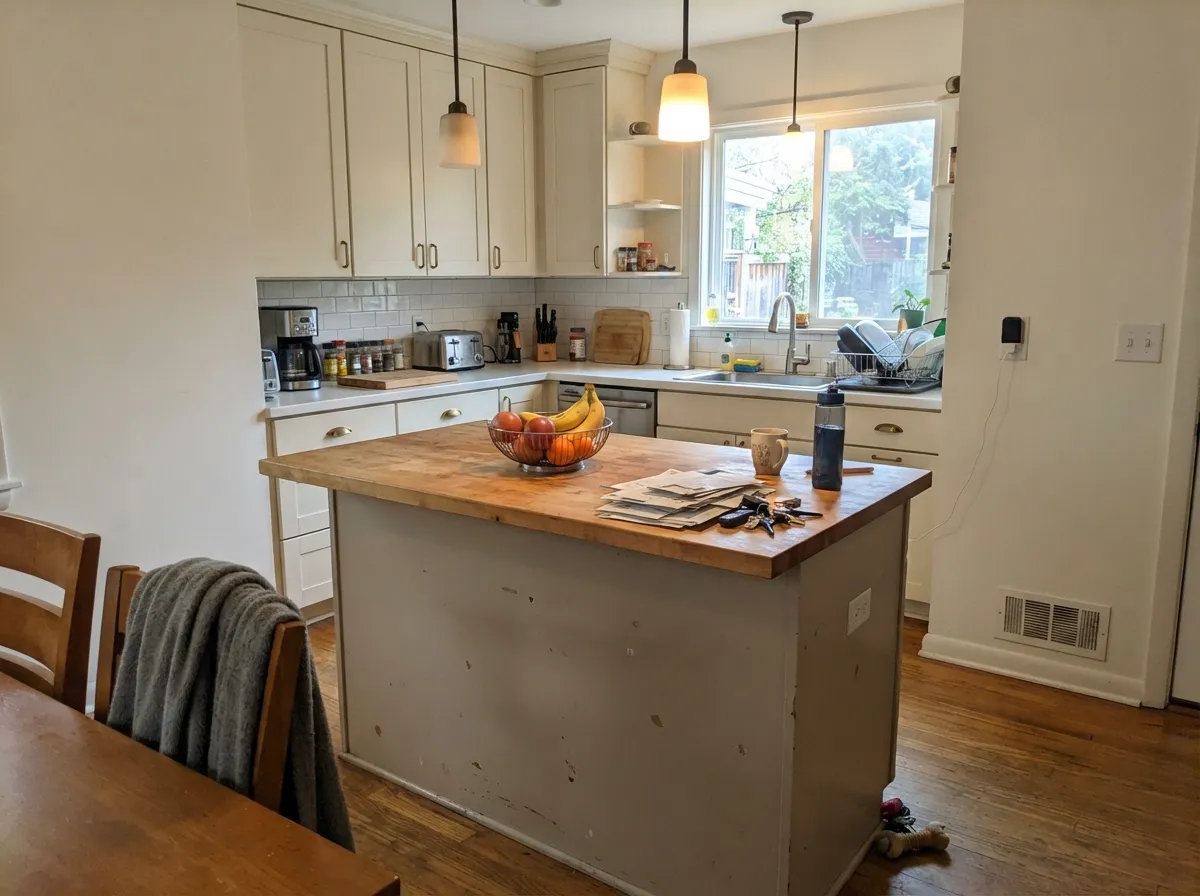
On an island under lighter perimeter cabinets it gives soft contrast without a hard color statement, and it takes brass or oil-rubbed bronze hardware well. Satin cabinet enamel. Keep the counters warm — a cool gray quartz is where this pairing goes wrong.
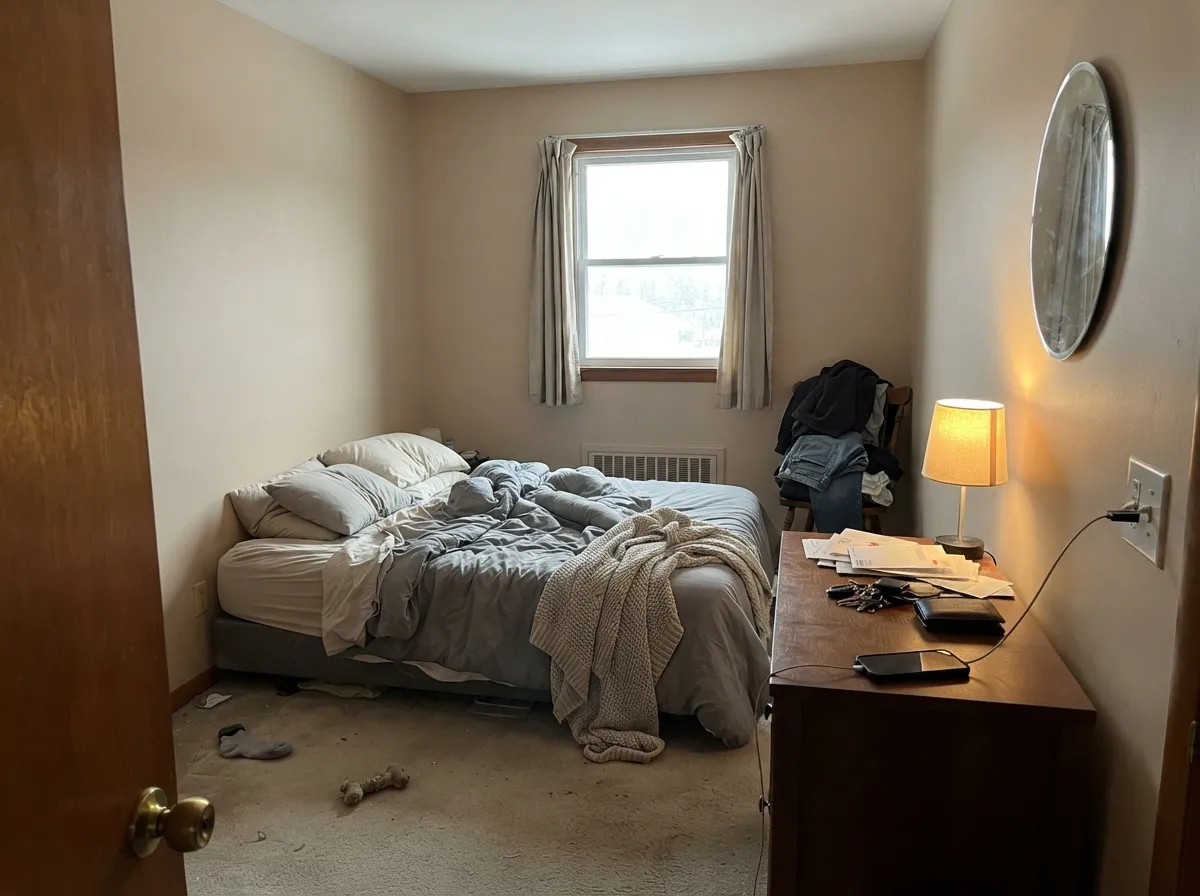
At LRV 53 it stays restful rather than bright, and warm bulbs deepen it into something close to a soft taupe. Pair with Greek Villa SW 7551 trim and ceiling. If the room already runs pink from carpet or curtains, step to Sandbar SW 7547.
It carries room to room without fighting anything warm, which is the practical reason so many houses have it everywhere. Use one trim white through the whole floor so the walls read as a decision. Windowless hallways will look grayer than the sample.
With travertine, beige stone or a wood vanity it is easy and forgiving in satin. With cool gray tile or white subway plus chrome, it reads pink under vanity lights — Repose Gray SW 7015 is the safer pick there.
At this lightness it holds tone in full sun instead of bleaching out, and the red lean that causes trouble indoors just reads as warmth outside. Pure White SW 7005 trim, Naval SW 6244 or Iron Ore SW 7069 on the door. Full pairings in the exterior section below.
Your Light Is the Risk
Cool daylight mutes the red and it settles into a quiet taupe. Its most flattering room.
Bright and openly warm all day. Pleasant, but expect more color than the chip showed.
Direct late sun pushes it rosy on the lit wall while the shaded wall stays neutral.
2700K lamps deepen the pink side; 3500K to 4000K pulls it back toward greige.
Most complaints about Bungalow Beige are a light mismatch. Upload a photo of your actual room and see it on your walls — then ask for the same wall in north light or evening lamps before you buy a single sample.
Need It From Another Brand?
Any paint counter can custom-tint Sherwin-Williams SW 7511 directly. If you would rather stay in one brand's own deck, these are the closest stock matches, measured as ΔE2000. Under 2 is a difference you will not see on the wall.
| Brand | Closest color | ΔE | LRV | |
|---|---|---|---|---|
| Behr | LivingstoneT12-14 · Behr | 1.7 | 53 | Color page → |
| Benjamin Moore | Royal FlaxCSP-315 · Benjamin Moore | 1.3 | 54 | Color page → |
| Valspar | Cookie Dough8005-9B · Valspar | 1.3 | 54 | Color page → |
| PPG / Glidden | Great GrayPPG15-28 · PPG / Glidden | 1.8 | 54 | Color page → |
| Glidden | AshenPPG1023-3 · Glidden | 1.8 | 53 | Color page → |
| Dutch Boy | Ellipsis420-2DB · Dutch Boy | 2.7 | 54 | Color page → |
Similar Sherwin-Williams Colors
The nearest shades to Bungalow Beige within Sherwin-Williams's own range, ranked by perceptual color distance — useful when you want the same look a touch lighter, darker, or warmer.
WCAG 2.1: AA is 4.5 : 1 for normal text, 3 : 1 for large text, AAA is 7 : 1.
Bungalow Beige vs the Colors You're Also Considering
Every Bungalow Beige sample board has the same rivals on it. The numbers show the real lightness gap — then it comes down to which risk you would rather live with.
Pick this for real warmth and depth on a warm-toned house.
Sherwin-Williams SW 7036 · LRV 58Accessible BeigePick this for a lighter, grayer beige that never risks pink.
Pick this when yellow-gold beige feels too dated or too sweet.
Sherwin-Williams SW 6106 · LRV 49Kilim BeigePick this if your wood and stone lean gold rather than red.
Within the brand, Sandbar SW 7547 at #CBBFAD and LRV 53 is the closest neighbor, marginally cooler and drier. Nantucket Dune SW 7527 at #D0BFAA and LRV 54 swaps some of the red for yellow, so it reads sandier and less pink. High Sierra SW 9588 at #C8C0B3 and LRV 53 is the greenest of the group and the one to choose if the rosy lean worries you. Minimalist SW 9611 at #CABEAD and LRV 52 is a hair deeper.
Across brands, HGTV Home by Sherwin-Williams lists Bungalow Beige HGSW 2496 at deltaE 0, and Diamond Vogel Baguette 0188 at deltaE 0.49 is effectively the same color. Rodda Soapstone CA034 at deltaE 1.19, Valspar Cookie Dough 8005-9B at deltaE 1.31, Benjamin Moore Royal Flax CSP-315 at deltaE 1.34, Behr Livingstone T12-14 at deltaE 1.72, and Glidden Ashen PPG1023-3 at deltaE 1.77 are all visually identical in normal room light. Farrow and Ball Oxford Stone No. 264 at deltaE 2.21 is very close, so sample first.
Bungalow Beige Coordinating Colors
The rule with this color is to stay warm and never go blue. Warm whites, deeper beiges from the same family, muted greens and true darks all support it; cool grays, icy whites and blue-grays fight the red undertone and pull it toward pink. These are the partners that consistently work:
Bungalow Beige on Exteriors
Outside is where this color is least risky. Open daylight is broad and neutral instead of directional, so the red lean that ambushes people in an afternoon living room simply reads as warmth on siding. At LRV 53 it also holds its tone in full sun rather than bleaching to a washed-out cream the way lighter beiges do, and it hides pollen, dust and the general grime of a summer better than anything above LRV 65.
Contrast is what makes it look current rather than builder-grade. Pure White SW 7005 trim with Iron Ore SW 7069 shutters and a Naval SW 6244 door gives a traditional house a clean frame and one strong note. Avoid pairing it with cool gray stone or blue-gray accents on the same elevation, and check it on the shaded north side of the house as well as the sunny side — the north face will read a full step grayer and cooler than the sample board on your driveway.
Bungalow Beige With Wood Tones and Floors
Warm wood is the natural partner. Red oak, white oak, honey-stained trim, walnut, rattan and leather all sit comfortably against it because the wall meets their warmth instead of arguing with it. If your floors are the orange-leaning builder oak everyone wants to hide, this is one of the few wall colors that quiets the orange rather than amplifying it — the shared red base makes the floor read as a tone, not a mistake.
The floors to test hard are cool gray LVP, gray-washed engineered wood and gray porcelain tile. Against them the wall loses its beige reading and shows the pink, and the room can look both dated and slightly dirty. Warm rugs, brass and wood furniture rescue some of it, but if the floor, the counters and the tile are all cool, this is not the right beige — go to Agreeable Gray SW 7029 or Repose Gray SW 7015 and add warmth in the furnishings instead.
Stone and tile follow the same logic. Travertine, beige limestone, brick and wood-look tile are easy. Carrara-style marble, gray quartz with cool veining and slate all sit at the opposite temperature and will make you notice the pink every time you walk in.
Three Ready Palettes Built on Bungalow Beige
A color is never alone on the wall. These are complete combinations in the 60-30-10 pattern, with the reason each one holds together. Every one opens in the visualizer.
Alabaster is warm enough to sit above the red lean without turning it pink, so the trim line stays soft instead of accusing. Urbane Bronze supplies the one dark note a warm neutral scheme needs to stop looking flat.
Try this palette in your roomCreamy cabinets carry the same warmth up a level, so the wall-to-cabinet handoff has no cold edge in it. Pewter Green sits opposite the red undertone, which is exactly why the island reads calm rather than decorated.
Try this palette in your roomOutside, full sun flattens the pink risk that bothers people indoors, so a clean white trim is safe here in a way it is not on interior walls. Naval gives the facade a single deep anchor without going black on a traditional house.
Try this palette in your roomBungalow Beige FAQ
Bungalow Beige or Accessible Beige — which should I use?
Accessible Beige is lighter and grayer; Bungalow Beige is deeper and genuinely warmer. If your house has oak floors, brick or beige stone, Bungalow Beige meets them halfway and looks intentional. If you have gray flooring, cool counters or a lot of west sun, Accessible Beige is the lower-risk answer.
Does Bungalow Beige look dated?
It can, but that is usually the room and not the paint. Beige walls plus honey oak plus builder-white trim plus brass-tone brass is a 2005 package. The same walls with a dark door, matte black or unlacquered brass, and one deep accent like Urbane Bronze SW 7048 read current.
Why does my sample look pink on one wall and gray on another?
Because the red-orange undertone reacts to light direction. The wall taking direct sun shows the red; the shaded wall shows the gray sitting behind it. This is normal for this color — judge it from the sunniest wall, since that is the version you will live with in the afternoon.
Will it work with gray floors or gray tile?
This is the one pairing to avoid. Cool gray flooring pushes the warmth into relief and the wall reads pink and muddy rather than beige. Warm rugs and wood furniture help, but if the floors and counters are both cool gray, choose Agreeable Gray SW 7029 instead.
Can I paint the whole house this color?
Yes, and it is one of the reasons it sells. At LRV 53 it works in bright rooms and dim ones, and it flows through hallways without clashing. Use one warm trim white everywhere and give at least one room a deeper accent so the house does not read as a single flat tone.
Is it a good match for oak trim I am not painting?
It is one of the better ones. Both the trim and the wall are warm, so the trim stops shouting orange and starts looking like wood. Keep the ceiling in a soft white such as Greek Villa SW 7551 rather than a bright blue-white, which would put the pink back.
How many coats does it need?
Two over an existing light or white wall. Over a dark, red or saturated color, prime first with a gray-tinted primer — the red oxide in this base covers slowly, and a third finish coat costs more than the primer did.
Have you painted with Bungalow Beige?
Rate it — one tap helps the next reader decide.
Ask a Question