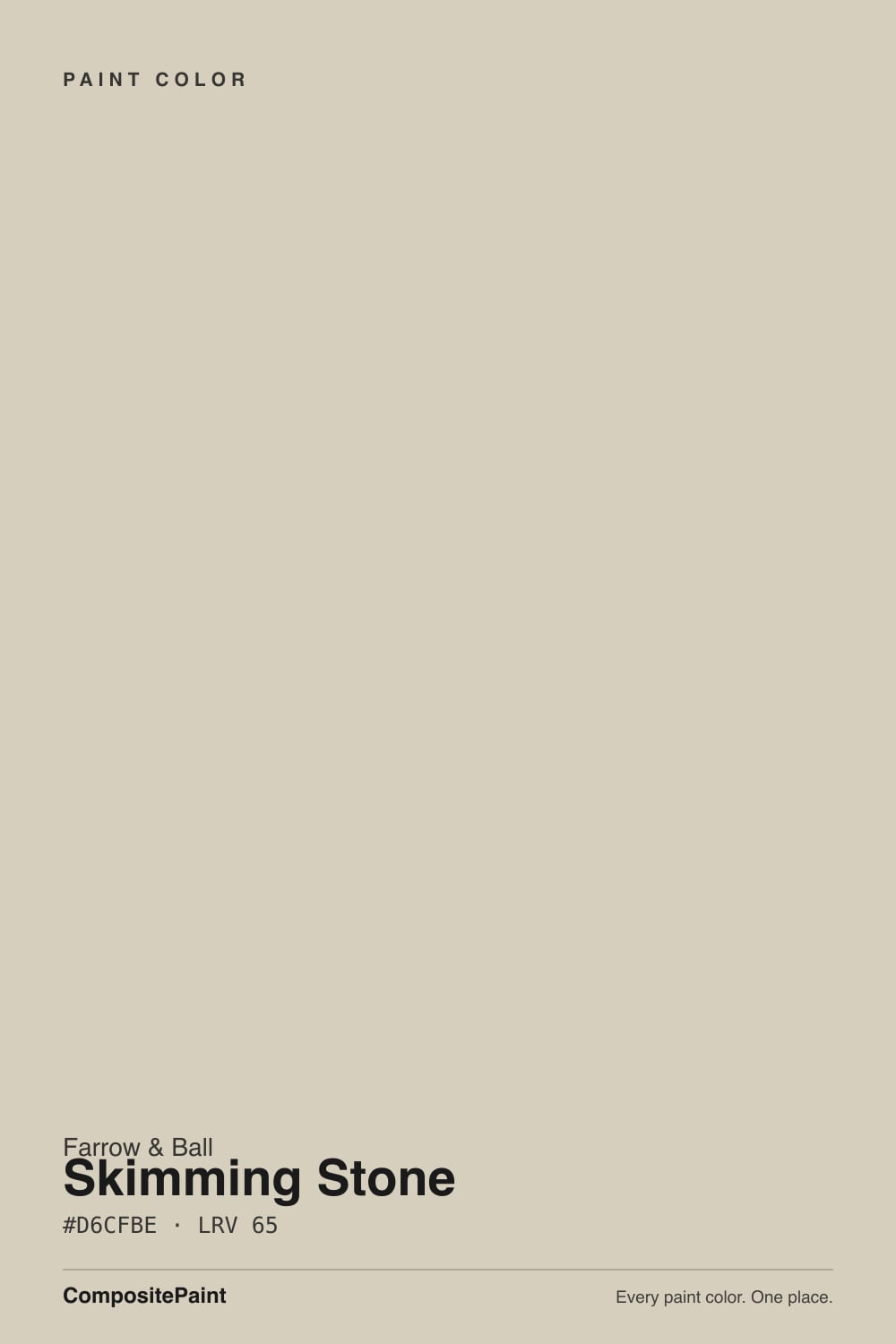
Skimming Stone
The plaster off-white people sample instead of Classic Gray, reviewed honestly: the rooms where it reads stone, the light that pulls pink, and what to pick instead.

Jessica has spec'd whites and neutrals for more than 300 rooms and keeps a sample wall of painted drawdowns in her studio. Every color review is checked against real reader rooms in the comments and re-tested when a formula changes. About the testing process →
- 1Revere Pewter55
- 2Agreeable Gray60
- 3Skimming Stone67
- 4Shoji White74
- 5Dover White83
The Fast Verdict
Skimming Stone is Farrow & Ball's stony plaster off-white — a warm light grey with a yellow-pink base that reads like skim-coat plaster in good daylight and like dusty lilac when the light goes cool. At LRV 67 it has more body than Benjamin Moore Classic Gray, which is why Americans keep searching it as the alternative that still looks like a color. Give it south or west light, oak, and a grey-based trim white and it is one of the most usable neutrals in the F&B deck. Give it a dim north room or builder brilliant-white trim and the pink comes forward.
South- and west-lit bedrooms · hallways that should feel warm on arrival · period houses with oak and brass · anyone sampling Classic Gray who wants more stone
You cannot live with a pink-lilac flash · the room is dim and north-facing · you wanted a true gray · your trim stays builder brilliant white
- Stony plaster read — more color than Classic Gray, less beige than a cream
- LRV 67 holds in bright rooms instead of vanishing to white
- Official Contemporary Neutral: stacks cleanly with Strong White and Elephant's Breath
- Bedrooms, halls, and period rooms feel finished with one decision
- Flatters oak, limestone, brass, and inky blues
- Pink-lilac flash in cool or fading light — the number-one owner surprise
- Goes flat, dirty mushroom in dim north rooms
- Builder brilliant-white trim makes it look yellowed
- Estate Emulsion is chalky and marks — budget Modern Emulsion in traffic
What Color Is Skimming Stone, Really?
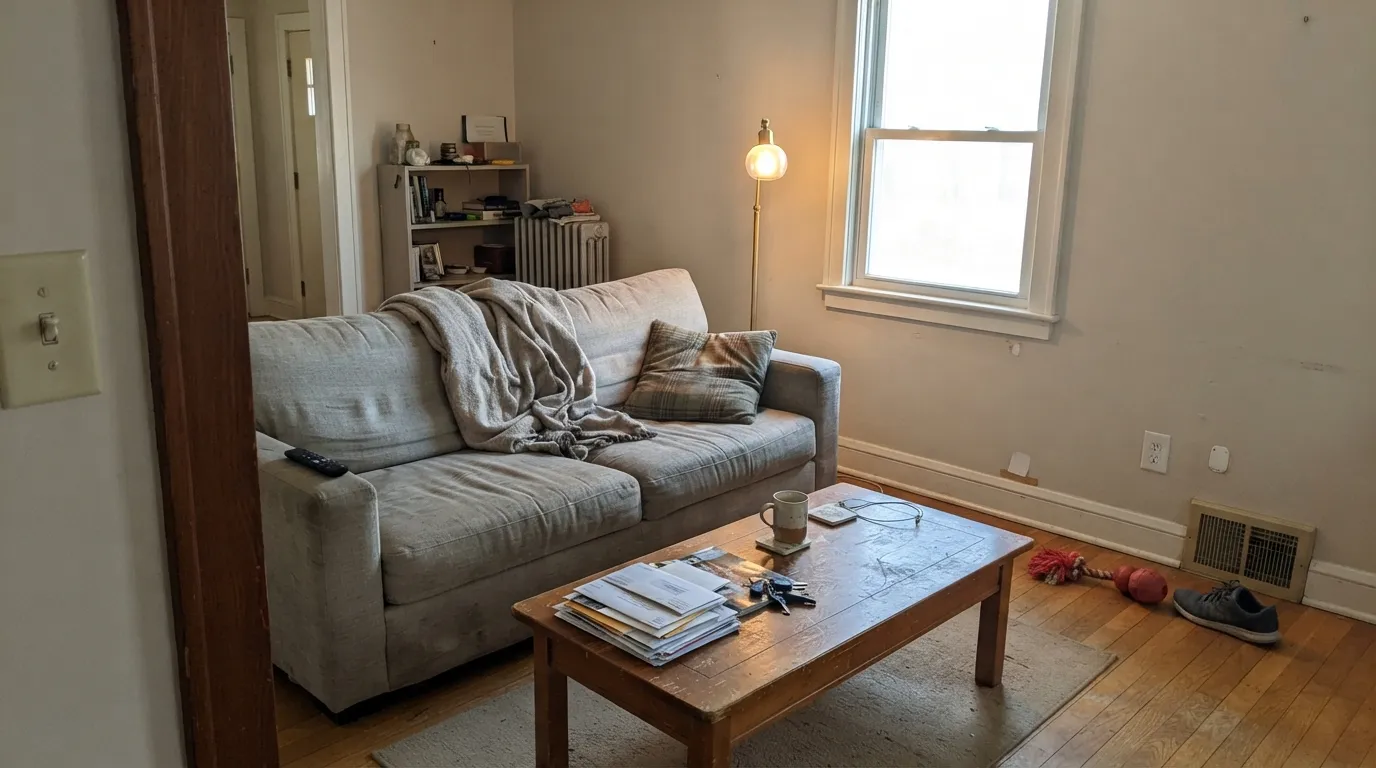
A stony off-white named for the 19th-century skim-plaster coat, not for a beach pebble. Farrow & Ball files it in the Contemporary Neutrals: warmer and more present than Strong White, lighter than Elephant's Breath, with a warm light-grey overlay sitting on a yellow-pink base. That mix is why it keeps getting described as biscuit, mushroom, and faintly lilac depending on who is looking. It is not a cream and it is not a gray. It is the color of new plaster after it has dried — a little grey, a little warm, never blank.
At LRV 67 it reflects plenty of daylight without behaving like a white. Put it next to Classic Gray (LRV 74) and Skimming Stone still looks like a color in a bright room — Classic Gray is the one that can vanish to builder off-white in all-day sun. Put it next to Pale Oak (LRV 69) and they sit in the same depth band, Pale Oak a touch more taupe, Skimming Stone a touch more stone. That middle weight is the useful part: it can run a hallway and a bedroom without washing out, and it is also why a small dark room will feel a step heavier than the chip.
Undertone in one line: warm grey first, a pink-violet whisper second — never blue. In south sun it goes biscuit-stone. In north or overcast light the grey-pink comes forward and owners start saying lilac. If your sample looks yellow, look at the trim white before you blame the can; if it looks purple, the light is cool and this color is being honest.
Where It Shines
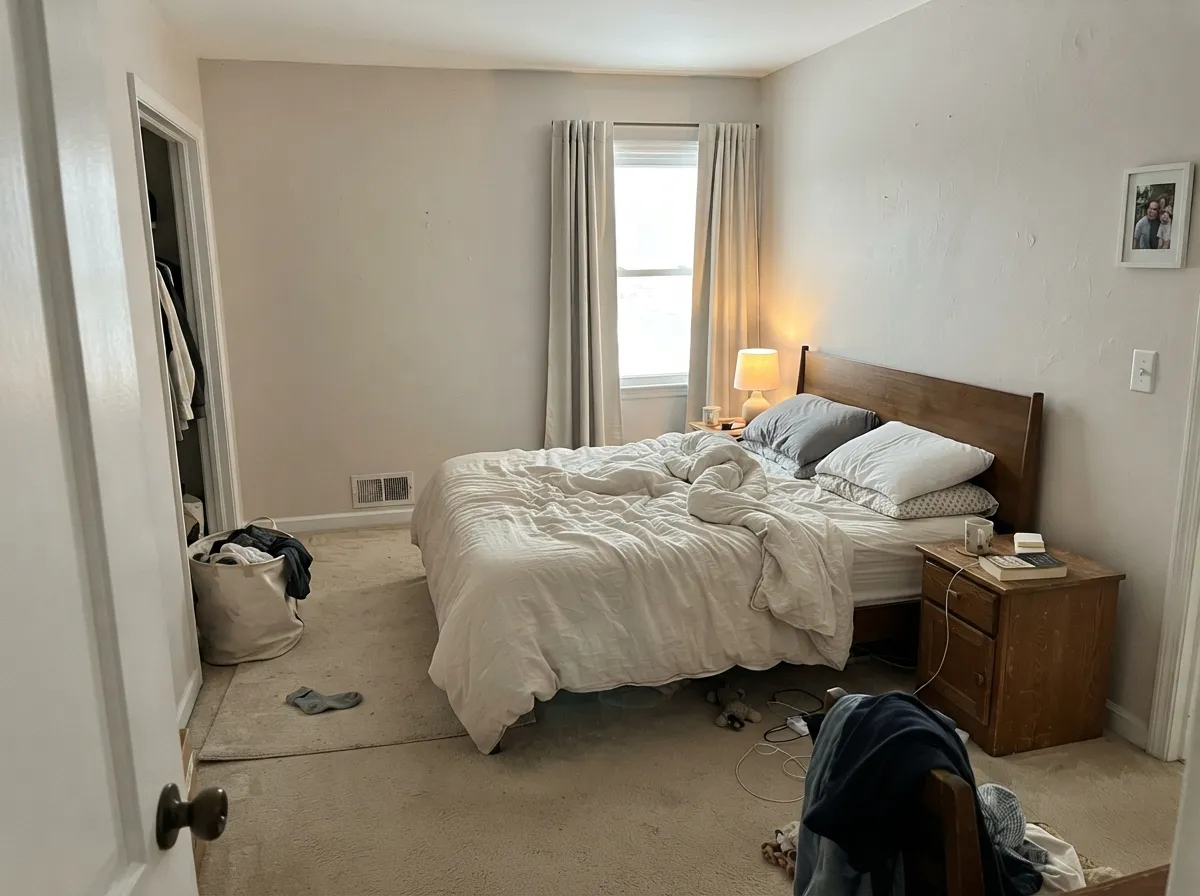
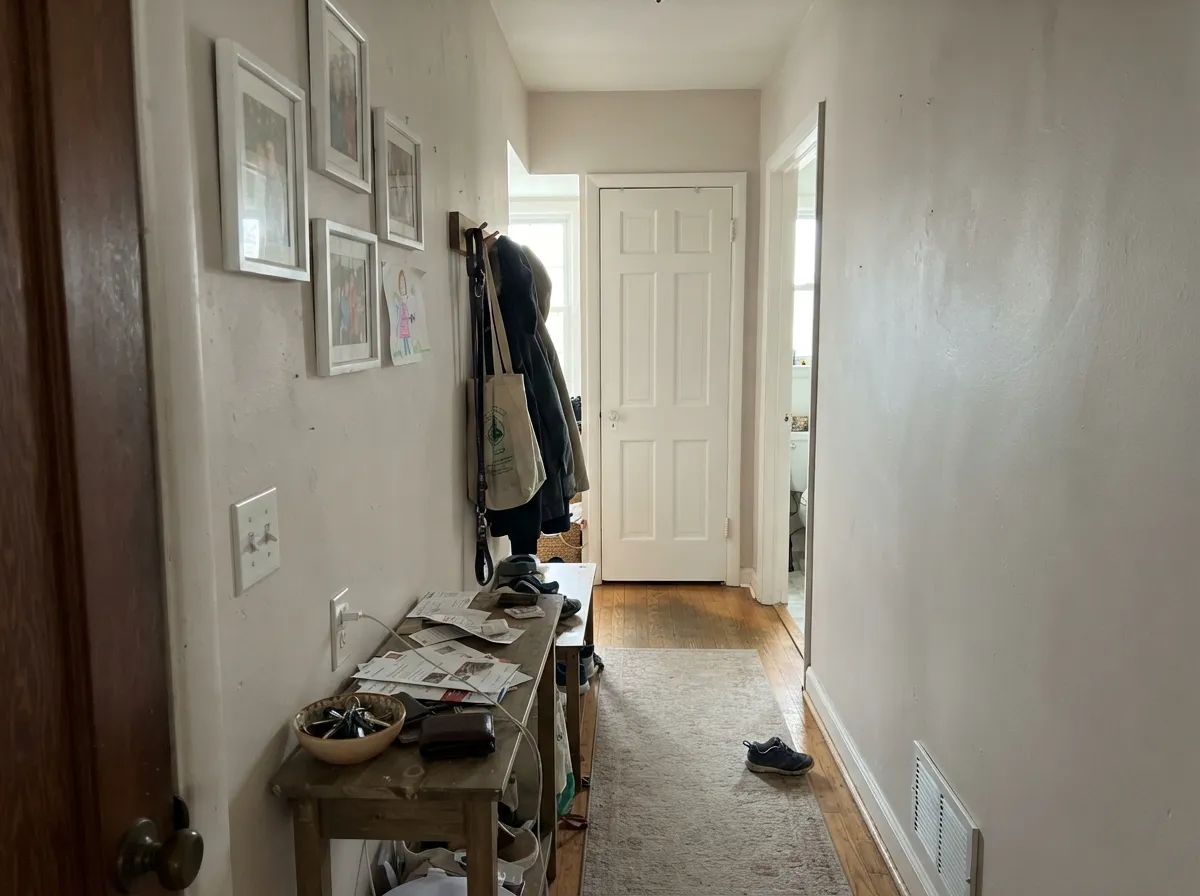
Give it real daylight and warm wood and it is one of the easiest Farrow & Ball neutrals to live with. Bedrooms are the room the brand itself keeps pointing at — restful, slightly enveloping, never hospital-white. Hallways and entries are the second home: the warmth makes arrival feel finished, and the greige quality hands off to both cooler and warmer rooms without a fight. Pair it with Strong White on the woodwork, oak or limestone underfoot, and brass or bronze on the hardware, and it looks like plaster that was always there.
Where It Fails
Almost every regret story about Skimming Stone follows one of three scripts, and all three are visible on a sample board before the first coat. None of them are a bad batch — but if your room matches one, painting bigger will only confirm it.
On the card it is a warm light grey. On four walls, cool or fading light pulls the yellow-pink base forward and the room reads dusty lilac — the exact surprise in owner photos and Facebook groups. If pink is a dealbreaker, this is the wrong color. Ammonite sits at the same LRV 67 with less of that flush; Classic Gray is the lighter, quieter American version of the same violet-pink family.
The warmth in Skimming Stone needs light to switch on. In a north-facing room on a grey day the biscuit drops out and you are left with a flat, slightly dirty mushroom. Designers who specify it all the time still tell clients to test hard here. If the room is small and already dark, Wevet or Strong White will do more for you than another coat of stone.
A blue-white trade trim makes Skimming Stone look yellowed and tired — the wall loses the stone and keeps the dingy. Strong White (No. 2001) is the complementary trim Farrow & Ball built for this color: grey-based, a step lighter, clean without going icy. All White also works and still leans warm. Do not put Chantilly Lace next to it unless you want the walls to look unwashed.
Room by Room
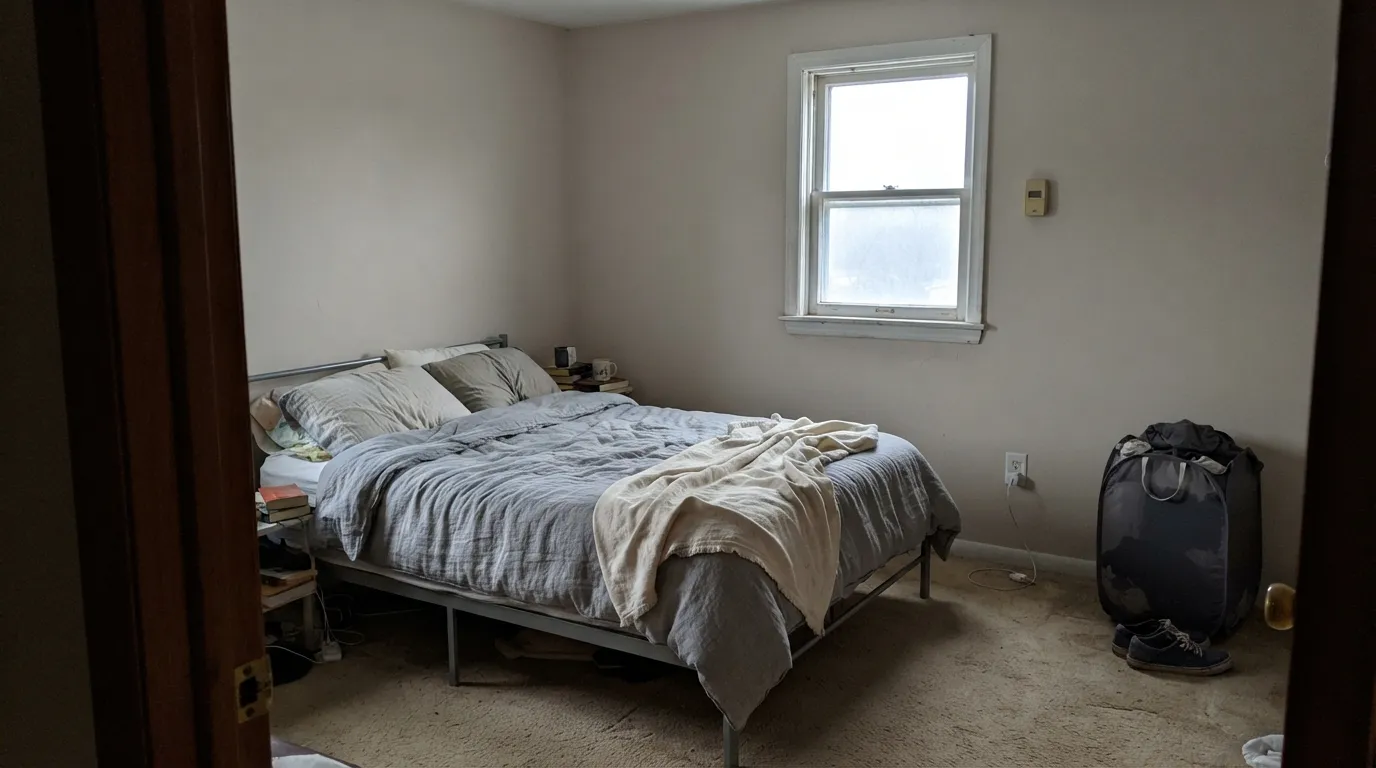
Farrow & Ball keeps listing it for soothing bedrooms because that is where the color is calmest. Estate Emulsion or a dead-flat finish; Strong White or All White on the trim. Under 2700K lamps the pink stays a whisper and the walls go soft plaster. A south or west bedroom is a yes. A dim north one needs a big sample and warm bulbs, or pick something creamier.
This is the use that turns testers into five-gallon buyers. The warmth makes an entrance feel finished, and the greige quality connects rooms that do not share a temperature. Modern Emulsion in a high-traffic hall so fingerprints wipe. Put 2700K bulbs in before you judge a windowless landing — cool cans will grey it out and pull the lilac.
South and west living rooms are where the biscuit-stone read shows up: warm, quiet, expensive next to oak and linen. Eggshell-equivalent Modern Emulsion if kids and dogs are in the room. Riskier in a north parlor with one small window, where it can go mushroom. Keep the sofa off cool gray if you do not want the pink to argue with it.
On walls around stained oak, limestone, and unlacquered brass it looks like a considered plaster kitchen — the look Livingetc keeps publishing. On a handleless white box with cool stone and chrome it feels old-fashioned. Cabinets in Modern Eggshell can work in a small dose; a whole kitchen of Skimming Stone doors is a strong commitment. Satin-wipeable finish either way.
A dining room that is used at night loves the lamplight version: enveloping without going beige. Nurseries are on Farrow & Ball's own list, and the color stays restful if you keep bedding cream or white rather than blush, which doubles the pink. Estate Emulsion on the walls; washable Modern Emulsion if the room will take crayon.
Full sun washes the grey overlay off and the yellow-pink can read as faded stucco from the street. A shaded porch ceiling or a north-facing door on a stone house is the only honest maybe. For a body color, pick a dedicated exterior off-white; this one was mixed for interior plaster light.
Your Light Is the Risk
Warm natural light switches on the yellow-pink base and the wall reads biscuit-stone — the plaster color on the card. This is the light the paint was mixed for.
Cool grey daylight kills the biscuit and leaves a flat mushroom with a lilac edge. Fine if you half-wanted grey; disappointing if you wanted warm stone.
Morning can look quieter and greyer; late west sun flushes it distinctly pink for an hour. Most owners like the movement. If pink is your dealbreaker, watch the sample at 6pm.
2700K bulbs keep the plaster warmth and let the pink stay a whisper. Cool 4000K LEDs grey it out and push the lilac — swap the bulbs before you repaint.
Most complaints about Skimming Stone are a light mismatch. Upload a photo of your actual room and see it on your walls — then ask for the same wall in north light or evening lamps before you buy a single sample.
Need It From Another Brand?
Any paint counter can custom-tint Farrow & Ball No. 241 directly. If you would rather stay in one brand's own deck, these are the closest stock matches, measured as ΔE2000. Under 2 is a difference you will not see on the wall.
| Brand | Closest color | ΔE | LRV | |
|---|---|---|---|---|
| Sherwin-Williams | LimewashSW 9589 · Sherwin-Williams | 0.5 | 67 | Color page → |
| Behr | Pebbled ShoreECC-18-2 · Behr | 0.0 | 67 | Color page → |
| Benjamin Moore | Balboa Mist1549 · Benjamin Moore | 1.0 | 66 | Color page → |
| Valspar | September Fog6003-1A · Valspar | 0.9 | 67.8 | Color page → |
| PPG / Glidden | Casual ElegancePPG1075-3 · PPG / Glidden | 1.9 | 67 | Color page → |
| Glidden | Casual ElegancePPG1075-3 · Glidden | 1.9 | 67 | Color page → |
Similar Farrow & Ball Colors
The nearest shades to Skimming Stone within Farrow & Ball's own range, ranked by perceptual color distance — useful when you want the same look a touch lighter, darker, or warmer.
WCAG 2.1: AA is 4.5 : 1 for normal text, 3 : 1 for large text, AAA is 7 : 1.
Skimming Stone vs the Colors You're Also Considering
Every Skimming Stone sample board has the same rivals on it. The numbers show the real lightness gap — then it comes down to which risk you would rather live with.
Pick this when Classic Gray looks too washed and you still want the wall to read as stone.
Benjamin Moore OC-23 · LRV 74Classic GrayPick this if you want the lighter American off-white — it can vanish toward white in bright sun, which is the point for some rooms.
Pick this when you want the Farrow & Ball plaster quality — greyer overlay, more pink in cool light.
Benjamin Moore OC-20 · LRV 69Pale OakPick this for the BM painter and a slightly more taupe, less stony version of the same depth.
Pick this for whole-room walls: Skimming Stone is lighter and easier to live with on all four sides.
Farrow & Ball No. 229 · LRV 52Elephant's BreathPick this if you want the darker sibling — more grey, more presence, the same beige-to-pink chameleon one step down.
Side-by-side comparison →Off-White No. 3 at LRV 66 is the closest sibling and almost the same lightness, but it carries a slightly greener-yellow cast. If a room already has cool light, Off-White can look a touch more sallow, while Skimming Stone stays a cleaner putty.
Shaded White No. 201 at LRV 63 is a hair darker and reads grayer and greener. Choose it when you want the same softness but less obvious warmth, especially in a sunny south room where Skimming Stone can go creamy.
Elephant's Breath No. 229 at LRV 50 is a different decision altogether. It is markedly deeper and more of a warm greige, so it wraps a room with more shadow and presence. Use Skimming Stone when you want light and air, and step to Elephant's Breath when you want cocooning depth.
Skimming Stone Coordinating Colors
Stay inside the Contemporary Neutrals and the plaster family, then add one dark note. Grey-based whites on the trim, Elephant's Breath or Cornforth White in the next room, and an inky blue or aubergine if you want contrast. Keep builder brilliant white and cool grey stone at arm's length.
Why Americans Search It Next to Classic Gray
Farrow & Ball has never run a Color of the Year machine, and Skimming Stone has no celebrity-house origin story worth repeating. What it does have is a 19th-century skim-plaster name and a permanent slot in the Contemporary Neutrals, stacked between Strong White and Elephant's Breath. In the UK it is a hallway-and-cottage workhorse. In the US it is the Farrow & Ball color people type in when Classic Gray feels too washed, too builder, or too close to white.
That search is fair on depth and unfair on undertone. Both colors sit on a violet-pink family. Classic Gray is the lighter, quieter one (LRV 74) and can disappear in a bright south room. Skimming Stone is the one that still looks like stone at LRV 67 — and the one that will show more pink when the light turns. If you are shopping it as a Classic Gray dupe, sample both on the same wall at dusk. You are choosing how much plaster, and how much lilac, you can live with.
Skimming Stone With Wood Tones and Floors
Warm wood is the easy yes. Aged oak, pale white oak, walnut, and limestone all sit in the same temperature as the yellow-pink base, so the wall reads stone instead of dirty. Honey oak is livable in a way a cool gray would not be — the warmth meets the orange halfway — but a large rug still helps if the floor is loudly golden.
The honest no is cool grey: grey LVP, blue-grey porcelain, polished chrome, and Carrara-type stone. Those pull the pink-lilac forward and make the wall look muddy rather than warm. If the grey floor is staying, test a big sample over it for a full day, or move to Ammonite or a true greige and stop asking a plaster pink-grey to behave like Repose Gray.
Metals are simple: unlacquered brass, antique bronze, and matte black all work. Brushed nickel is fine. Polished chrome is the one that goes cold against the yellow-pink base.
Three Ready Palettes Built on Skimming Stone
A color is never alone on the wall. These are complete combinations in the 60-30-10 pattern, with the reason each one holds together. Every one opens in the visualizer.
This is the family Farrow & Ball printed on the card: Strong White above, Elephant's Breath below, Skimming Stone in the middle. The grey-based trim keeps the walls from looking yellowed, and the darker sibling on a cabinet run or study door reads like the same house getting quieter.
Try this palette in your roomAll White is the purest white Farrow & Ball makes and it still leans warm, so the trim edge stays soft instead of gallery-cold. Setting Plaster is the pinker, deeper plaster cousin — one wall of it turns the pink whisper in Skimming Stone into a decision instead of a surprise.
Try this palette in your roomHague Blue is a teal-navy that moves all day, and the warm stone next to it is the foil designers keep using — Houzz threads on this color mention navy for a reason. Strong White keeps both sides from looking dirty. Brass hardware finishes the argument.
Try this palette in your roomSkimming Stone FAQ
Is Skimming Stone gray or beige?
Neither, cleanly. It is a stony off-white: warm light grey over a yellow-pink base. In south sun it can pass for biscuit greige; in cool light it can pass for lilac-grey. If you need a color that stays gray, this is the wrong can. If you need a color that stays beige, look at Accessible Beige instead.
Does Skimming Stone have pink undertones?
Yes — a whisper, and it is not a rumor. The pink-violet is how the yellow-pink base shows on a wall, and cool or evening light makes it louder. Some owners love that flush. If you do not, sample Ammonite at the same depth or watch a big board at dusk before you buy gallons.
Is it a good alternative to Benjamin Moore Classic Gray?
It is the alternative people actually search. Classic Gray (LRV 74) is lighter and can disappear in a bright room; Skimming Stone (LRV 67) keeps more stone on the wall. Both sit on a violet-pink family, so if Classic Gray already went mauve in your north light, Skimming Stone will not save you — it will just do it deeper.
What trim white goes with Skimming Stone?
Strong White is the complementary white Farrow & Ball built for it — grey-based, LRV 76, clean without cream. All White works if you want a slightly brighter, still-warm edge. White Dove is the cross-brand default if your painter is in Benjamin Moore. Skip Chantilly Lace and any builder brilliant white; they make the walls look dingy.
Will it work in a north-facing room?
Only with testing and warm bulbs. North light is the documented weak spot: the biscuit drops out and the wall can go flat, dirty, and lilac-edged. 2700K lamps recover a lot of it. If the room is small and already dark, pick Wevet or Strong White and stop asking a mid-depth stone to brighten a cave.
What sheen should I use?
Estate Emulsion for bedrooms and living rooms if you want the chalky plaster look — know that it marks. Modern Emulsion for halls, kitchens, baths, and anywhere hands touch the wall. Estate Eggshell on woodwork. Full gloss strips the stone character and makes the pink look cheap.
Have you painted with Skimming Stone?
Rate it — one tap helps the next reader decide.
Ask a Question