Farrow & Ball Elephant's BreathvsFarrow & Ball Skimming Stone
Why this comparison: Strip-mates in F&B’s contemporary neutrals; Elephant’s Breath is one step deeper. Elephant's Breath and Skimming Stone are close but distinct (ΔE 5.71). Visible difference on the wall, especially in flat daylight.

Built from our full reviews of both colors — same measured data, same real-room photos. About the testing process →
The Numbers
Skimming Stone is meaningfully lighter (LRV 67 vs 52). On a wall, Skimming Stone reads light, airy; Elephant's Breath reads light, airy.
What Each Color Really Is
Farrow & Ball's own copy calls it 'an uplifting mid grey with its hint of magenta' that 'can become almost lilac in the cooler light of west-facing rooms' — official language that is doing real work: this is not a plain warm greige, it carries a genuine pink-violet undercurrent most buyers don't clock until it's on the wall. The name comes from legendary English decorator John Fowler, who coined it, and it sits in F&B's Contemporary Neutrals collection — the shelf built for exactly this: quiet colors with a twist, meant to feel modern layered into a period house and grounded in a new build.
At LRV 52 (Farrow & Ball's own published figure and third-party listings run a touch higher, low-to-mid 50s depending on the source) it sits squarely mid-tone — deeper than a true greige like Cornforth White, lighter and quieter than a full-bodied gray. That depth is exactly why the undertone shows up: pale tints barely register color at all, but a mid-tone has enough pigment mass to let the magenta actually read as magenta once the light cooperates.
A stony off-white named for the 19th-century skim-plaster coat, not for a beach pebble. Farrow & Ball files it in the Contemporary Neutrals: warmer and more present than Strong White, lighter than Elephant's Breath, with a warm light-grey overlay sitting on a yellow-pink base. That mix is why it keeps getting described as biscuit, mushroom, and faintly lilac depending on who is looking. It is not a cream and it is not a gray. It is the color of new plaster after it has dried — a little grey, a little warm, never blank.
At LRV 67 it reflects plenty of daylight without behaving like a white. Put it next to Classic Gray (LRV 74) and Skimming Stone still looks like a color in a bright room — Classic Gray is the one that can vanish to builder off-white in all-day sun. Put it next to Pale Oak (LRV 69) and they sit in the same depth band, Pale Oak a touch more taupe, Skimming Stone a touch more stone. That middle weight is the useful part: it can run a hallway and a bedroom without washing out, and it is also why a small dark room will feel a step heavier than the chip.
Specs Side by Side
| Spec | Elephant's Breath | Skimming Stone |
|---|---|---|
| Brand | Farrow & Ball | Farrow & Ball |
| SKU | No. 229 | No. 241 |
| Hex | #C7BEB3 | #DBD5CA |
| RGB | 199, 190, 179 | 219, 213, 202 |
| LRV | 52 | 67 |
| Undertone | red-orange / warm | red-orange / warm |
| Family | Neutral | Neutral |
How Light Changes Them
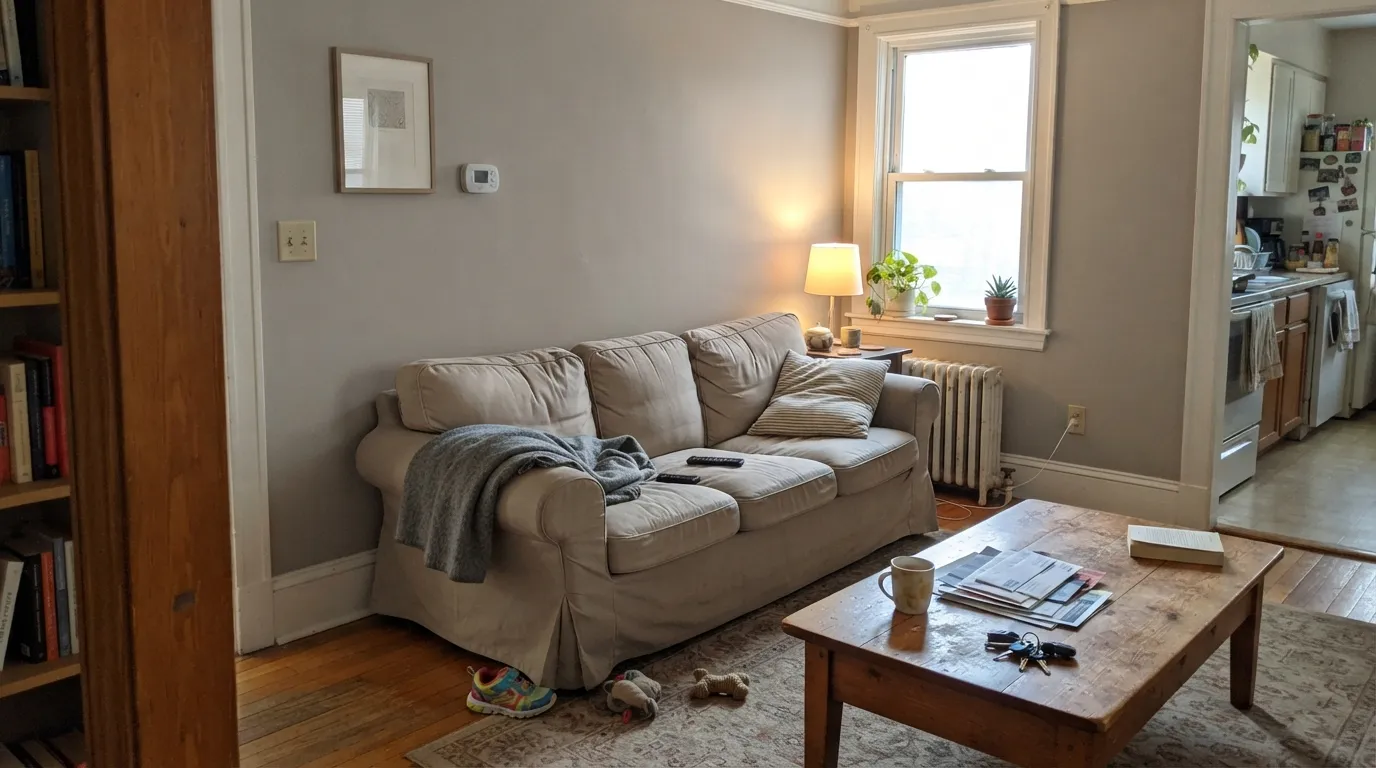
This is where the color does what people buy it for: a warm, settled mid-grey with just a hint of its magenta undertone. F&B's reputation for this color was built in rooms like this.
Without daylight or a lamp working in its favor, the color slumps toward flat, muddy taupe-gray — the version nobody puts on a mood board. Test before committing a dark room to it.
Farrow & Ball's own line is that cooler, west-facing light pulls it toward lilac; other rooms — reported directly by owners — read noticeably more beige. Expect real movement, not a subtle one.
Warm 2700K bulbs push it toward cozy taupe-grey; cool white LEDs can flatten it and expose a slightly muddy cast. Keep the bulbs warm if you want the color F&B markets.
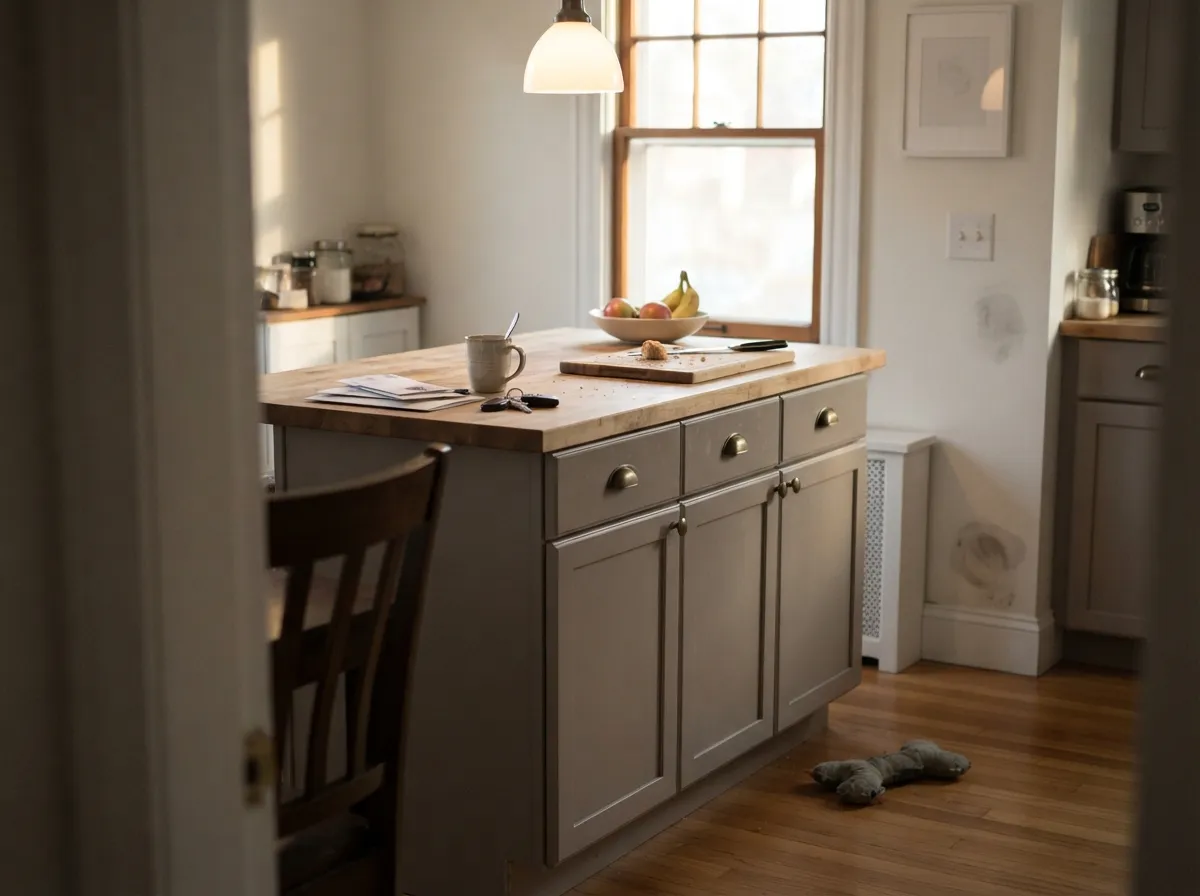
Warm natural light switches on the yellow-pink base and the wall reads biscuit-stone — the plaster color on the card. This is the light the paint was mixed for.
Cool grey daylight kills the biscuit and leaves a flat mushroom with a lilac edge. Fine if you half-wanted grey; disappointing if you wanted warm stone.
Morning can look quieter and greyer; late west sun flushes it distinctly pink for an hour. Most owners like the movement. If pink is your dealbreaker, watch the sample at 6pm.
2700K bulbs keep the plaster warmth and let the pink stay a whisper. Cool 4000K LEDs grey it out and push the lilac — swap the bulbs before you repaint.
Both Colors in Real Rooms
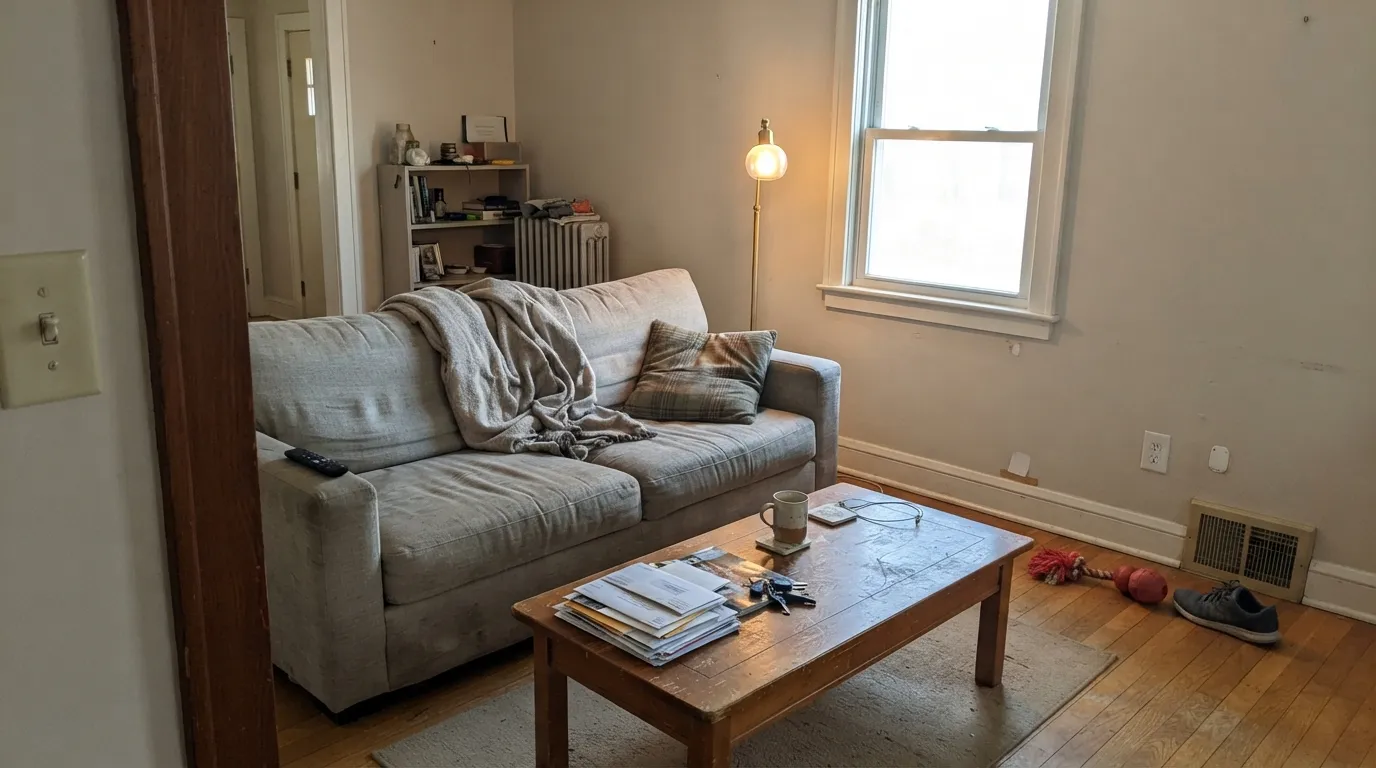
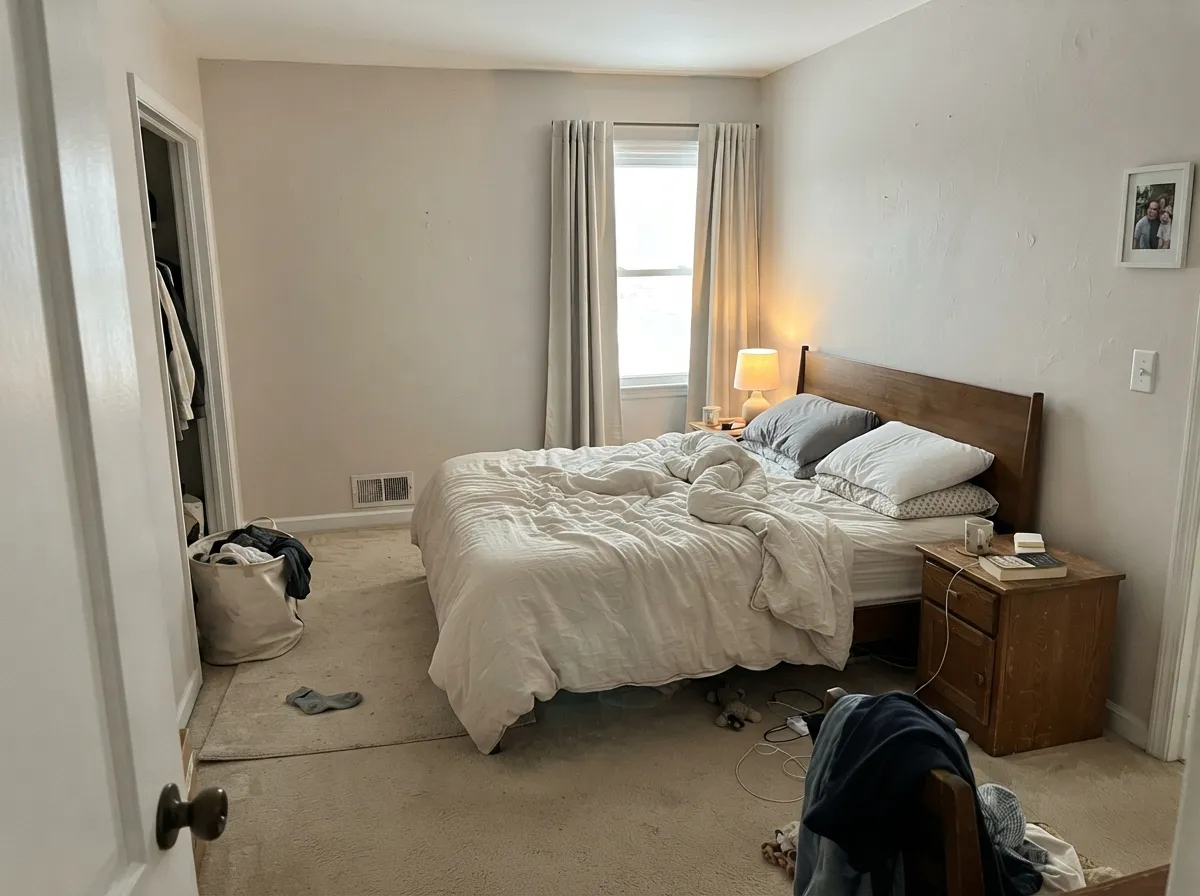
Photos from our full reviews — the same rooms and captions, so you can judge each color where it actually lives, not on a chip.
When to Pick Which
Living rooms and hallways with real daylight · kitchen cabinets and joinery · front doors · anyone who wants a neutral with a little unpredictability · pairing with warm wood and brass
You want a guaranteed-flat, no-drama gray · your room runs cool LEDs with almost no natural light · this is your first Farrow & Ball color and you hate surprises · budget rules out premium per-gallon pricing
South- and west-lit bedrooms · hallways that should feel warm on arrival · period houses with oak and brass · anyone sampling Classic Gray who wants more stone
You cannot live with a pink-lilac flash · the room is dim and north-facing · you wanted a true gray · your trim stays builder brilliant white
No comparison page can see your light. Upload one photo of your room and try both colors on the same walls, seconds apart.
Elephant's Breath vs Skimming Stone FAQ
Which is lighter, Elephant's Breath or Skimming Stone?
Skimming Stone is lighter: LRV 67 vs 52. Skimming Stone is meaningfully lighter (LRV 67 vs 52). On a wall, Skimming Stone reads light, airy; Elephant's Breath reads light, airy.
Which is warmer, Elephant's Breath or Skimming Stone?
They share the same undertone family — both read red-orange / warm. The difference between them is lightness and depth, not temperature.
How similar are Elephant's Breath and Skimming Stone?
Elephant's Breath and Skimming Stone are close but distinct (ΔE 5.71). Visible difference on the wall, especially in flat daylight. The only reliable test is seeing both in your own room and light — a side-by-side on a screen or chip flattens the difference.
Can I use Elephant's Breath and Skimming Stone together in one house?
Yes, in separate rooms. They are close enough to feel related but different enough to notice, so give each its own room and connect them with a shared trim white. Avoid putting them on adjoining walls.
Ask a Question