Portola Paints
Portola sells a surface, not a color. Roman Clay and Lime Wash give a wall movement that flat paint cannot fake — here is what each finish costs by the kilo and the gallon, what the wall behind it has to be, and the shipping and touch-up realities nobody mentions in the photos.

Jessica spent eight years styling residential interiors in Chicago and Charleston before moving into editorial work. She specifies plaster and mineral finishes for rooms where the wall is meant to be the thing you look at, and she has watched enough of them go wrong to be careful about who she recommends them to. About the testing process →
The Fast Verdict
Yes, Portola is good — at one specific job. Roman Clay and Lime Wash give a wall soft, cloudy movement that shifts as the light crosses it, and there is no mass-market shortcut to that. The New Standard acrylic is clean, quiet, well-colored wall paint at $74 to $84 a gallon, but it does not out-wear a national premium; you are paying for the palette. Buy Portola when the surface is the design. Skip it when you want an even wall in a safe greige.
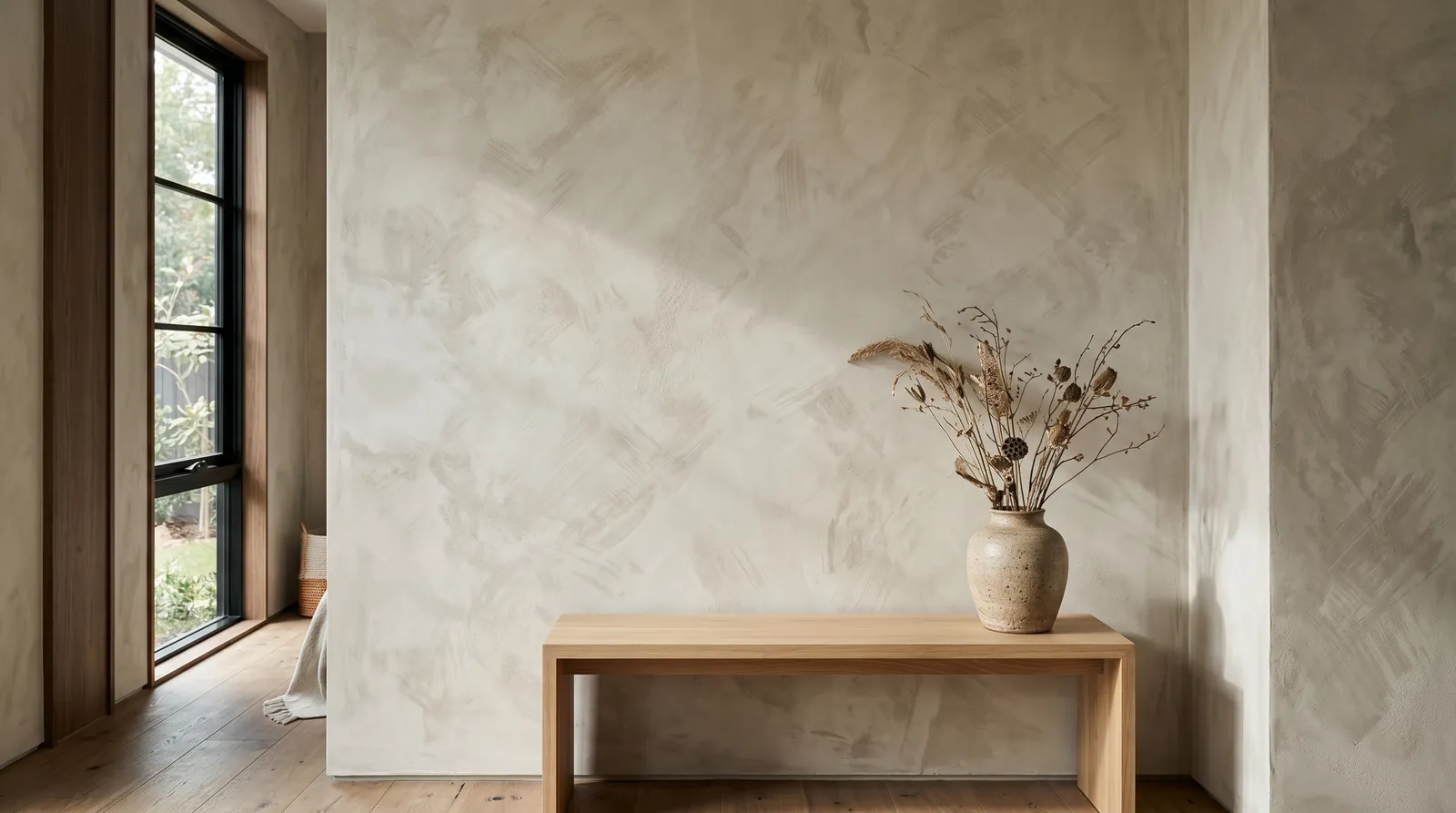
- Roman Clay dries to a suede-matte surface with stone-like movement — the wall reads as made rather than painted
- Lime Wash keeps working after it dries: the mineral surface variegates and softens with age instead of just fading
- The palette is genuinely curated and warm — sandy ivories, driftwood neutrals, clay browns and muted greens that sit together without effort
- Same color names run across Roman Clay, Lime Wash and the acrylic, so you can pick the mood first and the surface second
- Mineral, hand-blended in small batches in North Hollywood, with almost no paint smell in the room
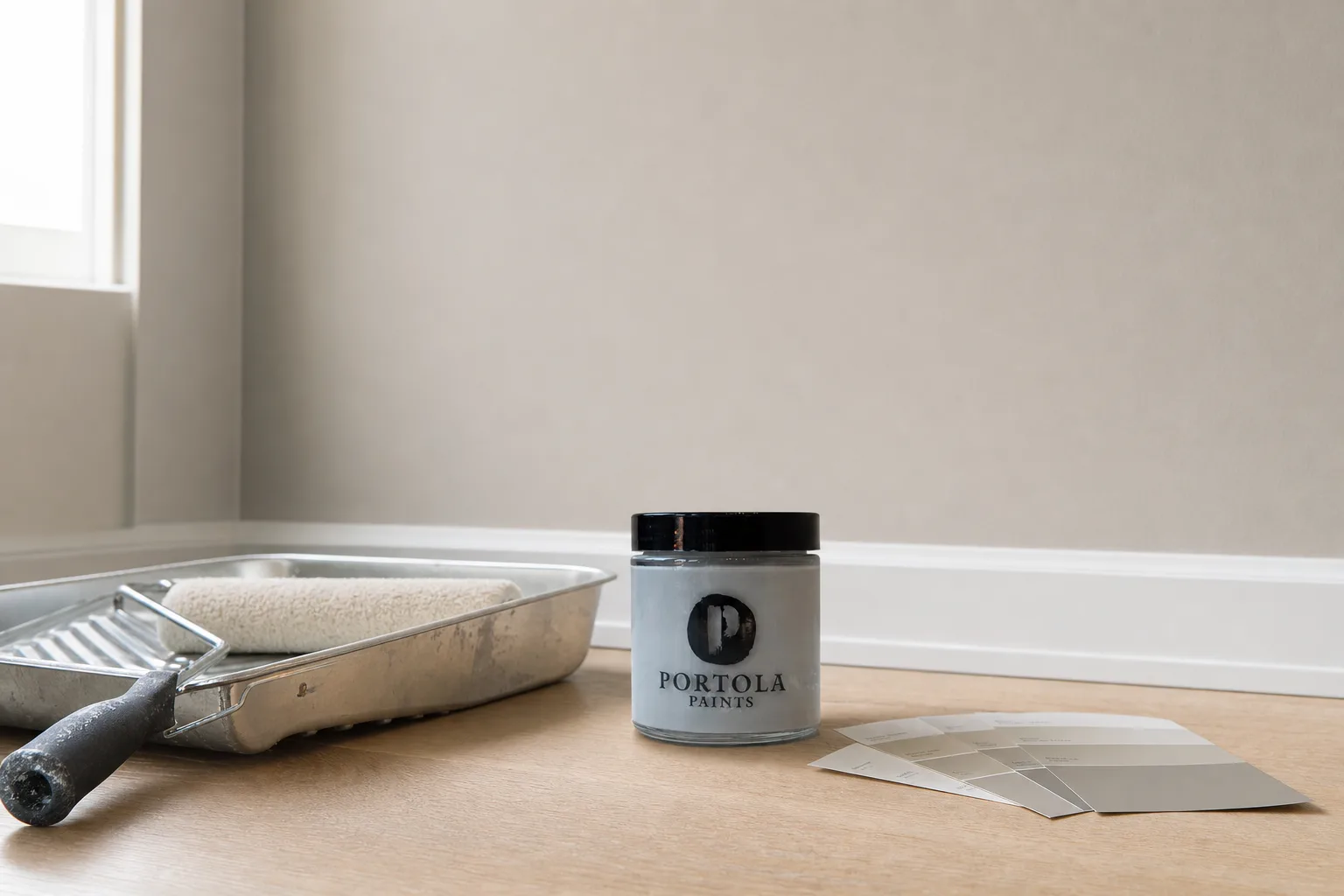
- Real sample workflow: 4-ounce jars and drawdowns at $10, made-to-order 16-by-16-inch boards at $35
- Ships anywhere in the country, so the look is not locked to people near a design-district showroom
- Roman Clay wants Level 5 drywall — the wall prep can cost more than the finish
- Shipping is a second price tag: roughly $20 to $35 for a single gallon, and samples ship separately
- You cannot spot-fix a mineral finish; rework a half-dry patch and it flashes pale
- Unsealed, both finishes chalk and mark, and the topcoat that fixes that flattens some of the depth you paid for
- One showroom, in North Hollywood — everything else is an order and a wait
- Roman Clay at $30 per kilo covers only 20 to 25 square feet, so a whole room adds up fast
- Not a wear story: for a mudroom or a kid's bathroom, a mainstream premium does the scrub job better for less
Which Portola Paints Paint to Buy
Portola's lineup is small and it splits cleanly: two mineral finishes you apply by hand, and conventional paint for everything else. Prices are direct from portolapaints.com in 2026. Roman Clay sells by weight, everything else by the can, and shipping is on top of all of it.
Best for Powder rooms, hallways, anywhere hands land
Optional on paper, necessary in real rooms. It makes the wall wipeable and costs you a little of the chalky depth.
Best for Raw drywall under Lime Wash
Budget for these from the start. Lime Wash over unprimed drywall is the most common way a first attempt goes wrong.
 Flagship mineral finish
Best for One wall that is the room
The reason the brand exists. Smooth, velvety, alive under raking light — and it needs a Level 5 wall and a steady hand to look that way.
Full review →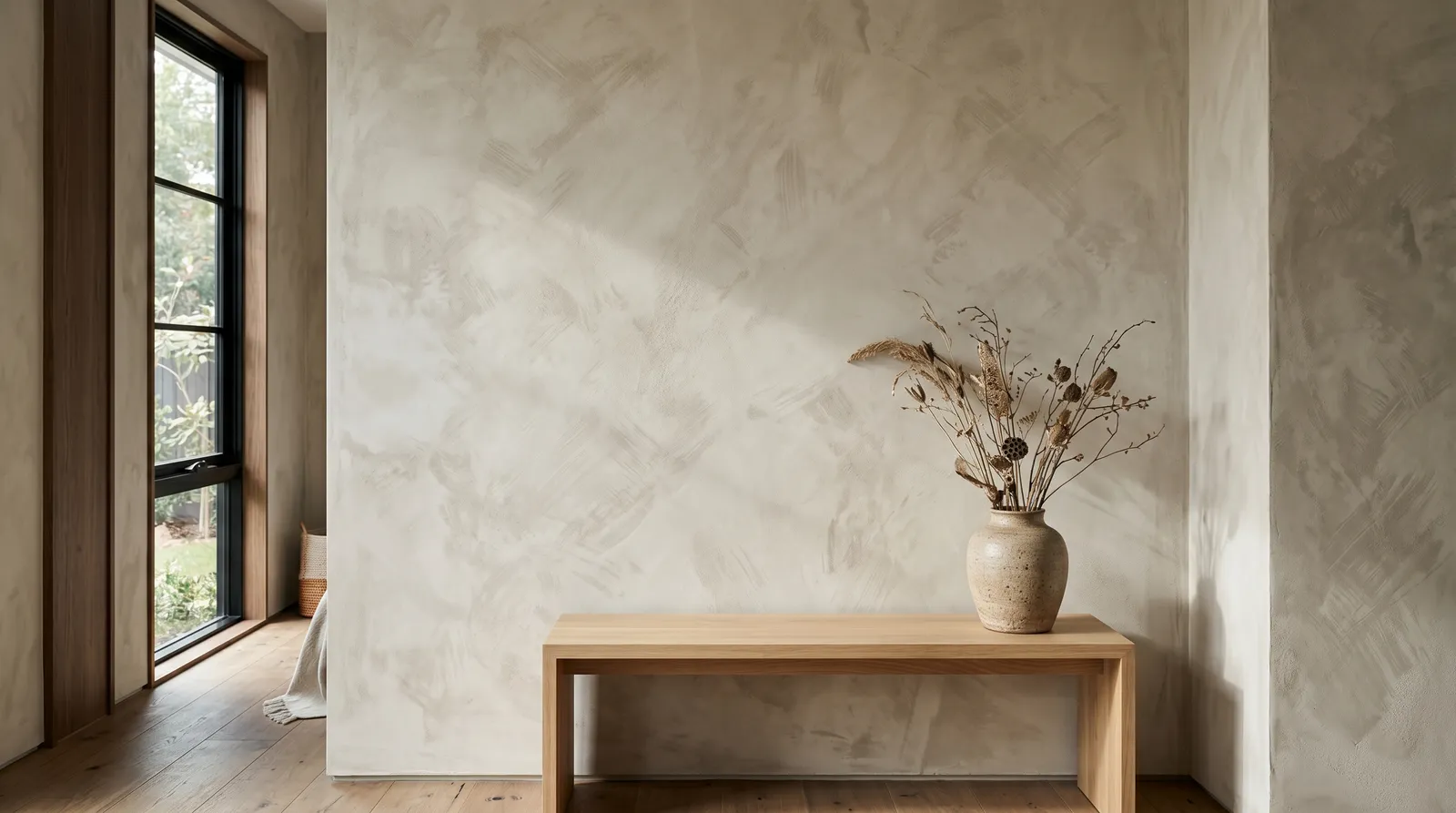 Mineral finish
Best for Fireplaces, brick, accent walls
The forgiving one, because the mottling hides your mistakes. Prime raw drywall with Limeproof first or the lime has nothing to grab.
Full review →There Is No Sale — Spend Less This Way Instead
Portola does not run a discount calendar. It sells direct from its own site and its North Hollywood showroom, so there is no Memorial Day event to wait for and no store two towns over quoting a better number. The price you see is the price, and it has been steady: $74 for a gallon of Ultra Flat, $84 for Semi Gloss or a gallon of Lime Wash, $30 for the 1-kilo unit of Roman Clay. If you are a designer or a painting contractor, the one real lever is a trade account — Portola's own terms confirm trade pricing exists and simply cannot be stacked with promotional codes. Ask before your first order, not after.
The number people forget is shipping. Paint is heavy and it travels by ground from Los Angeles, so a single gallon lands somewhere around $20 to $35 depending on where you live, and samples ship on their own dime. One writer documented eight sample jars at $10 each plus shipping paid twice, and finished a single guest-room accent wall at just over $250 all in. That is the honest cost of this brand: not the gallon, the gallon plus the freight plus the samples you needed to be sure.
So order once. Work out the whole room first — Roman Clay covers 20 to 25 square feet per kilo at two coats, Lime Wash 150 to 200 square feet per gallon — then add the topcoat or the Limeproof primer to the same cart and buy it all together. Sample first, always, but sample in one go: two or three colors as drawdowns rather than one jar at a time. West Coast orders land in about two days, East Coast in four to six, so a second order because you ran short costs you a week as well as the freight.
The Portola Paints Color Deck
Portola's deck is small and has a point of view: warm, dusty, Mediterranean, the colors of stone and sun-bleached plaster rather than crisp cool grays. It is a palette built to be seen with texture under it. These eight are the ones people ask for by name.
The Whole Portola Paints Fan Deck, One Shelf
Every Portola Paints color sorted into the families painters actually use. Pick a chip to browse light to dark.
Upload a photo of the room. We paint it in the Portola Paints color you pick, with your light and your floor, before you buy a sample.
The Cons Only Forums Talk About
Roman Clay Needs a Level 5 Wall
This is the hidden line item. Portola's own guidance is Level 5 drywall preferred, and it is not fussiness — a troweled plaster is thin and it telegraphs everything under it. Seams, roller stipple, an old orange-peel texture, a patch that was good enough for eggshell: all of it comes through in raking light, and a plaster wall gets raking light by design. On an older house that means skim-coating first, which can cost more than the finish itself. Price the wall before you price the clay.
Shipping Is a Second Price Tag
Portola is effectively direct-to-you. There is one showroom, in North Hollywood, and a store locator that turns up very little for most of the country, so nearly everyone orders. A single gallon runs roughly $20 to $35 in ground freight from Los Angeles, and sample jars ship on their own. One blogger totalled eight samples at $10 each, shipping paid twice, and about $250 for one accent wall. None of that shows up when you are looking at $84 a gallon on the site. Consolidate every order, including primer and topcoat.
You Cannot Touch It Up
Both mineral finishes dry fast and set as they go, so the wet edge is everything. Go back into an area that has started to set — to even out a streak, to fix a thin spot — and you get a pale flash exactly where you reworked it, which is the one mark that reads as a mistake rather than character. Painters who post about it say the same thing: work corner to corner without stopping, keep the whole wall in one session, and do not answer the door. A repair months later is not a dab from the leftover can; it is redoing the wall.
Unsealed, It Marks and Chalks
The chalky bloom is the look, and it is also a surface that a shoulder or a wet hand can leave a mark on. Portola's answer is a sealer — Roman Clay Topcoat, or Matte Wall Sealer over Lime Wash — sold separately and applied as a second pass. Sealed, the wall wipes clean with mild soap. It also loses a little of the powdery softness that made you want it. In a hallway, a powder room, or anywhere below shoulder height with kids, seal it and accept the trade. In a bedroom, leave it alone.
Your Tools Change the Wall
This is not a roller-and-go product and the hardware matters more than people expect. DIYers report stainless knives leaving faint grey streaks in pale clay, which is why plastic or well-conditioned blades get recommended for light colors. Lime Wash wants a long-bristled block or stain brush and a loose cross-hatch stroke, not a wall brush and straight passes. Buy the right tool with the material, practise on a board, and understand that two people applying the same color get two different walls. That is the medium, not a defect.
The Questions Between Two Cans
Roman Clay is troweled and smooth, with quiet stone-like movement that reads refined and modern; Lime Wash is brushed and cloudy, chalkier, and reads older and softer. Roman Clay is the harder one to do well and the one that punishes a bad wall. If it is your first attempt, or the surface is brick or stucco, start with Lime Wash.
All comparisons →True lime wash is a thin mineral wash that sinks in and patinas; a mineral paint is a coating that sits on top and stays put. Portola's is the real thing, which is why it moves and why you cannot touch it up. Choose lime wash for the aged, breathing surface, mineral paint when you want texture with less drama.
Full comparison →The most common Portola question online is whether tinted joint compound gets you there for a tenth of the price. On a big wall in a mid-tone earth color, a careful DIY skim gets surprisingly close. It falls apart in pale colors, where Portola's clay body keeps a translucent depth that compound cannot, and on durability, since joint compound is soft and dusty. Try it in a laundry room, not a living room.
All comparisons →Any good paint counter can match a Portola chip into Benjamin Moore or Behr, and for a flat wall that is a fair trade — you save the gallon premium and the freight. What you lose is small but real: the matched hue often lands a touch flatter, because these colors were mixed to sit under a textured surface. Match it for a ceiling or a closet. Buy the real thing for the wall you care about.
All comparisons →They are all boutique brands with a curated deck, but only Portola sells a surface. Farrow & Ball gives you deeper, more historic color in conventional paint; Clare gives you a clean, simple direct-to-you experience at a lower price. If what you actually want is a plastered wall, neither of them is a substitute, and if what you want is a beautiful flat color, both are easier to buy.
All comparisons →Portola Paints Questions, Answered
Is Portola paint good?
Yes, for what it is for. Roman Clay and Lime Wash do something to a wall no mass-market paint can imitate — real depth that changes as light moves across the room. The New Standard acrylic is clean, quiet, nicely colored wall paint that does not out-wear a national premium. Buy Portola for the finish and the palette. Skip it if you want an even wall in a safe neutral, or a surface you will scrub weekly.
What is Portola Figueroa?
Figueroa is one of Portola's most-requested colors: a soft ivory off-white with a warm, slightly grey cast, at an LRV of about 63. Portola describes it as a touch lighter than Patagonia, its other signature sandy neutral. In Roman Clay it reads as pale plaster with quiet movement rather than a flat cream, and it sits beautifully with oak, brass and unbleached linen. In north-facing light it cools and goes almost stone; in afternoon western light it warms toward sand.
What is the difference between Lime Wash and Roman Clay?
Lime Wash is a lime-based wash you brush on in thin, watery coats. It dries chalky and cloudy, a bit weathered, and it keeps softening with age. Roman Clay is a clay-and-lime plaster you trowel on with a knife in thin overlapping passes, and it cures smooth, matte and almost suede-like with subtle stone movement you can run your hand across. Lime Wash reads rustic and breezy. Roman Clay reads refined.
How much does Portola paint cost?
Ordered direct in 2026: Ultra Flat acrylic is $27 a quart and $74 a gallon, Eggshell and Low Sheen $76, Semi Gloss $84, and the hybrid alkyd Enamel $88 to $92. Lime Wash is $30 a quart, $84 a gallon, $345 for 5 gallons. Roman Clay sells by weight — $30 for 1 kilo, $92 for 5, $180 for 10, $345 for 20 kilo. Add ground shipping from Los Angeles on top of all of it.
Where do I buy Portola paint?
Direct from portolapaints.com, or in person at the North Hollywood showroom at 5066 Lankershim Boulevard. It is not at Home Depot or Lowe's, and there is no meaningful dealer network for most of the country, so plan on ordering. West Coast deliveries land in about two days, East Coast in four to six, with two to five business days of processing before that. Order samples and material in as few shipments as you can.
Does Portola ship to Canada or the UK?
Internationally, yes, but not through the normal online checkout. Portola's site handles domestic orders; for Canada, the UK or anywhere else outside the US you call the showroom at 323-655-2211 for a quote, and freight on heavy mineral material overseas is significant. If you are outside the US and want the look rather than the label, it is worth pricing a local lime plaster or lime wash before committing.
How hard is Roman Clay to apply yourself?
Harder than it looks in the videos. It is troweled on in two thin passes with a flexible knife, it sets as you work, and it shows every bump in the wall underneath — Portola prefers Level 5 drywall for a reason. Overwork an area and you burnish it; stop mid-wall and the restart shows. Most people do fine on a small powder room or one feature wall after practising on a board, and hire a finish painter for a whole room.
Can you wash a Roman Clay or Lime Wash wall?
Only if you seal it. Bare, both finishes are porous and a bit chalky, so a wet hand can leave a mark and a scrub will take color off. Portola sells a Roman Clay Topcoat and a Matte Wall Sealer that make the surface wipeable with mild soap, applied as a separate pass and bought separately. Sealing costs you a little of the powdery depth, which is a fair trade in a hallway and a waste in a bedroom.
Do I need a primer under Lime Wash?
On raw or previously painted drywall, yes. Lime needs a porous surface to bond to, and over standard latex it can sit on the surface and rub off later. Portola's Limeproof undercoat gives it something to grab. On porous brick, stone, or lime plaster you can go straight on, and that is where the finish looks its most natural anyway. Buy the primer with the wash so you are not waiting on a second delivery.
Is Portola worth the price?
For the mineral finishes, yes — there is no cheaper way to get a wall that has real depth and movement, and one plastered room can carry a whole house. For plain flat color, no: the acrylic is good paint, but $74 to $84 a gallon plus freight buys you the palette, not performance. The honest test is whether you want a surface or a color. Only the first one justifies the total.
Ask a Question