Product review · Portola Paints · Updated August 7, 2026
Lime WashPortola Paints paint review
8.6/10The most forgiving of the hand-applied mineral finishes, and the one that pays you back most on brick.
Slaked lime, mineral pigment and water, brushed on in loose cross-hatch strokes so the wall clouds and shifts with the hour. What it really looks like on a wall, how forgiving it is, and where the chalkiness will bite you.

Jessica Williams · Color Stylist & Interior Editor · Updated August 7, 2026
Jessica spent eight years styling residential interiors in Chicago and Charleston before moving into editorial work. She has watched lime-washed walls go chalky-calm at noon and come alive again at five, which is the only honest way to judge a finish sold on movement. About the testing process →
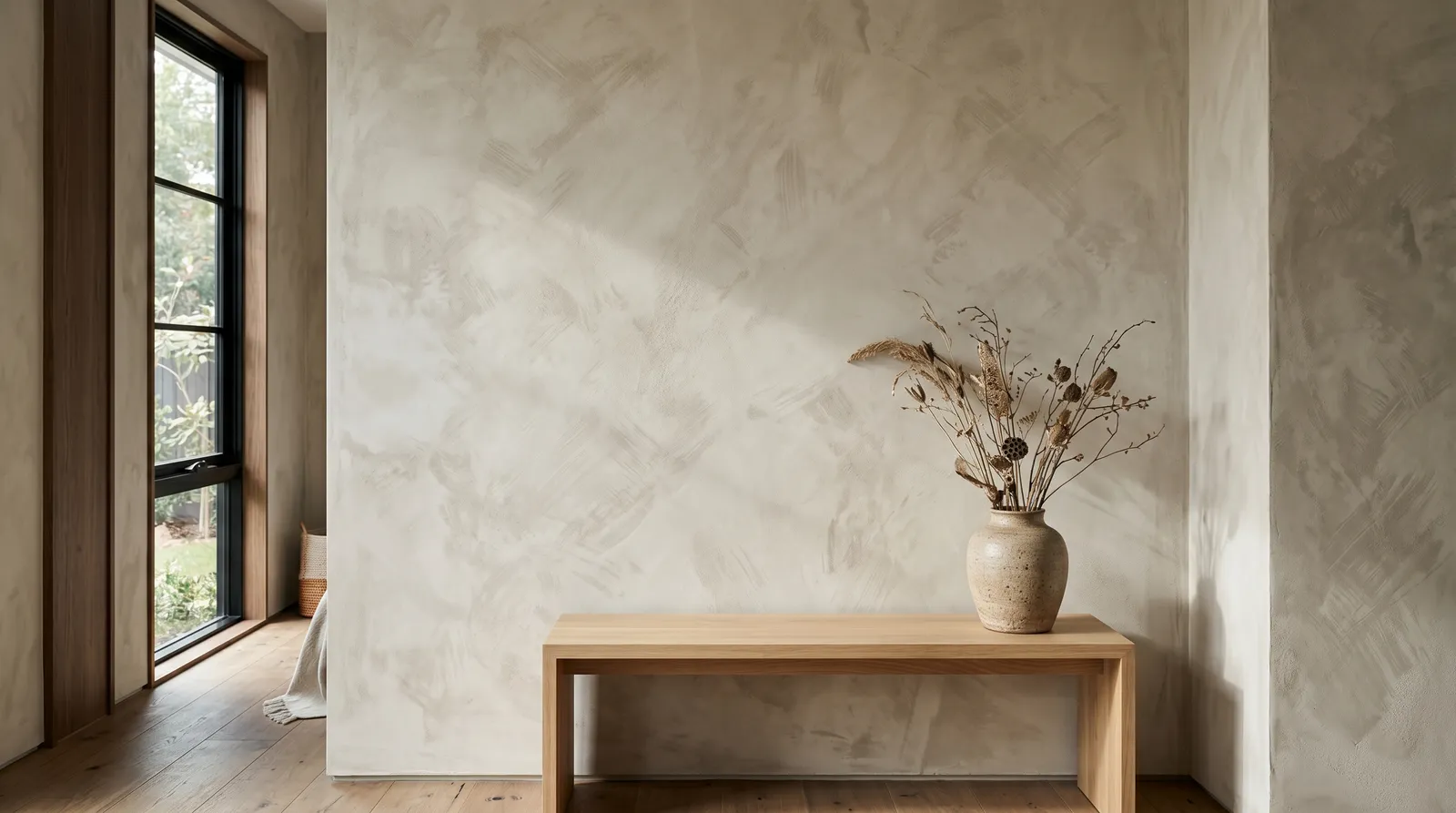
Portola Paints Lime Wash1 sheen
Coverage150–200 sq ft per gallon over two coats
Recoat2–4 hours
VOCZero; mildly fungicidal from the high pH
CureCarbonates and lightens as it dries
Sheens Matte mineral
Read this first
The Fast Verdict
Buy it for the wall that is meant to be looked at — a fireplace, a brick chimney breast, a plastered dining room. Nothing flat can fake the cloudy depth, it is a breathable mineral finish with no plastic film, it bonds to porous brick without a primer, and outdoors it patinas instead of peeling. The trade-offs are the unevenness you cannot undo, a technique that punishes touch-ups, a chalky surface that wants a sealer where hands go, and $84 a gallon for 150 to 200 square feet.
Best for
Fireplace surrounds · Brick and masonry · Old lime plaster · Feature and bedroom walls · Exterior facades · Anyone who wants variation, not uniformity
Skip if
You want one even, uniform color · Mudrooms and kids' bathrooms you sponge daily · You cannot leave a half-dry patch alone · A big dark room as a first attempt · You need it off a local shelf today
What it's good at
- Depth that flat paint cannot fake — the color pools, thins and clouds as the light moves
- Brick and masonry, where it soaks in, bonds without a primer and softens a hard red facade
- Old houses with lime plaster, because it works with the wall instead of sealing it
- Breathing: a mineral surface that lets moisture pass and resists mildew from its high pH
- Patina outdoors — it weathers rather than flaking, so it ages into the look
- Forgiving small errors, which disappear inside the mottling
- Low odor and zero-VOC, with no plastic film on the wall
What it's not good at
- Uniform color — the variation is non-negotiable and some people dislike it once it is on a whole wall
- Touch-ups, which flash pale and cannot be blended back in
- Dark colors on a first attempt, where the bloom is genuinely unpredictable
- Surfaces you scrub, since bare lime wash marks under a hand and can dust a little
- Value on a plain wall, at $84 a gallon for only 150 to 200 square feet
- Convenience — it ships to you, so there is no lunchtime run for one more quart
- Raw drywall without the Limeproof undercoat, where it has nothing to grab
Numbers, not adjectives
Spec Sheet
- Type
- Slaked lime, mineral pigment and water — a breathable mineral wash
- Coverage
- 150–200 sq ft per gallon over two coats
- Sheen
- Matte mineral — cloudy, chalky, suede-like
- Coats
- Two, brushed in loose cross-hatch strokes
- Recoat
- 2–4 hours
- Cure
- Carbonates and lightens as it dries; keeps seasoning for years
- VOC
- Zero; mildly fungicidal from the high pH
- Surfaces
- Interior and exterior drywall, plaster, stucco, brick and masonry
- Primer
- Limeproof undercoat on raw drywall; none needed on porous brick or lime plaster
- Sealer
- Matte Wall Sealer where the wall gets wiped
- Sizes
- Quart, gallon, 5-gallon
- Price
- Quart $30, gallon $84, 5-gallon $345
Application Settings That Work
- Brush
- A wide stain or limewash brush, around 5 inches. The stroke is loose and crossing, each pass maybe one to two feet long, layered in an X-ish cross-hatch so the brushwork overlaps and builds the cloudy movement. Skip the careful cut-in you would do with regular paint and work corner to corner, cutting in as you go. Two coats, two to four hours apart.
- Primer
- Raw drywall gets Portola's Limeproof undercoat so the lime has something to grab. Porous brick, stucco and old lime plaster need nothing — the wash soaks in and bonds on its own. If the finished wall will be wiped, plan on the Matte Wall Sealer afterwards instead of a primer underneath.
How It Lightens as It Cures
Lime wash does not dry to the color you brushed on, and the first time is unnerving. It goes on darker and wetter, then pales and clouds as the lime pulls carbon dioxide from the air and turns back to stone. The second coat goes on after two to four hours and reworks the variation rather than simply covering it. By morning the wall is the color you actually bought. It keeps softening and seasoning for years after that, which is the point of a mineral finish rather than a film sitting on top of the wall. It also means a sample board needs a couple of days to pale to its true color before you judge it — order the quart well ahead of the project.
Mid-project panic
When It Goes Wrong, and How to Fix It
A Pale Flash Where You Went Back to Fix a Spot
Why it happens. Once an area starts to set, going back into it lifts the wash rather than blending it. Careful people do this instinctively — they see a heavy stroke, they touch it up, and the reworked patch dries lighter than everything around it.
The fix. There is no touch-up in lime wash. Lay your strokes and leave them. If a section genuinely needs help, wait for the coat to dry fully and fix it with the whole second coat, working the area back into the surrounding cross-hatch rather than dabbing at it.
A Seam Telegraphing Across the Wall
Why it happens. You lost the wet edge. Stop halfway through a wall, take a break, and the line where you picked back up prints through the finish, because the fresh wash lands on a section that has already begun to carbonate.
The fix. Start in a corner and keep moving, cutting in as you go, corner to corner in one session. Do not plan a lunch break in the middle of a wall. On a big room, work wall by wall with the natural corners as your stopping points.
Dark Colors Coming Out Blotchier Than You Pictured
Why it happens. Deep colors bloom and vary far more than pale ones, and the second coat can shift the whole effect. A moody green or a deep clay is genuinely less predictable than a soft off-white, so a rushed first attempt on a big dark room can read as a mistake rather than a finish.
The fix. Brush the actual color onto a board or a hidden patch of the real wall, two coats, and live with it across a couple of days and a couple of light conditions. If the bloom is more than you want, go a shade lighter — pale colors stay gentle and barely variegated.
Chalk on Your Hand, or Dust in a High-Touch Spot
Why it happens. Unsealed lime wash stays chalky. That is the surface you fell for, and it is also why a swipe can leave a mark and why it can dust a little indoors somewhere hands and sleeves brush past.
The fix. Seal the walls that get touched with Portola's Matte Wall Sealer, knowing it flattens a touch of the chalky depth. Leave the quiet walls bare. The honest way to plan it is to decide, room by room, which walls you will ever wipe.
It Will Not Grab on New Drywall
Why it happens. Lime wants a porous mineral surface to soak into. Fresh drywall and modern sealed paint do not give it one, so the wash sits on top instead of bonding.
The fix. Prime raw drywall with Portola's Limeproof undercoat first, then wash over it. On porous brick, stucco and old lime plaster you need nothing — it bonds on its own, and that is where the finish looks most natural.
Side by side
Lime Wash vs Roman Clay
These are Portola's two hand-applied finishes and the choice trips people up. Both give a wall movement. One is weathered and brushed, the other is smooth and troweled, and they ask different amounts of you.
| Lime Wash | Roman Clay | |
|---|---|---|
| The look | Cloudy, chalky, mottled. Weather settled on the wall. | Smooth, suede-matte, tight. Tonal movement like honed stone. |
| How it goes on | Brushed in loose cross-hatch strokes with a 5-inch stain brush. | Troweled in thin overlapping layers with a putty knife or flexible trowel. |
| How forgiving | More forgiving. Small errors read as character inside the mottling. | Less forgiving. Uneven passes and burnish marks show. |
| Surfaces | Drywall, plaster, stucco, brick and masonry. | Smooth interior walls, Level 5 drywall preferred. |
| Indoors or out | Both. Outdoors it patinas rather than peeling. | Interior only, and not for wet rooms. |
| Coverage and price | 150–200 sq ft per gallon over two coats; quart $30, gallon $84, 5-gallon $345. | 20–25 sq ft per 1 Kilo at two coats; $30 per Kilo up to $345 for 20 Kilo. |
| Sealing | Matte Wall Sealer where you will wipe; it dulls a little of the chalky depth. | Roman Clay Topcoat where you will wipe; it deepens the color 10–20 percent. |
The look
Lime WashCloudy, chalky, mottled. Weather settled on the wall.
Roman ClaySmooth, suede-matte, tight. Tonal movement like honed stone.
How it goes on
Lime WashBrushed in loose cross-hatch strokes with a 5-inch stain brush.
Roman ClayTroweled in thin overlapping layers with a putty knife or flexible trowel.
How forgiving
Lime WashMore forgiving. Small errors read as character inside the mottling.
Roman ClayLess forgiving. Uneven passes and burnish marks show.
Surfaces
Lime WashDrywall, plaster, stucco, brick and masonry.
Roman ClaySmooth interior walls, Level 5 drywall preferred.
Indoors or out
Lime WashBoth. Outdoors it patinas rather than peeling.
Roman ClayInterior only, and not for wet rooms.
Coverage and price
Lime Wash150–200 sq ft per gallon over two coats; quart $30, gallon $84, 5-gallon $345.
Roman Clay20–25 sq ft per 1 Kilo at two coats; $30 per Kilo up to $345 for 20 Kilo.
Sealing
Lime WashMatte Wall Sealer where you will wipe; it dulls a little of the chalky depth.
Roman ClayRoman Clay Topcoat where you will wipe; it deepens the color 10–20 percent.
Painting brick, old lime plaster or an exterior facade, or doing your first hand-applied finish? Lime Wash, easily — it forgives the most and it belongs on porous masonry. Want a smooth, refined, almost velvet wall in a dining room or a powder room, and you will practice or hire out? Roman Clay. Choose the surface you want before you choose the color, because these two do not swap.
If not this one
Honest Alternatives
PR
Portola Roman Clay$30 / 1 Kilo
The smooth troweled cousin: tighter, more contemporary, more velvet than chalk. It reads more polished than lime wash but it is interior-only, less forgiving of a shaky pass, and sold by weight at low coverage.
Full review →PN
Portola New Standard Acrylic$74–92 / gal
The same Portola color as ordinary rolled wall paint, dried to one even opaque coat. Buy this instead if part of you wants the wall to even out, because lime wash never will.
Questions people actually ask
Lime Wash Questions, Answered
Is Portola Lime Wash worth it?
On a wall that is meant to be looked at, yes. Nothing flat can fake the cloudy depth, it is a breathable zero-VOC mineral finish, it bonds to porous brick without a primer, and outdoors it patinas instead of peeling. The trade-offs are the unevenness you cannot undo, a technique that punishes touch-ups, a chalky surface that wants a sealer where hands go, and $84 a gallon for only 150 to 200 square feet. Skip it if you want one uniform color or a wall you will scrub.
Is the cloudy, uneven look a mistake or the point?
It is the point. Lime wash is a mineral wash, not a flat paint, so the color settles unevenly as it dries and the overlapping brush strokes leave soft movement behind. Darker colors bloom and vary more than pale ones. A lime-washed wall that came out perfectly even would mean something went wrong.
Can I apply Portola Lime Wash myself?
Yes, more easily than Roman Clay, because the mottled look forgives small inconsistencies. You brush it on in loose cross-hatch strokes with a 5-inch stain brush, keep a wet edge from corner to corner, and let it lighten as it cures. Two coats is standard. The one rule that bites beginners is not to go back and touch up a half-dry area, or you will get a pale flash where you reworked it.
What surfaces does it work on, and does it go outside?
It works on drywall, plaster, stucco, brick and masonry, indoors and out. On raw drywall you prime first with Portola's Limeproof undercoat so the lime grabs. On porous brick and lime plaster it bonds beautifully on its own, which is where the finish looks its most natural.
Is it durable, and should I seal it?
Unsealed, it stays breathable but chalky, so a swipe can leave a mark and it can dust a little indoors in a high-touch spot. For a wall you will wipe, seal it with Portola's Matte Wall Sealer, knowing the sealer flattens a touch of the chalky depth. Outdoors it weathers and patinas rather than peeling, which is the look people want from lime on brick.
Why does it look darker when I brush it on?
Because it is still wet, and because lime wash cures by carbonating — pulling carbon dioxide from the air and turning back to stone. It pales and clouds as that happens, so the wall you wake up to is lighter than the one you painted. Give a sample board a couple of days before you judge the color.
How much do I need for a chimney breast?
A gallon covers 150 to 200 square feet over two coats, and a quart covers 40 to 50 — enough for a sample and a small surface. Measure the face and the returns, divide by about 175, and round up. At $84 a gallon the sample step is cheap insurance against buying the wrong color at scale.
Lime wash or Roman Clay for a first project?
Lime wash. It is the more forgiving of Portola's two hand-applied finishes, because its whole identity is variation and a heavy stroke reads as character. Roman Clay is a trowel-and-skill finish where a tired pass shows. Start with a fireplace surround or a single chimney breast either way.
Where do I buy it?
Direct from portolapaints.com, in quarts, gallons and 5-gallons, shipped nationwide. It is not a big-box brand, so plan a few days for delivery and order the sample quart well before the project so the board has time to cure and pale to its true color.
Keep exploring
Portola Paints paint brand guidePortola Roman Clay reviewBrowse all Portola colorsBest limewash paintBest mineral paint
We may earn a commission when you buy through the retailer link above. It never changes the score or the verdict.
Ask a Question