Best Limewash Paint in 2026
Five US-stocked limewashes tested on raw brick, stucco, and interior plaster. Top pick: Romabio Classico — chemistry, color, and a real US supply chain.

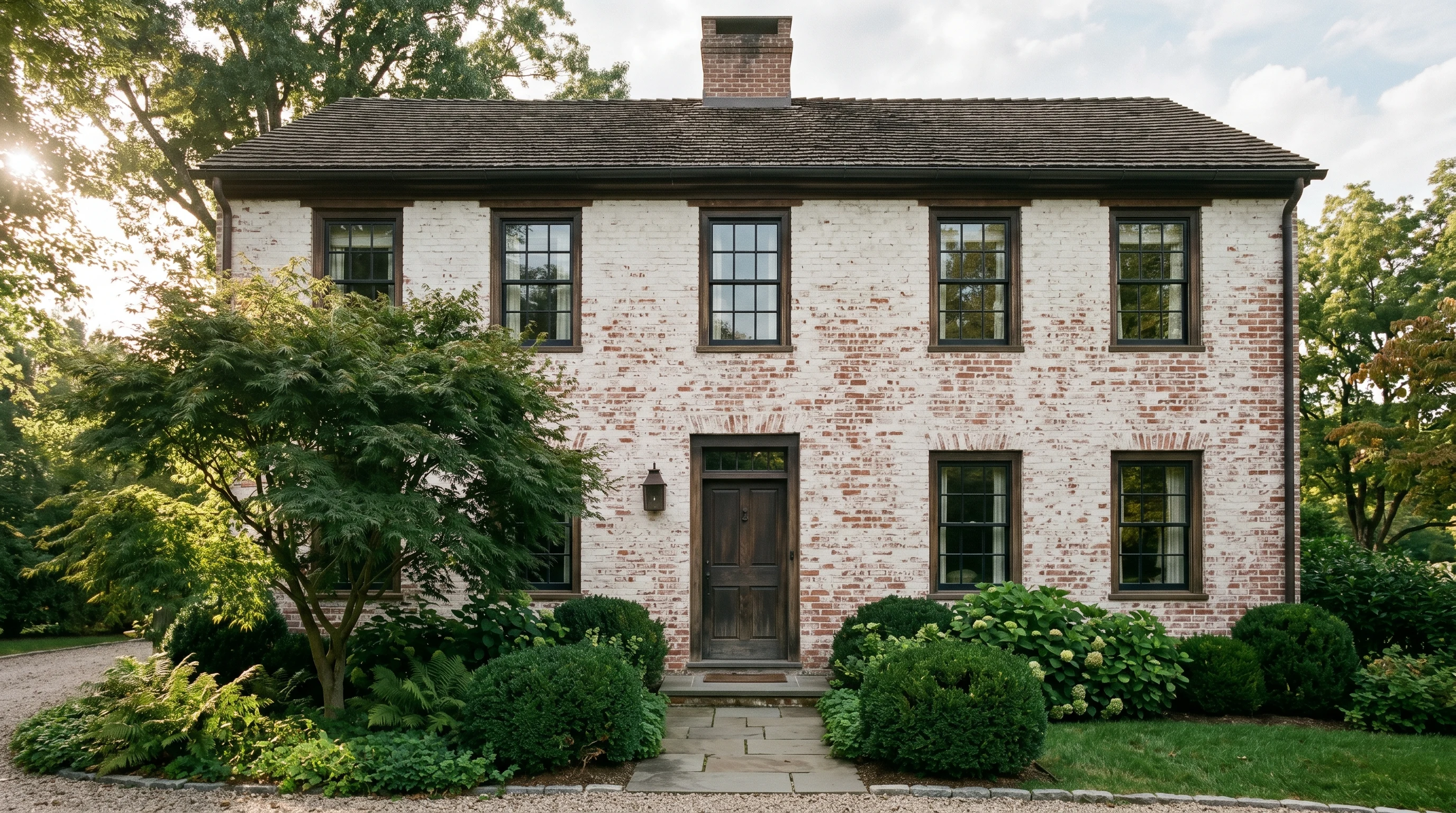
Real slaked-lime chemistry made in Italy with an actual US supply chain — stocked at Home Depot and Amazon, not a six-week import from a European workshop
Deepest, most saturated color deck of any real limewash on the US market — the soft pinks, sage greens, and burnt terracottas you can't get out of Romabio's heritage range
California-made and engineered for interior drywall — the lime is buffered with a binder so the wash bonds to skim-coated gypsum where pure slaked lime would dust off
Australian heritage formulation specified by restoration architects on pre-1900 brick and lime-plaster buildings — the chemistry that historic-district review boards approve without a fight
Trowel-applied authentic lime plaster — not a wash, a real Venetian-style mineral plaster that gives the smooth polished depth limewash can only suggest
Disclosure: Some links below are affiliate links. We earn a commission if you buy through them, at no extra cost to you. Our picks are based on independent criteria (see “How We Picked” below).
Top pick: Romabio Classico Limewash. For most US homeowners limewashing brick in 2026, Romabio is the right answer for the reasons that decide a limewash job: real slaked-lime chemistry, a heritage color deck that covers the colors people actually want, and an actual US supply chain that ships in days through Home Depot and Amazon. Romabio loses on interior drywall (the lime won’t bond to gypsum without a binder) and on the saturated color palette designers reach for on interior accent walls. For interior plaster or skim-coated drywall, Bauwerk Color Wash wins on color depth and Portola Paints Lime Wash wins on US stock and drywall adhesion. Sydney Harbour Limewash is the heritage-restoration call. Vasari Lime Plaster is the trowel-applied plaster cousin for the polished interior look.
A heads-up before you order. Limewash will not bond to previously-painted brick without a mineral primer step, and acrylic “limewash-look” paint is not the same product. If your brick has ever been rolled with latex, read the primer table below before you commit. If your real question is masonry coatings broadly, the best masonry paint round-up covers acrylic and elastomeric options.
Limewash Is Three Jobs, Not One
Most “best limewash” lists treat the category as one product. It isn’t. Exterior brick wants a real slaked-lime chemistry that bonds to calcium in the masonry. Interior drywall wants a binder-buffered limewash that actually sticks to gypsum. A polished interior accent wall wants lime plaster, not lime wash. One can won’t do all three correctly. The five picks here cover the three jobs, and the table at the end matches your substrate to the right product. The wrong product on the right substrate is how limewash gets a bad reputation it didn’t earn.
How We Picked
Five US-stocked limewashes and lime plasters applied to identical panels of weathered red clay brick, raw lime stucco, lime plaster on lath, skim-coated drywall, and the negative case (acrylic-painted brick). Two coats wet-on-wet per label, exterior panels south-facing for six months, interior panels in a controlled 65–72°F room. Tracked substrate bond at 30 days, cloudy-variation quality under raking light, color shift on tints, and rain hold-out at 24 hours. The pick-specific finding lives in each review below.
The Picks at a Glance
| Product | Best for | Substrate fit | Price |
|---|---|---|---|
| Romabio Classico | Top pick, exterior brick and limestone | 🟢 Pure lime, raw masonry | $$$ |
| Bauwerk Color Wash | Interior color depth | ⚪ Lime, raw or primed | $$$$ |
| Portola Lime Wash | Interior drywall | 🟡 Binder-buffered, drywall-friendly | $$$ |
| Sydney Harbour Limewash | Heritage restoration | ⚪ Pure lime, raw masonry | $$$$ |
| Vasari Lime Plaster | Polished interior plaster | 🔴 Trowel-applied plaster, not a wash | $$$$ |
The table is built by job. Romabio and Sydney Harbour compete on exterior brick. Bauwerk and Portola split the interior job. Bauwerk wins on color depth, Portola wins on drywall adhesion and US shipping speed. Vasari competes with no one in this round-up; it’s the plaster answer for the polished interior look people sometimes ask for when they actually meant Venetian plaster, not limewash.
The Exterior Call: Romabio Classico, with a Heritage Runner-Up
Romabio Classico Limewash
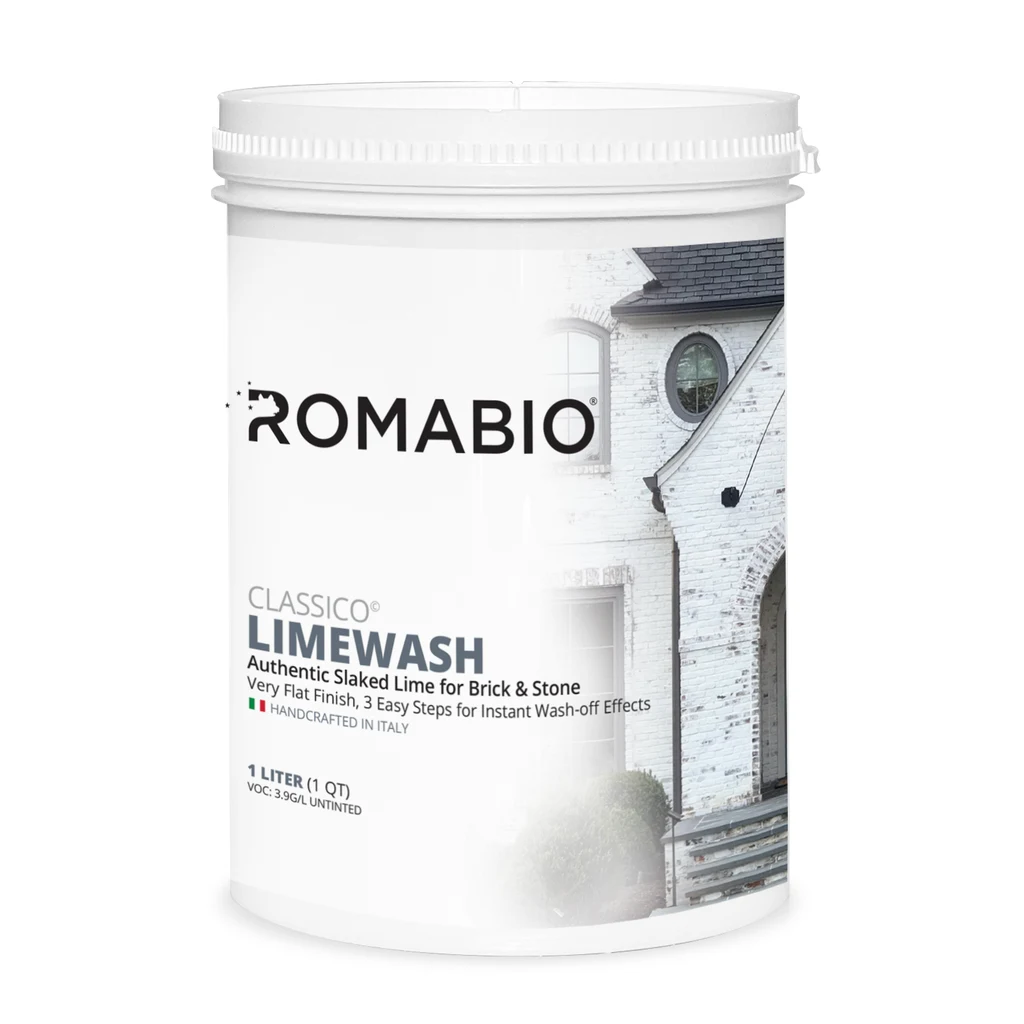
Romabio is the limewash US contractors actually deploy on brick. Made in Italy from quarried slaked lime, the chemistry is the real article: calcium hydroxide plus mineral pigment, no acrylic binder, no shortcuts. The bond is chemical, not mechanical: the wash mineralizes into the brick face over weeks and the calcium continues curing into the substrate for months after application. We brushed a panel of weathered red brick wet-on-wet with a 6-inch masonry block brush, misted between coats, and got the soft cloudy variation Romabio’s spec calls for at coat two. On a separate panel we deliberately laid it like acrylic (single direction, no overlap, no mist) and got the flat opaque finish that gives limewash a bad name. The application discipline matters more than the brand.
What pushes Romabio above other real limewashes is the US supply. Home Depot stocks it, Amazon ships it, paint stores in the Southeast order it. Sydney Harbour and Bauwerk make excellent limewash and run dry at the same time of year. The heritage color deck (Bianco Latte, Avorio White, Riposo Beige, Cassia Brown) is shallower than designer acrylic decks but covers the warmed-whites, soft greys, and earthy browns most “limewash my brick” requests are really after. Cons are the category cons: won’t bond to previously-painted brick without Mineral Shield primer, application is wet-on-wet brush work not roller work, 24-hour rain window after coat two. Romabio Classico Limewash.
Buy it if: raw historic brick, limestone, or fresh lime stucco; whole-house facade; you want the aged-villa look that lasts 20–30 years. Skip it if: the brick has ever been painted with acrylic (Mineral Shield first, or pick a different finish) or you’re trying to get a deep saturated interior color (Bauwerk wins there).
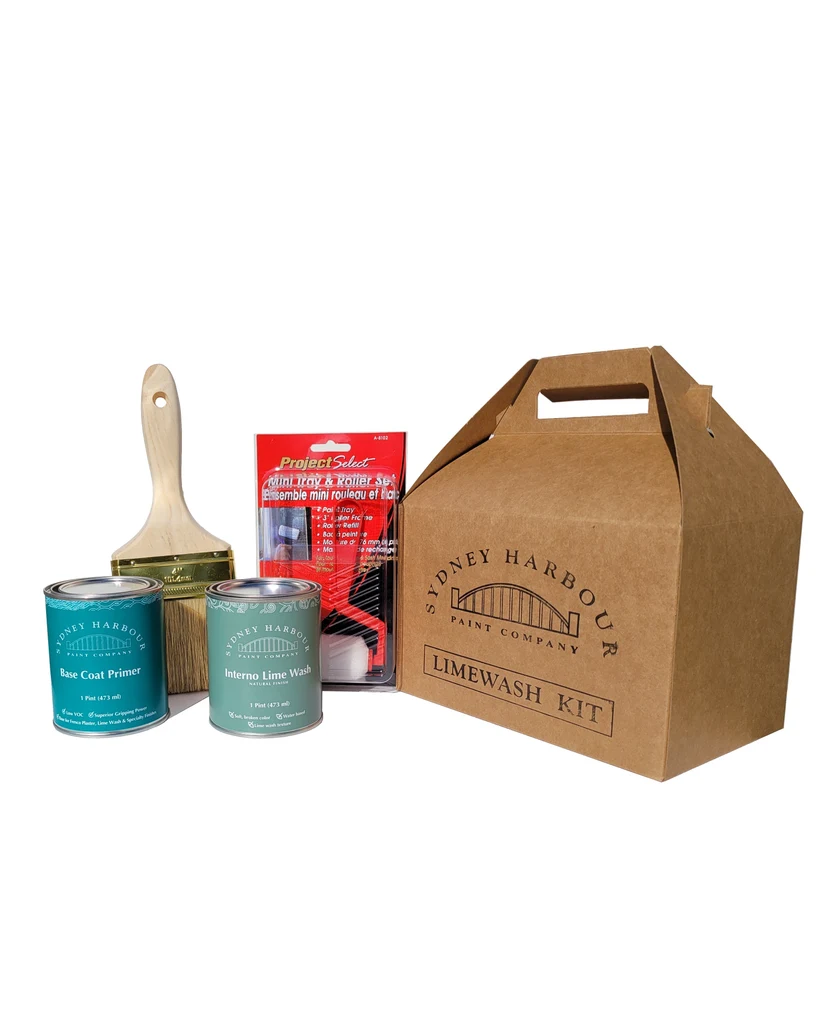
Sydney Harbour Paint Co. Limewash
The heritage-restoration call. Sydney Harbour formulates from quarried Australian lime in small batches with mineral pigments only. Same chemistry as Romabio, different color vocabulary: British and Australian colonial tones like Whitewash, Lemon Lime, Aged Stone, Old Lace. Restoration architects specify it on pre-1900 Federal, Greek Revival, and Italianate buildings because historic-district review boards approve it without a fight. On our weathered-brick panel the cloudy variation read slightly more translucent than Romabio at coat one and equalized by coat two; the day-30 finish was indistinguishable from Romabio’s at one foot.
The honest weakness is the supply chain. Sydney Harbour reaches the US through a handful of architectural specifiers, not big-box shelves. Lead times run 2–4 weeks even on common colors and pricing lands at $140–$200/gal landed. The customer-support pipeline is thinner than Romabio’s; you’re reading the spec sheet, not calling a contractor hotline. None of those are deal-breakers on a heritage restoration where the spec is fixed and the budget is set; all of them matter on a Saturday repaint where the bricklayer wants the product on Tuesday. Sydney Harbour Limewash.
Buy it if: historic restoration where the color vocabulary or the review board matter; you have time on the procurement side. Skip it if: standard residential repaint with no historic-district constraint — Romabio is the simpler call.
The Interior Call: Color Depth or Drywall Adhesion
Bauwerk Color Wash
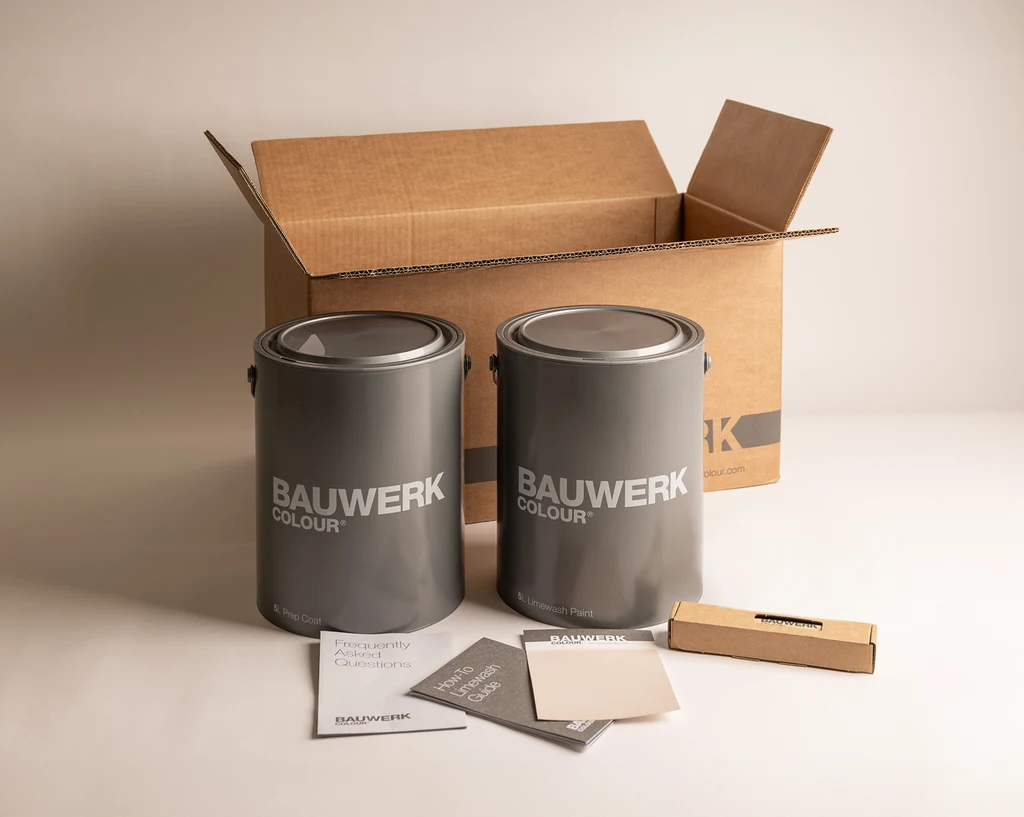
Bauwerk is the interior limewash designers reach for when color depth is the assignment. Hand-mixed in Western Australia from quarried lime with heavier pigment loading than mass-produced limewash, the cloudy variation reads more painterly and the color deck covers ground no other limewash touches: soft dusty pinks, sage greens, burnt terracottas, deep moody blues. We brushed a sample of “Honesty” (a soft pink) over lime-plastered lath and got a wall that read like a Tuscan villa under afternoon light. The kind of finish that makes the case for limewash all on its own.
The trade-offs are the import-shop trade-offs. Pricing lands at $180–$240/gal landed in the US. Supply is inconsistent in 2026; stockists run dry, lead times stretch to 4–6 weeks, and Bauwerk discontinues colors with limited notice. Application is wet-on-wet brush work and the cloudy variation that’s the whole point reads as “streaky” to a homeowner who treats it like flat paint. On skim-coated drywall Bauwerk needs the brand’s own lime primer first; on raw lime plaster or interior brick the wash bonds direct. Bauwerk Colour Lime Paint.
Buy it if: interior accent wall, small room, color is the headline, budget allows. Skip it if: whole-house exterior (cost-per-square-foot makes this impractical) or you need the paint on Tuesday.
Portola Paints Lime Wash
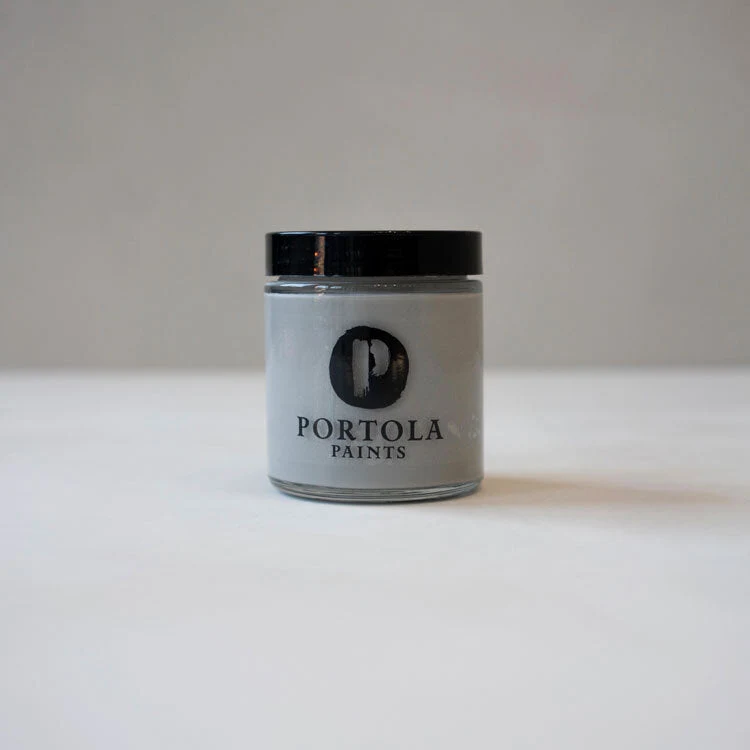
Portola is the interior limewash for a homeowner who wants the look on skim-coated drywall and doesn’t want to import. Made in California with a buffered lime formula that bonds to gypsum where pure slaked lime would dust off, Portola gives a real cloudy limewash finish on the walls most American homes actually have. The color deck (Whitewashed, Bone, Smokestack, Mojave) leans earthier and more livable than Bauwerk’s saturated range. The colors land closer to what most homeowners are picturing when they say “I want limewashed walls in the living room.”
The honest call: Portola is not a true exterior masonry product. It’s adequate on an interior brick accent wall, but on a whole-house facade Romabio wins on chemistry and longevity. The binder content that lets Portola stick to drywall lowers breathability versus pure mineral limewash; you trade vapor permeability for adhesion. Direct-to-consumer only, no Home Depot shelf, but the gallon shows up in days. Portola Paints Lime Wash.
Buy it if: interior drywall, you want the limewash look without the import wait, and you don’t need pure-mineral chemistry. Skip it if: exterior facade or historic-restoration spec.
The Plaster Cousin: Vasari
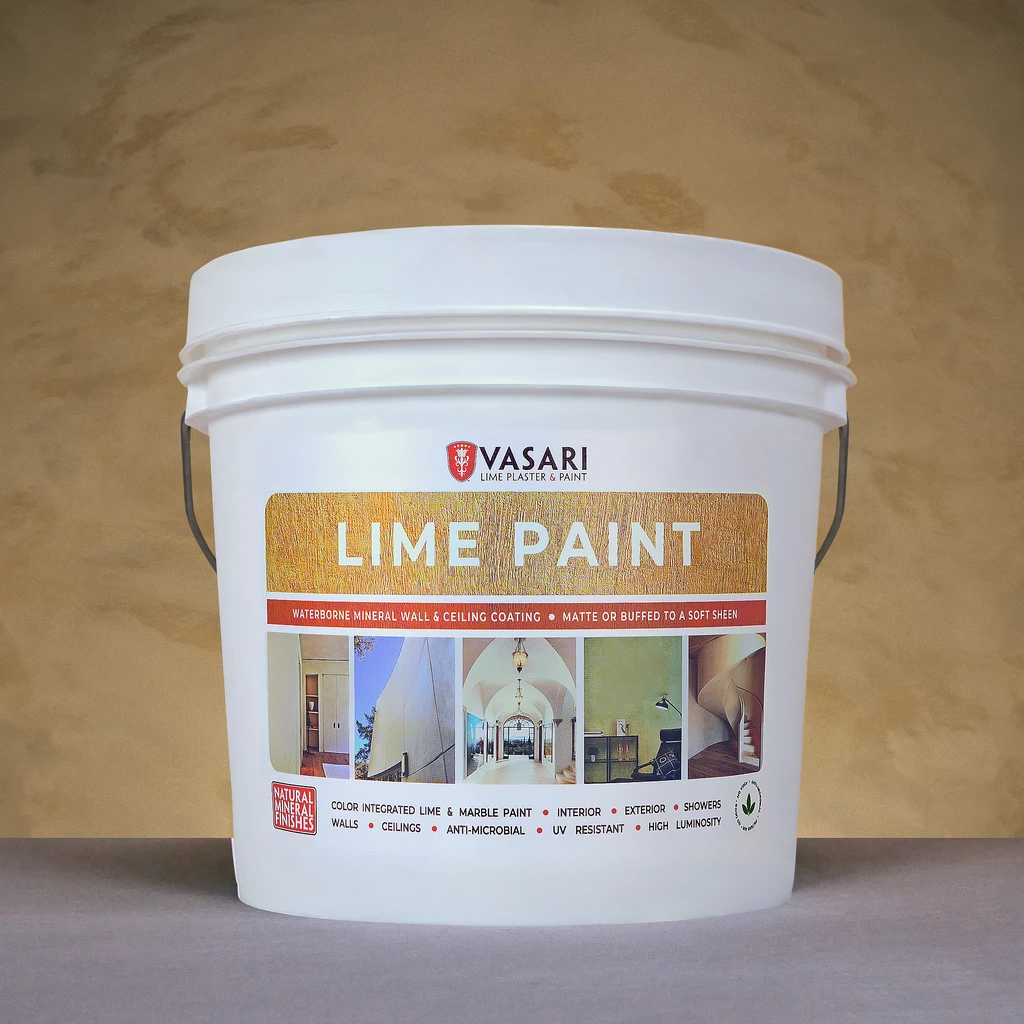
Vasari Authentic Lime Plaster
Different product, common confusion. People asking for “the limewash look on an interior accent wall” sometimes actually want lime plaster: a trowel-applied authentic mineral plaster that gives the smooth polished depth limewash can only suggest. Vasari is the US-made answer, quarried American and Italian lime, available in 1- and 5-gallon containers without the multi-week import wait. Two- and three-coat builds let an applicator push from a soft matte cloudy wall all the way to a burnished polished finish that catches light like marble.
The reason Vasari is in this round-up at all is the substitution conversation. If the photo you saved was actually a polished plaster wall and not a limewash wall, no limewash will get you there. Vasari is a trowel-applied finish-trades job; most homeowners hire it out at $12–$22/sq ft installed, and DIY application has a real skill ceiling. Wrong product on exterior brick. Wrong product on a budget. Right product if the photo is the assignment and the wall is interior. Vasari Lime Plaster.
Buy it if: interior accent wall, polished plaster look, finish-trades budget. Skip it if: exterior anything, or you’re trying to limewash with a brush.
Building Your Stack: Substrate Decides
| Limewash scenario | Product | Primer |
|---|---|---|
| Raw never-painted historic brick or limestone | Romabio Classico | None — direct mineral bond |
| Previously-painted brick going whitewash | Romabio Classico over Mineral Shield | Romabio’s own primer step |
| Historic restoration, review board involved | Sydney Harbour Limewash | None on raw masonry |
| Fresh lime stucco (28+ day cure) | Romabio Classico or Sydney Harbour | None — lime bonds to lime |
| Interior lime-plaster walls | Bauwerk Color Wash | Bauwerk lime primer optional |
| Interior skim-coated drywall, color is headline | Bauwerk over Bauwerk primer | Bauwerk lime primer required |
| Interior skim-coated drywall, US-stock priority | Portola Lime Wash | Portola primer on raw drywall |
| Interior brick accent wall | Portola Lime Wash or Bauwerk | Brand-specific primer |
| Polished plaster accent wall | Vasari Lime Plaster | PVA primer on drywall |
The case the table doesn’t capture: a single exterior wall mixing raw historic brick with patched modern repointing in Portland cement mortar. Lime bonds to lime, not to Portland. A wall that’s 80% lime mortar and 20% Portland repointing will show the variation under raking light at year three. The fix is to either accept the variation as character or to limewash twice on the Portland-mortar zones; the second coat builds enough opacity to mask the bond difference. Most masonry restorers go with the character call.
The Application Discipline That Decides the Finish
Real limewash is not roller paint. Roll it and you get a flat opaque coat that looks wrong. Brush it wet-on-wet with a wide natural-bristle masonry block brush, mist the substrate before coat one and between coats, work small sections to keep a wet edge, and don’t try to even out the cloudy variation. That variation is the look. Coat two reads more cloudy than coat one because the substrate is partially mineralized; resist the urge to apply a coat three to “finish it.” Two coats is the spec. Three coats is opacification, which is the opposite of limewash.
Where Limewash Goes Wrong
- Acrylic “limewash-look” paint sold as limewash. Behr and Sherwin-Williams make ones; they read fine at week one and look wrong at month six because they’re flat acrylic with mineral particles, not real lime. Cheaper, easier, wrong product.
- Pure limewash on drywall. Dusts off in two weeks. Use Portola or Bauwerk (with their respective primers); pure slaked lime needs calcium in the substrate.
- Limewash on Portland-cement stucco. Bonds poorly; the cement chemistry doesn’t react the way lime mortar does. Sound on lime stucco, sketchy on Portland stucco — test a panel first.
- Limewash applied like flat paint. Single-direction roller passes, no wet edge, no mist. The result is the flat opaque finish that gives limewash its reputation for looking fake.
- Limewash on previously-painted brick without Mineral Shield. Adhesion fails within 30 days. Either prime properly or pick a different finish.
- Limewash in freeze-thaw weather. 50°F application floor, 24-hour no-rain window after coat two. Limewash applied at 45°F and rained on at hour 12 washes off the wall.
Also Tested, Also Passed Over
- Behr Limewash Effect Paint. Acrylic “limewash-look” paint. Holds opacity, doesn’t read as limewash under raking light, doesn’t breathe like lime. Wrong product for the brief.
- Sherwin-Williams Limewash Look. Same category as Behr’s — acrylic, not lime. Fine paint for a wall that just needs a textured matte; wrong answer for actual limewash chemistry.
- Pure DIY hydrated lime plus water. Possible to mix from scratch with mason’s lime and a 5-gallon bucket; some restoration purists swear by it. Pigment dispersion is the failure point for most DIY attempts, and the savings versus Romabio don’t pencil on anything smaller than a 4,000 sq ft facade.
- Limewash on smooth troweled stucco. Works, but the cloudy variation reads less painterly than on rough brick. The chemistry that makes limewash beautiful on brick wants the substrate texture.
Companion Guides
For the prep side of an exterior brick limewash, see how to paint exterior brick. For acrylic and elastomeric masonry coatings on stucco and block, the best masonry paint round-up. For interior plaster repaints in general, best plaster paint. Calculate gallons against your wall area with the brick paint calculator. When the question is why an existing paint failed, the peeling paint diagnostic.
Full comparison
| Product | Best for | Yellowing | Price |
|---|---|---|---|
| 🥇Romabio Classico Limewash | Top Pick — Exterior Brick and Limestone | — | $$$ |
| Bauwerk Color Wash | Best for Interior Plaster and Color Depth | — | $$$$ |
| Portola Paints Lime Wash | Best Interior Limewash for Drywall | — | $$$ |
| Sydney Harbour Paint Co. Limewash | Best for Heritage Restoration | — | $$$$ |
| Vasari Lime Plaster | Best for the Polished Plaster Look | — | $$$$ |
Reviews
Pros, cons, and specs for each pick.
1. Romabio Classico Limewash
| Coverage | 200–350 sq ft / gal (one coat, brush-applied) |
|---|---|
| Sheens | Matte chalky mineral |
| Dry / Recoat | Touch dry 30 min · recoat 24h |
| Full cure | 30 days surface; continues curing into the substrate for months |
| VOC | Zero VOC |
| Primer | None on raw brick or limestone; Romabio Mineral Primer on painted brick |
| Price tier | $$$ |
- Real slaked-lime chemistry made in Italy with an actual US supply chain — stocked at Home Depot and Amazon, not a six-week import from a European workshop
- Bonds chemically with brick, lime mortar, and limestone for a 20–30 year service life with no peel failure mode; the wash wears thin, it doesn't sheet off
- Mineral pigment deck covers the colors people actually want for a whitewashed-brick facade (Riposo Beige, Bianco Latte, Avorio White, Cassia Brown) — limited next to acrylic, broad for limewash
- Will not bond to previously-painted brick — Romabio's Mineral Primer is the workaround but it's an extra product and an extra day's labor
- Two-coat wet-on-wet application with a spray-down between coats; lay it like acrylic and the finish reads flat and wrong on a heritage facade
- Application temperature floor of 50°F and a 24-hour no-rain window after coat two — narrower weather flexibility than a modern acrylic
2. Bauwerk Color Wash
| Coverage | 150–250 sq ft / gal (two coats, brush-applied) |
|---|---|
| Sheens | Soft matte mineral, slight chalk |
| Dry / Recoat | Touch dry 1h · recoat 4h |
| Full cure | 14 days surface; mineral cure continues weeks longer |
| VOC | Zero VOC |
| Primer | Bauwerk lime primer on drywall and previously-painted surfaces |
| Price tier | $$$$ |
- Deepest, most saturated color deck of any real limewash on the US market — the soft pinks, sage greens, and burnt terracottas you can't get out of Romabio's heritage range
- Hand-mixed in Western Australia from quarried lime; the pigment loading is heavier than mass-produced limewash and the cloudy variation reads more painterly
- Reads beautifully on interior lime plaster, skim-coated drywall, and raw masonry; the matte mineral finish is the look designers are paying $200/gal for
- Imported by the bucket — pricing lands at $180–$240/gal landed in the US, the highest cost-per-square-foot in this round-up by a wide margin
- Supply is inconsistent in 2026 — stockists run dry, lead times stretch to 4–6 weeks, and colors get discontinued without much notice
- Application is wet-on-wet with a wide flat brush; the cloudy variation that's the whole point reads as 'streaky' if you treat it like flat paint
3. Portola Paints Lime Wash
| Coverage | 200–300 sq ft / gal (two coats, brush-applied) |
|---|---|
| Sheens | Matte chalky mineral |
| Dry / Recoat | Touch dry 30 min · recoat 2h |
| Full cure | 14 days |
| VOC | Zero VOC |
| Primer | Portola primer on raw drywall; sand and clean previously-painted walls |
| Price tier | $$$ |
- California-made and engineered for interior drywall — the lime is buffered with a binder so the wash bonds to skim-coated gypsum where pure slaked lime would dust off
- Color deck reads like a designer's interior palette (Whitewashed, Bone, Smokestack, Mojave) — earthier and more livable than Bauwerk's saturated range
- Ships fast from a domestic supplier; 1-gallon and 5-gallon containers arrive in days, not the multi-week wait on imported limewashes
- Not a true exterior masonry product — adequate on interior brick accent walls, but Romabio is the call for a whole-house facade
- Binder content means the breathability is lower than pure mineral limewash; you trade vapor permeability for drywall adhesion
- Direct-to-consumer only — no Home Depot or Lowe's shelf, and the warranty conversation is whatever the customer-service email says
4. Sydney Harbour Paint Co. Limewash
| Coverage | 180–250 sq ft / gal (two coats, brush-applied) |
|---|---|
| Sheens | Matte chalky mineral, slight translucency |
| Dry / Recoat | Touch dry 1h · recoat 12–24h |
| Full cure | 30 days |
| VOC | Zero VOC |
| Primer | None on raw brick or lime plaster; Sydney Harbour barrier coat on previously-painted brick |
| Price tier | $$$$ |
- Australian heritage formulation specified by restoration architects on pre-1900 brick and lime-plaster buildings — the chemistry that historic-district review boards approve without a fight
- Color range leans heritage British and Australian colonial (Whitewash, Lemon Lime, Aged Stone) — the right vocabulary for a Greek Revival, Federal, or Italianate restoration
- Made in small batches from quarried Australian lime with mineral pigments only; the cloudy translucent finish reads more painterly than any acrylic 'limewash-look' product
- Niche US distribution — stocked through a handful of architectural specifiers, not on big-box shelves; lead time runs 2–4 weeks even on common colors
- Same application difficulty as every real limewash, but the customer-support pipeline is thinner; you're reading the spec sheet, not calling a contractor hotline
- Premium pricing reflects both the lime quality and the shipping; budget for $140–$200/gal landed before you commit to a whole-house spec
5. Vasari Lime Plaster
| Coverage | 60–100 sq ft / gal (two-coat trowel system) |
|---|---|
| Sheens | Soft matte to burnished polished |
| Dry / Recoat | Touch dry 2h · recoat 24h |
| Full cure | 30 days surface; full mineral cure 60+ days |
| VOC | Zero VOC |
| Primer | Vasari prep coat or skim-coated drywall sealed with PVA primer |
| Price tier | $$$$ |
- Trowel-applied authentic lime plaster — not a wash, a real Venetian-style mineral plaster that gives the smooth polished depth limewash can only suggest
- Two- and three-coat builds let you push from soft matte cloudy walls all the way to a burnished polished finish that catches light like marble
- Made in the US with quarried American and Italian lime; available in 1-gallon and 5-gallon, no multi-week import wait
- Not a limewash — it's a plaster, trowel-applied, and the application skill ceiling is real (most homeowners need a hired applicator for a clean finish)
- Material cost plus labor lands the installed cost at $12–$22/sq ft on an accent wall; this is a finish budget, not a paint budget
- Wrong product on exterior brick or stucco facades — Vasari is engineered for interior walls, columns, and ceiling features
Romabio Mineral Shield Primer
The one primer that unlocks limewash on substrates limewash can't normally bond to — previously-painted brick, sealed stucco, and old painted masonry. Mineral Shield gives the slaked-lime topcoat a calcium-rich surface to react with where the original brick is already buried under acrylic. Pairs cleanly under Romabio Classico, Sydney Harbour Limewash, and (on interior brick) Bauwerk Color Wash. Skip the primer on raw never-painted brick, on raw limestone, and on lime plaster — the chemistry bonds direct there, and the primer just adds a step. For interior drywall and skim-coated walls under Portola or Bauwerk, use each brand's own lime primer instead.
BUY ON AMAZON