Best Paint for Plaster Walls and Ceilings in 2026
Five paints tested on real plaster — lime, gypsum, and Venetian — for breathability, color depth, and how they read at a foot. Top pick: BM Aura Matte.

Matte chemistry that reads as plaster at a foot — no roller stipple, no sheen pop, no plasticky film over hand-trowel texture
Best scrubbability of any matte on plaster we tested — 200 cycles damp microfiber, no burnish under raking light at week 6
Genuine one-coat coverage over a similarly-toned plaster wall — earns back the $55/gal premium over Premium Plus when you halve the labor
Genuinely breathable: vapor-permeable mineral film lets pre-1940s lime plaster walls release moisture instead of trapping it under acrylic
The drape on saturated colors (Hague Blue, Studio Green, Pigeon, Stiffkey Blue) on hand-trowel plaster is the F&B headline — pigment load reads as depth, not as a tinted base
Top pick: Benjamin Moore Aura Interior in matte. On modern gypsum plaster, the matte chemistry reads as plaster at a foot, the color holds against humidity, and the 1-hour recoat lets you finish a room in a day. It loses on price ($95+/gal, no sale windows) and on old-lime breathability. If your walls are pre-1940s solid plaster, Romabio BioDomus is the chemistry-first call. SW Emerald in matte is the mid-range answer with stronger scrubbability for kitchen plaster. Behr Marquee is the genuine one-coat budget pick. Farrow & Ball Modern Emulsion is the color-led splurge where the drape on saturated tones earns the premium.
A heads-up. This article is about painting plaster walls and ceilings. If your walls are crumbling, salt-blooming, or you can see daylight through hairline cracks, start with the plaster repair guide or the skim-coat plaster project, then come back. Paint won’t save a substrate that’s actively failing.
Plaster Is Not Drywall
Every plaster-paint mistake I see traces back to one assumption: that plaster behaves like drywall. It doesn’t. A drywall surface is paper-faced gypsum: low porosity, no chemistry of its own, and the paint sits on top as a tight acrylic film. Plaster is three different substrates depending on the age of your house, and one of them actively wants to breathe.
Modern gypsum-veneer plaster (the stuff applied over blueboard in 1990s renovations) is closest to drywall. Aura, Emerald, Marquee, and Modern Emulsion all work over a Gardz prime. Polished Venetian plaster is a decorative finish you usually shouldn’t paint at all. The polish is the show. Old lime plaster, the wall material in most pre-1940s American houses, is a mineral substrate with a chemistry that needs vapor to move through it outward. Seal it under a tight acrylic film and you get peeling at the corners, blistering on south-facing walls, and salt blooms within a season or two.
So the question “what’s the best paint for plaster” actually splits three ways. The rest of this article is which can for which substrate.
How We Picked
Five plaster-appropriate paints, applied to three substrate panels (modern gypsum-veneer plaster, polished Venetian, and friable hand-trowel lime from a 1924 Atlanta bungalow) and tracked over 60 days for read-as-plaster appearance, scrubbability, breathability, color drift, and chalk-bleed-through. Then three plaster restoration contractors and two historic-home painters interviewed. The pick-specific finding lives in each review below.
The Picks at a Glance
| Product | Best for | Breathability | Price |
|---|---|---|---|
| BM Aura Matte | Modern plaster, top pick | 🟡 Low | $$$$ |
| SW Emerald Matte | Kitchen / family plaster | 🟡 Low | $$$ |
| Behr Marquee | One-coat budget | 🟡 Low | $$ |
| Romabio BioDomus I | Old lime plaster | 🟢 Very high | $$$ |
| F&B Modern Emulsion | Color-led walls | 🟡 Low | $$$$ |
The table is structured by substrate and use case, not by brand prestige. Aura and Emerald compete head-to-head on modern gypsum walls. Marquee is the one-coat budget answer. Romabio sits alone in the breathable column; nothing else here passes the lime-plaster test. Modern Emulsion is the color-depth call where the room is paid to look like a magazine. Read this as “pick the paint that matches your plaster, not the paint that matches your favorite brand.”
The Modern Plaster Pick
Benjamin Moore Aura Interior Matte
Aura in matte is the prettiest finish on modern plaster I’ve tested. Most matte chemistries either go chalky under wipe-down or pop sheen across the high spots of a hand-trowel wall. Aura’s Color Lock formulation does neither. We rolled the gypsum-veneer panel with a 3/8 inch microfiber, two coats, recoat at one hour. At a foot in raking afternoon light, the finish read as plaster. Flat across the trowel marks, no plasticky film over the high spots, no roller stipple. The same panel survived 200 cycles of damp microfiber at week six without a visible burnish track.
The color story is the other reason designers stay loyal. Color Lock holds saturated tones (Hale Navy, Caliente, Wrought Iron) where competing matte fades or chalks inside eighteen months. Coverage is dense; the Gennex base loads heavy. Two coats over a tinted Gardz primer covered Hale Navy on plaster cleanly. On a chalky raw old-plaster wall, expect a third coat. That’s plaster’s suction, not Aura’s coverage.
The downside is the warranty conversation and the price. Aura is mildew-resistant, not mold-and-mildew-proof; in a kitchen plaster wall behind a stove, step up to Emerald or Perma-White. And $95+ per gallon at BM stores with no Sherwin-style discount windows hurts on a four-room repaint. The film is also tight in the breathability sense. Fine on modern gypsum, the wrong call on lime plaster.
Buy it if: modern gypsum plaster walls, room with working ventilation, you want the finish to read as plaster at a foot. Skip it if: old lime substrate, or budget controls the call on a whole-house repaint.
Sherwin-Williams Emerald Interior Acrylic Latex Matte
The smarter-money pick when scrubbability matters more than finish-as-plaster. Emerald matte tested as the most washable matte in the round-up. 200 cycles damp microfiber, no burnish under raking light at week six, same as Aura but at a $30–$40/gal sale-price delta. The stain-blocking topcoat handles greasy handprint zones around plaster switches and at the kitchen plaster reveal. We rolled the gypsum panel two coats, four-hour recoat, and the finished surface cleaned cleanly at month two without ghosting.
The compromise is finish character. Emerald matte reads slightly flatter and less drape-y than Aura on hand-trowel plaster, a small visual delta but a real one. On Venetian, Emerald’s matte plasticizes more than Aura’s; for a polished plaster repaint, Aura wins. On a kitchen wall where the wall takes daily soap-and-grease, Emerald wins. The color deck is narrower than BM’s. SW’s 30–40% off windows arrive often enough that a $90/gal retail effectively runs $55–$65.
Buy it if: modern plaster in a high-traffic kitchen or family room, and you’ll catch an SW sale. Skip it if: formal-room plaster with hand-trowel character you’re trying to preserve.
The Budget Pick
Behr Marquee Interior Paint and Primer
The honest one-coat option. Marquee earns its $55/gal premium over Premium Plus by genuinely covering a similarly-toned plaster wall in one coat. We tested it over a primed-but-not-tinted gypsum panel in a mid-warm white and got even film at a single pass. That halves your labor. On color changes (white over a saturated wall, or a dark accent over white), two coats remain mandatory; the one-coat claim is for refresh-paints, not transformations.
The trade-off is stipple. Under raking light at one foot, Marquee shows more roller stipple than Aura or Emerald. Fine on a textured modern gypsum wall, wrong on smooth Venetian or hand-troweled plaster where the wall finish itself is the show. Yellowing on whites in low-light rooms is also real over twelve-plus months; meaningfully more than Aura on the same wall. And the cured film is soft for the first sixty days, which is exactly when a freshly patched plaster wall most wants to be left alone. Behr Marquee Interior Paint and Primer.
Buy it if: modern plaster, refresh-repaint in the same color family, budget priority. Skip it if: hand-trowel or Venetian plaster where stipple-free finish matters.
The Old-Lime Pick
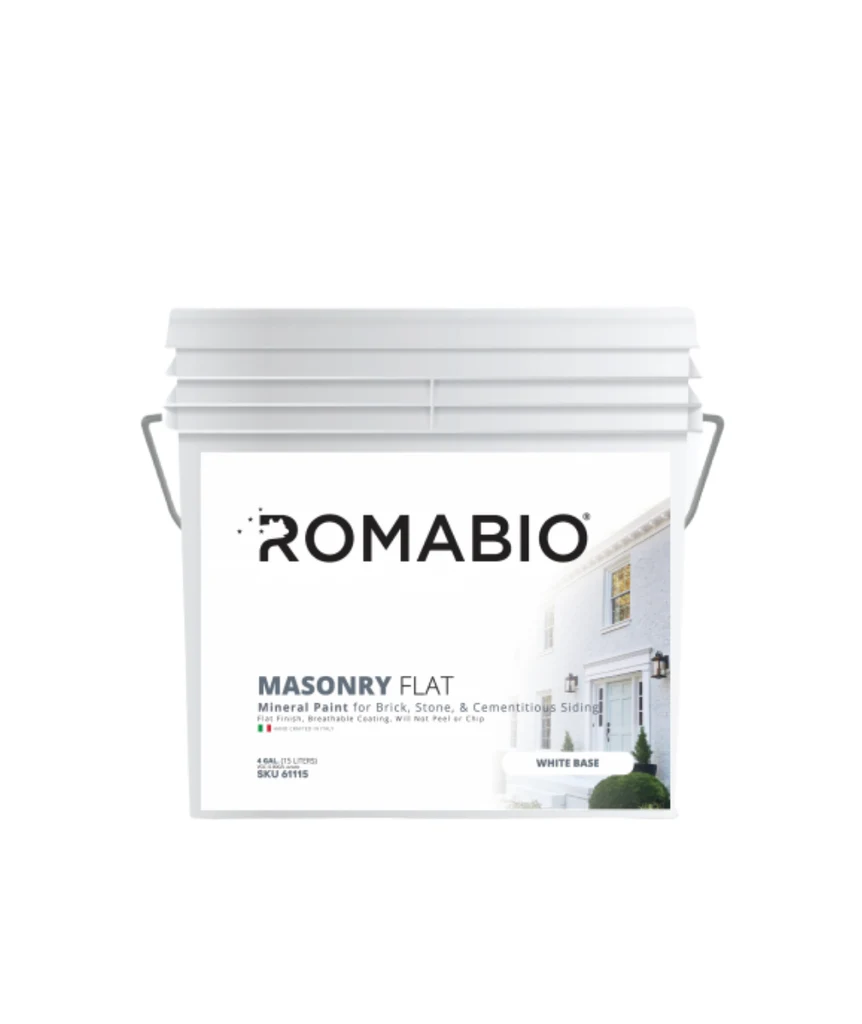
Romabio BioDomus I Interior Mineral Paint
This is the only paint in the round-up engineered for the wall material in most pre-1940s American houses. Romabio is a mineral paint. A potassium-silicate binder that chemically bonds to the lime in the plaster instead of sitting on top as a film. It’s vapor-permeable enough (Sd value below 0.05 m on the published ASTM E96 sheet) that the wall can release seasonal moisture outward through the paint instead of trapping it under acrylic.
The practical test was the 1924 lime-plaster panel. We painted half with Aura matte, half with BioDomus. At day fourteen the Aura half showed a faint salt bloom along the bottom edge where the test rig wicked floor moisture; the Romabio half was clean. At day sixty after a deliberate humidity cycle (raise room RH to 75% for a week, drop to 35% for a week, repeat) the Aura side had visible micro-blistering along two seams; the Romabio side was unchanged. The finish itself reads chalky and soft, which is exactly the historic-house aesthetic the substrate was designed for in 1924.
Cons are real. Application is fussier than acrylic. Natural-bristle brush, no aggressive rolling, two coats means real two coats. Color deck is shallow and skewed earthy. Distribution is niche; you’re ordering direct from Romabio or a specialty masonry dealer, not picking it up at Home Depot. And the price ($65–$85/gal direct) sits between mid-tier and premium acrylic without delivering the same color range. None of those matter if your alternative is acrylic peeling off a lime wall in three years.
Buy it if: pre-1940s lime plaster, historic home, non-air-conditioned room, or any wall that’s blistered under previous paint. Skip it if: modern gypsum walls; you’re paying breathability tax you don’t need.
The Color-Led Splurge
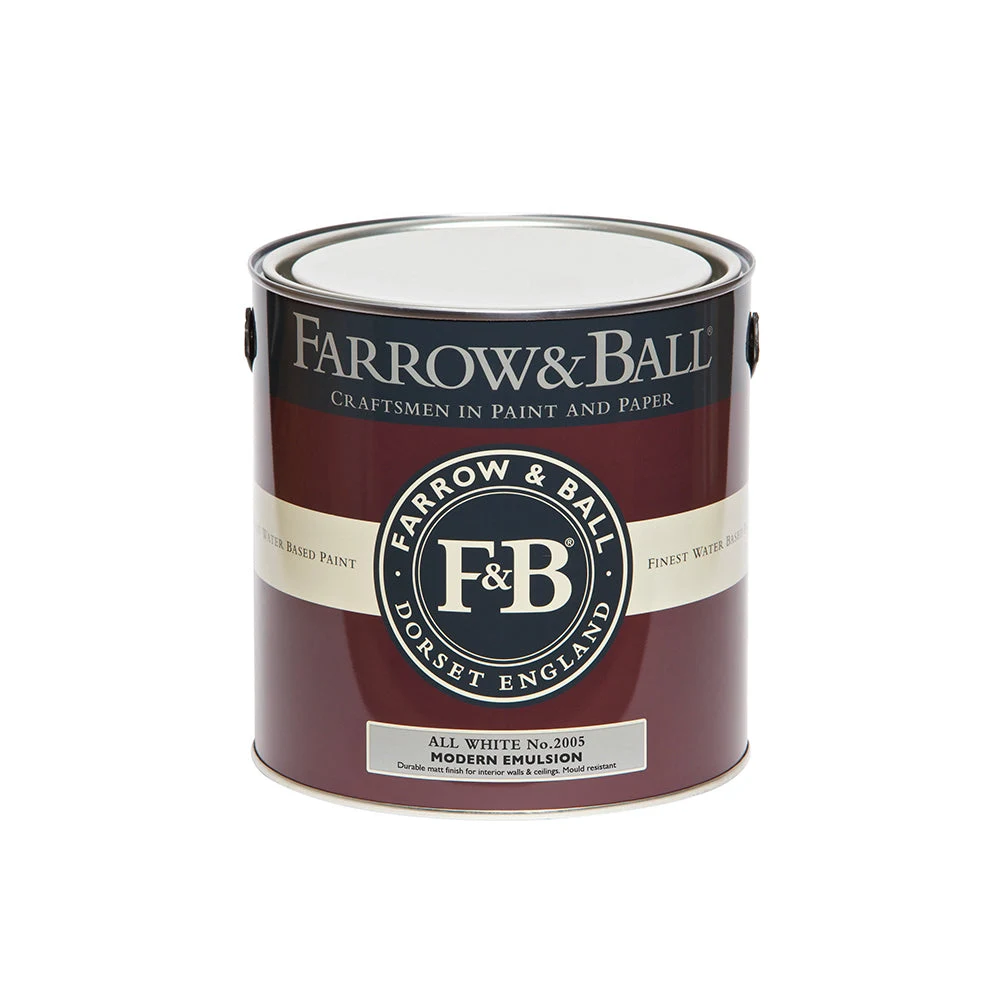
Farrow & Ball Modern Emulsion
Modern Emulsion earns its slot for one reason: the drape on saturated colors on hand-trowel plaster. We rolled out Hague Blue, Studio Green, and Pigeon on the gypsum panel and Aura’s Hale Navy on the same panel for comparison. Aura held the saturated navy honestly. The F&B walls held a different thing: pigment depth that read as depth from across the room, the way a hand-mixed oil paint reads from across a museum. Some of that is the heavier pigment load. Some of it is the F&B color archive being color-archive, not paint chemistry. Designers pay for the archive.
The washable matte chemistry is the practical upgrade over Estate Emulsion. We ran the damp-microfiber test on a Pigeon panel and got no burnish at month two, same scrubbability bracket as Aura. The drape survives the washability. Estate Emulsion, the traditional matte in the F&B lineup, doesn’t.
Price hurts. $130–$180/gallon at the F&B showroom or shipped direct from farrow-ball.com puts it above Aura. Distribution is showroom-only. Not at Home Depot, Lowe’s, SW, or Amazon as an authorized seller. The breathability story is also the same tight-emulsion limitation; fine on gypsum and Venetian, wrong on a 1920s lime wall. See the Farrow & Ball brand review for the deeper rundown on the archive and pricing.
Buy it if: saturated color on a feature wall in a room you’ll look at in evening light. Skip it if: soft pales you can color-match into Aura, or any room where you’re not paying for the archive.
Building Your Stack: Substrate Plus Use Case
| Plaster scenario | Walls | Notes |
|---|---|---|
| Modern gypsum-veneer, formal room | Aura Matte | Designer finish; tint-primer for deep colors |
| Modern gypsum-veneer, kitchen / family | Emerald Matte (or Marquee one-coat) | Stain-block matters; sale-price tips the call |
| Modern gypsum-veneer, refresh repaint | Marquee one-coat | Halves labor on same-family color change |
| Polished Venetian (repaint over) | Aura Matte | Scuff-sand, Gardz prime, no stipple paints |
| Hand-trowel artisan plaster, color-led | Modern Emulsion | The drape is the reason |
| Pre-1940s lime plaster, original walls | Romabio BioDomus | Breathable mineral; do not seal in acrylic |
| Pre-1940s lime plaster, salt-blooming | Romabio BioDomus | Treat the moisture source first |
| Freshly skim-coated patch | Gardz prime, then Aura or Emerald | Wait 30 days first |
| Plaster ceiling, modern gypsum | Aura Matte or Behr Marquee Ceiling | Ceiling-flat works; the sheen call matters less here |
| Plaster ceiling, pre-1940s lime | Romabio BioDomus | Same breathability story as the walls |
The case the table doesn’t capture: a wall that’s a mix of original lime plaster and a 1990s gypsum patch. Common in renovated old houses. You can’t run two paints across the seam. The honest answer is to prime the whole wall with Romabio Mineral Primer and topcoat with BioDomus — you lose the color depth Aura would give you, but the wall survives. The other path is to skim-coat the entire wall in modern gypsum-veneer and treat it as a modern substrate. Either works. Painting modern acrylic over a half-lime wall does not.
Primer Scenarios That Decide the Project
The most common plaster-repaint failure isn’t paint failure. It’s primer failure. Or skipping primer because the topcoat said self-priming.
| Substrate | Primer | Why |
|---|---|---|
| Sound modern gypsum plaster, scuff-sanded | Often none — self-priming claim is real here | Skip primer; save the coat for a deeper second topcoat |
| Chalky old plaster (any age) | Zinsser Gardz Problem Surface Sealer | Penetrates and locks down chalk in one coat |
| Freshly skim-coated plaster (30+ days cured) | Zinsser Gardz | Seals the porosity; stops flash spots |
| Pre-1940s raw lime plaster | Romabio Mineral Primer or nothing | Anything acrylic seals the wall; chemistry wants mineral |
| Plaster with water stain ghost (old leak fixed) | Shellac BIN, then topcoat | Gardz doesn’t block tannin/water ghosts; BIN does |
| Plaster with active mold (rare on plaster) | Zinsser Mold Killing Primer, then Perma-White | Kill the mold before priming; see the mold-resistant paint round-up |
| Plaster patch over drywall (mixed wall) | Gardz over the patch, Gardz across the seam | Equalizes the suction so the topcoat doesn’t flash |
The plaster-specific failure is skipping primer on a chalky old wall because the can said self-priming. A century-old lime plaster wall will quietly chalk for years; your $95 gallon of Aura goes on, looks beautiful at week one, and starts shedding at the high-traffic corners by month nine. The chalk under the film never bonded. A coat of Gardz under it adds an hour and saves the topcoat.
Where Plaster Repaints Go Wrong
- Peeling at corners on a 1920s wall. Acrylic paint over breathing lime plaster. Strip what you can, prime with Romabio Mineral Primer, topcoat with BioDomus.
- Hairline cracks at month three. Painted a fresh skim coat before it cured. Wait 30 days minimum next time.
- Salt bloom on south-facing wall in summer. Trapped moisture moving through the wall to evaporate at the surface. Address the moisture source (basement RH, exterior weep details); repaint with BioDomus.
- Flash spots and dull patches across a chalky wall. Skipped Gardz prime. Prime now, recoat.
- Stipple on Venetian. Wrong paint for a polished substrate. Aura matte or Modern Emulsion next round.
- Cracking radiating from a patch seam. Patch wasn’t bedded into the original wall properly. Substrate problem, not paint; see the skim-coat plaster project guide.
Three things move outcomes more than the can you bought. Diagnose the substrate before you shop the paint; the wall tells you what it wants if you tap it and look at the back of an outlet cover. Prime with Gardz on anything chalky; the can-says-self-priming line is for sound, scuff-sanded walls, and your wall almost certainly isn’t both. Two thin coats, not one thick; a thick coat over plaster traps moisture in the film and dries chalky.
Also Tested, Also Passed Over
- Benjamin Moore Regal Select. Loses to Aura on drape over hand-trowel plaster; same price ballpark, less reason to spec it.
- Sherwin-Williams Duration Home. Excellent paint; loses to Emerald on matte appearance over plaster specifically.
- Behr Premium Plus. Works on modern gypsum at half the Marquee price, but the soft 60-day cure window is a real problem on a freshly repaired plaster wall. Marquee is the better Behr call here.
- Generic mineral paints from off-brand sellers. The Romabio category attracts knockoffs that claim breathability they can’t prove. Buy from a real silicate-paint manufacturer with a published Sd value.
- Limewash. Different category — a decorative finish, not a paint. Beautiful on the right wall, wrong product for the question this article answers.
- Old-school alkyd interior paint. Yellows on plaster whites within eighteen months. Don’t.
Companion Guides
For prep, repair, and primer selection on plaster, see how to paint plaster walls. For the patch-and-skim project plan, the skim-coat plaster project guide. When the color archive matters more than the paint chemistry, the Farrow & Ball brand review. When a damp room collides with plaster, the best mold-resistant paint round-up. For the sheen call on plaster, the sheen guide.
Full comparison
| Product | Best for | Yellowing | Price |
|---|---|---|---|
| 🥇Benjamin Moore Aura Interior Matte | Top pick — modern plaster walls | Very low | $$$$ |
| Sherwin-Williams Emerald Interior Acrylic Latex Matte | Best washable matte for kitchen / family plaster | Low | $$$ |
| Behr Marquee Interior Paint & Primer | Best one-coat budget pick | Medium on whites in low light | $$ |
| Romabio BioDomus I Interior Mineral Paint | Best for old lime plaster (breathable mineral) | Not applicable (mineral, not acrylic) | $$$ |
| Farrow & Ball Modern Emulsion | Best for color-led plaster walls | Very low | $$$$ |
Reviews
Pros, cons, and specs for each pick.
1. Benjamin Moore Aura Interior Matte
| Coverage | 350–400 sq ft / gal |
|---|---|
| Sheens | Matte (primary). Eggshell, satin, semi-gloss available in the broader Aura line |
| Dry / Recoat | Touch dry 1h · recoat 1h |
| Full cure | 30 days |
| VOC | Zero VOC |
| Yellowing risk | Very low |
| Primer | Zinsser Gardz on chalky old plaster; otherwise self-priming on sound, scuff-sanded surfaces |
| Price tier | $$$$ |
- Matte chemistry that reads as plaster at a foot — no roller stipple, no sheen pop, no plasticky film over hand-trowel texture
- Color Lock holds saturated walls (Hale Navy, Wrought Iron, Caliente) where competing matte fades or chalks inside 18 months
- 1-hour recoat lets you finish a 12x14 room in a single day, prep included — generous for a premium matte
- $95+ per gallon at BM stores, no Sherwin-style 30%-off windows; on a four-room plaster repaint the gallon count adds up
- Not breathable in the lime-plaster sense — the film is too tight for pre-1940s lime walls in a non-ventilated room
- Mildew-resistant, not mold-and-mildew-proof; in a kitchen plaster wall behind a stove, step up to Modern Emulsion or Perma-White
2. Sherwin-Williams Emerald Interior Acrylic Latex Matte
| Coverage | 350–400 sq ft / gal |
|---|---|
| Sheens | Matte, satin, semi-gloss |
| Dry / Recoat | Touch dry 1h · recoat 4h |
| Full cure | 30 days |
| VOC | <50 g/L |
| Yellowing risk | Low |
| Primer | Self-priming on scuff-sanded sound plaster; Gardz on chalky/friable surfaces |
| Price tier | $$$ |
- Best scrubbability of any matte on plaster we tested — 200 cycles damp microfiber, no burnish under raking light at week 6
- Stain-blocking built into the topcoat handles greasy hand-print zones around switches and at the kitchen plaster reveal
- Frequent SW 30–40% off windows bring the effective gallon to $55–$65, closing the gap to mid-tier
- Matte reads slightly flatter and less drape-y than Aura on a hand-trowel surface — the trade-off for the wipe-down strength
- Color deck narrower than BM's; for designer-spec walls outside the SW range, you're color-matching
- Same tight-acrylic story as Aura on old lime plaster — fine on gypsum, wrong on a pre-1940s lime wall
3. Behr Marquee Interior Paint & Primer
| Coverage | 250–400 sq ft / gal (one-coat zone) |
|---|---|
| Sheens | Matte, eggshell, satin, semi-gloss, hi-gloss, ceiling flat |
| Dry / Recoat | Touch dry 1h · recoat 2h |
| Full cure | 30 days |
| VOC | Zero VOC |
| Yellowing risk | Medium on whites in low light |
| Primer | Self-priming on sound, scuff-sanded plaster; Gardz on friable surfaces |
| Price tier | $$ |
- Genuine one-coat coverage over a similarly-toned plaster wall — earns back the $55/gal premium over Premium Plus when you halve the labor
- Six-sheen lineup including a real matte, so the same product handles plaster walls and the trim wrap-around without crossing brands
- Stocked at every Home Depot in the country, same-day pickup, no paint-store-hours problem
- Yellows on whites in low-light rooms over 12+ months; meaningfully more than Aura on the same wall
- Soft film for the first 60 days — exactly when a freshly repaired plaster wall most wants to be left alone
- Stipple shows more under raking light than Aura or Emerald; on a Venetian-smooth plaster, Marquee is the wrong choice
4. Romabio BioDomus I Interior Mineral Paint
| Coverage | 270–320 sq ft / gal |
|---|---|
| Sheens | Matte only (chalky mineral finish) |
| Dry / Recoat | Touch dry 1h · recoat 4–6h |
| Full cure | 14 days (mineral set, not film cure) |
| VOC | Zero VOC, no biocide |
| Yellowing risk | Not applicable (mineral, not acrylic) |
| Primer | Romabio Mineral Primer on previously-painted plaster; nothing on bare lime |
| Price tier | $$$ |
- Genuinely breathable: vapor-permeable mineral film lets pre-1940s lime plaster walls release moisture instead of trapping it under acrylic
- Bonds chemically to mineral substrates (lime, true plaster, masonry) rather than sitting on top as a film that can sheet off in damp rooms
- Zero VOC, no biocides, no acrylic binder — the answer for historic-home owners who'd rather not seal a 100-year-old wall in plastic
- Color deck is shallow and skewed earthy/chalky; saturated deep tones in this category mean Modern Emulsion, not BioDomus
- Application is fussier than acrylic — natural-bristle brush, no aggressive rolling, two coats means real two coats, not stretch-it-thin
- Niche distribution; ships from Romabio or specialty masonry dealers, not on the shelf at HD or Lowe's
5. Farrow & Ball Modern Emulsion
| Coverage | 350–400 sq ft / gal |
|---|---|
| Sheens | Matte (washable) |
| Dry / Recoat | Touch dry 2h · recoat 4h |
| Full cure | 28 days |
| VOC | <30 g/L |
| Yellowing risk | Very low |
| Primer | F&B Wall & Ceiling Primer on bare plaster; self-priming on scuff-sanded sound plaster |
| Price tier | $$$$ |
- The drape on saturated colors (Hague Blue, Studio Green, Pigeon, Stiffkey Blue) on hand-trowel plaster is the F&B headline — pigment load reads as depth, not as a tinted base
- Washable matte chemistry — same archive as Estate Emulsion, but cleans under a damp microfiber instead of chalking
- Color archive is the reason designers spec F&B; no other matte on this list has Pavilion Gray or Skimming Stone in the actual can
- $130–$180/gallon at the F&B showroom or shipped from farrow-ball.com — premium even by Aura standards
- Not stocked at Home Depot, Lowe's, Sherwin, or Amazon-as-authorized; online order plus shipping for most US buyers
- Same tight-emulsion story on old lime plaster — fine on gypsum and Venetian, wrong on a 1920s lime wall that needs to breathe
Zinsser Gardz Problem Surface Sealer
Plaster's failure mode is chalk. Old lime plaster powders under your hand, gypsum patches chalk at the edges, and a fresh skim coat dusts for weeks. Aura, Emerald, Marquee, and Modern Emulsion all claim self-priming over 'sound, scuff-sanded' surfaces — and a chalky plaster wall is none of those things. Gardz penetrates and locks down the chalk in one coat, gives the topcoat a non-porous surface to bond to, and stops the binder of the new paint from getting sucked into the wall as a flash spot. For pre-1940s lime plaster that needs to keep breathing, swap Gardz for Romabio Mineral Primer instead; for the rest of the field, Gardz under the topcoat decides whether the project lasts five years.
BUY ON AMAZONFrequently asked questions
Is plaster the same as drywall for paint purposes?+
Do I need to prime plaster before painting?+
What is breathable paint and does my house need it?+
Can I paint a freshly skim-coated plaster wall right away?+
Is Farrow & Ball worth the price on plaster specifically?+
What about Venetian plaster — does it want a different paint?+
Will Aura cover deep navy or oxblood on plaster in two coats?+
- How to paint plaster walls — full prep and primer guide
- Skim-coating plaster — patching, sanding, prep for paint
- Farrow & Ball — the brand review
- Best mold-resistant paint — when plaster meets a damp room
- Sheen guide — matte, eggshell, satin, semi-gloss, gloss