Product review · Portola Paints · Updated August 7, 2026
Exterior 5/60 FlatPortola Paints paint review
7.8/10The right film on stucco and render, the wrong one on clapboard, and boutique-priced either way.
One product, one sheen: a zero-VOC elastomeric flat built for stucco. It bridges the hairline cracks masonry always grows, and it is the wrong film for wood siding.

Mark Thompson · Pro Contractor & Field Editor · Updated August 7, 2026
22 years running residential and light commercial repaints across the Midwest. Mark has put enough coatings on stucco and clapboard to know the substrate decides whether an exterior job lasts, not the label on the can. About the testing process →
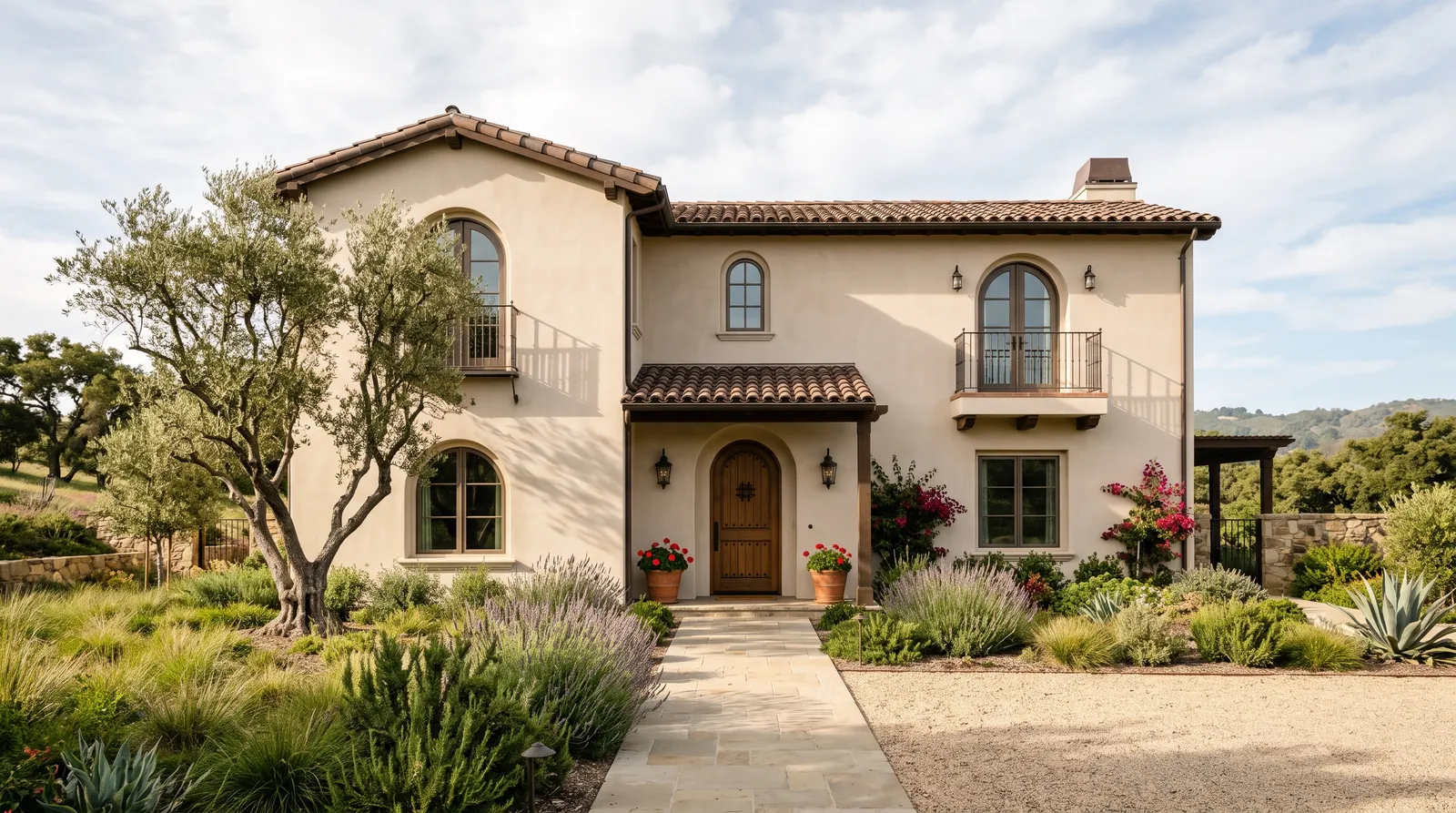
Portola Paints Exterior 5/60 Flat1 sheen
Coverage150–200 sq ft / gal over two coats
Recoat2–4 hr
Sheens 60 low-sheen flat
Read this first
The Fast Verdict
Worth it on stucco, render or masonry when a specific Portola color is the reason you are painting. The elastomeric film flexes over the hairline cracks those walls always grow and sheds water instead of letting it sit, and zero-VOC is rare in this kind of coating. It is boutique-priced at roughly $80 to $95 a gallon, order-only, with one sheen and a thin published spec sheet. Skip it on wood siding, where a thick film can trap moisture and blister.
Best for
Stucco and render · Masonry facades · A specific Portola color out front · Spanish and modern houses · Walls that grow hairline cracks · Tight courtyards where odor matters
Skip if
Wood lap siding · Budget is deciding the job · You need a tougher trim sheen · You want published weathering data and a warranty · You need gallons today
What it's good at
- Cracking stucco — the film stretches across hairline cracks a hard-film exterior would split at
- Shedding rain off a masonry or render facade instead of letting it soak in
- Low odor and zero-VOC, which is rare in an elastomeric
- Warm, earthy color — clays, stone-grays and sandy whites that suit a Spanish or modern facade
- Hiding the substrate, because a 5 sheen flat does not telegraph lap marks and dents the way gloss does
- Brushing, rolling or spraying without drama, once you allow for the thicker film
What it's not good at
- Wood lap siding, where the thick film seals moisture behind it and blisters
- Price and access — boutique gallon, order-only, and the country outside California waits on shipping
- Trim that takes a beating, since the line makes one flat sheen and nothing tougher
- Documentation: no accelerated-weathering numbers, no mil-build chart, no warranty term to quote
- Coverage, which is ordinary at 150 to 200 square feet a gallon over two coats
- Budget-led jobs, where a matched gallon off a local shelf does the everyday work for less
Numbers, not adjectives
Spec Sheet
- Type
- Zero-VOC elastomeric exterior
- Sheen
- 5/60 low flat — one sheen, no satin or semi-gloss
- Coverage
- 150–200 sq ft / gal over two coats
- Touch dry
- About 45 min
- Recoat
- 2–4 hr
- Surfaces
- Exterior walls and trim; stucco, masonry, render, primed siding
- Not for
- Wood lap siding — the film traps moisture and blisters
- Application
- Brush, roller or spray; back-roll the spray
- Sizes
- Quart and gallon
- Where
- portolapaints.com, the North Hollywood showroom, and dealers like Janovic and Catalina
- Price
- Roughly $80–95 / gal, confirmed at order
Application Settings That Work
- Brush
- Brushes and rolls clean, but it drags thicker than normal paint, so keep a wet edge and work to a natural break — a corner, a joint, a downspout. Two coats, recoat at two to four hours.
- Airless
- Spray it if the wall is big, but back-roll every pass. Elastomeric wants to be worked into the stucco texture rather than laid across the peaks, and a back-roll is what gets you an even film thickness on a rough wall.
- Primer
- Clean and patch first, then prime bare or chalky stucco with a masonry primer. Skip that and the film has nothing to grab. Sound, previously painted masonry in good shape does not need it.
Dry Times, and Why It Is Always Two Coats
Dry times are easy: touch dry in about 45 minutes, recoat in two to four hours. The number that trips people up is coverage. The can says 150 to 200 square feet a gallon, and that is two-coat math, not one. Measure your wall, divide by 175, then add a quart for cut-in and waste. One coat over a patchy wall flashes the second the sun hits it, and on a facade there is nowhere to hide it. Prep counts as much as the coating — on bare or chalky stucco, clean it, patch it, and get a masonry primer on it, or the elastomeric will not grab. And order long. This is not a can you pick up at lunch when you come up short, so buy a hair more than the math says.
Mid-project panic
When It Goes Wrong, and How to Fix It
Blisters and Peeling on Wood Siding
Why it happens. This is the one that will actually bite you. Elastomeric film is thick and tight. Wood moves and breathes, so the film seals moisture behind it, the moisture pushes back, and you get blisters and peel in a couple of seasons. It is a known trap, not a bad batch.
The fix. Do not put it on clapboard. Read the substrate, not the marketing. On wood siding, prime properly and use a quality 100% acrylic exterior that lets the wall breathe. Save the elastomeric for stucco, render and masonry, where the flex earns its keep.
The Coating Will Not Grab on Stucco
Why it happens. Bare or chalky stucco gives the film nothing to bond to. Old stucco chalks as it weathers, and a fresh coat over that dust is sitting on a loose layer. Elastomeric is heavy, so when it lets go, it lets go in sheets.
The fix. Clean the wall down, patch what is cracked, and prime bare or chalky stucco with a masonry primer before the elastomeric goes on. Rub a hand across the dry wall first — if it comes back white, you are priming.
Flashing and Patchy Color After One Coat
Why it happens. Coverage is ordinary at 150 to 200 square feet a gallon over two coats, and people read that as a one-coat number. One coat over a patched or previously repaired wall dries uneven, and the sun finds every bit of it by mid-morning.
The fix. Two coats. Always two coats. Measure, divide by 175, add a quart for cut-in and waste, and order before you start — you cannot top up a boutique gallon at lunch.
Drag and Lap Marks on a Big Wall
Why it happens. Elastomeric is thicker than normal paint and it pulls harder off the brush and roller. Stop in the middle of a run on a hot facade and the edge sets before you get back to it.
The fix. Keep a wet edge and work to a natural break — a corner, a control joint, a downspout. If you spray, back-roll every pass so the film works into the texture instead of sitting on the peaks. Stay off the sunny side of the house at midday.
Side by side
Portola 5/60 Flat vs Loxon XP vs Behr Dynasty Exterior
Two of these are elastomeric coatings for masonry and one is a standard acrylic exterior. That difference matters more than the price, because it decides which wall each one belongs on.
| Portola 5/60 Flat | SW Loxon XP | Behr Dynasty Exterior | |
|---|---|---|---|
| Film type | Zero-VOC elastomeric — flexes with the wall. | Contractor elastomeric built for stucco and CMU. | Standard acrylic exterior — hard film. |
| Best substrate | Stucco, render, masonry. | Stucco, masonry, block. | Wood siding, fiber cement, general exteriors. |
| Wood lap siding | No. Traps moisture and blisters. | Not what it is for either. | Yes — the better default on clapboard. |
| Published data | Thin. No weathering numbers or warranty term to quote. | Full data sheet, plus color advice across the counter. | Published spec and warranty you can read. |
| Sheens | One — the 5/60 flat. | Contractor range for masonry work. | Full big-box exterior sheen range. |
| Price per gallon | Roughly $80–95. | $70–85 street. | $58–68 at Home Depot. |
| Where you buy it | Order direct or from a dealer; a week or better outside California. | Any SW store. | Home Depot, today. |
| Where it wins | A specific Portola color on a stucco facade. | A cracking masonry wall where you want documentation behind the coating. | Everyday exteriors, wood siding, and price. |
Film type
Portola 5/60 FlatZero-VOC elastomeric — flexes with the wall.
SW Loxon XPContractor elastomeric built for stucco and CMU.
Behr Dynasty ExteriorStandard acrylic exterior — hard film.
Best substrate
Portola 5/60 FlatStucco, render, masonry.
SW Loxon XPStucco, masonry, block.
Behr Dynasty ExteriorWood siding, fiber cement, general exteriors.
Wood lap siding
Portola 5/60 FlatNo. Traps moisture and blisters.
SW Loxon XPNot what it is for either.
Behr Dynasty ExteriorYes — the better default on clapboard.
Published data
Portola 5/60 FlatThin. No weathering numbers or warranty term to quote.
SW Loxon XPFull data sheet, plus color advice across the counter.
Behr Dynasty ExteriorPublished spec and warranty you can read.
Sheens
Portola 5/60 FlatOne — the 5/60 flat.
SW Loxon XPContractor range for masonry work.
Behr Dynasty ExteriorFull big-box exterior sheen range.
Price per gallon
Portola 5/60 FlatRoughly $80–95.
SW Loxon XP$70–85 street.
Behr Dynasty Exterior$58–68 at Home Depot.
Where you buy it
Portola 5/60 FlatOrder direct or from a dealer; a week or better outside California.
SW Loxon XPAny SW store.
Behr Dynasty ExteriorHome Depot, today.
Where it wins
Portola 5/60 FlatA specific Portola color on a stucco facade.
SW Loxon XPA cracking masonry wall where you want documentation behind the coating.
Behr Dynasty ExteriorEveryday exteriors, wood siding, and price.
If the wall is stucco or masonry and a particular Portola color is why you are painting the front of the house, buy the 5/60 Flat and prep the wall properly. If the real problem is a cracking masonry wall and you want a full data sheet and a store you can drive to, Loxon XP is the contractor's answer. If the house is clapboard, or budget is deciding the job, a standard acrylic like Behr Dynasty Exterior is the better film and a fraction of the money. Match the coating to the wall first. The color comes second.
If not this one
Honest Alternatives
BD
Behr Dynasty Exterior$58–68 / gal
Big-box, off the shelf today, a fraction of the price, with a published spec and warranty you can read. Standard acrylic film rather than elastomeric, which makes it the better default on wood siding. The trade is color.
Full review →DE
Dunn-Edwards EvershieldAbout $60–75 / gal in store
A West Coast pro favorite built for exactly the climate Portola sells into — hot sun, stucco, dry heat. Strong UV and fade resistance, dealer-stocked, mid-tier price. The grown-up pick if you want proven performance over boutique color.
Full review →SL
SW Loxon XP$70–85 / gal
The contractor's elastomeric. Built for stucco and CMU, carries a full data sheet, and you can get it at any SW store with color advice across the counter. Less designer color, far more documentation.
Full review →BM
Benjamin Moore Aura Exterior$85–100 / gal
Premium acrylic with deep rich colors and excellent fade hold, dealer-stocked nationwide. The closest thing to Portola's color depth that you can actually buy in person.
Full review →Questions people actually ask
Exterior 5/60 Flat Questions, Answered
Is Portola Exterior 5/60 Flat worth it?
On stucco, render or masonry, yes, if a specific Portola color is the reason you are painting. The elastomeric film flexes over the hairline cracks those walls always grow and sheds water instead of letting it sit, and zero-VOC is rare in this kind of coating. It is boutique-priced at roughly $80 to $95 a gallon, order-only, with one sheen and a thin published spec sheet. Skip it on wood siding.
Is Portola 5/60 Flat any good on stucco?
Yes. This is the surface it is built for. The dried film flexes instead of cracking, so it bridges the hairline cracks stucco and render always grow. It is zero-VOC, brushes and sprays fine, and holds Portola's color. The catch is everywhere else: it is boutique-priced and order-only, so it has to be the color you actually want, not a default.
Can I put elastomeric paint on wood siding?
Be careful. Elastomeric film is thick and tight, and on wood lap siding it can seal moisture behind it. Wood moves and breathes; trap water under a rubbery film and you get blisters and peel in a couple of seasons. On wood siding, prime properly and use a standard 100% acrylic exterior instead. Match the coating to the substrate, not the brand.
How many coats and how much will I need?
Two coats. Always two coats. The can will tell you 150 to 200 square feet a gallon, and that is two-coat math. Measure your wall, divide by 175, then add a quart for cut-in and waste. On bare or chalky stucco, prep and a masonry primer come first or the elastomeric will not grab.
Do I need a primer on stucco?
On bare or chalky stucco, yes — clean it, patch it, and get a masonry primer on it before the elastomeric. Old stucco chalks as it weathers, and a heavy film over that loose dust lets go in sheets. Sound, previously painted masonry in good shape does not need it.
Can I spray it?
Yes, and on a big facade you should. Back-roll every sprayed pass, though — elastomeric needs to be worked into the stucco texture rather than laid across the peaks, and the back-roll is what gets you an even film. It drags thicker than normal paint by brush and roller, so keep a wet edge.
Is there a satin or a trim sheen?
No. The line is one product in one sheen, the 5/60 low flat. There is no satin or semi-gloss for trim that takes a beating. Outside, low sheen is the right call on walls — gloss telegraphs every lap mark and dent — but if you want a tougher sheen on trim, this line does not make one.
How long will it last, and is there a warranty?
I cannot quote you one. Portola publishes a short spec sheet with no accelerated-weathering numbers, no mil-thickness build chart and no warranty term, where a Behr or Sherwin-Williams data page gives you all of it. On the right substrate the elastomeric case is solid, but you are trusting the brand's reputation in place of a data sheet.
Where do I buy it, and how far ahead should I order?
Direct from portolapaints.com, from the North Hollywood showroom, or from dealers like Janovic and Catalina. It is not on a big-box shelf, so plan a week or better outside California. Confirm the gallon price when you order — the traditional-coatings band runs roughly $80 to $95 and Portola does not post it as plainly as the acrylic line.
Keep exploring
We may earn a commission when you buy through the retailer link above. It never changes the score or the verdict.
Ask a Question