Product review · Portola Paints · Updated August 7, 2026
New StandardPortola Paints paint review
8.2/10Boutique color on a normal wall — you are paying for the eye, not a durability edge.
Portola's earthy palette on an ordinary rolled wall — no trowel, no technique, done by Sunday. The real question is whether the color eye alone is worth $74 to $92 a gallon.

Jessica Williams · Color Stylist & Interior Editor · Updated August 7, 2026
Jessica spent eight years styling residential interiors in Chicago and Charleston before moving into editorial work. She has lived with enough deep, complex colors to know they betray you under the wrong light, which is why she never chooses one from a chip. About the testing process →
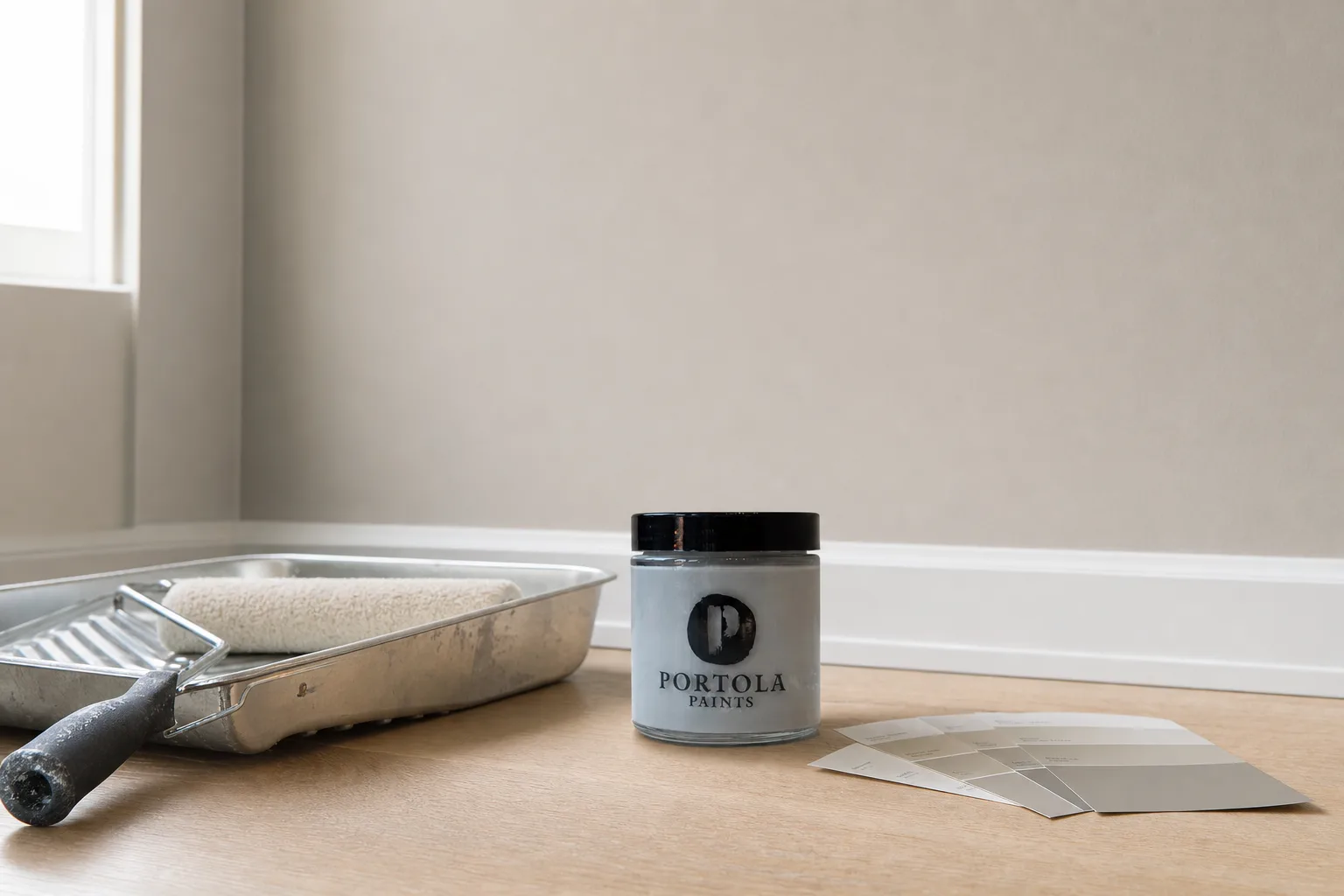
Portola Paints New Standard5 sheens
CoverageAbout 150–200 sq ft / gal at two coats
Recoat2–4 hr
VOCZero-VOC acrylic
Sheens Ultra FlatEggshellLow SheenSemi GlossGloss for trim
Read this first
The Fast Verdict
Buy it when a specific Portola color is the whole reason you are painting. It is clean zero-VOC acrylic that rolls and brushes like any premium wall paint and carries the brand's earthy palette without the trowel work. At roughly $74 to $92 a gallon you are paying for that color eye, not a performance edge over Benjamin Moore Aura or Behr Marquee, and you order it rather than grab it. If a counter match gets close enough, matching it and saving the money is a fair call.
Best for
A specific Portola color across a whole room · Bedrooms and living rooms · Ceilings and trim that tie together · Low-odor jobs · Rolled, even walls · Anyone who was scared off by Roman Clay
Skip if
You just need good paint · Budget is the deciding factor · You need gallons this afternoon · You want the wall itself to be the design · You need a wide specialty sheen deck
What it's good at
- Color, first and last — warm, earthy, Mediterranean-leaning tones no mass-market deck mixes exactly
- Holding warmth as the day moves, so a wall deepens at five instead of glaring
- Reading with a little depth even flat, with no texture in the surface at all
- Normal application — all of Portola's color sensibility, none of the trowel anxiety
- Low odor and zero-VOC, which makes it defensible for a nursery or a bedroom
- One-day rooms, at 45 minutes to touch dry and a two-to-four-hour recoat
- Shipping to you anywhere, so you do not need a design-district showroom nearby
What it's not good at
- Value on a plain wall in a quiet color, at $74 to $92 a gallon
- Beating Benjamin Moore Aura or Behr Marquee on durability — there is no gap to justify the premium on its own
- Convenience: no big-box shelf, and the East Coast can wait the better part of a week
- Sheen choice, with four core acrylic sheens plus a couple of enamels against a big brand's full deck
- Safe, predictable color under changing light — these hues swing, so the sample step is not optional
- Movement or texture; if the wall itself is meant to be the design, this is the wrong line
Same shelf, different cans
Which Sheen to Buy
The lineup is tighter than a big national brand's, which makes the choice easier rather than harder. Four core acrylic sheens plus a deeper flat cover ceilings through walls, and a separate hybrid alkyd enamel handles the woodwork.
Ultra Flat
BaseZero-VOC acrylic
Recoat2–4 hr
Buy it if
The default for these earthy colors. It lets the pigment do the talking and hides small flaws in the wall.
Avoid if
A hallway or a kid's room where you will be wiping the wall down.
Eggshell
BaseZero-VOC acrylic
Recoat2–4 hr
Buy it if
The sensible pick anywhere hands go — hallways, kids' rooms, anywhere a wall gets cleaned.
Avoid if
A wall where you want the color to read as deep and matte as it possibly can.
Low Sheen
BaseZero-VOC acrylic — Portola's satin
Recoat2–4 hr
Buy it if
You want a soft satin on walls, a step up in wipeability from eggshell.
Avoid if
Walls with patched or uneven drywall, where any sheen finds the flaws.
Semi Gloss
BaseZero-VOC acrylic
Recoat2–4 hr
Buy it if
Wall-and-trim work in acrylic when you want shine without stepping to a separate enamel.
Avoid if
Doors and cabinet faces you want laid flat — the Enamel Series levels those better.
5/60 Flat
BaseZero-VOC acrylic
Recoat2–4 hr
Buy it if
Ceilings and low-traffic walls that want a deeper flat than Ultra Flat.
Avoid if
Anything you will touch, wipe, or scrub.
Hybrid Alkyd Enamel (Satin, Gloss)
BaseLow-VOC hybrid alkyd
Recoat24 hr and up
Buy it if
Trim, doors and cabinets. It levels brush marks flat and cures to a harder film than the acrylic.
Avoid if
A fast job — it is dry to the touch in 6 to 12 hours and wants a full day between coats.
Numbers, not adjectives
Spec Sheet
- Type
- Zero-VOC acrylic wall paint; low-VOC hybrid alkyd enamel for woodwork
- Coverage
- About 150–200 sq ft / gal at two coats
- Sheens
- Ultra Flat, Eggshell, Low Sheen (satin), Semi Gloss, plus a deeper 5/60 flat
- Trim option
- Hybrid Alkyd enamel in Satin and Gloss
- Touch dry
- About 45 min
- Recoat
- 2–4 hr
- VOC
- Zero-VOC acrylic; low-VOC hybrid alkyd enamel
- Primer
- Standard acrylic prep — prime bare or patched drywall as usual
- Surfaces
- Interior walls, ceilings, trim and doors in the enamel sheens
- Sizes
- 4 oz sample jar, drawdown boards, quart, gallon, 5-gallon
- Where
- Direct from portolapaints.com or the North Hollywood showroom
- Price
- Roughly $74–92 / gal; sample jars about $10
Application Settings That Work
- Brush
- Ordinary premium wall-paint technique — a roller for the field and a sash brush for the cut-in. Nothing about this line asks for the trowel skills Roman Clay and Lime Wash need. Two coats, recoat at two to four hours, and the room is done in a day.
- Primer
- Standard acrylic prep. Prime bare or patched drywall as you would with any quality wall paint, and let patches dry fully — a deep saturated color flashes over fresh mud more visibly than a pale one does.
Dry Times in the Real World
This part is unremarkable, and that is the point of the line. It touches dry in about 45 minutes and takes a second coat in two to four hours, so a room is a one-day job rather than a weekend. Coverage runs roughly 150 to 200 square feet a gallon at two coats, which is standard for a quality wall paint and means you should plan on two coats instead of chasing a one-coat miracle. The zero-VOC acrylic is mild on application, so the room is livable the same evening — a defensible pick for a nursery or a bedroom you have to sleep in that night. If you have added the hybrid alkyd enamel for the trim, that side of the job runs on a different clock: 6 to 12 hours to touch, a full day between coats.
Mid-project panic
When It Goes Wrong, and How to Fix It
The Color Reads Grey at Breakfast and Rich at Dusk
Why it happens. The palette skews moody and saturated, and complex pigment blends swing harder under changing light than a safe greige does. A clay-green that looked perfect on a screen can go almost grey in north-facing morning light and deepen beautifully by five o'clock. That is the color working, not failing.
The fix. Order a 4 oz sample jar, paint a real patch on the actual wall, and live with it across a full day — morning, midday, and lamp-lit evening. If you are torn between two or three colors, order drawdown boards and prop each one against the floor and the trim in the room, and let the light sort them out.
One Coat Looks Thin and Patchy
Why it happens. The 150 to 200 square feet per gallon figure is two-coat math, not one. Deep, saturated colors in particular need the second coat to even out, and at this price people try to stretch a gallon further than it goes.
The fix. Plan two coats from the start and buy for two coats. Measure the room, divide by about 175, and add a margin. Recoat at two to four hours and the whole room still finishes in a day.
You Run Out and the Room Stops
Why it happens. There is no Home Depot run. Portola ships from its own channel — West Coast orders land fast, and the East Coast can wait the better part of a week. A wall paused mid-coat while you wait on freight is a lap mark you will see.
The fix. Order a spare quart or gallon up front, especially on a deep color, and confirm the order well before your painting weekend. Sample jars and boards should go in the first order too, since you want days to look at them before the gallons ship.
Side by side
New Standard vs Roman Clay vs Lime Wash
Same colors, three surfaces. This is the fork most people are actually standing at when they find Portola through a photo of a plaster wall, and picking the surface first makes the rest easy.
| New Standard | Roman Clay | Lime Wash | |
|---|---|---|---|
| What the wall looks like | One even, opaque color. Flat and predictable. | Smooth suede-matte plaster with tonal movement like honed stone. | Cloudy, chalky, mottled — weather settled on the wall. |
| How it goes on | Rolled and brushed like any premium wall paint. | Troweled in thin layers with a putty knife or flexible trowel. | Brushed in loose cross-hatch strokes with a 5-inch stain brush. |
| Skill needed | None beyond normal painting. | Real technique. A tired pass shows. | Some. The wet edge and the no-touch-up rule matter. |
| Coverage | 150–200 sq ft / gal at two coats. | 20–25 sq ft per 1 Kilo at two coats. | 150–200 sq ft / gal over two coats. |
| Price | About $74–92 / gal. | $30 per 1 Kilo up to $345 for 20 Kilo. | Quart $30, gallon $84, 5-gallon $345. |
| Where it goes | Whole rooms, ceilings, trim in the enamel sheens. | Smooth interior walls only, Level 5 drywall preferred. | Drywall, plaster, stucco, brick and masonry, indoors or out. |
| Best for | You love the color and want a normal, calm wall. | One wall meant to be the room, polished and carved. | Brick, old plaster, or a weathered facade. |
What the wall looks like
New StandardOne even, opaque color. Flat and predictable.
Roman ClaySmooth suede-matte plaster with tonal movement like honed stone.
Lime WashCloudy, chalky, mottled — weather settled on the wall.
How it goes on
New StandardRolled and brushed like any premium wall paint.
Roman ClayTroweled in thin layers with a putty knife or flexible trowel.
Lime WashBrushed in loose cross-hatch strokes with a 5-inch stain brush.
Skill needed
New StandardNone beyond normal painting.
Roman ClayReal technique. A tired pass shows.
Lime WashSome. The wet edge and the no-touch-up rule matter.
Coverage
New Standard150–200 sq ft / gal at two coats.
Roman Clay20–25 sq ft per 1 Kilo at two coats.
Lime Wash150–200 sq ft / gal over two coats.
Price
New StandardAbout $74–92 / gal.
Roman Clay$30 per 1 Kilo up to $345 for 20 Kilo.
Lime WashQuart $30, gallon $84, 5-gallon $345.
Where it goes
New StandardWhole rooms, ceilings, trim in the enamel sheens.
Roman ClaySmooth interior walls only, Level 5 drywall preferred.
Lime WashDrywall, plaster, stucco, brick and masonry, indoors or out.
Best for
New StandardYou love the color and want a normal, calm wall.
Roman ClayOne wall meant to be the room, polished and carved.
Lime WashBrick, old plaster, or a weathered facade.
If the color is the point and the wall should live quietly behind your furniture, New Standard is the right line and the easy one. If the wall itself is meant to be the thing you notice, the flat acrylic will feel like a missed opportunity — go to Roman Clay for smooth troweled plaster or Lime Wash for a chalkier patina. Choose the surface first, then the color.
If not this one
Honest Alternatives
BM
Benjamin Moore Aura$85–95 / gal
The premium benchmark New Standard has no durability edge over. Dealer-stocked, so you can have it today. The reason to pay Portola instead is a specific hue Aura's deck does not hold.
Full review →BM
Behr Marquee$50–60 / gal
The money-saving route. If your Portola color can be matched closely enough at a counter, this is the honest call — you give up some of the complexity in the pigment blend and keep $30 a gallon.
Full review →PR
Portola Roman Clay$30 / 1 Kilo
Same colors, troweled into a smooth plaster with real movement. Buy it instead when one wall is supposed to be the reason you walk into the room.
Full review →PL
Portola Lime Wash$84 / gal
Same colors, brushed into a cloudy mineral patina that also works on brick and outdoors. The choice when you want the wall weathered rather than even.
Full review →Questions people actually ask
New Standard Questions, Answered
Is Portola New Standard worth it?
Yes, if a specific Portola color is the reason you are painting. It is clean zero-VOC acrylic that rolls and brushes like any premium wall paint and carries the brand's earthy palette without the trowel work. At roughly $74 to $92 a gallon you are paying for that color eye, not a durability edge over Benjamin Moore Aura or Behr Marquee, and you order it direct rather than grab it locally. If the hue can be matched closely enough at a counter, matching it and saving the money is a fair call.
How is New Standard different from Roman Clay and Lime Wash?
New Standard is normal acrylic wall paint. It rolls and brushes on like any premium paint and dries to one even, opaque color with no texture. Roman Clay and Lime Wash are mineral finishes troweled or brushed on in layers, so the wall shifts and moves with the light. New Standard gives you Portola's color story without the technique, the trowel, or the chance of a botched plaster wall.
What sheens does New Standard come in?
The acrylic comes in Ultra Flat, Eggshell, Low Sheen (a satin) and Semi Gloss, plus a deeper 5/60 flat. For trim, doors and cabinets there is a Hybrid Alkyd enamel in Satin and Gloss that levels harder. It is a smaller sheen lineup than a big-box brand, but it covers ceilings through trim across one room.
Which sheen should I use on walls?
Ultra Flat flatters these earthy colors most — it lets the pigment do the talking and hides small imperfections in the wall. Eggshell is the sensible pick for a hallway or a kid's room where you will wipe a wall down. The 5/60 flat is the deeper option for ceilings and low-traffic walls.
Is New Standard low-VOC?
The acrylic line is zero-VOC, so the room stays low-odor and is livable the same evening. The Hybrid Alkyd enamel used for trim is low-VOC rather than zero, which is the trade for a harder, self-leveling film on doors and cabinets.
How many coats and how much do I need?
Two coats. The 150 to 200 square feet per gallon figure is two-coat math, so measure the room, divide by about 175, and add a margin. It touches dry in about 45 minutes and recoats in two to four hours, so a room is a one-day job.
Where do I buy New Standard and should I sample first?
Order direct from portolapaints.com, which ships nationwide and internationally, or visit the North Hollywood showroom. It is not at Home Depot or Lowe's, so plan ahead. Order a 4 oz sample jar or a painted drawdown board first — at this price, and with colors this deep, seeing the real thing on your own wall matters.
Does New Standard work on trim and doors?
The Semi Gloss acrylic will paint trim, but the better answer for woodwork is Portola's Hybrid Alkyd enamel in Satin or Gloss. It levels brush marks flatter and cures to a harder film, at the cost of a much slower schedule — 6 to 12 hours to touch and a day between coats.
Can I just get the color matched at a paint counter?
Sometimes, and if the match is close enough it is a fair way to save $30 a gallon. What a counter match tends to miss is the complexity — these are layered pigment blends that shift gently through the day rather than sitting there as one printed note. The premium is worth it when the specific Portola color is the point.
Keep exploring
We may earn a commission when you buy through the retailer link above. It never changes the score or the verdict.
Ask a Question