Annie Sloan
Annie Sloan invented Chalk Paint in 1990, and it is still the paint that gets nervous first-timers to a finished dresser. Here is the whole line with real US prices, the topcoat decision that trips people up, and the complaints that show up on furniture forums over and over.

Emily painted her first room at 24, hated every minute of it, and got better. She writes the beginner guides she wishes she had had, which means defining every term and never assuming you know what buffing wax is supposed to feel like. About the testing process →
The Fast Verdict
Yes, for furniture. Chalk Paint grips wood, metal, laminate, and glass with no sanding and no priming, and the flat matte finish forgives beginner brush marks. That is what about $44.95 a litre buys you. Two honest catches: the paint is not sealed until you add wax or lacquer, which is a second purchase and a second skill, and there is no big-box shelf, so no 7pm run for one more tin. If the project is a whole room, buy Annie Sloan Wall Paint instead.
- The no-sand, no-prime promise holds on ordinary furniture, so the step that kills most projects never happens
- It grips what other paint refuses: laminate, melamine, glass, metal, brick, even concrete
- Flat matte hides brush marks, so a first attempt reads as hand-painted rather than botched
- The deep colors are the best in the category — Napoleonic Blue and Emperors Silk hold depth that competitors flatten
- Thick paint with a long open time, which is what makes distressing and blending two colors while wet actually work
- The colors are built to mix: blend two, lighten with white, or thin with water for a wash that lets grain show
- Trained independent stockists hand-paint sample boards and run workshops, so you can ask a person before you commit
- The paint is not the finish — wax or lacquer is a separate $19 to $51 purchase and a separate skill to learn
- Hide is a step behind cheaper chalk-style rivals; Old White over dark mahogany can take three coats
- Wax marks, water-spots, and softens under a hot mug, so anything that works for a living needs lacquer instead
- Old mahogany and knotty pine push pink and yellow stains up through pale colors unless you shellac first
- Stockist-and-online only, no genuine Home Depot, Lowe's, or Amazon route, with free US shipping only over $99
- It is furniture paint, and people keep buying it for walls — Wall Paint is a separate product at a separate price
The Line Ladder: Which Annie Sloan Product to Buy
Annie Sloan is a small range, which makes it easy to get right once you know that the paint and the topcoat are two separate decisions. Prices are US store prices in 2026. Pick one paint row, then one topcoat row.
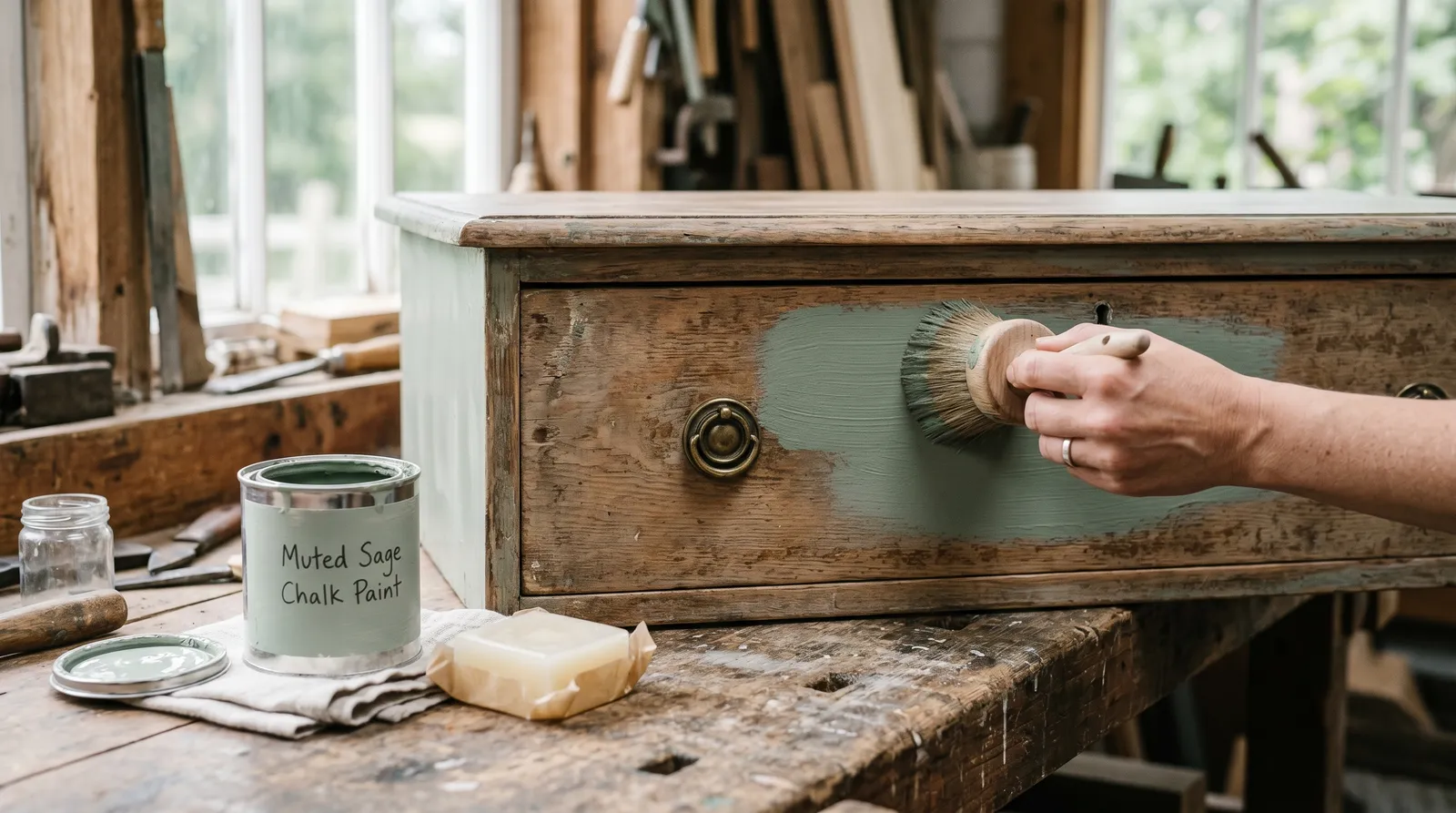 The original furniture paint
Best for Dressers, chairs, upcycling
The one everyone means by chalk paint, and the no-sand promise is real. Remember it is not sealed until you add a topcoat, so budget for wax or lacquer on top.
Full review →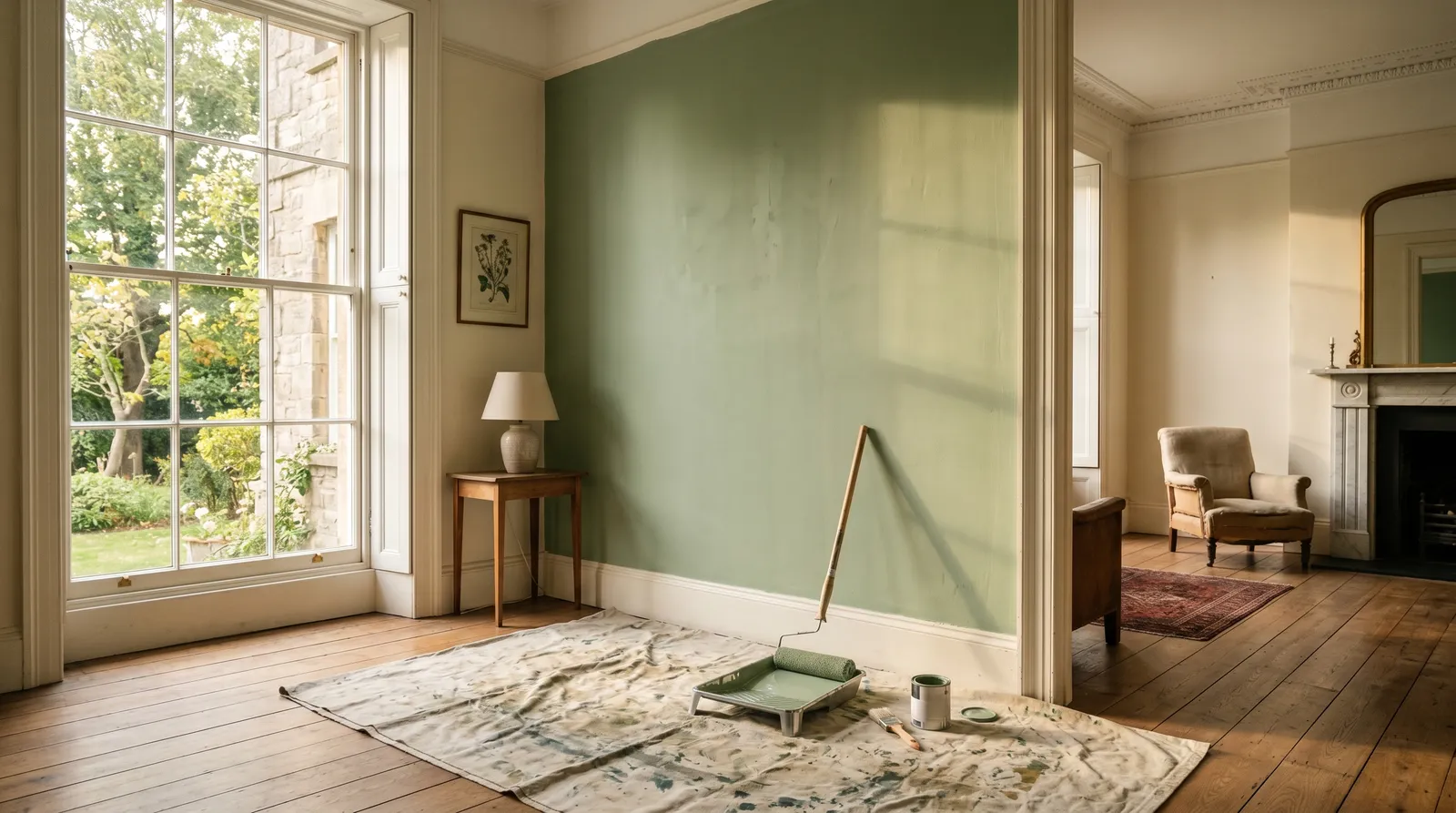 Room paint
Best for Interior walls and ceilings
Buy this, not Chalk Paint, if the project is a room. Flat matte only, 18.5 g/L VOC with a Toy Safe certification, and one coat covers going light over light.
Full review →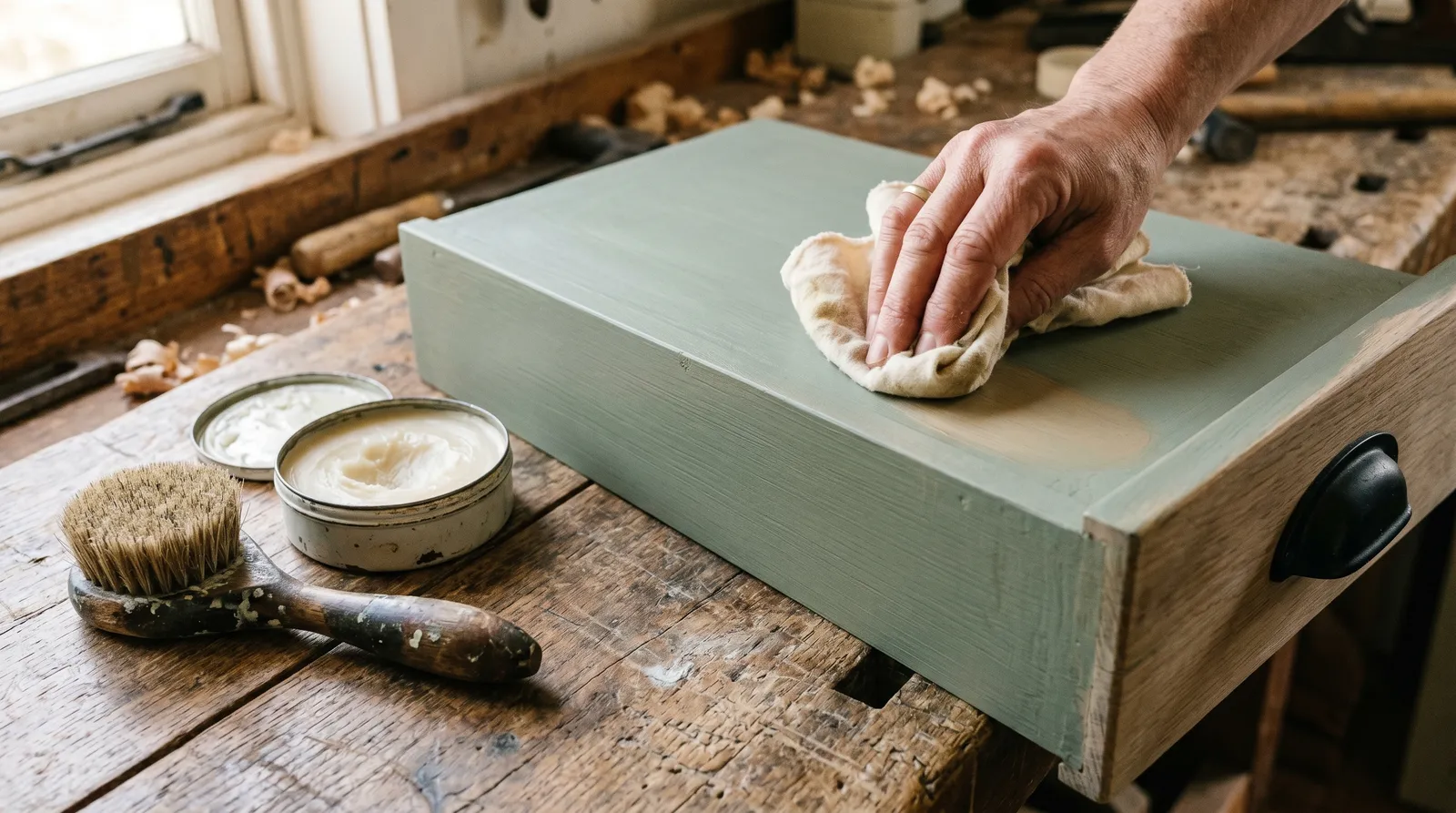 Traditional topcoat
Best for Decorative pieces, antiquing
The prettier finish and the forgiving one — fresh wax on a rag erases your mistakes. It is the wrong call on anything that gets wet or wiped daily.
Full review →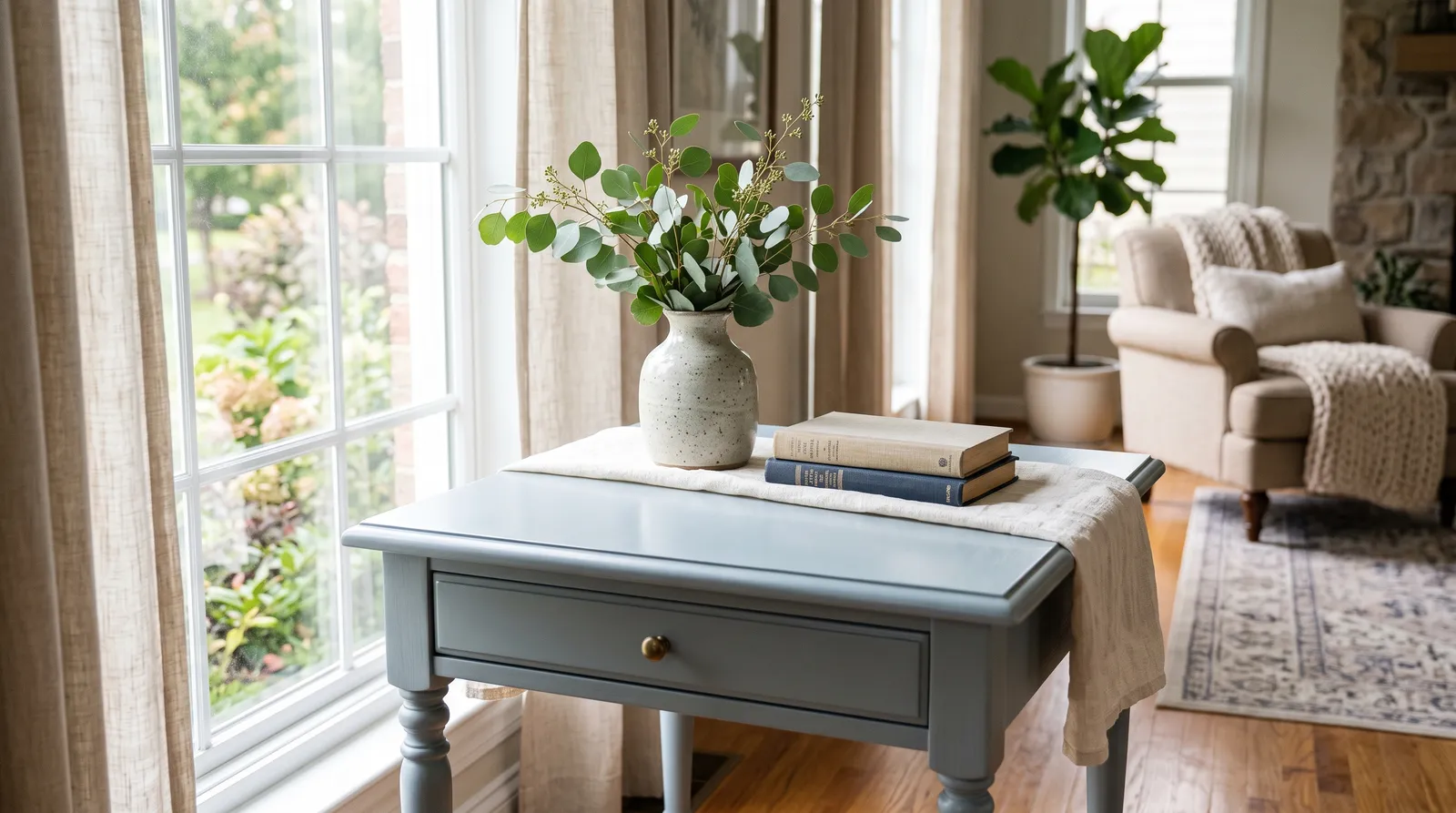 Hard-wear topcoat
Best for Tabletops, cabinets, floors
Tough, water-resistant, non-yellowing, with UV protection so it can go outdoors. Thin coats only — a thin film records every place you went back over it.
Full review →Best for Gilded edges, small accents
Small-project paints for detail work, not for covering a piece. Buy one when you already know the effect you want.
Best for Carvings, edges, hardware
A tiny pot goes a very long way, rubbed onto raised detail with a fingertip. It is decoration, not protection, so you still need a real topcoat underneath.
Best for Waxing and brush-mark texture
The round wax brush is the one worth buying — a flat wall brush drags wax around instead of pushing it in. Any decent brush will do for the paint itself.
What You Will Actually Pay
Here is the thing about Annie Sloan: there is no sale calendar to wait for. The brand sets a recommended price and sells through independent trained stockists plus its own US store, and stockists broadly hold that price, so the tin costs about the same in March as it does in November. What does exist is small and worth using. US shipping is free once you spend $99, the newsletter signup gives 10 percent off a first order, and the brand occasionally runs a promotion on a single color rather than the whole range. If you were hoping to time a 40-percent weekend the way you would at a paint store, that is not this brand.
Budget the topcoat as its own line item, because the paint is only half the job. A litre of Chalk Paint is about $44.95, a 120 ml tin of wax is about $19 and a 500 ml tin about $40, and lacquer comes in one size, a 750 ml tin at about $51. A mid-size dresser takes roughly a litre, so a real waxed project lands near $75, and a single lacquered tabletop carries the whole $51 by itself. The cheap move before any of that is a sample pot — Chalk Paint samples start around $16 and Wall Paint samples at $8 — painted onto a scrap of card and looked at in your own room for a day.
And the honest version, since price is the complaint that comes up most: if the budget is what decides your paint, a chalk-style competitor will finish the job for less. Dixie Belle runs about $36 a quart and covers in fewer coats, and Rust-Oleum Chalked is $18 to $24 on a shelf you already drive past. Annie Sloan earns its premium on deep color and on pieces you intend to keep. On a $40 thrift dresser you are paying for something you will not see.
The Annie Sloan Color Deck
The deck is small on purpose — a few dozen shades with names instead of numbers, no annual reshuffle, and a vintage European feel that reads more old farmhouse than hardware-store fan deck. They are designed to be mixed, so it is genuinely hard to pick a clashing pair. These eight are the ones people ask for by name.
The Whole Annie Sloan Fan Deck, One Shelf
Every Annie Sloan color sorted into the families painters actually use. Pick a chip to browse light to dark.
Upload a photo of the room. We paint it in the Annie Sloan color you pick, with your light and your floor, before you buy a sample.
The Cons Only Forums Talk About
Paint Can Lift While You Are Waxing It
This is the scariest one for a beginner, and it turns up regularly on furniture forums: someone waxes a piece and the paint starts coming off on the brush. It happens when the paint has not had long enough to firm up, when the surface underneath was slick or greasy, or when the wax brush is being scrubbed rather than rubbed. Give the last coat a full day, not two hours. Load the brush lightly, work an area the size of a sheet of paper, and use gentle pressure. If a patch lifts, stop, let it dry, touch it in, and wait longer next time.
Old Wood Bleeds Pink and Yellow Through Pale Colors
The complaint reads the same every time: three coats of a white, and weeks later the drawer fronts have gone yellow or blotchy. That is not the paint failing, it is tannin and old stain migrating up through it, and mahogany, knotty pine, and anything previously polished or oiled are the usual suspects. Chalk Paint is not a stain blocker. On dark old wood going pale, seal first with shellac or a stain-blocking primer, and test one drawer before you commit to the whole piece. Skipping that hour is what costs people a repaint.
White Over Dark Wants a Third Coat
Coverage is the quiet weakness. Chalk Paint is thick and lays down beautifully, but its hide per coat sits behind the newer chalk-mineral competitors. Old White over a dark mahogany piece can take a full three coats before the wood stops reading through, where a heavier-pigment rival buries it in two. The deep colors are a different story, since Napoleonic Blue and the other saturated shades cover in two clean coats. So plan by color: going pale over dark, buy the extra tin and expect an extra afternoon.
Blotchy, Streaky Wax on Dark Colors
Waxing is where beginners actually struggle, and dark colors show every mistake. The step people skip is the wipe-back: after you rub wax in, you go over the whole surface with a clean soft cloth and take off everything that did not soak in. Leave excess sitting there and it stays tacky, streaks, and looks cloudy in raking light. With tinted dark wax there is a second rule — clear wax first, tinted wax over the top — otherwise the tint grabs into the porous paint and goes muddy in a way you cannot easily undo.
The Wax-Then-Lacquer Mistake Is a One-Way Door
You cannot put lacquer over wax. Wax sits in and just under the paint surface, and a water-based lacquer will not bond to it — it beads, streaks, stays tacky, or peels off in sheets a few weeks later. Going the other way is fine, but there is no reason to. The problem is that people wax a kitchen table because wax is what the brand is famous for, watch it water-mark, and then find out the fix means stripping the wax with mineral spirits and usually repainting. Decide by the job before you open a tin: gets wet or gets used hard means lacquer.
The Questions Between Two Cans
Ask one question and it answers itself: does the piece get wet, or get used hard? If yes, lacquer, which is tougher, water-resistant, and UV-protected for outdoors. If no, wax, which is prettier, cheaper to start at about $19, and far more forgiving because fresh wax on a rag lifts your mistakes back out.
Full comparison →Chalk Paint is the chalky vintage furniture look, and it needs a topcoat. Satin Paint is for doors, trim, and cabinets, and it seals itself, so there is no wax step at all. Wall Paint is the room paint. Most of the confusion at the counter is people buying Chalk Paint for one of the other two jobs.
All comparisons →Dixie Belle covers in fewer coats, costs about $36 a quart against roughly $45 a litre, and its water-based topcoats are easier to get right on cabinets and tabletops. Annie Sloan wins on color depth and on the waxed hand-finished look. Budget flip picks Dixie Belle, heirloom picks Annie Sloan.
Full comparison →Chalked costs $18 to $24 for a 30 oz can at the store you already drive past, self-levels smoother, and its topcoat is $12 to $16. Annie Sloan costs roughly double and its pigments carry depth that shifts with the light. A $50 thrift dresser wants Chalked. A piece you will still love in fifteen years wants Annie Sloan.
Full comparison →Chalk Paint comes ready to use and sticks to almost anything with no prep. Milk paint comes as a powder you mix, and it either soaks in beautifully on raw wood or chips off a sealed surface unless you add a bonding agent. Chalk Paint for painted or slick pieces, milk paint for bare wood and a genuinely old, worn look.
Full comparison →Annie Sloan Questions, Answered
Is Annie Sloan paint good?
Yes, for furniture — that is the job it was built for. It grips wood, metal, laminate, and glass with no sanding and no priming, and the matte finish forgives brush marks, which makes it the gentlest place to start a first project. The honest catches: you have to add wax or lacquer on top, wax is not tough enough for hardworking pieces, and there is no big-box shelf to grab it from.
why is Annie Sloan chalk paint so expensive?
About $44.95 a litre buys the original formula, made in England, sold through trained stockists rather than off a shelf, so there is a margin layer that direct-selling rivals skip. You are also paying for color depth on the deep tones. Compare it honestly: Dixie Belle is around $36 a quart and Rust-Oleum Chalked is $18 to $24. On a throwaway piece, those will do.
does Annie Sloan ever go on sale?
Not on a schedule. There is no 30-percent weekend to wait for the way there is at a paint store. What exists is smaller: free US shipping over $99, 10 percent off a first order when you join the newsletter, and occasional promotions on one color rather than the range. Stockists set their own prices but mostly hold the recommended one, so shopping around saves little.
do I really not need to sand or prime first?
Most of the time, no. Wipe off grease and grime, and that is the prep for an ordinary painted or bare wood piece. Two exceptions matter. Very shiny or previously oiled surfaces hold better after a quick scuff with a sanding pad. And old mahogany or knotty pine can bleed pink or yellow through pale colors, so seal those with shellac or a stain-blocking primer first.
why did my paint come off when I waxed it?
Usually because the paint had not firmed up yet, or the brush was being scrubbed rather than rubbed. Give the last coat a full day before you wax, not a couple of hours. Load the wax brush lightly, work an area about the size of a sheet of paper, and use gentle pressure. If it lifted over a slick or greasy surface, that spot needed cleaning or a scuff before painting.
wax or lacquer — which one should I use?
Does the piece get wet, or get used hard? If yes, lacquer: tabletops, kitchen pieces, vanities, cabinets, floors, anything outdoors. If no, wax: bedroom dressers, bookcases, frames. Wax is prettier and much more forgiving, since fresh wax on a rag lifts a bad patch straight back out. One rule to remember, though — you cannot put lacquer over wax, so decide before you open a tin.
how much does it cost to paint one dresser?
Roughly $65 to $75. A mid-size dresser takes about a litre of Chalk Paint at $44.95, plus a topcoat: a 120 ml tin of wax is about $19, a 500 ml tin about $40 and seals several pieces, and lacquer is about $51 for a 750 ml tin that covers around three dressers. If you want to test the color first, a sample pot starts around $16.
can I use Annie Sloan on kitchen cabinets?
Yes, and it is a popular cabinet refresh, but seal with lacquer rather than wax because cabinets get touched and wiped constantly. The other option is Satin Paint, which needs no topcoat at all and wipes clean with soap and water — for doors, trim, and cabinets it is usually the simpler buy. Either way, give it the full 14-day cure before you treat the doors normally.
can I paint my walls with chalk paint?
You can, but you should not. Chalk Paint is thick, sold in small tins, and nobody wants to wax a whole room. Annie Sloan makes a separate Wall Paint for that: flat matte, low VOC at 18.5 grams per litre, Toy Safe certified, and no topcoat needed. If your project is a room rather than a piece of furniture, that is the product you want.
how many coats do I need?
Two on most pieces. The exception is pale over dark — Old White over a dark mahogany can take three before the wood stops ghosting through, because hide per coat is where this paint trails the cheaper chalk-mineral rivals. Deep colors like Napoleonic Blue cover in two. Let each coat dry an hour or two, and buy the extra tin if you are going light over dark.
is it sold at Home Depot, Lowe's, or Amazon?
No, and that is deliberate. Annie Sloan sells through independent trained stockists, many of which run hands-on workshops, and through the official US store at anniesloan.com with free shipping over $99. Listings on the big-box sites or Amazon are third-party resellers the brand does not stand behind, and you lose both the color advice and the genuine-product guarantee.
how long before I can actually use the furniture?
It feels dry in an hour or two, but both wax and lacquer keep hardening underneath for about two weeks. That gap catches people out. During those two weeks, no hot mugs on a fresh tabletop, no heavy stacks on a fresh shelf, and no dragging things across a lacquered floor. Give it the fortnight and lacquer reaches its real toughness.
Ask a Question