Product review · Annie Sloan · Updated August 8, 2026
Chalk Paint WaxAnnie Sloan paint review
8.6/10The prettiest topcoat in the line, and the wrong one for anything that gets wet or used hard.
The traditional topcoat that turns painted furniture into finished furniture, and the one beginners are most afraid of. It is far more forgiving than it looks, as long as you know what it cannot do.

Emily Roberts · DIY Editor & First-Timer's Guide · Updated August 8, 2026
Emily painted her first room at 24, hated every minute of it, and got better. She writes the beginner guides she wishes she had had, which means defining every term and never assuming you know what buffing wax is supposed to feel like. About the testing process →
Annie Sloan Chalk Paint Wax
CoverageA little goes a long way
Dry timeTouch dry in about an hour between coats
Full cureRoughly two weeks to fully harden
Read this first
The Fast Verdict
On a decorative piece, buy it. It gives that soft, hand-rubbed glow the whole Annie Sloan look is built on, the tinted versions are how you age a piece so it reads fifty years old, and a little goes a long way, so a $19 tin of 120ml covers a first project. It is not tough, though. Wax marks, water-spots, and wants a fresh coat every year or so on a piece you handle daily. For a kitchen table or a vanity, buy lacquer instead.
Best for
Bedroom dressers · Bookcases and shelving · Picture frames · Display cabinets · Antiqued and limewashed looks · Carved detail you want to darken
Skip if
The piece gets wet or wiped daily · Kitchen tables and bathroom vanities · Anything living outdoors · You want zero maintenance forever
What it's good at
- Giving that soft, mellow, hand-rubbed glow flat paint cannot produce on its own
- Aging a piece on purpose, with dark wax settling into corners and carved detail
- Being forgiving. Clear wax on a rag lifts a mistake right back out while it is fresh
- Going a long way, so a 120ml tin at about $19 covers a first project
- Sealing porous Chalk Paint so fingerprints and light moisture stop marking it
- Deepening the color a touch without changing it, in the clear version
What it's not good at
- Water. A waxed tabletop or vanity will spot and mark
- Heavy daily wear on kitchen cabinets or a bench by the back door
- Anything outdoors
- Being maintenance-free, since a handled piece wants re-waxing about once a year
- Instant toughness. It keeps hardening for about two weeks after you apply it
- Thick application. Too much wax and no wipe-back leaves a tacky surface
Same shelf, different cans
Clear, Dark, White, Black: Which Wax to Buy
There are four waxes and the names sound fancier than the jobs they do. If you only ever buy one, buy clear. The tinted ones are where the fun is, and also where a beginner can overdo it, so get the basic move down on a simple piece first.
Clear Wax
BaseUntinted natural wax
Buy it if
This is your everyday seal and the one you will use most. It protects the paint, deepens the color a touch, and leaves that mellow glow without changing the color at all. On almost every project, clear wax is the whole topcoat.
Avoid if
You want an aged or limewashed look. Clear wax alone will not age anything.
Dark Wax
BaseSoft brown tint
Buy it if
You want the antiquing trick. Pushed into corners, carved details, and brush marks, it settles into the low spots and makes a piece look gently aged, like an old French armoire where the recesses have darkened.
Avoid if
You have not put clear wax down first. Skip that step and a pale piece goes muddy and dingy fast.
White Wax
BaseWhite tint
Buy it if
You want to lighten and soften a color for a chalky, limewashed effect. Rubbed onto bare wood it gives a limed-oak look, where the grain stays visible but goes pale and soft.
Black Wax
BaseBlack tint
Buy it if
You want depth with a bit of edge rather than a warm aged look. It cools and darkens a color and brings drama out of mouldings and brushwork.
Avoid if
The piece is pale and you want it to stay pale. Black wax is the strongest of the four.
Numbers, not adjectives
Spec Sheet
- What it is
- Soft natural wax topcoat for Chalk Paint, rubbed in and buffed
- Versions
- Clear, Dark, White, Black
- Coverage
- A little goes a long way; a 500ml tin seals several pieces of furniture
- Finish
- Soft satin sheen after buffing; buff harder for more shine
- Dry time
- Touch dry in about an hour between coats
- Full cure
- Roughly two weeks to fully harden
- Odor
- Low-odor
- Surfaces
- Indoor Chalk Paint on furniture and walls; not for outdoor or wet surfaces
- Upkeep
- A fresh thin coat of clear wax about once a year on a piece handled daily
- Sizes
- 120ml, 500ml, and 2.5 litre tins
- Price
- About $19 for 120ml, around $40 for 500ml
Application Settings That Work
- Brush
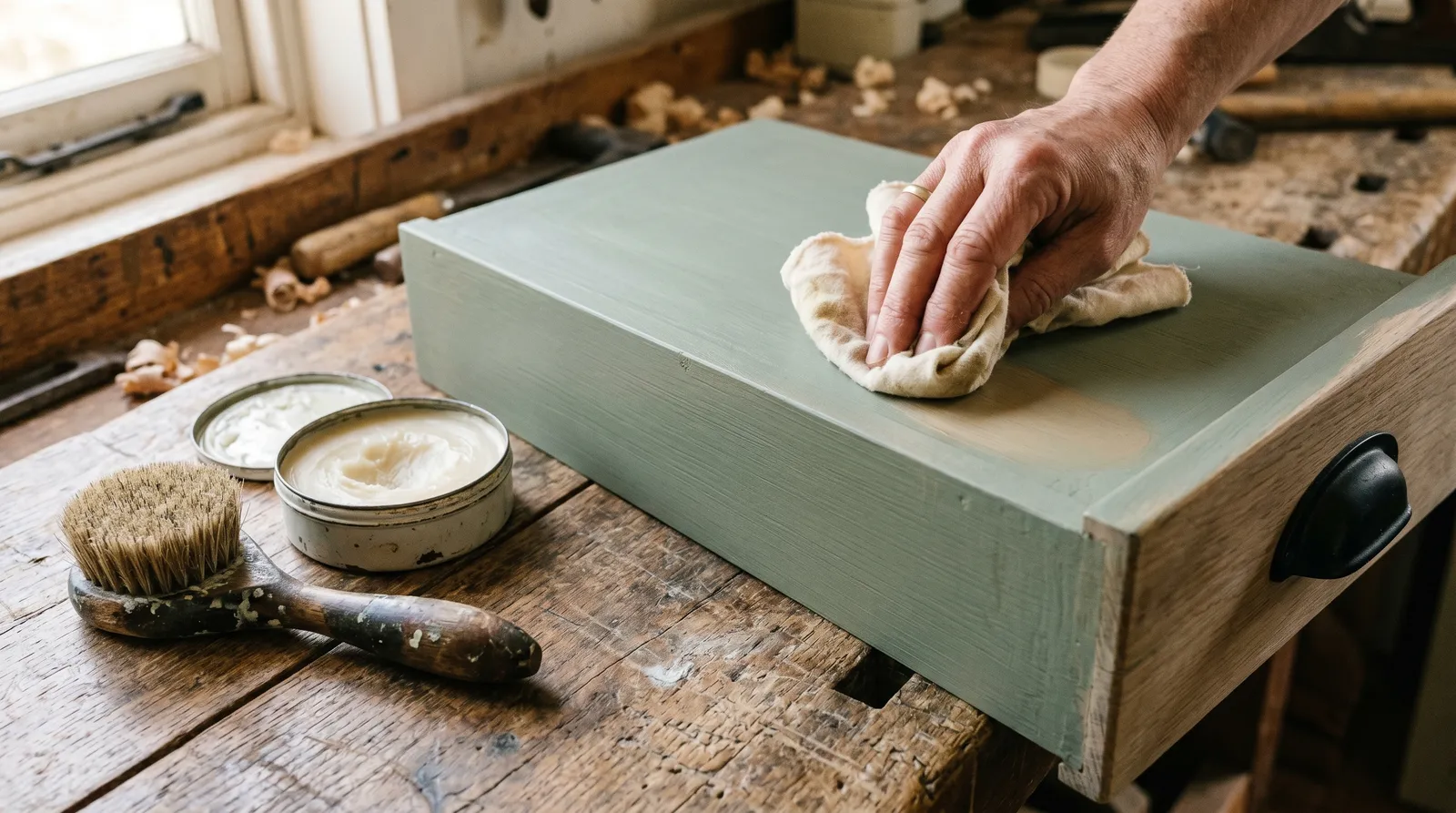
- Use a wax brush, which is a round stubby brush made for this, or a clean lint-free cloth. A brush gets into carved detail better; a cloth is simpler and gives a first-timer more control. Take a small amount, rub it into the paint like moisturizer into skin, work one small area at a time, then wipe the excess off straight away with a clean cloth. Give it an hour to firm up, then buff in circles: light buff for a soft satin glow, keep going for more shine.
Touch Dry in an Hour, Hard in Two Weeks
Nobody tells beginners this part. The wax is touch dry in about an hour, which is when you buff it, but it keeps hardening underneath for roughly two weeks. During that window the finish is soft and not at full strength. So do not stack heavy books on a freshly waxed shelf, do not set a hot mug on a new tabletop the same day, and go easy on the edges you handle. Give it the two weeks and it reaches its real toughness. After that, a gently used piece can go years before it wants anything, while one you handle daily likes a fresh thin coat of clear wax about once a year.
Mid-project panic
When It Goes Wrong, and How to Fix It
The surface stays tacky or sticky
Why it happens. Too much wax, and the excess never got wiped off. This is the single most common beginner mistake and it happens because wax goes much further than it looks like it should, so a normal-feeling scoop is actually a thick gloppy coat. What did not soak in has nowhere to go.
The fix. Go back over it with a clean cloth and wipe off everything that did not soak in. Done right, the surface feels dry and smooth, not greasy. Next time take a small amount, work an area about the size of a sheet of paper, wipe back straight away, then move on.
Dark wax went muddy and grabbed too hard
Why it happens. The clear coat got skipped. Dark wax soaks straight into bare Chalk Paint, which is porous, so it grips instantly and you cannot move it. On a pale color that reads as dingy rather than aged.
The fix. Always put a coat of clear wax down first, let it set, then work dark wax over it. The clear layer acts as a buffer. And keep clear wax on a rag as your eraser: too much dark in one spot lifts right out with clear wax while everything is still fresh.
Streaky patches after buffing
Why it happens. Uneven thickness. Working too large an area at once leaves thick spots where the wax firmed up before you got back to it, so the buff brings up shine in some places and not others. It is normal on a first piece.
The fix. Work small sections, wipe the excess back hard, give it an hour to firm up, then buff with a clean soft cloth in circles. Streaky patches buff out. Keep going until the sheen is even, and stop wherever you like the look.
Water rings and marks on a waxed tabletop
Why it happens. Wrong topcoat for the job. Wax is soft and it does not love water or hard daily use, so a kitchen table, a bathroom vanity, cabinets you wipe down, or a windowsill that catches condensation will disappoint you no matter how well you applied it.
The fix. Use Chalk Paint Lacquer on anything that works for a living or meets water. The test that never fails: does the surface get wet or get used hard? If yes, lacquer. If no, wax.
Side by side
Wax vs Lacquer Over Chalk Paint
This is the only topcoat decision that matters, and it comes down to one question: does the piece get wet or used hard? Everything else is preference.
| Chalk Paint Wax | Chalk Paint Lacquer | |
|---|---|---|
| The look | Soft, mellow, hand-rubbed glow. The classic Annie Sloan finish | Clean and even. Matte keeps the chalky look, gloss adds a light sheen |
| Water and hard use | Marks, water-spots, and scuffs under real wear | Water-resistant and scrub-friendly once cured |
| How forgiving it is | Very. Rub it in, wipe back, buff. Clear wax on a rag erases mistakes | Less so. It is a thin film, and thin films show streaks and roller marks |
| Upkeep | A fresh thin coat of clear wax about once a year on a daily-use piece | None once it is on |
| Outdoors | No. Wax has no business outside | Yes. UV protection is built in |
| Effect on color | Deepens the color slightly; tinted versions change it on purpose | Matte deepens it slightly, gloss adds sheen. Neither yellows over time |
| Price | About $19 for 120ml, around $40 for 500ml | About $51 for a 750ml tin |
| Best for | Dressers, bookcases, frames, display cabinets | Tabletops, floors, kitchens, bathrooms, outdoor furniture |
The look
Chalk Paint WaxSoft, mellow, hand-rubbed glow. The classic Annie Sloan finish
Chalk Paint LacquerClean and even. Matte keeps the chalky look, gloss adds a light sheen
Water and hard use
Chalk Paint WaxMarks, water-spots, and scuffs under real wear
Chalk Paint LacquerWater-resistant and scrub-friendly once cured
How forgiving it is
Chalk Paint WaxVery. Rub it in, wipe back, buff. Clear wax on a rag erases mistakes
Chalk Paint LacquerLess so. It is a thin film, and thin films show streaks and roller marks
Upkeep
Chalk Paint WaxA fresh thin coat of clear wax about once a year on a daily-use piece
Chalk Paint LacquerNone once it is on
Outdoors
Chalk Paint WaxNo. Wax has no business outside
Chalk Paint LacquerYes. UV protection is built in
Effect on color
Chalk Paint WaxDeepens the color slightly; tinted versions change it on purpose
Chalk Paint LacquerMatte deepens it slightly, gloss adds sheen. Neither yellows over time
Price
Chalk Paint WaxAbout $19 for 120ml, around $40 for 500ml
Chalk Paint LacquerAbout $51 for a 750ml tin
Best for
Chalk Paint WaxDressers, bookcases, frames, display cabinets
Chalk Paint LacquerTabletops, floors, kitchens, bathrooms, outdoor furniture
Decorative piece, wax. Hardworking or wet piece, lacquer. Wax is the prettier finish and the easier one to apply, and on a bedroom dresser or a bookcase it will look better than lacquer ever does. But a waxed kitchen table frustrates you within a month, and no amount of careful buffing changes that. When you are unsure, ask whether the surface gets wiped down a lot. If it does, lacquer is the safer mistake.
Questions people actually ask
Chalk Paint Wax Questions, Answered
Is Annie Sloan Chalk Paint Wax worth it?
On a decorative piece, yes. It is the prettiest way to finish Chalk Paint, it gives that soft hand-rubbed glow the whole Annie Sloan look is built on, and the tinted versions are how you age a piece so it looks fifty years old. A little goes a long way, so the 120ml tin at around $19 covers a first project. It is not worth it on anything that gets wet or handled hard, because wax marks, water-spots, and wants a fresh coat every year or so. For a kitchen table or a vanity, buy lacquer instead.
What is the difference between clear wax and dark wax?
Clear wax is your everyday seal. It soaks into the paint, protects it, deepens the color a little, and leaves that soft mellow finish without changing the color. Dark wax is the antiquing trick: it is tinted brown, so when you push it into corners, carved details, and brush marks, it settles into the low spots and makes the piece look gently aged. The rule that saves beginners is to always put a coat of clear wax down first, then work the dark wax over it, so the dark does not grab too hard and go muddy.
Do I have to wax it, or can I leave the paint bare?
You have to seal it. Bare Chalk Paint is porous, which is a nice way of saying it acts like a sponge. Set a coffee cup on it and you get a ring. Touch it with greasy fingers and it marks. The paint is only half the job; the topcoat is what makes the piece usable. Wax is one way to seal it, lacquer is the other, but raw unsealed paint is not a finished piece no matter how good the color looks.
Wax or lacquer, how do I choose?
Think about how hard the piece works. Wax gives the prettier, softer, more traditional finish, but it is not built for heavy wear or water and it needs a fresh coat every so often. Lacquer is a tougher, water-based, wipe-on sealer that shrugs off water and handling. So a bedroom dresser, a bookshelf, a decorative cabinet, or a picture frame loves wax. A kitchen table, a bathroom vanity, kitchen cabinets, or a bench by the back door wants lacquer instead.
How often do I have to re-wax, and is it durable?
A waxed piece you use gently can go years before it needs anything. A piece that gets handled daily might want a fresh thin coat of clear wax once a year or so. Re-waxing is easy: clean the surface, rub on a little clear wax, buff it back. One more thing nobody tells beginners, the wax keeps hardening for about two weeks after you apply it, so treat it gently for that stretch. After that it is at its toughest.
How do I buff wax, and how much shine will I get?
Give the waxed surface about an hour to firm up, then take a clean soft cloth and rub in circles. That is all buffing is. The more you buff, the more sheen comes up: a light buff gives a soft satin glow, and if you keep going it shines more. Stop wherever you like the look. There is no single correct amount.
What do I do if I used too much wax?
Wipe it back. If the surface feels tacky or sticky, there is excess sitting on top that never soaked in, so go over it again with a clean cloth until it feels dry and smooth rather than greasy. Working in small sections and wiping straight after each one prevents it in the first place.
What is white wax and black wax for?
White wax lightens and softens a color for a chalky, limewashed effect, and rubbed onto bare wood it gives that limed-oak look where the grain stays visible but goes pale. Black wax is the moody cousin of dark wax: it cools and darkens a color and pulls drama out of mouldings and brushwork. Both work the same way as dark wax, so clear wax goes down first.
Where do I buy Annie Sloan wax?
The same places as the paint: trained independent stockists and the official US online store at anniesloan.com, with free US shipping over $99. It is not sold at Home Depot or Lowe's, and Amazon listings are third-party resellers the brand does not stand behind. Do not over-buy: the 120ml tin at around $19 is plenty for a single piece while you learn, and the 500ml at about $40 seals a lot of furniture.
Keep exploring
Annie Sloan brand hubAnnie Sloan Chalk Paint reviewBrowse all Annie Sloan colorsBest paint for furniture
We may earn a commission when you buy through the retailer link above. It never changes the score or the verdict.
Ask a Question