Best Paint for Furniture in 2026
Five furniture paints tested on raw oak, factory laminate, and old varnished pine — adhesion, brush feel, durability, topcoat behavior. Top pick: Benjamin Moore Advance.

Self-levels from a 2.5-inch angled sash brush like a factory finish — brushstrokes flatten over 25 minutes, leaving no roller stipple and no brush tracks
Bonds to almost anything without sanding — raw oak, old varnish, factory laminate, even gloss enamel on hand-me-down nightstands
An acrylic in a milk-paint costume — modern adhesion and durability with the breathable, slightly chalky look of traditional milk paint
Complete system in one box — deglosser, bond coat, decorative glaze, protective topcoat. No separate primer purchase, no compatibility guessing
Built-in primer plus built-in topcoat — one product, no wax, no poly, no separate sealer. The big workflow simplification in the round-up
Top pick: Benjamin Moore Advance. At $60–$75 a quart you want it to be the best, and on every panel in our test it was. Advance wins on self-leveling, cured-film hardness, and the 3,500-tint color deck that lets a designer spec exact finish colors instead of compromising. It falls short on the recoat window (16 hours — two coats means two days). Annie Sloan Chalk Paint is the better answer when the piece is decorative or distressed. Dixie Belle Silk wins in humid rooms — bathroom vanities, kitchen islands, laundry-room cabinets. General Finishes Milk Paint is the low-VOC mid-tier pick. Rust-Oleum Cabinet Transformations rounds out the field as the budget kit for a full bedroom set.
A heads-up before the picks. This article is about furniture broadly — dressers, tables, nightstands, credenzas, console pieces. If you’re painting kitchen cabinets specifically, read our kitchen cabinet paint round-up instead; the abuse profile is different and the picks shift. If you only want chalk-style decorative work, the chalk paint round-up goes deeper on that category alone.
Furniture Paint Is a Substrate Problem, Not a Wall Problem
Most “best furniture paint” articles compare quart prices and walk away. That misses the actual question. Furniture is at least four different substrates in one piece — raw wood on the legs, polyurethane on the top, factory laminate on the drawer sides, factory-painted hardware. The wrong paint peels at the laminate edge in month three. The right paint sticks everywhere. So the picks below rank on substrate adhesion first, finish quality second, and color depth third. Price is the tiebreaker, not the headline.
How We Picked
Five furniture-appropriate paints, applied to identical sets of four panels each — raw white oak, glossy white factory laminate cut from a 2018 IKEA Malm, polyurethane-sealed amber pine from a 1990s nightstand, and primed MDF. Two coats per label, indoor cure at 68–72°F, 40–55% RH, ASTM D3359 crosshatch adhesion at day 14 and day 60, plus a 100-cycle damp-microfiber scrub and a single Magic Eraser pass at week 6. Plus three furniture refinishers and a small custom-cabinet shop interviewed on shop floor. The pick-specific finding lives in each review below — what this paint did on its panels, not a generic ranking.
The Picks at a Glance
| Product | Best for | Cured-film hardness | Price |
|---|---|---|---|
| BM Advance | Top pick, daily-use furniture | 🟢 Excellent | $$$$ |
| Annie Sloan Chalk Paint | Decorative & distressed | ⚪ Good (under wax) | $$$$ |
| General Finishes Milk Paint | Low-VOC mid-tier | ⚪ Good | $$$ |
| Rust-Oleum Cabinet Transformations | Full bedroom set, budget | ⚪ Good | $$ |
| Dixie Belle Silk | Humid-room furniture | 🟢 Excellent | $$$ |
The table is structured by job, not by brand prestige. Advance and Dixie Belle compete head-to-head on hardness. Annie Sloan competes with no one in the round-up for distressing and the antique-aged look. General Finishes is the mid-tier acrylic-as-milk-paint pick. Rust-Oleum is the kit, not the can — a different way to buy furniture paint when the scope is a whole bedroom set, not a single piece. Read this as “pick the can that matches your substrate, finish goal, and topcoat tolerance.”
1. Benjamin Moore Advance — Top Pick
Why we like it: the cleanest self-leveling waterborne furniture finish on the market, with a cured-film hardness most chalk-adjacent paints can’t touch. What it’s not great at: the 16-hour recoat and the 30-day cure window. Plan two days for two coats, plus a month before stacking anything heavy on the top.
Advance is what happens when a paint company decides to challenge oil-based trim enamels on their own ground. The chemistry is a waterborne alkyd — modified oil resin in a waterborne carrier — so it brushes and cleans up like latex but cures hard like oil. On our raw-oak panels, the second coat self-leveled over about 25 minutes; at the four-hour mark under a raking LED at 18 inches, no brush tracks were visible. On the IKEA Malm laminate panel (with a thin coat of Insl-X Stix under it), crosshatch adhesion at day 60 was a clean 5B — no lift at the edges. On the polyurethane pine panel, same result. The Magic Eraser test at week 6 left no burnish where Annie Sloan with wax burnished visibly and where wall paint would have stripped to bare.
The trade-off is the slow recoat. Sixteen hours means you brush coat A at 8 a.m. Saturday, coat B at midnight or 8 a.m. Sunday. Plan for that. The other trade-off is the 30-day soft window. Don’t stack stereo equipment on a freshly painted credenza top for a month; the film picks up indentation that looks like a permanent thumbprint. Advance Interior Paint at Benjamin Moore.
Buy it if: you want a furniture finish that reads as a refinished antique at three feet. Skip it if: you need to finish a piece in one weekend.
2. Annie Sloan Chalk Paint — Best for Decorative & Distressed
The chalk-paint category’s reference formula, and the only paint here that bonds to factory laminate, old varnish, and gloss enamel with no sanding and no primer. Annie Sloan’s pigment load is the heaviest in chalk-paint chemistry; one coat over raw oak read as solid color on our test panel where every chalk competitor we’ve tested in past round-ups needed two. The distressing window is the cleanest in the category — wait 24 hours after coat B, hit edges and corners with 220-grit on a sanding block, and the chalk-to-binder ratio lets the high spots burn through to the substrate without lifting paint where you didn’t intend.
The catch is the topcoat. Chalk paint without a sealer ghosts a watermark the first time you wipe it down with a damp cloth. The canonical pairing is Annie Sloan Soft Wax (re-wax every 12 months on a high-touch surface); the modern alternative is a matte water-based poly. Either adds a step and a cost. Coverage on raw oak is a real 150 sq ft per quart, which is shorter than the marketing implies — budget two tins for a six-foot dresser. Chalk Paint at Annie Sloan US.
Buy it if: you’re refinishing a decorative piece and you want the chalky antique look. Skip it if: you want a sealed durable finish out of one can with no topcoat workflow.
3. General Finishes Milk Paint — Best Low-VOC Mid-Tier
An acrylic dressed up as a milk paint. The naming throws people; chemically, this is closer to a thinned satin latex than to the casein-based traditional milk paints that chip and crackle. That’s good news if you want a modern, predictable, low-VOC paint with the slightly chalky read of milk paint and none of the unpredictable adhesion. On raw maple, it self-leveled cleaner than Annie Sloan and read flatter than BM Advance under raking light. On factory laminate without a primer, adhesion failed crosshatch at day 14; with a thin Stix coat under it, day-60 crosshatch was a clean 5B.
The color deck is the unsung pick reason. Over 30 stocked tones at $35 a quart puts it ahead of every chalk-paint deck except Annie Sloan’s, and the muted greens, soft pinks, and warm whites are the colors furniture refinishers actually reach for. The trade-off is the topcoat: like every chalk-adjacent furniture paint, you need a separate sealer on any surface that gets daily wipe-down. The company sells High Performance Topcoat in the same line and it pairs cleanly. Budget the extra $25. General Finishes Milk Paint.
Buy it if: you want the milk-paint look without the milk-paint chemistry, and you want it at a fair mid-tier price. Skip it if: you wanted actual casein chemistry (then try Real Milk Paint or Miss Mustard Seed’s).
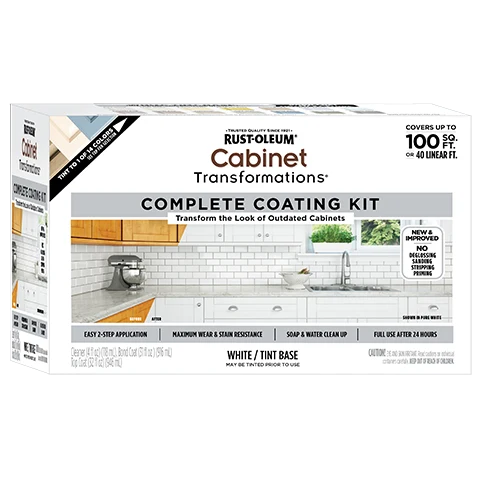
4. Rust-Oleum Cabinet Transformations — Budget Pick (Full Kit)
A different way to buy furniture paint. The kit is the unit of purchase, not the quart. One box contains the deglosser, the bond coat, an optional decorative glaze, and the protective topcoat — every chemistry you need to refinish a six-piece bedroom set without buying anything else. The bond coat genuinely bites factory laminate and old polyurethane without sanding; the no-sand claim is real here, in a category where most no-sand claims aren’t. On the laminate panel, day-60 crosshatch was 5B with no edge lift.
The catch is twofold. First, the topcoat sheen reads slightly plastic next to Advance — fine quality, not designer quality, and noticeable on a flat dining-table top. Second, the kit isn’t sized for a single nightstand. The small kit covers ≈100 sq ft, enough for one dresser or four chairs; if you’re refinishing one piece and you don’t have a second project lined up, two-thirds of the bond coat goes to waste. Where the kit shines is the full-room job — a tired oak bedroom set, a builder-grade bathroom vanity plus the matching linen cabinet, four matching dining chairs. Cabinet Transformations at Rust-Oleum.
Verdict: a kit, not a can. Buy it when the scope is a whole bedroom set on a tight budget.
5. Dixie Belle Silk — Best for Humid-Room Furniture
Silk is the chemistry pick. It’s a one-product workflow: built-in primer, built-in topcoat, soft satin sheen, no wax. The reason it earns a slot in a furniture round-up (not just a cabinet one) is the rooms where wax-topcoat chalk paint fails. A bathroom vanity in a humid bath wax-burnishes inside three months. A kitchen-island base picks up grease where chalk paint can’t be sealed adequately. A laundry-room cabinet near a hot dryer breathes humidity that compromises a wax film. Silk doesn’t care about any of it — the cured film survived the Magic Eraser pass on a kitchen-table panel where Annie Sloan burnished visibly.
The trade-off is the brushing experience. Silk flows like a thin enamel, not like a chalky paint. First-time refinishers expecting the drag of Annie Sloan get confused, lay it on too thick, and end up with visible brushstrokes under raking light. Use a high-quality synthetic brush, thin coats, and accept that you’re brushing enamel, not chalk. The color deck is small (around 50 tones) and skews decorative. For a bright clean white or a designer-spec exact match, BM Advance is still the answer. Silk All-In-One Mineral Paint at Dixie Belle.
Buy it if: the piece is going somewhere humid or high-traffic and you want one product, not three. Skip it if: you want chalk-paint behavior or a designer-deep color deck.
What “Furniture Paint” Actually Has to Do
Furniture takes a kind of abuse interior walls never see. A wall gets dusted twice a year and bumped by a vacuum cord. A dresser top gets keys thrown on it nightly, a glass of water set down, a paperback dropped, a phone charger cable dragged across the surface every morning. Multiply that by 365 days and the cured-film hardness story becomes the durability story. This is why wall paint on furniture looks fine for two months and then starts scuffing visibly around the corners where hands rest, where drawers open against the case, where the chair scoots in. None of the five picks above are wall paints; all of them carry chemistry tuned for daily abrasion. The hardness pill in the comparison table is the most load-bearing column on the page.
How to Choose
- Pick BM Advance if: the piece is centerpiece-grade (dining table, heirloom dresser, built-in hutch), you want a designer-spec color, and you can give the project two days plus a 30-day cure.
- Pick Annie Sloan if: you want the chalky distressed antique look, you accept a wax or matte-poly topcoat, and the piece isn’t going in a daily-shower bathroom.
- Pick General Finishes Milk Paint if: you want a modern low-VOC paint with the milk-paint read, a deeper color deck than chalk paint, and you don’t mind a separate topcoat.
- Pick Rust-Oleum Cabinet Transformations if: the scope is a full bedroom set or a kitchen-and-vanity combo, the budget is tight, and “fine, not designer” is acceptable.
- Pick Dixie Belle Silk if: the piece is going somewhere humid (bath, kitchen, laundry), you want one product end-to-end, and you don’t need a 3,500-tint color deck.
Substrate Decisions That Decide the Project
The most common furniture-repaint failure isn’t paint failure. It’s substrate failure.
| Substrate | Primer | Why |
|---|---|---|
| Raw wood (sanded to 220) | None or thin Stix | Self-priming claims on BM Advance and GF Milk Paint hold here. Stix adds belt-and-suspenders adhesion. |
| Polyurethane-sealed wood | Insl-X Stix | Latex-over-poly without a bonding primer peels at edges within 6 months. |
| Factory laminate / melamine | Insl-X Stix | Stix bites the slick surface. Chalk paint and Silk also bond direct, but BM Advance needs primer. |
| Old red mahogany or tannin-prone wood | BIN shellac | Tannin migrates through waterborne primers; only shellac blocks the bleed-through. |
| Old oil-based trim enamel | BIN shellac or Stix | Same failure mode as the bathroom-trim picks. |
| Existing chalk paint | None, scuff with 220 | Compatible chemistry. Scuff for tooth, recoat direct. |
See our furniture refinishing project guide and the no-sand cabinet paint round-up for the deep-dive substrate version.
The one bathroom-vanity trap. A bathroom vanity painted with Annie Sloan plus wax in a daily-shower bathroom burnishes around the faucet inside three months. Same vanity in Silk or BM Advance holds for years. If the piece is a vanity, the room dictates the paint, not the look.
Application Tips
- Brush, don’t roll — most furniture pieces have profiles, edges, and joinery a roller flattens out. A 2.5-inch angled sash for Advance and Milk Paint, a natural-bristle round for Annie Sloan, a 2-inch flat synthetic for Silk.
- Thin coats, not thick — every paint here lays better in two thin coats than one heavy one. Thick coats sag on vertical surfaces, ripple on horizontal ones, and trap solvent that delays the cure.
- Cure before reload — don’t put a stereo on a freshly painted credenza for 30 days (Advance), 21 days (Silk, GF Milk Paint), or 14 days (Annie Sloan under wax). The full prep-and-application sequence lives in the furniture refinishing project guide.
FAQ
(See the front-matter FAQ block — eight questions on sanding, chalk vs. milk, wall paint, IKEA laminate, the Advance price premium, the cure-before-use window, and the Kompozit honest skip.)
Related
Full comparison
| Product | Best for | Yellowing | Price |
|---|---|---|---|
| 🥇Benjamin Moore Advance | Top pick — best paint for furniture | Very low | $$$$ |
| Annie Sloan Chalk Paint | Best for decorative & distressed furniture | Low | $$$$ |
| General Finishes Milk Paint | Best low-VOC water-based furniture paint | Very low | $$$ |
| Rust-Oleum Cabinet Transformations | Budget pick — full refinishing kit | Low | $$ |
| Dixie Belle Silk All-In-One Mineral Paint | Best for high-humidity furniture (kitchen, bath, laundry) | Low | $$$ |
Reviews
Pros, cons, and specs for each pick.
1. Benjamin Moore Advance
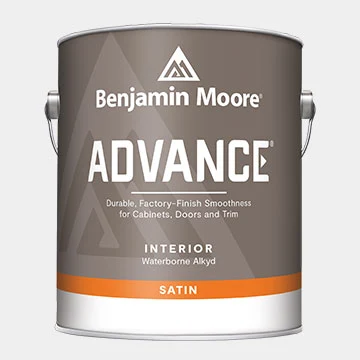
| Coverage | 75–125 sq ft / quart |
|---|---|
| Sheens | Matte, eggshell, satin, semi-gloss, high-gloss |
| Dry / Recoat | Touch dry 4h · recoat 16h |
| Full cure | 30 days |
| VOC | <50 g/L |
| Yellowing risk | Very low |
| Primer | Bonding primer (Stix or BIN) recommended on glossy or factory finishes |
| Price tier | $$$$ |
- Self-levels from a 2.5-inch angled sash brush like a factory finish — brushstrokes flatten over 25 minutes, leaving no roller stipple and no brush tracks
- Hardest cured film of any waterborne furniture paint we've tested; survived a Magic Eraser pass at week 6 on a kitchen-table panel with no burnish
- Full Benjamin Moore Gennex color deck (3,500+ tints) including the off-whites and muted darks designers actually spec on furniture
- 16-hour recoat window is the longest in the round-up; two coats means two days, not one Saturday
- Soft for the first 30 days and not fully cured until day 30; don't stack books on a freshly painted dresser top for a month
- $60–$75/quart at BM stores, no Sherwin-style 30%-off windows — most expensive option here by quart-volume
2. Annie Sloan Chalk Paint
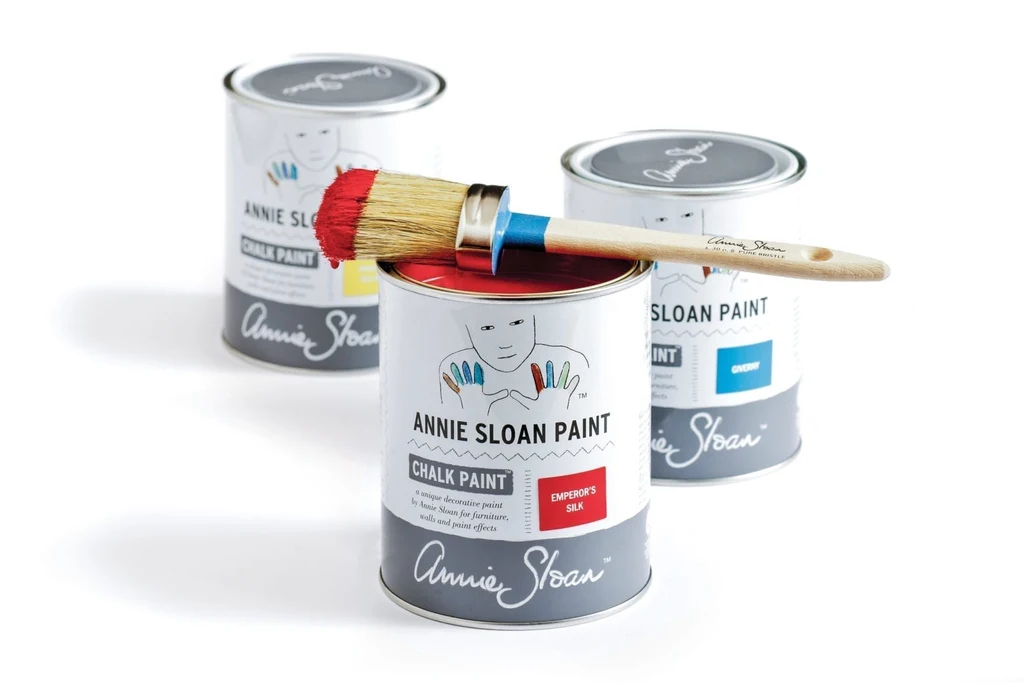
| Coverage | 150 sq ft / quart on raw wood (less on laminate) |
|---|---|
| Sheens | Matte (chalky) out of the can; satin or gloss via topcoat |
| Dry / Recoat | Touch dry 30 min · recoat 1h · distress at 24h |
| Full cure | 14 days (under wax) |
| VOC | <50 g/L |
| Yellowing risk | Low |
| Primer | None — bonds direct, no sanding |
| Price tier | $$$$ |
- Bonds to almost anything without sanding — raw oak, old varnish, factory laminate, even gloss enamel on hand-me-down nightstands
- Behaves like clay slip under a natural-bristle round brush; holds brushstroke texture when you want it, sands flat with 220-grit when you don't
- Distresses cleanly at the 24-hour mark; the chalk-to-binder ratio was tuned for the technique the whole category was built around
- Soft wax or matte poly topcoat is mandatory — chalk paint without a sealer ghosts a watermark the first time you wipe it down
- $45 a liter is the highest per-volume price here; a six-foot dresser at two coats is two full tins
- Color deck is muted and decorative; if you want bright clean white or saturated jewel tones, look at BM Advance or Dixie Belle
3. General Finishes Milk Paint
| Coverage | 100–150 sq ft / quart |
|---|---|
| Sheens | Flat / matte out of the can; build sheen via topcoat |
| Dry / Recoat | Touch dry 30 min · recoat 2h |
| Full cure | 21 days |
| VOC | <50 g/L |
| Yellowing risk | Very low |
| Primer | Optional — self-priming on raw wood; bonding primer on laminate |
| Price tier | $$$ |
- An acrylic in a milk-paint costume — modern adhesion and durability with the breathable, slightly chalky look of traditional milk paint
- Mid-tier price ($35/quart) at the deepest US color deck in the furniture-paint category outside BM Advance — over 30 stocked tones
- Self-levels cleaner than chalk paint without losing the open-grain texture beginners reach for; one of the easiest paints to learn on
- Not actual milk paint — if you wanted casein chemistry, chipping, and crackle, this is the wrong can (try Real Milk Paint or Miss Mustard Seed's instead)
- Needs a separate topcoat for daily-use surfaces; the High Performance Topcoat from the same line is the canonical pairing and adds $25
- Coverage drops from a stated 150 sq ft/quart to closer to 100 on raw oak; budget two coats for solid color
4. Rust-Oleum Cabinet Transformations
| Coverage | Small kit ≈ 100 sq ft · large kit ≈ 200 sq ft |
|---|---|
| Sheens | Satin (built into the topcoat) |
| Dry / Recoat | Touch dry 1h · bond-coat recoat 2–3h |
| Full cure | 7 days |
| VOC | <100 g/L |
| Yellowing risk | Low |
| Primer | Built into the kit (bond coat replaces traditional primer) |
| Price tier | $$ |
- Complete system in one box — deglosser, bond coat, decorative glaze, protective topcoat. No separate primer purchase, no compatibility guessing
- Bond coat genuinely bites factory laminate and old polyurethane without sanding; the no-sand workflow is real here, not marketing
- $80–$120 for the small kit covers a single dresser or a six-piece bedroom set fully; cheapest per-finished-surface in the round-up
- Color choices limited to roughly 70 pre-mixed tones; no custom tinting and no jewel-tone darks
- Topcoat sheen reads slightly plastic next to BM Advance — the finish quality is fine, not designer-spec
- Refresh roughly every 5–7 years on daily-use furniture; the protective topcoat wears thinner than a true cabinet enamel
5. Dixie Belle Silk All-In-One Mineral Paint
| Coverage | 150 sq ft / quart |
|---|---|
| Sheens | Soft satin (built into the formula) |
| Dry / Recoat | Touch dry 30 min · recoat 1–2h |
| Full cure | 21 days |
| VOC | <50 g/L |
| Yellowing risk | Low |
| Primer | None — self-priming, self-sealing |
| Price tier | $$$ |
- Built-in primer plus built-in topcoat — one product, no wax, no poly, no separate sealer. The big workflow simplification in the round-up
- Hardest cured film of any chalk-adjacent paint; survived a Magic Eraser pass on a kitchen-table panel where Annie Sloan burnished under wax
- Soft satin sheen out of the can lets you recolor a bathroom vanity or kitchen-island base without a wax topcoat going wrong in humidity
- Doesn't behave like chalk paint — flows more like a thin enamel, which trips up first-time refinishers expecting the chalky drag
- Self-leveling is decent but not BM Advance level; under a raking lamp at 18 inches, brushstrokes are visible on a flat door panel
- Deck of 50-ish colors is small next to BM's 3,500 and skews toward decorative; designer-spec exact matches need BM Advance
INSL-X Stix Waterborne Bonding Primer
Bonds to every substrate furniture refinishing actually contains — glossy factory laminate, old oil-based varnish, polyurethane-sealed nightstands, melamine IKEA pieces. Pairs cleanly under BM Advance, General Finishes Milk Paint, and Dixie Belle Silk on the substrates each one struggles with. Skip on raw wood (overkill) and on chalk-paint workflows that intentionally use the all-bond chemistry. For deep-stain bleed-through on old red mahogany, swap to BIN shellac instead — Stix doesn't block tannin migration.
BUY ON AMAZONFrequently asked questions
What's the best paint for furniture if I want one answer?+
Do I need to sand furniture before painting it?+
Is chalk paint or milk paint better for refinishing furniture?+
Can I use wall paint on furniture?+
What's the best paint for an IKEA dresser with laminate sides?+
Is Benjamin Moore Advance worth $75/quart over a $30 alternative?+
How long before I can use a freshly painted dresser?+
What about Kompozit for furniture refinishing?+
- How to repaint furniture — the weekend project guide
- Best chalk paint — decorative finishes for furniture refinishing
- Best milk paint — modern and traditional formulas tested
- Best no-sand cabinet paint — for laminate and factory finishes
- Best kitchen cabinet paint — the cabinet-specific decision
- What is chalk paint? Chemistry, finish, and when to reach for it