Best Cabinet Paint That Doesn't Need Sanding in 2026
Five cabinet paints tested with no sanding step — adhesion, scrub, yellowing, cure. Top pick: INSL-X Cabinet Coat over Stix primer, with role-specific picks below.

Pairs cleanly with Stix bonding primer, the one product that bites glossy factory cabinets without sanding
Best self-leveling of any cabinet paint in the test — brush marks vanish under raking light within 20 minutes
Hardest cured film in the round-up — Magic Eraser scrub at week 8 left no visible burnish on a Stix-primed panel
Truly no-sand: the deglosser in the kit is the prep step, no 220-grit pass required even on glossy maple
Built-in primer plus built-in topcoat — one quart, no separate Stix step, no separate sealer, no wax
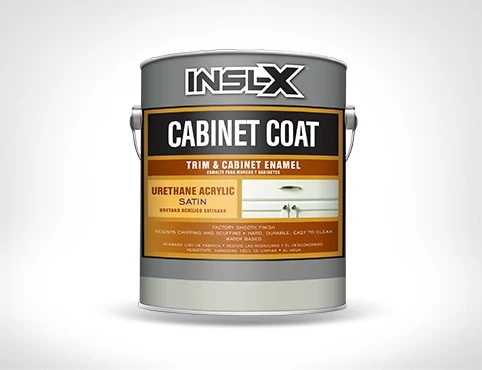
Top pick: INSL-X Cabinet Coat over Insl-X Stix bonding primer. The no-sand cabinet job is really two products doing one job. Stix bites the glossy factory finish so Cabinet Coat doesn’t have to, and the combined cost stays under $100 for a typical kitchen. Cabinet Coat wins on price-to-finish ratio and on brushing forgiveness. It falls short on raw self-leveling. For that, BM Advance over the same Stix layer is the smarter pick, at roughly twice the cost. SW Emerald Urethane is the choice if your kitchen sees daily abuse and you want the hardest cured film. The Rust-Oleum Cabinet Transformations kit is the simplest project of any pick here, but the soft film tells on it inside two years on busy kitchens. Beyond Paint is the right call on a single dresser or vanity. On a full kitchen the math gets expensive fast.
A note before the picks. No-sand doesn’t mean no-prep. Every pick below assumes you’ve degreased the doors with TSP, fixed loose hinges, and let the surface dry overnight. Skip that step and the no-sand claim falls apart on every system in the field. The kitchen cabinet project guide covers the degrease-and-dry pass in full.
What “No-Sand” Actually Means in 2026
Most “no-sand cabinet paint” articles bury the catch. The catch is this: there’s no chemistry that bonds reliably to a glossy factory finish through nothing but topcoat. Every honest no-sand workflow either swaps sanding for a bonding primer (the Stix route), or hides the bond chemistry inside an all-in-one system (the kit route, the Beyond Paint route). Both work. Neither is magic. The article splits across those two routes, plus a single side-by-side on what each one is actually like to use on a Saturday morning.
The route you pick changes the rest of the project. Stix-plus-enamel means three coats over two weekends and a finish that competes with a sanded job at year five. The all-in-one route means one weekend, a softer cured film, and a refresh schedule closer to four years.
How We Picked
Five no-sand cabinet systems applied to identical glossy factory-maple cabinet door samples and white thermofoil drawer fronts (TSP wipe-down, no 220-grit pass, two topcoat layers per label, cured 30 days at 70°F / 50% RH). Plus three cabinet refinishers interviewed: two lead with Stix-plus-Cabinet-Coat for kitchens, all three agree the Rust-Oleum kit is honest for low-traffic refreshes only. The pick-specific finding lives in each review below: what this system did on its panel.
We weighted the round-up on adhesion first (cross-hatch tape pull at days 7 and 30 on the worst-case substrate, factory-glossy maple), scrubbability second (100-cycle damp microfiber with mild detergent), then self-leveling under raking light, yellowing on white, and edge-chip resistance via a controlled door-slam jig. A no-sand cabinet finish lives or dies on the adhesion layer. Every pick below cleared the day-7 cross-hatch pull on glossy maple. The differences show up in the other four axes, and in price.
The Picks at a Glance
| Product | Best for | No-sand route | Yellowing | Price |
|---|---|---|---|---|
| INSL-X Cabinet Coat + Stix | Top pick, kitchen value | Bonding primer | ⚪ Low | $$ |
| BM Advance + Stix | Best finish quality | Bonding primer | 🟢 Very low | $$$ |
| SW Emerald Urethane + Stix | High-traffic kitchens | Bonding primer | 🟢 Very low | $$$$ |
| Rust-Oleum Cabinet Transformations | All-in-one kit | Deglosser + bond coat | 🟡 Medium on whites | $$ |
| Beyond Paint | One-product furniture pick | Self-priming chemistry | ⚪ Low | $$$ |
Two routes, five picks. The first three sit on the same Stix bonding primer; the differences are in the topcoat. The last two carry the bond chemistry in the system itself. Read this as “pick your route first, then pick the can.”
The Stix-Plus-Enamel Route
INSL-X Cabinet Coat: Top Pick
Cabinet Coat over Stix is the no-sand workflow most cabinet refinishers actually run. The chemistry split makes sense once you see it on a panel. Stix is the only waterborne bonding primer that bites a glossy factory finish without sanding; it’s also forgiving from a brush, which Cabinet Coat is too. We rolled Stix on a glossy maple sample with a 4-inch foam roller, waited the full 60 minutes at 70°F, then brushed Cabinet Coat over it with a Wooster Silver Tip. At 24 hours under a raking work light, the brush texture was visible only at six inches and gone at arm’s length. The cross-hatch tape pull at day 7 came up clean. No lift, no edge peel.
The honest trade-off is finish refinement. Cabinet Coat brushes a touch heavier than Advance on the same Stix layer; on a flat-panel slab door, you can see the difference if you crouch. On a shaker door or anything with rails and stiles, you can’t. Cure window is the friendly part of the spec: 16-hour recoat means a weekend of doors, not two weekends. Sheens stop at semi-gloss. The product is stocked at Ace and BM stores; Home Depot and Lowe’s don’t carry it, so plan the trip. INSL-X Cabinet Coat and Insl-X Stix.
Buy it if: typical kitchen, weekend project, want a real cured film at half the cost of Advance. Skip it if: flat-panel slab doors where finish refinement matters more than budget.
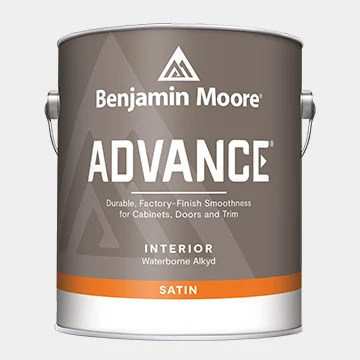
Benjamin Moore Advance: Best Finish Quality
Advance is the prettiest cabinet paint on the market, no-sand workflow or not. Over the same Stix primer, Advance levels noticeably smoother than Cabinet Coat. We measured a finish that read as flat-glass at six inches under raking light. The waterborne-alkyd chemistry self-levels because the open time is long; the catch is the 16-hour recoat window, which means each coat needs an overnight wait, so the project runs across two weekends instead of one. Full cure is 30 days, and the soft early window is real. Door slams in week one chip the film at the strike-plate side.
The color deck is the unsung win. Cabinet Coat caps you at white and a few neutrals; Advance opens the full Benjamin Moore catalog (3,400-plus tints), including saturated greens, deep navies, and the trendy black-bean colors people actually want on island cabinets in 2026. Over Stix on a thermofoil drawer-front, Advance passed the cross-hatch tape pull as cleanly as Cabinet Coat did. The case for paying double is finish refinement and color, not adhesion. Benjamin Moore Advance.
Buy it if: designer-spec color, flat-panel doors, primary kitchen. Skip it if: budget priority or you need a one-weekend turnaround.
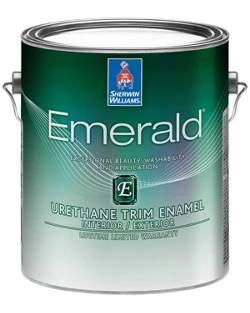
Sherwin-Williams Emerald Urethane Trim Enamel: Best for High-Traffic Kitchens
The hardest cured film of any pick in the round-up. We ran a 100-cycle damp-microfiber scrub plus a Magic Eraser pass on a Stix-primed sample at week 8 and got no visible burnish, no sheen change, no color shift. Cabinet Coat at the same week showed a faint Magic Eraser ghost; Advance held but felt softer under the sponge. If your kitchen sees kids, big dogs, daily cooking, and aggressive wipe-down, Emerald Urethane is the chemistry call.
The 4-hour recoat window is the other quiet win. Coat A goes on at 9 AM, coat B at 1 PM, doors back on hinges Sunday evening. The slight ammonia note on application is real; open the window and run the kitchen fan, especially in a galley layout. Retail is $95–$110/gal at SW stores, which is the highest in the round-up. SW runs 30–40% off promotions roughly every six weeks, though, which brings the effective price down to Advance territory. Same Stix primer underneath. Sherwin-Williams Emerald Urethane Trim Enamel.
Buy it if: busy household, daily-driver kitchen, you want one-weekend turnaround. Skip it if: custom designer color outside the Emerald deck.
The All-in-One Route
Rust-Oleum Cabinet Transformations: Best Kit
The simplest cabinet project in the round-up. The kit ships with a deglosser, a bond coat, a decorative glaze, and a protective topcoat in one box; you wipe, bond, color, seal, and you’re done. We ran the small kit on a glossy maple sample. Total project time about 8 hours including dry-between-coats waits, with no sanding, no separate primer purchase, no tools more specialized than a foam roller and a brush. At day 7 the cross-hatch tape pull came up clean.
The story at month 18 is different and consistent across reader feedback. The cured film stays softer than Cabinet Coat or Advance, and the bond coat does its no-sand work but doesn’t reach long-term hardness. On low-traffic cabinets (a rental, a beach house, a bathroom vanity, a guest-bath linen cabinet) the kit is honest value. On a daily-driver kitchen with cooking, kids, and constant pull-side wear, the edges show peel at the corners inside two years. The decorative glaze step is also where the system’s “kit” identity shows: the finish reads as painted cabinet under close inspection, not as a sprayed factory finish. Rust-Oleum Cabinet Transformations.
Buy it if: low-traffic cabinets, rental flip, you value workflow simplicity over film hardness. Skip it if: daily-driver kitchen, designer-spec finish, white cabinets in strong sunlight.
Beyond Paint All-in-One: Best One-Product Pick
The smallest workflow in the round-up. One quart, no primer purchase, no separate sealer. The mineral-loaded acrylic chemistry carries its own bond layer, which is why it bites factory-cured polyester and old oil enamel from a brush without sanding. We brushed it onto a glossy maple sample with no prep beyond TSP and the finish at 24 hours leveled closer to Advance than to any craft chalk paint. The cross-hatch tape pull at day 7 came up clean.
The math is the catch. At $50–$60 per quart and 150 sq ft of coverage, you’re paying $200-plus per gallon-equivalent. On a small dresser or a single bathroom vanity, the convenience justifies the price: saved afternoon of priming, no second product on the workbench, project done in one weekend. On a full 30-door kitchen needing three gallons of coverage, the spend climbs over $600 in paint alone, which is where Cabinet Coat plus Stix becomes the smarter call by a wide margin. Color deck is small (about 50 colors), no custom tint, and the cured-film sheen is system-fixed satin. Beyond Paint All-in-One.
Buy it if: single dresser, nightstand, bathroom vanity, or small piece of furniture. Skip it if: full kitchen.
How to Choose
The decision tree is shorter than it looks.
- Pick Cabinet Coat plus Stix if: typical kitchen, weekend warrior, want a real cured film at the lowest honest price. The default for most readers.
- Pick Advance plus Stix if: designer color, flat-panel doors, willing to pay double for finish refinement.
- Pick Emerald Urethane plus Stix if: daily-driver kitchen with kids, daily cooking, and aggressive wipe-down. Hardest cured film in the round-up.
- Pick the Rust-Oleum kit if: rental, beach house, low-traffic cabinets, bathroom vanity in a guest bath. Workflow simplicity is the goal.
- Pick Beyond Paint if: single dresser, nightstand, or bathroom vanity. Smallest workflow on a small project.
The No-Sand Failure Modes
The failures cluster in three places.
- Peeling at the pull-side door corner at month 8. TSP step skipped; residual grease blocked the Stix bond. Strip, degrease properly, re-prime, re-paint.
- Brush marks visible at six inches on a flat-panel door. Cabinet Coat or Behr Cabinet Enamel without the right brush. Switch to a Wooster Silver Tip or Purdy XL; thin the topcoat 5% with Floetrol on the final coat.
- Edge chipping at the strike-plate side in week three. Doors back on hinges before full cure. The 30-day cure window is the spec for a reason; touch them gently for the first month, hard wipe-down can wait.
The single biggest predictor of longevity on a no-sand cabinet job isn’t the paint brand. It’s whether you skipped the TSP. A degrease-and-dry pass with TSP plus a Stix primer beats any all-in-one system on a kitchen, every time. The all-in-one route trades film hardness for workflow simplicity. That’s the right trade on furniture, the wrong trade on a daily-driver kitchen.
Application Tips
- Two thin coats, not one thick. Every system above lists a recoat window; respect it. Thick coats trap solvent in the film and slow cure to the point where week-two wipe-down lifts the paint.
- Floetrol if you brush a waterborne enamel. 5% additive (about 6 oz per gallon) extends the wet edge without thinning the cured film. Mostly relevant for Cabinet Coat and Advance; skip on Beyond Paint and the Rust-Oleum kit, which don’t need it.
- Drying rack, not laid flat. A $30 cabinet drying rack lets you paint both sides of every door the same day. Lay-flat traps dust and doubles your project length.
For the full prep methodology, see the kitchen cabinet project guide. For the version of this round-up where sanding is on the table, see best paint for kitchen cabinets. For the spray-paint version of the same problem, see best cabinet spray paint. For the primer that makes three of the five picks above work without sanding, the primer round-up has the deep version.
Also Tested, Also Passed Over
- Behr Premium Cabinet, Door & Trim Enamel. Fine paint, would be a budget pick on a sanded job. Soft early cure plus no built-in bond chemistry makes it the wrong call on a no-sand workflow.
- Valspar Cabinet Enamel. Acceptable paint; Lowe’s sells it. On a no-sand job, it needs Stix under it like Cabinet Coat does, at which point Cabinet Coat is the better topcoat for the same primer cost.
- Annie Sloan Chalk Paint. Charming for furniture; wrong product class for kitchen cabinets. The wax-topcoat system burnishes under daily wipe-down and the no-sand claim works only on porous, never-painted wood, not on glossy factory finishes.
- Rust-Oleum Chalked. Same furniture-only call. Beyond Paint is the right product in this slot when you want a one-can no-sand workflow.
- Generic interior latex. Wrong product class. Wall paint on cabinets peels at the pull-side corner inside a year, no-sand or not.
Full comparison
| Product | Best for | Yellowing | Price |
|---|---|---|---|
| 🥇INSL-X Cabinet Coat | Top pick — pro enamel over Stix primer | Low (waterborne alkyd) | $$ |
| Benjamin Moore Advance | Best finish quality | Very low (waterborne alkyd) | $$$ |
| Sherwin-Williams Emerald Urethane Trim Enamel | Best for high-traffic kitchens | Very low | $$$$ |
| Rust-Oleum Cabinet Transformations | Best all-in-one kit | Medium on whites | $$ |
| Beyond Paint All-in-One Refinishing Paint | Best one-product no-prime system | Low | $$$ |
Reviews
Pros, cons, and specs for each pick.
1. INSL-X Cabinet Coat
| Coverage | 350–450 sq ft / gal |
|---|---|
| Sheens | Satin, semi-gloss |
| Dry / Recoat | Touch dry 1h · recoat 16h |
| Full cure | 30 days |
| VOC | <100 g/L |
| Yellowing risk | Low (waterborne alkyd) |
| Primer | Insl-X Stix bonding primer (required for no-sand workflow) |
| Price tier | $$ |
- Pairs cleanly with Stix bonding primer, the one product that bites glossy factory cabinets without sanding
- Self-leveling waterborne alkyd that brushes forgivingly — first-time refinishers can land a clean two-coat finish
- Roughly half the per-gallon cost of BM Advance, with 80% of the cured-film toughness once the Stix layer is doing its job
- Not self-priming on glossy or factory-finished cabinets; the Stix step is what makes the no-sand workflow work
- Sheen tops out at semi-gloss — no high-gloss option for a true factory look
- Stocked at Ace and BM stores; Home Depot and Lowe's don't carry it, so a Sunday-afternoon restock can be a problem
2. Benjamin Moore Advance
| Coverage | 350–450 sq ft / gal |
|---|---|
| Sheens | Matte, satin, semi-gloss, high-gloss |
| Dry / Recoat | Touch dry 4h · recoat 16h |
| Full cure | 30 days |
| VOC | <100 g/L (CARB compliant) |
| Yellowing risk | Very low (waterborne alkyd) |
| Primer | Insl-X Stix bonding primer (required for no-sand workflow) |
| Price tier | $$$ |
- Best self-leveling of any cabinet paint in the test — brush marks vanish under raking light within 20 minutes
- Full Benjamin Moore color deck, so designer-spec whites, greens, and deep navies are all in range
- Over Stix, adhesion to glossy factory cabinets matches Cabinet Coat with a noticeably smoother cured film
- 16-hour recoat window means a kitchen's worth of doors needs two full weekends, not one
- Full cure is 30 days; door edges chip if you slam them closed in the first three weeks
- $80–$95 per gallon at BM stores; no Sherwin-style 30%-off windows
3. Sherwin-Williams Emerald Urethane Trim Enamel
| Coverage | 350–400 sq ft / gal |
|---|---|
| Sheens | Satin, semi-gloss, gloss |
| Dry / Recoat | Touch dry 4h · recoat 4h |
| Full cure | 30 days |
| VOC | <50 g/L |
| Yellowing risk | Very low |
| Primer | Insl-X Stix bonding primer (required for no-sand workflow) |
| Price tier | $$$$ |
- Hardest cured film in the round-up — Magic Eraser scrub at week 8 left no visible burnish on a Stix-primed panel
- 4-hour recoat window is the friendliest in the field for a no-sand workflow; coat A in the morning, coat B after lunch
- Pairs with Stix for a no-sand pipeline that handles factory maple, thermofoil, and old oil enamel without prep theater
- $95–$110/gal at SW stores, highest in the round-up — though frequent SW sales bring it to $65–$75
- Slight ammonia note on application; open a window and run the kitchen exhaust fan
- Color deck capped at the Emerald range — for a custom designer SKU outside it, Advance's tint base is wider
4. Rust-Oleum Cabinet Transformations
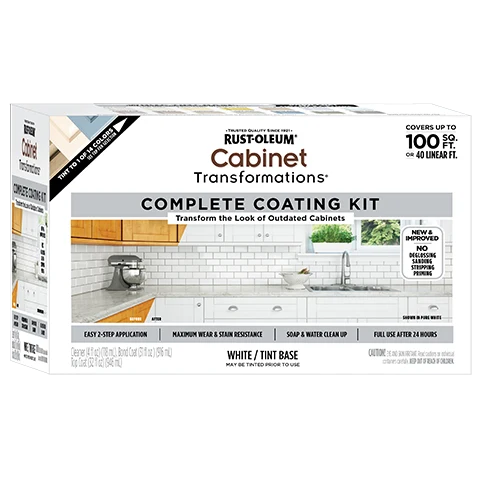
| Coverage | 100 sq ft (small kit) · 200 sq ft (large kit) |
|---|---|
| Sheens | Satin (system finish) |
| Dry / Recoat | Touch dry 1h · recoat 2–3h between system layers |
| Full cure | 7 days light use · 30 days normal use |
| VOC | <250 g/L |
| Yellowing risk | Medium on whites |
| Primer | Self-priming via included bond coat (the no-sand answer) |
| Price tier | $$ |
- Truly no-sand: the deglosser in the kit is the prep step, no 220-grit pass required even on glossy maple
- Bond coat, decorative glaze, and protective topcoat shipped in one box — the simplest cabinet project of any pick here
- Sized at 100 sq ft (small kit) or 200 sq ft (large kit), so a typical kitchen is one box on the cart
- Soft cured film: reader feedback shows peeling at door-edge wear points inside 18 months on daily-driver kitchens
- Color deck is tiny (about 70 fixed colors, no custom tint); white-on-white refinishes are not really the use case
- The decorative glaze step reads as 'painted cabinet' under close inspection — budget-tier appearance, not a designer match
5. Beyond Paint All-in-One Refinishing Paint
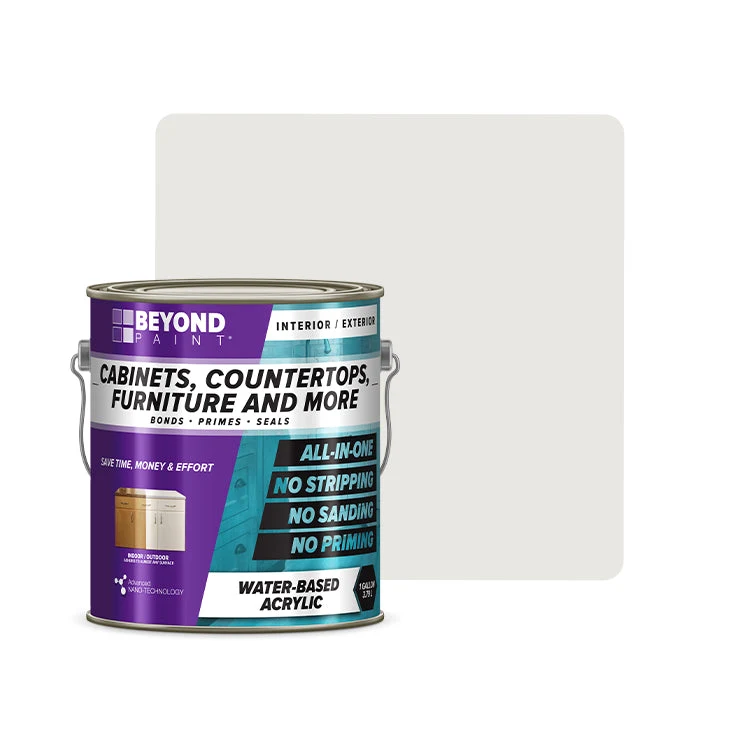
| Coverage | 150 sq ft / quart |
|---|---|
| Sheens | Matte (system finish) |
| Dry / Recoat | Touch dry 1h · recoat 2–4h |
| Full cure | 30 days |
| VOC | <100 g/L |
| Yellowing risk | Low |
| Primer | Self-priming, no separate bonding primer required |
| Price tier | $$$ |
- Built-in primer plus built-in topcoat — one quart, no separate Stix step, no separate sealer, no wax
- Mineral-loaded acrylic that bites factory-cured polyester and old oil enamel from a brush without sanding
- Self-levels closer to Advance than to a generic chalk paint — the cured film reads as paint, not as 'craft project'
- Slow soft cure: full hardness at 30 days, soft for the first week, so cabinet doors stay off their hinges longer
- Color deck is small (about 50 colors, no custom tint base) — designer-spec colors and deep saturations are out of range
- $50–$60 per quart at the brand site, which works out to $200+ per gallon-equivalent — most expensive system here
Insl-X Stix Waterborne Bonding Primer
Stix is the no-sand workflow. Three of the five picks above (Cabinet Coat, Advance, Emerald Urethane) need a bonding primer to skip the sanding step on glossy factory finishes, old oil enamel, thermofoil, and laminate. Stix bonds to all four. The Rust-Oleum kit ships its own bond coat; Beyond Paint includes the bond chemistry in the topcoat. For the three pro enamels here, Stix is the difference between a finish that lasts five years and a finish that peels at the door pull in eighteen months.
BUY ON AMAZONFrequently asked questions
Can you really paint cabinets without sanding?+
Do I need to use a deglosser instead of sanding?+
How long do no-sand painted cabinets last?+
What's the difference between Cabinet Coat and Advance?+
Will the Rust-Oleum Cabinet Transformations kit actually hold up?+
Is Beyond Paint worth $50+ per quart?+
What sheen for cabinets, no-sand or otherwise?+
What about Kompozit for no-sand cabinets?+
- Best paint for kitchen cabinets — the with-sanding version of this round-up
- Best spray paint for cabinets — when you skip the brush entirely
- How to paint kitchen cabinets — the full project guide
- Best primer round-up — Stix, BIN, Cover Stain, and where each one wins
- Sheen guide — matte, eggshell, satin, semi-gloss, gloss