What Is Chalk Paint? The Chemistry of a Soft, Chalky Film
Chalk paint is calcium-carbonate-loaded latex with an ultra-matte finish. Here's why it grabs raw wood without primer, why it must be sealed, and where it fails.

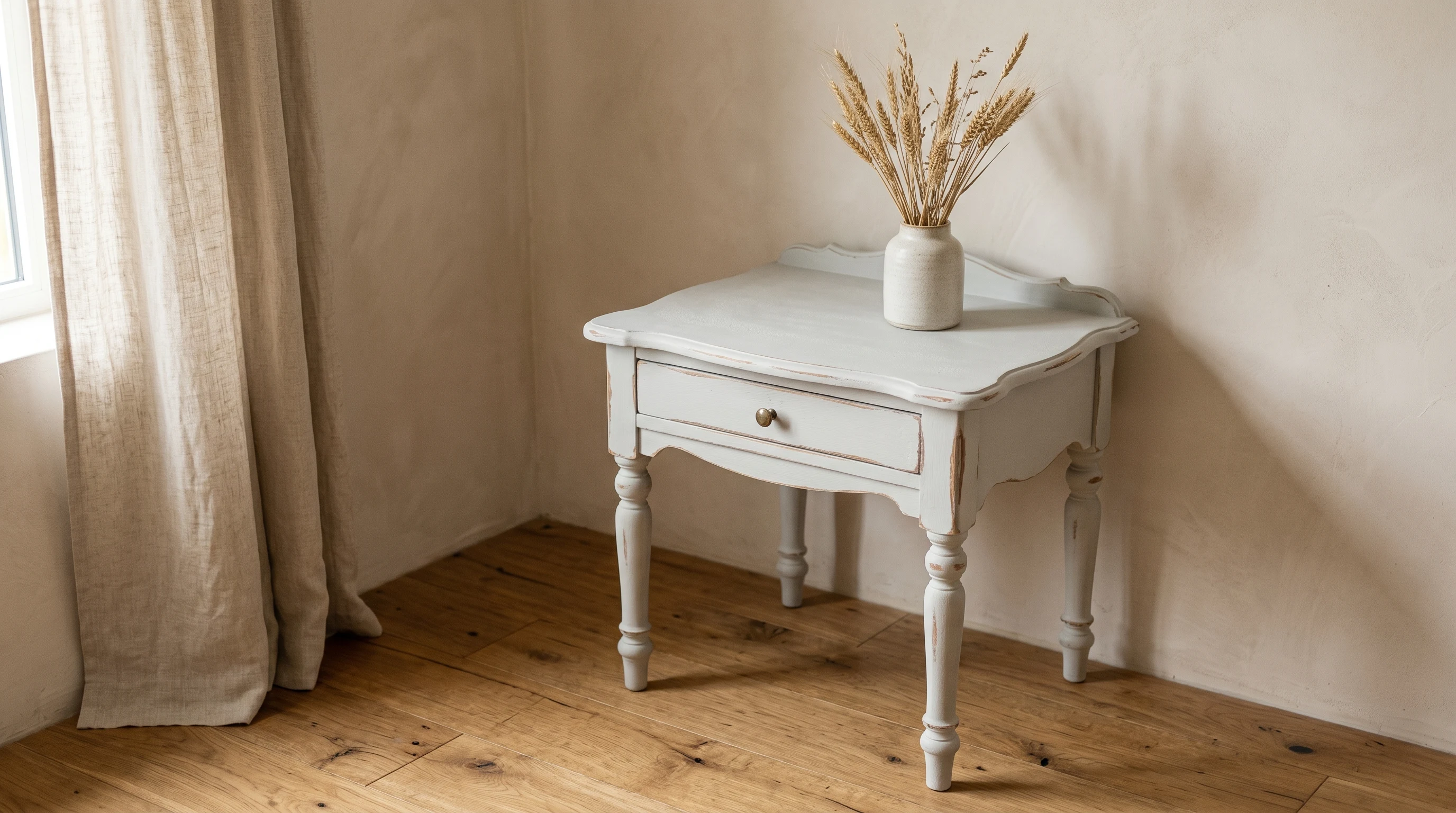
You’ve seen the finish even if you haven’t named it. A side table at a flea market, painted a chalky pale grey, no sheen at all, edges rubbed back to bare wood on the corners. The paint looks closer to plaster than to a wall coating. It also went on, almost certainly, with no sanding and no primer. That combination (ultra-matte, grippy on raw wood, easy to distress) is what chalk paint is. The chemistry behind it is straightforward, and once you understand it, the rules for where it works and where it fails make obvious sense.
The category was launched in 1990 by British designer Annie Sloan, who wanted a decorative furniture paint that behaved more like a pigment paste than like a modern latex. The formula she landed on was a water-based latex with a very high load of calcium carbonate (chalk, technically) and a small amount of acrylic binder. Coverage runs about 150 square feet per quart on raw wood, sheen sits at 1–3 gloss units (deeper matte than any wall paint), and the film is dry to touch inside the hour.
What’s Actually in the Can
A normal interior latex is roughly 30% pigment volume concentration: a balance of titanium dioxide for hide, mineral extenders for body, and acrylic resin for film strength. Chalk paint shifts that ratio. The PVC climbs to 70–80%, almost all of it calcium carbonate, with just enough acrylic binder to hold the pigment particles together once the water evaporates.
That single recipe choice is what produces every property of the finish. The high mineral load makes the wet paint thick and pasty. It sits on the brush, drags onto wood without thinning, and packs into the open grain of an unsealed substrate. The low binder content is why the dry film has no sheen and no continuous polymer skin. Sheen comes from binder smoothness at the surface; chalk paint has barely enough binder to glue the calcium carbonate together, so the top layer reads as flat mineral powder. That’s the chalky look. It’s not a finish effect, it’s pigment showing through where binder isn’t.
The same low binder ratio is what makes the film soft. A standard 100% acrylic wall paint cures into a continuous plastic skin that resists abrasion and water. Chalk paint cures into a friable, slightly porous matrix that scratches with a fingernail and absorbs water like blotting paper. That softness is the trade-off for how easy it is to distress with sandpaper. You can rub edges back to bare wood with a Scotch-Brite pad, where a fully cured acrylic film would need a power sander.
Why It Grabs Raw Wood Without Primer
The “no priming required” claim is the headline marketing line, and it’s broadly true on the surfaces chalk paint was designed for. On bare wood, MDF, raw plaster, terracotta, and unsealed concrete, the calcium carbonate slurry does two things a primer normally does. It fills the surface pores mechanically and it builds a thick first-coat film that the second coat can bond to. There’s no chemical adhesion magic happening; the pigment is just thick and grippy and the substrate is porous enough to hold it.
Where the claim breaks is on slick substrates. Laminate, melamine, polyurethaned cabinet doors, an old oil-based gloss enamel: none of these have the open pores chalk paint relies on. The film goes on, looks fine, dries, and then peels in sheets the first time anything bumps it. The label often says “no priming required” without the asterisk that should follow it. If you can scratch the existing surface with your nail and leave a mark, chalk paint will probably stick. If your nail just slides, scuff-sand to 220 grit first or use a bonding primer.
Why It Must Be Waxed or Sealed
The dry film is porous and absorbent. That’s not a defect, it’s the structural consequence of having very little binder. Drop water on an unsealed chalk-painted tabletop and the water sinks in and leaves a darker patch when it dries. Set a coffee mug down and the ring transfers. Rub a sleeve across it and the sleeve picks up pigment.
The traditional sealer is soft furniture wax, applied with a stiff brush or a rag and buffed back. Wax fills the porous film with a hydrophobic hydrocarbon layer, giving you a wipeable surface and a soft sheen that comes up under buffing. The wax wears off and needs reapplication every 12–18 months on horizontal surfaces and high-touch areas. It’s a maintenance finish, not a permanent one.
The harder-wearing alternative is water-based polyurethane in a matte or satin sheen. It locks the chalk-painted layer under a continuous acrylic film and makes the surface genuinely washable. The trade-off is that you flatten some of the chalky character — a urethane topcoat reads slightly slicker and the distressed edges lose a bit of their dusty quality. For furniture that sees real use, this is the right trade.
Where Chalk Paint Fails
Anywhere the surface takes mechanical wear or wet cleaning. Kitchen cabinet doors around the handles wear through inside a year, even sealed. Tabletops get ring-marked unless the wax is meticulously maintained. Floors are out of the question; the film won’t survive a week of foot traffic. Bathroom vanities, anything outdoors exposed to UV and rain, kids’ furniture that gets wiped down with disinfectant: all wrong applications. Chalk paint is a decorative finish for low-wear furniture and accent pieces. Used inside its window, it lasts. Pushed outside the window, it doesn’t.
The right job is a console table, a dresser, a side cabinet, a chair frame, a picture frame, a piece of trim you want to look slightly aged. The wrong job is anything someone will wash, drag a cup across, or touch a hundred times a week.
What to Do with This
Treat the can the way you’d treat a tinted plaster, not a wall paint. On raw or lightly sanded porous substrates, two coats brushed on without sanding between will get you the finish chalk paint is known for. Wax for a soft, occasionally-maintained look on display pieces. Water-based polyurethane for anything that needs to survive the next decade. And on anything glossy, sealed, or destined for the kitchen, skip chalk paint and reach for a urethane-modified enamel — the chemistry that makes chalk paint forgiving on a flea-market dresser is the same chemistry that makes it the wrong choice on a cabinet door.