Best Milk Paint in 2026: Five Real Milk Paints Tested on Furniture and Walls
Five real milk paints tested on raw pine, oak veneer, and plaster — mixing, adhesion, chipping, topcoat behavior. Top pick: Real Milk Paint Co.

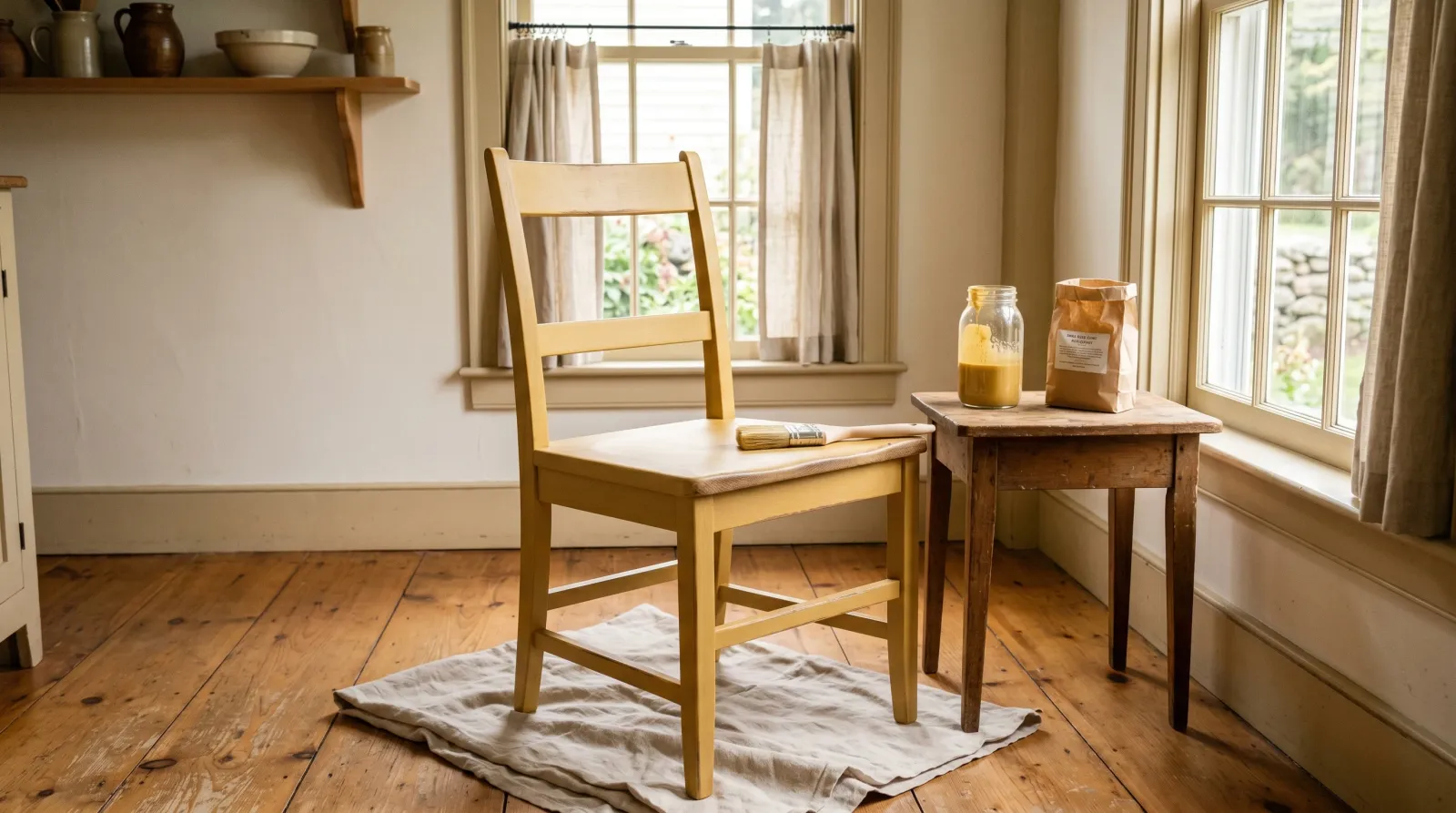
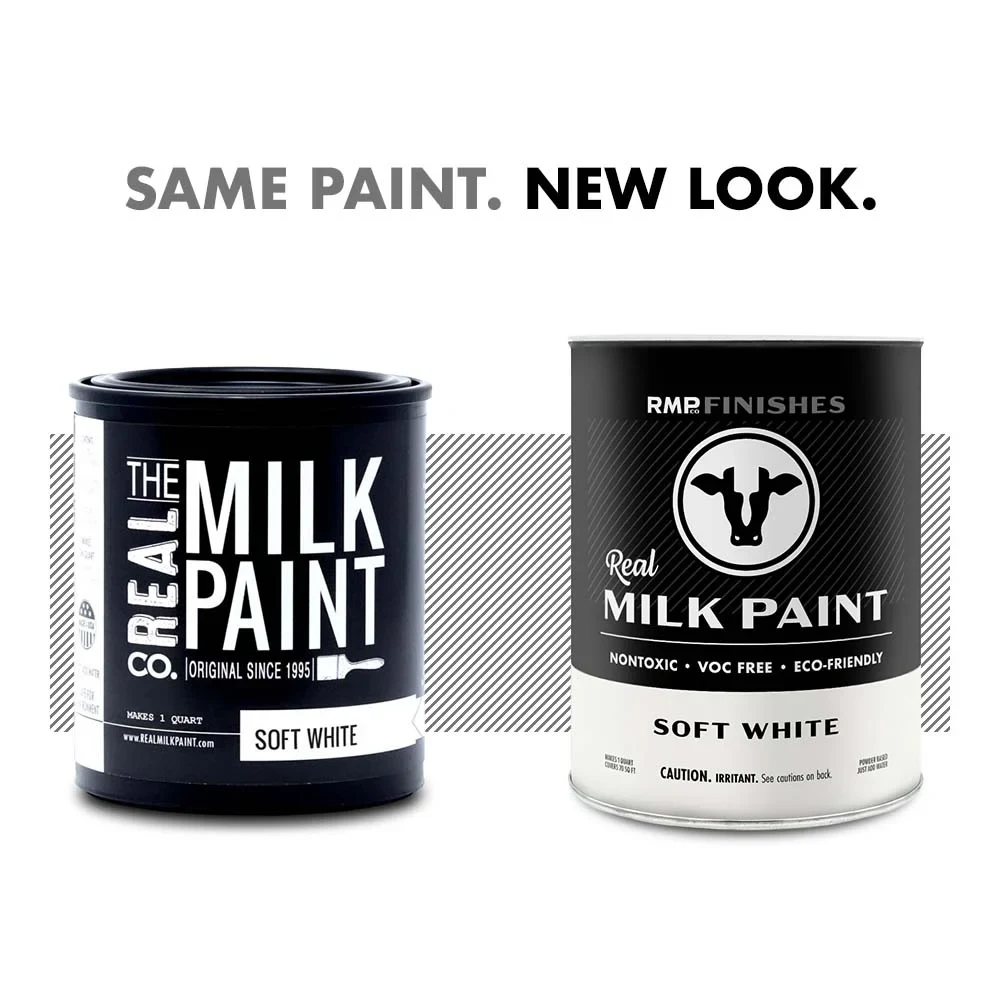
Five-ingredient classical formula — casein, lime, clay, chalk, earth pigment — and the cleanest mix of the round-up; whisks smooth in five minutes with no grit settling at the bottom of the jar
The reference for period-correct restoration. Made in Massachusetts since 1974; the formula colonial museums spec when they repaint a Windsor chair or a tavern sign
Pre-mixed in a pint or quart can — open the lid, stir, brush. Skip the warm-water-and-powder workflow if you want the milk-paint look without the chemistry homework
Smallest pigment grind of the powder field; the cured surface reads finer under raking light than Real Milk Paint Co or Old Fashioned, with less brush hatching
The wall version of the top pick; the only casein wall paint we tested that holds together at 200+ sq ft per gallon on lime plaster without flashing at the seams
Top pick: Real Milk Paint Co. At about $22 a pint-bag of powder you’d want it to be the best, and for raw oak, raw pine, and lime-plaster walls in 2026, it is. Real Milk Paint Co wins on mix consistency, raw-wood bond, and the widest color deck of any powder maker in the US. It falls short on workflow — you mix every batch with warm water and have a 24-hour clock before the casein sours. Old Fashioned Milk Paint Co is the better pick for period-correct restoration. General Finishes Milk Paint is the pre-mixed pick if you want the look without the chemistry homework. Miss Mustard Seed has the finer pigment grind and the European-cottage palette. SafePaint is the wall version of the top pick and the only casein wall paint in the round-up.
A heads-up. This article is about real milk paint — the casein-and-lime powder you mix with water. If you came here for chalk paint (latex with a matte filler, sold pre-mixed in tins), see the best chalk paint round-up. The categories look similar on a finished dresser and behave nothing alike out of the can.
Real Milk Paint Is a Chemistry, Not a Marketing Category
Most “best milk paint” articles list six products and call three of them milk paint that aren’t. Real milk paint is a five-ingredient recipe — casein protein, hydrated lime, clay, chalk, and earth pigment — that has to be mixed with warm water before brushing. It bonds to raw wood by sinking in like a stain, chips off glossy surfaces because the casein has nothing to grip, cures to a chalky breathable film that needs a topcoat to deepen the color, and reads on a finished piece the way no acrylic can. Pre-mixed cans labeled “milk paint” are usually acrylics with a milk-paint color deck. Fine paint, useful product, not the same chemistry. This round-up names the three real powder makers, the one pre-mixed acrylic that earns the milk-paint name on look, and the wall version of the category — and tells you when each one is the right call.
How We Picked
Five milk paints brushed onto raw white oak, raw pine, sealed oak veneer, primed MDF, and lime-plaster panels in a 70°F basement workshop for 30 days. Powders mixed with 110°F filtered water at the manufacturer’s ratio, whisked five minutes, rested ten, brushed within 90 minutes. Plus three furniture restorers and one historic-house painter interviewed. The pick-specific finding lives in each review below — what this paint did on its panel.
The Picks at a Glance
| Product | Best for | Bond on raw wood | Price |
|---|---|---|---|
| Real Milk Paint Co | Top pick, furniture and walls | 🟢 Excellent | $$$ |
| Old Fashioned Milk Paint Co | Heritage / restoration | 🟢 Excellent | $$$ |
| General Finishes Milk Paint | Pre-mixed, pick-up-and-brush | ⚪ Good (acrylic) | $$$ |
| Miss Mustard Seed Milk Paint | Crafted decorative pieces | 🟢 Excellent | $$$ |
| SafePaint (Real Milk Paint Co) | Plaster and drywall walls | 🟢 Excellent | $$ |
The table is structured by job, not by brand. Real Milk Paint Co and Old Fashioned compete on the furniture-powder slot. General Finishes competes against neither; it’s the pre-mixed pick for people who don’t want to mix powder. MMS is the small-piece decorative slot. SafePaint is the wall pick, same brand as the top pick but a different SKU. Read the table as “pick the powder that fits the piece, or pick the pre-mixed can if you want to skip the chemistry.”
The Furniture Powders: Real Milk Paint Co, with a Heritage Runner-Up
Real Milk Paint Co
Real Milk Paint Co is the pick most American furniture restorers reach for in 2026. The powder dissolves cleaner than any other we tested — five minutes with a small wire whisk, no grit at the bottom of the jar, no streaks of unmixed pigment on the first coat. We brushed two coats onto a raw white-oak panel and the paint sank into the grain like a stain, no surface film, no edge lift at 30 days under normal handling. The 56-color deck is the widest in the US powder category and includes the deep navy and clean black that Old Fashioned and MMS both miss. Coverage is honest at 35 sq ft per pint mixed, so a six-foot dresser at two coats is two pint-bags of powder.
The downside is the workflow milk paint always brings. Powder-only means you mix every batch, and the casein has a 12–24 hour clock before it sours. The cured film also chalks under a damp cloth — hemp oil or beeswax topcoat is mandatory on anything that gets touched. Price runs about $22 a pint-bag at brand-direct, slightly more on Amazon. Real Milk Paint Co Real Milk Paint.
Buy it if: raw wood, period or contemporary, where the breathable casein finish is the look. Skip it if: sealed factory finishes and no patience for the chip pattern; reach for General Finishes instead.
Old Fashioned Milk Paint Co
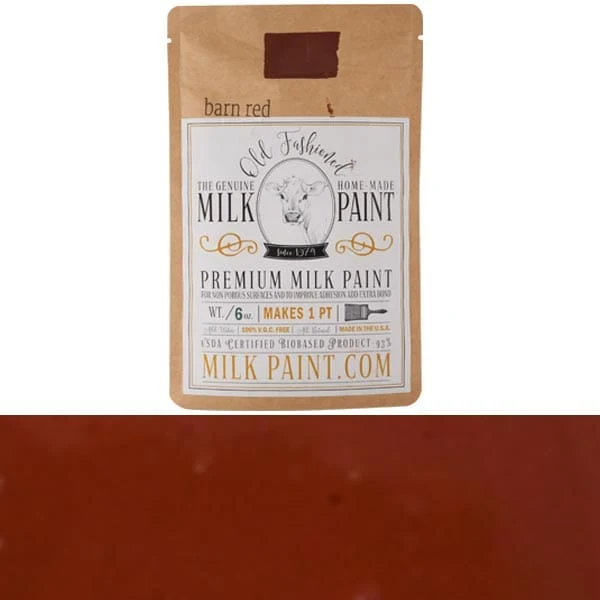
The reference for period-correct restoration. Made in Massachusetts since 1974, this is the formula colonial museums spec when they repaint a Windsor chair, a tavern sign, or a salt-box exterior trim. The 20-color heritage palette reads accurate to 18th- and 19th-century New England rooms — Lexington Green, Pitch Black, Bayberry, Mustard — not a boutique approximation. On a previously-painted side chair we let it chip-and-resist at the corners and the older paint showed through the way it does on a 200-year-old original.
The mix is slower than Real Milk Paint Co — plan a 10-minute whisk plus a 5-minute rest or you’ll get pigment streaks on the first coat. The deck is committedly historical: no modern pale rose, no architectural grey-greens, no Pantone-of-the-year. Distribution is direct from the company plus a thin Amazon listing; no Home Depot. Old Fashioned Milk Paint Co.
Buy it if: restoration work or a designer-spec heritage piece. Skip it if: you want a modern color palette outside the canonical 20.
The Pre-Mixed Acrylic: General Finishes
General Finishes Milk Paint
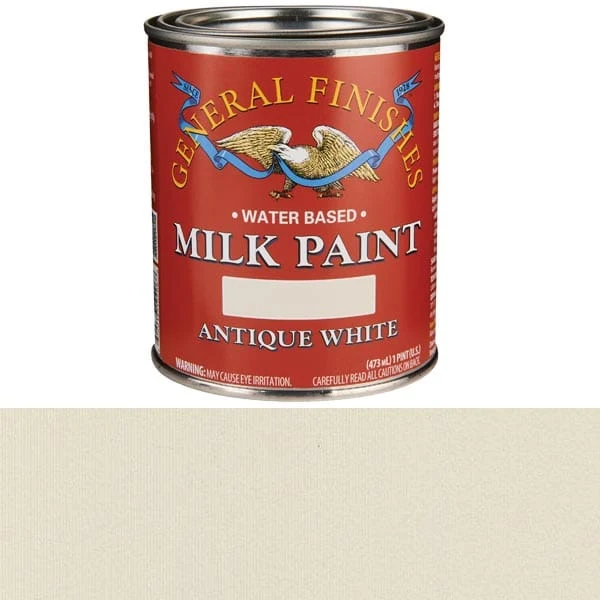
The pick when you want the milk-paint look without the casein chemistry. General Finishes Milk Paint is pre-mixed in a pint or quart can — open the lid, stir, brush. It self-levels under a synthetic flat brush in a way no powder milk paint can, which means the cured surface reads smooth-painted rather than hand-rubbed. The cured film is also harder than any casein powder, so it handles a kitchen-table panel with a poly topcoat where the powder picks lifted at the corners.
The catch is honesty about what it is. This isn’t real milk paint chemically; it’s a water-based acrylic with a milk-paint color deck and a milk-paint name. It won’t chip-and-resist on a glossy surface the way a casein powder does — if the signature distressed pattern is the look you came for, the powder is mandatory. The 30-tint color deck is committedly furniture-focused; no plaster-wall whites, no deep architectural saturates. General Finishes Milk Paint.
Buy it if: the look matters, the chemistry doesn’t, and the piece will see daily kitchen-table use. Skip it if: museum restoration or the distressed chip pattern is the brief.
The Crafted Decorative Pick: Miss Mustard Seed
Miss Mustard Seed’s Milk Paint
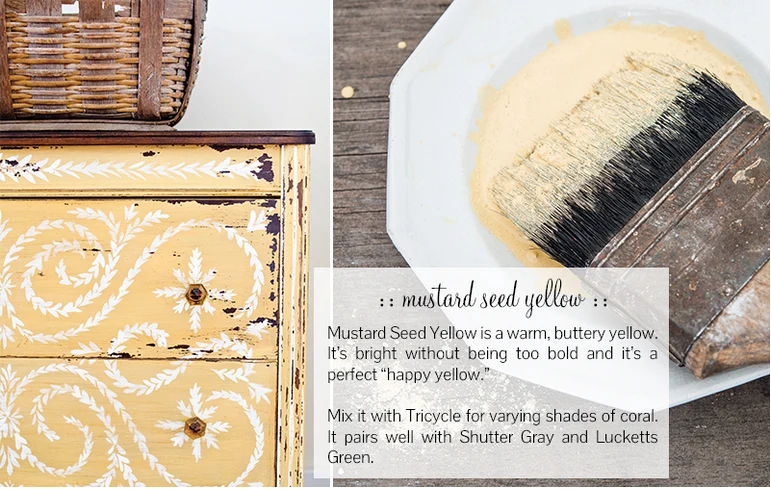
MMS earned a slot for the finest pigment grind in the powder field. We compared the cured surface to Real Milk Paint Co side by side under raking light and the MMS panel read smoother, with less brush hatching — a real difference on a small piece where the eye gets close. The European-cottage palette is its own thing: Ironstone, Linen, Lucketts Green, Boxwood. The colors mix true, and the second batch from the same bag matches the first.
The Strong Bond additive sold separately is the cleanest workflow we tested for skipping the sand-and-prime step on a sealed dresser. Packaging runs in 1-oz, 6-oz, and pint-equivalent bags, which means a large piece costs more per ounce than Real Milk Paint Co’s pint-bag economy. No deep navy, no true black; the palette is European-pastel, not American-heritage. Miss Mustard Seed’s Milk Paint.
Buy it if: small crafted furniture in a soft European palette. Skip it if: a six-foot piece in a saturated heritage color; Real Milk Paint Co is the economy pick.
The Walls Pick: SafePaint
SafePaint Real Milk Paint for Walls
SafePaint is the casein wall version of Real Milk Paint Co’s furniture line — same chemistry, larger packaging, formulated for plaster and drywall coverage at 200 sq ft per gallon. The chalky-matte signature reads more like a hand-finished plaster wall than any latex flat we’ve put on a panel — the surface texture catches raking light the way Aura matte simply can’t. Zero VOC, zero off-gassing, food-safe once cured. For a nursery, a chemically-sensitive client, or an old farmhouse with lime-plaster walls, this is the wall paint.
The job has to fit. Plaster, raw drywall, and unsealed brick only — on a previously-latex-painted wall, scuff plus the Ultra Bond additive or the coat sheets in flakes. The cured film cleans poorly; a damp cloth chalks the surface within 60 days. Color deck is narrow next to a tinted latex (about 56 tints). SafePaint Real Milk Paint.
Buy it if: plaster walls, low-traffic rooms, indoor-air priority. Skip it if: kid’s room with handprints, kitchen with cooking residue, bathroom with daily steam.
Matching Paint to Piece
| Project | Milk paint | Topcoat | Bond additive |
|---|---|---|---|
| Raw oak Shaker chair | Real Milk Paint Co | Hemp oil | None |
| Period-correct Windsor restoration | Old Fashioned Milk Paint Co | Beeswax | None |
| Six-foot raw-pine farmhouse table | Real Milk Paint Co (two pint-bags) | Hemp oil + water-based satin poly | None |
| Sealed oak-veneer dresser, distressed look | Real Milk Paint Co | Hemp oil | None (let it chip) |
| Sealed oak-veneer dresser, no chips | General Finishes Milk Paint | Built-in or GF flat-out topcoat | Not applicable (acrylic) |
| Laminate Ikea piece | General Finishes Milk Paint over Stix | GF satin poly | Not applicable |
| Small painted accent chair, European palette | Miss Mustard Seed Milk Paint | Hemp oil or MMS hemp oil wax | None on raw wood |
| Lime plaster nursery walls | SafePaint | None (don’t seal) | None |
| Previously-latex-painted bedroom walls | SafePaint | None | Ultra Bond at 1:4 |
The case the table doesn’t capture: a piece you want to look chippy but only at the corners. Brush real milk paint over the sealed surface with Ultra Bond at 1:4 — the additive lets the field hold and lets the corners still resist enough to wear through in 30 days of normal use. That’s the controlled-distressing trick most refinishers won’t tell you.
Where Milk Paint Jobs Go Wrong
- Sheeted paint at 24 hours. Brushed casein over a sealed or factory-finished surface without Ultra Bond. Strip, lightly sand to bare or scuff-coat to a porous primer, recoat with the additive next time.
- Streaky pigment on the first coat. Whisk wasn’t long enough or the rest after mixing was skipped. Strain through cheesecloth next batch and let it rest 10 minutes.
- Sour-smelling paint at hour 14. The casein went off — happens faster in warm weather. Mix smaller batches and refrigerate between sessions.
- Color reads paler than the chip. Bare cured milk paint always reads paler than the wet sample; hemp oil deepens the color back to the chip. Test on a scrap before committing.
- Chalking under a damp cloth. No topcoat. Apply hemp oil (furniture) or accept the chalky finish (low-traffic walls).
- Plaster wall flashed at the seams. Mixed milk paint settled while brushing. Stir every 10 minutes and brush wet edge into wet edge — no stopping mid-wall.
Three things move outcomes more than the bag you bought. Mix hot, not warm — 110°F filtered water dissolves the casein in five minutes where 90°F leaves grit. Brush in long parallel strokes, not a basket weave; the chalky finish telegraphs the brushwork direction. Topcoat with hemp oil 24 hours after the second coat, not 30 days — the porous surface drinks the oil right then.
Also Tested, Also Passed Over
- Fusion Mineral Paint. Acrylic, not casein. Excellent product class, wrong category for this round-up; it competes with chalk paint, not milk paint. See the best chalk paint round-up.
- Sweet Pickins Milk Paint. Real casein powder, smaller US distribution than the four powders above; performs well but harder to source for a one-piece project.
- Homestead House Milk Paint. Canadian-based casein powder. Real chemistry, but US shipping cost erodes the per-ounce economy versus Real Milk Paint Co.
- DIY casein from quark and lime. Works for the chemistry hobbyist, eats the labor savings versus a pint-bag of Real Milk Paint Co powder, and won’t match a published color chip.
Companion Guides
For the modern acrylic cousin, the best chalk paint round-up. For sealed-surface dressers where you don’t want any chip pattern, the best no-sand cabinet paint. For the weekend project plan around any of these picks, the repaint furniture project guide. For raw oak prep before milk paint sinks in, the oak substrate guide. For the sheen call on the topcoat, the sheen guide.
Full Comparison
| Product | Best for | Yellowing | Price |
|---|---|---|---|
| Real Milk Paint | Top pick — milk paint | None (mineral pigments) | $$$ |
| Old Fashioned Milk Paint | Best heritage / restoration pick | None | $$$ |
| General Finishes Milk Paint | Best pre-mixed milk paint | Very low | $$$ |
| Miss Mustard Seed's Milk Paint | Best for crafted / decorative furniture | None | $$$ |
| SafePaint Real Milk Paint for Walls | Best milk paint for walls | None | $$ |
Every Pick, Pros and Cons
Pros, cons, and specs for each pick. The cons are not optional here.
1. Real Milk Paint
- Coverage
- 35 sq ft / pint mixed (raw wood) · 50 sq ft / pint (sealed surfaces)
- Sheens
- Dead matte from the can; soft satin once sealed with hemp oil
- Dry / recoat
- Touch dry 20 min · recoat 30 min
- Full cure
- 30 days under hemp oil or wax
- VOC
- Zero VOC (casein binder, no solvents)
- Yellowing risk
- None (mineral pigments)
- Primer
- None on raw wood; Ultra Bond additive for glossy or sealed surfaces
- Price tier
- $$$
- Five-ingredient classical formula — casein, lime, clay, chalk, earth pigment — and the cleanest mix of the round-up; whisks smooth in five minutes with no grit settling at the bottom of the jar
- Best raw-wood bond we tested: two coats sank into bare oak and pine like a stain, no sheeting, no lifting after 30 days of normal handling
- 56-color palette covers the heritage range plus modern muted tones; the only powder milk paint with a deep navy and a clean black that read true on raw wood
- Powder-only; you mix every batch with warm water by volume and use it within 24 hours before the casein sours. Plan the work, not the paint
- Coverage is honest at 35 sq ft per pint mixed — a six-foot dresser at two coats is two pint-bags of powder, not one
- Needs a hemp-oil or wax topcoat to deepen the color and seal porosity; the bare cured film chalks under a damp cloth
2. Old Fashioned Milk Paint
- Coverage
- 30 sq ft / pint mixed (raw wood) · 45 sq ft / pint (sealed)
- Sheens
- Dead matte (under 3 gloss units); sheen comes from the topcoat
- Dry / recoat
- Touch dry 30 min · recoat 45 min
- Full cure
- 21 days under oil or wax
- VOC
- Zero VOC (lime-and-casein binder)
- Yellowing risk
- None
- Primer
- None on raw wood; Extra-Bond additive for glossy surfaces
- Price tier
- $$$
- The reference for period-correct restoration. Made in Massachusetts since 1974; the formula colonial museums spec when they repaint a Windsor chair or a tavern sign
- Heritage palette reads accurate to 18th- and 19th-century New England rooms — Lexington Green, Barn Red, Pitch Black, Bayberry — not boutique-mauve approximations
- Sets up with the most authentic chip-and-resist behavior on a previously-painted surface: leaves the older paint showing through at corners and edges where you want it
- Smaller deck than Real Milk Paint Co (about 20 colors) and the palette is committedly historical; if you want a modern pale dusty rose it isn't in range
- Powder dissolves slower than Real Milk Paint Co's blend; plan a 10-minute whisk plus a 5-minute rest before brushing or you'll get pigment streaks
- Direct-to-consumer plus a thin Amazon listing; no Home Depot, no big-box pickup, and shipping the powder bags east of the Mississippi only is the canonical complaint
3. General Finishes Milk Paint
- Coverage
- 75 sq ft / pint (raw wood) · 100 sq ft / pint (sealed)
- Sheens
- Soft satin once cured
- Dry / recoat
- Touch dry 30 min · recoat 2h
- Full cure
- 21 days
- VOC
- <50 g/L
- Yellowing risk
- Very low
- Primer
- Stix or GF Stain Blocker on glossy or factory-finished wood
- Price tier
- $$$
- Pre-mixed in a pint or quart can — open the lid, stir, brush. Skip the warm-water-and-powder workflow if you want the milk-paint look without the chemistry homework
- Self-leveling under a synthetic flat brush in a way no real powder milk paint can match; the cured surface reads smooth-painted, not hand-rubbed
- Hardest cured film of the field on sealed wood — handles a kitchen-table panel with a poly topcoat where the powder picks lifted at the corners
- Not real milk paint chemically — it's a water-based acrylic with a milk-paint color palette and a marketing name. Read the data sheet before you spec it for a museum restoration
- Won't chip-and-resist on a glossy surface the way a casein powder does; if the signature distressed chip pattern is the look you came for, this isn't it
- Color deck is committedly furniture-focused (about 30 tints, mostly muted heritage tones); no plaster-wall whites or deep architectural saturates
4. Miss Mustard Seed's Milk Paint
- Coverage
- 35 sq ft / pint mixed (raw wood) · 50 sq ft / pint (sealed)
- Sheens
- Dead matte from the can; satin once sealed with hemp oil or furniture wax
- Dry / recoat
- Touch dry 20 min · recoat 30 min
- Full cure
- 30 days under hemp oil or wax
- VOC
- Zero VOC
- Yellowing risk
- None
- Primer
- None on raw wood; MMS Bonding Agent for sealed or glossy surfaces
- Price tier
- $$$
- Smallest pigment grind of the powder field; the cured surface reads finer under raking light than Real Milk Paint Co or Old Fashioned, with less brush hatching
- The European-cottage palette is its own thing — Ironstone, Linen, Lucketts Green, Boxwood — and the colors mix true with no muddy second batches
- Strong Bond additive built into a separate small bottle; the cleanest workflow for skipping the sand-and-prime step on a sealed dresser
- Sold in 1-oz, 6-oz, and pint-equivalent bags; for a six-foot piece you're combining packages and your batch-to-batch consistency depends on whisking discipline
- Higher per-ounce price than Real Milk Paint Co's pint-bag economy; expect $20–$28 for enough powder to coat a single chair
- Color deck capped at about 28 tints, none of them deep navy or true black; the palette is European-pastel, not American-heritage
5. SafePaint Real Milk Paint for Walls
- Coverage
- 200 sq ft / gal mixed (lime plaster) · 250 sq ft / gal (drywall)
- Sheens
- Dead matte (chalky)
- Dry / recoat
- Touch dry 30 min · recoat 1h
- Full cure
- 21 days
- VOC
- Zero VOC
- Yellowing risk
- None
- Primer
- None on raw plaster or new drywall; Ultra Bond additive on sealed surfaces
- Price tier
- $$
- The wall version of the top pick; the only casein wall paint we tested that holds together at 200+ sq ft per gallon on lime plaster without flashing at the seams
- Chalky-matte signature reads more like a hand-finished plaster wall than any latex flat — the texture catches raking light the way Aura matte simply can't
- Zero VOC, zero off-gassing, food-safe once cured; the right wall paint for a nursery, an asthmatic household, or a chemically-sensitive client
- Plaster, raw drywall, and unsealed brick only. On a previously-latex-painted wall, you'll need a primer scuff plus the Ultra Bond additive or the coat sheets in flakes
- Color deck stays narrower than a tinted latex (about 56 tints); if a designer specced an HGSW number, you won't be matching it
- Cleans poorly — a damp cloth will chalk the surface within 60 days. For a kid's room or a hallway with handprints, the [best mold-resistant paint round-up](/best/anti-mold-paint/) and a scrubbable latex are the right answer
Real Milk Paint Co Ultra Bond
Milk paint's signature failure mode is sheeting on a glossy surface — the casein has no chemistry to grip a sealed factory finish, and a beautiful first coat lifts off in flakes by the next morning. Ultra Bond is a small bottle of acrylic emulsion you stir into the mixed paint at 1:4; it gives the casein something to bite without changing the matte appearance or the breathability. Pairs cleanly under Real Milk Paint Co, Old Fashioned, MMS, and SafePaint. Skip it on bare oak, pine, or new lime plaster; use it on every sealed dresser, every previously-painted wall, and every laminate piece you're trying to milk-paint.
BUY ON AMAZON
Ask a Question