Product review · Annie Sloan · Updated August 8, 2026
Chalk PaintAnnie Sloan paint review
8.4/10The gentlest way into furniture painting there is, as long as you budget for the topcoat and stay off the walls.
The original no-sand furniture paint, and the one people keep buying for the wrong project. Here is what the roughly $44.95 litre actually gets you, and why the tin is only half the finish.

Emily Roberts · DIY Editor & First-Timer's Guide · Updated August 8, 2026
Emily painted her first room at 24, hated every minute of it, and got better. She writes the beginner guides she wishes she had had, which means defining every term and never assuming you know what buffing wax is supposed to feel like. About the testing process →
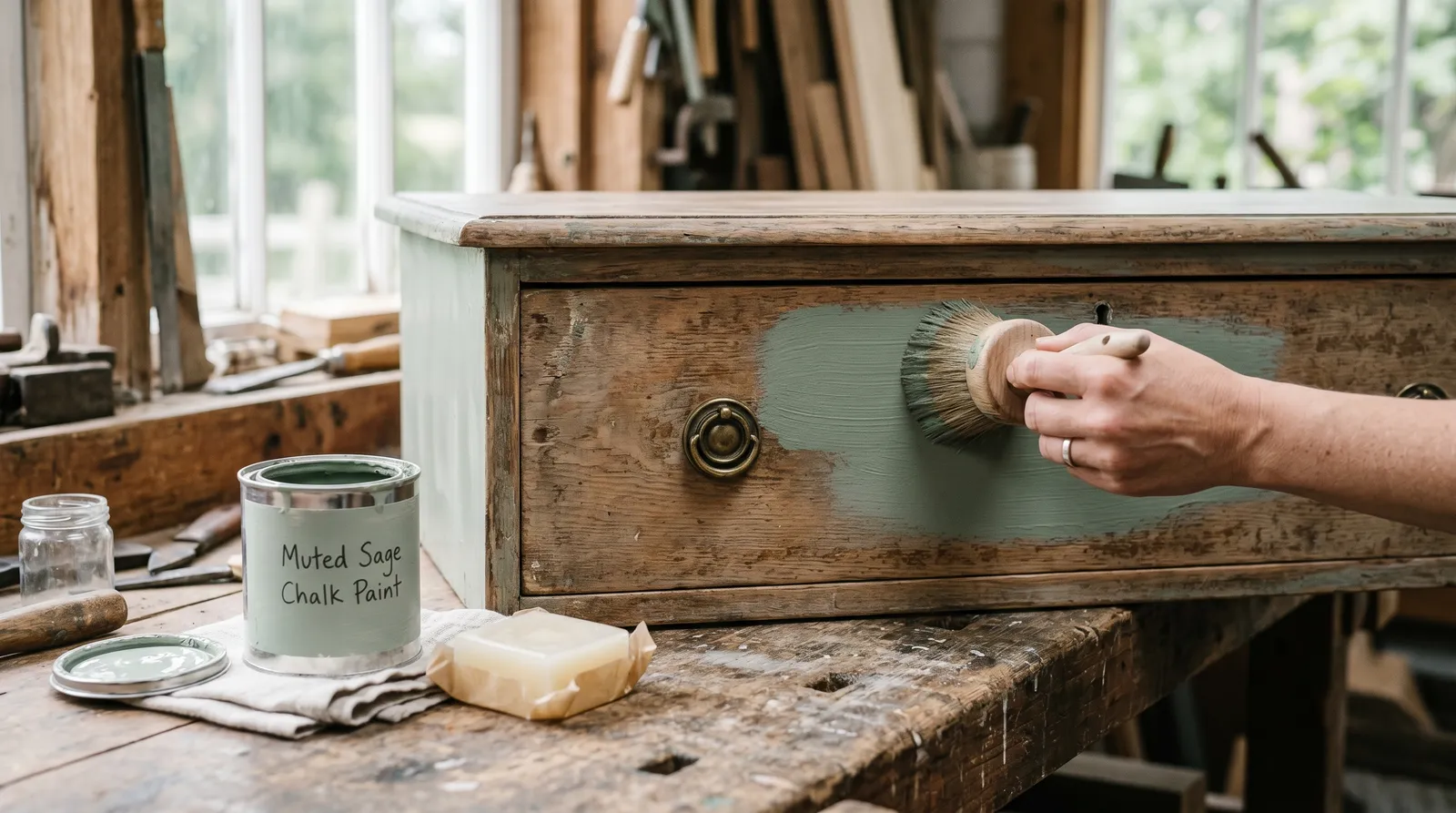
Annie Sloan Chalk Paint1 sheen
CoverageAbout 150 sq ft per litre on furniture
Dry timeTouch dry in 1-2 hours
VOCLow-VOC, water-based
Sheens Ultra-matte only
Read this first
The Fast Verdict
Buy it if the project is furniture and prep is the reason you have not started. About $44.95 a litre is real money, but it grips wood, metal, laminate, melamine and glass with no sanding and no primer, and the matte finish treats brush marks as character instead of mistakes. Two coats fit in one afternoon. Then you have to seal it: wax for a decorative piece, lacquer for one that works for a living. Skip it for walls, and skip it for a throwaway shelf.
Best for
Thrifted dressers and side tables · Laminate and melamine pieces · A first furniture project · Cabinets sealed with lacquer · Aged and antiqued looks · Weekend upcycling
Skip if
The project is actually a wall · You want a one-and-done finish with no topcoat · Tight budget on a big piece · You need paint from a local store tonight
What it's good at
- Skipping the sanding and priming that kills furniture projects before they start
- Gripping things you would assume you cannot paint: laminate, melamine, metal, glass
- Hiding beginner mistakes, because the matte finish reads brush marks as character
- Two coats in a single afternoon thanks to the fast dry time
- Colors that are hard to get wrong, a curated palette built to be mixed
- Putting a trained shop and often a hands-on workshop behind your first project
What it's not good at
- Walls. It is thick, it comes in small tins, and nobody wants to wax a room
- Being a finished product on its own. The topcoat is extra money and extra work
- Standing up to water or hard use if you seal it with wax instead of lacquer
- Covering square footage cheaply at about $44.95 a litre before topcoat
- Last-minute top-ups, since it is stockist and online only
Numbers, not adjectives
Spec Sheet
- Coverage
- About 150 sq ft per litre on furniture (one coat); most pieces take two
- Sheens
- Ultra-matte only, a chalky velvety finish
- Dry time
- Touch dry in 1-2 hours; recoat the same afternoon
- VOC
- Low-VOC, water-based
- Prep
- No sanding and no primer on most furniture; clean off grease and old polish first
- Primer
- Shellac or a stain-blocking primer under pale colors on bleeding woods
- Surfaces
- Wood, metal, laminate, melamine, glass, brick, concrete
- Topcoat
- Required. Wax for decorative pieces, lacquer for hardworking ones
- Sizes
- 1-litre tin; 120ml sample pots
- Where to buy
- Trained independent stockists and the official US online store only
- Price
- About $44.95 / litre; sample pots from about $16
Application Settings That Work
- Brush
- Brush it. The paint is thick, which is why it covers so well, and brush marks are part of the look here rather than something to hide. Most pieces want two coats and it dries fast enough to do both in one afternoon.
- Thinning
- A splash of water thins it for a smoother lay-down. Going the other way, leaving the lid off for a while thickens it if you want more texture. Neither is required.
- Primer
- None on a normal piece of furniture. The exception is bleeding wood, so hit old mahogany or knotty pine with shellac or a stain-blocking primer before a pale color.
Mid-project panic
When It Goes Wrong, and How to Fix It
A faint pink or yellow halo comes up through a pale color
Why it happens. That is the wood bleeding, not the paint failing. Characterful old woods, mahogany especially and some knotty pines, hold natural stains that creep up through light paint once it wets the surface. You usually spot it after the first coat, as a warm blush in the middle of your white or soft grey.
The fix. Stop and seal those spots with shellac or a stain-blocking primer, let it dry, then carry on with your color. Doing it after the first coat still works, you just lose an afternoon. If you know the piece is old dark wood and you are going light, seal it before you open the paint at all.
The paint sits on top and rubs off at the edges
Why it happens. Almost always a dirty surface. Old furniture polish, kitchen grease, and years of hand oils build a slick film, and nothing bonds to that. The no-sand promise is real, but it is a no-sand promise, not a no-clean one.
The fix. Wipe the whole piece down and get the grease and polish off before you start. If the surface is very shiny, a glossy varnished tabletop for example, give it ten seconds with a sanding pad. That is not real sanding, it is just helping the first coat bite.
Water rings and finger marks on a finished piece
Why it happens. The paint was left bare. Chalk Paint dries porous, which is a polite way of saying it acts like a sponge, so a wet glass leaves a ring and greasy fingers leave marks. The color looked finished, so the topcoat got skipped.
The fix. Seal it. Wax if the piece is decorative, lacquer if it gets handled or wiped. There is no way around this step, and it is the difference between a painted piece and a finished one.
A waxed tabletop stains within a month
Why it happens. Right paint, wrong topcoat. Wax is soft and it does not love water or hard daily use, so on a kitchen table, a vanity, or cabinets you wipe down every day it gives up quickly. Beginners reach for wax because it is the famous Annie Sloan finish.
The fix. Use lacquer on anything that works for a living. The rule to carry around: decorative piece, wax; hardworking or wet piece, lacquer. If a waxed surface has already marked, you can clean it back and re-do the topcoat in lacquer.
Side by side
Chalk Paint vs Satin Paint vs Wall Paint
Annie Sloan makes three paints and people reach for the wrong tin constantly. They are not interchangeable, so match the paint to the surface before you match it to the color.
| Chalk Paint | Satin Paint | Wall Paint | |
|---|---|---|---|
| What it is for | Furniture and upcycling: dressers, chairs, frames, side tables | Interior wood and metal that gets used: doors, trim, skirting, cabinets | Interior walls and ceilings |
| Finish | Ultra-matte, chalky and velvety | Soft satin sheen, wipes clean | Flat velvety matte |
| Topcoat | Always. Wax or lacquer, bought separately | None needed. The protection is in the paint | None needed |
| Prep | Clean it; scuff only if very shiny | Clean it; scuff glossy or previously waxed surfaces | Self-priming on sound, clean, previously painted walls |
| How it goes on | Brush. It is thick and brush marks read as character | Brush, or a small foam roller on flat panels | Roll it, cut in the edges with a brush |
| Coverage | About 150 sq ft per litre | About 118 sq ft per 750 ml can | About 120 sq ft per litre |
| Price | About $44.95 / litre, plus a topcoat | About $47 / 750 ml can | Premium tier; 1-litre and 2.5-litre tins |
What it is for
Chalk PaintFurniture and upcycling: dressers, chairs, frames, side tables
Satin PaintInterior wood and metal that gets used: doors, trim, skirting, cabinets
Wall PaintInterior walls and ceilings
Finish
Chalk PaintUltra-matte, chalky and velvety
Satin PaintSoft satin sheen, wipes clean
Wall PaintFlat velvety matte
Topcoat
Chalk PaintAlways. Wax or lacquer, bought separately
Satin PaintNone needed. The protection is in the paint
Wall PaintNone needed
Prep
Chalk PaintClean it; scuff only if very shiny
Satin PaintClean it; scuff glossy or previously waxed surfaces
Wall PaintSelf-priming on sound, clean, previously painted walls
How it goes on
Chalk PaintBrush. It is thick and brush marks read as character
Satin PaintBrush, or a small foam roller on flat panels
Wall PaintRoll it, cut in the edges with a brush
Coverage
Chalk PaintAbout 150 sq ft per litre
Satin PaintAbout 118 sq ft per 750 ml can
Wall PaintAbout 120 sq ft per litre
Price
Chalk PaintAbout $44.95 / litre, plus a topcoat
Satin PaintAbout $47 / 750 ml can
Wall PaintPremium tier; 1-litre and 2.5-litre tins
If the piece is a decorative one and you want that chalky vintage look, Chalk Paint, sealed with wax. If the surface gets touched, scuffed, and wiped every day, doors, trim, cabinets, banisters, Satin Paint saves you the whole topcoat stage. If you are painting a room, Wall Paint, and do not let anyone talk you into waxing a wall. The quick test: would you wipe it down with a damp cloth? Then it is not a Chalk Paint job.
If not this one
Honest Alternatives
AS
Annie Sloan Satin PaintAbout $47 / 750 ml can
Same color world, no topcoat step. If your piece is a cabinet, a door, or trim rather than a decorative dresser, this is the easier can. You give up the chalky matte look and the antiquing tricks.
Full review →AS
Annie Sloan Wall PaintPremium tier; 1-litre and 2.5-litre tins
The one to buy if the project turned out to be a room. It rolls out over walls and ceilings, dries flat matte, and needs no wax. Chalk Paint on walls is the single most common mistake with this brand.
Full review →CS
Craft-store chalk-style paintLess than $44.95 / litre
The budget route. It will get a basic job done on a throwaway shelf or a piece you are not precious about. For a first project you want to go right, or a piece you actually care about, the extra money here buys the no-prep promise that works.
Questions people actually ask
Chalk Paint Questions, Answered
Is Annie Sloan Chalk Paint worth it?
If the project is furniture and prep is the reason you have not started, yes. About $44.95 a litre plus a topcoat is real money, but you are buying the part that gets first-timers to a finished piece: no sanding, no priming, and a matte finish that forgives brush marks. It is not worth it if the project is actually a wall, or if you are painting something disposable on a tight budget, where a craft-store chalk-style paint will do.
Do I really not have to sand or prime first?
On a normal piece of furniture, no, and that is the whole reason the paint exists. Two real exceptions. Wipe off grease and old polish first, because nothing sticks to a greasy dresser. And on a very shiny or oiled surface, a quick scuff with a sanding pad helps the first coat grab. The bigger gotcha is bleeding wood: old mahogany and knotty pine can push pink or yellow stains up through a pale color, so seal those with shellac or a stain-blocking primer before you go light.
Do I have to wax it, and what is the difference between wax and lacquer?
Yes, you need a topcoat. Raw Chalk Paint is porous and will mark and stain if you leave it bare. Wax is the traditional finish: you rub clear or tinted wax in with a cloth or brush and buff it, and you get that soft hand-finished glow. It needs re-doing every couple of years and it does not love water or hard use. Lacquer is a water-based wipe-on or brush-on sealer that is tougher and water-resistant. Simple rule: a decorative piece gets wax, a hardworking piece gets lacquer.
Can I use Chalk Paint on my walls or kitchen cabinets?
Cabinets, yes, just seal them with lacquer instead of wax because cabinets get touched and wiped all day. Walls, no. Chalk Paint is thick, it comes in small tins, and waxing a whole room is not a thing anyone wants to do. Annie Sloan makes a separate Wall Paint for that. A built-in or an accent cabinet is fair game; a full room is not.
Why is it so much more expensive than chalk paint at the craft store?
You are paying for the original formula, the no-prep convenience that actually works, the curated colors, and the trained shop behind it. A litre runs about $44.95, which is real money for furniture paint. A craft-store chalk-style paint costs less and will get a small project done. For a piece you care about, or a first project where you want it to go right, the Annie Sloan version is worth the extra. For a throwaway shelf, it is not.
Is chalk paint the same as chalkboard paint?
No, and this trips up almost everyone. Chalk is the finish, not the ingredient, and you do not write on it. The word points to the soft, velvety, slightly powdery matte look the paint dries to, like an old plaster wall or a piece of furniture that has mellowed over a hundred years. Annie Sloan made the formula in 1990, and Chalk Paint is a trademark she enforces, which is why every other brand calls theirs chalk-style or chalky finish.
How many coats do I need?
Most pieces want two. The paint is thick and covers well, so a single coat sometimes looks close, but two is the honest working spec, especially going light over an old dark finish. The good news is it is touch dry in one to two hours, so both coats fit in an afternoon and you can wax or lacquer the next day.
Can I thin it, or make it thicker?
Both. A splash of water thins it out for a smoother finish with fewer brush marks, which is what you want on a flat modern piece. Leaving the lid off for a while thickens it if you want more texture and visible brushwork. Neither is required, and if you like the paint straight from the tin, that is the intended way to use it.
Is Annie Sloan Chalk Paint sold at Home Depot or Amazon?
No. It sells through a network of independent trained stockists plus the official US online store at anniesloan.com, which ships free in the US over $99. Listings at Home Depot, Lowe's, or on Amazon are third-party resellers the brand does not stand behind, so you lose the color advice and the genuine-product guarantee. The trade-off is real: no hardware-store run at 7pm when you come up short.
Keep exploring
Annie Sloan brand hubBest chalk paint, comparedAnnie Sloan Soft Wax reviewBest no-sand cabinet paint
We may earn a commission when you buy through the retailer link above. It never changes the score or the verdict.
Ask a Question