Product review · Annie Sloan · Updated August 8, 2026
Satin PaintAnnie Sloan paint review
8.4/10The easiest Annie Sloan paint to recommend to a beginner, because when the second coat dries you are finished.
This is the Annie Sloan paint that deletes the wax-and-buff homework entirely. No topcoat, wipes clean, and built for the doors and cabinets that get used every day.

Emily Roberts · DIY Editor & First-Timer's Guide · Updated August 8, 2026
Emily painted her first room at 24, hated every minute of it, and got better. She writes the beginner guides she wishes she had had, which means defining every term and never assuming you know what buffing wax is supposed to feel like. About the testing process →
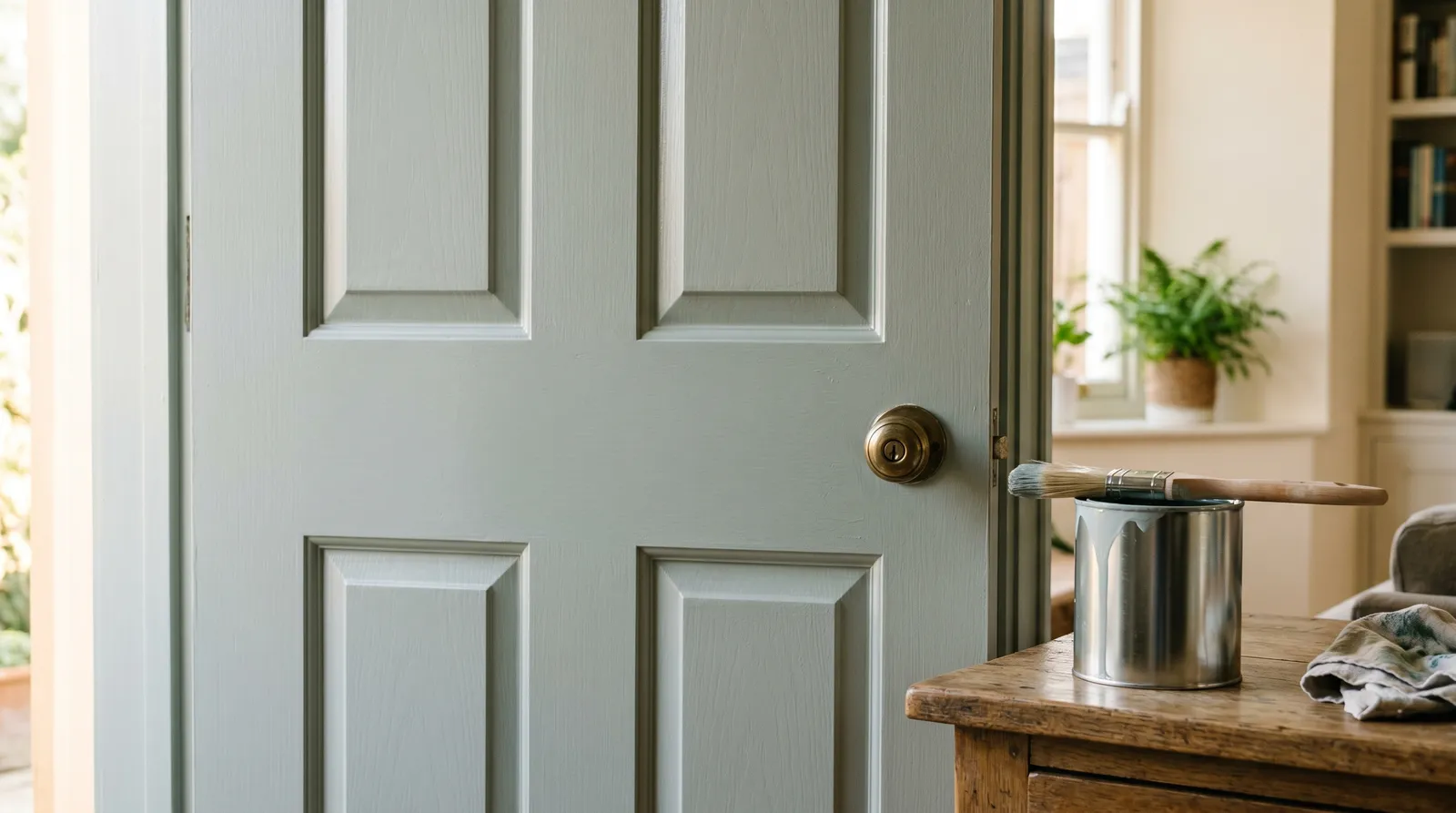
Annie Sloan Satin Paint1 sheen
CoverageAbout 118 sq ft per 750 ml / 25 fl oz can
Dry timeTouch dry in 1-2 hours
VOCLow VOC, under 5 g/L
Full cureAbout 14 days
Sheens Satin
Read this first
The Fast Verdict
For interior doors, trim, skirting, or kitchen cabinets, this is the right can. The protection is built into the paint, so there is no wax and no lacquer at the end, and the satin sheen wipes clean with mild soap and water. Prep is light: clean surface, quick scuff on anything glossy, brush it on. What you are paying for is that convenience and the colors, not cheap square footage, and full hardness takes about 14 days.
Best for
Interior doors · Trim and skirting · Kitchen cabinets · Banisters and millwork · Children's room furniture · Anything you wipe down
Skip if
You want a chalky vintage look on a decor piece · You are painting walls · You need a matte or high-gloss finish · A big surface on a tight budget
What it's good at
- Deleting the topcoat stage entirely, which is where most beginners bail
- Standing up to daily handling on doors, trim, cabinets, and banisters
- Wiping clean with mild soap and water instead of showing every fingerprint
- Light prep: clean surface, quick scuff on glossy spots, brush it on
- Low-VOC and child-friendly, so a nursery dresser is a defensible choice
- Putting the Annie Sloan palette on woodwork that actually wears
What it's not good at
- Covering square footage cheaply at about $47 for 118 sq ft
- Offering any choice of sheen. It is satin and only satin, with no matte at all
- Being ready fast. Full hardness takes about 14 days of careful treatment
- Walls, which need the separate Wall Paint
- The chalky vintage look, which is Chalk Paint's job
- Last-minute top-ups, since it is stockist and online only
Numbers, not adjectives
Spec Sheet
- Coverage
- About 118 sq ft per 750 ml / 25 fl oz can
- Sheens
- Satin only, a single low-sheen finish
- Dry time
- Touch dry in 1-2 hours; recoat the same day
- Full cure
- About 14 days
- VOC
- Low VOC, under 5 g/L; child-friendly
- Topcoat
- None. Gloss lacquer over the top is optional, never required
- Primer
- Self-sealing all-in-one; a stain-blocking primer on bare or stain-prone wood
- Surfaces
- Interior wood and metal: doors, trim, skirting, dado rails, millwork, cabinets, banisters, furniture
- Sizes
- 750 ml / 25 fl oz cans
- Where to buy
- Trained independent stockists and the official US online store only
- Price
- About $47 per 750 ml can
Application Settings That Work
- Brush
- A smooth synthetic-bristle brush lays it down cleanly on doors, trim, and cabinet fronts, which is where you want the control. Small foam or microfiber rollers work on flat panels, though a roller usually costs you an extra coat compared with a brush. Most projects want two coats.
- Thinning
- A splash of water if it is pulling thick, and no more than that. Heavy dilution thins out the built-in protection, which is the whole reason to buy this paint.
- Primer
- Not needed on clean, sound interior wood or metal. Scuff anything very glossy, slick, or previously waxed, and use a stain-blocking primer on bare or stain-prone woods that might bleed through a light color.
Touch Dry in an Hour, Tough in Two Weeks
Here is the number to plan around. The paint is touch dry in about one to two hours and you can put your second coat on the same day, but it takes roughly 14 days to fully cure and reach peak hardness. Touch dry and cured are not the same thing. For those two weeks, treat cabinet doors and high-touch edges gently. Do not stack heavy things on a freshly painted shelf, do not scrub around a door handle, and try not to let doors bang shut on their stops. After that window it is properly tough and you can stop thinking about it.
Mid-project panic
When It Goes Wrong, and How to Fix It
Paint peeling or scratching off a slick surface
Why it happens. Something on the surface stopped it bonding. This is an all-in-one paint that seals as it goes, so people skip prep entirely, but very glossy, slick, or previously waxed surfaces give the paint nothing to grip. Grease is the other culprit, and kitchen cabinets are always greasier than they look.
The fix. Clean everything first so it is dry and free of grease and dust, then give glossy or waxed spots a light scuff with a sanding pad. That takes a minute and it is the difference between a finish that lasts and one you redo next year.
A yellow or pink stain creeping through a pale color
Why it happens. Bare and stain-prone woods, old knotty pine and some hardwoods, hold natural color that bleeds up through a light shade. The paint is doing its job; the wood underneath is the problem.
The fix. Spot-prime those areas with a stain-blocking primer before you paint, then carry on with your color. If you have already seen the bleed, prime over it and repaint that section rather than adding coat after coat, which will not bury it.
The finish looks thin or patchy after two coats
Why it happens. Usually over-thinning, or rolling where a brush was the better tool. A splash of water is fine if it is pulling thick, but heavily diluting it thins out the built-in protection that is the entire point of this paint. Rollers also lay a thinner film than a brush, so they often need an extra coat.
The fix. Keep the water to a splash. Use a smooth synthetic-bristle brush on doors, trim, and cabinet fronts for control, and save the small foam or microfiber roller for flat panels, with a third coat if it still looks light.
Fresh cabinet doors chipping in the first fortnight
Why it happens. The cure window caught you out. It feels dry within a couple of hours, so it is easy to forget it is not at full strength yet, and cabinet edges take knocks all day.
The fix. Give it the full 14 days before normal use. Hang doors gently, keep them from banging shut, and do not load a freshly painted shelf. If a corner does chip inside the window, let it cure, sand the spot smooth, and touch it in.
Side by side
Satin Paint vs Chalk Paint vs Wall Paint
Annie Sloan makes three paints and people reach for the wrong tin constantly. The surface decides which one you want, not the color, because all three share the same palette sensibility.
| Satin Paint | Chalk Paint | Wall Paint | |
|---|---|---|---|
| What it is for | Interior wood and metal that gets used: doors, trim, skirting, cabinets, banisters | Furniture and upcycling: dressers, chairs, frames, side tables | Interior walls and ceilings |
| Finish | Soft satin sheen, wipes clean with mild soap and water | Ultra-matte, chalky and velvety | Flat velvety matte |
| Topcoat | None. Protection is in the paint | Always. Wax or lacquer, bought separately | None |
| Prep | Clean it; scuff glossy or previously waxed surfaces | Clean it; scuff only if very shiny | Self-priming on sound, clean, previously painted walls |
| Coverage | About 118 sq ft per 750 ml can | About 150 sq ft per litre | About 120 sq ft per litre |
| Full cure | About 14 days | Depends on the topcoat you use over it | About 14 days before washing |
| Price | About $47 / 750 ml can | About $44.95 / litre, plus a topcoat | Premium tier; 1-litre and 2.5-litre tins |
What it is for
Satin PaintInterior wood and metal that gets used: doors, trim, skirting, cabinets, banisters
Chalk PaintFurniture and upcycling: dressers, chairs, frames, side tables
Wall PaintInterior walls and ceilings
Finish
Satin PaintSoft satin sheen, wipes clean with mild soap and water
Chalk PaintUltra-matte, chalky and velvety
Wall PaintFlat velvety matte
Topcoat
Satin PaintNone. Protection is in the paint
Chalk PaintAlways. Wax or lacquer, bought separately
Wall PaintNone
Prep
Satin PaintClean it; scuff glossy or previously waxed surfaces
Chalk PaintClean it; scuff only if very shiny
Wall PaintSelf-priming on sound, clean, previously painted walls
Coverage
Satin PaintAbout 118 sq ft per 750 ml can
Chalk PaintAbout 150 sq ft per litre
Wall PaintAbout 120 sq ft per litre
Full cure
Satin PaintAbout 14 days
Chalk PaintDepends on the topcoat you use over it
Wall PaintAbout 14 days before washing
Price
Satin PaintAbout $47 / 750 ml can
Chalk PaintAbout $44.95 / litre, plus a topcoat
Wall PaintPremium tier; 1-litre and 2.5-litre tins
The rule that almost always works: if you would wipe it down with a damp cloth, use Satin Paint. If it just sits there looking pretty, Chalk Paint with a wax topcoat gives the prettier, more characterful finish. If it is a room, it is Wall Paint. A kitchen cabinet gets wiped. A guest-room dresser does not.
If not this one
Honest Alternatives
AS
Annie Sloan Chalk PaintAbout $44.95 / litre, plus a topcoat
The pick for a decorative piece you want to look chalky and vintage, and the only route to the aged dark-wax look. It grips almost anything with no prep, but it always needs wax or lacquer over the top, which is exactly the step Satin Paint removes.
Full review →AS
Annie Sloan Wall PaintPremium tier; 1-litre and 2.5-litre tins
If the project turned out to be a room, this is the can. Satin Paint is for interior wood and metal, not for rolling out walls and ceilings, and people buy the wrong one constantly.
Full review →AH
A hardware-store cabinet enamelLess per square foot than $47 / 750 ml
The budget route on a big surface. You will cover the same area for less, in exchange for a bit more prep and none of the Annie Sloan colors. Worth it when the square footage is large and the color is not the point.
Questions people actually ask
Satin Paint Questions, Answered
Is Annie Sloan Satin Paint worth it?
For interior doors, trim, skirting, or kitchen cabinets, yes. It deletes the wax-and-buff step that Chalk Paint demands, the satin finish wipes clean with soap and water, and it is low-VOC and child-friendly enough for a nursery. What you are paying for is that convenience and the colors, not cheap coverage: around $47 gets you a 750 ml can that covers about 118 square feet, and there is only one sheen. Skip it for a chalky vintage decor piece, for walls, or for a big surface on a tight budget.
Do I need wax or lacquer on top of Satin Paint?
No, and that is the headline. Annie Sloan's own words: Satin Paint differs from Chalk Paint in that there is no need to apply wax or lacquer to protect and finish after painting. The protection is built into the paint, so once your coats are dry, you are done. If you ever decide you want a shinier look, you can add a coat of gloss lacquer on top, but it is a choice, not a requirement.
Is Satin Paint self-priming, or do I have to prime first?
On clean, sound interior wood or metal you do not need a separate primer, because it seals as it goes. The catch is prep. The surface has to be clean, dry, and free of grease and dust, and very glossy, slick, or previously waxed surfaces want a light scuff-sand so the paint has something to grip. Bare or stain-prone woods can still bleed color through, so a stain-blocking primer on those spots is worth it.
What is the difference between Annie Sloan Satin Paint and Chalk Paint?
Same color sensibility, different jobs. Chalk Paint is the furniture and upcycling paint: matte, characterful, and it needs a wax or lacquer topcoat to survive being touched. Satin Paint is the hard-wearing one for surfaces that get used and wiped every day, and it needs no topcoat at all. Reach for Chalk Paint when you want a velvety matte makeover on a decor piece. Reach for Satin Paint when the surface has to take real-life wear.
Can I use Satin Paint on kitchen cabinets and children's rooms?
Yes, those are exactly what it is built for. It is made for interior wood and metal that gets handled, so cabinets, doors, trim, and furniture in a busy house are the target. It is also low-VOC and child-friendly, which is why people use it on children's room furniture and built-ins. Plan for the cure: it is touch dry in an hour or two but takes around 14 days to fully harden, so treat fresh cabinet doors gently for the first couple of weeks.
How many coats does Satin Paint need?
Most projects want two, and you can do both in a day since it is touch dry in one to two hours. If you are using a small foam or microfiber roller on flat panels instead of a brush, budget for a possible third coat, because a roller lays a thinner film than a brush does.
How do I clean a Satin Paint finish?
Mild soap and water on a cloth, and that is it. The brand recommends skipping bleach-based cleaners so you do not dull the finish over time. Wait out the 14-day cure before you do any real scrubbing, and after that everyday marks come off without a fight.
Can I get Satin Paint in matte or gloss?
No. It comes in satin and only satin, with no matte option in the line at all. If you want more shine on, say, a tabletop, you can brush a coat of gloss lacquer over it later. If you want a flat matte look instead, that is Chalk Paint's territory, and it will need a topcoat.
Where do I buy Annie Sloan Satin Paint?
From a trained independent stockist or the official US online store at anniesloan.com, where shipping is free over $99. It is not carried at Home Depot or Lowe's, and Amazon listings are usually resellers the brand does not stand behind, so you lose the genuine-product guarantee and the color help. Order a spare can if your project is tight, because there is no local run for one more on a Saturday.
Keep exploring
Annie Sloan paint brand guideAnnie Sloan Chalk Paint reviewBrowse all Annie Sloan colorsBest no-sand cabinet paintBest satin trim paint
We may earn a commission when you buy through the retailer link above. It never changes the score or the verdict.
Ask a Question