Reclaimed Wood
Dunn-Edwards' weathered-timber greige, reviewed honestly: the dining rooms it was listed for, the brown that shows when you wanted gray, and what to pick instead.

Jessica has spec'd whites and neutrals for more than 300 rooms and keeps a sample wall of painted drawdowns in her studio. Every color review is checked against real reader rooms in the comments and re-tested when a formula changes. About the testing process →
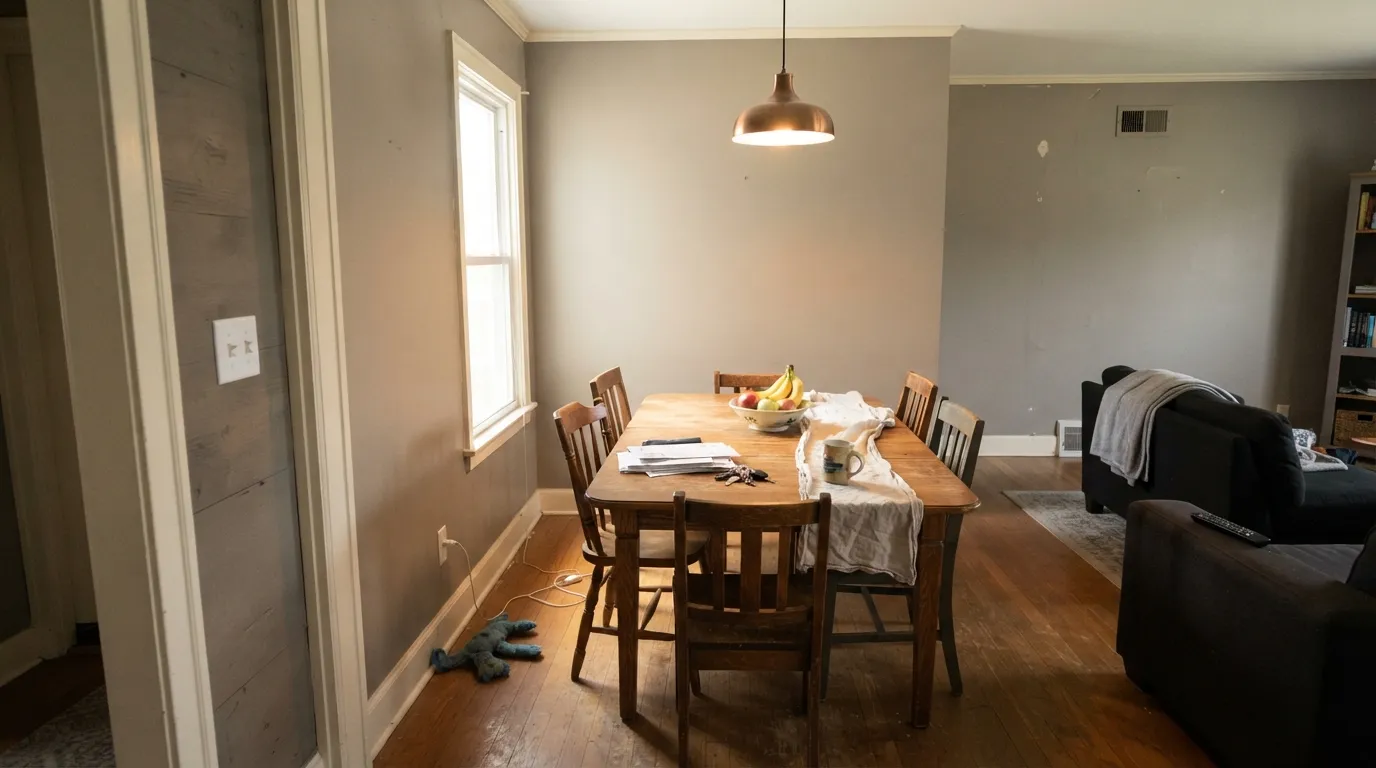
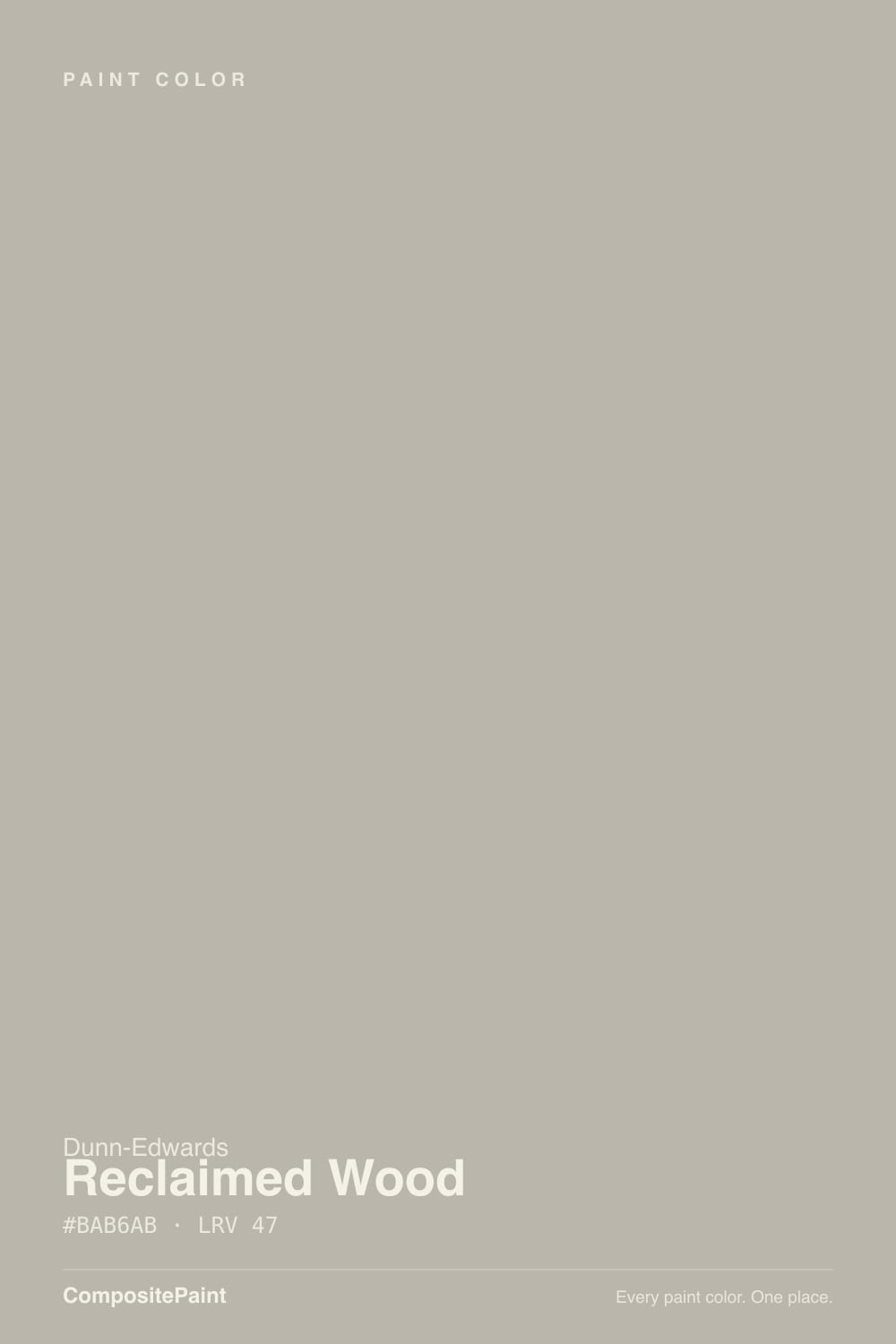
- 1Anonymous20
- 2Dorian Gray39
- 3Reclaimed Wood47
- 4Agreeable Gray60
- 5Pale Oak69
The Fast Verdict
Reclaimed Wood is a warm gray with brown undertones, LRV 47, the color of weathered barn board rather than a pale greige. Dunn-Edwards filed DET625 in Then, Now & Forever, lists it for dining rooms, and pairs it with White Picket Fence on the chip. Houzz shoppers chasing Revere Pewter already clocked the truth: it reads more brown than grey. Give it daylight, oak, bronze, and a soft white and it behaves. Buy it hoping for gray, or hang it in a dim north room, and the timber is the whole review.
Dining rooms and living rooms with oak, linen, and bronze · Southwest exteriors with dark trim · kitchens that already have wood · anyone who wants a brown-warm gray, not a pale greige
You actually wanted gray or Revere Pewter · the room faces north and stays dim · you expected a light greige off the chip · floors and counters are cool gray
- Weathered-timber gray that makes oak, linen, leather, and bronze look chosen
- Brown enough to stay warm, grayed enough (chroma 0.8) to never go beige-loud in good light
- LRV 47 hides scuffs better than the pale greiges people actually wanted
- Then, Now & Forever workhorse — dining-room list, HOA body color, no trend timestamp
- Kind to honey oak and red brick in a way cool greiges are not
- Not gray — buyers expecting Revere Pewter see brown by the second wall
- Reads a full step darker on the wall than it does on the chip
- Goes dingy taupe in dim north light — the timber just leaves
- Looks yellow-dirty against cool gray floors, gray LVP, and Carrara-type stone
What Color Is Reclaimed Wood, Really?
A warm gray with the brown left on — weathered timber, dry barn board, not a 2010s greige pretending to be gray. Dunn-Edwards files DET625 in Then, Now & Forever, the 2015 collection of 300 colors built around the American West, and keeps it on the Trending Today side of that deck. The chip is honest if you read it: Munsell 4.0Y at chroma 0.8, a yellow-family hue so grayed it almost disappears, which is why the wall can pass for gray on a 2-inch square and why four walls name the brown. The name is doing real work — this is barn board, not pebble gray. Houzz shoppers matching it to Revere Pewter said the quiet part first: Pewter Patter, Reclaimed Wood, and the other DE comps they tried seemed more brown than grey. The company pointed those shoppers at Heather instead. That is the whole plot.
At LRV 47 it is a genuine mid-tone, not the light gray the dining-room page calls it. Mindful Gray sits one point higher at 48; Pashmina is 44; Revere Pewter is 56; Agreeable Gray is 60; Accessible Beige is 58. That gap is the useful part and the trap. On a wall Reclaimed Wood has enough body to hide hallway scuffs and to sit next to oak without washing out. On four walls it is the same depth people keep buying Mindful Gray as a light color and then living with a held room. Crystal Haze, the HOA neighbor Dunn-Edwards actually pairs it with, sits at LRV 71 — twenty-four points brighter. White Picket Fence, the listed trim, sits at 87. Plan for the field to read a step deeper and more clearly brown-gray than the chip. Every low-chroma warm gray does this, and it is the number-one surprise if you ordered it off a dining-room list that said light.
Undertone in one line: brown-warm gray first, yellow-family second — never pink, never blue, never a true cool gray. South and west sun pull the timber; the wall looks like dry wood. Cool north light and overcast days strip the brown and leave a flat, slightly dirty taupe. Warm 2700K bulbs bring a muted tan. If your sample looks green, that is a yellow base in cool light doing what yellow bases do — not a bad batch. If it looks beige, you have real sun. Both versions are the same paint being honest about the room.
Where It Shines
Its home turf is a daylit room that already has wood. Eggshell Reclaimed Wood on dining and living walls, with a soft white on the millwork, is the job Dunn-Edwards keeps listing it for: a light-enough gray with a touch of warmth that makes oak furniture, linen, and bronze look decided. The dining-room page is not marketing filler — wood tones, metal accents, and evening lamps are the company this chroma was mixed for. South and west glass keep the timber honest. Outside, Southwest HOA books already use it as a body color next to Crystal Haze, and Houzz exteriors have run it as the field with a dark door. Give it bronze, woven textures, and a cream that is not paper-white, and the name stops being cute.
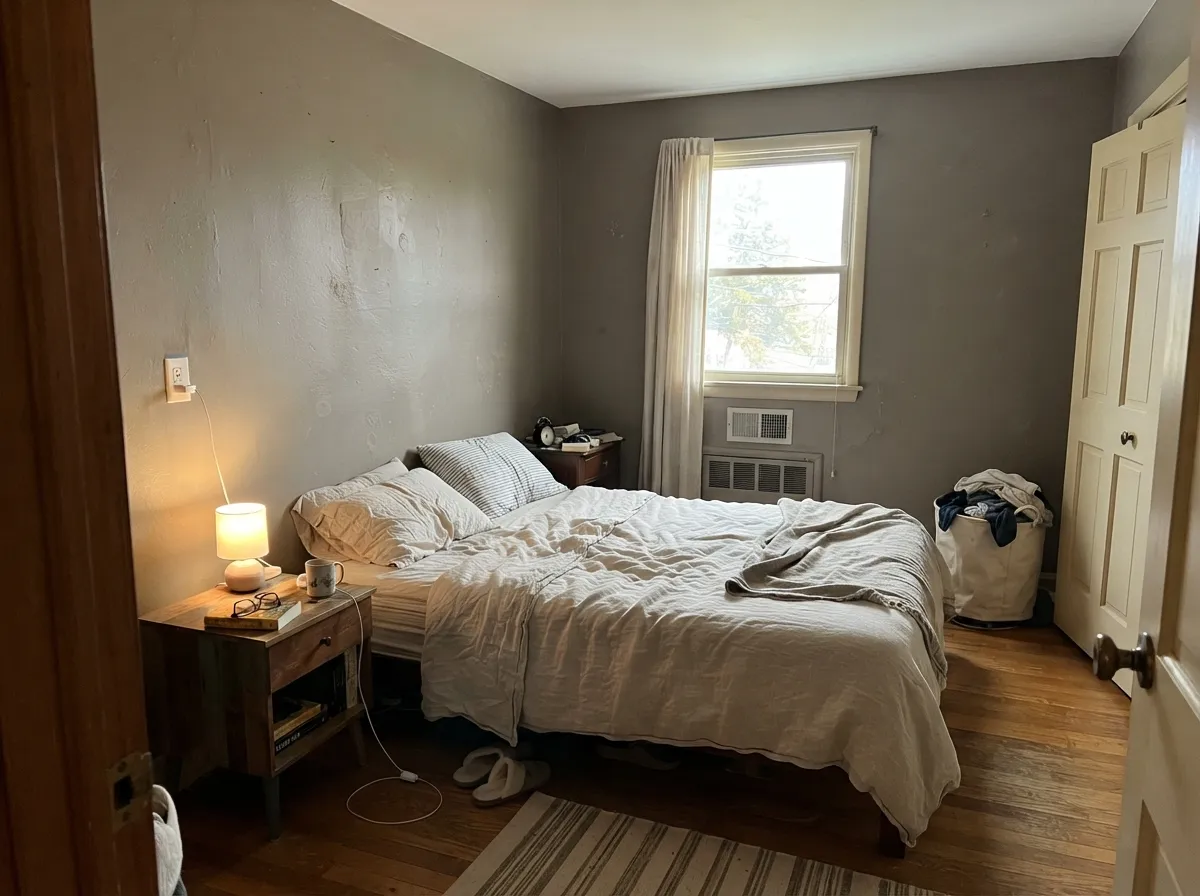
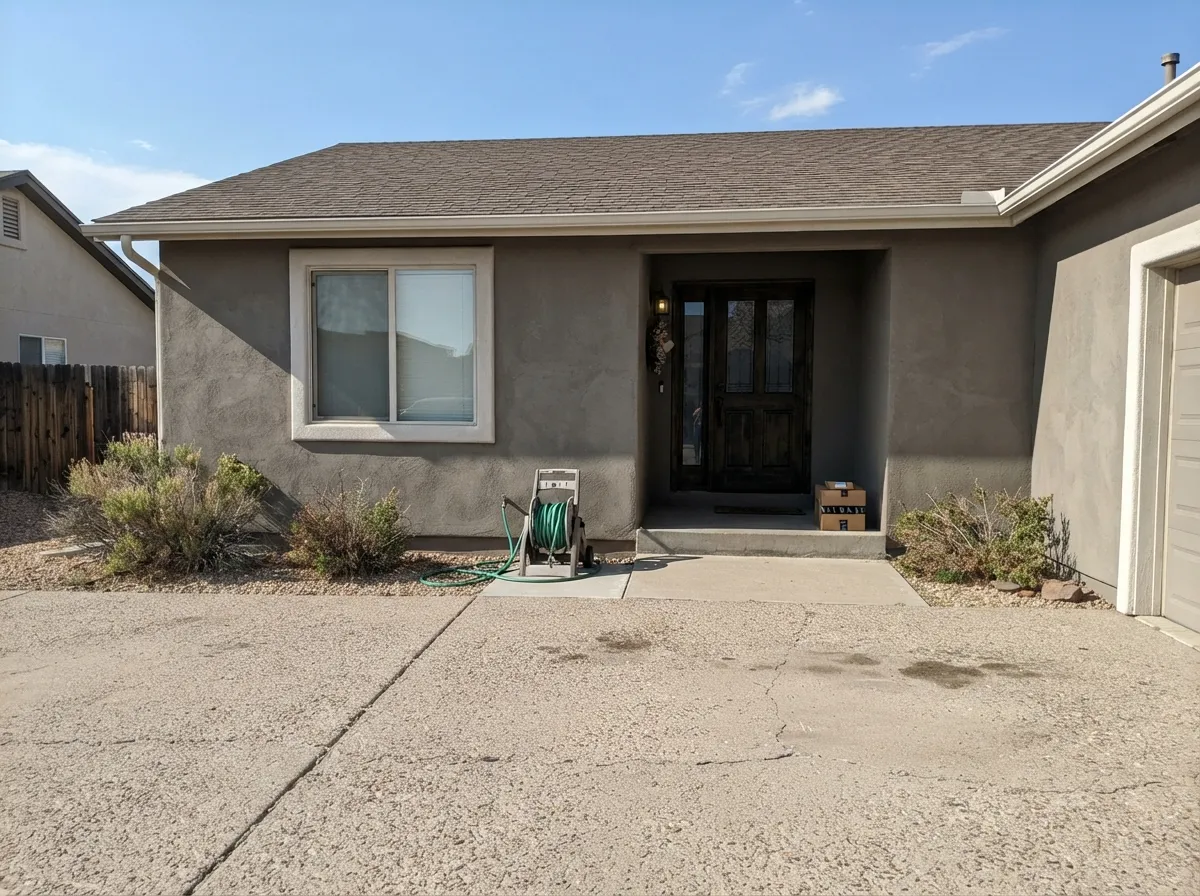
Where It Fails
Almost every unhappy Reclaimed Wood story is a naming-and-light story, and all three versions are visible on the sample wall before anyone opens a gallon. None of them are a bad mix. If your room matches one, another coat will not hide it.
On the chip it passes for a polite warm gray. On four walls the brown is the whole story — weathered timber, not greige. Houzz shoppers hunting a Dunn-Edwards stand-in for Revere Pewter already rejected it as more brown than grey, and Dunn-Edwards itself pointed them at Heather. If gray is what you actually want, this is the wrong can. Mindful Gray is the closer mid-tone if you will take a whisper of warmth; Revere Pewter is the famous lighter greige. Reclaimed Wood is the one that does not pretend.
North light is cool and grey, and this color only had a little brown to start with. The timber drops out and the wall goes flat — a dingy taupe people describe as dirty or unfinished. Warm lamps help after dark and do nothing at 2 p.m. Step up to Accessible Beige (LRV 58) and keep the warmth the cool light would steal, or keep this can for rooms with real sun.
Dunn-Edwards lists it among dining-room colors and talks about it as a light gray that just leans warm. The chip, in a store, can agree. On four walls at LRV 47 it has the same weight as Mindful Gray — a mid-tone, a held room, not an airy whole-house greige. Crystal Haze at LRV 71 is the light greige in this family. If light and open is the goal, do not buy this can off a 2-inch square.
Room by Room
This is the room Dunn-Edwards keeps listing it for, and the materials are why: wood furniture, linen, bronze, and evening lamps all sit on the same side of the fence as a brown-warm gray. Eggshell on the walls; Swiss Coffee or Whisper on the millwork in semi-gloss. A west-facing dining room with uncovered glass is the 4 p.m. test, not a given.
South- and west-facing living rooms are where the weathered-timber read shows up: warm, quiet, expensive next to oak and leather. Eggshell; a soft white on the trim. Dunn-Edwards names wood furniture and woven textures as its company, and they are. A closed north parlor with one small window is the dingy-taupe version.
On the field around oak, butcher block, brass, and warm stone it looks considered rather than builder. Keep it on the walls and let Swiss Coffee or Whisper take the boxes unless you specifically want mid-gray-brown cabinets. Cool gray quartz will argue — sample the wall above the actual slab. Satin on any painted millwork.
A south or west bedroom stays restful: timber-quiet, not a color you wake up to. Matte or eggshell; the same soft white on the trim. Under 2700K bulbs it goes a touch more tan at night, which most people want in a bedroom. A north cave needs a bigger sample and warm lamps, or pick Accessible Beige and keep the warmth the cool light would steal.
Southwest HOA books already list it as a house-and-trim color — St. Tropez at Painted Desert runs it as Scheme 6 next to Crystal Haze — and Houzz exteriors have used it as the body with a dark door. Full Western sun keeps the timber present; the shaded north elevation will read a step grayer and dirtier. Pair it with White Picket Fence only after you sample the 40-point LRV gap, or use Crystal Haze as the closer neighbor and Iron Ore or Hale Navy on the door. Walk around the house with a sample. Flat on stucco; satin on the woodwork.
A home office by a real window is a natural: mid-tone, quiet, kind to wood desks and bronze lamps. Satin on built-ins can work as a weathered-wood stand-in. A basement office with cool LEDs is the dirty-taupe fail. At LRV 47 a windowless hallway feels like a tunnel — run Crystal Haze through the halls and keep Reclaimed Wood for the rooms with glass.
Your Light Is the Risk
Hard warm sun is the light this greige was mixed for. The brown comes forward, the gray stays underneath, and the wall reads like dry timber all afternoon. Dining rooms and Western stucco at noon are its home turf.
Cool gray daylight strips the brown and leaves a flat, slightly dirty taupe. Fine if you half-wanted gray; disappointing if you wanted weathered wood. Warm lamps do not fix 2 p.m.
Morning east light holds it quieter and grayer; west afternoon names the brown for a few hours. The shift is the color being honest, not a new paint. Sample the west wall at 4 p.m. before you commit.
2700K bulbs pull a muted tan and the walls go cozier — the dining-room glow the brand keeps promising. Cool white LEDs push it toward dingy concrete-taupe. Swap the bulbs before you swap the paint.
Most complaints about Reclaimed Wood are a light mismatch. Upload a photo of your actual room and see it on your walls — then ask for the same wall in north light or evening lamps before you buy a single sample.
Need It From Another Brand?
Any paint counter can custom-tint Dunn-Edwards DET625 directly. If you would rather stay in one brand's own deck, these are the closest stock matches, measured as ΔE2000. Under 2 is a difference you will not see on the wall.
| Brand | Closest color | ΔE | LRV | |
|---|---|---|---|---|
| Sherwin-Williams | Mindful GraySW 7016 · Sherwin-Williams | 0.9 | 48 | Color page → |
| Behr | Stone MillECC-27-2 · Behr | 2.5 | 47 | Color page → |
| Benjamin Moore | CosmopolitanCSP-100 · Benjamin Moore | 0.9 | 47 | Color page → |
| Valspar | Sculpting ClayV122-2 · Valspar | 1.2 | 46.3 | Color page → |
| PPG / Glidden | Ghost WriterPPG1007-3 · PPG / Glidden | 1.6 | 47 | Color page → |
| Glidden | Aged Stucco Grey70YY 46/053 · Glidden | 1.2 | 46 | Color page → |
Similar Dunn-Edwards Colors
The nearest shades to Reclaimed Wood within Dunn-Edwards's own range, ranked by perceptual color distance — useful when you want the same look a touch lighter, darker, or warmer.
WCAG 2.1: AA is 4.5 : 1 for normal text, 3 : 1 for large text, AAA is 7 : 1.
Reclaimed Wood vs the Colors You're Also Considering
Every Reclaimed Wood sample board has the same rivals on it. The numbers show the real lightness gap — then it comes down to which risk you would rather live with.
Pick this if you want a touch more brown-timber and you are already at a Dunn-Edwards counter.
Sherwin-Williams SW 7016 · LRV 48Mindful GrayPick this if your painter works in Sherwin-Williams — it is the same mid-tone greige idea, a hair grayer, and people keep buying it as a light color too.
Pick this when greige feels safe-but-thin and you actually want the weathered-wood read.
Benjamin Moore HC-172 · LRV 56Revere PewterPick this if you wanted the famous lighter greige — nine LRV points brighter and less brown. Houzz shoppers comparing the two already called Reclaimed Wood the browner can.
Reclaimed Wood Coordinating Colors
The rule for coordinating with Reclaimed Wood: stay on the warm-gray side of the fence, and sample any trim that sits more than about fifteen LRV points brighter. It flatters oak, linen, bronze, red brick, and muted sage — and it argues with icy blues, cool greys, and Carrara-look stone. These are the partners that keep showing up in rooms and HOA books that work:
Then, Now & Forever — A 2015 Western Greige, Not a Viral Color
Reclaimed Wood is not a new paint and it is not a famous one. Dunn-Edwards added DET625 with Then, Now & Forever in 2015: 300 colors, 142 of them historically accurate, 158 filed as Trending Today, all of them built around the architecture and light of the American West. Reclaimed Wood lives on the trending side of that split. It has sat there for a decade as a dining-room listing, a red-brick pairing next to Ball of String, and a body color in Southwest HOA books. That is the whole fame story. No Color of the Year. No viral makeover. No designer who built a career on it.
The honest read of that obscurity is useful. A Then, Now & Forever greige that DE still lists for dining rooms and still prints in community color-arks is a workhorse, not a leftover. St. Tropez at Painted Desert already runs it as Scheme 6 with Crystal Haze. Houzz exteriors have put it on the body of a house with a dark door. You get the current wood-not-gray mood without a timestamp — and if the greige decade is over, a brown-warm gray ages the way barn board does, not the way accent colors do. Sample it like a mid-tone, not like a light gray, and it will not surprise you.
Reclaimed Wood With Wood Tones and Floors
This decision gets made at the floor, not the paint store. Oak — red, white, honey — walnut, butcher block, and leather are the color's best friends. The brown in the wall meets the brown in the wood halfway, which is why Dunn-Edwards keeps pointing it at dining rooms and why the red-brick pairing with Ball of String works. Pale white oak is safe and goes a little more Scandinavian. Cream carpet is fine.
The one honest no is cool gray: gray LVP, gray-washed oak, blue-gray tile, Carrara-look quartz. Cool floors pull the remaining yellow-brown into relief, and the wall can read slightly dirty or yellow-beige against them. It is not always a dealbreaker — a large rug and bronze hardware fix it in some rooms — but test a big sample above the actual floor before painting the whole room. Honey oak, the floor that fights violet and some cool greiges, is not the enemy here; this can was mixed to sit next to it.
Metals are the easy part: oil-rubbed bronze, antique brass, and matte black all work; polished chrome is the one that leans cold against the timber. Woven shades, linen, and a jute rug are the textures the chip was named for.
Three Ready Palettes Built on Reclaimed Wood
A color is never alone on the wall. These are complete combinations in the 60-30-10 pattern, with the reason each one holds together. Every one opens in the visualizer.
This is the pairing on the Dunn-Edwards chip: Reclaimed Wood as the body, White Picket Fence as the listed trim, a near-black so the crisp white does not float. Sample that 40-point LRV gap on a board in afternoon light — the official trim is a crisp workhorse, and a gap that wide can make the walls look dingy if you do not see it first.
Try this palette in your roomDining rooms run on lamplight and wood, which is why DE keeps putting this gray on that list. Swiss Coffee is the Southwest default soft white, so the brown-warm wall stays deliberate instead of dirty. Hale Navy gives one dark note; oak, linen, and bronze do the rest.
Try this palette in your roomDunn-Edwards publishes Ball of String and Reclaimed Wood together for red brick; St. Tropez at Painted Desert already runs Reclaimed Wood next to Crystal Haze as an HOA scheme. The cream, the timber greige, and the light whole-house greige share a warm-gray family, so the house reads like one material getting quieter, not three colors arguing.
Try this palette in your roomReclaimed Wood FAQ
Is Reclaimed Wood gray or brown?
Both, and the brown wins on four walls. Dunn-Edwards calls it a warm gray with brown undertones. Houzz shoppers matching it to Revere Pewter called it more brown than grey. In cool or dim light it can pass for a dirty taupe-gray; in south sun it reads as weathered timber. If gray is what you actually want, this is the wrong color — that mismatch is behind most of the bad samples.
What trim white goes with Reclaimed Wood walls?
Dunn-Edwards lists White Picket Fence (DET648, LRV 87), a crisp workhorse white. That is a 40-point jump, and a gap that wide can make the walls look dingy — sample a board in afternoon light before you commit. Swiss Coffee (DEW341) or Whisper (DEW340) keeps the warmth reading deliberate. Crystal Haze (DE6219, LRV 71) is the closer neighbor from the HOA book. Never leftover builder ceiling-white.
Will it look darker than the chip?
Yes. At LRV 47 it sits in Mindful Gray's depth band, not Agreeable Gray's. The dining-room page calling it a light gray is the chip talking. On four walls it is a mid-tone. If you wanted airy, Crystal Haze or Accessible Beige is the can; this one holds the room.
Does it work with oak floors? What about gray LVP?
Warm oak — red, white, honey — walnut, and leather are the pairing this color was mixed for. Gray LVP, gray-washed oak, and Carrara-look stone sit on the cool side and shove the remaining brown-yellow forward until the wall reads dirty beige. If the gray floor is staying, pick a truer gray (Mindful Gray still wants a sample) or a light greige, not this can.
Is it a good exterior color?
Yes, in the Southwest. HOA books already list DET625 as house-and-trim — St. Tropez at Painted Desert runs it with Crystal Haze — and Houzz exteriors have used it as a body color with a dark door. Full sun keeps the timber; the shaded north side will read grayer and a step dirtier. Sample both elevations. Dark trim or a dark door keeps the facade from looking unfinished.
How is it different from Birchwood or Pigeon Gray?
Birchwood (DEC752, LRV 49) is sandier — tan first, gray second — a Classics greige that reads like dry wood in a different way. Pigeon Gray (DE6214, LRV 43) is a warmer taupe with a khaki whisper and a gray name that already lies. Reclaimed Wood is the gray-brown in the Then, Now & Forever strip: lower chroma, more timber-gray, less sand and less khaki. Same neighborhood, different weather.
Have you painted with Reclaimed Wood?
Rate it — one tap helps the next reader decide.
Ask a Question