Silver Ash
Behr's sage-tinted near-white, reviewed honestly: the rooms where Polar Bear looks flat, the light that turns it mint, and what to pick if you wanted silver.

Jessica has spec'd whites and neutrals for more than 300 rooms and keeps a sample wall of painted drawdowns in her studio. Every color review is checked against real reader rooms in the comments and re-tested when a formula changes. About the testing process →
- 1Agreeable Gray60
- 2Balboa Mist66
- 3Silver Ash71
- 4Pearly White77
- 5Dover White83
The Fast Verdict
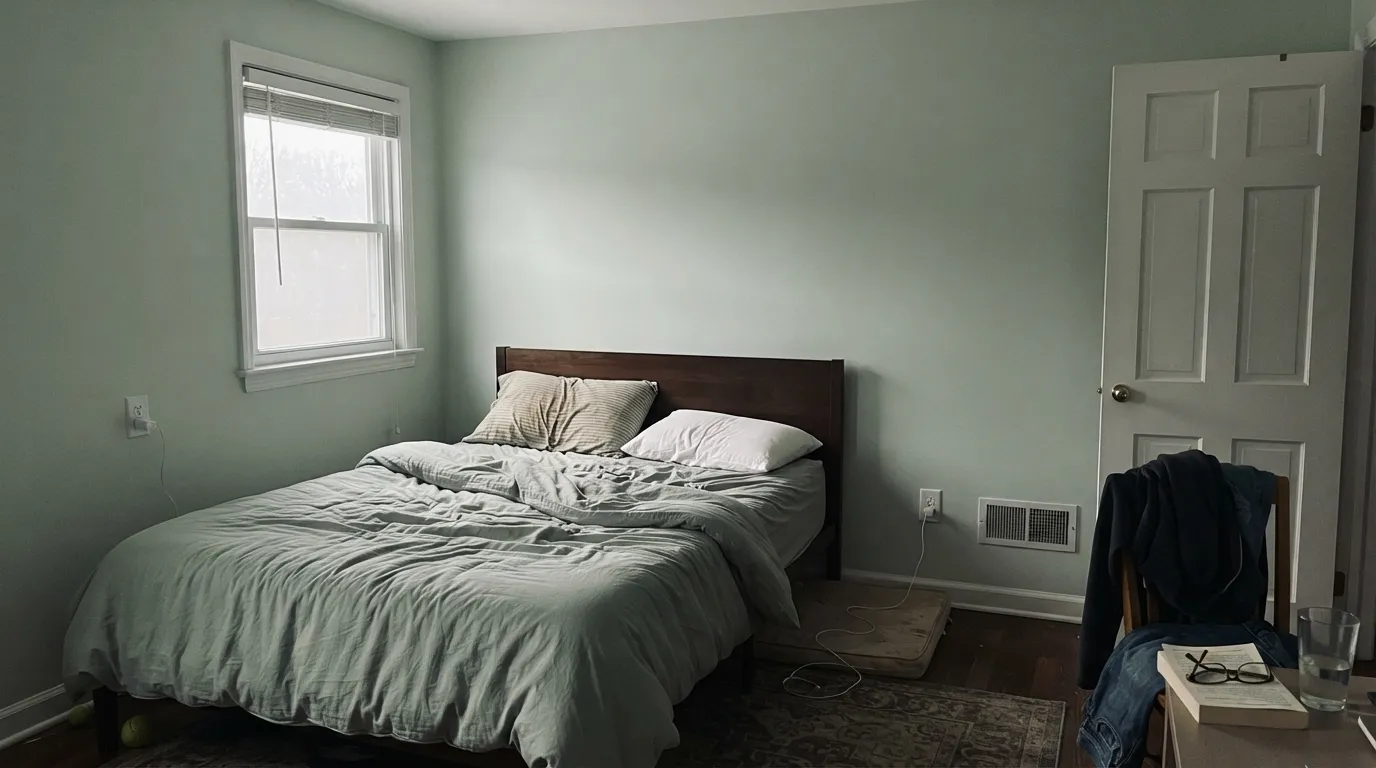
Silver Ash is the Home Depot near-white you mix when Polar Bear looks dead and a real color would be too much. The name says silver. The paint is sage. At LRV 71 it is a pale green-tinted white — enough body to finish a room, enough green that four walls will never pass for gray. South light keeps it quiet, like a white that remembered a leaf. North light and a brighter trim are how it becomes the minty, slightly dirty surprise in the photos.
South- and west-lit bedrooms · living rooms where a plain white looks flat · satin cabinet and trim enamel · hallways in a house that already leans green-gray
You wanted gray or a true white · the room faces north and stays dim · floors are honey oak · trim stays Polar Bear or Ultra Pure White · the bulbs are cool LEDs you will not change
- Near-white with enough body that Polar Bear rooms stop looking primed
- Quiet sage — green enough to have a personality, pale enough not to theme a house
- Same code sold as wall paint and cabinet/door/trim enamel
- LRV 71 holds in bright south rooms without washing to builder white
- Bedrooms and small daylight rooms feel finished with one color decision
- Not silver — buyers expecting gray see sage by the second wall
- Polar Bear and Ultra Pure White trim make it look dingy green
- Honey oak, beige, and cream trim pull a mint flash
- North light and cool LEDs turn it minty or dishwater-gray
What Color Is Silver Ash, Really?
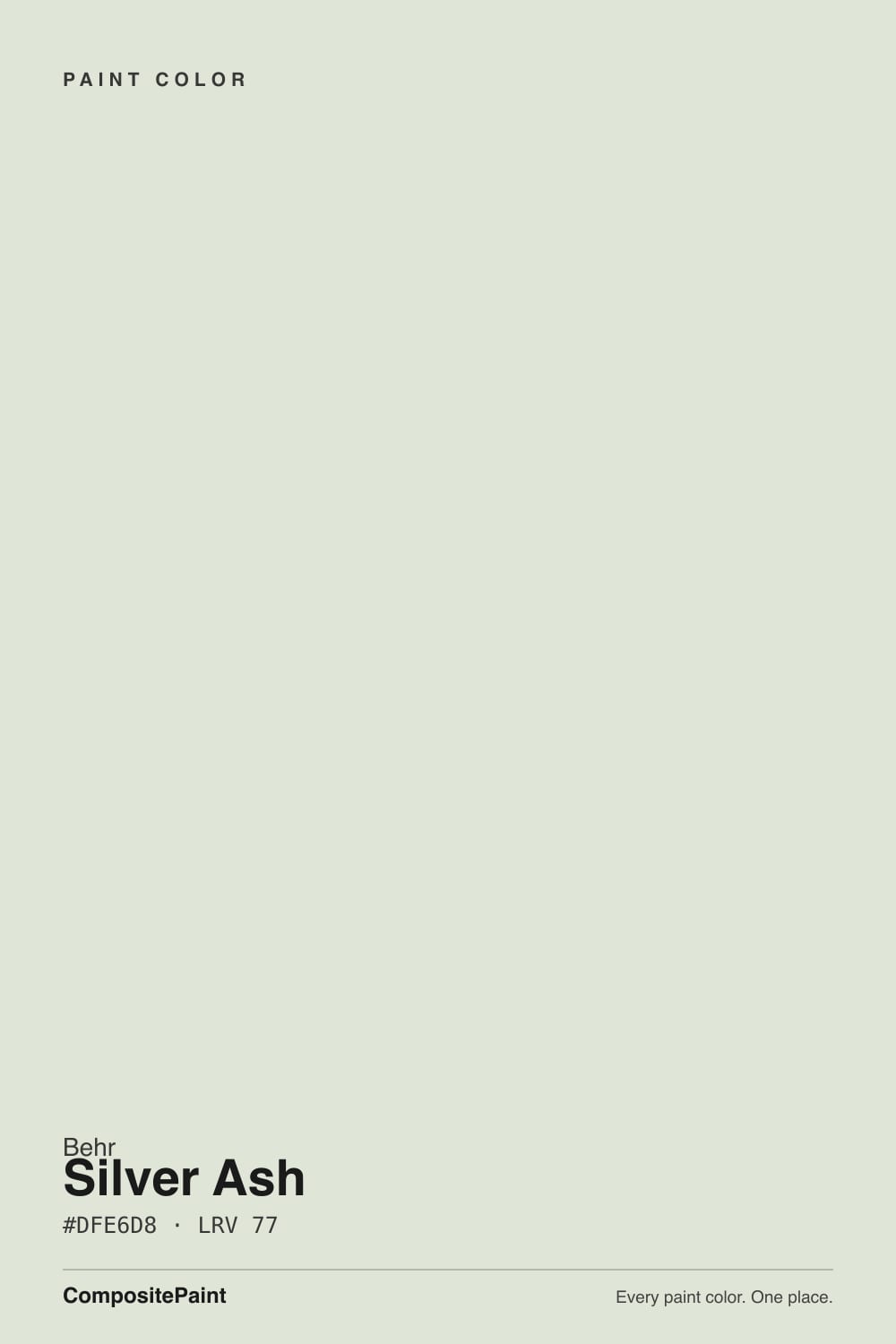
A pale sage-tinted white posing as silver — and the sage is the whole trick. Behr files GR-W11 with the whites (the GR-W strip is the green-white family), and the chip looks like a quiet off-white until it leaves the card. On four walls the green is unmistakable: low-chroma, yellow-green, more pine-shadow than mint candy. It is not a Color of the Year and it has no viral room. The documented life it does have is ordinary and useful: a 2017 Houzz tour of an 821-square-foot Maynard, Massachusetts condo used it on the master bedroom; Home Depot sells the same code as interior/exterior cabinet, door, and trim enamel; a garage painter on Reddit kept it. That is the honest fame: a Saturday mix for rooms where a plain white looks unfinished.
At LRV 71 it sits well below the white shelf people compare it to. Polar Bear is LRV 94. Ultra Pure White is LRV 97. White Dove is LRV 85. Classic Gray is LRV 74, Silver Satin is LRV 75 — those two are the actual neighbors, not the bright whites. That gap is the useful part. On a wall Silver Ash holds just enough color to soften shadows and stop a south room from looking like builder primer. Put it next to Polar Bear trim and it suddenly shows as a pale sage, which is either the point or the complaint. It will not bounce light the way a true white does in a dim hall, and it will not wash out the way Polar Bear does in a bright bedroom.
Undertone in one line: sage first, a warm yellow-green second, silver never. If the sample looks like a finished white with a quiet leaf in it, you have south or west light doing the job. If it looks minty or like dirty ice, the room is north or running on cool LEDs. If it looks khaki, that is 2700K lamps or west sun pulling the yellow. All three versions are the same gallon being honest about the room.
Where It Shines
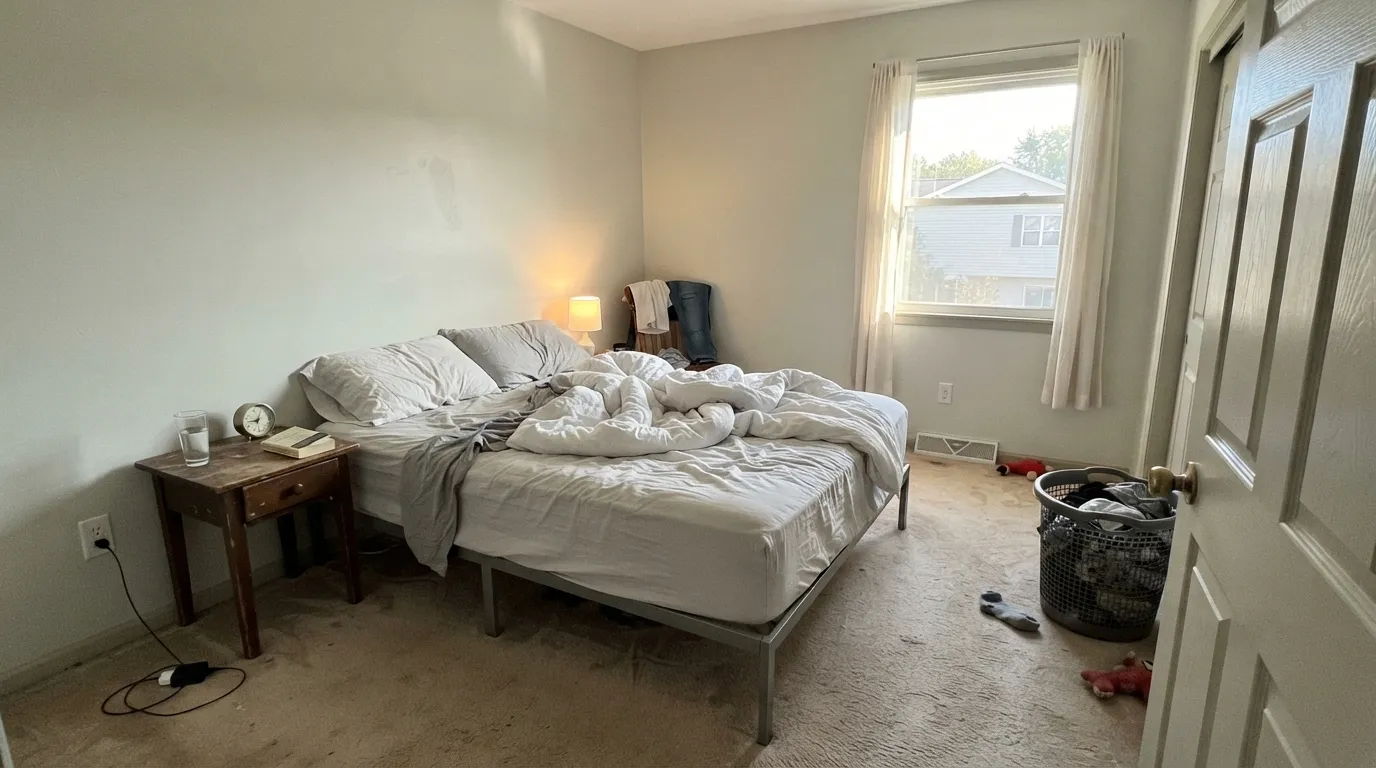
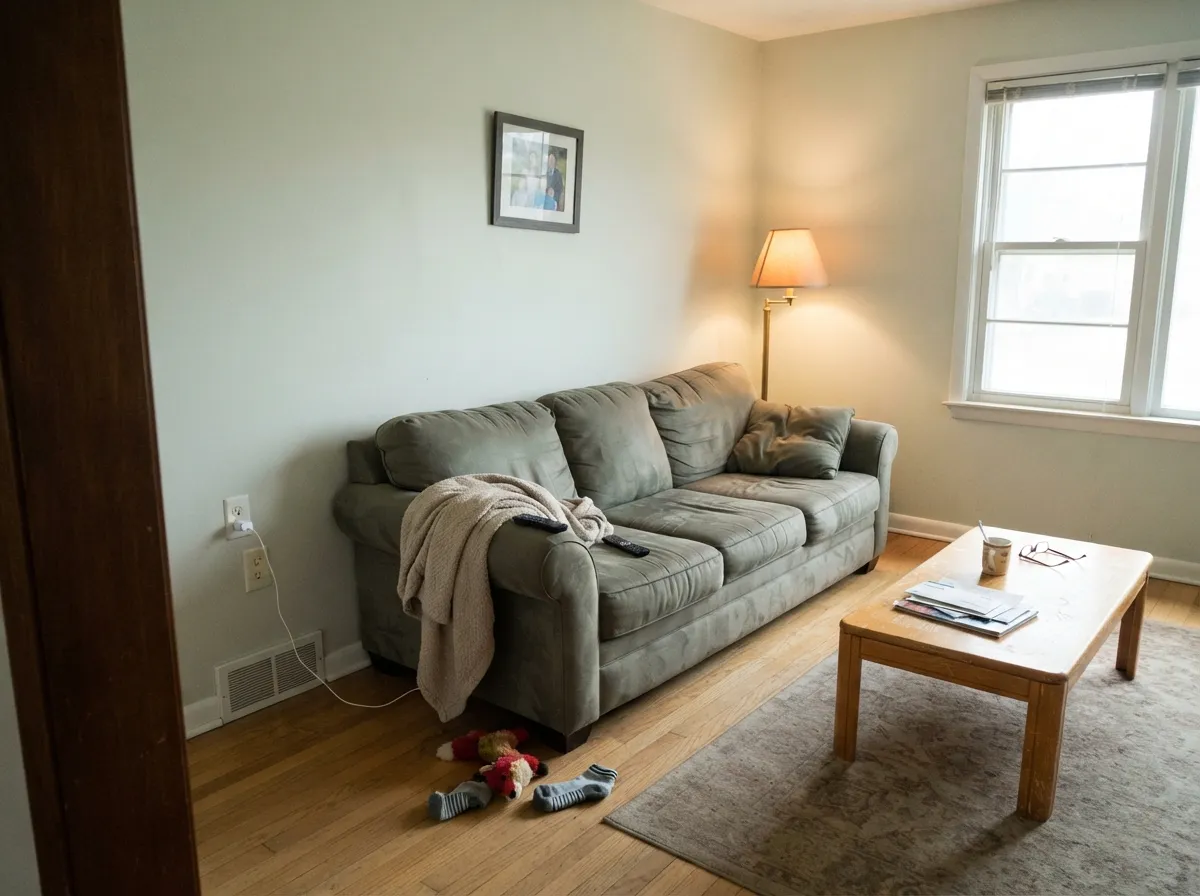
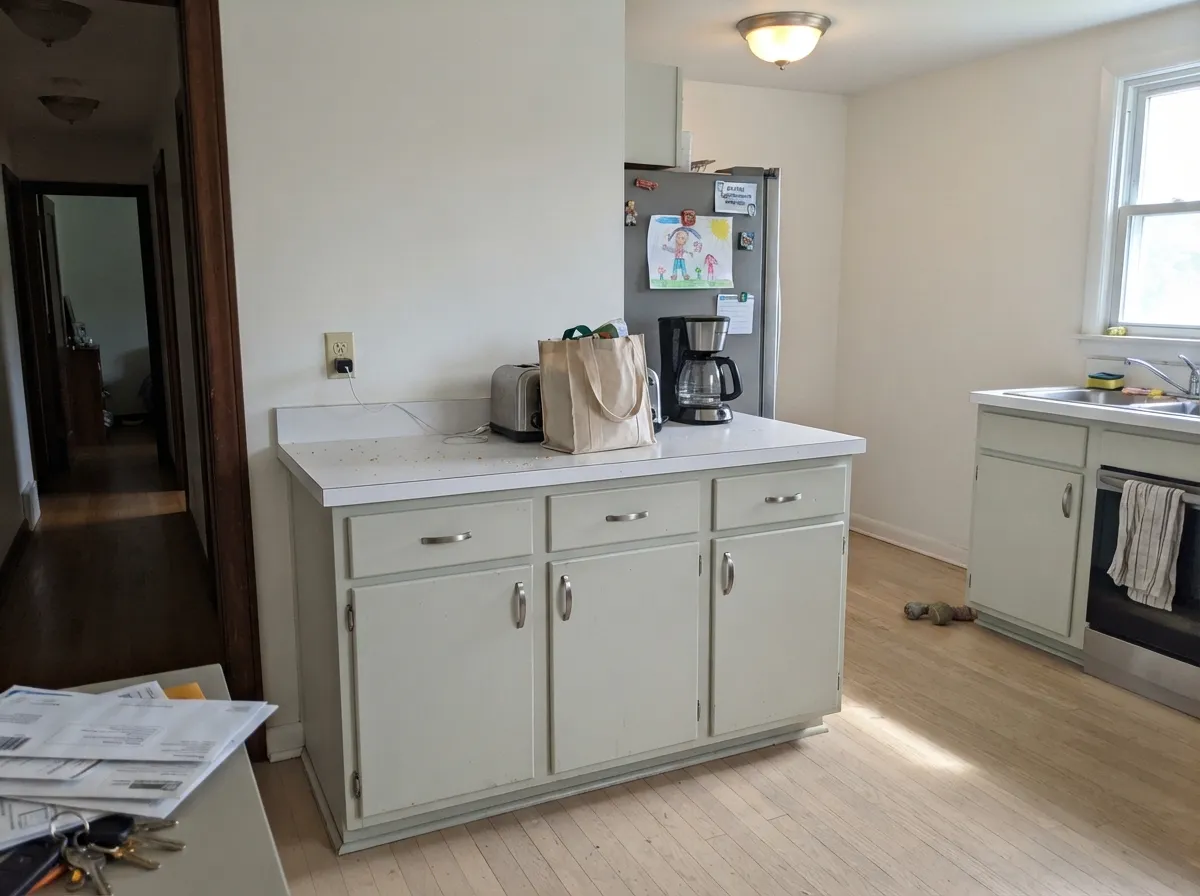
Give it real daylight, pale oak or white tile, and no brighter white in the same sightline, and Silver Ash does the job a near-white is hired for: the room feels finished instead of primed, and nobody has to name a color. Bedrooms are its best room — the Houzz condo used it that way for a reason. Living rooms with south or west windows are the second home. The third is the enamel can: satin Silver Ash on cabinets, doors, or trim under a cleaner white wall, where the sage reads as a decision instead of a wall-to-wall maybe.
Where It Fails
Almost every unhappy story about Silver Ash is the same surprise: it is greener than the name, and greener than the chip. The three situations below are visible on a large sample before the first gallon. If your room matches one, a different near-white will make you happier, and sampling bigger will only confirm it.
On the chip it looks like a quiet gray-white. On four walls the sage is the story. If you came here from the word silver, or you wanted Polar Bear with a little more body, this is the wrong search result. Those colors stay white; Silver Ash stays a pale green. Switch before you roll the house — Classic Gray or Silver Satin if you still want a grayed near-white, Polar Bear if you actually wanted white.
The most common Home Depot pairing, and the one that ruins the near-white job: Silver Ash walls, Polar Bear (LRV 94) or Ultra Pure White (LRV 97) on the doors. The brighter white wins, and the walls go dingy sage — too green to be white, too pale to be a color. The fix is the one-color rule: walls, trim, and ceiling all Silver Ash, sheen change only. If you insist on contrast, go darker (a sage or a navy), never brighter.
Silver Ash is a cool-leaning sage-white. Builder oak, beige carpet, and Behr Swiss Coffee (W-B-700) — the warmest of the safe off-whites, and it shows — sit on the other side of the wheel. Each side exaggerates the other: the wood goes more orange, the wall flashes mint. Polar Bear or Extra White are still the wrong trim for a different reason; a cream trim is the worse one. Golden floors need a large rug or a different paint.
Room by Room
This is the room that actually has a paper trail: a small, daylight-heavy master in that Maynard condo. At LRV 71 it stays light enough to wake up to and has enough sage to keep a plain white from looking unfinished. Eggshell on the walls; same color on trim in semi-gloss. 2700K lamps at night. Skip it if the bedroom faces north and stays dim — that is the minty, slightly dirty version.
South or west light keeps the sage a whisper and the wall a finished near-white. Pale oak, linen, and a gray-green textile sit comfortably against it. Eggshell; same-color trim. A north living room on an overcast day is the miss: the green comes forward and the room looks like someone mixed white with dishwater.
Home Depot already sells GR-W11 as a satin interior/exterior cabinet, door, and trim enamel, and that is the smart dose. Silver Ash on the boxes, a cleaner white on the walls, white or lightly veined stone, nickel or unlacquered brass. A full kitchen of sage-white walls over honey-oak floors is a losing bet. Satin urethane-fortified enamel; two coats over primed wood.
It carries room to room as long as the house already leans green-gray and some daylight reaches the hall. Windowless halls will look greener and a step deeper than the sample — that is low light, not a bad batch. One-color trim through the floor so a brighter door does not turn the walls dingy.
White subway, chrome or brushed nickel, a real window: the sage stays rinsed and quiet. Satin or a bath-rated eggshell. Cool vanity globes will mint it; swap them with the paint job. Skip it against beige tile, almond fixtures, or a windowless powder on cool LEDs.
The enamel can is rated interior/exterior, and people do float it for a modern facade, but full sun washes a color this pale toward off-white and the north wall will read a full step sage-ier from the street. A shaded door on a white or pale-gray house is the safer outdoor bet. Walk around the house with a board before committing the siding.
Your Light Is the Risk
Warm daylight keeps the sage a whisper and the wall a finished near-white. This is the light the color was built for — bedrooms and living rooms that actually face the sun.
Cool grey daylight wakes the green. The near-white goes minty, then dingy, and the silver you thought you bought is gone. Dim north rooms are the honest no.
East morning reads cooler and a little greener; west sun and golden hour pull a khaki-ash for an hour. Most owners like the shift; sample at 6pm if yellow-green is your dealbreaker.
2700K lamps: warmer, slightly khaki-ash, the yellow-green comes forward. Cool white LEDs: mintier and flatter — swap the bulbs, not the paint.
Most complaints about Silver Ash are a light mismatch. Upload a photo of your actual room and see it on your walls — then ask for the same wall in north light or evening lamps before you buy a single sample.
Need It From Another Brand?
Any paint counter can custom-tint Behr GR-W11 directly. If you would rather stay in one brand's own deck, these are the closest stock matches, measured as ΔE2000. Under 2 is a difference you will not see on the wall.
| Brand | Closest color | ΔE | LRV | |
|---|---|---|---|---|
| Sherwin-Williams | Oat MilkSW 9501 · Sherwin-Williams | 1.1 | 70 | Color page → |
| Benjamin Moore | Titanium2141-60 · Benjamin Moore | 1.6 | 68 | Color page → |
| Valspar | Glass Pebble8004-26A · Valspar | 0.6 | 70 | Color page → |
| PPG / Glidden | In The CloudPPG0999-1 · PPG / Glidden | 1.1 | 71 | Color page → |
| Glidden | In The CloudPPG0999-1 · Glidden | 0.9 | 71 | Color page → |
| Dutch Boy | Pearly Gray442-1DB · Dutch Boy | 3.2 | 70 | Color page → |
Similar Behr Colors
The nearest shades to Silver Ash within Behr's own range, ranked by perceptual color distance — useful when you want the same look a touch lighter, darker, or warmer.
WCAG 2.1: AA is 4.5 : 1 for normal text, 3 : 1 for large text, AAA is 7 : 1.
Silver Ash vs the Colors You're Also Considering
Every Silver Ash sample board has the same rivals on it. The numbers show the real lightness gap — then it comes down to which risk you would rather live with.
Pick this when the pale green is the point, not an accident, and you are mixing at Home Depot.
Benjamin Moore 856 · LRV 75Silver SatinPick this if you want the quieter BM near-white — same job, a touch lighter, with a confusing undertone instead of a committed sage.
Pick this when a grayed white would go invisible in a bright room and you want the leaf still in it.
Benjamin Moore OC-23 · LRV 74Classic GrayPick this for the same depth without the sage — brilliant in medium light, and it will not flash green next to your trim.
Pick this when you wanted a near-white, not a spa wall. Silver Ash stays paler; Sea Salt is already a color.
Sherwin-Williams SW 6204 · LRV 63Sea SaltPick this if you actually want the green to show — Sea Salt is a real green-gray, beautiful when the light agrees with it.
Pick this when Polar Bear looks flat on the wall and you want a near-white with a quiet green in it. Do not put Polar Bear on the trim next to it.
Behr W-F-200 · LRV 94Polar BearPick this if you actually wanted white — it is Behr's dependable everyday white, not a White Dove stand-in, and it will not go sage.
Within Behr, Hazy Trail N350-1 at LRV 76 and Campfire Ash N320-1 at LRV 76 are a whisper darker and slightly less green. Seagull Gray N360-1 at LRV 77 matches the lightness but leans a touch cooler and grayer. Whispering Waterfall BL-W06 at LRV 78 and Silver Feather BWC-29 at LRV 79 are both lighter, so they read closer to plain white on a wall.
Across brands the matches are unusually tight. Sherwin-Williams White Mint SW 6441 at LRV 78 and deltaE 0.47, PPG Lime Daiquiri PPG1127-1 at LRV 76 and deltaE 0.49, and Glidden Cloudy Day PPG1129-1 at LRV 77 and deltaE 0.82 are effectively the same color. Benjamin Moore Woodland White 463 at LRV 78 and deltaE 1.63 is visually identical in normal room light. Farrow and Ball Pavilion Blue No. 252 at LRV 78 and deltaE 2.2 is very close but worth sampling, since it trades some green for a cooler blue-gray cast. Magnolia Home Shiplap JG-22 at LRV 77 and deltaE 4.48 is close but visibly different side by side, reading warmer and less green.
Silver Ash Coordinating Colors
The rule for coordinating with Silver Ash: stay on the green-gray side of the fence, and never park a brighter white or a cream next to the walls. It flatters herbal sages, gray-navies, pale oak, and nickel — and it argues with honey oak, beige, Swiss Coffee trim, and Polar Bear millwork. These are the partners that keep showing up in rooms that work:
The GR-W Strip, and Why This Color Is Not Famous
Silver Ash lives on Behr's GR-W strip, the green-white family. Winds Breath (GR-W06, LRV 75) is the cooler, slightly lighter sibling — a silvery green-white rather than this one's warmer sage-ash. They are not matches. Sample both if you are deciding between a cooler mist and a leafier near-white; four LRV points is not the difference that matters, the green temperature is.
There is no Color of the Year plaque and no designer cult. A 2017 Houzz small-home tour put it on a master bedroom in Maynard, Massachusetts; a contractor video here and there rolls it after the trim is done; a Reddit garage painter liked it. That is the whole public record. Treat it as a useful Home Depot near-white with a sage you have to mean, not as a color with a crowd to copy.
Silver Ash With Wood Tones and Floors
Pale white oak, gray-washed wood, and white or lightly veined stone are the easy yes — they leave the sage quiet. Walnut can work in a bedroom if the daylight is warm; the red-brown depth makes the green read smoky instead of minty. White tile and nickel are the bathroom package that fits.
The honest no is golden: honey oak floors, orange-stained trim, yellow-beige carpet. Yellow-orange sits opposite sage, so each side exaggerates the other — the floor reads more orange, the walls read more mint, and no amount of coats fixes geometry. If the golden floor is staying, put a large rug between it and this paint, or pick Classic Gray and keep the near-white without the fight.
Metals are straightforward: brushed nickel, pewter, and matte black all sit in the same cool-gray family. Unlacquered brass can work in a south kitchen if the cabinets are the only Silver Ash in the room. Polished chrome is fine; a cream-and-brass package is the one that pulls the mint.
Three Ready Palettes Built on Silver Ash
A color is never alone on the wall. These are complete combinations in the 60-30-10 pattern, with the reason each one holds together. Every one opens in the visualizer.
One color at two sheens is how Silver Ash still reads as a near-white instead of a pale sage. Evergreen Fog is the cabinet sage that belongs in the same family — deeper, herbal, one real lighting weakness — so the room layers green without a cream or a bright white arguing at the edges.
Try this palette in your roomHere Polar Bear is on the walls, not the trim against Silver Ash walls — so the everyday white stays white and the sage sits on the boxes where you can control it. Pewter Green is outstanding on cabinets; keep the island in real light so it does not collapse on four dim walls.
Try this palette in your roomA pale sage-white needs one dark note so it does not read unfinished. Hale Navy is the safest navy as long as the room has light; Kendall Charcoal is the best-behaved dark gray in the BM deck for a built-in that gets a window. Keep both off a dim north wall.
Try this palette in your roomSilver Ash FAQ
Is Silver Ash gray or green?
Green — quietly, but on four walls nobody will call it gray. The name and the chip suggest silver. The paint is a pale sage-tinted white. If gray is what you actually want, Classic Gray or Silver Satin will make you happier; that mismatch is behind most of the bad surprises.
What trim color goes with Silver Ash walls?
Silver Ash itself, in semi-gloss. Polar Bear (LRV 94) and Ultra Pure White (LRV 97) make the walls look dingy sage — the most common mistake with this color. Cream trim such as Behr Swiss Coffee is worse: it is the warmest of the safe off-whites, and against this sage it shows. If you insist on contrast, go darker, never brighter.
Is it good for a bedroom?
That is its best room, and the one with a real example on Houzz. LRV 71 keeps a daylight bedroom open without the glare of Polar Bear. Use eggshell, keep the bulbs at 2700K, and run the same color on the trim. A north bedroom on cool overheads is the miss.
Can I use it on kitchen cabinets?
Yes — Home Depot sells GR-W11 as a satin cabinet, door, and trim enamel for exactly this. It works best in doses: the boxes under a cleaner white wall, not a whole kitchen of sage-white over honey oak. Satin urethane-fortified enamel; two coats over primed wood.
Does Silver Ash work with oak floors?
Pale white oak and gray-washed wood are fine. Golden honey oak is the clash: yellow-orange sits opposite the sage, so the floor goes more orange and the wall flashes mint. A large rug helps; wall-to-wall honey tones want a different paint.
How many coats does it take?
Two over any light existing color. Going over a dark or saturated wall, prime first with a grey-tinted primer — three finish coats of a near-white over red or navy is the expensive way to learn this.
Have you painted with Silver Ash?
Rate it — one tap helps the next reader decide.
Ask a Question