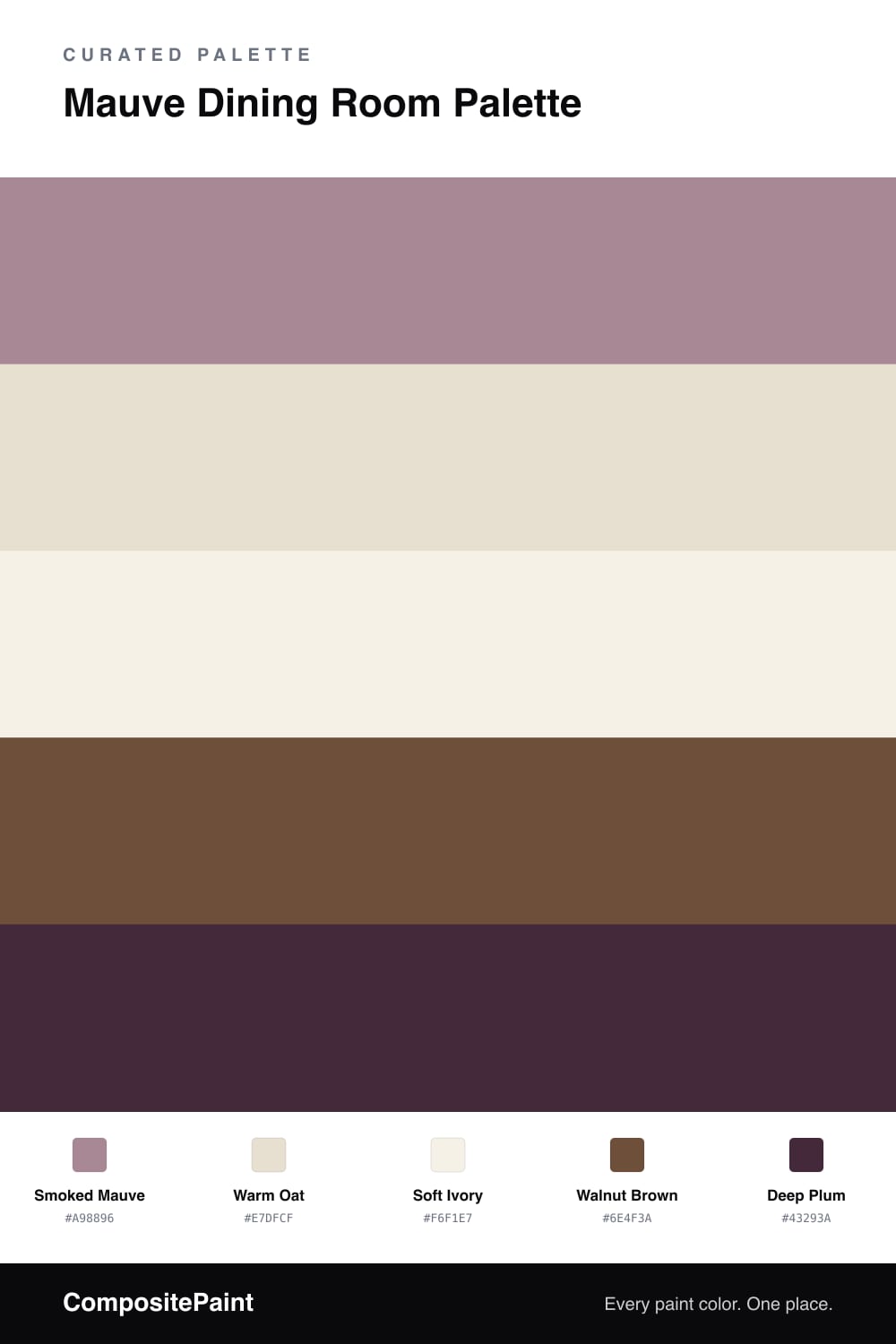
A dining room is the one place a darker, dustier color earns its keep — you mostly see it at night, lit low, full of people. That is exactly where Smoked Mauve shines. It is the lead here on the walls: a grayed, sophisticated rose-brown that turns warm and candlelit after dark instead of sweet or pink.
To keep the room from going one-note, I pair the mauve with Warm Oat as a softer backdrop — wainscot below, alcoves, or the wall that catches the most daylight — and lift the trim and ceiling with Soft Ivory so the edges stay crisp without going stark white. Walnut Brown does the grounding work through the table, chairs, and floor, which is what makes the mauve read grown-up rather than girly.
The anchor is Deep Plum, and it should stay small: a single built-in, a sideboard, or the inside of a hutch. Used on one surface it deepens the whole scheme; spread across a second wall it tips the room from cozy into heavy. Keep it to about one-fifth of what you see and the mauve stays the star.