Shaker Beige
The colonial exterior beige Benjamin Moore built its Historical Colors deck around, reviewed honestly: where it earns its keep, the light that flattens it, and what to pick instead.

Jessica has spec'd whites and neutrals for more than 300 rooms and keeps a sample wall of painted drawdowns in her studio. Every color review is checked against real reader rooms in the comments and re-tested when a formula changes. About the testing process →
- 1Dorian Gray39
- 2Mindful Gray48
- 3Shaker Beige54
- 4Agreeable Gray60
- 5Pale Oak69
The Fast Verdict
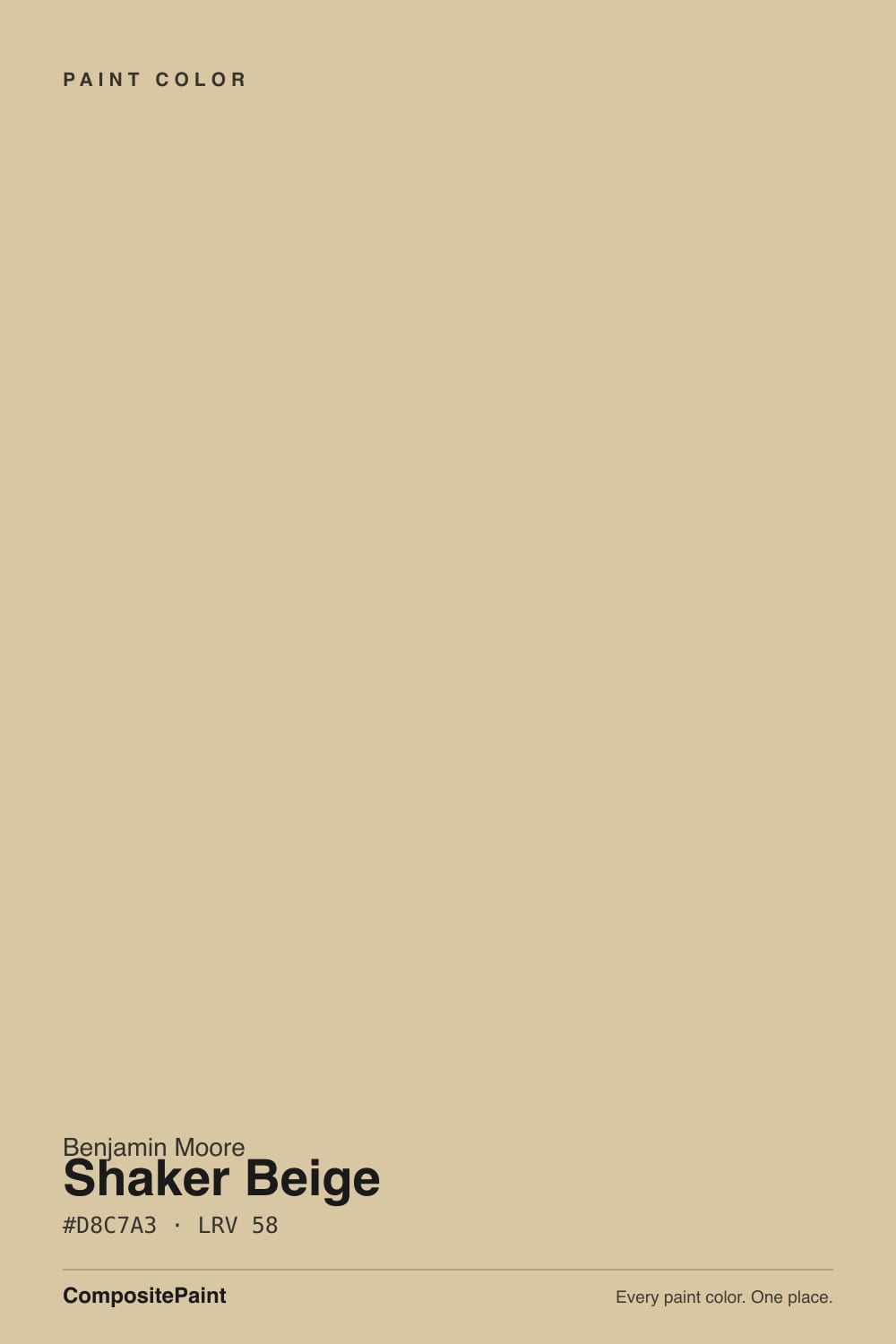
Shaker Beige is a warm golden-tan with the pink and orange both bred out of it — a straightforward beige for people who actually want beige, not a greige pretending to be one. It is a Historical Colors (HC) number, and it shows: this is the color painting contractors have been putting on Cape Cods and colonial farmhouses for decades, not a color chasing a trend. Indoors it warms a room without shouting; outdoors, against white trim, it is close to a formula.
Colonial, Cape Cod and farmhouse exteriors with white or cream trim · warm living rooms and dens with real daylight · kitchen islands and lower cabinets as a tan alternative to gray · anyone who wants a beige with no pink and no orange, full stop
You actually want gray, not beige · your room stays dim and north-facing most of the day · your trim, stone or floors run cool-toned · you are chasing the current all-gray exterior look on your block
- An honest warm tan with no pink and no orange to fight
- The colonial/Cape Cod exterior classic against white trim and dark shutters
- Flatters oak, walnut and brass the way every true beige should
- Historical Colors pedigree — it predates the trend cycle rather than chasing it
- Mid-LRV 58 keeps rooms and facades bright without stark-white starkness
- Goes flat and slightly muddy in dim, north-facing rooms
- Unmistakably beige — no relief for buyers who secretly want gray
- Can read dated next to the current all-gray exterior trend on the same street
- Fights cool white trim and cool gray stone or marble
What Color Is Shaker Beige, Really?
Shaker Beige carries the HC prefix — Benjamin Moore's Historical Colors collection, pulled from early American and Williamsburg-era palettes rather than invented for a seasonal trend report. That lineage explains the color exactly: it is the tan that eighteenth- and nineteenth-century New England houses actually wore, cleaned up for a modern paint can. Where a lot of today's beiges are really greiges with the gray dialed down, Shaker Beige commits — it is unmistakably, honestly tan, with a golden-khaki warmth and none of the pink or peachy cast that ruins cheaper beiges.
At LRV 58 it sits squarely in the mid-tone range: light enough to keep a room or a facade from feeling heavy, dark enough to hold real color instead of washing out to off-white. Full sun pulls the gold forward and the color reads warm and inviting — this is the light it was built for, and why it is such a fixture on exteriors. In flat or shaded light it settles into a quieter, slightly more khaki-taupe version of itself; it never goes cold, but it does go quiet.
Undertone in one line: warm golden-tan, occasionally a faint green whisper in deep shade the way most true beiges do — never pink, never orange. If a sample looks flat or muddy on your wall, that is a dim room or overcast exterior light pulling the gold out, not the paint changing its mind.
Where It Shines
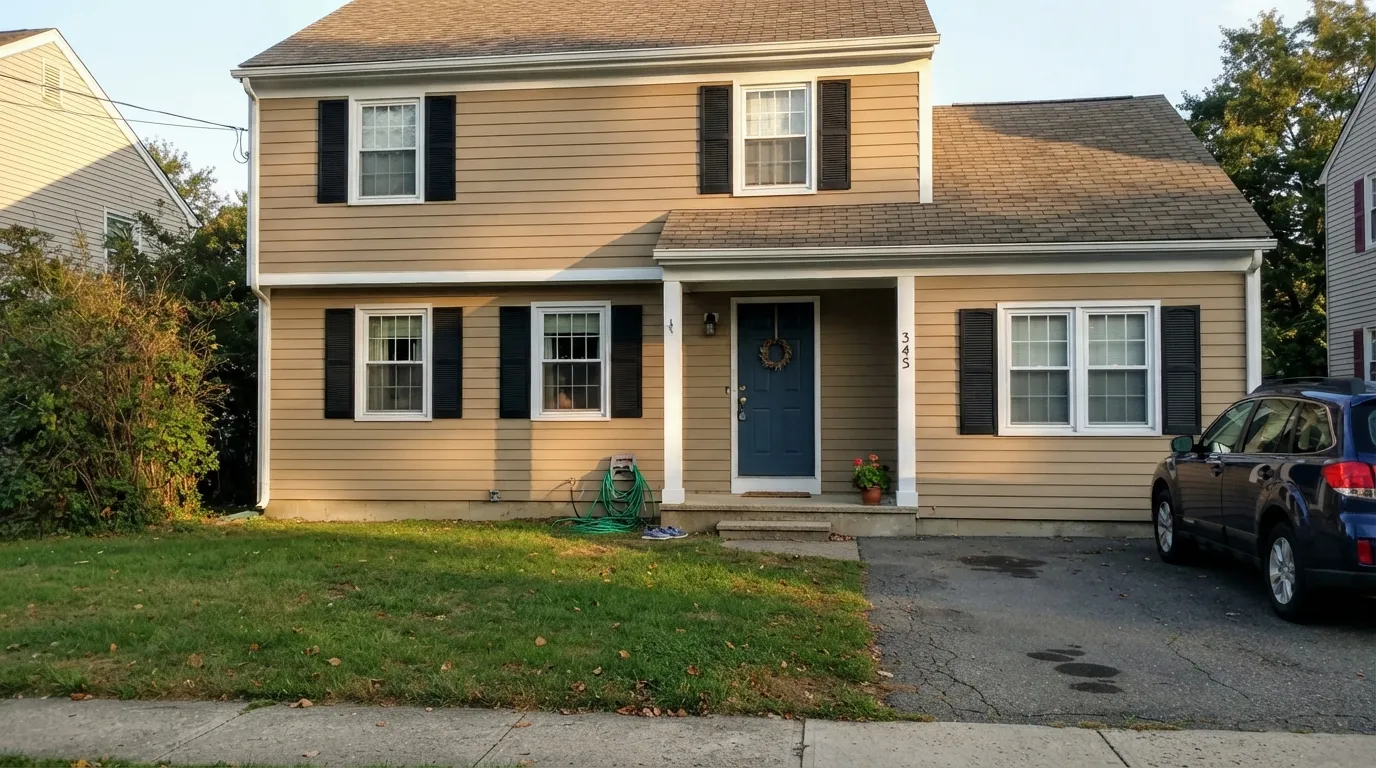
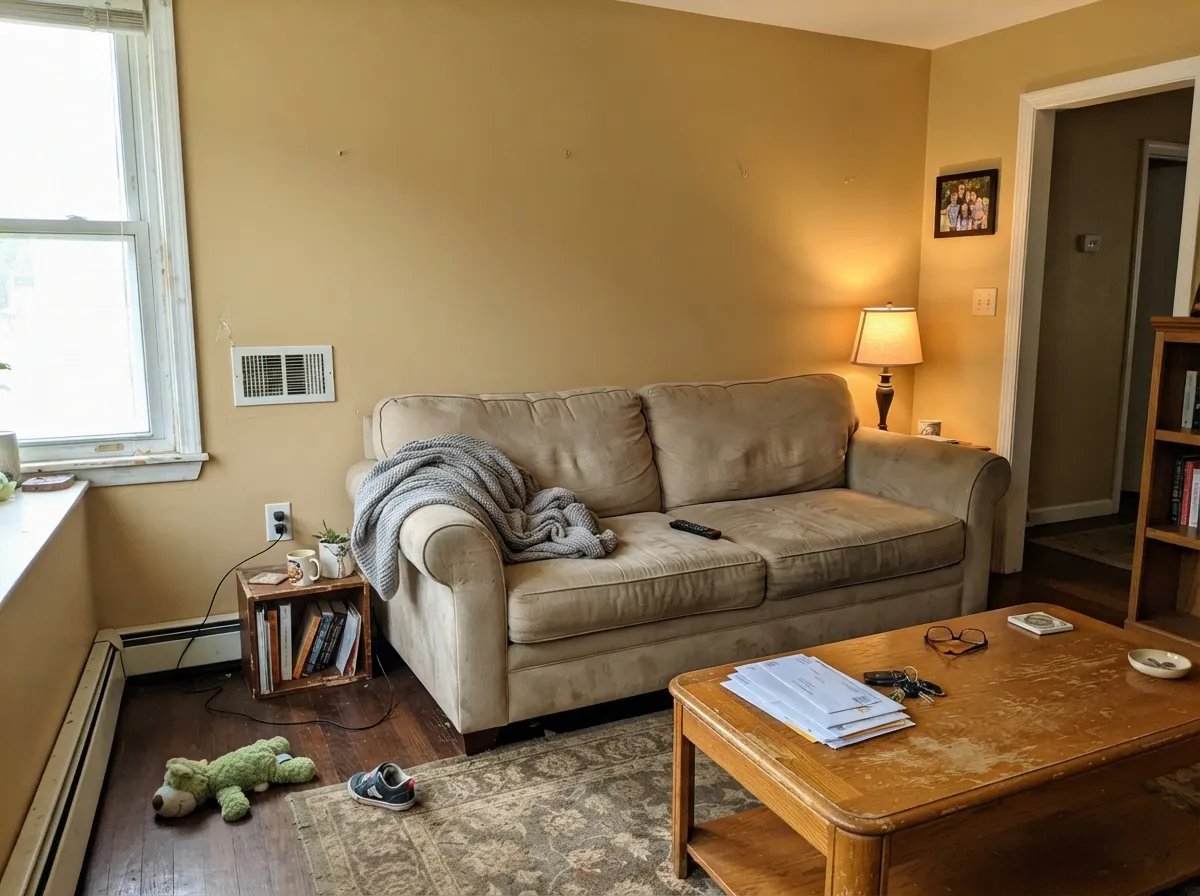
This is an exterior color first and an interior color second, and it is worth saying plainly: Shaker Beige against white trim and dark shutters is one of the most reliable colonial and Cape Cod combinations in the BM deck, which is exactly why it has stayed in steady rotation for painting contractors long after flashier colors came and went. Indoors, give it a living room or den with real daylight and warm wood, and it does the same job a good greige does — it just does it in tan instead of gray.
Where It Fails
Almost every regret story about Shaker Beige comes down to one of three mismatches, and all three are visible before the first gallon opens.
Shaker Beige is unmistakably beige — there is no gray game being played here. On a block that has gone all-gray-and-white, a warm tan house can suddenly look dated by comparison, and that is a genuine, common regret. If gray is the goal, this is the wrong can; look at a true greige or gray instead of hoping warm light will cool it down.
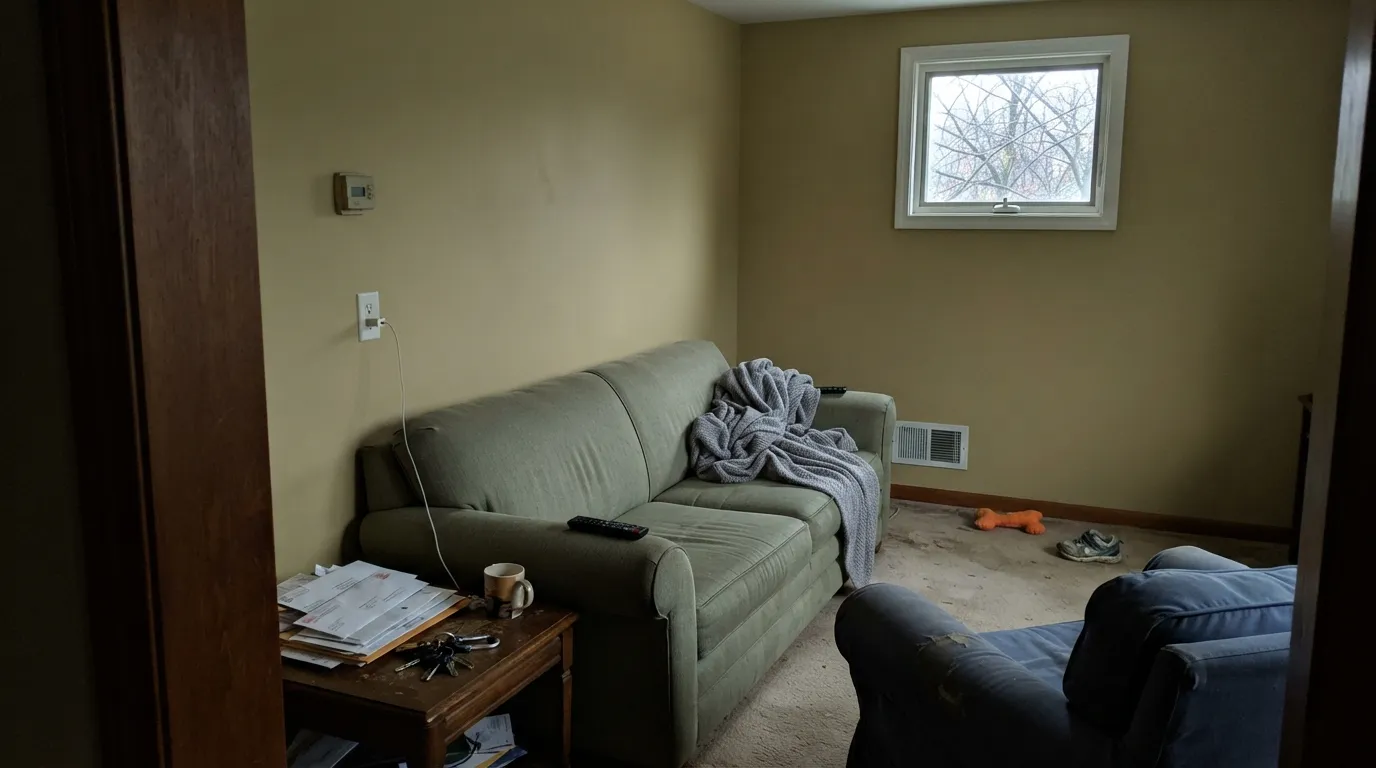
Without real daylight the gold drains out and the wall settles into a flat, slightly muddy khaki-taupe — readers describe it as "dingy" more than "warm." The paint did not change; the light did. Add warm lamps or move the color to a room with more sun.
A stark, blue-white trim or cool gray stone veneer sits at the opposite temperature and makes Shaker Beige look dull and slightly yellowed by contrast. It wants a creamy warm white for trim, not a bright cool one, and it argues with cool gray stone the same way it argues with cool gray neighbors.
Room by Room
The classic use: siding in Shaker Beige, trim and fascia in a warm white, shutters and door in black, dark bronze or deep green. Full sun brings the gold forward and the whole facade reads finished, not flashy. Satin or flat exterior sheen; semi-gloss on trim.
With real sun and warm wood furniture it is a comfortable, grown-up neutral that never reads cold. Eggshell finish; keep trim warm-white rather than bright white.
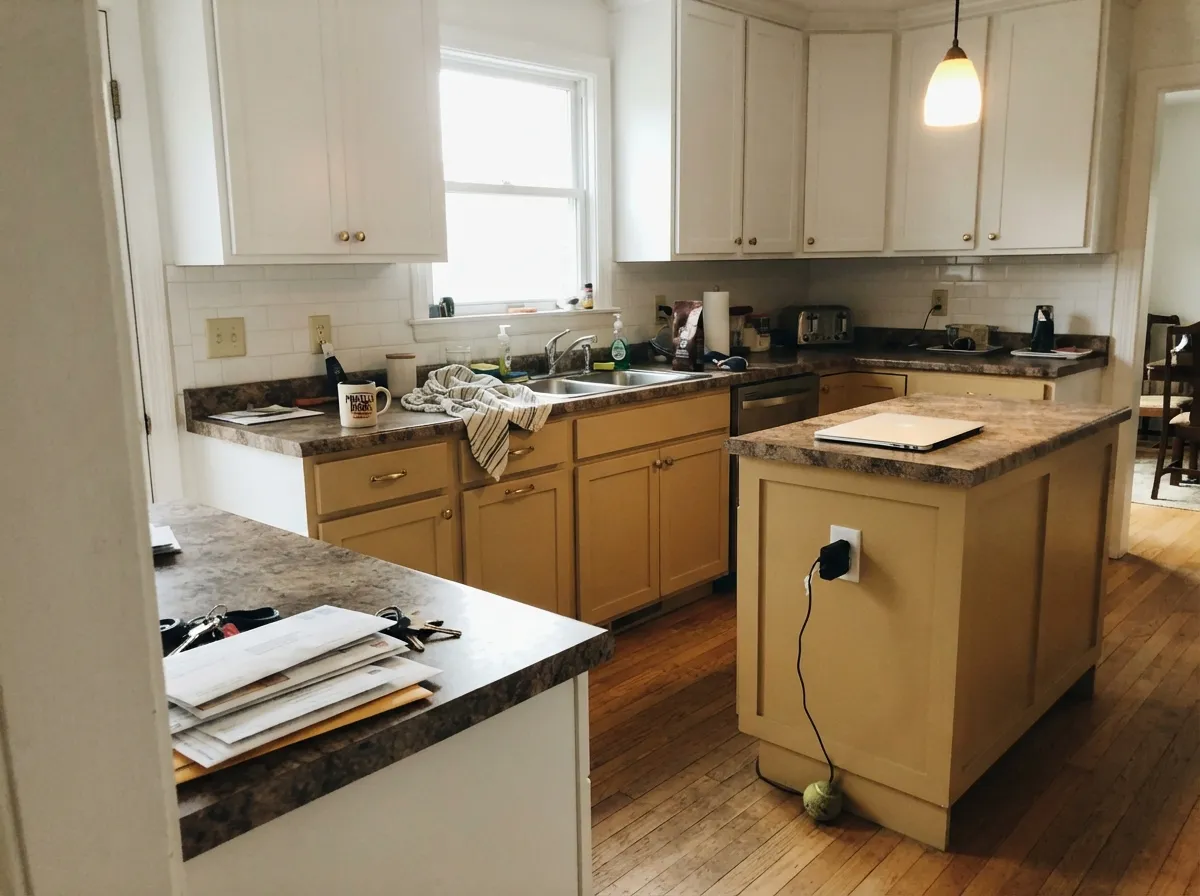
As a tan alternative to the wall of gray cabinetry, Shaker Beige lower cabinets or an island under white uppers reads warm and custom without going full farmhouse-beige. Satin cabinet enamel; brass or aged-bronze hardware, not chrome.
Calm and cozy under 2700K lamplight; in a dim north bedroom it can read flat by day, so plan on warm evening light doing the real work.
Under a brass or bronze fixture and a wood table it warms the room the way a good tablecloth would, without the commitment of a darker color. Eggshell or satin.
With warm stone, wood vanities and brass it is settled and quiet. Against cool gray marble or blue-gray tile it starts to look dingy — pick a true gray or greige instead.
Your Light Is the Risk
Direct daylight pulls the gold forward and the tan reads warm, finished and classic — the light this color was built for.
Indoors without real daylight the warmth drains out and it settles into a flat, slightly muddy khaki-taupe. Test a large sample before committing a whole room.
Golden and glowing at the sun hours, quieter and more neutral tan the rest of the day. On an exterior this reads as the house simply catching different light, not a color problem.
2700K warm bulbs keep the gold alive after dark; cool white LEDs flatten it toward a dull taupe — swap the bulbs before you second-guess the paint.
Most complaints about Shaker Beige are a light mismatch. Upload a photo of your actual room and see it on your walls — then ask for the same wall in north light or evening lamps before you buy a single sample.
Need It From Another Brand?
Any paint counter can custom-tint Benjamin Moore HC-45 directly. If you would rather stay in one brand's own deck, these are the closest stock matches, measured as ΔE2000. Under 2 is a difference you will not see on the wall.
| Brand | Closest color | ΔE | LRV | |
|---|---|---|---|---|
| Sherwin-Williams | Threaded LoomSW 9512 · Sherwin-Williams | 1.4 | 54 | Color page → |
| Behr | Classic Taupe290E-3 · Behr | 1.4 | 55 | Color page → |
| Valspar | Beach Dune8005-7C · Valspar | 2.1 | 56 | Color page → |
| PPG / Glidden | StylishPPG1101-3 · PPG / Glidden | 1.2 | 54 | Color page → |
| Glidden | StylishPPG1101-3 · Glidden | 1.2 | 54 | Color page → |
| Dutch Boy | Beachwalk416-1DB · Dutch Boy | 0.8 | 54 | Color page → |
Similar Benjamin Moore Colors
The nearest shades to Shaker Beige within Benjamin Moore's own range, ranked by perceptual color distance — useful when you want the same look a touch lighter, darker, or warmer.
WCAG 2.1: AA is 4.5 : 1 for normal text, 3 : 1 for large text, AAA is 7 : 1.
Shaker Beige vs the Colors You're Also Considering
Every Shaker Beige sample board has the same rivals on it. The numbers show the real lightness gap — then it comes down to which risk you would rather live with.
Pick this for the lighter, slightly quieter version of the same warm-tan family.
Benjamin Moore HC-81 · LRV 53Manchester TanPick this for a deeper, more saturated tan with the same colonial pedigree — watch for its green flash in cool light.
Pick this when you want real color on the wall, not just a hint of warmth.
Benjamin Moore OC-14 · LRV 65Natural CreamPick this for a lighter, softer warm off-white that also fixes a cold room without going full tan.
Within the Benjamin Moore deck the differences are small but real. Richmond Bisque, sold as HC-177 and PM-27 at #D9C6A6, LRV 56, is slightly darker and a shade less golden. Marble Canyon 227 at #D5C8A6, LRV 58, is the same lightness with a fractionally greener cast. Straw Hat 270 and CC-290 at #D9C9A1, LRV 57, carry more yellow.
Across brands, Golden Lake 0316 appears in the Kompozit, Hirshfield's, and Diamond Vogel decks at deltaE 0.3, 0.3, and 0.85, so those are the same color for practical purposes. Sherwin-Williams Straw Harvest SW 7698 at deltaE 0.87 and LRV 59 matches just as tightly. Dunn-Edwards Light Aspiration DE6185 (1.22), Dutch Boy Beige Gold 317-2DB (1.58), and Behr Welcome Walkway PPF-23 (1.67) are visually identical in normal room light. PPG Glidden Sanctuary PPG1026-2 (2.01) and Farrow and Ball Double Cream No. 9907 (2.81) are very close, so sample first. Rust-Oleum Sandstone 398641, at deltaE 4.51 and LRV 68, is close but visibly different side by side and noticeably lighter.
Shaker Beige Coordinating Colors
The rule for coordinating with Shaker Beige is the same rule that governs every honest beige: stay warm. It pairs with warm whites, warm greiges, deep near-blacks and warm wood tones, and it argues with anything cool — cool white trim, blue-gray stone, chrome. These are the partners that keep it looking deliberate instead of dated:
Shaker Beige on Exteriors
This is the color's real home. Shaker Beige belongs to Benjamin Moore's Historical Colors collection, and the HC prefix is a genuine tell: these are colors pulled from Colonial and Federal-era houses rather than invented for a seasonal palette, which is exactly why Shaker Beige has stayed a go-to for painters working on Cape Cods, saltboxes and colonial farmhouses long after trendier tans have come and gone.
Full sun reads it noticeably more golden than the chip suggests — plan for that before committing to a whole house. The classic pairing is a warm white trim (never a stark blue-white, which makes the tan look dull by comparison) with shutters and a front door in black, dark bronze or deep green. Avoid cool gray stone accents or veneer near the foundation; they sit at the opposite temperature and make the tan look tired instead of warm.
Shaker Beige With Wood Tones and Floors
Warm wood is this color's best friend, indoors or out. Oak, walnut and cedar all sit comfortably with Shaker Beige because their warmth meets its warmth halfway — there is no fighting to referee, unlike with cooler neutrals. Brass and aged bronze hardware read correct against it; chrome and polished nickel read slightly cold by comparison.
The one flooring or stone that needs a sample first is anything cool gray — gray-washed hardwood, gray LVP, blue-gray stone veneer. Those pull Shaker Beige's warmth into relief and can leave the wall looking dingy rather than warm. It is not automatically a dealbreaker indoors — warm rugs and brass fixtures usually rescue it — but on an exterior foundation or hardscape, pick a warm-toned stone instead.
Three Ready Palettes Built on Shaker Beige
A color is never alone on the wall. These are complete combinations in the 60-30-10 pattern, with the reason each one holds together. Every one opens in the visualizer.
This is the formula behind most Shaker Beige houses: a bright warm-leaning white to trim the tan facade, and a soft near-black on shutters and door for the contrast the beige needs to look crisp instead of flat.
Try this palette in your roomWhite Dove's own warmth keeps the trim from fighting the tan walls the way a stark white would, and Kendall Charcoal on a fireplace or built-in gives the room one grounded dark note without turning the whole scheme gray.
Try this palette in your roomSwiss Coffee uppers keep the kitchen bright while the Shaker Beige island carries the warmth; Chelsea Gray on a pantry door or accent wall adds depth without ever going cold enough to clash with the tan.
Try this palette in your roomShaker Beige FAQ
Is Shaker Beige warm or cool?
Warm — it is a straightforward golden-tan beige, not a greige playing both sides. In shaded or overcast light it can read a touch quieter and more khaki, but it never turns cool or blue. If you want gray, this is not that color.
Is Shaker Beige good for a house exterior?
It is one of Benjamin Moore's classic exterior tans — a Historical Colors number that has been used on colonial and Cape Cod siding for decades. Pair it with a warm white trim and black, bronze or deep-green shutters for the traditional look; expect full sun to read noticeably more golden than the chip.
What trim color goes with Shaker Beige?
A warm white, not a stark cool one — Simply White or White Dove indoors, a warm exterior white outside. A bright blue-white trim makes the tan look dull and slightly yellowed by comparison.
How does it compare to Manchester Tan?
Same family, different depth: Manchester Tan (HC-81, LRV 53) is deeper and more saturated, with a real green-flash risk in cool light. Shaker Beige (LRV 58) is the lighter, slightly quieter sibling — pick Manchester Tan for more color, Shaker Beige for more restraint.
Will it look dated?
It is a genuine risk if your street has gone all-gray — a warm tan house can read out of step next to newer gray-and-white neighbors. It is not a trend color chasing a moment, though; it is a Historical Colors number that has outlasted several gray cycles already, so the honest answer is: it will always read classic, and classic occasionally reads dated depending on what is next door.
Does it work with cool gray stone or floors?
Not comfortably. Shaker Beige wants warm company — oak, walnut, brass, cream stone. Against cool gray marble, blue-gray tile or gray stone veneer it starts to look dingy rather than warm; pick a true gray or greige for those fixed materials instead.
Have you painted with Shaker Beige?
Rate it — one tap helps the next reader decide.
Ask a Question