Leather Saddle Brown
The rich saddle brown reviewed honestly: the light that brings the leather warmth out, the light that flattens it to near-black, and what to pick instead.

Jessica has spec'd whites and neutrals for more than 300 rooms and keeps a sample wall of painted drawdowns in her studio. Every color review is checked against real reader rooms in the comments and re-tested when a formula changes. About the testing process →
- 1Mahogany0
- 2Turkish Coffee5
- 3Leather Saddle Brown10
- 4Cavern Clay20
- 5Redend Point30
The Fast Verdict
Leather Saddle Brown is a deep, worn-in brown built to read like tooled leather rather than a can of stain — warm, earthy, with a red-orange base quietly muted by olive and purple. At LRV 10 it is genuinely dark, and that is both the appeal and the catch: give it real light and a door, an island, or a lamp-lit den, and it looks expensive. Ask it to cover a whole bright room and it stops behaving like a color and starts behaving like a shadow.
Front doors and interior doors · dens, libraries, and home offices · kitchen islands and cabinets · anyone who wants a rich brown warmer than black
You want a wall color for the whole house · your room gets little real daylight · your floors or trim are golden honey oak · you want brown with zero red in it
- Genuine leather-brown warmth without tipping into orange
- Dark enough (LRV 10) to feel dramatic without going flat black
- A classic, less severe alternative to a black front door
- Reads expensive on islands, built-ins, and cabinets with brass hardware
- Benjamin Moore's own pick for a rich, wearable saddle brown
- Too dark for a whole bright room without a serious light plan
- Goes muddy and flat under cool light or cool LED bulbs
- Fights golden honey-oak floors and trim
- A small-dose color, not a walls-everywhere neutral
What Color Is Leather Saddle Brown, Really?
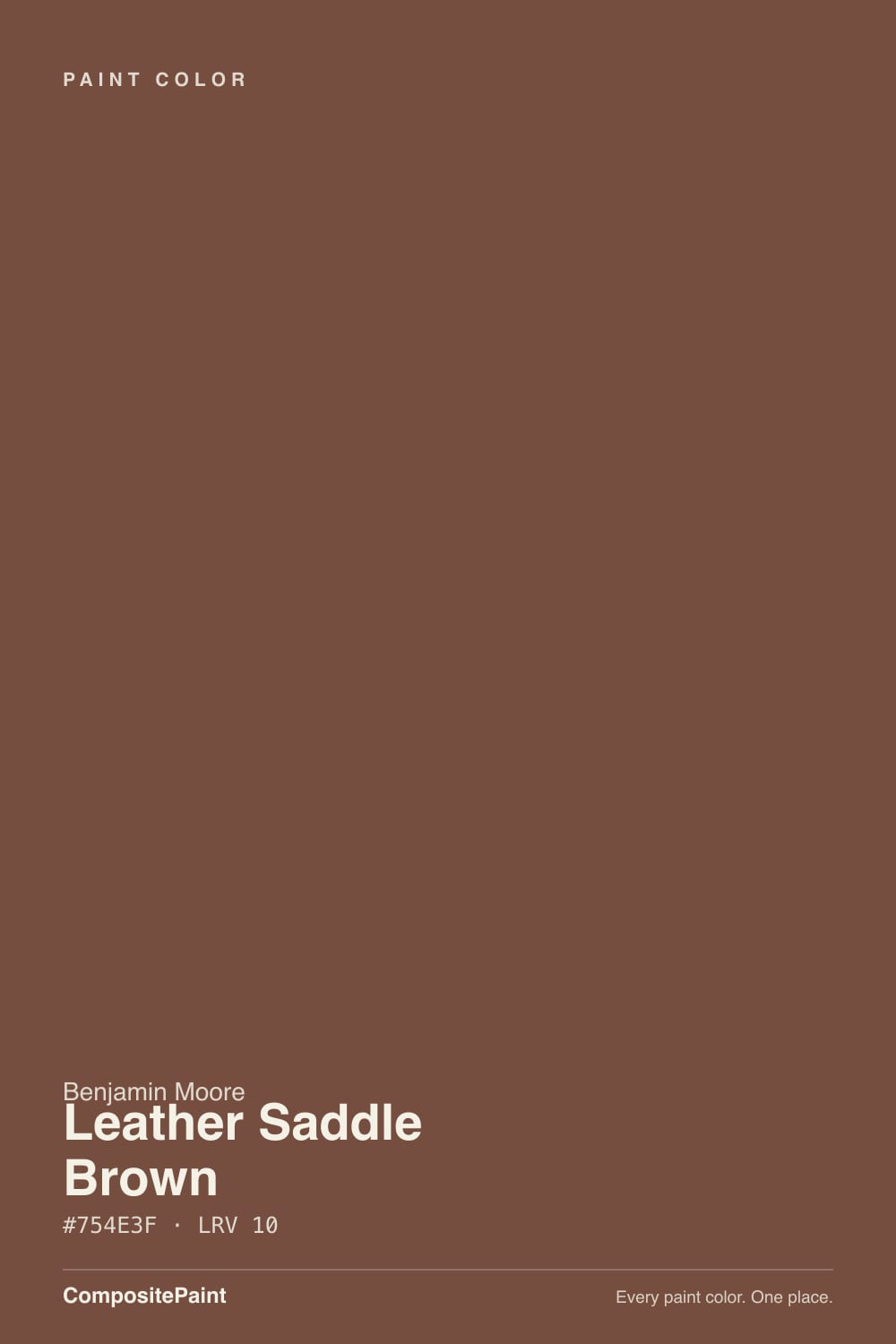
A deep, warm brown built to read like tooled leather, not paint — the name is literal, not marketing. The undertone is a muted red-orange with a quiet twist of olive and purple running underneath, which is why it never turns bright or clear the way a straightforward terracotta does. Instead it sits earthy and worn-in, closer to the color of a saddle that has spent a decade in the sun than one fresh off the rack.
At LRV 10 this is a genuinely dark color — it absorbs most of the light that hits it rather than bouncing it back, putting it in the same depth range as Benjamin Moore's own Taupe and the Sherwin-Williams brown Sable. That matters more than the hex code: a color this dark needs real light working with it, or it stops reading as brown and starts reading as a shape-eating near-black. Give it a sunlit door or a lamp-lit den and the leather warmth is unmistakable; starve it of light and it goes flat and muddy.
Undertone in one line: red-brown with a quiet olive-purple undercurrent — never orange, never true black. If your sample looks orange, that's warm afternoon sun exaggerating the red; if it looks like it's disappearing into black, that's a dim room asking for more light, not a different can of paint.
Where It Shines
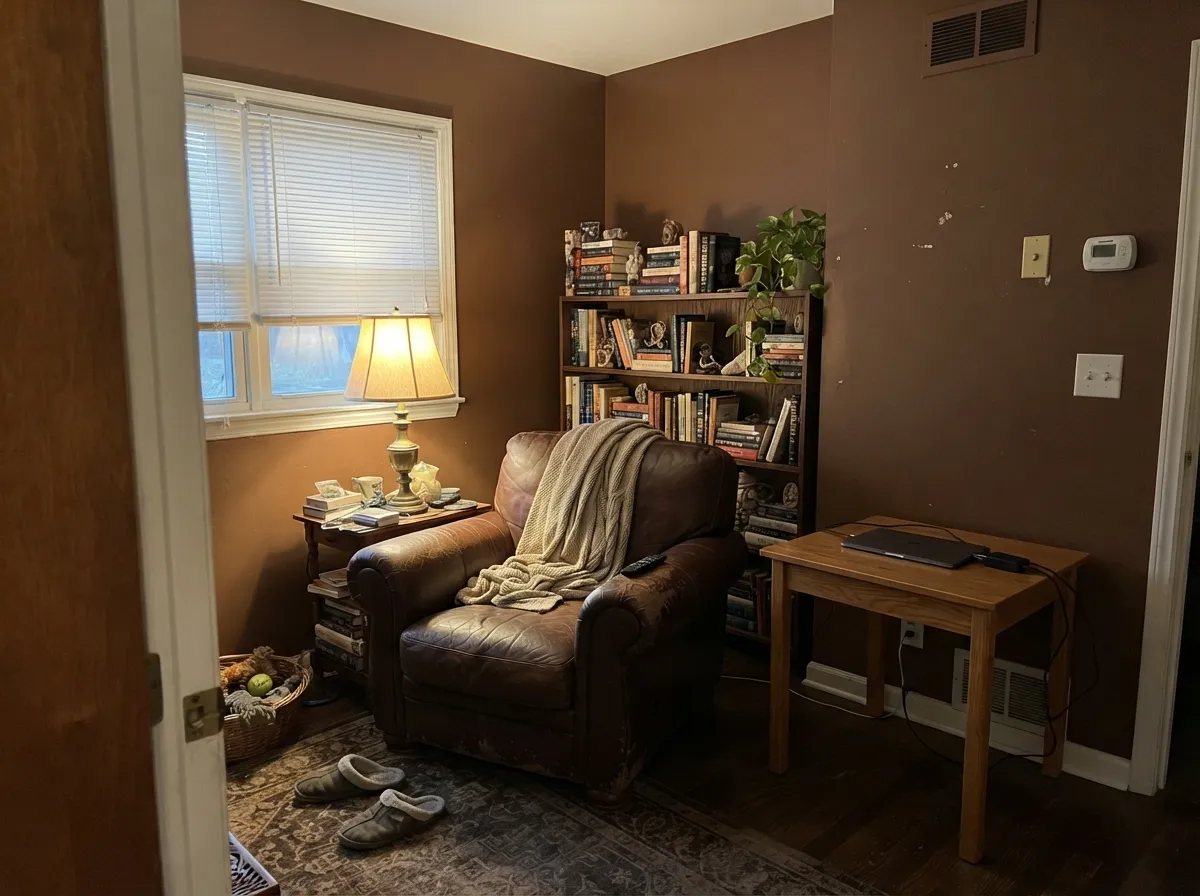
This is a small-dose color built for one surface at a time, not a whole floor plan. On a front door in decent sun, on a den's walls under lamp light, or on a kitchen island under warm pendant light, it reads exactly like its name — rich, worn-in, expensive. It is at its best next to warm materials: brass hardware, walnut, leather furniture, aged wood — anything that shares its warmth instead of arguing with it.
Where It Fails
Almost every regret story with a color this dark comes from asking it to do a job it was never built for — usually a whole bright room, or a room with no real light. Both are avoidable before the first coat.
At LRV 10 the walls stop bouncing light back into the room, so a full four-wall application without a strong window or a serious lamp plan reads cave-like rather than cozy. This color is built for a door, an island, a built-in, or a den that already gets real light — not the main living space.
Cool daylight or cool LED bulbs strip out the red-orange warmth that makes this color read as leather in the first place, leaving a flat, muddy near-black instead. Warm 2700K bulbs are not optional here — they are half the paint job.
The olive-purple undercurrent in this brown doesn't sit quietly next to golden, orange-leaning oak — the two warm-but-different browns compete instead of complementing, and the room reads muddier than either color alone. Walnut, espresso, or pale white oak are much better company.
Room by Room
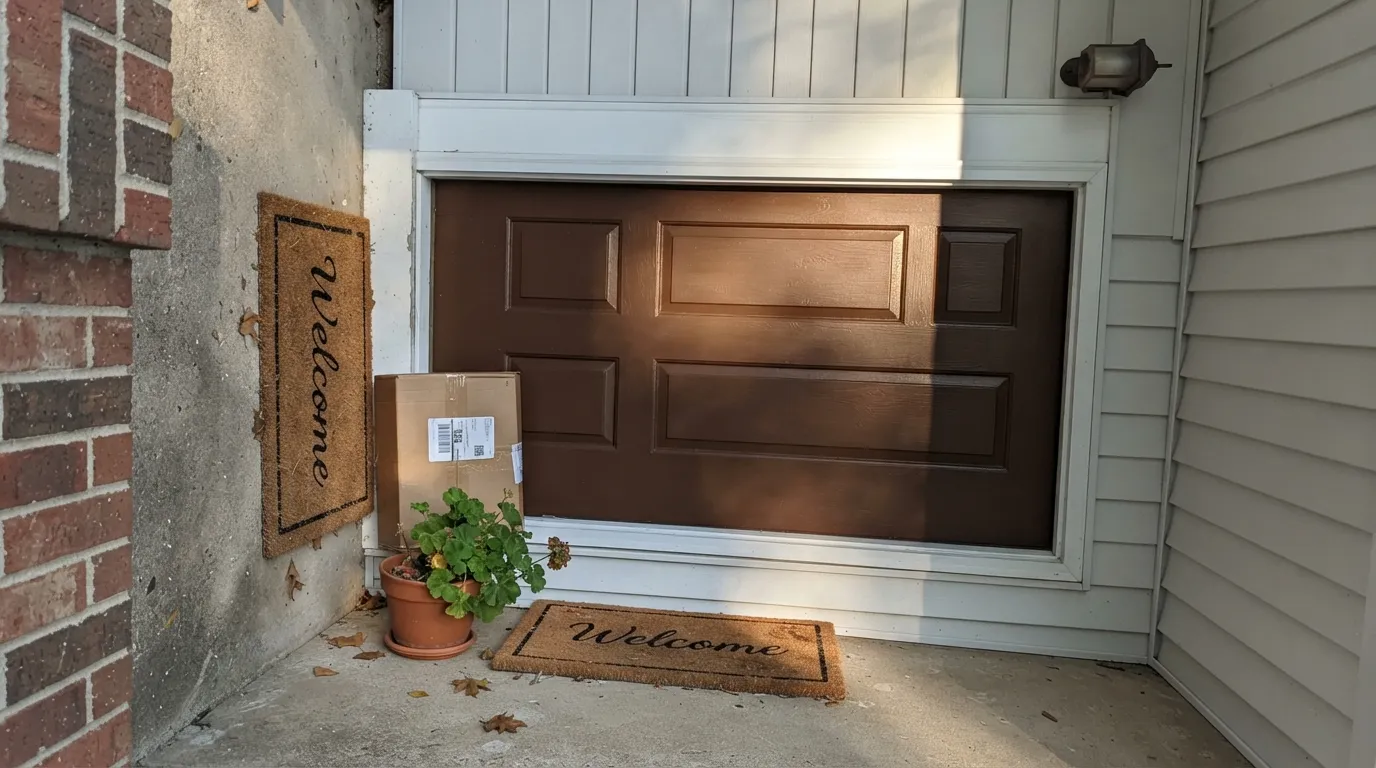
Full sun brings the red-brown forward and it reads as a genuine, classic alternative to a black door — softer, warmer, less severe. Pair it with a light-colored house body so the door doesn't just blend into dark siding; semi-gloss for durability.
Low, warm, lamp-lit rooms are exactly where this color wants to live. With leather furniture, walnut shelving, and brass reading lamps it looks intentional and collected, not like an accident of bad light.
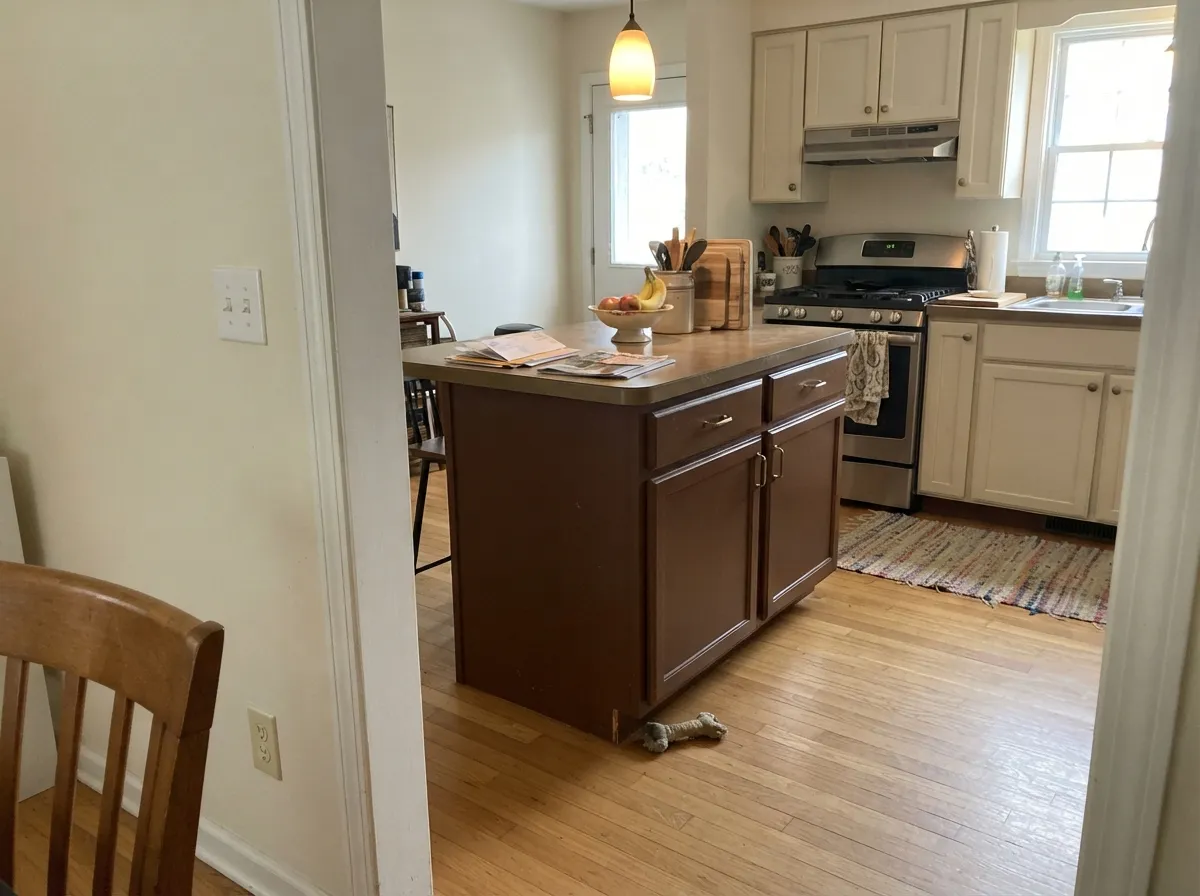
Benjamin Moore itself lists this color for cabinets, and an island in Leather Saddle Brown under pale counters and warm pendant light is a genuinely good move. A full kitchen of cabinets in this color needs serious task lighting or it goes cave-like fast.
One wall, or a nook with its own reading lamp, works well. Four walls in an open-plan living room lit mostly by cool ceiling fixtures is the setup behind most disappointed reviews of colors this dark.
A headboard wall or a closet interior can be striking. A full bedroom needs a real lamp plan — overhead cool light alone flattens it into a plain dark blob by evening.
This color was not built to cover a whole house — full sun on a large surface reads heavy rather than rich. Save it for the door, shutters, or a garage door, where the dose is smaller and the sun does the work.
Your Light Is the Risk
Direct or filtered afternoon light brings the red-orange forward and the leather warmth is unmistakable — the best case for a front door or a west-facing den.
Cool daylight or cool bulbs strip the red out and leave a flat, muddy near-black. This is the light where it reads as "just a dark blob" instead of brown.
On a sun-hit door it reads a genuine warm brown; tucked under a deep, shaded porch it drifts noticeably darker and cooler — sample it in the actual spot, not just in hand.
Warm 2700K bulbs deepen the leather glow after dark; cool white LEDs flatten it toward gray-black. Bulb choice is not optional with a color this dark.
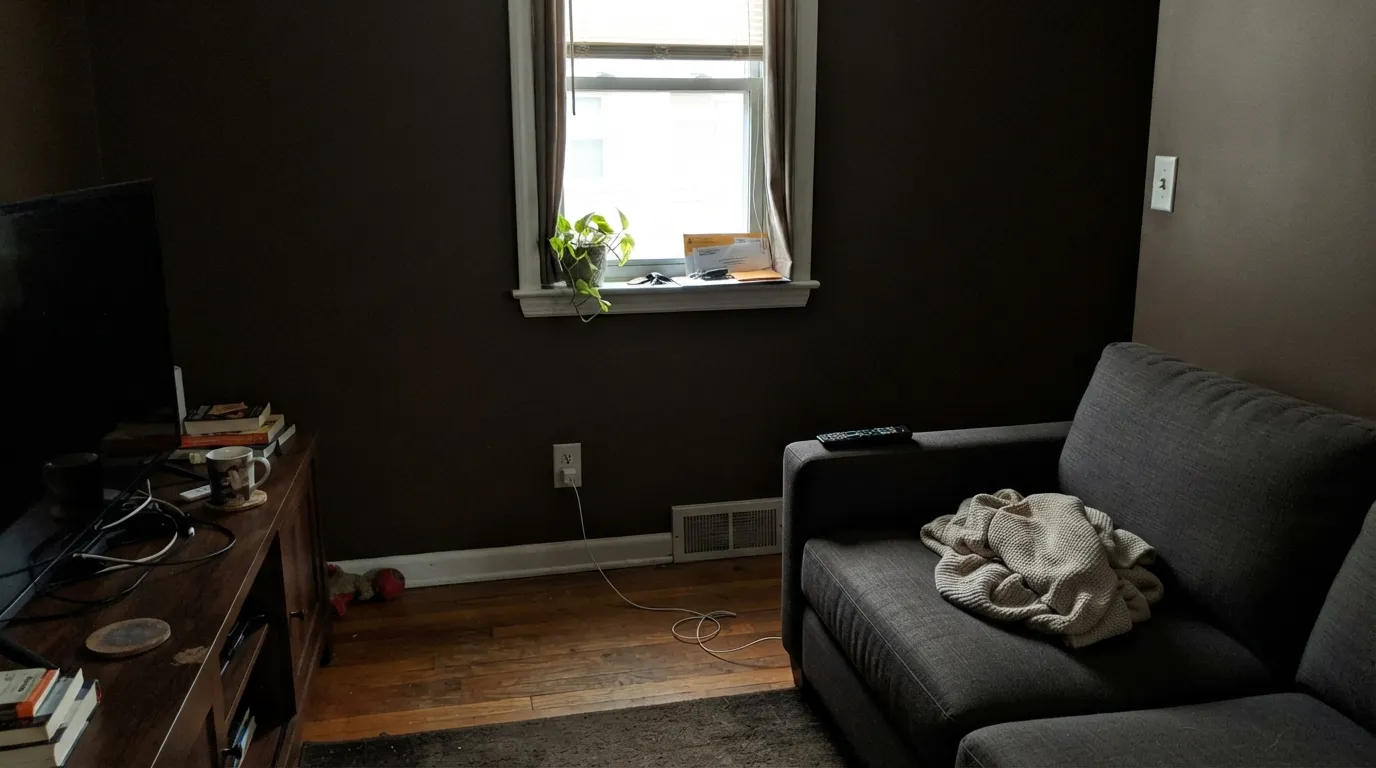
Most complaints about Leather Saddle Brown are a light mismatch. Upload a photo of your actual room and see it on your walls — then ask for the same wall in north light or evening lamps before you buy a single sample.
Need It From Another Brand?
Any paint counter can custom-tint Benjamin Moore 2100-20 directly. If you would rather stay in one brand's own deck, these are the closest stock matches, measured as ΔE2000. Under 2 is a difference you will not see on the wall.
| Brand | Closest color | ΔE | LRV | |
|---|---|---|---|---|
| Sherwin-Williams | Brevity BrownSW 6068 · Sherwin-Williams | 2.9 | 10 | Color page → |
| Behr | Dark Cherry MochaS170-7 · Behr | 1.8 | 10 | Color page → |
| Valspar | November Foliage2001-9A · Valspar | 0.9 | 10 | Color page → |
| PPG / Glidden | Antique MahoganyPPG16-08 · PPG / Glidden | 3.0 | 10 | Color page → |
| Glidden | Antique MahoganyPPG16-08 · Glidden | 3.0 | 10 | Color page → |
| HGTV Home by Sherwin-Williams | Brevity BrownHGSW 3062 · HGTV Home by Sherwin-Williams | 2.9 | 10 | Color page → |
Similar Benjamin Moore Colors
The nearest shades to Leather Saddle Brown within Benjamin Moore's own range, ranked by perceptual color distance — useful when you want the same look a touch lighter, darker, or warmer.
WCAG 2.1: AA is 4.5 : 1 for normal text, 3 : 1 for large text, AAA is 7 : 1.
Leather Saddle Brown vs the Colors You're Also Considering
Every Leather Saddle Brown sample board has the same rivals on it. The numbers show the real lightness gap — then it comes down to which risk you would rather live with.
Pick this for the more overtly red-leather version — Leather Saddle Brown never gets mistaken for a greige the way Taupe's name suggests it might be.
Benjamin Moore 2110-10 · LRV 8TaupePick this for the same rich dark-brown idea, a step darker and leaning more chocolate-neutral than red-leather.
Pick this if you want the Benjamin Moore version of the same idea, or you're already matching a BM deck.
Sherwin-Williams SW 6083 · LRV 8SablePick this if your painter works in Sherwin-Williams — nearly the same warm dark brown, one shade darker.
Leather Saddle Brown Coordinating Colors
The rule with a color this dark and this warm: stay warm, keep one light neutral in the room for contrast, and let brass and walnut do the rest. It flatters warm whites and creams, sits comfortably next to warm tans, and holds its own against near-black grays and charcoal-greiges without competing for the room's one dark note.
Leather Saddle Brown vs. a Black Front Door
Matte black doors have been the default swap-in for years, but they demand full sun and a house with enough contrast to carry that much absence of light — in cooler climates or shaded entries a black door can go flat instead of dramatic. A saddle brown door does the same job of standing out from a pale house without the starkness: it still reads dark and confident, but LRV 10 leaves just enough red-brown showing that the door looks warm rather than like a hole in the facade.
The trade-off runs the other way too: true black is more forgiving of shade and cool light because it isn't trying to show a color, only a value. Leather Saddle Brown needs the sun to do its job — a deeply recessed, north-facing entry is the one situation where straight black will look more intentional and consistent.
Leather Saddle Brown With Wood Tones and Floors
Walnut, espresso, and other reddish-brown dark woods are this color's best company — they share the same warm-red family, so a Leather Saddle Brown door or island next to walnut floors or furniture reads like one coordinated decision instead of two competing browns.
Golden honey oak is the wood to test first. Because Leather Saddle Brown carries olive and purple under its red, it doesn't automatically harmonize with orange-leaning oak the way a true orange-red would — expect the pairing to look muddier than either color alone, and lean on a rug or a lighter trim break if the honey oak floor isn't going anywhere. Pale, white-washed oak and gray-toned floors are the safer middle ground.
Three Ready Palettes Built on Leather Saddle Brown
A color is never alone on the wall. These are complete combinations in the 60-30-10 pattern, with the reason each one holds together. Every one opens in the visualizer.
White Dove trim keeps the room from feeling airless while the walls do the heavy lifting; Kendall Charcoal on built-ins adds a second dark note without competing, so the room reads collected rather than accidental.
Try this palette in your roomA warm white body keeps the door reading rich rather than muddy against siding; charcoal shutters bridge the two so the door doesn't look like an odd patch of color.
Try this palette in your roomManchester Tan's warm base is the same family as the island's undertone, so nothing fights; Cream trim keeps the kitchen bright enough that the dark island reads intentional, not like a hole in the room.
Try this palette in your roomLeather Saddle Brown FAQ
Is Leather Saddle Brown warm or cool?
Warm — a muted red-orange brown with a quiet olive-purple undercurrent. It never reads orange the way a clear terracotta does, and it never reads truly cool or gray.
Can I paint a whole room in it?
Only if the room already has strong daylight or a real warm-lamp plan. At LRV 10 it absorbs most of the light that hits it, so a full four walls in an average-lit room reads cave-like. It is much safer as a door, an island, a built-in, or an accent wall.
What trim goes with Leather Saddle Brown?
A warm white — White Dove or Cloud White — in semi-gloss. A stark, cool white trim fights the leather warmth and makes the brown look muddier by comparison.
Is it good for a front door?
Yes — it is one of the classic warm alternatives to a black door. It needs real sun or a lighter house body to read as brown rather than black; a deeply shaded, north-facing entry is the one situation where true black behaves more predictably.
Does it work with oak floors?
Depends on the oak. Walnut and espresso floors are its best company because they share the same warm-red family. Golden honey oak is the riskier pairing — its olive-purple undertone doesn't automatically harmonize with orange-leaning wood, and the combination can read muddy rather than rich.
How does it compare to a true black?
LRV 10 is genuinely dark but not black. In good light it shows real brown depth; in poor light it can look nearly black. If you want a color that reads the same regardless of light, pick a true black or near-black like Wrought Iron or Kendall Charcoal instead — this color is choosing to show you brown when the light allows it.
Have you painted with Leather Saddle Brown?
Rate it — one tap helps the next reader decide.
Ask a Question