Gull Wing Gray
The medium gray Benjamin Moore never marketed, reviewed honestly: where its cool lean pays off, the rooms it turns institutional, and what to pick instead.

Jessica has spec'd whites and neutrals for more than 300 rooms and keeps a sample wall of painted drawdowns in her studio. Every color review is checked against real reader rooms in the comments and re-tested when a formula changes. About the testing process →
- 1Pewter Green12
- 2Retreat21
- 3Gull Wing Gray42
- 4Upward57
- 5Sea Salt63
The Fast Verdict
Gull Wing Gray is what people are actually asking for when they say "just a normal gray": mid-depth, almost no chroma, a faint cool lean, and no secret beige waiting to show up in the afternoon. That neutrality is the whole product. It behaves outstandingly on a fence, a shed, a garage door and a bathroom, and it goes flat and institutional in any room that has nothing warm in it.
Fences, gates and sheds · exterior siding and garage doors with white trim · bathrooms and powder rooms with chrome and cool stone · cabinets and mudroom lockers · anyone who bought a greige by mistake and wants real gray
Your floors or trim are honey oak · the room is dim and north-facing · you want a warm, cozy gray · everything else in the room is already gray and white
- Genuinely neutral — no hidden beige, violet or green flip
- LRV 42 reads as real color on a wall without going dark
- Outstanding outside: fences, sheds, siding, garage doors
- Hides dirt, pollen and splash-back far better than white
- Agrees with chrome, nickel, cool stone and white tile
- Turns flat and institutional in a room with nothing warm in it
- Goes chilly and concrete-like under north light or cool LEDs
- Fights honey oak floors, oak trim and orange brick
- Too anonymous if you wanted a gray with some character
What Color Is Gull Wing Gray, Really?
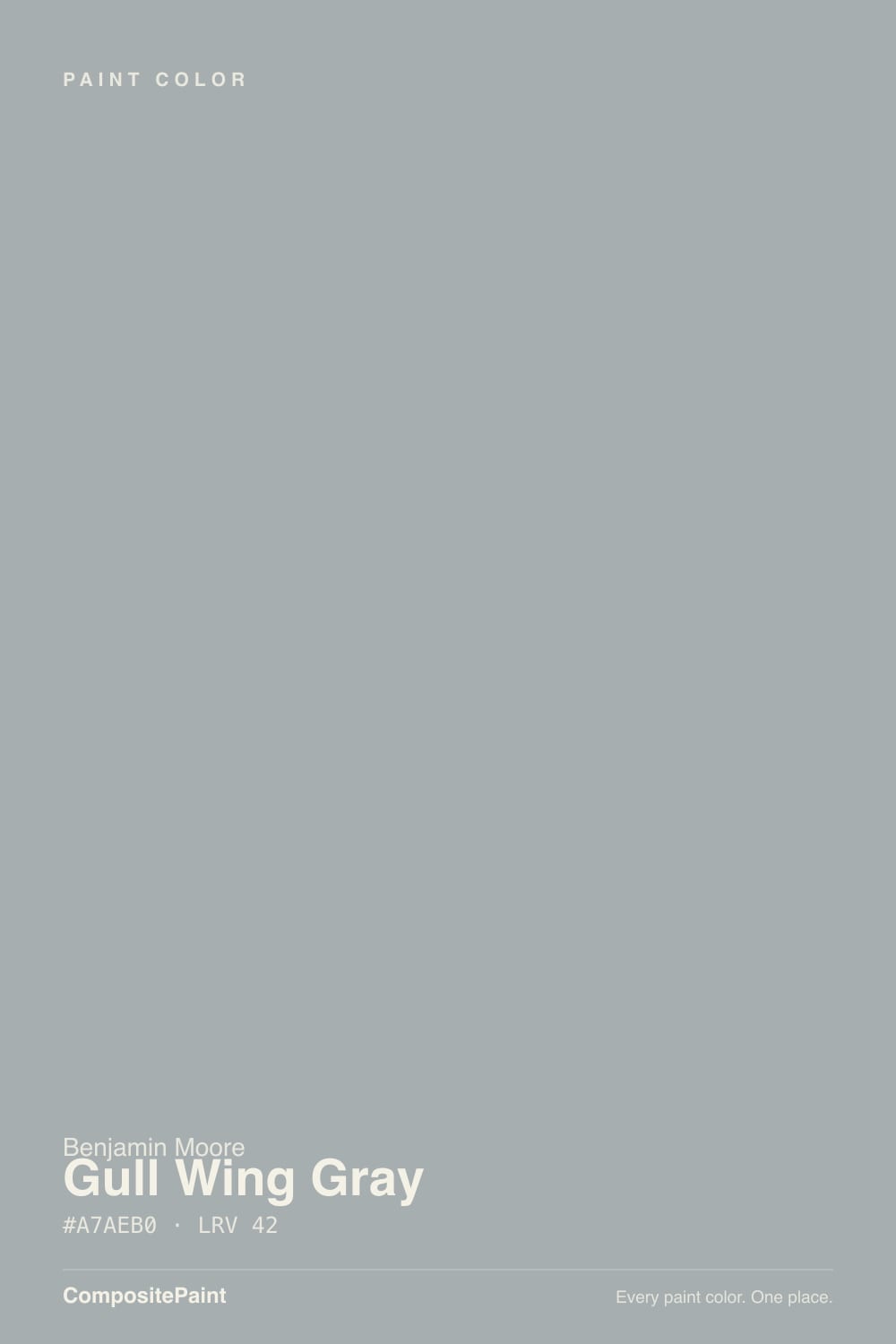
A medium gray with almost no color in it and the faintest cool lean — a whisper of blue with a touch of green behind it, the direction most people call "steel" rather than "blue." Benjamin Moore files it in Color Preview under Neutral and describes it as a balanced, dependable medium gray, which is unusually honest for paint marketing: there is no hidden violet, no beige core, no green flip. The chroma is low enough that in most rooms nobody will name an undertone at all. They will just say gray.
At LRV 42 it sits almost exactly in the middle of the light scale, and that is a bigger deal than the color itself. It is not a pale gray that vanishes into white trim — put it beside Stonington Gray at LRV 59 and Gull Wing Gray is clearly a shade you can see across the room. Mid depth is also what makes it work outdoors: it holds its color in full sun instead of bleaching out, and it hides pollen, rain splash and dog-level dirt far better than a light gray or a white.
Undertone in one line: cool gray with a faint blue-green, never violet, never greige. If your sample looks distinctly blue, look at what is next to it — cool LED bulbs, a north window, or white trim with a blue base will all pull that whisper forward.
Where It Shines
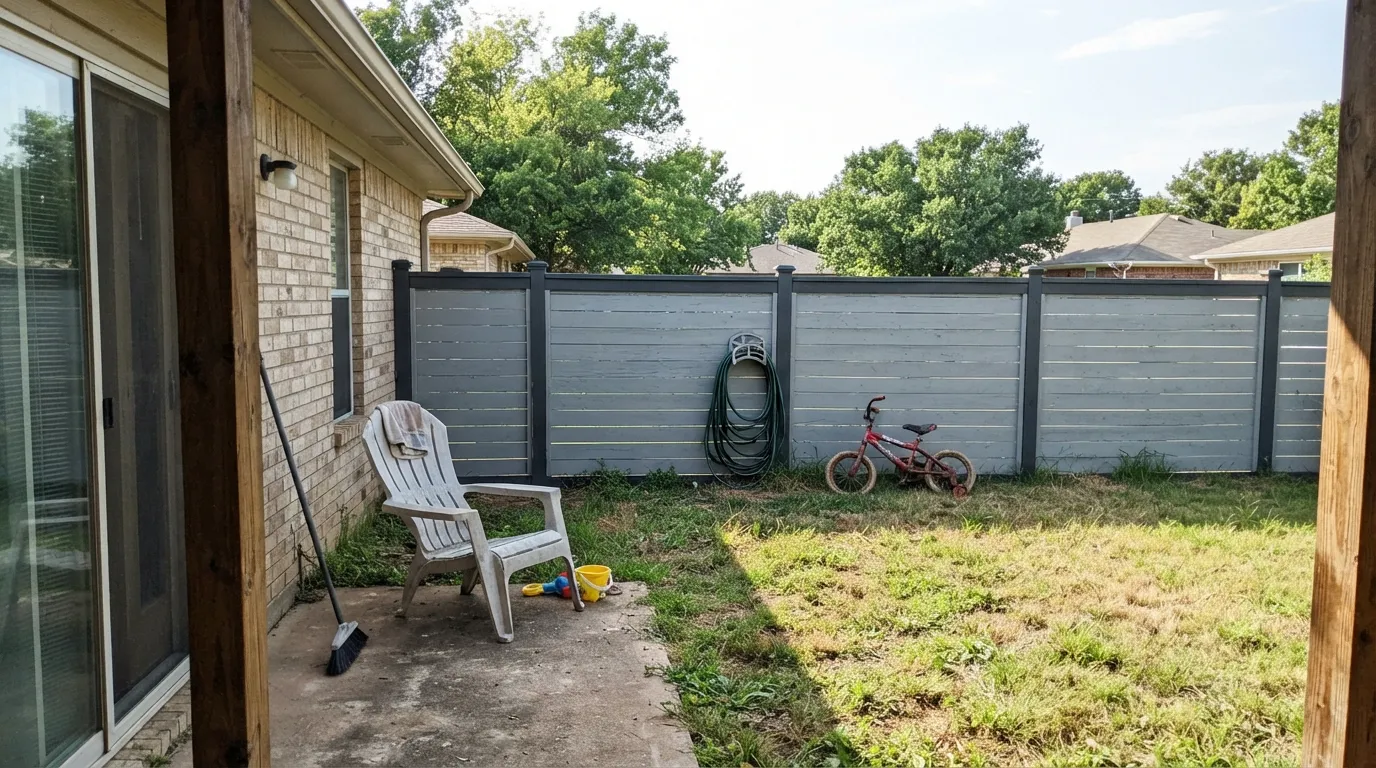
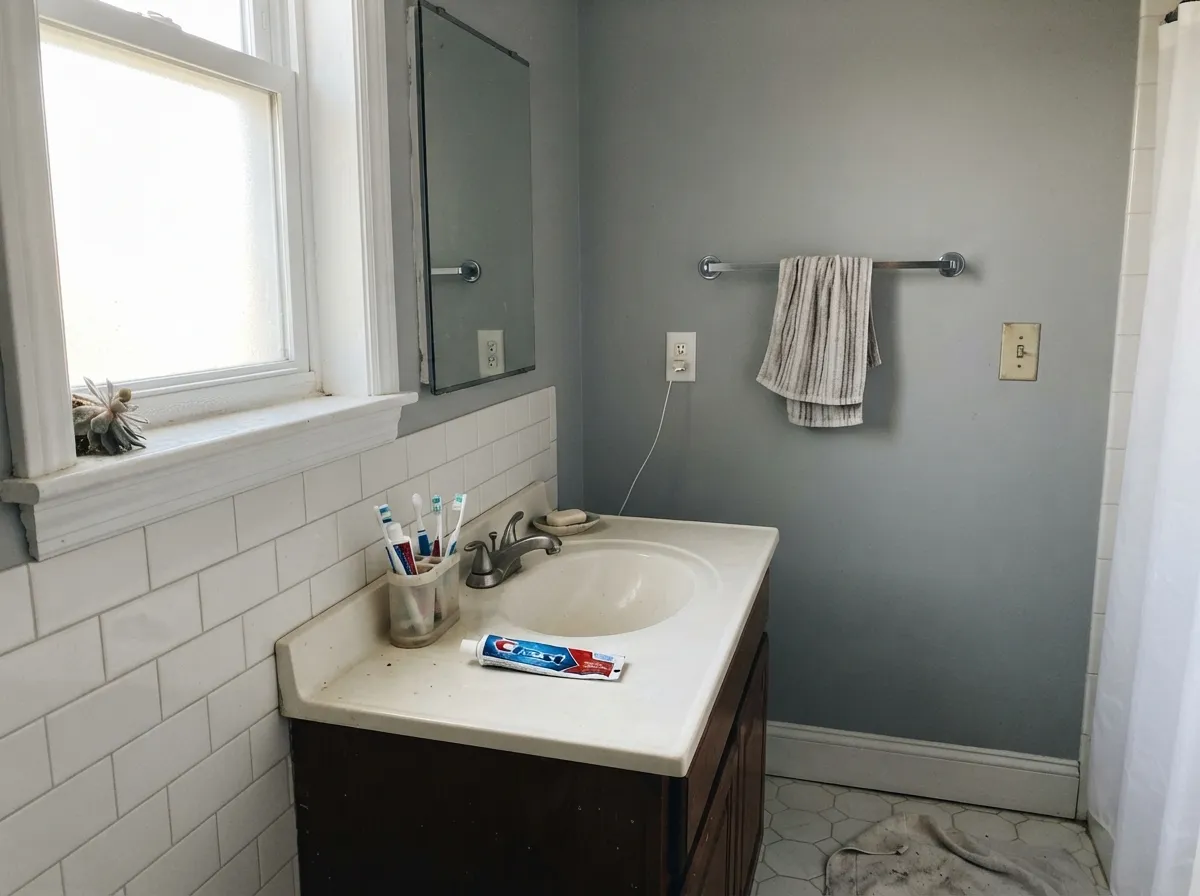
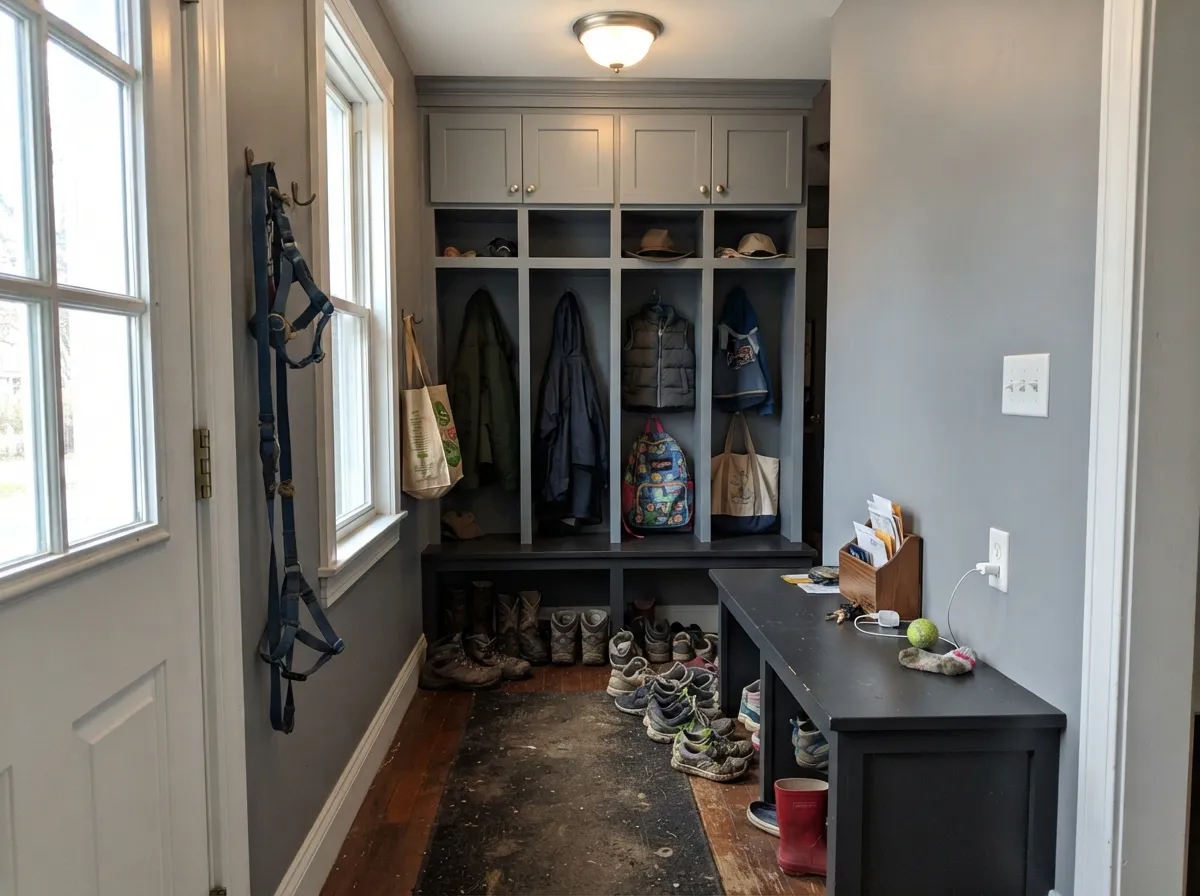
Give it a job where neutral is the point and it is hard to beat. On a fence or a shed it turns raw wood into a deliberate backdrop that makes a green yard look greener, and at LRV 42 it hides the dirt line a white fence broadcasts by week three. Inside, its best rooms are the ones that already run cool on purpose: bathrooms with chrome and gray-veined stone, mudroom lockers, laundry cabinets, a garage door that should read as architecture instead of a big white rectangle. It also rescues a specific buyer — the person who wanted gray, got a greige, and repainted.
Where It Fails
The complaints about this color are remarkably consistent, and every one of them is predictable before you open the can. None are defects in the paint. But if your room matches one, sampling bigger will only confirm the problem.
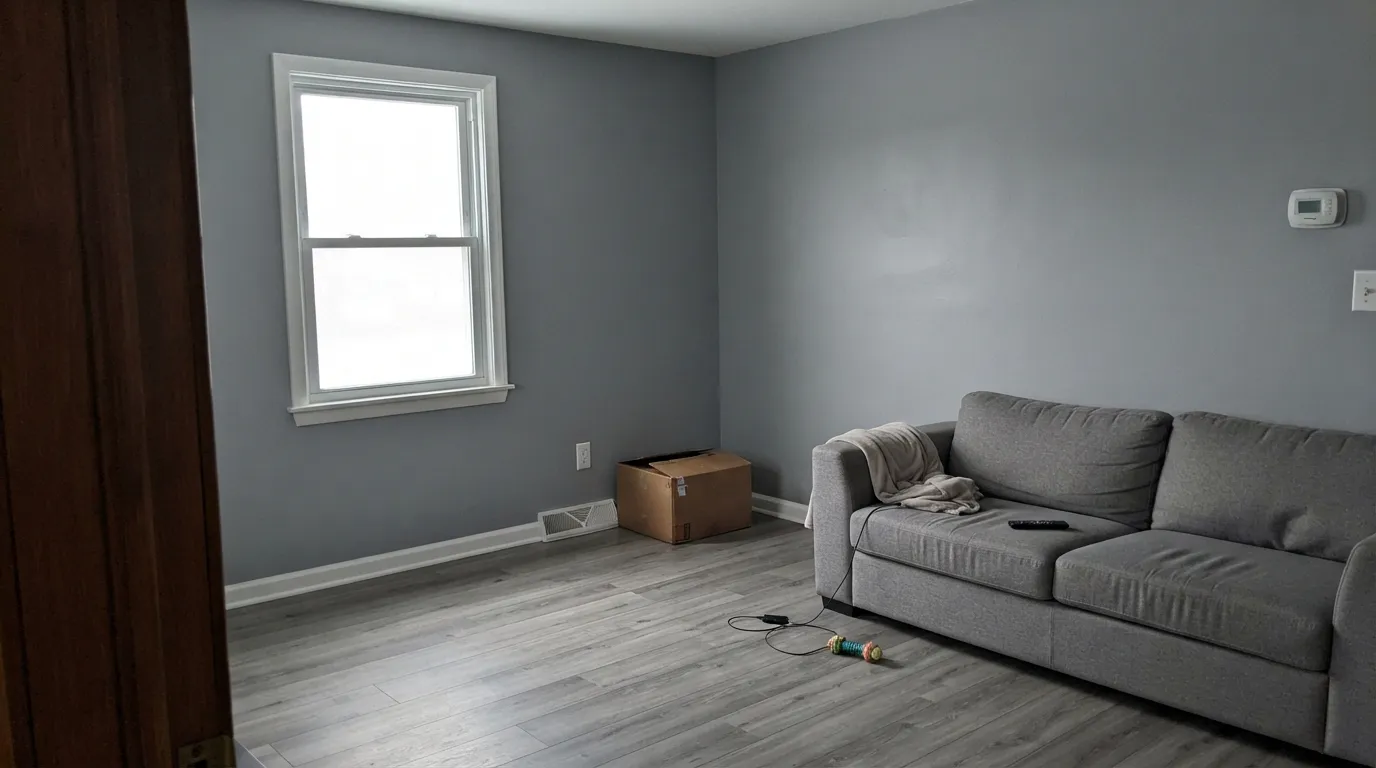
Gray walls, white trim, gray floors, gray sofa — and the room reads like a rented office corridor. Low-chroma grays have no warmth to give back, so they take whatever the room supplies. Wood, leather, brass, a real rug, warm bulbs: it needs at least two of those. Without them, people call it institutional, and they are right.
Cool light plus a color with a cool lean equals chilly. In a north-facing room on an overcast day the blue-green comes forward and the walls read like damp concrete. Warm 2700K bulbs fix most of it for the price of a bulb pack; if the room is dim and you refuse lamps, this is not your gray.
Cool gray and orange wood exaggerate each other — the floor goes more orange, the wall goes more blue. The same thing happens outside next to red-orange brick or a fresh cedar deck. Pale white oak, walnut and painted wood are all fine; golden oak trim is the one honest no.
Room by Room
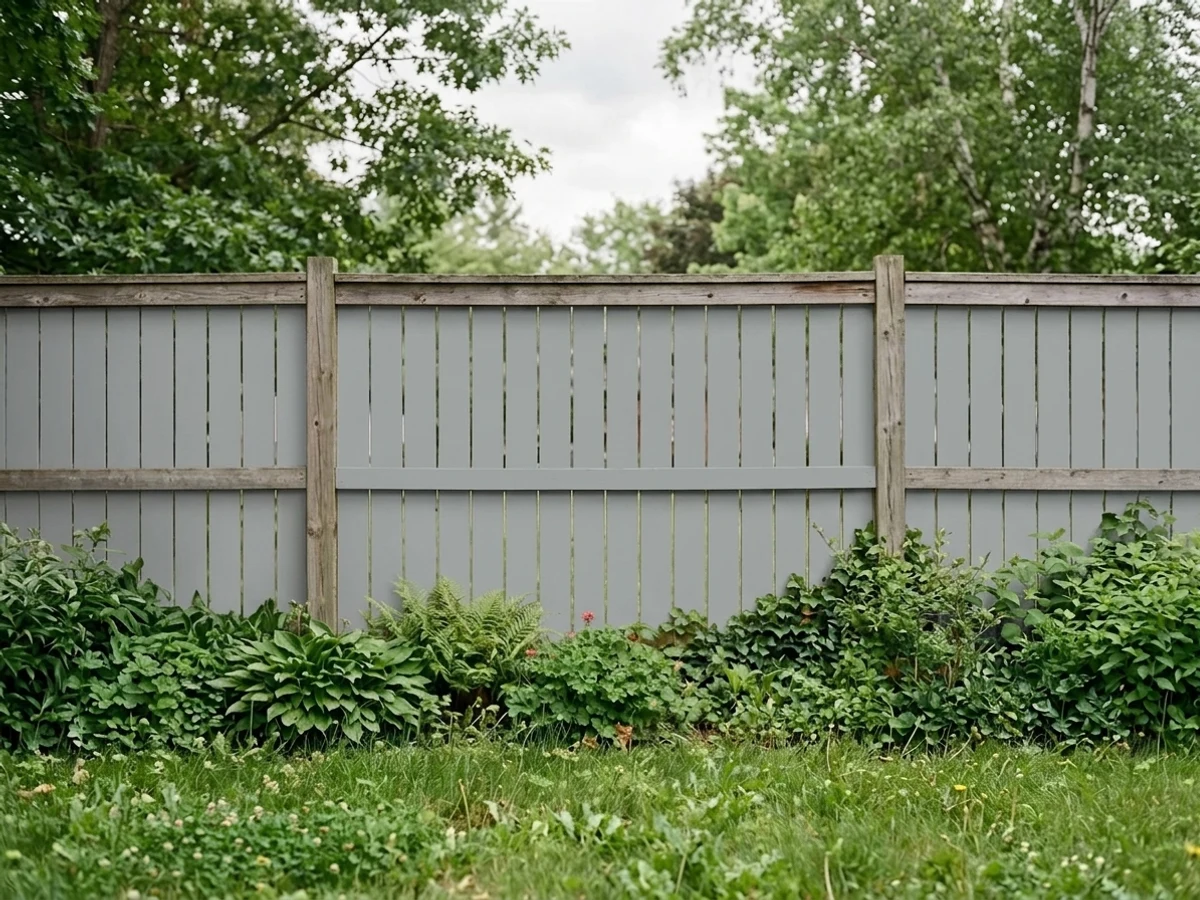
Mid gray is the color a painted fence should be: it recedes so the yard reads as the yard, and it hides the splash-back dirt that makes white fences look neglected. Prime bare cedar with a stain-blocking primer first, use an exterior flat or low-lustre, and pick a near-black for the posts and caps so the panels look intentional rather than unfinished.
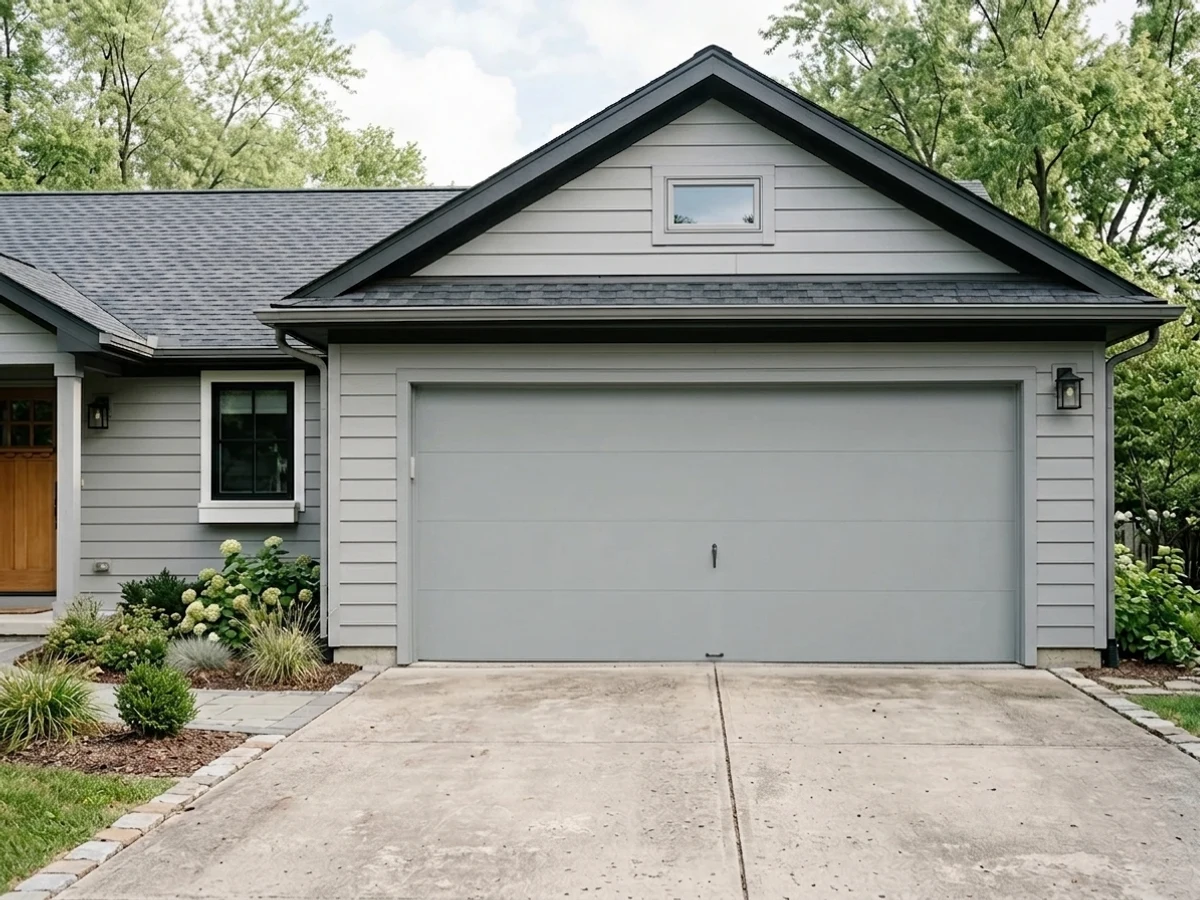
On siding it reads as a proper gray house rather than a greige one, and full sun keeps it clean instead of washing it pale. A garage door in this color stops competing with the front door. Keep the trim a clean white — a warm cream trim makes the siding look bluer by contrast.
This is its best interior room. Chrome, brushed nickel, gray-veined quartz and white tile all run cool, so the wall finally agrees with the fixtures instead of arguing. Eggshell on walls, semi-gloss on the vanity, and skip the 5000K vanity bulbs unless you like a clinical read.
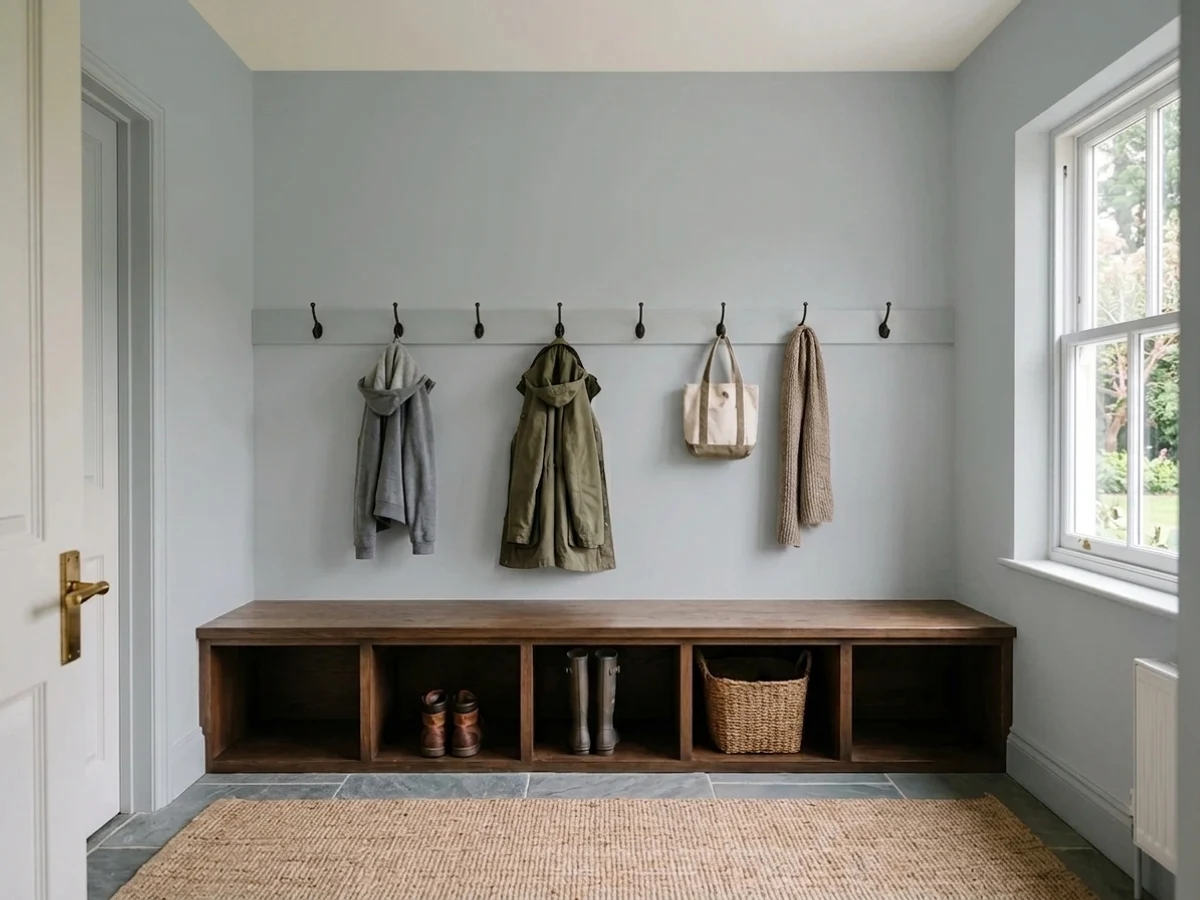
Mid-gray cabinetry under a white wall is a safe, long-lived look, and this one has no undertone to fight the counter. Use a satin cabinet enamel — Benjamin Moore's own Advance is sold in this color — and expect two coats plus a bonding primer over factory-finished doors.
It works, but it is a backdrop, not a personality. Bring wood, leather, warm textiles and 2700K lamps and it reads calm and expensive. Bring gray floors and a gray sectional and it reads like a model unit nobody moved into yet.
Low light is where a cool low-chroma gray has the least to offer: no warmth to fall back on and not enough color to be interesting. If the room is dim, a warmer mid-tone will make the same amount of light feel like more.
Your Light Is the Risk
South windows or full outdoor sun give the cleanest read: an honest medium gray, cool but not blue. This is the light to sample in.
Cool gray daylight pushes the blue-green forward and flattens the color. On an overcast day it can read like wet concrete.
Cooler and crisper in the morning, softer and slightly warmer at golden hour. The swing is small — this color moves less than most grays.
2700K bulbs settle it into a neutral putty-gray and are the right choice. 4000K and cooler LEDs make it clinical fast.
Most complaints about Gull Wing Gray are a light mismatch. Upload a photo of your actual room and see it on your walls — then ask for the same wall in north light or evening lamps before you buy a single sample.
Need It From Another Brand?
Any paint counter can custom-tint Benjamin Moore 2134-50 directly. If you would rather stay in one brand's own deck, these are the closest stock matches, measured as ΔE2000. Under 2 is a difference you will not see on the wall.
| Brand | Closest color | ΔE | LRV | |
|---|---|---|---|---|
| Sherwin-Williams | Morning FogSW 6255 · Sherwin-Williams | 0.8 | 42 | Color page → |
| Behr | Tin FoilN500-3 · Behr | 1.7 | 43 | Color page → |
| Valspar | Metropolis4005-1C · Valspar | 1.9 | 41 | Color page → |
| PPG / Glidden | Mirror MirrorPPG1039-3 · PPG / Glidden | 0.7 | 43 | Color page → |
| Glidden | Mirror MirrorPPG1039-3 · Glidden | 0.7 | 43 | Color page → |
| Dutch Boy | Payphone434-3DB · Dutch Boy | 1.0 | 41 | Color page → |
Similar Benjamin Moore Colors
The nearest shades to Gull Wing Gray within Benjamin Moore's own range, ranked by perceptual color distance — useful when you want the same look a touch lighter, darker, or warmer.
WCAG 2.1: AA is 4.5 : 1 for normal text, 3 : 1 for large text, AAA is 7 : 1.
Gull Wing Gray vs the Colors You're Also Considering
Every Gull Wing Gray sample board has the same rivals on it. The numbers show the real lightness gap — then it comes down to which risk you would rather live with.
Pick this when you want the cool lean on purpose, all day, instead of as a surprise.
Benjamin Moore HC-169 · LRV 41Coventry GrayPick this if you want the same depth with a little more body — it sits closer to the warm side and only flashes blue in certain light.
Pick this for the more restrained version — Stardew reads as a blue-gray, this reads as a gray.
Sherwin-Williams SW 9138 · LRV 43StardewPick this if your painter works in Sherwin-Williams, or you actually want people to notice the blue.
Gull Wing Gray Coordinating Colors
The rule for coordinating with this gray is simple: give it clean whites above and real depth below, and let the wood and metal in the room supply the warmth. Because it has so little chroma of its own, it will not fight anything — but it also will not carry a scheme alone. These are the partners that keep showing up in rooms and exteriors that work:
One caveat worth stating plainly: a warm, soft white like White Dove is a good trim choice when the room already has warm wood and textiles, but next to a cool gray it will read creamy rather than white. If you want the trim to look genuinely white, stay with Simply White or Chantilly Lace.
Gull Wing Gray on Fences, Sheds and Garage Doors
Outside is where this color stops being anonymous and starts being useful. A painted fence has one job — to disappear behind the yard — and a mid gray does that better than white, which shows every rain splash within a season, and better than a dark charcoal, which absorbs heat and shows chalking as it ages. At LRV 42 it also keeps its color through full sun instead of drifting pale, so the second summer looks like the first.
The prep matters more than the color. Bare cedar and redwood need a dedicated stain-blocking primer before any paint goes on, or the natural tannins bleed brown through the finish within weeks; a mid gray hides that bleed better than a light color, but it does not prevent it. Pressure-treated pine has to dry out before it will hold paint at all — months, not days. And be honest about the trade-off: paint forms a film that seals the wood beautifully and eventually peels if moisture gets behind it, while a solid stain soaks in and weathers instead of flaking. On vertical fence boards paint is a reasonable choice; on horizontal caps and rails that hold water, expect to touch up.
The same logic applies to sheds and garage doors. A gray garage door reads as part of the house instead of a blank white panel, and it hides the tire spray and lawn-mower scuffs that white doors collect at knee height. Keep the house trim a clean white, put the near-black on posts, gate hardware and the shed door, and the whole back yard looks like it was planned. Benjamin Moore's Element Guard exterior line is offered in this color if the site is damp or shaded.
Gull Wing Gray With Wood, Stone and Metal
Metal is the easy half. Chrome, brushed nickel, polished steel and matte black all sit on the same cool side of the room, which is why bathrooms and laundries are this color's strongest interior rooms. Brass and unlacquered bronze are not off limits, but they are a deliberate contrast rather than a match — you need enough of them, and enough warm wood, for the pairing to look intended instead of accidental.
Stone follows the same rule. Gray-veined marble and quartz, white subway tile, honed bluestone and concrete counters are all natural partners. Warm travertine, tumbled beige tile and orange-toned granite are the fights — the stone will look yellower and the wall will look bluer, and there is no coat count that fixes it.
Floors decide the rest. Pale white oak, gray-washed engineered wood, walnut and darker stains all work. Honey oak, golden builder-grade oak and orange-stained trim are the one honest no: cool gray and orange wood are opposites, and each one makes the other louder. If the golden floor is staying, a warmer mid gray will save you the argument.
Three Ready Palettes Built on Gull Wing Gray
A color is never alone on the wall. These are complete combinations in the 60-30-10 pattern, with the reason each one holds together. Every one opens in the visualizer.
A fence painted one flat mid gray looks unfinished; the near-black frame on posts and caps is what makes it read as a design decision. Simply White on the house trim keeps the whole yard tied together — it is one of the whites Benjamin Moore itself lists alongside this color.
Try this palette in your roomThe soft-white trim is doing real work here: it takes the clinical edge off a cool gray the way a bright white will not. Hale Navy gives the scheme the one dark, saturated note that keeps a gray room from reading like a waiting area, and it sits on the same cool side of the wheel.
Try this palette in your roomFor mudrooms, laundries and bathrooms, the crisp white keeps the small room bright while the cabinets carry the color. Kendall Charcoal at LRV 13 gives a third step of depth so the gray reads as the middle of a ladder rather than the only idea in the room.
Try this palette in your roomGull Wing Gray FAQ
Is Gull Wing Gray warm or cool?
Cool, but only just. There is a faint blue with a touch of green behind it and very little chroma overall, so in most rooms it simply reads gray. Cool bulbs, north windows and blue-based white trim all pull the cool side forward; wood, brass and 2700K lamps push it back toward neutral.
Is LRV 42 too dark for walls?
It is a genuine mid tone, not a light gray, so it will read as a color on all four walls. In a room with decent windows that is exactly the point. In a small dim room it will feel closed in — Stonington Gray at LRV 59 is the same honest gray idea with much more light in it.
What white trim goes with it?
A clean white is the safest partner: Simply White or Chantilly Lace both keep the scheme crisp, and Simply White is one of the whites Benjamin Moore pairs with it on the chip. White Dove works when the room already has warm wood and textiles — just know it will look slightly creamy against a cool gray rather than white.
Is Gull Wing Gray good for a fence?
Yes — this is one of its best uses. A mid gray hides splash-back dirt and pollen that a white fence puts on display, and it stays put in full sun instead of bleaching. Prime bare cedar with a stain-blocking primer or the tannins will bleed through, let pressure-treated lumber dry out before painting, and use an exterior flat or low-lustre rather than a gloss.
Does it work with oak floors?
Pale white oak, gray-washed and walnut floors are all fine. Golden honey oak is the one real clash — a cool gray beside orange wood makes each side look more extreme, so the floor goes more orange and the wall goes more blue. A large rug helps; wall-to-wall honey oak with matching trim does not.
Gull Wing Gray or Coventry Gray?
They are almost the same depth — LRV 42 against 41 — so the choice is temperature. Coventry Gray has a little more body and sits closer to the warm side, showing blue only in certain light. Gull Wing Gray commits to the cool side full time. In a room with warm wood, Coventry Gray is more forgiving; on a fence, a bathroom or beside chrome and cool stone, Gull Wing Gray is the better fit.
Have you painted with Gull Wing Gray?
Rate it — one tap helps the next reader decide.
Ask a Question