Creekside Green
Benjamin Moore's gray-green workhorse, reviewed honestly: never a Color of the Year, always on the exterior color chart — where it turns true green, the light that flattens it to taupe, and what to pick instead.

Jessica has spec'd whites and neutrals for more than 300 rooms and keeps a sample wall of painted drawdowns in her studio. Every color review is checked against real reader rooms in the comments and re-tested when a formula changes. About the testing process →
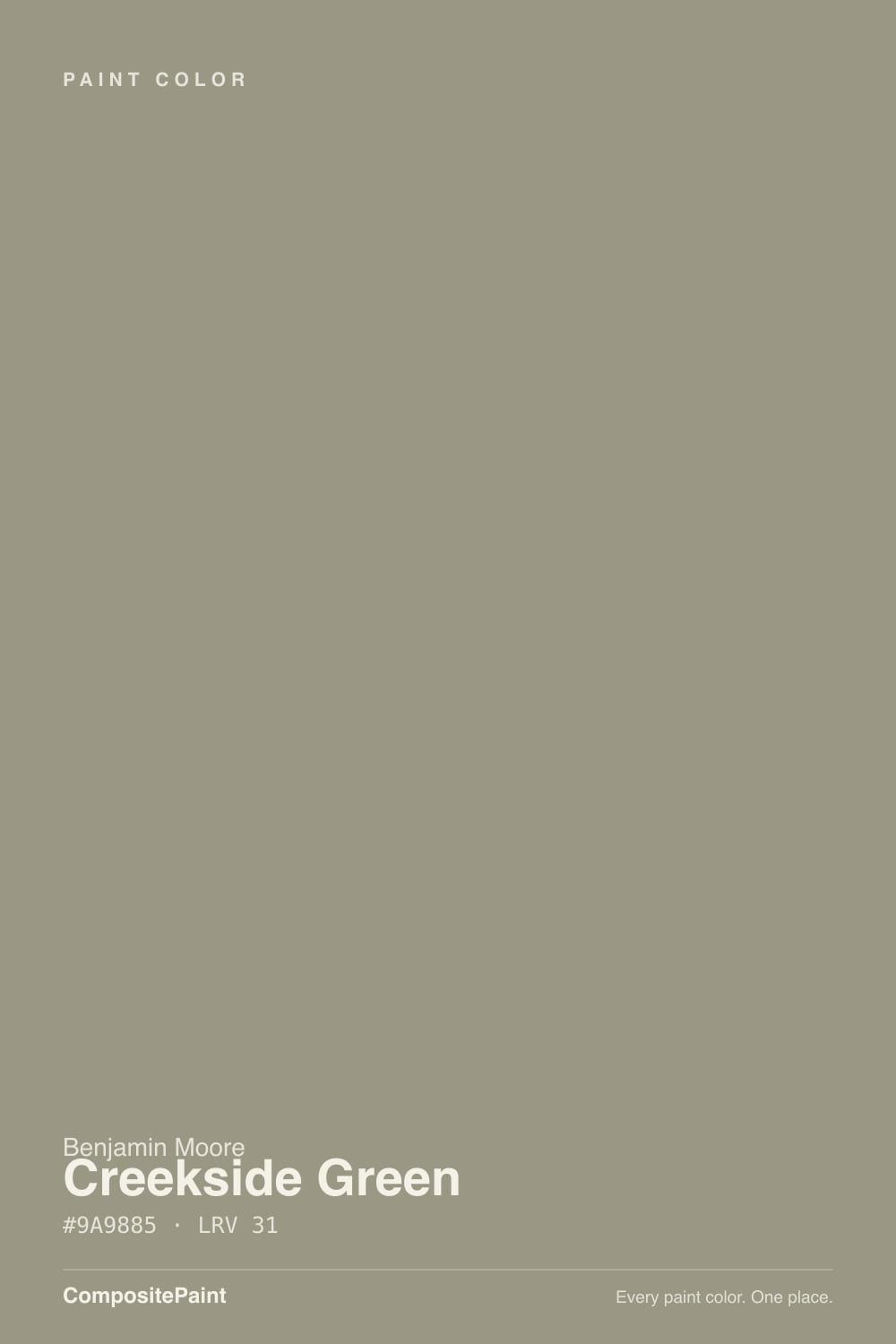
- 1Anonymous20
- 2Curio Gray26
- 3Creekside Green31
- 4Revere Pewter55
- 5Agreeable Gray60
The Fast Verdict
Creekside Green is what a green looks like after it stops trying to prove it's green: a low-chroma sage-olive built on a warm, orange-yellow base rather than a cool minty one. In bright daylight the green steps forward; in flat or overcast light it steps back into a soft weathered gray. It has never chased a Color-of-the-Year headline — instead it quietly became one of the few colors Benjamin Moore sells pre-formulated for exterior use, the kind of practical reputation that outlasts any trend.
Exterior siding + front doors · kitchen cabinets against dark trim and cast iron · mudrooms and entry built-ins · anyone who wants green without it reading Kelly-green loud
You want a saturated, unmistakable green · your room stays dim under cool LEDs all day · you're pairing it with icy white marble or crisp cool gray · you need it to look identical morning to night
- Genuine chameleon: olive-green in daylight, softer sage in shade, weathered gray on overcast days
- One of the few colors BM sells pre-formulated for exterior use — Regal Select Exterior and Element Guard
- Warm base flatters brick, terracotta, cast iron and brass without any of them fighting it
- Deep enough (LRV 31) to hold real color instead of washing pastel in a bright room
- Reads as green without going loud — safer for resale than a saturated green, more interesting than beige
- Low chroma means dim or cool-lit rooms can read flat taupe-gray, not green
- Not a true saturated green — buyers picturing vivid sage will be underwhelmed
- Clashes with crisp cool grays and icy white marble
- Rarely gets the design-blog spotlight October Mist or Evergreen Fog do, so fewer real-room photos to sample against
What Color Is Creekside Green, Really?
Creekside Green is a low-chroma sage-olive built on a warm, orange-yellow-tinted gray base rather than a cool blue-green one, which is why it never reads minty or crisp the way some sages do. Benjamin Moore doesn't market it as a headline color — it has never been a Color of the Year pick and rarely tops best-seller lists — but it has quietly become one of the deck's most-used exterior colors, sold pre-formulated in both Regal Select Exterior and the moisture-resistant Element Guard line. That is the kind of practical, everyday endorsement that outlasts a trend cycle.
At LRV 31 it sits in the middle of the deck's gray-green cluster — darker and more grounded than October Mist (LRV 39), close in depth to Sherwin-Williams Evergreen Fog (LRV 30) and SW Sage (LRV 32). That depth is also its personality: owners report genuinely different color reads through the day — greener and more olive in bright daylight, softer sage in open shade, and on an overcast day, close to a weathered gray with just a hint of green left. That is not the paint being unpredictable; it is what a low-chroma color does when the gray base and the yellow-green pigment trade places depending on how much light is hitting the wall.
Undertone in one line: gray-green with a warm, orange-yellow base — never blue, never minty. If it reads as flat taupe on your wall, that is a dim room or cool-white bulbs pulling the green out, not a bad can; give it real daylight or a warm lamp before deciding it disappointed you.
Where It Shines
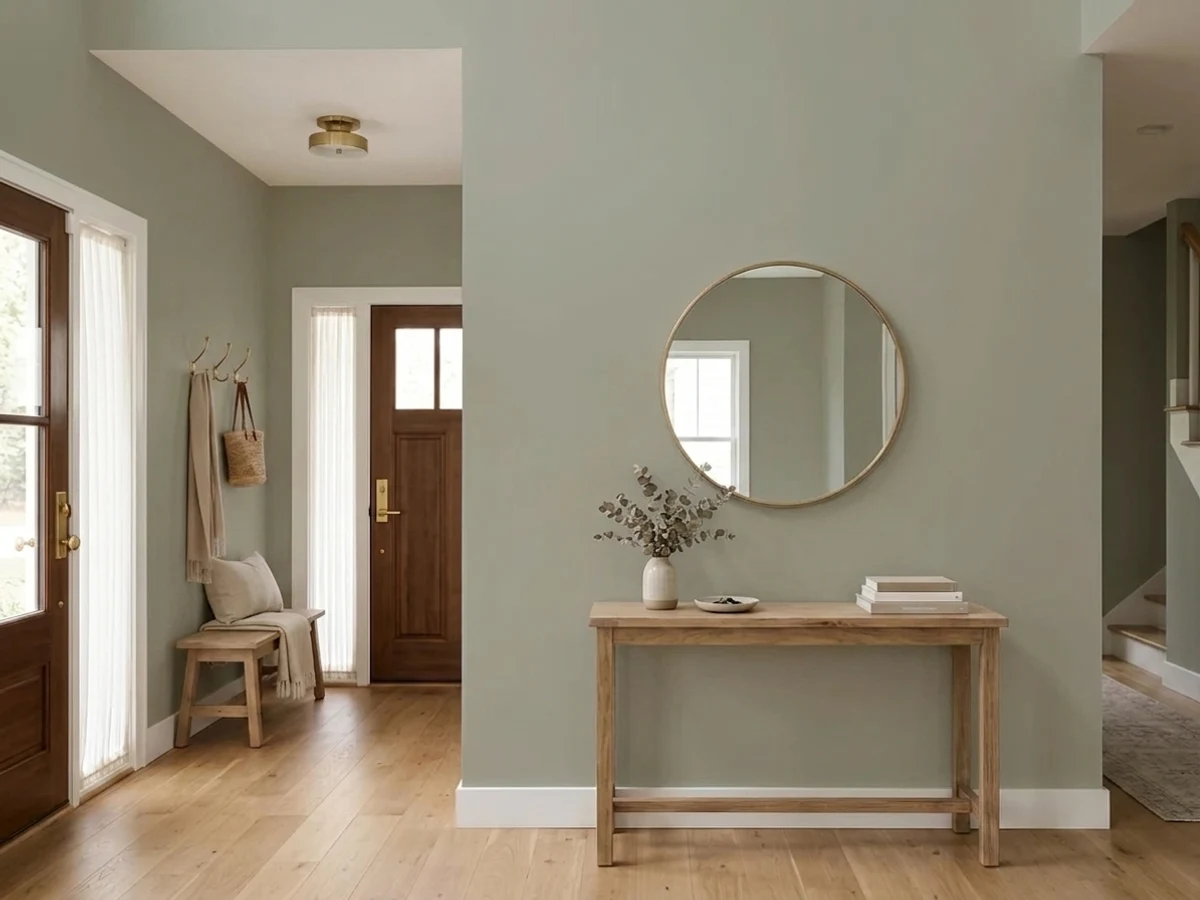
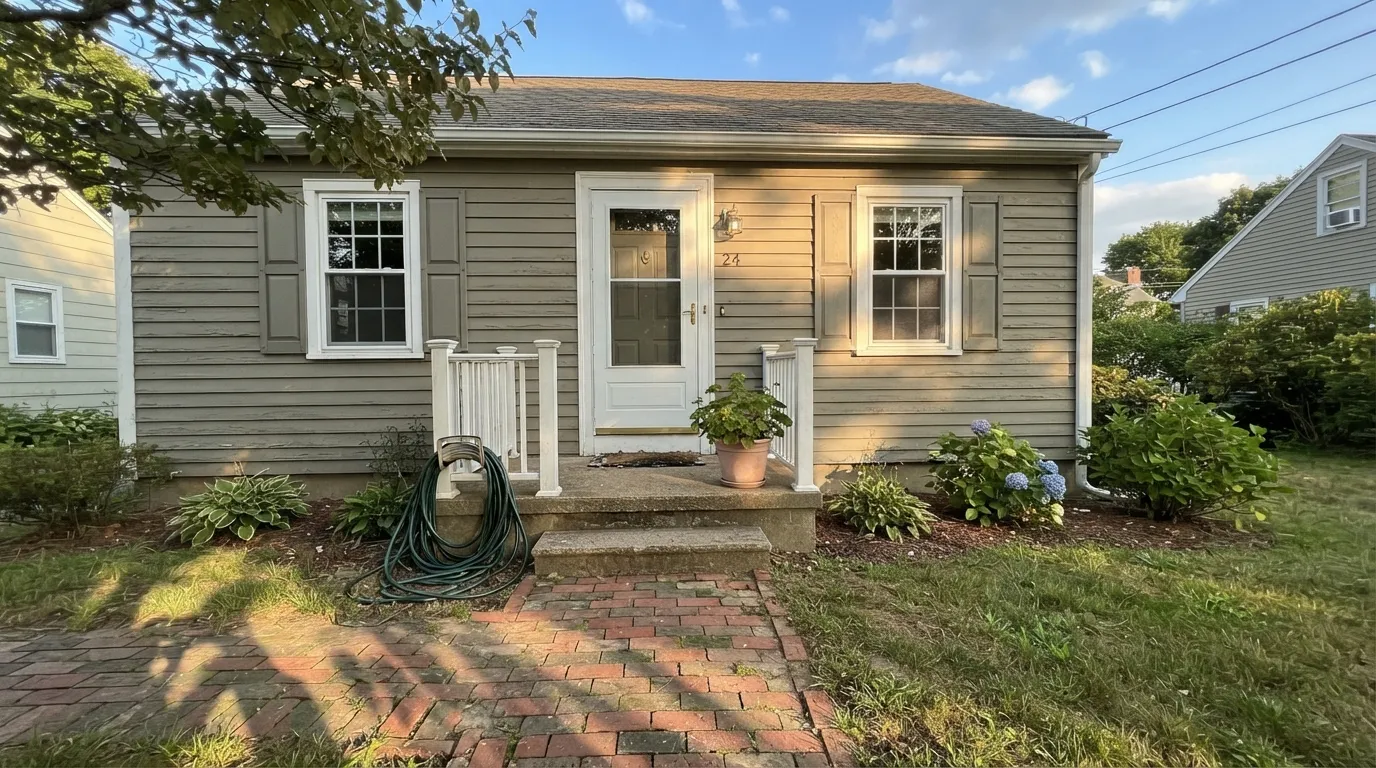
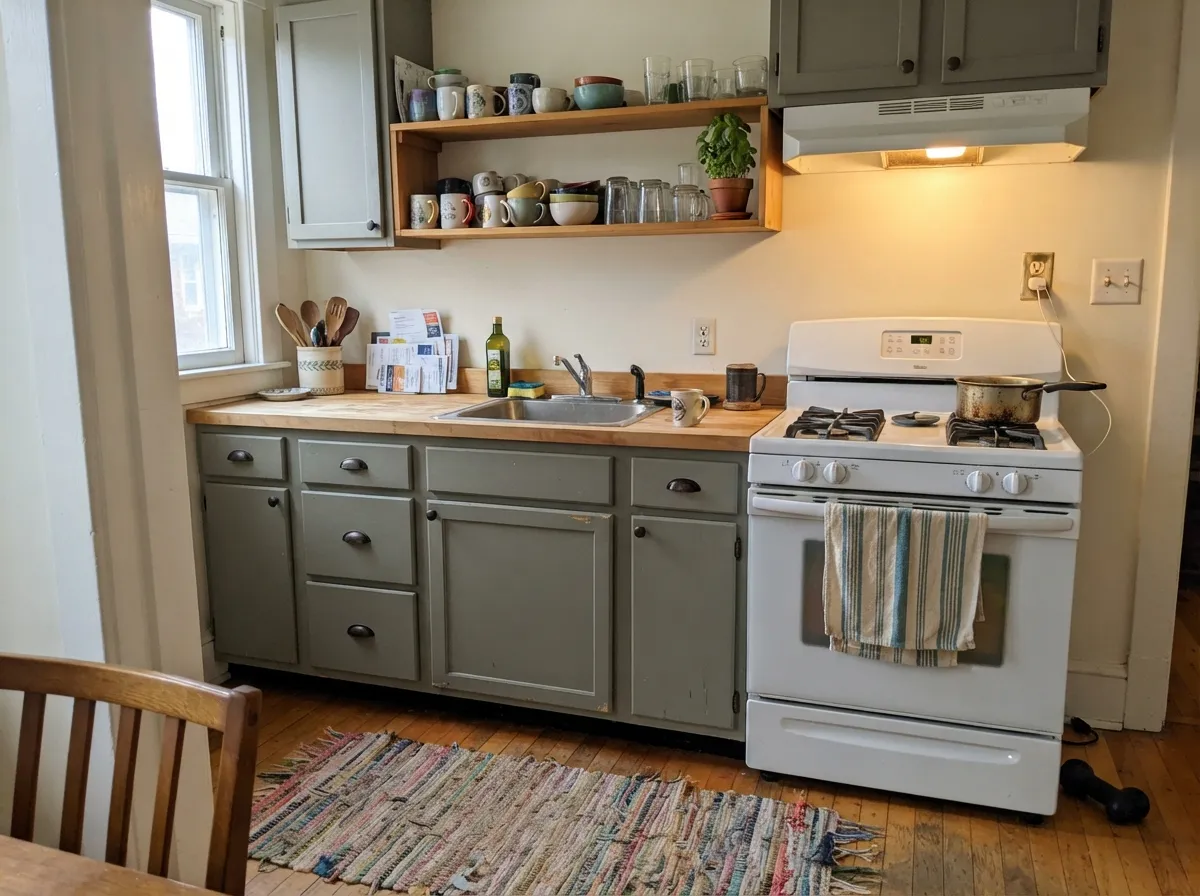
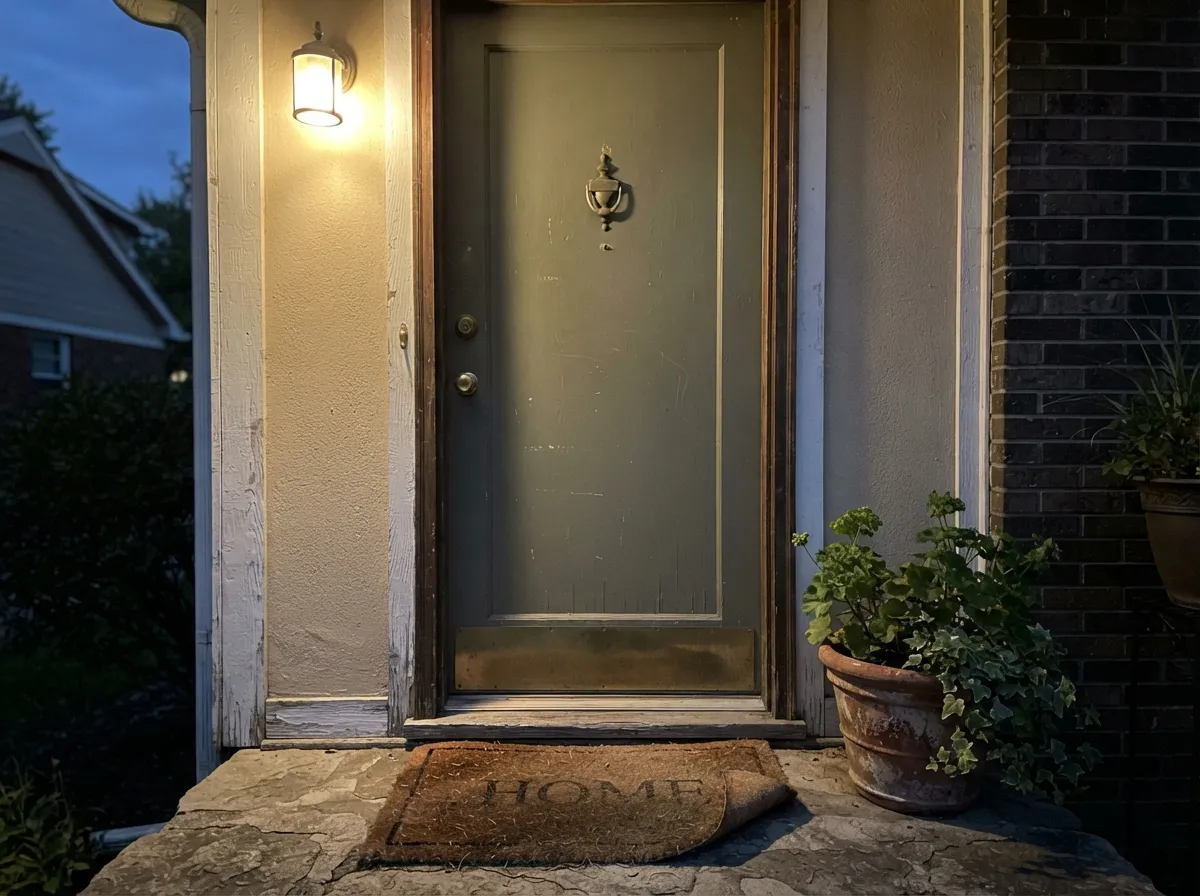
Give it real daylight and it earns its keep both indoors and out — genuinely one of the few colors in the deck sold as both an interior favorite and a dedicated exterior product. Exteriors are its best-documented job: siding, shutters and front doors, especially next to brick, stone or a terracotta roofline, where the warm base meets its match. Indoors, kitchens are the close second — cabinets or an island in Creekside Green next to dark trim and cast-iron hardware read collected and grown-up rather than trendy.
Where It Fails
Most of the disappointment with Creekside Green traces back to one of three situations, and none of them are the paint being unpredictable — they're the low-chroma gray-green base doing exactly what low-chroma colors do.
Creekside Green is built on a gray-yellow base, not a clear green pigment — the chroma is deliberately low. On the chip that reads sophisticated; on four walls under ordinary light it can look closer to a dull khaki-taupe than the vivid sage-green some buyers picture. If you want the color to unmistakably say "green" the moment you walk in, this base is too quiet for that job — look at something with more saturation instead.
The same light-dependency every low-chroma sage has: overcast light and cool LED bulbs strip the warm yellow-orange out and leave a flat, slightly cold gray-taupe — the "weathered gray" effect owners describe on cloudy days. Warm 2700K bulbs and a real window fix it; a north-facing room with cool fixtures does not flatter this color.
The warm orange-yellow base that makes it glow next to brick and terracotta works against it near true cool neutrals — icy white marble, blue-gray tile, stark cool-white trim. The pairing reads muddy on both sides. Keep the trim and stone warm (White Dove, a warm quartz) and save the cool-gray pairing for a different green.

Room by Room
Sold pre-mixed in Regal Select Exterior and the rain-resistant Element Guard line, so this is a color Benjamin Moore itself treats as an exterior workhorse, not just a wall color that happens to survive outside. With brick, stone or a terracotta roof it reads settled and intentional rather than trendy.
One door's worth of Creekside Green next to a neutral house is how most first-timers try the color — enough presence to notice, small enough to repaint in an afternoon if it turns out not to be for you.
Against dark trim, cast-iron hardware or brass, cabinets in this color read collected rather than themed. Satin or a cabinet-grade enamel; it takes daily wiping fine.
Low-traffic, often lower-light rooms are exactly where the depth (LRV 31) works in the color's favor — it reads as intentionally moody rather than washed out.
In a bright room it settles into a calm sage-olive; in a dim or north-facing bedroom, add warm lamps or expect it to read closer to gray than green most of the day.
It has to negotiate with whatever the kitchen and hallway are wearing. Warm whites and wood carry it through an open plan; cool grays and chrome fight it the whole way.
Your Light Is the Risk
Direct or bright indirect sun brings the green forward and gives the truest, most photographed read — the light most exterior swatches are shot in.
Cloudy days and north-facing rooms pull the warmth out and leave something closer to weathered gray than green. Test the sample on an actual overcast day, not just the sunny one.
Full sun reads olive-green; open shade softens it to sage; overcast skies gray it down further. Expect three different colors depending on the weather — that is the paint being honest, not a bad batch.
Warm 2700K bulbs pull the yellow-orange base forward and keep it green after dark; cool LEDs flatten it toward gray-taupe — the same trade-off as daylight, just indoors.
Most complaints about Creekside Green are a light mismatch. Upload a photo of your actual room and see it on your walls — then ask for the same wall in north light or evening lamps before you buy a single sample.
Need It From Another Brand?
Any paint counter can custom-tint Benjamin Moore 2141-40 directly. If you would rather stay in one brand's own deck, these are the closest stock matches, measured as ΔE2000. Under 2 is a difference you will not see on the wall.
| Brand | Closest color | ΔE | LRV | |
|---|---|---|---|---|
| Sherwin-Williams | Green EarthSW 7748 · Sherwin-Williams | 0.8 | 31 | Color page → |
| Behr | Milk ThistleMQ6-26 · Behr | 0.7 | 31 | Color page → |
| Valspar | Gray Expose5007-2A · Valspar | 3.3 | 30.6 | Color page → |
| PPG / Glidden | Green Tea LeafPPG1128-5 · PPG / Glidden | 4.2 | 31 | Color page → |
| Glidden | Eucalyptus Tree10GY 30/104 · Glidden | 2.8 | 30 | Color page → |
| Dutch Boy | Cypress Garden424-4DB · Dutch Boy | 4.6 | 32 | Color page → |
Similar Benjamin Moore Colors
The nearest shades to Creekside Green within Benjamin Moore's own range, ranked by perceptual color distance — useful when you want the same look a touch lighter, darker, or warmer.
WCAG 2.1: AA is 4.5 : 1 for normal text, 3 : 1 for large text, AAA is 7 : 1.
Creekside Green vs the Colors You're Also Considering
Every Creekside Green sample board has the same rivals on it. The numbers show the real lightness gap — then it comes down to which risk you would rather live with.
Pick this for more depth and a warmer, more olive lean — Creekside reads less like "sage paint" and more like weathered patina.
Benjamin Moore 1495 · LRV 39October MistPick this for a lighter, safer sage that still needs real daylight to earn its name — the deck's most forgiving green.
Pick this for the warmer, more olive edge — Evergreen Fog stays a shade cooler and grayer by comparison.
Sherwin-Williams SW 9130 · LRV 30Evergreen FogPick this if your painter works in Sherwin-Williams and you want nearly the same depth — it's the deck's top cabinet sage, with one known weak spot covered in its own review.
Pick this for the warmer, orange-tinged base — Sage stays a cleaner, cooler green by comparison.
Sherwin-Williams SW 7732 · LRV 32SagePick this for almost the exact same depth in the Sherwin-Williams deck — though it carries its own cool-light weakness worth reading about first.
Pick this for real depth and an exterior-ready formula — Clary Sage is interior-only, while Creekside Green ships in BM's own exterior lines.
Sherwin-Williams SW 6178 · LRV 41Clary SagePick this for a lighter sage built specifically to dodge the usual sage lighting problem — easier to live with in more rooms.
Gettysburg Gray HC-107 at #9A9684 and LRV 30 is the closest relative in the deck. It carries a bit more brown and slightly less green, so it reads a touch earthier. Raintree Green 1496 and CC-560 at #9A9C87 and LRV 32 have more green in the middle channel and look clearly greener on a wall. Briarwood HC-175 at #A09889 and River Gorge Gray 1537 at #A09A89, both LRV 32, are lighter and warmer and drift toward taupe.
Across brands, Behr Milk Thistle MQ6-26 at LRV 31 with a deltaE of 0.71 and Sherwin-Williams Green Earth SW 7748 at LRV 31 with a deltaE of 0.77 are true matches. Dunn-Edwards Squirrel's Tail DEBN70 at LRV 30, deltaE 1.14, is visually identical in normal room light. Farrow and Ball Lichen No. 19 at LRV 34, deltaE 3.3, is very close but lighter and greener, so sample it first. PPG Green Tea Leaf PPG1128-5, deltaE 4.23, is close but visibly different side by side.
Creekside Green Coordinating Colors
The pairing rule is simple: warm and earthy wins, crisp and cool loses. It sits easily next to warm whites, brick, terracotta, brass and cast iron — and reads muddy next to anything icy or blue-gray. These are the partners that keep showing up in real rooms and real exteriors:
Creekside Green Outdoors: Siding, Trim, and the Terracotta Pairing
Creekside Green is unusual in the deck in that it isn't just tinted for exteriors as an afterthought — it's sold pre-mixed in Regal Select Exterior, Benjamin Moore's flagship exterior line, and in Element Guard, formulated specifically for high-moisture climates and rated to resist rain within about 60 minutes of application. That is a real, product-level endorsement most colors don't get, and a good sign the color was chosen with siding and trim in mind, not just walls.
Outdoors the same light-dependency shows up as a feature rather than a flaw: full sun reads it as a clear, saturated sage-olive, while a cloudy day or a shaded elevation pulls it toward soft gray-green. Owners who've painted a whole exterior in it report the color changing meaningfully by season and time of day, which most describe as a plus once they expect it. Brick, stone and a terracotta roofline are its best-documented company — the warm orange-yellow base sits comfortably next to all three instead of competing with them.
Creekside Green With Wood Tones and Metals
Metals decide half of how this color reads. Cast iron, aged bronze and unlacquered brass all deepen and warm it further — hardware in these finishes is the most common real-world pairing, in both kitchens and front doors. Polished chrome and stainless steel are the outliers: their coolness makes the green look flatter and grayer than it actually is.
For wood, walnut, white oak and reclaimed barn wood all sit easily against it — the tones share the same earthy, slightly yellow base. Gray-washed or heavily white-washed floors are the one combination worth sampling first: two cool-leaning neutrals sitting side by side can read as if neither one committed to a color.
Three Ready Palettes Built on Creekside Green
A color is never alone on the wall. These are complete combinations in the 60-30-10 pattern, with the reason each one holds together. Every one opens in the visualizer.
Warm trim keeps the green's warm base easy to live with, and one near-black door supplies the single dark accent modern-farmhouse exteriors want without fighting the siding.
Try this palette in your roomCream walls give the cabinets room to carry the color story; the charcoal island echoes the cast-iron hardware this color pairs with best.
Try this palette in your roomStands in for the terracotta-roof pairing owners reach for most: a soft trim keeps the warm siding from feeling heavy, and one terracotta-toned door repeats the color story across materials the paint itself can't touch.
Try this palette in your roomCreekside Green FAQ
Is Creekside Green more green or more gray?
Both, depending on the light — that's the whole personality. In bright daylight the green comes forward; on overcast days or under cool bulbs it settles toward gray. On the color wheel it's a genuine low-chroma green, not a gray wearing a green name.
What's the undertone of Creekside Green?
A warm, orange-yellow base under the green-gray — never blue, never minty. That base is why it pairs so easily with brick, terracotta and cast iron, and why it can look flat or muddy next to anything crisp and cool.
Is it good for exterior siding?
Yes — it's one of the few colors Benjamin Moore sells pre-formulated in both Regal Select Exterior and the rain-resistant Element Guard line, which is a stronger endorsement than most colors get. Expect it to look more saturated green in full sun and softer, grayer on overcast days; both are the same paint, not a bad batch.
What trim color goes with Creekside Green?
A warm white — White Dove or Swiss Coffee — keeps the pairing easy. A stark cool white or icy trim makes the siding read dingy by comparison; if you want contrast, go dark (Wrought Iron or Kendall Charcoal) rather than brighter.
Does it work with brick or a terracotta roof?
It's one of the color's best-documented pairings — the warm orange-yellow base meets brick and terracotta halfway instead of fighting them, which is part of why it shows up so often on exteriors with either material.
How is it different from October Mist or Evergreen Fog?
October Mist (Benjamin Moore, LRV 39) is lighter and safer — the deck's most forgiving sage, though it still needs real daylight to read green. Evergreen Fog (Sherwin-Williams, LRV 30) sits at nearly the same depth as Creekside Green but reads a shade cooler and grayer. Creekside Green is the warmest of the three, and the only one sold in a dedicated exterior line.
Have you painted with Creekside Green?
Rate it — one tap helps the next reader decide.
Ask a Question