Red Pepper
The chili-red Behr picks for its own front doors, reviewed honestly: the light where it glows like paprika, the light where it turns near-black, and what to pick instead.

Jessica has spec'd whites and neutrals for more than 300 rooms and keeps a sample wall of painted drawdowns in her studio. Every color review is checked against real reader rooms in the comments and re-tested when a formula changes. About the testing process →
- 1Rookwood Dark Red3
- 2Red Pepper8
- 3Million Dollar Red13
- 4Cinnamon Slate19
The Fast Verdict
Red Pepper is not a fire-engine red — it is a dried-chili, smoked-paprika red-brown, deep enough (LRV 8) to read almost like a masonry oxide from ten feet away. Behr sells it across nearly every line it makes, from cabinet-and-trim enamel to full exterior paint, because it does one job extremely well: a front door or a kitchen island that reads warm and expensive instead of loud. Give it a door that actually catches sun, or a small room with real light, and it earns the confidence. Ask it to cover four walls in a dim room and it just goes dark brown.
Front doors that get direct sun · kitchen islands and cabinets · dining rooms with warm evening light · powder rooms and small accent walls · anyone who wants "red" without buying a true red
Your door faces north or sits under a deep porch roof · you want a true crimson or fire-engine red · the room you're painting has no real daylight · your kitchen runs cool-toned with white marble and chrome
- A believable, grounded red — brown and rust keep it from looking like a toy fire truck
- Behr's own recommended front-door color, tested in a real official exterior campaign
- Sold across cabinet, trim, interior and exterior lines — one color, many finishes
- Small doses (door, island, powder room) read expensive and deliberate
- Deep enough (LRV 8) to hold real saturation in strong sun, unlike paler reds
- Reads flat dark brown, not red, without direct or strong reflected light
- Too dark and too saturated for a whole dim room — swallows corners and detail
- Not a true bright red — skip it if you pictured a crimson or fire-engine red
- As a full exterior color it is a heavy, fade-prone commitment; better as an accent
What Color Is Red Pepper, Really?
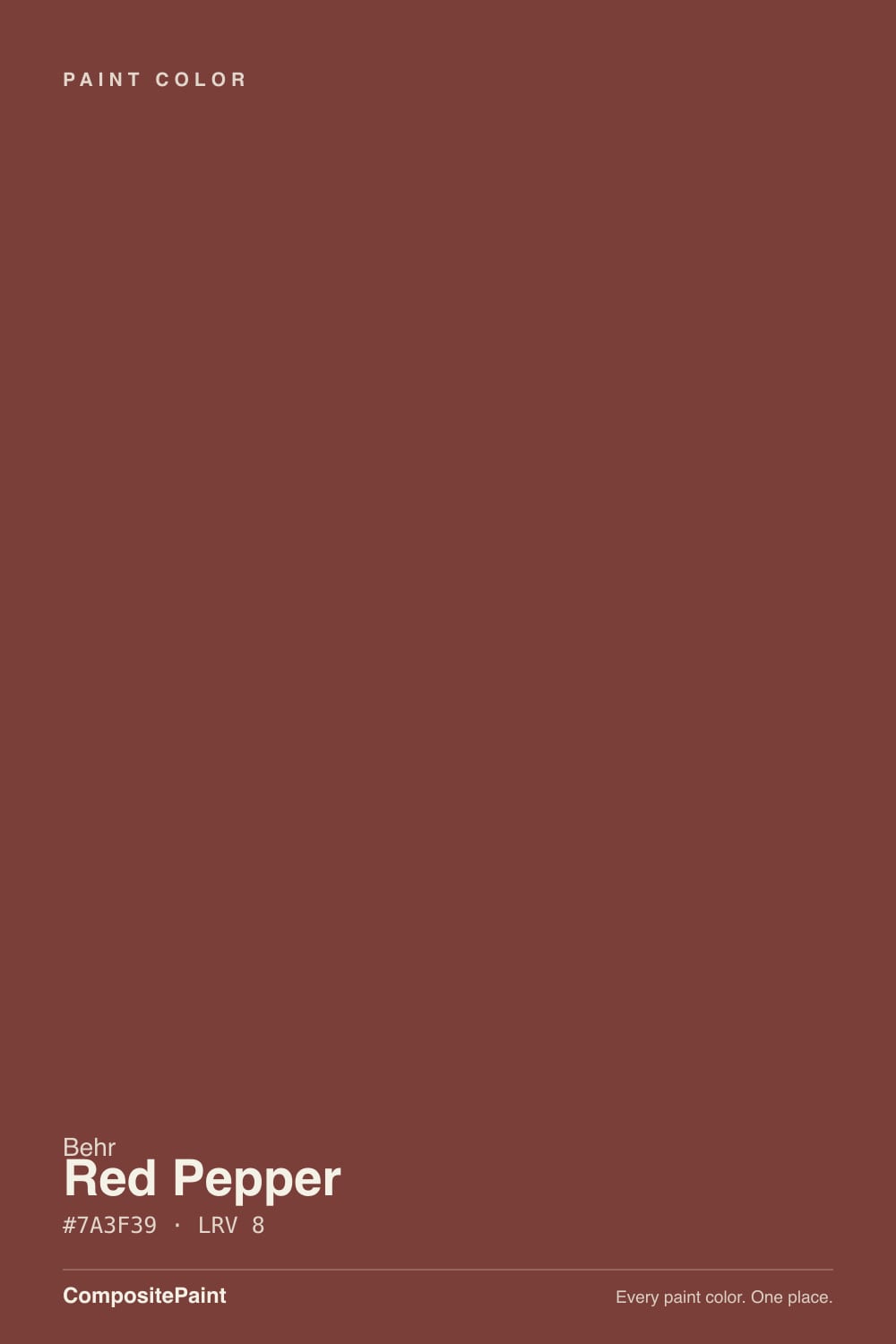
Behr's own copy calls it the color of "a dried chili pepper or smoked paprika powder," and that is a more honest description than "red." Red Pepper is built on a brown-red base with a rust-orange lean, not a true crimson — there is no blue or pink in it anywhere. That brown floor under the red is what keeps it from feeling like a fire truck; it reads closer to old brick or cured leather, which is why Behr markets the same formula across its Ultra exterior line, its Marquee and Dynasty interior lines, and its Premium cabinet-door-and-trim enamel. It is one paint sold to do several different jobs.
At LRV 8 it sits in true near-black territory — the same reflectance band as Benjamin Moore's Million Dollar Red and only a couple of points above Pratt & Lambert's Brick Red. That depth is the whole trade: in strong, direct light the color glows with real saturation, but the moment the light drops, LRV 8 swallows detail and the wall reads as a flat dark brown-red mass rather than a color with dimension. Small, well-lit surfaces — a door, an island, a powder room — are where that depth pays off; a whole dim room is where it disappears.
Undertone in one line: brown and orange, never pink, never true crimson. If your sample looks muddy or almost chocolate, that is shade or a cool bulb doing it, not a bad can of paint — Red Pepper needs direct or reflected sunlight to show the red instead of the brown underneath it.
Where It Shines
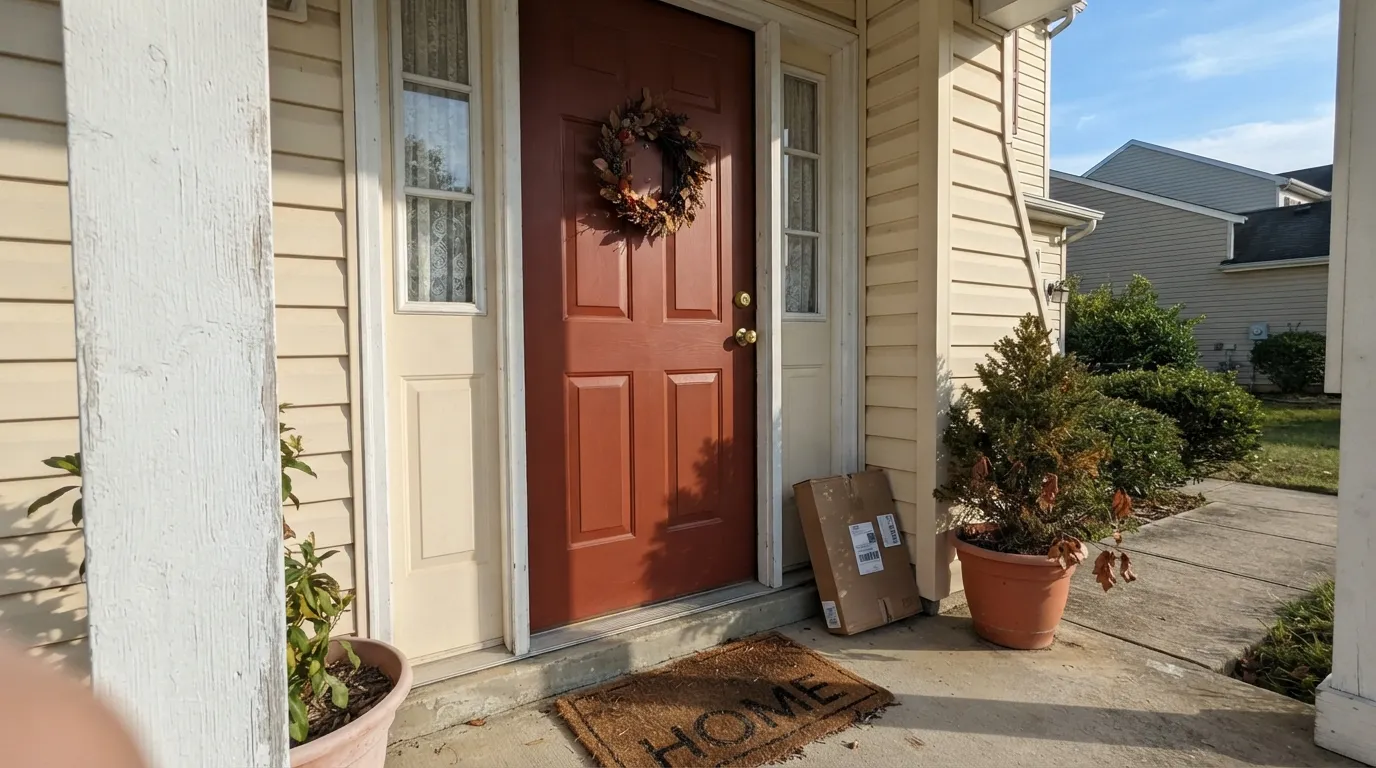
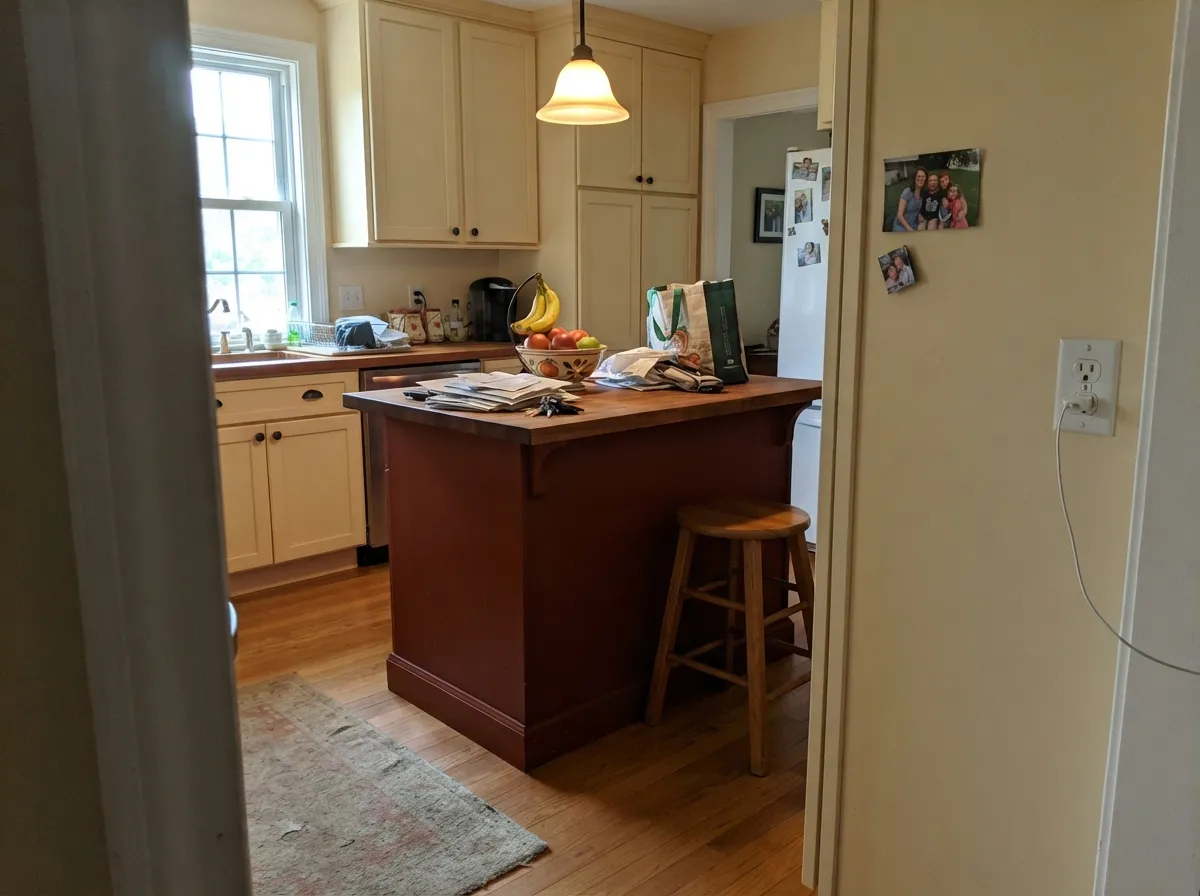
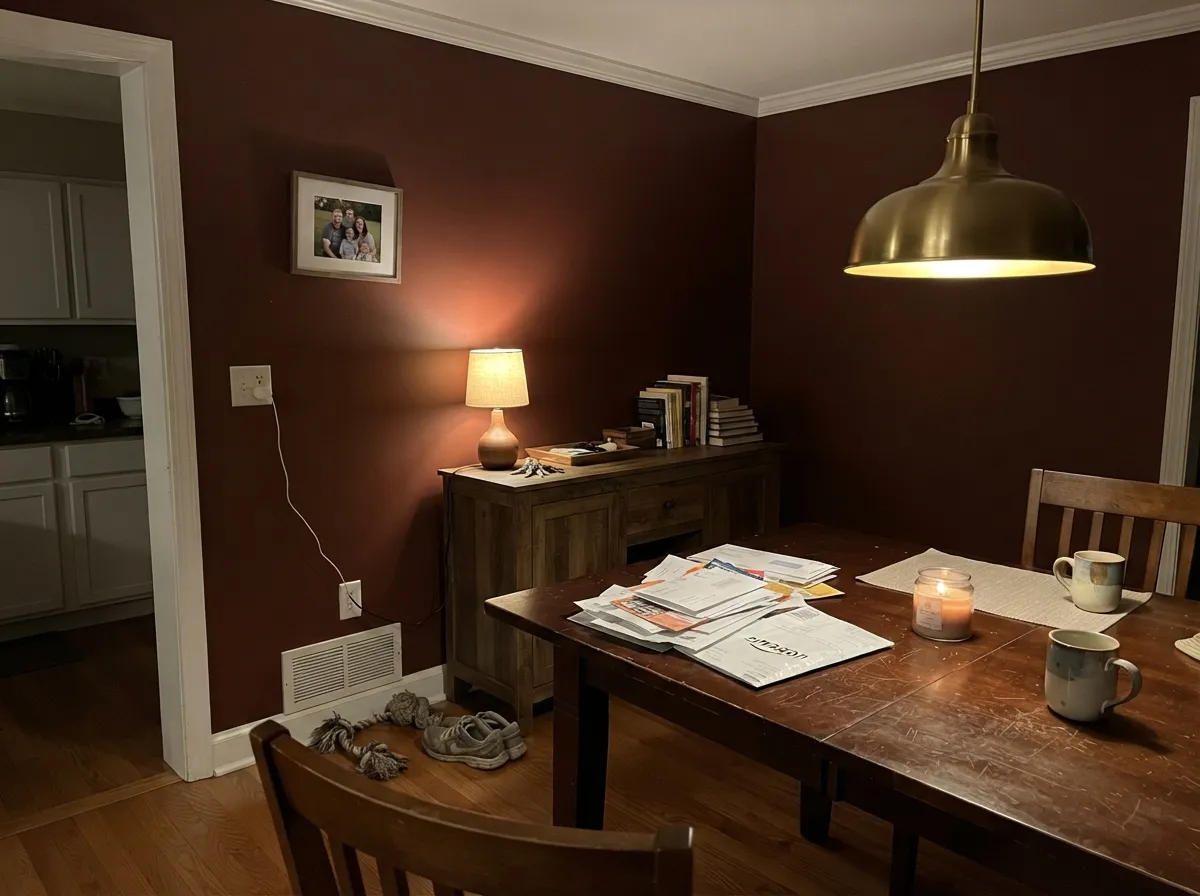
This is a door-and-accent color first, a whole-wall color second. Behr itself used Red Pepper as the front-door pick in its 2025 Exterior Stain Color of the Year campaign, paired with a warm earthy siding and natural cedar posts and garage door — direct sun on the door is exactly the condition that makes the color's rust-red come forward instead of its brown. Indoors, it does the same job on kitchen islands and cabinetry under real window light, and in dining rooms lit by evening lamps, where a small dose of a saturated dark color reads as confident rather than cave-like.
Where It Fails
Almost every disappointing story with Red Pepper comes from one of three mismatches, and each one is predictable before the first coat goes on. None of them are the paint failing — they're LRV 8 being asked to do a job it can't do.
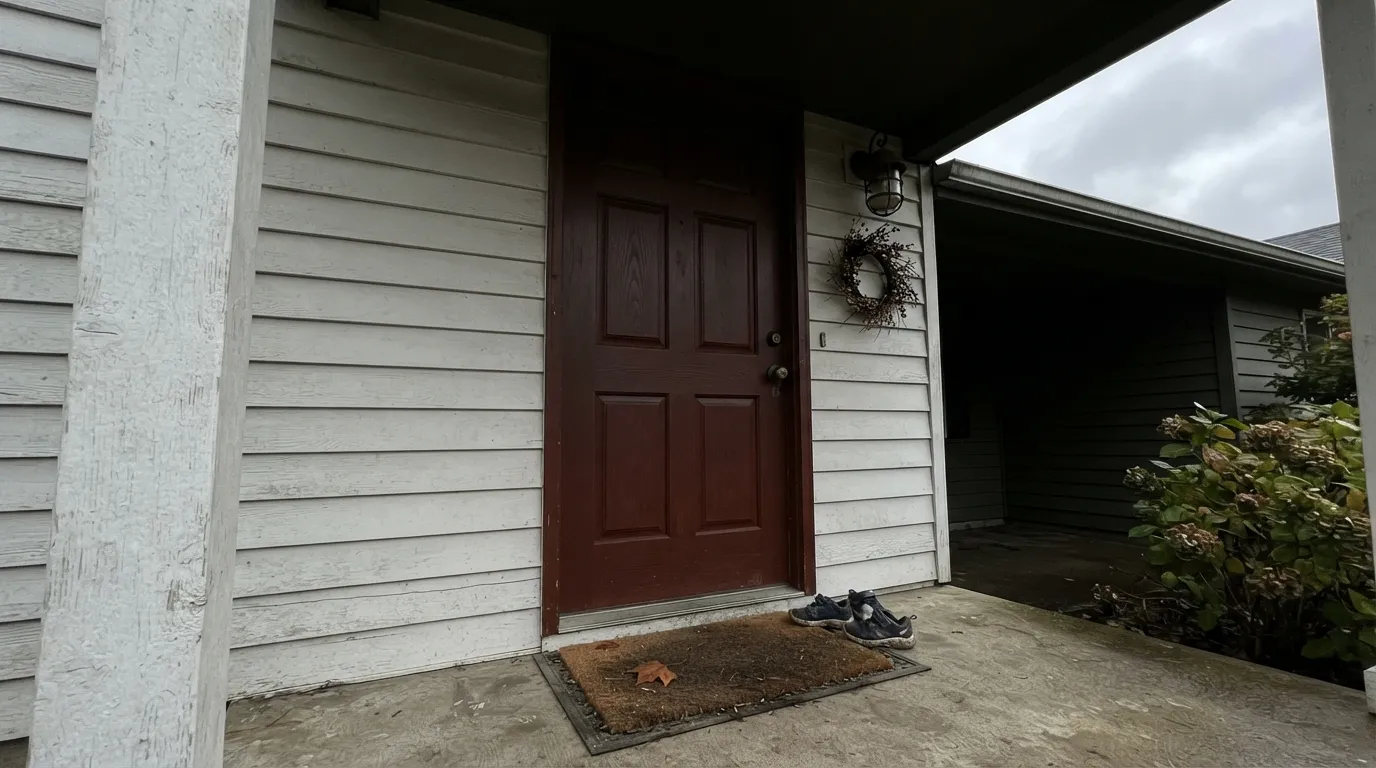
Without direct or strong reflected sun, the brown base takes over and the red mostly disappears — the door reads as a flat, dark chocolate-brown instead of the rust-red on the fan deck. Test the actual chip on the actual door at the actual time of day before committing a gallon of exterior enamel to it.
LRV 8 is built for a door, an island, an accent wall — a surface with edges. Cover four walls of a room with modest daylight and the color loses its shape; corners go black, and the room can feel smaller and heavier than intended. Keep it to one wall, one piece of furniture, or one small room.
Red Pepper is a red-brown, not a stoplight red. If you're picturing a clean, saturated crimson — think holiday-bow red — this reads noticeably duller and earthier next to it, especially indoors under warm bulbs. Sherwin-Williams Red Tomato is the brighter, truer-red option; Red Pepper is the grown-up, less-committal one.
Room by Room
This is the color's best-documented use, including Behr's own official campaign work. Semi-gloss exterior enamel, direct or strong reflected sun, and a light or warm-neutral house color around it. In deep shade, skip it.
A single island or a run of lower cabinets in Red Pepper reads warm and custom against white or cream walls. Behr sells this exact color in its cabinet-and-trim satin and semi-gloss enamel for precisely this use. Keep the surrounding walls light so the color has somewhere to stand out.
Dining rooms are used mostly at night under warm bulbs, which is Red Pepper's best light. A fully painted dining room in this color, with white or cream trim and ceiling, reads dramatic and intentional rather than dark for its own sake.
Small rooms take deep, saturated color well because there is no long wall for the darkness to spread across unbroken. A powder room in Red Pepper with a bright mirror and one warm sconce is a low-risk way to try the color.
Works if the wall gets real daylight or sits near a window; in a room lit only by overhead cans it tends to read flat and brown rather than rich. Test a large sample on the actual wall before committing.
As a whole-house color, LRV 8 is a heavy, high-maintenance commitment — it shows fade and chalk unevenly and reads almost black in shadowed elevations. Behr's own campaign use keeps it to the door and small trim details, not the whole facade, and that split is the right call.
Your Light Is the Risk
The rust-red comes forward and the color reads exactly like the fan deck chip. This is the light a Red Pepper front door needs.
The brown base takes over; a covered porch or a north-facing door can read almost chocolate-brown instead of red. Sample it on-site first.
Vivid and warm at the sun hours, noticeably duller and browner the rest of the day. Expect real movement, not a static color.
2700K lamps push it toward a rich, cozy brick-red — its best indoor moment. Cool white LEDs flatten it toward dull brown; swap the bulb before you second-guess the paint.
Most complaints about Red Pepper are a light mismatch. Upload a photo of your actual room and see it on your walls — then ask for the same wall in north light or evening lamps before you buy a single sample.
Need It From Another Brand?
Any paint counter can custom-tint Behr PPU2-02 directly. If you would rather stay in one brand's own deck, these are the closest stock matches, measured as ΔE2000. Under 2 is a difference you will not see on the wall.
| Brand | Closest color | ΔE | LRV | |
|---|---|---|---|---|
| Sherwin-Williams | Red BarnSW 7591 · Sherwin-Williams | 1.9 | 9 | Color page → |
| Benjamin Moore | Palace Arms RedCW-255 · Benjamin Moore | 0.9 | 7 | Color page → |
| Valspar | Red Henna1008-7A · Valspar | 1.2 | 8.5 | Color page → |
| PPG / Glidden | BordeauxPPG1055-7 · PPG / Glidden | 2.9 | 8 | Color page → |
| Glidden | BordeauxPPG1055-7 · Glidden | 3.4 | 8 | Color page → |
| Dutch Boy | Gayle's Rouge304-7DB · Dutch Boy | 2.7 | 8 | Color page → |
Similar Behr Colors
The nearest shades to Red Pepper within Behr's own range, ranked by perceptual color distance — useful when you want the same look a touch lighter, darker, or warmer.
WCAG 2.1: AA is 4.5 : 1 for normal text, 3 : 1 for large text, AAA is 7 : 1.
Red Pepper vs the Colors You're Also Considering
Every Red Pepper sample board has the same rivals on it. The numbers show the real lightness gap — then it comes down to which risk you would rather live with.
Pick this for a red that reads earthy and grounded instead of glossy and formal.
Benjamin Moore 2003-10 · LRV 8Million Dollar RedPick this if you want the true, bright lacquer-red version at the same depth — less brown, more red.
Pick this for a touch more lift and a slightly less severe depth than a true brick oxide.
Pratt & Lambert 20-9 · LRV 5Brick RedPick this for an even deeper, more masonry-oxide red built specifically for doors and shutters.
Benjamin Moore Palace Arms Red CW-255 at LRV 7 is the closest cross-brand match with a deltaE of 0.91, which makes it a practical stand-in. Valspar Red Henna 1008-7A at LRV 8.5 is a deltaE of 1.24 and Diamond Vogel Red Clay Hill H007 at LRV 8 is 1.57, both visually identical in normal room light.
Sherwin-Williams Red Barn SW 7591 at LRV 9 comes in at 1.92, so it sits a fraction lighter and cleaner but would be hard to separate on a wall. Dunn-Edwards Rocky Mountain Red DET442 at LRV 8 is 2.28 and PPG Bordeaux PPG1055-7 at LRV 8 is 2.93, both very close and worth sampling first, with Bordeaux leaning more toward wine.
The outlier is Backdrop Stage Beauty BD-SB at LRV 5 and deltaE 4.71. It is darker and more purely red, so next to Red Pepper it looks deeper and less brown, close but visibly different side by side.
Red Pepper Coordinating Colors
The pairing logic is simple: keep everything around it light, warm, and neutral, and let Red Pepper be the only saturated note in the room. It sits comfortably with warm whites and creams, black or dark-bronze metal, and earthy neutrals — and it fights for attention next to any other strong color.
Red Pepper as a Front Door Color
This is where Red Pepper has the most real, verifiable authority behind it: Behr used it as the front-door pick in its own 2025 Exterior Stain Color of the Year campaign, built around Cedar semi-transparent stain. The full official palette paired a warm earthy siding color with a natural cedar-toned shingle and cedar-stained posts and garage door, with Red Pepper reserved for the door alone — one saturated color against several quieter, warmer neutrals.
That split is the takeaway for anyone using this color outside — even Behr's own marketing doesn't put Red Pepper on the whole house. It works as the one loud element against a calm, light-to-mid-tone body, not as a facade color competing with itself.
Red Pepper With Wood Tones and Metals
Warm, dark wood is the natural partner here: walnut, cedar, and aged leather all sit comfortably next to Red Pepper because they share the same brown-red family instead of arguing with it. Honey oak is a trickier match — the yellow-orange in golden oak can make the paint look duller and more brown by comparison, so a large sample against the actual floor or trim is worth the extra step.
Metals split cleanly: matte black, aged bronze, and oil-rubbed hardware all ground the color and read intentional. Polished brass can work in small doses but tends to fight the paint for warmth; polished chrome or nickel reads coldest and least flattering against it.
Three Ready Palettes Built on Red Pepper
A color is never alone on the wall. These are complete combinations in the 60-30-10 pattern, with the reason each one holds together. Every one opens in the visualizer.
The same logic behind Behr's own exterior campaign: a light, warm body color and trim let the door carry all the saturation, so the red-brown reads bold instead of overwhelming a whole facade.
Try this palette in your roomA warm white keeps the room bright enough that the island can carry real saturation without darkening the whole kitchen. Black hardware and fixtures ground the red instead of competing with it.
Try this palette in your roomDining rooms are lived in mostly after dark, exactly the warm lamplight where Red Pepper looks its richest. White trim keeps the drenched room from feeling like a cave, and a near-black door adds one quiet, deliberate contrast note.
Try this palette in your roomRed Pepper FAQ
Is Red Pepper more red or more brown?
Both — it is a red-brown with a rust-orange lean, described by Behr itself as the color of a dried chili pepper or smoked paprika. In strong light the red is clearly the dominant note; in shade or cool light the brown base shows through more and it can read closer to chocolate.
Is it a good front door color?
Yes, it's arguably the color's best-proven job — Behr used it as the recommended front-door pick in its own 2025 Exterior Stain Color of the Year campaign, paired with a warm earthy siding and natural cedar accents. It needs a door that gets real direct or reflected sun to look its best.
Can I use it on kitchen cabinets or an island?
Yes — Behr sells this exact color in its cabinet, door and trim enamel specifically for that use. It reads best as an island or a lower-cabinet run under lighter walls and window light, not as every cabinet in a windowless kitchen.
How many coats does it take to cover?
Plan on at least two coats over any lighter existing color, and prime first if you're covering a much lighter color or bare wood — a saturated, dark red-brown like this needs a solid base to look even, especially on flat or matte sheens where roller marks show more.
Is it too dark for a whole room?
For most rooms with average daylight, yes — LRV 8 is heavy enough that four full walls can feel like a cave rather than a color statement. It works best as a door, an island, one accent wall, or a small room like a powder room or dining room used mainly at night.
Does it fade or look different outdoors over time?
Like any dark, saturated exterior color, expect it to show fade and chalk unevenly over years of sun exposure, more so on south- and west-facing surfaces than shaded ones. That's part of why Behr's own campaign use keeps it to a door and small trim details rather than a full facade.
Have you painted with Red Pepper?
Rate it — one tap helps the next reader decide.
Ask a Question