Jadite
The Sherwin-Williams green named for vintage jadeite glass, reviewed honestly: where the jade actually shows, the light that turns it near-black, and what to pick instead.

Jessica has spec'd whites and neutrals for more than 300 rooms and keeps a sample wall of painted drawdowns in her studio. Every color review is checked against real reader rooms in the comments and re-tested when a formula changes. About the testing process →
- 1Essex Green6
- 2Vintage Vogue12
- 3Jadite20
- 4Evergreen Fog30
- 5Clary Sage41
The Fast Verdict
Jadite is a muted, medium-deep green with the gray turned up and a faint blue lean — botanical rather than olive, calm rather than loud. At LRV 20 it is a genuine color commitment, not a soft sage, and that is the whole story: in real daylight it reads like a piece of jade, and in a dim room with no lamps it collapses toward near-black. Buy it if you want a room with a color in it. Do not buy it expecting the pale mint of the glassware it is named after.
Kitchen and bathroom cabinets · dining rooms, studies and libraries · bedrooms with real lamps · a bookcase wall or lower-third in a child's room · a front door on a white or pale-gray house
You wanted the pale mint of jadeite glassware · the room is north-facing, dim, and lamp-free · your only trim option is a stark cool white and the tile is gray · you need a light, airy room
- A real green that still behaves — botanical, never neon
- Outstanding on cabinets: hides wear, flatters brass and warm wood
- The blue lean keeps it from going drab olive in most rooms
- Deep enough to make a small room feel deliberate rather than empty
- Muted enough to outlast the current green moment
- LRV 20 goes flat and near-black in dim, lamp-free rooms
- The name promises pale mint and delivers deep jade
- Cool white trim plus gray tile pushes it institutional
- Fights honey oak floors and orange-toned wood trim
What Color Is Jadite, Really?
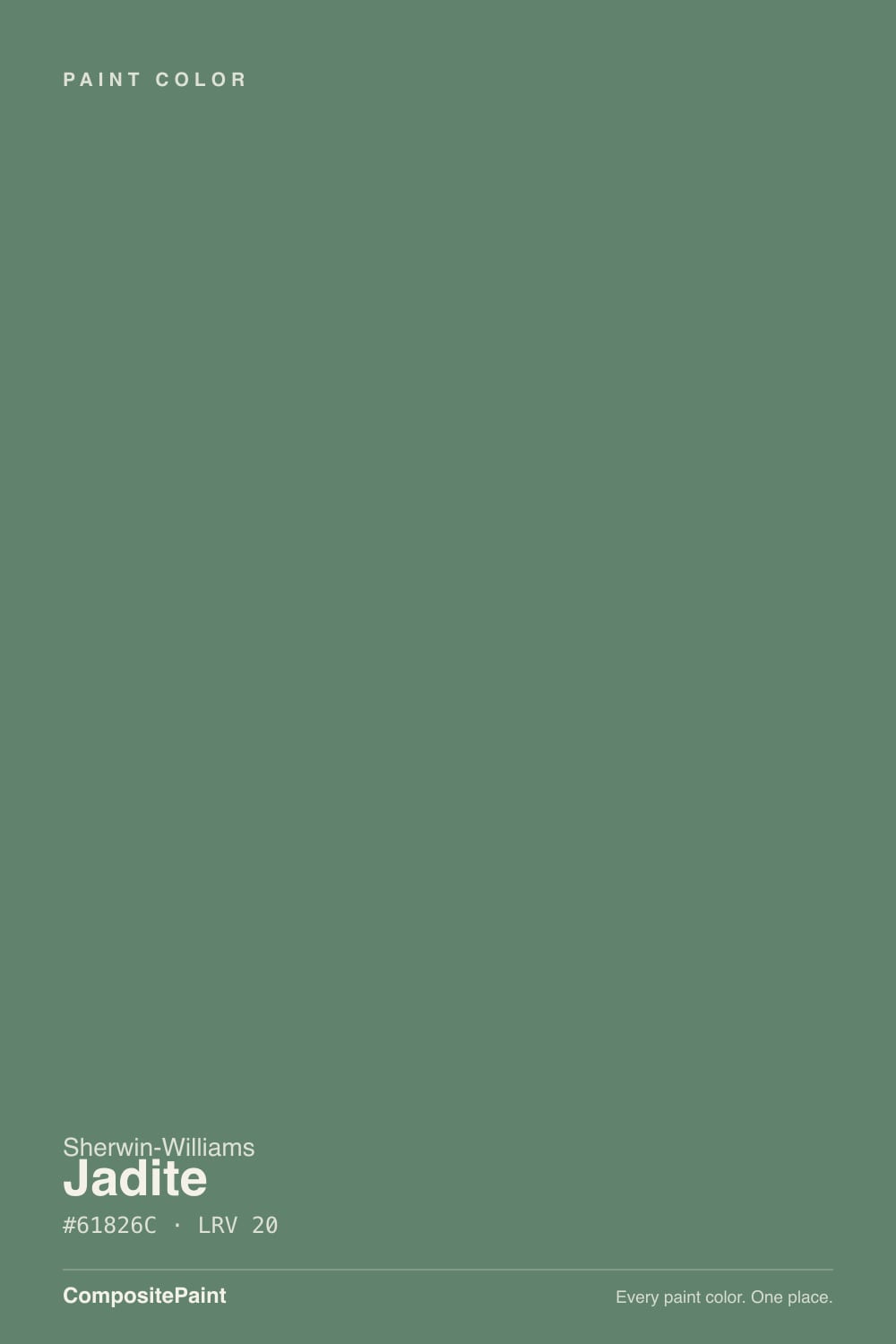
A grayed green that tips slightly blue. Sherwin-Williams built it at RGB 97/130/108 — green clearly ahead of blue, blue clearly ahead of red — so it lands on the cool, botanical side of the green family rather than the yellow-olive side. The saturation is deliberately low, which is why it reads like painted plaster or old glazed pottery instead of a bright leaf. On a chip next to Dried Thyme you can see the split instantly: Dried Thyme is the warm, dusty olive at the same depth, Jadite is the cooler, cleaner jade.
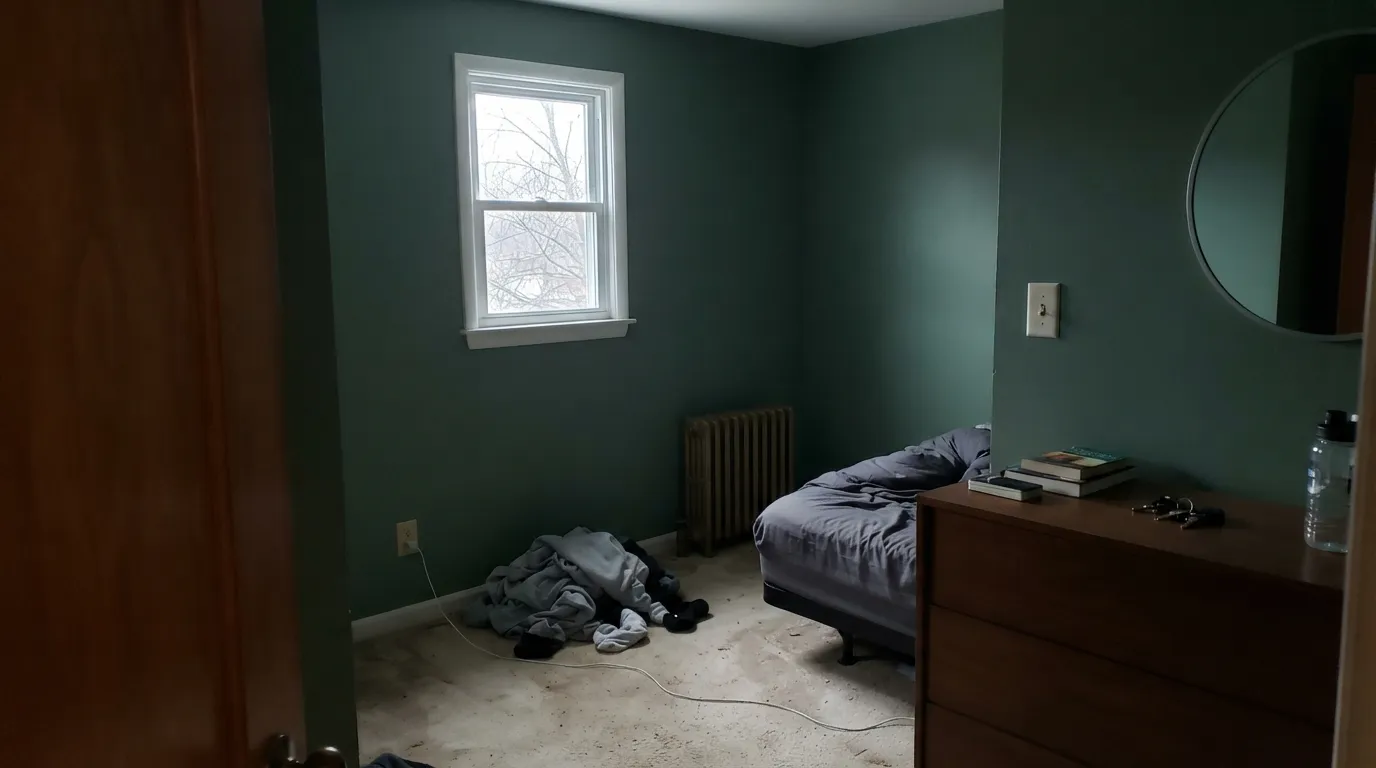
At LRV 20 it is medium-dark, and most people underestimate that. Twenty means the wall absorbs far more light than it returns, so the color you get is largely the light you give it. In a bright south room the green is unmistakable and the blue lean shows. In a dim north room the same paint reads as a flat dark green-gray, and after sunset with no lamps on it goes almost black. Nothing is wrong with the paint — that is arithmetic, and it is the single most common surprise in Jadite photos.
Undertone in one line: green first, a small amount of blue second, no yellow to speak of. If your sample looks olive, that is warm 2700K bulbs or late golden sun pulling it. If it looks nearly teal, that is a cool 5000K LED or an overcast north window. Both are the same paint being honest about the room it is in.
Where It Shines
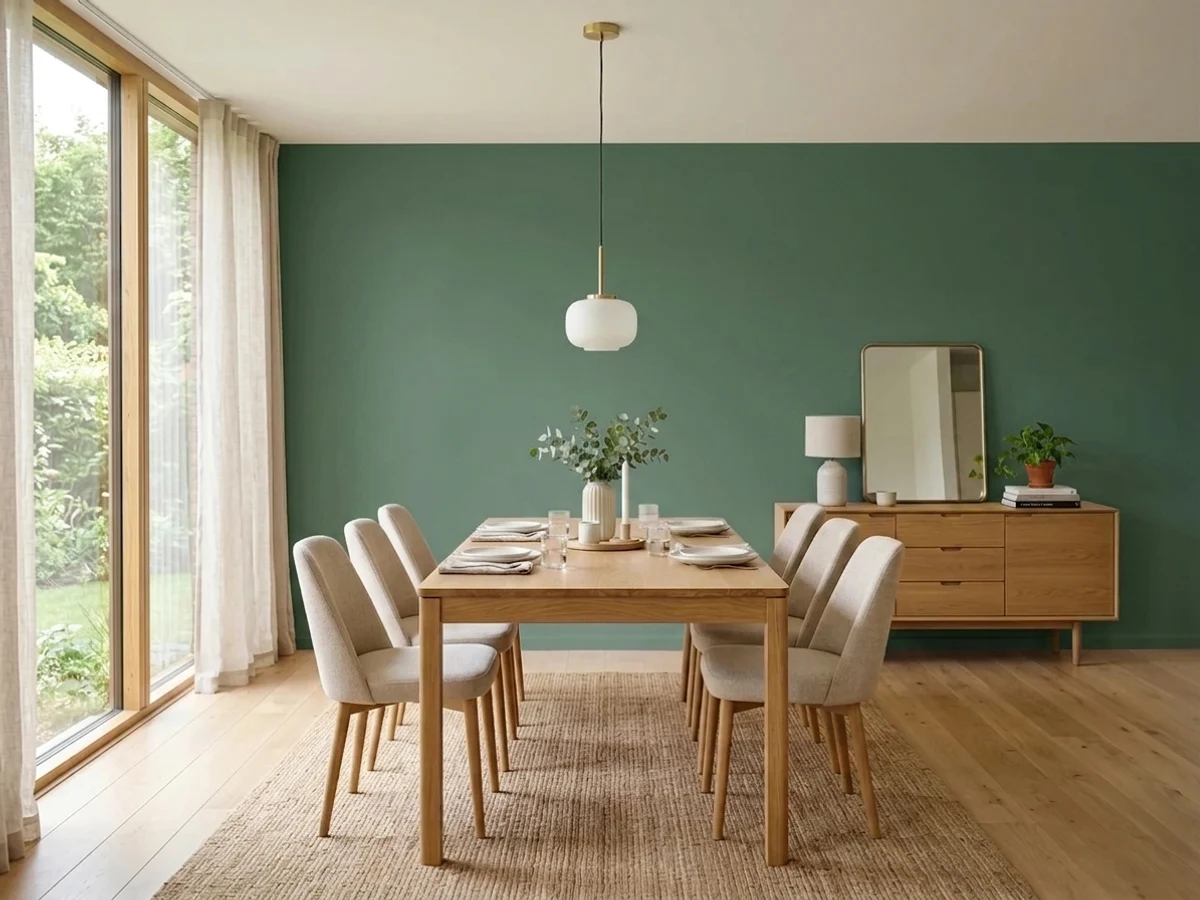
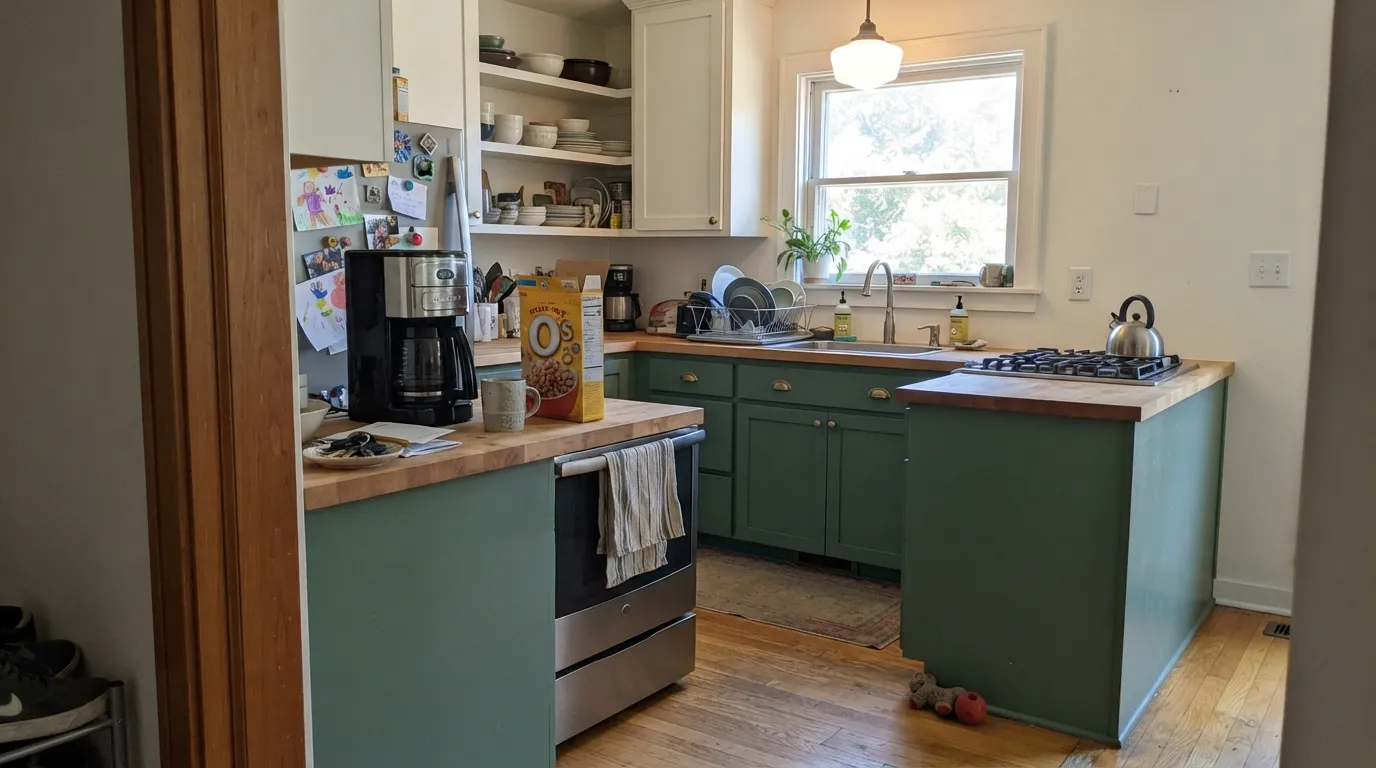
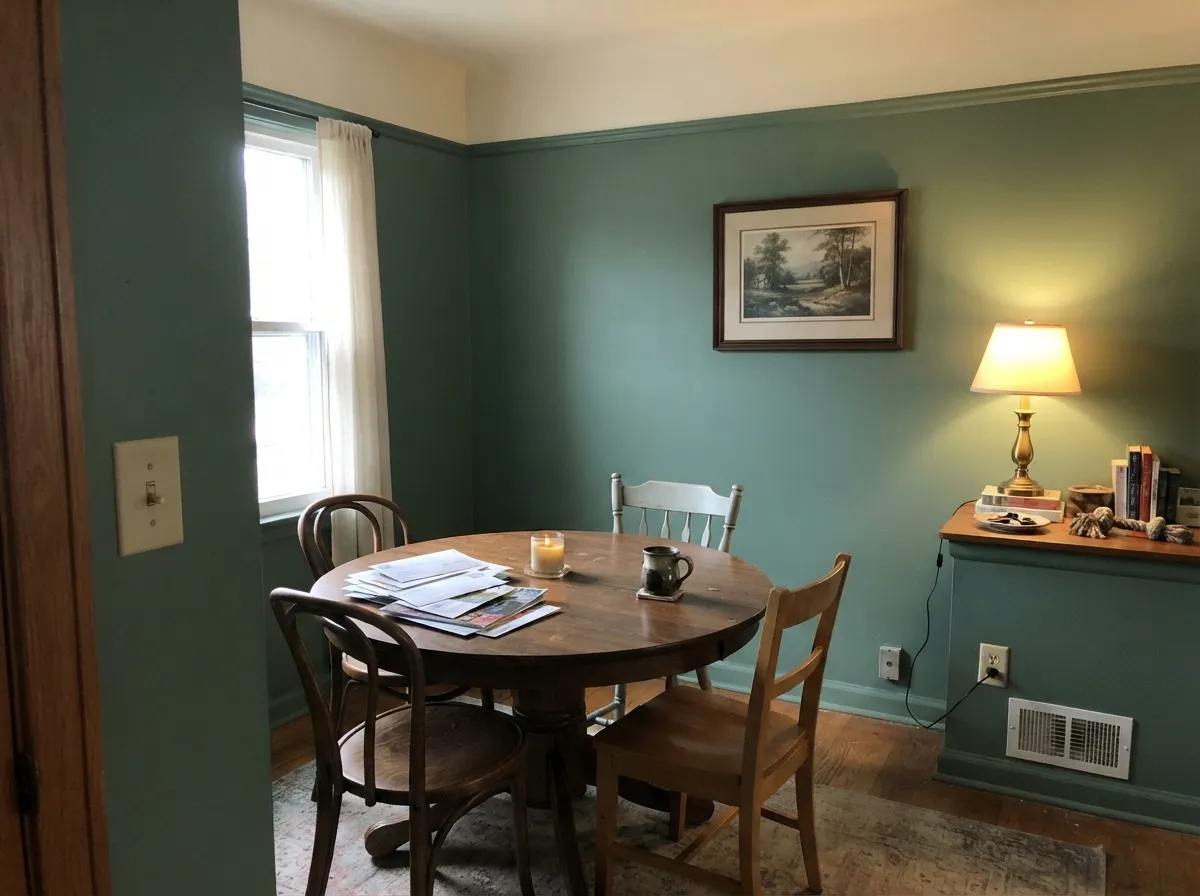
Jadite is at its best on things, not on every wall. Cabinets are its strongest room: a satin Jadite base with warm white uppers and aged brass pulls is the look that made muted greens the default kitchen alternative to white, and at LRV 20 it hides fingerprints and toe-kick scuffs better than any pale color. Its second home is the closed, lamplit room with a purpose — a dining room, a study, a library wall of built-ins — where depth is the point and nobody needs the space to feel airy. Give it warm whites, unlacquered brass, terracotta, walnut and white oak, and it looks considered rather than trendy.
Where It Fails
Nearly every disappointed Jadite story is one of three, and all three are predictable from the chip and the floor plan. Sampling bigger will confirm the problem, not solve it — so read these before you buy the gallon.
The name sets a trap. Real jadeite glassware — the Fire-King mugs and mixing bowls people collect — is a pale, milky mint — light enough to belong with the off-whites. Jadite the paint sits at LRV 20, several steps deeper and considerably grayer. It borrows the mood of the glass, not its value. If the mint bowl on your shelf is the target, this is the wrong color by a mile; you want something in Sea Salt or Palladian Blue territory instead.
This is the complaint that repeats. In a north-facing room on a gray day, or a basement, or a windowless hallway, LRV 20 has nothing to work with: the jade drains out and you are left with a flat, heavy dark green that reads near-black by evening. If the room only has one small window and you refuse to add lamps, pick something 10 to 20 LRV points lighter, like Evergreen Fog at LRV 30.
Put a muted mid-depth green next to a sharp blue-white and cool gray tile under cool bulbs and it stops looking like jade and starts looking like a 1950s school corridor. The institutional read is real and it is entirely a company problem, not a paint problem. Warm whites, warm wood, brass and any warm floor fix it — Alabaster or Greek Villa on the trim rather than Extra White is usually the whole repair.
Room by Room
Lower cabinets or an island in satin Jadite, warm white uppers, aged brass or unlacquered brass pulls, butcher block or a cream-veined stone top. The depth hides daily wear, the blue lean keeps it from going drab next to stainless, and it reads intentional in a way a pale sage never quite does. Use a urethane-fortified cabinet enamel; do not roll wall paint onto doors.
Rooms used mostly at night are exactly where a low-LRV green pays. Drench all four walls plus trim in matte and it reads like a room somebody decided about. Built-in bookcases in Jadite against a warm white wall is the lower-risk version of the same idea, and it is the version that survives a future repaint.
Calm, cave-like and genuinely restful in a bedroom with two bedside lamps at 2700K. Matte finish, warm white ceiling, cream or oatmeal bedding rather than bright white. Skip it in a bedroom whose only light is one north window — that is the room where owners say it went black.
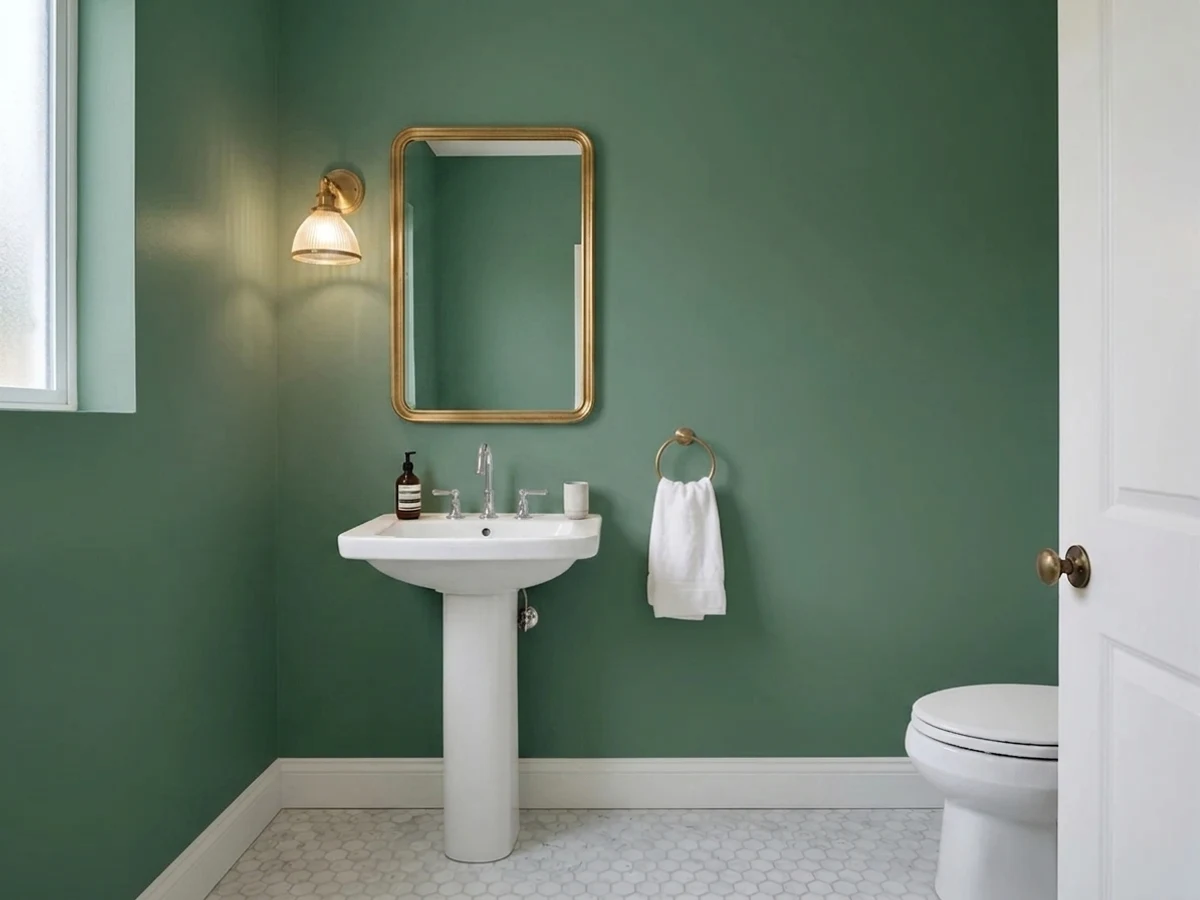
A powder room is the cheapest place to be brave: four walls of Jadite, a brass mirror and a warm white ceiling looks expensive for the price of one gallon. In a full bathroom, keep it on the vanity instead and check your tile first — cool gray tile is the pairing that pushes it clinical.
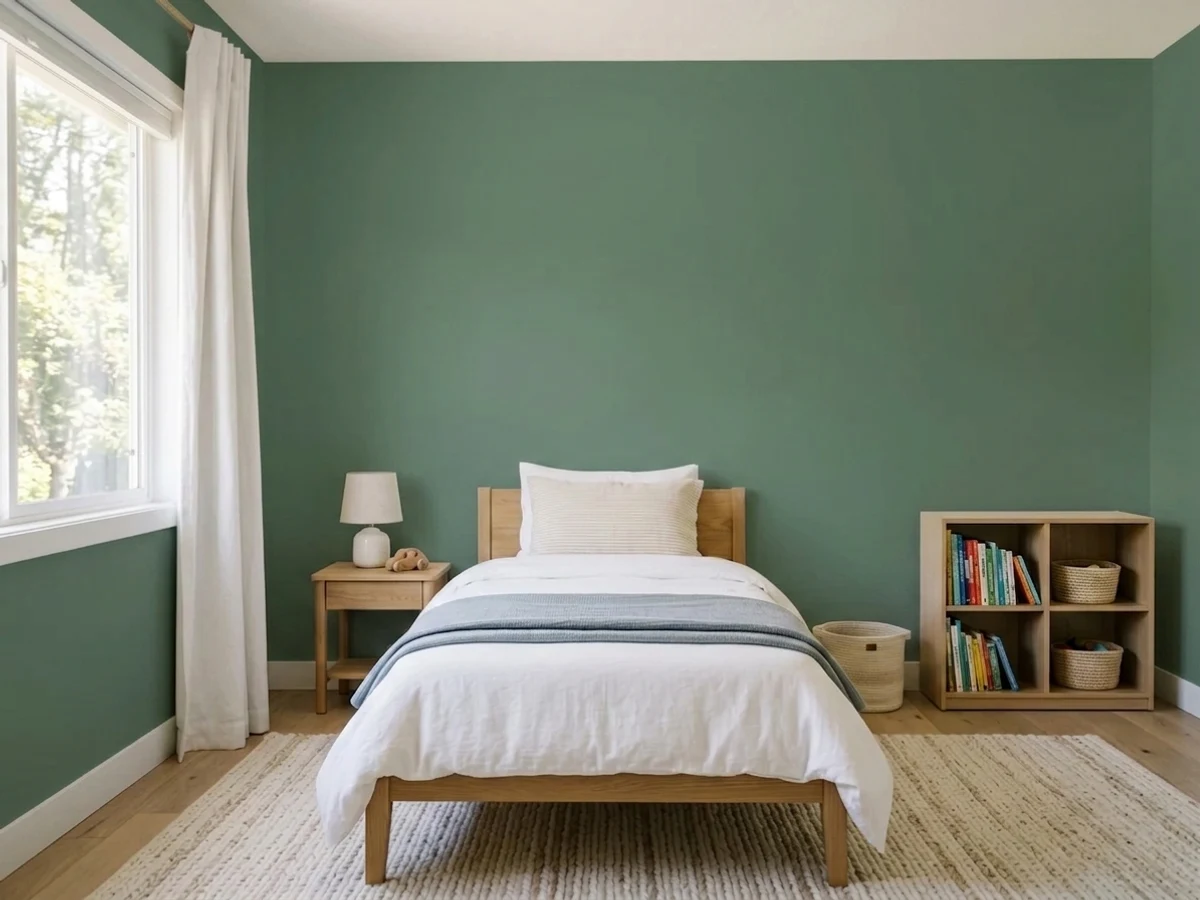
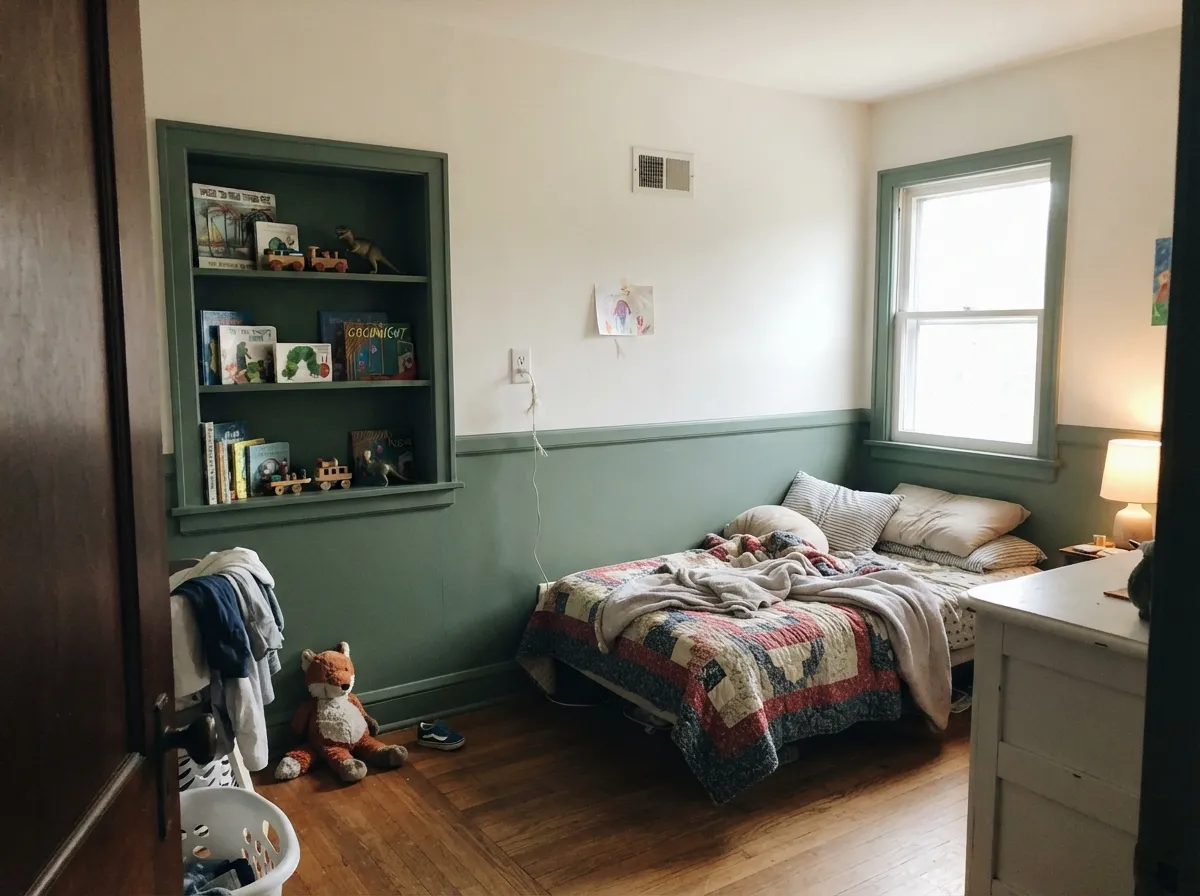
This is a green that grows with a kid rather than aging out at seven, and that is the honest reason to use it: no cartoon palette to repaint later. But four dark walls in a small bedroom is too much room lost. The version that works is Jadite on the lower third under a chair rail, or on one bookcase wall, or on built-in bunk surrounds and a closet door, with the upper walls and ceiling in a warm white. Skip it entirely in a dim playroom — those rooms need light back, not absorbed.
Outdoor sun is generous with LRV 20, and full daylight is where the jade is most obviously jade. On a white, cream or pale-gray house with natural stone or brick, a Jadite door reads like a color choice rather than a default. Exterior-grade satin, and expect it to look a step lighter and greener outside than it did on your indoor sample.
Your Light Is the Risk
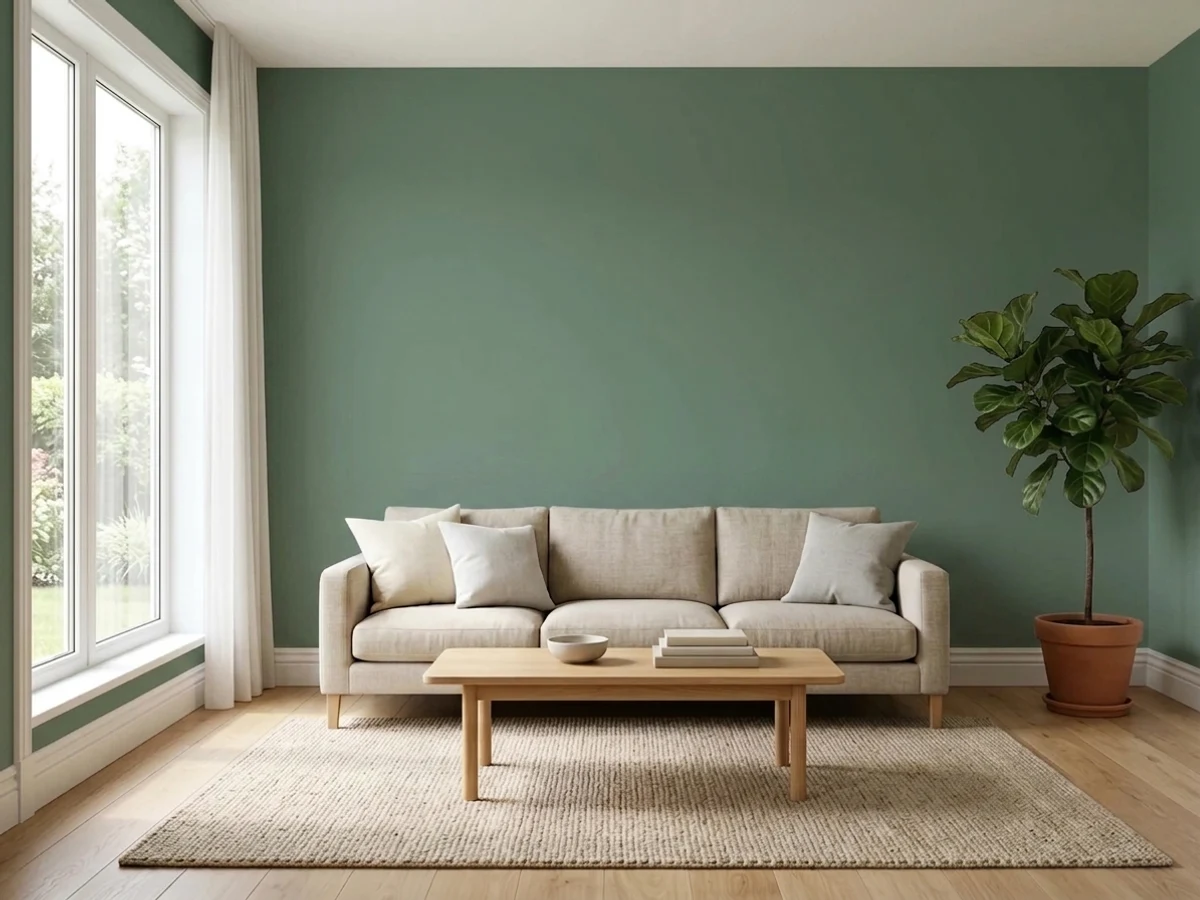
The green comes fully forward and the faint blue shows. This is the light that makes it look like jade instead of dark sage — sample here first.
Flat gray daylight plus LRV 20 leaves a heavy, colorless dark green. Owners call it swampy or near-black. Add lamps or add light points.
Cooler and bluer in morning light, warming toward moss and olive at golden hour. The swing is real but gentle — most people enjoy it.
Warm 2700K bulbs pull it toward olive and make it cozy. Cool 4000K and up push the blue and it reads colder, closer to teal. Pick your bulbs before you blame the paint.
Most complaints about Jadite are a light mismatch. Upload a photo of your actual room and see it on your walls — then ask for the same wall in north light or evening lamps before you buy a single sample.
Need It From Another Brand?
Any paint counter can custom-tint Sherwin-Williams SW 6459 directly. If you would rather stay in one brand's own deck, these are the closest stock matches, measured as ΔE2000. Under 2 is a difference you will not see on the wall.
| Brand | Closest color | ΔE | LRV | |
|---|---|---|---|---|
| Behr | Tournament FieldM420-6 · Behr | 3.3 | 19 | Color page → |
| Benjamin Moore | Willow Grove636 · Benjamin Moore | 1.6 | 19 | Color page → |
| Valspar | Hanging Vine5005-6B · Valspar | 2.7 | 18.9 | Color page → |
| Dutch Boy | Lawn Games328-5DB · Dutch Boy | 3.1 | 21 | Color page → |
| HGTV Home by Sherwin-Williams | CultivarHGSW 2283 · HGTV Home by Sherwin-Williams | 0.0 | 20 | Color page → |
| Dunn-Edwards | English HollyDE5649 · Dunn-Edwards | 2.3 | 19 | Color page → |
Similar Sherwin-Williams Colors
The nearest shades to Jadite within Sherwin-Williams's own range, ranked by perceptual color distance — useful when you want the same look a touch lighter, darker, or warmer.
WCAG 2.1: AA is 4.5 : 1 for normal text, 3 : 1 for large text, AAA is 7 : 1.
Jadite vs the Colors You're Also Considering
Every Jadite sample board has the same rivals on it. The numbers show the real lightness gap — then it comes down to which risk you would rather live with.
Pick this when you want the green to stay clearly green rather than flirting with teal.
Sherwin-Williams SW 9679 · LRV 20JuniperPick this if you want the same depth pushed a touch further toward blue — they are near-twins at LRV 20 and Juniper is the cooler one.
Pick this when you want the cooler, cleaner jade read and your wood tones are walnut or white oak.
Sherwin-Williams SW 6186 · LRV 21Dried ThymePick this for the warm, dusty olive version of this depth — far friendlier to honey oak and golden beige.
Jadite Coordinating Colors
The rule with Jadite is simple: warm everything else. It wants creamy whites rather than blue-whites, warm metals rather than chrome, and one earthy accent somewhere in the room so the cool green has something to push against. These are the partners that keep showing up in Jadite rooms that actually work:
Where the Name Comes From, and Why the Paint Is Darker
The spelling is the clue. The mineral is jadeite; Jadite with one e is the trade name for opaque jade-green kitchen glass, coined by Jeannette Glass in 1932 after McKee introduced its own jade-green line two years earlier. The look spread through American kitchens for decades — Anchor Hocking's Fire-King mugs, bowls and restaurant ware are the pieces most people picture — and a collecting revival in the 1990s pushed the color back into the mainstream. A paint color borrowing that name is borrowing an unusually specific memory.
It is also where the disappointment comes from. The glassware is a pale, milky mint with light passing through it. The paint is a grayed, medium-dark green that absorbs light instead. If you line a Fire-King mug up against a Jadite wall, they are recognizably the same family and nothing like the same color — the paint is the mood of the glass turned down several stops. Knowing that before you sample saves the most common regret attached to this color.
The upside of that depth is longevity. Pale mint has been in and out of style repeatedly since 1932; a muted, grayed jade at LRV 20 sits closer to a dark neutral and dates far more slowly. It is the version of the reference that survives the trend it references.
Jadite With Wood Tones, Floors, and Metals
Walnut and white oak are the easy wins. Walnut's red-brown depth makes the green read rich and intentional; pale white oak and natural-finish floors give it a quieter Scandinavian cast and keep a dark-cabinet kitchen from feeling heavy. Terracotta tile, unglazed brick and cream-veined stone all sit beautifully against it — anything with earth in it.
The honest no is golden: honey oak floors, orange-stained trim and yellow-beige carpet. The green pushes those surfaces further toward orange and they push the green further toward gray, so both sides look worse than they do alone. A large rug helps in a room where the floor is staying; if the whole house is honey oak, Dried Thyme at LRV 21 gets you the same depth with a warm base that agrees with the floor instead of fighting it.
Metals are straightforward. Unlacquered brass, aged brass, antique bronze and matte black all flatter it. Polished chrome and brushed nickel are the two that lean cold, and combined with a blue-white trim they are half of the institutional problem. If your fixtures are already nickel, warm the room back up with the trim white and the floor.
Three Ready Palettes Built on Jadite
A color is never alone on the wall. These are complete combinations in the 60-30-10 pattern, with the reason each one holds together. Every one opens in the visualizer.
The warm white does the heavy lifting: Alabaster keeps the green from tipping institutional the way a blue-white would, and it brightens the upper half of the room so LRV 20 on the base cabinets never weighs the kitchen down. Urbane Bronze gives one warm dark note so the scheme reads layered rather than two-tone, and brass pulls finish it.
Try this palette in your roomTerracotta is the warm answer to a cool green, and Cavern Clay at almost the same depth keeps the balance even rather than making one color the loud one. The creamy ceiling matters more than people expect: a bright white lid over drenched dark walls looks like the paint ran out, while Dover White reads as part of the plan.
Try this palette in your roomKeeping Greek Villa on the top half and the ceiling means the room still gives light back, which is the only way LRV 20 belongs in a kid's bedroom. Honolulu Blue supplies the actual fun on one small surface, so the green never has to try to be playful — and when a nine-year-old is done with sky blue, you repaint one door instead of the room.
Try this palette in your roomJadite FAQ
Is Jadite green or blue-green?
Green, with a small amount of blue behind it. The mix is roughly 97 red, 130 green, 108 blue, so green leads clearly and blue sits second with almost no yellow in play. On a wall it reads as a muted jade or botanical green; in cool north light or under 5000K LEDs the blue steps forward and it can look faintly teal, and under warm lamps it drifts toward moss.
What trim white goes with Jadite?
A warm white. Alabaster at LRV 82 is the default and Greek Villa at LRV 84 if you want a touch more cream. A stark cool white like Extra White at LRV 86 is the pairing that makes muted greens look institutional, and it only works in a bright, sunny, warm-floored room where you actively want a crisp modern edge. Semi-gloss on the trim, matte or eggshell on the walls.
Is Jadite too dark for a whole room?
It depends entirely on the light, not on the room size. At LRV 20 it absorbs most of what hits it, so a bright south-facing room handles four walls beautifully and a dim north-facing one does not. If the room has one small window and no lamps, either add lamps or go up ten or more points to something like Evergreen Fog at LRV 30. Small rooms, oddly, are the easiest place to use it — a powder room drenched in it looks deliberate rather than dark.
What is the difference between Jadite and Juniper?
Very little, and that is the honest answer. Both are Sherwin-Williams greens at LRV 20 and they look nearly identical on a chip. Juniper is the cooler of the two with a bit more blue in the mix; Jadite stays a shade closer to true green. Sample both on the same wall if you care about the distinction, because in most rooms you will not be able to tell them apart once they are up.
Can I use Jadite on kitchen cabinets?
Yes, and cabinets are arguably its best use. The depth hides fingerprints and toe-kick scuffs far better than a pale green, and the slight blue lean keeps it looking clean beside stainless appliances. Use a urethane-fortified cabinet enamel in satin rather than wall paint, degloss and prime properly, and give it real cure time before the doors go back on.
Does Jadite work in a kid's room?
In doses, yes — and it has one real advantage over a nursery palette: nobody outgrows it. Put it on the lower third under a chair rail, on a bookcase wall, or on built-in bunks and a closet door, with warm white above so the room still feels bright. What does not work is four dark walls in a small or dim kids' room, or a playroom that already struggles for light. Keep the light half of the room genuinely light and the green stays an asset for a decade.
Have you painted with Jadite?
Rate it — one tap helps the next reader decide.
Ask a Question