Halcyon Green
Sherwin-Williams' March 2026 Color of the Month, reviewed honestly: what the color actually is, why it looks so familiar, and where a grayed sage-green like this earns its keep.

Jessica has spec'd whites and neutrals for more than 300 rooms and keeps a sample wall of painted drawdowns in her studio. Every color review is checked against real reader rooms in the comments and re-tested when a formula changes. About the testing process →
- 1Sage Green22
- 2Evergreen Fog30
- 3Halcyon Green39
- 4Saybrook Sage45
- 5Soft Fern57
The Fast Verdict
Halcyon Green is Sherwin-Williams' March 2026 Color of the Month, sold on a single line of marketing copy — "a soft green that breathes quiet elegance" — and not much else yet. Pull the numbers apart and the real story shows up: at RGB 144/160/146 it is barely more green than gray, and its hex and LRV land within a couple of points of two colors already living in the SW deck, Sage and Evergreen Fog. That is not a knock. It means Halcyon Green inherits a genuinely well-behaved, well-tested color family — it just has not had time to earn its own reputation, because it barely existed before this spring.
Kitchen cabinets and islands · exteriors with white or black trim · dens and home offices with real daylight · anyone who likes Sage or Evergreen Fog but wants the newest name on the fan deck
You want a color with years of real owner reviews behind it · your room runs cool LED light with little daylight · you already have Sage or Evergreen Fog on your walls · you are chasing something genuinely new, not a repackaged classic
- A genuinely easy, well-grayed mid-tone green that reads as a decision, not a statement
- Nearly identical color science to two proven SW colors, so its light behavior is predictable
- Cabinets, islands, and exteriors all suit it the way its siblings' reviews already promise
- Balanced RGB with no yellow or blue drift to fight
- Currently the freshest SKU if you want the look without the well-known name
- Barely distinguishable from Sage and Evergreen Fog — you may be paying for a new name, not a new color
- Cool light and dim north rooms flatten it toward plain gray, the same weakness its siblings have
- Five months old with a marketing blurb, not a track record — no real owner reviews to check yet
- Too subtle for anyone who wants a green that reads as green from across the room
What Color Is Halcyon Green, Really?
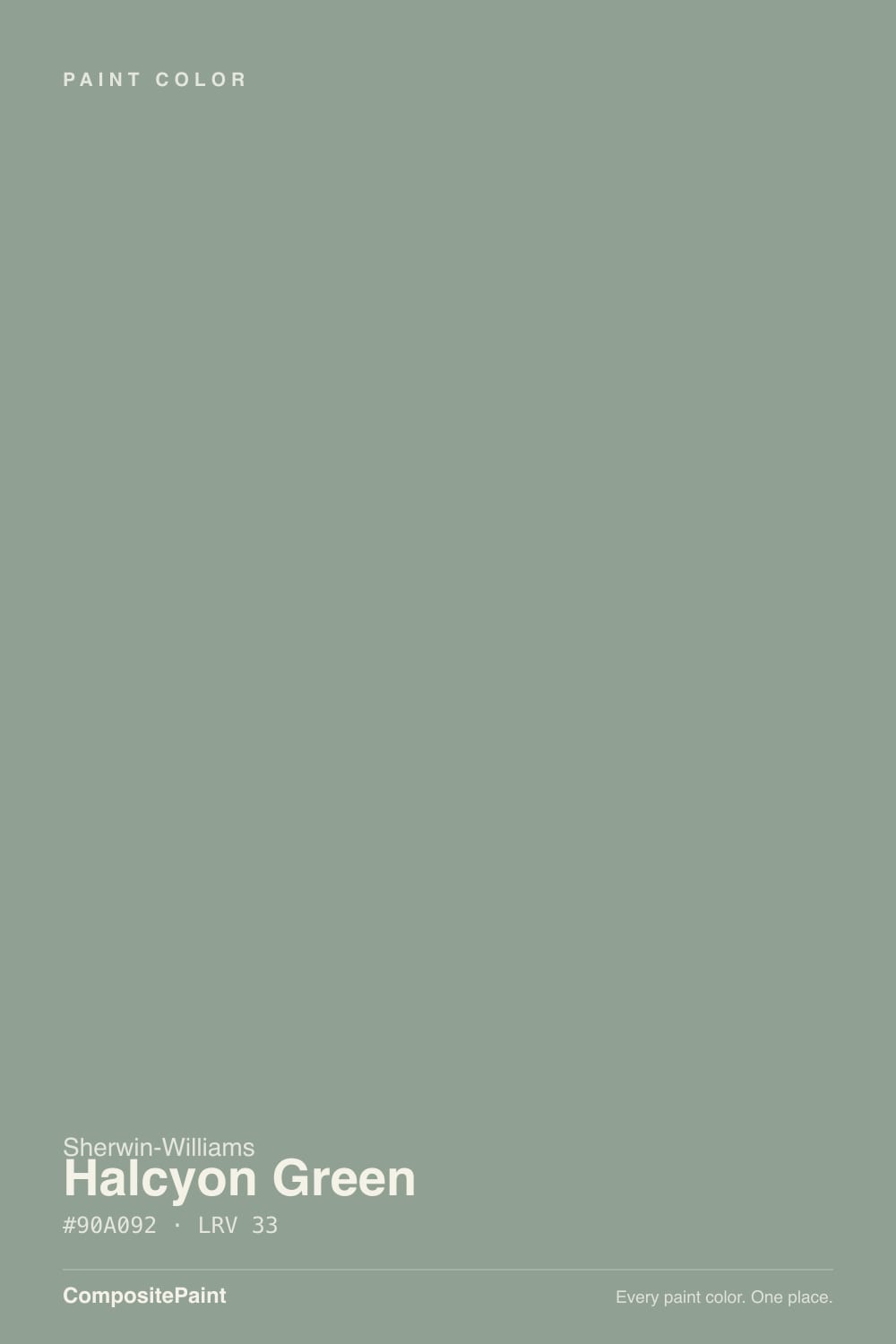
Sherwin-Williams named Halcyon Green its Color of the Month for March 2026, and the official page does not say much more than "find tranquility with a soft green that breathes quiet elegance into any room" — the kind of line that could describe half the greens in the deck. The numbers say more. RGB 144, 160, 146: the green channel sits only about a dozen points above red and blue, which is the technical way of saying this is not really "a green" so much as a warm-neutral gray with just enough green cast to earn the name on the can.
At LRV 39 it holds a genuine mid-tone — not a pale wash, not a deep accent. Cross-check that against Sherwin-Williams' own deck and the honest surprise appears immediately: Sage (SW 7732, LRV 32, hex #9DA292) and Evergreen Fog (SW 9130, LRV 30, hex #A0A38E) both sit close enough in hex and LRV that most people could not pick three sample chips apart on a store rack. Whether Sherwin-Williams built Halcyon Green as a genuinely new mix or repackaged a proven family under a fresh Color-of-the-Month name, we cannot say for certain — but the practical result is a color you can predict with more confidence than a true unknown, because two of its closest siblings already have years of real rooms behind them.
Undertone in one line: green first, gray close behind, no yellow and no blue drift. That is the same profile Sage owners report — accurate and clearly green in bright daylight, prone to reading almost plain gray once the light turns flat and cool. If your sample looks gray on the wall, that is the light doing what it does to every color in this grayed-sage family, not a defect specific to this can.
Where It Shines
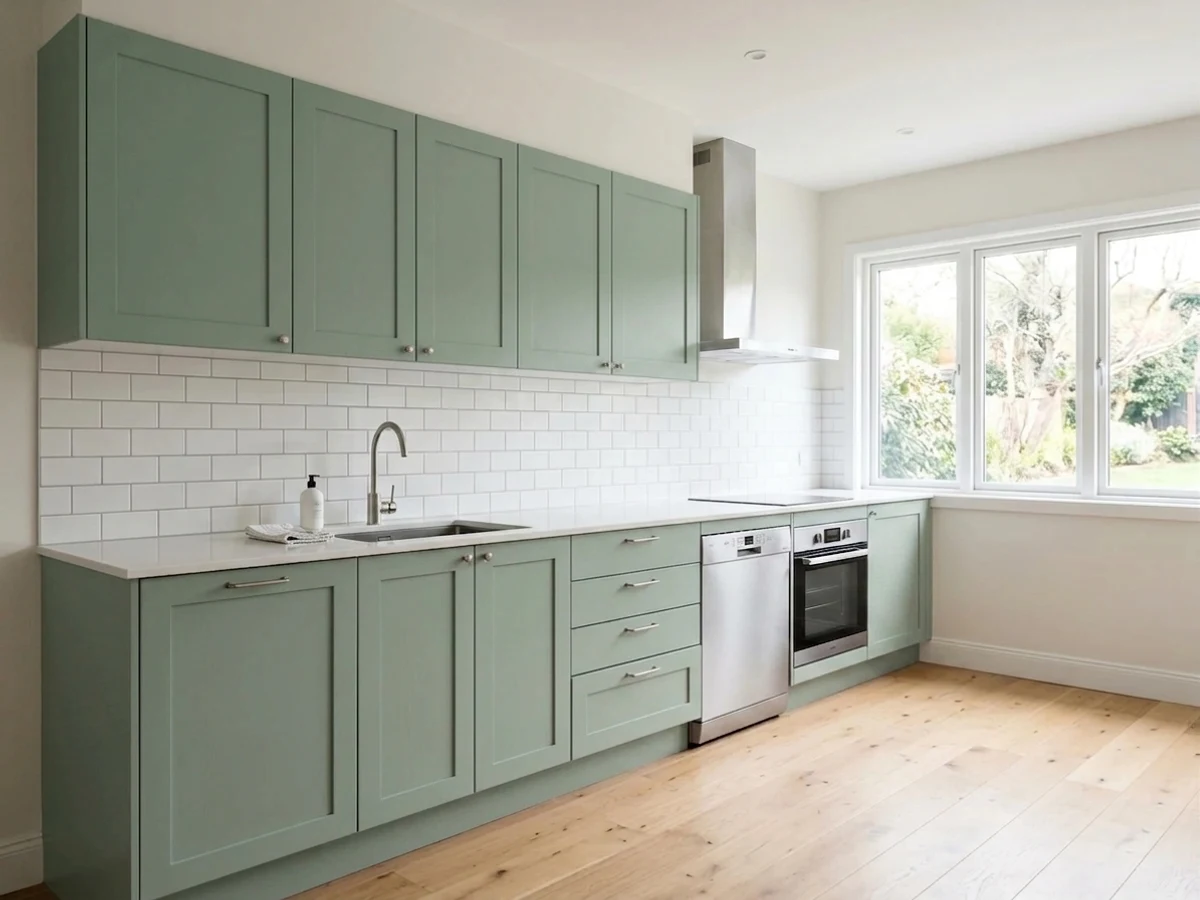
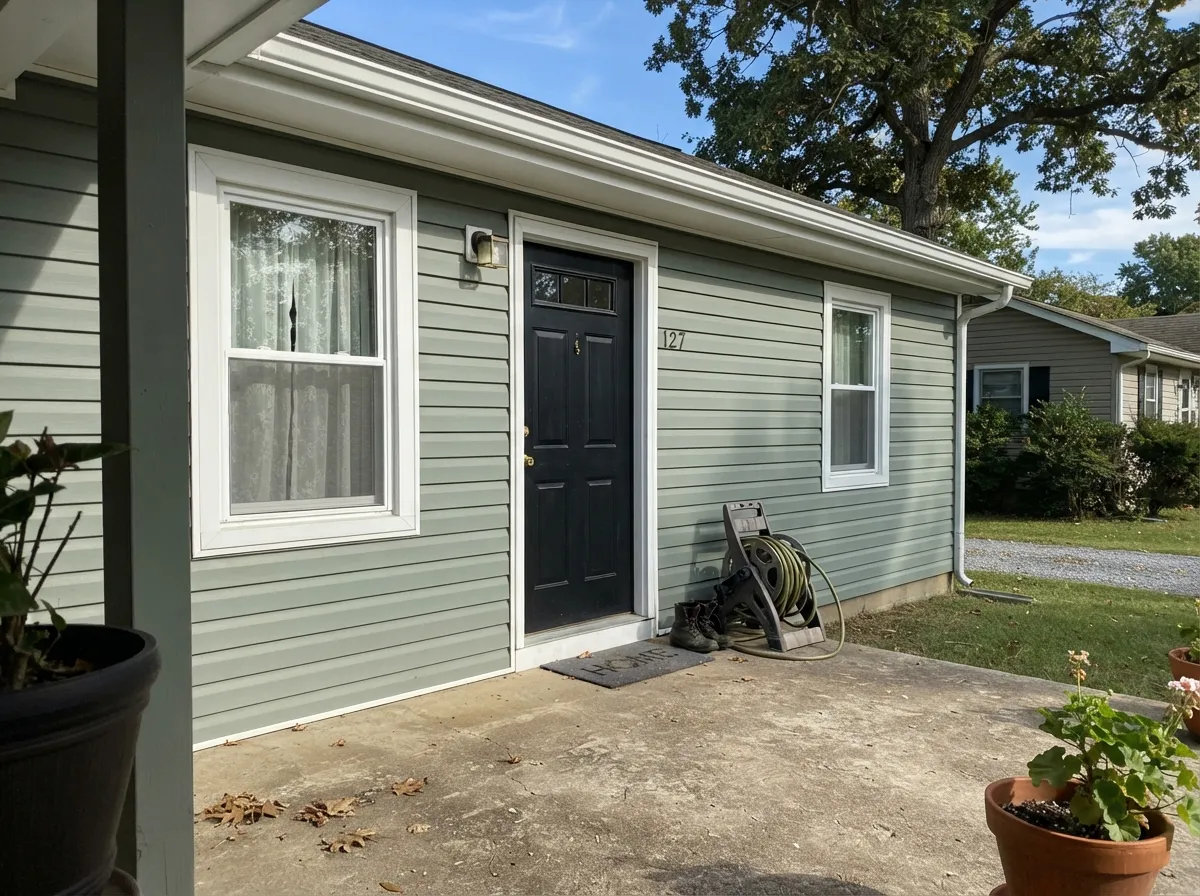
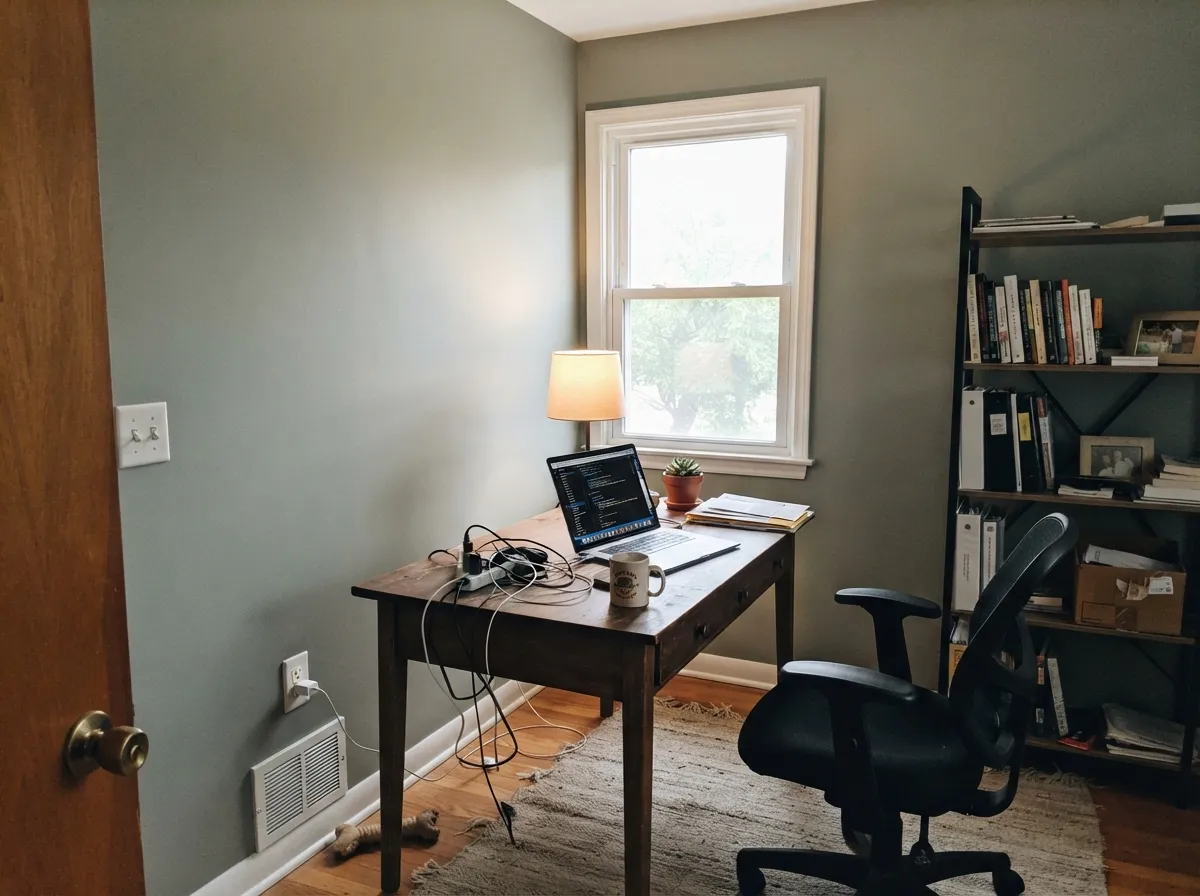
Give it real daylight, warm wood, and brass hardware, and it behaves exactly like its two better-known siblings: a quiet, confident mid-tone that reads as "we chose a color" without shouting about it. It is at its best doing the job Evergreen Fog made famous — a kitchen island or a full run of cabinets — and it holds up well outdoors, where full sun keeps the green in it visible instead of letting it sink toward plain gray.
Where It Fails
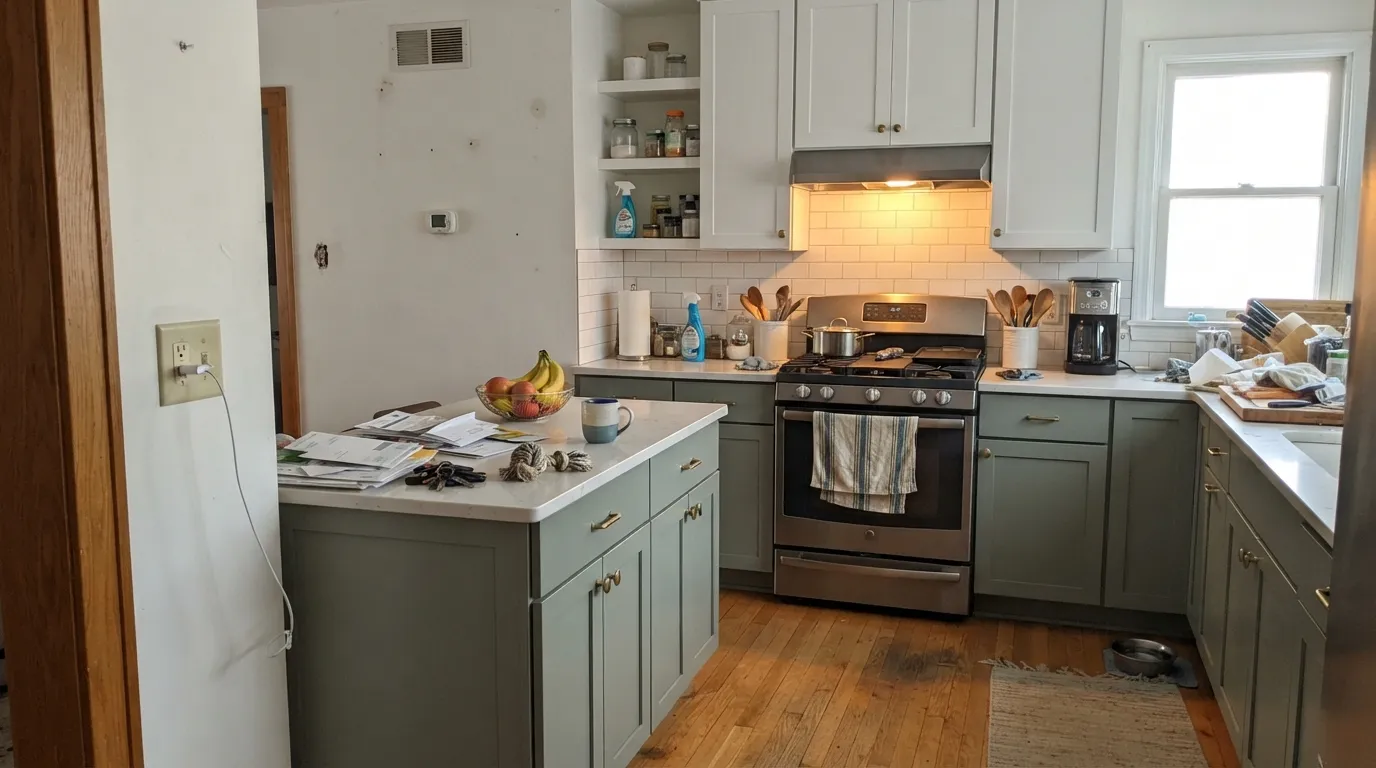
Halcyon Green does not have years of Houzz threads and Reddit horror stories behind it the way Sage and Evergreen Fog do — it is five months old. What follows is not complaint-mining; it is the same physics that governs its two closest siblings, applied honestly to a color that has not had time to build its own track record yet.
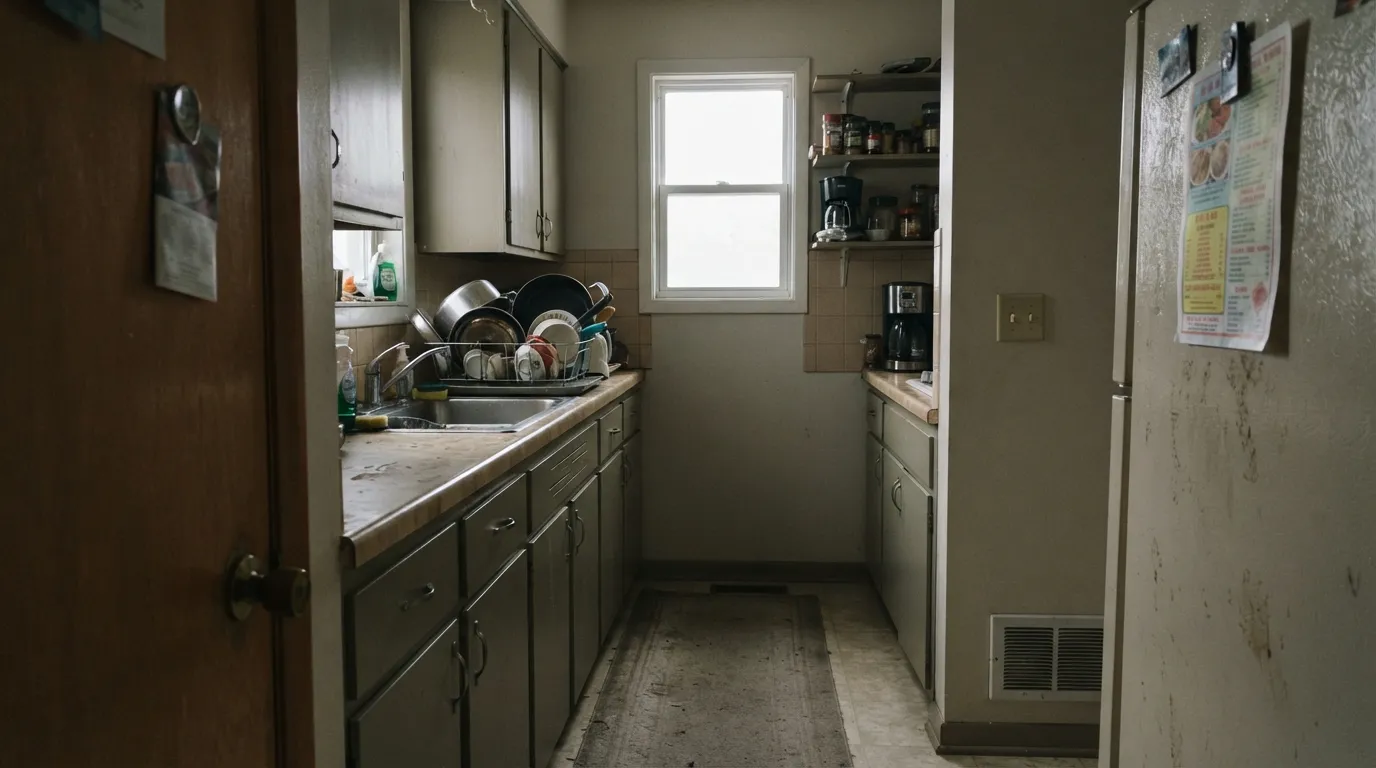
Cool daylight is exactly what flattens Sage and Evergreen Fog into a dull gray-green, and Halcyon Green shares their RGB profile closely enough to expect the same result. If the room does not get direct sun for at least part of the day, sample it there before committing — do not trust the chip rack.
The numbers are close but not identical — Halcyon Green sits a few points lighter on the LRV scale and a shade grayer than Evergreen Fog. Side by side they read as cousins, not twins. If you are trying to match a specific photo of Evergreen Fog cabinets, buy Evergreen Fog.
This is the honest gap: Sage and Evergreen Fog have thousands of real rooms and years of owner feedback behind them. Halcyon Green has a press release. The color science says it should behave the same way — but if you specifically want a color other people have already lived with and reported back on, its siblings currently have the track record and this one does not.
Room by Room
This is the job its siblings became famous for, and Halcyon Green is built the same way: enough green to feel intentional, enough gray to stay out of the way of granite, quartz, or butcher block. Satin cabinet enamel, brass or matte black hardware.
Full sun keeps the green legible instead of letting it sink toward gray, and it reads as a modern, muted sage-green siding color against white or black trim. Test on the actual elevation — shaded walls will read noticeably grayer than sun-facing ones.
A grounding backdrop for wood furniture and books, provided the room gets some sun. In a windowless or north-only office, expect it to lean flat gray rather than green.
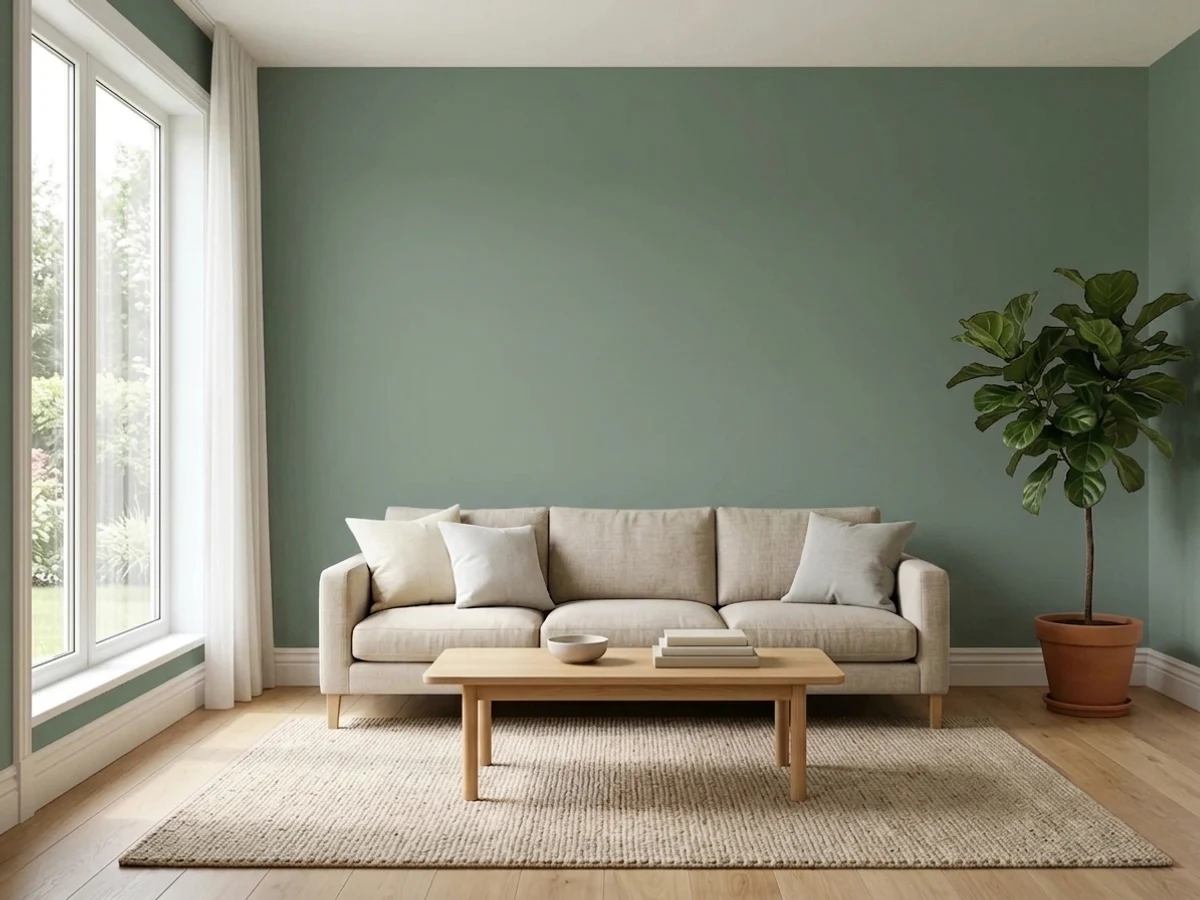
Works as a quiet accent wall or a full-room color if the daylight is good and the palette leans warm — wood, brass, cream. It will not announce itself the way a saturated green does, which is either the point or the disappointment depending on what you wanted.
Calm and easy to sleep with under 2700K lamps. Under cool white LEDs and dim daylight it can read as a nondescript gray rather than a restful green.
With warm wood vanities and brass it is a quiet, spa-adjacent green. Against stark white subway tile and chrome it leans colder and less interesting — test with your actual fixtures before painting.
Your Light Is the Risk
Full sun keeps the green channel visible and the color reads as a genuine muted sage-green rather than a gray. The light it should be judged in.
Cool, flat daylight strips out the small green edge and leaves a plain warm gray — the same trap Sage and Evergreen Fog fall into.
Warmer and greener at the sun hours, quieter and grayer once the direct light passes. Expect it to look like two different colors across a single day.
2700K bulbs keep it soft and green-leaning after dark; cool white LEDs push it toward the same flat gray that dim daylight does.
Most complaints about Halcyon Green are a light mismatch. Upload a photo of your actual room and see it on your walls — then ask for the same wall in north light or evening lamps before you buy a single sample.
Need It From Another Brand?
Any paint counter can custom-tint Sherwin-Williams SW 6213 directly. If you would rather stay in one brand's own deck, these are the closest stock matches, measured as ΔE2000. Under 2 is a difference you will not see on the wall.
| Brand | Closest color | ΔE | LRV | |
|---|---|---|---|---|
| Behr | Casual GrayBNC-17 · Behr | 1.5 | 37 | Color page → |
| Benjamin Moore | Greyhound1579 · Benjamin Moore | 1.7 | 38 | Color page → |
| Valspar | Atlantic FoamV099-4 · Valspar | 1.2 | 38.6 | Color page → |
| Glidden | Woodlawn50GY 38/042 · Glidden | 4.7 | 38 | Color page → |
| Dutch Boy | Explore The Shore426-5DB · Dutch Boy | 2.7 | 39 | Color page → |
| HGTV Home by Sherwin-Williams | Desert LakeHGSW 3295 · HGTV Home by Sherwin-Williams | 0.0 | 38 | Color page → |
Similar Sherwin-Williams Colors
The nearest shades to Halcyon Green within Sherwin-Williams's own range, ranked by perceptual color distance — useful when you want the same look a touch lighter, darker, or warmer.
WCAG 2.1: AA is 4.5 : 1 for normal text, 3 : 1 for large text, AAA is 7 : 1.
Halcyon Green vs the Colors You're Also Considering
Every Halcyon Green sample board has the same rivals on it. The numbers show the real lightness gap — then it comes down to which risk you would rather live with.
Pick this if you like Sage but want the newest name on the fan deck — the two are close enough that most people will not tell them apart on the wall.
Sherwin-Williams SW 7732 · LRV 32SagePick this if you want the exact same muted sage-gray with years of real rooms and reviews already behind it.
Pick this for a hair lighter and grayer, with a fresher, less-seen name.
Sherwin-Williams SW 9130 · LRV 30Evergreen FogPick this for the actual color that made sage cabinets a design-world staple — a touch deeper and greener than Halcyon Green.
Halcyon Green sits in a crowded band of green-grays, and small differences change the mood. Acacia Haze (SW 9132), at LRV 32, is very close in lightness but reads grayer and less green, so it is the safer pick if you want the color to behave almost entirely as a neutral. Halcyon Green shows more of its green lean side by side.
Verdigreen (SW 9042), at LRV 34, is nearly the same depth but more clearly green and saturated. Choose it when you actually want a sage that reads as color, and choose Halcyon Green when you want that look dialed back.
Earl Grey (SW 7660), at LRV 32, is the truest gray of the group with the least green. Use it when the green cast in Halcyon Green feels like one step too far for the room.
Halcyon Green Coordinating Colors
The coordinating rule is the same one that already works for its siblings Sage and Evergreen Fog: warm whites, warm wood, brass, and a near-black anchor. Keep it away from cold blue-gray stone and it stays easy company.
Why a "New" Color of the Month Looks So Familiar
Sherwin-Williams promotes one Color of the Month, and for March 2026 it picked Halcyon Green off the deck. Line its hex and LRV up next to Sage and Evergreen Fog, though, and the three sit close enough that a paint chip alone would not tell you which can you were holding. That is worth knowing before you pay a premium for the newness of the name: the underlying color is a well-understood, well-tested formula, not an unknown.
The upside of that is real. Colors this close in RGB and LRV behave the same way in the same light for the same physical reasons, so everything Sage and Evergreen Fog owners have already learned about this family — where it glows, where it goes flat, what it pairs with — transfers directly to Halcyon Green. You are getting a proven color with a five-month-old name, which is a genuinely fine trade if the newness is the appeal, and a genuinely irrelevant one if it is not.
Halcyon Green With Wood Tones and Floors
Walnut, white oak, and other quiet, low-orange wood tones are the easy pairing — the muted green sits comfortably next to them without either side fighting for attention. Cabinets or trim in a similarly grayed wood stain deepen the effect without adding contrast.
Honey oak, cherry, and other strongly orange-toned wood are the pairing to test first. The warmth in those floors pushes against the color's small green cast, and in a room with a lot of that wood the walls can start to look muddier than they do on the sample chip. A large sample held against the actual floor, in the actual light, settles it faster than any chart.
Three Ready Palettes Built on Halcyon Green
A color is never alone on the wall. These are complete combinations in the 60-30-10 pattern, with the reason each one holds together. Every one opens in the visualizer.
A near-white kitchen with one grounded green run of cabinets is the safest way to try this color at scale — Pure White keeps the room bright, and Iron Ore on the hood gives it one confident dark note so the green does not have to carry the whole design.
Try this palette in your roomFull sun keeps Halcyon Green's green channel visible, and crisp white trim with a near-black door gives the elevation the same high-contrast structure that makes muted greens work outdoors.
Try this palette in your roomSwiss Coffee's warmth keeps the green from tipping gray on an overcast afternoon, and Kendall Charcoal built-ins add the depth this quiet color needs to avoid looking accidental.
Try this palette in your roomHalcyon Green FAQ
Is Halcyon Green actually a new color?
Not really new in character. It is Sherwin-Williams' March 2026 Color of the Month, but its hex and LRV sit within a couple of points of two colors already in the deck, Sage and Evergreen Fog. What is new is the marketing push and the SKU, not the underlying color science.
Is Halcyon Green warm or cool?
Neither, strongly — it is a balanced, grayed green with no real yellow or blue drift. In warm daylight and under 2700K bulbs it reads distinctly green; in cool north light it drifts toward plain gray.
Is it good for kitchen cabinets?
Yes. It is built like Evergreen Fog and Sage, both proven cabinet colors, at a similar mid-depth LRV. Use a satin urethane-fortified cabinet enamel and pair it with brass or matte black hardware.
Halcyon Green or Sage — which should I actually buy?
Sample both before deciding on name alone. They sit close enough in hex and LRV that the difference between them will likely be smaller than the difference your own room's lighting makes day to day. Sage has more owner feedback behind it; Halcyon Green is the newer SKU if that is what matters to you.
Does it work on exteriors?
Yes, especially with white or black trim — full sun keeps the green legible. Like every color in this family, shaded elevations will read grayer than sun-facing ones, so test on your actual walls, not just the brightest side of the house.
What trim white goes with Halcyon Green?
A soft warm white like Pure White or Swiss Coffee for a cohesive, quiet look, or a crisp white like Extra White for more contrast on an exterior. Avoid the coldest whites — they can make the green edge look muddy by comparison.
Have you painted with Halcyon Green?
Rate it — one tap helps the next reader decide.
Ask a Question