Blue Danube
The deep teal-blue that keeps getting bought as a navy, reviewed honestly: the hard-use rooms where it earns its keep, the light that flattens it, and what to pick instead.

Jessica has spec'd whites and neutrals for more than 300 rooms and keeps a sample wall of painted drawdowns in her studio. Every color review is checked against real reader rooms in the comments and re-tested when a formula changes. About the testing process →
- 1Naval4
- 2Blue Danube11
- 3Charcoal Blue19
- 4Resolute Blue40
The Fast Verdict
Blue Danube is a deep blue standing on the green side of the family, and that one fact decides whether you love it. At LRV 11 it is dark enough to swallow mud, scuffs and handprints, but not so dark that it gives up and reads black — which is why its best rooms are the ones nobody photographs: mudrooms, back halls, laundry rooms, powder rooms, and cabinet fronts. Give it one real window or a warm lamp and it glows blue-green. Give it a windowless box and a single cold ceiling light and it flattens into dull slate.
Mudrooms, back entries and laundry rooms that take a beating · powder rooms and studies · kitchen islands, lockers and cabinet fronts · anyone who wants deep blue with a pulse instead of another navy
You actually want navy · the room has no window and one cold overhead light · your floors, trim or bench are honey oak · you hate touching up and this room will need it
- Still reads as blue at LRV 11, where most navies have gone black
- Hides mud, scuffs and handprints in the rooms that get abused
- The green lean gives it a pulse that plain navies do not have
- Excellent on cabinets, islands and lockers in satin alkyd
- Muted enough to sit quietly in a house full of warm neutrals
- Not navy — the green shows up on the wall and surprises buyers
- Collapses to flat dark slate in a windowless, overhead-lit room
- Deep base means touch-ups flash and roller marks show
- Fights honey oak floors, oak benches and orange-toned trim
What Color Is Blue Danube, Really?
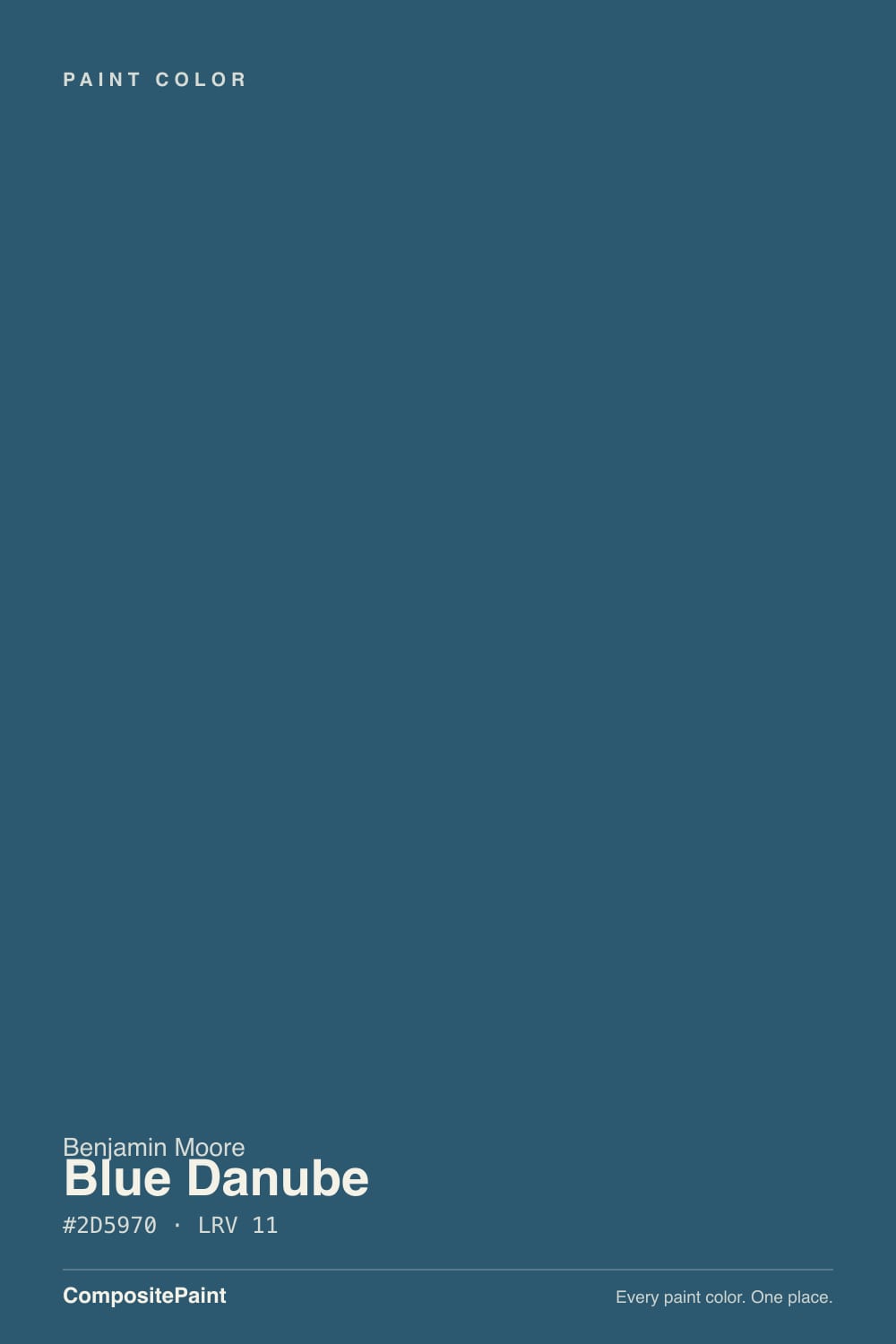
A deep blue with the green side of the family showing. Its hue sits around 201 degrees — the cyan end of blue, not the violet end — so it never reads as a true navy no matter what the chip suggests in a dim paint aisle. The saturation is held back, though, so it is not a peacock either: this is a slightly grayed sea blue, the kind of color that looks expensive rather than loud. Benjamin Moore keeps it in Color Preview, the deck of saturated colors, not among the quiet historical neutrals — useful to know, because the strip it belongs to (2062) runs from pale blue at the top down to the near-black Gentleman's Gray at the bottom.
At LRV 11 it is genuinely dark, but it is not a near-black, and that gap is the entire reason to choose it. Hale Navy sits at LRV 6, and Gentleman's Gray — the next step down Blue Danube's own strip — at LRV 7. Both of those give up and read as black the moment the light drops. Blue Danube keeps a visible blue several stops longer, which matters more in a small hard-working room than any undertone argument does. Expect the wall to look a step deeper than the chip anyway; every dark color does this, and a 12-inch peel-and-stick sample is the only honest test.
Undertone in one line: blue first, green second, never violet. If your sample board reads black, the problem is the room's light, not the paint. If it reads distinctly green, that is a warm bulb or low west sun pulling the cyan forward. Both readings are the same paint telling the truth about where you put it.
Where It Shines
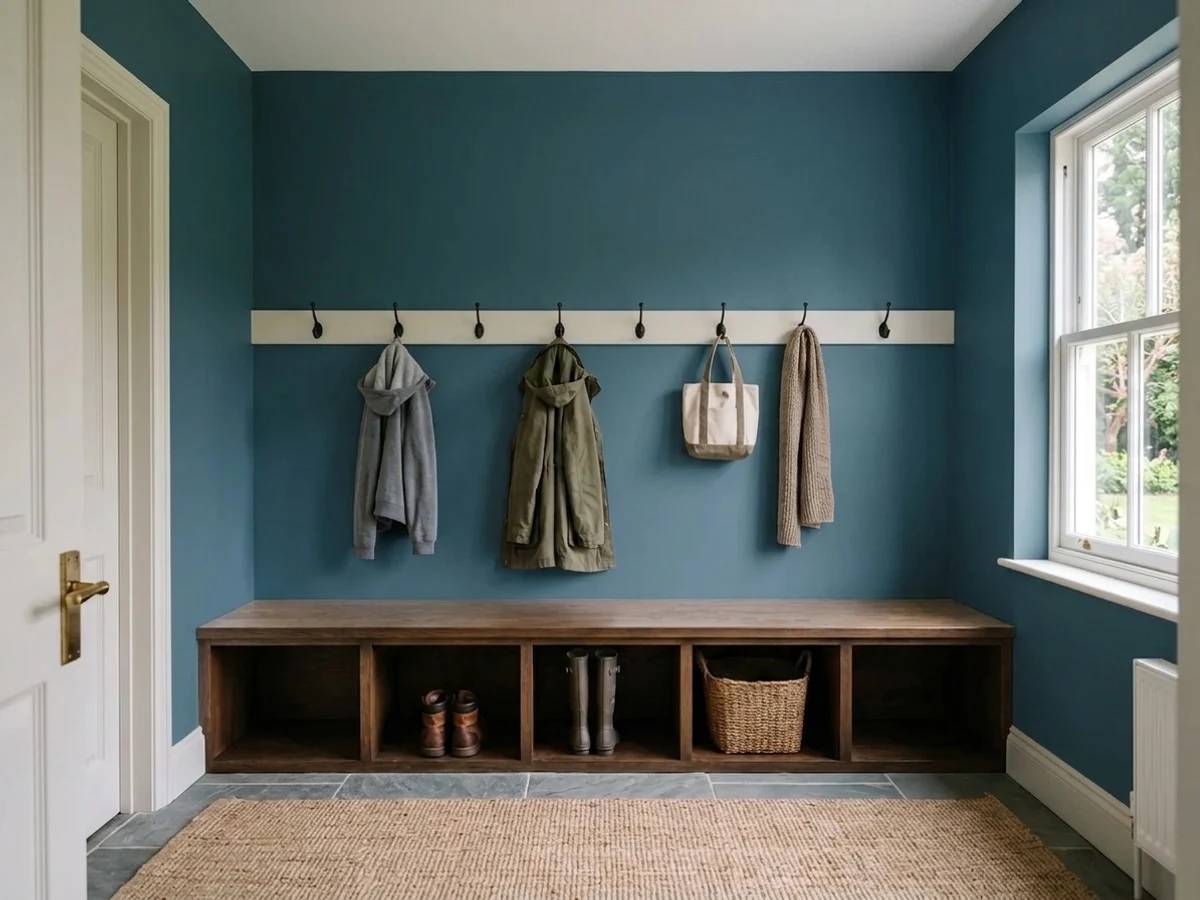
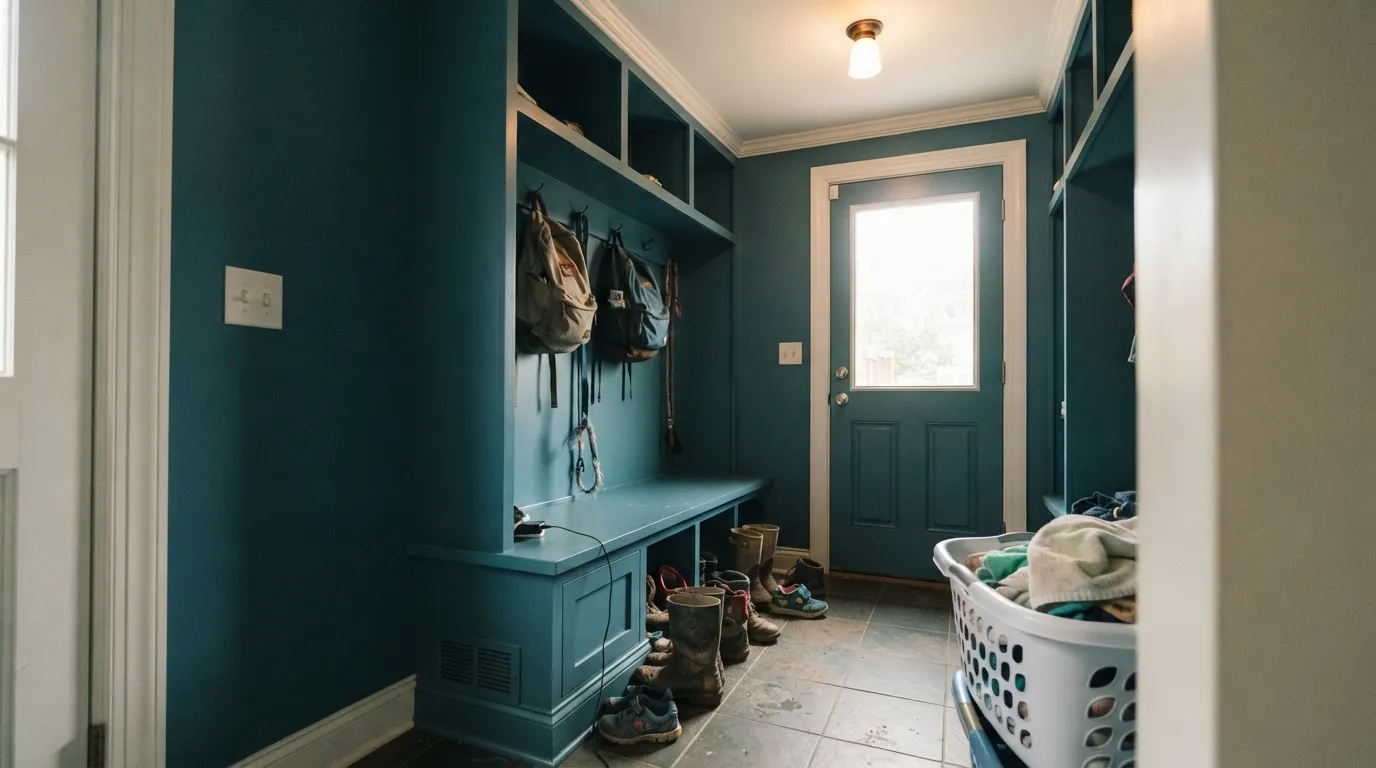
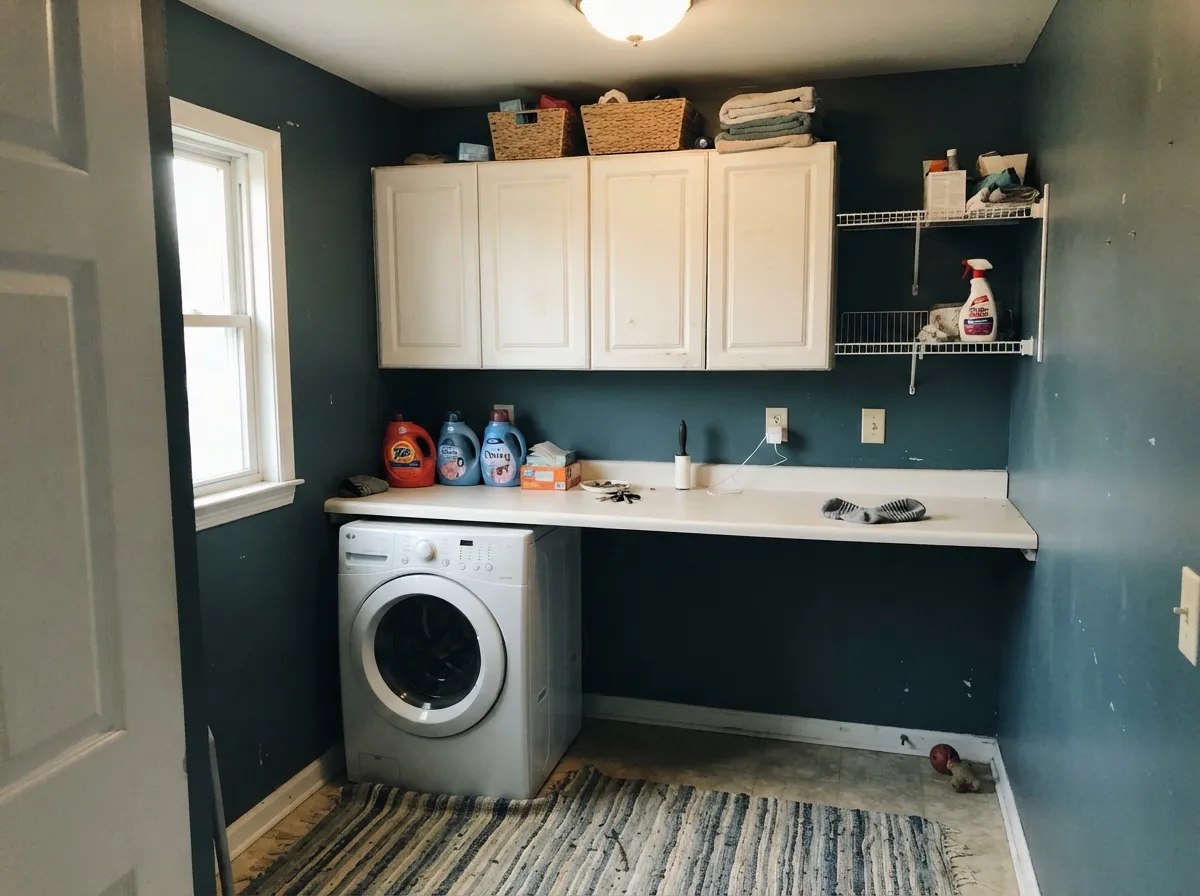
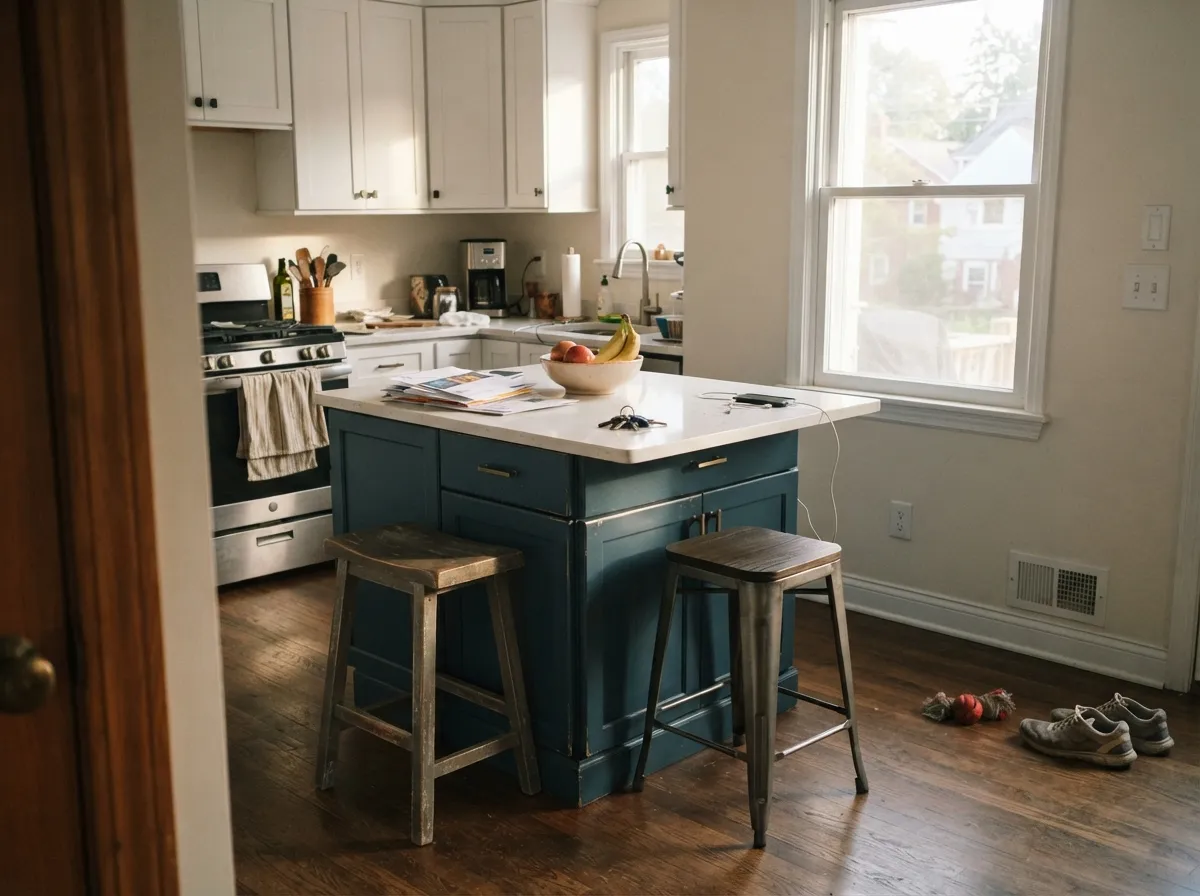
This color is built for the rooms nobody photographs. Mudrooms, back halls, laundry rooms, the wall behind the boot bench and the dog bowls — places that take mud, backpacks and handprints, where a light neutral shows every mark and a true navy would turn a small room into a cave. Blue Danube is dark enough to hide the damage and blue enough to still be a color when the light comes on. Its second life is cabinetry: an island, a vanity, a bank of mudroom lockers in satin alkyd, where the depth reads custom and the green lean keeps it from looking like every other navy kitchen from 2019.
Where It Fails
Three situations produce almost every regret about this color, and all three are predictable before you open the can. None of them are the paint's fault — but if your room matches one, a bigger sample will only confirm it.
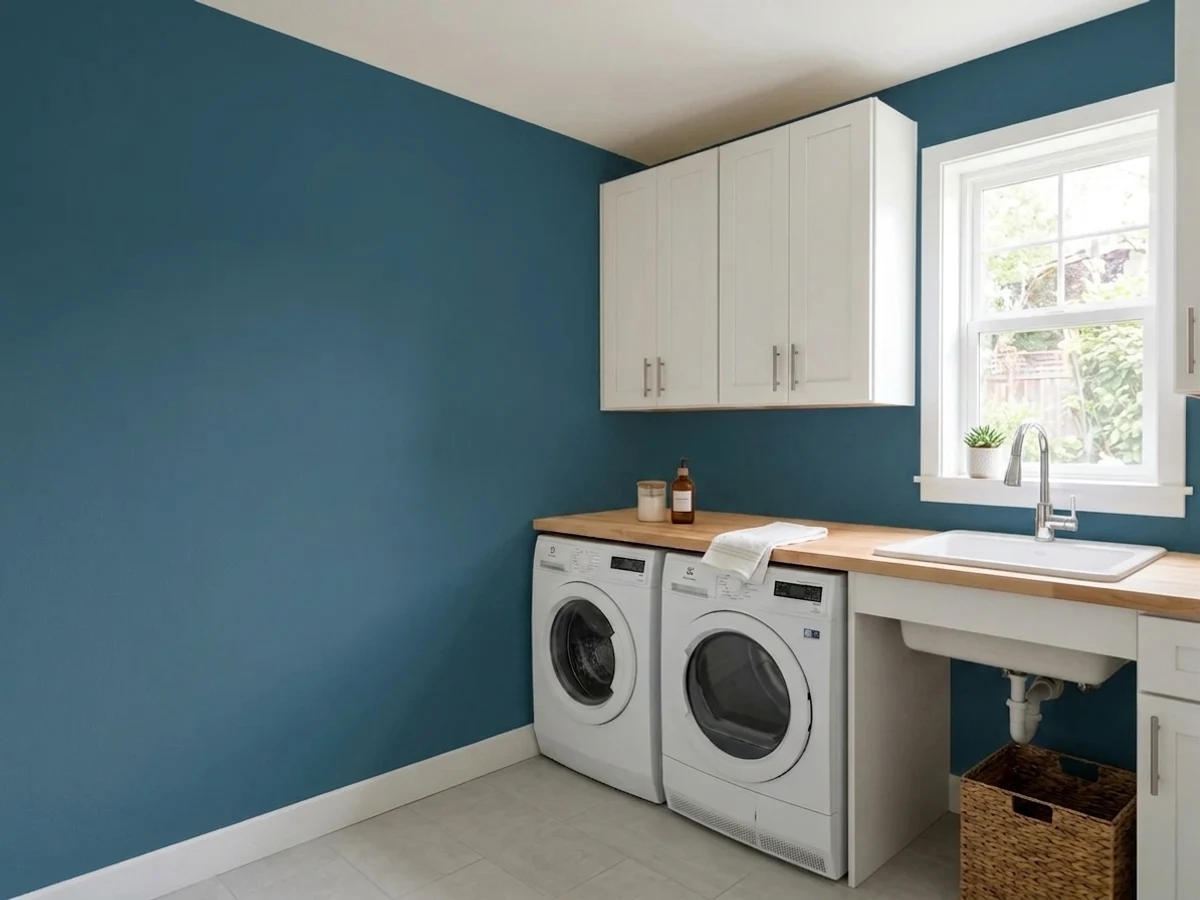
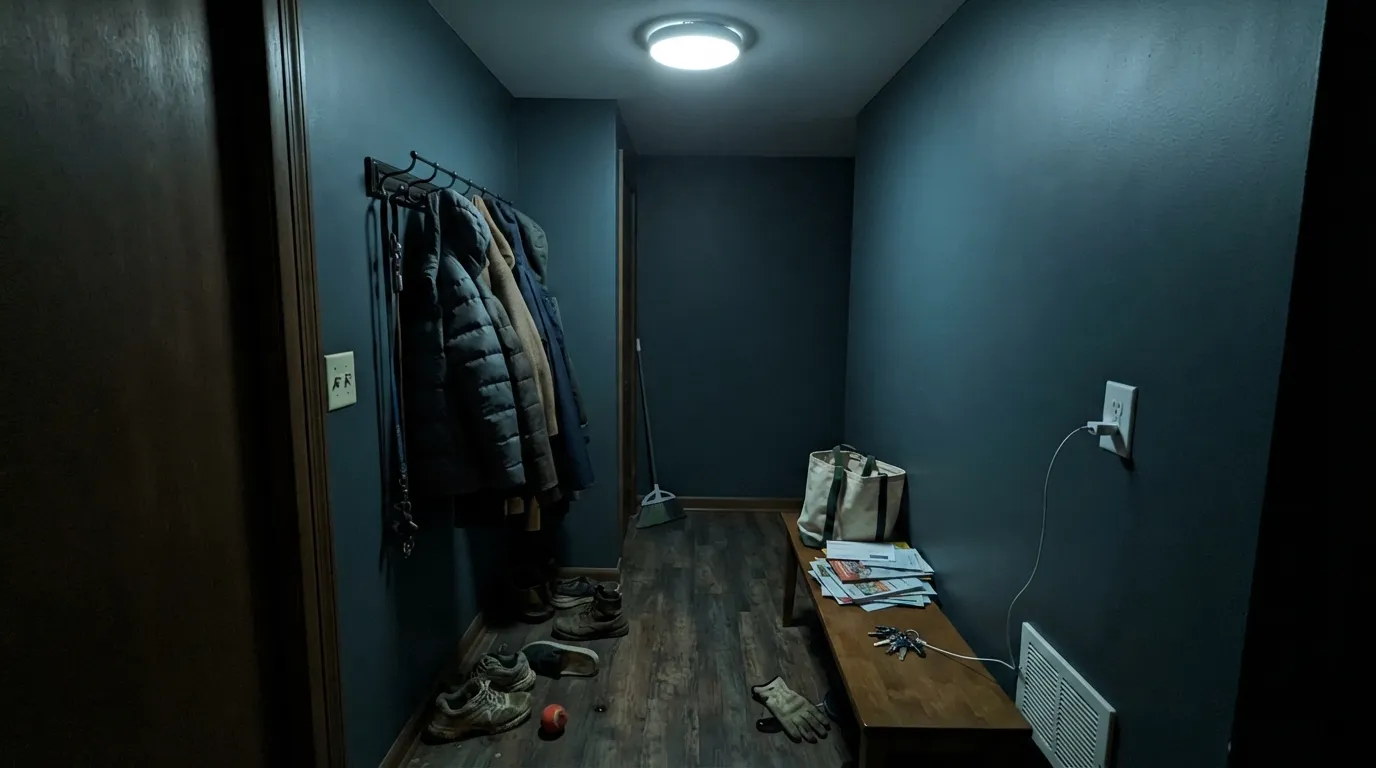
LRV 11 needs something to reflect. In a windowless mudroom or an interior laundry closet lit by a single cool overhead fixture, the blue-green drains out and you get flat dark slate with the corners lost — dark without being interesting. The fix is cheap and it is not paint: a warm 2700K bulb, an under-shelf light strip, a glass back door. If there is genuinely no light you can add, step up to a mid-depth color and save the drama for a room with a window.
This is the number-one buying mistake with it. On a paint chip it passes for a dark navy; on four walls the green is unmistakable, and it gets louder next to true navy fabric — hang a navy coat on a mudroom hook and the wall behind it suddenly looks teal. That is not a defect, it is the color doing what it always did. If you want navy, buy Hale Navy or Newburyport Blue and stop sampling this one.
Saturated deep colors carry a lot of colorant in a deep base, and that punishes rushed work: lap marks, a patchy second coat, and later touch-ups that dry to a slightly different sheen and catch the eye from across the room. Keep a wet edge, plan on two full coats over a gray-tinted primer, and keep enough paint from the same batch to redo a whole wall instead of dabbing. In a mudroom you will be touching up — plan for it now, not in year two.
Room by Room
Exactly the job this color is good at: a deep, forgiving blue on walls, lockers and bench fronts, where mud and scuff marks disappear instead of announcing themselves. Satin or a scrubbable eggshell on walls, satin alkyd on the built-ins. Keep the trim and ceiling white so the small room does not close in, and put one warm bulb in there so the blue stays a color.
A windowless powder room is the one place where going dark on purpose beats fighting for light you do not have. Drench all four walls, add a white or marble top and brass, and it reads deliberate instead of gloomy. Accept that it will be a dark little room — that is the point — and put a warm bulb over the mirror, never a cool one.
Deep blue behind a screen is genuinely restful, and shelves painted the same color make a small office read built-in. It needs one window or two lamps to hold its color; in a basement office with recessed cans only, it goes slate and joyless by four in the afternoon.
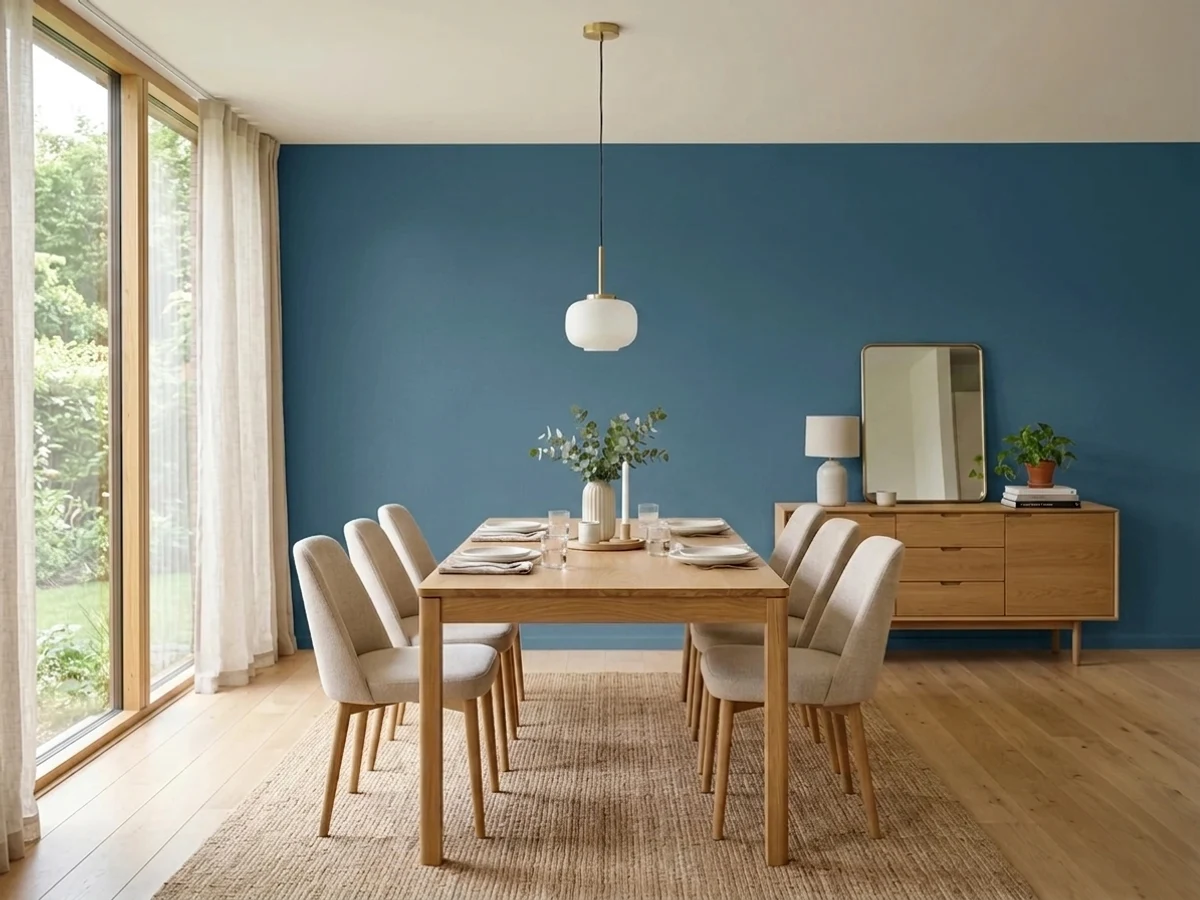
Candles, a warm chandelier and white trim are what this color was made for after dark. In a bright all-day breakfast room it is heavier than most people want. In a closed dining room used mostly at night it is one of the better deep blues in the deck — and warmer company than a gray-navy.
An island or a run of lower cabinets in Blue Danube under crisp white uppers is the safest way to use it in a kitchen, and Benjamin Moore's own cabinet enamel in satin is the finish for it. Brass or matte black pulls; nickel and chrome also work and read cooler and more modern. A whole kitchen in it is a much bigger bet, and a losing one without real daylight.
It behaves better outside than in a dim room: full sun lifts the blue-green and it reads as a deliberate color rather than a failed navy. Excellent on a front door against white, cream or pale-gray siding. Whole exterior walls are a real commitment — it will look darker from the street than it does on the chip, and north-facing elevations stay flat all day.
Your Light Is the Risk
South or west sun is where the blue-green wakes up: rich, dimensional, obviously a color. One good window is all it needs to be its best self.
No daylight and a single cool ceiling fixture flattens it to dull dark slate. The most common disappointment with this color — and the easiest to predict.
Crisp and clearly blue in morning east light; deeper and greener as the sun swings west. Sample on the wall you actually use, at the hour you use it.
2700K bulbs mute it and push it deeper and greener — cozy, or muddy if the room was already dark. Cool 4000K LEDs keep it vivid and clearly blue but strip the warmth out.
Most complaints about Blue Danube are a light mismatch. Upload a photo of your actual room and see it on your walls — then ask for the same wall in north light or evening lamps before you buy a single sample.
Need It From Another Brand?
Any paint counter can custom-tint Benjamin Moore 2062-30 directly. If you would rather stay in one brand's own deck, these are the closest stock matches, measured as ΔE2000. Under 2 is a difference you will not see on the wall.
| Brand | Closest color | ΔE | LRV | |
|---|---|---|---|---|
| Sherwin-Williams | Endless SeaSW 9150 · Sherwin-Williams | 1.1 | 9 | Color page → |
| Behr | Shasta LakeM490-7 · Behr | 1.8 | 10 | Color page → |
| Valspar | Deep Twilight Blue4007-6C · Valspar | 1.8 | 8.6 | Color page → |
| PPG / Glidden | Mountain LakePPG1156-6 · PPG / Glidden | 2.2 | 9 | Color page → |
| Glidden | Mountain LakePPG1156-6 · Glidden | 2.2 | 9 | Color page → |
| HGTV Home by Sherwin-Williams | Spectral IndigoHGSW 3341 · HGTV Home by Sherwin-Williams | 1.1 | 8 | Color page → |
Similar Benjamin Moore Colors
The nearest shades to Blue Danube within Benjamin Moore's own range, ranked by perceptual color distance — useful when you want the same look a touch lighter, darker, or warmer.
WCAG 2.1: AA is 4.5 : 1 for normal text, 3 : 1 for large text, AAA is 7 : 1.
Blue Danube vs the Colors You're Also Considering
Every Blue Danube sample board has the same rivals on it. The numbers show the real lightness gap — then it comes down to which risk you would rather live with.
Pick this when you still want the room to read as a color after the sun goes down.
Benjamin Moore 2062-20 · LRV 7Gentleman's GrayPick this for the near-black version one step down the same 2062 strip — more drama, far less visible blue.
Pick this when navy feels tired and you want the green-blue pulse instead — and five more points of LRV to work with.
Benjamin Moore HC-154 · LRV 6Hale NavyPick this if you want the familiar, slightly grayed navy everyone recognizes on sight.
Blue Danube Coordinating Colors
The rule for coordinating with Blue Danube: pick a white and commit to it, keep the warm neutrals in the next room rather than in the same one, and let one earthy color do the warming. It takes crisp whites better than most deep blues because the green in it stops the contrast from going icy. These are the partners that keep working:
A Color Trends 2015 Holdout That Never Got Famous
Blue Danube is not a new color chasing the current blue moment. Benjamin Moore put it in the blue family of its Color Trends 2015 palette, the year Guilford Green was named Color of the Year, and one of the brand's own suggested schemes from that release paired the two together with a pale blue from the same 2062 strip. Then the gray decade rolled on, the palette was retired, and the color went back to being a quiet number in the Color Preview deck.
That anonymity is worth something. Blue Danube never became a name people recognize on a wall the way Hale Navy did, so it does not carry a date stamp — nobody will walk into your mudroom and say "oh, that blue." It also means there is very little owner chatter about it online, which cuts both ways: fewer horror stories, but also fewer real-room photos to check before you commit. Sample it yourself and trust the wall, not the internet.
Its own color strip is the most useful shortcut for planning around it. One step down is Gentleman's Gray at LRV 7, the near-black version for doors and built-ins; several steps up the same strip are the pale blues that make natural ceiling or adjoining-room partners. Staying on one strip is the cheapest way to get a scheme that looks considered.
Blue Danube With Wood Tones, Floors and Metals
This decision gets made at the floor, not at the paint counter. Walnut, dark stained oak and pale unstained white oak are all excellent — the blue-green reads deliberate against them. Slate, dark tile, gray-flecked LVP and concrete are natural mudroom partners and cause no trouble at all. Cream or oatmeal carpet in an adjoining room is fine; it will simply look warmer than usual next to the blue.
The one honest no is golden. Honey oak floors, orange-stained trim and builder oak benches sit almost directly opposite this blue on the wheel, so each side exaggerates the other: the wood looks more orange, the walls look greener, and no extra coat fixes geometry. In a mudroom that usually means the bench is the problem — painting the bench and cubbies the same blue is often the cheapest fix, and it looks better than a two-tone compromise.
Metals are easy. Unlacquered brass and antique bronze warm it up and are the most flattering choice; matte black is clean and modern; brushed nickel and chrome are the cool option and read crisper and more contemporary, which suits a laundry room fine. Woven baskets, jute and natural rope are the low-cost way to keep a dark utility room from feeling severe.
Three Ready Palettes Built on Blue Danube
A color is never alone on the wall. These are complete combinations in the 60-30-10 pattern, with the reason each one holds together. Every one opens in the visualizer.
The deep blue does the dirty work; the warm white ceiling and trim keep a small room from feeling like a closet. Edgecomb Gray next door is the reason this reads warm instead of cold — a warm greige on the hall side makes the mudroom feel like a deliberate dark moment rather than the one gloomy room in the house. Keep the greige out of the dark mudroom itself, where it flattens.
Try this palette in your roomBenjamin Moore pairs this blue with Chantilly Lace in its own suggestions, and the reason is contrast: the cleanest white in the deck is what makes the island read like a jewel instead of a dark lump. Classic Gray on the walls softens the gap so the kitchen does not turn into a two-tone graphic. Brass or matte black hardware; chrome if you want it cooler.
Try this palette in your roomTerracotta is the natural opposite of a blue-green, which is why clay pottery and a rust rug make this room click instead of feeling cold. A soft cream ceiling rather than a stark white keeps candlelight flattering. Do not do this scheme in a room that runs on cool LEDs — the warm accents are carrying half the work.
Try this palette in your roomBlue Danube FAQ
Is Blue Danube navy or teal?
Neither, exactly — it is a deep blue that leans toward the green side, so it lands between navy and teal and reads clearly bluer than a true teal but clearly greener than a navy. On four walls people call it teal-blue; next to actual navy fabric it looks distinctly green. If you want a color nobody will question as navy, this is not it.
Is Blue Danube too dark for a mudroom?
Only if the mudroom has no light at all. At LRV 11 it is dark on purpose, and that is the feature in a room full of mud and boots — marks vanish where a greige would show every one. What it needs is one light source that is not a cold ceiling can: a window, a glass back door, or a warm 2700K bulb. White trim and a white ceiling do the rest.
What trim white goes with Blue Danube?
Both directions work, and they give different rooms. Chantilly Lace is the crisp, high-contrast choice and the one Benjamin Moore pairs it with — it makes the blue look like a jewel. White Dove is the softer, warmer choice that takes the hard edge off and suits an older house. Semi-gloss on the trim either way, so it wipes clean where boots and bags hit it.
Can I paint kitchen cabinets or an island in Blue Danube?
Yes — this is one of its strongest uses. Keep it to an island, lower cabinets or a hutch under white uppers rather than the whole kitchen, and use a waterborne alkyd cabinet enamel in satin so it levels out and stands up to wiping. Degrease and prime properly; deep colors show every skipped step.
What sheen should I use in a mudroom or laundry room?
Satin on walls if the wall gets touched, or a scrubbable eggshell if you want less shine and your drywall is not perfectly flat — deep colors telegraph every bump under a shiny finish. Built-ins, benches and lockers go satin alkyd. Skip flat entirely in these rooms; it cannot be washed and this is the room you will wash.
Does Blue Danube work outside or on a front door?
On a front door it is very good. Full sun lifts the blue-green and it reads as an intentional color against white, cream or pale-gray siding, where indoors it can slump. Whole exterior walls are a heavier bet — dark siding reads darker from the street than the chip suggests, and a north-facing elevation never gets the sun that makes it interesting.
Have you painted with Blue Danube?
Rate it — one tap helps the next reader decide.
Ask a Question